Home Blog Page 198

The 7 Worst Whitewater Crafts

Wall of photos showing the worst whitewater crafts of all time
Words by Jeff Moag. | Photo: Michael Hewis

If you’ve ever casually mentioned at the office party you’re a whitewater kayaker (“Yeah man, you told me you were a rafter last year!”), you know everyone outside our world paints us a monochromatic shade of crazy. Amongst ourselves, though, we divide into cliques and clans according to our river running choice of craft.

After all, whitewater is full of strange people with inexplicable passions, and folks who love to talk shit about them. Around campfires and on long shuttle drives, we pass the hours asking ourselves what in the hell these Keepers of the Lame were thinking, even if we’re quick with a smile—and ready with a throwbag—when they float by in their cringy crafts. We roll our eyes, like older siblings when our little brother shows up again after being left in the tree house without a ladder, but we can’t deny they’re part of the family—and this just makes them all the more embarrassing.

Here Are The 7 Most Embarrassing Whitewater Crafts

1. The Skijak

Whitewater boating is the best. And skiing is pretty great too. So why not combine them? The answer to this question is “still sitting outside of Pete’s shed,” according to my old friend, Eugene. Inside Pete’s shed is where Eugene keeps a truly impressive collection of obsolete boats and paddling curiosities. To be leftoutside of Pete’s shed suggests an off-the-charts level of lameness, an automatic 11 on the lame-o-meter.
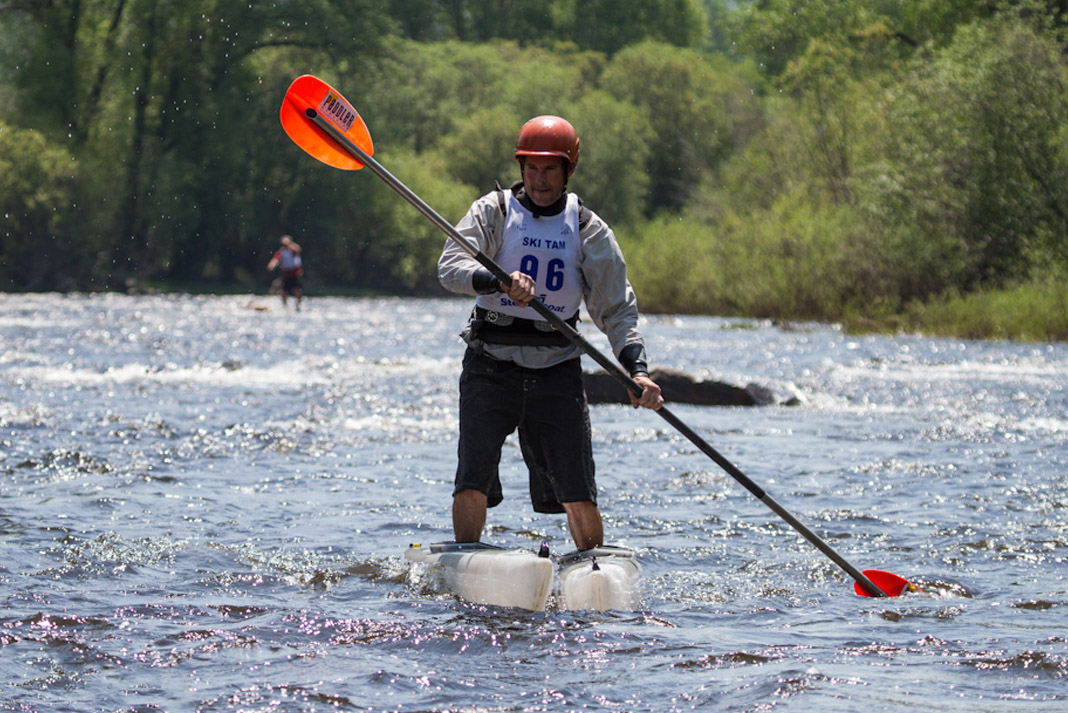
whitewater paddler using a skijak
You’re going to drown with a groin pull. | Photo: John Russell

“They’re kind of an accident waiting to happen,” Eugene explains of the twin plastic hulls attaching to the user’s feet with… wait, how?

“The binding is this metal claw best described as a bear trap,” Eug explains.“It has miniature sprayskirts for each foot.”Propulsion is by means of a 10-foot double-bladed paddle.

The Skijak was the life’s work of the late Austrian engineer Harald Strohmeier, who built his first wooden-framed wassergleitschuhs (water gliding shoes) in the 1930s as a lederhosen-clad teen.

It looked like a double-ACL tweak waiting to happen

He later made a sectional aluminum version, and finally, the plastic Skijak gaining a small following in his native land in the 1980s. All that was left was to conquer the North American market. Eugene, the former editor of both Paddler and Telemark Skiermagazines, remembers the company’s rep driving all the way down from Canada to demo the device.

“He leaned back, crossed his legs and actually rolled the thing. It looked like a double-ACL tweak waiting to happen.

“They didn’t make it to the top of my quiver list,” Eug adds drily. “They’re not even good planters because the openings on top are too small.”

2. Hydro bronc

“After I went down one particular whitewater rafting ride, I started to look at some of the dangers inherent in flipping a raft and getting trapped,” Hydro Bronc inventor Rod Blair told a credulous TV reporter about his strange and unequivocally lame contraption, a brightly colored mash-up of a raft and a hamster wheel.
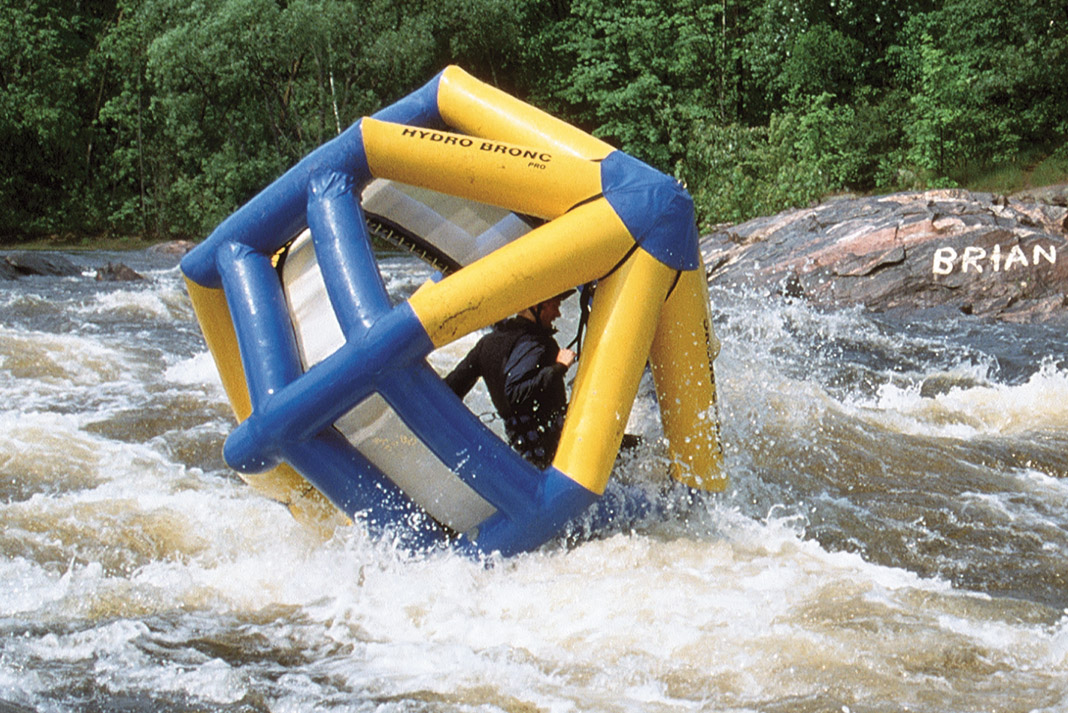
PHOTO: RAPID STAFF
That sound you hear…It’s the hamsters mocking you | Photo: Rapid Staff

One ride! That may sound like hubris, but what Blair lacked in whitewater knowledge he made up for in inventing experience.

Hydro Broncing was even included in the book 50 Water Adventures To Do Before You Die

His many creations include soccer balls for horses and a 10-foot snow globe depicting the Grinch Who Stole Christmas. Note these are all inflatable inventions, so it’s not as if Blair was just making it up as he went along.

He wasn’t bad at the hype game either. In the decade or so after its 1998 debut, the Hydro Bronc was featured on a bunch of television programs, from local newscasts toThe Late Show with David Letterman and Ripley’s Believe It Or Not, which sent the Playboy Extreme Team on a Bronc-mounted escape-from-Alcatraz mission. Hydro Broncing was even included in the book 50 Water Adventures To Do Before You Die. Our advice: Make sure you do the other 49 first.

3. Creature Craft

The Creature Craft may be the most capable whitewater inflatable ever conceived, so it’s fair to ask what it’s doing on this list.

Let’s try to unpack the question.
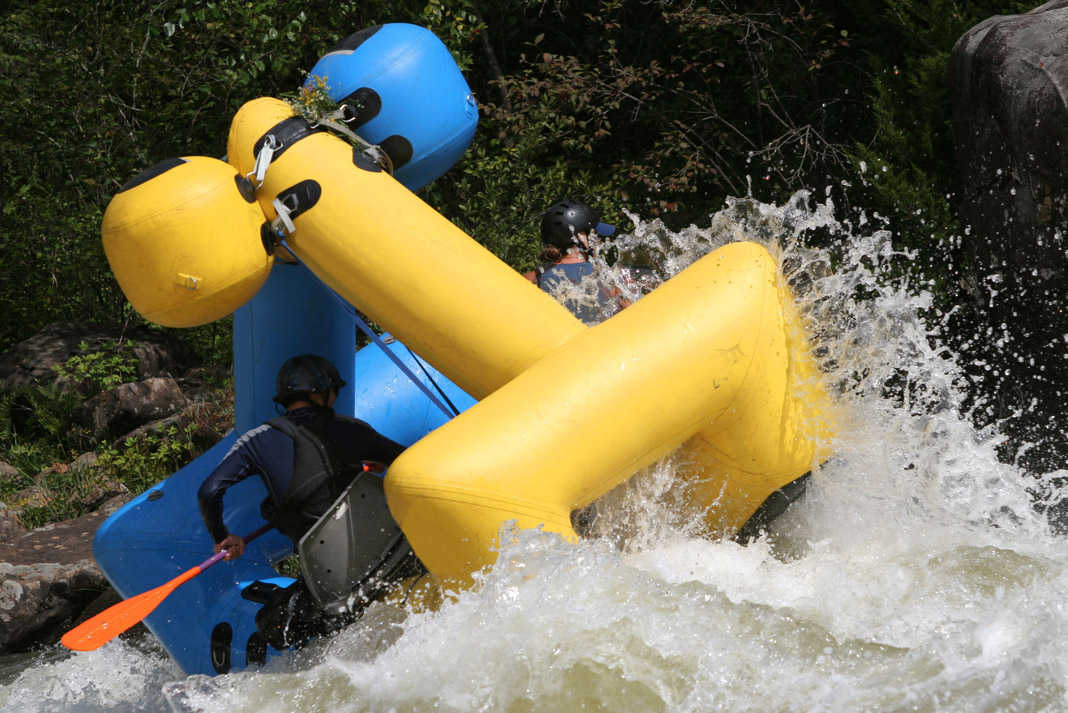
PHOTO: MOUNTAINBERRYPHOTO
Safety over style. Sort of. | Photo: MountainBarry Photo

First, let’s just concede whitewater boaters can be a judgmental lot. Haters are gonna hate, and for all of the Creature Craft’s redeeming qualities—its self-righting design, potential as a swift water rescue platform, uncanny ability to muddle blindly through massive whitewater—there is plenty to hate.

For starters, it looks more like a floating bounce house than a proper rapid running craft. The ungainly roll cage usually keeps the Creature Craft from rolling over completely, though a big enough lateral—or, as we saw this fall at Gauley Fest, spiteful boaters leap- ing onto it from Pillow Rock—will knock it onto its side. The pilot is strapped in with a thick Velcro seatbelt and can use an oar to right the craft, or more often just wait there getting thrashed until the river does it for him.

After Gauley Fest this fall, one hater went online to vent about “how unfortunate it is we share the river with Creature Crafts. In just one lap, three paddlers in our group were either hit with an oar or run over.”

The Creature Craft takes care of boaters who can’t take care of themselves

The implication is that Creature Crafters have no business on the Gauley’s entry-level class V, let alone a high-water test piece like Tumwater Canyon of the Wenatchee, site of a Creature Craft carnage reel that will have you hiding under your desk for five minutes and 11 seconds.

It features a bright yellow Creature Craft getting window shaded a half-dozen times, and another floating through the crux rapid completely upside down with its owner hanging by his seatbelt until the boat lumbers into a new hole and gets flipped upright. As noted above, the roll cage usually prevents the Creature Craft from flipping, but not always.

The video, like dozens of others in the Creature Craft genre, is full of questionable lines, involuntary surfs and inexplicable hoots of triumph. This is where the hate comes from. The Creature Craft takes care of boaters who can’t take care of themselves. And that’s lame.

4. Wavesport transformer

Playboats come in two primary forms, stubby and slicey. The two split near the base of the whitewater family tree, so any boat fitting comfortably in either branch—in fact, slipping effortlessly between the two—would be an evolutionary marvel, like some sort of hermaphroditic platypus adapted to survive in two distinctly different ecosystems, but able to thrive in neither.
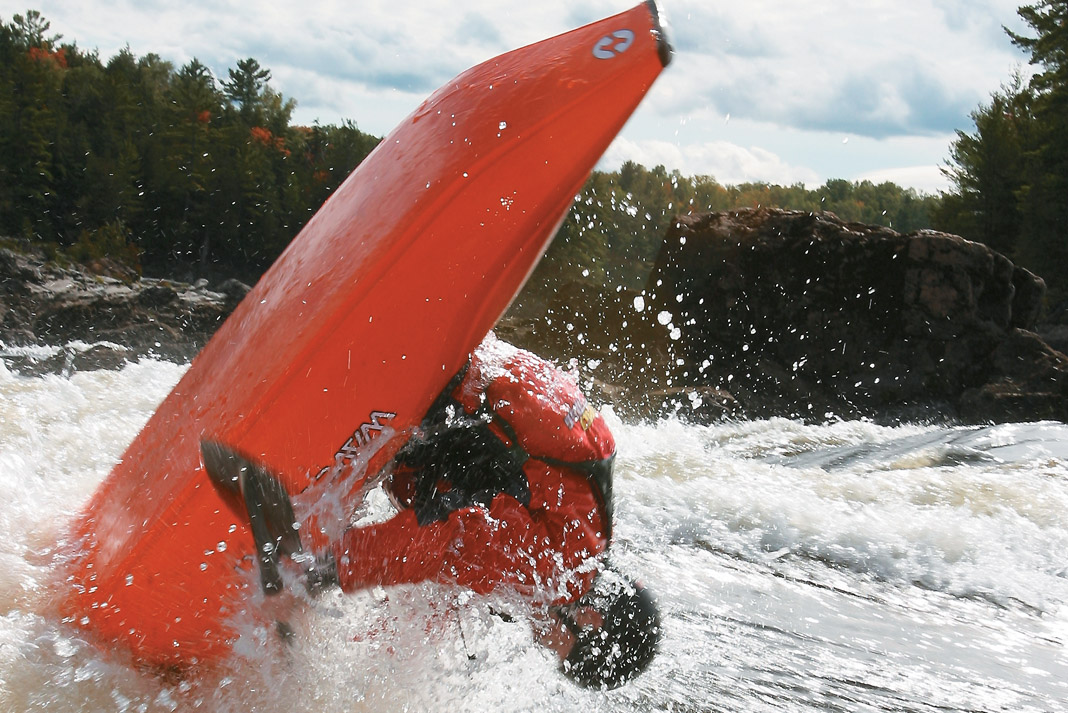
PHOTO: RAPID STAFF
Four sizes of wrong don’t make it right. Most often the transformer was paddled without its tips. | Photo: Rapid Staff

Meet the Wavesport Transformer, a bouncy spud boat sold with bolt-on bumpers and vestigial wings designed to give it distinctly slicey characteristics.

Wavesport made this evolutionary leap in 2003, the same year Dagger released its shape-shifting future Hall of Lamer, the FX. Where the Dagger boys toyed with volume, Transformer designer Eric Jackson used removable tips to alter the boat’s length and performance characteristics. The bumpers were inch-thick plastic pucks; the wings came in five-and eight-inch varieties. They could be mixed and matched.

it was about as easy to roll as a 40-foot shipping container

The Transformer turns up in online lists of “the worst boats of all time,” but it’s not fair or accurate to say the boat was universally loathed. Some paddlers loved it. The design had a two-year production run. At its core, the Transformer—there were four sizes, officially tagged T1, T2, T3 and T4—was a stubby air-seeking playboat, perhaps a little wider and boxier than the norm but capable of truly impressive bounce at a time when elevation was free-style’s new frontier.

“The Transformer is worth buying just for the bounce,” Rapid magazine opined at the time. “[It’s] wonderfully retentive, cartwheels smoothly, hops like water on a hot skillet, and loops like a drunken circus clown.”

What’s not to love about this kayak? Well, it was about as easy to roll as a 40-foot shipping container, and those tips never fully delivered on the hype. “If it works, the Transformer is without a doubt the biggest step toward offering one boat to do it all,” our reviewer wrote.

The problem is the wings didn’t work, at least not as well as a generation of boaters raised on Saturday morning Transformers cartoons would have hoped. What was left is the boat’s notoriety, which explains how a pretty average playboat keeps turning up on everyone’s 10-worst lists.

5. Dagger FX

Dagger was pretty high on its shape-shifting playboat when it debuted back in 2003 with a pair of black plastic doodads screwed onto the bow and stern. The Dagger catalog declared the FX’s volume-changing Hood Scoops, a revolutionary new technology “guaran-freakin’-teed to change the face of freestyle paddling!” Time has shown this assessment to be mistaken. And by time, we’re talking weeks.
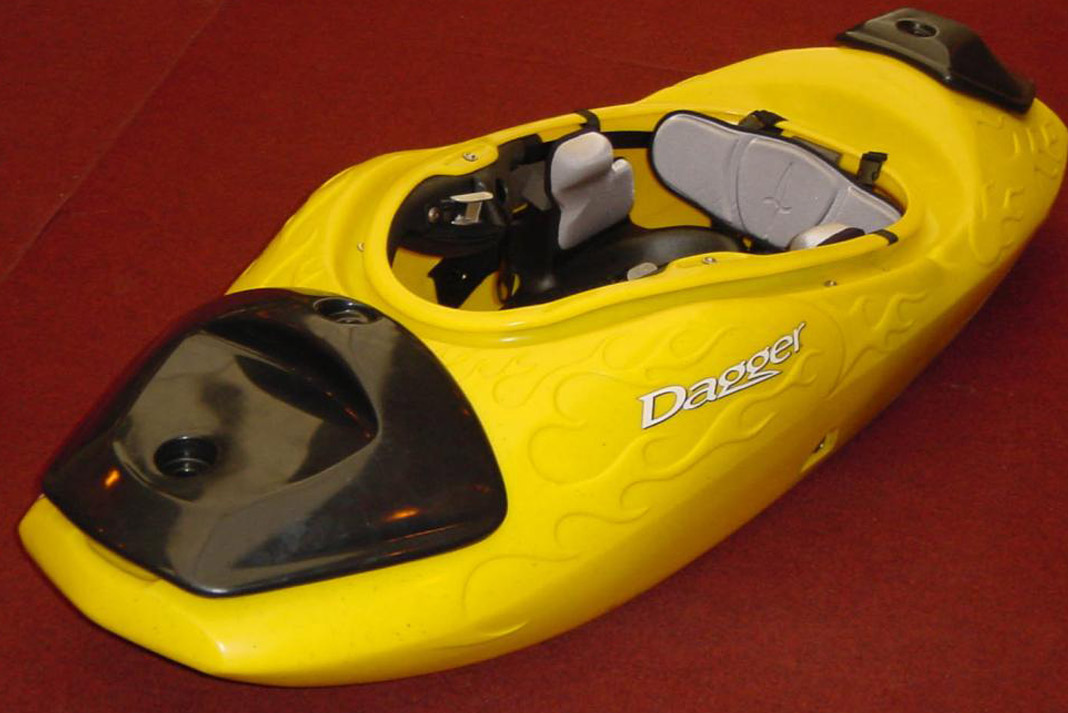
PHOTO: RAPID ARCHIVES
Gone and soon forgotten. | Photo: Rapid Archives

This kayak was lame from the start.

The big trick in 2003 was the loop, and boaters were ready to buy any spuddy playboat that looked like it could pop out of a wave-hole and rotate on its axis. By all accounts, the FX could loop like nobody’s business, but unfortunately, that’s all it did well.

Remember this was freestyle’s golden age. Companies were throwing good money after bad ideas in a freestyle arms race making about as much economic sense as those giant stone faces on Easter Island. Paddlers played along. Bros were selling plasma and buying two or three new playboats a year. But they didn’t buy the FX.

[ Paddling Buyer’s Guide: View all Dagger kayak’s ]

On Playak.com, you can still find the boat’s specs and catalog hype, above a little box noting “there are no user reviews.” Right. Because there were no users. On Mountainbuzz.com, an astute boater gave a 17-word review saying it all.

“It’s like a miniature five-foot- seven version of one of the cars on the log ride at Disneyland.”

Ouch. Is there anything to redeem this consensus Hall of Lamer? Well, yes. Models came with sick molded-in flame graphics.

6. Necky Crux

Let’s start with a disclaimer. I had a Necky Crux and liked it just fine. It was smaller than most creek boats at just over seven-and-a-half feet with rounded chines and a bit of a peak on the front and rear decks, designed to shed water and resurface quickly after plugging big waterfalls. I never ran big waterfalls in it, but I appreciated the little creeker’s maneuverability on low-water class IV, which I’ve run a lot of over the years. Is that lame? Probably, but that’s not the point.
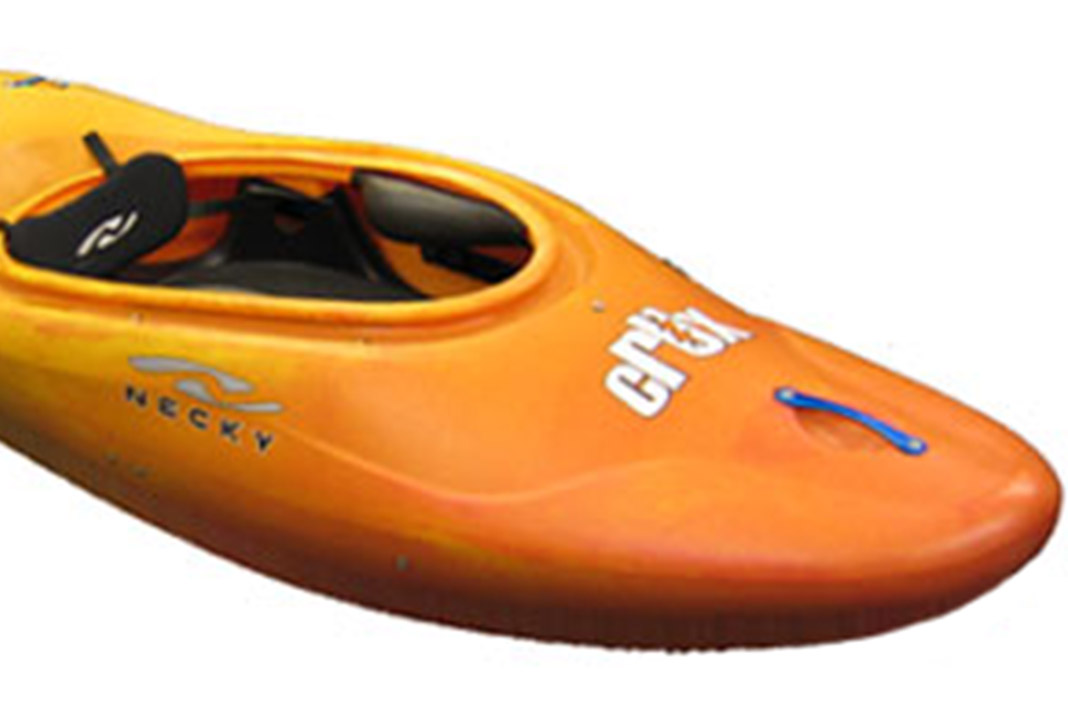
PHOTO: RAPID ARCHIVES
You’re supposed to miss the rocks. | Photo: Rapid Archives

The point is, the Crux was designed, built and named for super steep technical whitewater, the kind of new age gnar just opening up to the masses when the boat came to market in 2004.

It was designed to fit in tight spaces, turn quickly and accelerate out of harm’s way. And it did all those things quite well.

Sadly, in whitewater lore, all this performance takes a back seat to the gimmick—a pair of galvanized steel springs rigged to the footplate. These things looked like they came off somebody’s garage door, and weighed about two pounds apiece. This kind of extra weight up front isn’t exactly desirable in a boat you’re going to boof for your life a few times every weekend. Speaking of weight, the Crux was quite heavy. Necky originally listed it at 37 pounds, and later had to revise the figure up to 43 pounds. I actually weighed mine—the only boat I’ve ever bothered to put on a scale—just because I wanted to know how heavy it was. The answer was 47 pounds with the springs, 43 without them.

The idea of the spring-loaded bulkhead was to save your ankles when you piton. Fair enough, but may I remind everyone pitoning is lame? Pitoning isn’t something you plan for. It’s something you plan to avoid.

I can’t say how the springs worked because I never hit anything hard enough to test them. That’s no brag; I bumped plenty of rocks and speared a few boaters, mostly on accident. But when it came to 10-foot-plus drops with rocks anywhere near the landing zone I either made sure I could hit my line, or I walked. Remember kids: In portaging there is no shame, but with a 47-pound boat it surely is lame.

8. The Riverbug

Maybe it’s just that “trend sport” is one of those German phrases that doesn’t translate. Or it could be the “trend” in the context of the Riverbug is wishful thinking, like when the 2006 film The Secret had everyone “manifesting” things, as if by thinking about it hard enough you could become rich or get to hang out with aliens.
PHOTOS: DAVID HARTMAN
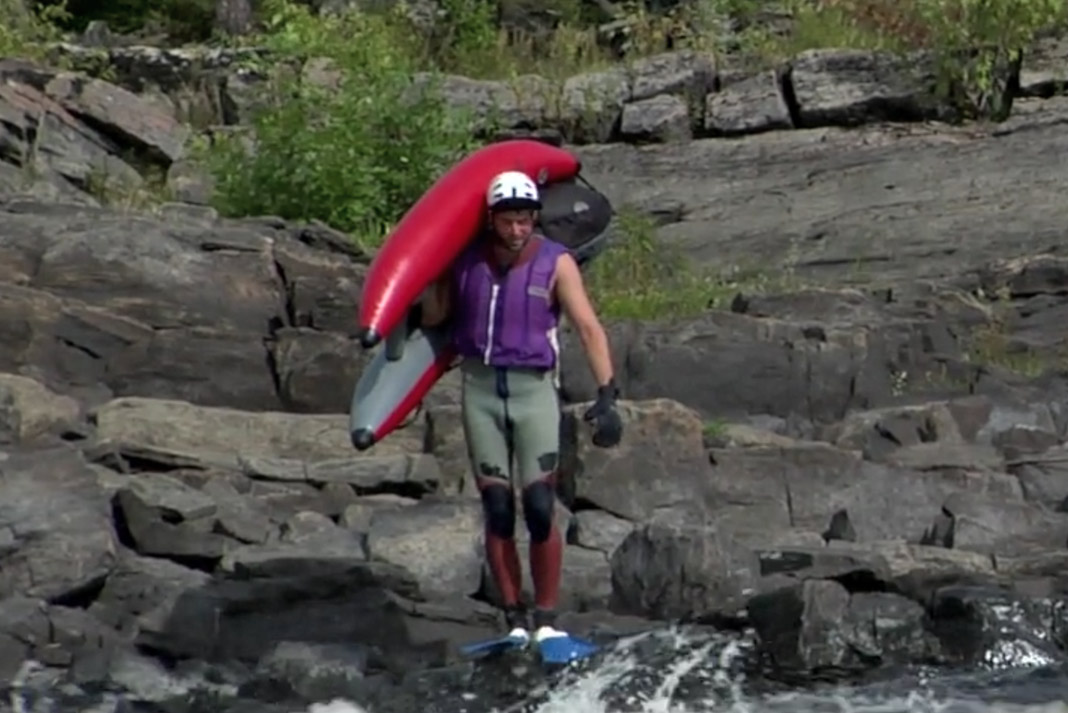
“The Riverbug life still haunts me,” says David Hartman of his 2011 tongue-in-cheek film, Bugz 4 Life. “Strangers recognize me from time to time and it’s always a good laugh.” | Photo: David Hartman

No matter how much you want it to be, the Riverbug ain’t cool. Now, I’m not saying it doesn’t look like fun. It does look fun. In fact, Riverbugging looks suspiciously like tubing, and we all know tubing is fun if you don’t take it too seriously. In fact, the coolest thing about tubing is not trying too hard. All you need is a hot day, an inner tube, and a pair of cutoffs—and maybe another tube to float your cooler. This brings us back to the Riverbug, which if you’re still curious, looks like a hyper-engineered inner tube, stretched into a U-shape and available in canary yellow or fire engine red. You sit in with your feet facing downstream, geared up in a wetsuit, helmet, fins and webbed gloves. Most of the time there’s a GoPro involved too.

It’s basically an inner tube taking itself way too seriously. Folks are running steep creeks and developing play moves, like getting window shaded in pour overs and coming up smiling. You can see it all on YouTube. Though allegedly a thing in Austria and New Zealand, this “trend sport” is still a rarity on North American rivers.


Lightning round

Fuzzy Rubber
Good: Like a wetsuit that’s furry on the inside. Bad: Stinks even if you don’t pee in it.

The Brown Claw
Surfers have the shaka, all hang loose and island vibey. We pantomime a bag full of “the shit.”

Oversized Hoodys, a/k/a ThuggiesPro:
Drop drawers with impunity at the put-in parking lot. Con: Everything else.

Closed-Toe Flip-Flops
Bad.

Toe Booties
Worse.

Raft Guide Jokes
They’re funny if you’ve never heard them before, but you have. Question: What’s the difference between a raft guide and Bigfoot? Answer: One is big, hairy and smells funny when he gets wet. The other is a myth.

Any C-Boater
Who start sentences with “half the paddle. . .”

Red Bull Lids
Can’t we find another way for boaters to get paid?

GoPros
Your helmet looks like a preschool art project made out of empty juice boxes.

The Candwich
Pro: It’s waterproof, just throw it in your boat and go. Con: It’s a sandwich in a can.

The Kavanaugh Hearings
Why are boaters the only ones who know what boof means?
How Efficiency Could Ruin Sea Kayaking’s Soul

Photo: Andrew Strain
The original dinner and a show. Photo: Andrew Strain

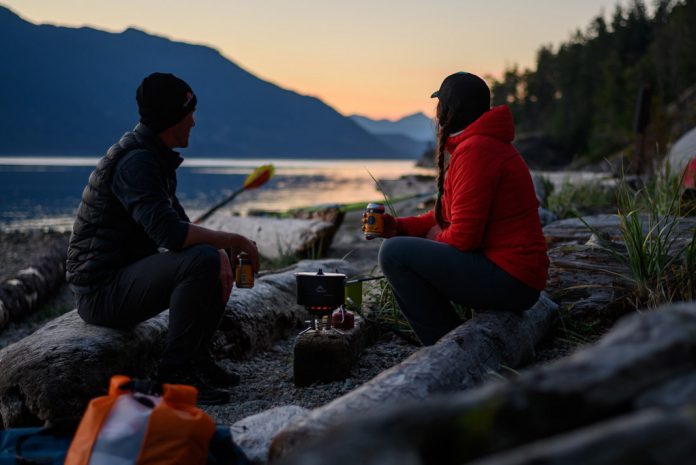
On a drive to a distant put-in, I listened to an audiobook about a photographer-ethnologist visiting the same location back in 1910. His assistants were amazed at his skill in whipping together meals based around salmon he cooked over the campfire.

How efficiency could ruin sea kayaking’s soul

That evening, I was cooking dinner on perhaps the exact same beach. Well, cooking is a relative term. I was boiling water and pouring it into a bag of some unknown substance more suited for space travel.

In 2003, the Jetboil Integrated Cooking System made its debut at Outdoor Retailer. It was quickly mimicked by the nuclear-named MSR Reactor and others. With two-and-a-half-minute boil times, these acetylene-torch-as-stoves rapidly found a place in the kits of minimalists. Sea kayaking trips would never be the same. Sort of.

Long wilderness trips have been declining in length for decades

The average wilderness trip was six days in the 1980s. Now, it’s barely a weekend. There are plenty of culprits for this compression. Blame urbanization, an aging population with sore backs, helicopter parenting, lack of wilderness itself, a generation distanced from big wildlands conservation victories, Netflix and social media.

If wilderness appreciation is in poor health, then these turbo stoves are like cigarettes to lung cancer patients.

Let me explain. A basic Jetboil stove claims to boil water 30 percent faster than a standard stove. When talking in terms of percentages, it sounds like a lot. In real time, we are talking 70 seconds. Two-and-a-half minutes instead of three-and-a-half minutes to boil a liter of water. If waiting for a boil is keeping you from catching a three-knot current, you’re losing a whopping 350 feet.

Ultra-efficient stoves make sense for high elevations, when getting water to boil is difficult, and when melting snow for water. But on sea kayaking trips paddlers are at sea level and usually have nothing but time.

We wait for the tide to rise, wait out currents and wait out wind. Books, campfire stories and jokes are the real essentials. What will kayakers do with their extra 70 seconds? Probably sit around, just like as if they were waiting for the water to boil.

What’s the harm in a more efficient stove?

Maybe nothing. Stoves have been improving steadily, from Homo habilis’ cooking fires in Tanzania’s Olduvai Gorge to Alexis Soyer’s “Magic Stove,” which gave soldiers in the Crimean War something to eat other than salted pork.

In the 1980s, we lugged around tanked white gas stoves, until someone figured out how to attach the fuel bottle to the stove directly, meaning fewer spills and potential explosions. Rapid-boiler stoves are the next level of efficiency. And efficiency has its merits.

Consider this though; camping is designed to be inefficient

We give up creature comforts. We paddle at three knots when a powerboat could get us there faster. Sometimes we even hire a powerboat to drop us off just so we can paddle back to where we started.

We camp to reconnect with the primal, and nothing is more primal than how we cook food. Since the rapid-boilers really only rehydrate freeze-dried food, we’re pushed into adopting a fast-food strategy even when we have plenty time to do better.

Sea kayaking is perfect for rediscovering the increasingly rare art of good backcountry cooking

We have time and the ability to carry fresh food and keep it cool packed against the hull. Driftwood abounds for ergonomically designed camp kitchens and leave-no-trace fires. We’re even surrounded by food: seaweed and mussels grow on rocks, crabs and fish are just below the surface. Even stranger critters, like sea urchins and sea cucumbers, are tasty. No one is going to masterfully grill a rockfish on a Jetboil.

When I think of my sea kayaking trips—even those involving early morning launches or late evening arrivals in camp, my favorite part is the slow ritual of waking up and watching the sea and the birds. Starting slightly hazy and uncaffeinated, I dig food bags out of hatches, bear canisters or tree hangs to make coffee, then observe the world as it kicks in. But I’ve noticed a weakening of this ritual.

When rapid-boilers became standard gear, I shifted from brewing real coffee to packing instant espresso packets, eliminating the extra step of dumping coffee grounds out of a bag into the cone. This activity took 10 of my 70 seconds. Space wasn’t the concern—an 18-foot Explorer has plenty of room for a bag of coffee grounds. It was just the fast-and- easy mentality. We’re on a slippery slope. What next—packing NoDoz to go with our freeze-dried food?

We’re sea kayakers on vacation, not astronauts.

You know, I have a Jetboil myself. It works great, and I love light, compact gear because it’s less to haul up and down the beach. The boil-and-go approach is a gift when I’m chasing a pre-dawn current or rolling into camp hungry as the light fades. In a world driven by tides and ocean swell, a rapid-boiler adds flexibility.

More often than not, however, my ultra-efficient stove is an item I leave at home. I like to pack home-dehydrated meals and when the grub needs to be reheated, the nuclear option often creates blackened tar out of what used to be Asian noodle stir-fry. Yum.

I’ve been amazed at how many cooking styles can exist in a group of just six people. Rapid boiling is great when six people stagger out of their tents demanding coffee, but groups tend to splinter into pairs, segregated by stoves and culinary styles, ranging from boil-and-eat-out-of-a-bag to three-star Michelin aspirants with four pans and a free-range chicken.

A friend once carried a cast-iron tortilla pan in his low-volume kayak for two weeks around the Broughton Islands, saying he was going to make fresh tortillas. He never did. One fellow paced ready to hit the water while waiting for another guy to cook eggs. We could have all boiled our water for coffee on the Jetboil and eaten scrambled eggs together on the white gas stove, but individuality took over.

Obviously, the rapid-boilers haven’t ruined camp cooking any more than rudders and skegs have ruined sea kayaking by robbing us of knowing how to manage a kayak in wind.

We have met the enemy, and it’s the instant gratification and impatience dominating our non-kayaking lives. Kayaking and camping are supposed to peel back those layers, to help us live according to the rhythms of things we can’t control. My Jetboil makes this both harder and easier.

What You’ll Discover At Your Next Paddling Trips’ Campsite

What You Will Discover At Your Next Paddling Trips Campsite
"The worst of all human ailments is indecision." —Napoleon Hill | Photo: Henry Liu

On our last multi-day trip, my family’s search for a campsite exhibited some classic dysfunctional decision-making. It was late afternoon and it had just started raining. The kids were tired and wet. There was thunder in the distance and the storm was getting closer. However, we had a rest day coming up and wanted a good campsite for the next two nights.

Are We Picky About Our Campsites?

There was one campsite just ahead of us and two more around the corner nestled in a bay, a 20-minute paddle away. The previous year I had paddled by those bay sites and marked them with an asterisk on my map because they looked nice. The campsite in front of us didn’t look like anything special. I consulted my wife, Tory, who has the better mind for practical decision making, and she agreed we should paddle farther to the starred sites.

What you will discover on your next trips campsite
“The worst of all human ailments is indecision.” —Napoleon Hill | Photo: Henry Liu

We arrived in the bay just as the storm hit. The first site did appear picturesque from the water, perched on a high point with red pines.

But when we unloaded and hauled our dripping selves ashore we were underwhelmed to find only weedy swimming and no flat tent sites. Truthfully, it was a pretty lousy site, with the wind blasting through the trees on the exposed point where we were now stuck, trying to shelter from the rain and lightning, huddling together to keep warm.

Surely, the next site will be better. When the storm eased we reloaded, motivated the kids, and paddled around the next corner—only to find the site occupied by a motorboat.

We reluctantly paddled back to the first site we’d passed an hour earlier, before the storm hit. This time I saw it with fresh perspective.

[View all boats in the Paddling Buyer’s Guide]

It was actually a beautiful flat spot with shelter from the prevailing winds, smooth rocks and deep, clear water for swimming. Plus, it had a spectacular view of the clearing skies and the mist-shrouded cliffs on the far shore.

I think we even saw rainbows.

When our two-week trip was complete, we remembered the nearly-overlooked site as our favorite—the one truly deserving of a star on the map. Of course, I didn’t appreciate it until I’d made sure there was nothing better around the corner.

Around the fire during that first night in camp, Tory and I discussed how we’d succumbed to a classic decision-making error, like a gambler or gameshow contestant driving themselves to ruin in search of a bigger jackpot.

What Will You Discover About Yourself and Your Campsite Selection?

Tory took it particularly hard because she’s proud of her ability to judge a campsite—or anything—on its merits rather than in comparison to some unattainable ideal.

I’m the idealist in the relationship. We are each the antidote to the other’s worst tendencies. I can grasp hold of a dream and urge her to hold out for better things, while she keeps me from endlessly searching for perfection. How the two of us ever settled on each other is a mystery; maybe it means she is perfect and I’m just good enough.

It reminded me of one of our first big arguments, which took place over a similar decision years ago on the streets of Paris. One dark and hungry evening we walked for hours in search of the perfect restaurant, me rejecting everything we passed because it didn’t match the candlelit boîte in my imagination. I was so sure we would find just the place around the next corner, so why settle.

Where we ended up wasn’t half bad, but its charms were soured by the heat of battle, with Tory angry about all the perfectly good places I’d rejected and me defensive because I’d failed to find a restaurant good enough to justify the long search.

On our camping trip, we brought along E. B. White’s classic Stuart Little to read to our son. Stuart Little is the story of a mouse born into an ordinary middle-class human family, which is super weird but just go with it. I realized Stuart Little and I have a lot in common in our dissatisfaction. Stuart runs away from his obtuse human family in search of adventure.

On his travels he meets Harriet Ames, who is a metaphor for the good things we tend to take for granted. She’s a beautiful, bright, well-dressed daughter of the wealthiest family in town. And she happens to be only two inches tall. And she agrees to go out with an itinerant mouse, no questions asked. What are the odds?

But Stuart is so obsessed with having the first date go just so—showing off his boatmanship in a toy birchbark canoe, no less—when his canoe is destroyed by vandals, he ditches Harriet and skips town in a huff to continue wandering, as if that’ll show ‘em to mess with his canoe. As if this mouse can find himself some other two-inch-tall rich girlfriend.

You stupid idiot, I want to yell, you’re running away from your best chance at happiness! Stuart concludes he’ll keep heading north to the end of his days. His odds of finding another beautiful and wealthy girl his size are slim. I like to think he comes back to Harriet Ames, once he realizes there’s nothing better out there.

Have I gotten wiser in my middle age, better at not playing Stuart Little when everything doesn’t go exactly as I’ve imagined, and just appreciating what the circumstances deliver? It’s a particularly good attitude to have in the outdoors, where I can’t often control the outcome and must adapt.

While I’d like to think otherwise, I’m not sure I have matured, because the campsite search played into my mindset perfectly.

Tory wished she’d saved time by recognizing the good campsite on the first try, but I loved it all the more for having confirmed there was nothing better around the corner. The fear of missing out on something great would have gnawed at me otherwise. If Tory had forced us to stop, because it seemed good enough or because it was raining, I could have spent two days resenting the spot instead of loving it.

It’s a testament to how satisfaction is based entirely on the framework with which we choose to view the circumstance.

Maybe this is just how humans are. We search for reassurance we’ve made the right choice, that we’ve arrived at the best place or thing. Why else endlessly scour TripAdvisor and Yelp reviews, hangrily walk the streets of Paris for hours, risk being caught out in a storm in search of a better square of dirt, and brood instead of accept and give thanks. We’re seeking an imaginary “right” choice—perfect or best—when often we’re presented with more-or-less equally worthy options, each with their own unique set of pros and cons.

The need to find validation is all in our heads.

To recognize when the place we end up is the place we want to be without having to waste time looking elsewhere for proof, well, that’s the wisest choice of all.

What Is The Ultimate Sacrifice In Paddling?

Photo: Daniel Stewart
“Freedom is just another word for nothing left to lose.” —kris kristofferson | Photo: Daniel Stewart

Recently, I heard about a West Coast paddler, no names please, who stars in porn flicks so he can afford to paddle. It made me think.

What is the ultimate sacrifice in paddling?

Is it giving up a real job to paddle? Dying while pushing your limits? Or, maybe you are divorcing your wife because she doesn’t get it. What kind of sacrifices do you make to get on the river?

We all make choices in life and paddling is no different. The weekend warrior chooses to work five days for two days of paddling. It often means long hours in the car to hit the river—it usually means more driving than paddling. And, with recent gas price hikes, there is a considerable financial sacrifice as well. To assume the weekend warrior is not committed to the cause of paddling is bullshit! They make the ultimate sacrifice; they paddle the least and work the most for it.

pushing rubber means hanging with punters all day reciting the same cheeseball lines and answering the same stupid questions

Raft guides also make huge sacrifices. Theirs is a cruel and unusual punishment: floating within the very waters that have drawn them to the river, but essentially unable to experience the real thrill. Sure they get wet, but it’s not the ride they are looking for. And, pushing rubber means hanging with punters all day reciting the same cheeseball lines and answering the same stupid questions. Salt in the wound.

Photo: Daniel Stewart
“Freedom is just another word for nothing left to lose.” —kris kristofferson | Photo: Daniel Stewart

The few hours of paddling a guide manages to squeeze in after a day already spent on the river is poor compensation for the tithe they pay all summer long. Our hearts go out to you. Row, row, row your raft, gently down the stream, merrily, merrily, merrily your job is but a tease.

The people in the last group give everything they have to paddle. They are, for lack of a better term, professional paddlers.

Paddling is their job. Quite often, and rightly so, these are our best paddlers. Their quest is to make paddling a feasible career. A frightening thought: at least at this point. Like supermodels, pro-boaters are only as good as their last ride; once that goes, the options run out. A few have made it. But the rest, to be amongst the best in the world and have no bling bling, are a true testament to both the passion of their sacrifice and the reality of it.

The real cost of getting into kayaking can be much, much more than the cost of a new boat and gear

Let’s also not forget, pro paddlers must paddle year-round. While paddling is great, to paddle every day, often on the same river, over and over, can be a hard sell to some. So, what happens when their quest ends? No job. No recognized education, and few prospects. Only achy bones and outdated boats will remind them they have given everything they had to do what they love. Big props to those of you who will soon be collecting welfare and washing our windows on street corners.

Please don’t leave streaks. But hopefully, all of us will realize the sacrificing we do, no matter how dramatic, is really a testament to the sport we pursue. The real cost of getting into kayaking can be much, much more than the cost of a new boat and gear. It can cost you your soul. Spend it wisely.

14 Ways To Plan Your Greatest Kayaking Adventure Ever

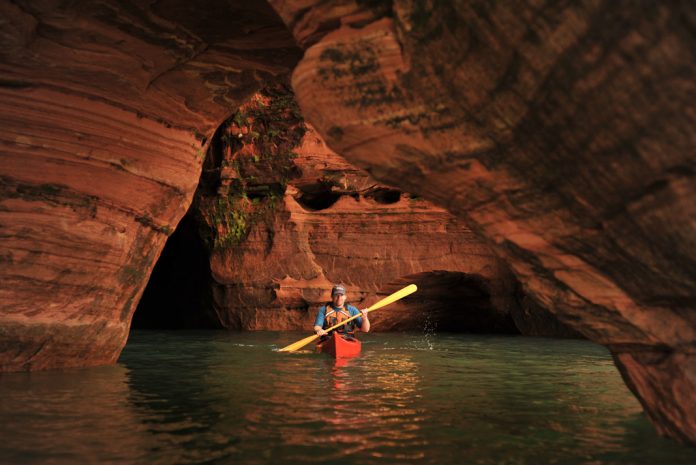
Kayaker paddles through red caves
"All of your dreams can come true, if we have the courage to pursue them" - Walt Disney | Photo: Virginia Marshall

Turn your fantasies into reality. We consulted the experts and picked the best paddling pursuits average kayakers can actually pull off.

From touring with giants to taming the surf, here are 14 ways to plan your greatest kayaking adventure ever.

1. Learn to predict the weather

photo: Bryan Hansel
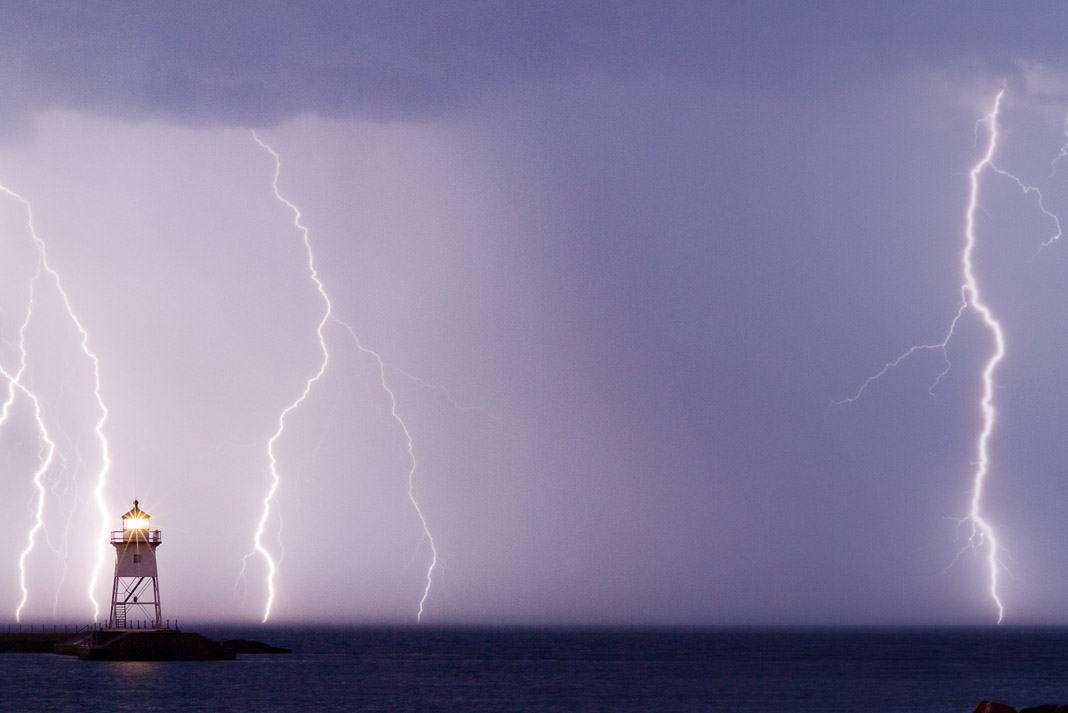
Cloudy with a chance of electrocution. | Photo: Bryan Hansel

The Dream: Anyone can download a weather app on her smartphone. But to forecast accurately beyond the last cell tower, you need a basic understanding of weather systems, local patterns and interactions with shoreline geography in your paddling area.

The Plan: Developing your weather eye is a skill you can hone from the comfort of your couch. Combine readings on weather theory with observations made from your backyard and boat. The key is paying attention for several days at a stretch, so you can recognize patterns: changes in temperature, pressure, wind direction and cloud cover. An excellent resource for coastal kayakers is Navigation, Sea State & Weather: A Paddler’s Manual, published by SKILS. This Vancouver Island-based sea kayak school also offers weather interpretation workshops (www.skils.ca).

2. Turn Your Paddle Into Art

photo: Virginia marshall
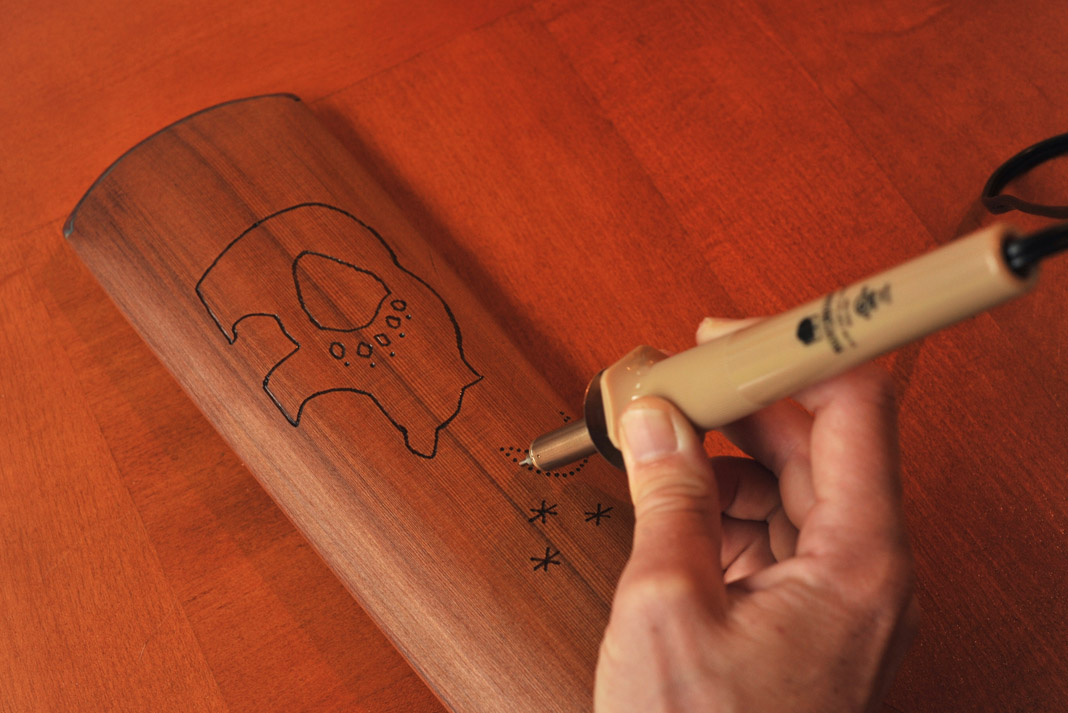
Burn only bare wood; treated wood hosts chemicals dangerous to the woodworker. | Photo: Virginia marshall

The Dream: There are few expressions of form meeting function as elegant as a well-crafted paddle (the Jaguar E-Type and Apple iPhone are also on our shortlist). Make your wood blade truly one-of-a-kind by scribing a design, date or inspirational passage into its richly textured grain.

The Plan: If your paddle is finished with varnish or oil, sand the area first. With a pencil, sketch your design onto the wood, and consider stenciling letters unless you have a surgeon’s steady hand. Use a woodburning tool with a fine point for detail work ($16.99, www.walnuthollow.com)—it’s basically a Sharpie with a 950°F tip. Be sure to practice on a similar piece of scrap wood to avoid pyrographer’s remorse.

3. Feast On Wild Edibles

photo: Fredrik Norrsell
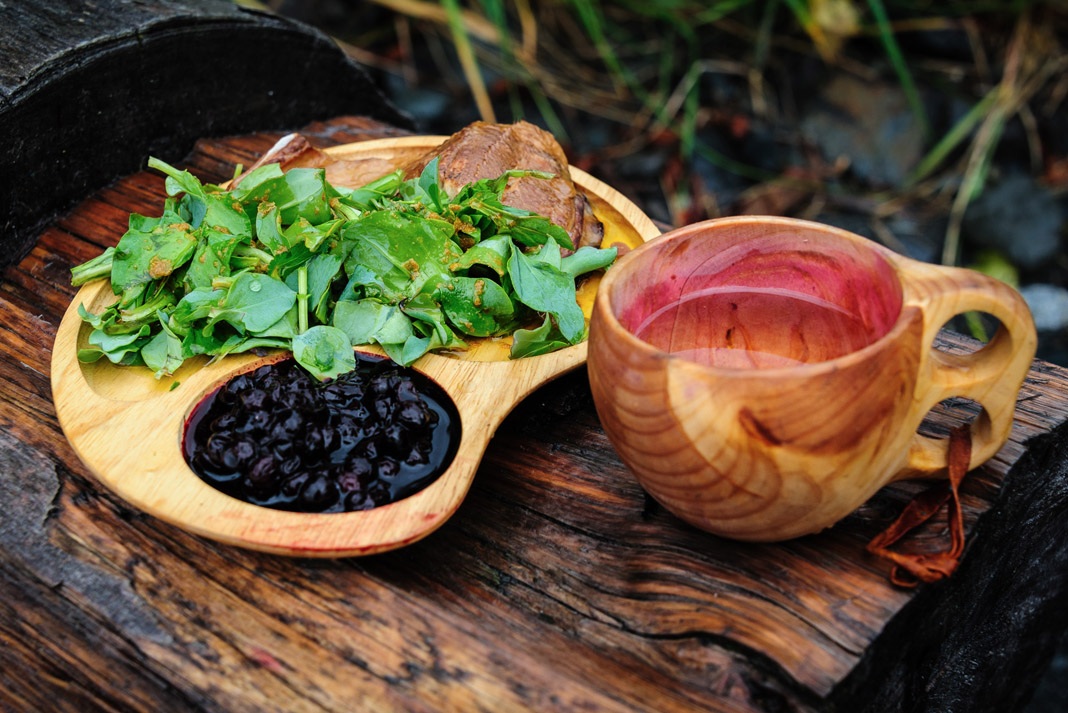
Taking backcountry gourmet to a new level. | Photo: Fredrik Norrsell

The Dream: During the short Alaskan summer, coastal areas can offer a veritable buffet of beach greens, kelp, berries, mushrooms, fish and seafood. Expert gourmet foragers and Palmer, Alaska, locals Nancy Pfeiffer and Fredrik Norrsell spend up to three months of the year living off the land (see some of their favorite recipes at www.paddlingmag.com/0015). The couple loads their kayaks with spices, oil, tackle and shrimp pots for their subsistence paddling trips in the Panhandle and Prince William Sound. “It puts me in awe of the earth’s abundance,” says Pfeiffer.

“By eating wild foods, we are intimately linked to the world around us.”

The Plan: Aim to augment— rather than replace—your standard meal plan for your initial foraging adventures. Bring a comprehensive field guide; we like the color photographs, nutrition summaries and recipe ideas inAlaska’s Wild Plants: A Guide to Alaska’s Edible Harvest. For further inspiration, watch for Pfeiffer and Norrsell’s upcoming book detailing their recent 566-nautical mile subsistence kayak journey through southeast Alaska, including mouthwatering photos and recipes (www. nancypfeiffer.com).

4.  Kayak Surfing

Photo: Kevin Light
First rule of surfing: Lean into the wave. | Photo: Kevin Light

The Dream: There’s no better way to learn humility—and stability—in a sea kayak than steering your bow toward shore and waiting for the swell to rise under your stern. Catch the first wave and you’ll have a smile on your face for days. Need help? Let Ginni Callaghan and her team of crack coaches at Sea Kayak Baja Mexico guide you to some of the best waves on the Pacific Coast.

The Plan: Sign up for Callaghan’s next Baja Surf Camp in spring 2020. Held in mid-April, the weeklong event is a celebration of surf, starkly beautiful landscapes, beach life and delicious local cuisine. The camp’s rustic palapas overlook a remote point break where the swell wraps into the bay and is groomed into smooth peelers—ideal waves for aspiring longboat surfers. “We can handle a variety of skill levels,” says Callaghan. “If you know what a brace is and can paddle in 15-knot wind with waves of two to three feet, you’re welcome to join us.” www.seakayakbajamexico.com

5. Build A DIY Gear Cave

Photo: Virginia Marshall
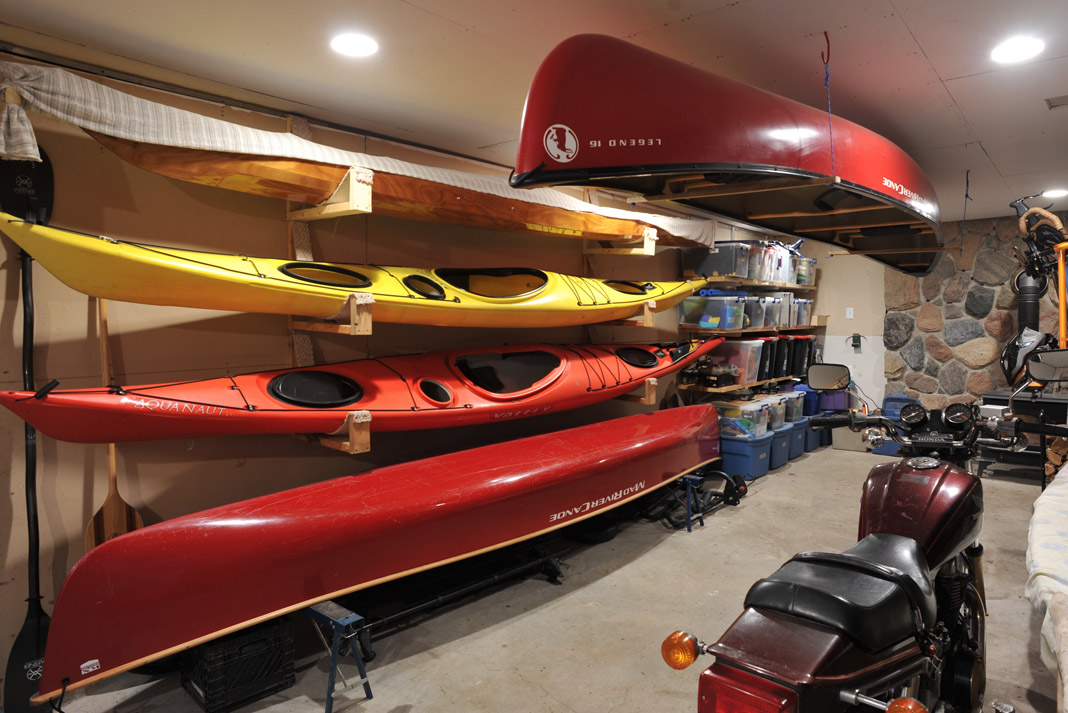
Build wall cradles and roof hangs to make room for more boats. | Photo: Virginia Marshall

The Dream: Keep boats, boards, paddles, tents and bikes organized and out of the elements. Making space for your toys inside the home extends their life and—more importantly—puts them within easy reach for spontaneous grab-and-go adventures.

The Plan: You’ll need an indoor area a few feet longer than your longest boat. A walkout basement, garage or workshop is ideal. Maximize vertical storage along walls and leave the center of the room open for easy ins and outs, boat repairs and other projects.

Shelving systems utilizing a hang rail and slotted uprights are adjustable and sturdy—perfect for storing heavy gear totes. Next, construct a paddle rack using only a couple strips of plywood and a jigsaw to scribe cutouts for the shafts to rest on. Having trouble visualizing this design? Browse Pinterest for inspiration. Finally, build wall-mounted cradles to park up to four boats per wall. Each pair of L-shaped cradles requires eight to

10 feet of 2×4, a handful of screws, and two four-inch-wide strips of carpet. Tweak the dimensions of your L’s to suit your boats—about 21 inches high by 20 inches deep for kayaks measuring less than 23 inches wide.

6. Take Better Trip Photos

Photo: Bryan Hansel
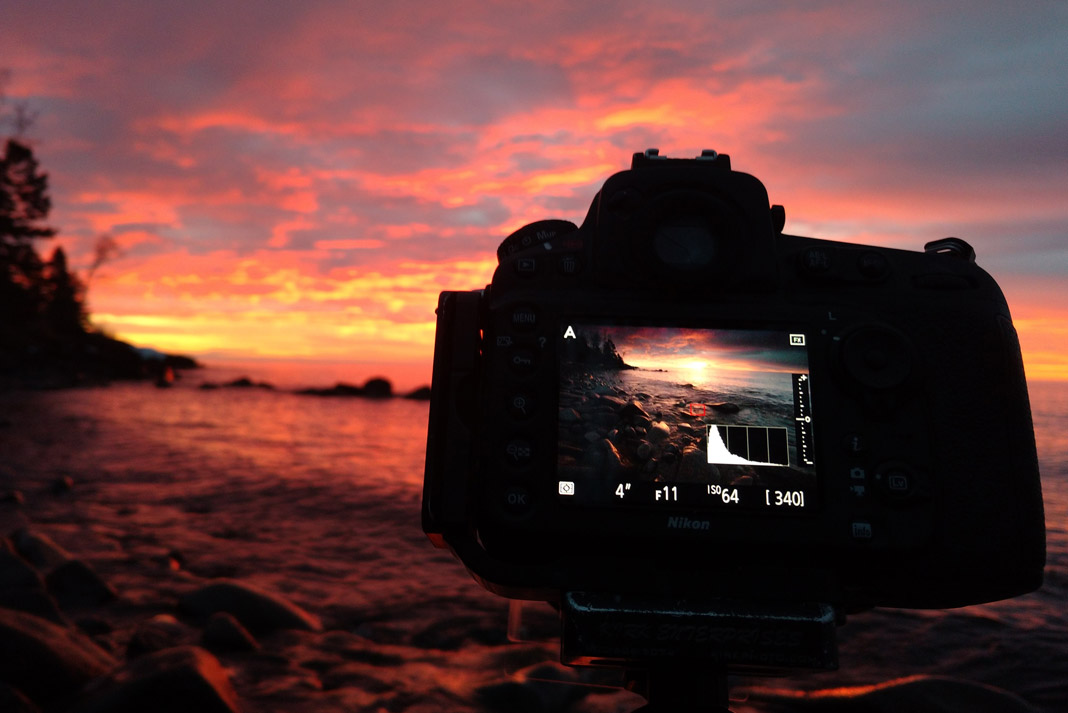
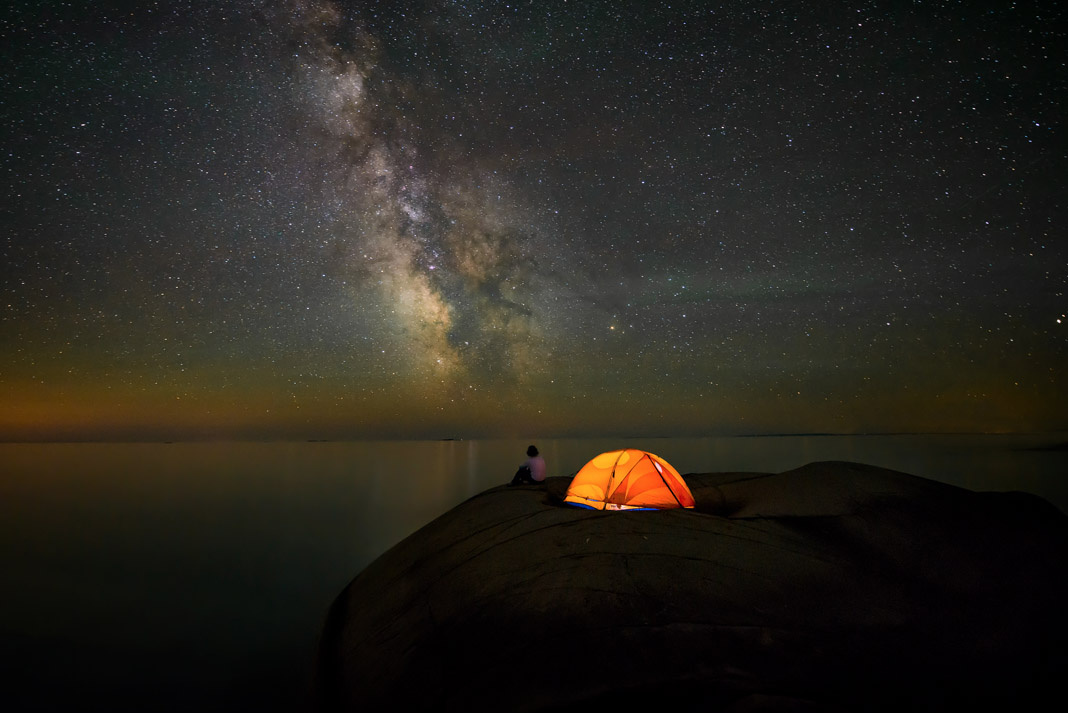
Photos are a return ticket to moments otherwise gone— learn to take good ones. | Photo: Bryan Hansel

The Dream: Go beyond the bow shot. Capture images evoking the stillness and wildness of why we paddle— whether it’s incredible wildlife close-ups, stunning night skies, breathtaking landscapes or heart-pounding action.

The Plan: Stop salivating over Instagram feeds and step up your own skills by shooting with a professional. Lake Superior’s diverse seasons and moods create an ever-changing artistic milieu, while the plethora of water trails, parks and rugged coastline are a paddler’s paradise. Grand Marais, Minnesota-based photographer and sea kayak guide, Bryan Hansel, offers a wide range of photography workshops focusing on the North Shore. Subjects for Hansel’s two-to five-day workshops include spring waterfalls, the Milky Way, autumn gales and, of course, Lake Superior kayak photography (www.bryanhansel.com).

7. Learn To Navigate By The Stars (Polynesian Wayfinding)

Photo: Henry Liu
Second star to the right and straight on to morning. | Photo: Henry Liu

The Dream: Tap into the ancient Polynesian sea voyaging technique of wayfinding: use an outstretched hand, the horizon and the night sky to discern direction and latitude. This millennia-old skill offers modern paddlers a largely forgotten way of navigating— even if most of us never aspire to trans-oceanic journeys.

The Plan: Learn how to use star compasses, meridian pairs and star lines to find cardinal directions and hold a course without any tools aside from your own hands. Here’s an easy exercise to get you started. First, locate the constellation Ursa Major, commonly known as The Big Dipper. Follow the line created by the Dipper’s pointer stars—the two stars forming the side of the bowl opposite the handle—and extend it 25 degrees to find Polaris, called the North Star because it lies near the celestial north pole. Measuring degrees is simple: hold your hand at arm’s length from your face.

Raise your little finger; the width of the tip is about one degree. Your three middle fingers measure five degrees; your clenched fist equals 10 degrees; your outstretched hand from thumb to little finger, 20 degrees. Now use your hand to measure Polaris’ distance from the horizon—this is your northerly latitude. Intrigued? Head to the website of the Polynesian Voyaging Society (www.hokulea.com) for a wealth more information on non-instrument navigation.

8. Get Fishy And Catch Your Dinner

Photo: Virginia Marshall
’Appy meal. | Photo: Virginia Marshall

The Dream: Kayak fishing has blown up in the last decade, with reams of dedicated boats and gear to woo would-be anglers. But don’t trade in your sea kayak for a sit-on-top fishing sled just yet. Learn from the experts to snag supper without sacrificing touring efficiency.

The Plan: The handline is a compact, effective tool for trolling and jigging. Inuit and Aleut hunters pioneered kayak fishing centuries ago using this simple combination of spool and line. Get expert tips and build your own handline rig using our plans (www.paddlingmag. com/0016). For hands-on coaching set against the spectacular backdrop of northern California’s Redwood Coast, join Jason Self, avid kayak angler and owner of Kayak Trinidad. Self’s one-day workshops include all the gear needed to target rockfish, lingcod, cabezon and salmon ($150/person, www.kayaktrinidad.com).

9. African Kayak Safari

Photo: istockphoto.com
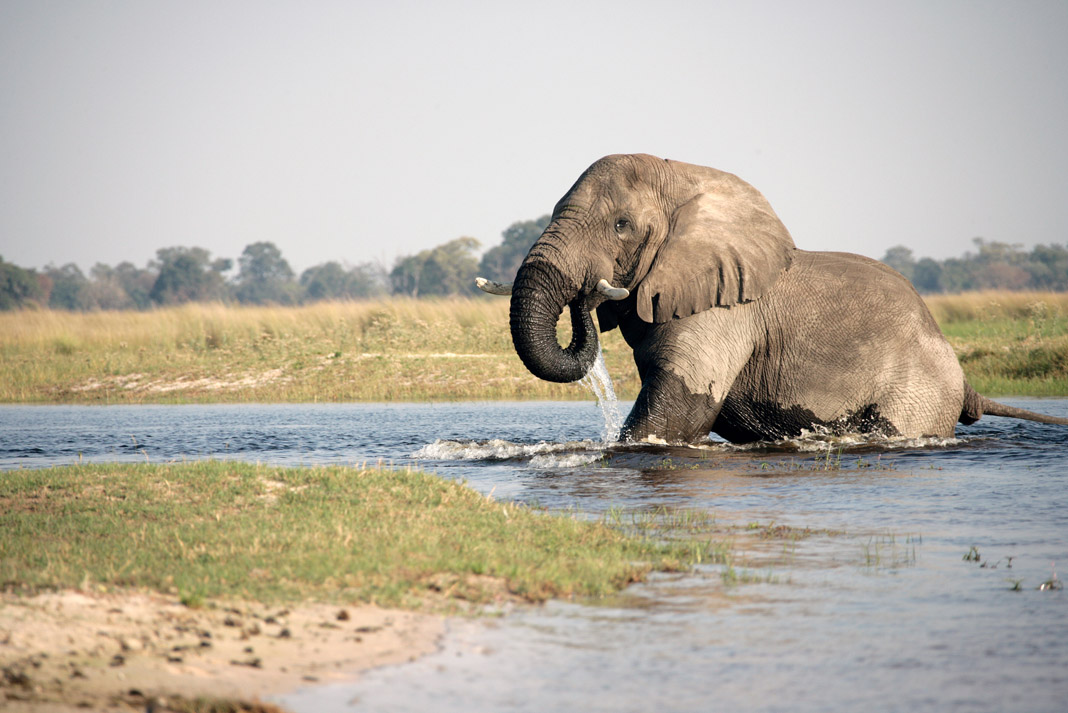
Share the water with Earth’s largest land mammal. | Photo: istockphoto.com

Why You Should Go: Botswana’s Okavango Delta is a natural wildlife funnel, drawing an extraordinary diversity and abundance of animals to its life-sustaining waters during the dry season. A multi-day kayaking safari offers the chance for quiet, small group wildlife watching—from observing hippo and giraffes to visiting Chief’s Island, a magnet for the Big Five: lions, leopards, rhino, buffalo and elephants.

Logistics: Dominating the central Delta, the vast floodplains and channels of the Moremi Game Reserve surround Chief’s Island and provide passage for paddlers. Kayaktive Adventure Safaris’ knowledgeable guides lead luxury camping trips from two to 10 days through the heart of the Reserve. During the early part of the winter dry season—from May to August—the 10-day trans Okavango journey traverses some 300 kilometers, guaranteeing fit, adventurous kayakers the wildlife trip of a lifetime. www. kayakbotswana.com

Price: $300–$2,300 USD

10. Visit And learn At The Canadian Canoe Museum

Photo: Virginia Marshall
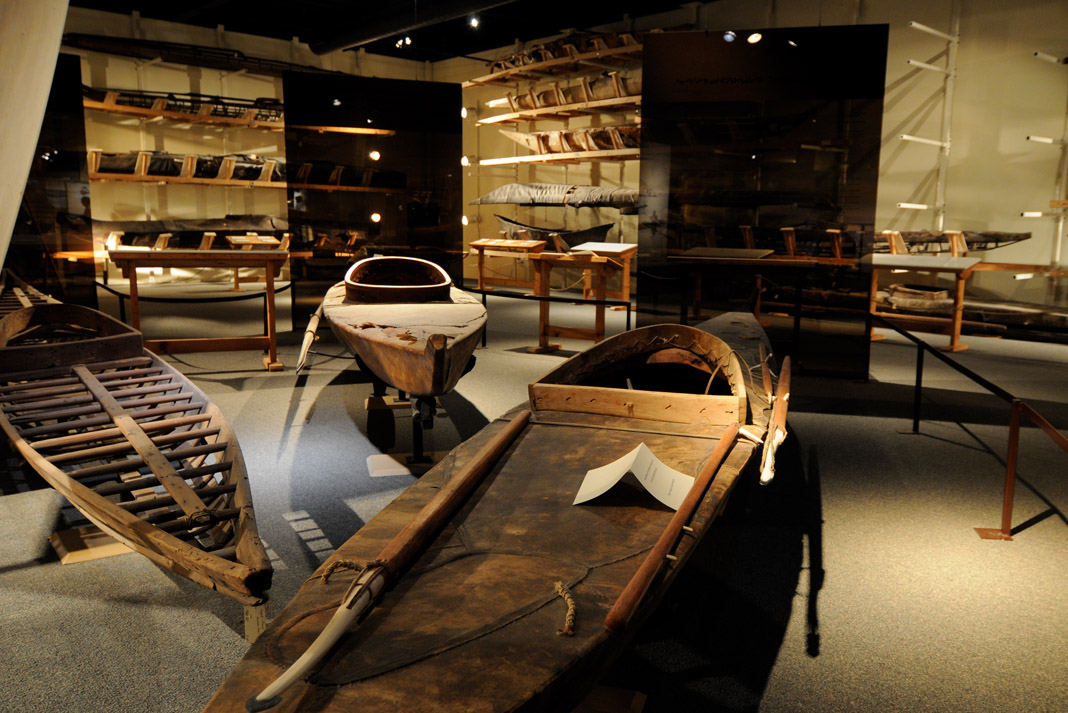
History comes alive at the Canadian canoe museum. | Photo: Virginia Marshall

Why You Should Go: Currently housed in repurposed, 1960s-era factory buildings, the Canadian Canoe Museum doesn’t look like much from outside. But displayed inside the Peterborough, Ontario, gallery you’ll find traditional canoes and kayaks representing every coast of Canada and from as far away as Asia and the Amazon.

Logistics: This is the perfect time to show your support; a $65M fundraising campaign is underway for development of the museum’s new home astride the city’s historic Trent Severn Waterway. Construction on the 83,000-square-foot, LEED-certified building—designed to emerge from a natural drumlin, complete with living roof and serpentine glass walls overlooking the canal—is expected to begin later this year. When the facility opens in 2021, the museum will at last have a space befitting its world-class collection of 600-plus watercraft and thousands of artifacts, paddles and archives. www.canoemuseum.ca

Price: $12 CAD admission

11. Paddle With Giants And Explore Gwaii Haanas

Photo: Virginia Marshall
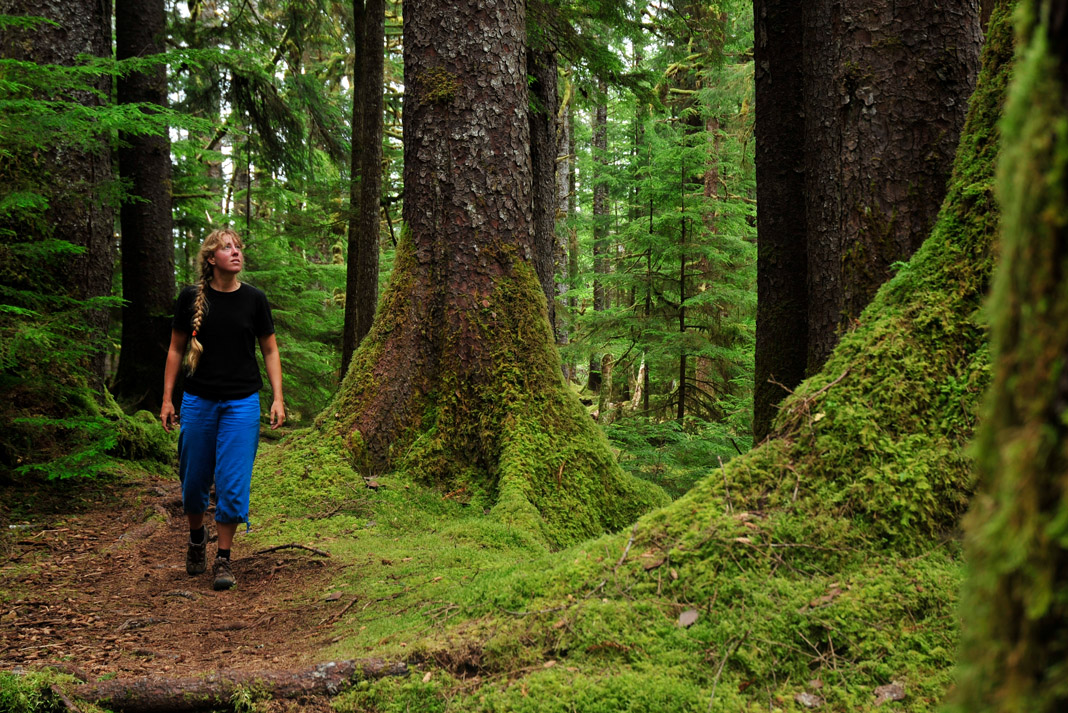
Gwai Haanas is located 100 kilometers off the northern British Columbia coast. | Photo: Virginia Marshall

Why You Should Go: Everything is bigger in Haida Gwaii. The remote archipelago’s seafood-scarfing black bears are a unique subspecies of their continental cousins—as well as being the largest of their kind anywhere, the island bears have massive heads and huge molars for chomping clams, crabs, sea urchins and mussels. And don’t forget the trees. Sitka spruce here dwarf the same trees on mainland British Columbia; the biggest boast circumferences of 50 feet and tower over 250 feet high.

Logistics: Haida Gwaii lies 100 kilometers off the coast of northern British Columbia. The southern portion of the island chain is protected as Gwaii Haanas National Park Reserve and Marine Conservation Area, consisting of more than 1,800 islands and islets and the waters surrounding them. Intermediate paddlers can enjoy a week of self-guided exploration in the sheltered passages between Lyell Island and Burnaby Narrows, utilizing water taxi services to access this northern part of the park.

Must-see sites include Tanu, Windy Bay and Hotspring Island where Watchmen—Haida First Nation men and women who look after these sacred spots—invite paddlers to view carved legacy poles and a traditional longhouse, stroll beautiful rainforest footpaths, and soak in the natural thermal pools. www.moresbyexplorers.com

Price: $450 CAD (transportation only)

12. Roll With The Best

Greenland National Kayaking Championship

Why You Should Go: Every July, the Greenland National Kayaking Championship celebrates traditional kayaking skills and the vital role of the qajaq in Greenlandic Inuit culture. The spirit of the weeklong event is one of community before competition—families travel from far-flung villages to reunite with friends and throw one heck of a party. On the icy waters, paddlers in handmade skin-on frame boats demonstrate their athleticism and accuracy in a series of contests ranging from sprint and endurance races to harpoon throwing and, of course, rolling.

Logistics: While most Championships relegate non-athletes to the role of spectator, the inclusive atmosphere of this event means anyone can join the competition—you’ll just need to bring (or borrow) a suitable kayak. Visitors compete in a separate division from locals and can’t vie for the championship crown, but the applause of the crowds is its own reward. To learn more, go to www.qajaqusa.org.

13. Join A Migration Of Pacific Gray Whales

Photo: iStockphoto.com/Missing35mm
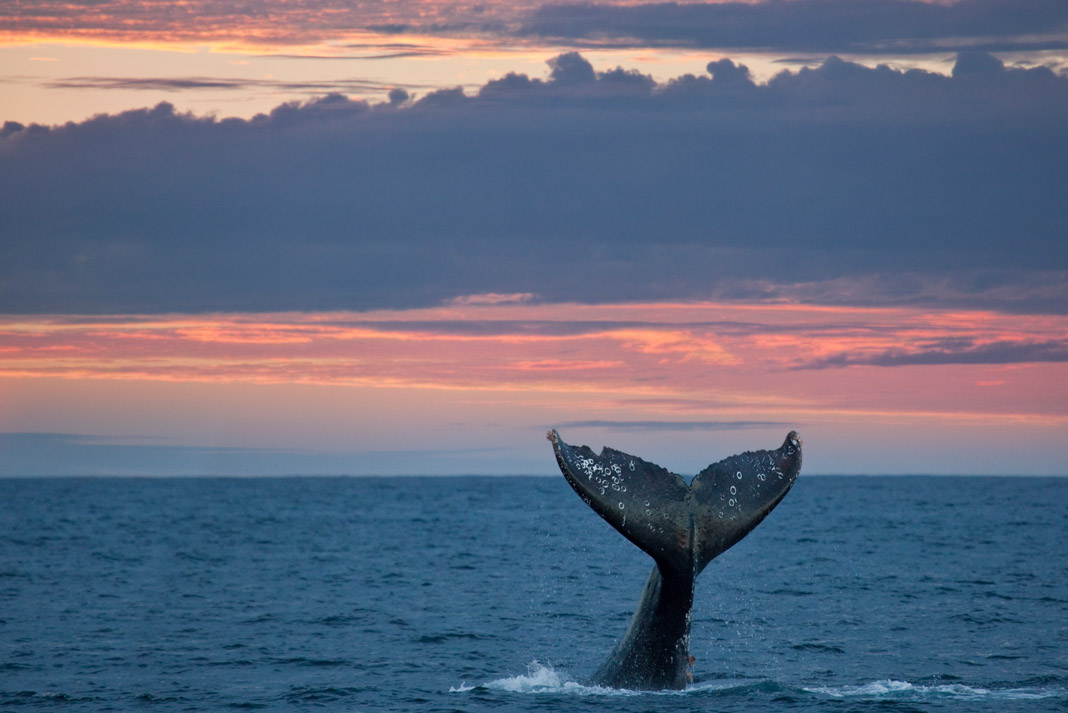
Paddle with 30-ton gentle giants. | Photo: iStockphoto.com/Missing35mm

Why You Should Go: Each spring and fall, some 20,000 Pacific gray whales traverse the coast between their summer feeding grounds in the Bering and Chukchi seas, and their calving and wintering grounds in the warm-water lagoons of Baja. With a round trip distance of 10,000 to 14,000 miles, the whales’ journey is one of the longest migrations of any mammal on earth. These 30-ton giants prefer to stay within 2.5 miles of shore, making it easy for well-timed kayakers to join their pilgrimage.

Logistics: Gray whales cover around 75 miles per day, traveling at an average speed of five miles per hour. They are closest to shore—and easiest to spot—during their spring northward migration, which passes the nutrient-rich waters of Monterey Bay, California, in March, April and May. Paddle out of Davenport Landing (10 miles north of Santa Cruz) in early morning for prime whale-watching just a few hundred yards offshore. For kayak rentals and guided tours, contact Venture Quest (www.santacruzkayak.com).

Price: $75 USD

14. Set A Personal Record In The Yukon River Quest

Photo: Harry Kern
Challenge yourself in the Yukon River Quest, a 750-kilometer race from Whitehorse to Dawson City. Photo: Harry Kern

Why You Should Go: Develop the fitness and mental fortitude it takes to finish an epic like the Missouri River 340, Yukon River Quest or Race to Alaska. If you aspire to someday tackle one of these punishing multi-day challenges, dip your toes in the water first with
a suitably merciless half-or full-day race.

Logistics: The 750-mile Race to Alaska is beyond the reach (and inclination) of most mortals, but the first 40 miles out of Port Townsend, Washington, can be raced as a stand-alone sprint—on some of the biggest water in the whole course (www.r2ak.com). Race For The Rivers is an easier 40-miler down the Missouri River, couched in a fun river festival (www.racefortherivers.org). Billed as the longest single-day paddling race in the world, Ontario’s Muskoka River X traverses 130 kilometers on two rivers, three lakes and 20 portages—all in 23:59 or less. Or stick to daylight racing with a 58-kilometer sprint option (www.muskokariverx.com).

Price: $50–$400


Text and Feature photo: Virginia Marshall

The Dreaded Driverless Shuttle For Paddling Trips

car with two kayaks driving on scenic route
No shuttle bunny, no problem | Photo: Ryan Creary

Is the recent article in Car and Driver right in that, “Driverless cars are supposedly imminent”? Inside, thought leader Malcolm Gladwell suggests driverless cars, like smartphones, are going to have unexpected catastrophic consequences.

Engineers and programmers pushing mobile technology couldn’t have foreseen their pocket-sized supercomputers leading to a myriad of social ills, including higher rates of teenage depression and suicide. So where will driverless cars take us?

While kayaks and canoes were once the only modes of transportation long before the invention of the horseless carriage, recreational paddling as we know it has always involved the automobile. Virtually every paddling trip in living memory has involved four wheels, radio, heater, racks, and ropes.

Imagine your first paddling trip in a driverless car

Maybe you’d sit there and enjoy the scenery, but more likely after a few minutes, you’d be answering emails, making grocery lists or editing video. Making good use of the time, you might say. Except driving is already a good use of time.

Say we set out on a paddling trip together. I’m driving and can’t do anything else, so you politely keep me company. For the next two hours, we catch up because we haven’t seen each other since the fall. Gosh, hard to believe it’s been so long. We remember good runs and shitty boats we’ve had over the years. Plans are made for another trip later this month. Friendship is a good use of time.

Enter again the driverless car

Now neither of us needs to be paying attention to the road. We are free to do whatever. We’re on our phones more. We talk less. Ding! Sorry dude, just a sec. Ding! What were you saying about your sister?

Or perhaps we don’t carpool at all. We wouldn’t need to shuttle together because our driverless cars meet us at our final destinations. Thanks for finally solving the shuttle, Google.

Except your Google car hasn’t been upgraded to include the high-definition coordinates for forest access roads. Honda hasn’t coded a traction profile for deeply rutted muddy terrain. Tesla engineers didn’t think to include rooftop sensors for strap vibration so your boats shake lose. Or worse, the ultrasonic bumper sensors don’t register the poplar limb two feet too low to clear the boats above. And answer me this, how are we to thumb rides to put-ins from driverless cars?

Driverless car technology is being sold to us as a convenience

But canoeing, kayaking and standup paddleboarding is not convenient. It’s hot, cold, windy, buggy, off the beaten path, rainy, full of wood, too much swell, and generally more effort than a three-day war of Clash of Clans—how the real intended audience of driverless cars spends their long weekends. It is soulless technology companies ramming automotive automation forward.

.Driving, when you’ve done enough of it, allows for a high-level meditative state

With enough experience you’re able to manage the physical responsibilities of steering and maintaining constant speed at an unconscious level, freeing your mind to wander far from the yellow line. While trees and rocks zoom past at 60 miles per hour our brain waves slow way down.

The Theta state

When brain waves slow down to between four and eight cycles per second, is when we have stronger intuition, we have more capacity for wholeness, profound creativity and complicated problem solving. Basically, the slower our brain wavelengths and the more time between thoughts, the more opportunity there is for us to skilfully choose which thoughts to invest in and what actions we should take. While researchers measure brainwave frequency in hertz, I believe it can also be measured in miles.

Undisturbed by the usual day-to-day external stimulus of smartphones and crying babies, this state of mindfulness is responsible for creative things like this magazine, brave new boat designs, cockamamie expeditions, and very likely, Martin Litton’s plan to save the Grand Canyon or the secret formula for Gore-Tex.

The greatest unintentional consequence of driverless cars will affect the very inventors of them. Not to mention board shapers, adventurers, writers, photographers and athletes—virtually anyone wanting to sift through one idea after another in hopes of finding a creative solution to a problem. Like what should I write in this issue’s Off the Tongue.

Long live the analog road trip, paddling friends and the sacred time behind the wheel, where it’s still illegal in most regions to be on your device. 

Scott MacGregor is the founder and publisher of Paddling Magazine. | No shuttle bunny, no problem | Featured Photo: Ryan Creary 

Should Paddleboard Racers Embrace The 14-Footer?

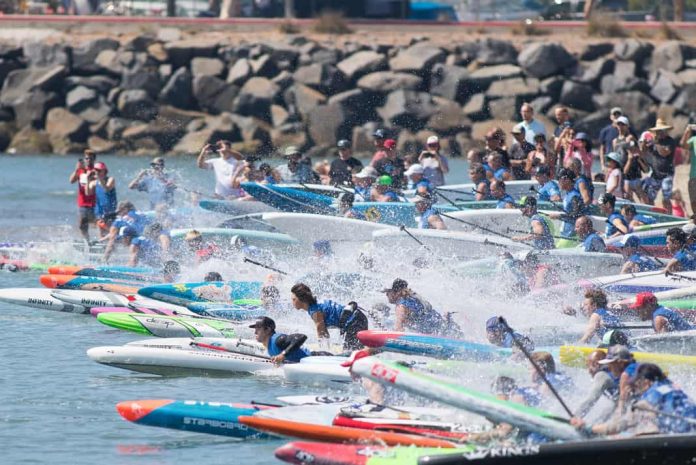
several paddleboard racers at the starting line

Are You On The 14-Footer Board Side? Or Not?

Debate over which paddleboard length should be the race standard has boiled ever since the 14-foot and 12.5-foot lengths were rather arbitrarily cemented into place in the late 2000s. The argument may finally fizzle and die as some major events have announced men and women will be racing in a 14-foot-and-under category. 

Last fall the Quicksilver Waterman Carolina Cup, one of the biggest races on the global SUP calendar, announced its April Graveyard elite race would see men and women competing on a single class of 14-foot-and-under boards. This left the choice of paddling a 12.5-foot versus 14-foot board up to individual racers, but meant the longer, and therefore faster, 14-footers were the new de facto standard. It also meant elite women will no longer be forced to race on slower 12.5-foot boards. 

“The 14-and-under class is an experiment for the Graveyard at the request of top women paddlers. What we are told is women are tired of racing on slower boards than the ones men are paddling,” said Carolina Cup race director John Beausang prior to the race. “This is more inclusive and will be healthy for the sport.

Beausang’s bold move seems to have tipped the scales. In January 2018, the Gorge Paddle Challenge announced the same decision for its August race. And the International Surfing Association, which is vying with the International Canoe Federation to become paddleboarding’s Olympic governing body, quickly followed with an announcement it will adopt the 14-foot standard starting January 2019. The 10-race EuroTour is already racing with these new standards.

There’s No Consensus On How Racers Ended Up With Two Slightly Different Lengths Of Race Boards In The First Place. Whether it was based on which board lengths were dominant at the time, airline travel restrictions, favoritism toward a particular brand’s offerings, or some other arbitrary measure, early trendsetting races like the 2008 Battle of the Paddle in California set rules still in place today. 

In North America, men tended to race 14-foot boards and the 12.5-foot boards have become largely a women’s class, although crossover between genders on both boards and varying practices in other countries adds to the confusion. 

A decade ago, industry pundits warned two standard board lengths could be bad for the sport. With no authoritative governing body, race organizers were left to come up with their own rules and, in an effort to please everybody, struggled to manage dozens of divisions: 14-foot and 12.5-foot; recreational and elite; men, women and juniors of all ages.

Aspiring Racers Struggled To Decide Which Length Of Board To Get, And Men And Women Were Unable To Swap Paddleboards. “I think having two different but fairly similar board classes is not only totally pointless but actually quite harmful to the sport. It creates fragmentation, frustration and confusion for athletes, event organizers, designers, brands, manufacturers, distributors, retailers and consumers—or in other words, everyone,” writes Christopher Parker, expert paddler and founder of SUP Racer.

I think it’d be easier if we all just agreed to have anything up to 14 feet as the universal standard. Then it would be rainbows and unicorns, and we could finally move on to discussing more important topics.

Back in 2013, former Olympic canoeist Jim Terrell of Quickblade Paddles passionately argued both board lengths should be completely scrapped in favor of a four-meter (13’1”) stock class. He also proposed width, weight and deck height requirements to prevent the sport from becoming “an expensive balancing contest,” where elite paddlers are on boards so lightweight and tippy no average paddler can afford one, let alone stand up on it.  

Unsurprisingly, his proposal never gained traction—it would have rendered every existing race SUP on the planet obsolete—but the debate raged on and those early warnings seem to have come true. 

With rare exception, SUP racing events around the country are shrinking,” paddlemaker Bill Babcock wrote in an online editorial last fall. “The decline in SUP racing looks precipitous. Beausang’s decision was motivated by the same realization. 

“Numbers nationwide are down,” he explains. “We are spread too thinly and working too hard for simple races. Something has to change. I hear it all the time. Right now, there is no governing body stepping up to make a decision. Instead, race organizers have to stick their necks out to test the waters.”

If The 14-And-Under Decision Sticks, Manufacturers And Retailers Will Finally Be Able To Focus On 14-Foot Boards. Of course, the 12.5-foot class will still have its place. Since the race class is 14-and-under, people can still race 12.5-foot boards if they prefer, or as conditions warrant.  

“The 12.5-foot division is best suited for the in-and-out of surf races, and buoy turn races. We also have it designated as our juniors race board length,” says Beausang. “The idea is  under-18 paddlers will remain on 12.5-foot boards and any sales of 12.5-foot boards on the secondary market will lower the cost barrier of entry for kids and juniors getting into the sport.” 

It feels like we may finally have a broad consensus on the path forward,” Parker writes, “and this can only be a good thing for the sport.

Tim Shuff is a firefighter by day, freelance writer by night and competitive paddleboarder on the weekend.

8 Basecamp Essentials For A Paddling Dinner Party

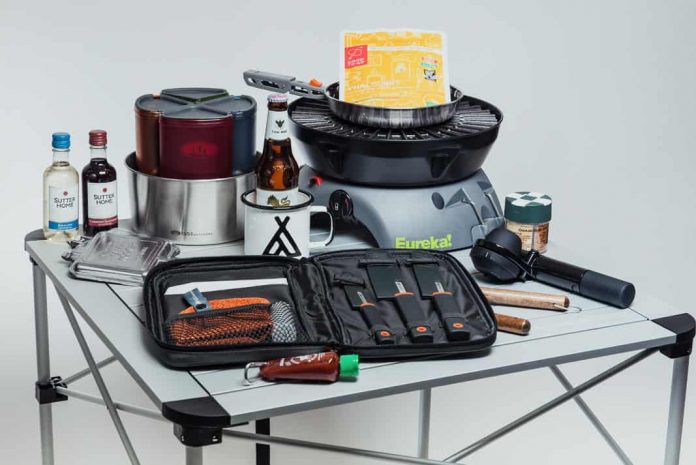
cooking tools for camping

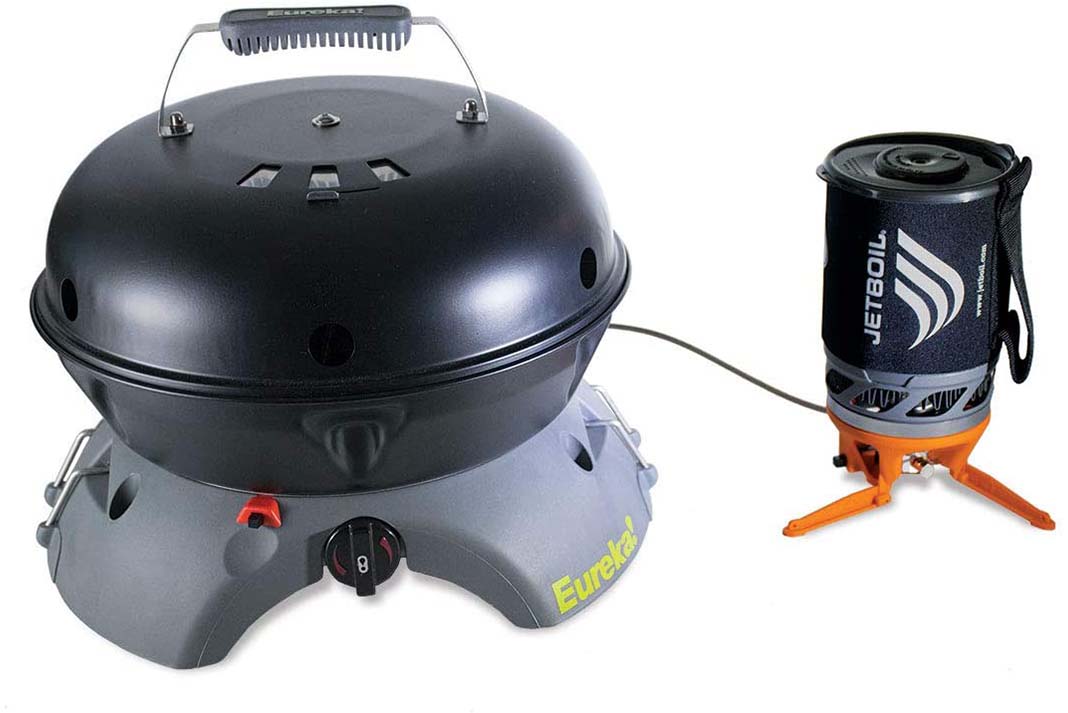
Eureka! Gonzo Grill Portable 3-in-1 Camping Stove

1

Versatile Cook System

Eureka! Gonzo Grill Portable 3-in-1 Camping Stove

$189.95 | eurekacamping.com

Offering the culinary triumvirate of griddle, grill and stovetop cooking, Eureka’s Gonzo Grill Cook System is one of the most versatile compact systems on the market. It features a cast iron griddle top for pancakes, which flips over to create a grill surface for burgers and steaks, and it also functions as a stove for sauteing veggies and boiling water. The Gonzo Grill offers advanced simmer control and a port for adding additional stoves to really get the party started. At 14 pounds, it’s ideal for tailgating, car camping and basecamps populated by foodies.

SHOP AMAZON

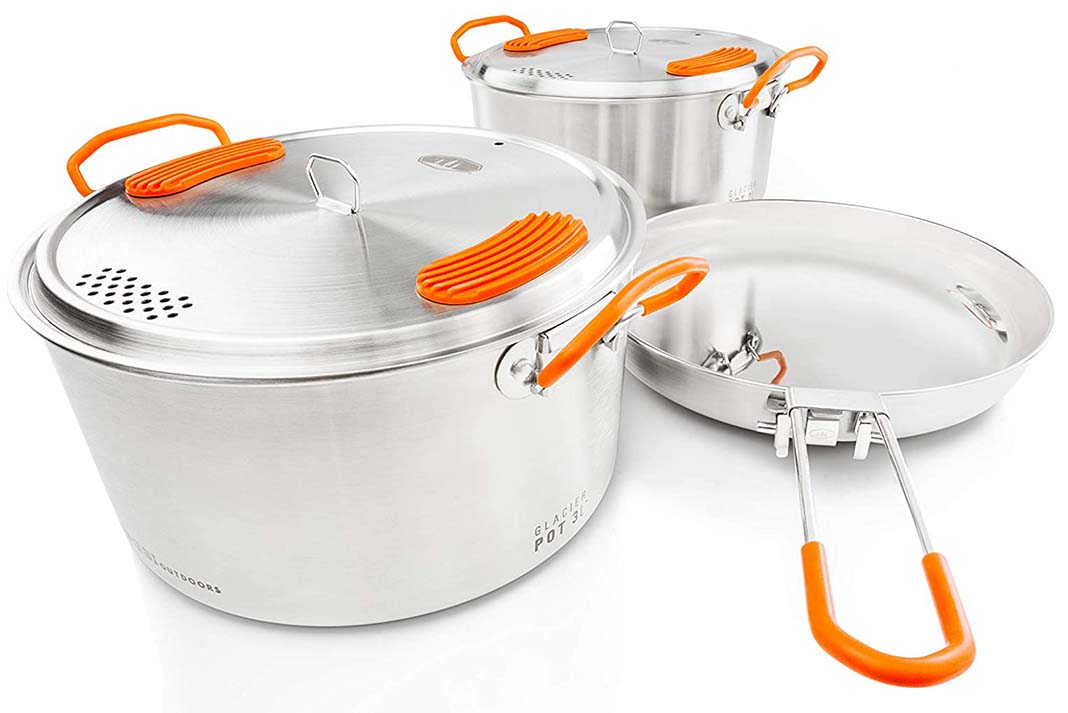
GSI Outdoors Stainless Base Camper - 3 Piece Cookset

2 All-In-One Kitchen Kit

GSI Outdoors Stainless Base Camper – 3 Piece Cookset

$89.95 | gsioutdoors.com

An organized kitchen system is the stuff daydreams are made of. GSI’s new Glacier Stainless Camper is the complete package, boasting nesting tableware and stainless steel cookware designed to eliminate the guesswork of packing for four. It includes: two pots, a frying pan, four insulated mugs with lids which can double as bowls, and four plates. We love the thoughtful details, like a strainer integrated into pot lids, a pot gripper which remains attached while cooking, and a welded sink which doubles as the stuff sack. This kit is sure to please outdoor gourmands.

SHOP AMAZON


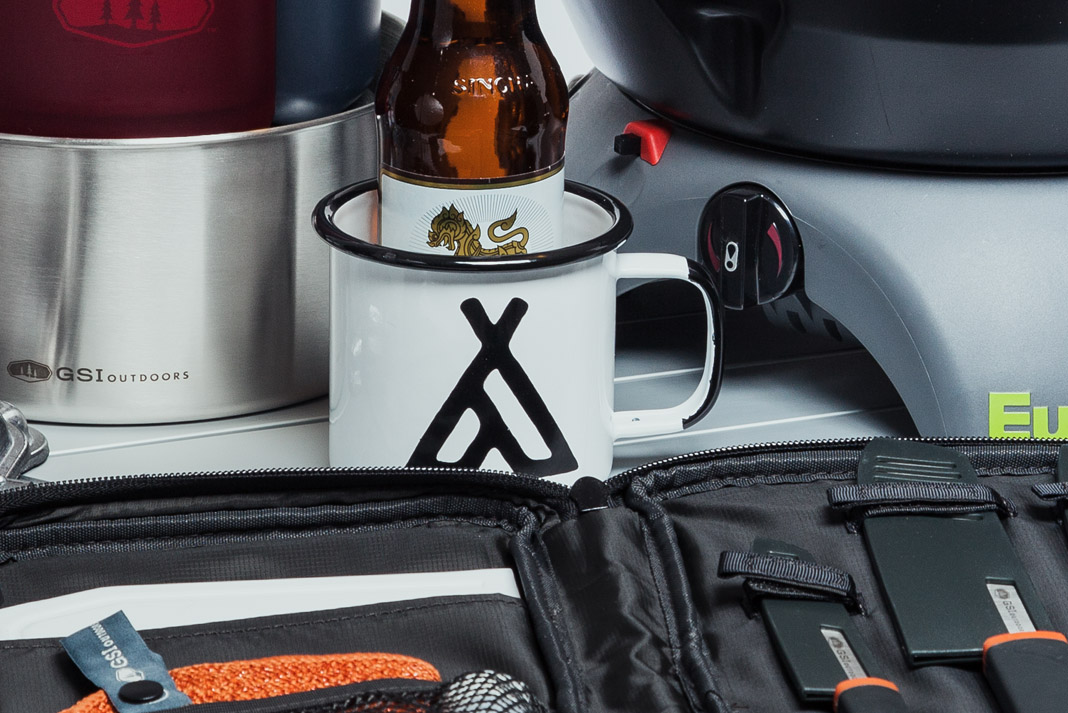
Camp brand goods mug
Camp Brand Goods’. | Photo: Matt Stetson

3 Statement Mug

$27 CAD | campbrandgoods.com

A hip mug is as good for the soul as it is for your Instagram page. Camp Brand Goods’ line of trendy and attractive enamel mugs is sure to put a smile on any camper’s face. Each is made of cast iron and hand-dipped in enamel; you can heat it over an open flame and pop it into the dishwasher later. At 500 ml it’s excellent for a fireside cocktail or a steaming cup of hot chocolate.

SHOP AMAZON

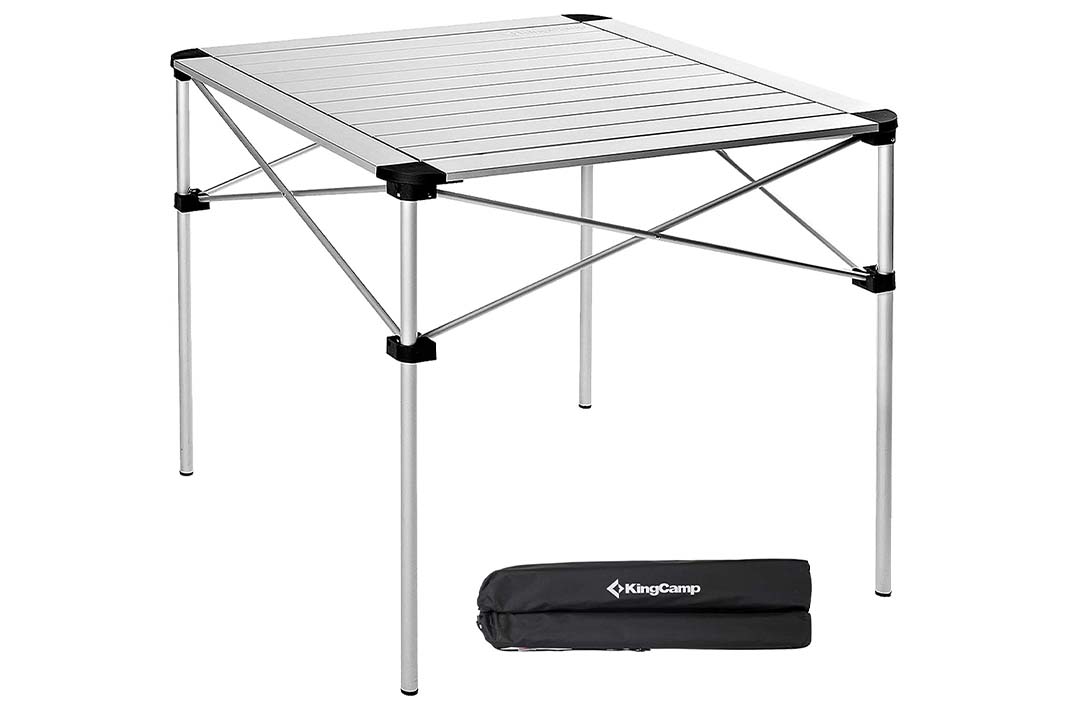
KingCamp KC3961_Silver Camping Table, 27.5"×27.5"×27.1"

4 Folding Table

KingCamp Camping Table (27.5″×27.5″×27.1″)

$69.99 CAD | sail.ca

From van life to backcountry base camping, a folding table gives a classy and ergonomically friendly touch to any campsite. KingCamp’s heavy-duty collapsible table offers a spacious tabletop and enormous 176-pound weight capacity—pile on! Measuring 28 by 28 inches and just over two feet tall, this design accommodates four campers and their hearty dinners. Both tabletop and legs fold up into a compact carrying bag for easy transport. Don’t expect all this convenience to come ultralight though—the steel and aluminum table weighs in at nine pounds.

SHOP AMAZON


Handpresso pump
Handpresso pump. | Photo: Matt Stetson

5 Coffee To Go

$115 | handpresso.com

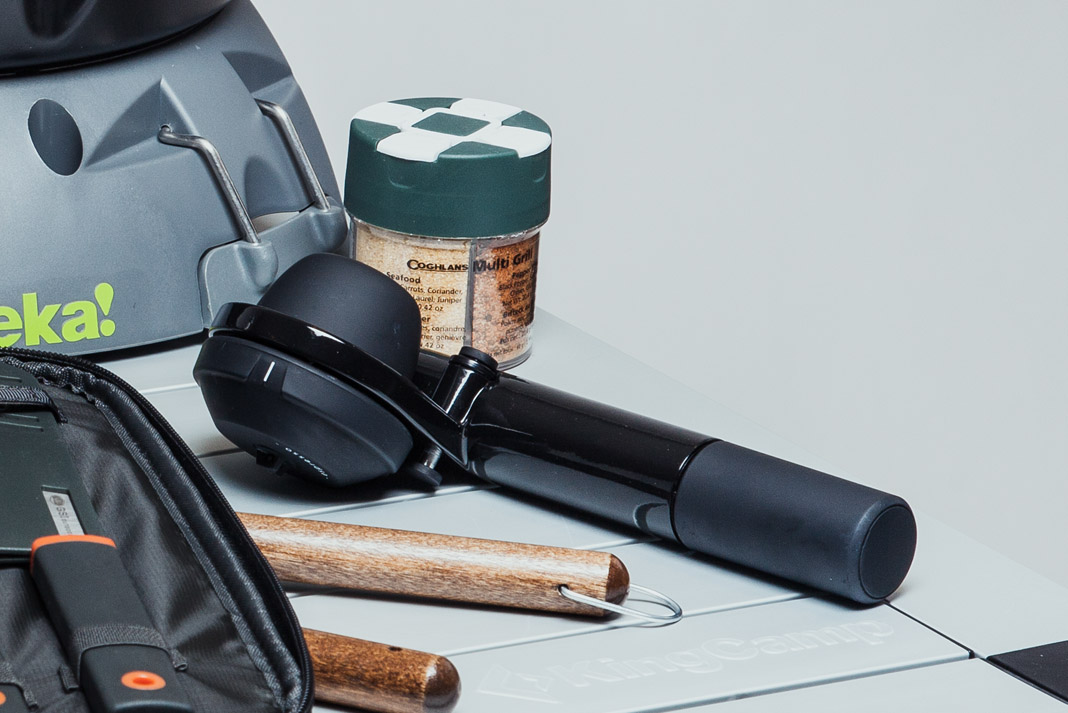
Calling all java addicts. Roll out of your tent and into the comforting arms of a fine espresso thanks to the unique Handpresso pump. To use, pump the unit up to the green bar, pour in boiling water and fill the dome pod with ground coffee. Then lock on the lid and press out your high-quality brew. The Handpresso works off pressure, so no batteries are needed. Yes, this unit weighs a pound more and involves a few more steps than simply dropping a spoonful of instant into hot water, but you’ll overlook that fact after your first taste.

SHOP AMAZON

GSI Santoku Knife Set.

6 Gourmet Knife Set

GSI Outdoors, Santoku Knife Se

$29.95 |gsioutdoors.com

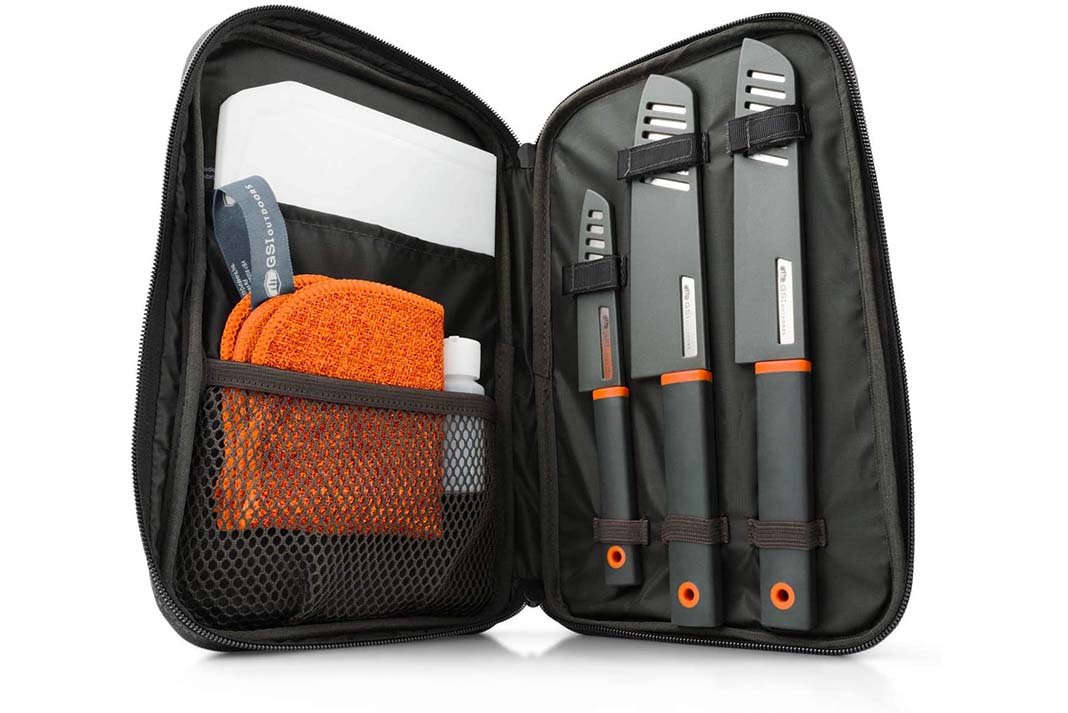
A chef’s knife is the most important tool in the kitchen, so stop making your dull pocket knife work overtime. The GSI Santoku Knife Set includes a paring knife, Santoku blade and six-inch serrated knife. Its compact, stainless steel blades are rockered for kitchen prep and take care of all our slicing and dicing needs. We love the included cutting board, bottle for soap and dish cloth, which are all kept organized inside a handy carrying case.

SHOP AMAZON

Coghlan's Camp Cooker

7 S’more Maker

Coghlan’s Camp Cooker

$16.99 | coghlans.com

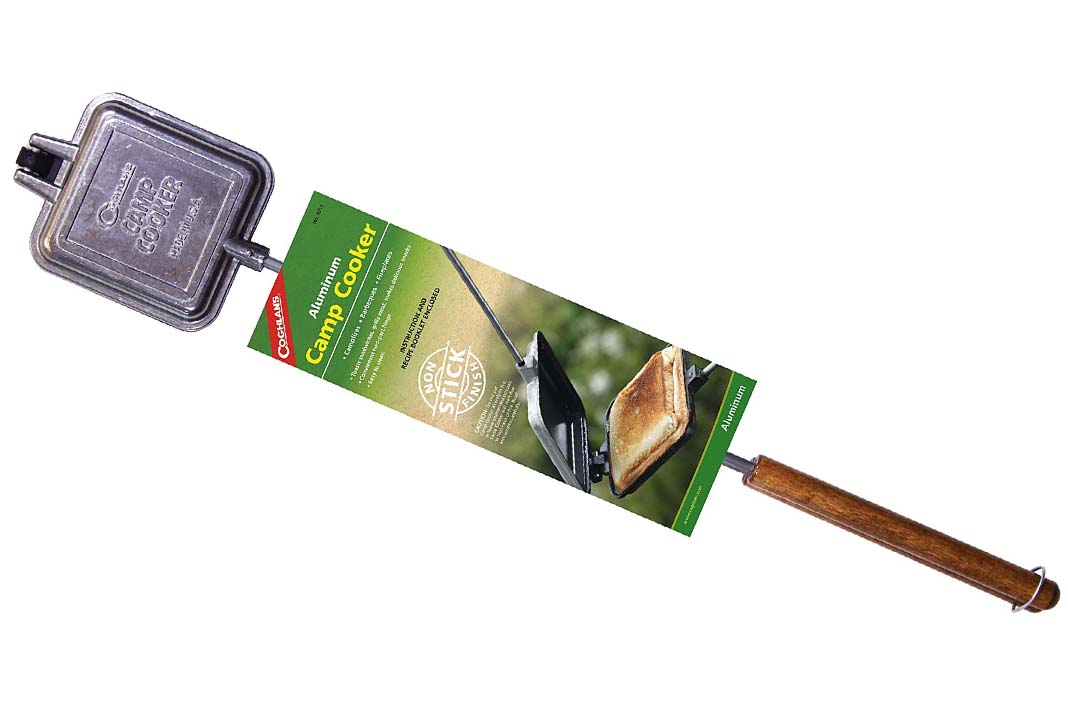
Sure, you could toast sandwiches, grill meat and make awesome tiny pies over an open fire with Coghlan’s Camp Cooker, but where this little tool really shines is in its s’more-making potential. Don’t settle for just graham crackers, marshmallow and chocolate—bring in the gourmet options, like peanut butter, Nutella and M&Ms. The Camp Cooker is made from lightweight aluminum and a two-part hinge makes it simple to use and easy to clean.

SHOP AMAZON

the instant gourmet
Good To-Go’s. | Photo: Matt Stetson

8. The Instant Gourmet

$6.50 and up | goodto-go.com

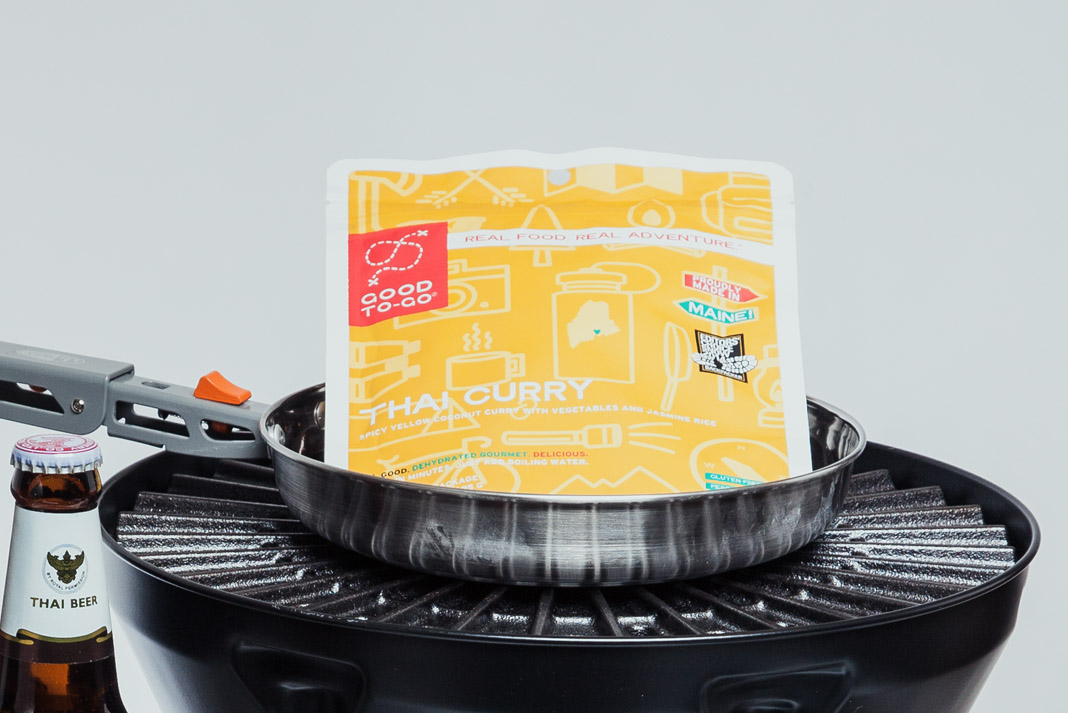
For those hungry campers who want to eat gourmet right now, Good To-Go’s dehydrated instant meals are healthy and delicious. The goal of chef Jennifer Scism is to make meals to suit all diets, so all products are gluten-free, low in sodium, and made without preservatives. Several vegan and vegetarian options are also offered. While Good To-Go offers classic stick-to-your-rib entrees like three-bean chili and red sauce penne, they’ve also bagged less conventional fare, like Indian curries, Thai noodles and Korean bibimbap.

SHOP AMAZON

What It Looks Like To Paddle Amongst Lava

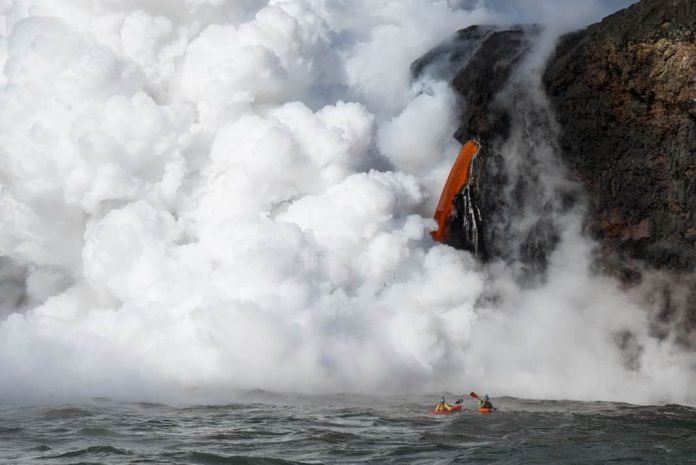
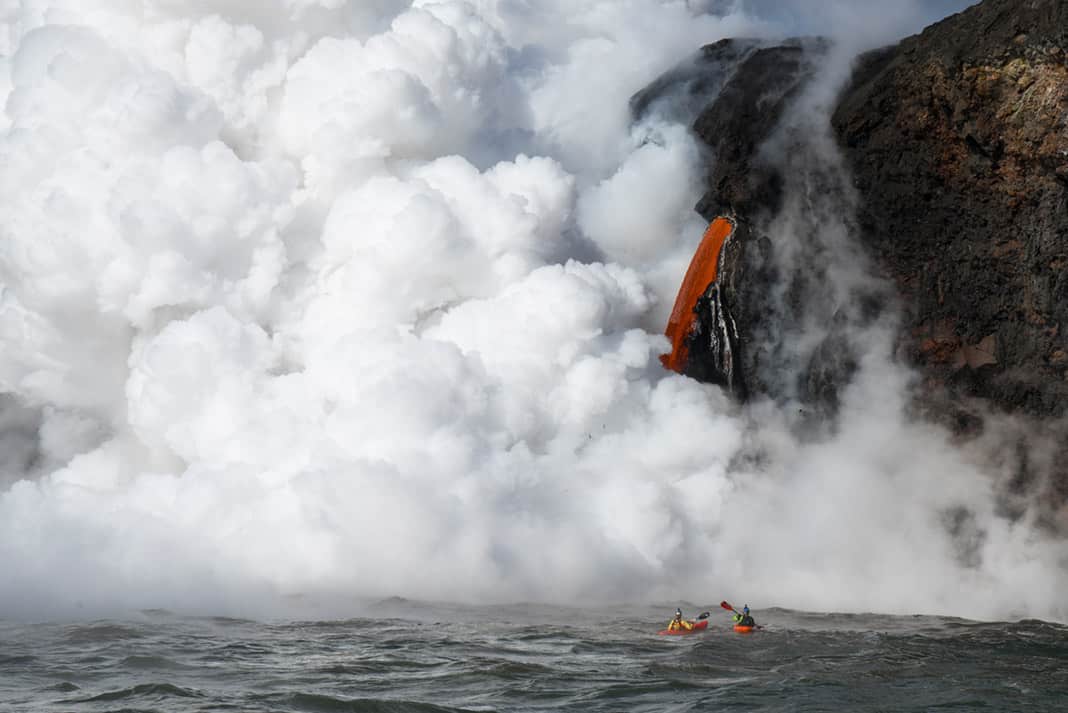
lava pouring out of a volcano into the river causing lots of steam
Photo: Kalob Grady

The second youngest of the Hawaiian volcanoes breaks the surface of the ocean along the southern shores of The Big Island.

Erupting almost continuously since the early 1980s, Kilauea is one of the most active volcanoes on the planet and occasionally creates a true spectacle of water and fire.

On my most recent trip to Hawaii, Dane Jackson, Rafa Ortiz, Nick Troutman and I came across a news story stating one of Kilauea’s lava tubes was pouring molten lava out of the sea cliffs, creating a lava waterfall as the magma plummeted into the salty ocean below.

We wanted to bear witness to the natural phenomenon for ourselves. We chartered a local tour boat and made the mission 20 miles up the coastline from the closest access point, careful to assure our captain we knew what we were doing while intending to paddle as close as possible to the base of the falls.

Our captain was Hawaiian and arranged for us to go explore what he called the “firehose” at a time when no other tour boats would be in the area. We followed the sea cliffs from east to west as dolphins surfed our wake and performed aerial acrobatics.

It was visible where the relentless ocean waters had eroded the sea cliffs, large jigsaw pieces had fallen into the depths below, and where past lava flows had reached the ocean to grow the island.

We saw a few locations where the lava flow had stopped and the lava tubes had sealed themselves. Then we were no longer looking at the shoreline.

Ahead of us, shooting thousands of feet into the sky was a massive billowing plume of white steam, the reaction of molten hot plasma meeting the cool ocean waters below. We urged the captain to drive quicker as we frantically moved to put our gear on. We rounded the final corner and laid eyes on the most incredible natural display of power I have ever had the pleasure of seeing.

lava pouring out of a volcano into the river causing lots of steam
Photo: Kalob Grady

The captain kindly gave us one hour to explore the area. We seal launched off the boat in a frenzy.

We spent the majority of our time hooting and hollering, paddling as close to the lava falls as we dared. The murky brown water was almost boiling.

Small porous rocks often exploded out of the base of the falls as the lava cooled, and after a particularly close call of lava rocks pelting my boat, I paddled back over to our ship, jumped in and pulled out my camera.

Nick and Rafa, lifelong friends, were still sitting together in the water, taking in the final moments of a once in a lifetime opportunity. I snapped this photo before the moment was lost forever.

Lava flows, earthquakes and slumping caused by Kilauea devastated Hawaii’s Big Island in the spring of 2018. At press time, some 6,100 acres were covered in lava and 700 homes destroyed.

Get The Kids Paddling

Doug MacGregor in a kayak practicing his roll

Last fall I attended the first Get Kids Paddling conference. There were representatives from the largest school boards, national nonprofits, international boys and girls organizations and academics from the most prestigious university outdoor programs.

You get the idea. These people care. They would seemingly have the means to make a change, if systemic institutional and cultural change is even possible in these overly protective and litigious times.

After a day of lectures, presentations and breakout groups we left the room agreeing to form a coalition to advise the development of policies implemented by regulatory bodies writing the physical education guidelines for school boards.

Starting a canoe club

As this school year was coming to an end, my son, Doug, had the idea of organizing a canoeing day grade eight class trip. I need to set the stage for you. Access to a quiet flatwater section of river is only 800 meters from the school. The Paddler Co-op, a nonprofit paddling school, is based three kilometers from Doug’s classroom. It doesn’t get any easier.

Doug knows money is tight in his tiny country school. He approached a vested corporate sponsor about covering the cost of the canoeing program. He called the Paddler Co-op for a quote and I agreed Paddling Magazine would cover the full course fees for the entire class.

Doug knew school buses would be a prohibitive expense, so he devised a plan and got his teacher onboard. The students could be dropped off at school early so they could walk an hour to the paddling school.

For the mandatory swim test, Doug had his teacher document swim test evaluations performed by lifeguards at a wave pool during an earlier school trip. Clever little fella.

Armed with initiative, the support of his teacher and a list of obstacles already overcome he approached his principal with his slam-dunk proposal.

When he left her office he was fighting back tears. In his hands was a copy of the six-page physical education safety guidelines for elementary canoeing curricular.

The very guidelines members of the Get Kids Paddling coalition believe is crippling their ability to get kids on the water.

Doug was told he must satisfy all 132 bullet points in these guidelines before his principal would take his request to her superintendent—she wouldn’t support this program and wouldn’t sign off on the activity without school board approval.

I don’t care what activity is being proposed if a student comes forward with this much initiative, our administrators need to play ball. Self-starting student ambition like this needs to be fostered, not crushed by bureaucracy and risk-averse, lazy-minded administrators.

So, Doug and I set about satisfying the requirements. Except as written they are impossible to achieve. For example, the guidelines read: “Prior to canoeing, a prerequisite test must occur in a pool, shallow water, or sheltered bay for which students must demonstrate to the instructor canoe skills, including: pivots, draw and pry strokes, sweep strokes, forward and reverse strokes…” Etcetera, etcetera.

So, how the hell can students demonstrate strokes before they go canoeing, if they can’t go canoeing until they demonstrate these strokes? 

As I write this, Doug is attending summer camp for his eighth summer. He’s been canoe tripping and running rivers with me since he was in diapers. He grasped the fundamentals of canoeing long before he could spell canoeing.

A few months ago, Doug and I attended the East Coast Paddlesports Symposium in South Carolina. Doug enrolled himself in on-water clinics. He learned Greenland rolling skills with Helen Wilson. And he toured Charleston Harbor with ACA instructor trainer Josh Hall. He doesn’t know these are respected paddlers at the top of their fields. To Doug these were just passionate and empowering role models.

Doug wasn’t putting together the paddle day at his school for himself. Like the Get Kids Paddling coalition and his mentors at the symposium, Doug was hoping to get the other 19 boys and girls paddling. He has dreams of starting an outdoors club at the high school.

I have one more reason to get kids paddling to add to the list:

So kids can get other kids paddling. We need to tear up the bullshit restrictions we are placing upon them, feed their dreams and stay out for their way. If we’re lucky we’ll get to go with them. At least until adult supervision is no longer required.

Scott MacGregor is the founder and publisher of Paddling Magazine.