Home Blog Page 217

Tough Love: Teaching Skills To The Next Generation Of Canoeists

a boy and girl working on a canoe
Daniel to Mr. Miyagi: “I learned plenty, yeah, I learned how to sand your decks.” | Feature photo: Scott MacGregor

The headline, “Quit Doing These 8 Things for Your Teen This Year if You Want to Raise an Adult” appeared innocuously in my Facebook feed, shared by a friend from a churchy website about spirituality, relationships and parenting.

The things parents are not supposed to do, according to this triplet rearing mom blogger, is wake up kids in the morning, make them breakfast, pack their lunches and do all the laundry. You get the idea. This wasn’t necessarily a tough love piece. On the contrary, it was about providing skills and routines for success in life.

Tough love: Providing skills to the next generation of canoeists

Shouldn’t this thinking also be true if we want to raise competent outdoor enthusiasts? Don’t we need to provide the happy campers of today the skills and abilities to be the adventurers of tomorrow? Sure we do. Studies show time and time again that the biggest influencer of the next generation of climbers, paddlers, hikers and skiers is families, most often parents. It is not enough to just take them outside. We need to show them the way.

a boy and girl working on a canoe
Daniel to Mr. Miyagi: “I learned plenty, yeah, I learned how to sand your decks.” | Feature photo: Scott MacGregor

From planning to packing, kids can and should help

Outdoor recreation experiences consist of more than just the activity itself. Poring over maps, waxing skis, tuning bike derailleurs, seam-sealing tents and sanding wooden gunwales is all part of the fun. Granted it may not seem like fun to them, at first. But if we do everything and just let our children drop into our family adventures, we are robbing them of the most valuable thing we can give them.

Even before menus and packing checklists come out, I think we need to include kids in the dreaming stage. My kids dream up more adventures than any family schedule would allow. Dreaming is fun. And dreams don’t come true if you don’t flirt with them in the first place.

Without children being part of the preparation, we’re not teaching them valuable and practical planning and organizational skills. This is also the time we can teach them about first aid kits, rescue equipment, stoves and fuel, fishing tackle and secret spices mixed in fish batter.

Packing is as essential for outdoor adventures as it is for business trips.

[ Browse the widest selection of boats and gear in the Paddling Buyer’s Guide ]

Small, meaningful tasks teach children important life skills on and off the water

Make lists with kids and send them off to divvy up piles of the required items. Performing pre-trip inventories together is always a good idea no matter how old we are. We do this every morning when we leave the house. Keys, wallet, phone, coffee. Check.

Nobody goes down a portage trail without a meaningful load. Okay team, this big pile of stuff has to be moved from here to way down there. I don’t have a guideline for how much is reasonable but there is no way anyone is going to the other end empty-handed. The walk together back for another load is one of my favorite times we spend together.

After the trip, too often kids are released to their bedrooms when tents still need to be hung, laundry needs to be started and smoky black pots need scrubbing. Pack-in is when the very important reflection stage of adventure begins. Already the bugs don’t seem as bad or the miles so far. Trip stories are already being exaggerated and the jokes are even funnier now than just a day before.

Our pack-in playlist fires up the troops with Def Leppard’s Pour Some Sugar on Me and winds down with Van Morrison’s lonely Into the Mystic. I always put the last pieces of gear away with tears in my eyes.

I know it would be faster to do all these jobs ourselves. Getting things over with isn’t my goal. Maybe I’m trying to raise outdoorsy adults or maybe employing their help just buys me a few more hours together on a clock that stops ticking after 18 short years.

When we truly succeed as parents we win by losing. Our children will dream up their own adventures and ultimately their own lives. And because we’ve given them the skills to plan, pack and head out on their own, the best we can hope for is to be invited to join them, so long as we do our fair share.

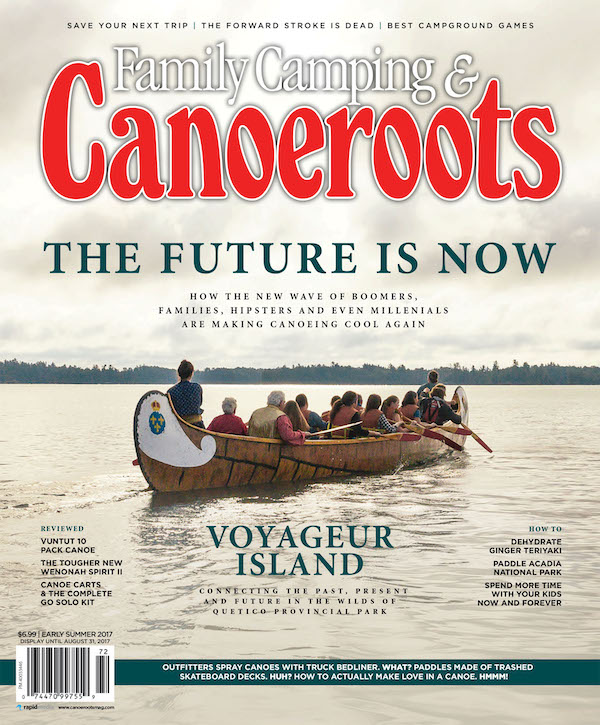
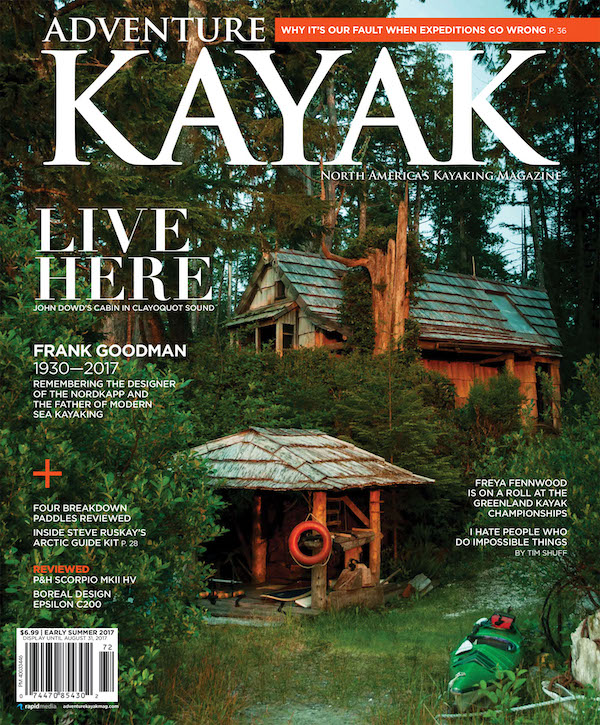
Cover of Early Summer 2017 issue of Canoeroots MagazineThis article was first published in the Early Summer 2017 issue of Canoeroots Magazine. Subscribe to Paddling Magazine’s print and digital editions, or browse the archives.


Daniel to Mr. Miyagi: “I learned plenty, yeah, I learned how to sand your decks.” | Feature photo: Scott MacGregor


Where Have All The Conservationists Gone?

a person whitewater kayaking in a set of rapids on a river at dusk
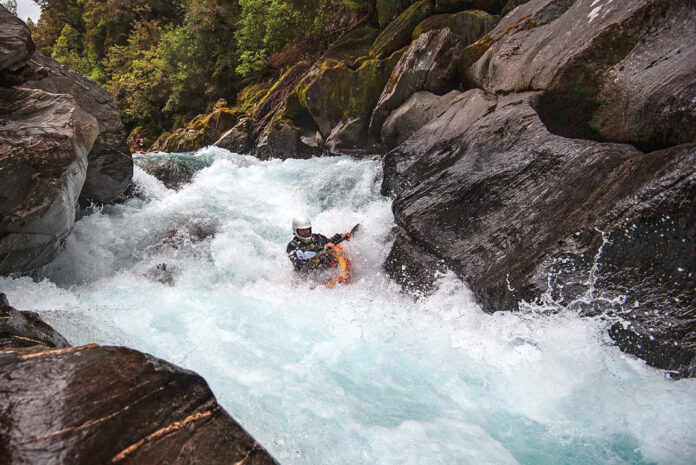
River conservationists, stake your claim before it’s too late. | Feature photo: Tegan Owens

Alchemy is the ancient science and philosophy of turning something base into something precious. This was the starting proposition guiding the writing of this column way back in 1999 and still is to this day. Longtime readers will recognize two themes occupying this space: risk and reward and the valuing of our rivers. Lately it has been more of the former and less of the latter. My pessimistic self senses paddlers today collectively value our rivers less than we did in the past and less than we should.

Where have all the conservationists gone?

There was a time when being a river runner meant being an environmentalist. Through the 1960s, 70s and 80s—the dam building heydays—many of the significant battles to protect rivers were led by river guides. Heck, the only people who even knew the existence of some of these rivers were paddlers. The only people who realized what was at stake were whitewater paddlers.

overhead drone shot of a hydroelectric dam in Oregon
During the dam building heydays, being a river runner meant being a conservationist. | Photo: Dan Meyers/Unsplash

This isn’t the case anymore. With some notable exceptions—and not to downplay the disproportionately large role a few individuals play—river runners have all but disappeared from the river protection conversation.

The overwhelmingly good news story out of this is that now other people care. Lots of other people. Rivers, unlike pre-1990s, have legions of defenders. River protection used to be anti-development, counter-culture and on the fringes of society. It has now become mainstream, main street and second only to a more generic climate change in the average person’s understanding of the importance of the environment.

Changing coalition meets a new range of threats

Leading the new river protection movement are First Nations groups in Canada and Native Americans in the United States, people who have always cared but lacked a mechanism to state their concerns. Second are local citizens and landowner groups. There is also the greater public which has proven on occasion to mobilize around key environmental issues—river or otherwise.

What’s important here is the changing nature of the threats to our rivers. Big hydro-electric used to be the big problem. This is less so today, although micro-hydro still rears its ugly head in various regions every five or so years. Big dams are, well, big. Big environmental impacts, big dollars and with sensibilities, pretty straightforward to argue against.

More insidious are today’s threats: water quality degradation, ecological habitat destruction, water exports, withdrawals and ambivalent legislative protection that represent slow incremental and watershed-wide creep rather than the focused crisis of a dam project.

River conservationists, stake your claim before it’s too late. | Feature photo: Tegan Owens

Consumers, not conservationists

At the take-out, I don’t hear many paddlers talking about what rising water temperatures will do to fish stocks or what acidification is doing to aquifers. At a very concrete level, these things won’t affect the shape of GoPro Wave or Big Huck Falls. Whitewater paddlers have become consumers of rivers rather than vested stakeholders.

Mountain bike groups and cross country ski clubs build the trails they recreate on. Fishing clubs sink money and manpower into restoring fish habitat. As paddlers we get our staggeringly amazing resource for free. Just because we don’t have to pay for it does not mean it is not worth anything.

Modern social media-centered paddling has turned rivers into nothing more than a series of features, with nothing in between them or connecting them. You may hear a paddler explain that there is really nothing between McCoy’s and The Lorne on the Ottawa River, or between Sunshine and Toilet Bowl on the Green River. The whole thing is a river.

Taking a holistic view

As paddlers we are pre-occupied with only the splashy bits, but that pales in comparison to the ecological and magical value of the whole headwaters-to-ocean thing. We need to recognize that what is upstream of the put-in and below the take-out is vitally important. We are getting a free ride on a precious resource. One that we are not so vocal about defending, short of a dam proposal.

So how do we move from consumer to steward? There are a few key groups at the provincial, state and national levels working hard. But more important is local ownership. We must stake a claim to a river we call home and make it our own, getting organized and contributing to caring for it, alongside other paddlers and other stake holders who share it with us.

Jeff Jackson is a professor at Algonquin College. Alchemy is a regular column in Rapid Magazine.

This article originally appeared in the Early Summer 2017 issue of Rapid. Subscribe to Paddling Magazine and get 25 years of digital magazine archives including our legacy titles: Rapid, Adventure Kayak and Canoeroots.

River conservationists, stake your claim before it’s too late. | Feature photo: Tegan Owens


Moving Forward: Why The Most Important Solo Whitewater Canoeing Stroke Is Dead

Photo: Scott MacGregor
The evolution of solo whitewater canoeing means going forward with new strokes

Paddling a solo canoe in whitewater has evolved. We no longer paddle small tandem boats, but solo ones—a very different craft that cannot be paddled in the same way as when sitting on the bow seat facing the stern. As solo canoes have gotten smaller, new techniques have emerged to paddle these new boats.

Back when we were solo tripping canoes in whitewater, lakewater strokes still worked. The J-stroke worked and purists remained pleased.

When the first generation of solo whitewater canoes came along we paddled them from the center of the boat. Our old techniques were not as efficient so adaptations ensued. The river-J, formerly know as the goon stroke, was employed as a quicker, more stable correction stroke to follow a powerful forward stroke. Solo boaters were born. Purists scoffed.

This led to that Holy Grail of the perfect forward stroke—a completely vertical paddle shaft, extension to the bow of the boat, torso rotated and wound up like a spring and a powerful unwind for the power phase. Follow this with a subtle stern pry pop and you will not slow momentum. I’ve spent the better part of my adult life working to perfect this forward stroke and I have taught it like this on every course to every student and every instructor over the last 20 years. It was a hard-won badge of honor to achieve. A new generation of purists was born.

That beautiful forward stroke did one thing and one thing well—it propelled a canoe forward in a straight line.

New solo canoes, new ways to paddle

This, however, was still tandem mentality, except that solo paddlers have to do both the bow and stern paddlers’ jobs of power and steering. As solo whitewater canoes have shrunk in length and hull designs have become more advanced, the new boats do not want to go in a straight line. Turns out they want to be carving one way or the other.

Advanced paddlers found themselves paddling in new ways. This included speeding up stroke rates and changing the placement or angle of the blade, dropping the t-grip and sweeping to change an arc and paddling up front for steering and control, tilting or flattening the boat for arc control. Skilled paddlers were carving their boats and driving them forward with no stern correction strokes whatsoever. Purists were confused.

Does the former stroke still get employed? Yes and no. The twisted torso, vertical shaft and extended blade is in the mix but it is no longer the default stroke. Solo boaters instead have many strokes in their arsenal to propel solo canoes, each with its rightful place for controlling the journey.

Each stroke is employed for a specific purpose. A stroke off the hip with an angled paddle shaft straightens an arc. A stroke in tight to the hull at the bow tightens an arc. A sweeping stroke switches an arc to the offside. These variations are being blended together to allow subtleties in control that were simply not possible when paddling a solo canoe like a tripping canoe paddled solo.

I no longer teach the forward stroke. I now teach various techniques to propel the canoe along a desired path. This is what paddling in whitewater is all about. Paddling is a dance with the river. It’s made possible by placing your canoe in the right water, at the right angle, with the right momentum.

It is a beautiful sight to see an accomplished paddler dance with the river, moving effortlessly across a wave or carving into an eddy. It is this end result, no matter the canoe, that is the mark of a beautiful paddler— not one particular stroke. —Andy Convery 


This article originally appeared in Canoeroots
Early Summer 2017 issue.

Subscribe to Paddling Magazine and get 25 years of digital magazine archives including our legacy titles: Rapid, Adventure Kayak and Canoeroots.
The Paddler’s Guide To Acadia National Park

Photo: Jerry Monkman
Acadia National Park canoe trip destination.

We love to hike Acadia National Park‘s bald granite summits and bike its 50 miles of carriage roads but when we really want to experience the quiet of Acadia we jump in our canoe. A canoe is the best way to see wildlife in the Park.

Kayaking in Acadia National Park is also popular and will be sufficient in allowing you to explore the beauty of the Park from the water and cover more distance on your tour.

Most of Acadia National Park’s 47,000 acres is located on Mount Desert Island, a road-accessed island on the northeastern coast of Maine. This means the Park is as much about the sea as it is about the mountains. The ocean waters of Acadia National Park contain a myriad of paddling opportunities rich in wildlife. We often spot seals checking us out as we paddle and occasionally we are startled by the nearby exhales of harbor porpoises as they surface to breathe between dives.

The dozens of small islands surrounding Mount Desert provide great lunch-time destinations, at times however several can be off-limits to paddlers due to nesting eagles.

While backcountry camping is not allowed in the park, the Maine Island Trail Association maintains campsites on private islands along the Maine coast including several in the area near Acadia National Park.


Annual visitation
Acadia National Park is one of the United States’s most visited national parks and sees between two million and three million visitors every year.
Summer temperature
In the summer, you can expect temperatures anywhere from 50 to 86 degrees Fahrenheit.
Wildlife
Whitetail deer, red fox, and beaver are common. You may also spot Atlantic puffins among other seabirds as well. Harbor and grey seals as well as harbor porpoises are common throughout the in-shore waters.

Canoeing in Acadia National Park

If you have half a day

Try the 5-mile paddle upstream and back on Northeast Creek on Mount Desert Island. You’ll find parking on the east side of ME Route 3, 2.5 miles east of the Park’s Thompson Island Information Center. Current is negligible and within the first mile you enter Fresh Meadow, a boggy wetland filled with birdsong and wildlife sightings, including great blue herons, belted kingfishers, river otters and whitetail deer.

If you have a day

Start with a sunrise paddle of Eagle Lake. Views of Cadillac Mountain, the tallest on the United States Atlantic coastline, will be with you the entire time as eagles and osprey circle above. After enjoying Eagle Lake, head over to nearby Jordan Pond, stopping first for lunch on the lawn at the famed Jordan Pond House—reservations recommended. A late afternoon paddle on Jordan Pond usually involves common loon sightings and the occasional visit by peregrine falcons which nest high up on adjacent Jordan Cliffs.

If you have a weekend

You can paddle around the Cranberry Isles, which are just off the southern coast of Mount Desert Island. Spend the night camping on tiny Crow Island. You’ll need to join the Maine Island Trail Association for access. Or stay at one of the handful of bed and breakfasts on Little Cranberry Island, otherwise known as Islesford.

If you have a week

You can island hop in the Acadian Archipelago, a collection of islands in eastern Penobscot Bay. Navigate your chosen route to Isle au Haut, an island six miles off the coast of Stonington, Maine. It hosts an Acadia National Park campsite where you can reserve a lean-to for up to three nights. Reservations are recommended for Isle au Haut.


6-day kayak trip itinerary

Day 1: Leave Bar Harbor and set out for Blackwoods campground.

Day 2: This is a day to do some hiking and exploring.

Day 3: A full-day paddle following the shoreline up Somes Sound and back down to the next base camp at Seawall campground.

Map of Mount Desert Island
Illustrated by: Lorenzo del Bianco

Day 4: Explore the rugged west side, paddling to Seal Cove and then back to Seawall campground.

Day 5: Paddle to Baker Island for some exploring and lunch, and then back to Blackwoods campground.

Day 6: Head back to Bar Harbor, taking the time to paddle by the smaller Porcupine Islands and keeping an eye open for whales.


While you’re there

Diversion

Take a whale-watching tour from Bar Harbor. Minke, humpback, and fin whales are all spotted in the off-shore waters of the Gulf of Maine.

Must-see

Sunrise from the summit of Cadillac Mountain. A road leads to the bald top of Acadia’s highest mountain, the first spot in the United States to be touched by sunlight every morning.

Best eats

Café This Way in Bar Harbor for breakfast, and Beal’s Lobster Pier in Southwest Harbor for the classic Maine lobster pound experience— fresh boiled lobster and corn on the cob with a sunset view.

Luxury

Stay at the Bar Harbor Inn overlooking Bar Harbor and the Porcupine Islands.


Plan your trip

Rentals

Find canoe and kayak rentals in Acadia National Park from the following companies:

Tours

Acadia National Park kayak tours run the gamut from short, two-hour excursions to multi-day adventures. See the companies below for offerings:

[ Paddling Trip Guide: View all canoe and kayak trips in the United States ]

Must-haves

Binoculars and a seaworthy canoe set up with full a spray deck for in-shore paddling routes and island-hopping. Maine Island Trail Association membership available at https://mita.org/join/.

These articles originally appeared as “Dream Departures: Acadia National Park” in Adventure Kayak‘s Spring 2006 issue and “Put-In: Acadia National Park” in Canoeroots’ Early Summer 2017 issue. Subscribe to Paddling Magazine’s print and digital editions here, or browse the archives here.


Marcy and Jerry Monkman first discovered Maine’s Acadia National Park in 1989. Experienced backpackers, the Monkmans were looking for an alternative way to explore the outdoors after Marcy injured her foot. Paddling in Acadia National Park was the perfect antidote. The Monkmans have visited every year since and have written three books about the park, including AMC’s Outdoor Adventures: Acadia National Park published by AMC Books. 


This article originally appeared in Canoeroots
Early Summer 2017 issue.

Subscribe to Paddling Magazine and get 25 years of digital magazine archives including our legacy titles: Rapid, Adventure Kayak and Canoeroots.
 

What’s The Worst Job You’ve Ever Had?

whitewater kayaker descends a large waterfall
Take this job and shove it, I ain’t working here no more. —Johnny Paycheck | Feature photo: François Nadeau

We all get our start somewhere in the working world, and whitewater kayakers are no exception. Whether it’s a clever off-season strategy or a one-off gig to make ends meet, we polled the pros for their worst off-season jobs. Here’s what some of the world’s best do when they would rather be paddling.

“I have worked 15 years at the Octoberfest in Munich serving beer to very thirsty people. My work days were 14-hour shifts filled with beer farts, puke, loud music, drunk tourists and locals stumbling around each other (my tent takes 10,000 people) and once in a while having to drag somebody off to first-aid for injuries.
Fourteen days of craziness each year paid for all my plane tickets for the winters for 15 years though, so I consider it a winning situation.”

— Mariann Saether

“When I was 17, I worked at Burger King for a couple months to make enough money to fly to Europe to go kayaking. After seeing what goes on inside, it made me never want to eat fast food again.
The part that sucked the most was that this job was going on during the spring melt and I missed several days of kayaking including the best day of Bus Eater that whole spring. I quit the next day.”

— Nick Troutman


“Technically that would be digging graves, but I was working for the Fusilli family so it was actually a pretty good time.”

— Bren Orton

“Taking out the trash. Just kidding, I still have that job.”

— Dane Jackson


“My first job out of college, I worked for a bank. Not the ideal job for someone who wants to be outside and on the water as much as possible.”

— Joe Pulliam

“That one time my parents made me do the dishes. Does that count?”

— Sage Donnelly


“I worked seasonal construction for nine years. We did lots of concrete and the worst job was the rare occasion when I had to hold the traffic sign. It’s good money but a person could go insane holding a sign for eight hours.”

— Ben Stookesberry

“I was a doorman in Whistler at a bar called Citta when I was 19. It was so boring. No one thought I was a doorman because I looked so young so everyone walked past me. I sucked at it, I was supposed to ID everybody and keep people out at capacity. But I would tell them to just go use the other entrance.
The best part was bussing tables and cleaning up the patio because I could actually do something.”

— Ben Marr

“When I was 18 I worked at a grain elevator. The worst part of the job was when there would be a jam in the underground grain catching area and since I was the young new guy, my job was to climb down and bucket out the grain.
The grain filled the air and I had to wear a mask and goggles to deal with the dust. It was really hot, itchy and uncomfortable.”

— Erik Boomer

Take this job and shove it, I ain’t working here no more. —Johnny Paycheck | Feature photo: François Nadeau

cover of Rapid Magazine, Early Summer 2017 issueThis article was first published in the Early Summer 2017 issue of Rapid Magazine. Subscribe to Paddling Magazine’s print and digital editions, or browse the archives.


Take this job and shove it, I ain’t working here no more. —Johnny Paycheck | Feature photo: François Nadeau


How Skateboards Can Make Great Paddles

Photo by Andrew Szeto
SO, HOW MANY SKATEBOARDS DOES IT TAKE TO MAKE ONE PADDLE? | PHOTO: ANDREW SZETO

Skateboards and canoe paddles are both largely made from wood. The material partnership seems to go hand in hand, except that it doesn’t. When you think canoe tripping you think serene reflections in glass calm waters, baking bannock over an open fire— you don’t think about concrete bowls, handrails and ollies.

Andrew Szeto is an Ottawa, Ontario resident with an affinity for all things stoke and his eye-catching paddles have stirred nothing less in the world of social media. Building two paddles week, each using four to five skateboards per paddle to get the colors just right, Szeto admits the paddlers are certainly a labor of love.

Paddles aren’t the only thing Szeto has crafted with recycled skateboards. Other items include: levitating planters, coffee tampers, stools and dutchmen wood joints in dining tables. Though he admits, “Once I made a paddle I was hooked.”

“I think there’s definitely a common joy of the outdoors and exploring new areas and challenging yourself with new, difficult and interesting terrain,” proposes Szeto, when asked how he related skateboarding to canoeing.

As a day job, Szeto is the multimedia officer for the Canadian Coast Guard, creating engaging social and online content. A busy body no doubt, Szeto also happens to be a freelance videographer and photographer, with published work in skateboarding magazines all over North America and the founder of Maru The Circle Brand, a design and goods company based in Ottawa.

The paddles are unique and delightful, but there’s more to the feathery templates than meets the eye. Szeto’s paddles start at $300 a piece, but for every one Szeto sells, he gives 10 percent to a not-for-profit organization, For Pivot’s Sake.

Photo by Andrew Szeto
SO, HOW MANY SKATEBOARDS DOES IT TAKE TO MAKE ONE PADDLE? | PHOTO: ANDREW SZETO

For Pivot’s Sake provides programming and skateboards to underserved communities in the Ottawa area as well as Iqaluit, Nunavut. Skateboarders are encouraged to bring their used boards to For Pivot’s Sake to be donated to children instead of throwing them out. They also accept broken boards, which in turn are given to Szeto to make new paddles.

Having provided two photography workshops through For Pivot’s Sake, Szeto says, “It’s a lot of fun working with the kids, and hopefully making an impact.”

Through a partnership with Canadian North Airlines, and the city of Iqaluit, Szeto along with co-director of For Pivot’s Sake, Aaron Cayer and other skateboarders travelled to Iqaluit. Szeto taught the youth how to capture skateboarding photography and videography, donating lenses the youth could use on their phones. Along with used equipment, For Pivot’s Sake also donated brand new blank skateboards so the kids could design their own board art.

Although Szeto hasn’t really marketed his paddles, he has received a lot of inquiries on social media from everyday people to canoe manufacturers like Nova Craft Canoe. Before he knew it, Szeto was collaborating with Nova Craft on his very own custom-built Prospector 16’.

Due to Szeto’s substantial following on social media, his creativity with recycled skateboard paddles and strong visual content, Nova Craft’s sales and marketing assistant, Sara Mills says, “It was a natural decision for us to reach out to him. He’s a super enthusiastic ambassador for having fun in the outdoors and that’s what we’re all about.”

The Prospector 16’ will be oxblood in color with ash trim and custom made decks by Szeto himself out of none other than recycled skateboards.

Szeto will be doing what he does best, stoking adventurers souls full of wanderlust with dreamy visual content for Nova Craft.

The plan is to take the canoe everywhere with him this summer.

“Canoes and skateboards, it’s all about being outside and having fun ways to get from point A to point B,” chuckles Szeto.


This article originally appeared in Canoeroots
Early Summer 2017 issue.

Subscribe to Paddling Magazine and get 25 years of digital magazine archives including our legacy titles: Rapid, Adventure Kayak and Canoeroots.
Keep Safe Paddling in Mind with the ACA Safety Series

ACA
Go through your checklist before getting on the water

Use these infographics to share tips on paddling safely. From kayak fishing, to canoe tripping, to standup paddleboarding, we can all do our part to promote safety on the water.

Youth Paddling FINALYouth Paddling FINALYouth Paddling FINALYouth Paddling FINALYouth Paddling FINALYouth Paddling FINALYouth Paddling FINALYouth Paddling FINALYouth Paddling FINALYouth Paddling FINALYouth Paddling FINALYouth Paddling FINALYouth Paddling FINALYouth Paddling FINAL

Web Editor/Assistant Editor Wanted

Photo: Rapid Media
Rapid Media office on the Madawaska River.

Rapid Media is the world’s leading paddlesports media company. We produce Adventure Kayak, Rapid and Canoeroots, which are now united inside Paddling Magazine. Paddling Magazine includes our annual Paddling Buyer’s Guide and the new annual Paddling Trip Guide. We also produce Kayak Angler, the world’s leading kayak fishing magazine brand. Rapid  also produces the Reel Paddling Film Festival and World Tour. Over the last 20 years we’ve worked hard to become North America’s paddlesports authority.

WEB EDITOR/ASSISTANT EDITOR

Responsibilities include planning, coordinating, writing and editing, and ensuring deadlines are met and content moves smoothly to publication. The goal is to provide exceptional, engaging and informative stories that paddlers want to read.

Expect to work in a variety of platforms, including writing for web and print, as well as shooting some photography and video, and engaging on and growing our social media.

You should have an understanding of paddling—including whitewater, canoeing, kayak touring, kayak fishing or standup paddleboarding—and the paddling industry. Our readers are paddling enthusiasts.

The ideal candidate is in-house, full-time and year-round. 

 Qualifications

  • Proven experience as a contributing writer or editor
  • Strong writing, editing and proofreading skills with an excellent portfolio
  • Experience with social media platforms and SEO 
  • Ability to manage multiple, overlapping deadlines
  • Thrive on telling stories important to paddlers
  • A grasp of the finer points of the paddlesports industry, boats, gear, etc.
  • Clever wit and marketing savvy for writing punchy display copy
  • Education in journalism, professional writing, marketing, publishing and/or media
  • Photography and videography skills an asset
  • Strong desire to live outside the city and paddle, bike and ski rather than go to the mall

Additional Information

We are located in Palmer Rapids, which is a small community with a big heart and quite a bit going on throughout the year. Our office is on the river-right bank of the Madawaska River, five minutes downstream from class II-III+ Palmer Rapids, less than an hour from the mighty Ottawa River, and right in the middle between Algonquin Park and Calabogie Peaks ski resort. We paddle, ride bikes and ski regularly and go swimming from the dock at lunchtime.

The position is currently based out of our office in Palmer Rapids. Alternative longer-term (think a couple years of in-house work first) arrangements may be made after you become familiar with our business. We are only two hours to Ottawa, and three hours to Toronto.

Our team consists of a publisher, three editors, film festival tour coordinator, director of sales, advertising and sponsorship coordinator, designer and production coordinator, marketing coordinator, digital project manager, circulation manager and account manager. Most of us wear flip-flops and have never once sat at our desks wearing a tie.

HOW TO APPLY

Sound like the perfect combination of work and play? Send your CV to publisher@rapidmedia.com. Please include a link to your portfolio. Please also provide a boat or board review that could appear in one of our magazines.

Thanks to all applicants. Only those selected for interviews will be contacted.

If you think this job is awesome but not the perfect fit for you, please forward this posting along. Thanks for doing so. Feel free to visit our website and see everything we do: www.rapidmedia.com

CONTACT

Scott MacGregor, Founder and Publisher

Rapid Media

publisher@rapidmedia.com

How Old Town Is Changing Waterfowl Hunting

Photo by Old Town
An overhead shot of a person paddling a kayak, with grass coming out of the water.

A sales manager, an engineer, an accountant, a ski coach, a pastor and a biologist paddle their canoes in the dark. It sounds like the start of a bad joke, but it’s actually just a scene from a recent hunting trip with Old Town.

In December of 2016, ten Maine sportsmen embarked on a multi-day duck hunting trip in Old Town canoes and kayaks covering Maine’s two distinct, and very different, regions. Day one took place on an interior lake in Penobscot County with the group looking for Mallards, Black Ducks, and divers. The second day brought the group to the rocky islands of Casco Bay, where Eiders, Scoters, Goldeneyes and Longtail ducks like to feed on oysters.

Conversations among Maine sportsmen are usually dominated by moose, deer, pike, salmon, and other popular game – but there is one Maine tradition that tends to fly under the radar in Vacationland: waterfowl hunting.

“The action of waterfowl hunting is so much better than any other type of hunting I’ve ever experienced,” said Sean Molloy, pastor and avid hunter. “To have birds come in and decoy around you – it’s thrilling and exciting, and a lot of fun.”

With help from Avian X, Zink Calls, Yamaha Motors, Jetboil, Filson and Goal Zero, the guys loaded up their Old Town boats and hit the water as Maine sportsmen have been doing for generations.

Old Town dog
Old Town canoes are stable enough for you and your retriever.

Using a variety of boat types, the group was able to haul all ten hunters, decoys, a photographer and all of his camera gear, and various supplies for everyone. The Discovery 169, Discovery 133 and Discovery Sport 15 (outfitted with a Yamaha F4 outboard) did the heavy lifting, transporting camera gear, decoys and anchor systems, and a German Shorthair Pointer named Echo, with ease.

Growing up, Maine Master Guide Jeremy hatch always used an Old Town Canoe, a tradition he is proud to keep alive today. He was quick to realize the benefits of hunting from an Old Town.

“When it comes to loading two dozen decoys, dogs, you can really load up and put in a lot of materials,” he said about the Discovery 169. “When you get into high water it can really give you a safer platform to hunt out of. I know these boats are being designed and built by folks that are using them for the same reasons I am, and it shows in the final products.”

The Predator kayaks, designed specifically with waterfowlers in mind, provided an all-in-one hunting platform. The hunters were able to transport blind bags and shotguns on the deck and fill the click seal bow hatch with decoys, food, water, and blind-building materials.

old town fixed
Old Town boats can get you to locations that no other boat can. Photo by Old Town.

Scott Marquis, a longtime Maine waterfowler, claims that the Predator PDL changed the way he approached duck hunting.

“Hunting out of a kayak certainly helps my access. There’s plenty of room to fit all of my decoys, my gear, my cases of shells. I’m able to get to parts where people with motor boats aren’t able to get to. Setting longlines in the dark is no easy feat, but with the PDL I was able to get our spread set up in a matter of minutes.”

Once the decoys and gear were ready to go, it was time to get into position and wait for the ducks to fly. By backing the kayaks into tall reeds and grass, adjusting the Element Seating System, and throwing some grass and mud over their legs, the hunters virtually disappeared into their surroundings. And when it came time to retrieve a fallen duck, the Predator made it quick and easy.

Duck hunting requires a lot of gear – a typical spread can contain several dozen decoys, blind building material, and ample ammunition for a full day of shooting, which creates a roadblock for many potential hunters. How are you supposed to get all of that gear to a remote location on the water? Walking longer than a couple hundred yards loaded up with gear is exhausting and time consuming. Larger boats offer the capacity to transport everything, but accessing marshy and muddy locations can be nearly impossible, and concealing your boat from curious birds can be tricky and expensive.

old town 1
The Old Town Predator is perfect for waterfowl hunting. Photo by Old Town.

“There are places I hunt that I just can’t get to by walking or by having a big boat,” claimed Molloy. “The kayak gives me the ability to easily get to where the birds are.”

Old Town canoes and kayaks, designed specifically with sportsmen in mind, make it easier to transport gear, access rugged and remote locations, and give hunters a safe platform for hunting in nearly any conditions.

When the group returned to the boat launch on the afternoon of day two, the results were pretty clear. Mallards, Eiders, Longtail, and a Goldeneye all served as a testament to not only the bounty of Maine’s beautiful waterways, but the versatility of the Old Town canoes and kayaks that make them more accessible. 

Record Scratch: Why You Shouldn’t Reach For The Impossible

a kayaker carries a kayak across the road
These swashbucklers make breaking world records seem as easy as crossing the street. | Feature photo: Gabriel Rivett-Carnac

I got really frustrated the day I heard about Colin O’Brady. The guy obliterated the seemingly impossible Explorers Grand Slam World Record. The Explorers Grand Slam is the name given to a challenge so obscure that I never even knew it had a name: climbing the highest mountain on each of the seven continents and trekking to both poles. In 2016 O’Grady became the youngest and fastest ever to complete this ludicrous endeavor, all with the goal of raising a million bucks for his own charity. I mean, how utterly annoying can you get!

Or take the so-called Iron Cowboy, James Lawrence, who in 2015 completed the seemingly impossible goal of doing 50 Ironman-distance triathlons in 50 states in 50 consecutive days. Lawrence had already set two world records for the most triathlons completed in a year, but apparently this wasn’t challenging enough.

Record scratch: Why you shouldn’t reach for the impossible

What’s wrong with this? Well, on the face of it, nothing. How can you fault these guys? They overcame detractors and incredible adversity to accomplish something nobody else has ever dreamed possible, and they did it all for a good cause (both, weirdly, to combat obesity).

I’m not saying these guys shouldn’t do these things, although I do question the extent to which raising money for charity automatically gives an otherwise absurd act a gloss of irreproachability. When I read Lawrence’s story, the next news item was about a guy who climbed Kilimanjaro carrying a bathtub to raise money for children in the Amazon. But on some deeper level, in that inner voice that I don’t share with others for fear of being shunned, I just hate hearing about people who do incredible things.

a kayaker carries a kayak across the road
These swashbucklers make breaking world records seem as easy as crossing the street. | Feature photo: Gabriel Rivett-Carnac

It’s hard to explain why I feel this way. Partly it just makes me feel like my own life sucks. I mean talk about adventure inflation: what these guys did totally ups the ante for any feeling of outdoor accomplishment. If you ever thought you’d done something great—or at least had a decent excuse not to—forget about it!

I’ve tried doing the impossible, and I wasn’t impressed with the result. I tried to climb one of the Seven Summits once—the easiest one. It was really cold, scary and it gave me a headache! I never made it to the top, but I used to think I was pretty cool for trying. Not anymore! Colin O’Grady climbed all seven, and then went to both poles in 139 days—all after surviving a horrible burn accident and being told by doctors that he might never walk again.

I also did one Ironman triathlon once. I trained for a whole year and it exhausted me and threatened to destroy my marriage, but I felt like I’d accomplished something big. Not anymore! James Lawrence banged off 50 Ironman races, while toting his five young children and his cheerful, supportive spouse in an RV. Why? “To accomplish the impossible.”

Recognizing the value of what’s possible

Screw the impossible. We need these people to stop cheapening the impossible by accomplishing it so much. From as far back as Jesus with his loaves and fishes, we’ve got plenty of evidence that miracles happen. World records fall daily. It’s old news. Besides, just because something’s impossible doesn’t make it worth doing. There are loads of totally possible things that don’t get done nearly enough.

I know my life doesn’t really suck. I have a decent thing going: a good job, a healthy family. By various global measures, I’m somewhere near the top 1 percent. I should be satisfied. But it’s very hard to feel satisfied with swashbucklers like O’Brady and Lawrence swaggering around the planet ballyhooing about how much more extraordinary we can all be. The purpose of O’Brady’s exploits, according to the podcast where I heard about him, is to “help you question your own internal limiters and confront you with the very real truth that we are all capable of so much more than we allow ourselves to believe.”

“Screw the impossible. We need these people to stop cheapening the impossible by accomplishing it so often. From as far back as Jesus with his loaves and fish, we’ve got plenty of evidence that miracles happen.”

No thanks. I have the opposite problem. I know I am capable of a lot more than I’m currently doing, but I don’t want to blow up my life to accomplish the impossible. I’m plenty busy working on being grateful for what I already have. That’s part of why I kayak. It’s not just a hobby but more akin to something approaching a serious spiritual practice. Paddling connects me to the present moment and helps me overcome my dangerous tendency towards pessimism. It helps me want to get out of bed in the morning, to not discount my own humble life as worthless because it’s not superlative and glitteringly amazing in the way the rampant media makes it seem like everybody’s ought to be.

[ Plan your next paddling adventure with the Paddling Trip Guide ]

In other words, kayaking—and outdoor adventure in general—for me is not a means to prove that I can do the impossible; it’s a way of remembering that the possible is good enough. When I’m out kayaking, I’m persistently happy with the world as it is. I become a morning person, always the first one to jump in the lake buck naked and greet the day with a barbaric yawp. Being alive, being outdoors, on any kind of expedition, is an amazing gift.

The true heroes are the ones who celebrate the outdoors in ordinary, mundane ways purely for the love of it; the ones with duct-taped gear that they paid for themselves; the ones who do it when no one is watching.

Daily life is its own adventure

Hearing about these great conquistadors of the useless, with their underlying message of doing everything farther, faster, longer, and better has the opposite effect. It takes me out of the here and now into a dream world of wanting more, into a gnawing midlife frustration with what I haven’t been able to accomplish. The fact that they’re using my favorite medium of adventure to such cross-purposes, in some ubermensch-manifestation of western individualism, galls me. It’s worse than a distraction from the values these activities really have to teach us; it feels like blasphemy.

There’s also plain old jealousy at play. Because I love the outdoors so much, I have a hard time with privileged members of the leisure class seeking adulation for something that I’d kill to be doing myself. They want to go on an expedition and get paid and praised for it? Adventuring is something the rest of us pay to do on our vacations. It’s inherently fun and rewarding and not truly difficult in the way that commuting two hours to a full-time desk job is difficult or feeding a family on minimum wage is difficult—the sorts of soul-crushing grinds that are not only hard in and of themselves, but also garner no accolades.

If you want to go drag a claw foot tub to the summit of Kilimanjaro then you should damn well do it and shut up about it. And I’ll donate to charities for their own sake. Meanwhile, somebody should donate money in honor of all of us who can’t go on an amazing expedition because we’re too busy living our lives.

Tim Shuff is staying put for now. He hopes the views expressed in this article will not prevent you from supporting him on his next expedition. 

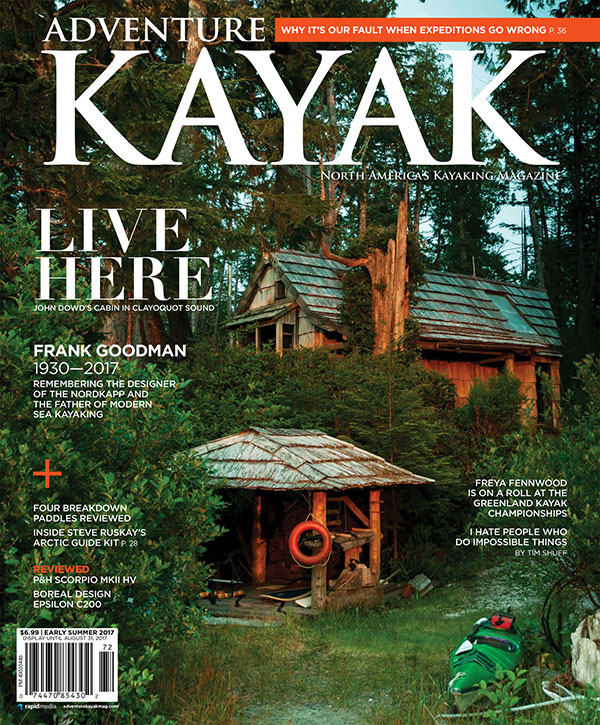
Cover of Early Summer 2017 issue of Adventure Kayak MagazineThis article was first published in the Early Summer 2017 issue of Adventure Kayak Magazine. Subscribe to Paddling Magazine’s print and digital editions, or browse the archives.

These swashbucklers make breaking world records seem as easy as crossing the street. | Feature photo: Gabriel Rivett-Carnac