Home Blog Page 227

Shit Kayakers Say

iStock
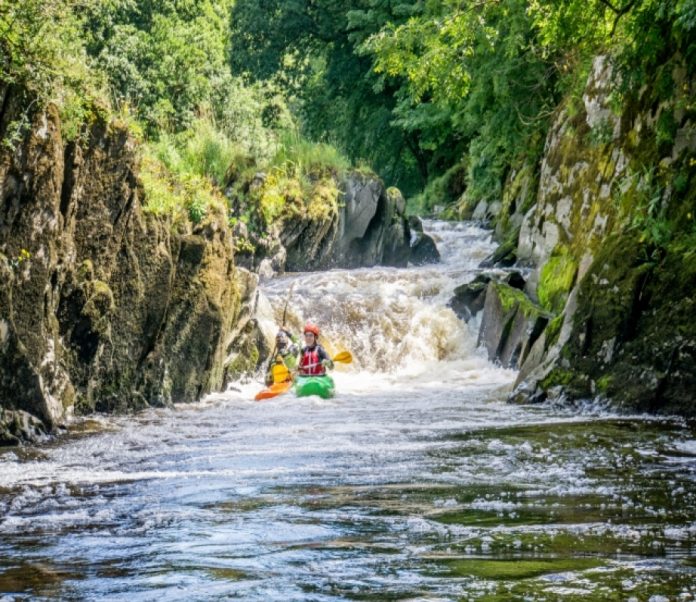
Two whitewater kayakers at the base of a small waterfall.

“Is this thing on?”

“Who’s driving shuttle?”

“My skirt is at the take-out”—said at the put-in

“Who has the car keys?”—said at the take out

“I’m just going kayaking for a few hours”—returns 24 hours later

“Let’s go hunt some stouts.”

“I don’t get why my boyfriend/girlfriend/husband/wife gets so mad that I go kayaking all the time.”

“Boofed it!”

“Nice Chacos!”

“Going to church.”

“Chaka chaka”

“Dude, I really love your Subaru.”

“I need to get sponsored.”

“My roll is so bomber this year.”

“What’s the level?”

“Can you zip me up?”

“Can I sleep in your car?”

“Do you think we can shower at the public pool?”

“My booties are so grimy.”

“I’ll pitch for gas next time we go kayaking.”

Backcountry Brushwork Part I: Lisa Dianne Martin

Lisa Dianne Martin
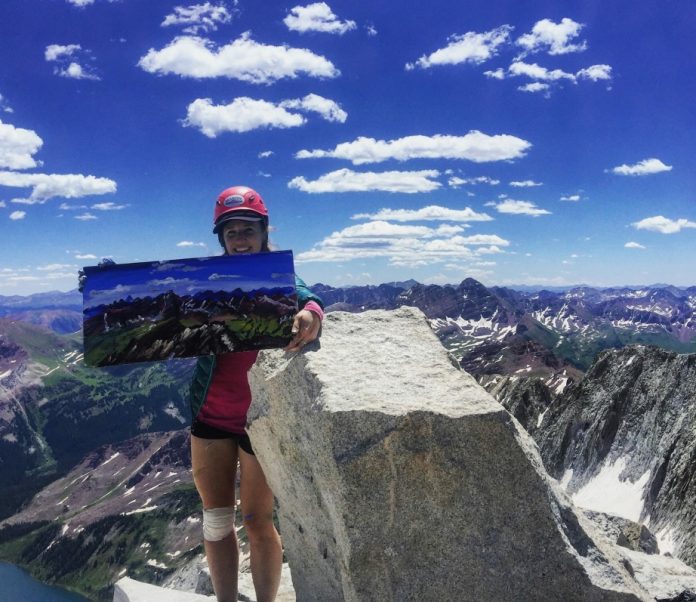
Lisa Dianne Martin paints colorado 14ers mountains

The water mimics another dimension with its statue stillness beaming trees downwards.

It’s golden hour, and as the sun rises, the steam off the water stays paralell to that of its reflection. Suddenly the rays burst through with a sense of purpose we can only dream of having.

We’ve all been here, without a paint brush, pastels, watercolors or sketch pad and quite possibly without a clue on how to approach plein air. Or maybe not, but nothing sparks a desire of creative gain quite like surreal moments in the backcountry.

Most artists already know what they need, but here is a list of essentials and tips for all of us, who may not know what to bring, or how to transport it safely. This is for those who can create beautiful works of art, and those of us who use ‘abstract’ as an easy out.

Reaching out to three artists, I asked them to share their art-hacks, and valuable lessons they’ve learnt while creating works in demanding, remote locations. Part One begins with avid hiker, and most importantly, apexer, Lisa Dianne Martin.

IMG 4523 1

She may not be a backcountry paddler but conquering all 58 of Colorado’s mountains over 14,000 ft tall, and then painting on their summits, likely qualifies Lisa’s expertise in the matter.

I spoke with Lisa about her choice of tools, how she transports everything, and tricks to painting in one of the most elementally demanding environments in the world, mountain ranges.

“If it’s cold, especially below 20 degrees Fahrenheit, don’t add water to your acrylic paints. That will cause them to freeze, and when they thaw they will melt and run all over the place.” Lisa explains.

Lisa

“A snowboard makes such a perfect easel.” Lisa Dianne Martin

Keeping things light is essential for every day trips and backcountry excursions. Lisa has mastered dual purposing on all of her tools, from the canvas itself to water bottles.

I am very minimalistic so I paint on my lap using no easel. I use the back of the canvas or board as a mixing pallet and keep my paints in a plastic bag so if [when] they explode they don’t go all over. “

“I also like to keep things as light as possible. I bring about 4oz of water for my paint and leave my brushes in the bottle after I finish.”

My biggest question for every artist was, how they safely get their works of art back out to civilization. After painting on the summit of at least 58 mountains, Lisa has gained a lot of perspective when it comes to protecting artwork from the elements, and ourselves.

“If using acrylic the paint can normally dry fast to transport it safely, but if using oil, there needs to be something to separate the surface from touching it’s surroundings.”

IMG 4469 Judson Art Carrying Boxes Allow Paint to Dry While Keeping Them Safe From Elements

“I had Judson Art create a custom one [box] for the size of paintings that I bring. This allows me to do two paintings in one day, and I can face the paintings in toward one another. The gap still allows for the paintings to dry.”

“Often times when I have a wet acrylic painting I will carefully put a very thin piece of plastic over the top of it and won’t use a carrier. It continues drying while I hike and then I peal off the plastic when I get to my car. Normally smears are very minimally.”

More tips from Lisa:

“I also like using birch plywood primed with house paint because it is cheap, lightweight and thin compared to a canvas.”

I’ve found backpacks designed to carry snowboards are great for carrying paintings- you can wrap the painting in a plastic bag and attach it to the outside of your pack.”

“I tend to sleep through my alarm clocks and use my clothes or hands as paint brushes when I’m in a hurry.” Lisa may be our newest hero here at Canoeroots.

Lisa3

You can see Lisa’s work here and learn more about her goal of ascending and painting from every summit over 14,000ft in the United States.

You can also follow Lisa on Instagram @paintthemountain and Facebook Paint The Mountain

READ MORE: Artists Gone Wild: Nan Sidler

Overview

Supplies of Choice

Acrylic and oil paints depending on temperature and time allowed. Typical paint brushes for either paints, with short stems. Uses lap, ground, or snowboard as easel.

Packing In

Uses water bottle with 4oz of water to mix paints, paint tubes and brushes go in plastic bag in case they burst.

Packing Out

Use same water bottle to transport wet paint brushes. Paintings either get carried in plein air specialized box that allows them to dry, or a plastic bag, minimal smudging may occur.

Transporting tips

Backpacks designed for snowboards work great for hiking out with finished works.

Remembering The Toughest Canoeist Of All Time

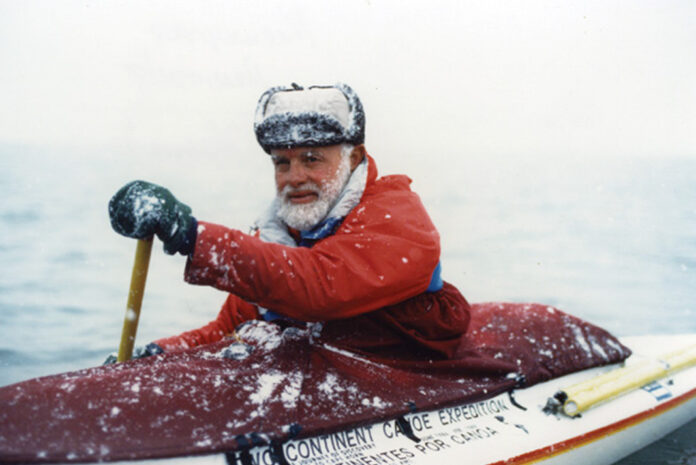
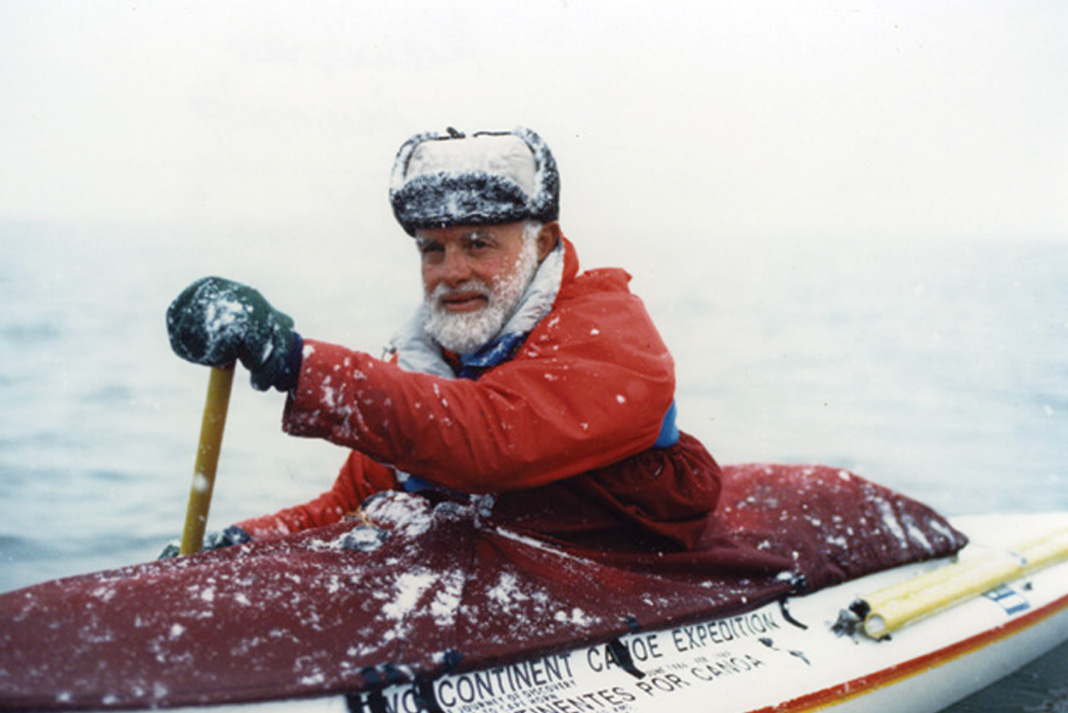
Close to home on Lake Michigan after paddling 28,000 miles | PHOTOS: ARCHIVES OF PHIL PETERSON

Verlen Kruger canoed the full length of the Mississippi River several times over his 82 years. For most people, just one trip would provide bragging rights to last a lifetime. Kruger wasn’t most people.

It’s not just that boasting wasn’t part of his repertoire, it’s that he logged an insane amount of miles in his canoe. With expeditions crisscrossing the entire Western Hemisphere, Kruger paddled more than 100,000 miles. That’s more than 42 runs of the Mississippi River, or four trips around the equator. Take your pick.

Born in 1922, Kruger grew into a charismatic and confident man. His friends would recall how he seemed fearless, excepting of course, his phobias of bears and armadillos, which he’d only cop to when talking in his sleep. At 41 years old, he started canoeing. He spent the next 41 years making up for lost time.

Driven by an obsessive devotion to his new sport, he redefined expedition canoeing. Measured by mileage or by ambition, his adventures were nothing short of colossal.

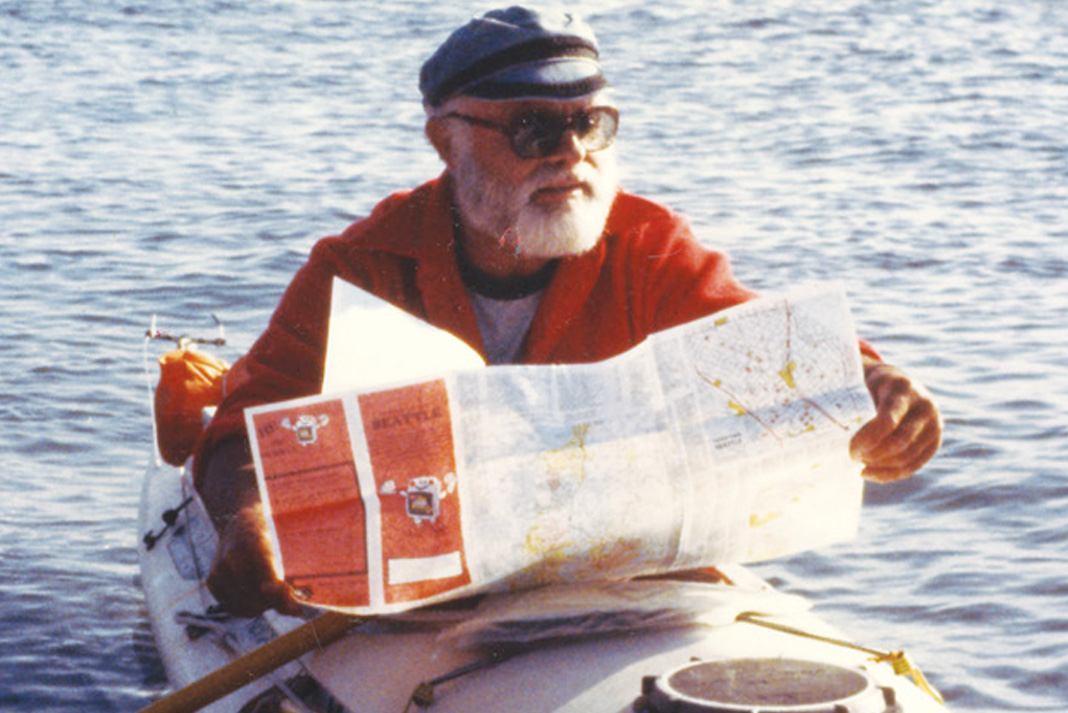
Kruger consulting a map near Seattle | PHOTO: ARCHIVES OF PHIL PETERSON

In 1971, at 49 years old, he and partner, Clint Waddell, followed old fur trading routes from Montreal, Canada, to the Bering Sea in Alaska. Dubbed the Cross Continent Canoe Safari, they covered approximately 7,000 miles in 176 days. It’s presumed to be the fastest time ever for that route.

Speed wasn’t always the primary goal. In 1980, Kruger and partner, Steve Landick, put in on the Red Rock River, in Red Rock, Montana, and didn’t stop until they’d covered 28,040 miles of North American rivers, lakes and coastal waters. The duo paddled from the Beaufort Sea to Cabo San Lucas and ran the lengths of the Pacific and Atlantic coastlines of the United States. For the inland segments, this audacious trip included upstream runs of the Mississippi and Colorado Rivers, including eddy-hopping up through the Grand Canyon. They finished in Lansing, Michigan, in December 1983.

Eager for more, Kruger expanded the latitudes for his next major expedition. From 1986 to 1989, he and Valerie Fons canoed 21,000 miles from the Northwest Territories, Canada, to Cape Horn, Tierra del Fuego, Chile. This expedition ramped up the danger. There were overnight open-water crossings on the Caribbean, flooded rivers, and navigational morasses through the maze of the South American river system.

In and around these big trips, Kruger tackled smaller events. In 2001, at age 79, he raced with Bob Bradford in the Mississippi River Challenge. They finished in 24 days and placed first. The next year, he celebrated his 80th birthday by running 2,040 miles of the Yukon River.

Close to home on Lake Michigan after paddling 28,000 miles | PHOTOS: ARCHIVES OF PHIL PETERSON

If it was his obsessive nature that drove him to take on expeditions of such massive scale, it also proved to be the spark that inspired nearly everyone he met. In finding his life’s passion at 41 years old, Kruger was an open book of encouragement for others to do the same.

“I believe that most people have such dreams. We need to reach out. And in reaching out, you grow, you learn, and you find out you can do things that you’re not sure you can do,” he said.

Kruger died in 2004. He’s been honored with statues, memorials and posthumous awards. His legacy survives in the more than 40 prototypes of expedition canoes he designed, three of which are still in production under the name Kruger Canoes (www.krugercanoes.com). His spirit lives on in everyone who follows their dreams with abandon. —Brook Sutton


Note: All mileages are approximate, due to differences in measuring techniques and

lack of precise location estimates. Despite these inconsistencies, Kruger’s achievement

of paddling more than 100,000 miles is not in dispute.

6 Ways For Whitewater Kayakers To Save Money

Flickr User Tim Lumley
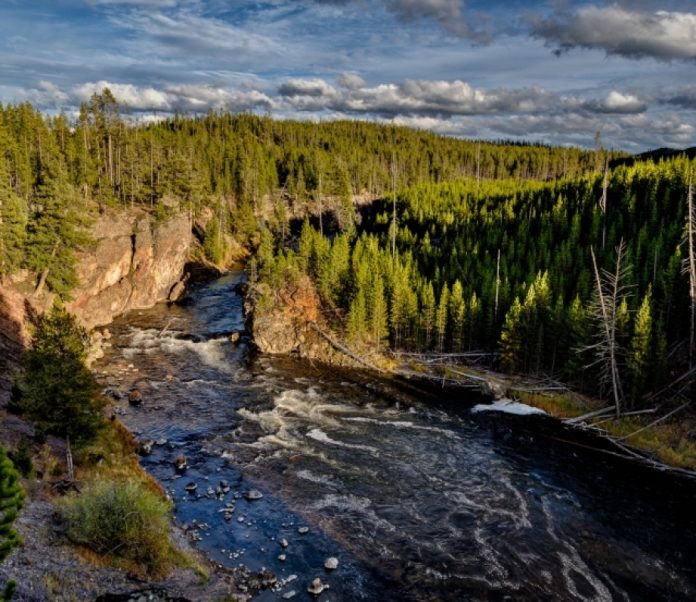
A whitewater section of a river and forest along the river banks.

We love everything about whitewater kayaking. We love packing the car, loading the boats, the first snap of pulling a skirt on and the butterflies the sounds of the first rapids bring. When you begin whitewater kayaking, the price of accumulating equipment can initially be expensive, but then you are set for years to enjoy rivers at home and afar. No matter what your financial situation, saving money on kayaking trips, whether they are an afternoon long or for several days, means you can save up for that new boat you’ve been eyeing or a plane ticket to an amazing paddling destination. Here are our favorite tips.

Carpool to the river

If you’re going paddling with a group of friends, try to bring the least number of vehicles possible. If your run requires a shuttle, you will inevitably need two cars, but try to plan the route from your homes to the river in a way that puts the most number of bodies in each car.

Bring your food

There’s nothing wrong with peeling off your dry top and diving straight into a basket of crisp fries at the local chip truck, but eating a few meals out during your day of paddling can add up quickly. Think about what food and drinks you will enjoy most during and after paddling, and prepare them the night before. Hit up bulk food stores and stock up on your favorite river snacks so you can have them handy all season—think trail mix, granola bars, dried fruit, chocolate and crackers.

Bringing meals to the river doesn’t need to be basic. You make something semi-fancy, like beef and vegetable kebabs and pitas by firing up your camping stove at the takeout parking lot. Get a decent cooler and you will save money throughout the paddling season—and probably be healthier for it.

Make friends with other paddlers

It’s not difficult to make friends with kayakers. We’re a pretty friendly bunch. Going out of your way to be considerate and kind however, can have positive benefits for your paddling funds. We’re not advocating making friends to save money, but it is definitely a by-product of being a nice, outgoing person. Having lots of friends in the paddling community means you will be more likely to be invited to crash on someone’s couch or in their spare room, or be invited to share a homemade meal with them after you take off the river. Just make sure to return the favor, and above all else, always be a good guest.

Be well organized

This is probably the most crucial element for saving money as a kayaker. Being well prepared and knowing what you need or may potentially need on the road can save you a lot of money (and time). Think your paddling trip may go longer than expected? Pack extra food, your sleeping bag, sleeping pad and tent and avoid staying in a hotel. Not sure about the weather? Bring an insulated jacket and rain gear so you don’t end up having to buy new clothes on the road. Anticipate situations that may occur and pack accordingly. There is nothing worse than buying items on your kayaking trip that you already own but forgot.

Learn how to fix your own gear

Gear breaks. It happens all the time, especially if you are a river rat who is hard on their equipment. Educate yourself on what gear can be fixed or temporarily mended. By doing this you can prolong the life of your gear and only buy new items when you really need them.

READ MORE: How to fix a cracked kayak

Be your own barista

If you can’t start the day without a coffee, bring your own set up kayaking. A stove or a jet boil with any kind of coffee apparatus you like will get you your coffee fix quickly. By saving money by avoiding hitting up every café you see, you can splurge on the nicest beans you can find.

Preserving The Wilderness Has Costs And A Price

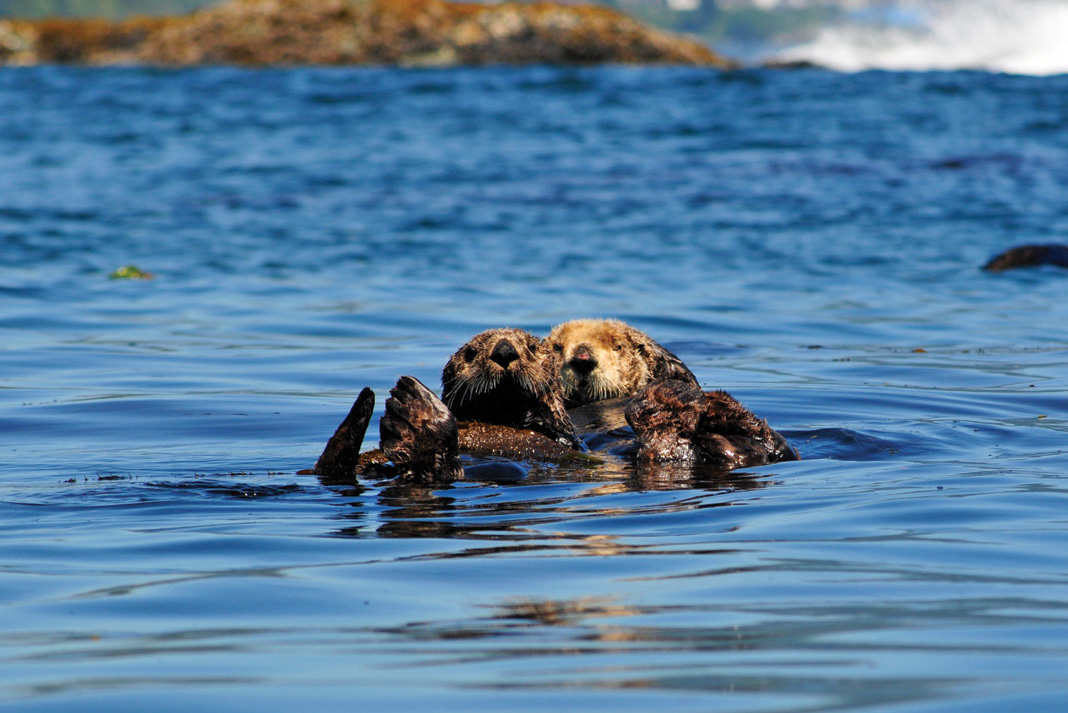
Imagine the shoe was on the otter foot.| PHOTO: VIRGINIA MARSHALL

With a theatrical flourish, the man whips off his towel and stands facing the lake, naked and defiant, before diving into the water. He exits triumphantly, watching as I hastily herd my group up the shore away from his campsite.

The message is clear: This is my patch of wilderness—go find your own. It’s something that is becoming increasingly difficult to do. A new study released this fall in the science journal Current Biology reveals alarming losses in global wilderness over the last 20 years and contains a devastating prediction: the end of all wilderness by the year 2100.

Even the wilderness of today is not as wild as it seems. From microplastics and heavy metals pollution to kelp bed deforestation, fisheries collapse and climate change, human influence touches every corner of the planet and every other organism that shares it with us. Our troubled relationship with the natural world is the study of ecology writer J.B. MacKinnon’s 2013 book, The Once and Future World. MacKinnon provides countless examples of loss to illustrate the vastly diminished natural wealth of Earth today—what he calls a 10 Percent World.

Imagine the shoe was
on the otter foot.| PHOTO: VIRGINIA MARSHALL

Popular opinion holds that some unspecified natural disaster will eventually convince us to change our ruinous ways. But MacKinnon argues that we are right now living in the midst of an ecological catastrophe thousands of years in the making, and we scarcely notice it. As our choices have changed the natural world around us, we’ve changed with it. We’ve excused, permitted, adapted—and then we’ve forgotten. If you are unaware that whales once swam in your local waters, their absence seems perfectly natural.

As of 2008, more people worldwide live in cities than not. Nature is increasingly distant and abstract, so it’s even easier to overlook its decline. That the root of the term “ecology” is from the ancient Greek oikos, or house, seems like a historical oddity rather than an indisputable truth: The living planet is our home. Former editor of Adventure Kayak Tim Shuff has written about the transformative power of even a brief wilderness sojourn. “I felt like I was indeed on a planet, not wrapped up in a city or house, but under the blue sky on the round earth, listening to the breath of the wind in the boughs of the white pine and the sound of the water lapping on rocks.”

Economic arguments have been made to place a dollar value on wilderness, but ultimately that’s not the point. We conserve it because we like it, and we like how it makes us feel. How do we get more people to share these feelings? By sharing the pleasure we take in our remaining 10 percent. Like my friend Hannah. On a recent paddling trip in a popular park, she was enjoying the solitude of a private island campsite when a flotilla of noisy kids and sunburned dads pulled up at the shore. Would she mind sharing the island with their group, one of the dads asked? Every summer they traveled all the way from Texas to camp on this same island, it had become a touchstone of a family pilgrimage back to nature.

She graciously invited them ashore. Her reward: a Wonder-Bread-and- Hershey-bar s’more sandwich, and an opportunity. If the nature that we live with is a choice, then each of us could use a reminder what our options are.

How A Camp Stove Repaired A Canoe

Photo: Jay Kolsch

It was evening when we discovered the hole in the canoe. The four of us stood in a huddle staring blankly at the inch-long gash. “How’d that happen?” someone asked.

It didn’t matter how it happened or what caused it, the damage needed to be fixed. It was only day 14 of a 90-day expedition that would trace the Yukon River from source to sea. We were traveling the third longest river in North America, exploring the origins of the Athapaskan First Nation people who walked from Asia across the Bering land bridge to settle here more than 10,000 years ago.

Already the romanticism of traveling 2,000 miles by paddle was beginning to wear as thin as the hulls of our well-loved boats.

The next morning on the banks of the Yukon River we fired up the satellite phone and called Patricia and Trevor, our friends in Whitehorse who were helping with logistics. If we could make it to Dawson City, two days away by paddle, they’d scrounge up a fiberglass repair kit. With a plan in place we carefully shoved off.

Dawson couldn’t come fast enough. We spent 48 hours battling the frigid downpours, pausing often to bail water entering the boat from above and below. It was late afternoon when we rounded the final bend and laid eyes on the historical Klondike city. Salvation.

For the first time in two days I didn’t wince when the canoe slid up on a sandy bank. We had arrived at the local Dawson campground. We unloaded the boats and found a covered area to stash the damaged canoe.

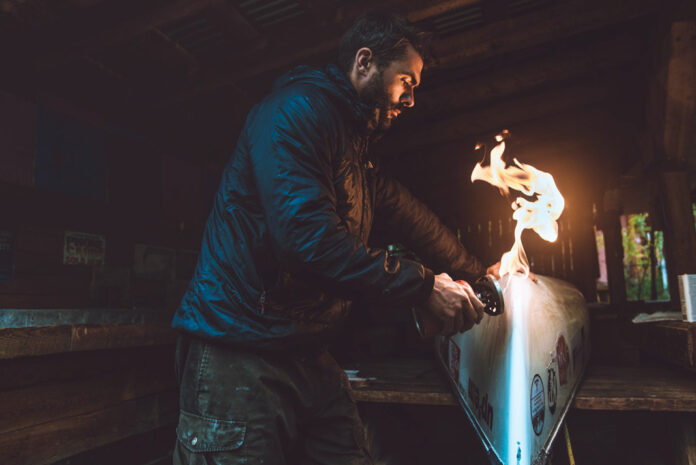
Patricia and Trevor arrived early in the morning. We wasted little time before getting down to business. It had rained all night and the river’s damp caress let nothing dry. The damaged area needed to be completely dry in order for the fiberglass patch to adhere. Without missing a beat, fellow paddler Ian Finch announced he had the solution and ran to retrieve his camp stove. Ian attached his propane canister and sparked the stove. Its flame filled the dreary shed with warm light.

For three minutes Ian applied heat to the damaged area of the hull. We then epoxied our fiberglass patch in place. The rest of the repair went smoothly. After a day and night of curing time the canoe that had carried us from the source of the Yukon River was now ready to continue its long journey to the Bering Sea.

Feature photo: Jay Kolsch

Who Is Sea Kayaking Adventurer Olly Hicks?

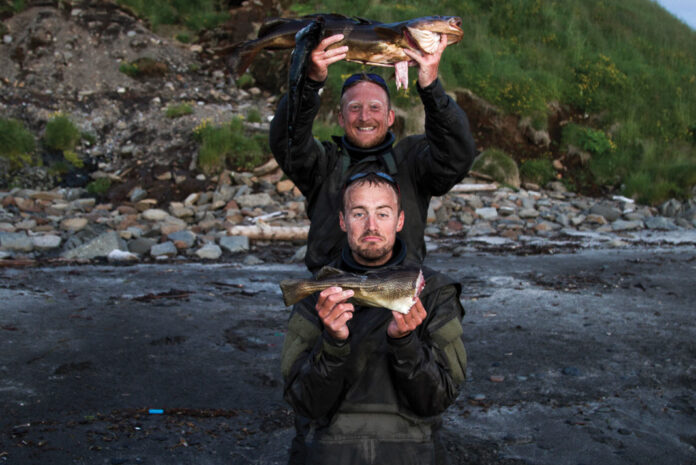
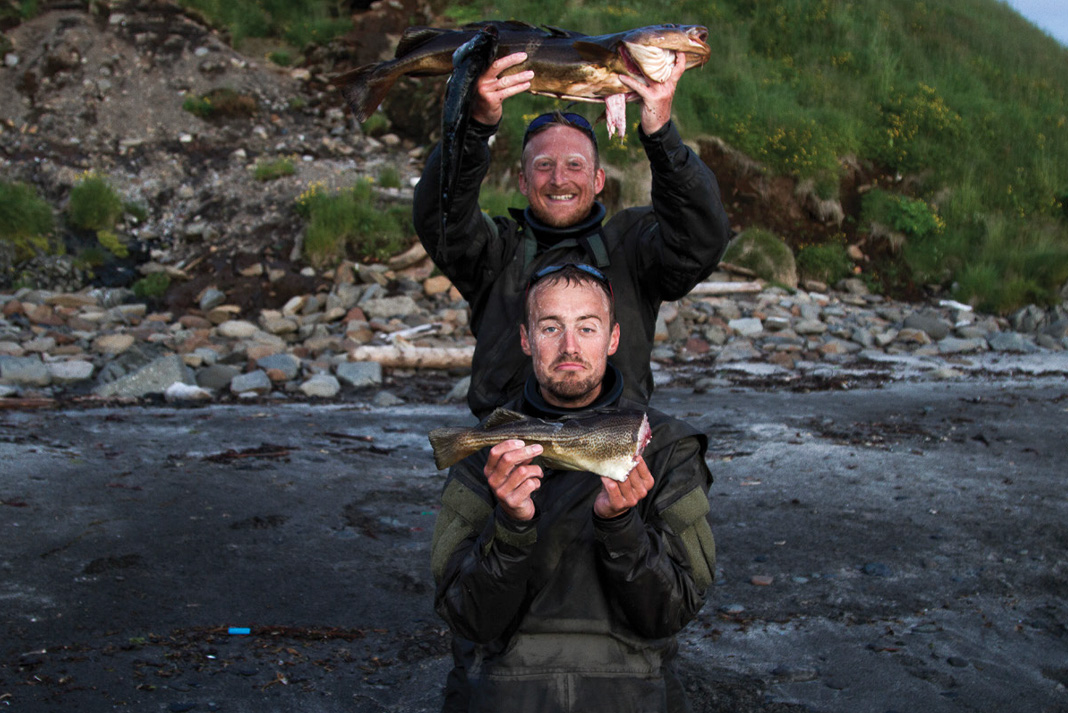
Olly Hicks (top) and George Bullard (bottom) are two fish out of water. | PHOTO: EMMA HALL

Olly Hicks is no stranger to breaking records. Once the youngest person to row solo across the Atlantic and the first to row across the Tasman Sea from Tasmania to New Zealand, he’s currently planning a solo attempt around the bottom of the earth. But his latest expedition, a 1,200-mile kayak journey from Greenland to Scotland, wasn’t about making history—it was about recreating history. In the vein of ethnographer and explorer Thor Heyerdahl, Hicks’ goal was to determine whether the trip that the mythic “Finmen” allegedly made hundreds of years ago could be, in fact, a reality.

Who were the Finmen?

In the late 17th century, there were sightings of the Inuit coming to northern Europe. No one knew where they came from, who they were, or whether they were mythical or magic sea creatures until 1728 when one arrived in Aberdeen, Scotland, with his seal skin kayak and hunting equipment. The mystery was how he got there. We wanted to add fuel to the fire that he’d paddled all the way from Greenland to Scotland.

Why use a modern tandem kayak, rather than a traditional boat?

During our North Sea practices, we’d discovered that a double boat was more seaworthy than a solo kayak, and critically, much faster. For ocean legs, your safety is in your speed—you have to be able to do the crossings quickly to minimize your exposure to bad weather.

I considered doing it in a traditional kayak, but it would be more dangerous.
We actually saw a guy in the original gear in the Faroe Islands and it looked to be quite flimsy, with no room for food and you couldn’t sleep in it. It’s possible that the Inuit paddled the route, but unlikely that they went as individuals—more likely as flotillas. I hope someone will try the route in original Inuit gear.

Olly Hicks (top) and George Bullard (bottom) are two fish out of water. | PHOTO: EMMA HALL

When did your teammate, George Bullard, get involved?

I was initially worried about finding a partner that I gelled with and could trust on a project with such a high-risk profile. George came in at the 11th hour. He picked up skills quickly, so he was an easy choice of teammate.

Most of my expeditions have been solo, so having to manage a teammate and the expectations and different ways of doing things was a new
challenge. But there’s not much room for antagonizing one another. We were very mission-focused, just trying to get from point A to point B. On an expedition, life becomes very simple; you’re just paddling all day. You’re either camping or you’re sleeping on the boat, and that’s it—paddle, eat, sleep.

Where did you find yourself living out a boyhood dream?

After we left Iceland, a fishing boat stopped us and said there were hurricane-force winds coming that night. They pleaded for us to go back with them. We phoned our weather teams and the majority opinion was to go back. We spent a week working with the fishermen. Although it was a bit frustrating at the time, it was one of the highlights of the trip—I’ve always wanted to work on a fishing boat.

What song would the DJ be playing if the Devil’s Dance Floor— the 300 miles of open ocean between Iceland and the Faroe Islands—was actually a dance floor? 


“Lily the Pink” by [British comedy trio] The Scaffold, which is a suitably loony tune.

In the Jungle

Welcome to the jungle, watch it bring you to your sha na na na na knees. | Photo Credit: Cao Jiyun

On a recent Sunday evening, I was paddling a lazy river. The sky was glowing pink, the cattails golden and dancing in the evening breeze. My only company were a dozen three-foot-long salmon leaping from the water. As the river narrowed, I startled a beaver on the shore. The water was clear, with just one shallow channel deep enough for travel. The beaver dove and for a hundred meters he swam alongside the canoe. He was close enough I could have reached over the gunwale and stroked his back.

It was a little slice of paradise. I could have been anywhere, but I was close enough to portage home.

The belief in the healing powers of green spaces has existed for at least 2,500 years, since Cyrus the Great built gardens for relaxation in Persia’s ancient capital. As the effect of nature on the brain has been increasingly studied, countless reports have touted the benefits. From lowered blood pressure and stress levels, to increased contentment and creativity—logging time outside has even been linked to easing symptoms of ADHD, addiction and depression.

For nature lovers, this isn’t surprising. What is surprising is that most of these studies don’t take place in wilderness or even semi-wilderness areas. In fact, most take place in the green spaces local to the urban centers where 80 percent of the North American population lives. Even just a five-minute walk in a leafy city park can improve mood by boosting the production of all natural, feel-good chemicals in the brain, according to the journal of Environmental Health and Technology.

Most canoeists intuitively believe that the longer the trip and the more remote the location, the more positive benefits bestowed on the psyche. I partly agree. But the research is also clear: you don’t have to go far to find happiness. Your own backyard offers plenty.

Welcome to the jungle, watch it bring you to your sha na na na na knees. | Photo Credit: Cao Jiyun

I split my time between Canoeroots’ riverside rural headquarters and a home office in a city of 2.6 million. While kayakers and paddleboarders seem to embrace the notion of day-trips on urban streams, rivers and lakes, canoeists are far less common. I see canoes strapped to roof racks on the highways heading out of town, but in the city, it’s kayaks and paddleboards to canoes 20:1. Perhaps, because we associate the canoe so closely with wilderness experiences, it seems like an unlikely craft for shorter excursions.

In that case, we are missing out.

“Canoeing is like eating,” a friend recently told me. “It’s best done more than once a year.”

Too often, paddlers focus on one or two big trips for the year, gorging themselves for 10 days and then starving the other 354. In comparison to traveling remote glacier-fed mountain rivers, urban paddling sounds boring—but it’s not. Yes, it’s a wondrous experience to paddle where few humans have been before. Yet, I’ve found there’s magic on the quiet waters a stone’s throw from a buzzing metropolis. It’s not any more spectacular, but sometimes—strangely—perhaps more special. Like discovering a secret in a city of millions. For most North Americans, paddling in the urban jungle is the only way to get out on the water more often and reap those intoxicating and all-natural highs. Wilderness trips every weekend aren’t realistic for everyone, but a Sunday afternoon paddle can be.

We canoeists, who pride ourselves on overcoming grueling portages, hordes of blackflies and relentless headwinds on our quest for adventure, shouldn’t let a little concrete get in the way of achieving the greater benefits of being connected with the natural world.

Kaydi Pyette is the former editor of Canoeroots magazine.


CCC PartnerBadge WebWatch THE CANOE, an award-winning film that tells the story of Canada’s connection to water and how paddling in Ontario is enriching the lives of those who paddle there. #PaddleON.

Sea Kayaking In Patagonia Photo Highlight

Photo Credit: Will Copestake

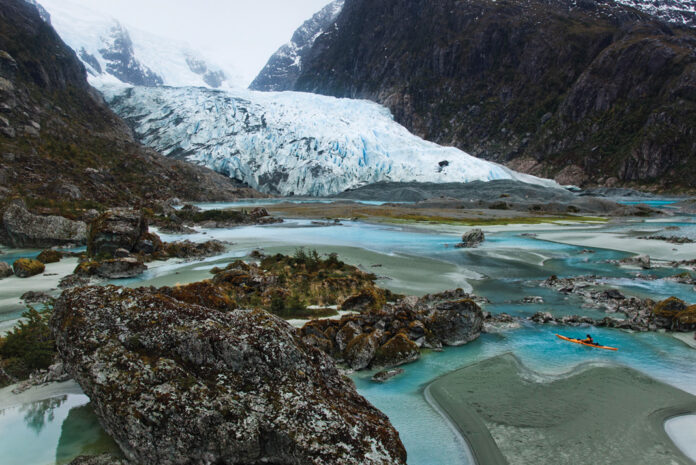
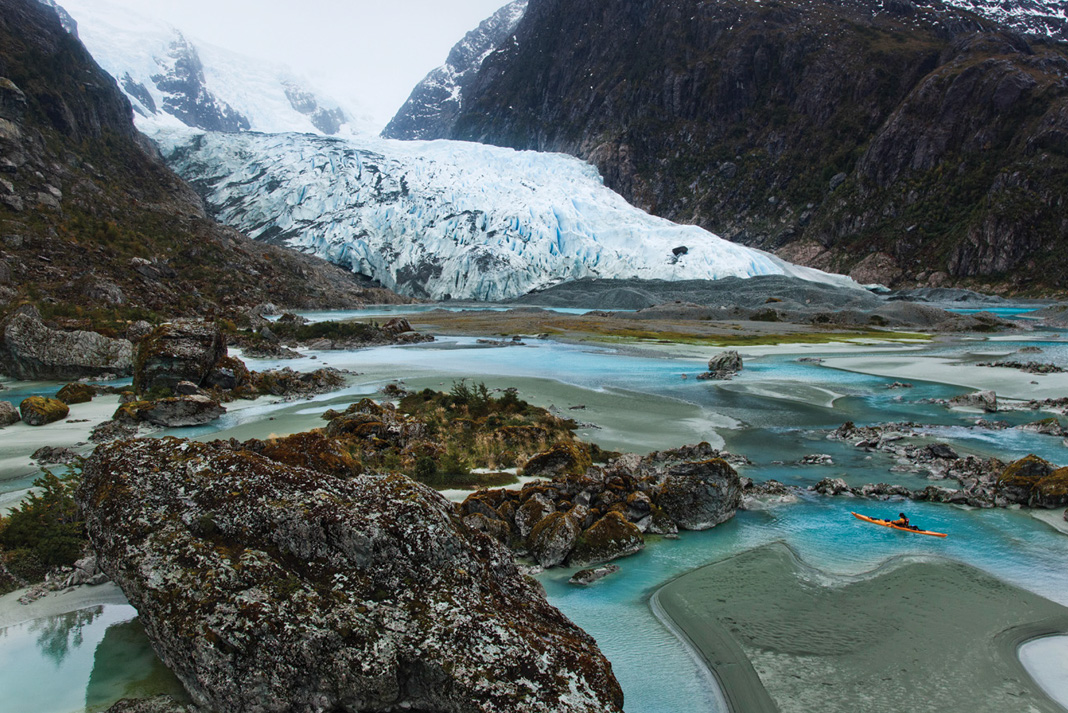
Clambering from the shore onto a house-sized boulder, I saw a view that I had never imagined I would see again. A wall of ice curled, fractured and broken, from mountains shrouded in windswept clouds that seemed to rise into infinity. Azure ribbons of crystal melt water radiated a dazzling blue as if clinging to a memory of the crevasse it had just flowed from. And a kayaker nestled amongst it all.

Paddling with my best friend, Seamus, we had at last reached somewhere I had been before, the Canal De Los Montanes. Last year, stormbound in this same channel with a client, I had felt like I was at the end of the Earth. Yet, after paddling and portaging 800 kilometers through Patagonia’s wild, western fjords I was finally back on familiar ground. Seamus and I had spent the last month journeying through an ice-filled labyrinth landscape without roads or people. We’d grown used to the company of ‘bergs and penguins, and now jokingly greeted each other by mimicking the Chewbacca- like roars of the sea lions that followed us.

After weeks of tough 40- to 50-kilometer pushes, we had just one more portage left and a few days of paddling to get back to town.

Photo Credit: Will Copestake

The Canal De Los Montanes was our last chance to live amongst the glaciers. Still well provisioned, we didn’t feel ready to go back just yet. Blessed by a week of near-perfect conditions with sunshine and no wind, we lingered in the fjord. For a week we explored glaciers and dragged our boats up glacial streams. We set camp at the foot of the ice and climbed a mountain in neoprene booties. Our worries about reaching home were gone and adventure filled our days with the same curious exploration we had relished together as kids growing up in Scotland.

Operation Phoenix: How One Army Vet’s SUP Journey Raised Awareness for PTSD

Courtesy of Bote Boards
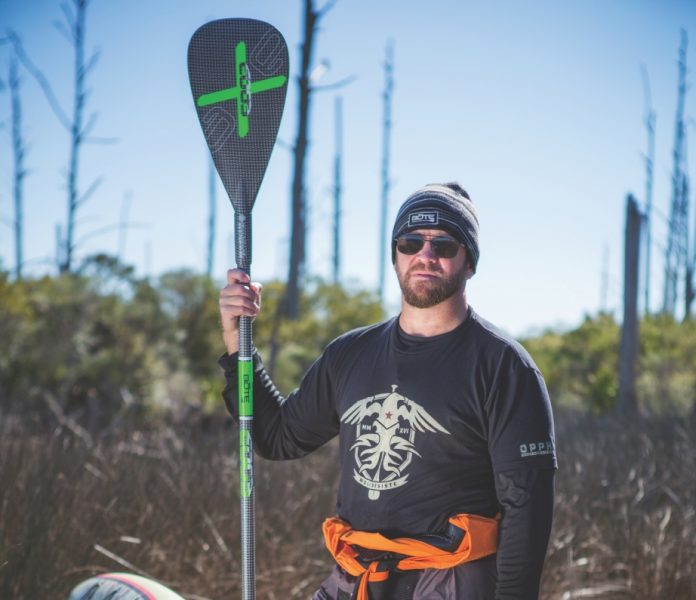
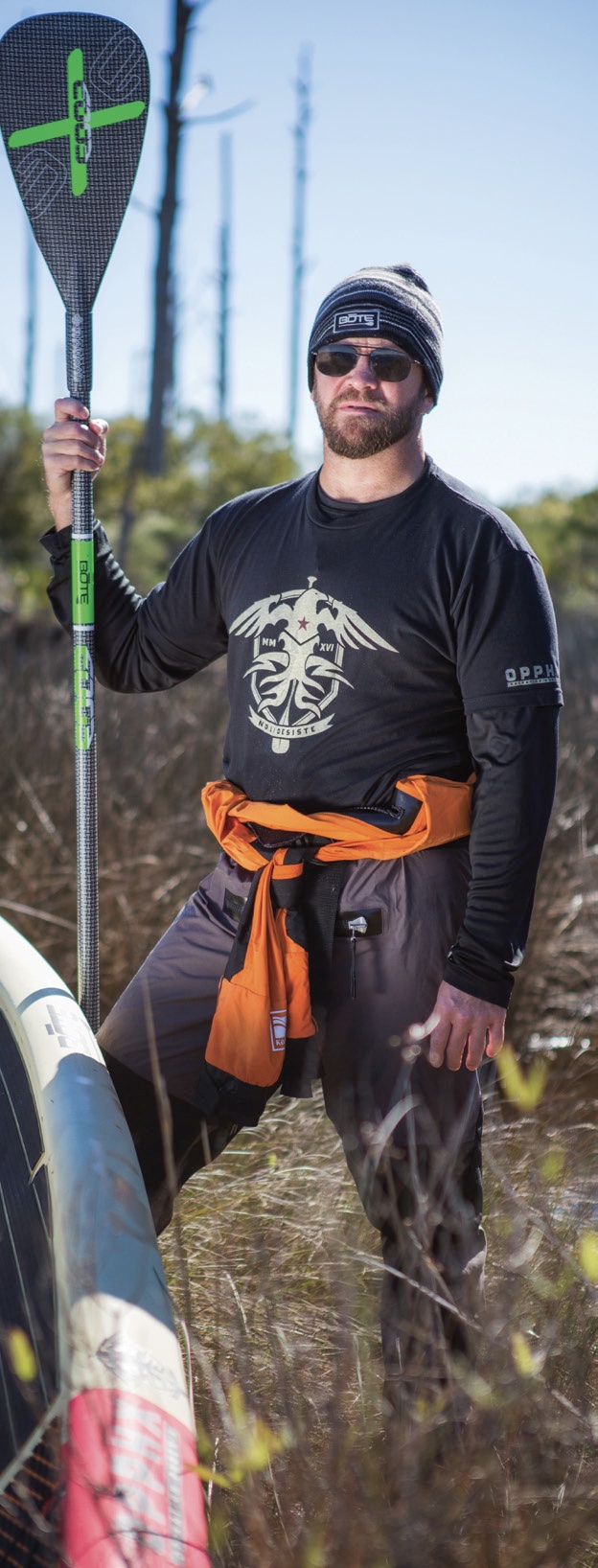
Army Vet Josh Collins holds his paddle for a portrait

Less than two years ago, the highlight of Josh Collins’ day was when his cup of medication would arrive. After more than 20 years in U.S. Army special operations—including rotations in Iraq, Afghanistan and Bosnia—his body was a mine field, ravaged by explosive blasts, parachute landings and combative trainings. His time in service had left him with traumatic brain injuries (TBIs), rib and cervical spine compressions and seizures. Like many of the roughly 12 percent of American veterans who suffer from post-traumatic stress disorder (PTSD), Collins had also begun to self-medicate with alcohol.

“I was laying in my hospital bed and wondering how this was all going to end,” he says. “I said, ‘I’m not going to do this. I’ve overcome a lot in my life and this is not going to be the end of me.’”



Collins assigned himself a special mission: Operation Phoenix (code name OPPHX). His goal? To paddle 2,600 miles from Texas to New York City, all the while raising awareness about TBIs and the 22 veterans a day who commit suicide as the result of PTSD.

It was during a recreational therapy event that he found his choice of craft. His balance issues—the result of TBIs, vestibular ear problems and nerve damage in his eyes—were resolved the moment he stood on a paddleboard. “When I got on, everything stood still. It was like being in a dark cave and then someone switches on the light,” says Collins. “I was like, ‘I want to live here.’”

The former athlete was far from ready for the challenge, though. For the average person, paddling 30 to 40 miles a day is no easy feat—but with a battered body, the 47-year-old had additional obstacles to overcome. “I’ve been in combat seven times, but I couldn’t paddle four miles without being so exhausted that I’d barely make it to shore,” he says.

It took 30 days of intensive training at Exos, a sports performance center, before Collins was finally able to hit the water on his custom-built Bote standup paddleboard, emblazoned with the words Noli Desiste (Latin for “Never Quit”).

While quitting was never really an option, over the next 140 days he faced fierce headwinds, sharks, crocodiles, and a nagging sense of self-doubt. It wasn’t until about 40 days into his mission that Collins finally hit a rhythm that would carry him all the way to the Statue of Liberty. On July 23, 2016 he arrived having raised over $210,000 for the Task Force Dagger Foundation, an organization that rehabilitates wounded soldiers.

“I thought about my placement of the paddle, about feeling the water catch and how much water I was drawing back. That became all I thought about—my next paddle stoke,” says Collins. “It was kind of like life; you’ve got all these great plans and you’re looking at the big picture, but when it comes down to it, it’s really about your next paddle stroke.”

OPPHX may be complete, but Collins’ journey is far from over. He hopes to raise an additional $21.8 million, with an ultimate goal of becoming the first person to make a man-powered voyage around the world in under 18 months. First, he’ll attempt to be the first standup paddleboarder to complete Race to Alaska, a 750-mile unsupported race starting in Port Townsend, Washington. This time, he’ll be paddling to raise awareness for the addiction issues that many veterans struggle with. Until then, he’s enjoying his continued recovery with his wife, Tonia, and his support dog H.R. Charlie at his side, taking each moment one stroke at a time. —Jessica Wynne Lockhart 

Watch a short film on Operation Phoenix