Home Blog Page 23

How One Guide Built A Whitewater Scene From The Ground Up

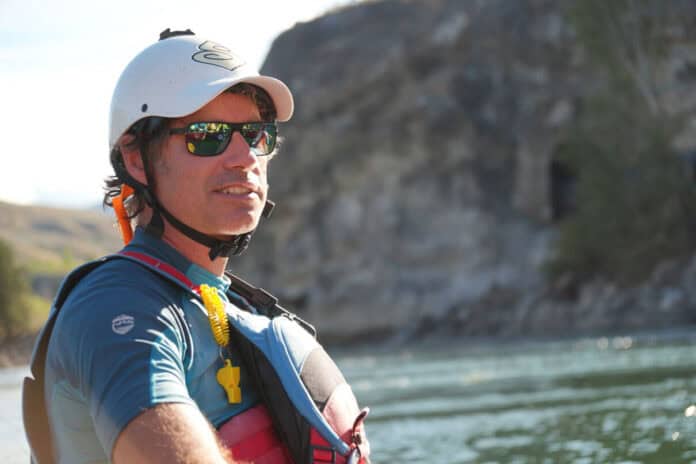
portrait photo of Charles Ruechel, owner of Elements Adventure Company, at riverside
Charles Ruechel… in his element. | Feature photo: Scott MacGregor

I’d already introduced myself to Emily. When you see another solo whitewater canoe on your street in an interior British Columbia ski town, you notice these things. It probably went something like, “Hey, is that your Dagger Quake leaning against the garage?”

The next time I saw Emily was in the local grocery store. She had a long list and two buggies full of carrots, zucchini, broccoli and steaks.

Emily said she was shopping for last-minute fresh stuff for six days on the Kootenay River. She is a canoe instructor and guide for Elements Adventure Company. Tell me more.

“You should write a story about Charles. You should join the 4 Rivers In 4 Days trip this fall,” she said.
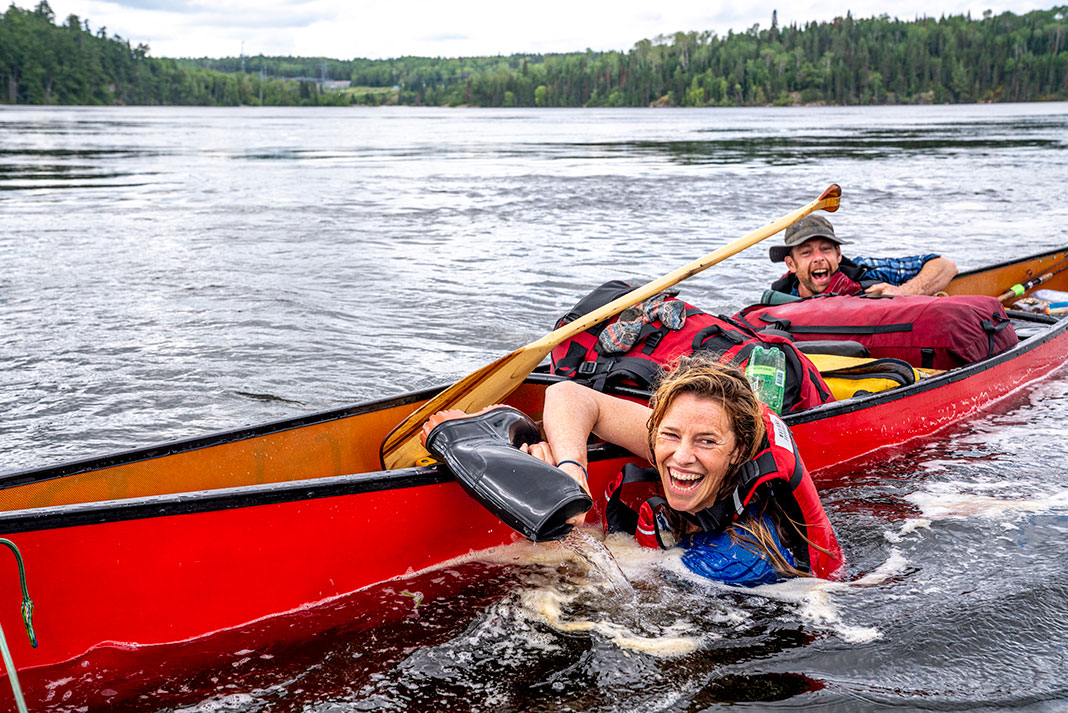
And that’s how one minute I’m complaining about the price of eggs—this was before the price of eggs was a broken campaign promise—and the next I’m on my cell phone pitching a feature story about some guy and his unlikely adventure business creating a community of canoeists, in the Okanagan Valley of all places.

“There’s a whitewater canoeing scene in the Okanagan?” asked Kaydi Pyette, editor of this magazine.

“Apparently.”

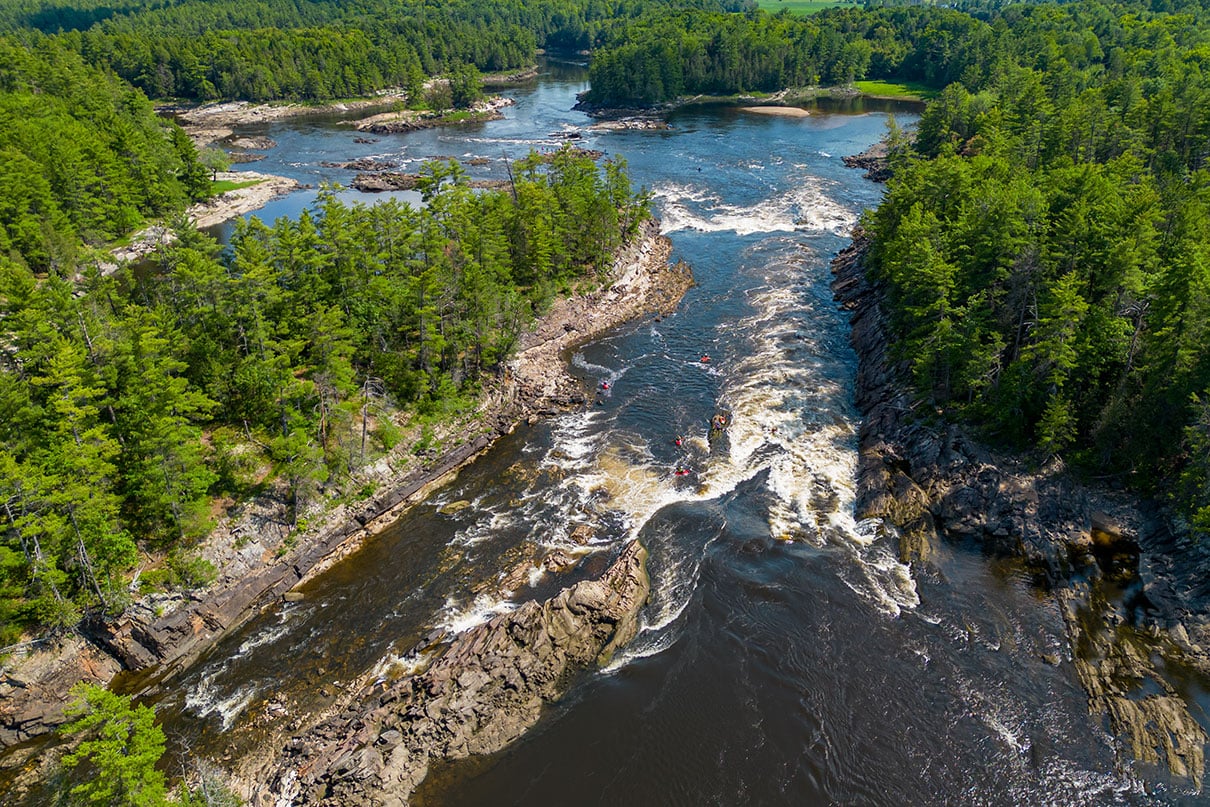
Two months and two days later, I’m helping unload tandem and solo canoes out of the back of an enclosed trailer, setting them in the grass of a community park beside the Thompson River. It’s the first river on the first day of four.

How one guide built a whitewater scene from the ground up

Charles Ruechel is the owner of Elements, and he looks the part. Tall, fit, handsome, one day unshaven. Sweet Protection Strutter paddling helmet, sun-faded Astral GreenJacket, Werner Bandit paddle—the blade worn round at the tip as they get after hundreds of days. It was obvious to me this guy likes moving boats around and calculating shuttle logistics.

Elements’ 4 Rivers In 4 Days program follows the best flows. In spring, we would be unloading boats on the Coldwater, Tulameen, Similkameen, Upper Similkameen, Nicola and Shuswap rivers in B.C.’s southern region. In the summer, we’d be off on what they call the Great White Bull Adventure because they paddle the White and Bull Rivers. Clever.

portrait photo of Charles Ruechel, owner of Elements Adventure Company, at riverside
Charles Ruechel… in his element. | Feature photo: Scott MacGregor

We’re in the Central Interior on two sections of the Thompson and the Clearwater. If water levels were different, we had options. Every other fall, 4 Rivers In 4 Days bounces to the Cariboo/Chilcotin region and includes sections of the Horsefly, Chilcotin, Chilko or Cariboo rivers—whatever makes the most sense for the group at the time.

The popularity of this program makes sense. Who doesn’t want to improve their paddling skills with professional instruction on new rivers? Who doesn’t want the company of adventurous, dynamic people, all the while knowing at the end of the day, Emily will be preparing a steak stir-fry over an open fire?

In the beginning, Charles thought he would do longer river expeditions in remote places. Elements does run longer trips on the Upper and Lower Stikine, Jennings, Bonnet Plume and Turnagain rivers. This year, there are plans to add two more seldom-paddled rivers to the list: the Taku River Exploratory Canoeing Expedition and the Gataga River Exploratory Expedition. Never heard of the Taku or Gataga? I’m not surprised. Nobody else is running them commercially.

While exploring new northern routes is pretty cool, paddling four rivers in four days was easier for me to make work.
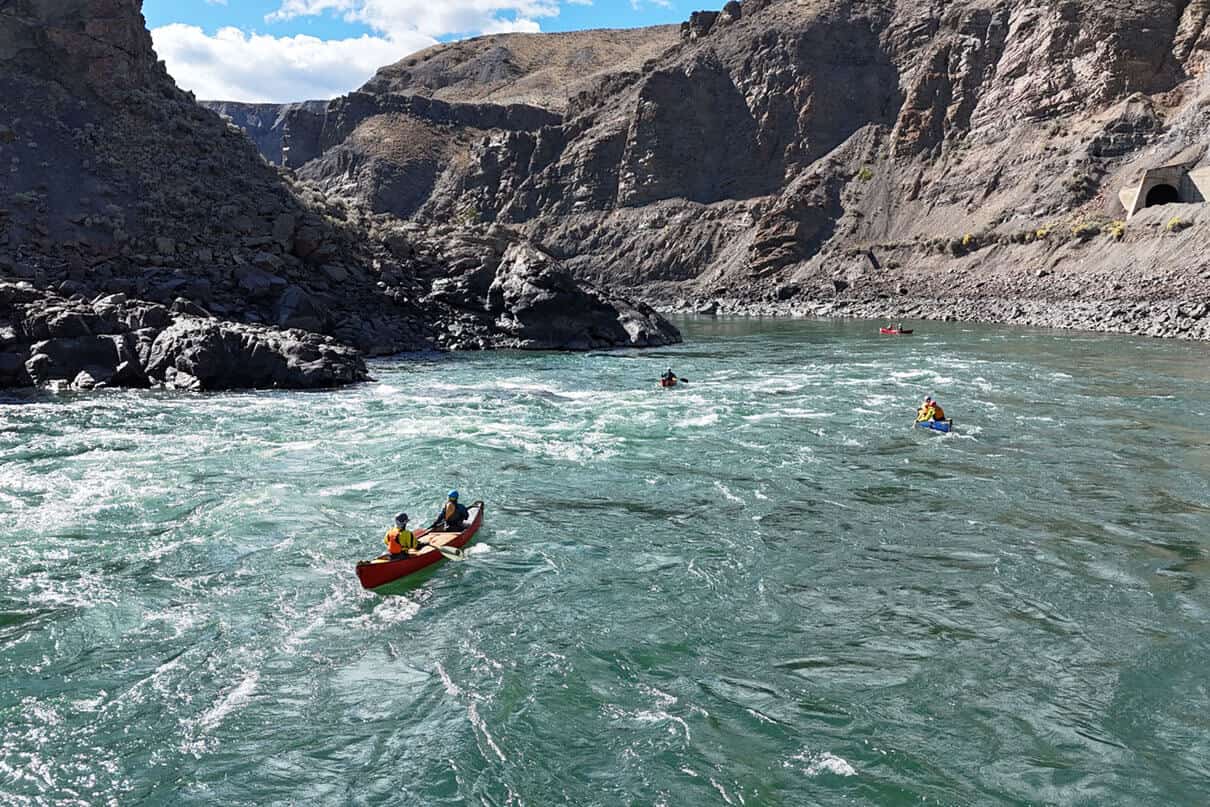
canoes on whitewater surrounded by rocky canyon walls
Chasing freight trains through Black Canyon on the Thompson. | Photo: Scott MacGregor

“I think that’s one of the reasons why it’s so popular,” says Charles. “Four Rivers In 4 Days fits into busy schedules and tighter budgets. We provide gear, or not, if our guests have their own.” I brought my gear but opted for the fully catered meal plan.

The other reason Four Rivers is so popular became very clear, very quickly, by the amount of chirping each other around the campfire.

If everyone in this group wasn’t already friends, they were friends of friends. I was the only one who hadn’t already done at least one course or trip with Elements. I listened as they told stories of rivers they’d paddled—sometimes together—with guides they all knew.
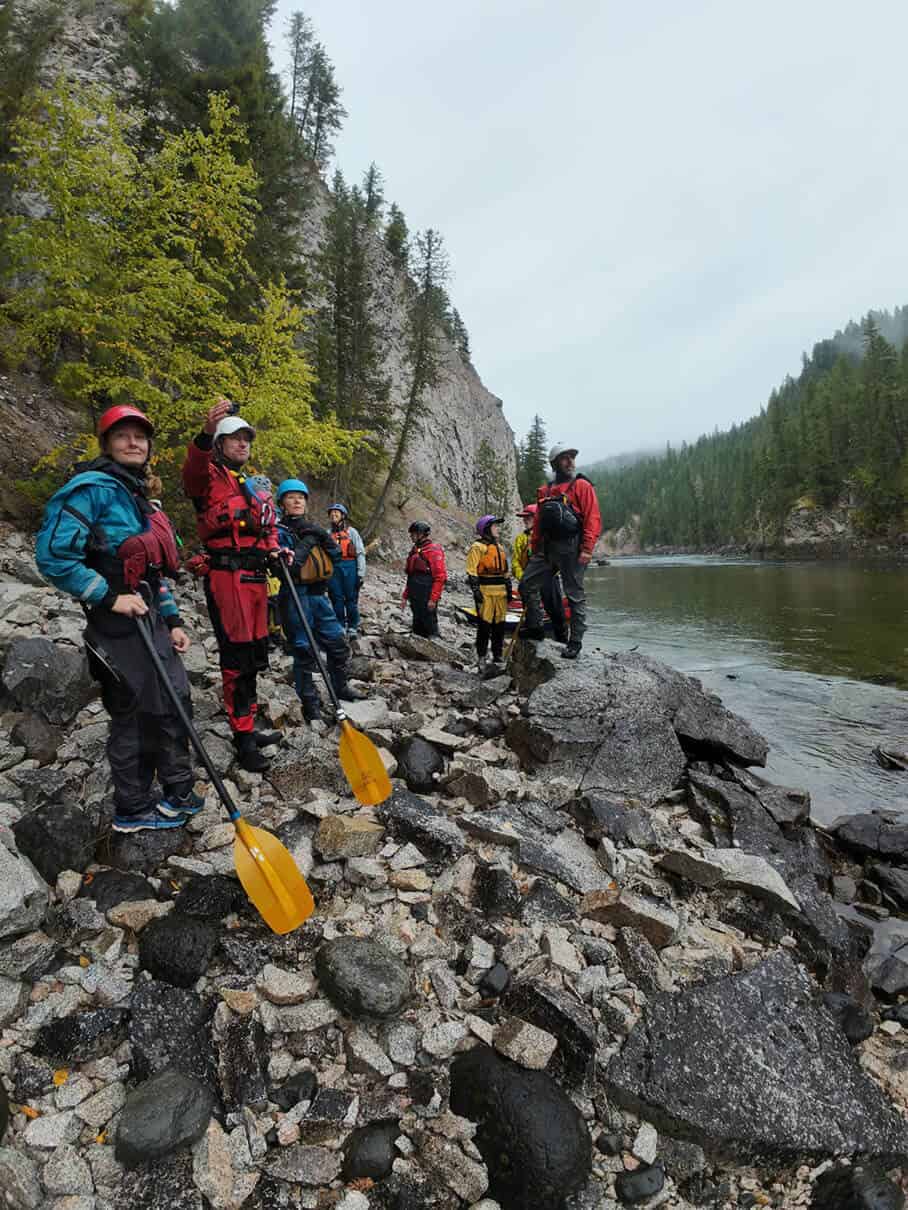
a group of canoeists stand on a rocky riverbank scouting the way ahead during the 4 Rivers In 4 Days trip by Elements Adventure Company
Taken some river skills courses but want to experience new rivers? the 4 Rivers In 4 Days program is for you. | Photo: Scott MacGregor

I’m sure everyone leaves these programs with improved skills from paddling new rivers, but around the campfire, in our little campground nestled between the rumble of freight trains on one side and the white noise of the Thompson, there were more stories of adventure than critiques of proper techniques.

Charles’ story is a good one.

In 2010, he decided to leave his family farm and the world of agricultural sciences. He gave himself a gap year to figure out what he was going to do next. He traveled with his wife to Nepal, India, Peru and Europe. In a hotel room in Rome, on the very last night before he was to fly home, he decided to apply to the NOLS outdoor instructor program, focusing on backpacking and whitewater canoeing. After three seasons at NOLS, in the fall of 2013, he ran his first Elements Adventure Company program, a community river cleanup.

“When I started the business, I thought I’d focus on trips and just do a few courses to get people prepared,” Charles remembers.

After his second season, he flew across the country for a week-long skills course with Andrew and Carol Westwood at the Madawaska Kanu Centre. “At first, I didn’t realize I’d have such a passion for teaching canoeing, not just the tripping. I also didn’t realize there’d be such an interest and need for canoeing skills and courses in the Okanagan and Shuswap regions.”

The flowchart on the Elements website reminds me of those Instagram memes beginning with “Should I go canoeing?” After a series of arrows and boxes, all paths, whether you initially answered yes or no, eventually lead back to “Yes.”
So much time is spent around boardroom tables at outdoor industry gatherings, asking each other how we should grow paddlesports best. Like there is one new, easy, magical way that’s going to get more people into canoes and kayaks. Sure, some good ideas get scribbled on whiteboards. But when we look back 50 years, it’s passionate people like Charles who do most of the heavy lifting.

Payson and Aurelia Kennedy bought a motel and gas station on the banks of the Nantahala River in western North Carolina, creating the Nantahala Outdoor Center. Canadian paddling champions Christa and Hermann Kerchhoff established a lodge and paddling center on the Madawaska River in the Ottawa Valley. Wally Schaber and Chris Harris created Black Feather as a sideline to their Ottawa-based outdoor retail store, Trailhead. These are just three examples of people and their companies building generations of paddling communities and professionals. Forty years later, Charles is doing the same on B.C.’s interior rivers.

By our last night together the friendly banter had gotten worse, or better, depending on how you look at it. We’d just paddled the lower section of the Clearwater River, our most technical of the trip so far and a run pushing the limits of open canoes. Spirits were high despite the cool fall rain pooling on the tarp above our circle of camp chairs.
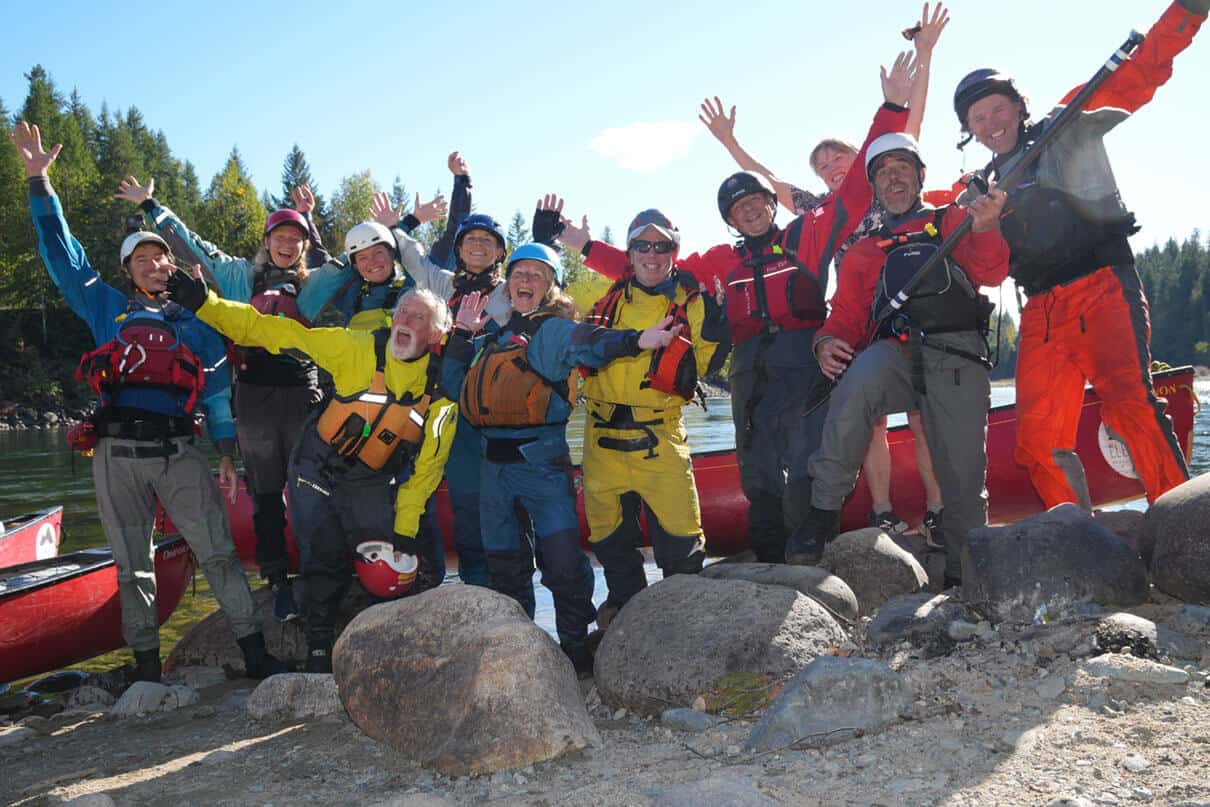
a group of whitewater canoeists pose in their paddling gear
Eleven good reasons why canoeing is growing in B.C.’s okanagan and Shuswap regions. | Photo: Scott MacGregor

Emily reeled us in with a round of Rose, Thorn and Bud. She asked us to reflect on our time together on the rivers and identify positives, challenges and opportunities for growth.

I’m thankful there are farm kids like Charles Ruechel who, when they grow up, are willing to roll up their sleeves and get the job done—the job of cleaning up rivers, teaching skills—beginner and advanced—and inspiring the sense of adventure and feeding enthusiasm to those of us who have been kicking around rivers even longer than he has. That’s how you grow paddlesports. Scribble this on the whiteboard: 1. Inspire new paddlers. 2. Keep giving paddling enthusiasts reasons to stay in their boats.

It’s not easy, but it works.

Scott MacGregor is the founder of Paddling Magazine.

Cover of Issue 73 of Paddling MagazineThis article was first published in Issue 73 of Paddling Magazine. Subscribe to Paddling Magazine’s print and digital editions, or browse the archives.

Charles Ruechel… in his element. | Feature photo: Scott MacGregor


The Lekker Albatross Is Leading A Double Life

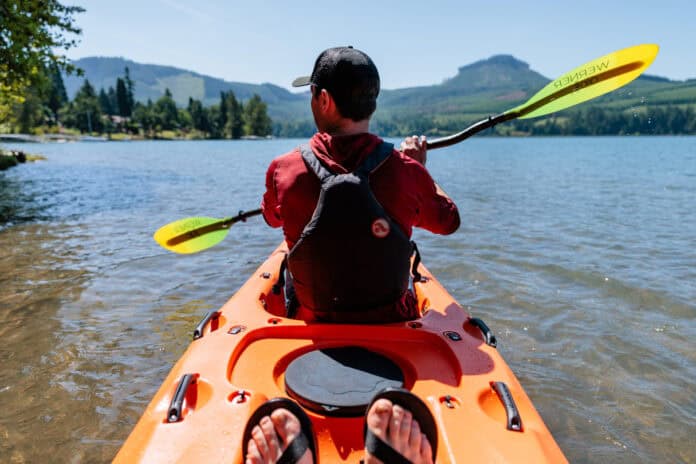
Editor Joe Potoczak sitting in the front of the Lekker Albatross tandem sit-on-top kayak
Feature photo: Owen Roth

ENTER TO WIN: Lekker Albatross Tandem Kayak. Lekker Kayaks | Paddling Magazine

If you’ve seen one tandem sit-on-top kayak you’ve seen them all, or so someone may say who has yet to meet the Lekker Albatross. The Albatross is like the bird it’s named for—sizable and ready for a journey. The boat is 14 feet long and capable of covering ground, yet is easy to turn. The seating puts the paddlers in an engaged position. It has two sealed hatches to store gear below deck. And, it has a high bow to ride over waves and through rapids.

The Albatross is a double kayak that is just plain fun, especially for coastal areas and rivers with mild to moderate whitewater. In short, it’s a boat that feels like what a tandem kayak was meant for: setting off on an adventure with a paddling buddy.

Man launching tandem kayak on lake.
The Albatross features a high bow, rounded edges and a tapered stern. It’s a double kayak ready for adventure. | Photo: Owen Roth

Review of the Lekker Albatross tandem sit-on-top kayak

Lekker Albatross Specs
Length: 14′
Width: 32.5″
Thickness 6”
Weight: 74 lbs
Maximum Recommended Capacity: 570 lbs
MSRP: $990 USD
lekkerkayaks.com

The Albatross is Lekker’s first tandem kayak, but it wasn’t born from a lack of experience. Lekker’s founder and boat designer, Celliers Kruger, also started Fluid Kayaks in South Africa in 2002 and Vagabond Kayaks in 2018. The Albatross is an evolution of previous tandem sit-ons Kruger has built. His first, the Fluid Synergy, and the more recent Vagabond Mazowe. The Mazowe especially has been a hit with outfitters and adventure racers since its release—two interesting crowds to look toward for a sit-on-top’s seal of approval. Outfitters need durable, forgiving and straightforward boats for inexperienced kayakers to paddle, and adventure racers need a boat with speed capable of handling a variety of water conditions, including waves and whitewater.

According to Kruger, the Albatross has taken the positives of his previous tandems and combined them with feedback he’s also received from outfitters and paddlers to incorporate into this new tandem. When Kruger started Lekker in 2024, a big goal was to focus on improving the performance of recreational kayaks—boats intended for casual outings in sheltered waterways. Lekker has labeled the Albatross a rec kayak, which seems like it undersells this kayak in an attempt to not scare off new paddlers. But this is exactly Kruger’s point: recreational kayaks have been overlooked when it comes to innovation, and in his view, are in need of some tweaking to offer a more enjoyable experience.

Rethinking the sit-on-top kayak seat

A major way in which the Albatross sets out to accomplish the goal of a better paddling experience is with the inclusion of design elements more often seen on high-performance kayaks, and which the Lekker team believes every paddler would benefit from having on their boat.

The cockpit seating area is where kayakers spend their time, and one of the first places I noticed the Albatross differentiates itself from other tandem kayaks. Two-person kayaks and canoes are commonly called divorce boats for a reason—getting where you want to go can be a true test of teamwork, conflict resolution and emotional intelligence. One of the common causes of strife is the clanking of unchoreographed paddles. To address this, the seating position of the Albatross places the paddlers far enough away from one another to alleviate it.

The molded-in seat of the kayak is built to be a standalone piece of outfitting, without additional framing or pads inserted, and puts the paddler into an active and engaged position for strokes. I felt like the plastic seat of the Albatross was comfortable enough as is, and keeps the need for attached pieces of outfitting to near nonexistence. However, if you prefer more padding, Lekker does have an optional kayak seat made to clip into the boat.

When it comes to legroom, sit-on-tops often put a small day-storage hatch right between the paddler’s legs. This seems convenient for keeping personal effects handy; however, I sometimes find this puts my legs in an awkward, frog-legged position. The Albatross has no storage between the legs, and with the free space, they’ve put the foot braces closer together. I found this comfortable, and combined with the seat, puts the paddler in a good paddling posture.

If there is something about the Albatross seat positions to consider, it is if you try to paddle it alone from the rear, the position of the back seat causes the bow to wheelie a fair bit. It is after all a tandem kayak meant for a pair, but the trim in general seems to lean toward the stern and it is noticeable when the front seat is empty.

Speaking of paddling, alongside each seat, the Albatross includes what are referred to as paddle cutaways on the deck. These are areas where the surface of the deck bevels. This makes it easier to reach the water to place paddle strokes. It’s a feature more commonly found in the shape of high-performance sit-on-top racing kayaks called surfskis that let the paddler reach, sink and pull their paddle through the water closer along the kayak more effectively. In this case it also helps avoid smashed fingers.

Sit-on-top two-person kayak laying in grass near boat launch.
Extra pieces of outfitting on the Albatross are minimal, and what is included is well thought out, including offset carry handles and sliding footbraces. | Photo: Owen Roth

Ease to paddle and steer

The shape of the kayak makes it a fun tandem to paddle. The boat is 14 feet long, has a keeled shape under the bow and stern, and transitions to a relatively flat-bottom center of the hull with two channels running most of the length underneath. The sides of the kayak round gently as they transition from the bottom to the sides of the kayak, which gives the boat secondary stability when it rocks toward one side or another. The boat also has a high bow rising up from the waterline.

The length and keel at the bow and stern help the boat carry speed and track in a straight line. What was surprising though was how well the boat turned for its size, especially from the bow paddler position. With the Albatross, while seated in the bow, it felt like I could slide the boat around into different directions rather easily without my paddling partner in the back helping out. A boat this size doesn’t always have such a slick, quick-turning hull, and I believe this is attributed to a few things on the Albatross, including a less pronounced keel that ends early and transitions to the flat surface area under the paddler that lets the hull spin more freely.

On flatwater, the ease of turning could be helpful, but where this aspect of the Albatross will really show is on rivers and tackling mild rapids, where you want a kayak that can change direction quickly. The high bow will also help the kayak punch over waves or paddle into surf with less nose diving, making it a fun tandem to enjoy around the coast. And, if you plan to paddle the Albatross in open water, there is also the option to add a rudder to the stern to further improve tracking and steering in rolling seas.

Additional features

Building on what makes the Lekker Albatross stand out are a few more parts of the kayak.

For starters are the two deck hatches for storage. Most sit-on-top kayaks have tankwells on the surface of the kayak—recessed open areas where you strap down your gear. The Alabatross all but eliminates exterior storage and instead has two large hatches for dry storage compartments near each paddler. The result is a less cluttered deck space with all the gear stowed lower in the boat and tucked away from exposure to the water.

The Albatross does still have very shallow deck storage spaces with bungees at the bow and stern in case you want to keep a small bag or layer nearby. It also has two slots on the deck near each set of foot pegs to lay down a paddle. This integrated paddle holder that is part of the plastic shape rather than a screwed-on piece of plastic is a useful little touch that keeps the boat streamlined.

There are two more small features on the Albatross I appreciate. The first are the bungee straps for a water bottle underneath the seat of each kayaker. And the other is the included scupper plugs attached to the kayak with accessory cord for the five pairs of drain holes. The scuppers, or drain holes, are what allow water to empty out of the boat when it splashes in; however, in flatwater you want these plugs sealed to keep water from lapping up under your legs and butt. By having plastic plugs attached to the kayak, they can live in the Albatross and always be there when you need them.

Each feature on the Albatross appears meticulously thought over and integrated into the boat’s construction itself when possible. This keeps the overall cost of the kayak down, and also in many ways makes for a better setup with fewer pieces of add-on metal and plastic to snag or break.

Where to buy the Lekker Albatross

Lekker is a relatively new company based in South Africa, expanding its North American distribution. Currently, Lekker Kayaks are available at two U.S. paddlesports dealers, Lodi Paddlesports in Lodi, California, and Headwaters Adventure Company in Redding, California. The kayaks are also available through direct sales, and you can learn more about the Albatross and their other models, including the Piper kid’s kayak and Osprey touring model, at Lekker Kayaks.

Lekker Sweepstakes Enter to win an Albatross tandem kayak


Feature photo: Owen Roth


Sea Kayakers Deserve Their Own Triple Crown

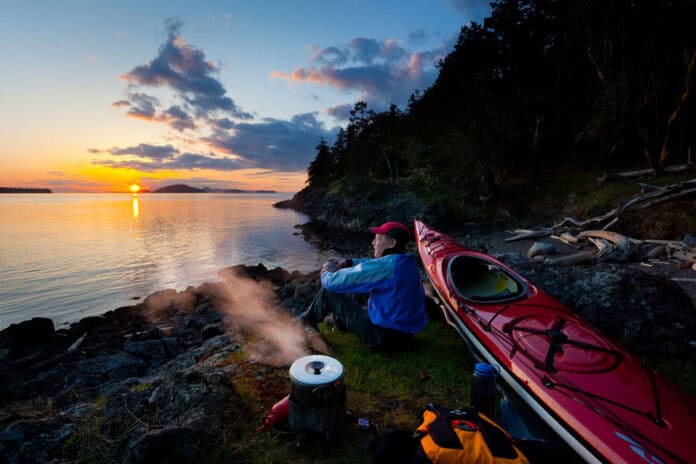
man sits beside his sea kayak at a campsite at dawn
Coming soon to a theater near you. | Feature photo: Gary Luhm 

For years, backpackers have challenged themselves on North America’s Triple Crown of long-distance trails. Meanwhile, sea kayakers—whose adventures often demand greater skill—have watched from the sidelines as backpacking gets the pop culture recognition.

Backpackers have movie deals—like Wild and A Walk in the Woods—based on bestselling books and endless media coverage. The result is that long-distance backpacking looks cool and has grown from a fringe activity to more than 3,000 people a year attempting to thru-hike the Appalachian Trail.

To help sea kayaking become North America’s coolest outdoor sport, I propose we create our own Triple Crown.

Sea kayakers deserve their own Triple Crown

What’s a Triple Crown? It’s a collection of three classic challenges that define the pinnacle of achievement in a sport. Backpackers have the Appalachian Trail, Pacific Crest Trail, and Continental Divide Trail. Bikepackers have the Arizona Trail, Great Divide Mountain Bike Route, and Colorado Trail. Even horse racing has the Kentucky Derby, Preakness Stakes, and Belmont Stakes.

man sits beside his sea kayak at a campsite at dawn
Coming soon to a theater near you. | Feature photo: Gary Luhm

For sea kayakers, our Triple Crown should test seamanship, endurance and adventurous spirit across some of North America’s most ambitious waterways. To be considered, a route must meet several key criteria. It needs to cover a significant distance or be remote enough that the isolation amplifies the challenge—700 miles is a good baseline. Every section must be completed under human power, with no motors allowed. The route should have clout, meaning it’s already paddled annually and has at least one book or movie documenting a previous journey. It should be tough but achievable, doable by motivated paddlers and not just elite athletes. The trips must also be independent, meaning they aren’t undertaken as part of a race or organized event. And finally, they must be continuous, completed as a thru-paddle in a single push.

With that in mind, I propose the following trips to form the Triple Crown of sea kayaking in North America.

The Mississippi River

At over 2,300 miles, the Mississippi is North America’s longest river, flowing from Minnesota to the Gulf of Mexico. Many aspire to paddle its full length, and every year, several parties achieve this goal. There are records for oldest, youngest, and fastest descents, among others. The river varies from a small stream interspersed with large lakes near the source to a massive river full of freighters near its mouth.

Lake Superior

A sea kayak circumnavigation of Lake Superior—the world’s largest freshwater lake by surface area—spans Minnesota, Wisconsin, Michigan, and Ontario. Clayton White and Duane Klinge hold an unofficial speed record tie at 29 days and 926 miles. As Reverend George Grant wrote in 1872, “Though its waters are fresh and crystal, Superior is a sea. It breeds storms, and rain and fogs, like the sea. It is cold in mid-summer as the Atlantic. It is wild, masterful, and dreaded as the Black Sea.”

The Inside Passage

A 1,300-mile coastal route from Washington to Alaska. It’s so classic there’s even a guidebook about kayaking it, which describes the route as “a holy grail for contemporary sea kayakers.” It’s widely recognized as one of the most scenic and challenging paddling trips in North America. (Interested? Read more on page 86.)

A Triple Crown of the Mississippi River, Lake Superior, and the Inside Passage offers a river trip, a big freshwater trip, and a challenging saltwater trip. Tough? Absolutely. But each of these trips is achievable in the same way that the AT, PCT, and CDT are for backpackers. Paddlers who accomplish all three could be crowned as some of the best around. So far, I know of just one person who has done all three. Dave Freeman thru-paddled these routes. He and his wife, Amy, have written two books about their paddling experiences.

Could a kayaking Triple Crown inspire a new generation of paddlers? I think so. There’s something about official challenges that sparks the imagination. Give people a crown to chase, and more just might pick up a paddle.

Think we missed a worthy route? Send us your nominations at editor@paddlingmag.com.

Cover of Issue 73 of Paddling MagazineThis article was first published in Issue 73 of Paddling Magazine. Subscribe to Paddling Magazine’s print and digital editions, or browse the archives.

Coming soon to a theater near you. | Feature photo: Gary Luhm 


Teen Canoeists Rescued By Washington State Ferry (Video)

Two teens were rescued from Puget Sound on June 13, 2025 after their canoe overturned on the way to Blake Island. Riley Mueller and Blake Butherus were on their way to the island around eight in the evening to meet family and camp overnight when the incident occurred.

Walla Walla ferry rescues two teens from capsized canoe near Port Orchard, Washington

While the route was familiar to the pair, both 18 years old, the canoe was new to them and Mueller shared with Komo News that the higher seats made the canoe less stable than the pair was used to. The teens also shared that the water was calm throughout their paddle and the capsize occurred when they decided to practice a new stroke in preparation for an upcoming canoe trip in Canada. With both paddlers leaned to one side, the canoe flipped.

“We immediately flipped it, which we were not ready for at all,” Butherus shared in an interview with Komo News.

The teens shared that they were wearing their life jackets and were able to get back in their canoe but it filled with water and they flipped again. Critically, the teens shared that they had forgotten a bailer to get the water out of the canoe.

Now in the water, Mueller and Butherus held on to the canoe and swam but were beginning to get cold in the waning sunlight. The teens were spotted in the water and someone called for help.

The teen canoeists rescued by the Washington State Ferry near Blake Island
Two teens were rescued on Puget Sound after their canoe overturned. Feature Image: Komo News | YouTube

“I heard ambulances…I’m like, I wonder if those are for us,” said Riley Mueller to Komo News. “Then…we see the big ferry just turn straight for us.”

From the water the teens saw the Walla Walla ferry angled for them. The ferry launched a rescue boat and pulled the pair out of the water. On the shore in Bremerton, the teens were treated for hypothermia and met by family.

Walla Walla crew rescues multiple paddlers in 2025

According to a report by Second Mate James Kuijper, upon receiving the radio call from the U.S. Coast Guard requesting assistance in rescuing two people in the water from an upturned canoe the Walla Walla changed course to respond and prepped a rescue boat and gathered emergency supplies. Passengers with medical training offered to help and a plan was made to treat victims for hypothermia.

The teens were quickly and carefully pulled from the water and wrapped in emergency blankets and firefighter jackets in the rescue boat.

“They kept shivering uncontrollably until emergency medical services took them ashore in Bremerton. They were awake, responsive and thankful — though a bit embarrassed,” wrote Second Mate James Kuijper.

The rescue of the teens isn’t the first time the Walla Walla crew rescued a paddler in 2025; in mid-May near Rich Passage, the crew of the Walla Walla successfully rescued a kayaker after passengers spotted a partially submerged kayak and alerted the crew.

According to King 5 News, Washington State ferry crews assisted in as many as 115 rescues in 2024.

Editor’s Note: initial copy has been updated to reflect that the date of the incident as June 13, 2025 rather than July 13, 2025.

How To Kayak Tow Your Friends Out Of Trouble

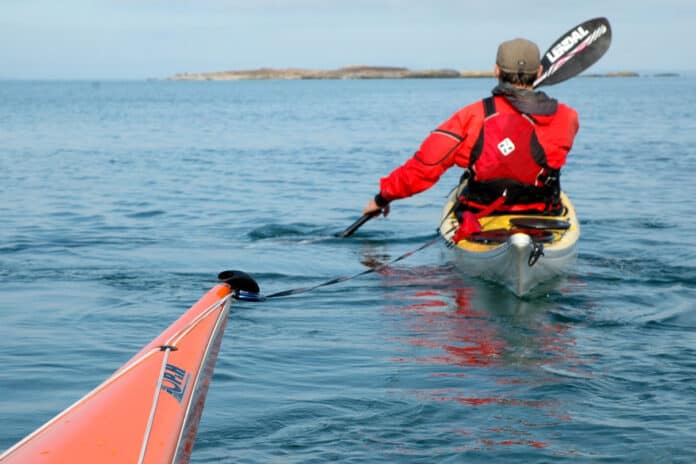
a person paddles toward an island while towing another sea kayak
Tow the line. | Feature photo: Alex Matthews

Sometimes the best way to assist another paddler is to give them a helping hand in the form of a tow. Towing a weaker boat isn’t always part of a rescue scenario. You may decide to put a kayak under tow to help a tired paddler make headway against strong currents or high winds.

Towing is also a great way to deal with an injured or seasick paddler. Other times, a tow can be just the ticket for quickly extracting another kayaker from a dangerous situation.

How to kayak tow your friends out of trouble

The most basic towing formation is the inline tow. In this system, the towing paddler simply clips a line to the bow of the boat to be towed and then pulls it along behind their kayak.

a person paddles toward an island while towing another sea kayak
Tow the line. | Feature photo: Alex Matthews

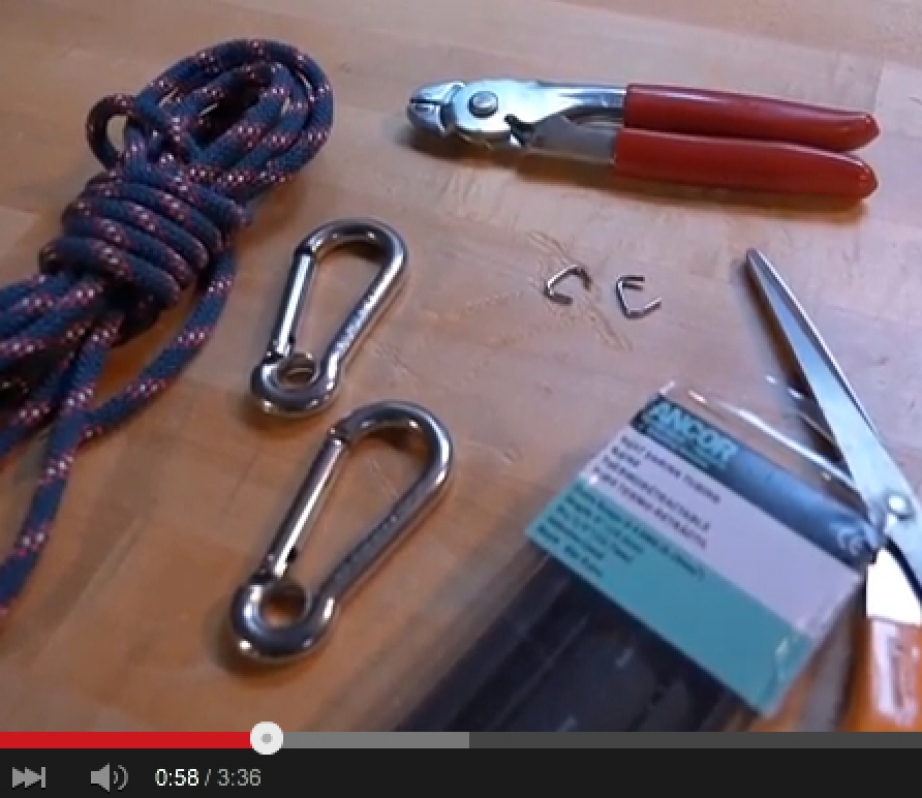
To effectively tow another kayak using an inline tow, you’ll need some dedicated gear in the form of a towline. Towlines consist of a length of webbing or line with an attachment system at each end. Most have a carabiner for clipping onto a kayak’s grab loop and a quick-release belt that lets the rescuer ditch the system with a flick of the wrist.

My favorite tow setup tucks the integrated line into a PFD. That way the system is always on your body, not an extra bit of gear to forget or decide not to don. A PFD-mounted tow also keeps the quick-release buckle fixed in place and easy to reach. Waist-worn tow belts can rotate and be tricky to manage in an emergency. Boat-mounted systems are great for long-distance tows—they’re easier on the towing paddler’s body, since the kayak takes the strain.

The basic portion of the tow system can be short or long. Short towlines or “cow tails,” around one to three meters long (three to 10 feet), are quick to deploy but only suited for very short-distance tows and can cause frequent, sometimes violent collisions between boats.

Long leashes, around 10 to 15 meters (30 to 45 feet), are better for longer distances. They provide enough space to reduce the risk of collision—especially in following seas where the towed boat can surf down a wave and ram the lead kayak. Many systems integrate some shock absorption—usually shock cord—to soften the load and reduce jarring.

Towing is physically taxing. The decision to tow another kayak over a long distance shouldn’t be taken lightly. In rough conditions or when fighting current or wind, it’s truly exhausting. Deploying long towlines in surf or rapids should be strongly discouraged due to the risk of entanglement.

Cover of Issue 73 of Paddling MagazineThis article was first published in Issue 73 of Paddling Magazine. Subscribe to Paddling Magazine’s print and digital editions, or browse the archives.

Tow the line. | Feature photo: Alex Matthews


Come Ebb Or Flood This Low-Profile Paddling Shoe Keeps Your Toes And Wallet Intact

When it comes to a pair of kayaking shoes, there seems to be two extremes to choose from: pricey high-performance ones ready for anything, and cheap box-store pairs with thin mesh uppers and a clunky sole that are lucky to make it a week at summer camp let alone a season of a paddler’s use. Level Six’s new Tidal Shoe sets out to provide paddlers with another option—a pair of shoes that will protect your feet and hold up to use, yet be a relatively low-cost.

Construction of the Level Six Tidal Shoe

The Tidal Shoe comes in at a minimalist design compared to the other footwear in the Level Six catalog including the River Boot 2.0 and Creek Boot 2.0. According to Level Six founder Stig Larsson, the Tidal Shoe is inspired by the whitewater playboating crowd—a group that needs something low-profile and functional on their feet in order to be able to fit inside the limited space of a low volume kayak deck. Larsson says, others like paddleboarders and general water users will appreciate the slenderness of the shoes design as well.

The upper is constructed of a polished-looking 1.5 millimeter-thick, heathered neoprene for an enclosed, secure fit that provides both thermal and protective layering. Level Six has brought the rolled cuff cut up toward the top of the ankle to prevent rocks and sticks from getting inside. Meanwhile, a wide rubber band runs across the top of the foot to keep the shoe in place without the added bulk of laces or velcro straps.

Underneath the shoe, the sole is constructed with a vulcanized rubber, and has a thinner, climbing shoe like profile that even includes section of rubber wrapping over the toes for added protection around your lower digits.

For those paddling recreationally, without long carries to and from the water, or whose paddling outings don’t involve skipping around treacherous terrain, the Level Six Tidal Shoe looks to be a capable water shoe that sets you back less than $50 USD. Learn where to find a pair at levelsix.com.

Watch Viral SUP Surf Star Rippin’ Rosie

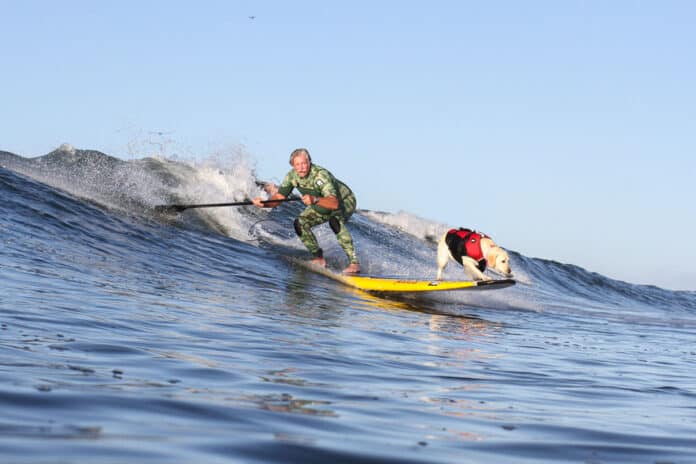
man uses paddleboard paddle to steer as Rippin' Rosie, SUP surfing dog, balances on the nose while they surf together
Sur-fur girl. | Feature photo: Richard Brady

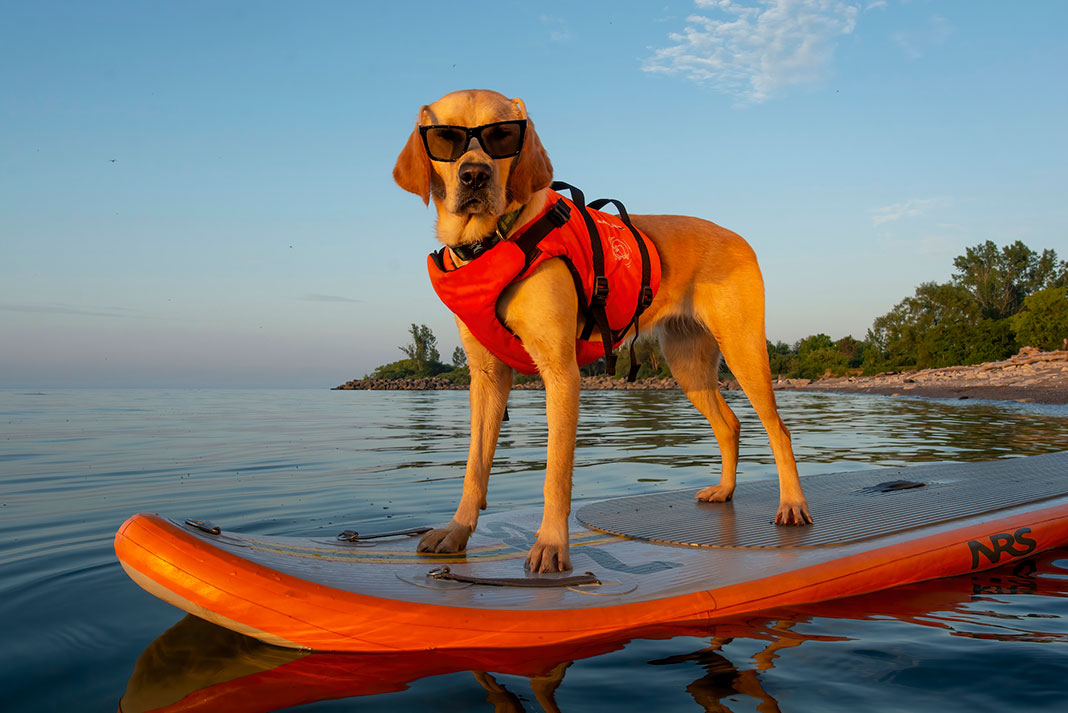
Santa Cruz, California, is known for its legendary surf breaks—and these days, for a four-legged social media sensation in the lineup. Rosie Drottar, or @RippinRosieDog to her 284,000 Instagram followers, is a two-year-old Labrador retriever. Her dad, Steve Drottar, a prosecuting attorney and a surfer for over 40 years, couldn’t be prouder: “I always wanted one of my kids or dogs to surf with me. Rosie is a dream come true.”

Meet viral SUP surf star Rippin’ Rosie

Rosie’s journey to stardom began when she wanted to join Drottar’s four (non-fur) kids paddling on a lake. She stepped onto his board and knocked him in a couple of times. But by her third attempt, she stood up and walked on the board. After a few weeks of paddling on the lake, Rosie took to the small waves easily.

It wasn’t long before Rosie’s surfing skills became undeniable.

“She hangs 10 more than anyone else in the county,” Drottar jokes. But he says she’s a true surfing partner, mimicking his body position, looking down the line like he does, shifting her weight and instinctively adjusting her position. “She’ll move back on the board to stop it from pearling,” he adds.

Obedience training, combined with obstacle courses, built a foundation of trust and communication—something that transfers to the board, says Drottar. In the beginning, he also rewarded Rosie for sits and down-stays on the board on land. The real training, however, came from four days a week out in the waves together.

“As soon as I start to get ready, she’s right there by the door…asking if it’s her turn to go,” he says. While Drottar admits he gets tired before Rosie, since he’s the one paddling the board out, he wouldn’t trade his time with her for anything. “It breaks my heart when I see her sad face in the window when I can’t take her out with me when the waves are too high or if I have to go straight to work after.”

Rosie’s surfing prowess has earned her first-place finishes in the human-dog tandem and multiple dog divisions at the World Dog Surfing Championship, the Purina Incredible Dog Challenge in Huntington Beach, and the Helen Woodward Center Surf-Dog-a-thon. The duo’s adventures have also captured global media attention, from People magazine to The Dodo to an Australian morning show. But for Drottar, the real reward is the bond they share.

man uses paddleboard paddle to steer as Rippin' Rosie, SUP surfing dog, balances on the nose while they surf together
Sur-fur girl. | Feature photo: Richard Brady

 While Rosie excels at SUP surfing with Drottar, she also competes solo, with Drottar giving her a push into waves. She even dabbles in waterskiing behind a boat.

Drottar’s advice for other dog owners interested in getting their pups on a board is simple: “Don’t ever push or force it and acclimatize them to the ocean at a young age.” He emphasizes the importance of building trust and making it a fun experience for both dog and owner.

For Drottar and Rosie, surfing is more than just a sport; it’s a shared passion that strengthens their bond. It also brings joy to countless others. “Rosie makes people smile all over the world,” says Drottar. “And I hope we continue surfing together daily as long as we can. Surfing is one of the greatest things ever—add your dog to it, and it doesn’t get any better than that.”

Watch Rippin’ Rosie in action at paddlingmag.com/0184.

Cover of Issue 73 of Paddling MagazineThis article was first published in Issue 73 of Paddling Magazine. Subscribe to Paddling Magazine’s print and digital editions, or browse the archives.

Sur-fur girl. | Feature photo: Richard Brady


John Chase Knows Good Paddling Stories

John Chase from Paddling the Blue Podcast near Power Island on Lake Michigan.
John Chase from Paddling the Blue Podcast near Power Island on Lake Michigan. Feature Image courtesy John Chase.

When it comes to epic paddling stories, who doesn’t love to gather around the campfire and trade tales of swashbuckling adventures by kayak? No one knows what makes a paddling story sure to enrapture and impress your friends quite like John Chase, host of Paddling the Blue podcast.

With episode titles like “Best Friends Go Midlife Kayak Adventuring” and guests ranging from paddling legends like Dale Sanders to first-time adventurers, Paddling the Blue manages to be both aspirational and relatable, highlighting sea kayakers and stories from all walks of life.

Paddling Mag sat down with podcast host and ACA Instructor John Chase to get to the heart of what exactly makes a great kayaking story:

Behind one of kayaking’s most popular podcasts

John Chase got his start in paddling from adventure racing, nonstop multi-discipline multi-day races in which participants are handed a set of topographic maps and coordinates and told to figure out how to get from one point to another. Paddling was one of the disciplines Chase felt most incompetent in and decided to dedicate time to improving. In 2011 while taking a paddling class, the instructor asked if Chase had ever considered being an instructor himself.

John Chase from Paddling the Blue Podcast near Power Island on Lake Michigan.
John Chase from Paddling the Blue Podcast near Power Island on Lake Michigan. Feature Image courtesy John Chase.

“When I really started paddling and getting serious about the instructor track I sought out different ways to learn and I came across a podcast called the Sea Kayak Podcast. Simon stopped doing that podcast and moved on to other things,” explained Chase on the origins of Paddling the Blue. “For several years afterwards I kept thinking, boy, I wish that podcast would come back. Somebody should bring that back some day.”

It wasn’t long after that Chase realized maybe somebody should be himself. In 2019, Chase put the wheels in motion, learning the equipment and the craft, recording practice interviews.

What makes a good paddling story anyways?

“What makes a good paddling story in terms of the podcast is [the speaker] being descriptive. I tell guests that we’re an audio media and people can’t see what’s going on,” Chase explained, adding that if it’s something a speaker is passionate about, that passion comes through in their voice.

On the technical side of storytelling, Chase shared that one of the most challenging parts of the podcast is sourcing the guests.

“Recording a podcast is pretty simple. It is overcoming, in some cases, a personal fear of having their voice out there in perpetuity,” shared Chase.

Chase spends time before any interview helping guests understand that part of his process is to make them sound amazing and help them to tell their story.

“I enjoy that part of the challenge because I know that everybody’s got a story inside of them. Being able to bring that to life is a lot of fun for me,” said Chase.

Finding the heart of paddling stories

So what lies at the heart of a good paddling story? According to Chase, a captivating adventure story might have less to do with stunning scenery or gnarly conditions than one might assume.

“It’s almost always about the people. The trips people are taking, the landscape is great, the paddling is fantastic, but it comes down to the people you meet along the way,” shared Chase. “Almost always people are saying ‘I wish I slowed down. I might’ve been going for a speed record, but I wish I would’ve stopped and experienced the place I was going through and the people.’”

In addition to people being at the heart of paddling stories, Chase also shared that many expedition paddlers would do it smaller and slow down, getting to know an area more.

Chase shared that in 140+ episodes, the story that’s stuck with him most is that of Jake Stachovak in episode two, revisited again in episode 79 as an in memoriam.

“Unfortunately Jake passed from cancer a few years ago and he was an amazing guy. He did what we called the Portage to Portage paddle,” shared Chase.

Stachovak paddled from his hometown in Portage, Wisconsin down the Wisconsin River out to the Mississippi to the Gulf, around Florida, up the east coast from the Hudson River and Erie Canal to the Great Lakes and eventually back to Portage, Wisconsin, in his own take on The Great Loop circumnavigating the eastern United States.

“It took him, I think 16 or 17 months to do that. He had such a zest for life and such an enthusiasm for the trip that everything was fun and exciting and that really spoke to his personality,” said Chase. “He was one of those people that — I didn’t see him very often — but every time I would go to a symposium or event and knew Jake was there, I knew he was going to be one of the highlights of the event.”

Of all of the episodes he’s recorded, Jake’s episode is the one Chase recommends a listener begin with.

Paddling the Blue has listeners in over 100 different countries, and well over 100,000 listeners. Find Paddling the Blue on Apple Podcasts, Spotify or at find more ways to listen at paddlingtheblue.com.

Follow The Leader: A Canoe Trip 20 Years In The Making

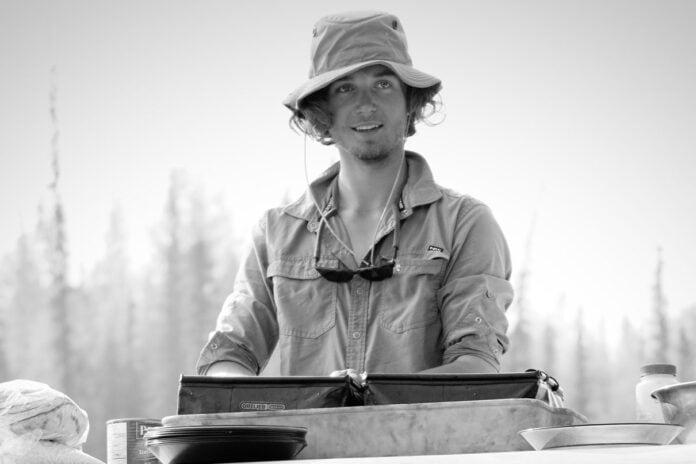
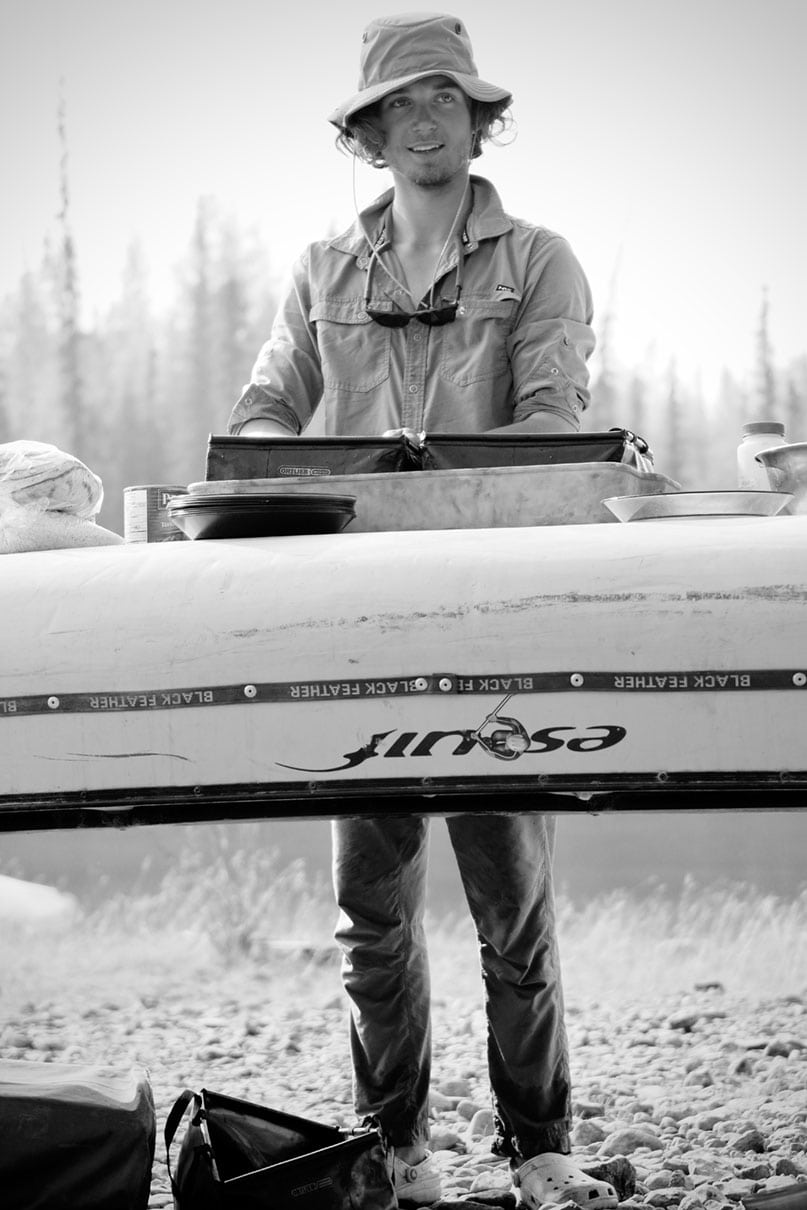
black & white photo of a young man in bucket hat washing dishes at a camp kitchen set up on an overturned canoe
“But we’ll get together then, dad, We’re gonna have a good time then.” | Feature photo: Scott MacGregor

When my son Doug was four years old, we paddled the Petawawa River with outdoor adventure filmmaker, Justine Curgenven. From our trip, Curgenven created her award-winning film, Dougie Down the Pet.

Doug had already been down the Petawawa twice before, as well as another half-dozen whitewater rivers close to our home. We’d been playing in whitewater together since he was in diapers. We’d been on enough canoe trips to develop a packing routine. He was involved in the process. He had a list of required camping gear to go inside his blue barrel. After that, he could take whatever else he wanted. If we could close the lid, it could come down the river.

I always made a point of including Doug in camp chores. Cooking. Dishes. Setting up the tent. I’d ask him to hold the canoe for me until I was seated. As ridiculous, or cute, as it must have looked, I wanted Doug to be part of the experience, not just along for the ride.

We scouted rapids together. We’d discuss which lines to take and why. In the canoe I’d ask him for the strokes we needed, whether his spindly arms and tiny paddle would help move the canoe or not.

black & white photo of a young man in bucket hat washing dishes at a camp kitchen set up on an overturned canoe
“But we’ll get together then, dad, We’re gonna have a good time then.” | Feature photo: Scott MacGregor
Follow the leader

Two years after Dougie Down the Pet was released, we ran Rollaway Rapids, an 800-meter section of the Petawawa that he walked around in the film on account of near freezing temperatures and ice along the shoreline.

The entrance to Rollaway is a series of canoe-swamping waves that can be avoided with a backferry or shift to the right of center. In my excitement, I was shouting for Doug to give me some draws to pull us to the right. Except, dear reader, I’m a righty. Doug paddles on the left.

Grrr, he never listens to me, I thought. But wait. Six-year-old Doug read the river and knew where we were and what was needed. He knew to cross-draw and was ignoring my direction from the stern. I watched his little arms hang on a textbook cross-draw, sliding us between the standing waves on our left and the eddyline to our right. Exactly as we’d scouted.

In addition to all the research suggesting how outdoor adventure improves a child’s physical and mental development, I also—selfishly, perhaps—saw it as an investment in my future. Maybe someday, when I’m an old man, he’ll take me down rivers.

I took this picture at what Black Feather guides call Oxbow Lake. It’s an out-of-the-way banger of a campsite on a forgotten channel the Nahanni River left behind. The man doing the dishes is our lead guide, Doug.

When Doug was 13, we paddled the Broken Skull with Black Feather. He fell in love with northern rivers. At 15, he was offered a spot in Black Feather’s apprentice guide program. Five years later, learning and working from some of the best guides in the wilderness canoeing business, he’s baking us a Dutch oven chocolate cake for dessert.

In my 20s, when I was teaching paddling and guiding, I’d call my dad from airport terminals as I was getting off red-eye flights, and he was drinking coffee and getting ready to go to work. We’d make half-ass plans to spend time together. Go fishing. Maybe take him rafting. But we never did. My dad died having never seen me paddle.

For years, Doug had been bugging me to jump on one of his northern canoe trips. There were always reasons to postpone, bullshit reasons. This was his last of seven wilderness trips that summer, and his third back-to-back on the Nahanni. After this, he would go back to university in a software engineering program with mandatory summer work terms.

It was now or never.

Jumping in as a guest on a commercial trip, I wasn’t involved in the trip planning, of course. Doug did send me a packing list of essentials. He told me I could bring anything else I wanted, so long as I could close the lid on my blue barrel. I smiled, unsure if he was being funny or helpful.

For 14 days, he ensured I did my share of dishes, cooking, portaging and camp chores. He held the canoe for me until I was seated.

Not once did I tell him which strokes to make.

Scott MacGregor is the founder of Paddling Magazine.

Cover of Issue 73 of Paddling MagazineThis article was first published in Issue 73 of Paddling Magazine. Subscribe to Paddling Magazine’s print and digital editions, or browse the archives.

“But we’ll get together then, dad, We’re gonna have a good time then.” | Feature photo: Scott MacGregor


Hit The Water This Summer With This Budget-Friendly Inflatable Paddleboard

Niphean inflatable paddleboard being used on lake.
Feature Image: Owen Roth

When late-spring days with clear skies and rising temps start to take over the weekly weather forecast, I peer out my office window, and the thought creeps in: I’d rather be paddleboarding. Just a few blocks from home I can drift miles on the Willamette River, and within a 60-mile drive, there are half a dozen lakes backdropped with forest climbing up mountainsides. All perfect places to spend an afternoon floating or cruising around.

Over the past few years, my preference for paddling has been shifting. I’ve spent decades in the seat of a kayak, then caught the bug to jump on fiberglass standup paddleboards, and now, what I find myself reaching for most for days of paddling lakes and rivers are inflatable paddleboards. Recently, I had the opportunity to test out Niphean’s Clovis Point 10’6” inflatable paddleboard, taking it for after-work town floats, meet-ups with friends beneath city skylines, and lounge sessions on sunny lake days at the foothills of the Cascades.

Paddlerboarding across a lake.
The Niphean Clovis Point paddleboard. | Image: Owen Roth

Review of the budget-friendly Niphean Clovis Point 10’6” inflatable paddleboard

Niphean Clovis Point 10’6″ Specs
Length: 10’6”
Width: 33”
Thickness: 6”
Maximum Recommended Capacity: 450 lbs
MSRP: $299 USD with kayak seat; $249 without
niphean.com

It’s well established inflatable SUPs are easy to throw in the back of the car, and take up little space to store, but what I love most about inflatable paddleboards is that, unless you plan to crank out miles or run rapids, you don’t have to spend much money on one to be able to enjoy it. Thumb in a few keywords and there are endless inflatable boards to choose from, and, fortunately, if a board follows certain fundamentals in shape design and material construction—reinforced seams, drop-stitched interior and capable of being inflated beyond 10 PSI—then it is likely all someone will need to check out of work and spend the rest of the day on the water.

Let’s cut to the major detail that makes the Niphean SUP stand out. This board costs just $299 with the most comprehensive package, and at this low cost, I have enjoyed paddling it, and it has already held up to diverse days of leisure. Over the past year, I’ve tested a dozen inflatable paddleboards, and what I will reiterate is this: unless you are seeking a high-performance aspect for touring, surfing or running rapids, an all-around inflatable board only needs to follow a few rules to be a fun, stable and capable shape.

The Niphean follows this mold. It has a rounded nose which has a slight lift (rocker) to keep it above the water. At the back is a rounded tail which is meant to provide the board a nice arcing feel turning over distances of flatwater, yet it can still be loaded up to swing the nose around. And the board has enough width and depth at 33 inches and six inches, respectively, to provide stability for new paddleboarders. The board reaches 15 PSI, providing a solid high-pressure platform, cruises around with ease, has a comfortable carrying handle, and is well-constructed at its price range to withstand years of use.

Standout Niphean board accessories

The bonus of the Clovis Point board is for the price it includes everything someone needs for recreational paddleboarding except a life jacket. I tested the 10’6” version which came with a seat to transform it into a sit-on-top kayak. Beyond the board and seat, the box also included a breakdown paddle that can be setup for SUP or kayaking, a high-pressure manual pump to reach the proper PSI, a backpack, three fins for the tail of the board, a centerboard fin, a coiled leashed for use on flatwater or a surf break, a repair kit, and a waterproof phone case—a fantastic little bonus to keep your phone dry and floating should you drop it.

Bottom of paddleboard.
On the bottom of the Niphean paddleboard you can use the common 2+1 fin setup on the tail as well as their unique StabilTrac fin. | Image: Owen Roth

StabilTrac centerboard fin

An interesting component of the Niphean SUP and its performance is the inclusion of a centerboard fin in addition to the commonplace center fin and side bites at the tail of the board. This centerboard fin, which Niphean calls the StabilTrac fin, is unique, and I don’t recall seeing this extra fin box and fin on a board that wasn’t intended for other uses, like windsports. A centerboard or keel on a sailing craft provides hold to keep it from sideslipping in the wind so the energy can instead be transferred into propulsion in the direction of travel. In concept, Niphean has included the fin on the board to improve the board’s tracking beyond the usual 2+1 in the back, helping to avoid spinning out and providing better glide and travel in a straight path.

In practice, the StabilTrac works a little too well for the application of paddleboarding. Notably, as I went to step back on the board and swing the nose around with sweeping strokes, the central keel kept the board locked in, making the process slower going. Also, because it extends deeper than the tail fins, the StabilTrac makes it much more likely you’ll tag bottom when SUPing along the edges of lakes or down slow-moving rivers. Perhaps it takes time to adjust to using a board with the StabilTrac; but personally I find the traditional fin setup takes care of the stability, tracking and turning you need for recreational standup paddleboarding. Fortunately, all of these fins are easily removable, so you can experiment with different setups, and spend time seeing if the StabilTrac is beneficial to you.

Hand grabbing carry handle on board.
The board has a comfortable carry handle, and bungees up front to store your drybag with extra layers, snacks and your phone. | Image: Owen Roth

Storage and transport board backpack

Just about any inflatable paddleboard comes with a storage bag, many of which are oversized and ruggedly built; these are admirable attributes, but with the Niphean I love how compact the backpack is, and how easily the board and accessories roll up to fit inside it. With a smaller bag, I often worry about whether there is enough room to fit all the gear inside. When you’re tired at the end of a trip, the last thing you want to have to do is re-roll a wet board five times to make it fit in the bag. But the Niphean backpack reminded me how wonderful and well-sized a bag can be. Measuring around 34 by 16 inches and 10 inches deep, it stores the board compactly with less space for items to swing around inside. I could see myself jumping on a bus with the Niphean SUP without whacking unsuspecting riders with a giant unwieldy bag.

Inflatable paddleboard seat

The Niphean board also has the option to come with a kayak seat and a multi-piece paddle, the ladder which can be set up as either a single-bladed SUP paddle or a double-bladed kayak paddle. Paddleboard setups with inflatable seats are becoming more popular, and I’m here for it. You’ve essentially bought both an inflatable standup paddleboard and an inflatable sit-on-top kayak in one click. The seat for the Clovis Point reaches up to 10 PSI in air pressure for a supportive feel, and clips onto the board’s D-rings. The option means on windy or long days, you can choose to skip standing and take the seat to go for a kayak excursion.

Where to buy the Niphean Clovis Point standup paddleboard

There are plenty of hurdles to navigate in order to spend your days paddleboarding. Fortunately, with the Niphean inflatable SUP, the cost of a board you can enjoy isn’t one of them.

The Niphean Clovis Point 10’6” is available at online retailers including Amazon. The board is also available in 10-foot and 11-foot models. Find more information at niphean.com.


Feature photo: Owen Roth