Home Blog Page 230

How I Lost And Won My First Paddleboard Race

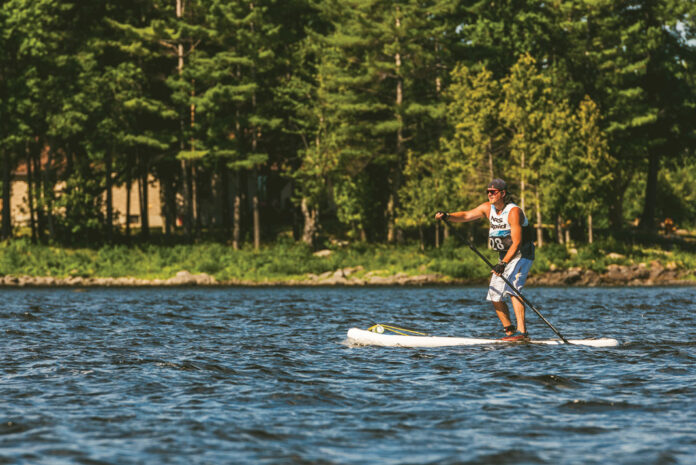
"I can see for miles and miles and miles, oh yeah." | PHOTO: RORY TOOP

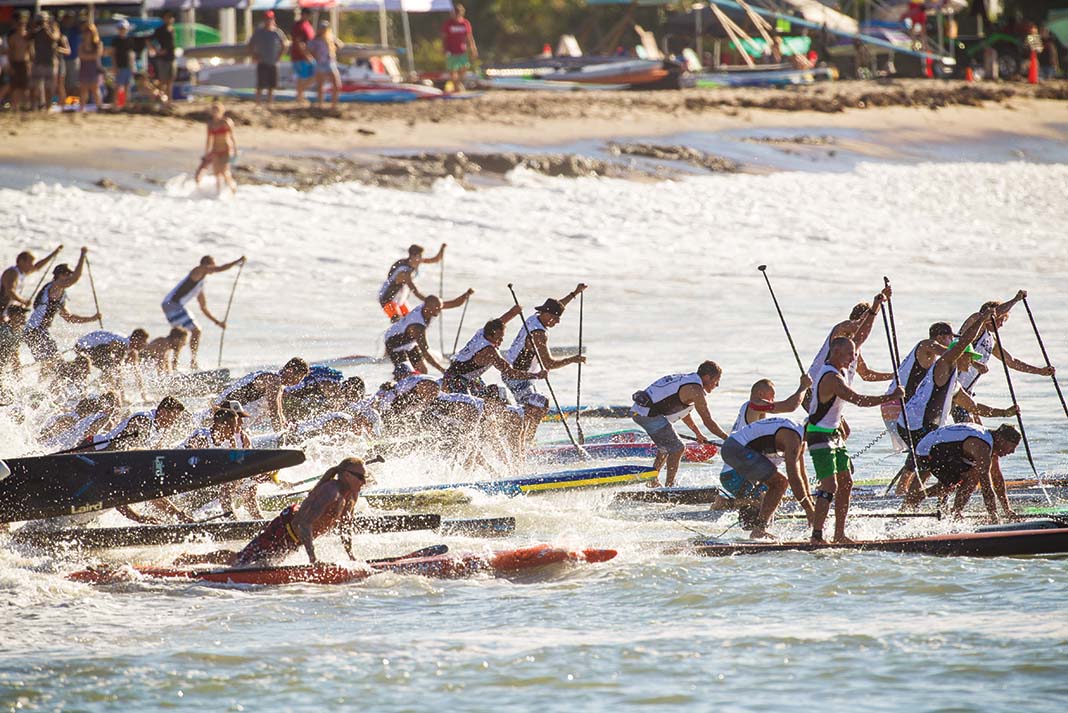
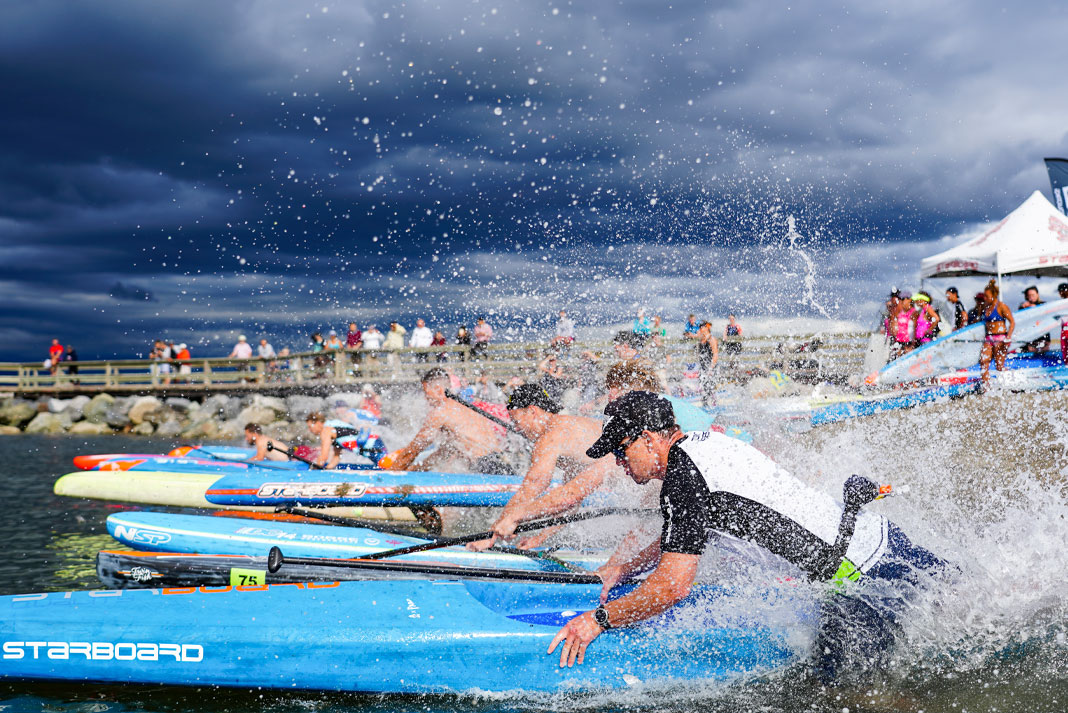
Hot sand between my toes is usually a great feeling on a mid-summer Saturday morning. Except the sound of the air-horn blast indicated my toes should no longer be in the sand. They should be cool and wet and pointed downstream.

In the early spring, as the snow was melting and the entire summer lay out before me, I’d signed up for my first standup paddleboard race. For two months prior to this August day I’d told myself that I would train. Tomorrow. You know how that goes.
How I lost and won my first paddleboard race

As tomorrows came and went the tiny voice in my head worked hard to convince me I had nothing to worry about. I would be okay. A couple weeks before the race I panicked and called a buddy who agreed to loan me his spare race board. I would compensate for my complete neglect of physical training and skill development with better equipment.

The second annual Upper Ottawa Race and Paddle Festival [now part of the Water and Dirt Festival] is a collaboration between two neighboring towns rich with paddling history on the Ottawa River right here in Rapid Media’s neck of the woods. The primetime headliner is the canoe, kayak and standup paddleboard race beginning at the beach in Petawawa and finishing 13 kilometers later at Riverside Park in Pembroke where there is camping, vendors and the after-party.

The search for a trusty steed

The morning of the race I arrived late and ran through my first prerace routine. Who am I kidding? My pre-race routine consisted of a free cup of specialty coffee and a frantic search for my buddy’s Toyota Matrix, upon which should have been tied my ticket to ride.
man standup paddleboard racing
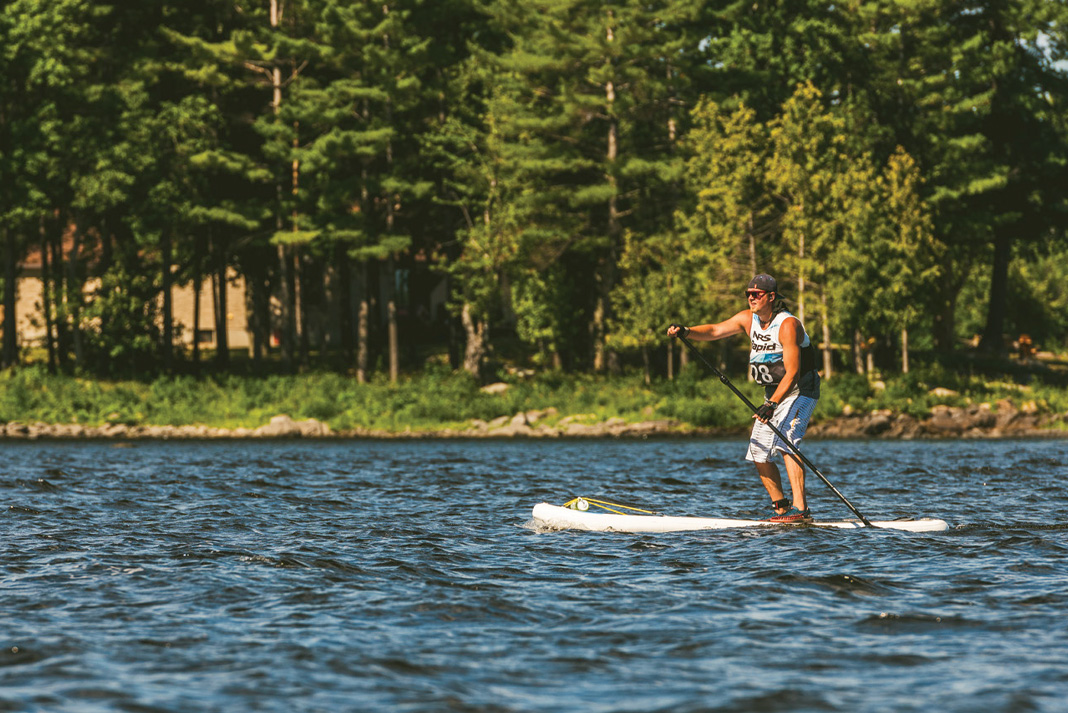
“I can see for miles and miles and miles, oh yeah.” | Feature photo: Rory Toop

Standup paddleboards designed specifically for racing are sleek. They are light. They are long. They are jet fighters. They are constructed of space-age carbon fiber materials. A board like this should have been easy to spot on top of a car, especially when the rest of the racers were already on their boards on the water, warming up and lining up. By comparison, an inflatable whitewater paddleboard is more like a county fair jumpy castle than an F-4 Phantom II. When bounding down rocky rivers you don’t need to be fast. A whitewater board is tough, wide, stable and slow. And the only board I could find.

Having spent the better part of my adult life sitting in canoes and kayaks, I wasn’t as familiar with the special elements of standup paddleboarding. Kayak Angler magazine editor Ric Burnley tells me the elevated perspective of paddleboards offers anglers a better vantage point for sight fishing redfish in saltwater flats. By the time I gave up looking for my loaner race board, dug the inflatable board out of the back of my car, blew it up, and got on the water, all the higher vantage point offered me was perspective on how far ahead of me the rest of the paddling field was—the second to last paddler was just rounding the point and disappearing out of sight.
Going the distance

Arriving at the finish line dead last, I thanked the river gods the few remaining spectators didn’t know I worked for this publication.

It turned out the race organizers had a prize for last place. And last place was actually first place for my board class and size category. I was the only one out of more than 90 racers foolish enough to be on an inflatable sub-12-foot board.

I will paddle this race again. Between now and then I’m going to train and I’m going to find myself a real race board. I may not win next year, but I won’t lose.
Cover of the 2023 Paddling Trip GuideThis article was first published in the 2017 Paddling Buyer’s Guide and was republished in the 2023 Paddling Trip Guide. Subscribe to Paddling Magazine’s print and digital editions, or browse the archives.


“I can see for miles and miles and miles, oh yeah.” | Feature photo: Rory Toop
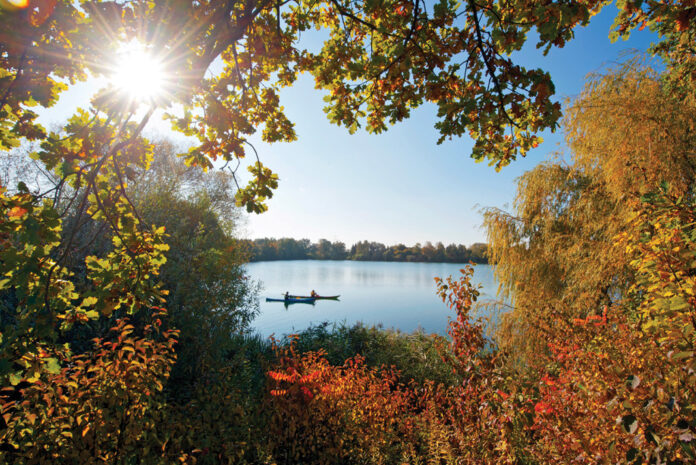
 

Stop Thinking, Buy The Kayak

I get by with a little help from my friends. | PHOTO: MICHAEL NEUMANN

My friend, Larry, pined over the purchase of a new kayak for more than two years. We spoke about it every Wednesday evening.

One night he’d rationalize it by telling himself he deserved it. We’d make mental lists of all the other things his neighbors had and he didn’t. We listed expensive things like metal flake bass fishing boats, RVs, paved driveways and Harley Davidson motorcycles. A new boat is only a fraction of the cost of those items.

Other weeks we’d swing the decision-making pendulum far off in the other direction. We divided the cost of a kayak by the actual number of hours he’d paddle. I don’t recommend this approach unless you plan on amortizing the purchase over a great number of years.

For example, a $3,000 kayak, canoe or board used for a couple of hours most Wednesday nights at club paddles for the better part of four summer months per year works out to be about $125 per hour. Yikes. However, keep the boat 10 years and now you’re down to only $12.50 per hour. Seems reasonable, doesn’t it? Cheaper than a movie.

One night I reminded Larry of an article that appeared in Adventure Kayak magazine. In it, writer Alex Matthews compared the rate of inflation to that of canoe and kayak depreciation. Matthews argued a well kept popular model would be worth the same amount in 10 years as you pay for it today.

Keep it longer and you’ll make money when you go to sell it. This handy math makes 10 years in the boat of your dreams virtually free, if not profitable. Unless, of course, you think of the opportunity cost of not investing the money into the dividend-paying blue-chip stock. We decided retirement without a life enjoyed along the way isn’t the goal.

Larry is a pharmacist. His wife is also a pharmacist. They live modestly. They drive boring vehicles and have a small mortgage left on a starter home in a small town. It’s not really about the money.

I get by with a little help from my friends. | Feature photo: Michael Neumann

Avoid buyer’s remorse, buy a kayak

Buyer’s remorse is a sensation of regret after a big purchase. It’s that tiny, relentless voice that says, “You shouldn’t have bought that,” or “You should have used that money for the repairs to the deck,” or “You should have bought the other kayak instead.” I’ve never had symptoms of anxiety, nausea and sweaty palms or regrets of any kind after purchasing paddling gear so long as I’ve done the research.

Larry, on the other hand, had done too much research. He suffered the overly prudent condition know as paralysis by analysis. He weighed the pros and cons, memorized the specifications and test paddled everything. He waited for two full production cycles and dog-eared two annual editions of our Paddling Buyer’s Guide to be sure nothing better was released. All his analysis was paralyzing him from making a decision.

One morning this fall I received the following text message: “I pulled the trigger. I had to stop thinking about it. It was consuming me. I was no longer present with my family.”

Larry finally bought himself a new kayak and did so for the sake of his family. I jotted that reason down for future use. I then messaged him back to see what he’d decided upon.

Do you know what he bought? He ordered the very same model he first considered two years before. He specced it out in the most expensive material lay-up complete with all the bells and whistles. Two weeks later I bought one too. Except I didn’t do it for my family. I did it for my friend, Larry. After all, he’s going to need someone on Wednesday nights to help justify his purchase.

Scott MacGregor is the founder and publisher of Rapid Media. Larry’s wife insists she loves her 2008 Mazda 6.


I get by with a little help from my friends. | Feature photo: Michael Neumann


Lightweight Touring Kayak Review: Stellar Kayaks S14-LV

Photo: Virginia Marshall

This article was part of a feature testing five compact touring kayaks while on a trip in Georgian Bay’s 30,000 Islands. The other boats in this roundup include the Current Designs Ignite, the Hurricane Sojourn 135, the Swift Saranac 14, and the Delta Kayaks 12S. Read the review of the Stellar S14-LV below.

[ Paddling Buyer’s Guide: View all touring kayaks under 45 lbs ]

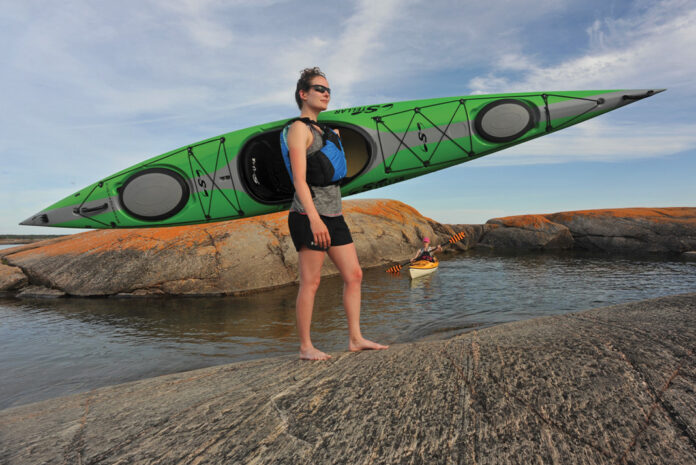
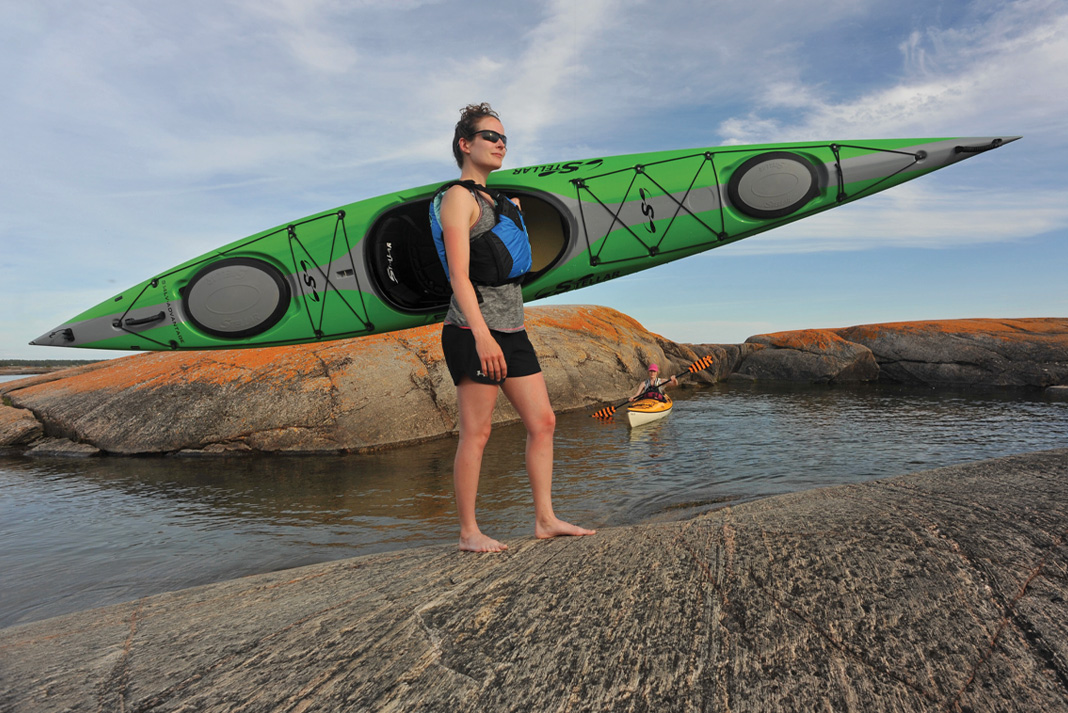
“This feels like a sports car!” marveled one happy tester, who enjoyed the S14-LV’s quickness in all types of water and playful maneuverability on edge.

Stellar S14-LV Specs
Length: 13’9″
Width: 22″
Weight: 37 lbs
Material: Kevlar/Fiberglass (advantage layup)
Price: $2,295

www.stellarkayaks.com

Stellar’s background in building rowing shells and surf skis is evident in the design—and speed—of the S14-LV. The 13-foot-nine-incher was the fastest of the sit-inside kayaks we tested, falling only slightly behind the Ignite on cruising speed and besting the ‘ski on acceleration.

The LV stands for low volume—the deck height in front of the cockpit is a thigh-spooning 11.4 inches, making this the snuggest fitting boat in the group. Our smaller testers loved the dialed in, performance feel; larger paddlers should try the standard S14.

With a svelte 22-inch width, the S14-LV is 1.5-to-two inches narrower than the rest of our fleet—making it our favorite for nimble turns. Add the low rear deck and unobtrusive backband and it was also by far the easiest to roll of all the boats.

Photo: Virginia Marshall

The shallow-V hull and soft chines provide smooth edging and solid tracking—dropping the S14-LV’s sturdy skeg deftly managed pesky crosswind on a bumpy, open-water crossing.

As expected, the S14-LV’s lower volume meant it was a tighter squeeze for our gear, but testers couldn’t complain about the dry contents and the easy on-and-off f the Tupperware-style hatch covers.

Available in four composite lay-ups, from tough fiberglass to ultra-stiff, uber-light Kevlar and carbon with a honeycomb core—there’s a great value option for any performance-minded paddler. And, yeah, we’re definitely digging the racing stripe.


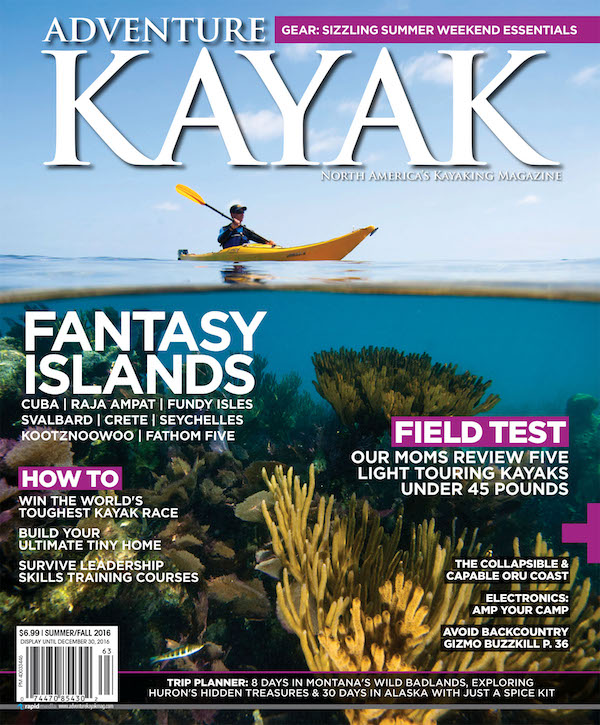
This article originally appeared in the Adventure Kayak
Summer/Fall 2016 issue.
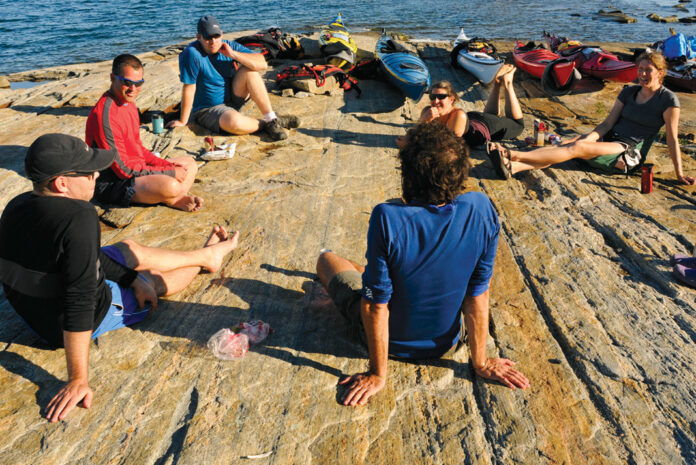
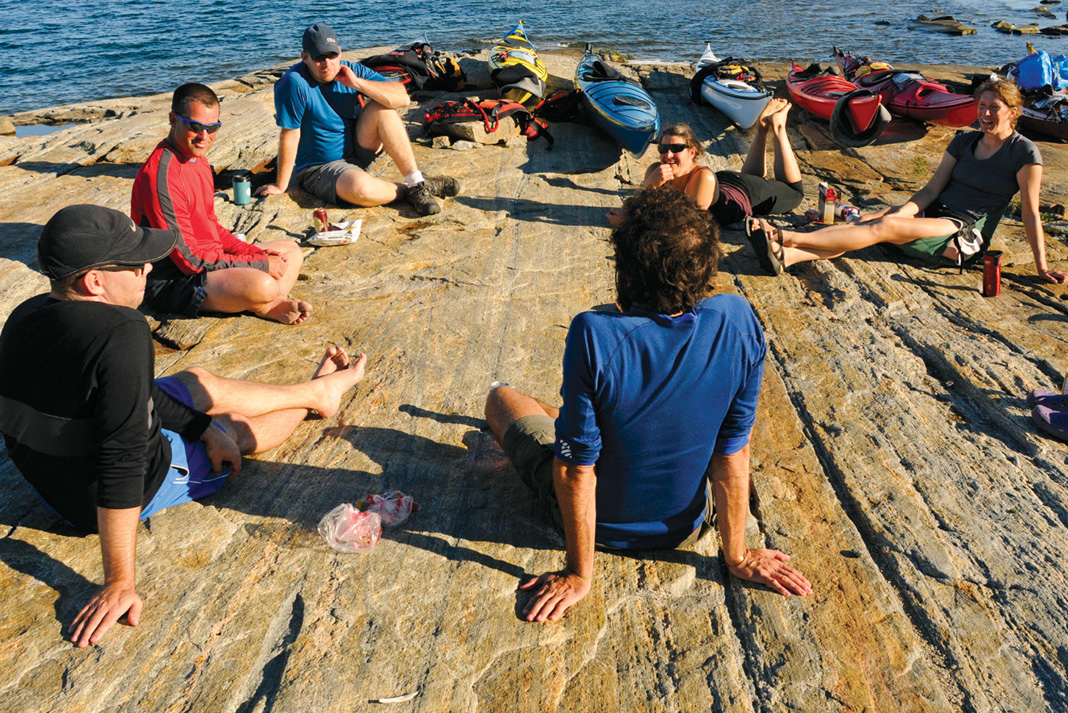
Subscribe to Paddling Magazine and get 25 years of digital magazine archives including our legacy titles: Rapid, Adventure Kayak and Canoeroots.

Paddling Friendships

TRUE FRIENDS ARE HARD TO FIND, DIFFICULT TO LEAVE, AND IMPOSSIBLE TO FORGET. | PHOTO: VIRGINIA MARSHALL

“THANK YOU! SEE YOU!” The petite Japanese woman beamed, bouncing onto her tiptoes to give each of us a hug goodbye. Strangers just three days earlier, Maiko and I parted as friends.

When I look back at more than a decade of kayak tripping, guiding, traveling, writing and coaching, it’s the other paddlers I’ve met along the way who stay with me the most. Their stories, advice, questions, stumbling blocks, victories and, yes, hugs are woven into the rich tapestry of my own experiences.

Most of my closest friends, I met through kayaking. Much of what I know about paddling techniques and tools—not to mention coastal environments, weather, group dynamics, risk management and much else—I learned from them. Nearly everything else I absorbed through mentors and students. Our playgrounds may be vast and widespread, but the sea kayaking community is a relatively small one, and I’ve had the good fortune to paddle with many of its luminaries.

An offhand observation from Body Boat Blade coach Leon Sommé at a symposium my first year of kayaking transformed my roll from dubious to dependable. In an instructor workshop on navigation, SKILS coach Michael Pardy explored the history, art and science of mapmaking, adding fascinating depth and breadth to the standard angles-and-equations lesson plan.

TRUE FRIENDS ARE HARD TO FIND, DIFFICULT TO LEAVE, AND IMPOSSIBLE TO FORGET. | PHOTO: VIRGINIA MARSHALL

Most recently, I spent a day with Have Kayaks Will Travel coaches Sharon and Alec Bloyd-Peshkin, who demonstrated a simple, effective way to identify hazards and evaluate risk with your group before getting on the water. Their approach is now integrated into my own paddler’s tool kit, and packaged with it is a remembered scene—like the memory orbs in Disney’s Inside Out—of Alec and Sharon gathering their students in the shade around a graph constructed of sand, sticks and pebbles.

The most vivid memories are those I dust off and share often. For example, the lesson to test spray deck fit on the boat you are paddling that day—driven home on a dicey, 13-hour downwind run with a deck that required two sets of hands and a significant struggle to release. Another lesson: always double- check food quantities, or risk the wrath of eight hangry women for five interminable days. Then there’s the favorite story of the champion Greenland roller who learned his very first roll as a young intern, under the vague tutelage of the outfitter’s chef—seated comfortably on the dock with a beer in hand. No lesson there, just laughs.

If all of this seems like a strange introduction to an issue featuring places (“Fantasy Islands,” page 38) and gear (“Lose Weight, Feel Great,” page 56), I encourage you to think about who you’ll share that perfect island with, or who you’ll seek advice from when testing out those new boats. Then, pick up the phone and call them. Make a plan, set a date and go create your own memories.

I don’t recall the model of kayak Maiko was paddling that weekend, or the names of the islands we paddled around. What I do remember is the hot summer sun, the shared relief of dunking into the cold water to practice rescues, and the warmth of her hug.

Editor Virginia Marshall hopes to see all her friends, old and new, on the water this summer.


This article originally appeared in the Adventure Kayak
Summer/Fall 2016 issue.
Subscribe to Paddling Magazine and get 25 years of digital magazine archives including our legacy titles: Rapid, Adventure Kayak and Canoeroots.

A Five-Month Canoe Trip With A Five-Year-Old

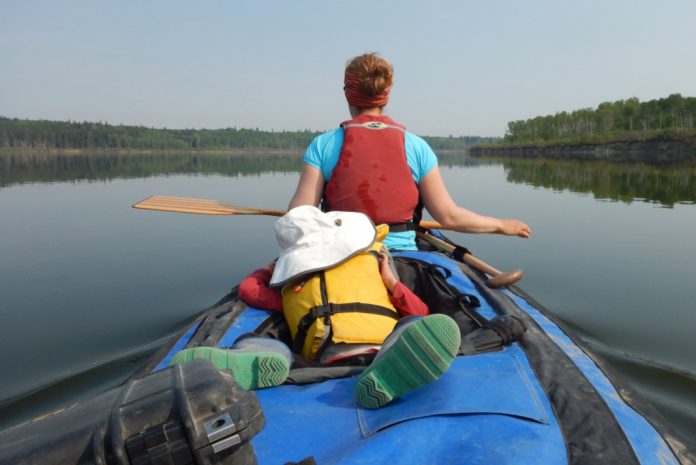
A child lies in a canoe while his mother paddles in the bow.
A child lies in a canoe while his mother paddles in the bow. | Photo: Benoit Gendreau-Berthiaume

Benoit Gendreau-Berthiaume, his wife Magali Moffatt and five-year-old son Mali were in the middle of a 14-kilometer portage and discouragement was setting in.

The trio were on the Grand Portage in the Boundary Waters Canoe Area Wilderness heading towards Lake Superior, and the first six kilometers had taken hours.

Moffatt was feeling extremely deterred about what they had gotten into when Mali walked over and told her he was proud of her. “That’s one of the ways our son was an inspiring motivator,” says Berthiaume.

This wasn’t a typical family canoe trip. When the French Canadian couple began thinking about their eventual return to Quebec following Berthiaume’s PhD in forest ecology at the University of Alberta, they imagined a road trip.

Concerns about their car led them to joke about canoeing home. They looked at the Saskatchewan River route on a map and realized that the joke could actually be a feasible option. “It kind of snowballed from there,” Berthiaume says.

While the logistics of the trip took an extensive year-and-a-half to plan, the main concern for Berthiaume and Moffatt was whether their son would enjoy the canoe trip from Edmonton to Montreal.

[ View all boats and gear in the Paddling Buyer’s Guide ]

In summer 2014 they went on a 10-day trial canoe trip on the Saskatchewan River, a stretch that would make up the first part of the proposed longer expedition. Mali loved it, and plans for the next summer’s adventure were solidified.

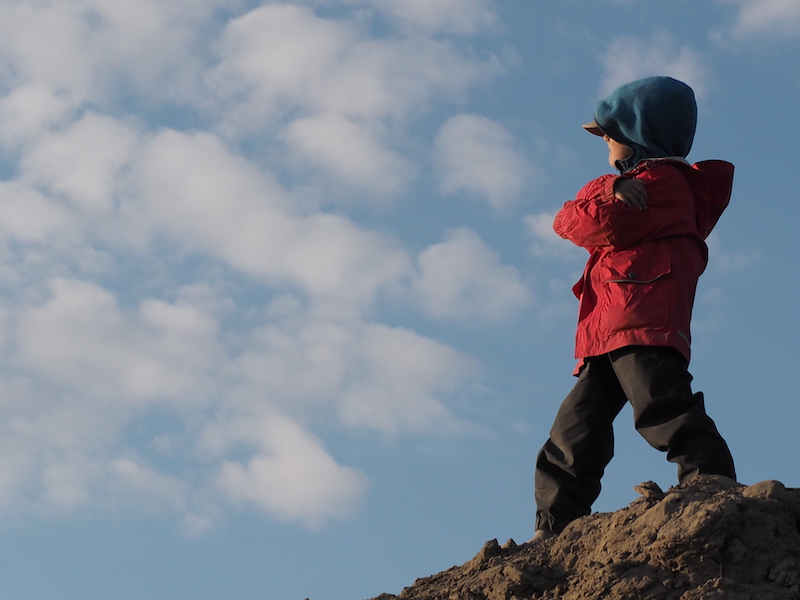
A little boy in a red jacket stands on a hill and looks out at the sky.

They sold their car and began paddling on the North Saskatchewan River, the start of a journey that lasted five months and saw them crossing 60 lakes, 13 rivers and complete 75 portages.

Spending 147 days in a canoe together was a sharp departure from their routine in Edmonton of daycare and work, an experience that altered their family dynamic. Berthiaume says they truly learned how to work together as a family, and Mali developed a higher level of maturity and greatly enhanced his proficiency in outdoor skills

The family is now working on a documentary titled Paddling Home, a project they hope will inspire other families to pursue outdoor adventures, even if it is just for a few days. They want to show families that it’s not as hard as they may think to organize challenging and fun journeys, and that children—even very young ones—can not only handle it, but they can be the motivators.

Back in the Boundary Waters, the Grand Portage ended up taking the family 12 hours to complete. On that portage and others, Mali’s attitude was key in maintaining positive morale for the family. “He made some of the harder times not so bad.”

Feature Photo: Benoit Gendreau-Berthiaume

Camera Gear Whitewater Paddlers Should Splurge On

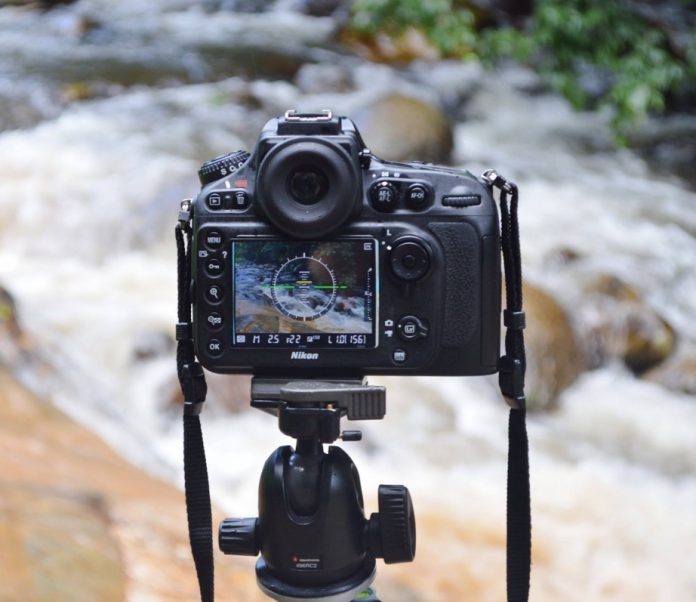
A DSLR camera in front of a whitewater river.

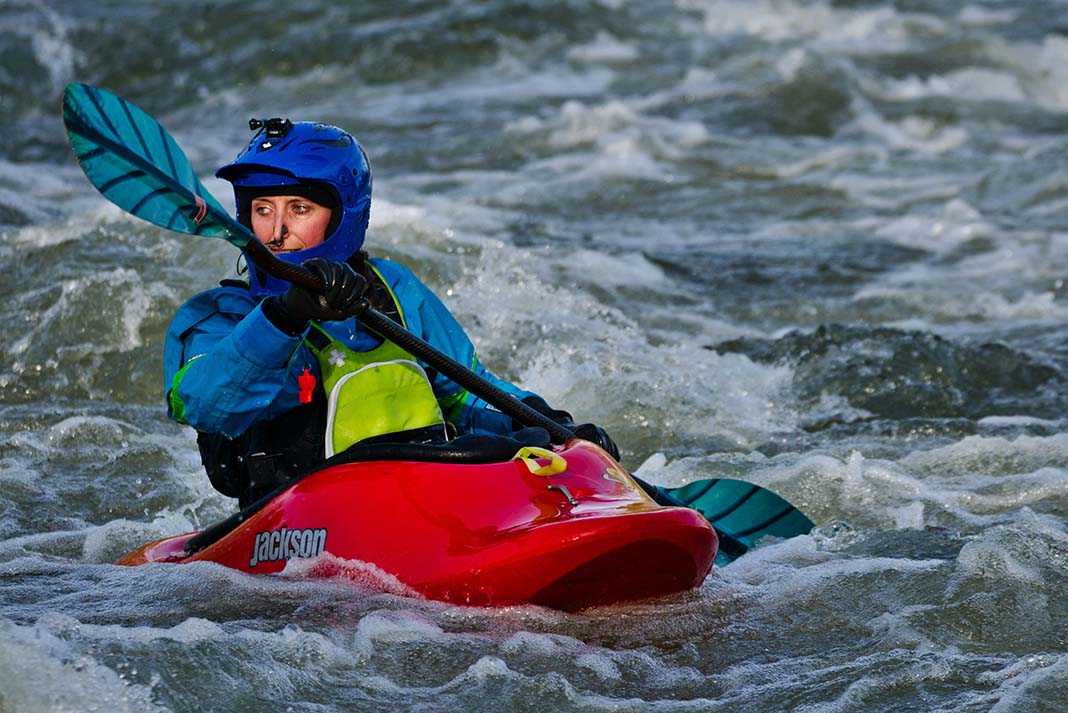
Photography is a great hobby to combine with whitewater paddling. River trips and park and plays can take you to some amazing destinations, from a remote northern river to a sweet camping spot adjacent to a burly play wave. While buying new camera gear can be expensive, there are specific items that will transform and improve your photography enough to warrant the purchase. Take care of these pieces and you will be set for high quality whitewater paddling captures for many years.

1. A Neutral Density filter (ND Filter)

The misty, dream-like photos of waterfalls and rivers you see all over Instagram are usually captured using a long exposure. If there is too much light in a scene, it is hard to get the same effect because you can’t drop the exposure enough. A Neutral Density filter is a dark piece of glass that blocks some of the light coming into your lens, allowing you to use a longer exposure. Try one at your favorite spot with fast water.

2. A GoPro

A GoPro is a great tool to have when you want to show viewers the point of view of the paddler. Create a sense of suspense in a photo by showing what it looks like before paddling over a drop or plowing through never-ending class IV waves. A GoPro is perfect for whitewater paddlers because they are small, durable and waterproof. They also come with mounts that can attach to points on the kayak for a lot of angle variety.

3. A Fast Lens

If a lens is described as fast, it means it can open to a large maximum aperture. The larger the aperture, the faster the lens is because it can let more light in while using a faster shutter speed. Many places whitewater paddlers will find themselves in may not have perfect light. Think a river cutting through thick old growth forest or a paddling festival at sunset. A fast lens will allow you to let in more light, but also means a faster shutter speed can be used to better freeze action.

4. A Dry Bag Or Hard Case For Camera Gear

A sealing compartment is key for bringing camera gear on the river. If you are going to spend money on nice gear, you definitely need to do the same for its housing. Some paddling photographers love the easy accessibility of hard cases, while others are drawn to the more malleable quality of dry bags. Whatever you choose, make sure it seals well, fits your gear and is adequately padded so damage doesn’t occur when you ride through the frothy stuff to set up your shot.

5. A Set Of High-Quality Lens Cloths

The conditions you face when photographing whitewater mean the chances of your lens getting splashed with droplets or acquiring condensation are high. Make sure to pack multiple cloths for cleaning your lens, plus a small towel for drying your hands off when you put down your paddle and pick up your camera. Another pro tip? Throw a packet of silica into your dry bag along with camera gear to help absorb lingering moisture.

6. A Drone

We know, we know—this is more than just a splurge, but if you are serious about photographing whitewater and want to take cool video and photos from a bird’s eye view, you may want to consider buying a drone. The range of models and prices keeps expanding, meaning you don’t need to go for the professional level one. Make sure you practice in an open space free of trees or air traffic, and check local regulations on flying drones beforehand

Video: Kevin Callan Asks If Wilderness Still Exists

Photo: Kevin Callan
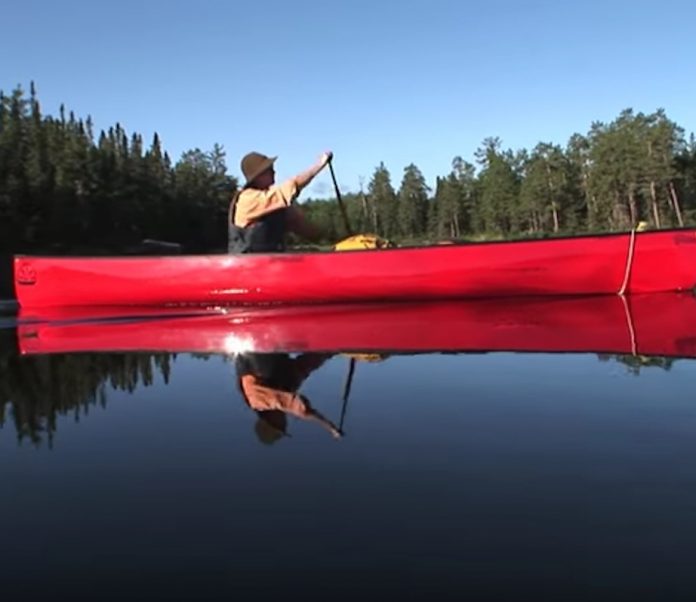
Kevin Callan canoeing in a red canoe in Quetico Provincial Park.
A canoe and camping video by Kevin Callan
Kevin Callan

In 2012 Kevin Callan and Kip Spidell went on two seperate two-week canoe trips in Quetico Provincial Park asking paddlers if they thought wilderness still exist. Watch to see what they said.  

7 Cold Water Paddling Essentials

cold water paddling essentials
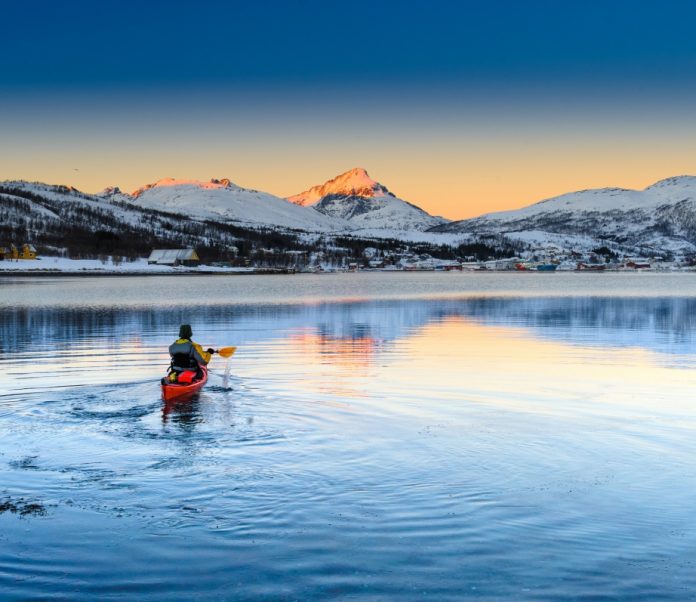
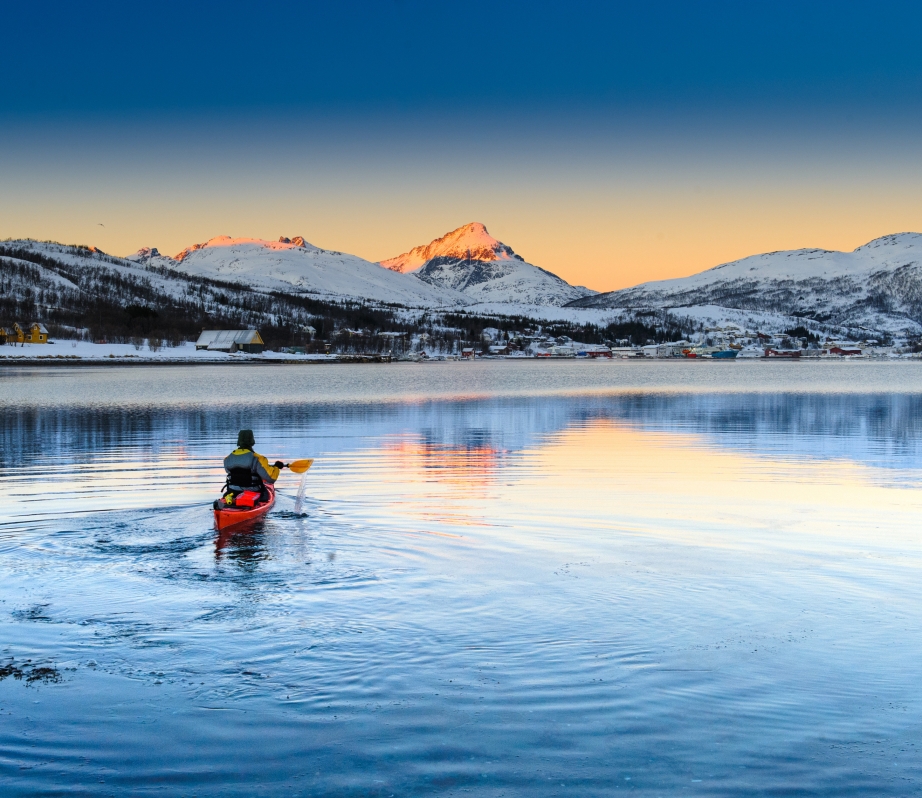
A kayaker on the ocean in winter.

If you live in a region with tough winters, the paddling season can seem far too short. It can take a few weeks to get back into the rhythm after ice out. Muscles need to return to their once paddle-ready strength. Systems and logistics for transporting your kayak need to be locked in. New gear needs to be purchased, and old gear repaired. Then before you know it, the leaves seem to be changing.

But what if the paddling season didn’t need to cease come fall? If you want to try paddling through the coldest and darkest months of the year, you will need a few solid pieces of gear to make it happen.

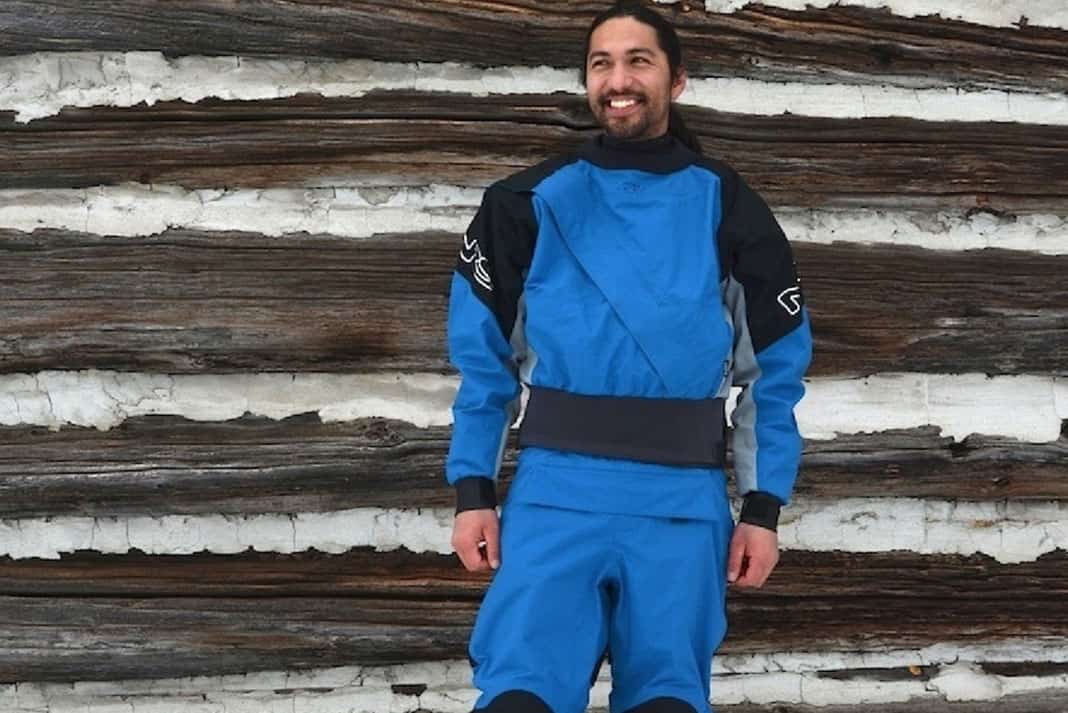
Man standing outside wearing blue and black drysuit
The Crux is reinforced in all the right places. | Photo: Kaydi Pyette

1A drysuit

This is the big ticket item, but also the key to making cold water paddling a reality. A well-cared for drysuit will last, and due to its ability to extend your cold water paddling missions by hours and days, it is priceless. And we’re not being hyperbolic—cold water kills paddlers every year, so don’t paddle on cold water without one. Make sure to layer underneath and tuck into a ball with the zipper partially open to remove excess air before fully zipping.

2

Down booties

There is nothing more satisfying than peeling off paddling socks or shoes and pulling on down booties at the take-out. Their weightless, cushy quality makes your feet feel like they are being hugged. Many come with soft soles so you can walk around the take-out organizing your gear without damaging them. Combine them with some fleece pants and you are all set.

[Cold Water Safety: What Every Cold Water Paddler Needs To Know]

BUY ON AMAZON  

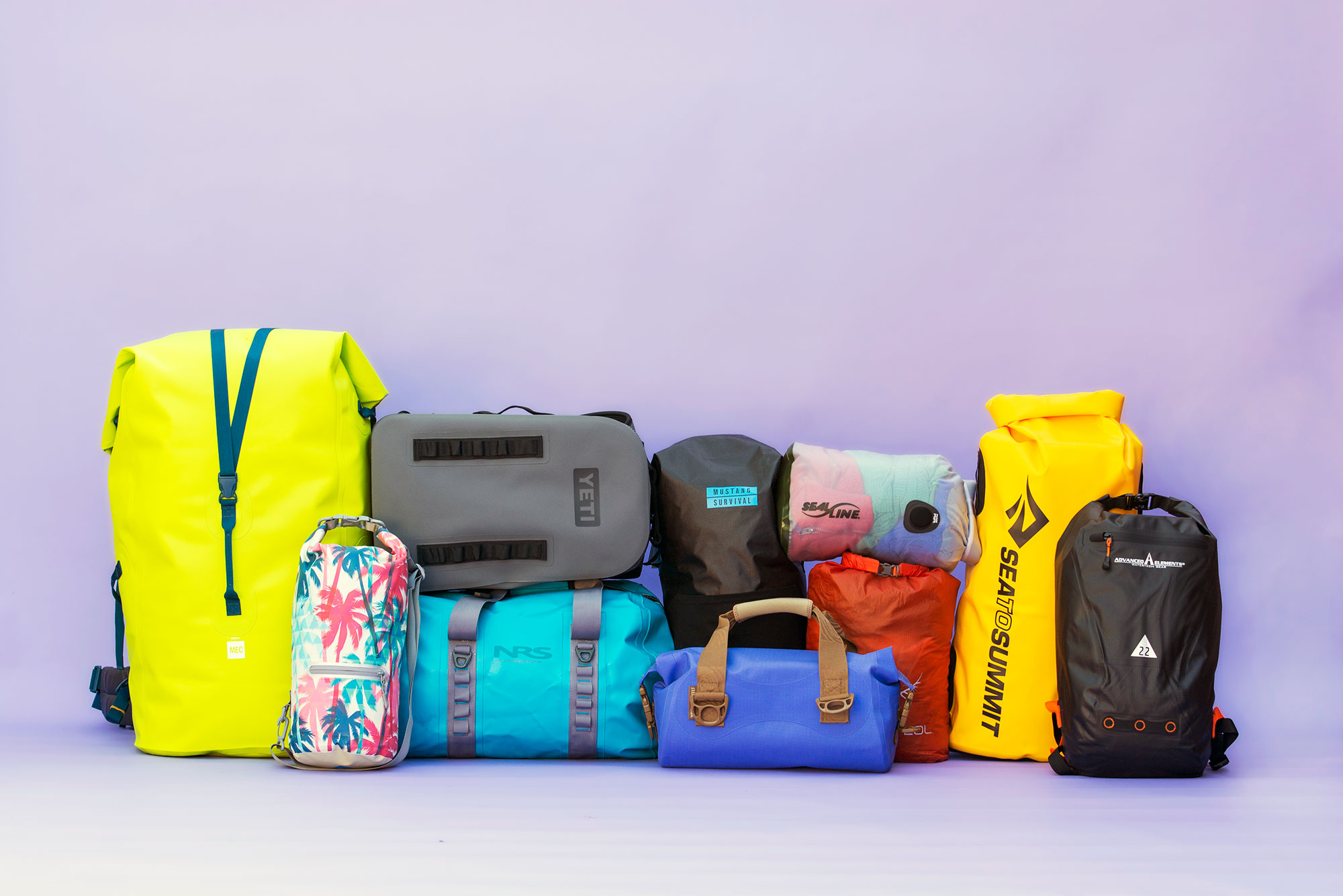
Drybags in a variety of sizes and colors stacked on one another.
Total combined volume of the drybags featured here is 337.5 liters. Have they been filled with A) the entire contents of the editor’s linen closet, plus the pillows off her bed? Or B) four winter parkas, 11 sweaters, three sleeping bags and a small dog bed? The answer is C) All of the above. | Photo: Kaydi Pyette

3

Dry bags

Dry bags are essential for cold water paddling because they allow you to store extra clothing and insulation, making you safer on the water. Fill a dry bag or two with warm layers, gloves and hand warmers generally used for skiing. Also make sure you have a first aid kit and a communication device safe in a dry bag.

BUY ON AMAZON

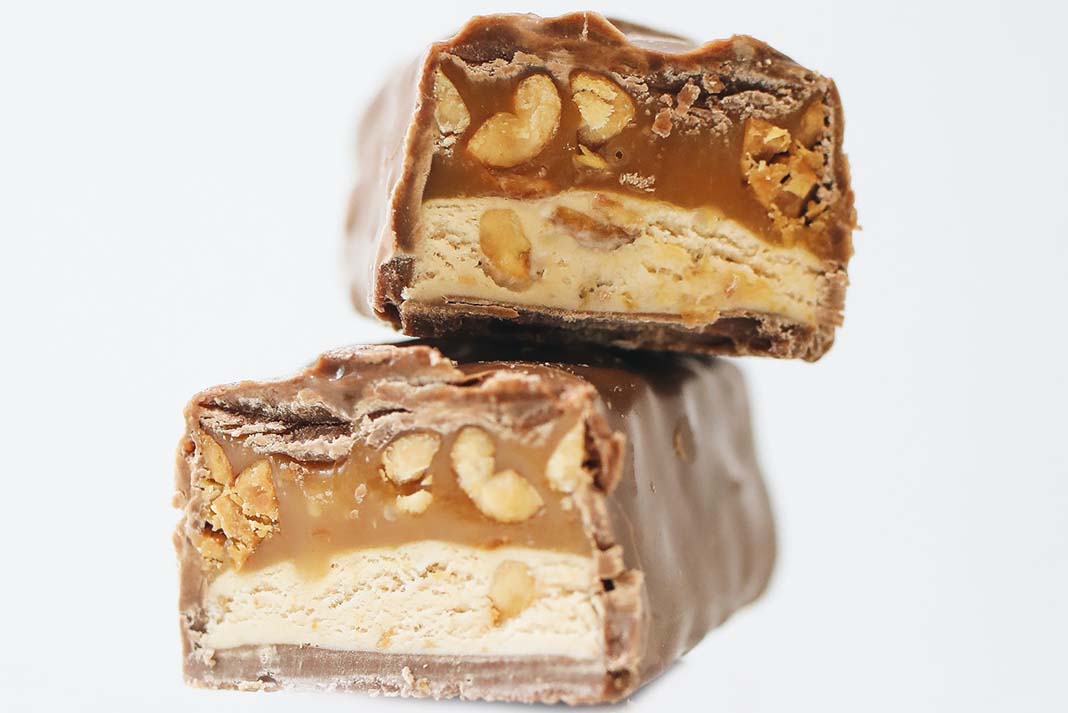
Photo by Polina Tankilevitch from Pexels

4

Calories

Spending time in cold water can cause your body to burn significantly more calories than a June mission. Even if you are just going out for a few hours, plan for the worst by packing emergency food in case something goes wrong. Choose calorie dense food that travels well, like Snickers bars, dried fruit, nuts, beef jerky and peanut butter sandwiches.

BUY ON AMAZON

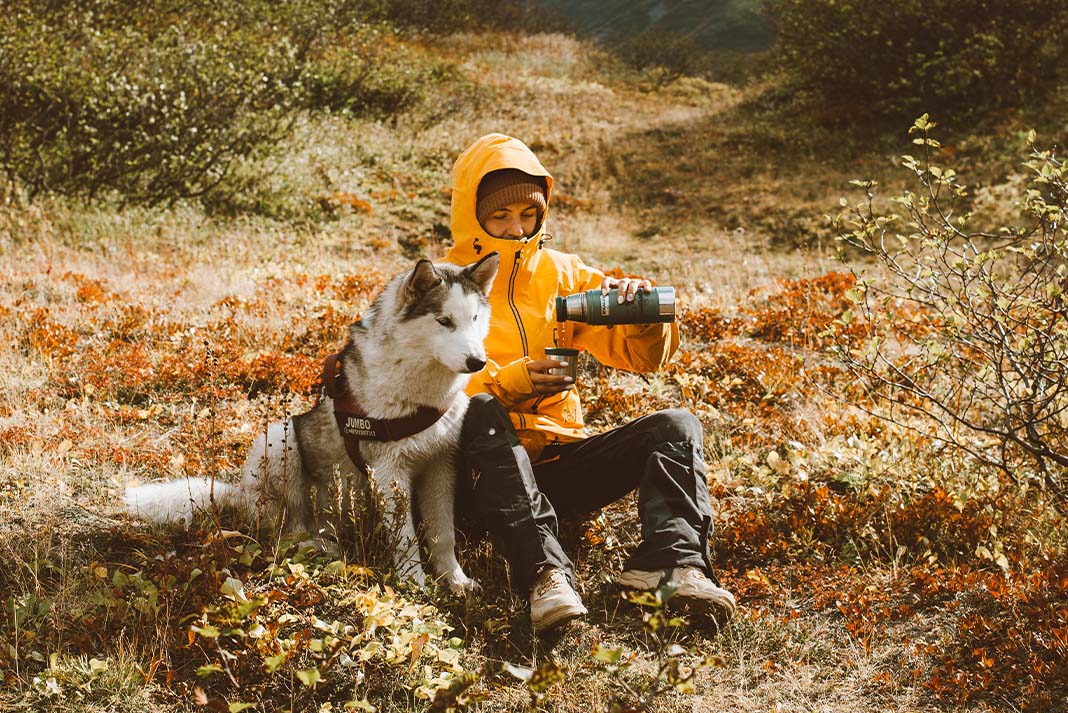
Tired traveler with Husky on mountainous terrain | Photo by ROMAN ODINTSOV from Pexels
Photo by ROMAN ODINTSOV from Pexels

5

A thermos

A thermos is super important for cold water paddling days because it allows you to pack a hot lunch or beverage to enjoy on the water. If you are feeling cold and unmotivated, a lunch of hot stew or chili and a hot chocolate is a sure-fire way to get the stoke back. Pack a few mugs and make sure you buy a thermos that is durable enough to handle some banging around inside your kayak hatch.

BUY ON AMAZON

Photo by Kevin Bidwell from Pexels

6

Gloves

You can have the best drysuit in the world, but without gloves, all you will feel is the biting cold with each paddle stroke. Slip into a pair of paddling gloves or pogies and thinking about your numb digits will be a faint memory.

BUY ON AMAZON 

7

A plan

Make sure you know what your destination and estimated time on the water will be, and leave that information with a friend. Cold water can turn incidents that would be minor mishaps in summer into more serious issues, so having someone know where you are is vital.

Quiz: Where Should You Go On Your Next Canoe Trip?

Photo: Pixabay
A woman canoes on a turqoise lake wearing a red lifejacket.

Not sure where you should go on your next canoe trip? Let us help! Take our detailed quiz and figure out which amazing canoeing destination is right for your 2017 paddling adventure. 


How The Humble Kayak Helped Win Wars And Write History

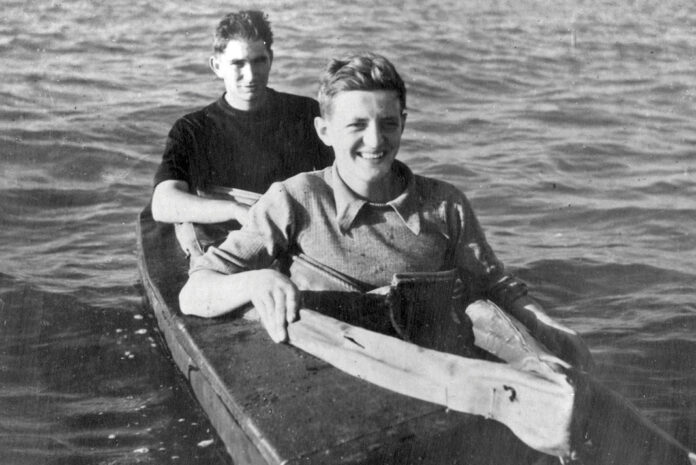
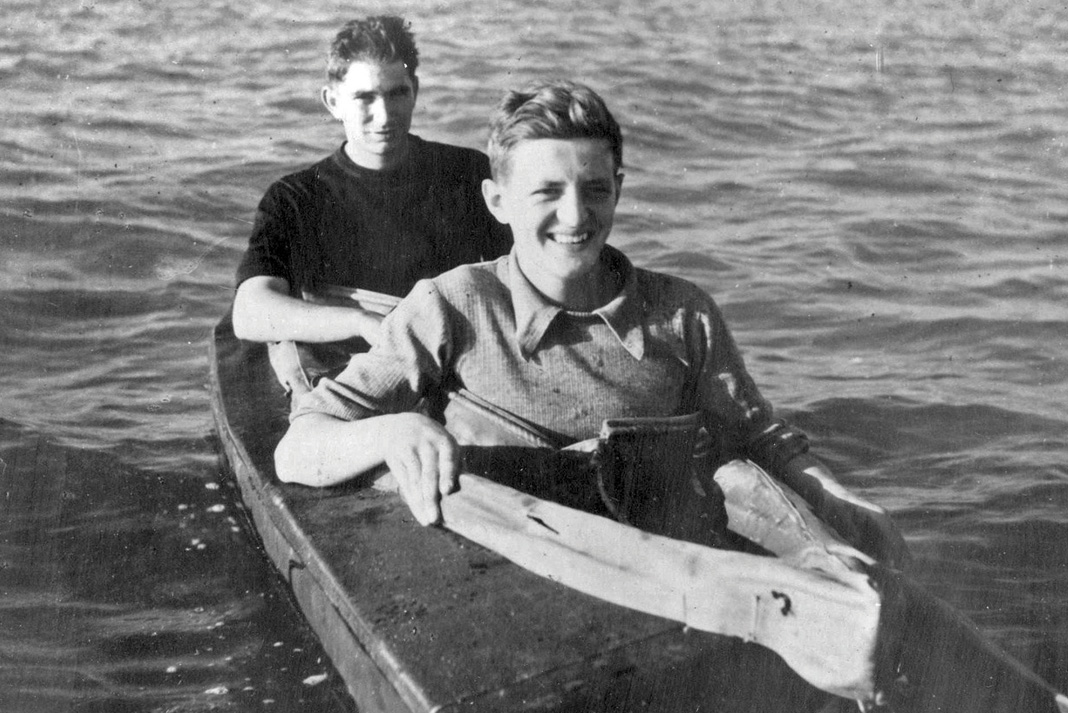
Brousse and Schlumberger in the kayak they used to sneak out of occupied France during World War 2
Brousse and Schlumberger in 1943. The pair used a kayak to sneak out of occupied France and join the Resistance in North Africa. | Feature photo: Courtesy Voyagers Without Trace

In a 17th-century fortress high in the Pyrenees Mountains near the Spanish border is a sea kayak. It’s a beat-up folding model from the 1930s, and rests on a stand in the Room of Honour at France’s National Commando Training Centre, where the country’s special forces learn the ropes. The battered wood-and-canvas boat offers a window into the little-known military use of kayaks.

How the humble kayak helped win wars and write history

In 1943, two young Frenchmen named Michel Brousse and Georges Schlumberger headed south from Paris. In the midst of the Nazi occupation, they left their reasonably secure existence as university students to make their way to Algeria and join the French Resistance. Schlumberger had trained on the Creuse River four years earlier with French adventurers Genevieve and Bernard de Colmont and Antoine de Seynes. He knew of the trio’s 1938 descent of the Colorado and Green rivers—a pioneering journey documented by Ian McCluskey in the 2015 film, Voyagers Without Trace—and asked de Seynes to borrow the 17-foot kayak he’d paddled through the whitewater canyons.

Brousse and Schlumberger managed to sneak the kayak to France’s southern coast. From there they paddled at night and ate raw fish to avoid campfires and evade detection until they reached Spain. After a run-in with Spanish authorities that ended in their arrest and the kayak’s confiscation, the pair eventually made their way to North Africa to join the Resistance. Schlumberger died fighting in the Battle of Vosges in 1944; Brousse survived the war and returned to Spain in 1948 to reclaim the kayak that had helped them join the fight.

To this day, trainees in the French Commandos eat a dinner of raw sardines and then reenact Brousse and Schlumberger’s 115-mile night paddle from Canet-en-Roussillon to Mataró, Spain.

Brousse and Schlumberger in 1943. The pair used a kayak to sneak out of occupied France and join the Resistance in North Africa. | Feature photo: Courtesy Voyagers Without Trace

Kayaks commandos in Operation Frankton

The Frenchmen weren’t the only ones to recognize the wartime potential of kayaks’ stealth and silence. On the night of December 7, 1942, the British submarine H.M.S. Tuna surfaced 10 nautical miles off the French Atlantic coast. Five tandem kayaks slipped into the water. Their mission: blow up German supply ships in Bordeaux harbor, several days’ paddle into occupied France.

Strong crosswinds, tidal currents and five-foot seas made for a treacherous crossing, capsizing one of the kayaks and blowing another off-course. A third kayak became separated from the others later in the night. The remaining marines worked their way 60 miles up the Garonne River, paddling at night and hiding during the day. On the fifth night, they reached Bordeaux and attached limpet mines to six German ships, then set out on foot to escape to Spain. Only two men survived. Six were captured and executed by the Germans, and the capsized duo succumbed to hypothermia.

Churchill believed Operation Frankton shortened the war by six months. The Combined Operations commander hailed the raid as the most “courageous and imaginative” operation carried out by the Royal Marines. Folding kayaks are still used today by British and French Special Forces.

The stories of Brousse and Schlumberger and Operation Frankton remind us that we’re fortunate to paddle for pleasure. We have the luxury of slipping stealthily across the water because we enjoy spotting wildlife, not because we have to sneak past patrol ships in the dead of night.

As Captain Quevarrec of the French Commandos says of the war-torn kayak in the Room of Honour, “The pen allows the philosopher to deliver his thoughts, the sword allows the samurai to protect the emperor, the kayak allows adventurers to go somewhere.” Where we go, and why, will vary.

Neil Schulman celebrates kayaking’s diverse heritage in Reflections.

Cover of Adventure Kayak Magazine Summer/Fall 2016 issueThis article was first published in the Summer/Fall 2016 issue of Adventure Kayak Magazine. Subscribe to Paddling Magazine’s print and digital editions, or browse the archives.


Brousse and Schlumberger in 1943. The pair used a kayak to sneak out of occupied France and join the Resistance in North Africa. | Feature photo: Courtesy Voyagers Without Trace