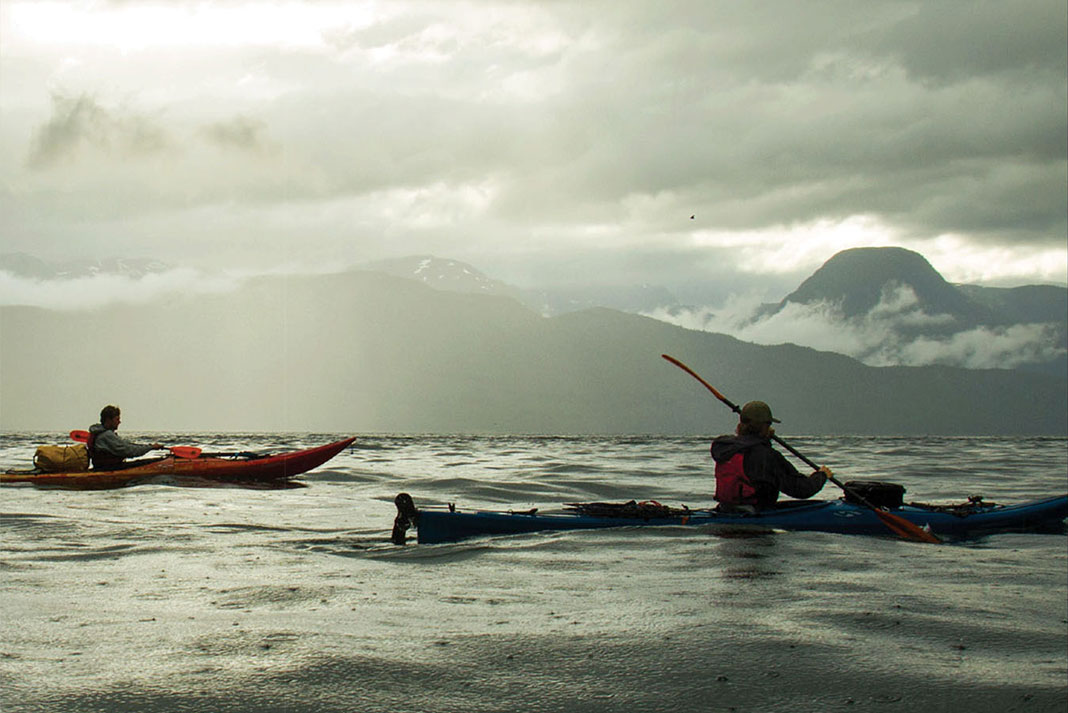
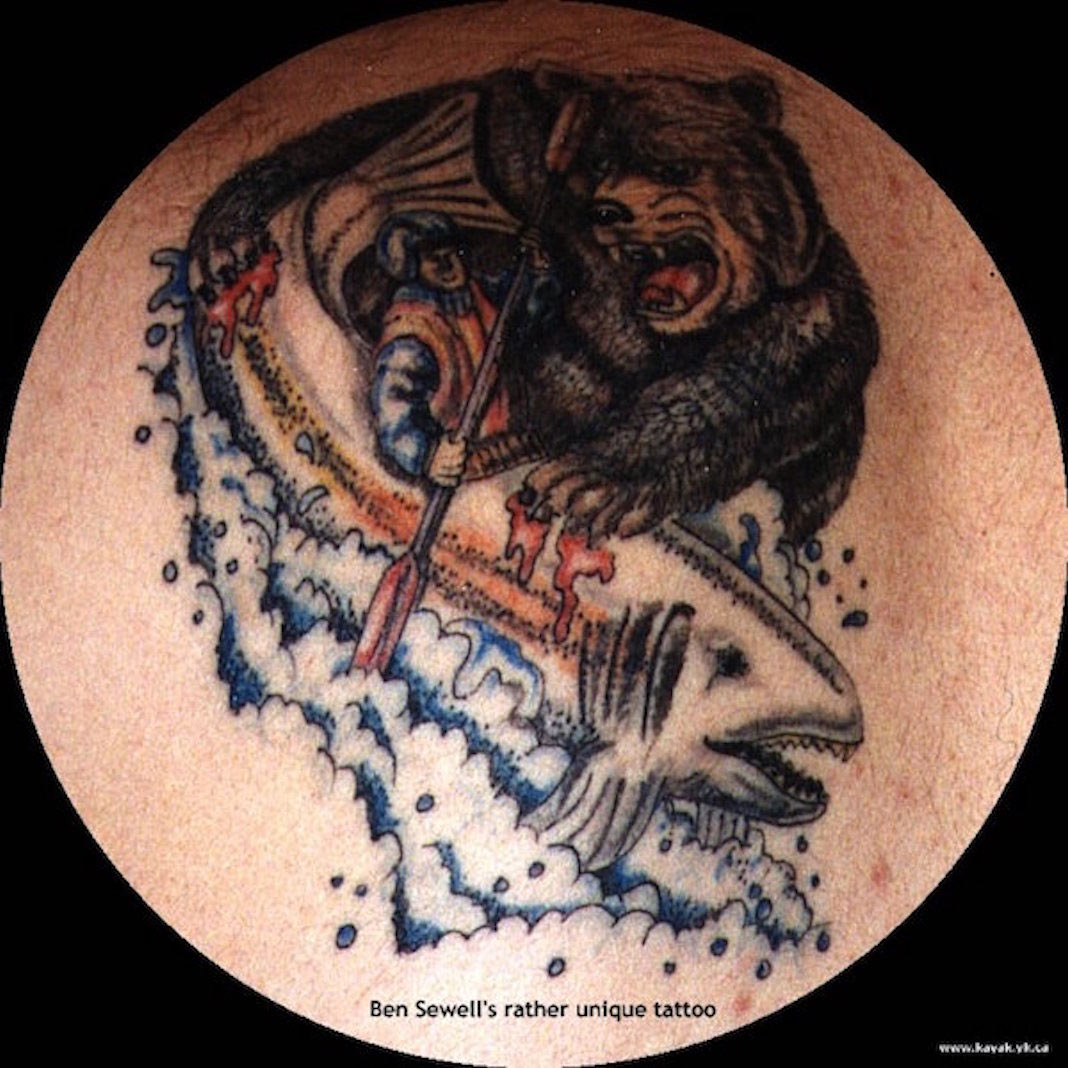
How to take your relationship with kayaking to the next level? Get a tattoo.
Obsessed with kayaking? We are too. Tell-tale signs of being kayak-crazy include making kayaking your main conversation topic, obsessing over the minutiae of new gear and considering kayaking skills a crucial quality in a potential romantic partner.
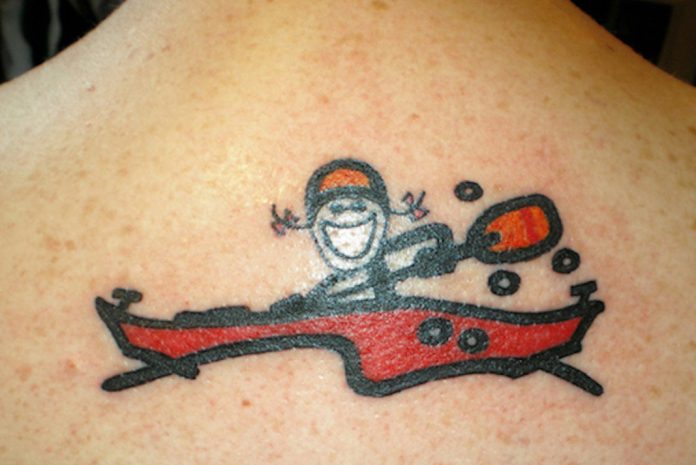
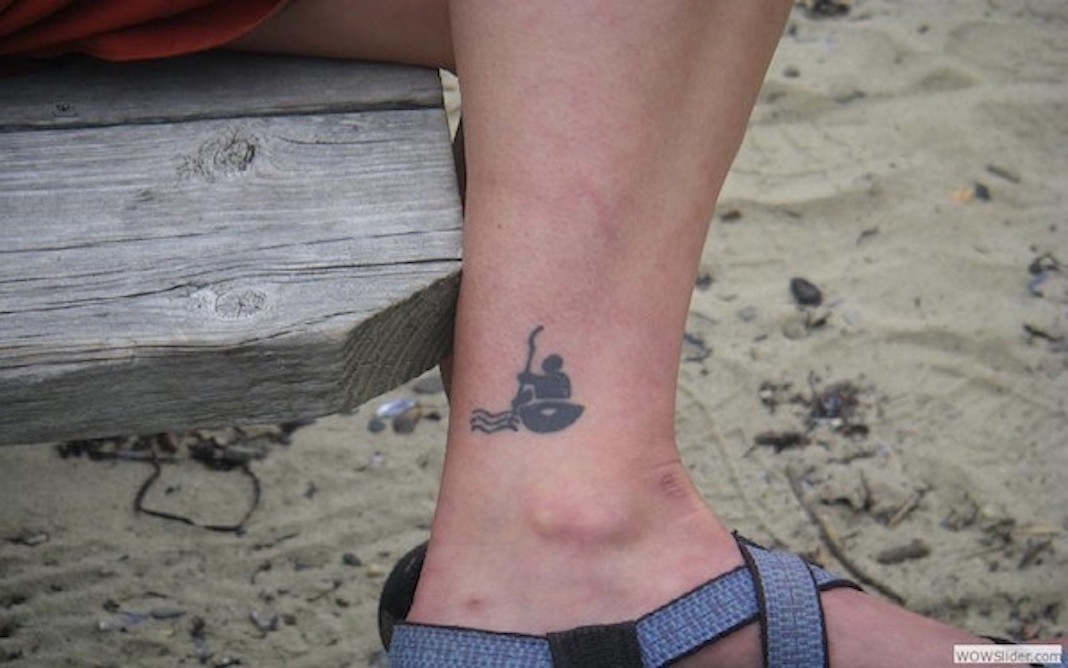
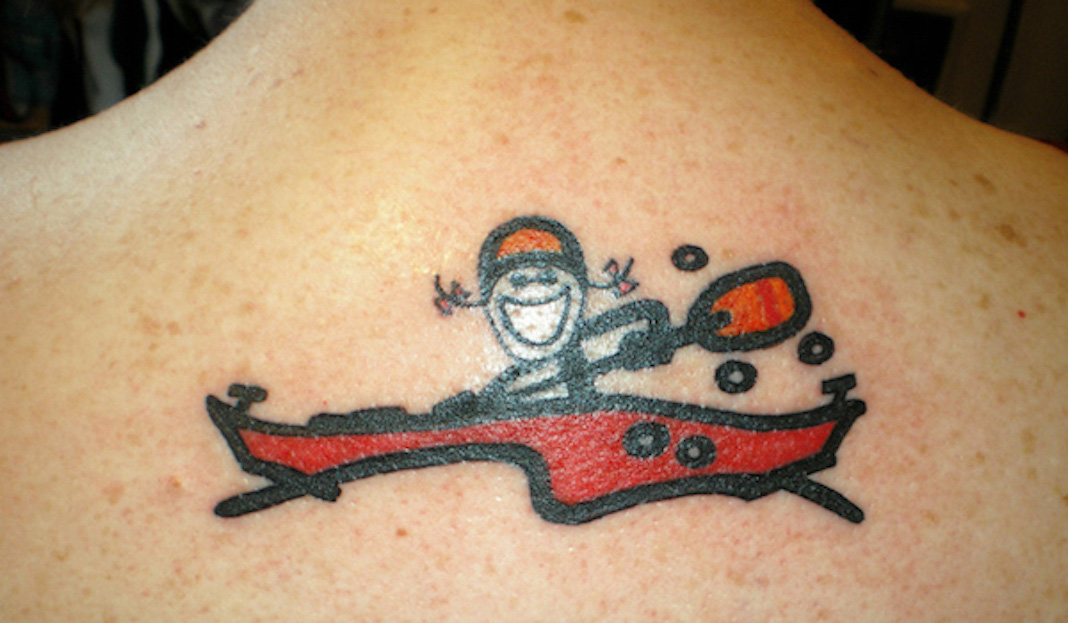
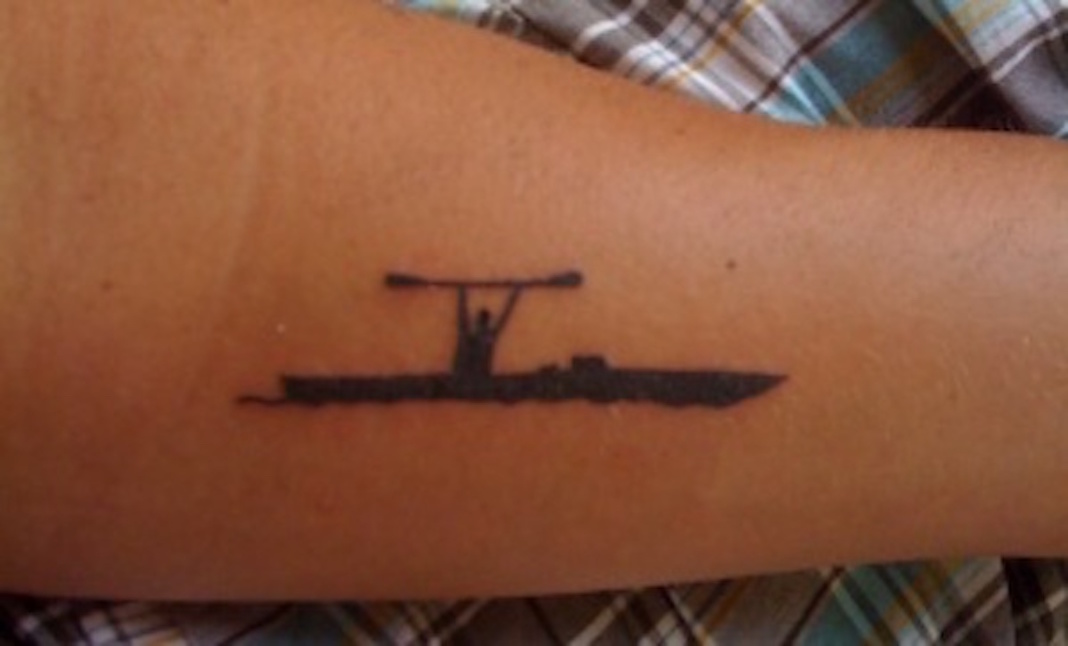
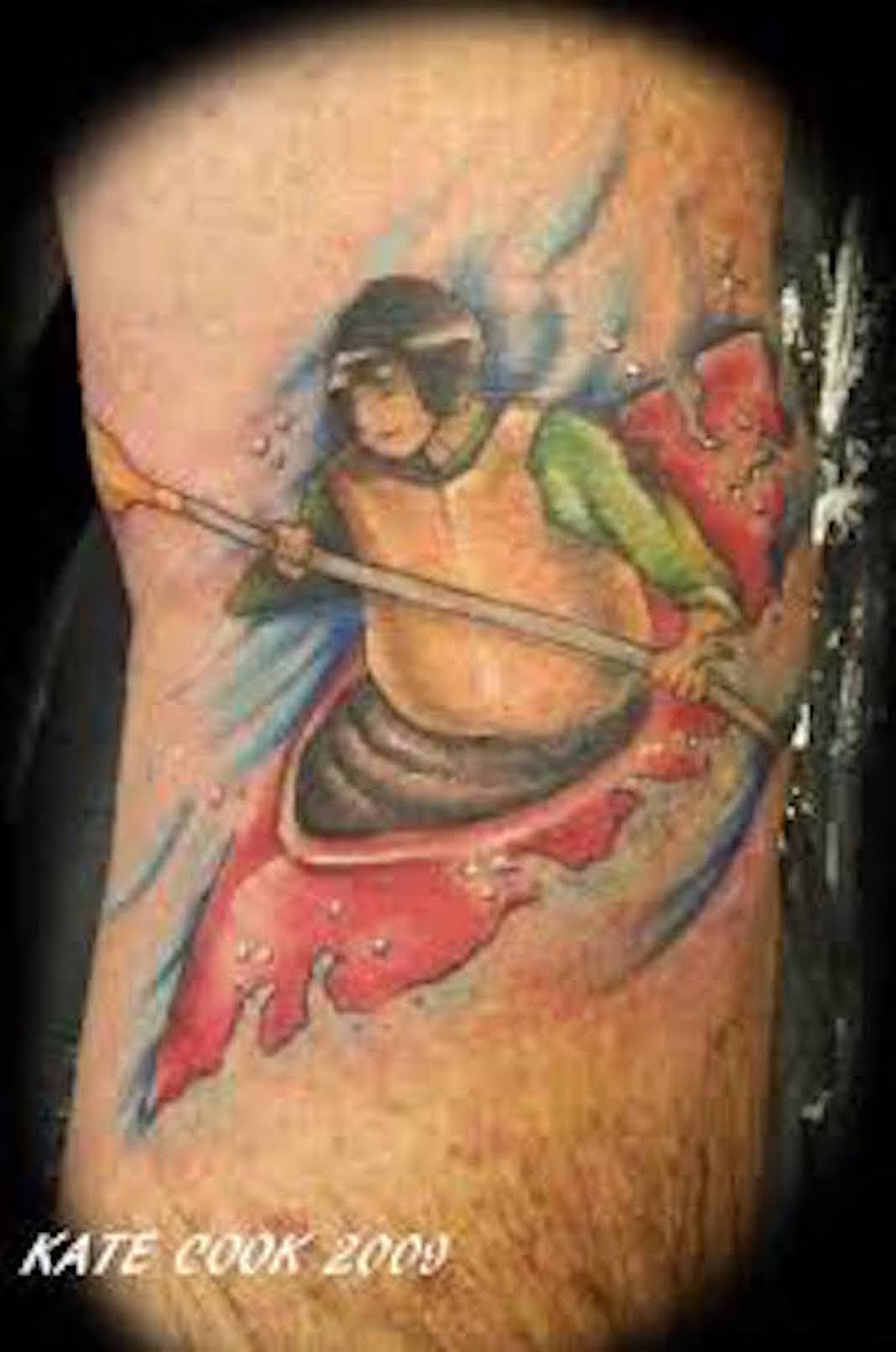
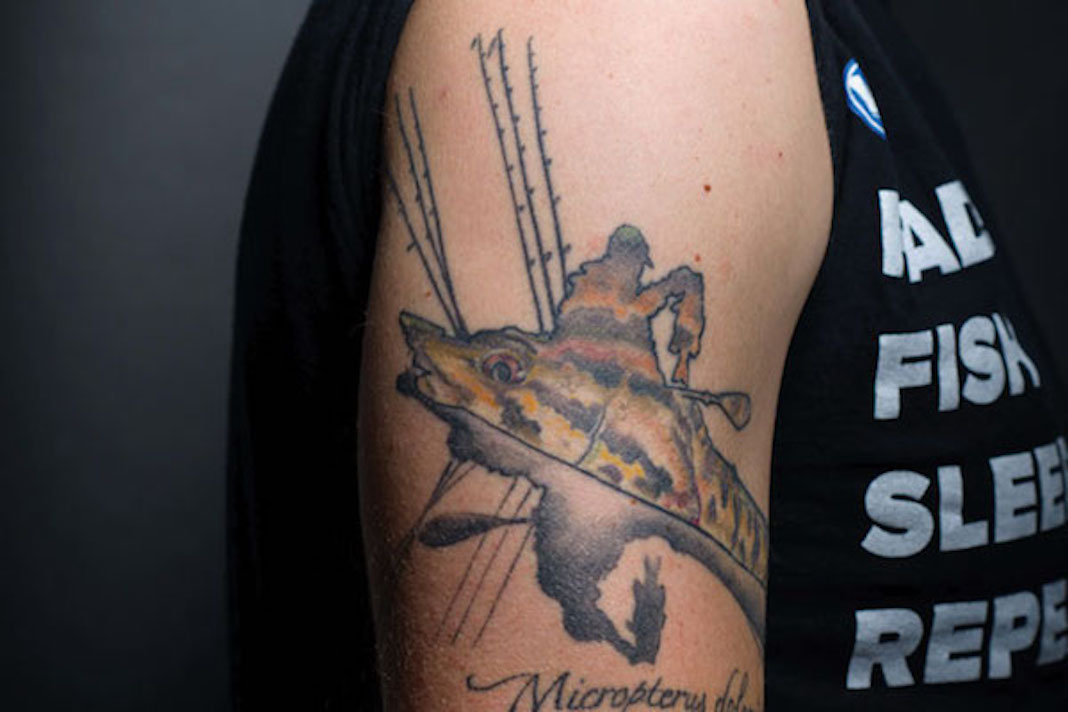
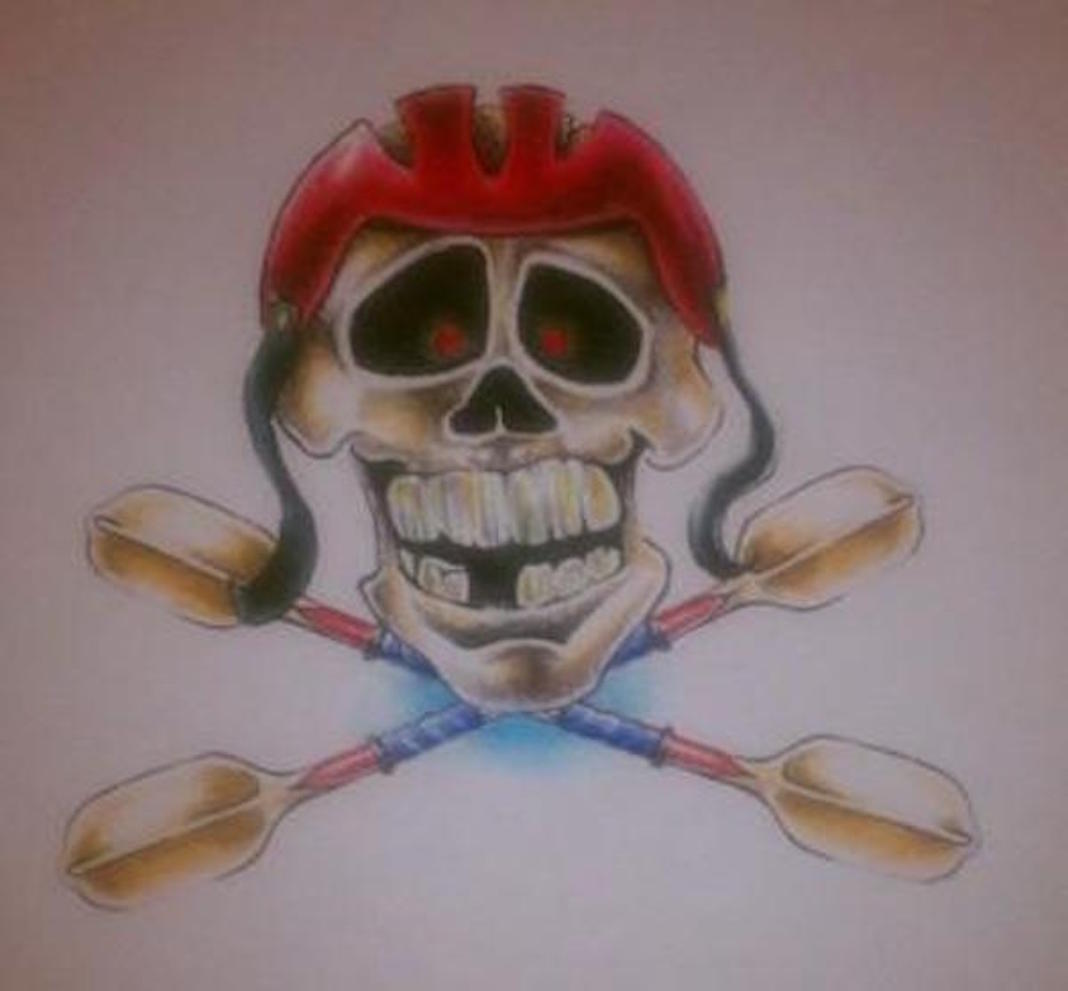
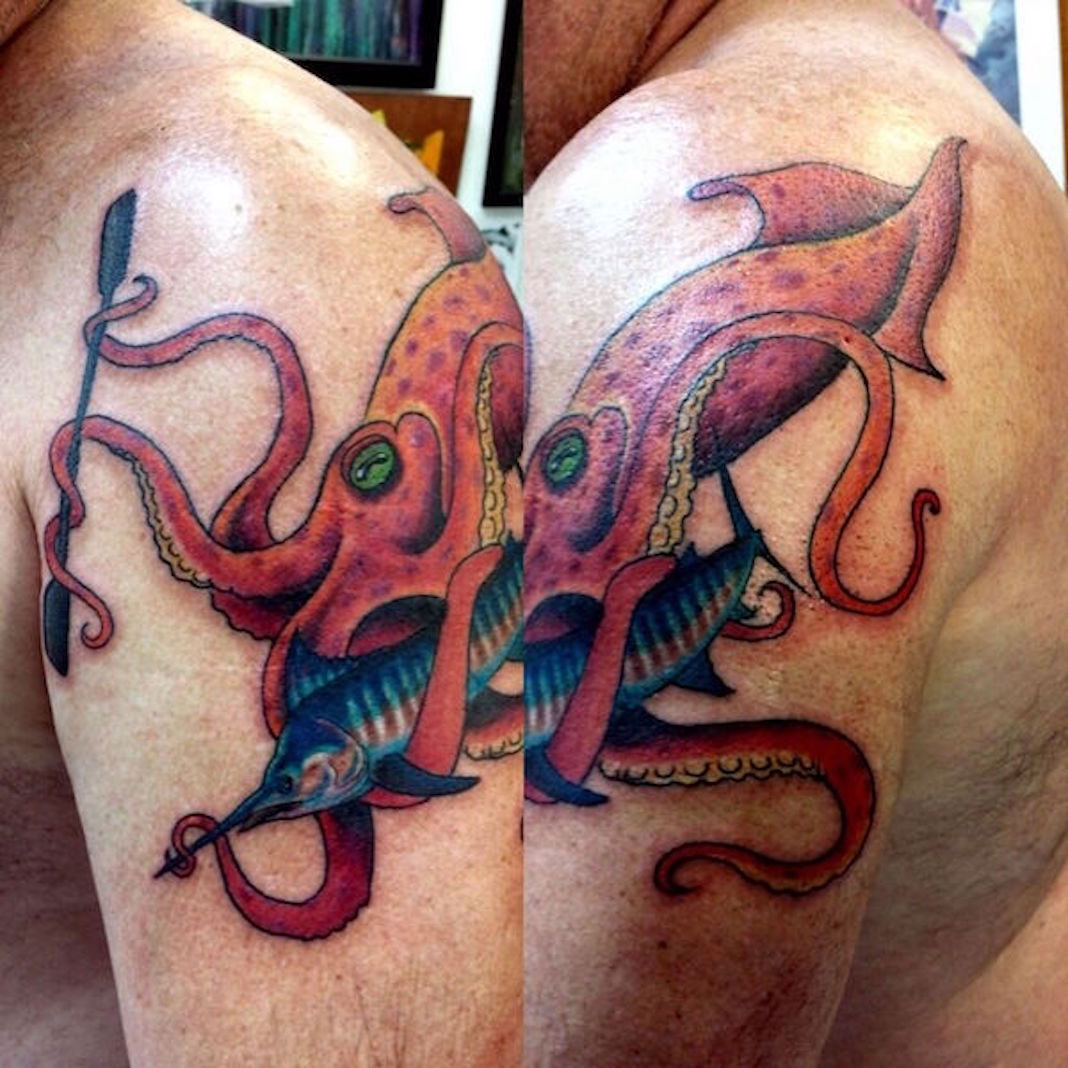
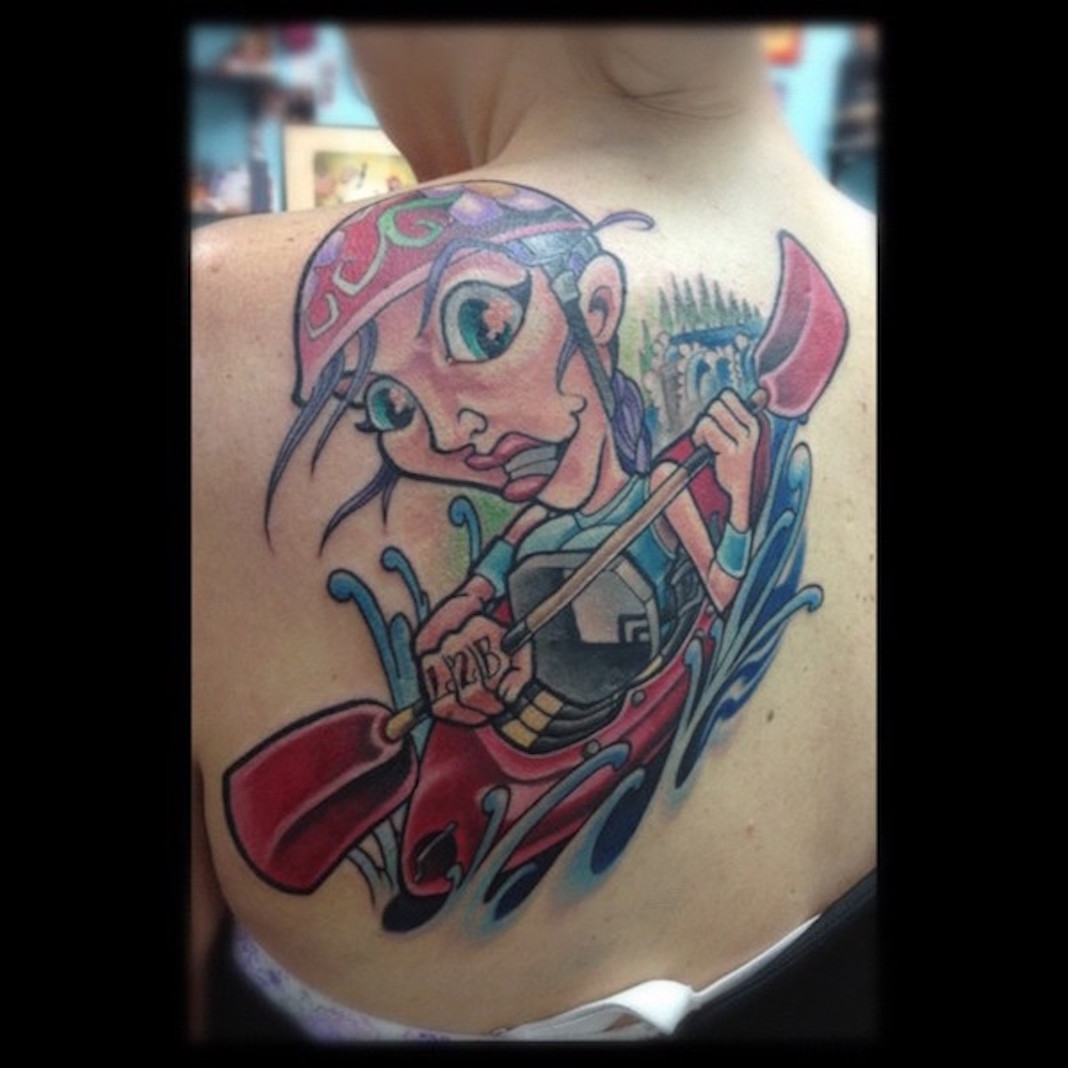
Some paddlers take it a step further and forever cement their love of two-bladed fun on their bodies. See below for the wild, ridiculous and beautiful ways kayakers illustrate what paddling means to them. Will you be getting inked with any of these kayak tattoos?
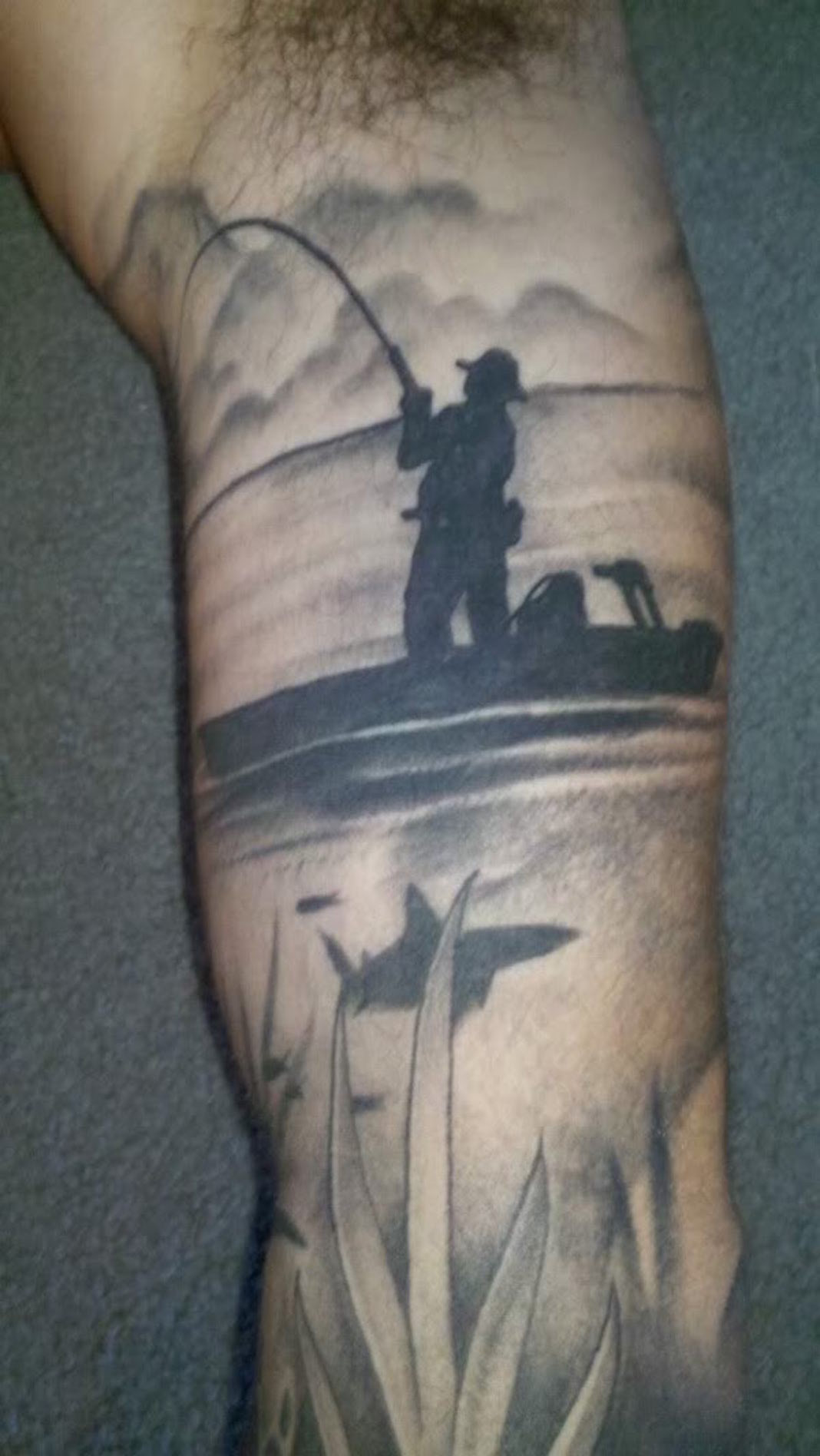
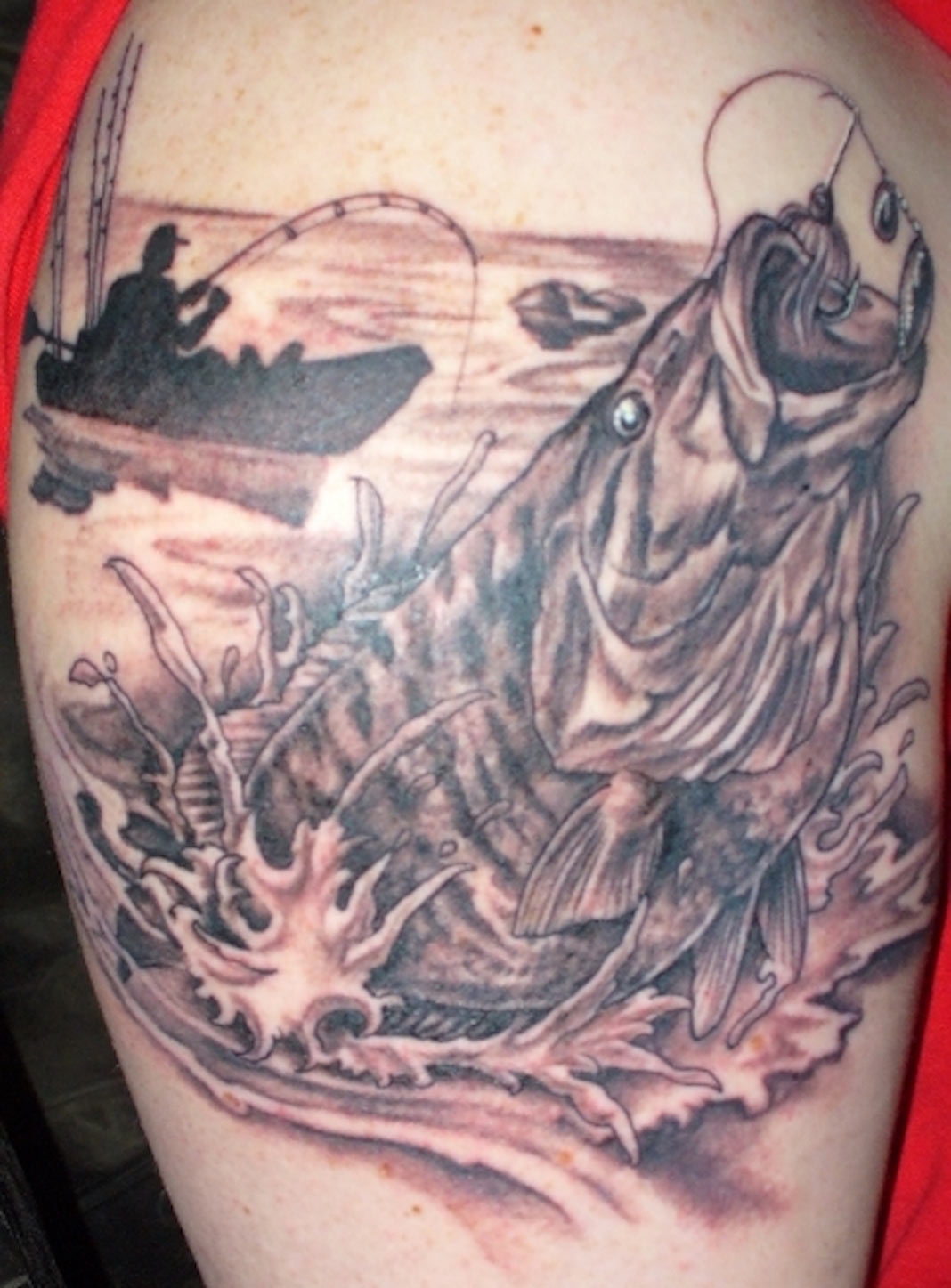
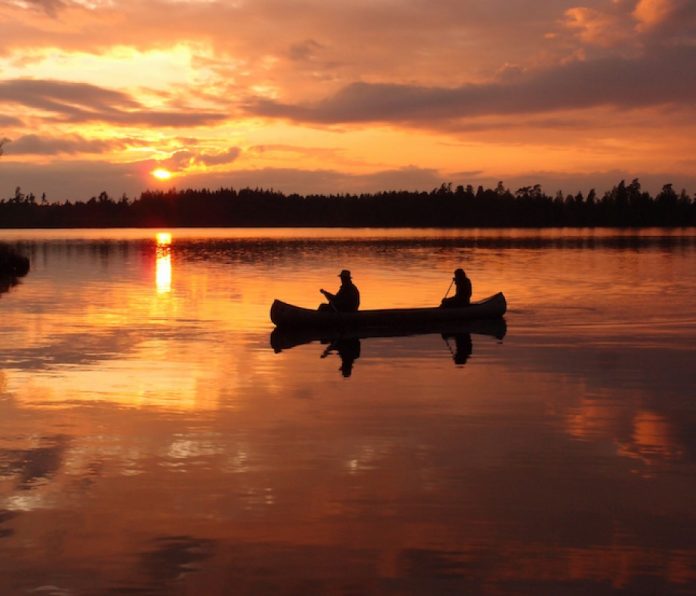
The silhouetted angler
No one will ever ask you, “So what are you doing this weekend?” again.
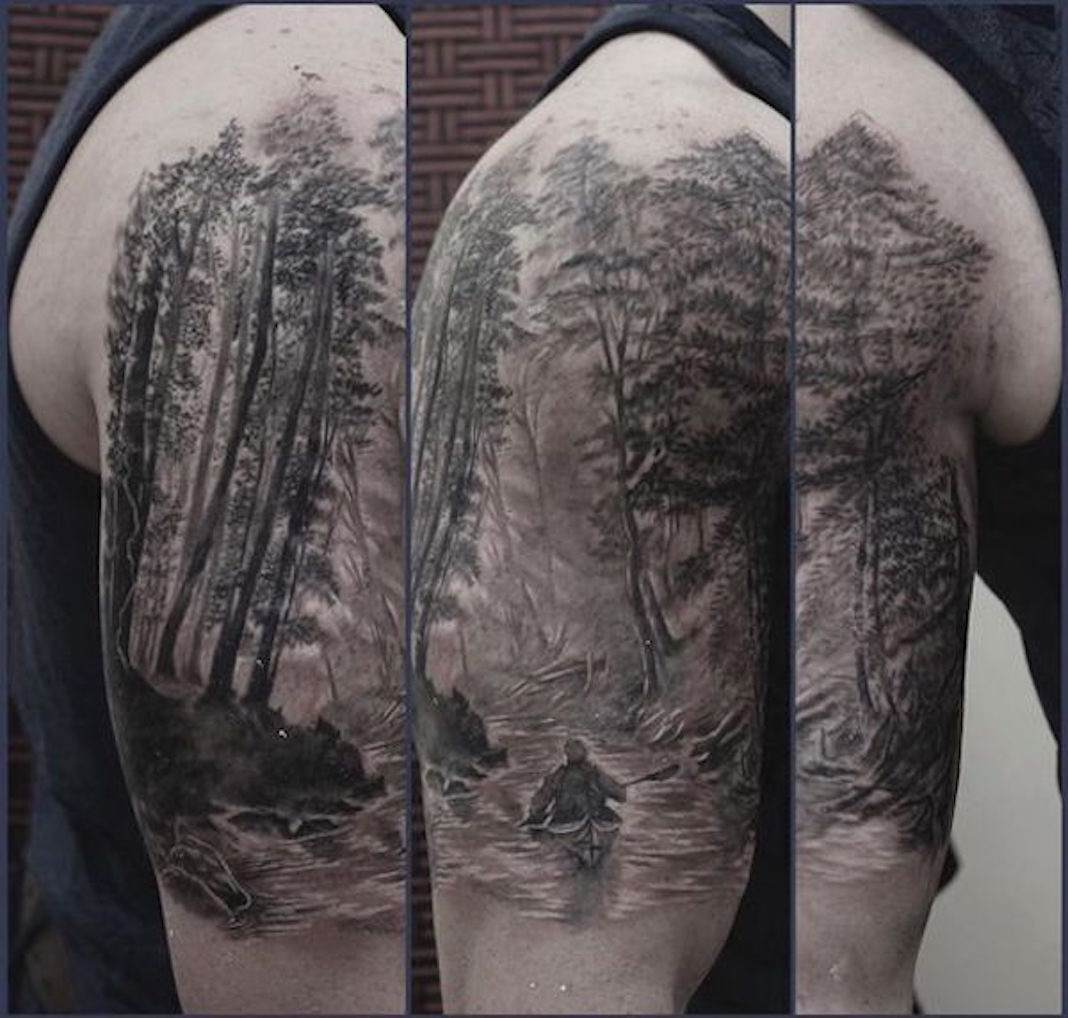
The backcountry kayaker
Sometimes you just need to bring a piece of the wilderness home with you.
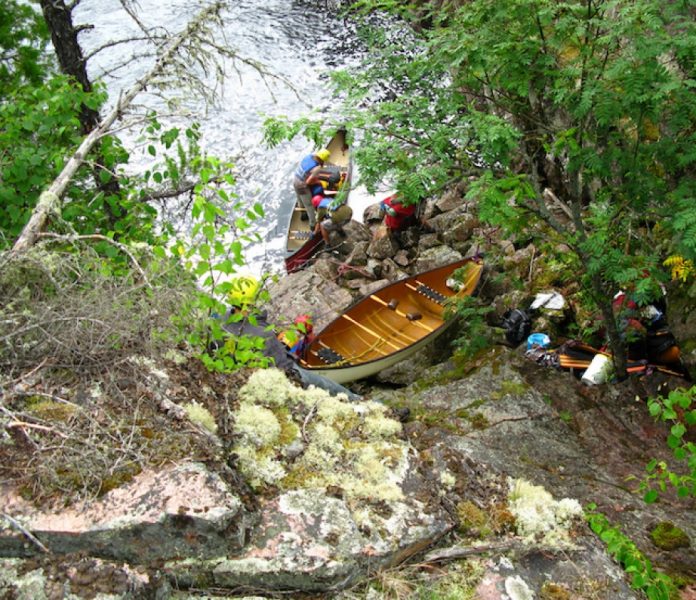
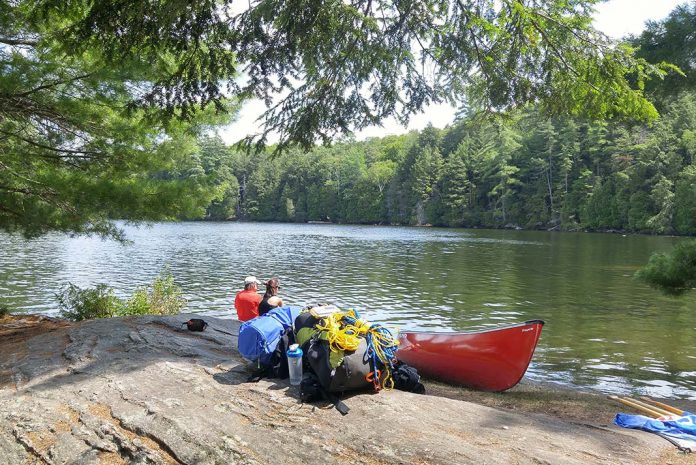
Once upon a time a group of fifteen-year-old girls set out on a fifteen-day canoe trip. They were accompanied by their two trip leaders through the lakes of Temagami, Ontario. The first seven days of the trip were spent dreading the upcoming Diamond Lake portage, a four-kilometer path affectionately nicknamed the Diamond Lake Death March.
The put-in of the portage was a thick swamp. The group was warned about it, but nevertheless spent close to an hour trying to move gear and extract people from its depths before the real fun began. The portage took hours, but relentless determination and Snickers bars doled out in the middle of the shadowy excuse for a trail helped them reach the end. For many of the girls, the Diamond Lake Death March was the most mentally and physically exhausting challenge they had ever completed.
Those 15-year-olds are now 21-year-olds, and some still think of it as a formative experience. Unfortunately, not everyone has a four-kilometer slog and six years of perspective to allow them to think fondly of portaging. If you have an upcoming portaging trip and need to learn to love hiking with a canoe—and fast—follow our expert tips and techniques.
Invest in carabineers
Avoid going crazy on portages by tying down anything loose. Scattered and unsecured items compromise efficiency on portages and can even add an extra trip back to the take-out. Buy extra carabineers and clip them to your pack to easily attach water bottles, sweaters and dry bags.
Get the right canoe yoke for you
How the canoe yoke fits your shoulders and neck will play a big part in portage comfort. Many people prefer a nice scooped yoke, but some swear by a flat one. Find one that works for you, and undertake a DIY yoke replacement if your current one is painful or uncomfortable.
Put canoes in the water first
Portages are hard work. Make them a bit easier by putting canoes in the water first at the put-in so they are ready to be loaded with gear. Bringing gear first and then piling it at the take-out to be placed in canoes after wastes time and energy. If you are carrying both packs and a canoe, wade into the water (if conditions are safe), flip the canoe onto the water’s surface and then place packs inside.
Take breaks on the portage trail
For your enjoyment and safety on portages, give yourself breaks. Just like any other strenuous activity, you are most productive if you schedule time to recharge. Keep your water and snacks accessible and stop for a breather or two on the trail. Hauling a food barrel and canoe on a seldom-maintained trail is a lot more bearable if you know each step is bringing you closer to a Reese’s Peanut Butter Cup. Trying to get your kids to love portaging too? Double up on those snacks.
Invest in an ultra-light canoe
This author used to be skeptical as to how much better light tripping canoes could really be. Then a portage-heavy trip in Algonquin Park with a carbon H20 Prospector changed her mind. When you seem to walk as much as you paddle on a trip, every pound of weight on your shoulders counts. Hoisting a super light canoe is a treat and will make future trips considerably more pleasant.
Buy or use neck cushioning
After a few portages, your neck can become sore and raw from the yoke rubbing against skin. You can bring a small dish towel or t-shirt to wrap around the yoke, or even purchase a yoke pad to increase comfort.
Research your canoe trip route
Understand as much as you can about your canoe trip route before you go. Knowing how long your portages are and any critical details—like washouts, swamps and challenging take-outs—will make portages less work since you know what to expect. If you are prepared, you can better plan each day’s route and avoid too many surprises.
Use the paddle and pack trick
Every canoe tripper has found themselves fumbling along a portage trail with an armful of paddles sticking out in every direction. Doubling back an extra 700 meters for a single discarded paddle isn’t ideal. If you can carry a pack on your back and front, place paddles in the snug spot between your body and the front pack. This will keep them from moving around and keeps your hands more free.
You're going to be spending a lot of time together... | Photo by: Marissa Evans
The people you set out with on backcountry canoe trips can have a major influence on the journey’s outcome. We rounded up five traits that are key in canoe trip partners to make sure you have the best trips ever.
1. An ability to laugh during torrential downpours
When it’s been raining for 48 hours, your shoes contain enough water to boil a pot of tea and even your granola bars are wet, there isn’t anything to do but laugh. Being in the backcountry with people who choose laughter over grumpiness is imperative to enjoying your trips. If you and your paddling partners can find the humor in waking up in a small puddle inside your tent, nothing is going to hold you back.
[ Paddling Trip Guide: Find your next canoe trip adventure ]
2. A skilled throw bag toss
While a sunny personality and sense of humor are indispensable qualities in any kind of adventuring partner, hard skills are crucial too. Having a canoe trip partner who you can trust to effectively toss a throw bag to you in a tricky situation is important, in addition to other first aid and rescue skills. And it’s not a one-way street; make sure you can return the favor.
It is a well-known fact that on tough canoe tripping days, chocolate solves all problems. A paddling partner who whips out a jumbo-sized Snickers bar halfway through a sweltering 2-km portage with more swamp than trail will seal their fate as a forever friend. A bonus? A canoe tripping partner who knows you hate almonds but love dried fruit in your chocolate and buys accordingly.
4. The capacity to be the energetic one—sometimes
On canoe trips, the small group size means the energy and emotions of team members can be infectious. While it is great to try to always be energetic and positive, there exists an unwritten rule that sometimes one person needs to take charge while the other steps back. A friend who accepts this and once in a while lets you catch 10 more minutes of rest snuggled inside the tent while they start the fire and fill the French press is the kind of paddling partner you want to keep around. Value that friend and do the same for them on days they need a bit more support.
Having good campsite etiquette is like being a good roommate, except significantly more important because of the consequences messiness or forgetfulness can have. You want a canoe tripping partner who puts the toilet paper away, closes the tent zipper, treats critical gear with care and fills up your water bottle when they fill their own—and puts in water treatment too.
You’re going to be spending a lot of time together… | Photo by: Marissa Evans
Paddling with your significant other should be fun. For many couples, it is. But some romantic partners find once seated in canoes or kayaks, communication crumbles and time is spent arguing instead of deciding what eddy to catch or where to grab post-paddling beers. This is especially true when one partner is more skilled and teaches the other. Why is the dynamic between two people in a relationship who paddle together different—and sometimes worse— than between two friends?
Luke Rookus, a 24-year-old Michigan resident, has been a canoeist for years and began dating a woman a year ago with little outdoor experience. “There’s obviously challenges with that,” he says of the disparity in their outdoor skills and the teaching process. “There can be tension and frustration that can happen if you don’t exercise patience as a teacher and as a student.” Rookus has found that having another person explain things to his partner can sometimes be more helpful than him trying to explain it. “They might not have the same patience with you not being a perfect teacher,” he says.
Stephanie Bangarth is also the more experienced paddler in her relationship. She has been kayaking since she was five-years-old and decided it would be fun to get her husband involved in the sport she is so passionate about, especially since they live near the water. She says they both felt frustrated during the teaching process. “The frustration is just having two polar opposite experiences while kayaking,” she says. Bangarth and her husband did however recently go on a backcountry trip—her husband’s first—and he said he would definitely do it again. “The rule is to pack my patience, and he does the same.”
According to Dr. Monica O’Neal, a Boston-based psychologist and relationship expert, when one partner is teaching the other something new, the issue of power dynamics comes into play. O’Neal explains that people in relationships have a certain amount of vulnerability as well as an acceptance of each other’s vulnerability. When you have to put your trust in someone in a situation where they have the power and mastery as the teacher, “it upsets the balance.” O’Neal says learning something like paddling from an instructor is different because you don’t know them well and don’t have any other vulnerabilities with them the way you do with a romantic partner.
Couples also don’t always learn and master new skills in parallel, which can make progressing or paddling together more challenging. Jason Tomkins of Arizona took his wife on moving water her first time kayaking. She struggled with technique and was very nervous, and overall didn’t come away with a positive experience. “She was very traumatized by that,” says Tomkins, acknowledging that he probably shouldn’t have taken his wife in rapids so soon. “She knows how much I love it and is all about me doing it,” he says, but he has difficulty convincing her to go with him now.
Despite the tensions that paddling couples can face, for most the experience of doing the activity you love together is worth it. Rookus says spending so much time outdoors with his girlfriend over the last year has been incredibly rewarding. “It’s a really special thing.”
New short film What If You Fly from Camp4Collective in association with The North Face follows an artist’s exploration of Inuit culture through a unique creative process.
Hawaiian artist Sean Yoro travels to Baffin Island, Nunavut, to create a portrait of a local Inuit woman using sea ice as his canvas. While the floaty drone footage and novelty of a detailed painting on ice are captivating, the focus on Inuit stories and people as told by themselves is the real emotional pull of What If You Fly.
Incorporated in the Mirage Eclipse SUP board is Hobie’s MirageDrive pedal system. Originally designed as an ode to Hobie anglers, they have been slowly expanding it into all their products. With the drive centered above the paddler’s weight, the movement is more efficient and it tracks straight as a result of the stair-stepper motion. The fins are now reversible and are not only more durable than rotor technology for paddle boats but create more forward momentum.
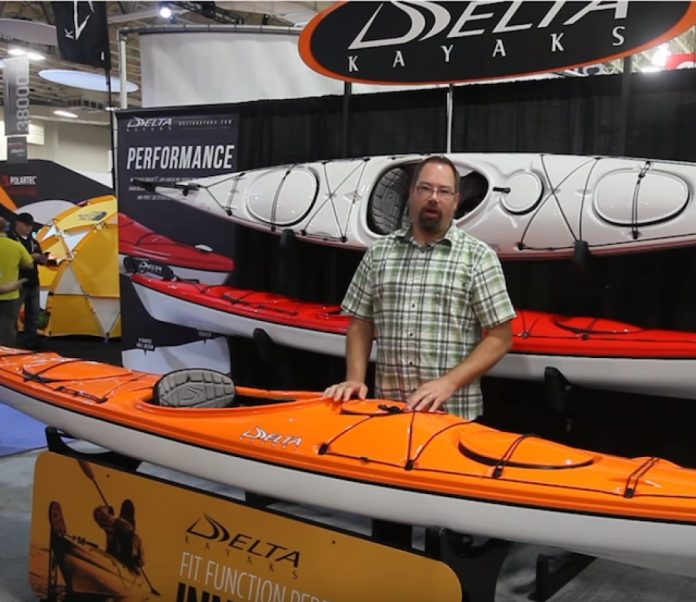
A Delta Kayaks representative speaks to the camera about their new Delta 17 touring sea kayak.
A Delta Kayaks representative speaks to the camera about their new Delta 17 touring sea kayak.
Screen Capture: Adventure Kayak
Included in the Delta 17 as in all Delta Kayaks are the press lock hatches for easy access and use, designed into curved bulkheads to increase structural rigidity. The Delta Contour seat system allows for on the water adjustments to ensure a comfortable position and the seat pan can slide up to four inches for trim adjustment and secure touch points for varying leg lengths. The Modern V hull with a dropped rocker accentuates tracking abilities for intermediate to advanced paddler and excels in water conditions ranging from flat water to wave surfing.
Image from GoPro showing their new aerial drone called the Karma.
Promo video for the new GoPro Hero5 and the GoPro Karma.
Screen Capture: GoPro.com
On September 19, 2016 GoPro let the world in on a big secret. Spearheaded by the announcement that it was entering the personal aerial photography market, here are a number of other features that must not be overlooked.
Hero5 Black
The Hero5 is the newest addition to the Hero line up of video cameras. From their press release, features include:
Waterproof without a housing to 33 ft.
4k video resolution
Raw and WDR photo capability
2” Touchscreen Display
Hero5 Session
Following on the success of the Hero Session, the Hero5 model is pack full of goodies. 10 MP picture quality, waterproofed without a housing, compatible with the new Karma drone housing and included voice command control make this a very compelling option.
Voice Command
This may take some adjustment but all the Hero5 models will now change settings, take photos and video from commands in seven different languages. It will be interesting to see how this works in real time but it is impressive nonetheless.
GoPro Karma
Billed as “Much More Than a Drone Hollywood-Caliber Stabilization in a Backpack” the Karma features an easy-to-use integrated controller and a 3-point stabilization mechanism that detaches for hand-held use. There is no word on flight-times or battery life as of yet but rest assured we will all hear about it when they hit the market October 23rd.
GoPro Plus and Quik Apps
Featuring a new subscription based cloud storage and mobile apps for all your video and photo needs, there are a number of included features:
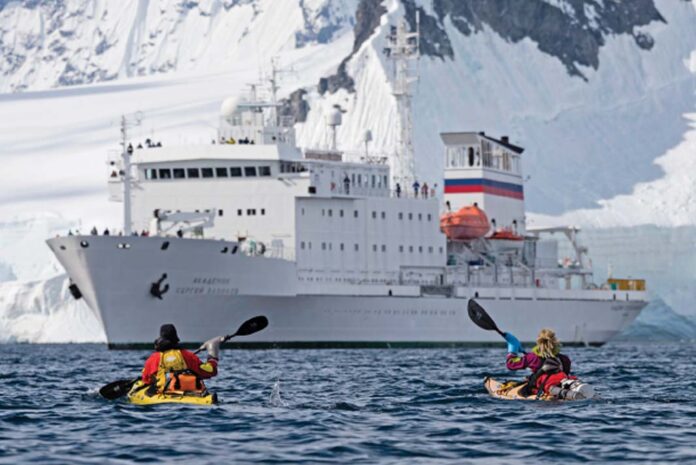
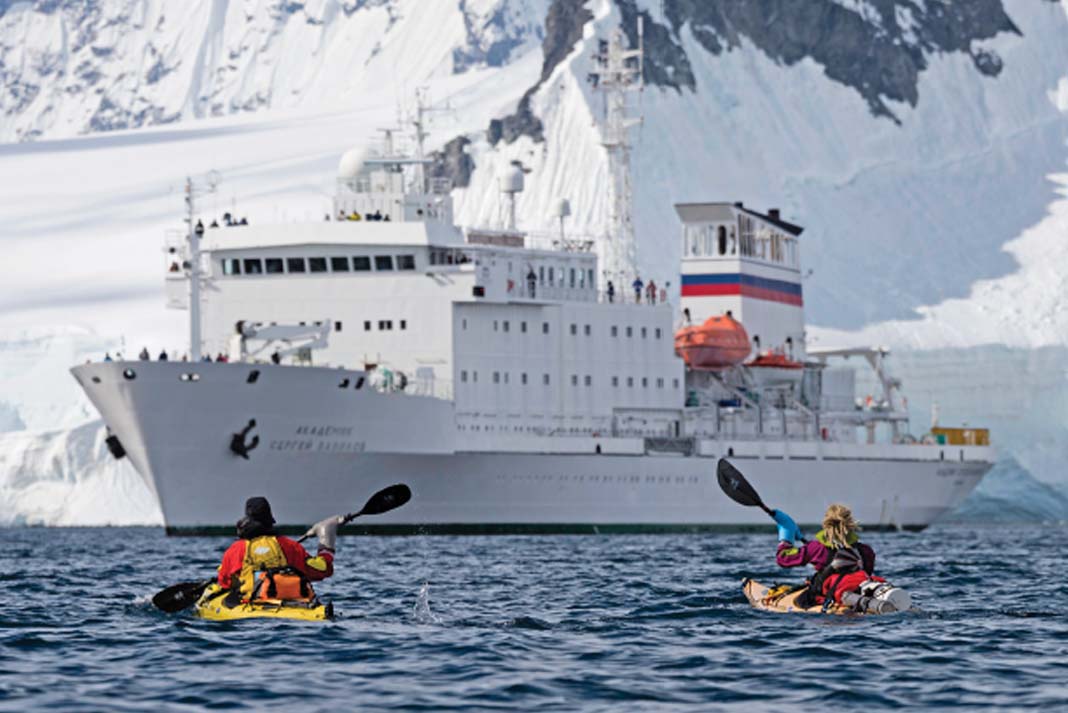
EWAN BLYTH AND SOPHIE BALLAGH APPROACH ONE OCEAN'S ROBUST EXPEDITION SHIP. | Photo: Nate Small
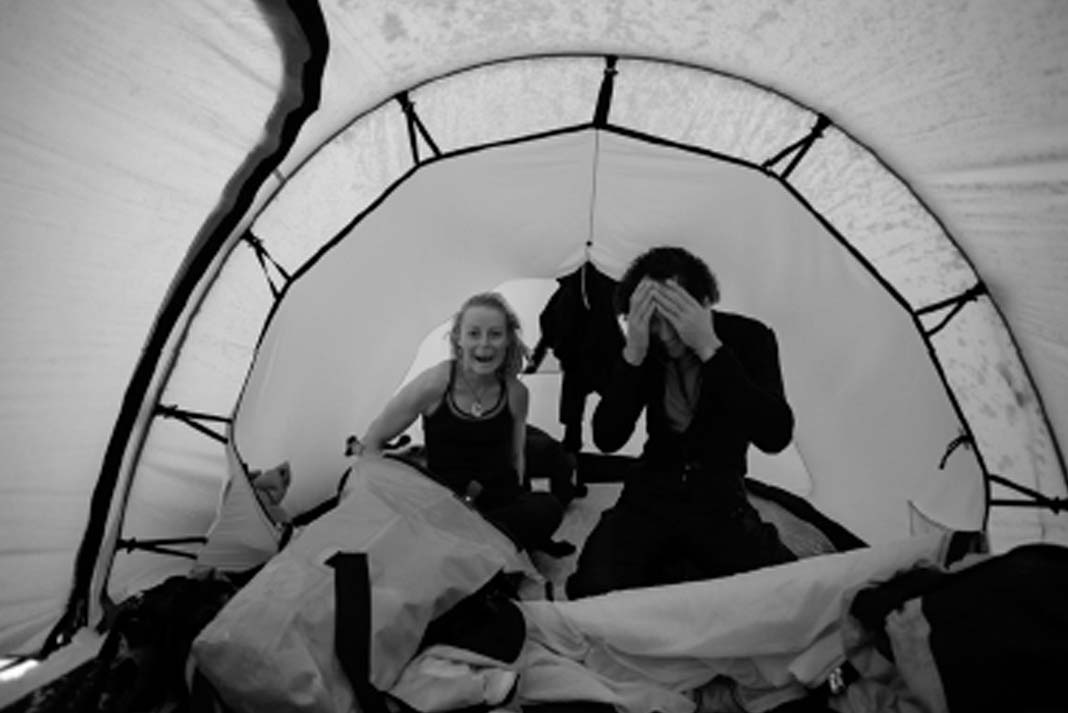
TThe couple huddled for warmth in their tent. The tenacious polar wind howled with delight as it threatened
to pry their shelter from its icy footing. Wrapped up in their sleeping bags and damp thermal under-layers Sophie Ballagh and Ewan Blyth could feel the canopy starting to lift off the snow. The cramped nylon dome was their only sanctuary from this hostile environment, and it was losing ground. After nearly two years of planning, the couple couldn’t help but wonder if this, day two of their two-week self-supported Antarctic paddling expedition, might be the end of the line.
For most, just getting to the frozen continent is an adventure in itself. Leaving from the southernmost tip of South America, passengers board sturdy, retrofitted research vessels equipped with reinforced hulls, internal stabilizers and built-in ballast systems to withstand the icy waters and harsh seas. Crossing the dreaded Drake Passage to the Antarctic Peninsula, an arm-like extension of West Antarctica is a two-day voyage exposed to the full brunt of the Southern Ocean. Some days, the passage can be dead calm; on others, a 15-meter swell turns ships to bath toys.
With the undulating waves, endless ocean and no land in sight, it’s amazing to watch the seabirds gliding effortlessly alongside the boat. Some species, like the wandering albatross, spend years at sea never touching land. Beyond this feathered escort, occasional tall plumes of spray mark the blows of distant whales.
After a day of steaming toward the bottom of the world, the air temperature grows noticeably colder; here and there the boat
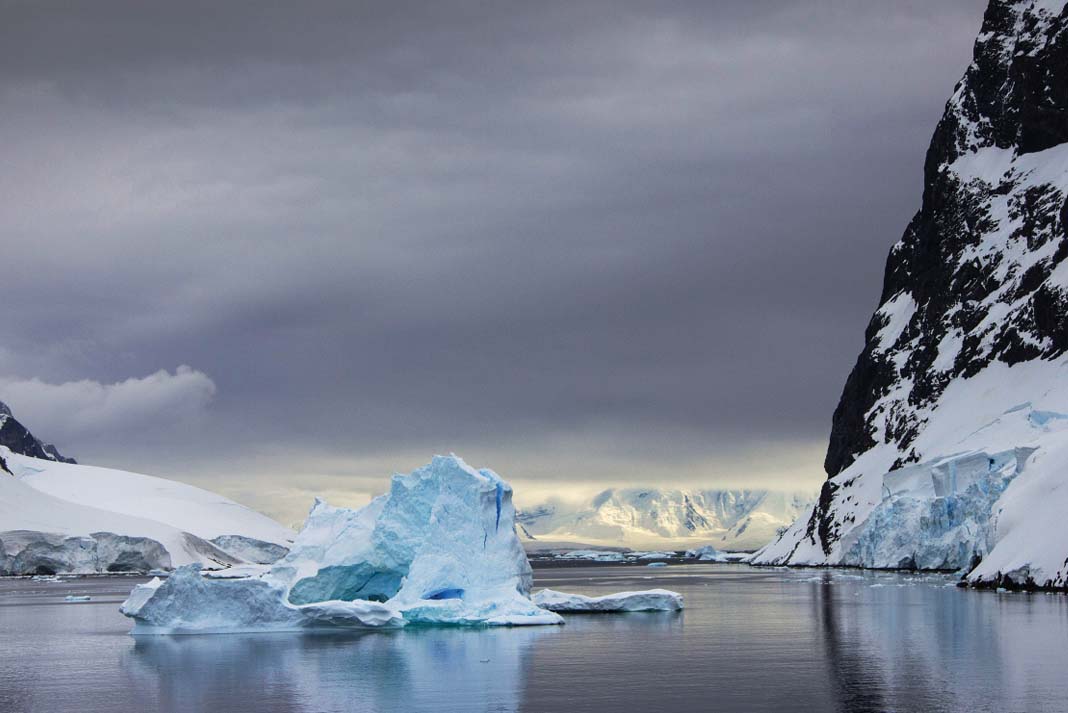
passes bobbing bits of smooth blue ice. Out in the salty waters, they appear like mythological creatures: beautiful and spectacular icebergs. The largest tower multiple stories high and extend many street blocks wide, yet these are only small portions of unseen giants. Some of these icy cathedrals are fancifully shaped, while others, called tabulars, have vertical cliff-like sides with the flattest of tops.
Then come the views of land. A frozen, mountainous scene of majestic proportions riddled with rocky outcroppings and ancient
glaciers. A remote, impregnable wilderness discovered less than 200 years ago, the fixation of many explorers’ dreams and, often, the instrument of their demise. First conceived by Aristotle, Terra Australis Incognita—the Unknown Southern Land—remained merely a legend for the next two millennia. It wasn’t until 1820 that the continent’s existence was confirmed, and another near-century would pass before the first explorers penetrated its interior, racing for the South Pole. The history of this Heroic Age of Antarctic Exploration is rife with calamity, suffering and the intoxication of discovery.
“It’s a paradox between a place that is so stunning and fairytale one moment, and then so cantankerous and evil the next, you feel there is something personal about it,” Blyth muses. “There is no middle ground, the vast differences are what strike me most about Antarctica.”
EWAN BLYTH AND SOPHIE BALLAGH APPROACH ONE OCEAN’S ROBUST EXPEDITION SHIP. | Photo: Nate Small
When the opportunity to embark on a self-supported paddling trip along the Antarctic Peninsula came their way, Blyth, 33, and Ballagh, 30, knew they had been gifted the chance of a lifetime. The two met while working as kayak guides for One Ocean Expeditions, a polar exploration tour operator that hits both the Arctic and Antarctic with their fleet of hardy Finnish oceanographic vessels and crews of equally hardy Russian sailors. Leading passengers on short paddling excursions in this ice-locked wilderness, the couple yearned to immerse themselves more deeply in the landscape. What would it feel like, they wondered, to live closely with Antarctica, not just for hours, but for weeks?
It was their boss, Aaron Lawton, who casually mentioned the idea of the pair breaking up their Antarctic work season with an unusual vacation. Between guiding stints on the boat, Lawton suggested the vessel could drop them off and arrange a pick-up further along the coast. A seasoned Antarctic explorer himself, Lawton and his wife had completed their own self-supported trip in 2001. At the time, he estimated they were perhaps the third or fourth paddling party to make a trip of this kind. The Lawtons’ experience and expertise laid the groundwork for commercial overnight kayaking trips on the Peninsula.
Today, One Ocean Expeditions offers day trips and two-day tours for small groups of kayakers in the stunning Errera Channel and Paradise Harbour areas. Guests sleep out in rugged tents and sample camp-baked cinnamon buns, enjoying a curious blend of comfort and vulnerability beneath the wide Antarctic sky. But while small pods of kayak tourists deploying from their motherships are now an increasingly familiar summer sight along the Antarctic Peninsula, self-supported paddling trips remain rare.
SHELTER FROM THE STORM Photo: Nate Small
“You need two key things that usually break an expedition of this sort,” explains Blvth. First is “financing the phenomenal costs involved in getting there.” Then, to obtain the necessary permits, you have to work with someone who can undergo a rescue if you need help, also very costly.” Amazingly, they had been granted both.
With One Oceans’ ship as their primary safety backup, Blyth and Ballagh would also carry a satellite phone, VHF radios and contact info and sail plan itineraries for all other vessels scheduled to be around the peninsula during their trip.
All that remained was sourcing the highly specialized equipment needed to paddle and survive in a polar climate. From their living room in New Zealand, Ballagh and Blyth planned, devised and engineered. Gear that wasn’t available commercially, the pair fabricated themselves. A sewing machine and various adhesives transformed fabrics, foam and hardware supplies into sea drogues, snow anchors, thermos and battery insulators, and more. Prototypes were tested in their kitchen freezer to simulate summer conditions in Antarctica, when polar winds can plunge temperatures to below -20°C
Sun and calmer conditions lured Ballagh and Blyth out of their cocoon after 48 hours pinned down by blustering winds and sub-zero temperatures.
They’d named the site of their exile One Day Island, as in, “One day we’ll get off this blood island.” The apparent lull in the weather seemed to be their chance, and they pushed hard to pack as quickly as possible.
Tearing down camp, donning drysuits over three layers of thermal clothing, and loading the hatches and decks of each 17-foot plastic kayak with 200 pounds of provisions, camera gear, communication devices and navigational equipment took nearly three hours. On the water, the homemade pogies the couple had fashioned from foam sleeping mats insulated their hands against the Antarctic cold, but on land all of their gloves were soaked from hauling gear and packing boats. Tucking moist layers inside their sleeping bags at night had done little to dry them out and their fingers quickly grew numb while they hurried to pack. The last of the gear would have to be squeezed in between and around their legs once seated in the kayak, a precarious balancing act in the sloppy shore waves.
Petite yet powerfully built, Ballagh was first to pull out towards the open water past the island’s protection. While they had been packing, the wind had shifted. Beyond the lee of One Day Island, the ocean was roaring. Sea spray assaulted the paddlers from all sides.
“We got 20 meters off the shore and realized it was too dangerous,’ recalls Blvth.
“It had taken us hours to pack everything up, then within 15 minutes we were pulling the kayaks back up on shore, unpacking them, putting the tent back up in the exact same place.” It was a frustratingly low point for Blyth. “We had wasted six hours of time and energy, and gotten really cold and wet, to achieve nothing.
With each day they spent trapped on the island, Ballagh and Blyth knew they were losing precious time to complete their planned itinerary. The Akademik Sergey Vavilov had dropped the kavakers off near Peterman Island, a small ice-crusted mound of rock home to a large Gentoo penguin colony. As the couple paddled north, the ship would finish its voyage, cross the Drake, pick up its next group of passengers in Argentina, then make its way back to the Antarctic Peninsula. If all went as planned, the Vavilov would rendezvous with the kavakers in Wilhelmina Bay 14 days after their drop-off.
Finally, on day five, after what seemed like an eternity, the weather released its hold.
“The great white continent is so silent, it’s deafening,” marvels Ballagh. Traveling in late January, just after the Antarctic summer solstice, the pair experienced near-perpetual daylight. Paddling by day and soft twilight, even time grew quiet in the vast landscape of mute snows and wordless peaks.
“In that silence you hear nature, you hear whale blows and penguins squawking,” she says. “You listen to the ice and glaciers moving, cracking and booming.” At other times, only the scraping of brash ice against kayak hulls accompanied their passage through fields of tiny bergs littering the ocean’s surface.
Antarctica showed her fairytale face as the couple paddled past Weddell seals sunning themselves on ice floes and inquisitive chinstrap penguins waddling clumsily or flying acrobatically beneath their kayaks. It’s that connection with the natural world that is so meaningful, says Ballagh. She’s quick to point out that shorter trips in wild spaces closer to home can foster the same connection. Still, there’s no denying the frozen continent is special. “I love being remote, I love the isolation. It’s what makes me tick.”
Leaving their icy campsite at Pursuit Point on day eight, Ballagh and Blyth gazed across the deceptive calm of the Gerlache Strait. Reaching Wilhelmina Bay and their pick-up meant crossing the eight-nautical-mile-wide channel of icy water. Despite the benign breeze, sparkling water and patches of cobalt blue sky, Ballagh’s nerves were running high.
“The Gerlache is big water, the wind waves that can form there are huge,” she explains. “If you’re out in the middle and the weather changes, which it can do very quickly, you’ve got nowhere to run.” Antarctica’s abrupt mood swings had pushed the paddlers to the limits of their endurance the day before in an area far less exposed than the Gerlache. Traveling up the coast of Wiencke Island, unable to land on the icy, six-foot-high ramparts guarding the glaciated shore, they had spent five hours beating into a frigid headwind. The ordeal had taken its toll on the couple.
Conditions had been so severe they couldn’t stop paddling to wipe the salt from their eyes or the snot streaming in frozen icicles from their noses. The wind edged up to a constant 25 knots, with gusts to 30. “I was wrecked,” remembers Ballagh. “I was going backwards at one point, I just couldn’t hold ground against the wind. I was giving it everything in my tank, and I couldn’t push the boat forward.”
The prospect of crossing the Gerlache the next morning, with tired bodies, still-frozen gear and weary minds, was sobering. “My heart was in my mouth the whole way across,” says Ballagh.
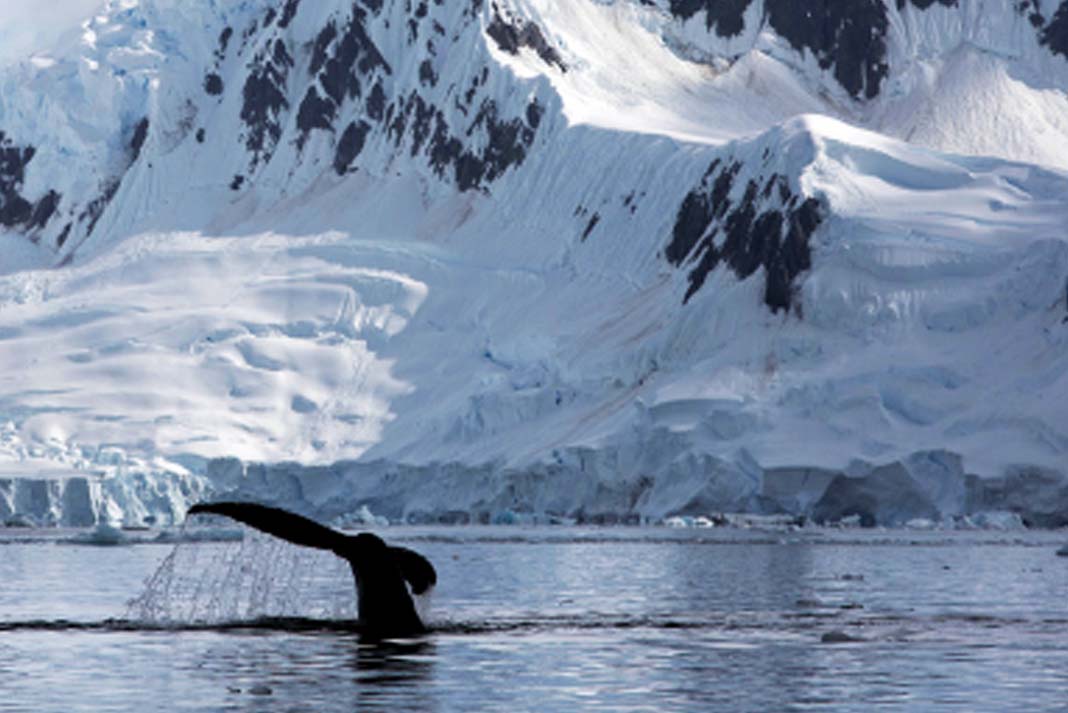
HUMPBACK WHALES GLIDED WITHIN FEET OF THE COUPLE’S KAYAKS | Photo: Nate Small
Casting furtive glances over their shoulders at the clouds lurking on the southwestern horizon, the kayakers hurried across the strait. Incredibly, the weather held, and they were even joined by an escort of humpback whales for part of the crossing. The mix of emotions Ballagh describes—elation, anxiety, uncertainty—was not unlike that experienced by a mountain climber summiting a long-fought peak.
“It was so beautiful, I tried to enjoy it, but at the same time I was worried that we were going to get slammed out there.”
Perched on a rocky outcrop high above the ocean in Wilhelmina Bay, the couple savored their last night alone. Hauling their gear up a precipitous incline to pitch their tent on this icy cliff had been a fitting end to their 110-nautical-mile exploration of the Antarctic Peninsula. Majestic snowy mountains and mercurial waters stretched as far as their eyes could see. Despite the hardships they’d endured, tomorrow’s rendezvous with the Vavilov would be bittersweet.
When she’s not studying arts and film, Caroline Stroud works seasonally in the Arctic and Antarctic as an expedition guide.
Stream on your phone, tablet, or computer or cast them to your TV using AirPlay, Chromecast, Miracast, Roku, Amazon Fire Stick or HDMI. For the whole family to enjoy from the comfort of your own home.
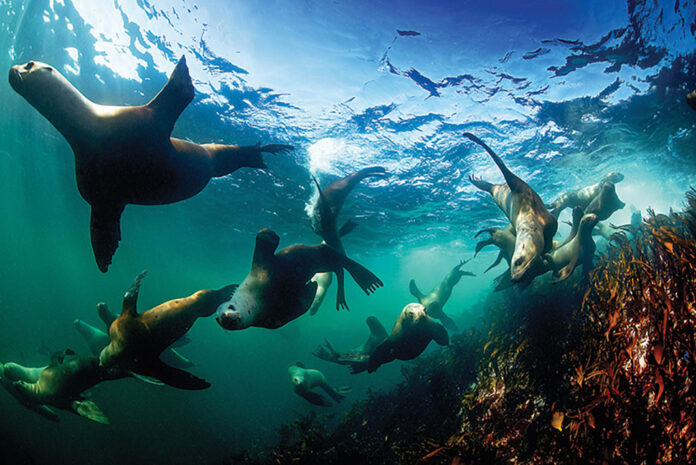
Seals cavort in the waters of the Great Bear Rainforest. | Feature photo: Ian McAllister/Pacific Wild
From the field station near his home on remote Denny Island and the small research boats on which he spends up to half the year, Pacific Wild co-founder and conservation photographer Ian McAllister has devoted himself to documenting and protecting the coastal wilderness of the Great Bear Rainforest.
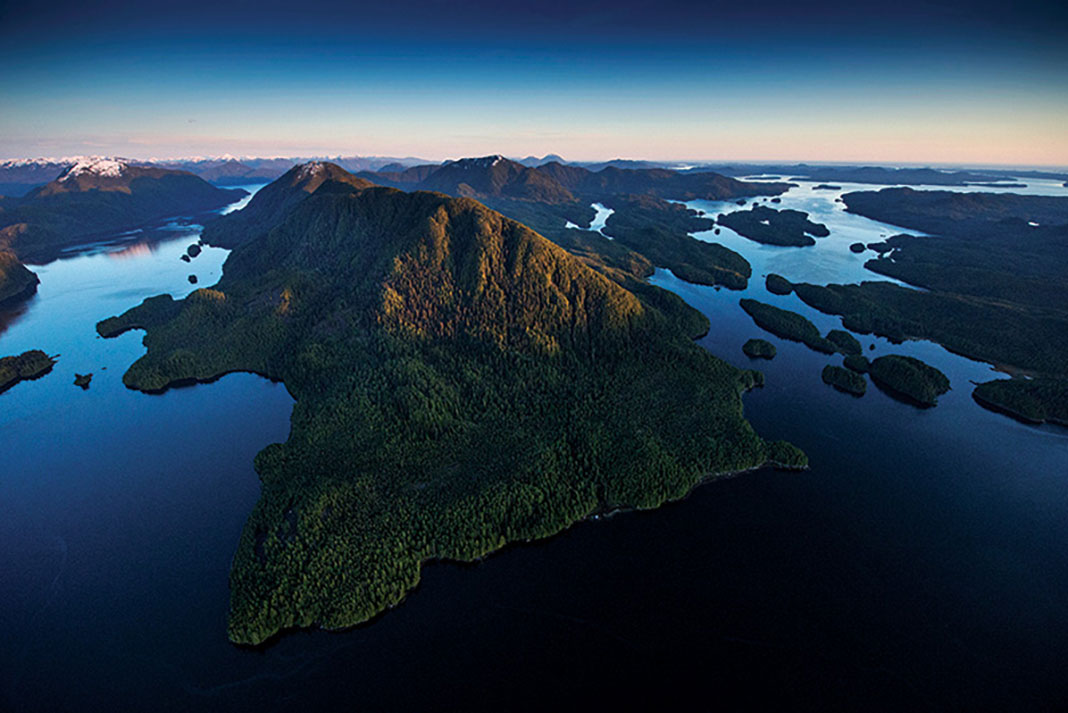
Draping the British Columbia coast from Vancouver Island to the B.C.-Alaska border, the Great Bear Rainforest is a richly interconnected web of ecosystems and wildlife. Together, the moss-cloaked forests, estuaries, islands, coastal waters and mountains encompass more than 64,000 square kilometers.
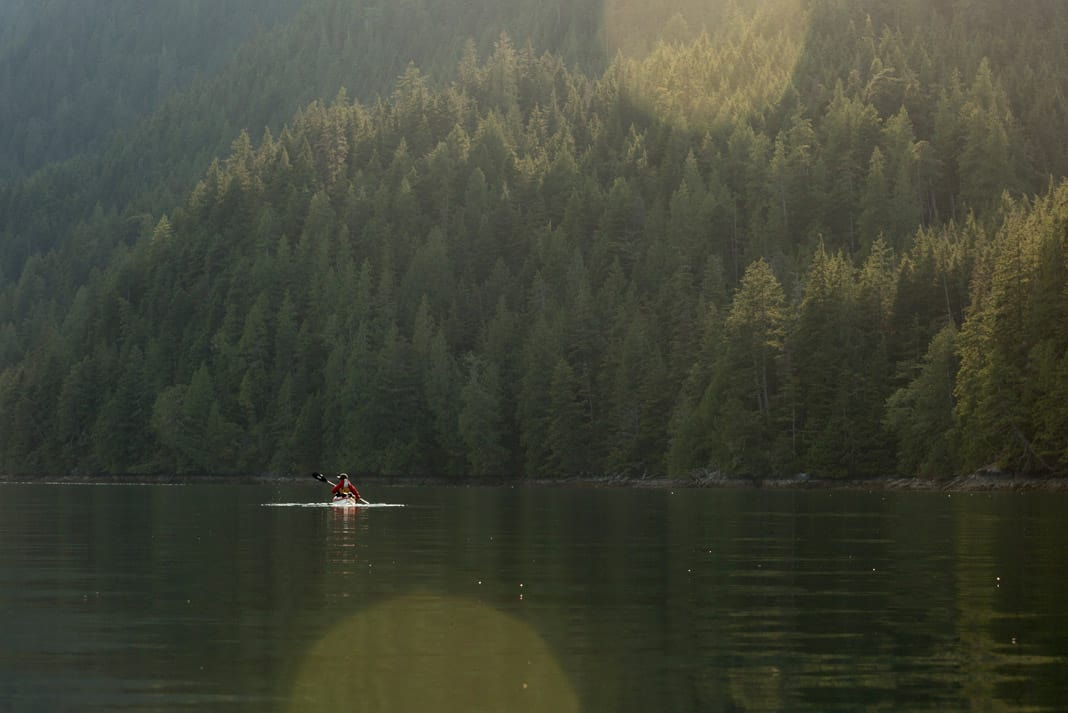
“It’s so vast—half the Pacific coast of Canada—many paddlers are shocked by the distances needed to travel,” says McAllister. The rewards, however, are great. “Sharing this primeval forest, the whales and bears, with so few other people is an exceptional experience in this day and age.”
The Great Bear Rainforest encompass more than 64,000 square kilometers. | Photo: Ian McAllister/Pacific Wild
“I came to the Great Bear Rainforest over 20 years ago. Back then, it was known only as the Mid Coast Timber Supply Area. It was then, and still is, the most intact, magnificent, but very much threatened, temperate rainforest remaining in the world.”
That initial voyage of exploration led to McAllister and Pacific Wild’s work designing conservation plans for the rainforest. “It’s taken a long time to do that baseline inventory and better understand the areas that really need protection,” he says. “Emerging threats have kept us very busy over the years—from open-gate salmon farms and unsustainable fisheries to clear-cut logging and oil-tanker traffic. There’s certainly never been a dull moment.”
Visiting the Great Bear Rainforest
If you have a day
Paddle out of Prince Rupert and explore the convoluted bays and islands of Venn Passage. Look for the Tsimshian petroglyphs that dot the shores.
If you have a long weekend
Ride the ferry to Shearwater and paddle around Cunningham Island, plying peaceful and lightly traveled passages.
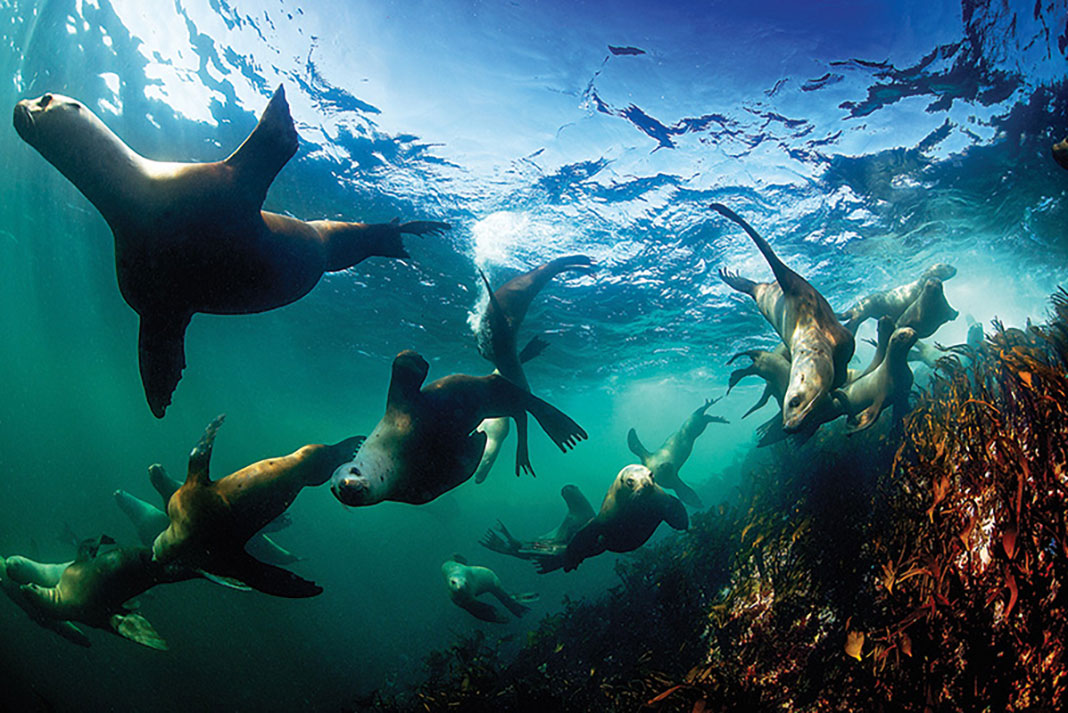
Seals cavort in the waters of the Great Bear Rainforest. | Feature photo: Ian McAllister/Pacific Wild
If you have a week
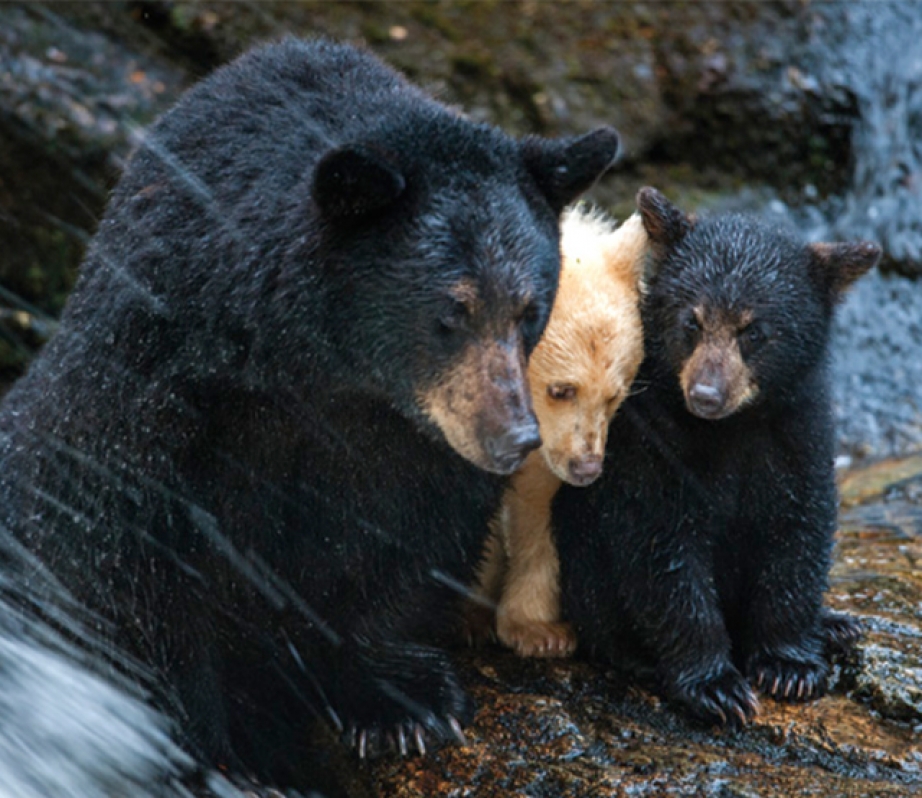
Experienced paddlers can take a passenger ferry or water taxi from Prince Rupert to Hartley Bay, then kayak around Gribbell Island. There’s no camping on the island itself, but surrounding channels are home to scenic coves, dramatic mountains, waterfalls, hot springs and one of the highest concentrations of spirit bears.
If you have two weeks journey north from Port Hardy via Cape Caution to Bella Bella or Shearwater, with an exploration of the spectacular Hakai Luxvbalis Conservancy Marine Park. Long crossings, distance and isolation make this an adventurous route for seasoned paddlers.
Photo: Ian McAllister/Pacific Wild
What awaits you in Great Bear
Wildlife
Wolves, cougars, grizzly and black bears, rare white spirit bears, deer, whales, sea lions, eagles and wild Pacific salmon.
Terra
Beaches, upland clearings and cabins; some areas are steep-walled and densely forested, camping may be difficult.
Exposure
Cool, wet and highly variable weather; swift currents in some island passages.
Challenges
Vast, remote coastline with few communities, infrastructure or amenities. Check with B.C. Ferries for current schedule and paddler pick-up/drop-off policy.
Diversion
Arrange a visit to the cetacean research lab and listen to whales at Pacific Wild’s field station near Shearwater on Denny Island.
Multi-day wildlife and cultural journeys aboard a classic wooden schooner.
Must-have
Plenty of time, flexible schedule.
This article was first published in the Early Summer 2016 issue of Adventure Kayak Magazine. Subscribe to Paddling Magazine’s print and digital editions, or browse the archives.
Seals cavort in the waters of the Great Bear Rainforest. | Feature photo: Ian McAllister/Pacific Wild



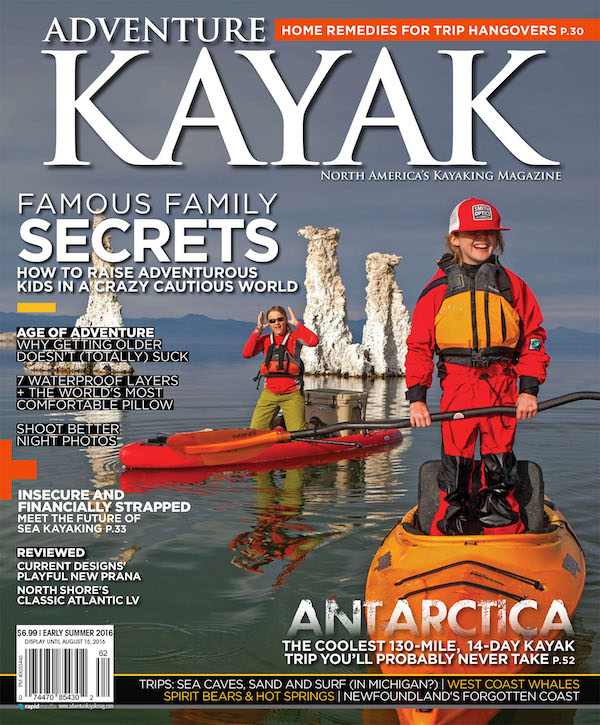 This article originally appeared in the Adventure Kayak Early Summer 2016 issue.