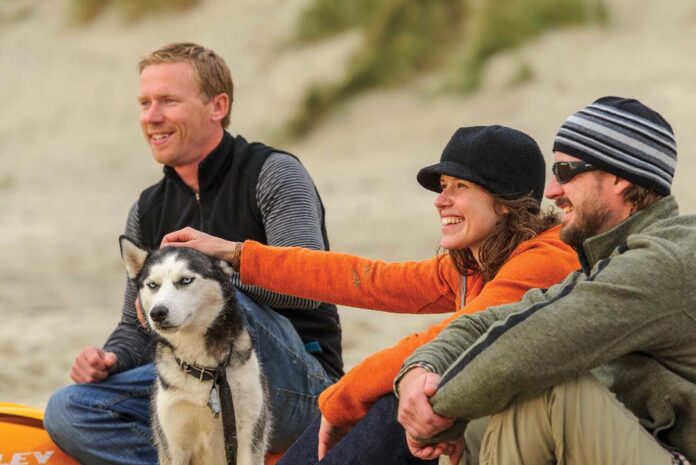
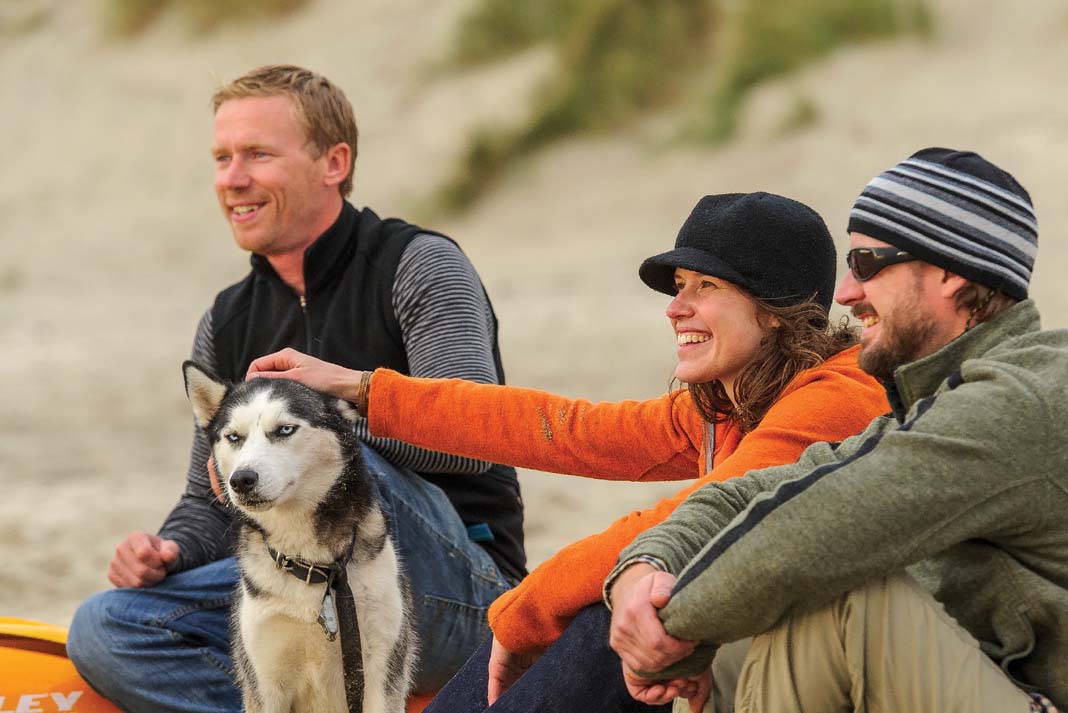
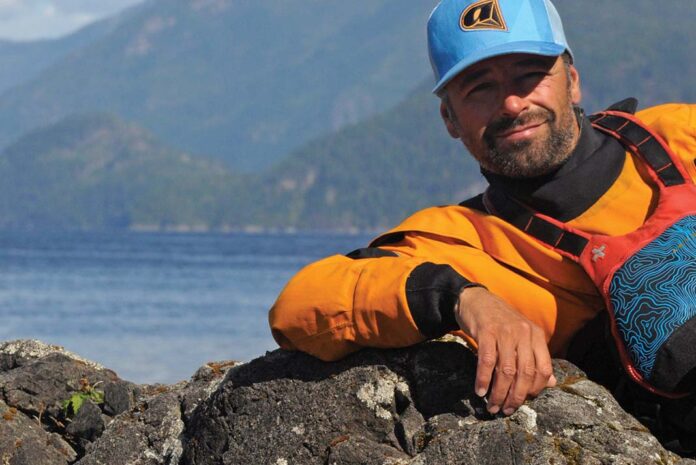
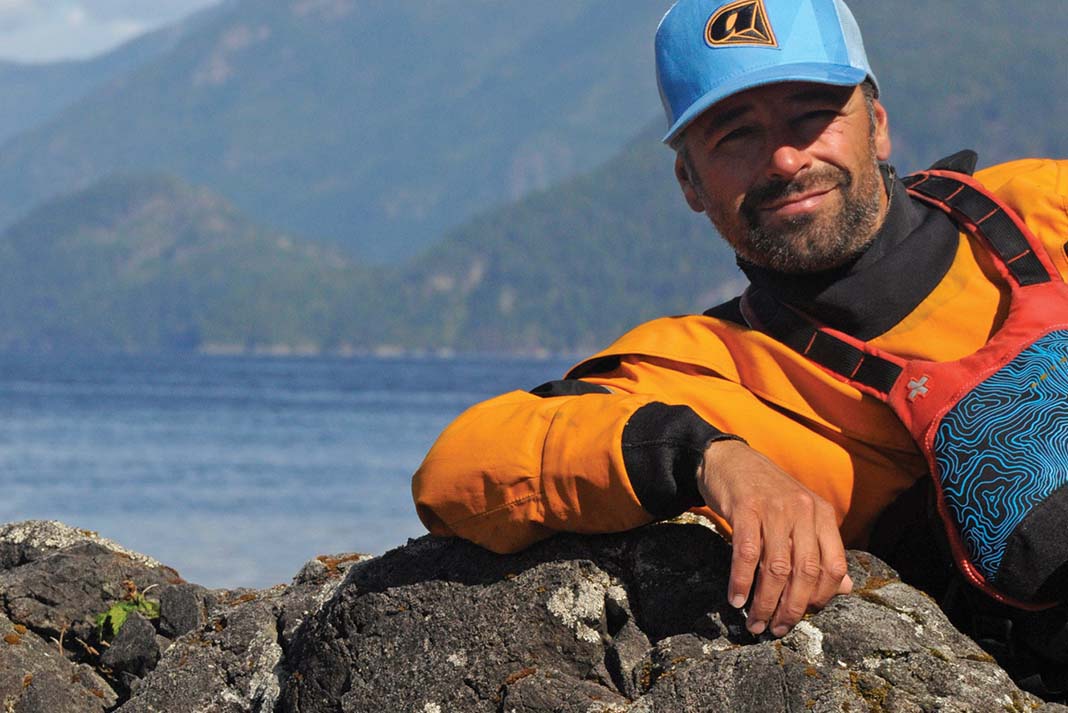
Paddling Magazine tells you what to bring on your next canoe trip. | Photo: Noah Booth
While canoe trips are about enjoying the great outdoors, exploring the wilderness and challenging yourself, packing the necessary gear makes it all possible.
Before you head to the put-in, run carefully through our canoe trip packing list to make sure you have the essentials covered. We have broken things down into kitchen, gear, and safety items and added some of our expert advice along the way.
Kitchen gear to pack for your canoe trip
Food & drinks
There’s nothing like a good meal after a long day on the water. Depending on the length of your trip and how much you can bring, pack accordingly. Calories, protein, goodies, oh my.
Spice kit: Tic Tac boxes and pill containers with compartments for each day of the week work well
Cooking oil or butter
Emergency meals: Use your discretion and pack the number of emergency meals based on the length and remoteness of your canoe trip
Camp kitchen
Can’t have delicious meals without some means of cooking and eating it! You’ll need to be prepared to properly clean up after as well, to avoid attracting unwanted visitors to your campsite. Here’s everything you’ll need for your make-shift kitchen in the woods.
Camp stove, stove repair kit, windshield, fuel and fuel bottles
Matches and fire starters
Pots and pans
Grill (optional)
Work/fire gloves
Spatula, spoon, flipper
Small cutting board
Knife with a blade cover
Can-opener
Mess kit with cutlery, plates, bowls, mugs
Dish kit with biodegradable soap, a dishcloth and steel wool. PRO TIP: Pack your mess and dish kit inside a mesh sack that can be hung in a tree to easily dry dishes.
Every canoe camping checklist requires well-chosen clothes. Pack clothes based on both the weather forecast and average yearly temperatures in the area. Always pack an extra pair of socks.
Can’t go on a canoe trip without your paddling equipment, now can you?
Tripping canoe
Canoe paddle for each person plus an extra
Tie-downs for canoe
Carabiners
Canoe repair kit: sealant, duct tape
Safety gear for your canoe trip
Safety first. A proper and smart canoe camping packing list is nothing without safety supplies and rescue gear. Extra weight for an extra safe trip will be well worth it.
Canoe safety kit: Depending on where you live, there are different regulations as to what you need to have in your canoe. (In general, you need a floating safety line, flashlight, whistle and a bailer.)
Emergency plan: Take a look at your map and make note of roads, communities, and other landmarks that could serve as evacuation spots or places to go for help in the case of an emergency
First aid kit: Pack inside a drybag and don’t forget your daily medications
A copy of your route and your expected return time and date left with a reliable friend
Depending on where you are going and for how long, you may want to consider electronics like a GPS, a SPOT device or a satellite phone
ID, a small amount of cash and a credit card: In case of an emergency, it is important to have ID on you. In remote areas, having both cash and a credit card is a good idea—and you may even paddle past somewhere you can buy a beer or ice cream!
Luxury canoe camping items
Once you’ve completed your canoe trip gear list, try to leave a little room just for you. Make your canoe trip extra comfortable with those little things that you love at home.
An oldie but a goodie – watch above to see the second episode in a series on sea kayaking hosted by John and Bea Dowd. John was the founding editor of Sea Kayaker magazine, and has written numerous books on paddling. Above, he looks at the tools you need and the basic skills you can develop to become a capable navigator.
Of the many possible concerns resident in the committed paddler’s oeuvre, grooming and fashion rarely even make it into the mudroom of consciousness. Therefore, you’d be forgiven if you weren’t aware that the canoeist’s traditional accoutrements, including plaid flannel, sensible boots and designer axes are fashion accessory items in vogue. Yes, it’s time to wade into this quagmire of social trends. We’re talking lumbersexuals, fair readers, and it’s about time.
Lumbersexuals adopt canoeist haute couture
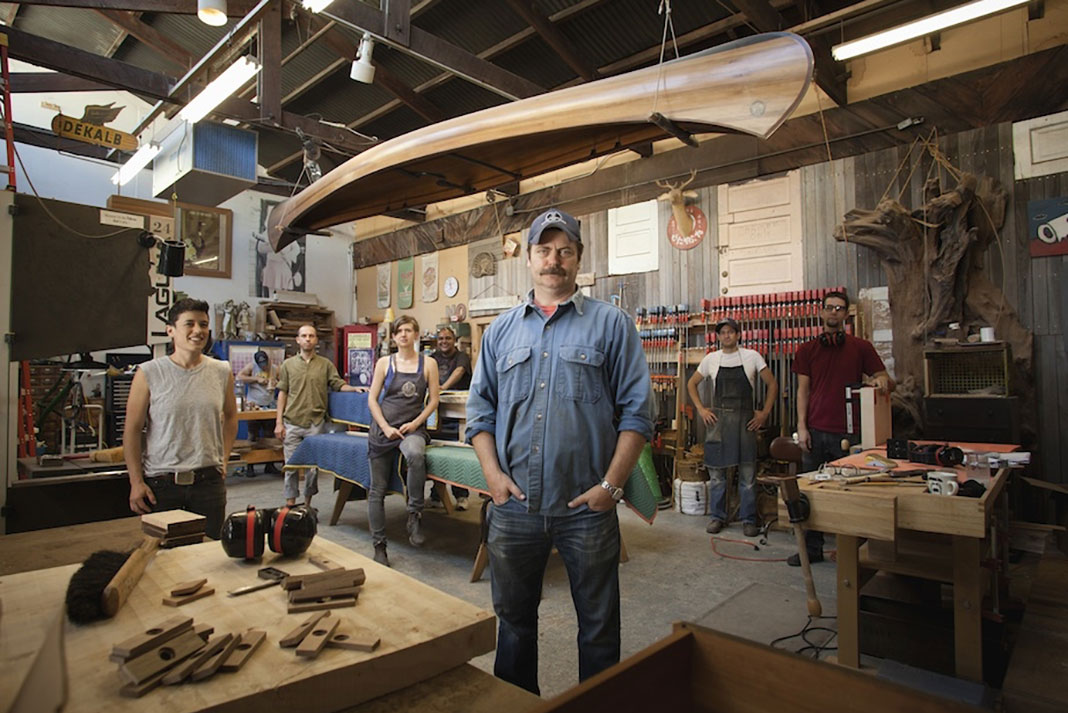
When Canadian Canoe Museum friend and America’s favorite DIY funnyman, Nick Offerman, turned up on the cover of his 2014 book, Paddle Your Own Canoe, mustachioed in jeans and a fetching blue flannel shirt and apparently at the helm of a homemade stripper canoe, I immediately picked up the book and was impressed to learn that he’d made the canoe himself.
I admit, I didn’t think much about his outfit. Soon after, however, I discovered I didn’t have to follow Nick far through the Twitterverse to find a growing segment of men in downtown New York, Paris, L.A. and Toronto who dress exactly like him, yet who’ve never made a tea stand in grade school industrial arts, let alone split a cedar board with a hand-stropped blade.
The trend hasn’t confined itself solely to hipsters in urban centers. I’ve since seen the look—our look—on celebrities, in ads and then on the street. The wilderness’ woodsy aesthetic has been borrowed with renewed vigor over the last two years to sell everything from suspenders to cologne. I can’t be the only one who has seen social media feeds turn into a litany of bush-lust-inducing images stamped with twee tags like #campvibes, #modernoutsdoorman and #liveauthentic.
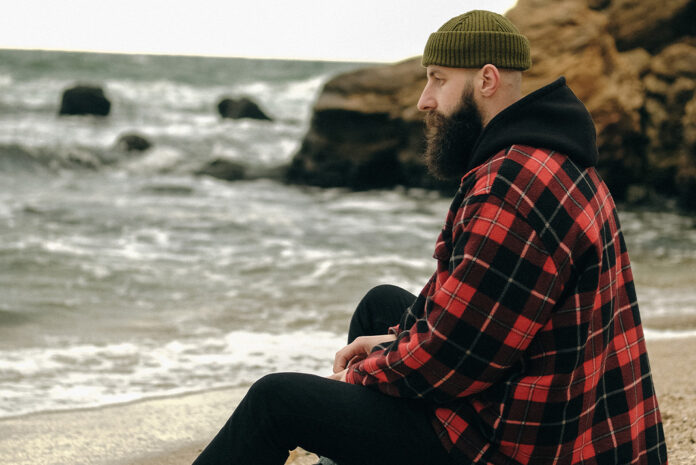
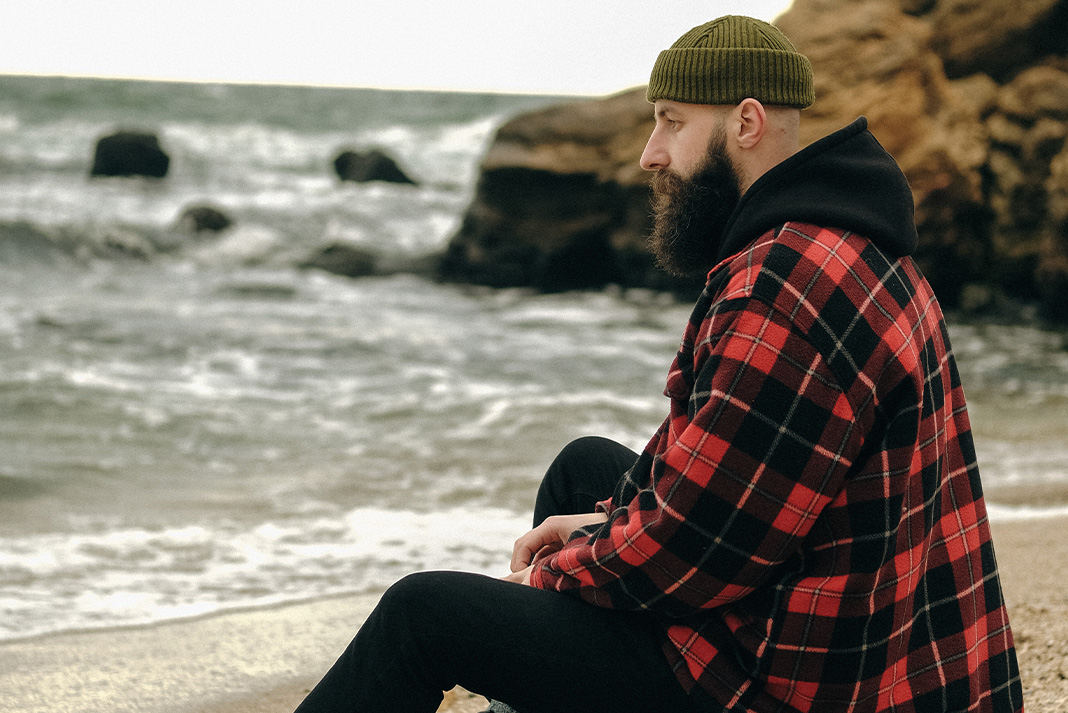
The canoeist’s traditional accoutrements have been adopted far and wide by fashion-forward lumbersexuals. | Feature photo: Waldemar/Pexels
Coined by GearJunkie a year-and-a-half ago, lumbersexual was a tongue-in-cheek term to reference the growing popularity of the rugged outdoorsman look. Last year it was shortlisted for Oxford Dictionary’s word of the year. Today, if you type it into your favorite search engine, Ryan Gosling, Chuck Norris, Jake Gyllenhaal and the Brawny Paper Towel guy lead an astonishing parade of fashionable men with beards, acres of body hair, flannel shirts and various paraphernalia that would lead a casual observer to think they were Nick Offerman, Bill Mason, Ray Mears or maybe even Kevin Callan wannabees. Bless them all.
Clothes alone don’t make the man
Here’s the rub: There’s the look, and then there’s the lifestyle. Take a recent print ad for gear and clothing manufacturer Fjallraven on the back page of outdoor magazine giant, Outside. All the right visual elements were included in the ad—red canoe, rugged dude, outdoor backdrop. Unfortunately, the chap in the canoe is sitting awkwardly while paddling across a mountain lake and wearing a sizeable backpack—ready for the upcoming portage, one can only assume.
The ad should have come with a fine print warning: Wear a PFD. Just as importantly, the ad and this entire trend should come with a proviso for anyone who might be tempted to channel this rugged look to consider that it is in the active outdoor lifestyle where the real charismatic power and lasting beauty lies, not in mere aesthetics.
By all means, buy the plaid shirt, grow your beard long and heft your sharpened axe if you must, just don’t forget to then also head out your door into the great beyond and get on with outdoor living. You’ll be better for it.
James Raffan is Director Emeritus of the Canadian Canoe Museum. He’s credited with coining #bushchic.
The canoeist’s traditional accoutrements have been adopted far and wide by fashion-forward lumbersexuals. | Feature photo: Waldemar/Pexels
An oldie but a goodie – watch above to see the first episode in a series on sea kayaking hosted by John and Bea Dowd. John was the founding editor of Sea Kayaker magazine, and has written numerous books on paddling. Above, he helps you discover what basic skills and knowledge you need to safely start kayaking and gain experience in the sport.
ONE DAY OUR GENERATION,
IS GONNA RULE THE POPULATION. —JOHN MAYER | PHOTO: TEGAN OWENS
When sea kayaking’s founding luminaries wax nostalgic about the good ol’ days, they often lament a particular aspect once central to the sport: the demise of the multi-day trip. In a recent publication, John Dowd, Wayne Horodovich and Brian Henry each found different factors to blame for the decline: Internet addiction; inexpensive recreational kayaks designed for day trips; a focus on certification, and various other culprits. But they may have overlooked another even bigger factor: demographics.
Nostalgia is human nature. It was always better back then, when high-end fiberglass boats lined remote beaches and rugged paddling partners fell from the sky like Pacific Northwest rain. But it struck me that the writers all took up sea kayaking in their early to mid-thirties. This founding generation, now in their sixties and seventies, is part of the most famous generation in history: the Baby Boomers. It’s no surprise that aging Boomers are camping less on remote beaches.
Look at a graph of North America’s population and you’ll see the familiar pattern of ocean swell: crest, trough, crest, trough. The 74 million Boomers are a crest. The following trough is Generation X, some 12 percent smaller at 65 million. The next crest is the Millennials, over 79 million strong, age 18-30. They’re the largest generation in history.
The Boomers came of age on a rising tide for sea kayaking. The back-to-nature ethos of the 1960s and ‘70s, a large population, and technological innovations like the Holloform River Chaser, the fiberglass expedition kayak, and polar fleece long underwear combined to create a potent breeding ground for paddlers. True, those early sea kayakers didn’t have cell phones and Wi-Fi to distract them. But more importantly, they were in the right age bracket at the right time.
ONE DAY OUR GENERATION, IS GONNA RULE THE POPULATION. —JOHN MAYER | PHOTO: TEGAN OWENS
THE REVIVAL OF THE LONG EXPERIENCE
Generation X now occupies the age-based sweet spot. The number of people with the health, ability and income is simply smaller, so there are fewer touring kayaks in the water. But behind every trough is another crest.
In the next few years, the Millennials will hit that prime age range for embracing sea kayaking. There’s been no shortage of hand-wringing about whether Millennials will care about the outdoors at all. Pundits describe the generation as famously urban, tech-oriented, saddled with student debt, and craving instant gratification. These factors don’t jive with buying and storing a 17-foot touring kayak and learning to navigate it through fog and swell to a distant beach.
I disagree. I think the millennial generation, like others before them, will slow down after their indestructible twenties, put their GoPros and selfie sticks away, and look for something they can keep enjoying as their knees and backs get creaky. They’ll move out of their urban lofts into larger homes with garages they can fill with boats.
I predict that in a few years, we’ll even see a revival of the long experience. It will be an escape from overstimulation and constant connectivity. It may not be the months-long adventures of Paul Caffyn, Nigel Foster or Jon Turk. But the weeklong trip will return.
We already have the ingredients for another potent breeding ground: a large population entering the prime age for kayak touring, a generation famous for valuing experiences rather than commodities, and another round of innovations in technology—Internet-based kayak-sharing, route beta and community-forming—that makes finding a boat, campsite or paddling partner easier than ever before.
So let’s not pronounce doom just yet. After all, navigating changing waters is what we do best. We can and should find the right balance between affordable boats and performance, between playful and expeditionary, between formal learning and free exploration. Maybe all we need to do is wait.
Neil Schulman celebrates kayaking’s diverse heritage in Reflections.
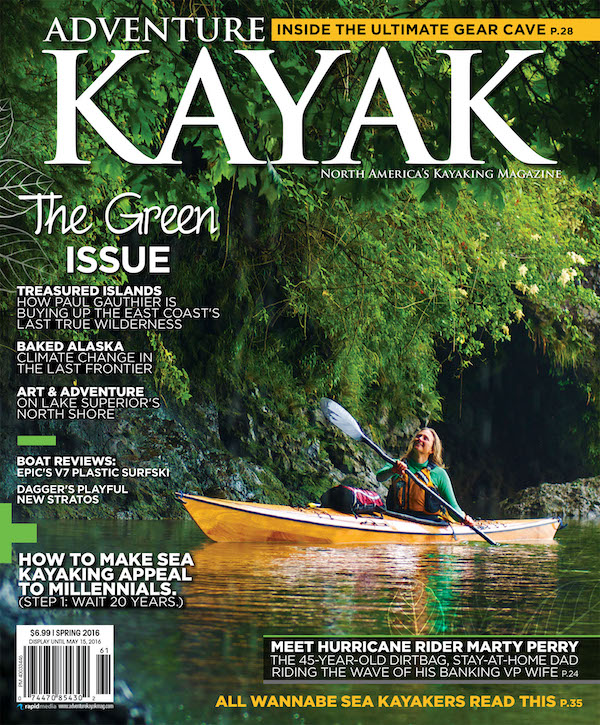
This article originally appeared in Adventure Kayak Spring 2016 issue.
Subscribe to Paddling Magazine and get 25 years of digital magazine archives including our legacy titles: Rapid, Adventure Kayak and Canoeroots.
Ready to use an axe but not quite sure where to start? Bushcraft expert Ray Mears explains the basics of how to choose and use an axe, as well as the difference between several popular kinds. Mears is a British bushcraft and survival expert and shares his knowledge through television shows and books.
Rafa Ortiz, Andrew Pollock and Jared Meehan kayak through caves in the south of Mexico
Rafa Ortiz, Andrew Pollock and Jared Meehan kayak a cave system in the south of Mexico
Video: Red Bull
Three kayakers take paddling to a deeper level in this video clip from Red Bull.
Whitewater kayaking by headlamp
Rafa Ortiz, Jared Meehan and Andrew Pollock paddle two underground rivers in Grutas de Cacahuamilpa National Park in the south of Mexico, outfitted with powerful headlamps to guide the way. Snaking underneath low-hanging cave ceilings and narrow rapids, they navigate an area typically popular with cavers, not two-bladers. This is Ortiz’s second time in this cave that contains Class III and some small sections of Class IV rapids.
How do we determine risk? What are the biggest wild cards in outdoor adventure? How do we make decisions that will best serve ourselves and those around us? Here are a few factors to ponder before your next wilderness trip.
6 questions to ask yourself to determine risk on trip
1 Perceived and real risk
Not to start on a discouraging note, but human beings are notoriously terrible at assessing risk. According to one study, over 90 percent of drivers rank themselves better than the average driver (somewhat disconcerting!). Driving is one of the riskiest activities we undertake everyday, yet our familiarity and perception of control—to say nothing of our cultural dependence on the internal combustion engine—make us more than willing to take this risk on a regular basis. Whether consciously or not, we often choose to disregard risks that hamper our lifestyle choices.
2 Likelihood
Nobel Prize winner Daniel Kahneman observed that most human beings have a basic inability to deal with small risks. We either ignore them or give them far too much weight. Is it possible that a frolicking orca might capsize you face first into a poisonous jellyfish to which you have an anaphylactic reaction? Yes, it’s possible. But it’s far more likely that we will meet our demise through heart disease or cancer (the two most common causes of death in North America). Don’t worry about everything, take the time to determine the likelihood and severity of relevant risks, and respond accordingly.
3 Emotion versus reason
A single powerful image can have a far more powerful impact than a dozen carefully researched but dry facts. Good teachers know this, as do terrorists, politicians and anyone working in the advertising industry. Don’t disregard
that story of a disastrous one-in-a-million fluky misadventure, but do take into consideration how this fits into the bigger scheme of things.
4 Cluelessness and complacency
When we are completely out of our element, we are clueless about the risks. Oblivious tourists posing with thankfully indifferent bears or inebriated rafters on the local whitewater river are two examples that come to mind. Luckily many people survive this unconscious incompetence stage and with increased understanding make better choices. Eventually, though, we can become complacent as we feel utterly familiar with our boats, gear, skills and environment—this is where systems can help prevent avoidable errors.
5 Systems
Check lists, buddy systems, safety vetoes and risk assessment procedures can take different forms. Some outdoor organizations follow written standard risk assessment forms each time a key variables changes. Whatever systems you choose to use, it doesn’t hurt to take a moment to discuss the probability and consequences of risks, and develop some emergency response plans. Better a bit too much planning than ruining your trip with an avoidable disaster.
6 Added lemons
We can seek to plan for every eventuality, but added risk factors often still accumulate. Fatigue, increasing weather conditions, extreme temperatures, low blood sugar, lateness in the day, emotional turmoil, time change, new equipment, pride, interpersonal challenges, and external expectations are all factors that can cloud our judgment. One or two of these can be mitigated, but if too many pop up, better go ashore and wait for a fresh start the next day.
This article first appeared in the May issue of Paddling Magazine. To read more from Paddling Magazine, click here.
BENSCH, BICKLEY AND SELF (L TO R) AT THE BEACH.| PHOTO: FREDRIK MARMSATER
The Left Coast, as political pundits know, is an appellation that refers as much to the attitudes of its residents as it does to its being the continent’s southpaw. So it should come as no surprise that Pacific Coast paddlers represent some of the loudest environmental voices calling for a more sustainable present, and a greener future. From Alaska to California, from lobbying policymakers to creating art and picking up trash, these diverse custodians of our coasts and rivers are showing paddlers that we all have the power to protect our beloved habitat. —VM
PHOTO: BONNY GLAMBECK
Steward of the Sound
DAN LEWIS
Clayoquot Sound, British Columbia
You can learn a lot about a person by how they answer the phone…and why they don’t.
My pre-scheduled call with Dan Lewis, Executive Director of Clayoquot Action, goes straight to voicemail. A few minutes later another number appears on my phone. “Sorry,” Dan explains, “we’re having a 30-knot blow today, so I didn’t paddle into Tofino. But I’ll probably go in later today—we’re out of beer.”
Lewis’ connection to Clayoquot Sound has shaped more than just his watery commute from the island where he lives with Bonny Glambeck, his wife and Clayoquot Action co-founder. Kayaking into town in sketchy weather is far from the biggest risk he’s taken.
Lewis and Glambeck had owned Tofino’s Rainforest Kayak Adventures for 13 years when Imperial Metals proposed an open-pit copper mine on Clayoquot’s iconic Catface Mountain.
“It was a dark time, a great turning point of sorts. We realized we needed to do more than teach kayaking,” recalls Lewis. On the 20th anniversary of the 1993 Clayoquot logging blockade, they closed their profitable kayak business and founded Clayoquot Action.
It wasn’t the first time Lewis had left kayaking to plunge into conservation work. He’d fallen in love with Clayoquot during a 1990 circumnavigation of Vancouver Island.
“Clayoquot had the best paddling and was the island’s last great rainforest,” he says. “I decided I was going to devote my life to protecting it.”
Lewis sold his kayak operation in Vancouver, moved to Tofino, and lived off savings while he, Bonny and Valerie Langer orchestrated the 1993 protests that made Clayoquot a household name. It’s the largest act of civil disobedience in Canadian history.
This time around, mining, fish farms and oil transport are the adversaries. The tactics are similar: education, science, advocacy and, when necessary, peaceful direct action. Glambeck and others were arrested protesting a Kinder-Morgan pipeline in late 2014.
And he goes to the source. Lewis, along with First Nations leaders, is fundraising for a trip to Norway to pressure fish farming multinationals and rebuild the wild salmon economy. “But I don’t really like leaving Tofino at all,” he says. “Unless it’s in a kayak.”
Loving a place so deeply also gives him a chance to savor the victories. “Every day I can look out at Meares Island Tribal Park and say, ‘We won that one.”’ —Neil Schulman
How to Help:
“We couldn’t do anything without the combined power of all the paddlers supporting us. They say that wilderness needs no defending, it only needs more defenders. It’s true.” —DAN LEWIS
PHOTO: AMY GULICK /AMYGULICK.COM
Keeper of the Stikine
Brenda Schwartz-Yeager
Wrangell, Alaska
“I don’t have any early memories without the Stikine in them,” says Brenda Schwartz-Yeager, “I’m pretty sure the river’s water runs through my veins.”
A fourth-generation Alaskan, award-winning artist and owner-operator of Alaska Charters and Adventures, Schwartz-Yeager grew up homesteading on the Stikine. The 640-kilometer-long river originates in British Columbia and drains into Southeast Alaska, encompassing one of the greatest wild ecosystems left on Earth and one of the largest wild salmon runs remaining on the West Coast.
Schwartz-Yeager is losing track of how many times she’s paddled the lower 270 kilometers, from Telegraph Creek to her hometown of Wrangell—at least 11. She’s also paddled all the way from the river’s headwaters, but just once. Often, the mother of five paddles by herself, in late fall, after she’s finished a season of guiding the river and her freezer is full of Stikine salmon. One of her favorite memories is paddling alone in October, as silver dollar-sized snowflakes fell, the last of autumn foliage shone and the river crinkled with ice.
“I was just yards ahead of freeze-up. It was like the river was closing down for the season,” she remembers.
Schwartz-Yeager’s acclaimed watercolors are another way she connects people with Alaska’s wilderness. Many of her landscapes are painted directly onto navigational charts of the area, a trademark she developed after sketching on the only paper available on her family’s commercial fishing boat. She often portrays the best of human interaction with the wild landscape—a kayak on the beach, or people walking the shore.
But Schwartz-Yeager also knows how easy it is to destroy a wild river. The U.S. Environmental Protection Agency states that 40 percent of western watersheds have been polluted from mining. Her beloved Stikine could be next.
“I’m terrified and feel strangely powerless,” she says of the Red Chris Mine, which opened in 2015, one of several enormous open pit copper mines planned in the Stikine watershed, in what’s referred to as the transboundary region. “Everything I love is downstream of that.”
The Red Chris Mine is owned by Imperial Metals, the same company that runs the Mount Polley Mine in central British Columbia. In August 2014, this open pit copper/gold mine had a massive tailings dam failure. Ten million cubic meters of toxic water and 4.5 million cubic meters of fine toxic tailings polluted the Fraser River watershed. Despite the Red Chris Mine using a similar tailings dam design, Imperial Metal was allowed by the British Columbia government to begin production at this site soon after.
“People are dumbstruck by its beauty, but then I have to burst their bubble,” Schwartz-Yeager says of showing visitors the Stikine’s waters, mountains, glaciers and forest— then revealing that all is not as untrammeled as it seems. She believes that the Stikine and the transboundary region can be used to support future generations of Alaskans, but development “needs to take place in a manner that doesn’t degrade the forest and the sea.” Her hope is more like-minded people will continue to visit and take ownership of the river’s future.
“You can’t come here and paddle it without loving it.” —Bjorn Dihle
Brenda Schwartz’s artwork reflects her lifelong relationship with wild Alaska. www.marineartist.com
For more information, visit www.salmonbeyondborders.org
PHOTO: VOYAGERS WITHOUT TRACE/WWW.FRENCHKAYAKFILM.COM
River Angel
KATE ROSS KUTHE
Portland, Oregon
At the beginning, there’s always an outing, says Kate Ross Kuthe, Education and Outreach Coordinator for Willamette Riverkeeper. “I’m screening films about environmental activists for a festival,” she tells me over coffee next to the river. “Every single one has a visceral connection to a place—a river, a beach, a mountain. And every single story starts with someone getting outside to explore.”
For Kuthe, the outings began in the Adirondacks, followed by hopscotching around Alaska and the Northwest doing environmental science, fighting fires for the National Park Service and guiding kayak trips. “I had one stream restoration internship where they gave me machetes and vague directions on which invasive plants to cut,” she recalls. “None of my friends’ internships gave them machetes.”
Working with Willamette Riverkeeper, making that connection starts with getting people to rediscover a river they think they already know. The Willamette’s 187-mile course winds past most of Oregon’s population, “but most people just drive over it,” she says. “You can hop in the river in downtown Salem, and in two miles you’re in wilderness. We show people the river in a new way, from a kayak or canoe.”
Conservationists are born on those trips. Paddle Oregon, an annual five-day, 100-mile downriver journey, is a particularly fertile breeding ground. “There’s a ripple effect from living on the river and falling in love with the river for that much time,” Kuthe says. “Those people become our best advocates.”
But love is just the beginning. Willamette Riverkeeper’s paddler-advocates then enter the daunting world of restoring and protecting a river with centuries of heavy use. One example is cleaning up Portland’s harbor, a Superfund site. “Here we are, 16 years after the EPA’s designation. How do you mobilize people?” Kuthe asks. Then she answers her own question. “By speaking in plain language. People need stories to connect to the river, not gobs of scientific data and policy jargon.” Even at polluted sites, outings are key. “We do canoe and walking tours, and let people see and smell the sites. It sticks.”
Looking downcurrent, she thinks her greatest impact will be the Superfund section of the Willamette becoming a place that people visit and enjoy. Then she changes course.
“Well, in a few years, I think Canyon will be my largest achievement,” she says, referring to her and husband Paul Kuthe’s one-year-old son. He’s already been on more river trips than most people manage in a year. At the beginning, there’s always an outing. —Neil Schulman
How to Help:
“Share what you love. If you have a special place, bring other people there. Personal experience is contagious.” —KATE ROSS KUTHE
BENSCH, BICKLEY AND SELF (L TO R) AT THE BEACH.| PHOTO: FREDRIK MARMSATER
Plastics Pollution Fighters
JASON SELF, SHAY BICKLEY & CHRIS BENSCH
Humboldt, California, and Portland, Oregon
“We’ve always been a one-person-at-a-time kind of organization,” says Jason Self. “I am proud every time someone says ‘thank you for your work’ or is inspired to change their own behavior.”
Team Out of Sight, Out of Mind—OSOM for short—is, well, awesome. Since 2010, friends Jason Self, Chris Bensch and Shay Bickley have been fighting back against the overwhelming tide of sea trash and plastics pollution in our waterways.
Regular paddling buddies on the rivers and coast around Portland, Oregon, the three often found themselves complaining about the trash they’d encounter along the banks or at the beach. Then the BP Deepwater Horizon disaster spilled 4.9 million barrels of oil into a fragile ocean ecosystem.
“BP seemed to be focused on patting themselves on the back for their response to the spill, even as crude was still flooding the Gulf of Mexico,” recalls Self. “It sickened us. We care, and we hate complaining without action.”
The trio adopted the name Out of Sight, Out of Mind as a reference to the widespread lack of understanding surrounding pollution and habitat destruction, “as well as our inherent cultural ability to ignore these problems.”
The OSOM gang knew they faced tremendous odds in their effort to raise awareness of the threats facing the world’s waterways, while simultaneously taking physical action to counter these problems. It was a paddle on the Colorado River at flood stage—dodging televisions and toilets bobbing in the muddy water—that presented a strategy for their mission. As Self says, “We couldn’t stop industry, agriculture and human development, but we could pick up trash.”
They posted photos of their removal efforts to social media and found people were supportive and receptive to their message: Just pick it up. In 2012, Self, Bickley and Bensch launched the Portland to Ocean Trashpedition, a 100-mile paddle down the Columbia with a canoe-cum-garbage scow in tow. They collected all the trash they could find along the route, until the load piled high above the gunwales.
Trashpedition continues to inspire local cleanups and even similar expeditions, and it stands as one of OSOM’s proudest accomplishments. In the years since, however, the team’s tactics have evolved. “Our understanding of the problem has changed,” says Self. “Trashpedition focused on littering. Afterwards, we realized mass consumption by the growing amount of people on the planet is the real problem.”
They set their sights on plastics pollution. “Plastics last for thousands of years, leach toxic chemicals and threaten wildlife,” Self explains. “They’re also the least necessary—the majority of plastics we find are single use, disposable items for which there are easy, reusable alternatives.”
This led the three friends to creating The Search for the Perfect Day, a film project showcasing the work of pollution fighters in California, Hawaii and Florida. The film also highlights the paradox between enjoying a perfect day on the water, and abiding the habits of our throwaway society.
“We’ve realized that at the root of all of the problems facing the natural world, is this growing disconnect between how we live and what we do every day, and our desire to advocate for nature,” says Self.
The solution, they decided, is deceptively simple: Encourage, inspire and motivate others to get outside. If you can pass on a love and respect for the natural world, you can inspire a change in behavior.
“Our hope is that through our efforts, and the efforts of other activists across the globe, future generations won’t know what it’s like to fill your boat with plastic trash and not even make a dent in the pile.” —Virginia Marshall
This article originally appeared in Adventure Kayak Spring 2016 issue.
Subscribe to Paddling Magazine and get 25 years of digital magazine archives including our legacy titles: Rapid, Adventure Kayak and Canoeroots.
Best known for high-octane kayak surfing videos, The Hurricane Riders founder and filmmaker Marty Perry explores the quieter aspects of kayak tripping in his latest effort, Nootka Sound. For nine raw and soggy days last September, Perry marooned himself on an isolated islet off the west coast of Vancouver Island. No renegade waves, no rowdy crew. Just, as Perry explains, “The essence of why we ocean kayak, to find a secret place in the world and make it your own for a while.”
WHO ARE THE HURRICANE RIDERS?
We’re a tight group made up of a dozen wannabe wave heroes. To join THR, you must be obsessed with surfing boat-breaking surf, master the Skookumchuck wave [this B.C. tidal rapid is THR’s favored training ground and spiritual home—ed.] and have profound partying expertise. Generally, if you make it into The Hurricane Riders movies a couple of times, you’re getting close to being admitted. I feel like THR is a noun, “You paddle like a THRer.” The kayaking community has supported us tons over the years, inviting us to killer places around the world to paddle gnarly waves.
WHAT IS THE ALLURE OF FILMMAKING?
My passion for filmmaking goes back to a sunny day in Montréal in the early ‘90s. My girlfriend wanted to see The Big Blue, the freediving cult classic by Luc Besson. Her aunt owned the Crémazie Theatre, one of the oldest theatres in the city, and her cousin let us in for a private screening before the matinée. We had the whole place to ourselves. Who wants to film in the rain or freezing cold of a December session? Shooting kayaking in gale- force wind is hard work. But seeing your buddy climb up a 45-foot wave face—that visual is imprinted in your mind…and if you ever forget it, well, watch the THR vid.
LIVING THE DREAM. | PHOTO: MARTY PERRY
WHEN WAS THE SEED PLANTED FOR NOOTKA?
I started to miss that nerve- racking feeling of being alone in the middle of nowhere with a camera in my hands and too much time to waste. My last big solo expedition was in November 2006 in Labrador. For 23 days, I chased little islands to get away from the ever-present bears and wolves, suffered four epic gales, got stranded for four days in 100-kilometer-per-hour winds, and finished off in a full-on blizzard. I had planned to camp on Saddle Island in Hamilton Inlet and surf my way back during a hefty nor’easter storm. Instead, I hitched a ride on the Northern Ranger ferry to Goose Bay. That was my last year living in Montréal. I drove to British Columbia with my kayak and never looked back.
WHERE DID YOU FIND THE PERFECT SPOT?
Ten years ago, I wondered, was there a Saddle Island on the West Coast? Today, at 45, I’m a stay-at-home dad, dirtbag kayaker living the dream, riding the wave of my banking VP wife. Work is not a priority, life is. With my mother-in-law in town nagging me about my hopeless career, I had to get out of the house, fast. I scoured the West Coast for a perfect micro island exposed to big southern swell, bought a couple of charts, and headed for Nootka Sound.
WHY MAKE THIS JOURNEY ALONE?
Recently, I had been filming rough water events in Baja, Spain, San Francisco and Pacific City, Oregon, but nothing purely for me. I knew I wanted to make a film about deliberately heading into foul weather. Finding a partner who can commit to long hours of suffering and potential danger is hard. It’s like asking people to help you move on the most miserable day of the year. That’s why solo trips happen, ‘cause it ain’t easy finding suckers.
This article originally appeared in Adventure Kayak Spring 2016 issue.
Subscribe to Paddling Magazine and get 25 years of digital magazine archives including our legacy titles: Rapid, Adventure Kayak and Canoeroots.


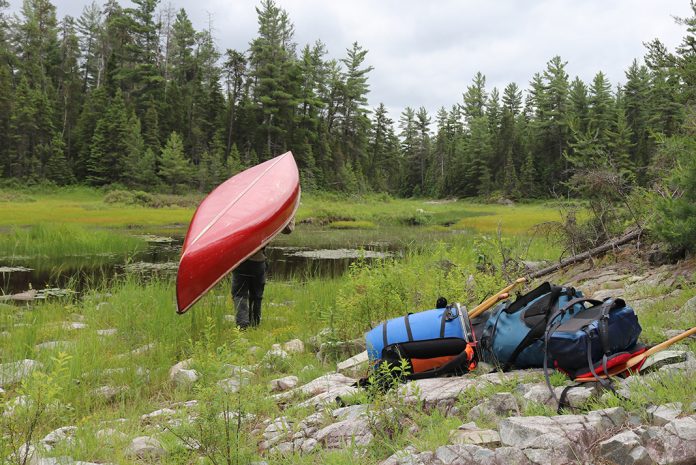
 This article originally appeared in Adventure Kayak Spring 2016 issue.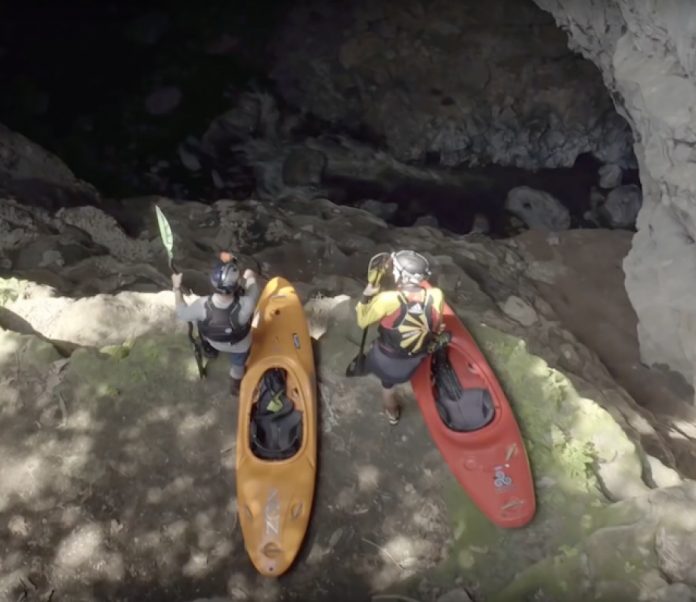
 This article first appeared in the May issue of Paddling Magazine. To read more from Paddling Magazine, click