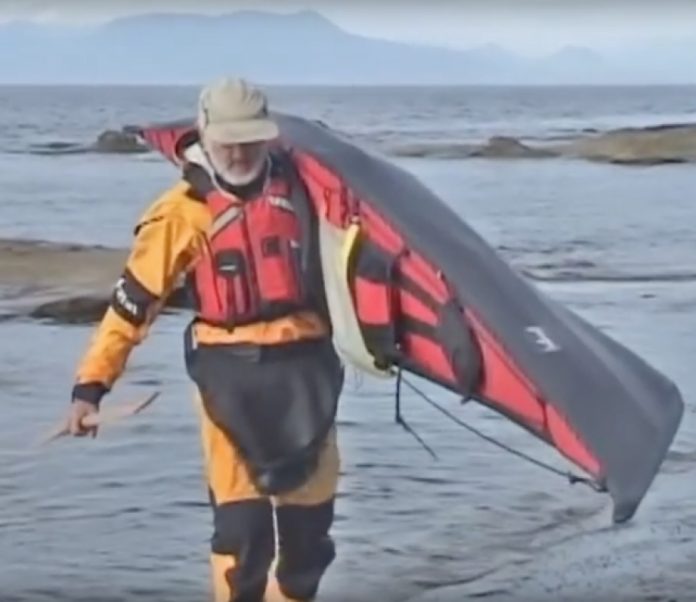
An oldie but a goodie – watch above to see the first episode in a series on sea kayaking hosted by John and Bea Dowd. John was the founding editor of Sea Kayaker magazine, and has written numerous books on paddling. Above, he helps you discover what basic skills and knowledge you need to safely start kayaking and gain experience in the sport.
ONE DAY OUR GENERATION,
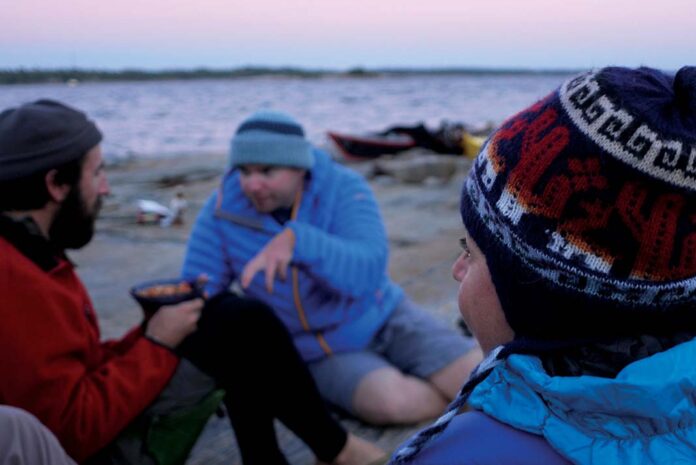
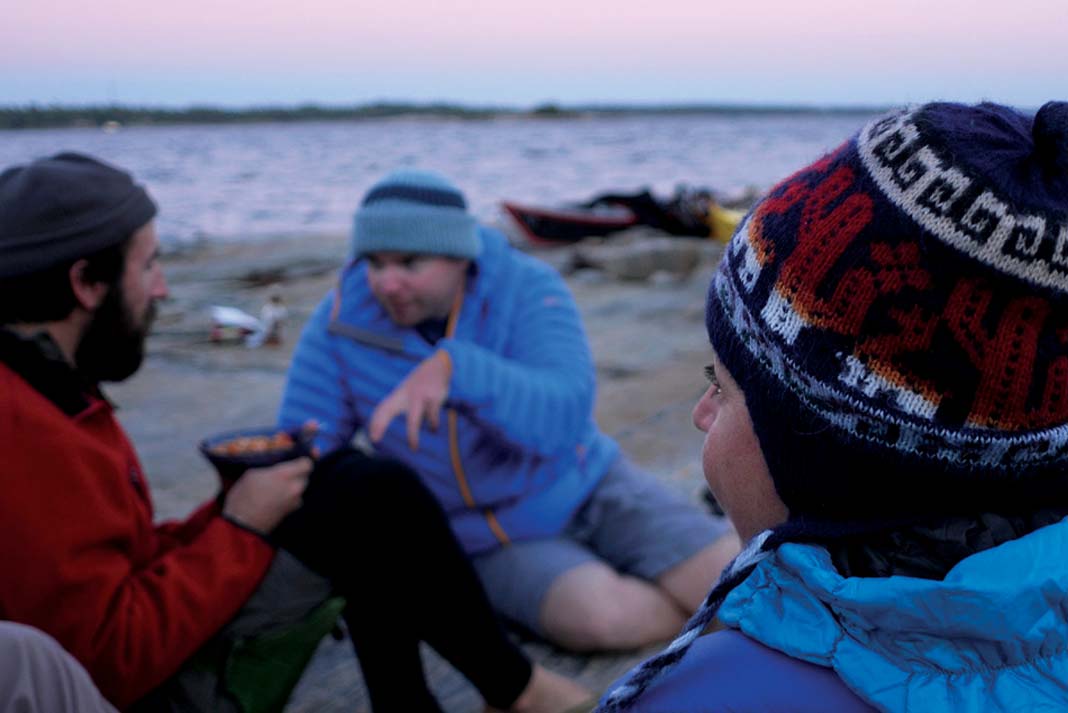
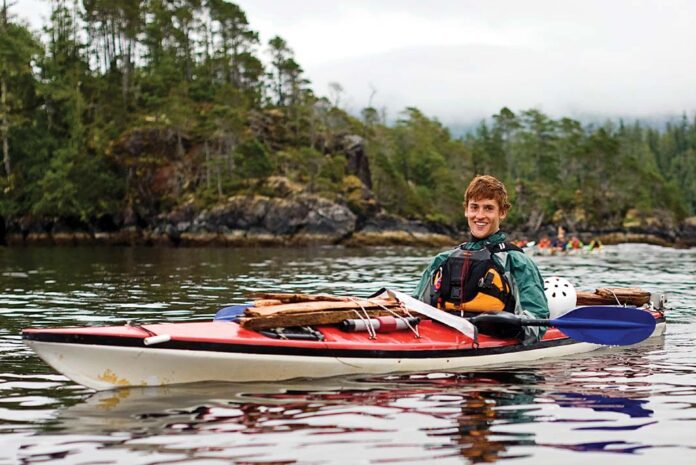
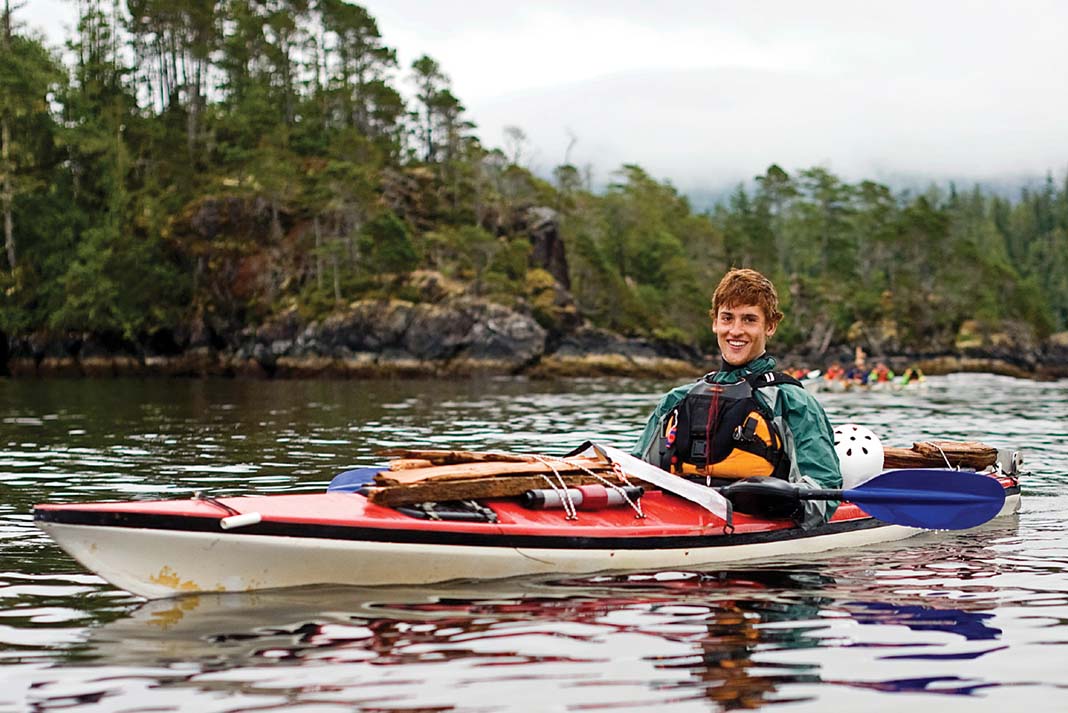
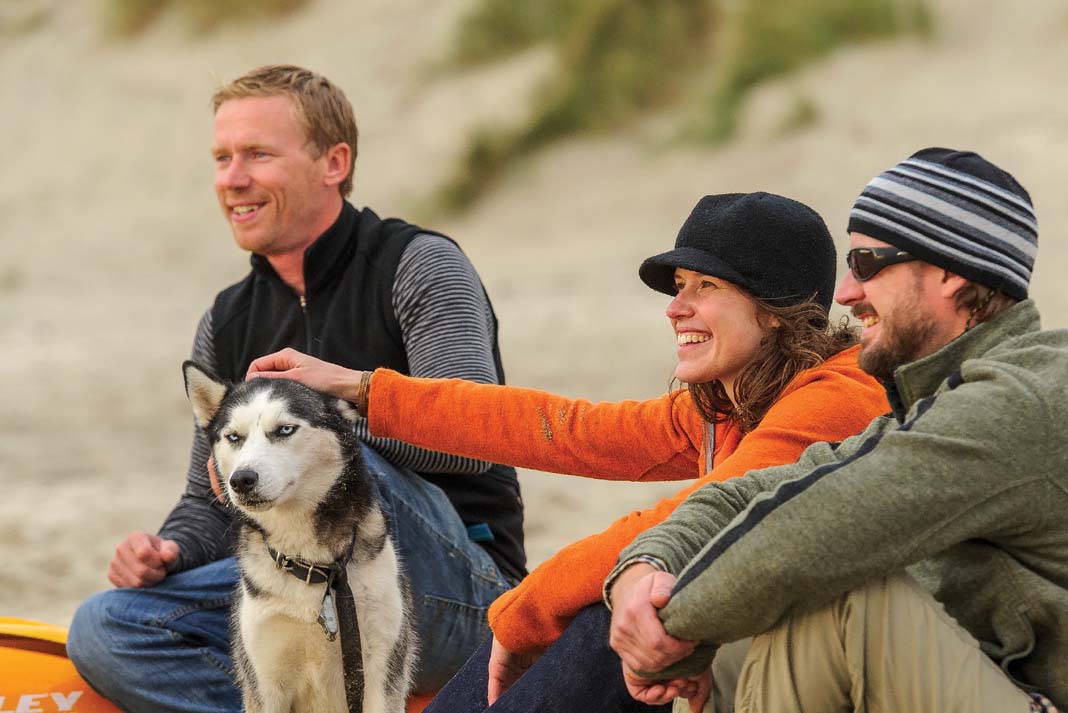
IS GONNA RULE THE POPULATION. —JOHN MAYER | PHOTO: TEGAN OWENS
When sea kayaking’s founding luminaries wax nostalgic about the good ol’ days, they often lament a particular aspect once central to the sport: the demise of the multi-day trip. In a recent publication, John Dowd, Wayne Horodovich and Brian Henry each found different factors to blame for the decline: Internet addiction; inexpensive recreational kayaks designed for day trips; a focus on certification, and various other culprits. But they may have overlooked another even bigger factor: demographics.
Nostalgia is human nature. It was always better back then, when high-end fiberglass boats lined remote beaches and rugged paddling partners fell from the sky like Pacific Northwest rain. But it struck me that the writers all took up sea kayaking in their early to mid-thirties. This founding generation, now in their sixties and seventies, is part of the most famous generation in history: the Baby Boomers. It’s no surprise that aging Boomers are camping less on remote beaches.
Look at a graph of North America’s population and you’ll see the familiar pattern of ocean swell: crest, trough, crest, trough. The 74 million Boomers are a crest. The following trough is Generation X, some 12 percent smaller at 65 million. The next crest is the Millennials, over 79 million strong, age 18-30. They’re the largest generation in history.
The Boomers came of age on a rising tide for sea kayaking. The back-to-nature ethos of the 1960s and ‘70s, a large population, and technological innovations like the Holloform River Chaser, the fiberglass expedition kayak, and polar fleece long underwear combined to create a potent breeding ground for paddlers. True, those early sea kayakers didn’t have cell phones and Wi-Fi to distract them. But more importantly, they were in the right age bracket at the right time.
ONE DAY OUR GENERATION, IS GONNA RULE THE POPULATION. —JOHN MAYER | PHOTO: TEGAN OWENS
THE REVIVAL OF THE LONG EXPERIENCE
Generation X now occupies the age-based sweet spot. The number of people with the health, ability and income is simply smaller, so there are fewer touring kayaks in the water. But behind every trough is another crest.
In the next few years, the Millennials will hit that prime age range for embracing sea kayaking. There’s been no shortage of hand-wringing about whether Millennials will care about the outdoors at all. Pundits describe the generation as famously urban, tech-oriented, saddled with student debt, and craving instant gratification. These factors don’t jive with buying and storing a 17-foot touring kayak and learning to navigate it through fog and swell to a distant beach.
I disagree. I think the millennial generation, like others before them, will slow down after their indestructible twenties, put their GoPros and selfie sticks away, and look for something they can keep enjoying as their knees and backs get creaky. They’ll move out of their urban lofts into larger homes with garages they can fill with boats.
I predict that in a few years, we’ll even see a revival of the long experience. It will be an escape from overstimulation and constant connectivity. It may not be the months-long adventures of Paul Caffyn, Nigel Foster or Jon Turk. But the weeklong trip will return.
We already have the ingredients for another potent breeding ground: a large population entering the prime age for kayak touring, a generation famous for valuing experiences rather than commodities, and another round of innovations in technology—Internet-based kayak-sharing, route beta and community-forming—that makes finding a boat, campsite or paddling partner easier than ever before.
So let’s not pronounce doom just yet. After all, navigating changing waters is what we do best. We can and should find the right balance between affordable boats and performance, between playful and expeditionary, between formal learning and free exploration. Maybe all we need to do is wait.
Neil Schulman celebrates kayaking’s diverse heritage in Reflections.
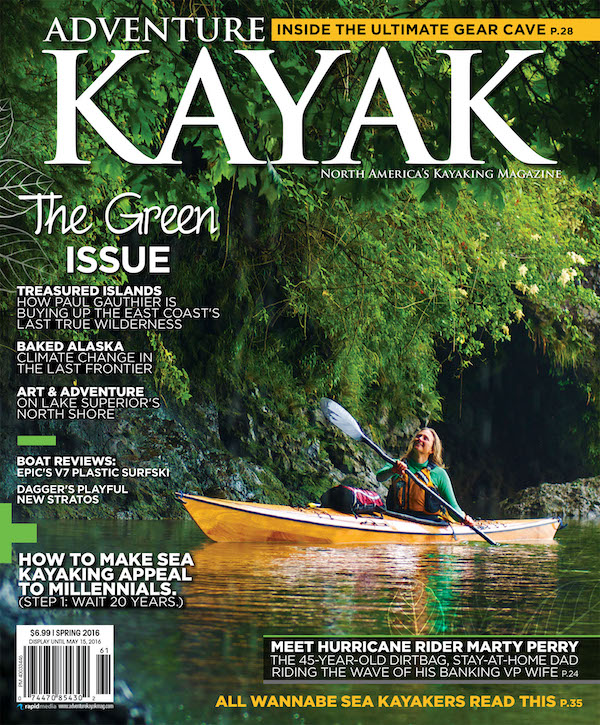
This article originally appeared in Adventure Kayak Spring 2016 issue.
Subscribe to Paddling Magazine and get 25 years of digital magazine archives including our legacy titles: Rapid, Adventure Kayak and Canoeroots.
Ready to use an axe but not quite sure where to start? Bushcraft expert Ray Mears explains the basics of how to choose and use an axe, as well as the difference between several popular kinds. Mears is a British bushcraft and survival expert and shares his knowledge through television shows and books.
Rafa Ortiz, Andrew Pollock and Jared Meehan kayak through caves in the south of Mexico
Rafa Ortiz, Andrew Pollock and Jared Meehan kayak a cave system in the south of Mexico
Video: Red Bull
Three kayakers take paddling to a deeper level in this video clip from Red Bull.
Whitewater kayaking by headlamp
Rafa Ortiz, Jared Meehan and Andrew Pollock paddle two underground rivers in Grutas de Cacahuamilpa National Park in the south of Mexico, outfitted with powerful headlamps to guide the way. Snaking underneath low-hanging cave ceilings and narrow rapids, they navigate an area typically popular with cavers, not two-bladers. This is Ortiz’s second time in this cave that contains Class III and some small sections of Class IV rapids.
How do we determine risk? What are the biggest wild cards in outdoor adventure? How do we make decisions that will best serve ourselves and those around us? Here are a few factors to ponder before your next wilderness trip.
6 questions to ask yourself to determine risk on trip
1 Perceived and real risk
Not to start on a discouraging note, but human beings are notoriously terrible at assessing risk. According to one study, over 90 percent of drivers rank themselves better than the average driver (somewhat disconcerting!). Driving is one of the riskiest activities we undertake everyday, yet our familiarity and perception of control—to say nothing of our cultural dependence on the internal combustion engine—make us more than willing to take this risk on a regular basis. Whether consciously or not, we often choose to disregard risks that hamper our lifestyle choices.
2 Likelihood
Nobel Prize winner Daniel Kahneman observed that most human beings have a basic inability to deal with small risks. We either ignore them or give them far too much weight. Is it possible that a frolicking orca might capsize you face first into a poisonous jellyfish to which you have an anaphylactic reaction? Yes, it’s possible. But it’s far more likely that we will meet our demise through heart disease or cancer (the two most common causes of death in North America). Don’t worry about everything, take the time to determine the likelihood and severity of relevant risks, and respond accordingly.
3 Emotion versus reason
A single powerful image can have a far more powerful impact than a dozen carefully researched but dry facts. Good teachers know this, as do terrorists, politicians and anyone working in the advertising industry. Don’t disregard
that story of a disastrous one-in-a-million fluky misadventure, but do take into consideration how this fits into the bigger scheme of things.
4 Cluelessness and complacency
When we are completely out of our element, we are clueless about the risks. Oblivious tourists posing with thankfully indifferent bears or inebriated rafters on the local whitewater river are two examples that come to mind. Luckily many people survive this unconscious incompetence stage and with increased understanding make better choices. Eventually, though, we can become complacent as we feel utterly familiar with our boats, gear, skills and environment—this is where systems can help prevent avoidable errors.
5 Systems
Check lists, buddy systems, safety vetoes and risk assessment procedures can take different forms. Some outdoor organizations follow written standard risk assessment forms each time a key variables changes. Whatever systems you choose to use, it doesn’t hurt to take a moment to discuss the probability and consequences of risks, and develop some emergency response plans. Better a bit too much planning than ruining your trip with an avoidable disaster.
6 Added lemons
We can seek to plan for every eventuality, but added risk factors often still accumulate. Fatigue, increasing weather conditions, extreme temperatures, low blood sugar, lateness in the day, emotional turmoil, time change, new equipment, pride, interpersonal challenges, and external expectations are all factors that can cloud our judgment. One or two of these can be mitigated, but if too many pop up, better go ashore and wait for a fresh start the next day.
This article first appeared in the May issue of Paddling Magazine. To read more from Paddling Magazine, click here.
BENSCH, BICKLEY AND SELF (L TO R) AT THE BEACH.| PHOTO: FREDRIK MARMSATER
The Left Coast, as political pundits know, is an appellation that refers as much to the attitudes of its residents as it does to its being the continent’s southpaw. So it should come as no surprise that Pacific Coast paddlers represent some of the loudest environmental voices calling for a more sustainable present, and a greener future. From Alaska to California, from lobbying policymakers to creating art and picking up trash, these diverse custodians of our coasts and rivers are showing paddlers that we all have the power to protect our beloved habitat. —VM
PHOTO: BONNY GLAMBECK
Steward of the Sound
DAN LEWIS
Clayoquot Sound, British Columbia
You can learn a lot about a person by how they answer the phone…and why they don’t.
My pre-scheduled call with Dan Lewis, Executive Director of Clayoquot Action, goes straight to voicemail. A few minutes later another number appears on my phone. “Sorry,” Dan explains, “we’re having a 30-knot blow today, so I didn’t paddle into Tofino. But I’ll probably go in later today—we’re out of beer.”
Lewis’ connection to Clayoquot Sound has shaped more than just his watery commute from the island where he lives with Bonny Glambeck, his wife and Clayoquot Action co-founder. Kayaking into town in sketchy weather is far from the biggest risk he’s taken.
Lewis and Glambeck had owned Tofino’s Rainforest Kayak Adventures for 13 years when Imperial Metals proposed an open-pit copper mine on Clayoquot’s iconic Catface Mountain.
“It was a dark time, a great turning point of sorts. We realized we needed to do more than teach kayaking,” recalls Lewis. On the 20th anniversary of the 1993 Clayoquot logging blockade, they closed their profitable kayak business and founded Clayoquot Action.
It wasn’t the first time Lewis had left kayaking to plunge into conservation work. He’d fallen in love with Clayoquot during a 1990 circumnavigation of Vancouver Island.
“Clayoquot had the best paddling and was the island’s last great rainforest,” he says. “I decided I was going to devote my life to protecting it.”
Lewis sold his kayak operation in Vancouver, moved to Tofino, and lived off savings while he, Bonny and Valerie Langer orchestrated the 1993 protests that made Clayoquot a household name. It’s the largest act of civil disobedience in Canadian history.
This time around, mining, fish farms and oil transport are the adversaries. The tactics are similar: education, science, advocacy and, when necessary, peaceful direct action. Glambeck and others were arrested protesting a Kinder-Morgan pipeline in late 2014.
And he goes to the source. Lewis, along with First Nations leaders, is fundraising for a trip to Norway to pressure fish farming multinationals and rebuild the wild salmon economy. “But I don’t really like leaving Tofino at all,” he says. “Unless it’s in a kayak.”
Loving a place so deeply also gives him a chance to savor the victories. “Every day I can look out at Meares Island Tribal Park and say, ‘We won that one.”’ —Neil Schulman
How to Help:
“We couldn’t do anything without the combined power of all the paddlers supporting us. They say that wilderness needs no defending, it only needs more defenders. It’s true.” —DAN LEWIS
PHOTO: AMY GULICK /AMYGULICK.COM
Keeper of the Stikine
Brenda Schwartz-Yeager
Wrangell, Alaska
“I don’t have any early memories without the Stikine in them,” says Brenda Schwartz-Yeager, “I’m pretty sure the river’s water runs through my veins.”
A fourth-generation Alaskan, award-winning artist and owner-operator of Alaska Charters and Adventures, Schwartz-Yeager grew up homesteading on the Stikine. The 640-kilometer-long river originates in British Columbia and drains into Southeast Alaska, encompassing one of the greatest wild ecosystems left on Earth and one of the largest wild salmon runs remaining on the West Coast.
Schwartz-Yeager is losing track of how many times she’s paddled the lower 270 kilometers, from Telegraph Creek to her hometown of Wrangell—at least 11. She’s also paddled all the way from the river’s headwaters, but just once. Often, the mother of five paddles by herself, in late fall, after she’s finished a season of guiding the river and her freezer is full of Stikine salmon. One of her favorite memories is paddling alone in October, as silver dollar-sized snowflakes fell, the last of autumn foliage shone and the river crinkled with ice.
“I was just yards ahead of freeze-up. It was like the river was closing down for the season,” she remembers.
Schwartz-Yeager’s acclaimed watercolors are another way she connects people with Alaska’s wilderness. Many of her landscapes are painted directly onto navigational charts of the area, a trademark she developed after sketching on the only paper available on her family’s commercial fishing boat. She often portrays the best of human interaction with the wild landscape—a kayak on the beach, or people walking the shore.
But Schwartz-Yeager also knows how easy it is to destroy a wild river. The U.S. Environmental Protection Agency states that 40 percent of western watersheds have been polluted from mining. Her beloved Stikine could be next.
“I’m terrified and feel strangely powerless,” she says of the Red Chris Mine, which opened in 2015, one of several enormous open pit copper mines planned in the Stikine watershed, in what’s referred to as the transboundary region. “Everything I love is downstream of that.”
The Red Chris Mine is owned by Imperial Metals, the same company that runs the Mount Polley Mine in central British Columbia. In August 2014, this open pit copper/gold mine had a massive tailings dam failure. Ten million cubic meters of toxic water and 4.5 million cubic meters of fine toxic tailings polluted the Fraser River watershed. Despite the Red Chris Mine using a similar tailings dam design, Imperial Metal was allowed by the British Columbia government to begin production at this site soon after.
“People are dumbstruck by its beauty, but then I have to burst their bubble,” Schwartz-Yeager says of showing visitors the Stikine’s waters, mountains, glaciers and forest— then revealing that all is not as untrammeled as it seems. She believes that the Stikine and the transboundary region can be used to support future generations of Alaskans, but development “needs to take place in a manner that doesn’t degrade the forest and the sea.” Her hope is more like-minded people will continue to visit and take ownership of the river’s future.
“You can’t come here and paddle it without loving it.” —Bjorn Dihle
Brenda Schwartz’s artwork reflects her lifelong relationship with wild Alaska. www.marineartist.com
For more information, visit www.salmonbeyondborders.org
PHOTO: VOYAGERS WITHOUT TRACE/WWW.FRENCHKAYAKFILM.COM
River Angel
KATE ROSS KUTHE
Portland, Oregon
At the beginning, there’s always an outing, says Kate Ross Kuthe, Education and Outreach Coordinator for Willamette Riverkeeper. “I’m screening films about environmental activists for a festival,” she tells me over coffee next to the river. “Every single one has a visceral connection to a place—a river, a beach, a mountain. And every single story starts with someone getting outside to explore.”
For Kuthe, the outings began in the Adirondacks, followed by hopscotching around Alaska and the Northwest doing environmental science, fighting fires for the National Park Service and guiding kayak trips. “I had one stream restoration internship where they gave me machetes and vague directions on which invasive plants to cut,” she recalls. “None of my friends’ internships gave them machetes.”
Working with Willamette Riverkeeper, making that connection starts with getting people to rediscover a river they think they already know. The Willamette’s 187-mile course winds past most of Oregon’s population, “but most people just drive over it,” she says. “You can hop in the river in downtown Salem, and in two miles you’re in wilderness. We show people the river in a new way, from a kayak or canoe.”
Conservationists are born on those trips. Paddle Oregon, an annual five-day, 100-mile downriver journey, is a particularly fertile breeding ground. “There’s a ripple effect from living on the river and falling in love with the river for that much time,” Kuthe says. “Those people become our best advocates.”
But love is just the beginning. Willamette Riverkeeper’s paddler-advocates then enter the daunting world of restoring and protecting a river with centuries of heavy use. One example is cleaning up Portland’s harbor, a Superfund site. “Here we are, 16 years after the EPA’s designation. How do you mobilize people?” Kuthe asks. Then she answers her own question. “By speaking in plain language. People need stories to connect to the river, not gobs of scientific data and policy jargon.” Even at polluted sites, outings are key. “We do canoe and walking tours, and let people see and smell the sites. It sticks.”
Looking downcurrent, she thinks her greatest impact will be the Superfund section of the Willamette becoming a place that people visit and enjoy. Then she changes course.
“Well, in a few years, I think Canyon will be my largest achievement,” she says, referring to her and husband Paul Kuthe’s one-year-old son. He’s already been on more river trips than most people manage in a year. At the beginning, there’s always an outing. —Neil Schulman
How to Help:
“Share what you love. If you have a special place, bring other people there. Personal experience is contagious.” —KATE ROSS KUTHE
BENSCH, BICKLEY AND SELF (L TO R) AT THE BEACH.| PHOTO: FREDRIK MARMSATER
Plastics Pollution Fighters
JASON SELF, SHAY BICKLEY & CHRIS BENSCH
Humboldt, California, and Portland, Oregon
“We’ve always been a one-person-at-a-time kind of organization,” says Jason Self. “I am proud every time someone says ‘thank you for your work’ or is inspired to change their own behavior.”
Team Out of Sight, Out of Mind—OSOM for short—is, well, awesome. Since 2010, friends Jason Self, Chris Bensch and Shay Bickley have been fighting back against the overwhelming tide of sea trash and plastics pollution in our waterways.
Regular paddling buddies on the rivers and coast around Portland, Oregon, the three often found themselves complaining about the trash they’d encounter along the banks or at the beach. Then the BP Deepwater Horizon disaster spilled 4.9 million barrels of oil into a fragile ocean ecosystem.
“BP seemed to be focused on patting themselves on the back for their response to the spill, even as crude was still flooding the Gulf of Mexico,” recalls Self. “It sickened us. We care, and we hate complaining without action.”
The trio adopted the name Out of Sight, Out of Mind as a reference to the widespread lack of understanding surrounding pollution and habitat destruction, “as well as our inherent cultural ability to ignore these problems.”
The OSOM gang knew they faced tremendous odds in their effort to raise awareness of the threats facing the world’s waterways, while simultaneously taking physical action to counter these problems. It was a paddle on the Colorado River at flood stage—dodging televisions and toilets bobbing in the muddy water—that presented a strategy for their mission. As Self says, “We couldn’t stop industry, agriculture and human development, but we could pick up trash.”
They posted photos of their removal efforts to social media and found people were supportive and receptive to their message: Just pick it up. In 2012, Self, Bickley and Bensch launched the Portland to Ocean Trashpedition, a 100-mile paddle down the Columbia with a canoe-cum-garbage scow in tow. They collected all the trash they could find along the route, until the load piled high above the gunwales.
Trashpedition continues to inspire local cleanups and even similar expeditions, and it stands as one of OSOM’s proudest accomplishments. In the years since, however, the team’s tactics have evolved. “Our understanding of the problem has changed,” says Self. “Trashpedition focused on littering. Afterwards, we realized mass consumption by the growing amount of people on the planet is the real problem.”
They set their sights on plastics pollution. “Plastics last for thousands of years, leach toxic chemicals and threaten wildlife,” Self explains. “They’re also the least necessary—the majority of plastics we find are single use, disposable items for which there are easy, reusable alternatives.”
This led the three friends to creating The Search for the Perfect Day, a film project showcasing the work of pollution fighters in California, Hawaii and Florida. The film also highlights the paradox between enjoying a perfect day on the water, and abiding the habits of our throwaway society.
“We’ve realized that at the root of all of the problems facing the natural world, is this growing disconnect between how we live and what we do every day, and our desire to advocate for nature,” says Self.
The solution, they decided, is deceptively simple: Encourage, inspire and motivate others to get outside. If you can pass on a love and respect for the natural world, you can inspire a change in behavior.
“Our hope is that through our efforts, and the efforts of other activists across the globe, future generations won’t know what it’s like to fill your boat with plastic trash and not even make a dent in the pile.” —Virginia Marshall
This article originally appeared in Adventure Kayak Spring 2016 issue.
Subscribe to Paddling Magazine and get 25 years of digital magazine archives including our legacy titles: Rapid, Adventure Kayak and Canoeroots.
Best known for high-octane kayak surfing videos, The Hurricane Riders founder and filmmaker Marty Perry explores the quieter aspects of kayak tripping in his latest effort, Nootka Sound. For nine raw and soggy days last September, Perry marooned himself on an isolated islet off the west coast of Vancouver Island. No renegade waves, no rowdy crew. Just, as Perry explains, “The essence of why we ocean kayak, to find a secret place in the world and make it your own for a while.”
WHO ARE THE HURRICANE RIDERS?
We’re a tight group made up of a dozen wannabe wave heroes. To join THR, you must be obsessed with surfing boat-breaking surf, master the Skookumchuck wave [this B.C. tidal rapid is THR’s favored training ground and spiritual home—ed.] and have profound partying expertise. Generally, if you make it into The Hurricane Riders movies a couple of times, you’re getting close to being admitted. I feel like THR is a noun, “You paddle like a THRer.” The kayaking community has supported us tons over the years, inviting us to killer places around the world to paddle gnarly waves.
WHAT IS THE ALLURE OF FILMMAKING?
My passion for filmmaking goes back to a sunny day in Montréal in the early ‘90s. My girlfriend wanted to see The Big Blue, the freediving cult classic by Luc Besson. Her aunt owned the Crémazie Theatre, one of the oldest theatres in the city, and her cousin let us in for a private screening before the matinée. We had the whole place to ourselves. Who wants to film in the rain or freezing cold of a December session? Shooting kayaking in gale- force wind is hard work. But seeing your buddy climb up a 45-foot wave face—that visual is imprinted in your mind…and if you ever forget it, well, watch the THR vid.
LIVING THE DREAM. | PHOTO: MARTY PERRY
WHEN WAS THE SEED PLANTED FOR NOOTKA?
I started to miss that nerve- racking feeling of being alone in the middle of nowhere with a camera in my hands and too much time to waste. My last big solo expedition was in November 2006 in Labrador. For 23 days, I chased little islands to get away from the ever-present bears and wolves, suffered four epic gales, got stranded for four days in 100-kilometer-per-hour winds, and finished off in a full-on blizzard. I had planned to camp on Saddle Island in Hamilton Inlet and surf my way back during a hefty nor’easter storm. Instead, I hitched a ride on the Northern Ranger ferry to Goose Bay. That was my last year living in Montréal. I drove to British Columbia with my kayak and never looked back.
WHERE DID YOU FIND THE PERFECT SPOT?
Ten years ago, I wondered, was there a Saddle Island on the West Coast? Today, at 45, I’m a stay-at-home dad, dirtbag kayaker living the dream, riding the wave of my banking VP wife. Work is not a priority, life is. With my mother-in-law in town nagging me about my hopeless career, I had to get out of the house, fast. I scoured the West Coast for a perfect micro island exposed to big southern swell, bought a couple of charts, and headed for Nootka Sound.
WHY MAKE THIS JOURNEY ALONE?
Recently, I had been filming rough water events in Baja, Spain, San Francisco and Pacific City, Oregon, but nothing purely for me. I knew I wanted to make a film about deliberately heading into foul weather. Finding a partner who can commit to long hours of suffering and potential danger is hard. It’s like asking people to help you move on the most miserable day of the year. That’s why solo trips happen, ‘cause it ain’t easy finding suckers.
This article originally appeared in Adventure Kayak Spring 2016 issue.
Subscribe to Paddling Magazine and get 25 years of digital magazine archives including our legacy titles: Rapid, Adventure Kayak and Canoeroots.
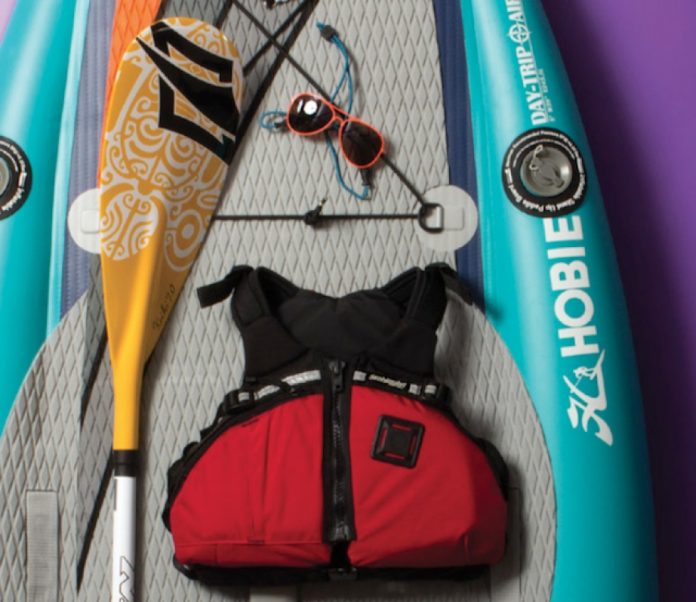
One of the most stable inflatable paddleboards on the market, Hobie’s Day-Trip Air is perfect for kids who want to paddle out to fish, dive, chill or run down the river. This recreational board is eight feet long, 38 inches wide and 23 pounds. We love that it’s large enough that anyone under 180 pounds can paddle it, yet small and light so kids can easily maneuver it. Hobie’s super durable inflatable construction means youngsters can drag the board to and from the water without worry.
Just like the original Buff, but made to fit kids between the ages of four and 12. The incredibly versatile Buff Junior can be used as sun, rain, wind or bug protection while paddleboarding and at camp. It’ll also double as a handy hanky, mask, hair scrunchie and bandana.
Just 540 grams, the lightweight and adjustable Keiki from Naish is a high- performance paddle designed specifically for kids. Its anti-twist Vario system makes lengthening and shortening the shaft easy, so it can adapt to kids of all sizes. The glass construction offers a flexible and durable blade that boarders of any age will appreciate. Plus, the blade boasts a scratchproof finish, so the slick design will continue to look top-notch for years to come.
Kids’ developing eyes let in 70 percent more UV rays than adult eyes. That’s why it’s so important to cover young peepers with solid protection like these glasses from Kidsolair, which block all UVA and UVB rays. This grown-up style is a perfect fit for smaller faces, and offered in colors everyone will love. Paired with a reliable neck strap, kids are sure to keep these sunnies around.
This low-profile youth design offers the same features we love on our Stohlquist PFDs. The Drifter’s cross-chest cinch prevents ride-up so that mobility isn’t compromised—kids will forget they’re wearing it. The full draining front pocket is large enough to hold snacks and easily accessible to small hands. The Drifter is super adjustable and fits paddlers from 50 to 90 pounds.
Looking for board shorts that offer easy movement and dry quickly? The Amped Surf Short from Level Six delivers on this promise, while embracing surf culture heritage with a traditional design in funky new colors. We love that kids look as at home on their boards as they do racing around the backyard in the Amped.
Inspired by Keen’s adult technical sandals, the Rio features lightweight EVA injection molded construction and a comfortable, flexible fit for little feet. Parents will love the built-in arch support—perfect for underfoot stability for paddleboarders—and the secure fit lace system, which ensures shoes stay on during a swim. Kids will love the speed at which the Rio dries, and its fun style.
Few would argue that epic expeditions in Patagonia, tackling tidal rapids, exploring remote uncharted islands and mastering several dozen Greenland rolls before breakfast make riveting—even inspiring—subjects for outdoor film festivals and social media feeds. But while it’s great to dream about over-the-top adventures and Olympic-level technique, these aren’t the bread-and-butter of most paddlers’ experience.
The reality is, many paddlers settle for day trips or even an hour snatched on the water before or after work. If this sounds like you, then you are missing out, but probably not for the reasons you think.
An under-publicised but utterly fundamental fact is that one of the greatest things you can do with your kayak is to go backcountry camping. Day trips are certainly fun and beneficial, but camping out of your kayak exponentially magnifies all the joys of paddling and spending time in nature with friends.
Perhaps you are new to paddling or sleeping outdoors and the idea of kayak camping is a bit intimidating. Not to worry, camping equipment rental is increasingly common at popular parks and water trails, and experts at these places can also help you plan an easy, sheltered route that fits your schedule and ambitions.
Still not convinced? Let me explain why life is not complete without the simple yet soul-satisfying joys of an overnight kayak trip.
Extending your trip beyond the waking hours through a lingering evening, bewitching night and meditative calm of a new day opens the door to countless memorable experiences. Watching wildlife from your kayak at sunset, landing on your chosen beach after a challenging paddle, scrambling to hang a tarp in the rain, enjoying a rosy sunrise from your cozy sleeping bag, sharing stories around a campfire, cooking a satisfying dinner on camp stoves.
Kayak tripping reminds us of what is important by bringing life back to the essentials. Each day we consciously create food and shelter; make decisions and directly experience the consequences. Simple moments such as meal times adopt greater importance as we rediscover the value of fueling our bodies, caring for each other and sharing resources. Each day takes on a reassuring ritual of camp routines and human-powered travel guided by the natural rhythm of the sun, wind and tides. We are reminded that with care, skill and even the simplest gear, we can be warm, dry and happy in the stormiest conditions.
THE BENEFITS OF KAYAK CAMPING
Think you know your friends? Sure, maybe you met in kindergarten, did that cross-country road trip in college and have been out for more beers than you can count— but camping together is a sure-fire way to understand each other even more deeply. For better or worse, you don’t really know your friends until you’ve set up camp together in a downpour, helped each other pre-coffee on an early morning, lent each other dry clothes, watched meteor showers together, swatted mosquitoes and philosophized about life around the campfire, experienced each other’s cooking disasters (and successes) and shared emergency chocolate when the going was tough.
REASON #23: STORY TIME | PHOTO: VIRGINIA MARSHALL
Kayak camping doesn’t only teach us about others. Aristotle said: “Knowing yourself is the beginning of all wisdom.” Spending a few days (or weeks) outside in kayaks and tents can spark some interesting observations and reflections about ourselves, both profound and trivial. What is important to me in life? What are my strengths and weaknesses? What changes do I want to make in my life? Did I pack enough coffee? Why the heck did I bring a 20-litre dry bag? How do I deal with challenges and adversity? What brings me joy? How can I support those around me? Why am I here? Why are we here? Where are we going?
Kayak tripping reminds us of the beauty all around us and our responsibility to care for this planet. In his best-selling books Last Child in the Woods and The Nature Principle, author Richard Louv talks about the negative impacts of spending less time in natural spaces. Louv uses the term “nature deficit disorder” to describe how weakening connections to nature affect not only individual well-being but also how society interacts with the natural environment.
By going kayak camping, we strengthen our relationship with the natural world and thus make more informed, thoughtful choices regarding the environment.
“Wilderness trips remind us how little we really need to live well.”
Downtime in a quiet cove between paddling and sleeping is a lens through which we notice nature’s understated beauty—a heron among the reeds or a lone tree clinging to a cliff. These interactions with the natural world have further positive impacts. Spending time in nature has been shown to directly reduce stress and relieve depression.
Camping trips are empowering on many levels. They teach us self-reliance and inner strength, foster new perspectives and creativity. Wilderness trips also bring us freedom from material stuff—not only are they one of the few times in life when we aren’t bombarded by ads telling us to buy things, trips also remind us how little we need to live well. Poet T.S. Eliot said “the end of all our exploring will be to arrive where we started, and know the place for the first time.” I can think of many people who returned home from paddling journeys with new insight, courage and clarity to make changes in their life—whether in work, relationships, lifestyle choices or perhaps just deciding to finally get rid of all that junk in the garage.
No matter how large or small the trip, each journey has its unique experiences that teach us more about ourselves, the people in our lives, and the world around us. A weekend away will recharge your batteries and maybe even reveal solutions to a difficult problem. Spend a few weeks out and the distinctions between the “real world” and this new reality will blur and shift, sometimes permanently.
Overnighting at water’s edge is an accessible yet precious gift we can give to each other and ourselves. There are few fail-proof formulas in life, but one is certainly that spending time in beautiful places and boats with good people will make your life richer.
This article originally appeared in Adventure Kayak Spring 2016 issue.
Subscribe to Paddling Magazine and get 25 years of digital magazine archives including our legacy titles: Rapid, Adventure Kayak and Canoeroots.
It’s just an ordinary beaver lodge—a dome-shaped mass of sticks plastered with mud. It’s situated on a small pond, halfway down the Wakimika River in northern Ontario’s famed Temagami wilderness. Five of us, floating in three canoes, gather round with cameras at the ready, hoping for a shot. Here, in the oldest stand of red and white pine in the world, we’re searching for an echo.
My husband, Gary, and I are guiding a very special trip. Accompanying us is a small crew creating a film exploring the beginnings of Canada’s most famous and controversial conservationist.
During the early 20th century, Grey Owl helped to save the industrious beaver from the edge of extinction, becoming a bestselling author in the process. He wrote five books, dozens of articles, starred in National Film Board movies and gave hundreds of lectures. Shortly after his death he was exposed as a Brit pretending to be a First Nations man.
More than 75 years later, we’re paddling into the network of wilderness waterways he called home, following in the footsteps of this complex conservation giant to discover his beginnings.
Though Grey Owl is often associated with his final resting place in Prince Albert National Park in Saskatchewan, it was his years near canoe- culture mecca Temagami, where he learned bushcraft skills from seasoned trappers, guides and Ojibway elders.
PHOTO: LIBRARY AND ARCHIVES CANADA, E010792746
MAKING A MARK ON HISTORY
It’s a sunny July afternoon three days before we depart for the wilderness when I meet our group at the Temagami Canoe Festival. Water laps against the docks, boats come and go from the marina, music and traditional drumming emanate from the stage. People surround a birchbark canoe admiring the builder’s handiwork. The owner of the Temagami Canoe Company, the second oldest canoe manufacturer in the nation, offers demonstrations of traditional cedar canvas boat building techniques.
It’s here I meet the man who will narrate our film: BBC personality Ray Mears is famous for his Ray Mears’ Bushcraft and Ray Mears Goes Walkabout TV shows, as well as a for being a bushcraft expert. He’s also a Grey Owl admirer. Ray is here demonstrating his wilderness techniques for festival goers.
An enthusiast of Grey Owl’s writing and work, Ray has long dreamed of exploring the Temagami area that shaped Grey Owl. Though separated by decades, the two grew up in neighboring rural towns in the United Kingdom.
Their differences are vast, but it’s hard to ignore similarities between the two wilderness philosophers. There’s a shared appreciation of the traditional ways of the First Nations and both have passionately championed conservation.
“He grew up with nature on his doorstep; it just wasn’t big enough for him. I can relate to that,” says Ray.
The following afternoon Gary and I travel with our three companions, including videographer, Goh Iromoto, and Oliver Thring, a writer from the Sunday Times in London, to Bear Island on Lake Temagami. There’s no better place to begin Grey Owl’s story than right here. Our host, Virginia Mckenzie of the Teme-Augama First Nation, shares stories of when Grey Owl met her grandfather here in the summer of 1907.
THE FORESTS OF TEMAGAMI STRETCH OUT FOR 2,000
SQUARE KILOMETERS. |
PHOTO: GARY MCGUFFIN
AUTHOR, JOANIE MCGUFFIN, ON A QUIET MORNING PADDLE ON OBABIKA LAKE. | PHOTO: GARY MCGUFFIN
Back then Grey Owl was a 19-year-old British immigrant by the name of Archibald Belaney.
Archie’s first trip to Bear Island involved a rigorous canoe trip from Temiskaming with his mentor, Bill Guppy, an experienced guide and trapper. It was a steep learning curve involving all aspects of canoe travel. Whitewater paddling, upstream poling and strenuous portaging—Archie learned it all.
As they journeyed from their winter trapping grounds in Quebec to the summer guiding opportunities on Lake Temagami, Archie passed the even more important test of maintaining perseverance, a positive outlook and a constant willingness to master skills in the face of exhaustion. He fell in love with the ways of the First Nations people—a way of life that was becoming increasingly fragile with industrialization.
Today, Virginia focuses on reviving her people’s culture through traditions and ceremonies that had at one time all but disappeared. As the community librarian, she proudly shows off a collection of photo albums and newspaper clippings depicting the early 20th century on Bear Island, including a lovely portrait of Grey Owl’s first wife, Angele.
“[Grey Owl] made a mark on history, he’s made a mark on the area, he’s made a mark all over the world,” says Virginia. That his story begins here is a source of pride.
TEMAGAMI IS HOME TO THE WORLD’S LARGEST STAND OF OLD-GROWTH RED AND WHITE PINES. | PHOTO: GARY MCGUFFIN
AN IMPORTANT VOICE FOR THE COMMUNITY
That night, at Smoothwater Wilderness Outfitters Ecolodge (smoothwater.com), we look over maps.
Gary has laid out a route that Grey Owl would’ve paddled often. The Wakimika River offers a good chance of seeing beavers, as well as sites with significant spiritual, historical and ecological significance.
Although the topographic map indicates we’ll be paddling through Obabika River Provincial Park near the Lady Evelyn-Smoothwater Wilderness, we know this to be the traditional lands of the Misabi family. We hope to meet with Misabi Elder, Alex Mathias, who lives in a cabin near our route. Gary and I first met Alex on a canoe trip 18 years ago while on a personal quest to help save Ontario’s old growth.
Our daughter took her first steps at his camp three years later. Alex remains an important voice for his community and the wild, in ways similar to Grey Owl.
We leave the town of Temagami via de Havilland Beavers with a roar of engines. Grey Owl never saw the landscape from this perspective—I imagine the grandest views he ever had of the vast pine forests and the countless islands stretching out beneath us were from the fire towers on Maple Mountain, Caribou Mountain, Ishpatina Ridge and Obabika Lake.
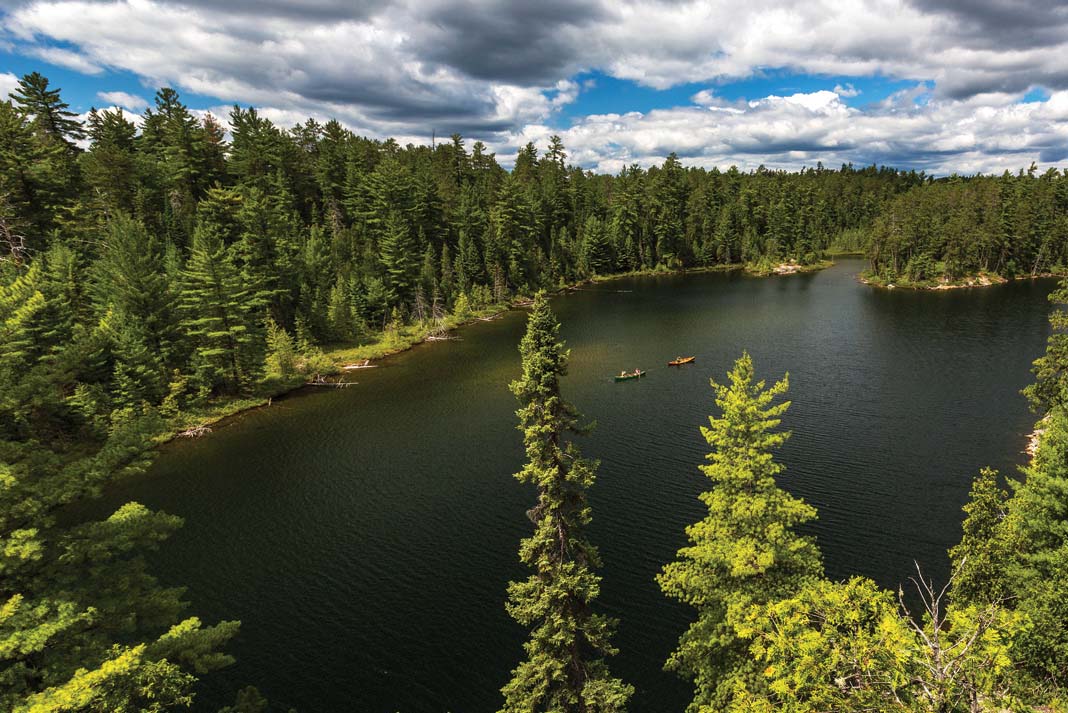
The pilot brings the Beaver in a wide arc north of Obabika Lake over what is known by canoeists as the Wakimika Triangle. Of all Temagami’s vast network of interconnected nastawgan, this is one of the most beloved canoe routes. From our eye perspective, we can see the lakes and rivers of our entire route surrounded by the greatest red and white old growth pine forest in the world. The sky is dark and threatening rain when we suddenly swoop down over the treetops and the pontoons touch down on Wakimika Lake.
THE WAKIMIKA TRIANGLE ROUTE OFFERS CLEAR LAKES AND MAJESTIC PINES. | PHOTO: GARY MCGUFFIN
A SPECIES IN NEED OF A CHAMPION
A torrential downpour at first light makes me thankful Gary had rigged a large tarp over the kitchen area the night before. It passes quickly and soon everyone is out of the tents to film and photograph in the morning light. By the time I have hot cereal on and the smell of coffee wafts through the campsite, the west wind completely clears the skies.
We set off down the lake with the wind to our backs and enter the Wakimika River at Grassy Bay. A full day lies ahead as we meander to Obabika.
“Traveling down that river, knowing that he’d been here, is very special,” Ray says later. “I feel like I’m paddling in his wake.” Having spent three months in the summer of 1997 exploring this area by canoe and tracing Grey Owl’s explorations, the echo of his presence is a feeling I can relate to.
The river widens into a pond surrounded by cedar and black spruce. A channel through riverside grasses leads us to a beaver lodge. Somewhere beneath us is the underwater entrance to their snug abode. We sit quietly, paddles resting across the gunwales, hoping to catch a glimpse.
The beavers are a constant source of conversation for the group. During the fur trade years, beaver pelts were the most valuable natural resource in Canada. Their luxurious fur drove trade across the continent for two centuries, motivating much of the early exploration of North America. At its height, indiscriminate trapping sent 100,000 beaver pelts back to Europe every year.
In the way that it must have seemed inconceivable that such an abundant bird as the passenger pigeon would go extinct, so too was the story with the ubiquitous beaver. A flood of get-rich-quick entrepreneurs almost trapped the beaver into oblivion by the mid-1920s. The species was in need of a champion.
CONSERVATION THROUGH STORYTELLING
By the mid-1920s, Archie had long since adopted the identity of Grey Owl, claiming to be born to a Scottish father and Apache mother. He ran a trapline with an Iroquois girl, Gertrude. One spring, with the beaver all but gone, Archie unintentionally trapped a female. Feeling guilty, he rescued her pair of surviving kits, and named them McGinnis and McGinty. These two beavers and the two that followed, Jelly Roll and Rawhide, got up to all sorts of antics in Grey Owl’s life, including building a lodge inside his cabin.
Their endearing personalities became the catalyst for much of Grey Owl’s conservation ethic and decision to quit trapping. His first-hand descriptions of living with the beavers and other wilderness adventures enthralled people around the world. He was even invited to meet King George VI and the royal princesses when he visited Britain on a book tour. His ethos that the wilderness is more than a resource to be plundered was a new idea for many at the time.
Through his storytelling, “He made people aware of the plight of the beaver and was very significant in changing attitudes,” says Ray. “The work he did was incredibly important.”
Grey Owl’s true identity was exposed soon after his death in 1938. “I don’t think the world really knows how to talk about Grey Owl,” says Ray. “In one sense they’re moved by his success, yet, at the same time, commentators have to explain he wasn’t a First Nation person and ask whether he was a fraud.”
“I don’t think of him in those terms,” Ray continues. “What’s important are not the personal demons he brought with him, but his message of conservation, which was ahead of its time. It’s as important today as it ever was.”
RAY MEARS IS A CANOEIST, WILDERNESS ADVOCATE AND POPULAR TV HOST. | PHOTO: GARY MCGUFFIN
WALKING IN GREY OWL’S FOOTSTEPS
Temagami has a history of making conservationists.
At the north end of Obabika Lake, we reach the infamous place where two huge rock-filled cribs flank the river. A logging road built here in the ‘80s was part of a plan to log the 300-year-old old growth forest.
Though it’s almost three decades later, no one has forgotten the bitter fight between the 300 protesters arrested and those who wanted the timber. As we paddle by, only the sounds of nature preside: A red squirrel’s scolding, the swish of our paddles and the rush of water flowing through the half- finished beaver dam spanning the stretch where the road once stood.
That night we pitch our tents beneath the pines. Two loons surface nearby, calling to one another. Around the campfire, under star-speckled skies, we plan the next day’s travels.
From the beach landing, the trail climbs straight up into the forest. With the canoe over my head, I focus on my footing. The forest floor is covered in a thick layer of pine needles. Tendrils of wintergreen and golden thread weave across the ground. Every so often I see small clumps of translucent white Indian pipes poking up through thick mats of sphagnum moss. Small birches, balsam and ferns line the path. Huge tree roots snaking across the path create a natural staircase up the steep parts. However, it’s the gigantic trunks of the ancient pine giving me the sensation I’m an ant beside an elephant that I love most about this trail.
Written in that deeply furrowed bark is a history as old as the Hudson’s Bay Company. These giants have seen the wanderings of nomadic people, the Europeans come and go and even Grey Owl himself.
I drop the canoe at a trail junction to signify to the others the proper route to follow to the lake. Returning for my pack, I meet Ray carrying the cedarstrip with ease. Not far behind is the crew’s writer, Oliver, red-faced, sweating and straining every muscle. It’s his very first portage. When I offer assistance, he declines with a grin. “I feel at last that I am really walking in Grey Owl’s footsteps,” Oliver tells me.
As we approach Kokomis-Shomis, the Grandparent Rocks, the cliff is in shade. The red ochre figures are faded but easy to spot on the east side of Lake Obabika. We speculate about what the long-ago artist was thinking. Of the paintings’ symbolic meaning, we can only surmise. I leave tobacco.
We beach the canoes at Fire Ranger Point, named for a long-gone wooden fire tower that once overlooked the lake. It is a beautiful spot with views in all directions. Near the lake where we camp, a circle of small stones marks the fire ring everyone uses. Ray takes the few dead branches we’ve collected and places them in a star shape.
Three longer pieces are joined to form a tripod, which he centers over the fireplace. Then he selects a birch branch and deftly slices it off with his knife. He twists and twists until it forms a hook onto which he hangs his kettle, which is suspended from the tripod.
“It’s more efficient, safer, cleaner and you use a lot less wood,” Ray says of the technique.
PHOTOGRAPHY BY GARY MCGUFFIN
In just a few short days with Ray, I’ve become a believer that teaching traditional bushcraft skills would go a long way to preserving campsites, conserving firewood, preventing forest fires and instilling a great deal more respect for the land. This is real no-trace camping.
On this final evening of our trip, Misabi Elder Alex Mathias pays a visit. He is wearing his traditional Anishinabe costume; a leather fringed coat with beadwork and an elaborate red and white headdress of eagle feathers. It’s wonderful to see my old friend. He and Ray get along famously.
Alex has brought old photographs and a fresh-caught lake trout to share, and he regales us with stories of his early life living on the land and traveling by canoe and dogsled, before his family moved to Bear Island.
Our small group speaks of the beavers, ancient pines and Temagami’s nastawgan. Alex’s visit is a reminder of all that could have been lost and all that has been saved by conservationists like Grey Owl.
“Grey Owl put his message out into the world, but to my mind he also handed out responsibility to the future,” says Ray. The day before, Ray had drawn out a dog-eared original of Grey Owl’s 1937 book, The Tree, and thumbed to a favorite passage.
“And the mountains looked on in stony calmness; for they knew that trees must die and so must men, but that they live on forever.”
“The message is simple,” concludes Ray. “Despite us, the land will survive. We have the choice to live in beauty or not. And that’s still the case today.”
Joanie McGuffin is the co-author of In The Footsteps of Grey Owl, a conservationist and explorer. Find her current projects at themcguffins.ca.
This article originally appeared in Canoeroots Spring 2016 issue.
Subscribe to Paddling Magazine and get 25 years of digital magazine archives including our legacy titles: Rapid, Adventure Kayak and Canoeroots.


 This article originally appeared in Adventure Kayak Spring 2016 issue.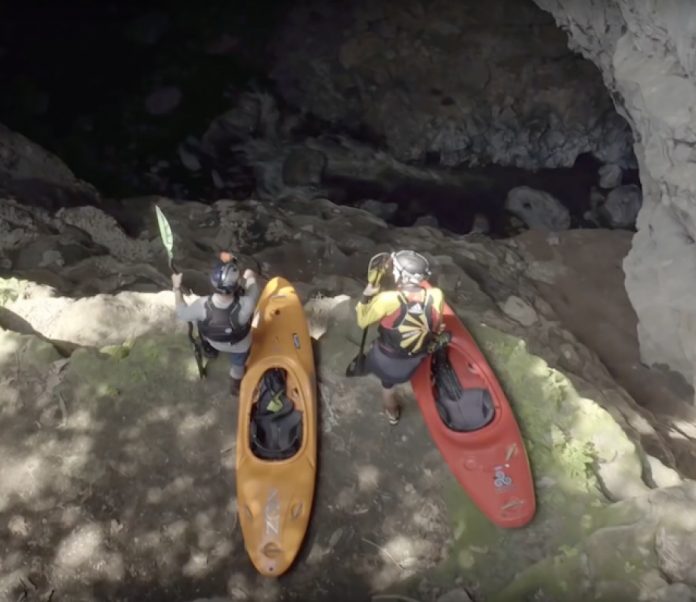
 This article first appeared in the May issue of Paddling Magazine. To read more from Paddling Magazine, click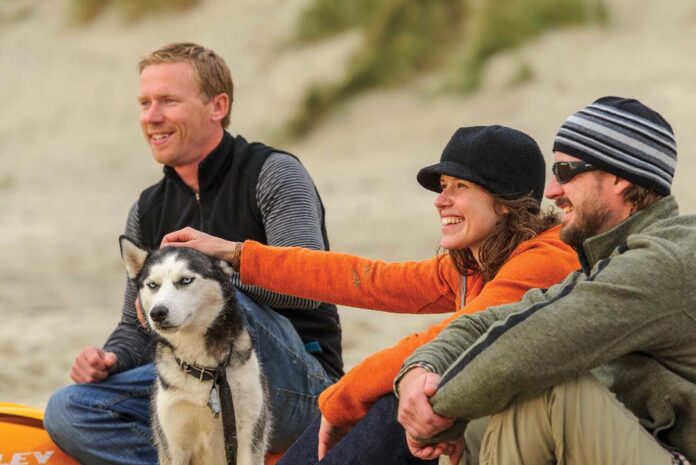
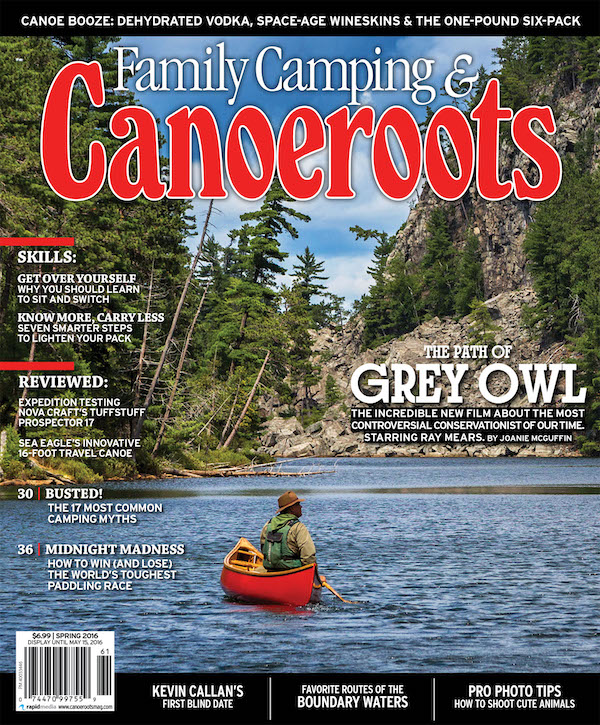 This article originally appeared in Canoeroots Spring 2016 issue.