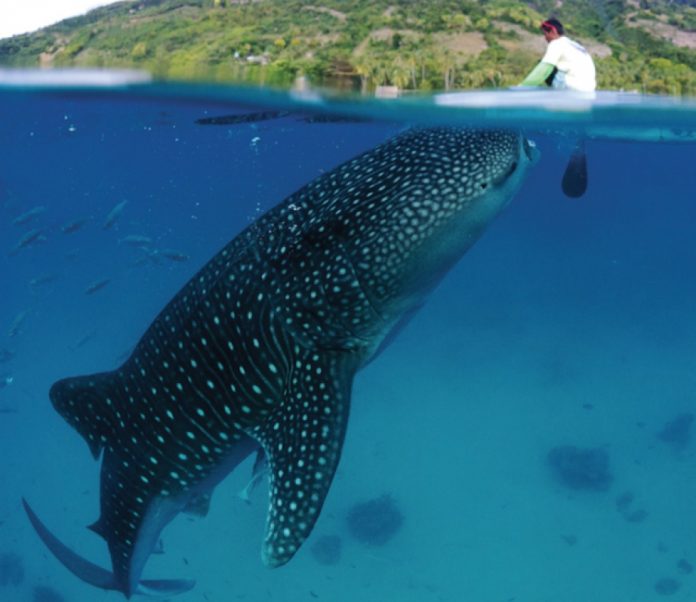
Imagine a gaping maw almost five feet wide and filled with 300 rows of tiny teeth. Now picture it right beneath you. Fortunately for you, the largest fish in the world is only interested in massacring tiny zooplankton.
A photographer and global marine life researcher, New Zealander Simon Pierce is fascinated by whale sharks. The average specimen weighs 20 tons.
“Whale sharks are incredibly enigmatic,” says Pierce. “Almost all of the sharks that we see are juvenile males from around five to eight meters long. We still don’t know where the pups live, nor the adults. In fact, in some areas it is rare to even see a female shark. There is plenty of work left to do.”
Sadly, the gentle nature of these ocean leviathans has been exploited through fisheries and high levels of accidental catch. They are now a globally threatened species.
Pierce took this photo at Oslob in the Philippines, where locals have trained wild whale sharks to visit for handouts of shrimp and fish. “It’s a popular tourist attraction,” says Pierce. “It’s a very accessible location for viewing whale sharks but it has some definite negative impacts on the sharks.”
Don’t Feed The Shark | Photo: Simon Pierce
Most of Pierce’s research is conducted via motorboats so the research team can cover large areas to locate the sharks. However, in the Philippines, researchers routinely use paddlecraft, like this outrigger canoe. “The sharks are rarely on the surface, so it’s a matter of paddling for a few minutes, dipping your head underwater with a mask to look for sharks, paddling again,” says Pierce. To take this photo he used a Panasonic GX1 camera in a Nauticam underwater housing, with a Panasonic 8mm fisheye lens and Nauticam dome port.
The fact that whale sharks tend to hang out in some of the most beautiful locations on Earth is just a perk of the job. They like warm water, typically around 270C. “Those places tend to have very rich marine life in general. The nice scenery above water is a fantastic bonus,” says Pierce.
When he’s not crusading for conservation as a scientist with the Marine Megafauna Foundation, Pierce is usually still found outdoors. “There’s a great quote by E. B. White, something along the lines of, ‘I arise in the morning torn between a desire to save the world, and a desire to savor it. This makes it hard to plan the day.’ I get that,” says Pierce.
This article originally appeared in Canoeroots Spring 2016 issue.
Subscribe to Paddling Magazine and get 25 years of digital magazine archives including our legacy titles: Rapid, Adventure Kayak and Canoeroots.
My first exposure to the kayak challenge phenomenon felt more like cruel and unusual punishment. Of course, I started the challenge in the water. The event was a Greenland skills gathering and organizers had arranged for a portage and paddle race as well as a “seal hunt” using spongy balls for weapons and wetsuit-clad junior guide staff for seals.
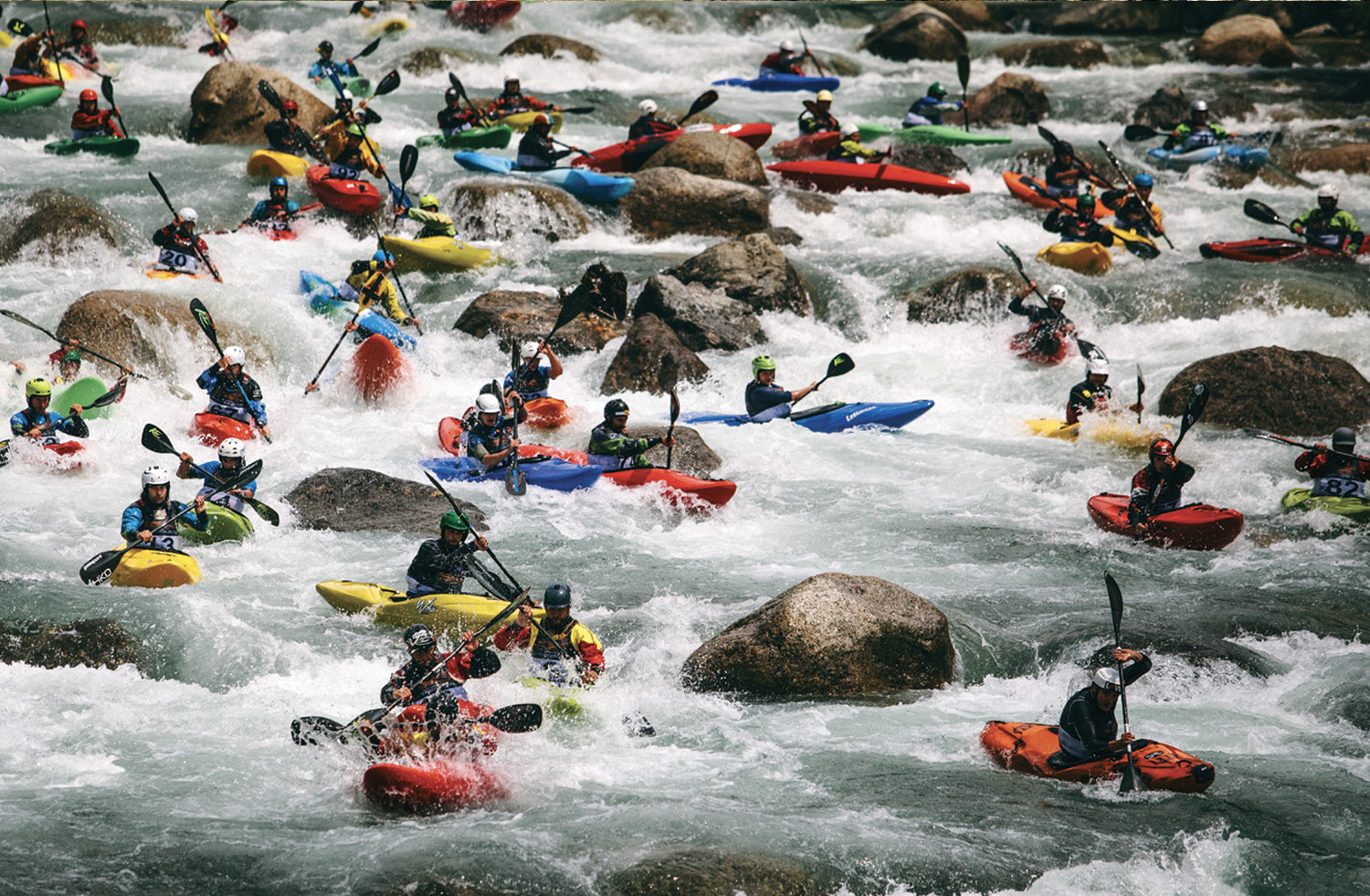
So it was I found myself dodging pointy bows, digging sticks and eagerly hurled missiles, while two-dozen enthusiastic paddlers raced for bragging rights and brownies on the beach. Today’s events are considerably more sophisticated, but every bit as exciting.
The indisputable granddaddy of endurance paddling events is the Yukon River Quest. In June, the 17th annual quest saw 58 teams of racers pitting themselves against 715 kilometers of Yukon River wilderness between Whitehorse and Dawson City, riding the powerful current and surviving sleepless nights under the midnight sun to complete the world’s longest annual canoe and kayak race in 3.5 days or less.
But not all multi-day challenges are grueling marathons. Debuting August 2015, the annual Montreal to Quebec Kayak Challenge traverses 260 kilometers of the historic St. Lawrence River in four days. With kayaks, food, campsites, live music and safety boats provided, “it’s an inclusive and laidback atmosphere, perfect for all outdoors lovers,” says founder Mathieu Fortier.
Many new paddlers were among the 130 participants this year, buoyed through 65-kilometer days by the flotilla’s positive group energy. With Fortier aiming for 250 paddlers in 2016, this new paddling event is the largest ever organized in Quebec.
FUN, SOCIAL AND FOR A GOOD CAUSE—QUEBEC’S DÉFI KAYAK REWARDS PARTICIPANTS. | PHOTO COURTESY: PASCAL GIRARD
Iconic waterways
There’s no better way to witness the famed sights, sounds and skylines of Manhattan than from the cockpit of a kayak. In August 2015, more than 100 paddlers of all skill levels took part in the 12th annual, all-day tour around New York’s iconic island. Keeping pace with the event’s growth each year, Manhattan Circumnavigation organizers have added guides, safety boats and an on-land support crew.
Meanwhile, two young events in the Midwest bring the kayak challenge model to the nation’s newest national water trail—South Dakota and Nebraska’s scenic Missouri National Recreation River. The 70-mile South Dakota Kayak Challenge has nearly doubled in participation since 2010, reports founder Jarett Bies, with some 140 racers plying the Missouri this May. Then, in July, the 2nd annual Fort to Field 50 Paddle Battle saw all forms of paddle-craft take to the water trail on a 50-mile course.
[ Paddling Trip Guide: View all kayaking adventures ]
Beyond the paddle
Every August since 2009, the Great Canadian Kayak Challenge and Festival brings together arts and culture vendors, kayak races and instruction, leisure paddles, hot air balloon rides, a highland dance competition, a triathlon, two nights of free concerts and camping, and $20,000 worth of fireworks on the banks of Timmins, Ontario’s quietly meandering Mattagami River.
This premier tourist event is the brainchild of Guy Lamarche, Manager of Tourism, Events & Communication for the City of Timmins, who says the on-water festivities this year drew over 100 local, regional and even international paddlers, raising the bar for 2016. Courses range from a 35-kilometer elite challenge to shorter recreational, novice and youth races.
This article originally appeared in the 2016 Paddling Buyer’s Guide issue.
Subscribe to Paddling Magazine and get 25 years of digital magazine archives including our legacy titles: Rapid, Adventure Kayak and Canoeroots.
It used to be around this time when I’d write a list of 15 new rivers I wanted to paddle that year. I’m not sure why the number 15. Maybe I’d read someone else’s list and 15 seemed right, or maybe we were stumbling home from the pub one-upping each other.
For 10 years, on my days off I’d drive off in all directions looking for new blue lines I had only seen on topo maps and in guidebooks. Then it was back to bouncing between guiding rafts on the Ottawa River and teaching paddling on the Madawaska River.
Looking back at my river logbook, I described each new river as my most favorite ever. Yet, I’ve returned to very few. Instead I’ve logged hundreds more days on the rivers I already knew.
Walking down the now-worn portage trail through the pines that borders the Lorne Rapids on the Ottawa River, the site of the recent World Freestyle Kayak Championships, my friend and Rapid contributing photographer, Robert Faubert, said to me, “You know, everything good that’s happened in my life has happened to me because of this river.”
Twenty-five years earlier, Rob and I were young, goofy and single. We’d met jogging up this trail to run another load of paying clients.
“I met my wife on this river. The friends that mean the most to me are people I met right here,” Rob said. “Look at us. Who’d have thought back then that we’d be bringing our kids here?”
It must have been a slow transition because I don’t remember it happening. My wife, Tanya, hates it when I use the word settle. She thinks it means that I stopped looking for something really good and just settled. That’s not what I mean when I talk about settling in the Ottawa Valley.
To me, settling is contentment. It’s being happy with how things are. Settling is a shift from searching to learning—learning to love more of the things I already have.
Understanding the scale of a watershed or the lives of those who have traveled here hundreds of years before is more than fodder to share with clients between knock-knock jokes on lazy flat stretches.
SOMEWHERE WE BELONG.| PHOTO: ROBERT FAUBERT
SETTLING IN A SENSE OF PLACE
When you spend enough time on a river you get to know it well. It gets inside you. This feeling in the stuffy world of academia is known as a sense of place. This sense of place is what drives advocates to fight hydroelectric projects, write guidebooks and return season after season, taking vacation days from jobs with salaries only to push rubber for a measly stipend of $75 per day.
Famed conservationist Martin Litton knew that to protect the Grand Canyon from being dammed he had to bring Americans down the river. The longer the trip the better, because the longer you spend on a river, the more it becomes a part of you. Once it’s a part of you, Litton knew he could count on you to protect it.
If I hadn’t stopped making lists of new rivers, if I hadn’t found a sense of place and settled here in the Ottawa Valley, I probably would not have started Rapid, I may not have proposed to Tanya, and I certainly wouldn’t be walking the Lorne trail with Rob and our kids. My sense of place overcome my urge to keep looking for bigger and better. Like Rob, everything good in my life has happened to me right here.
This spring we created a different kind of list. It’s not a list of new rivers we’d love to go paddle but a list of 15 things—some of them rivers—we love about our home right here in the Ottawa Valley. We hope a couple will make you want to come and play here. If you stick around long enough, maybe you’ll stay.
We did.
Scott MacGregor is the founder and publisher of Rapid.
This article originally appeared in Rapid Spring 2016 issue.
Subscribe to Paddling Magazine and get 25 years of digital magazine archives including our legacy titles: Rapid, Adventure Kayak and Canoeroots.
"BOOKS DON'T OFFER REAL ESCAPE, BUT THEY
CAN STOP THE MIND FROM SCRATCHING
ITSELF RAW." —DAVID MITCHELL| PHOTO: RYAN CREAR
Bobbing in steep cross-swell and watching the wind blow liquid smoke off of the tops of waves, we don our helmets and buckle down for four miles of grunting into a headwind on an exposed crawl to Island 48. With cliffs to leeward, there’s little margin for error. But it could be worse, I think to myself. I could have nothing to read when I get there.
When I pack for long trips, I have my gear wired; packing takes a few minutes. I grab paddles, tents, sleeping bags, medical kits, headlamps, and dry bags off of shelves. Food comes out of a pre- dehydrated stash and goes in a bear-proof bag, and the kayak goes on the car. But there’s one piece of gear I agonize over, ask friends for ideas on Facebook, and bring three different options just in case, only to leave two in the car at the last moment.
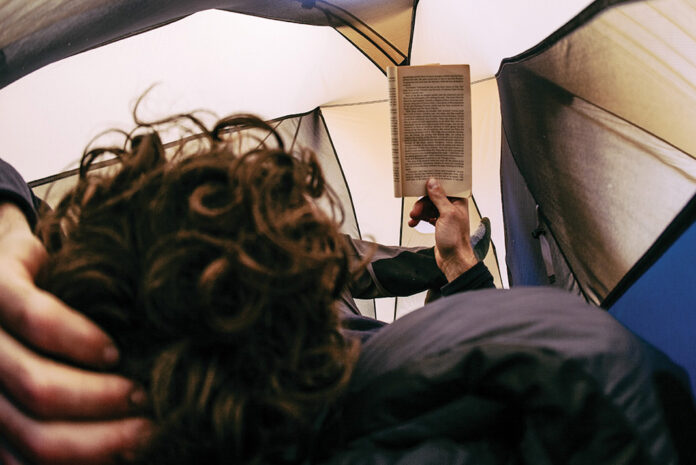
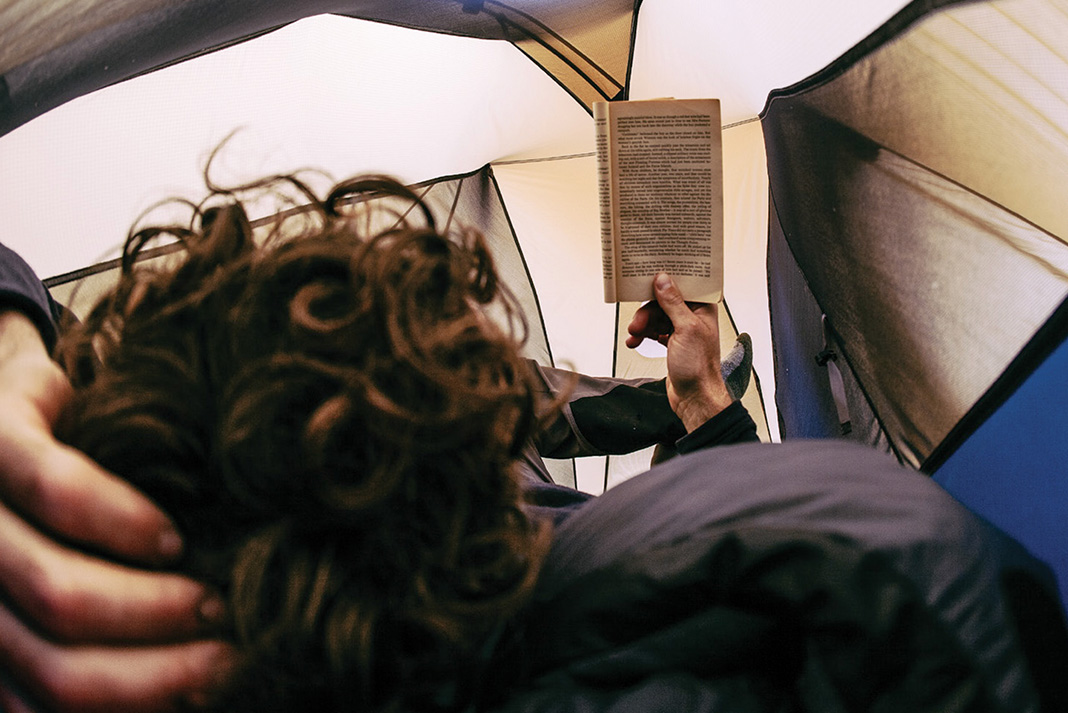
Most kayaking trips have bad weather days, or times when currents have you stuck in camp. These can be relaxing and joyous, or can involve a stressful and impatient when-will-the-wind-ease, should-we-push-on? pacing back and forth on the beach, trying to convince the group that it’s okay to paddle when you know full well it isn’t. The difference between the two comes down to gear. Specifically, whether or not you brought the right book.
“Books don’t offer real escape, but they can stop the mind from scratching itself raw.” —David Mitchell | Feature photo: Ryan Creary
The dangers of being book-less
I’ve learned the consequences of bad planning the hard way. One trip on British Columbia’s Central Coast had 30-knot afternoon winds, so we had to get all our paddling done before 1 p.m. each day. With lots of time in camp, I finished my thick but fast-moving adventure novel by day five of 12 (the whisky was gone soon after). Fortunately, my buddies bailed me out, and I read two of their books on the rest of the trip.
[ Plan your next sea kayaking trip with the Paddling Trip Guide ]
During a three-day, 950-millibar low in the Broughtons, a friend kept tapping on my tent fly, asking me if I wanted to help build a sweat lodge or have a campfire-building contest in the rain. The only book he’d brought was a pamphlet of knots, and he’d already worked through those.
Once, when the VHF radio signaled a one-day storm a-coming, a biblio-challenged person in the group convinced the rest of the crew to bail and seek a motel room. I had been looking forward to curling up with a great biography of an eccentric marine biologist. Motels were full, so we ended up camping in the rain anyway—without the time to read, or the wild setting, and at $29 per tent.
On another trip, one person wanted to add yet another windy crossing to a 17-mile day with a tired group. It wasn’t a coincidence that they hadn’t brought anything to read, so they got antsy while the rest of us happily flopped on the beach. Being bored in camp can impact our go/no-go judgment as much as conditions or fatigue. I’ve come to fear having nothing to read more than a tough surf landing.
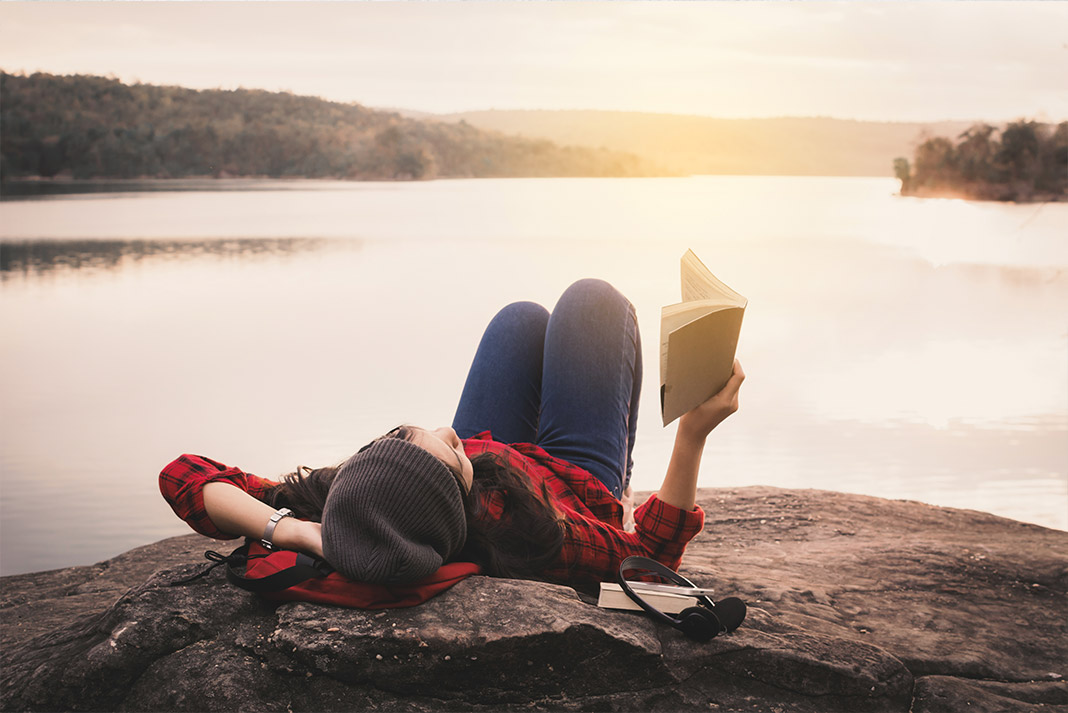
I’m the first to admit my camping bibliophilia is also a bit odd. Books provide an escape, but aren’t we already escaping? I go on extended trips for many reasons, but high on the list is the chance to sit still and watch the tide rise and fall, or watch the light play on canyon walls. More stimulation may be precisely what we don’t need. During one trip down the Grand Canyon, a friend and I made a ritual of sitting on the beach, feet in the river, books in our laps. At the end of the trip, someone finally called our bluff—I’d barely read a chapter the whole time.
As gear, books are hard items to select. They need to be substantive enough to last through a long trip, but not so dense that they’re no fun. But meaty books (and most library books) are hardcover, heavy, and don’t pack into the tight spaces of kayaks. Thick, easy reads, like Steven King novels or the latest spy thriller look good—until you realize you’ve exhausted two-thirds of your ration in the first lazy afternoon. Tempting as it may be to cram a whole bunch of books onto an e-reader, I don’t want my books running out of batteries. And camping is a way to get away from screen time, not indulge in more of it.
I’ve decided that the sweet spot is often the classics that I avoided reading in school. They fit the packing guidelines: cheap, soft, and meaty enough to last a long trip. Many are fun to read, now that you don’t have to write a paper about their symbolism. The downside is that your friends will give you a hard time. I caught a lot of flak for being sprawled on a beach log with a flask of bourbon and a copy of Moby-Dick. That is, until a whale spouted in the bay a few minutes later. And, like eyeing a tough move in a rock garden, you can overreach. No matter how hard I tried, I couldn’t make it through One Hundred Years of Solitude.
The right book can also connect us to the place. There’s undeniable magic in reading John Wesley Powell’s journal on the banks of the Colorado, listening to the roar of unseen rapids downstream. Richard Manning or Tim Palmer’s writings on the Northwest coast are ideal companions for any paddling trip between the Columbia River and Kodiak Island. Some books have even had a formative impact on my life. As a teenager, I spent a summer in Utah’s canyon country, along with a copy of Edward Abbey’s Desert Solitaire. The trip inspired my move out West, my career in environmental conservation, and my love of wild places. I don’t remember what kind of tent I slept in, what boat I paddled, or what pack I humped down the desert canyons. But I sure remember what I read.
As Groucho Marx said, “Outside of a dog, a book is a man’s best friend. Inside a dog it’s too dark to read.” It’s time to add one more to the list of essentials. Choose with care.
Neil Schulman paddles, writes and reads in Portland, Oregon. He’s currently collecting suggestions for a book for a three-day trip down the Columbia River.
This article was first published in the 2016 Paddling Buyer’s Guide. Subscribe to Paddling Magazine’s print and digital editions, or browse the archives.
“Books don’t offer real escape, but they can stop the mind from scratching itself raw.” —David Mitchell | Feature photo: Ryan Creary
WISDOM BEGINS IN WONDER. | PHOTO: WOODS WHEATCROFT
A trick-or-treater showed up at my friends Paul and Kate’s house last Halloween. He didn’t arrive in costume. In fact, like all babies, he arrived buck-naked. Canyon Ross Kuthe, son of a paddling instructor and a river conservationist, was born with several in-utero paddling trips already under his belt. We’d been making the usual jokes: he’ll be rolling at one, surfing before the terrible twos, and running waterfalls by four. Every once in a while someone jokes that he’ll rebel and get really into video games. Paul glares at them.
But Paul and Kate have it right. I had similar experiences. Schulman family gatherings inevitably feature stories about camping trips I was too young to remember but clearly influenced my life path.
Children today spend less time in nature
Today’s kids spend less time in nature compared to past generations. With an estimated seven hours per day spent on electronics, it’s not surprising—what kid has time to go outside? Canyon’s adventure-friendly childhood is quickly becoming a relic of the past—and it’s a problem.
Modern medical research has piled up evidence that time spent in nature is essential to happy brains and bodies. We’ve proven that nature sparks creativity—which Byron and Wordsworth already knew from their inspiration-seeking rambles through the Lake District. We’ve shown that people recover faster from illness surrounded by nature—which Edward Trudeau knew way back in 1885, when he started tuberculosis rehabilita- tion in the Adirondacks. And exercising outdoors leaves you happier than working out indoors—which maybe your mom already knew when she told you to go outside and play.
Our connection with the natural world is likely hard-wired. Humans evolved in small bands, slow, clawless and flightless amongst saber-toothed cats. Our brains, social cohesion and opposable thumbs were what got us by. Familiarity with the environment had an evolutionary advantage. Everyone on Earth shares that wilderness-dwelling human heritage, even though most of us live very differently now.
Today 80 percent of North Americans live in cities, and that number continues to grow. We raise kids as independent parents instead of in communal groups. We get more done on screens than with our oppos- able thumbs. This has enormous benefits for individuality, social and geographic mobility, career fulfillment, and the leisure to paddle for fun rather than a desperate need for seal meat. Yet, as we distance ourselves from the natural world we suffer—and so does the next generation.
WISDOM BEGINS IN WONDER. | PHOTO: WOODS WHEATCROFT
Grab a boat—any boat—and some kids, and get out on the water. Now, and often. Don’t worry about whether the kids ever learn an efficient for- ward stroke. First and foremost, kids need the opportunity to discover that being outside is awesome.
A few years ago, three friends and I were camped on an island deep in the British Columbia fjords. Two weeks of wilderness solitude was broken by an engine, which disgorged 12 kids on “our” beach and motored off. It was like Lord of the Flies. The unsupervised kids made tons of noise, built fires, swam from island to island in frigid water, chased each other through our camp, and kept us awake. At the time it pissed us off. But now I realize it may well have been the best possible thing in the world.
Neil Schulman celebrates kayaking’s diverse heritage in Reflections.
This article originally appeared in the 2016 Paddling Buyer’s Guide issue.
Subscribe to Paddling Magazine and get 25 years of digital magazine archives including our legacy titles: Rapid, Adventure Kayak and Canoeroots.
Learn the best way to get in and out of your kayak with these tips from Dympna Hayes and James Roberts from the Ontario Sea Kayak Centre in Parry Sound, Ontario (ontarioseakayakcentre.com).
Learn how to protect yourself, your paddle and you kayak while launching and landing.
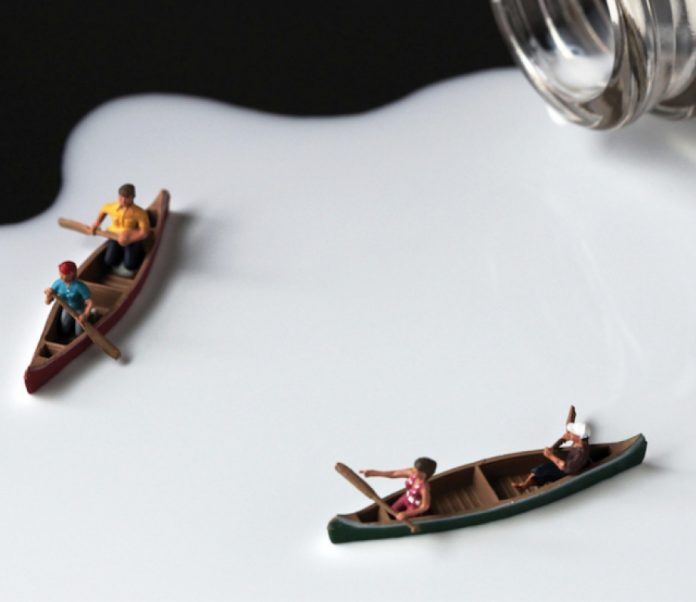
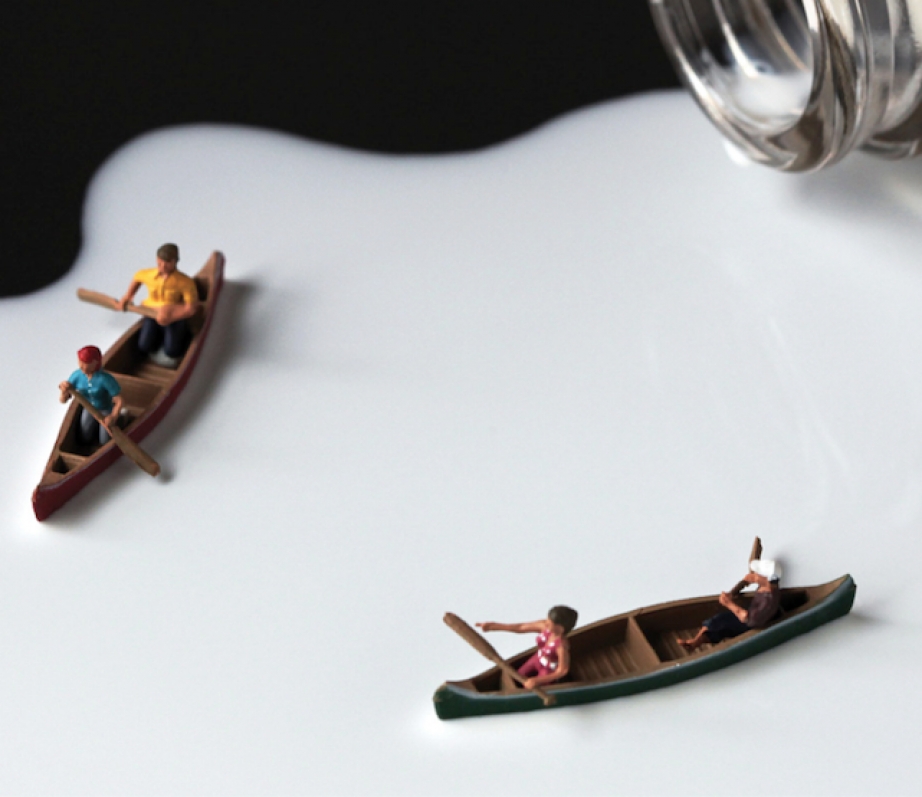
Where you and I might see a teacup or hot dog, Seattle-based photographer Christopher Boffoli sees a workplace and playground. His international award-winning series, Big Appetites, features a universe of tiny people living in a giant world of food.
In Boffoli’s world there are tiny climbers on walls of rock candy, motorcycle daredevils jumping cheesecake, ice cream cones turned into tipis, and even canoeists on lakes of milk. Captions deepen the story behind each photo, in this case: “Janet was one of those people who would use absolutely any excuse to stop paddling.”
Making this particular photo presented its own challenges. “I generally try to avoid liquids and melting things,” says Boffoli, “there’s so much cheating in food photography, but everything in my photos is real.” Photographing milk required equired working quickly. This was shot on his kitchen’s marble counter.
The Big Appetite series has been exhibited in more than 100 countries. “Whether you eat with a fork, chopsticks or your hands, everyone understands food,” Boffoli says.
The decision to turn photography from passion project to career followed a devastating accident on Washington’s 14,000-foot Mount Rainier more than 10 years ago. Twelve weeks later, recovering with a broken leg and ankle, Boffoli found himself back underneath fluorescent lights at his desk job, looking out at the mountains. “I asked myself, what am I doing here? So I took a creative sabbatical.” He hasn’t looked back.
Milky Way | Photo: Christopher Boffoli
While people are often delighted by the humorous juxtaposition of his images, there’s a subversive message as well, one of a nation with a complex relationship to food. “There are entire TV networks engaging with our eyes but not out stomachs,” says Boffoli. “As a culture, we’re not cooking very often; many meals are eaten on the go in cars, or are reheated processed foods at home.”
While Boffoli had previously purchased his tiny figures from model building suppliers, today he 3D prints them, and then meticulously hand paints each figure. “It’s a tedious process,” he laughs, “I won’t even make my assistants do it.”
Don’t believe everything you read on the Internet.
It was a blog post by champion whitewater kayaker Eric Jackson that sucked me in. EJ did a quick calculation and figured he’d spent nearly 2,000 hours last year kayaking—nearly a year’s worth of 40-hour work weeks playing outdoors.
Awesome, I thought. What a great life.
Then EJ announced that he was “turning over a new leaf.” He’d been chatting with a friend who’d pointed out there’s no social utility to all that time on the water pursuing his latest passion, kayak fishing.
“What if all these fishermen, you included, put the same amount of energy into doing something productive that would help others, instead of such a selfish activity?” his friend asked.
EJ couldn’t come up with a good answer, so he decided to completely overhaul his life. He’d re-dedicate himself to higher pursuits: “simplify my life—eliminating the things that have no meaning, and are just time wasters.”
Holy shit, I thought, EJ’s so right! Think of everything humanity could accomplish if we didn’t squander so much time on unproductive activities like kayaking. I should do something more meaningful with my time.
I was 300 words into the post before I got the joke.
“All I can do is start today, on April 1, 2015, and try to make the world a better place,” he wrote.
Instead of laughing at the clever April fool’s joke, I stared at my computer in shock. I couldn’t believe how easily my rational brain had been duped by an argument that my heart knew all along was utter hogwash.
The truth is that EJ’s post is no joke. We live in a world that sends us similar messages every day.
A recent newspaper article made the same point about mountain climbing, calling it “one of the most damagingly popular forms of empty self-absorption of our age,” and “the ultimate act of pure meaningless egotism.” It was a lot like EJ’s argument, except the columnist was dead serious.
It’s not like we don’t have enough barriers to connecting with our beleaguered planet. The last thing we need is to be condemned or self- critical for doing what we love—what humans actually evolved to do. For hundreds of thousands of years, before this flash in the pan we call history, we were all nomads. Activities like traveling in the wilderness in kayaks and canoes, and fishing, were how we spent our days.
Now the forces of consumer society are pushing us so hard into allegedly more productive activities that most kids don’t even get the recommended one hour of physical exercise each day.
NOT A WASTED MOMENT. | PHOTO: FREYA FENNWOOD
“Outdoor activities are critical to society today,” EJ rants at the end of his post. This time he’s being genuine. “Kids NEED to understand how to live outdoors, to appreciate wildlife, to understand fish, birds, animals, if they are going to protect them… Get out there, take your kids, remember that Mother Earth isn’t something you learn about on TV.”
If I truly want to help the world, the answer isn’t to spend more time at home working. It’s to augment my paddling and family outings with activities that bring us even closer to the natural world, like fishing, birdwatching, plant identification or stargazing.
EJ ended his post with a video compilation of his past year— paragliding, mountain biking, paddling and hauling trophy bass into his kayak with an ear-to-ear smile.
I resolved then and there to focus on the best uses of my time. This summer I learned to sail yachts, bought a second paddleboard, ticked off 50 days on the water, and took my kids on their longest canoe camping trip yet.
This article originally appeared in the 2016 Paddling Buyer’s Guide issue.
Subscribe to Paddling Magazine and get 25 years of digital magazine archives including our legacy titles: Rapid, Adventure Kayak and Canoeroots.
As an aging athlete sliding down the backside of my glory days, the role numbers play in claiming oneself an enthusiast in any activity is not lost on me. I have 15 years worth of recorded training data for bike and cross-country ski racing, including distance, time, heart rate and power output. These numbers, when tracked, indicate form and direct performance improvements. These numbers tell me where I am and where I need to go if I want to get better at my sport.
I’m not alone in this. Witness the Fitbit or Apple Watch activity sensor craze, the prevalence of GPS navigation apps, sleep monitors, power meters, and all manner of measurement tools for life. Witness the explosive popularity of people testing themselves in triathlons, adventure races, marathons and similar competitive events. Witness the craze of apps like Strava, where weekend warrior athletes compete on hometown, crowd- sourced, GPS-recorded and timed routes. Real-time results are posted online. There is no entry fee, no prizes.
Almost none of this applies to whitewater paddling. No measurement tools, no participation-based competitions, no Strava routes to test one’s self.
All of this occurred to me while watching the ICF World Freestyle Kayak Championships, which took place on my home river this past summer. While the finals were exceptionally exciting, it was mostly spectacle rather than intelligible competition.
Even after decades on the river, the scoring of a high-intensity freestyle run remains a mystery. As with any judged event, there are limitations to what can be understood from the riverbank, especially when the moves being performed have little to do with what the average paddler does when they run a river themselves. This leaves the top end of our sport detached from its participant base, and where our lack of numbers becomes a problem.
COME ONE, COME ALL. | PHOTO: FLO SMITH
HOSTING THE MASSES
Baseball and hockey fans track statistics and join fantasy leagues and pools, which serve both as a means of connecting to the elite of their sport, and also motivating their own participation at a recreational level. That surfing, road cycling, mountain biking and ski racing are the new boom in fantasy leagues points to the desirability of this connection even in niche action sports like ours.
The fact is, there isn’t an equivalent whitewater participation-based competition structure that feeds paddlers upwards. Competition and whitewater are not mutually exclusive—slalom has been an Olympic event for more than 40 years. Unfortunately, slalom has utterly failed to capture the imagination of most North American river runners, and freestyle kayaking has yet to find a formula that appeals to recreational play boaters.
The rise in downriver racing showed great promise, but it collectively skipped attracting mass participation by largely focusing on class IV and V high-stakes runs. That has alienated the class III recreational participant who is the bread-and-butter of this sport. This is no structure for growth.
What we need are competitive events that are targeted to class III paddlers. One-time avid paddlers who have left the river to race the clock in a marathon or go elbow-to-elbow on a bike may find themselves drawn back. Perhaps slalom gates that are wider than shoulder width apart, timed river runs that don’t require risking ones’ life and fun-for- the-whole-family events can build the mass that is required for hosting participation events.
We need opportunities to turn our sport into a participation pyramid rather than the narrow and sketchy ladder to the top that it is now.
Jeff Jackson is a professor at Algonquin College and focuses his research on risk management. Alchemy is a regular column in Rapid magazine.
This article originally appeared in the 2016 Paddling Buyer’s Guide issue.
Subscribe to Paddling Magazine and get 25 years of digital magazine archives including our legacy titles: Rapid, Adventure Kayak and Canoeroots.
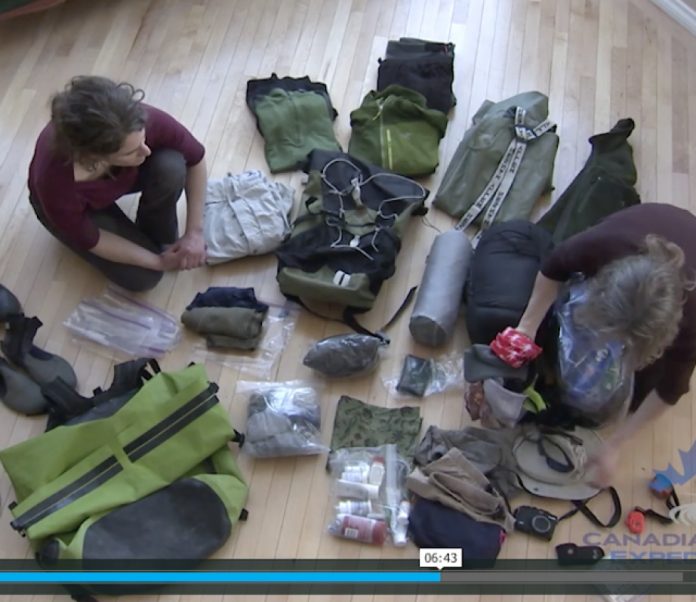
Screenshot of Nahanni River Adventures Staff packing personal gear for a river canoe trip.
Keeping track of and packing all the necessary gear for a northern river adventure can be tricky. That’s why Canadian River Adventures and Nahanni River Adventures send this helpful video check list to their clients pre-trip, so they’re sure to bring all the essentials that will keep them safe and comfortable on trip. If you’re planning your own northern river adventure you’ll find this packing list helpful. You might also be surprised by some of the items that make it on the list and the rationale behind them (really, rubber boots?).
“People report that the video makes preparation easier and they are better prepared for the weather and have a more enjoyable experience,” says the video creator, Neil Hartling. “When it is summer and 35 degrees Celcius down south, it helps to see the video to understand why a pair of fleece pants/tights and a puffy jacket are must-brings, and also why sun protection and shorts are a must in the land-of-the-midnight-sun. And, yes, you could be wearing both in the same day.”
What does good rain gear look like? What do you mean by rubber boots? How will it all fit in that river bag? Let the pros show you how to pack.



 This article originally appeared in Canoeroots Spring 2016 issue.
 This article originally appeared in the 2016 Paddling Buyer’s Guide issue.

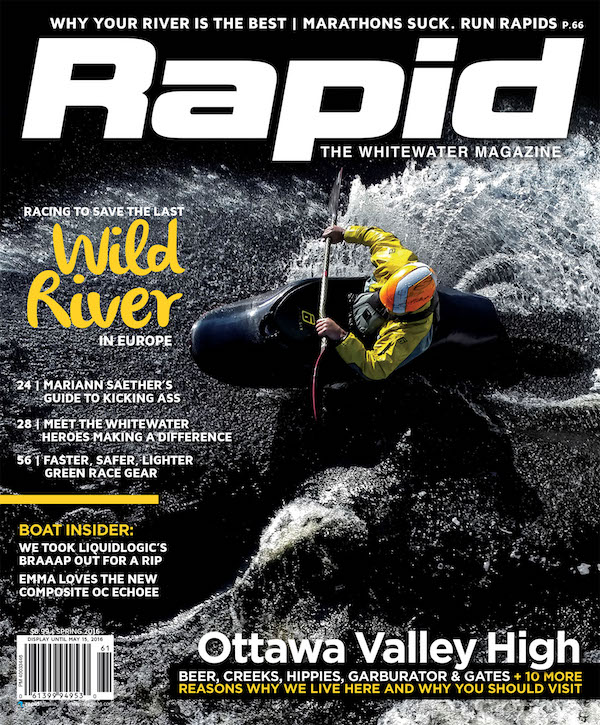 This article originally appeared in Rapid Spring 2016 issue.