Home Blog Page 255

Examining The Growth Of The World Freestyle Kayak Championships

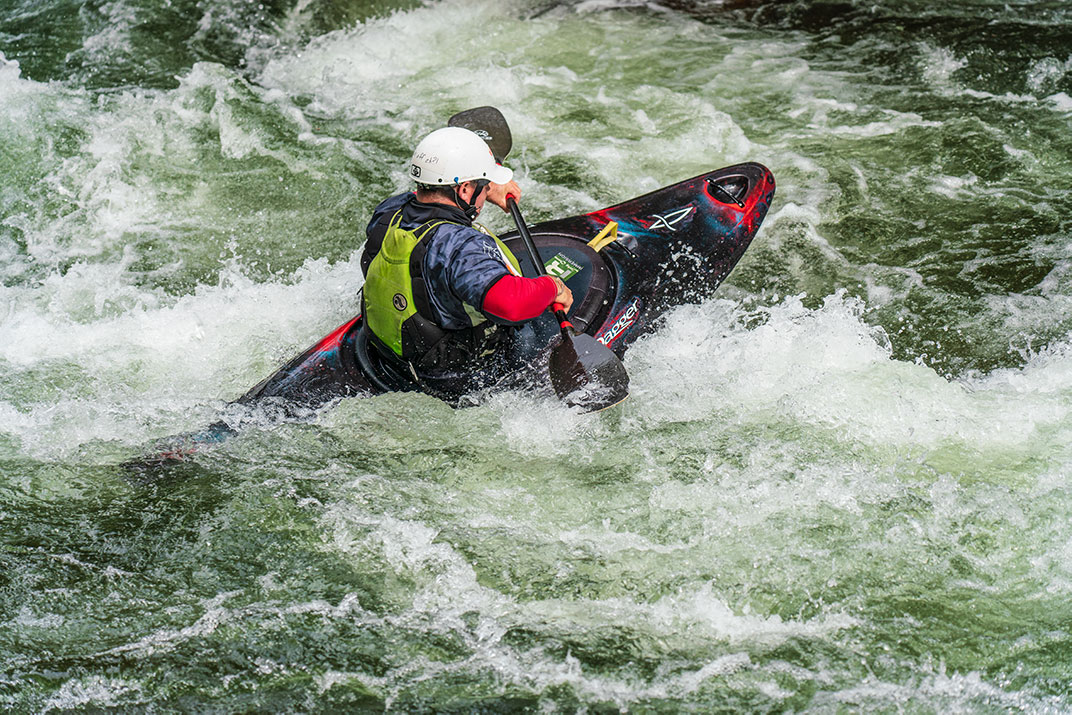
The World's Economy: Examining the World Freestyle Kayak Championships | Photo: Robert Faubert

From grassroots rodeo festival to slick mega-production, whitewater’s biggest competition has come a long way from a handful of river nomads gathering to twirl their paddles for bragging rights. With this year’s World Freestyle Kayak Championships expected to cost $425,000, and few whitewater companies ponying up cash to pick up the tab, has the long road to the Olympic dream created an event too big for the industry to support? Conor Mihell investigates.


It’s been over 20 years since boaters started getting together on rivers like the Ottawa, Caney Fork and the Ocoee, queuing up to surf waves and ride holes, throwing spins, enders and pirouettes instead of running downriver. Volunteer judges—often paddlers themselves—kept score; spectators by the hundreds crowded the rocky shores to watch. In the early days it was called rodeo and similar to its Western namesake, the events were spectacles, equal parts party and friendly competition to assert bragging rights on and off the river.

As with any upstart sport and competition, a faction of paddlers wanted whitewater rodeo to go bigger. The very first world championship was held in 1993 on the Ocoee River in Tennessee; in 1997, the worlds came to McCoy’s rapid on the Ottawa River; and by 2001, the event engulfed the Pyrenees village of Sort, Spain, in a boisterous festival. Over time, competitors morphed from weekend warrior types, raft guides and paddling school instructors to elite professional athletes with sponsors, including kayak brands, energy drinks and automobile manufacturers. It seemed as though freestyle, as it later became known, was destined for mainstream success—some even dreamed of inclusion in the Olympics.

PRE-DIGITAL SCOREBOARDING, CIRCA 1997. | PHOTO:RICK MATTHEWS

Today, the Switzerland-based International Canoe Federation (ICF) sanctions the biannual World Freestyle Championships. The worlds is now an international event with choreographed routines, professional judging and live-streamed broadcasts. To perennial optimists like Eric Jackson, a long-time competitor and freestyle pioneer, the “media, pomp and circumstance” of ICF championships push the sport forward. “It’s about keeping the trend upwards,” he says.

Yet as much as world championships have showcased freestyle kayaking, industry sales figures haven’t kept up—in part, some believe, because the activity has become less relevant to the masses.

“It’s now a sport for elite athletes,” says Corran Addison, the founder of Riot Kayaks and a freestyle and slalom competitor in the 1990s. “Back when I was competing, this is exactly where I would’ve hoped freestyle would be. But now I’m not sure it’s a good thing. Freestyle has become like slalom. It’s not all that attractive to the average paddler.”

Decreasing sponsorship dollars and greater demands mean hosts of the big show can be seriously burdened by red ink.

MADE FOR TV IN THUN, SWITZERLAND, IN 2009. | PHOTO: BALINT VEKASSY

Inspiring the next generation

This September, the ICF World Freestyle Championships return to the Ottawa River for the third time. Two-time event organizer Matt McGuire says the $425,000 festival at Garburator will be a far cry from the previous Ottawa worlds, held in 1997 and 2007 and run by volunteers on shoestring budgets.

McGuire hopes Garburator’s dynamic, heaving foam pile and the Ottawa’s remote, rocky shores will exude a siren’s call to competitors and spectators, and in turn captivate a new generation of whitewater enthusiasts. Compared to the 2013 worlds, held on a diminutive, man-made hole on North Carolina’s Nantahala River, athlete registration is up. Although costly, McGuire insists broadcasting real-time video footage of the world’s best paddlers competing in the Canadian wilderness has the potential to inspire people around the globe.

“Freestyle kayaking is a spectacular sport and the Ottawa River is a spectacular place,” he says. “Nowhere else has hosted the world championships twice, let alone three times. It is the best place in the world to have a freestyle event.”

[ Paddling Trip Guide: Plan a paddling trip to the Ottawa Valley ]
PIROUETTES WERE THE “IT” TRICK AT THE 1993 WORLDS IN TENNESSEE. EVEN FOR OPEN BOATERS.| PHOTO: PAUL MASON

Looking back

The whitewater industry blossomed in lockstep with the popularity of freestyle kayaking. Early world championships were as much a competition between boat manufacturers as paddlers.

“It was totally driven by the manufacturers,” recalls Joe Pulliam, the former president of Dagger Kayaks. “It was a battle between Wave Sport, Dagger and Perception. Teams were divided up according to brand of boats, not countries.”

There was big money to be made in producing a championship design because freestyle kayaks had not yet evolved into a separate genre, distinguished as they are today by their radical shapes and fragile composite construction, explains Pulliam. Boats like the Wave Sport X and Dagger RPM flowed out the doors of paddling shops into the hands of recreational paddlers. Athletes like Team Dagger’s Brad Ludden scored fully loaded Subarus (Wave Sport partnered with Chevy Trucks) and gas cards, with instructions to hit as many rodeos in the season as possible. In 2002, South African athlete Steve Fisher earned $25,000 from Riot Kayaks alone, according to Addison.

“About three-dozen athletes were making a real living off kayaking,” notes Addison. “The best guys pulled in $125,000 per year.” At the top of the game were Addison and Sean Baker.

Pulliam says the early rodeos were all about showmanship. Freestyle was viewed as counterculture— paddling’s version of snowboarding. Addison was known for his bad boy persona; EJ was the slalom Olympian-turned-freestyle jock. A repurposed limousine equipped with roof racks shuttled Perception boaters, while Team Riot arrived in a svelte black bus.

“You don’t see someone doing a big ender or pirouette, whooping and throwing their paddle away anymore,” laughs Pulliam. “The judging was subjective and it was all about crowd appeal.”

As long as you could ante up the $40 registration fee, which covered things like meals and camping, all competitions were open to everyday boaters.

GARB, THE HOME OF THE 2015 WORLDS ON THE OTTAWA RIVER. | PHOTO: ROBERT FAUBER

“Some boaters were just there for the party,” notes Jackson, who has topped the field four times out of the 11 world championships in which he competed. “They became more out of place over the years. This is the world championship, not a hometown throw-down.”

And so a mixed bag of professional kayakers and local weekend warriors descended on the Ottawa for the 1997 worlds, which was won by Canadians Ken Whiting and Nicole Zaharko. Boat manufacturers and regional outfitters provided sponsorship in the form of raffle prizes, demos, workshops and camping.

“The interest in McCoy’s was overwhelming,” recalls Paul Sevcik, a member of the 1997 organizing committee and owner of Equinox Adventures, an outdoor skills school based in Toronto. “But we never made a penny. Everything was done with volunteer labor.”

But then things began to change

Addison points to the early 2000s as a turning point. World championships held in Spain in 2001 and Austria in 2003 boasted far bigger budgets and carnival-like atmospheres, at the expense of the grassroots feel. The paddlesports industry played less of a role in supporting the European competitions. As freestyle competition evolved, a gulf widened between athletes and enthusiasts.

“The average punter could no longer do the moves the athletes were doing. Shit, they couldn’t even identify them,” says Addison. “Meanwhile, the Steve Fishers of the world realized there was more money in hucking waterfalls in Iceland than flopping around in some little hole.”

A pivotal moment occurred in 2007 when the ICF began sanctioning world championship events, buoying a movement to make freestyle an Olympic sport and further influencing its trajectory. On the other hand, that year also brought competitors back to whitewater’s heartland. McGuire and Wilderness Tours, a rafting operator and kayak school in Foresters Falls, Ontario, hosted the worlds on the Ottawa River’s infamous Buseater wave, generating huge buzz amongst competitors that harkened back to the early days of rodeo.

USING A TOW LINE TO ACCESS BUSEATER IN 2007. | PHOTO: ROBERT FAUBERT

McGuire says the Buseater event galvanized his vision of a freestyle event. “Athlete experience is paramount,” he says. “The wave needs to showcase the sport in a light that the athletes enjoy. It needs to make the competitors feel challenged, like the sport is going in the right direction. They come out in droves for a feature that’s world class. We saw this with Buseater. With the right feature, everything else falls into place.”

“It was a wilderness event,” recalls U.K.-based athlete Claire O’Hara, who made her world championships debut in 2007 and has since become a dominant force in women’s freestyle with two ICF world titles. “Buseater is a feature that most athletes would never otherwise experience.”

McGuire says hosting an event on the Ottawa River imposes a “steep rural tax” on organizers. Providing space for judges and spectators along a rocky shore, coordinating peak water levels with Ontario and Quebec hydro power utilities and finding banquet space in the backwoods of the Ottawa Valley all came at a cost (which McGuire refuses to disclose). In this sense, the 2007 worlds represented a transition to a new worlds economy.

The next installment, held in 2009 in Thun, Switzerland, upped the ante with “huge TV screens, big air ramps, festivals, live-streaming and massive spectator grandstands,” says O’Hara.

Things were progressing as Jackson hoped. “If an organizer wants to be a local, low-budget event, they should not bid for the world championships,” he says. “Athletes who want lower-key can find these events around the world all season long. The world championships is a stage set for the best freestyle kayakers in the world to compete and show off the sport.”

The Nantahala Outdoor Center invested $195,000 into an engineered hole for the 2013 worlds. While some athletes were disappointed in the feature, huge media and broadcasting efforts made it the most-watched worlds of all time. Now, McGuire admits Ottawa 2015 could be a last hurrah—perhaps “the last world championships on a naturally flowing river” because of the challenges of hosting an event in such a remote place.

“We’re not a canned venue,” he says. “We’re a remote, god-awful place to run an event. How do you get Internet to a place that doesn’t have power? How do you set up the proper facilities for the judges? How do you pack 1,000 people on a rocky shoreline that isn’t all that pleasant for a group of paddlers to sit and watch their buddies surf Garb?”

The answer: You spend a lot of money.

DOWNTOWN VENUE AND OLD WORLD CHARM IN SORT, SPAIN. | PHOTO: RICK MATTHEWS

The green problem

Securing funding is a struggle for all whitewater festivals—freestyle, creek racing and otherwise. The financial travails of Patrick Camblin, organizer of the boundary-pushing Whitewater Grand Prix, included $80,000 of debt going into the 2014 event. This June, Idaho’s Payette River Games, whose $100,000 purse is the largest in paddling, dropped kayak events altogether in favor of standup paddleboarding.

“We have really enjoyed doing our best to promote and expand the sport of whitewater kayaking over the past four years through our competitions with record-setting purses,” said organizer Mark Pickard in a press release. “But we’ve decided not to underwrite the expense of hosting another kayak event.”

For host Wilderness Tours, the 2015 World Freestyle Kayak Championship is more about promoting the Ottawa River as a destination than turning a profit. Sponsors include Wilderness Tours’ partner Algonquin College, a local post-secondary institution with a renowned outdoor adventure program, energy giant TransCanada (which, incidentally, has plans to build a massive oil sands pipeline through the area), and Ontario Power Generation and Hydro-Quebec, whose support is more related to providing the appropriate water levels than injections of cold hard cash. At press time, apparel and accessory manufacturer NRS stands alone in representing the paddlesports industry amongst title sponsors.

“We think sponsoring the World Freestyle Championships is the right thing to do,” says NRS brand manager Mark Deming. “For us it’s about being a good citizen, number one, but the event organizers are doing a great job of making sure we realize a strong value from our investment.”

The brands and sponsors

Marketing philosophies are changing, explains Deming. Companies are moving away from traditional athlete and event sponsorship to web-based platforms. “The brands that go big into events”—such as GoPro, which made a last-minute contribution to the 2014 Whitewater Grand Prix and helped salvage Camblin’s bottom line—“are able to roll them into online campaigns where they’re basically creating content,” continues Deming. “That content is more important than the event itself.”

Jackson insists that the paddlesports industry shouldn’t be responsible for bankrolling world-class events. European hosts have employed freestyle’s television-friendly format to gain the support of brands like Volkswagen and Keen Footwear. Coca-Cola and Subaru contributed to the 2013 world championships in North Carolina, as well as Confluence Outdoor (which owns the Wave Sport, Dagger, Bomber Gear and Adventure Technology Paddles brands).

“The truly large-scale events, such as freestyle world championships and the Whitewater Grand Prix, really need much larger sponsors to help them flourish,” says LiquidLogic Kayaks designer Shane Benedict. “The events that support local rivers, clubs and are more connected with the core of the sport are more our focus.”

This means organizers like McGuire are forced to court big business— another hurdle for rural events.

“The level of [financial] commitment that it takes to have a meaningful impact on an event like this is beyond the threshold of most businesses in paddlesports,” says Deming. “If you look at the sponsors of the past two worlds—Confluence at Nantahala and NRS on the Ottawa—we’re probably the two biggest companies in paddlesports. The writing’s on the wall.”

[ Paddling Buyer’s Guide: View all freestyle kayaks ]
The World's Economy: Examining the World Freestyle Kayak Championships | Photo: Robert Faubert
The World’s Economy: Examining the World Freestyle Kayak Championships | Photo: Robert Faubert

Barriers… but not insurmountable ones

Whitewater kayaking is different from surfing or skiing in that the most appealing places to paddle are out of the way, far removed from beaches, resorts and urban areas. By dint of geography alone, whitewater can never be as popular as mountain biking and standup paddling. Some paddling evangelists believe urban whitewater parks are freestyle’s future. But the reality is, electrifying features like Garburator and Buseater only exist in the wild. As infrastructure demands for freestyle events grow, hosting them at the places that best define whitewater becomes more and more improbable.

Yet competitors are hopeful. As much as the British freestyle phenom raves about the Ottawa, O’Hara’s eyes are locked on the future. The 2017 worlds have been awarded to Rio de Janeiro, Brazil, and will take place at the newly constructed Olympic whitewater facility. Sort, Spain, will host the 2019 freestyle event alongside wildwater and slalom world championships.

“Then who knows, we could potentially see an adventure community river-based event on a feature such as the Hawea Waves in New Zealand,” says O’Hara. “At which point we could very well be an Olympic sport.”

Meanwhile, McGuire is betting on Garburator’s wild aesthetics. “Back in ’07, there was an energy in the room during the awards ceremony that was insane,” he says. “I’ve never experienced anything like it before. It was a small room with 600 people jammed in, and we’d just finished the first world championships on a wave that wasn’t four feet high. We were on the Ottawa with this tight-knit community.

“I’m a boater,” he continues. “I love the sport and I love the Ottawa River and I would do anything for the river and the people who surround me on the river. That’s why I know we’ll succeed.”

A brief history of the World Freestyle Kayak Championships

1993: Ocoee River – Tennesse, USA
Manufacturers design freestyle boats for the first time in preperation for the event.

1997: Ottawa River – Ontario, Canada
Worlds first come to Ottawa river.

2001: Noguera Pallaresa – Sort, Spain
Grandstands and night events are introduced as kayak sales and participation numbers peak.

2007: Ottawa River – Ontario, Canada
The ICF begins sanctioning freestyle events.

2009: Aar River – Thun, Switzerland
Judging standards are formalized and VIPs from the Olympic committee attend. The event features giant TV screens, festivals and live streaming.

2013: Nantahala River – North Carolina, USA
NOC invests $195,000 in constructing a hole for the event. Huge media and broadcasting effects make it the most-watched worlds of all time.

Conor Mihell is a freelance environmental reporter and adventure journalist. Find him at conormihell.com.


Screen_Shot_2015-07-07_at_3.09.09_PM.png

This article first appeared in the Fall 2015 issue of Rapid Magazine.

Subscribe to Paddling Magazine and get 25 years of digital magazine archives including our legacy titles: Rapid, Adventure Kayak and Canoeroots.

Frozen: Portage Across Ice

Frozen: Portage Across Ice | Photo: Tim Irvin

We were three weeks into an eight-week trip on Nunavut’s Back River when we hit the ice. As far as we could see, Lower Garry Lake, part of the river’s legendary lake complex, was frozen solid. It was July.

The six of us pulled our three canoes onto shore and climbed up a rock outcrop to take a look. We should have planned for this, I thought, but we hadn’t.
“I don’t suppose waiting is an option?” I asked. The others just looked at me.

We brainstormed our options, but it became clear that we would have to walk across the ice. Precisely what every child is told never, ever to do.

The situation reminded me of the movie Never Cry Wolf. My parents took me to see it when I was six years old, not realizing how much it would terrify me.

The main character, grasping his gun, falls through the ice. The current pulls him away from the hole, and he’s left pounding up from underneath. The camera follows him underwater through a chaos of bubbles, then cuts to the surface where the forest stands neutral and silent.

Frozen: Portage Across Ice | Photo: Tim Irvin

The next morning we donned wetsuits over light clothes and paddled out to meet the ice.

“Seems pretty solid,” my trip mate Tim said as he tested his weight on it.

We climbed out. The ice had a clear layer on top that looked and popped like bubble wrap. My paddling partner, Levi, grabbed the bow line; I grabbed the stern line. We leaned into the ropes until the boat began to slide.

Within minutes, sweat prickled into my suit and my back began to ache.

“We can’t do this all day,” I said. Then my foot broke through a patch of gray ice, and I dropped to my knees.

As a group, we tried different rope lengths, front and back, side by side. We tied the ropes up by our shoulders and down at our waists. A good lean forward and small steps helped, but the boats still weighed a few hundred pounds.

Levi found the winning system. He tied the bow line to the middle of a paddle, and we pushed against it—one on each side of the rope—in unison. We jumped small channels, clung to our boats when the ice got rotten, and invented smooth bobsled-like transitions to cross small pools.

“This is getting fun.”
The landscape did not change all day. Morsels of ice collided in the intermittent pools of open water and filled the air with their tinkling. The drag of our boats provided a constant background hum as the ice scoured and scrubbed them with each step.

The enormity of the ice shifted my perspective. We all felt it; what had been so uncertain at the beginning of the day now seemed like an adventure.

By late afternoon, the white ice lost some of its shine, and rotten gray ice transitioned to bigger and bigger open pools. With a paddle-swirling flourish we arrived back to the water. We hooted in triumph, and the air felt clear.

Jennifer Kingsley is a writer, radio producer and naturalist, who goes north whenever she can. She’s the author of Paddlenorth: Adventure, Resilience, and Renewal in the Arctic Wild.


Screen_Shot_2015-07-07_at_2.59.13_PM.png

This article first appeared in the Fall 2015 issue of Canoeroots Magazine.

Subscribe to Paddling Magazine and get 25 years of digital magazine archives including our legacy titles: Rapid, Adventure Kayak and Canoeroots.

Boat Review: Delta Kayaks 17

THE 17 By Delta Kayaks | Photo: Virginia Marshall
The 17 By Delta Kayaks. | Photo: Virginia Marshall

Delta Kayaks has been making thermoformed kayaks at its Maple Ridge, British Columbia, factory since 2006. While other manufacturers experiment with various materials and models, Delta has focused on perfecting this high-gloss, lightweight and incredibly versatile plastic, and on refining a streamlined selection of kayaks to suit touring and recreational paddlers.

Delta Kayaks 17
Length: 17 ft
Width: 22.5 in
Weight: 50 lbs
Max Capacity: 410 lbs
Price: $2,495
deltakayaks.com

True to this mission, the revamped-for-2015 Delta 17 remains the quickest and most efficient boat in the brand’s performance touring line-up—a series that includes the recently updated 15s and 16, as well as the 18.5—while receiving similar performance and contemporary aesthetic updates.

From the top down, the 17’s deck illustrates Delta’s expertise when it comes to shaping plastic sheets. Molded-in bungee clasps help secure the new press-lock hatch covers—even easier to use

than previous iterations thanks to their single gasket seal—and recessed grooves for bungees keep the deck super sleek and snag-free.

The front deck has been raised slightly to accommodate larger paddlers and a new day pod (more on that below), but its sculpted shape allows an efficient paddle catch. Bigfoot could slip his dogs in here, yet medium-sized paddlers won’t feel like they’re helming the control tower of a container ship. The rear deck, meanwhile, has been lowered to facilitate rolling and re-entries.

The 17 is Delta’s flagship touring kayak, and as such it packs an immense amount of dry storage in its three hatches. Campers who love their luxuries (camping cot and double-burner stove, anyone?) will appreciate the oversized stern hatch. The day pod in the front deck is also more generously sized than most, and easy to reach from the cockpit.

Screen_Shot_2015-07-13_at_12.05.09_PM.png

Like its siblings, the 17 features a shallow V hull and well-defined chines for stable, precise edging. Novice paddlers will find the boat encourages development of edge control by resting comfortably on a slight edge, and sitting just as solidly when pushed further onto its chine. Plenty of freeboard means the 17 remains a capable performer on edge when loaded for a longer trip.

Great final stability means the 17 doesn’t capsize easily. When we did finally manage to get it over, the boat’s natural positive buoyancy brought us right side up in a hurry. Greenland rolling competitor and instructor, James Roberts, confirmed our findings, “We love it for rolling—it just pops out of the water and back upright.”

Still, the Delta 17 is most at home devouring open water miles. The long waterline and moderate rocker make for efficient glide and tracking. The sharp bow cuts through calm waters or chop quietly and effortlessly—we reached an impressive cruising speed in just a few strokes.

Whether you’re starting out on your journey or you’re a seasoned paddler, larger folks looking for a lightweight touring kayak will appreciate Delta’s commitment to bending plastics. With its sophisticated looks, affordable price tag and hardwearing construction, the thermoformed 17 is built for the long haul.

THE 17 By Delta Kayaks | Photo: Virginia Marshall

Comfortable Control

The new, well-padded Contour Seat System has four inches of travel fore and aft, and can be adjusted on the fly to optimize contact with the thigh braces or trim a loaded kayak.

Tough Stuff

Delta’s acrylic Solarkote thermoform layup is durable and UV protected—that means no oil-canning or sun-fading.

Let Loose

Reflective decklines tie into bungees bow and stern. Delta says this eliminates loose deck rigging, but we found these are precisely the places we want rigid lines for hauling on during rescues and re-entries.

Surviving Against the Odds

I WILL SURVIVE. | PHOTO: VINCE PAQUOT

My kayak is a survivor. She’s survived surf landings and seal launches; summers stored under blazing sun; cartwheels and preposterous payloads; countless rescues, demonstration and otherwise; pressures from the rat race; roadtrips to the country’s easternmost coast, and its westernmost.

Like an old friend, she has been at my side since I first discovered my calling in the cock- pit of a kayak. Perfect to me just as she is, I’ve ornamented and altered her very little. Today, she wears a deck compass on her bow. The spring she came into my life, I christened her Chiquita and for a time a blue-and-gold badge rode the waves with us. Then it washed away.

If memory is a strange thing, so is loyalty. Chiquita is not the fastest boat, nor the most capacious. There are kayaks that surf better, sprint quicker, cruise easier, carry more and, yes, even look prettier. But Chiquita is and does a bit of all those things—she’s never held me back. Maybe that’s what makes her a survivor.

In my profession, I can’t wear blinders. At kayaking events and in reviews for this magazine, temptation taunts me with scores of graceful bows, glitzy colors and cozy cockpits. For a time, I entertained a dalliance with a robin’s egg-blue Pilgrim Expedition — think of the places we could go! More recently, I fell for a hot pink, rocket-fast Stellar S14S surf ski —it’s not cheating if it’s a ‘ski, right?

The only crush I never quite got over was the Pygmy Murrelet I borrowed from Dan Jones in the fall of 2012. Patiently hand-built by its owner, the Murrelet’s mahogany deck gleamed with an inner luster, and its multi-chine hull parried every challenge I could muster with grace and alacrity. I returned the boat reluctantly.

Over the years, Chiquita’s rotomolded yellow plastic has faded just a little, and her hull bears the scrapes and gouges of many a cobble beach and unseen shoal, including that mussel-encrusted rock that hides beneath the wave at Surge Narrows. But the plastic has never oil-canned, the welded bulkheads and lovingly 303-protected rubber hatches have never leaked. The foam seat now appears as if chipmunks have mistaken it for an acorn, yet it’s cradled me through hundreds of rolls and along thousands of kilometers of coast.

I WILL SURVIVE. | PHOTO: VINCE PAQUOT

Perhaps loyalty is simply a nostalgic and hopeful elixir of shared experience and tantalizing promise. Going on a paddling trip without Chiquita feels like leaving a trusted friend behind. I imagine if I did so permanently, the remorse would approach something akin to survivor’s guilt.

Still, when I had the opportunity to join Jones’ boat-building workshop and craft my own Murrelet, I couldn’t pass it up. For a blissful week of building, I thought only of the new boat taking shape in my hands. Then I brought the partially finished shell home and lay it in the basement beside Chiquita. Guilt and a hint of doubt needled at my excitement.

I placed a hand on Chiquita, suspended in her place of honor on the wall. She felt cool and smooth. Capable. I thought of my brother, who parks his first car—an ’85 Pontiac Bonneville four- door that once belonged to our grandmother—in the garage under carefully draped quilts, while his new Jeep collects pollen and bird droppings in the driveway. I contemplated my canoe-crazed friend who builds and paddles the most beautiful cedar- canvas boats, but scoured the classifieds until he found and bought an exact twin of the first plastic Royalex canoe he ever owned.

“Don’t worry, Chiquita,” I softly reassured the yellow kayak, “you’re staying right here.”

Send your own survivor stories to Virginia Marshall at editor@adventurekayakmag.com.


Screen_Shot_2015-07-07_at_3.08.23_PM.pngThis article first appeared in the Fall 2015 issue of Adventure Kayak magazine.

Subscribe to Paddling Magazine and get 25 years of digital magazine archives including our legacy titles: Rapid, Adventure Kayak and Canoeroots.
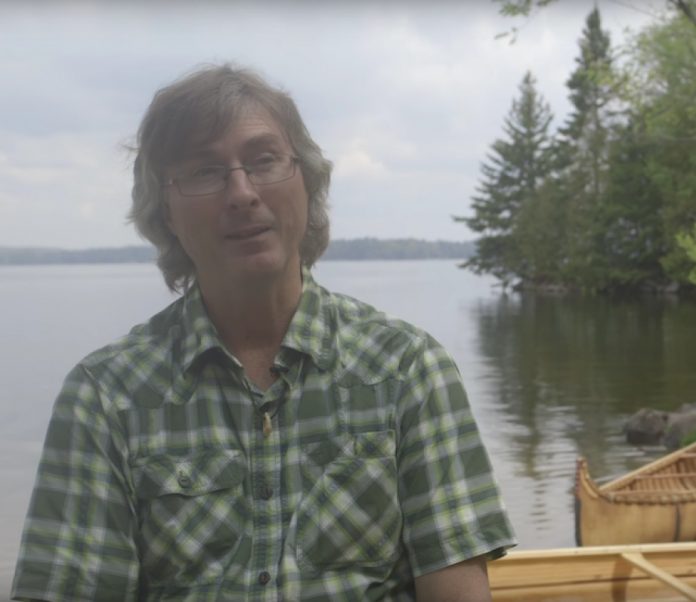
Why Your Roll Is Your Most Important Rite Of Passage

underwater shot of a person completing a whitewater kayak roll
Searching for that happy place. | Feature photo: Jordan Manley

Like you, I can vividly remember the first time I rolled. Not my first roll on flatwater, or the one I learned in a course or with a friend at a lake, but the first time I rolled when it really mattered. That elusive, exciting and surprising first whitewater roll. The moment I became a kayaker.

Why your roll is your most important rite of passage

Rolling is by far the most complex thing a paddler will learn—it provides a great example of the dynamic interplay between motor skills, cognitive understanding and affective values—an academic way of saying emotion. Having built my career around guiding and teaching people to paddle, I estimate I have taught about 1,500 people to roll. I can tell you it is rarely the motor skills part of the equation that is the limiting factor. The maneuver itself is relatively easy.

SEARCHING FOR THAT HAPPY PLACE. | PHOTO: JORDAN MANLEY
Searching for that happy place. | Feature photo: Jordan Manley

After figuring out the basic motions, comes wrapping one’s head around how all of this happens upside down. On-water demonstrations are a confusing mirror image of what the paddler really needs to do. A good instructor accounts for this and comes up with ingenious ways of demonstrating and then helping a new paddler understand and replicate these motions. That is the easy part. Then comes emotion—more specifically, fear.

“Thinking will not overcome fear but action will.” – W. Clement Stone

Fear is incredibly powerful. It is a rare beginner who can tolerate being upside down, under water, confined and in an awkward position. As water burns into his untrained sinuses, he reaches for the panic button. When it comes to learning, emotion trumps all. Fear overrides a normally rational brain with its flight, fight and freeze reflex, and even the most basic motor skills dissolve.

When I learned to paddle back in the long boat days, even though I could roll in a nice controlled setting, I panicked and bailed any time it really mattered. Fear overrode my cognitive understanding and proven physical ability to roll. Kayak instruction has come a long way since then, but fear is still addressed by most instructors by trying to rationally think it away. “Relax and don’t panic,” I hear instructors tell students. “You know you can hold your breath for 45 seconds.” Unfortunately emotion doesn’t work that way.

Getting beyond the grip of emotion

Good instructors understand that fear happens before thinking can, so we skip the cognitive part of the story and focus on motor skills, as that’s all that’s left. This is known as patterning—as in repetition, repetition, repetition—until the body responds with a pre-planned set of actions, regardless of what the brain thinks or affective response screams. Soldiers, karate black belts and elite athletes have all stumbled upon or purposely pursued this repetition and patterning. No cognition or emotion required, only engrained motor pattern. Shoot. Block. Jump. Roll.

My moment was several years in, with many rivers and many swims behind me. It was on the entry into Third Drop on the Gauley’s Lost Paddle Rapid. I flipped on the first move, felt the blast of water in my nose and the surge of fear, and then was upright! Before my cognitive brain could catch up, I was up and paddling again. The sense of surprise and amazement was so completely disorienting, I flipped over again.

This moment—the automatic and patterned roll—is when we have proven our dues are paid. An automated roll proves time invested in training one’s body to respond with a complex set of actions. While no one is ever beyond swimming, the first whitewater roll is the rite of passage and badge of membership into this small and unique tribe.

Jeff Jackson is a professor with Algonquin College’s Outdoor Adventure guide training diploma and is the co-author of Managing Risk: Systems Planning for Outdoor Adventure Programs.

Cover of Rapid Magazine Fall 2015 issueThis article was first published in the Fall 2015 issue of Rapid Magazine. Subscribe to Paddling Magazine’s print and digital editions, or browse the archives.


Searching for that happy place. | Feature photo: Jordan Manley


Wednesday Night Adventure Club

PADDLE WITH DAD. CHECK. | PHOTO: SCOTT MACGREGOR

Children today have more structured time than any generation before them. This spring at my house, for example, Monday was baseball practice, Tuesday and Wednesday were afterschool academic booster programs for standardized testing (don’t get me started), and Thursday was dance class and a baseball game. On Fridays everybody was too tired to do much of anything.

For weeks after the snow melted and the ice went out I’d ask the kids if they wanted to go paddling or biking after school or after dinner.

“Sure Dad, but when?” they’d reply.

Another weekend would come and go and we’d make loose plans to go the next week, if we could find the time.

Our lives are run by an oversized calendar stuck to the refrigerator door. It’s probably the same at your house. Everything important gets neatly printed in pencil inside 31 little squares and reviewed every morning at breakfast. Important events get stickers. My son strokes out the days counting down to really big occasions like summer vacation and Christmas.

Time management is an important skill

Life coaches suggest that time management is an important skill to teach young children. Our elementary school issues every child an agenda on the first day of class. Teachers are instructing children how to write every due date and appointment in the book. What they are not teaching is how to choose what goes on the list and what doesn’t, or how to prioritize the truly important things in life.

We always make our scheduled appointments. If it is written on the calendar we never miss. It’s important to commit to things and not let your team down, or leave your dance instructor waiting in an empty studio. It’s also important to schedule family time. Why? Because, if it’s not on the list it gets pushed to next week.

PADDLE WITH DAD. CHECK. | PHOTO: SCOTT MACGREGOR

When the kids were smaller, before team sports and sleepover birthday parties, life was simpler. We had more free time together and that meant more time outside. Lately, we’ve found that real life is running our lives. We’ve been putting off the things we value the most and we’ve been too busy driving to the next agenda item to notice.

“Why don’t we make Wednesday night, Do Something Adventurous Night?” she asked. “I’ll make stickers. We’ll put them on the calendar.”

It was my daughter, Kate, who came up with the idea. “Why don’t we make Wednesday night, Do Something Adventurous Night?” she asked. “I’ll make stickers. We’ll put them on the calendar.”

In took us a few weeks before we fell into the routine.

Wednesday mornings we make lists of gear we need to have packed and ready at the back door. We stick the lists to the fridge and refine and reuse them every week. We’ve gotten smarter about being organized with bins and bags consolidating and keeping everything for a given activity all in one place.

On Wednesdays I work a little faster and get home a little earlier. Dinner is reheated leftovers or a quick omelet so we can get out the door more quickly. We made going for a paddle as easy and as routine as heading to the ball diamond. We found bike trails closer to home. We learned which fishing lures to bring and what tackle we could leave behind. Most importantly we made playing outside as important and as routine as anything else in our busy lives.

Scott MacGregor is the founder and publisher of Canoeroots.


Screen_Shot_2015-07-07_at_2.59.13_PM.png

This article first appeared in the Fall 2015 issue of Canoeroots Magazine.

Subscribe to Paddling Magazine and get 25 years of digital magazine archives including our legacy titles: Rapid, Adventure Kayak and Canoeroots.

Why You Should Try Fly Fishing From A Canoe

person casts a fly fishing lure from a canoe
“There is no greater fan of fly fishing than the worm.” –Patrick McManus | Feature photo: Courtesy Ontario Tourism

Fly fishing is, to most enthusiasts, the most beautiful form of fishing. It’s most common to see pictures of fly fishermen standing characteristically waist-deep in a stream or river, but Ben Duchesney shares his opinion on expanding this art form to larger bodies of water by way of the canoe. Learn to cast from a canoe and you’ll fall in love with the beautiful combination of canoeing and fly fishing. You may even catch a few.

How to Try Fly Fishing from Your Canoe

Master the Cast

The first mistake new fly casters make is trying to muscle the cast. Like swinging a golf club, the power of the cast comes from technique, not big biceps. Keeping a straight wrist, start your back cast by raising your rod tip backwards, loading tension in the rod tip.

At the top of the cast, at an angle of 1 o’clock, snap your arm to a stop. You can also look at your line and stop the back cast when your leader is about to come off the water. Stopping the the backcast abruptly will ensure the line unfurls evenly.

person
“There is no greater fan of fly fishing than the worm.” –Patrick McManus | Feature photo: Courtesy Ontario Tourism

Once the rod stops vibrating from the back cast and you feel the rod tip being loaded in the other direction, begin your forward cast. Leading with the elbow, snap the rod grip forward by pressing forward with your thumb and pulling back with your ring and pinky fingers. This will lay out the cast evenly.

As world-famous casting instructor Joan Wulff says, the motion is similar to opening a screen door, pressing the button with your thumb and pulling the door open with your pinky and ring finger. Stop the rod when your thumbprint is pointing towards your target.

Maintain Balance

When casting, make sure your body is centered in the canoe and your hips are straight and silent. Stick with casting straight ahead for now, and just move the canoe if you need to change direction. Casts to the sides of the boat have a tendency to rock the boat more. If you start rocking the boat while casting, not only will your cast suffer but you may lose your balance.

Manage the Line

One of the trickiest and most frustrating parts of fly fishing is line management. Add gunwales and paddles and it gets even worse. Before each cast, make sure your line is free from snags and gathered at your knees. If you keep snagging, get a shirt or small bucket and place it in front of you. This will act as a stripping basket and help to keep your line clear.

What You’ll Need

Quick Casting Tips

  1. The power of the cast comes from your wrist and arm movement.
  2. Slow is smooth and smooth is stable. If you have trouble timing the cast, slow down.
  3. Before you get in a canoe, practice your technique from the lawn while sitting flat or kneeling. Then, try in a canoe on your own.

Watch the video of this technique here:

Ben Duchesney is an active paddle angler and former web editor of Kayak Angler. When he’s not fishing, he’s working on his first book, a fly fishing manual.

Cover of the Fall 2015 issue of Canoeroots MagazineThis article was first published in the Fall 2015 issue of Canoeroots Magazine. Subscribe to Paddling Magazine’s print and digital editions, or browse the archives.


“There is no greater fan of fly fishing than the worm.” –Patrick McManus | Feature photo: Courtesy Ontario Tourism


Seven Reasons Why You’re Glad You Didn’t Paddle in the ’80s

Photo: Rapid Staff
Seven Reasons Why You're Glad You Didn't Paddle in the '80s
  1. The last song playing in the tape deck in your Hyundai Pony on the shuttle may have been Wham’s “Wake Me Up Before You Go-Go.”
  2. Chuck Taylors by Converse were, like, so ‘80s. “Like, oh my God, those river shoes, like, totally bitchin’.” Maybe, but they were also really bad (meaning horrible, not cooler than the word cool could describe) on slippery rocks.
  3. Army surplus wool long underwear and neoprene dive suits were the best insulating layers most of us could afford.
  4. It was damn near impossible to get out of a big hole in a Dancer. And if you did, the bungee cord spray skirts would blow at the absolute worst of times.
  5. This Kober Extrem Allzweck, and those like it from Schlegel, were top of the line paddles. They had 90-degree offsets, aluminum shafts and weighed three-and-a-half pounds.
  6. The best instructional paddling book was a cartoon. No wait, that was actually pretty cool. Thank you, William Nealy. May you rest in peace.
  7. If you swam, you’d be buying a round of 
 of Pabst Blue Ribbon…At least today the paddles are lighter.

Screen_Shot_2015-07-07_at_3.09.09_PM.png

This article first appeared in the Fall 2015 issue of Rapid Magazine.

Subscribe to Paddling Magazine and get 25 years of digital magazine archives including our legacy titles: Rapid, Adventure Kayak and Canoeroots.
Canada’s Birthday Gift

KEEPS ON GIVING. | PHOTO: DAVID STURGE

If America was transformed by a domesticated animal—the horse—then Canada’s own coming to be was most certainly aided and abetted by a single species of tree—the birch, and the canoes that were made from it.

In the decades leading up to the country’s confederation, the canoe was integral to the way of life for Canada’s indigenous communities, as well as European traders and travelers. Given this history it should come as no surprise that many think the canoe should play a significant part in Canada’s 150th birthday celebrations coming up on July 1st, 2017.

For the Canadian Canoe Museum, where the hub of sesquicentennial canoeing activity will take place, there’s a push to bring the canoe into the national conversation as a symbol of reconciliation and reconnection amongst our river of nations. Advance preparations focused on canoes are already bringing communities closer together.

Among the birthday planners is Chief Misel Joe from Miawpukek First Nation on the south shore of Newfoundland. Ten years ago, tired of hearing debate about how the Miq’maq People first got to The Rock, he consulted the community’s elders, built a bark canoe and paddled it across the Gulf of St. Lawrence.

When we recognize the canoe on this special birthday, we’ll be honoring the history of this country, which stretches back thousands of years.

So enthused about what the building project did to keep Miq’maq traditions alive in his community, and about how the canoe story fired up the imaginations of the public, Chief Joe decided to build two more canoes. A group of community members will paddle them 1,600 kilometers to Ottawa, then on to the Canadian Canoe Museum in Peterborough, as a sesquicentennial celebration in 2017.

Similarly, the canoe became a cultural renewal project for Wayne and Kim Brooks and the Maliseet People of St. Mary’s First Nation in central New Brunswick. They were inspired when the oldest known Maliseet bark canoe, built in the early 1800s, was repatriated to Canada in 2012.

When museum protocols and worries about the safety of the “Grandfather Akwiten” canoe kept the Maliseet people at arm’s length, the Brooks’ enlisted the help of Steve Cayard, a master bark canoe builder from Maine, and built a replica of the exact same dimensions, materials and construction techniques.

Cayard and others from the Maliseet community will build another replica this summer, with more tradition-building projects planned for 2017, aiming to advance traditional skills among First Nation youth and create a cross-cultural bridge with the public.

KEEPS ON GIVING. | PHOTO: DAVID STURGE

Far to the west, retired RCMP Staff Sergeant, Ed Hill, and Squamish Nation Elder-in-Training, Wes Nahannee, live on the Sunshine Coast, in the ocean-going canoeing capital of Canada. The two have been using canoes for 15 years to strengthen relations in their cross-cultural youth program, Pulling Together. They’re looking to organize a cross-Canada canoe caper for the country’s birthday, embodying the spirit of their program.

It’s been said the canoe was the greatest gift the First Nations gave to the next generations. When we honor the canoe, we honor our country’s First Nations people, who still today are often marginalized. If the canoe is an apt symbol of our shared past, can it also be a symbol of a more connected future?

Many people consider Canada to be a young nation—150 years isn’t old in terms of statehood. When we recognize the canoe on this special birthday, we’ll be honoring the history of this country, which stretches back thousands of years.

James Raffan is an author, traveler and former executive director of the Canadian Canoe Museum. 


Screen_Shot_2015-07-07_at_2.59.13_PM.png

This article first appeared in the Fall 2015 issue of Canoeroots Magazine.

Subscribe to Paddling Magazine and get 25 years of digital magazine archives including our legacy titles: Rapid, Adventure Kayak and Canoeroots.
7 Of The Best Cross-Training Activities For Paddlers

People on a dock doing yoga
Yoga is a great way to improve your mind and body for paddling. | Photo courtesy of: Destination Ontario

If you think paddlers don’t need to work out or participate in other forms of activity, then just give it time; injury and muscle fatigue are unfortunately all too common for kayakers of all disciplines. You may have brilliant paddling technique, but kayaking often uses the same muscle groups and believe us, your body will thank you for taking time to switch it up.

With the right activities you can work your paddling muscles in new ways, prevent injuries and have fun. Whether you want to work on your paddling muscles (core, core, core), develop more stamina or do something completely different, here are some cross-training options for paddlers.

Photo by Guduru Ajay bhargav from Pexels

1 Swimming

Gliding through the water can be almost as fun as paddling on top of the water. Swimming lets you work those essential core muscles, your upper body, and improve overall stamina, all in a low impact way. Plus, it’s not a bad thing for a paddler to have strong swimming skills and confidence—both on and in the water.

SHOP SWIMMING GEAR ON AMAZON

Photo by Pixabay from Pexels

2

Nordic skiing

Cross-country skiing is another great option for working on just about all the major muscle groups and developing serious stamina. Did you know that Norwegian skier and Olympic medallist Bjørn Dæhlie has one of the highest VO2 max ever measured in a human being? Besides doing wonders for your aerobic fitness, Nordic skiing will keep you happy and active during the off-season until the water thaws again.

SHOP SKI GEAR ON AMAZON

Photo by Alexandre Weiss from Pexels
Photo: Alexandre Weiss from Pexels

3

Other paddlesports

Yes, we think you should see other boats. Get involved with your local dragon boat or outrigger canoe club for a fun yet demanding workout that will strengthen your core, upper body and stamina with new techniques. For better balance and further core strengthening, try your hand at standup paddleboarding.

Photo by Caleb Oquendo from Pexels

4

Martial arts

Work your cardio with the high-intensity intervals of sparring and grappling, while time on the punching bag will challenge your arms and shoulders, all of which will pay off the next time you challenge a friend to a friendly sprint on the water or you’re trying to catch that elusive surf wave.

SHOP MARTIAL ARTS UNIFORMS ON AMAZON


Photo by Davyd Bortnik from Pexels

5

Rock climbing

It’s no surprise that many paddlers are also avid climbers. Firstly, kayaking can get you to some intriguing climbing spots, and secondly, climbing is a demanding workout for your core, arms, and upper body in general. With the growing popularity of indoor climbing gyms, this can be an accessible and fun way to stay active throughout the winter.

SHOP ROCK CLIMBING GEAR ON AMAZON

SHOP ROCK CLIMBING ROPE ON AMAZON

SHOP ROCK CLIMBING HELMETS ON AMAZON

SHOP ROCK CLIMBING HARNESS ON AMAZON

People on a dock doing yoga
Yoga is a great way to improve your mind and body for paddling. | Photo courtesy of: Destination Ontario

6

Yoga

What do LeBron James, the New Zealand All Blacks and many experienced kayakers all have in common? They’ve all discovered that regular yoga practice makes them better athletes and helps prevent injuries. Just a few focused stretches before paddling or after arriving in camp will work wonders for keeping you loose and limber.

SHOP YOGA MATS ON AMAZON

SHOP YOGA BLOCKS ON AMAZON

Photo by Stan Swinnen from Pexels

7

Walking/hiking/running

If we’re paddling properly our legs should be engaged, but our quads, hamstrings and legs in general still need a little extra something. Compensate for those long hours spent in a boat with some quality time on your feet. A long kayak trip will be infinitely better if you also make time to hike up a nearby mountain and take some long walks on the beach.

SHOP HIKING BOOTS ON AMAZON

SHOP HIKING POLES ON AMAZON

SHOP RUNNING SHOES ON AMAZON