Add a nutritional punch to downriver meals with Natural Food Energy Mix from Ra Energy. The combo of hemp, sesame, flax and chia seeds and sprouted buckwheat comes in three flavors: plain, garlic and sweet. It can be added to just about anything—the plain kind won’t affect flavor—but my favorite is a couple tablespoons in my oatmeal or granola, so hunger doesn’t set in halfway through the morning.
Marquette is the white collar on the well-worn work shirt that is Michigan’s Upper Peninsula. It’s a center of culture in a rough and tumble region known for logging, mining and huge swaths of lightly populated hinterlands along the south shore of Lake Superior.
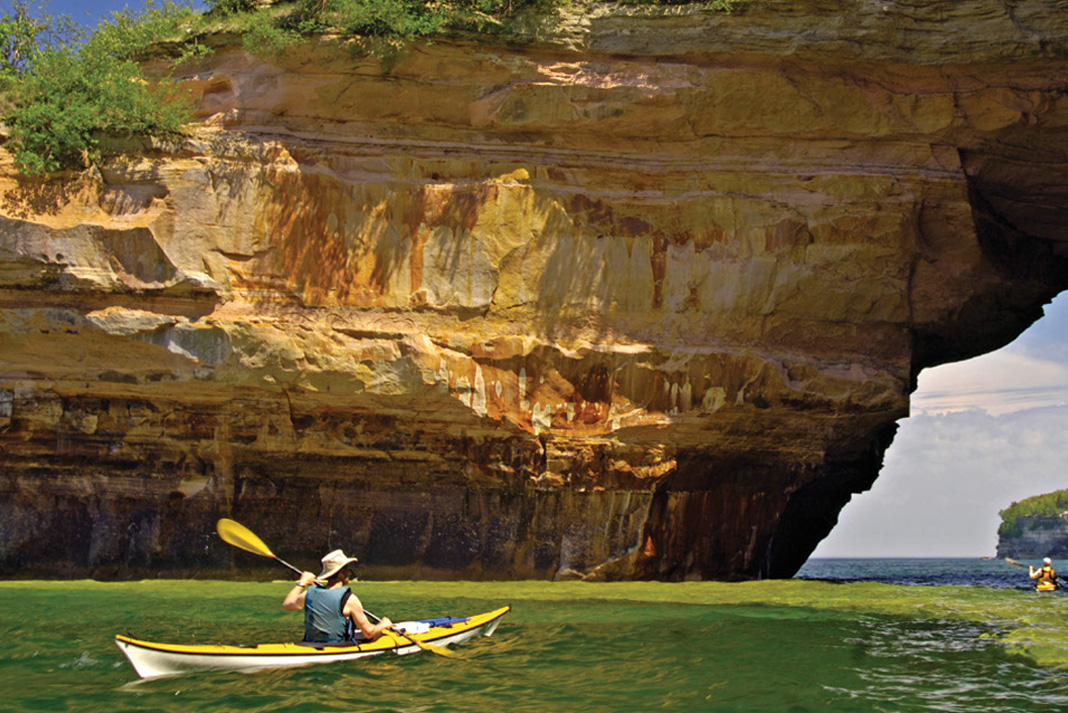
I love living near Marquette because of the laid back live-and-let-live phi- losophy and the diversity of shoreline geology, great public access and largely undeveloped coast. Within city limits you’ll find a 10-mile stretch of rock gardens, surf spots, sandstone caves and sandy beaches. North of town, the shoreline is mostly state owned and offers pocket beaches and bedrock headlands more reminiscent of the Canadian side of Lake Superior. The big lake lends its mood to the town and our lives tend to revolve around what Superior is serving up daily.
Michigan’s Upper Peninsula Trips:
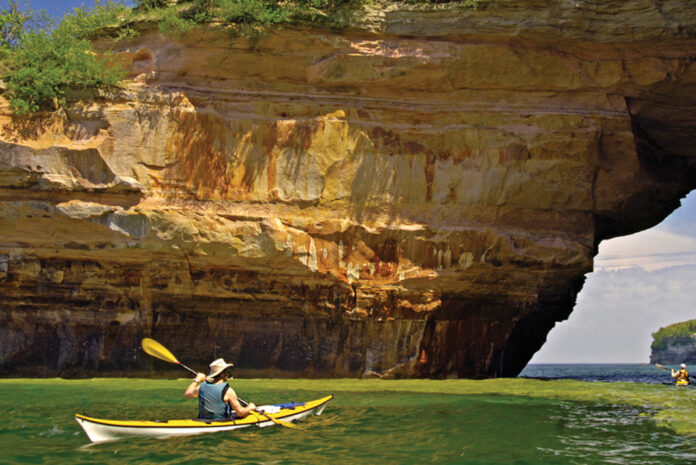
If you have a half day explore 323-acre Presque Isle city park, where red and white swirling sandstone cliffs clash with an ancient lava flow known as Black Rocks.
If you have a day extend the trip out from Presque Isle to the bedrock headland of Middle Island Point, then hop to Middle and Partridge islands and enjoy some rough water rock gardening when the north wind blows.
If you have a weekend tour 30 miles around Grand Island National Recreation Area. Launch from Sand Point to make the easy half-mile crossing to the island. The southern end has protected bays and agate beaches ideal for camping and rock hounding, while 200-foot sandstone cliffs grace the north end.
If you have a week paddle under the mineral stained sandstone cliffs that give Pictured Rocks National Lakeshore its name. Depart from Sand Point and head to Grand Marais, a 42-mile trip past arches, sea caves, majestic Spray Falls and the Grand Sable Dunes. Mosquito and Chapel beaches offer sugar sand beach camping and great day hiking.
WILDLIFE
Wolf, moose, deer, black bear, mountain lion, otter, sandhill crane, bald eagle, osprey.
TERRA
Sand and cobble beach camping.
EXPOSURE
North and northwest winds are predominant and produce the largest conditions with fetch exceeding 160 miles.
DIVERSION
Marquette is an IMBA-designated ride center. Four local mountain bike shops offer beta and rentals.
SUDS
Bookend your trip with a cold brew at the Lake Superior Brewing Company in Grand Marais.
LOCAL WISDOM
August through early September is the sweet spot for fine weather, warmest water and relief from bugs.
OUTFITTERS
Paddling Michigan – rentals, instruction and guided trips in the central Upper Peninsula – paddlingmichigan.com.
MUST-HAVE
Wetsuit/drysuit, camera.
Aaron Peterson is a professional photographer based in Marquette, where he enjoys having the greatest lake on his doorstep and ready access to the diverse state and national forests, parks, lakeshores and wildlife refuges that comprise much of the state’s Upper Peninsula—“the U.P.” to locals.
This article first appeared in the Early Summer 2015 issue of Adventure Kayak magazine.
Subscribe to Paddling Magazine and get 25 years of digital magazine archives including our legacy titles: Rapid, Adventure Kayak and Canoeroots.
The music died for Don McLean in 1959 when rock legend, Buddy Holly, died in a plane crash. The day the music died for me was the moment my college students got bored two minutes into Bill Mason’s 1984 Waterwalker. It was an outdoor leadership course and I thought it was prudent to show them this classic canoe film.
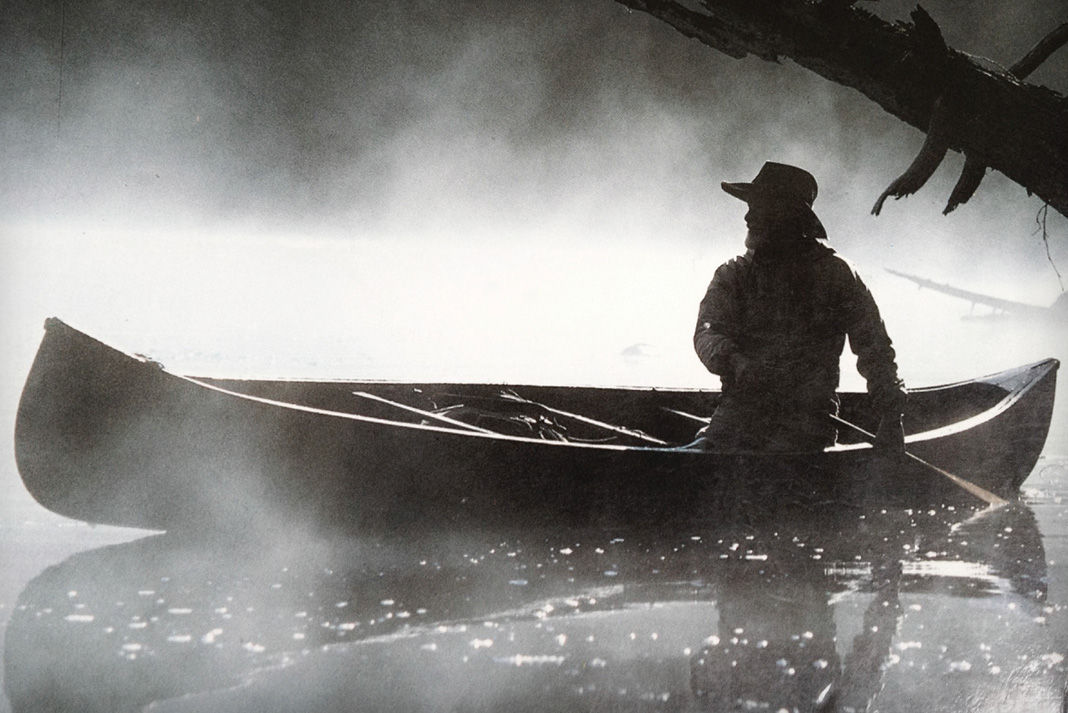
The eyeballs started to roll during the synthesized beats of Bruce Cockburn’s opening song of the same name. Then a few students started snoozing while Mason drifted through a beautiful early morning fog. By the time the stunning scene appeared of Mason painting on a rock ledge, overlooking Lake Superior, and there wasn’t a single “ooh” of awe, I knew I’d lost them all.
I grew up watching Waterwalker. I still watch it over and over again, all 86 minutes. It gets me through the long winters and never ending spring thaws. The film inspired my generation to dream big and get outdoors. Mason took us along for the ride on his real wilderness journey.
Never has the ethos of peace and solitude that canoe tripping offers been more apparent than in Mason’s work. In the film, he travels for two weeks along Superior’s coast, paddling from camp to camp, while carrying all his belongings.
Looking out over a sea of glazed eyes in the darkened classroom, I asked myself why these students were turning out. Was it Mason’s squeaky voice preaching environmentalism and Native philosophy? How about the unabashed way he connects spirituality and the natural world? Maybe it’s simply the long shot sequences, or the ‘80s folk music.
Desensitized to danger perhaps by waterfall-hucking Red Bull athletes, not one of my students even flinched when Mason dumped his canoe and found himself in serious danger in freezing Lake Superior. It was obvious the students hadn’t connected with this canonical work. Maybe they can’t.
In our instant gratification culture, long canoe trips, especially weeks paddling the rugged north shore of Lake Superior, are rare. While two-week trips were common 30 years ago, nowadays the average canoe trip lasts just a long weekend and takes place in nearby, semi-wilderness areas. Maybe they don’t understand how big, wild, cold and unconnected Superior can be.
KNOCKOUT. | PHOTO: PAUL MASON
The symbolic red Prospector canoe in a vast wilderness is beyond the imaginations of those in campgrounds providing free WiFi.
A canoe trip can be a transformative experience. The key to making this happen, however, is to spend time in the wilderness. Real time. A weekend jaunt may get you through a bad week at work. A week of paddling may even help your anxiety level during moments of crisis. But a multi-week canoe trip offers a Zen that you can draw on for a lifetime. My outdoor-ed students might miss out on all of that.
“The path of the paddle can be a means of getting things back to their original perspective,” Mason famously said.
Despite the eye rolls, note passing and light snoring; I won’t stop sharing Waterwalker with my students. Long trips are the heart and soul of canoe tripping. Even if only one student is inspired to dream bigger and push farther, I’ll have done my job.
Kevin Callan is the author of 15 books about canoeing and camping. Follow his adventures at thehappycamper.com.
This article first appeared in the Early Summer 2015 issue of Canoeroots and Family Camping magazine.
Subscribe to Paddling Magazine and get 25 years of digital magazine archives including our legacy titles: Rapid, Adventure Kayak and Canoeroots.
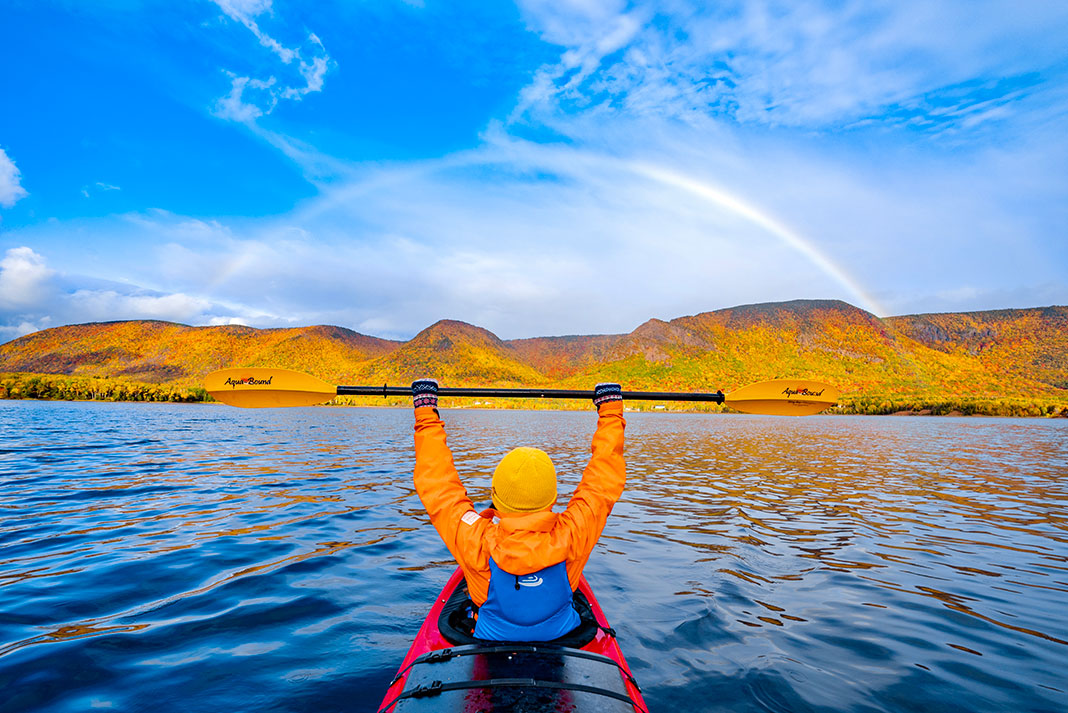
The question isn’t how to hold a paddle, it’s why you should hold a paddle at all. | Feature photo: David & Skylar Anderson // @daveyandsky
A publisher once approached me and invited me to write a kayaking how-to book, a “complete” guide to the sport. Despite a momentary rush of excitement at the thought of fame on the symposium circuit as sea kayaking’s next great know-it-all, I politely refused. The last thing we need is another how-to book.
Why we don’t need another complete guide to sea kayaking
Scanning any shelf of sea kayaking volumes turns up plenty of “manuals,” “guides” and “handbooks.” There are already at least half a dozen titles purporting to be kayaking’s “complete” or “comprehensive” guides. These books claim to offer insights that are “efficient,” “optimum” and “essential.” Many of them emphasize the beloved subject of “safety.” With so many fine books already available, there really isn’t much new to say on the subject of how to kayak.
The question isn’t how to hold a paddle, it’s why you should hold a paddle at all. | Feature photo: David & Skylar Anderson // @daveyandsky
Sea kayaking is the same sport, fundamentally, that it was when it first evolved from a prehistoric survival tool to a recreational pastime. Kayaking now is play; a joyful celebration of life and a ritual break from our workaday lives. Which raises the question: why do we take it so damned seriously?
Other sports do a much better job. Climbing, skiing and surfing have always had their philosophers, deep thinkers and flamboyant practical jokers to explore their sports’ subtle and soulful sides.
Consider canoeing, kayaking’s dreamy, artistic cousin. Eloquent canoeing writers like Sigurd Olson and James Raffan have always been much more interested in writing about what’s going on in their hearts and minds, or being discussed around the campfire, than what they’re doing with their paddles.
Canoeing’s classic guidebook is Path of the Paddle: An Illustrated Guide to the Art of Canoeing—no mention of completeness or efficiency. Its author, Bill Mason, was an artist and devout Christian for whom canoeing was a creative inspiration and both a literal and metaphorical path to salvation. He was on a spiritual mission to teach people to paddle so they could save their souls and be inspired to save the planet.
Enlightenment from the seat of a sea kayak
If canoeing is an art, then surely kayaking is too; so why do we treat it like a science or an extreme athletic pursuit? There’s plenty of evidence that sea kayaking goes together with an unconventional and free-spirited lifestyle—stories of entrepreneurs and artists living off the grid in outback locations, homeschooling their kids and growing their own food—but few champion this the way Mason did for canoeing.
Kayaking authorship has long keened toward scholarly preoccupation with the sport’s Indigenous origins, or such militaristic and masculine nautical concepts as “seamanship.” Our shining lights tend to be hard-charging A-types who leave families and jobs behind to head off on ambitious global expeditions. Hard-assed mountaineers of the high seas, not warm fuzzy sorts with a taste for introspection.
Why, then, are kayakers stereotypically such nerds?
From the wonders these gurus experience abroad they bring back not enlightenment but new paddling strokes, safety principles, speed and efficiency graphs, techniques to do headstands in kayaks or 27 different rolls while holding a lit candle.
Sure, there are exceptions—Jon Turk’s spiritual odysseys rival those of any adventure literature. And the female perspectives shared by explorer-writers like Audrey Sutherland and Victoria Jason have helped open the door to an insightful, lyrical and more reflective way of viewing our sport.
Why, then, are kayakers stereotypically such nerds? Is it demographics—our advanced age or the critical bias of our university educations? Is it because most of us are really landlubbers, fearful city folk trying to come to grips with the alien sea in an absurdly vulnerable craft? Is it because kayaks are tippier than canoes? Is it the dour Eastern European character of expat Czech and German pioneers or the scientific rigor of Seattle aerospace engineers who influenced early sea kayaking in North America?
“We shall comprehensively describe this sport in every practical detail so that it may be optimally disseminated to the wider population with complete accuracy and efficiency.”
Finding the spirit of the sport
Sea kayaking is not rocket science. It’s play, which by very definition is neither serious nor practical. As philosopher and writer Alan Watts said, “Man suffers only because he takes seriously what the gods made fun of.”
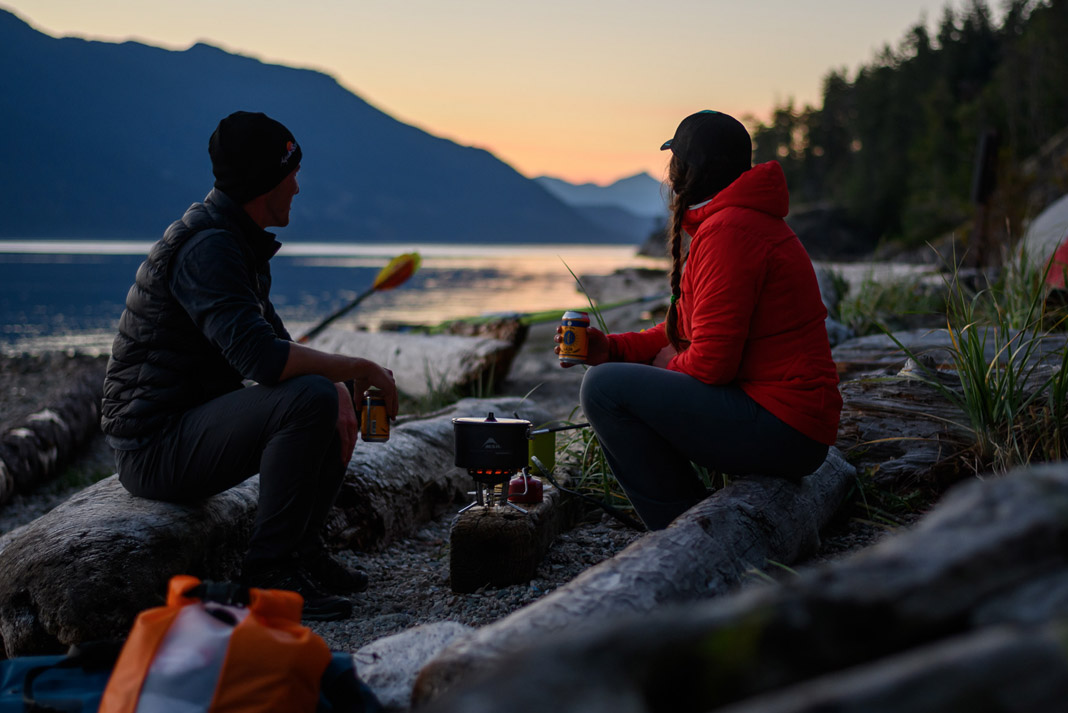
The meaning of life is best experienced by the warmth of a beach bonfire and sunset, not a guide book. | Photo: Chris Bensch
Try going on a long sea kayak expedition and you’ll very quickly figure out what to do with your paddle and how to set up your tent. But spend a season bobbing on the waves and camping on the sand and then come home to our crazy modern world and tell me there’s anything complete about a kayaking book that doesn’t help you make sense of the meaning of life as experienced by the warmth of a beach bonfire and sunset.
What sea kayaking needs is not another expert, not another guide of how to do it, but a guide of why to do it, and what for, and what it means. More kayaking Bill Masons, John Muirs, Ralph Waldo Emersons and Henry David Thoreaus. More kayaking art, poetry, philosophy and religion; less kayaking science.
If kayakers need another manual, it isn’t the complete or comprehensive guide to anything. Rather, it’s the essential guide to the art, soul and spirit of the sport. Maybe it could be called Way of the Paddle: A Playful Romp Through the Soul of Sea Kayaking.
Tim Shuff joined the team as assistant editor of Canoeroots for the second-ever issue of the magazine in 2003. From 2006 to 2010 he was the editor of Adventure Kayak.
This article was first published in the Early Summer 2015 issue of Adventure Kayak Magazine and was republished in the 2023 Paddling Trip Guide. Subscribe to Paddling Magazine’s print and digital editions, or browse the archives.
The question isn’t how to hold a paddle, it’s why you should hold a paddle at all. | Feature photo: David & Skylar Anderson // @daveyandsky
BY USING A SLOWER SHUTTER SPEED AND FOLLOWING THE MOVEMENT, THE SUBJECT WILL APPEAR IN FOCUS AND THE BACKGROUND BLURRED. | Photo: Layne Kennedy
Internet search provider Yahoo estimates that 800 billion digital photos were taken last year. That’s 114 photos for every man, woman and child on the planet. More, however, doesn’t mean better. Better, say our expert photographers, comes with effective use of light, timing and equipment, and with a dash of humility and good fortune.
Many of us bring along a pocket point-and-shoot or camera phone on our paddling adventures, but most kayakers know more about the Rule of Twelfths than the Rule of Thirds. Which is why we dove into Adventure Kayak’s deep pool of photography talent to bring you these expert tips on shooting people, action, selfies, paddling lifestyle, wildlife, landscapes and more. We’ve asked the experts how to get great photos on a budget, and how to get the most from your GoPro (page 43). Even if you’ve never handled a professional DSLR (digital camera with interchangeable lenses), the techniques on these pages are guaranteed to transform your trip photos from boring to breathtaking, humdrum to holy cow, and ordinary to extraordinary.
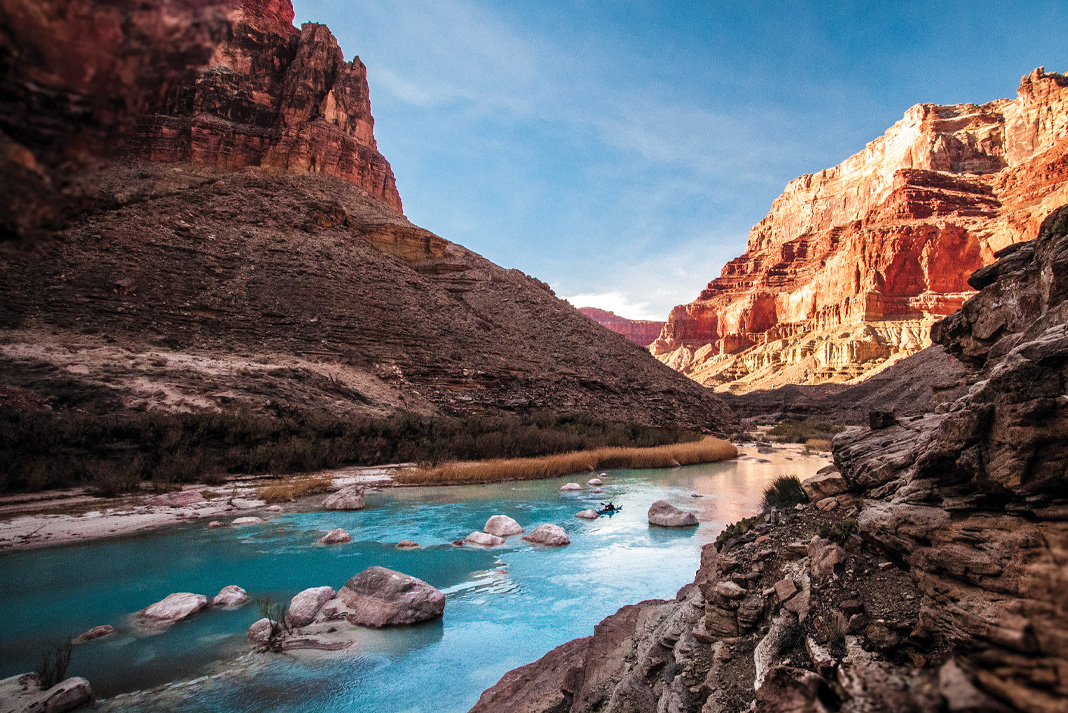
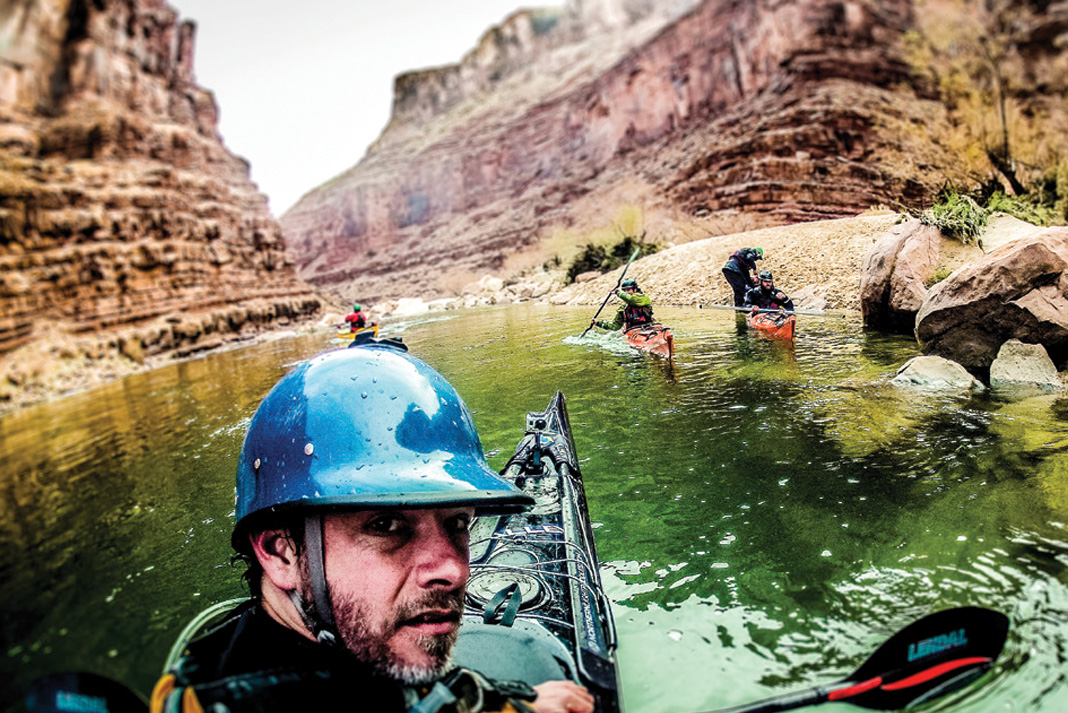
Adventure #2: GRAND CANYON | PHOTO: JIMMY MACDONALD
Landscape Photography
Last year, nature photographer and outdoor enthusiast, Gary Fiedler paddled for 221 days solo through the Boundary Waters Canoe Area to experience the entire open water season. He and wife, Dawn LaPointe, own nature photography business, Radiant Spirit Gallery (radiantspiritgallery.com). Here are his top tips for capturing the perfect landscape photo on your next trip.
Composition
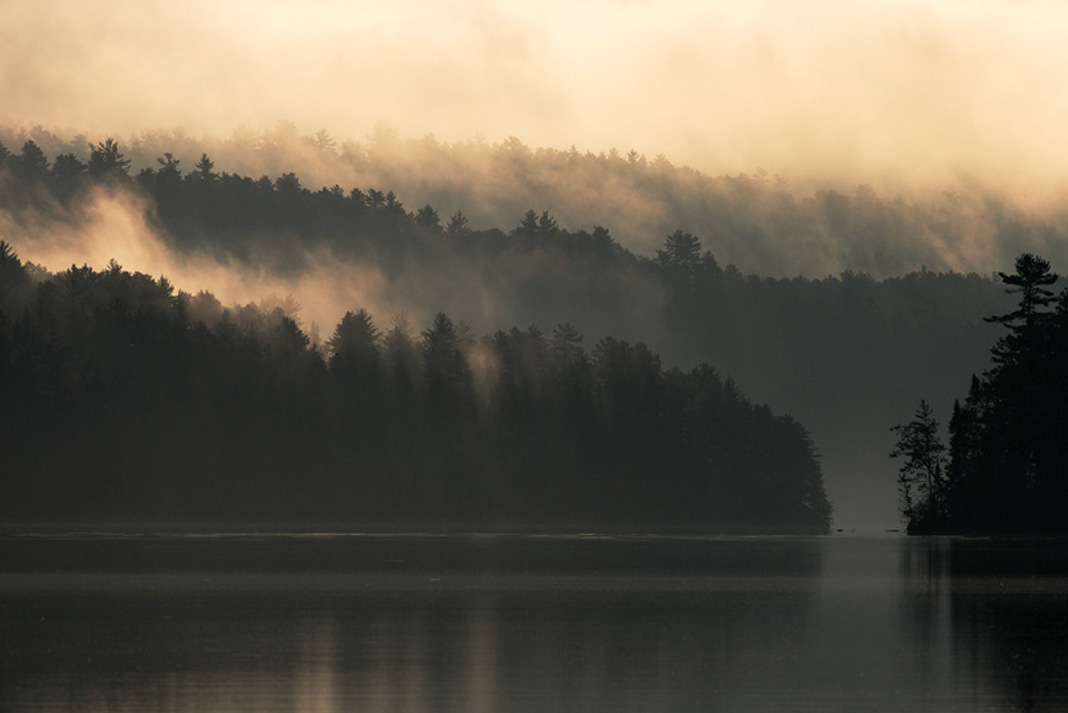
A great landscape photograph can cause the viewer to pause and be drawn into the scene, recalling a memory, stirring an emotion or even inspiring an adventure. Composition is the single most important element of a landscape photo. A well-composed photograph allows the viewer to quickly identify the subject, mood and story the photographer captured, and makes the image more memorable. Include only those items that contribute to the scene or story you want to convey. Our eyes naturally go to the brightest, sharpest and most colorful part of the image. When possible, give your focal point those attributes.
Sharply focused
Sharply focused images can be a challenge to capture in low light or from a moving boat. Use a tripod if practical. Adjust your camera settings: Use image stabilization and aim for a minimum shutter speed of 1/125. Shoot several frames in rapid succession to improve your odds of capturing a sharp photograph.
AS A GENERAL RULE, MAXIMIZE YOUR DEPTH OF FIELD FOR LANDSCAPE IMAGES. | Photo: Gary Fiedler
Off-center
Avoid placing your subject in the center of the frame. If you place it off-center, your images will be more interesting. This rule is not definitive, however. Some perfect landscape reflections look best with the horizon or waterline placed precisely across the middle, emphasizing the symmetry. If your landscape composition includes a moving subject like a canoe, place more space ahead of it rather than behind, to avoid a confining feeling.
Change your perspective
Think outside the box and change the camera position. Get low to the ground or try a higher vantage point. Take a vertical composition. Shoot at different times of the day in interesting light.
IF YOUR SKY IS FILLED WITH TENSION, COLORS OR INTERESTING FORMATIONS, LET IT SHINE BY PLACING THE HORIZON LOWER. | Photo: Gary Fiedler
Circular polarizer
If you bring only one filter, choose a high quality circular polarizer. It will allow you to manage reflections and suppress glare on water, foliage and rocks. It also softens a photo captured on a harsh, sunny day, making it look more pleasing.
Familiarize yourself
Familiarize yourself with your camera’s basic functions. A digital camera is an excellent learning tool because you can take as many shots as you desire using different camera settings and different perspectives. Be creative, experiment and shoot a lot.
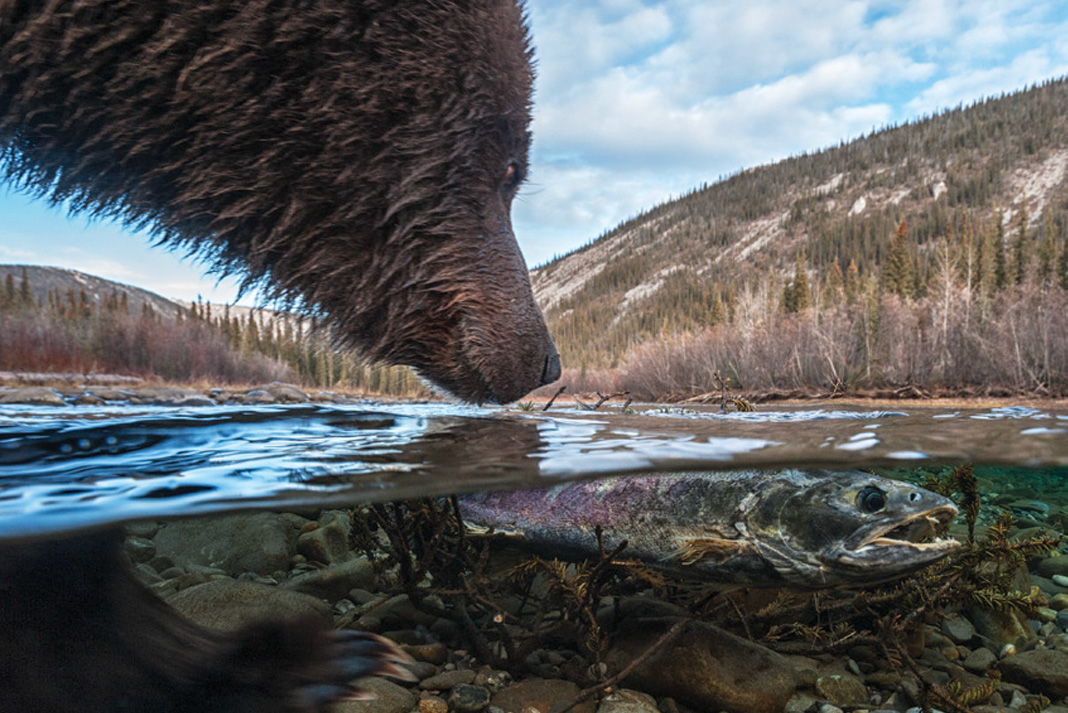
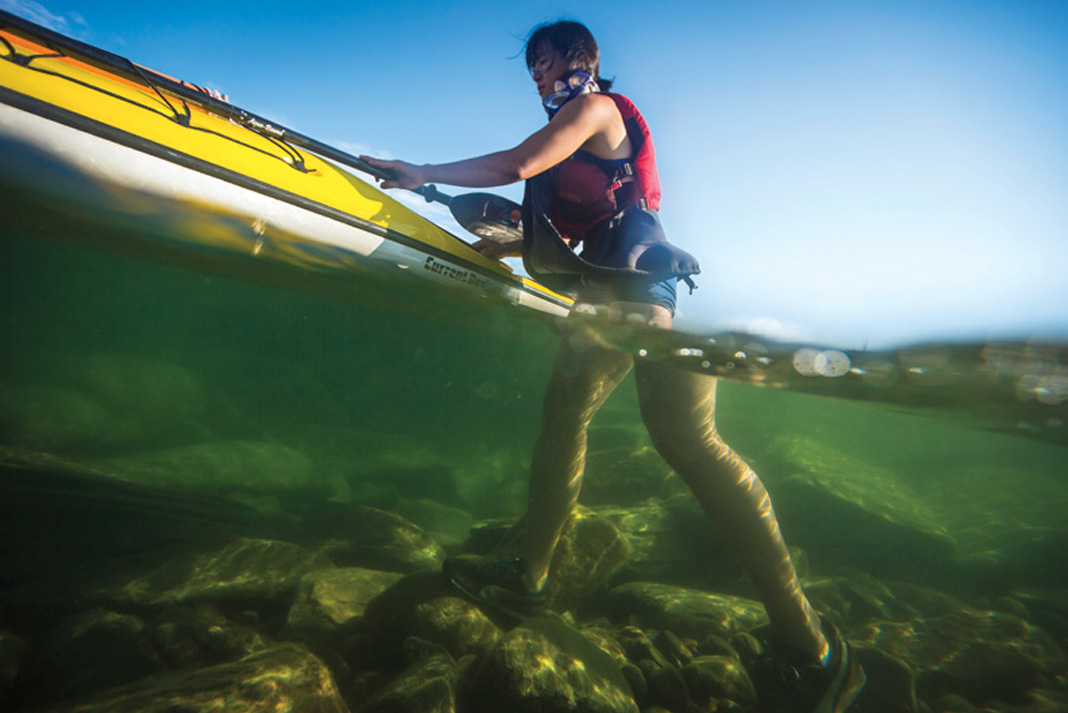
A WATERPROOF HOUSING ALLOWS FOR CAPTURING THE TERRESTRIAL AND AQUATIC WORLDS IN ONE IMAGE. | Photo: Peter Mather
LANDSCAPE PHOTOGRAPHY
WORDS and PHOTOS by MIKE MONAGHAN
SILHOUETTES
Silhouettes are very effective, yet often overlooked. To create an inky black silhouette with a rich background, expose for the background. In this case, I took an exposure meter reading off of a mid-grey tone in the clouds. This is the time to utilize your camera’s spot meter setting, as dynamic metering, which averages the entire scene, will include the dark foreground in its calculation resulting in a muddy silhouette and blown-out sky. A long lens is the tool of choice when photographing silhouettes, as it allows you to simplify your image by highlighting a specific feature and eliminating distracting elements.
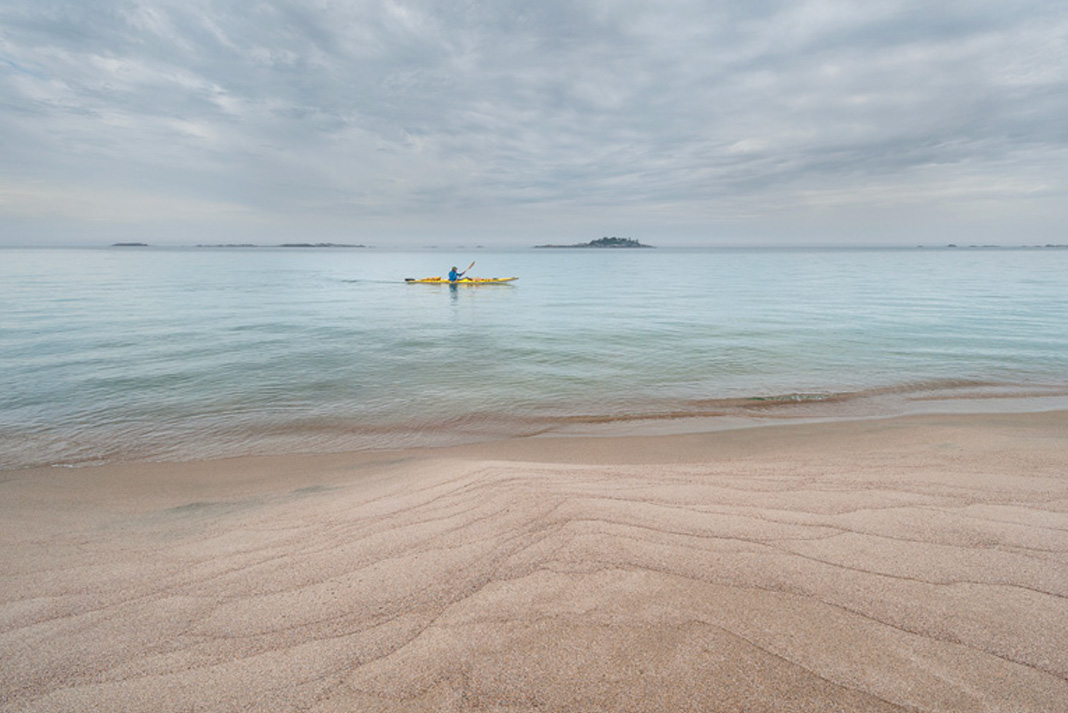
RULE OF THIRD | PHOTO: MIKE MONAGHAN
RULE OF THIRDS
For powerful images that hold the viewer’s attention, avoid placing your subject or the horizon at the center of the frame. Instead, think of the composition as a grid divided into thirds both horizontally and vertically, and place the subject or elements of interest along these lines or at their intersections. In this case, the waterline and horizon conform to this principle. Bonus tip: watch where you step. To maintain a pristine look, I was careful to avoid walking on this section of beach when I landed.
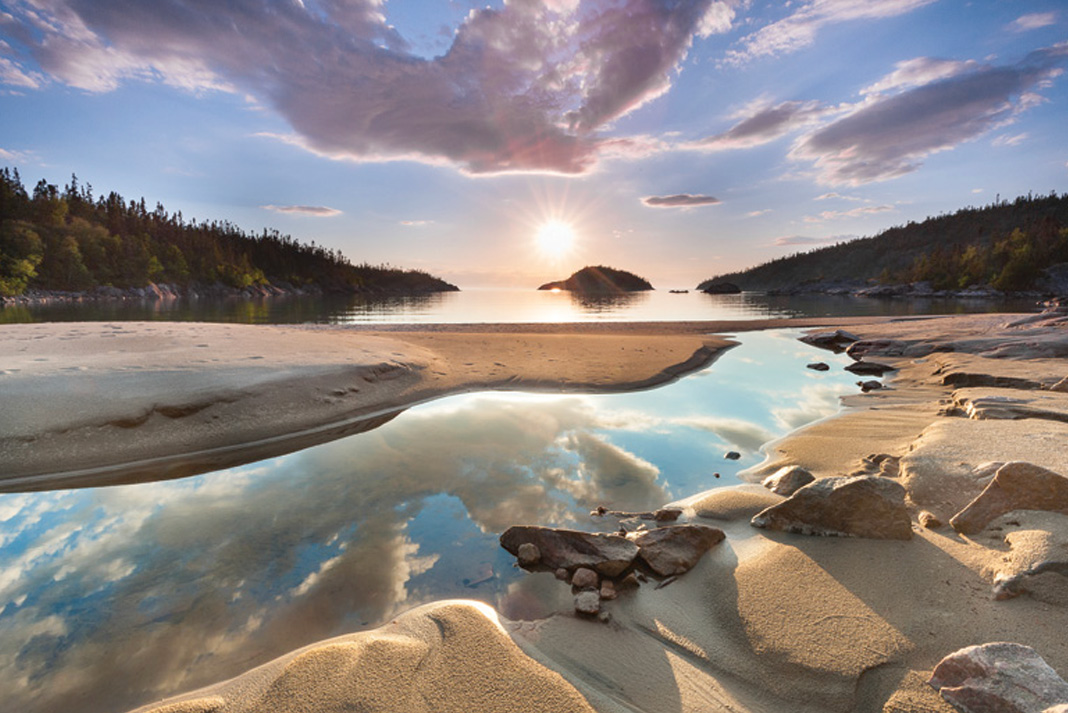
GET THE PERFECT EXPOSURE | PHOTO: MIKE MONAGHAN
GET THE PERFECT EXPOSURE
While our eyes are capable of perceiving a significant range of bright and dark—or dynamic range—a camera’s dynamic range is relatively limited. In order to balance an exposure with a wide dynamic range, graduated neutral density filters can be used. In this example, the top half of the filter, being neutral grey, darkens the sky while the lower half of the filter tapers to clear, allowing the foreground to become balanced with the brighter part of the image. Graduated filters are available in a variety of shades, from light to very dark. Using the same technique as the Silhouette image, I took separate meter readings for the sky and sand. I then exposed for the foreground while selecting the appropriate grad filter to effectively “hold back” the brightness in the sky.
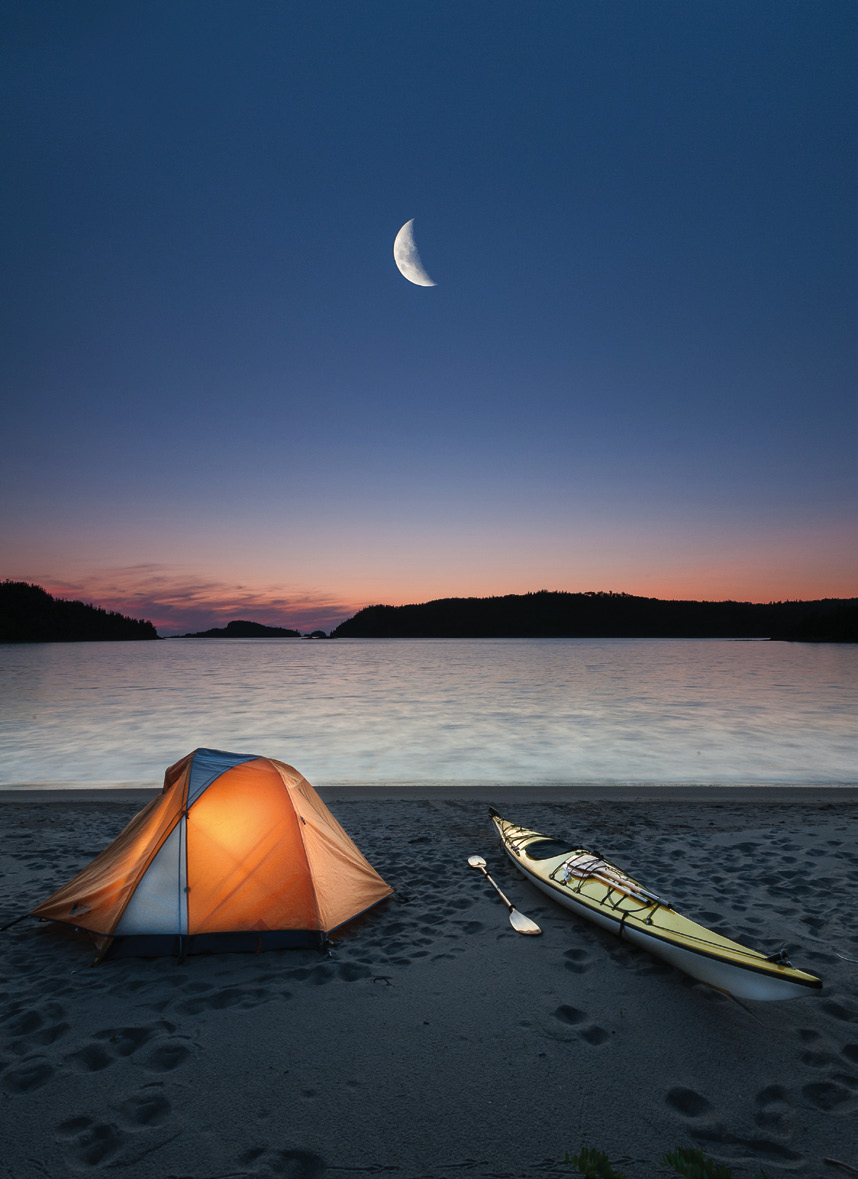
SHOOT THE MOON | PHOTO: MIKE MONAGHAN
SHOOT THE MOON
Including the moon in an evening scene can add drama, and in this case provide balance to a composition. In low-light conditions requiring a longer exposure, the moon, being much brighter than the landscape, will typically be rendered as a bright glowing disc. To maintain definition in the moon and reveal some of its characteristic surface detail, two separate exposures are required. In this case, I first exposed for and captured the landscape using a graduated filter. I then exposed for and photographed the moon, which was slightly out of the frame. This kind of image can be captured as a double exposure on the same frame, or can be a composite of two separate images using the image overlay feature found in many DSLRs.
Wildlife Photography
Peter Mather is a professional photographer, fellow of the prestigious International League of Conservation Photography and co-author of guidebook, Paddling in the Yukon. “The three P’s of wildlife photography are passion, patience and persistence,” he says. “These traits are more important than your camera equipment, post-processing capability and even location.” Check out his advice for capturing the local wildlife on your next trip.
Patience
Wildlife photography requires an immense amount of patience. Whether you’re shooting squirrels, moose or wolves, the more patience you have the better the images you’ll capture. I’ve spent hours patiently waiting for animals to get comfortable with me, while I slowly inched closer. Eventually, an animal lets me into its personal space and I’m able to capture an intimate image of a unique animal.
RESEARCH THE HABITAT, BEHAVIOR AND FEEDING AREAS BEFORE YOU SET FOOT IN THE FIELD TO INCREASE YOUR CHANCES OF SUCCESS. | Photo: Peter Mather
Persistence
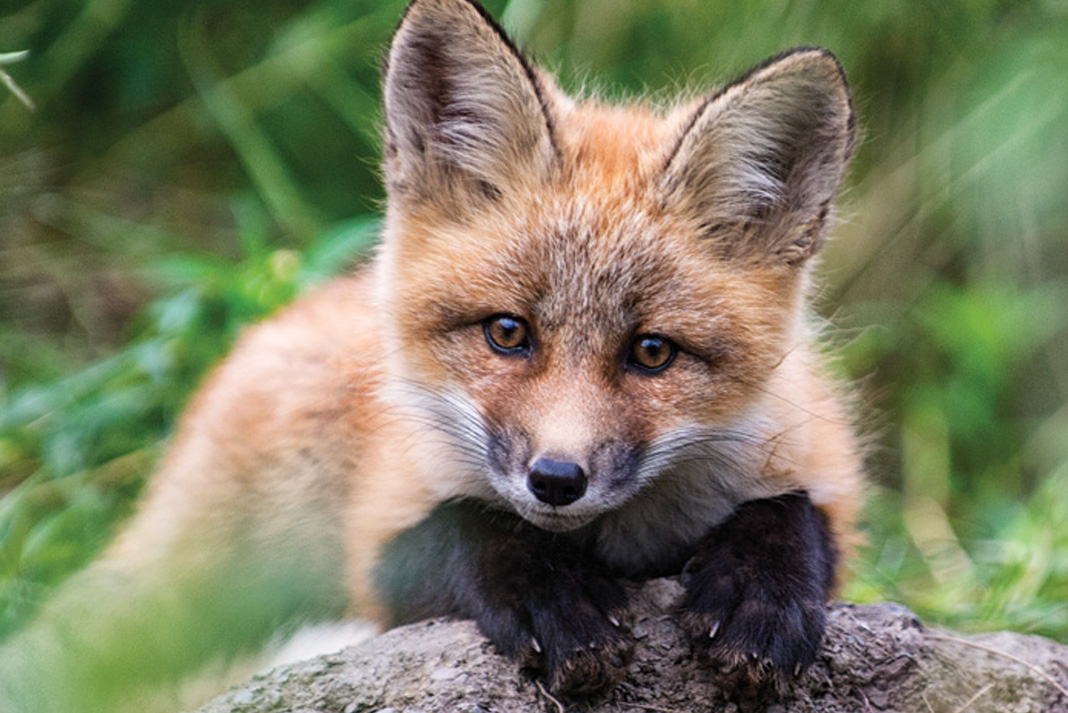
The only guarantee you have when pursuing wildlife is failure. Your camera will fail you, you will get hundreds of blurry pictures, and you will not have your camera ready when a wolverine walks through your camp. (Unfortunately, that actually happened to me.) But don’t give up. Persistence is eventually rewarded. Days after the wolverine incident I came across a fox den and I snapped a great image of a fox kit.
Passion
There’s only one thing that will get you out of bed at 5 a.m. in the pouring rain, while your mates are warmly cuddled in their sleeping bags. Passion to capture and share wildlife stories is what will set a successful wildlife photographer apart from the rest.
TELEPHOTO LENSES ARE A MUST FOR WILDLIFE PHOTOGRAPHY. | Photo: Peter Mather
Keep Your Camera Handy
What makes the difference between good and great photos? Keep your camera handy. Your camera is a tool; it will get used and abused. If you’re going to spend $1,000 on a camera system, don’t bury it in a waterproof pack for the entire trip. If that’s the case, there’s no point in having an expensive camera at all. When I first started photographing my paddling trips, I hid my camera gear in a Pelican case under my spray deck, and I tied it down with a dozen ropes. Not surprisingly, I didn’t get many good shots. Now, my camera with a 70-200mm lens sits on top of my spray deck. The camera only goes in a small dry bag when I run class II rapids or higher.
Use a Wireless Remote
For animals that are too skittish or dangerous to get close to, I covertly set up my camera in a promising feeding area and hide a safe distance away, triggering the exposure with a wireless remote when the time is right. Wireless remotes are cheap and open up new opportunities for any wildlife photographer.
CAPTURING BEHAVIOR | PHOTO: PETER MATHER.jpg
WILDLIFE PHOTOGRAPHY
WORDS and PHOTOS by PETER MATHER
CAPTURING BEHAVIOR
Photography is really about telling stories, and the best wildlife stories involve unique behavior. When photographing wildlife, be patient and wait for that magic moment.
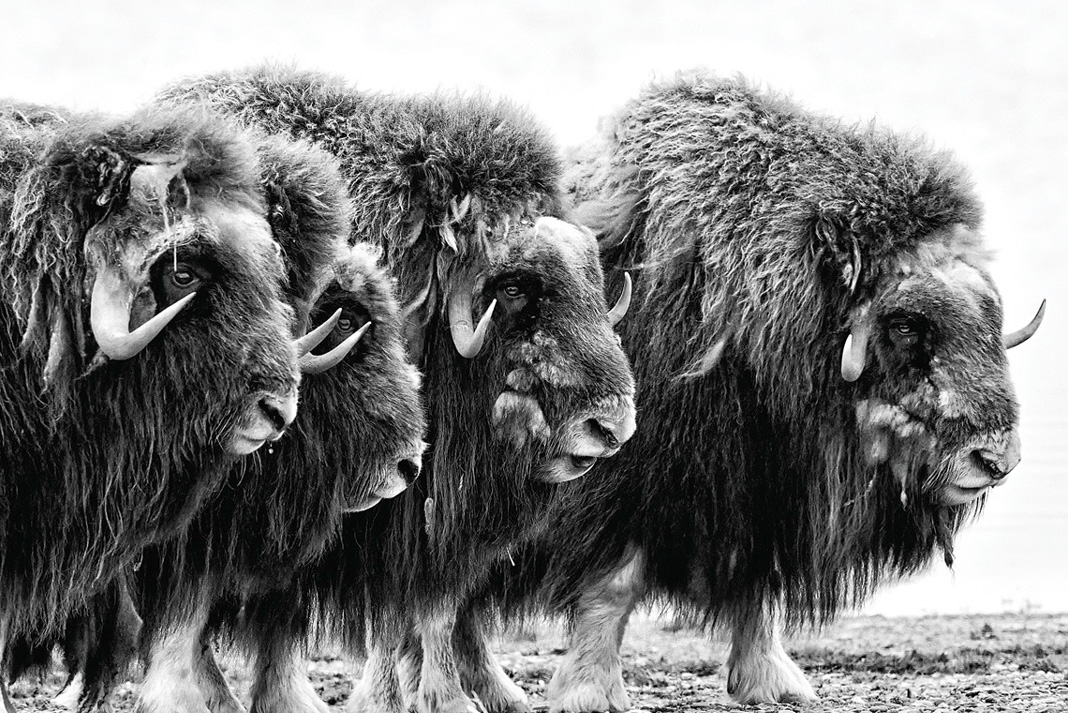
We spotted these musk oxen on a small spit of gravel along the coast. As soon as they saw us, the six adults formed a defensive ring with their four young calves firmly barricaded behind them. I tried shooting from a number of angles, but I like this image the best. The layering of the animals, and the way the eye of the second musk ox is framed by the horns of the first, evokes the impenetrability and fortitude of their protective behavior.
GETTING CLOSE | PHOTO: PETER MATHER.jpg
GETTING CLOSE
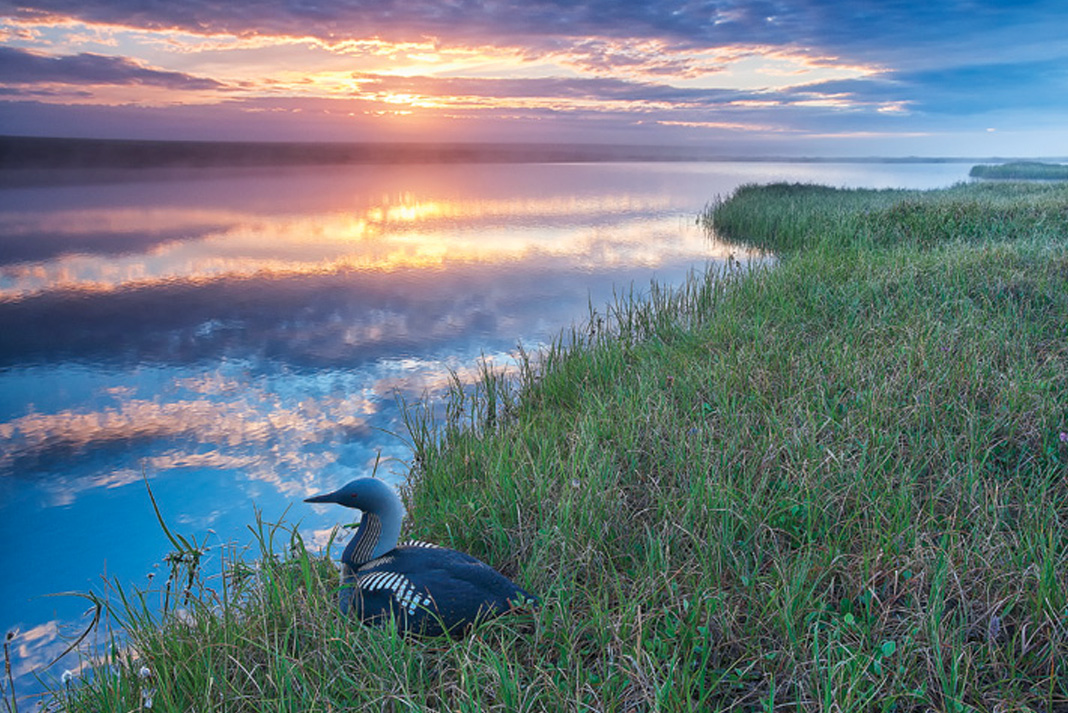
Robert Capa, the great early 20th-century wartime photographer, once said, “If your photos aren’t good enough, then you’re not close enough.” To get this image of a Pacific loon on her nest required persistence and passion. The nest was on a small pond surrounded by a giant field of tussocks and grass. I made the loon aware of my approach and, every five minutes, I’d get up and move a few feet closer until I was within 10 feet, and able to capture a very intimate portrait.
Try these three methods to get closer to wildlife. But, remember, back off if the animal appears stressed.
Blinds | Set up a man-made or natural blind in a safe area that your subject visits often, and simply wait.
Camouflage | Blend into the environment, avoid any unnatural odors and sneak up on your subject using the natural cover available. Approach from downwind and give the animal a clear escape route.
Zigzag Approach | Make the animal aware of your presence and approach slowly and obliquely in a disinterested manner.
COMPOSITION | PHOTO: PETER MATHER.jpg
COMPOSITION
When shooting wildlife with a telephoto lens (above 300 mm), choose a small depth of field—F/5.6 or lower—to keep the subject in sharp focus while blurring the background.
This will allow the subject to pop out, giving it a three dimensional effect. Minimize distracting elements by adjusting your position to ensure that the background is of pure color and little texture. Shooting at the bird or animal’s eye level creates an intimate feel and often simplifies the background. Getting low also creates a sense of harmony and balance between the wildlife and the viewer.
EQUIPMENT SELECTION
Dealing with photography equipment on a kayak trip requires balancing two contradic and you want to keep it dry. While paddling, I keep a camera with a telephoto lens wrapped in a towel and double dry bagged between my legs. Whenever I need it, I can free it in less than 10 seconds.
A range of lenses ensures variety in your photography: A macro lens for close-ups, a wide angle zoom lens (12-24 mm) for landscapes, a mid range zoom (70-200 mm) for people and patterns, and a long telephoto (500 or 700 mm) for frame-filling wildlife images like this portrait of a Pacific loon. On a month-long trip, spare batteries, a solar charger and a portable hard drive in a Pelican case are must-haves.
Trip Photography
Part-time professional photographer Mike Monaghan has been solo tripping for 20 years. “What makes a great post-trip slideshow is a diverse portfolio of images that capture the essence of your adventure.”. He lets us know what to look for when capturing photos of your trip.
The human element
The human element is an essential part of trip photography, but that doesn’t mean a smartphone selfie. Including people in your photos serves a purpose by providing context or a sense of scale, and depicting some aspect of the trip experience. As a dedicated solo tripper, I spend hours each trip setting up shots and maneuvering into place, while using the timed interval shooting setting on my camera. Capturing a paddler in a sweeping landscape engages the imagination of the viewer, allowing the viewer to project himself into the scene.
Georgian Bay, Ontario | PHOTO: GOH IROMOT
Bright colors pop
Use Bright colors pop when set in a natural landscape. There’s a reason why Bill Mason always paddled a red canoe when making his films—the bright colors draw the eye, becoming a focal point in an image. For the same reason, a piece of bright gear in the corner of an image, unnoticed at the time, can later be very distracting in your photo.
Pay attention to detail
While I am a self-professed wide-angle junkie, a great trip portfolio moves back and forth through a variety of perspectives. Pay attention to detail. Tighter shots made with a telephoto lens can capture textures or a fleeting moment or expression, while a macro image of delicate forest flora fills out the details of your experience.
Less is more
As a rule of thumb, less is more. Simpler compositions are usually more effective. Before you hit the shutter button, get in the habit of zooming in or moving a little closer to cut out clutter or extraneous details like a hanging branch. A photograph should speak for itself and tell its own story. By isolating the subject and scrutinizing the background for distracting elements, an image will have more impact.
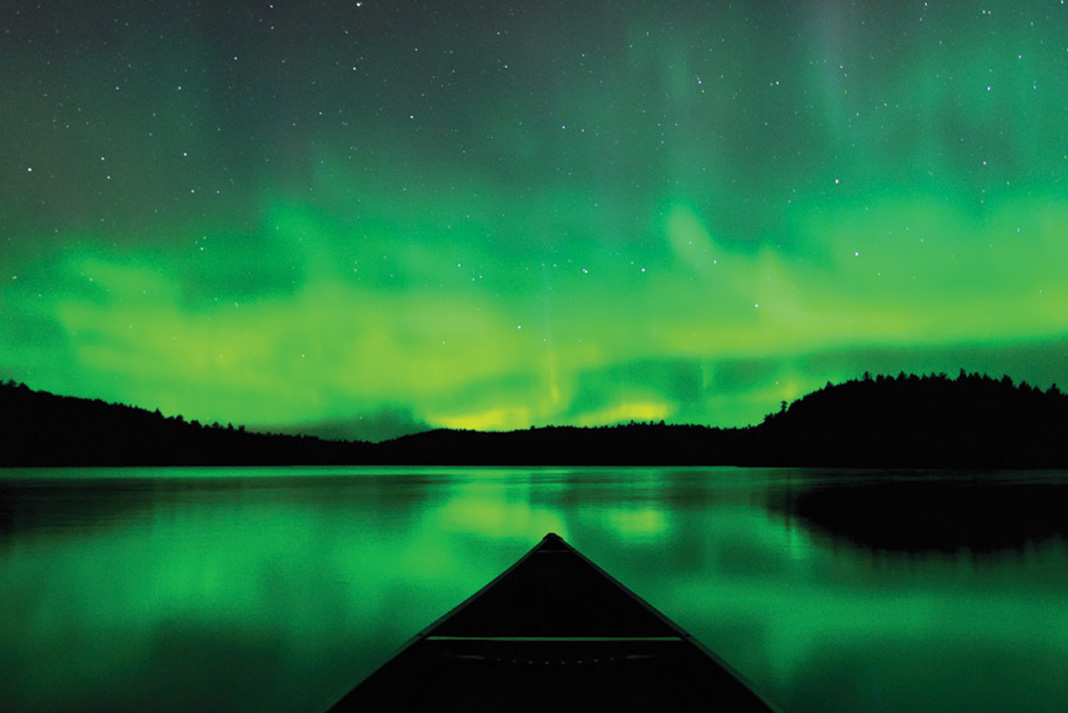
USE A TRIPOD, INCREASE YOUR CAMERA’S ISO AND EXPOSE FOR 20 TO 30 SECONDS FOR NIGHT PHOTOS. | Photo: Mike Monaghan
Night shots
Take night shots add a compelling twist to any gallery and remind us of fond memories around the campfire. Paired with a sturdy tripod, today’s DSLRs are capable of capturing surprisingly good images at night. For this type of photography, increase your camera’s ISO setting, take advantage of the manual exposure mode and be sure to have your lens set to its maximum aperture. Shots of the night sky are also a compelling addition to your portfolio. Exposures of 20 to 30 seconds will expose the sky without capturing star trails. Experiment with using your headlight to light up your tent or a tree on the shoreline.
USE SIDE LIGHTING TO REVEAL GREAT CONTRAST AND SHADOWS. | Photo: Pascal Girard
Whitewater Action Photography
Pascal Girard is an internationally published whitewater photographer who has called the river his second home for more than 22 years. “I switched to open boating from kayaking 12 years ago,” he says. “Open boaters don’t paddle down a river, they waltz in and out of eddies.” Get to know his best tips for capturing the action on the water.
Use a Waterproof Camera
When running rivers, you want to ensure your camera is waterproof, yet accessible so as not to miss any photo opportunities. A Pelican case slid between saddle and airbag, secured by two carabiners, ensures my camera is within arm’s reach but protected from splashes and fastened for any upsets.
Compensate
Sunny days create a bright glare on the water and can easily confuse your camera’s light meter—you could end up with a shot of an underexposed canoeist or blown-out whitewater. To compensate you may need to adjust your aperture up or down a half to one full stop in bright conditions. Learning manual exposure is critical; when it comes to shooting on the river, your camera’s automatic mode is a guess and will often disappoint you.
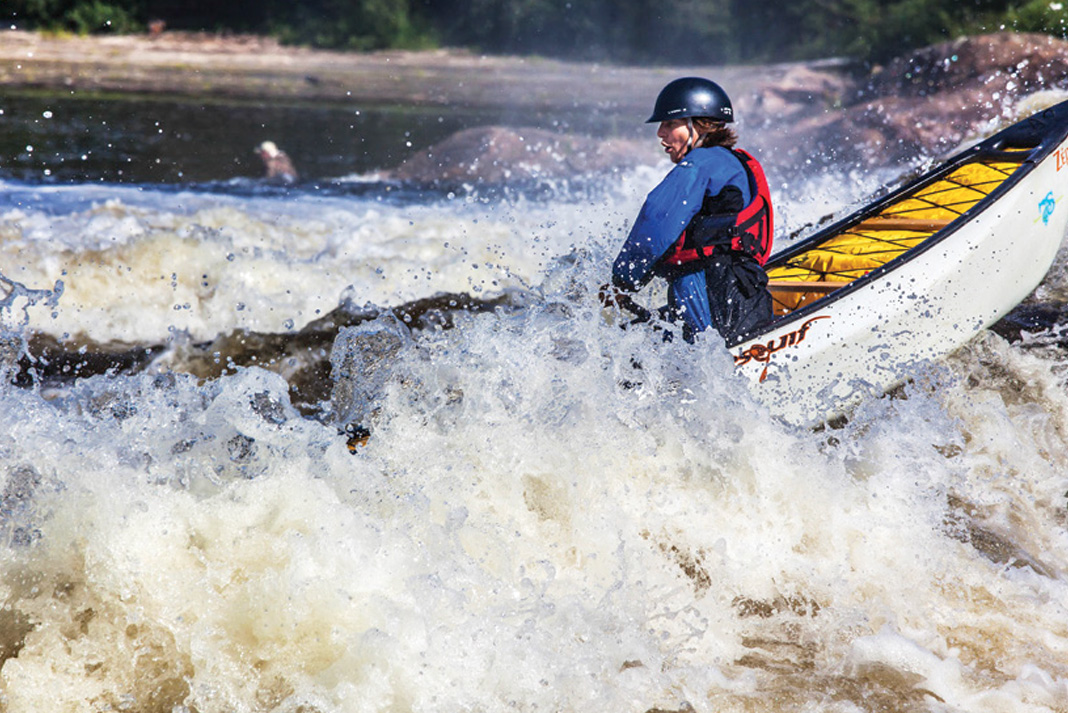
CAPTURE WATER DROPLETS WITH A SHUTTER SPEED OF 1/500 OR HIGHER. | Photo: Mike Monaghan
Anticipate the best moment
The river is a dynamic environment. The more familiar you are with river morphology the better you’ll be able to predict where the paddler will be and anticipate the best moment for action in a scene. Look for special features that will enhance the emotion of your photo: a big wave, a drop or a rock. Next, set up your exposure and shutter speed in advance. Do a practice run by pretending you are following a ghost paddler and sweep your lens along the chosen line, taking a few shots and then reviewing to check the exposure. To freeze the action and water droplets, use a fast shutter speed—a bare minimum of 1/500. To achieve more water blur in an action scene, use a shutter speed of around 1/250 and experiment.
Do not be afraid to break the rule
You’ve probably heard this rule: keep the sun behind you. Do not be afraid to break the rule now and then. Sideways light can reveal great contrast and shadows, while shooting into the sun can create dramatic silhouettes. To capture the expression of a paddler, be aware of the position of the sun and that a helmet will often create a shadow on the face.
Improbable places
We see most of our world from a standing point of view. Give your action photographs a different angle and shoot from improbable places. Get as low as you can: I often lie down on the riverbank or get right into the water. If you attempt this, be ready to have your gear splashed or worse, and bring a lens cleaning kit. To get higher, climb a rock, a tree or a friend to get above the action.
BY USING A SLOWER SHUTTER SPEED AND FOLLOWING THE MOVEMENT, THE SUBJECT WILL APPEAR IN FOCUS AND THE BACKGROUND BLURRED. | Photo: Layne Kennedy
PHOTOGRAPHING PEOPLE
An internationally published photographer who calls Minnesota home, Layne Kennedy’s images are featured in magazines worldwide on subjects as varied as pink dolphins in the Amazon River to traveling with Inuit hunters by dogsled. To get the most out of photos you take of your fellow trip-goers, check out her best advice.
Don’t forget to take photographs of people
The most valuable lesson I learned while covering wilderness assignments is to make photographs of people. It’s easy to be distracted by the beauty of paddling a foggy lake at sunrise, but your audience wants to see people in those photographs. It puts them on the trip with you and holds their interest.
Subject to be most prominent
When I photograph people in the wilderness, I want to create a sense of place while still focusing on the person. To do this, a 80-200mm lens is useful for closing in tight on a subject and eliminating distractions in the background. Combined with a wide open aperature, it allows the subject to be most prominent.
Photograph emotions
Let your emotions set off an alarm in your head to alert you to grab your camera. For example, if you are on a portage and your paddling partner gets covered in mud and you laugh, this is a sign that the moment would make a great photo. The same rationale applies to taking out your camera during the smiles of a campfire sing-along or the struggle of foul weather. Photograph the joy as well as difficulties on your trip to get unique shots and more fully capture the experience.
CANDID PORTRAIT PHOTO: GOH IROMOT
CANDID PORTRAITS
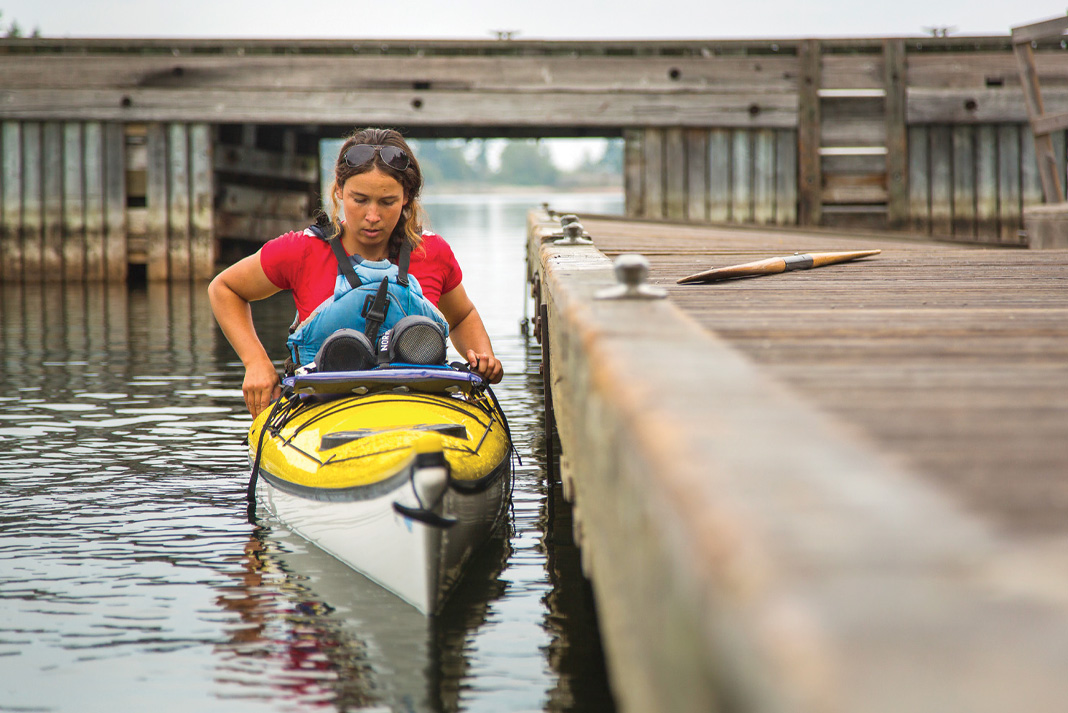
“Intuition.” Goh Iromoto admits the secret to authentic photographs of people is easier named than mastered. “I didn’t have it when I started,” he says. “I’d have the camera over my shoulder, see something, have that moment of hesitation and miss the shot.” His advice: shoot more. “If you always have your camera and you’re always ready to shoot, you start to gain that intuition,” Iromoto continues. “Be observant and quiet—watch other people when their concentration is elsewhere, and you’ll capture those candid moments.”
In this image, the paddler is busy attaching her spray deck, preoccupied with the logistics of the upcoming trip. Iromoto composed the photo to lead the viewer’s eyes to her pensive expression and capture that moment of departure. “Composition has a lot to do with lines,” he explains. “The line of the dock from the camera to the distant island is a pathway for the eyes to follow. I started shooting from standing height, but the image looked flat. By lying down on the dock, I created a sense of depth and distance.” If you’re struggling to find an interesting composition, Iromoto says, “just crouch or lie down and you’ll get a whole different world of images.”
SHOOTING SPLITS PHOTOS: GOH IROMOT
SHOOTING SPLITS
You don’t need a $10,000 housing to get underwater images like this one, says Iromoto. For paddling photography, lighter is better. He uses a waterproof camera dry bag made by EWA-Marine to protect his Canon 5D Mark III. “It weighs just 400 grams compared to the 30-pound camera system I use for commercial underwater photography,” he says. “It’s so handy, I often leave it on when I’m kayaking. I’ve even jumped off a cliff with it, shooting as I fell into the water.”
Split images trick the camera’s autofocus into focusing on the waterline, rather than the scene beyond, warns Iromoto. Before dunking the camera, focus on your subject, set the camera to aperture-priority mode and use a wide aperture like F/2.8 or F/3.5. Then it’s just a matter of making sure the lens is half in, half out of the water. “Use your intuition and watch the subject,” rather than keeping your eye glued to the viewfinder, suggests Iromoto. Shooting with an ultra-wide angle lens and getting to know how it “sees” also help. “Knowing my lens means I know instinctively what will be in the frame,” he adds, “then I can just enjoy the scene.”
LINES AND LIGHTING PHOTOS: GOH IROMOT
LINES AND LIGHTING
When shooting outdoor action and portraits, says Iromoto, “Ninety-five percent of the time I put the sun behind or to the side of the subject.” Back- and side lighting make for more interesting and appealing images than flat overhead or harsh frontal light. Except for cloudy days, which give a softer overall look, Iromoto avoids shooting at mid-day.
To make this side-lit portrait, Iromoto waited for a moment when the three kayaks formed a line leading into the frame. “There are actually two lines at work here: the diagonal from the tandem’s bow to the last kayak, and what’s called a ‘Dutch angle’—a tilted horizon that forms a sideways V with the paddlers’ line.” Wait, say again? While a flat horizon is more traditional, tilting the horizon can make action photos more dynamic and eye-popping. “On a classic scenic wide angle (like The Trip, next page) that tilted horizon would drive me nuts,” says Iromoto, “but in an action shot like photo #4 (next page, top) the image would lose its power without the tilt.”
FIND UNIQUE PERSPECTIVES | PHOTO: GOH IROMOT
FIND UNIQUE PERSPECTIVES
“Look for angles that haven’t been done,” says Iromoto. “If you’re doing something that feels really awkward or difficult, it’s probably a unique perspective.” For this image, Iromoto sat in the back of a tandem kayak and held the camera just above the water at the side of the boat. For image #3 (previous page), he paddled ahead of the group and then twisted in his seat to shoot over his shoulder. “If you’re sitting and shooting comfortably in your kayak, you’re going to get the same images as everyone else,” he says. Finding a unique angle isn’t just a gimmick. “A new perspective can be refreshing, inspiring and invigorating. It can spark something in people to go outside and explore and seek out their own adventures.”
INJECT EMOTION. CREATE GENUINE PHOTOS BY SHOOTING WHEN TIMES ARE DIFFICULT, AS WELL AS JOYOUS. | Photo Layne Kennedy
Be a storyteller
Be a storyteller. I was determined not to take the same old reeling-in-a-fish-at-camp shot. I noticed the sparkling water on the lake and knew a silhouette would separate the fisherman from the background. I waited for the right moment, when I could see part of the rod over his shoulder. The eye always goes to either the sharpest or brightest spot first in a photograph. In this case, it’s the bend in the rod. The bend adds tension and defines his purpose. Instantly, you know he has a fish on.
Ask yourself, “What am I trying to say?”
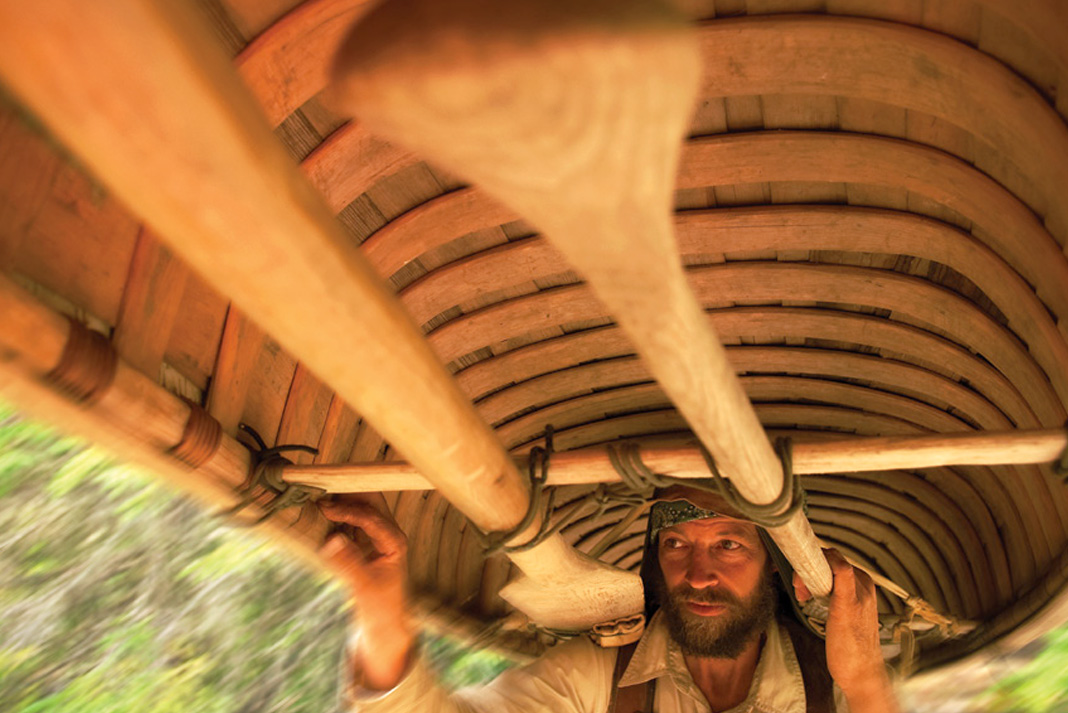
Ask yourself, “What am I trying to say?” before aiming your lens. When I followed adventurer Erik Simula on a major expedition, I wanted to make an image that showed what it might feel like to be under his birch bark canoe while portaging. To do that, the photograph would require movement so that the viewer could feel like they were traveling with him. Once I knew what I was trying to say visually, creating the photo became a simple matter of problem solving.
LEARN THE LANGUAGE | PHOTO: ERIK BOOMER
EXPEDITION PHOTOGRAPHY
PHOTOS by ERIK BOOMER | WORDS by VIRGINIA MARSHALL
LEARN THE LANGUAGE
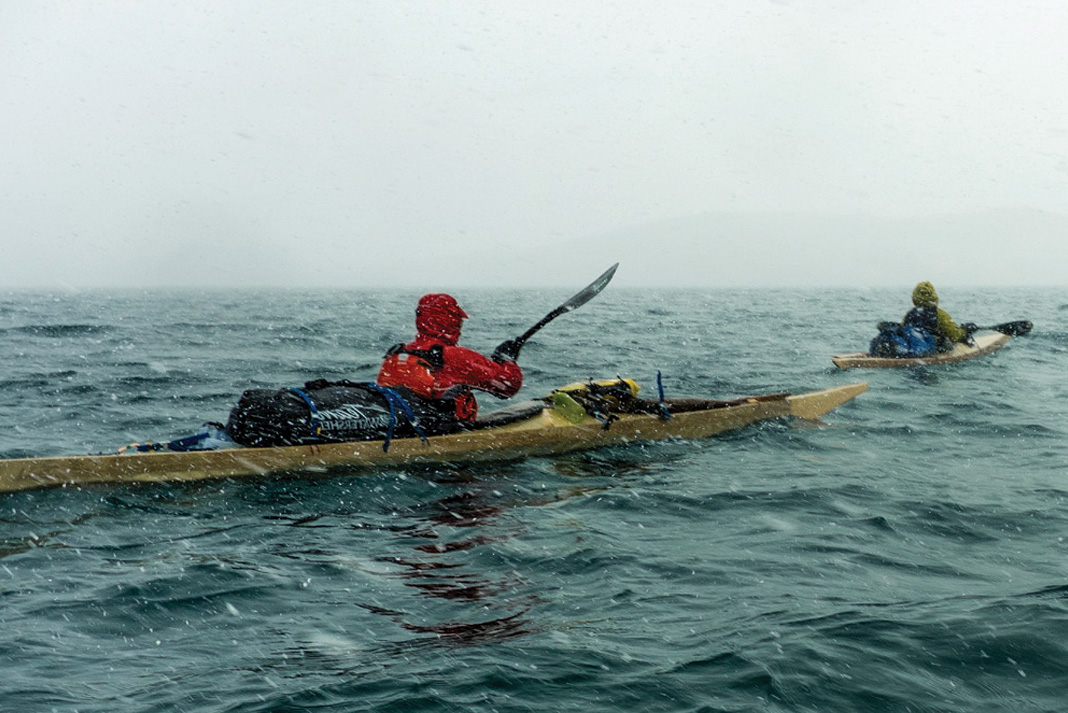
The language of photography, that is. Photographs can be either evocative or narrative, and the best documentary shooters capture elements of both. Evocative images create an emotional response in the viewer—in this image, the tension and challenge of paddling in wind and waves contrasts with the relief of a lifting storm—while narrative pictures depict the subject in a more literal way. “On an expedition, I set out to capture images that will tell a story visually—showing the challenges and also the beauty of the landscape that I am traveling through,” says Arctic adventurer Sarah McNair-Landry. Baffin expedition partner and professional photographer Erik Boomer agrees. Before your trip, he suggests, “Take the time to write out a photo plan.” Capturing those critical moments, says McNair-Landry, is all about keeping your camera handy. “When it’s cold and you’re tired, it pays off. My favorite shots have been during those tough times or stormy conditions.”
COPE WITH THE ENVIRONMENT
How do expedition paddlers keep camera equipment working while shooting in freezing, wet, salty conditions for weeks at a stretch? “The two biggest difficulties are keeping the cameras safe from the water, and keeping the batteries charged in the cold,” says McNair-Landry. The team stored their camera equipment in Watershed dry bags, which they clipped to the kayaks’ decks or stashed in their cockpits for easy access. A veteran of expeditions in frigid environments, McNair-Landry says the secret to extending battery life is ensuring the batteries are warm before use. In cold weather, store spare batteries in a pocket next to your base layer so your body heat keeps them warm. On a long trip, purchasing a compact solar charger may make more sense than buying more batteries. “Since we were traveling for two months, we used solar panels to charge not only our cameras, but also our other electronics,” she says.
THE SIBLINGS PADDLED ACROSS BAFFIN IN 2013 USING TRADITIONAL SKIN-ON-FRAME KAYAKS THEY CRAFTED THEMSELVES. | PHOTO: COURTESY MCNAIR-LANDRY FAMILY (OPPOSITE AND TOP LEFT) AND ERIK BOOMER (TOP RIGHT AND ABOVE).
CONNECT WITH OTHER CULTURES
Learn as much as you can about local culture and customs before you leave and when you arrive. McNair-Landry and her teammates spent four weeks in Nunavut building their own traditional skin-on-frame kayaks to use on the expedition. As their crafts took shape in the woodshop of the local high school, the paddlers also worked with schoolchildren and teachers to build scale kayak models, sharing their learning and discovery with the community. “It’s important to know your subject,” says Boomer, “I try to spend time with people, really get to know them and at some point, if I am lucky, I earn their trust to set up a good photo.” McNair-Landry agrees, “Be courteous—some people don’t like their picture taken, and that needs to be respected.” Get permission first, says
Boomer, except “when something wild or crazy happens right in front of you—shoot away, then ask for permission later.”
SIMPLIFY YOUR KIT
On a difficult expedition, keep your photography kit as simple as possible. “I only had a fixed lens 35 mm for the whole 65 days,” says Boomer. “Technically the small Fujifilm X100S is a point-and-shoot, but the quality is top notch.” For panoramic landscape images, Boomer got creative in the editing room by stitching photos together. “I was really happy to not bring any other lenses and find a way to make that one work.”
OUTSMART YOUR POINT-AND-SHOOT
My friend and expert paddler Paul Kuthe has a t-shirt that reads, “It’s not the boat.” It’s not the camera, either. On my walls are poster-sized images made with cheap waterproof cameras, not digital SLRs with giant lenses and sensors the size of hatch covers. Skilled shooters can make excellent images with small point-and-shoot cameras. – BY NEIL SCHULMAN
Know How the Meter Works
Camera meters are programmed to make the image 18 percent grey, the tonality of a piece of outfitting foam. It will turn white snow grey. Want a black, inky silhouette? The meter will turn that grey, too. Since not everything in the world is grey, you need to take control.
Compensate
On my cameras, the exposure compensation button is worn from use. It overrides the camera’s meter in fine increments (1/3 of an f-stop). Know where this button is. You can also lock the exposure by holding the shutter button partway and recomposing.
Expose for the Highlights, Process for the Shadows
Cameras have less dynamic range than your eye. Dark shadows are often acceptable. Blown highlights aren’t.
Get Modal
Your camera’s modes (action, portrait, landscape, etc.) use different combinations of shutter speed, depth of field and color balance. Learn what they do so you can assert creative control.
Maximize Speed
Some shutter lag is inevitable. To minimize it, shut off the auto-review and flash and set the camera to burst mode. Use a memory card with a fast write speed.
Move
The best feature of these small cameras is their rugged portability. Use it. Change perspectives, get in the water, climb cliffs and get the best angle.
Point-and-Shoot is an Attitude
Point-and-shoot is more of a mindset about making quick snapshots than it is a type of camera. Take your time. Think. What really matters in photography is vision, light, composition and meaning, not the device. Nobody asked Melville what kind of pen he used to write Moby-Dick.
GET THE MOST FROM YOUR GOPRO | PHOTO: JAIME SHARP.jpg
GET THE MOST FROM YOUR GOPRO
WORDS and PHOTOS by JAIME SHARP
SEE IN POV
The Point Of View (POV) camera fad has swallowed our recreation world whole, and with it comes a flood of marginal DIY action videos and photos. What makes POV cams so much fun—and potentially so powerful— is that you can mount them in the craziest places and get mind-blowing compositions. You just need to know what works.
Learn what field of view your GoPro or similar POV captures, so you can visualize before you shoot. Take lots of photos and you’ll start to get a feel for how wide the shot will be, and how the perspective pushes objects away and flattens height. Add-on LCD screens are great for must-get angles, but they use up a lot more juice.
MOUNTING MATTERS
My go-to mounts for diversity and changing up angles on the fly are suction arms. I use RAM mounts, one with a short hand-sized arm and another with a two-foot pole. Both arms can be quickly repositioned, used handheld or strapped to objects for more non-traditional uses. Photos and video captured from a high or low perspective are far more impressive than the head-shoulder-cockpit shots we’ve all seen a zillion times. However you mount it, don’t forget to tether your POV to something bombproof. I have lost three GoPro set-ups to waterfalls, waves and roads.
WATER AND LIGHT
Don’t let moisture ruin your shoot. Rain-X is priceless for keeping the camera lens free of water droplets. To prevent fogging inside the housing when you are shooting in cold water or on sunny days, slip silicone desiccant tabs inside the housing to absorb moisture.
POV cameras’ light metering systems are irregular and notoriously finicky. GoPro images often look bland despite good composition and angle—highlights are blown out, shadows are too dark, blacks are dull and colors are erratic. The final key to making your GoPro images really pop is post processing with photo editing software like Adobe Lightroom.
GOLDEN HOUR | PHOTOS: FREYA FENNWOOD
TRIP PHOTOGRAPHY
WORDS and PHOTOS by FREYA FENNWOOD
GOLDEN HOUR
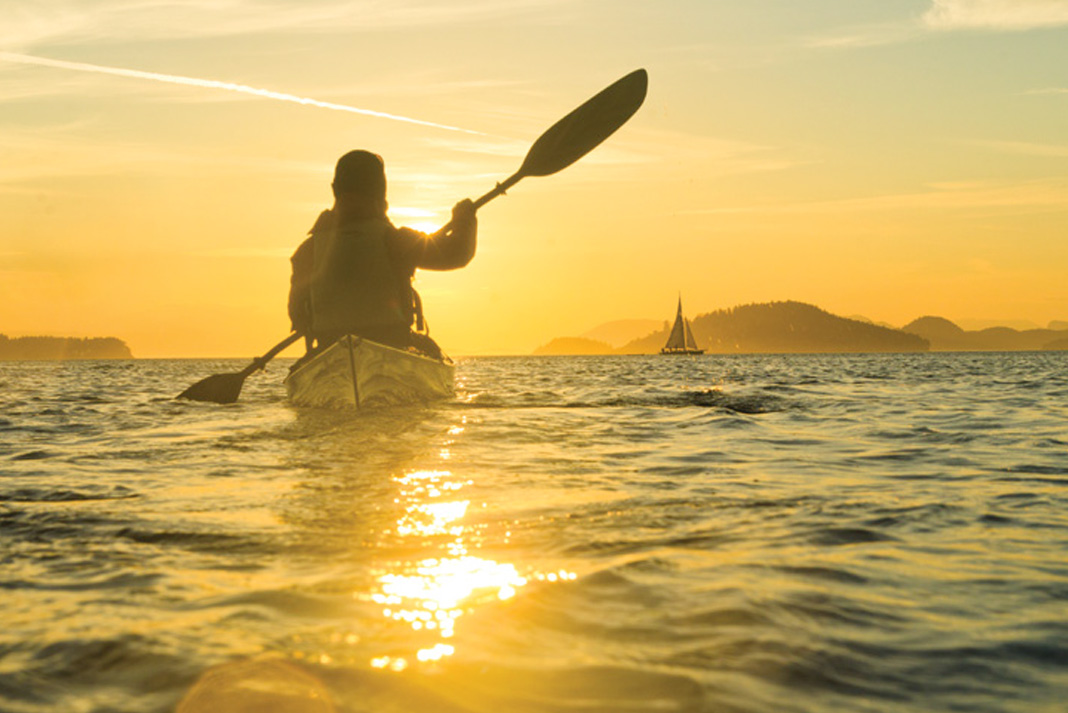
Make the effort to get out and paddle at sunrise or sunset, the “golden hours” for photography. For a silhouette like this one, point your camera into the sun and ask a friend to paddle out and do a few laps in front of you. To get this shot, I was up to my armpits in
the water, holding my camera in a waterproof housing just above the surface. I put the sun behind and just at the edge of the paddler, and used a small aperture (high f-stop, like F/22), to create a dazzling little sun star. Try getting out of your comfort zone: get high, get low, get in the water. Your sunset shot will be a stunner and not just the same snapshot you have taken over and over again.
MEMORABLE MOMENTS
It’s often the photographs you weren’t planning on that are the most memorable. Take this spontaneous group shot of an impromptu tailgate gathering as we waited for the ferry. The image captures the carefree spirit of a bachelorette trip with friends. This is the true measure of a successful trip picture—whether it embodies the feeling of a particular moment.
TRY SOMETHING DIFFERENT
Create fun and unique trip images after dark with a technique called light painting. For this shot, I put my camera on a tripod and used a remote release to hold the shutter open (you can also use your camera’s bulb setting). Then I used a flashlight to trace the outline of the kayak and my friend holding the paddle, pointing the flashlight directly at the camera so just the lines of light appeared. I also painted light on the bags and used an off-camera flash inside the tent (you can get similar results painting a bright flashlight on the inside walls).
PORTRAITS WITH PERSONALITY | PHOTO: FREYA FENNWOOD
PORTRAITS WITH PERSONALITY
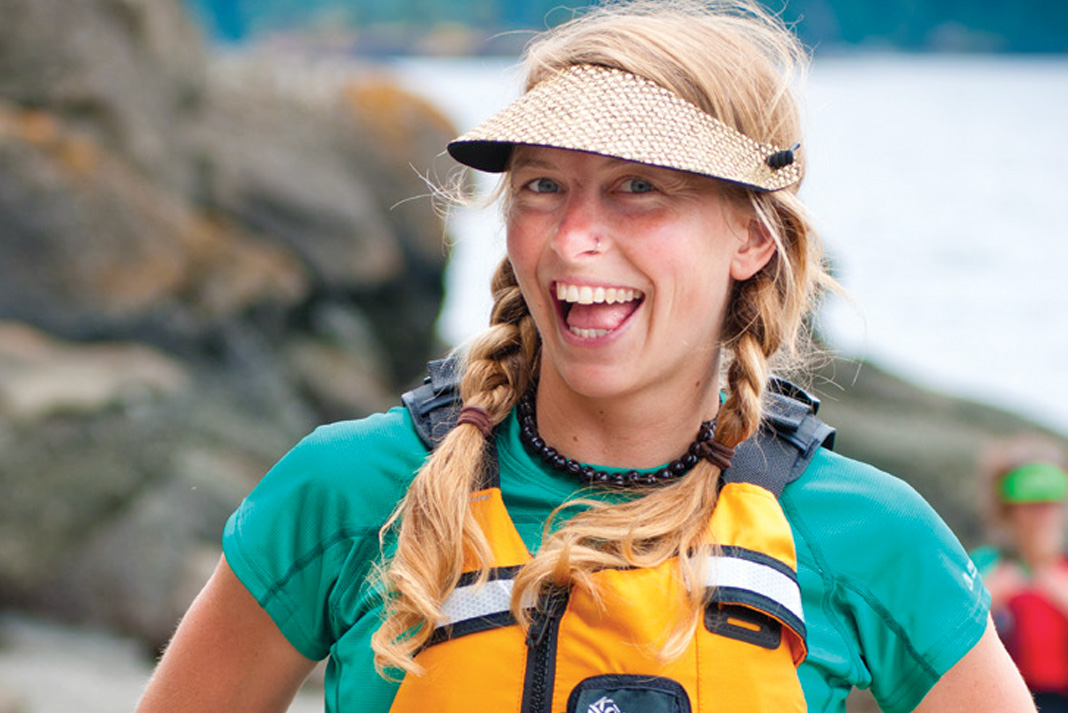
Photography is about being constantly observant and ready for that decisive moment at all times. Have your camera ready and out a lot to get people used to it, and you’ll capture authentic moments. Great trip portraits are all about seeing a natural smile and pressing the shutter at the right time. For flattering portraits your friends will thank you for, shoot a little zoomed in. A lens with a focal length from 50 to 200 mm will render naturally proportioned features and a pleasingly out-of-focus background.
Longtime National Geographic photographer Jim Richardson once said, “If you want to be a better photographer, stand in front of more interesting stuff.” Sea kayaking is certainly interesting, but subject matter alone won’t get you a great photograph. Learn how to use light and lensing, and wait for that moment that captures the essence of your trip to make an everyday paddle look like the adventure of a lifetime.
TAKE BETTER SHOTS SOLO
BY GARY LUHM
Paddling solo has its challenges, so much so that photography often ranks last in our preparation. Don’t make the camera an afterthought. At trip’s end you’ll be bursting with stories that will come alive when accompanied by great photos.
Plan
Make a shot list. Consider the images you want and the gear you’ll need to get them. A wide-angle zoom is indispensable while solo; wide is your story-telling lens. A longer focal length, like 75-300 mm, will isolate sea birds or mammals in their environment. Pack a tripod. If space is an issue, at least carry a tabletop tripod or Joby Gorillapod.
You’re the Boss
Paddling solo means you have control of your time, so you can photograph in the sweet light of dawn and dusk, no excuses. Rise early, shoot the magic hour and afterward do breakfast and break camp. In the evening, eat first, secure the camp and then venture out with your camera.
Put Yourself in the Picture
We love people pictures. People add scale and interest, and images with people tell the most compelling stories. Compose shots ashore on a tripod, set your camera’s 10-second time delay and sprint into position. Even better, use a remote release or set your camera’s interval mode to take a burst of pictures, so you’ll have many to choose from.
Shoot Action
Don’t just pose for the camera. Get shots of yourself hauling the kayak, pitching the tent, boiling water for hot chocolate or building a campfire. If something unexpected or memorable happens, do an on-the-spot reenactment if it’s feasible.
POV Pleasers
For selfies on the water, a bow or stern mounted POV is far more interesting than the view from a helmet mount. I like the GoPro Hero3, which has a built-in interval mode and wireless controller mounted on a wrist strap, so you can quickly change from video to stills.
This article contains content that first appeared in the Early Summer 2015 issue of Canoeroots and Family Camping magazine and in the Early Summer 2014 issue of Adventure Kayak Magazine. Subscribe to Paddling Magazine and get 25 years of digital magazine archives including our legacy titles: Rapid, Adventure Kayak and Canoeroots.
“What do you carry in your day hatch?” As a coach and industry leader this is a common question for Leon Somme of Body Boat Blade International. The day hatch is a small compartment right behind the paddler’s seat that is large enough to carry some gear—usually a safety kit—and small enough that if you do open it on the water and flood it it won’t compromise the flotation or handling of your boat.
What should you carry in your day hatch? In this video presented by Adventure Kayak, Leon Somme guides you through the basics, including safety essentials. “The day hatch is a part of my boat I would find hard to be without and still be an effective leader,” says Somme. “I also find it essential for expeditions, allowing me to stay on the water for lunches, snacks and changing layers of clothing when landings are formidable.”
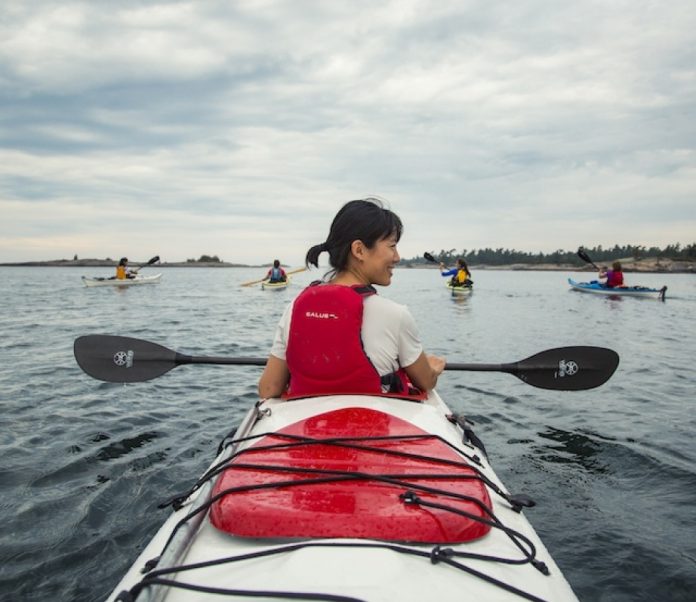
A sea kayaker looks off into the distance while at the back of a group of sea kayakers.
Whether you’re heading out for a day trip or a weeklong adventure, being prepared ensures an enjoyable trip and that you make it back alive if conditions sour. This expert-approved list will get you well on your way to packing your hatch.
Legally required items
PFD: Find yourself the right PFD and you’ll never regret it. With so many makes and models on the market, there’s no excuse to not own (and wear!) a PFD that you love.
Signalling device: A high-quality whistle attached to your PFD that is easily accessible when it counts.
Tow rope/throw rope: Besides being required by law, you’ll find your tow rope handy for helping out friends in need or tying down boats in camp.
Pump/bailing device: Boats float better when they’re not full of water, make sure you can remove water from your boat if necessary.
Other important essentials
Weather forecast/tide chart: Weather conditions and tides inform your choice of route, departure time and gear. Here’s how to read a tide table. Sometimes it’s worth waiting for tomorrow’s sunshine instead of paddling in gale force winds and driving rain.
Appropriate clothes: In just about any season, plan to have sun protection, insulating layers and windbreaking/waterproof layers. Drysuits or wetsuit/paddling top are essential in cold water conditions.
Rescue skills: Have the skills and knowledge of how to rescue yourself and others. Every paddler should have a reliable form of self-rescue such as a paddle float rescue and/or roll. Equally importantly, every paddler should know several ways of getting other paddlers back into their boats. Practice these skills in various conditions and temperatures so you feel confident when it matters.
Map and compass: Unless you’re just out for a meander in the local pond, it’s worth knowing what’s around you and how to get there.
Mini ditch kit: Include a basic first aid and repair kit and more essentials.
Communication device – Depending on your paddling area, this could be your cell phone, VHF radio or a satellite phone. Know how to use your device and make sure it’s charged.
Float plan: Make sure a trusted friend knows your expected return time and what to do if you don’t make contact by that time and date.
Plus a few more critical ingredients
Fuel: Keeping up your energy on a long paddle or cold days is a must. Chocolate is a sure-fire way to make friends among lovable dirt-bag paddlers.
Waterproof dry bag or case: Keep your keys, phone, camera and wallet safe and dry. Diving for car keys is only rarely successful.
Good paddling buddies: It can take a while to find the right people whose judgment you trust, whose company you enjoy, who have similar skills and interests, and who have the know-how to keep themselves and you out of trouble. Social paddles, kayak clubs, paddling festivals and courses are all good places to make connections.
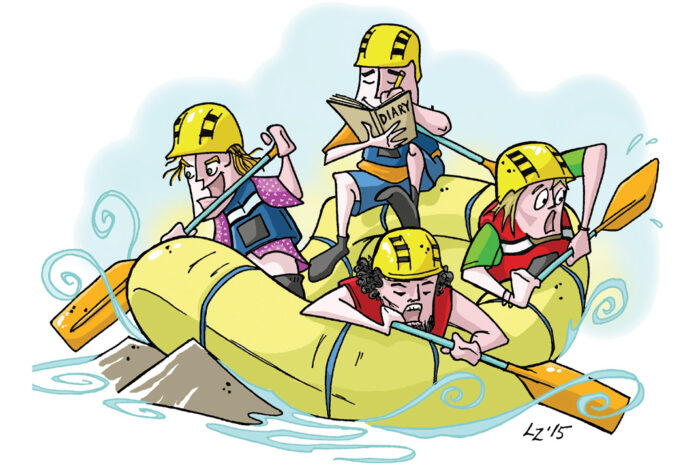
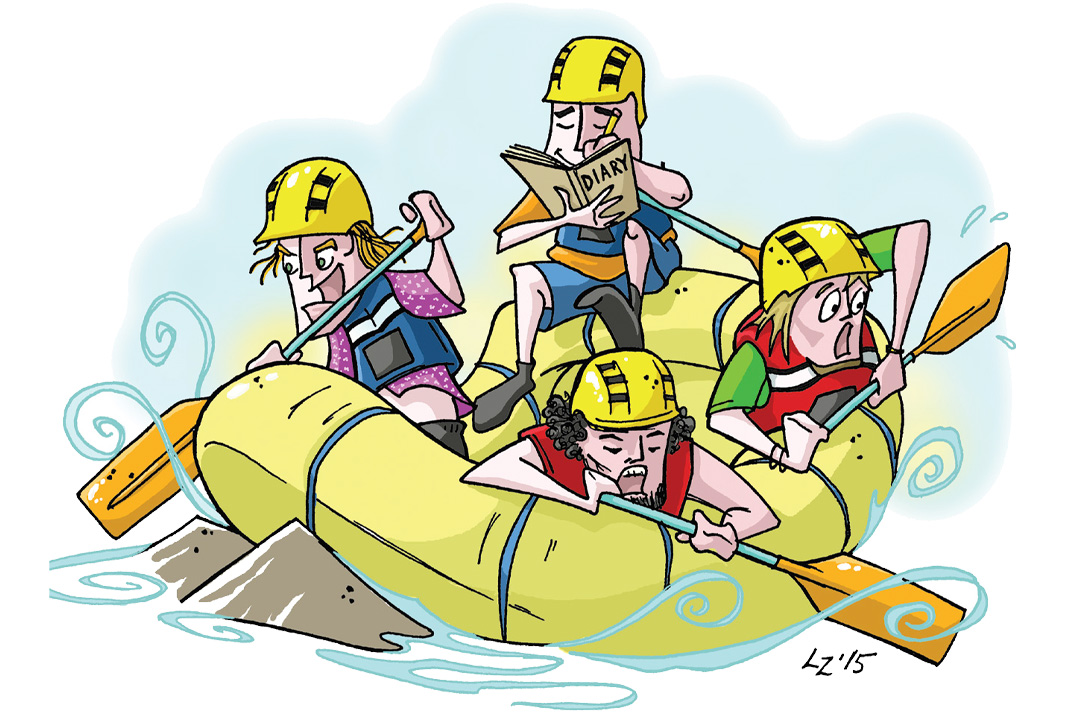
Confessions Of A Rookie Raft Guide | Illustration: Lorenzo Del Bianco
The journal of 37-year-old school teacher Eric Johnson documents the highs, lows, lingo and lifestyle of the raft guide gig in all its glory on a weeklong beginner course with a herd of twentysomethings.
Day 0:
Pull into Coloma late and fail to find the rafting company campground. Sleep in the back of the truck down by the river—something I have been warned about.
Day 1:
Guide school begins. Meet my classmates. How old are you guys? Hoping for some endearing nickname like The Professor or Pops. Meet the instructors Sean and Iowa. (Note: never learn Iowa’s real name).
Introductions: “Tell us your name, a reason for taking the class, and an interesting thing about yourself.”
Most of the students are looking for jobs as rafting guides. They’ve been to exotic places, done interesting things and have personal philosophies. I am a high school teacher with a wife and three kids. Eyebrows go up. What married man with three small children enrolls in a whitewater guide school? I am either interesting or stupid. Several students scoot closer; they want to know which.
Day 1 Afternoon:
Gear checkout. “Rig to flip; dress to swim” our instructors remind us—the first of many eye-roll inducing rafting platitudes that will come our way. Later we hear: “T-it up,” “It’s never too early,” “Go with the flow,” “Embrace the spin,” or its more poetic cousin, “Spin it to win it.”
We take our first run down the river, a guided trip through the lower gorge of the South Fork of the American River. We ride as passengers and our instructors point out rapids and features of the river.
I make it a point to try and memorize everything.
Day 2:
I remember nothing.
Now it’s our turn. For the remainder of our instruction, we will be the ones guiding the rafts downriver. Terrifying. Under the guidance of absolute novices, we bounce off rocks, spin out of control through rapids and blow past eddies. Our “guides” change places every few bends, shriek commands, issue the wrong instructions, or totally freeze-up.
Confessions Of A Rookie Raft Guide | Illustration: Lorenzo Del Bianco
Day 3 & 4:
Middle Fork of the American River. Sean calls this river “bipolar.”
“It starts out with some super violent class IV and then goes to basically flatwater for nine miles until you hit more of these huge drops.”
Iowa is more emotive, “We’re going to the Mo’Fo’!”
Our instructors guide a rapid called Tunnel Chute.
“Super consequential,” are Iowa’s exact words.
“So what happens if we fall out of the raft in Tunnel Chute,” somebody—not me, of course—asks.
“Um…um…you need to get into a ball and go to a super happy place in your head.”
On the second day Sean falls out at the bottom of Tunnel Chute and we learn the importance of not falling out as a guide: Sean has to buy Iowa a case of beer.
Super consequential.
Day 5:
Throwbag and raft flipping practice. More inexpert rafting down the South Fork. I am sore, tired and drinking PBR’s after class. But I warn the young job seekers around me to abstain.
“You know, they might just want to see if you can go a week without drinking,” I say as I pop open another beer.
Day 6:
My pain is replaced by the sheer joy of being on the river everyday.
We do the whole river from the Chilli Bar section down through the lower gorge to the Folsom Reservoir takeout.
The upper section goes fine. I decide that I am totally guide material.
We stop at the campground for a quick lunch. After lunch I take another turn at the helm. I pilot us right onto Rookie Rock where we are pinned for the next five minutes until I unload some ego, which gets us off the rock but does not make my raft driving skills much better.
I proceed to hit rocks on down the river. I bounce off of Fowler’s Rock, the first rapid in the gorge section, spin backward through the rapid, hit several unnamed rocks that are just as hard. Not my best performance.
“Spicy line Johnson,” Sean says. “Who’s next?”
Humbled, I hand over my guide paddle.
Day 7:
On Saturday, last day of class, the instructors bring a two-person raft and a volleyball to the put-in.
“Wilson may fall out of the raft from time to time,” Sean says. “Please save him.”
This is the major exam.
Our last trip down the river goes well. We save Wilson a few times. We make pretty clean runs. I pilot Trouble Maker rapid perfectly and get another shot at Fowler’s Rock, which, upon successful navigation, I rename Johnson’s Redemption.
My younger classmates talk about what’s next if they are not asked to work for the company as a guide.
All that possibility. Paralyzing.
I am reminded that this is the part of being 22 I don’t miss.
“Don’t worry,” I tell them. “Just follow your line, T-it up, embrace the spin.”
My classmates roll their eyes in gratitude.
“No trouble,” I say. “That’s what I do. I’m a river guide.”
Schoolteacher Eric Johnson has returned to the classroom where he offers similar words of wisdom to his high school English class. They, too, roll their eyes.
This article first appeared in the Early Summer 2015 issue of Rapid Magazine.
Subscribe to Paddling Magazine and get 25 years of digital magazine archives including our legacy titles: Rapid, Adventure Kayak and Canoeroots.
There has never been a greater need to unplug and reconnect. The Paddle In The Park Contest was created to inform and remind people of the many rewards of getting outside, from our health and well being, to support parks and wild places. What better way and more exciting way to do this than with a chance to find a handcrafted canoe paddle, hidden somewhere along the many vast water trails in Ontario?
With the hope to encourage more people to get out there, Badger Paddles and Portaguer.ca got together with a number of Ontario paddlesports industry leaders to help promote spending time in the wilderness (parks and conservation areas, as well as other remote locations) by way of an interesting campaign. They put together 9+1 Rewards and Reasons to spend time in nature, every day this summer; and new for 2015, developed a “Paddle Points” system so those who are unable to take part in the paddle-seeking part of this popular event, will still have a chance to share their love of nature, all while increasing their chance of winning some cool gear and other prizes.
There’s a paddle in the park, waiting for you to find it. If you find it, you keep it.
The paddle-seeking portion of the contest starts July and runs until September 15th, 2015 or until all the paddles are found. The PADDLE POINTS portion of the contest opens July 15th, 2015 and closes September 30th, 2015 with winners to be announced shortly after. Be sure to read the contest rules before you enter.
PADDLE SEEKERS: There are six Badger Canoe Paddles hidden along the portage trails of some of the more popular canoeing destinations of Ontario. • Clues to their specific location will be offered throughout the summer, becoming increasingly specific • Hidden paddles are marked with a special collectors wooden tag with instructions and other information • Once you find a paddle, contact Paddle in the Park and they’ll send you the rest of the prize package • Prizes, besides the hidden paddles, include a subscription to Canoeroots magazine, along with more prizes and gear as provided by Algonquin Outfitters, Portageur.ca, Badger Paddles, The Happy Camper, Killarney Outfitters, Cabin Falls EcoLodge, Jeff’s Map, Trailhead Paddleshack – Ottawa, Wild Rock, Algonquin Basecamp, Sojourn, The Canadian Canoe Museum and more!
Obviously many people are going to be out looking for these hidden Badger paddles, so if you are travelling the Ontario wilderness by canoe this summer, keep your eyes open for a tagged canoe paddle (in a black Badger Paddle Sock) along the portage trails.
PADDLE POINTS SEEKERS: There are a limited number of PADDLE POINTS up for grabs this summer. • Upload photos of you and your friends completing tasks from our official list of various outdoor related challenges in exchange for Paddle Points and a chance to win gear and prizes from our fabulous sponsors, including a new Prospector from Nova Craft Canoe and more • By incorporating the official PITPC hashtag #RewardsAreOutThere in your photos, or when you include a copy of the official PADDLE POINTS Flag image, you automatically double your points value for each verified photo! • PITPC prize packs include the title classes Explorer, Pathfinder, Voyageur, and the coveted 1st class title of Wilderness Guide. • Share your PADDLE POINTS photos and adventures with everyone over the summer and at the end of the contest, entrants within each title class will have a chance to win the prize pack for their coinciding title class and more!
Find more info, clues, and updates at paddleintheparkcontest.ca.
THE BOUNDARY WATERS CANOE
AREA ENCOMPASSES 1,000 LAKES
AND 1,500 MILES OF CANOE
ROUTES. IT RECEIVES 250,000
VISTORS ANNUALLY.
| PHOTO: LAYNE KENNEDY
A mere glimpse of a map of Minnesota’s Boundary Waters and Ontario’s Quetico Provincial Park is enough to set the imaginations of Dave and Amy Freeman racing. The husband-and-wife founders of the Wilderness Classroom, a youth outdoor education program, developed their passion for canoe tripping in this mosaic of freshwater stretching across 9,000 square kilometers and an international border. They retraced canoe routes plied for thousands of years by Indigenous people and fur-trading voyageurs, reveling in vestigial wilderness located in the heart of the continent.
The late Ely, Minnesota-based author and conservationist Sigurd Olson called this place “The Singing Wilderness”—a fitting description for the siren’s call that has shaped the Freemans’ lives.
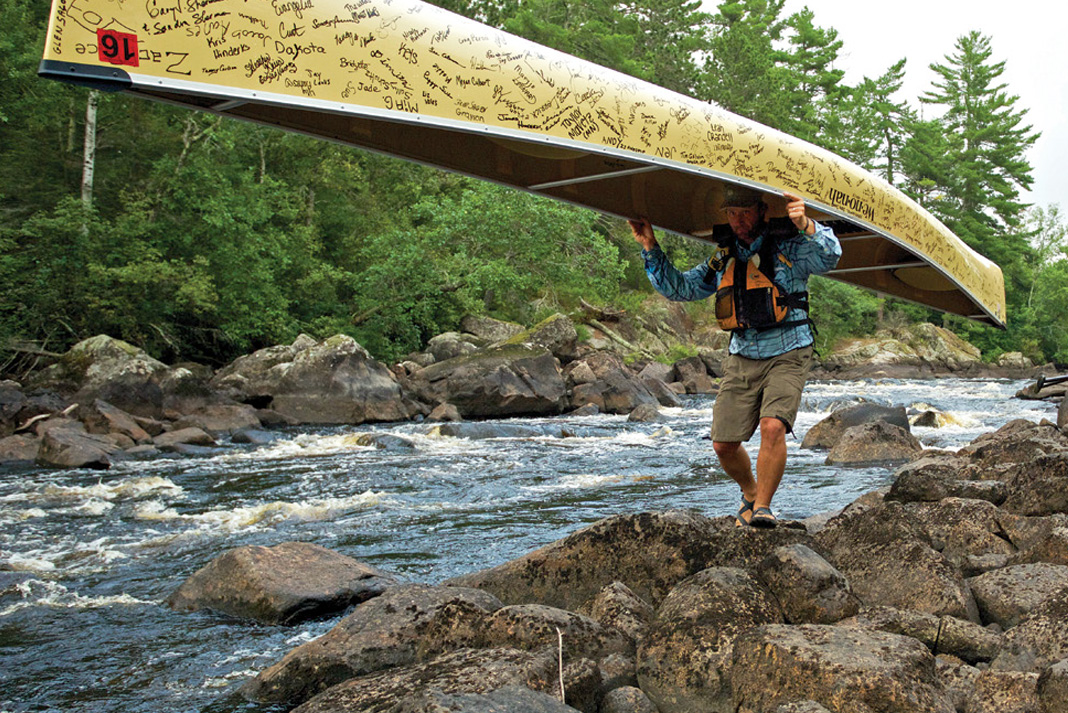
Last August, the couple were compelled to embark on a canoe journey that was profoundly different from the typical Boundary Waters trip. Dozens of paddlers gathered to send them off on the South Kawishiwi River; their Kevlar canoe was covered with hundreds of signatures, scrawled across its hull in black ink; and their destination was Washington, D.C., 3,000 kilometers distant.
The Freemans were following in the footsteps of Olson and other environmental activists whose efforts, over the past century, have saved Minnesota’s north woods from development; including hydroelectricity schemes, logging and motorized access.
Commemorating the 50th anniversary of the Wilderness Act, pivotal U.S. legislation that established the 4,400-square-kilometer Boundary Waters Canoe Area (BWCA), the Freemans were paddling to the White House to oppose a copper and nickel mine proposed for the doorstep of North America’s most popular canoe area. Fittingly, an 18-foot Wenonah model bearing 2,000 signatures was their petition.
Behind the looming environmental threat
Near the South Kawishiwi River, less than a kilometer from the BWCA’s southern boundary, $100 billion worth of copper, nickel and other minerals is buried in sulphur-bearing bedrock. Mine proponents argue Minnesota’s environmental regulations are robust enough to protect the surrounding waterways from contamination. Last summer, Twin Metals, a subsidiary of a Chilean mining company, started the process of getting state and federal permission to develop the largest underground mine in Minnesota history.
Dave and Amy Freeman with petition canoe, Sig, on their way to Washington, DC. | Photo: Nate Ptecek
Environmentalists identify Twin Metals’ mineral leases, which recently expired, as the key to stopping the proposal. While the company lobbies to have the claims extended this summer, the non-profit Save the Boundary Waters organization is countering with a national campaign to convince the federal government to outlaw mining activities altogether within the BWCA watershed.
“We have a unique moment in time when we the people can ask for public lands to be withheld from mining,” says Becky Rom, an Ely-based environmental activist. “We have an opportunity to finish the job.”
MiningWatch Canada, a non-profit industry watchdog organization in Ottawa, calls mining a “waste management industry.” A gold ring on your finger, for instance, is the product of about one ton of gold-bearing material—besides the one to three additional tons of so-called waste rock that must be removed to access the ore and is disposed of in mountainous heaps. Isolating desired minerals from ore also creates chemical- and heavy metal-laced reservoirs known as tailings ponds. Mining by-products must be carefully quarantined and monitored for leakage.
“It’s not a question of whether, but when, a leak will occur that will have major impacts on the water quality of the BWCA.”
— Dr. Tom Myers, hydrogeologist
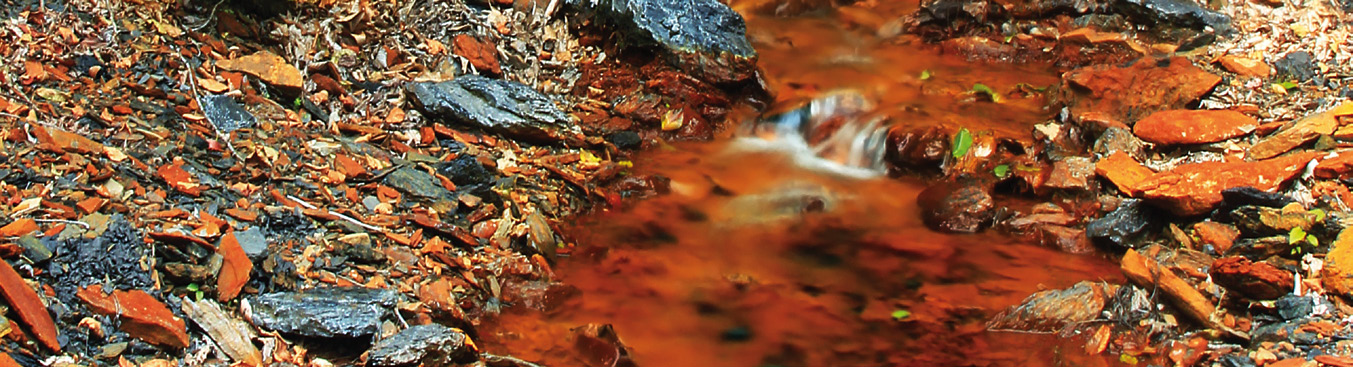
Where mining occurs in sulphur-bearing rock, such as the proposed Twin Metals operations, there’s an elevated risk of acid mine drainage and metal leaching coming from waste rock and tailings ponds. These interconnected chemical processes occur when subsurface, sulphur-bearing materials react with water and air, creating sulphuric acid. Because dangerous metals like lead, zinc, copper and mercury become more soluble in acidic conditions, a feedback loop develops where increasingly acidic mine runoff becomes laced with higher and higher concentrations of toxins.
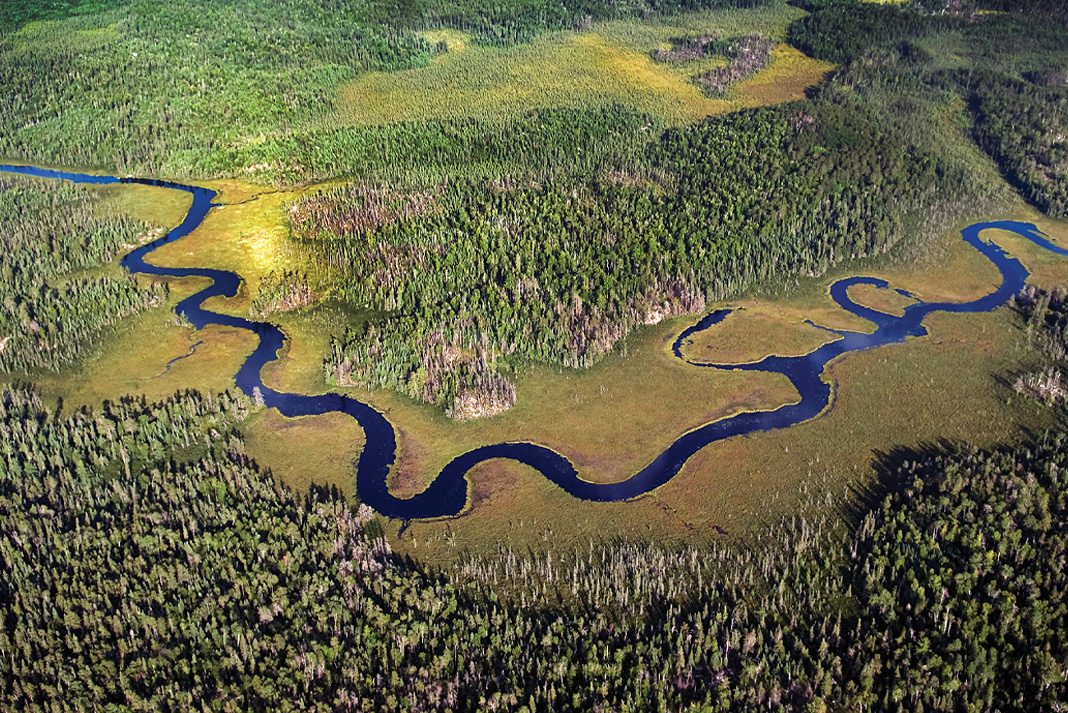
Copper and nickel deposits in northern Minnesota are located at the top of a watershed encompassing the BWCA, Voyageurs National Park and northwestern Ontario’s Quetico Provincial Park. Save the Boundary Waters hired Dr. Tom Myers, a Nevada-based hydrogeologist and water resources consultant, to dig deeper into the Twin Metals proposal.
Due to the “massively interconnected waterways” and minimal capacity of the surrounding vegetation to buffer acidic contamination, Myers concluded, “It’s not a question of whether, but when, a leak will occur that will have major impacts on the water quality of the BWCA.” The result would be analogous to the sterile waters of Ontario’s copper-mined Sudbury region.
“It’s like a massive time bomb,” says Rom, a lifelong Ely resident. “Everything that comes out of the mine must be captured and treated forever. If you did a true cost-benefit analysis, this type of mining wouldn’t pencil out.”
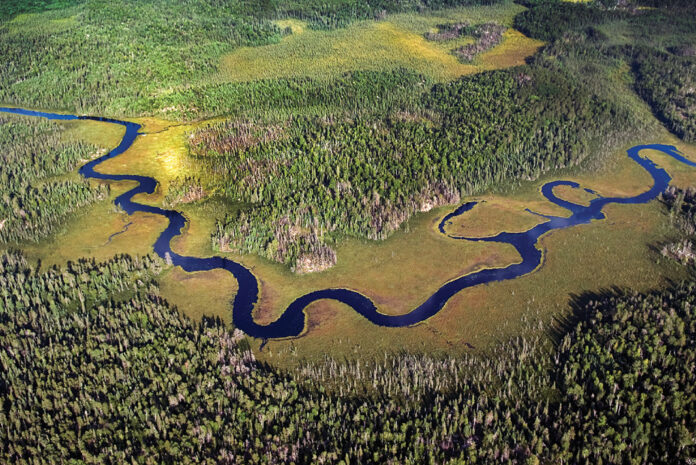
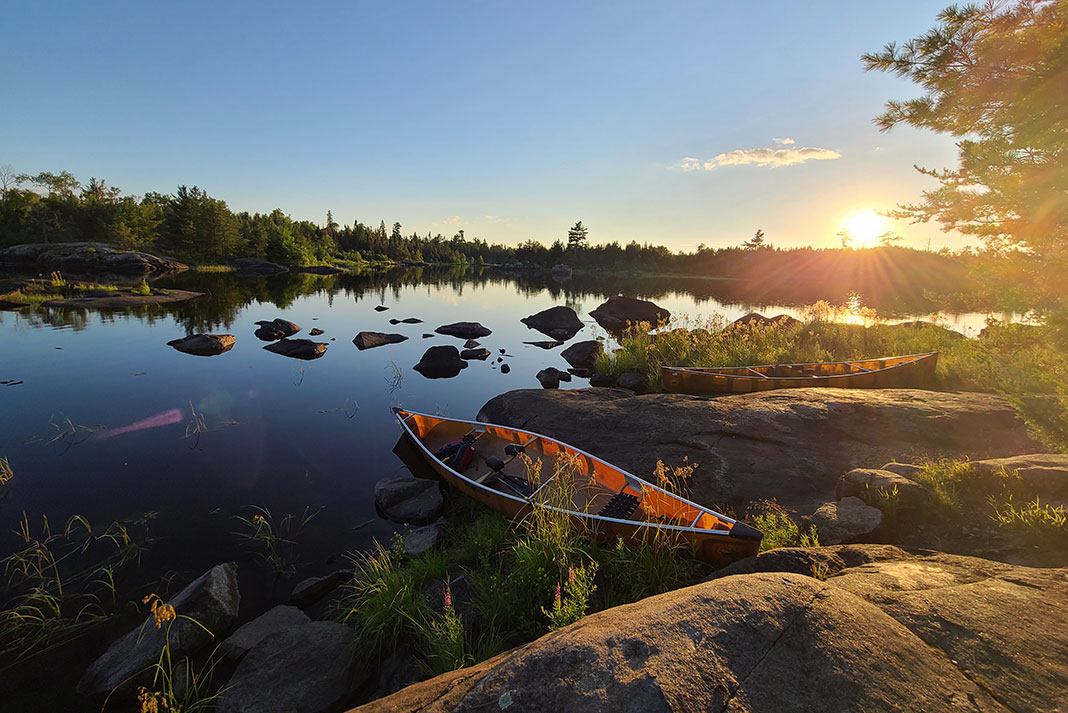
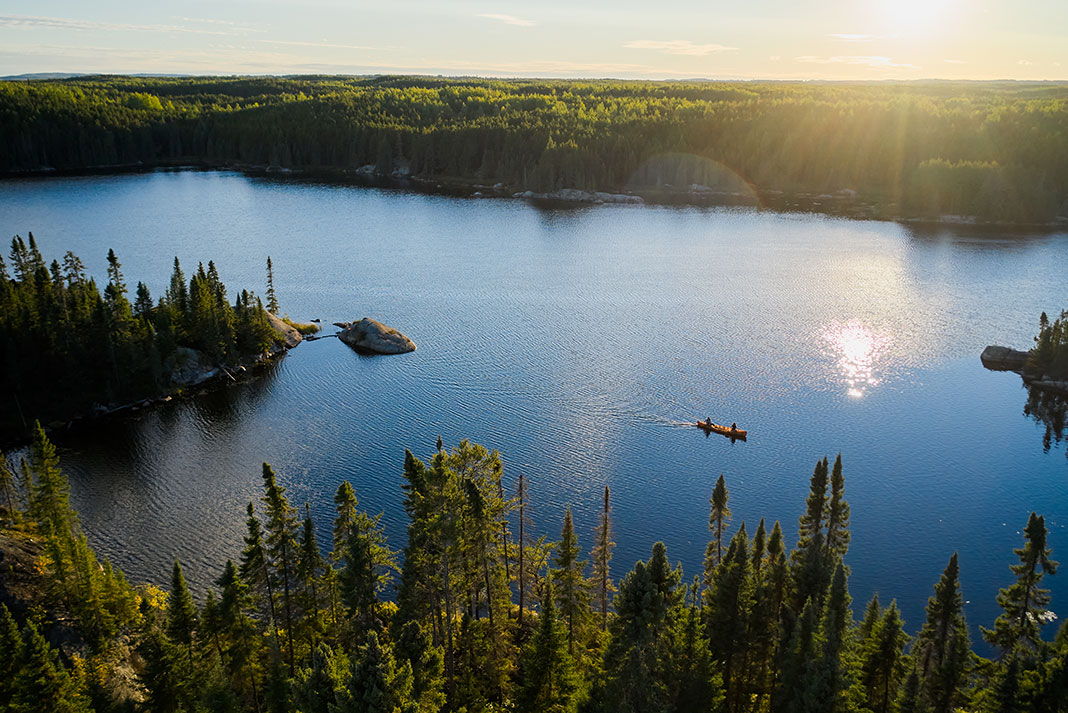
The Boundary Waters Canoe Area encompasses 1,000 lakes and 1,500 miles of canoe routes. It receives 250,000 visitors annually. | Feature photo: Layne Kennedy
Rom is the granddaughter of a miner who worked on Ely’s historic iron range. Her father bucked the mining tradition and, in 1946, started what would become the largest canoe outfitting company in the world, Canoe Country Outfitters. Bill Rom stood alongside Sigurd Olson in lobbying for the 1964 Wilderness Act. Meanwhile, his children worked as canoe guides in the BWCA; Becky started leading trips in the wilderness at age 14. She insists there could be no worse place to develop a mine like Twin Metals than on the doorstep of the BWCA.
“We’re basically an inland sea of interconnected wetlands, streams, rivers and lakes,” she says. “The nature of this kind of mining is such that you cannot prevent damage to the water or damage to the forest. The EPA says sulphide mining is America’s most toxic industry. Do we really want to put that in the watershed of America’s most popular wilderness?”
Not all locals are against the mine
Like Becky Rom, Nancy McReady is a lifelong Ely native. She and her husband, a retired miner, raised their family on the edge of the BWCA on Fall Lake, downstream from the Twin Metals deposits. The president of the Conservationists with Common Sense, a group advocating for responsible resource use, her organization stands for a healthy environment and “multiple use access to public lands and waters.”
“We support rules and regulations based on good facts and not just emotion,” says McReady.
McReady fully endorses the Twin Metals mine. For its part, the company touts a state-of-the-art, modern mine with more than 30 years of reserves that will bolster the regional economy with 850 full- time jobs and return Ely to its halcyon days. With over four billion tons of untapped minerals in northern Minnesota, Twin Metals could be the beginning of a mining boom.
“This is the next evolution of mining,” says McReady. “For future generations, I hope this mine goes. I love my town, but it’s dying. Mining will provide the jobs and the tax base to keep us going.”
Moreover, McReady is confident that Minnesota’s pollution regulations will keep an “eagle eye” on Twin Metals’ operations. She points to the Flambeau Mine, which operated in a sulphide ore body in Wisconsin and closed in 1997, as an example of how proper engineering can eliminate the risk of acid mine drainage. “The sulphide content here is nowhere near what it is in other areas where they’ve mined successfully,” says McReady. (The Flambeau legacy remains controversial. In 2012, federal court ruled Flambeau had violated the Clean Water Act, but also praised the company for promptly addressing the issue.)
Acid mine drainage as seen in this stream in north-central Pennsylvania. | Photo: Nicholas A. Tonelli
“Here in our backyard we can do it right,” says McReady. “As long as the science is there, we will be supportive. If it’s proven otherwise, we will be there to stop it as well.”
The long, winding journey to Washington, DC
Whenever he traveled beyond the Boundary Waters, Sigurd Olson inevitably compared the sights and sounds to his beloved Minnesota lakes. “The singing wilderness has to do with the calling of the loons, the northern lights, and the great silences of a land lying northwest of Lake Superior,” he wrote. “I have heard the singing in many places, but I seem to hear it best in the wilderness lake country of the Quetico-Superior, where travel is still by pack and canoe over the ancient trails of the Indians and voyageurs.”
“The EPA says sulphide mining is America’s most toxic industry. Do we really want to put that in the watershed of America’s most popular wilderness?”
— Becky Rom
From the South Kawishiwi River, Dave and Amy Freeman paddled north to the Border Route, following the voyageur highway across Basswood, Knife and Saganaga lakes, and making the 13-kilometer Grand Portage to Lake Superior. They had plenty of time to reflect on the significance of the BWCA wilderness—both on a personal level and in the way it has ignited an environmental ethos in legions of Americans. Amy recalled her first BWCA canoe trip as a 12-year-old. “It opened my eyes to how important it is for people to spend time in wild places,” she says. “Even as a kid, it was special.”
After strapping their canoe to a sailboat to make time on the Great Lakes, the Freemans again took to the paddle in Ontario, battling the currents of the French and Mattawa rivers to the Ottawa River, and crossing the U.S. border at Lake Champlain. They also stopped to deliver over 40 presentations to environmental groups, outdoor clubs and students along the way. Finally, they paddled the Hudson River and the Atlantic seaboard and arrived on December 2 in Washington, D.C. The 101-day journey reaffirmed the couple’s love for the BWCA. “Nothing else was quite so wild,” says Amy.
Over 40 Minnesotans greeted the Freemans when they landed in Washington and portaged the signature canoe to Capitol Hill. It was nice to reconnect with friends, but it was the people they met along the way who bolstered their resolve.
“Even in far away places like Ottawa, Vermont and New York City, people would tell us stories about their first experience in the Boundary Waters,” says Dave. “It made us appreciate what a treasure we have.”
Conor Mihell is an environmental reporter and adventure travel journalist. Visit him at: conormihell.com
This article was first published in the Early Summer 2015 issue of Canoeroots Magazine. Subscribe to Paddling Magazine’s print and digital editions, or browse the archives.
The Boundary Waters Canoe Area encompasses 1,000 lakes and 1,500 miles of canoe routes. It receives 250,000 visitors annually. | Feature photo: Layne Kennedy



 This article first appeared in the Early Summer 2015 issue of Adventure Kayak magazine.
 This article first appeared in the Early Summer 2015 issue of Canoeroots and Family Camping magazine.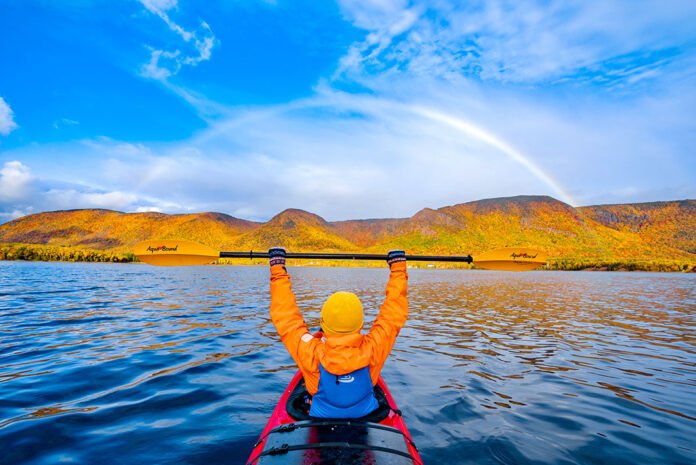
 This article was first published in the Early Summer 2015 issue of Adventure Kayak Magazine and was republished in the 2023 Paddling Trip Guide.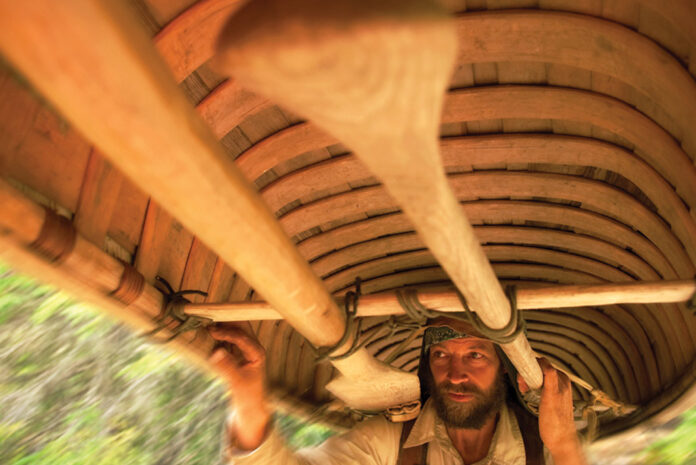
 This article first appeared in the Early Summer 2015 issue of Rapid Magazine.