Home Blog Page 262

Friendly Fire: Canoeists Versus Kayakers

GAME ON. PHOTO: PETER MATHER

Coke competes with Pepsi, Beatles with Stones, Gauls versus Visigoths. Most importantly there are canoeists versus kayakers. Each duality can either peacefully coexist or rage at the other.

Until a paddle on the mighty Thames River in London, England—on the occasion of the British Queen’s Diamond Jubilee Flotilla—I had been prepared to hold my tongue regarding kayakers. But enough is enough. It’s time to speak out about the double-bladed drips.

Let me tell you the story. At the head of this 12-kilometer-long flotilla was the strangely-named Manpowered Squadron, which included 265 paddled and rowed craft. This Squadron was nine columns abreast and 35 rows deep on the river.

The longest vessels were to lead and the smaller vessels, including a herd of 68 kayaks, were to wipe up the rear.

Canada One, a 10-meter North Canoe of which I was helmsperson, had the esteemed anchor position amongst the big boats, beside the New Zealand waka and with four ocean-going outrigger canoes.

We’d been briefed multiple times—in a precise British lilt—to paddle in formation and not to slow or stop. This was particularly important when passing Her Majesty and family waving from the Spirit of Chartwell, the royal barge, which was tied up just below Albert Bridge.

As might be expected, minor delays to take a few passing snapshots of the Royals from the first boats of the Manpowered Squadron turned into a total traffic jam under Albert Bridge by the time the well-behaved crew of Canada One approached. Instead of pushing on and into the oars of large rowing craft ahead, we opted to obediently wait to take our turn to fête the Queen. The three-score and eight unruly kayakers behind us would do the same. We hoped.

Suddenly, we were surrounded by kayakers weaving, dodging and butting their way past us and into the spaces between larger vessels in the squadron. Many of them veered to port to pass as close as possible to the Spirit of Chartwell.
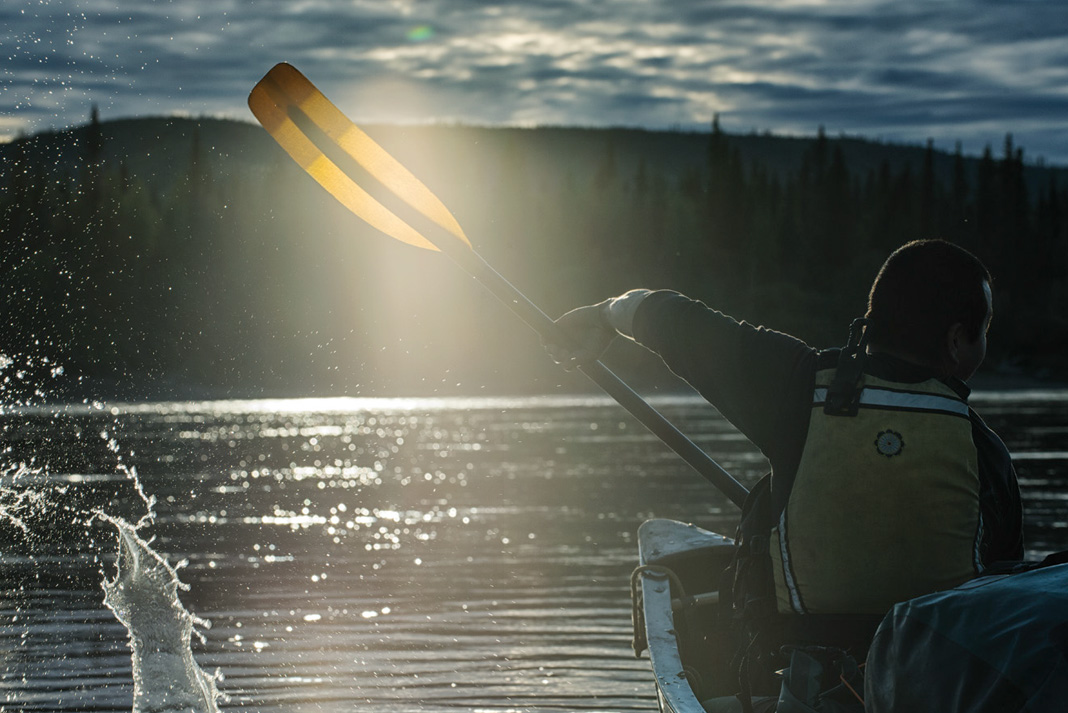
GAME ON.
PHOTO: PETER MATHER

By the time we actually got moving again, heading under Albert Bridge and past the Royals, the kayakers were peppered throughout the Manpowered Squadron, leaving the skippers of the bigger vessels cursing over the roar of the crowd.

If any of us had had deck cannons, it would have been open season.

Steadfastly sticking to our position in the melee, we ran into a roving kayaker, smoked him completely broadside. It was a true accident, I can assure you. Though with kayaks on every point of the compass, it’s a miracle there weren’t more casualties.

It was a Guinness World Record, 670 vessels of all shapes, sizes and vintages—yet the only boats out of place were the kayaks.

The ultimate insult came when I arrived home to find my one and only photo of the Royals had a kayak in the foreground.

My problem with kayakers is simple: They need decks and training skirts to keep the water out of their boats. They have a way of busting down rivers and into eddies occupied by unsuspecting canoeists. And they never seem to be able to do anything navigational with less than two blades.

Kayaks are now outselling canoes roughly three to one, even in traditional canoe country. For every well-behaved, patient, considerate and nature-loving canoeist on the water, there will be three of them. Be prepared.

Love to canoe and kayak? Cheeky James Raffan welcomes your letters. James is an author, explorer and the former executive director of the Canadian Canoe Museum. 

Screen_Shot_2015-06-12_at_11.26.38_AM.pngThis article first appeared in the Early Summer 2015 issue of Canoeroots and Family Camping magazine.

Subscribe to Paddling Magazine and get 25 years of digital magazine archives including our legacy titles: Rapid, Adventure Kayak and Canoeroots.
Skill: Master the No-Match Fire

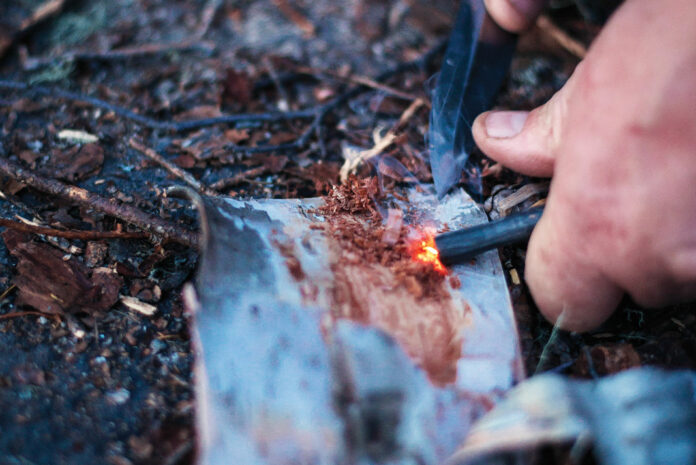
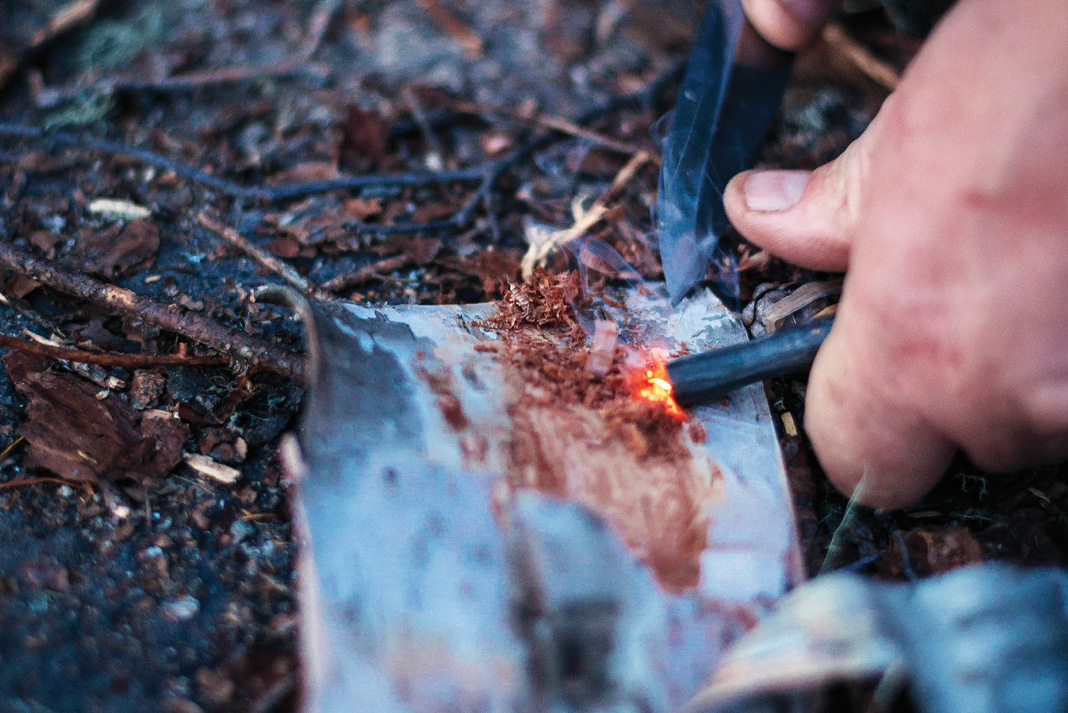
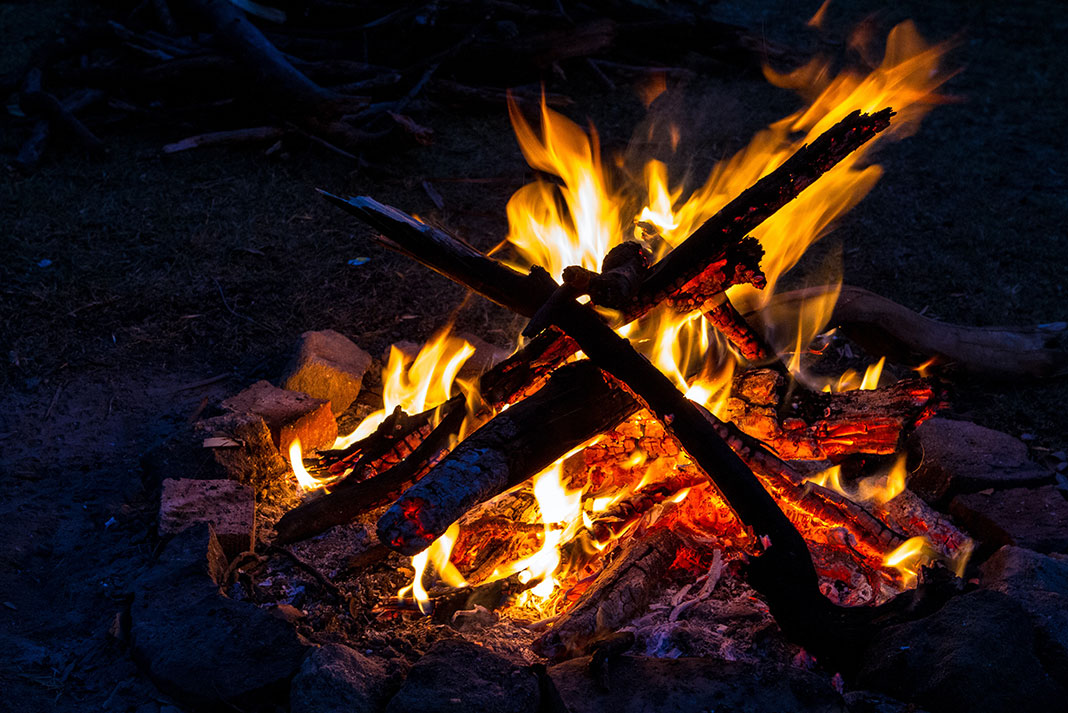
A close up of a spark hitting dry tinder from a flint and steel tool
Light me up. | Photo: Goh Iromoto/Ontario Tourism

Flint and steel fire-making has become a traditional way of staying warm, cooking food and providing comfort and security. But far from being a quirky tradition for the voyageurs, it was a matter of life and death, not a choice between the use of lighters, matches or other incendiary devices. This match-free, fire-making method remains one of the most reliable ways to start a fire. It’s simple and the tools required are waterproof and compact.

In the past, a piece of carbon steel was struck against a piece of flint. The force of percussion caused a small shaving of carbon steel to ignite, producing a spark. Nowadays, modern firestrikers are made from carbon steel and the man-made metal ferrocerium, and can be purchased in any outdoors store.

You can substitute a striker by using the back of your knife; even a broken piece of hacksaw blade will do. Almost any metal will work as a striker, as long as it is as hard or harder than the ferro rod.

Whether you use natural materials, or opt for using modern alternatives with this traditional technique, the easy-to-follow instructions remain the same.

PREPARE YOUR TINDER

The success of your fire depends on the quality of your tinder bundle. Before any sparks are cast you’ll need to build a bed of tinder where a spark can grow into a flame. Tinder materials need to be very dry, and the thinner and more fibrous the better. Traditionally, tinder was made from charred vegetable matter such as cotton (char cloth), cattail fluff, birchbark shavings and certain fungi.

A cheap, modern alternative is made by coating cotton balls in petroleum jelly. When you want to start a fire, open up the cotton ball to expose the dry, fluffy inner. The petroleum acts as fuel for your flame allowing the cotton to burn for three to four minutes, instead of just seconds. Keep it stored in a waterproof container.

Prepare a supply of toothpick- and pencil-sized fuel to add to your flame. The first 60 seconds of your fire are the most important and will usually determine whether or not you will be successful.

LIGHT ME UP. | PHOTO: ONTARIO TOURISM / GOH IROMOTO

METAL MAGIC

To create a spark, hold your striker in one hand and the ferro rod in the other. Place the hand with the striker directly on the ground just above your tinder materials. Angle your striker at slightly greater than 90 degrees to the ferro rod.

When casting sparks, keep the hand with the striker stationary and draw the ferro rod towards yourself. This helps prevent pushing your hand forward into your tinder and scattering it.

Use deliberate, powerful pressure as you pull. You should see sparks. Experiment with angle and pressure if you’re not successful at first.

Direct the sparks onto your tinder bundle. Once the spark catches and creates a red ember, gently blow it into a flame and add your fuel.

Jeff Butler owns and operates Northwoods Survival (northwoodssurvival.com). 


Screen_Shot_2015-06-12_at_11.26.38_AM.pngThis article first appeared in the Early Summer 2015 issue of Canoeroots and Family Camping magazine.

Subscribe to Paddling Magazine and get 25 years of digital magazine archives including our legacy titles: Rapid, Adventure Kayak and Canoeroots.
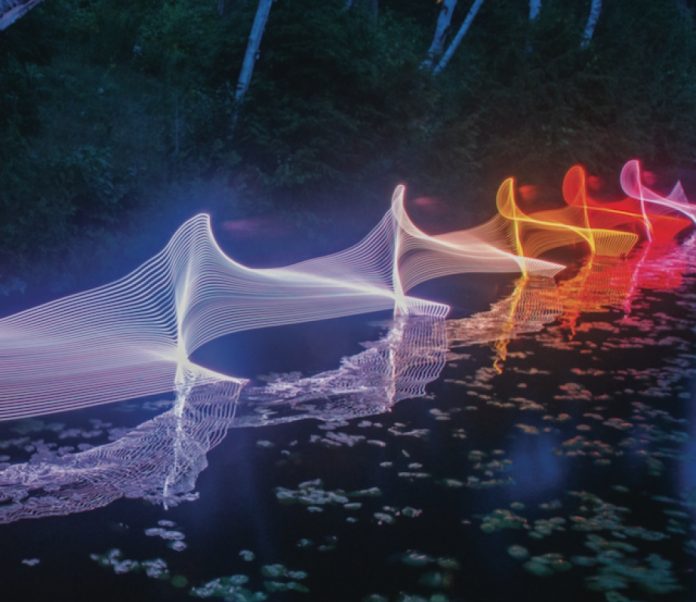
Tumpline: Light Moves

Photo: Stephen Orlando

Using programmable LEDs affixed to a paddle, amateur photographer Stephen Orlando illuminates the mesmerizing patterns of movement, turning repetition into woven strands of light.

Orlando began experimenting with this particular type of light painting last summer; canoeing was the first sport he captured. A hobby photographer, Orlando spends his days as an engineer analyzing fluid dynamics. “Visually, there are a lot of similarities between these images and the work I do. These images look exactly like streamlines.”

What Orlando found most interesting about photographing canoeists is the trails of light illustrate that, during the forward stroke, the blade remains almost still after being planted in the water, as the boat is pulled to meet the paddle.

“That’s evident in the pictures, but it’s something that someone who is unfamiliar with canoeing might not have realized,” says Orlando.

Each image is a single capture, without digital editing or composite layering. Each capture lasts between 10 to 30 seconds, adds Orlando—however long it takes for the canoeist to paddle through the frame.

Orlando says one of the most common questions he is asked about his work is why the paddler doesn’t appear in the frame. “Since this is a long exposure, the only details that will show up are really bright—like the LEDs—and the details that are stationary, such as the background and the trees. Because the paddler is not emitting any light and because he is moving, the paddler is not in the same spot long enough to be exposed on the camera’s sensor,” explains Orlando.

Orlando has branched into capturing other sports, including running, skiing and whitewater kayaking. “Whitewater kayaking was the most technically challenging,” he says. “I spent two days trying to figure out how to attach a battery controller to a paddle and waterproof it.”

See more of Orlando’s work at motionexposure.com.


Screen_Shot_2015-06-12_at_11.26.38_AM.pngThis article first appeared in the Early Summer 2015 issue of Canoeroots and Family Camping magazine.

Subscribe to Paddling Magazine and get 25 years of digital magazine archives including our legacy titles: Rapid, Adventure Kayak and Canoeroots.
AIRE 143D Raft Review

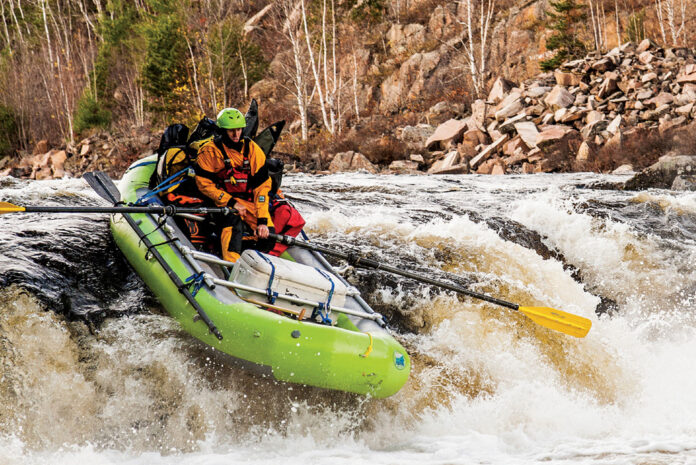
TAKING LIFE WITH A GRAIN OF SALT, A SLICE OF LIMITED LIME, AND A SHOT OF ADRENALINE. | PHOTO: ROB FAUBERT

After a five-day trip on the Gates of Lodore section of the Green River, Utah, I flew home determined to return the following summer with my family and friends. I was so taken with canyon rafting, I built the ultimate canyon rig for a feature in Rapid—a two-part series in which we outfitted an AIRE 156R with an frame, boxes, coolers, dry bags and pretty much everything we’d need for 21 days in the Grand Canyon. I had big dreams.

AIRE 143D
Length: 14’3”
Width: 6’8”
Bow & stern rise: 10”
Weight: 146 BS
Price: $4,299 (No thwart)
aire.com

My dreams and my Ultimate Canyon Rig were a little too big for our local rivers. On western rivers, you drive your raft right to the river’s edge. A fully rigged 16-footer is too much for my wife and I and two little kids to carry down the remote access and portage trails of our local rivers. And the ginormous 22-inch tubes were overkill for our lower volume runs.

I should have ordered the AIRE 143D.

AIRE released the 143D way back in ’99, the same year we released the first issue of Rapid. After 17 years it’s still one of AIRE’s best-selling shapes and sizes, with only a few improvements along the way. In 2008, AIRE added the frame chafe strip—the gray patch where you’d anchor the frame or rest your butt. In 2012 they created more durable and replaceable handles. This year, the 143D is available in vivid Limited Lime.

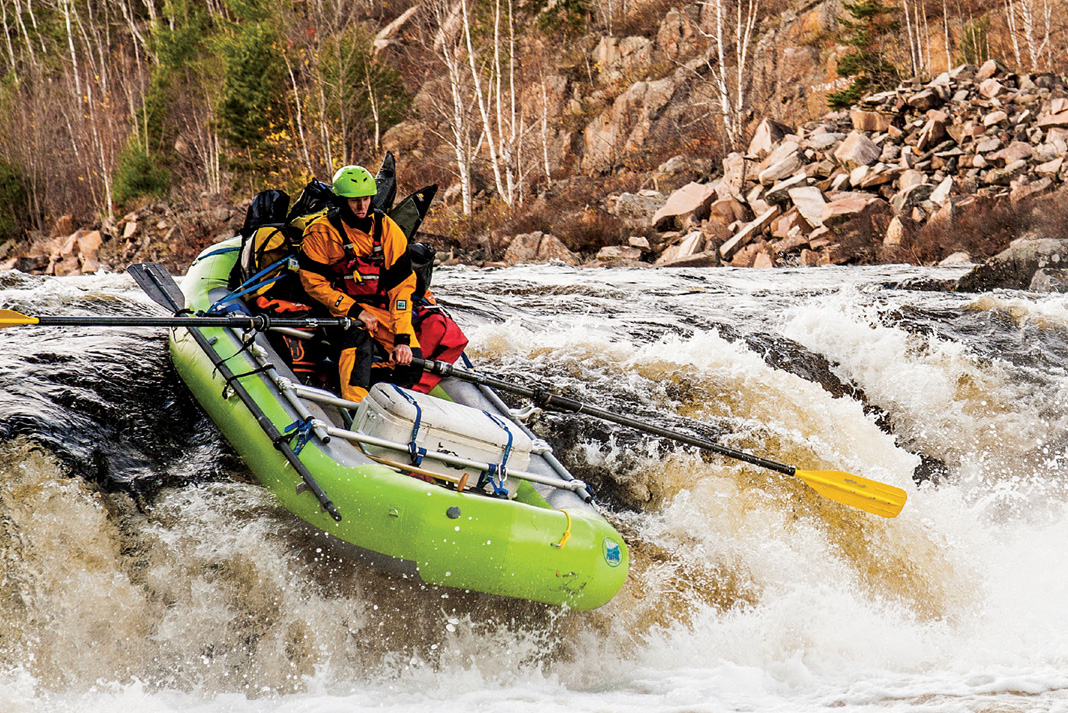
The 143D name says it all. It measures 14 feet, three inches long and the D stands for diminished tubes, meaning at the bow and stern the tubes diminish in size from 20 inches to 17.25 inches. Diminished tubes mean more rocker, a shorter waterline, less weight, more maneuverability and a more exciting ride.

TAKING LIFE WITH A GRAIN OF SALT, A SLICE OF LIMITED LIME, AND A SHOT OF ADRENALINE. | PHOTO: ROB FAUBERT

The 143D, like all AIRE rafts, is constructed with a PVC outer skin with zippered compartments and four AIREcell urethane bladders inside the collar, and another bladder in the floor. AIRE offers two different self-draining floor options. We opted for the standard floor with drains. Water enters these drain holes and acts as a ballast. The sealed floor pocket option is better for silty rivers, rivers that require portages and trips when you’re carrying enough gear to act as ballast.

While my original raft, the 156R, may be great for long vacations, the 143D is the perfect all-rounder. For the last three years Rapid has raced a 143D at our local Hell or High Water raft race. It’s been on family day runs and this past fall it joined a five-day technical river trip rigged with NRS’s Compact Outfitter Frame, one big cooler and more gear than we truly needed.

If your backyard is full of steep, low volume technical creeks, AIRE offers their Puma series of very narrow, super rockered, highly maneuverable inflatables. For big rivers, maximum stability and rowing tons of gear, we’re not getting rid of our 156R—no way. But for paddle guiding most of our rivers, most of the time, the 143D is just right. And when our ticket for the Canyon finally gets pulled, the frame will go back on and we’ll take it there too.


This article on whitewater canoeing was published in the Early Summer 2015 issue of Rapid magazine.This article first appeared in the Early Summer 2015 issue of Rapid Magazine. 

Subscribe to Paddling Magazine and get 25 years of digital magazine archives including our legacy titles: Rapid, Adventure Kayak and Canoeroots.
How To Banish Your Biggest Wilderness Fears

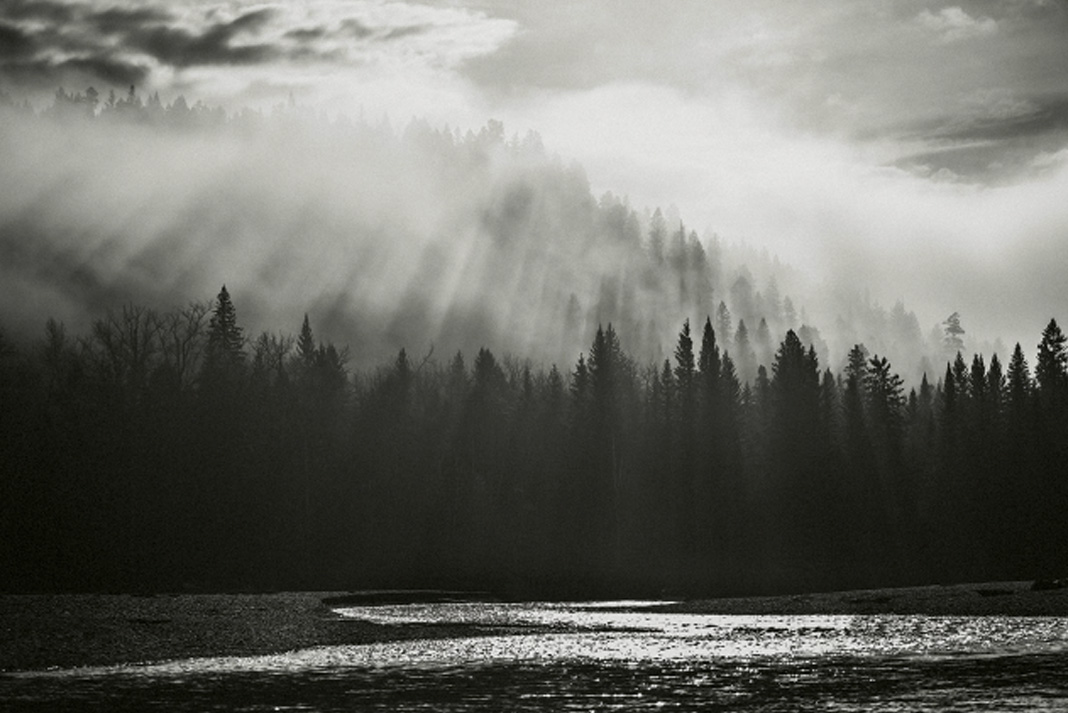
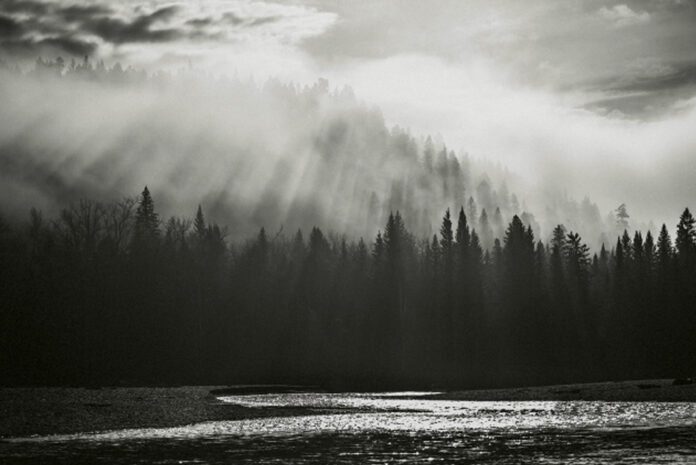
black and white photo of sun shining down over a dark and misty forest river
Leave your fears behind when you enter the wilderness. | Feature photo: Jen Gardiner

One of the scariest movies I ever watched as a young teenager was horror flick The Blair Witch Project. It scared the crap out of me.

For those unfamiliar with this indie-flick phenomenon, let me fill you in. One of the first in the found-footage genre, the mock documentary follows three filmmakers on a remote hike as they’re terrorized by a ghost.

After becoming hopelessly lost, the threesome find spooky stick figures hanging from trees, are awoken by shrieking in the night, and one morning they find teeth outside their tent. Sound silly? Trust me, it’s creepy. An online marketing campaign created even more buzz, making it appear as if the film was non-fiction.

Fast-forward three months. I’m on a solo overnight as part of a month-long outdoor education course. I don’t know whether to feel safe or terrified by the isolation of my little island paradise.

As the sun set, the same question kept racing through my mind: Do Blair witches swim?

Leave your fears behind when you enter the wilderness. | Feature photo: Jen Gardiner

How to banish your biggest wilderness fears

Hollywood movies would have us believing that bears, boogeymen and banjo-playing locals lurk around every corner of the portage trail. With just a little imagination, it can be easy to stir up latent fears of the unknown wilderness and all things that go bump in the night. An ill-timed snap of a twig can turn the forest’s enveloping darkness from a cozy comforter into a suffocating shroud.

Few outdoorsy types talk about it, but we all experience fear in the wilderness at one time or another. Due to our own vulnerability while alone in the dark, fear can be described as a perfect evolutionary survival trait, but in the embrace of the morning sun, we still feel a little foolish.

In truth, there are more scary specters in the wilderness than Blair witches and creatures from the Black Lagoon. Spinal injuries, animal attacks, and being hit by lightning are some of the most common fears I’ve heard outdoor enthusiasts discuss. Those are more rational concerns, for sure, but almost equally as unlikely to befall a recreational paddler.

In the Early Summer issue of Canoeroots, we look at some of these widespread wilderness fears and explore whether they’re legit or bogus. It didn’t surprise us to discover that many of the dangers we spend the most time worrying about are the ones least likely to affect us. We spend so much time shielding ourselves against mega-disaster, we neglect to realize that we’re in far greater danger of spraining an ankle than ever encountering a bear—let alone an aggressive mama bruin.

The fact is, with the right equipment and attitude, the wilderness is one of the safest places to be.

Kaydi Pyette is the editor of Canoeroots. She requests that you keep your ghost stories to yourself, thank you very much. 

Cover of the the Early Summer 2015 issue of Canoeroots magazineThis article was first published in the Early Summer 2015 issue of Canoeroots Magazine. Subscribe to Paddling Magazine’s print and digital editions, or browse the archives.


Leave your fears behind when you enter the wilderness. | Feature photo: Jen Gardiner


7 Rivers, 7 Continents: An Interview With Mark Kalch

Photo: Mark Kalch
7 Rivers, 7 Continents Interview with Mark Kalch

When Australian adventurer Mark Kalch completed an epic, 153-day source-to-sea descent of the Amazon River in 2008, he had no idea the expedition would become the springboard for 7 Rivers, 7 Continents—a bid to paddle the longest rivers on each continent. Now based in Buenos Aires, Argentina, with his girlfriend and three young children, Kalch has turned adventure into a full-time vocation.

In 2012, he paddled the Missouri-Mississippi Rivers, and in 2014 he made a first solo descent of Russia’s 2,300-mile Volga River. Off the river, he stays busy researching and planning the next leg, and sharing trip stories and images.

[ Plan your next kayak or canoe adventure with the Paddling Trip Guide ]

Adventure Kayak: Tell me a bit about what you’re up to right now?

Mark Kalch: Right now (and for the last two years) I have been living in Buenos Aires, Argentina. We (myself, my girlfriend and our three children under the age of 5) find ourselves here by virtue of my partner’s job as a diplomat. It is a real mega-city and not exactly helpful in connecting easily with the outdoors.

However, where there is a will there is a way and I paddle at least a few times a week on the enormous Rio de la Plata. Of course the country as a whole offers world-class paddling and outdoor experiences. We spent a month camping and paddling in Patagonia earlier this year which was fantastic. To be able to share this experience with the children was beautiful.

I am kept busy here by trying to constantly hone my paddling skills, be that kayaking or more recently SUP, attempting to write my first book about my Volga River descent, staying in touch with sponsors, developing my own paddling apparel brand, Paddlers First, and planning for my next big river descent as part of my 7 Rivers, 7 Continents project.

AK: Where did the idea for 7 Rivers, 7 Continents come from? Why paddling expeditions?

MK: It was an idea which kind of just grew out of a desire to continue undertaking long and sometimes difficult journeys after the completion of our source to sea descent of the Amazon River in 2008. In 2010, I walked alone across the entire Islamic Republic of Iran from the Caspian Sea in the north to the Persian Gulf in the south. A really amazing journey in a beautiful country. I was somewhat stumped in deciding what to do next.

After tossing around ideas for climbing mountains in Afghanistan and Pakistan, my girlfriend suggested a longer term project whose successive expeditions were linked. Why not the longest river on each continent, she thought? I was immediately hooked. With the Amazon River, South America’s longest river, already completed it was a great springboard from which to launch. Now the project is such a huge part of my life, I am not sure how there could have been any other option.

Why paddling expeditions? The greatest civilizations in history and indeed modern times have sprung and flourished alongside them. Cities, towns, villages and communities exist where they do in large part down to rivers. They provided a means of transport, trade, power, food and water. Even now the impact they have on our planet is immense. To paddle down huge rivers like the Amazon, the Volga, the Missouri and the Yangtze is an opportunity to experience and understand this impact first-hand. Oh, and mostly I just really like paddling!

AK: What were the most surprising aspects of your Volga trip? How did your preconceptions of Russia and its people compare with the reality?

MK: I think the number one most surprising thing was the absolute beauty of the river. I had expected to come across a much higher level of pollution and degradation of the river. At least, on a visual scale, it appeared for the most part pristine. Unfortunately, environmental studies have shown that the strains on the river due to agricultural, household and industrial pollutants are massive and ever increasing.

I grew up in Australia throughout the end of the Cold War. As in most Western countries, I was fed a media biased view of a menacing and cold Soviet Union, grey industrial cities and a population to match. Despite being fully conscious of this narrow view and completing extensive research, it is still hard to know what to expect. I really had no clear idea what I would encounter.

Fortunately, the Russia I experienced was in its beauty and hospitality far greater than anything I could have imagined. In all my journeys and travel I do not think I have been cared for and welcomed in such a way. It really became quite surreal as each day afforded me ever more amazing paddling and the opportunity to meet such friendly people of the Volga. Whenever I talk about my Volga descent I get the feeling that people must think I am exaggerating. Happily I am not.

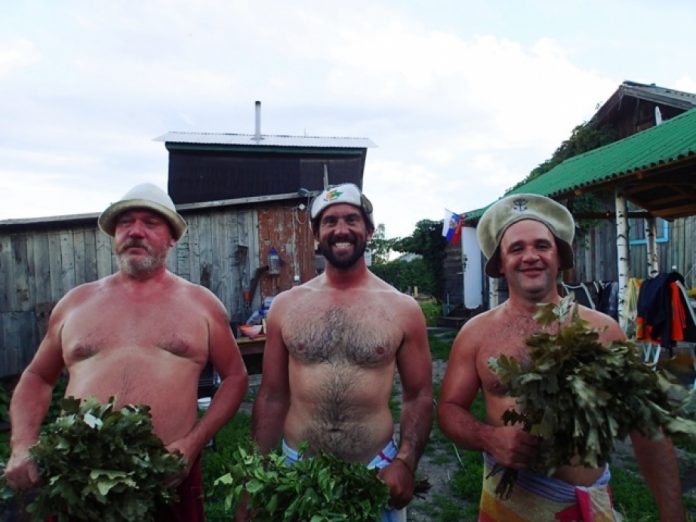
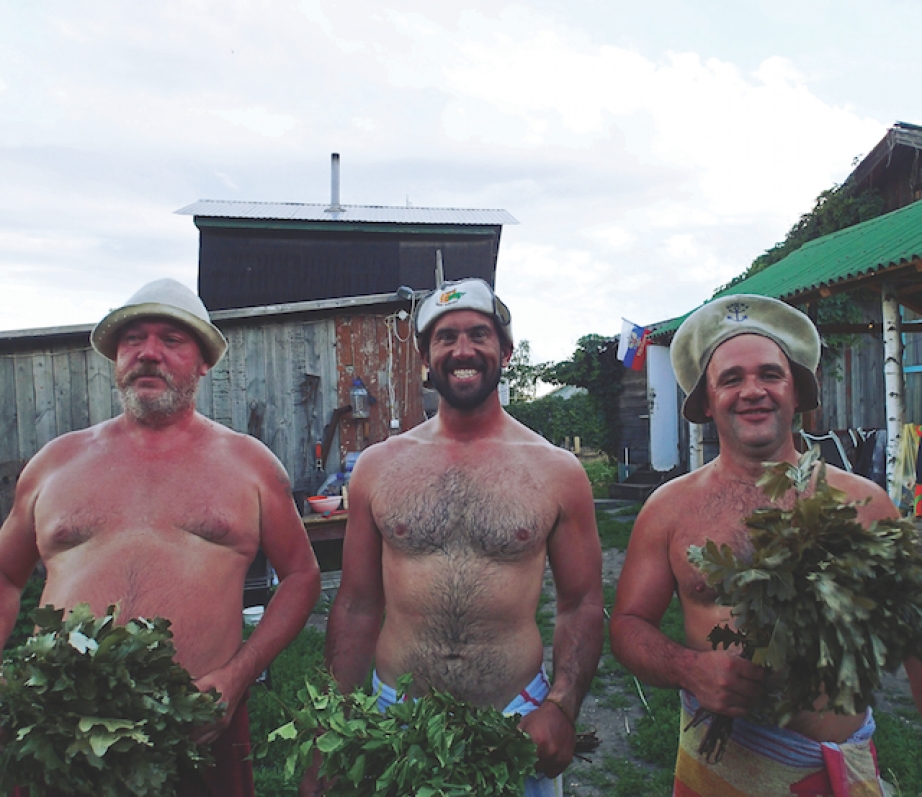
AK: Tell me about what’s going on in this photo. Why are you grinning so widely!?

MK: Ha, ha! What a photo! It really does kind of sum up my Volga descent. I had spent the last five or six days really battling the weather on the river. Constant rain, massive headwinds, powerful storms and this huge waterway to paddle. The day previous I had been forced to make camp early just due to the incessant wind. I am not one to capitulate easily to the elements and rather enjoy the challenge but the sheer effort had really become counter-productive. I found a good camp and rested up.

The following morning, in order to get an early start I skipped my usual power breakfast of oats, raisins and strong coffee, instead grabbed some extra chocolate bars for sustenance. Rookie error. A few hours into the day I bonked (massive fatigue set in). I was angry at myself for the mistake but had not much option but to paddle on. I had hoped to make it past the city of Ulyanovsk that day, but realized I would have to settle for being happy to actually reach it.

In late afternoon, I approached its outskirts and began scouting for a place to camp. With few options presenting themselves, a night beside an old factory looked promising enough. As I floated closer, between the trees a man appeared. He waved and shouted a greeting, motioning for me to come ashore. Utilizing my faltering Russian language skills, I understood that Dmitri wished for me to take out right there. I did so gladly. Within a few minutes Dmitri had introduced himself, his brother and various friends. Dmitri and his brother, who spoke very good English, were working on their dacha situated on the banks of the Volga River. They were renovating some of the buildings within the compound, as well as cultivating a burgeoning and impressive organic vegetable garden.

It was quickly established that I would be staying in their dacha. But first Dmitri insisted on taking me on a driving tour of Ulyanovsk, most famous as the birthplace of Lenin. Upon our return, Dmitri informed me that evening we would be having dinner at the dacha with a group of their friends. Before eating, however, I needed to be introduced to the ubiquitous Russian banya, or sauna.

My new friends prepared the stone-walled and rather authentic looking banya by stoking a fire to unbelievably high temperatures. Then it was time to strip naked and see how long we could bear the intense heat. On Dmitri’s order, we filed naked down to the Volga and dived into its cold water. In winter, they must cut a hole in the fully frozen river to attempt the same. We repeated this once more before Dmitri asked his brother to translate something for me: “Mark, now there will be some pain.” What the…? The boys produced branches from a birch tree and proceeded to whip the living daylights out of me in the banya—front, back and sides. He was right, there was some bloody pain! Once more into the Volga and done.

A huge dinner, friends, laughing, beer and vodka followed. We talked endlessly about my journey, Russia, the West, everything. It was an experience that I continue to treasure. In the space of a few minutes I had gone from the prospect of camping beside a dismal old factory to one of the best nights on my entire journey. Hence the big smile!

AK: Why do you do these trips? What keeps you motivated to leave family and friends behind for months at a stretch?

MK: It is always difficult to pin down exactly why I do these trips. I would say that, from a personal perspective, I really enjoy the simplicity of life on a big river. After that initial period of transition from the “comfortable” life of the real world, the attraction of having to focus on only a very small number of needs is wonderful. Stay dry, stay watered, stay fed, paddle and explore. I like that.

I also very much enjoy sharing images and stories from my trips. I have made, since the Amazon, effort to deflect some of the focus of my journeys from me, the “hero,” to the river, its people and surrounds. The dashing adventurer narrative is just one tiny and often very much overused part of these expeditions.

I repeat over and over in interviews, articles and updates that by far the most difficult thing for me in all of my journeys is leaving my family. It really is. I enjoy battling and sometimes working with the river to follow its course. That is the easy part. It is more or less a holiday for me. But not seeing the kids is tough. So why keep leaving them? My passion for experiencing this planet was instilled in me by my father who was awed by the Earth’s wonders, natural and man-made. I hope that the kids, seeing me explore such amazing places and bringing back stories, will also share this wonderment.

AK: Why make adventure your full-time job?

MK: I think primarily for me the advantage is the amount of time I can spend researching, planning and undertaking my journeys. I spend a lot of time learning about not just the river I am to paddle, but the regions or countries through which it will pass, and also the people and cultures I will be fortunate to meet and experience.

It also means that I can develop good relationships with my sponsors who see me as a full-time paddler that can represent their brand in a credible light. Their support over the years has allowed me to keep the costs for my descents down as much as possible.

Perhaps less wisely from an exposure perspective, I attach little fanfare or media chasing to my 7 Rivers project. I paddle my rivers, share interesting stories and images, then if people get in touch with me I am more than happy to oblige. To me, a meaningful interview with Adventure Kayak is worth 100 times in value a time filler TV slot or a few inches in a national newspaper. This attitude does hurt me financially, but I feel more comfortable with it. I have too many paddling friends around the world who are doing amazing journeys and don’t feel compelled to let everyone know how awesome they are.

Photo: Mark Kalch
Five W’s with Mark Kalch

AK: You mentioned in an interview with Alastair Humphreys that you could have—maybe should have—paddled the second or seventh longest rivers, and the experience would have been quite similar. Do the stresses of this project becoming a race detract from your enjoyment when you’re out there?

MK: The stress of a potential race does not detract from my enjoyment when I am on-river. I remain blissfully and purposefully unaware of the “real world” back home when I am paddling. However, yes, I do not enjoy the prospect of a race. I have nothing against fast descents; for some people that is their thing, they are paddling machines. I am often in awe of them. I feel like a bit of a monster paddler myself and love going hard out, but it is not my interest.

It was during our Amazon River descent in 2007, which began as a purely river focused and adrenalin-packed adventure that I realized there can be so much more to these journeys than just paddling. Having to complete these rivers from source to sea within the time dictated to me by my visa length pains me no end. I want my descents to take longer. I want to be able to stay with new friends, I want to be able to explore farther beyond the river bank, get lost walking through towns and cities, understand my surroundings and how these mighty rivers have impacted it all.

Can you imagine blasting down the Yangtze River, or any big river, to the ocean and all but ignoring the thousands of years of history and culture to be found?

AK: What’s next? Which river will you tackle in 2016?

MK: It really is dependent on so many things. Family, finance, preparation, and water levels or season are most pertinent. I am really excited by the Yangtze River in China. It is a touch under 4,000 miles in length. The Upper Yangtze has some really very difficult sections, to say the least. The lower is stifled by dams and becomes huge in width and volume. The impact that this river has had on the development of China is overwhelming. I really look forward to paddling it.

Another option, at just under 3,000 miles, is the Murray-Darling River in Australia. I have probably been a little dismissive of my own country’s longest river, but recently I have taken a step back and really appreciated the waterway a lot more. It passes through some of Australia’s most spectacular wilderness areas and takes a paddler past towns  and regions made famous by European exploration of the continent. Throw in some of the world’s most deadly snakes and spiders and it now sounds pretty exciting to me.


Screen_Shot_2015-07-07_at_3.08.23_PM.pngThis article first appeared in the Fall 2015 issue of Adventure Kayak magazine.

Subscribe to Paddling Magazine and get 25 years of digital magazine archives including our legacy titles: Rapid, Adventure Kayak and Canoeroots.
Touring Kayak Review: Current Designs Equinox GT

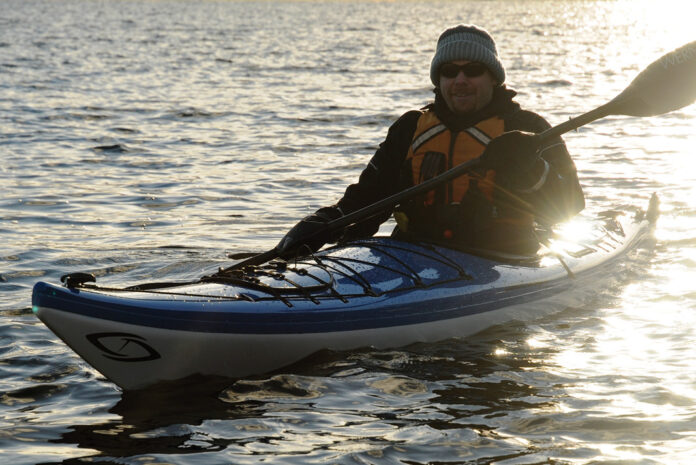
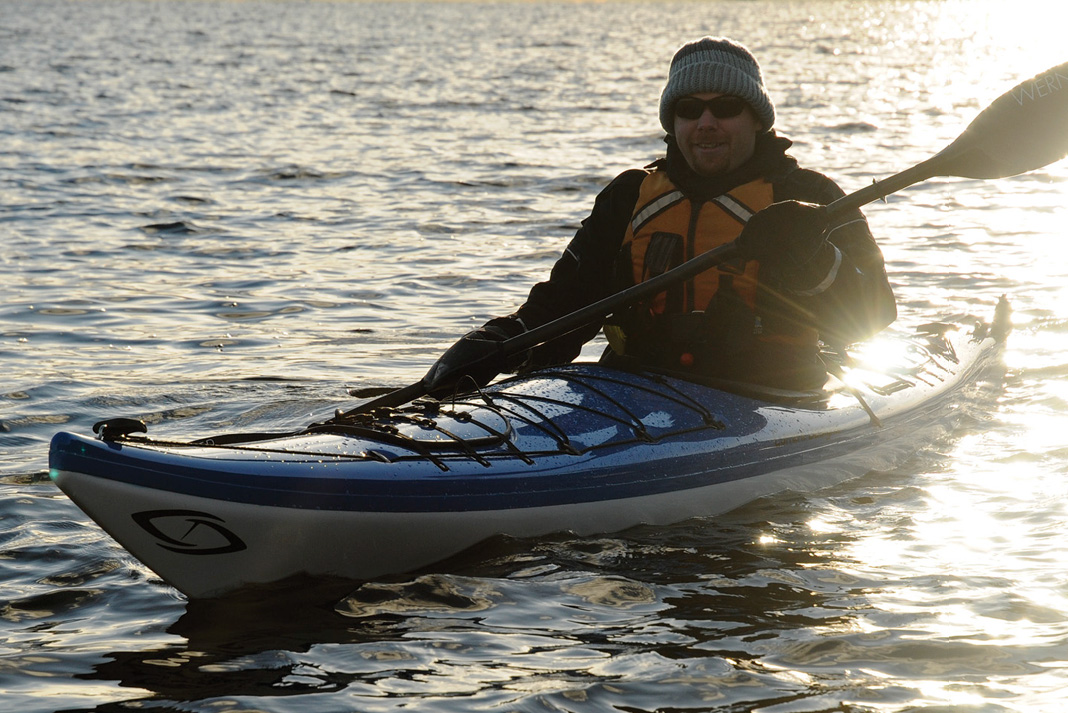
A man paddles a kayak
Current Designs Equinox GT | Photo: Virginia Marshall

My least favorite memory of a Current Designs Solstice GT is an image of a lime green boat rested against my own, both rising and falling in a stomach-churning morning swell, its occupant spewing eggs Benedict across my lap. My fondest memory is of that same boat and paddler three days later, charging skilfully through a sea of whitecaps.

[ Paddling Buyer’s Guide: View all sea and touring kayaks ]

I’ve met perhaps more paddlers in Solstices than any other kayak. From the quiet passages of the Discovery Islands, to the inland shores of the Great Lakes and beyond to the rugged Maine Coast, the Solstice GT is ubiquitous wherever touring kayakers are found.

Current Designs Equinox GT Specs
Length: 16’
Width: 24”
Material: Kevlar | Fiberglass
Weight: 47 | 51 pounds
Price: $3,799 | $3,399

www.cdkayak.com

First launched in 1984, its classic blend of stability, speed, reasonable maneuverability and gear-swallowing storage has made it one of the best-selling boats of all time.

For the growing numbers of paddlers who venture out for only a week or less, however, those ample hatches are often largely empty. Enter the Equinox GT.

Noticing the trend to shorter trips—and shorter boats—Current Designs recognized an opportunity. “We knew we had a winning hull and a winning design,” says vice president Bill Kueper, “so we just scaled it down.”

At nearly two feet shorter, the 16-foot Equinox GT has the same roomy 24-inch beam (a lower volume, 22-inch-wide GTS version offers a sportier fit), shallow-V hull and soft chines for rock-solid initial stability and smooth edging.

In a family hailed for superb acceleration and glide, the Equinox’s shorter waterline actually makes for even greater efficiency at a comfortably sustained touring pace of three to four knots. Tracking with or without the rudder is excellent, adding to the effortless feel of open-water cruising.

Above the water, the sleek and practical deck layout will also look familiar to Solstice paddlers. Color-matched, flush-mount hatch covers, recessed deck fittings and reflective decklines round out Current Designs’ flawless composite layup. Our Kevlar Equinox felt lighter than its listed 47 pounds and its impeccable regatta blue finish attracted admiring glances from gas station attendants and fellow paddlers.

Current Designs Equinox GT | PHOTO: VIRGINIA MARSHALL

Larger boaters will find plenty of room in the keyhole cockpit for all-day comfort. Outfitting is classic West Coast influence, with a cushy padded seat, supportive backrest and high knee position. The rudder control lines are easy to reach and route below the back deck to prevent snags during rescues and transport.

Efficiently sized for today’s shorter trips, the Equinox GT rewards touring kayakers with the same user-friendly features that Solstice paddlers have been enjoying for three decades. In fact, the only real surprise is that it took Current Designs this long to build it.

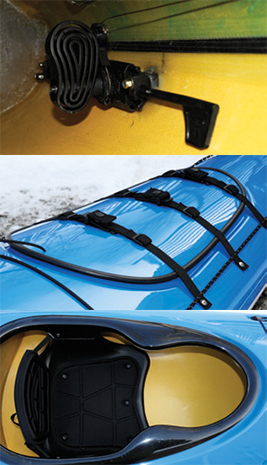
Steady feet

The SEA-LECT Designs foot braces can be easily adjusted while seated, and use a pivoting pedal to control the rudder without compromising strong leg drive.

Different parts of blue touring kayak
Photos: Virginia Marshall

Trip equipped

Although the Equinox GT is marketed for shorter trips, folks who’ve packed low-volume Brit or Greenland boats will find ample room in the voluminous bow and stern hatches for a week’s or more worth of supplies. Current Designs’ triple cam strap system takes a bit more time to secure, but our hatches were bone-dry.

Creature comforts

Integrated thigh braces, plenty of hip room and a slightly scooped seat are designed to optimize fit for a wide range of paddlers, and keep bottoms happy after a full day in the saddle.


This article first appeared in the Spring 2015 issue of Adventure Kayak magazine. Subscribe to Paddling Magazine and get 25 years of digital magazine archives including our legacy titles: Rapid, Adventure Kayak and Canoeroots.
Remote Rafting On The Alsek River

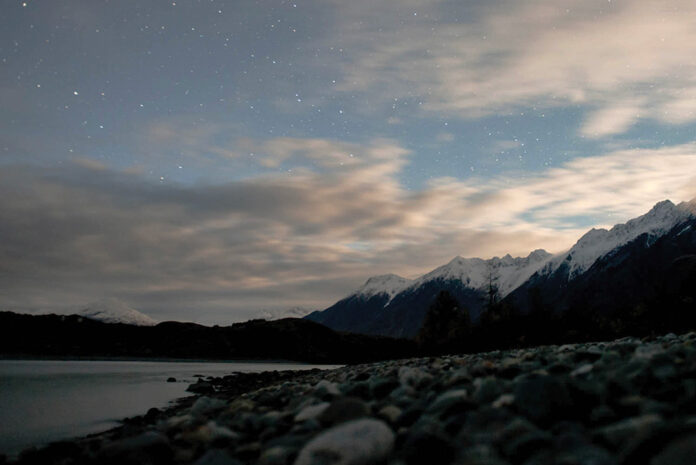
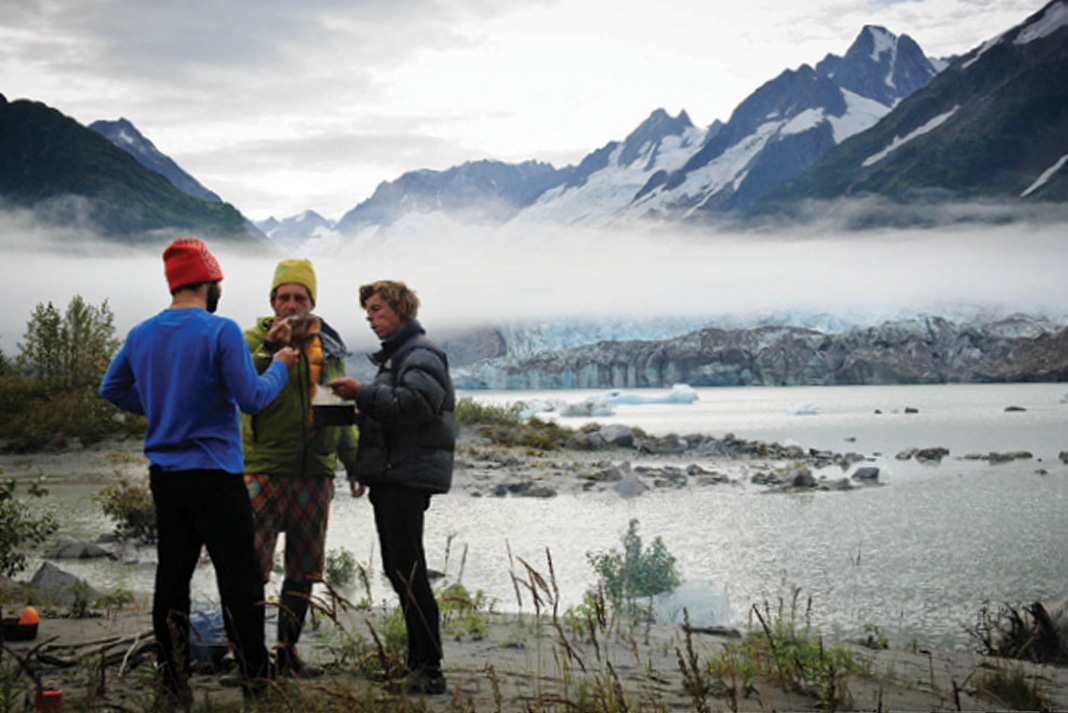
PHOTOS: MAXI KNIEWASSER

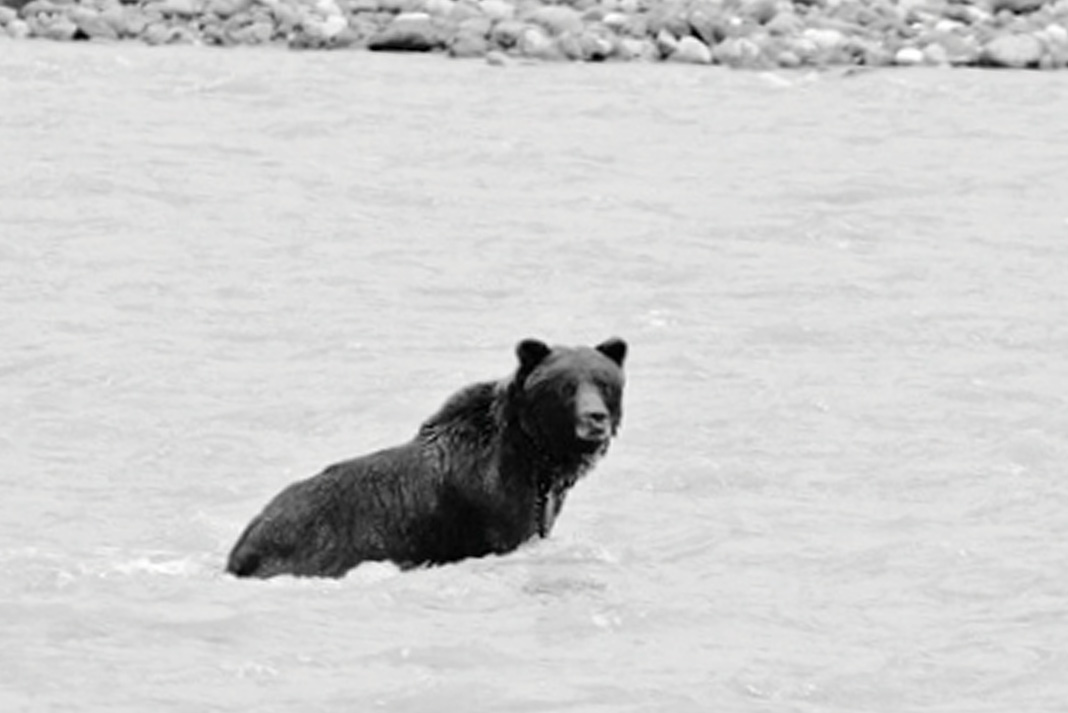
“HEY BEAR!!!” we hollered, lifting our boats to look bigger and banging pots together. The bear stopped. We sighed with relief. Then he stood on his hind legs for a better view, revealing his true, monstrous size. I swallowed hard. He dropped down and continued inching towards us, now less than 50 feet away.

Protected by a cluster of national parks that make up one of the largest UNESCO World Heritage Sites on Earth, the Alsek River is home to one of the highest densities of grizzly bears anywhere. And the scenery is second to none.

From its source on the eastern part of Kluane National Park, the Alsek flows west and south, straight through the heart of the St. Elias Mountains, draining the largest non-polar ice fields and flowing through some of the biggest mountains—measured in relief and size of the massif—in the world.

A fast flowing glacial river, the Alsek’s class IV whitewater is interrupted by a six-mile chasm where the massive Tweedsmuir Glacier pushed bedrock into Blackadar Mountain resulting in the frothing and pulsing class V+ Turnback Canyon—first descended in 1971 in a daring high water solo by iconic paddler Walt Blackadar.

In his memoires of the trip Blackadar writes that Turnback should never be attempted again. Subsequent descents have taken place at much lower water but most parties opt to helicopter around it.

Labyrinths of icebergs and rugged, barren canyons appear to be of another planet altogether.

Locked in a staring match with the griz that was lasting far too long, we were all too aware of our remoteness.

Apparently deciding we weren’t worth the trouble, the bear finally dropped down, turned around and lumbered across the Alsek’s otherworldly terrain. We decided we didn’t need coffee with our breakfast that morning.

If you’re curious…

Take a guided raft trip on the Upper Alsek or on the Tatshenshini, a tributary that joins the Alsek 40 kilometers below Turnback Canyon (www.nahanni.com).

If you’re serious…

For self-supported kayak trips, you need a permit for Wrangell-St. Elias Park (search “Alsek Permit,” at www.nps.gov). Then get permits for Kluane National Park and B.C.’s Tatshenshini-Alsek Provincial Park.

The river crosses an international boarder—you have to go through customs beforehand. From the take-out at Dry Bay, the only way back to civilization is by plane (www.flydrake.com).

PHOTOS: MAXI KNIEWASSER

What To Bring

  • Bear spray. There are a lot of big, hungry grizzlies on the Alsek!
  • A good tent. Weather can be extremely harsh; be prepared for multi-day rain and snow.
  • Whisky and hot chocolate. See above re: extremely harsh weather.
  • Map of the Alsek and Tatshenshini Rivers. Hand-drawn to scale maps by Cloudburst Productions.
  • Never Turn Back by Walt Blackadar. The best book to read on this trip.

This article on whitewater canoeing was published in the Early Summer 2015 issue of Rapid magazine.This article first appeared in the Early Summer 2015 issue of Rapid Magazine. 
Subscribe to Paddling Magazine and get 25 years of digital magazine archives including our legacy titles: Rapid, Adventure Kayak and Canoeroots.

The Man Knows His Knots

Shipwright Louis Sauzedde shows us a few ways to tie a bowline as well as the many different uses of this famous knot. Fast and versatile, the bowline could be the most useful knot you will ever learn for camping and paddling. It will not slip, and easily comes undone even after being tightened under load.

Heli-Boat New Zealand’s Wild West Coast

PHOTOS: TEGAN OWENS

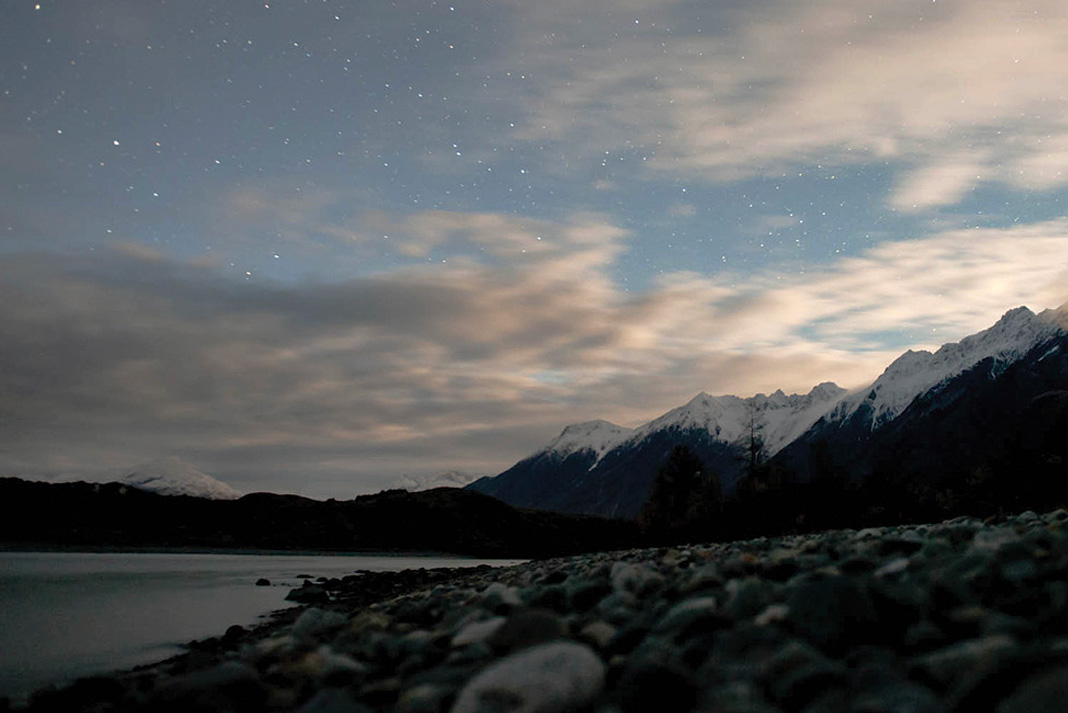
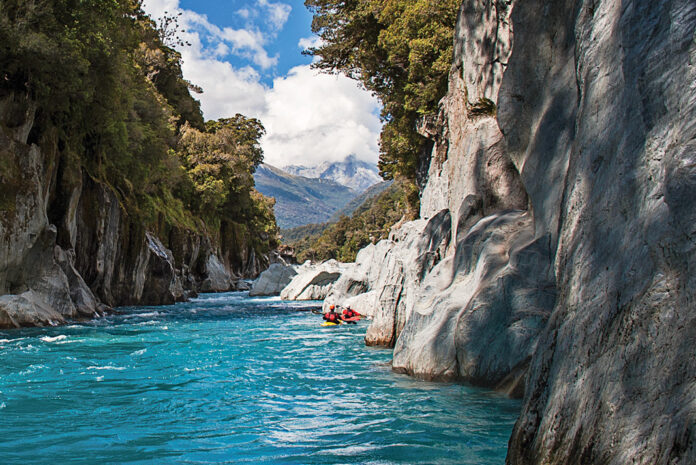
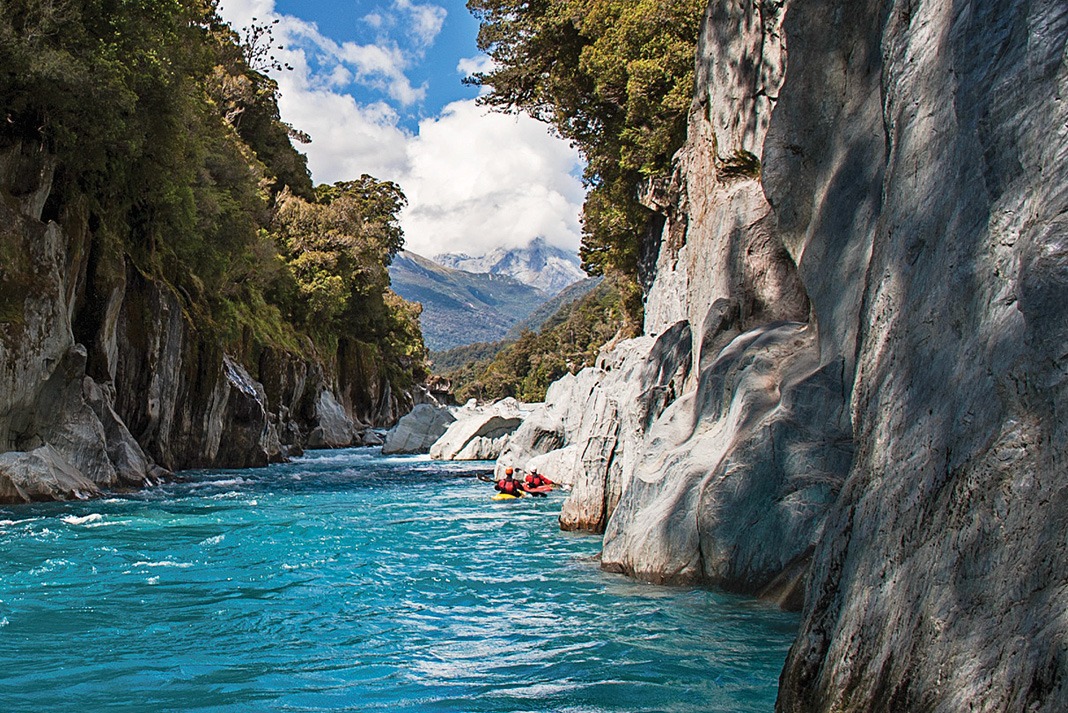
Soaring over azure water flowing through granite gorges from the Southern Alps to the Pacific Ocean, it’s hard to argue with the locals who claim this is the best place on earth.

The west coast of New Zealand’s strikingly scenic South Island is, in a word, pure.

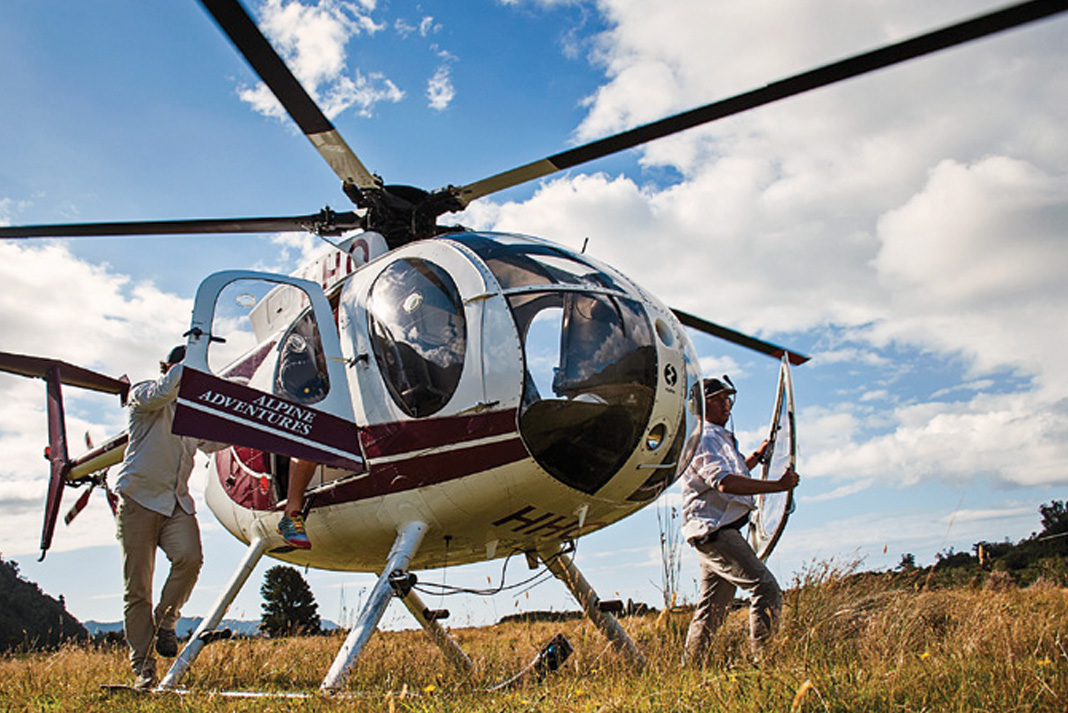
Unsullied rivers of drinkable water cut through a region characterized by rainfall, lush forest and sparse population. With much of the landscape unaltered by human touch, roads are often not an option for access. Instead, helicopters are a standard shuttle service.

It’s an experience Barny Young will never tire of. A North Island native who transplanted south to West Coast kayaking hub Hokitika, Young says heli shuttles are part of what makes the area bucket-list material.

After a drop off at the put-in, a pilot flies gear and food—cheeses, avocado, steak; no need to pack light—to the spot downstream where paddlers will end their day at a comfortable backcountry hut.

If you have 2 weeks…

Fly into Christchurch and drive three hours to Hokitika. Warm up on one-day walk-in trips like the Lower Kakapotahi (Class IV) before starting into a series of class IV and V, two-day-long adventures—the typical length of a river trip in a small country where it’s only a 40-kilometer trip from the Alps to the ocean.

If you have a month…

Fly into Nelson, rent a car and drive to Murchison, where class II and III whitewater serves as a warm up en route to the West Coast’s more difficult backcountry trips.

If you have 6 weeks or more…

Fly into Auckland to experience the North Island’s whitewater highlights before driving to Welland to catch a ferry to the South Island. From there, hit Murchison before heading to more committing class IV-V West Coast whitewater.

PHOTO: TEGAN OWENS

Transport

Rent a car ­­­­­on arrival. Insurance in NZ is easy and affordable—don’t risk it. For a the full New Zealand experience of a month or more, buy a van or station wagon to accommodate friends, kayaks and equipment. www.trademe.co.nz.

Shuttles

A pilot shuttles you and your kayaks to the put-in then drops gear at your evening’s destination. The average cost of a shuttle is between $150 and $250 NZD. Kokatahi Helicopters (03 755-7912); Alpine Adventures (www.scenic-flights.co.nz).

Backcountry huts

New Zealand’s Department of Conservation maintains backcountry huts scattered on the banks of West Coast rivers. They have a stove and four to six bunk beds, and cost $5 a night. Visit www.doc.govt.nz to browse huts by region.

Gear

If you’re travelling from the USA, Young recommends bringing your own equipment. For Canadian travellers, he’s seen the cost of flying with boats add up to more than the cost to buy used gear in NZ. Check with your airline before making the call. To buy, sell and swap, check www.rivers.org.nz.

Read Up

For stories and descriptions of over 180 kayaking runs, and to plan your route, shuttles, accommodations and more, pick up the bible of kiwi river trips, New Zealand Whitewater by Graham Charles.

PHOTO: TEGAN OWENS

Hit List Of West Coast Rivers:

“I know a lot of people are biased and like to act like where they’re from is the best,” says Young. In this case, he swears it’s true. Don’t argue before running his list of must-hit West Coast rivers:

1. Kokatahi River.

Steep one-day run with spectacular gorges and classic moves from top to bottom.

2. Upper Whitcombe River.

Two days of continuous whitewater and awesome huts.

3. Upper Perth River.

Two days with a glacier backdrop and less committing whitewater. Challenging whitewater for those who want to step it up. Day one can be short, so have plenty of food and wine waiting at Scone Hut.

4. Kakapotahi.

A half-day trip with drive-in access—best bang for your buck run on the West Coast. Quick and easy.

5. Mungo River and Hokitika.

Two days of committing and scary whitewater with beautiful gorges. The view from Serpentine hut is a highlight.

Find a catalogue of Barny Young’s NZ and international adventures atwww.facebook.com/gradientandwater.


This article on whitewater canoeing was published in the Early Summer 2015 issue of Rapid magazine.This article first appeared in the Early Summer 2015 issue of Rapid Magazine. 
Subscribe to Paddling Magazine and get 25 years of digital magazine archives including our legacy titles: Rapid, Adventure Kayak and Canoeroots.