Home Blog Page 265

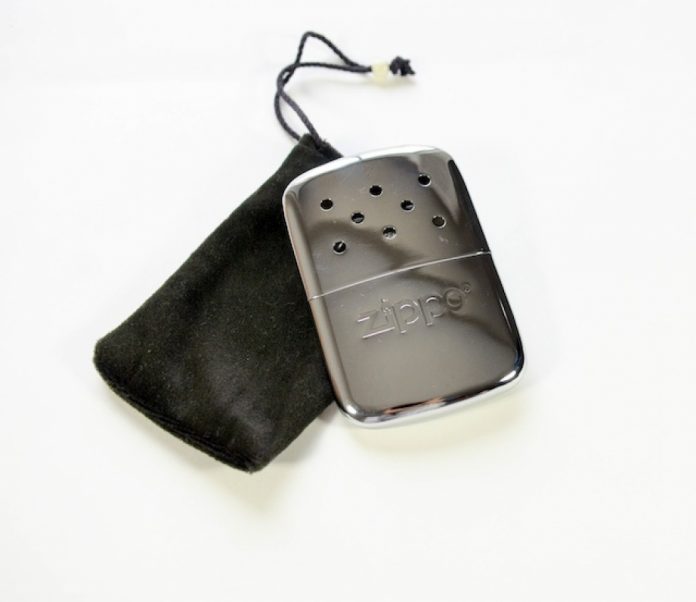
Zippo Hand Warmer

Photo: Dawn Mossop
Zippo Hand Warmer

Pocket-sized and powerful, Zippo’s Hand Warmer is a welcome treat at the takeout. The fill cup measures enough lighter fluid to produce heat for 12 hours without smell or smoke. Slim enough to slip into a mitt, this is a coveted heat source on icy spring days.

$19.95 | www.zippo.com

RPv17 rgb

This gear review first appeared in the Spring 2015 issue of Rapid magazine.


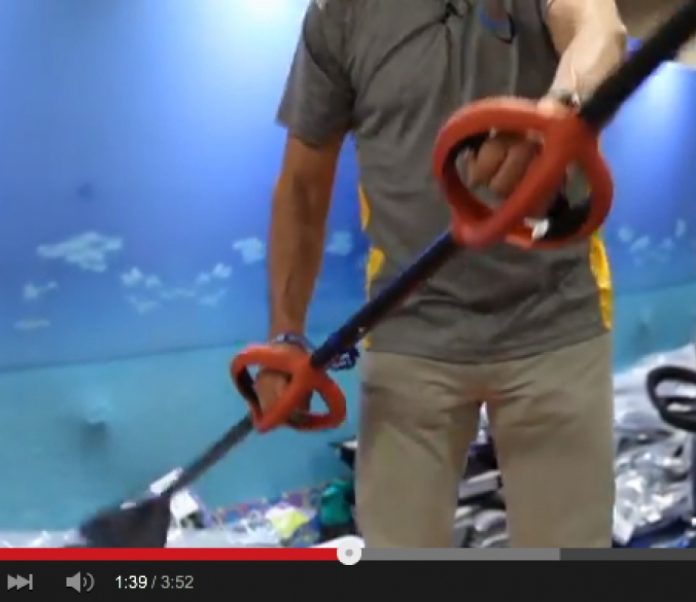
Oblio Paddles let you paddle your SUP like a Kayak

Oblio Paddles let you paddle your SUP like a Kayak

Rapid Media’s Scott MacGregor discovers how Oblio Paddles let you paddle your SUP like a kayak, or retrofit custom grips on your current kayak paddle for a more ergonomic stroke.


Mechanical Advantage Systems For River Rescues

Review your technique for creating mechanical advantage rope and pulley systems. Be prepared for river rescue situations! This video from Boreal River Rescue covers simple 3:1 (z-drag) and 5:1 and compound 9:1 mechanical advantage systems with rope to unpin boats and for use in transportation systems. See more information at Boreal River Rescue’s website.


Video: Standup Paddling Forward Stroke Technique Tips

Paddle farther and faster with less effort using these expert SUP forward stroke tips from Peter DeMoss at Muskoka Outfitters. Performed well, the SUP forward stroke is an unbeatable, fun core workout. Watch it, then try it!


Stay tuned for more great paddling skill videos, including canoeing, kayaking and whitewater techniques, brought to you in partnership with Rapid Media and Ontario Tourism. 


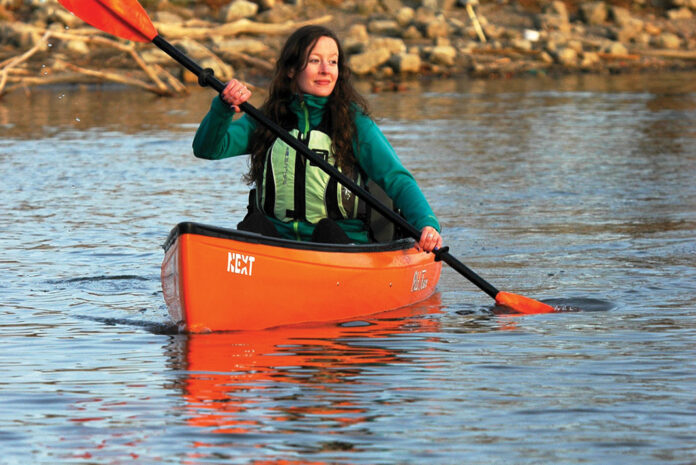
Canoe Review: Old Town Next

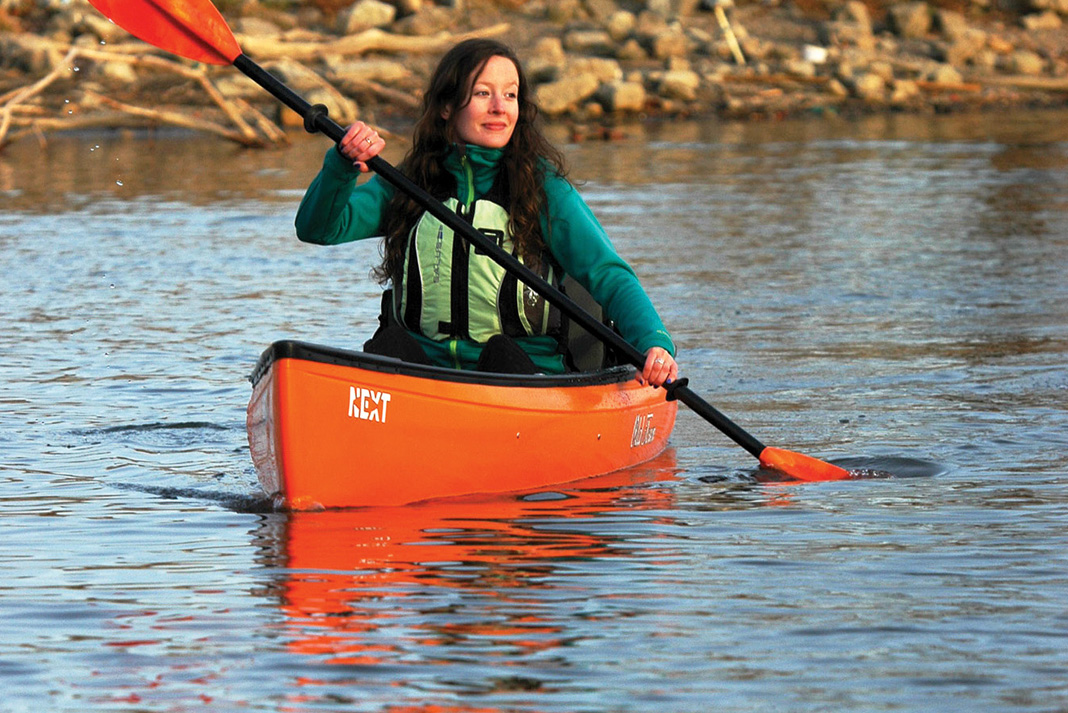
Canoe Review: Old Town Next | Photo: Geoff Whitlock

Borrowing from the pack canoe tradition, the Old Town’s new NEXT injects twenty-first century flair, with modern tech, spiffy color options and an ultra-comfortable kayak-style seat, into an enduring design.

“This has been my baby, I’ve been pushing for it for a while,” says Old Town’s boat designer, Bob McDonough. “There’s been pack canoes out for hundreds of years, but no one had dialed the design in 100 percent with modern materials and an innovative seating system.”

OLD TOWN NEXT SPECS
Length: 13’
Width: 29”
Hull Weight: 53 lbs
Capacity: 450 lbs
Material: 3-layer Poly
MSRP: $999
www.paddlenext.com

Striking a balance between high-end performance, which experienced canoeists will love, the NEXT also boasts an approachability that novice paddlers will appreciate.

Paddling away from the dock, I’m immediately struck by what a comfortable ride the NEXT is. It’s not just the supportive lawn chair-style seat that I have to thank, it’s that the NEXT is a fun and stable little boat.

On the water, the NEXT quickly achieves a snappy top speed. Its long waterline with subtle rocker offers excellent tracking, and it remains easy to maneuver on meandering creeks. The NEXT has a super low profile, just a foot of depth at the center.

Drawing on 100 years of boat design experience, Old Town has created a model that is as suitable for single blade paddling as it is for double. Single blade paddlers will especially appreciate the pronounced tumblehome.

The NEXT’s Element seat system is easily customizable. The placement and angle of the seat are simple to adjust on the water, as are the foot stops. This effortless customizability makes the NEXT straightforward to trim once you’ve filled the 450-pound capacity with gear, kids or the family hound.

Canoe Review: Old Town Next | Photo: Geoff Whitlock

At 53 pounds without the seat, the NEXT certainly isn’t the lightest solo canoe on the market, but it’s three-layer polyethylene hull promises reward owners for years to come with maintenance-free durability.

What I love about the NEXT is the convenience factor—it’s easy to throw over my shoulder for a quick lunchtime jaunt or for an after-work session.

“The NEXT supports paddling opportunistically within a paddler’s schedule, rather than paddling being a destination-based event, as in the past,” agrees Old Town’s marketing director, Luke LaBree. “Personal time on the water is a big area of growth, we’ve seen this underscored by the boom in the SUP market.”

Defining the NEXT as a personal watercraft in flashy marketing materials, Old Town is looking to capture a new generation of outdoor adventurers and fitness enthusiasts, adds LaBree. This hybrid even has it’s own stylish micro site with handsome models and paddling babes, turning stereotypes about canoeists on their head.

“We’re going after the recreational kayak customer as well as the canoe customer. We didn’t want to be pigeon holed,” adds designer McDonough.


Screen Shot 2015 03 18 at 10.45.19 AMThis article first appeared in the Spring 2015 issue of Canoeroots and Family Camping magazine.

Subscribe to Paddling Magazine and get 25 years of digital magazine archives including our legacy titles: Rapid, Adventure Kayak and Canoeroots.

Freya Hoffmeister completes epic paddle around South America

Freya Hoffmeister
Freya Hoffmeister completes epic paddle around South America

One of the greatest accomplishments in paddling history – the first solo circumnavigation of South America – was completed in Buenos Aires, Argentina, on Friday, May 1, 2015, by German kayaker and endurance record holder Freya Hoffmeister, 51.

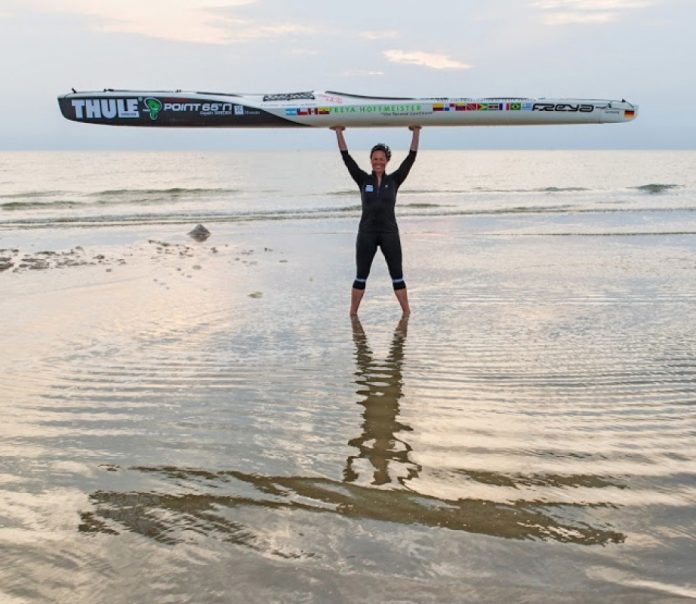
Successfully undertaking an expedition epic in scope, Hoffmeister departed Buenos Aires heading south on August 30, 2011. Paddling into port from the north four years later in her Point 65 FREYA 18-foot expedition kayak, Hoffmeister completed a voyage never before attempted, arriving with an escort from the Argentinian Coast Guard – Naval Prefecture Argentina and greeted by international fanfare. Hoffmeister’s four-year journey ended at the historic Argentine ship, Fregata Sarmiento, where she was welcomed by dignitaries as the Naval Prefecture Band played Puente de la Mujer.

Hoffmeister’s success in the southern hemisphere is just the latest in her series of unprecedented kayaking accomplishments, including the fastest kayak circumnavigation of Australia (and the first by a woman) and the fastest circumnavigation of New Zealand. Her harrowing Australian journey is chronicled in Joe Glickman’s Fearless: One Woman, One Kayak, One Continent.

Hoffmeister’s four-year, largely solo journey was full of challenges. Paddling south from Buenos Aires on the Atlantic Ocean in 2011, Freya negotiated rough, windy waters and big tides along the Argentine shores, leaving the ”shortcut” options through the Magellan Strait or the Beagle Channel aside. Instead, she included the big rough southern island of Tierra del Fuego, and planned to paddle around Cape Horn at the Isla Hornos, the southernmost tip of South America. Surviving a dangerous odyssey in more than 60 knots wind and an emergency crash landing on an inhospitable rocky coast, Freya finally conquered on January 3, 2012, without any escort the world’s most infamous windy and rough cape.
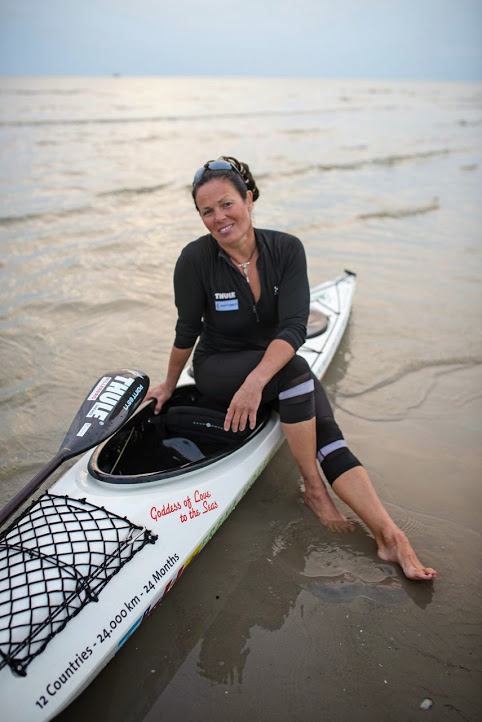
freya photoKanuMagazinHeading north again, she travelled through the beautiful, wild but also windy fjords and channels of Patagonia/ Chile and on the big waters of the Pacific coast. Freya ended the first stage of her historical first circumnavigation in Valparaiso/ Chile, having paddled challenging and exciting 7,641 kilometers in eight months. In between legs, she had planned beforehand to return to her home in Husum, Germany, to spend some time with her teenage son and to look after her two ice cream cafés and her Christmas shop.

Starting over again on August 25-2012, this time together with her partner and former paddling teacher Peter Unold and her own new “Freya” expedition kayak model, she headed north along the barren and mountainous Atacama desert on the rough and big seas of the coast of northern Chile and Peru. Both went home for a short Christmas break, full with impressions of a rich southern marine wildlife of many wales, penguins, dolphins and thousands of seals and birds of all kinds since her trip had started in Argentine.

Freya continued her trip by herself into the slaying heat of Ecuador to cross the equator for the first time. In Colombia, she was happy to get a necessary full Navy escort for crime protection. Her northern highlight was to pass the busy Panama Canal and the beautiful Archipelago of San Blas. The Caribbean side of Columbia finalized the second stage of her expedition on May 6-2013, having paddled 15,300 km overall so far.

Returning on August 16-2013 to the heat and continuous headwinds of Venezuela, Freya paddled and camped free as usual without escort on the beautiful but dangerous shores of Venezuela, infamous for pirates. Via the island state of Trinidad, she arrived through the already very shallow and muddy waters in Georgetown at the first of the three small Guyana countries. A short Christmas break brought her back to finish this most challenging third stage through the hot, shallow and muddy, mosquito infested swampy shores along Surinam and French Guiana, and around the northern area of the Amazon River, stressing her body to the max.

Many times, huge breaking waves developed in the shallows and she battled strong currents. Once she faced some of those at night, just before she witnessed the roaring and earth-shaking launch of an “Ariadne” rocket by camping unintentionally almost next door. If that would not be enough, on crossing the broad Amazon jungle river mouth, she got unexpectedly caught at night in the mighty “Pororoca” tidal wave, and survived by side surfing in darkness the roaring, trashing waters for about 10-15 minutes over 8 km with a maximum speed of 30 km/h.

Freya eventually found her way without a proper map through the big tidal maze of the fjords and channels between Belem and Sao Luiz in northern Brazil, still in stressful heat and headwind. However, this area was almost relaxing, compared to the previous section. But her mind and body was so much worn by now, she decided spontaneously just behind Sao Luiz to go in her third and last German summer break on April 272013 to finish her third leg with 20,798 km under her belt.

Freya had some five months break due to strong headwinds in the southern winter, full of work on her home businesses. She returned on October 16-2013, full of energy to face the dreaded headwind around the easternmost point of South America. Freya realized she had to make the tough decision to reverse this windy section between Sao Luiz and Recife, not able to fight the almost daily strong headwinds around 20 knots for 1,280 km.

Back to Recife and to the “right” direction, the long Brazilian coast offered a challenging variation of beautiful reefs, dangerous wide river mouths, heavily breaking rocky or sandy shores and calm relaxing paddles on safe inland waterways, still all in the skin-burning and chafing heat of the southern summer. Freya was able to master all challenges with her now long time experience on this and her previous circumnavigations around Australia, New Zealand South and Iceland.

She finally closed the loop by arriving back in Buenos Aires on May 1-2015. Freya had paddled along 13 countries, traveled as far south as the 55th and as far north as the 15th latitude, with crossing the equator twice. She paddled almost 27,000 km and averaged around 45 km per day with more than 9 hours daily water time, on each of her 606 paddling days, being 850 days on the trip in a 44-month period. Freya paddled a heavy loaded solo expedition sea kayak with no engine or sail, spent most nights in her tent camping freely on the shores, with no support boat or car driving along. She carried all her water, simple food and camping gear by herself, being independent for 3-4 weeks between occasional city stops.

Freya became the first person to round the South American continent, a feat that probably no one will repeat any time again. She paddled more expedition kilometers than any sea kayaker ever has done. What will be next? She does not tell yet…


Read daily posts and see more photos on Freya’s blog page.

More With Less

Photo: Owen Caspell
More With Less

A creek snakes through the farm where I grew up, a babbling brook with waist-deep eddy pools on wide bends. Through tall grass alive with insects it winds over rocks and under a footbridge, past a pond near our old stone house, twisting, turning and disappearing through a gutter under the road.

Chasing fish, frogs and creatures of our own imaginations, my sister and I splashed and played, returning home with mud between our toes and soaked-through jeans and t-shirts. In summer’s heat we fell asleep under stars to the stream’s steady song.

Summer camp took adventure to the next level—canoeing, hiking, camping for nights at a time—and eventually I applied to a multi-month, expedition based outdoor program. I couldn’t get enough. Along with my acceptance letter into the program came a three-page list in the mail: Essential Equipment. This must be the real deal, I thought, I need so many things.

Between the packed racks of an outdoor store, my mom and I read tags and referenced our list, following it to a T and deferring decisions to enthusiastic employees who explained fill power and denier.

I climbed mountains and ran rivers, trudged through streams and slot canyons, cooked gourmet meals in wind and rain, hiked, biked and slept in my tent for 100 nights of the following year. Then I got a job at the gear store.

Employed in the same place where I’d taken my list, I helped customers with lists of their own, preaching the pros and cons of equipment I’d relied on for my own endeavors. At first the job helped my gear habit grow—discounts and endless attention on the best, brightest and lightest made my personal inventory expand. As weeks and months went by, I assisted countless customers in making gear choices for their own adventures.

As I saw more and more shoppers check off items of Essential Equipment, unsettledness took root. The more I sold, the less inclined I was to buy stuff myself. It was a nagging feeling of doubt, at first, an increasing discomfort with the contrast between eye-blurring aisles of colorful, quick-dry synthetics and the sublime nature where many of the products would be taken.

It came to a head when a girl came through the door with a list just like mine, three pages stapled together on an outdoor company’s letterhead. Somewhere between base layers and outerwear, she mentioned how excited she was for her two-day trip.

Two days? I did my best to hide the surprise. I also mentioned the wool sweater she was wearing would be fine for the campsite if she didn’t feel like spending $120 on a mid-weight fleece with seamless shoulders, a helmet-compatible hood, adjustable shockcord hem and storm flap zipper with a chin guard.

My sister and I were a stone’s throw from home when we slept under the stars but our adventures weren’t that different from this customer who was about to break the bank. No wonder prospective campers left the store wide-eyed—it all sees so complicated.

My approach to customer service changed: make adventure easy and affordable.

There are trips where ounces equal pounds and pounds equal pain—silnylon has its place in the world—but I spent 18 years of life outside before I took that Essential Equipment list shopping. Now I buy things only after thoughtful consideration and lend gear to friends and family as often as possible. Money is better spent on tickets and travel, and cotton doesn’t really kill that often. 

Why The Loss Of Royalex Is Not The End Of Whitewater Canoeing

WE WILL SURVIVE. | PHOTO: SCOTT MACGREGOR

In WATERWALKER, arguably the most influential paddling film of all time, Bill Mason paddled a cedar canvas canoe. In Deliverance, Burt Reynolds and Ned Beatty paddled the Chattooga River in aluminum Grummans. These two films are credited for creating the boom in popularity of whitewater canoeing in the ‘70s and ‘80s. Funny, neither of these films featured Royalex canoes.

When PolyOne, the international corporation that produced Royalex, announced it was ceasing production of the long-time canoe hull material, you couldn’t meet another paddler without discussing the seemingly dismal future of open boating and wilderness river tripping.

On the cover of Rapid’s sister publication, Canoeroots, we ran the headline, “The End of Canoeing As We Know It.” Who wouldn’t read the full story? And for the record, we didn’t say it was the end of canoeing, just the end of canoeing as we know it.

All winter I’ve been fielding phone calls from enthusiasts, outfitters and paddling schools asking if I’d paddled and wrapped any new canoe hull materials. My optimism about the current opportunity for innovation in the industry has most often been met with, “Yeah, but I’m not buying anything until I know I can wrap it.”

First of all, you can wrap anything. What paddlers really want to know is, after you drag it off the rocks, can you paddle it home?

In an inflight magazine, I recently read an advertisement for Toray Industries, the producer of “a super-charged plastic with embedded carbon fiber.” Toray was boasting about molding their magical material into airplanes and automobiles. In fact, the Boeing 787 Dreamliner’s fuselage and wings are all carbon fiber.

Nowhere in the ad did they talk about what happens when a carbon fiber 787 Dreamliner goes down. Why? Because, commercial airliners don’t go down very often. And, you know what, we don’t wrap canoes very often either. We really don’t.

In 23 years and hundreds and hundreds of river days, I haven’t wrapped one properly outfitted whitewater canoe—not a single one. Granted, livery businesses and outdoor education centers may have a much higher rate of destruction. So will canoes without proper float bags. But the rest of us may as well be enjoying lighter weight, nicer lines and greater performance offered by advanced materials.

WE WILL SURVIVE. | PHOTO: SCOTT MACGREGOR

THE LOSS OF ROYALEX IS NOT THE END OF WHITEWATER CANOEING

No one enthusiastic about mountain biking or road cycling is still riding a 30-year-old bike with a virtually indestructible steel frame. Carbon fiber is the future and it has been in cycling for years. Carbon bikes are stiffer, lighter and can be more methodically shaped.

Andy Convery of Echo Paddles spent his Easter weekend outfitting his first composite Ocoee, which he calls the Echoee (page 9). I’ve dreamed of a super stiff, 30-pound Ocoee for more than 20 years. Nova Craft Canoe is tossing 50-pound composite Prospectors off 10-story buildings and paddling them home. Esquif is working to produce a mate- rial sort of like Royalex, but lighter, stronger and more abrasion resistant. Thank you PolyOne for forcing us to kick our dependence on your out-of-date material.

Nobody was ever drawn to paddling rivers because they were excited about sheets of acrylonitrile butadiene styrene plastic sandwiching a foam core. The loss of Royalex is not the end of whitewater canoeing, just as the end of polyethylene pellets would not be the end of whitewater kayaking.

At the height of the fur trade, there wasn’t one Royalex canoe in the Hudson’s Bay catalog. We’ve been running whitewater since long before Royalex was invented, and we’ll be running whitewater long after the last Royalex canoe is bent in half, limped home and unloaded on Craigslist for $350.

Scott MacGregor is the founder and publisher of Rapid. He’s an avid solo open boater and whitewater canoe tripper. Although voted Mr. Optimistic in high school, when PolyOne announced the end of Royalex he bought spares of his favorite canoes, just in case.


This article on whitewater canoeing was published in the Early Summer 2015 issue of Rapid magazine.This article first appeared in the Early Summer 2015 issue of Rapid Magazine. 

Subscribe to Paddling Magazine and get 25 years of digital magazine archives including our legacy titles: Rapid, Adventure Kayak and Canoeroots.

Frozen Assets

Watermelons are not in season. | Photo: Erik Olsen

It happens every year. Half the planet reels drunkenly away from the fire and the land stumbles like an old inebriate into the coldest season. As our 23.4-degree list inches us further away, the temperature plummets and the days grow shorter. The effect is exacerbated nearer the poles, where our cousins in the far north and south must strap on their headlights for several months of unbroken dusk. Winter has arrived.

On the coasts, ocean currents moderate temperature and saltwater stays stubbornly fluid. For the 35 million people residing mid-continent around the Great Lakes, however, a deep freeze is inevitable. In early winter, Arctic air masses charge across the lakes—still relatively balmy with residual summer heat—inhaling drafts of warm, moist air. The resulting storms clobber surrounding communities with spectacular lake-effect snowfalls, knocking out power and paralyzing transportation. Last November, Buffalo, New York, was inundated with a whopping six feetof snow in just 24 hours.

In the rivers, the current thickens and slows. Ice pans rub shoulders like jockeys on a track. Heavy snowflakes swirl from restless skies and ice creeps implacably outwards from the shorelines. A paddler loading his kayak in this weather must first sweep the snowfall from his roof rack. Scrape the ice from his saddles, precariously perch the boat like a luge at the top of its run.

Even as the snow drifts back over her Subaru, however, a petite woman in a white kayak rotates like a yogi in her cockpit, and falls purposefully into the water. For a moment, gravity and momentum win; water swarms over her face. Then the buoyancy of her body and the careful pressure she exerts inside the kayak bring her back to the surface, where she rests, smiling peacefully.

Around her, similar stunts are playing out: scantily clad kayakers scramble around their decks, practicing self-rescues; others set up for rolls or stand in the water, spotting friends. It’s mid-winter and the sky is pitch black a full hour before the afternoon commute, but the water is so crowded with kayakers, it’s almost impossible to turn around.

“Pool sessions have a fun, supportive vibe where you can maintain the momentum of spring, summer and fall,” says Dympna Hayes, who organizes sold-out winter clinics at community pools in snow-socked central Ontario through her company, Learn to Kayak.

Watermelons are not in season. | Photo: Erik Olsen

For a handful of even hardier paddlers, kayaking on the lakes lasts as long as there’s open water. When winter storms kick up the best surf of the year, intrepid Lake Ontario paddlers chase waves in the Western Gap near Hogtown’s Toronto Islands. And from late fall through early spring, Michigan-based paddling photographer Erik Olsen relies on his kayak to document the unique off-season landscapes of the upper Great Lakes.

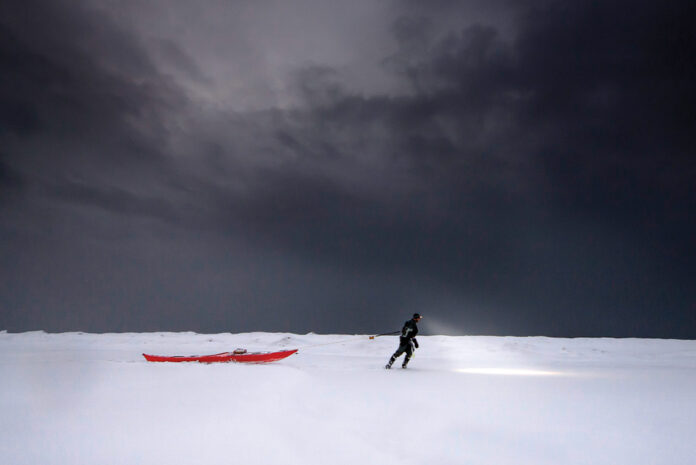
The jaunty tilt of our planet’s axis has presented Olsen with such rare phenomena as last winter’s 15-foot-high ice caves on Lake Michigan. Another trip rewarded with a sunset paddle amongst icebergs. “I had to tow my boat an eighth of a mile to find open water, but it was well worth it,” he says. “Truly a rare treat of a hard winter.”

Virginia Marshall is the editor of Adventure Kayak magazine.


This article first appeared in the Spring 2015 issue of Adventure Kayak magazine. Subscribe to Paddling Magazine and get 25 years of digital magazine archives including our legacy titles: Rapid, Adventure Kayak and Canoeroots.

Base Camp: Higher Learning

Photo: Scott MacGregor
Base Camp: Higher Learning

We live in a small town.

How small is it? The public school has only 128 kids spanning from junior kindergarten to Grade 8. There are only nine kids in my daughter Kate’s Grade 3 class. This means when she graduates, she will have a choice of three boys for prom (there are actually five boys in her class, two of which we’ve already agreed would be poor choices). There are few of the extra clubs, sports and trips you’d find at larger city schools.

Mr. Roberts was the principal of the country public school I attended. He wore a suit and tie every day. He was all business, all the time.

My mom had sent me to school with a note letting my teacher know that my father would be picking me up early. I would be missing my afternoon classes.

“Sit down, Mr. MacGregor, please,” said Roberts pointing to a chair in his office. He looked both ways down the hall and shut his door. I was sure I was going to get it.

When he sat down at his desk, he leaned forward and whispered, “I wish more parents would take their kids to the Sportsmen’s Show.”

The secret was out and I waited for the catch. There wasn’t one.

“You’ll learn more this afternoon at that show than we can teach you in this place all week,” he said.

He told me how important he thought it was for his students to look outside school to experience different things.

Today, elementary teachers would say that Roberts understood cognitive theory and subscribed to schema learning. Children use schemas, an organized pattern of thought, to construct an understanding of the world around them. When they experience discrepancies between what they already know and what they discover, everything inside gets juggled and their understanding of the world changes. The more schemas or bits of information or experiences we’ve logged, the better.

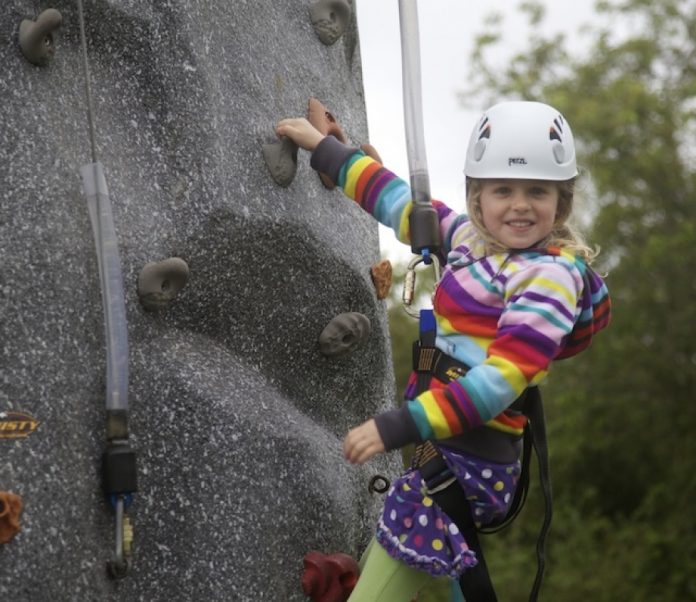
Alpine skiing. Catching frogs. Portaging. Baiting hooks. Rock climbing. Playing in the ocean. Fire building. Summer camp. It all adds to their understanding of the world.

When I was home visiting my parents this past Christmas I was digging around in my old bedroom. Tucked in the back corner of my closet I found a plastic bag full of dog-eared canoe brochures and camping catalogs.

My dad is a hunter and fisherman, not a paddler. My mom has never slept in the woods. If not for the wisdom of a progressive school principal and my annual trips to spring tradeshows it’s unlikely I’d have had the interest to take an outdoor education credit in high school. It’s unlikely I’d have had the confidence to transfer from an engineering program to an outdoor recreation degree in university. It’s even more unlikely I’d have created Canoeroots magazine.

We know that direct exposure to nature is essential for healthy childhood development. What we don’t know is which little bits of knowledge or experience will be the building blocks for their futures. And really, who cares? That’s for them to figure out along the way. Our job as parents is to have fun with our kids sharing the things we love.


Screen Shot 2015 03 18 at 10.45.19 AMThis article first appeared in the Spring 2015 issue of Canoeroots and Family Camping magazine.
Subscribe to Paddling Magazine and get 25 years of digital magazine archives including our legacy titles: Rapid, Adventure Kayak and Canoeroots.