Home Blog Page 276

Skill: Go Ultra-Light On Your Next Canoe Trip

Photo: Frank Wolf
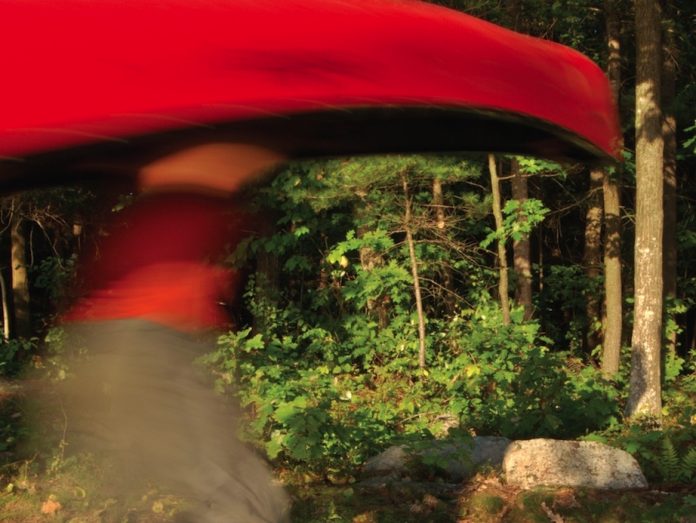
A person carries a red canoe on a portage between bodies of water.

 Going ultralight on your next canoe trip doesn’t have to break the bank and it will definitely save your back. Is that two-kilometer portage into you favourite lake tougher every year? Do you struggle to pack up your mess and break camp by the crack of noon? The affliction is common, and the solution simple: lighten your load. Dump the stuff you don’t need and find the lightest reliable gear.

The first myth that needs to be dispelled is that going light means shivering on a bed of rocks with a few spork fulls of cold granola in your belly while insects strip your sunburned flesh to the bone. With the light, tough gear available today—and with some disciplined packing—you can carry less and have an easier time going further and faster, without sacrificing your comfort or safety.

When I’m solo tripping, my homemade wood strip canoe, food and gear (including bear bangers, flares, throw rope and a water filter) weigh less than 50 pounds together. Impossible you say? Here’s how:


Minimize

Leave non-essentials at home. Ask yourself, “Could I die if I don’t take this?” If the answer is no, try going without it. You probably won’t miss 
it, but you might wind up with a pack many pounds lighter. Of course, if your thing is photography, take the monster zoom lens, if you like to read, take War and Peace (softcover). But when it comes to things you took last trip and didn’t use, be ruthless.


Upgrade

Once you’ve pared your pack down to essentials you’ll have an easier time affording an equipment upgrade. When replacing gear, seek out the lightest, highest-quality gear you can afford and start with the heaviest items: tent, pack, grill or stove, sleeping bag and mat.


Throw off your yoke

You can carry a 45-pound canoe forever, but a 65-pounder gets heavy after a few hundred meters. Ultra-light composite boats (carbon or Kevlar) are expensive, but if used with respect, your grandchildren will someday find them as easy to carry as you do. A weight savings of 20 pounds in the hull is as good as in the pack.


Leave the water at home

Your food pack shouldn’t weigh
 more than your canoe. You can
get an ample daily ration of 3,000 nutritious calories from 800 grams 
if it is dehydrated. Buy a dehydrator, make your own or use a convection oven and see how easy it is to remove water that is quickly replaced at your campsite.


Fatten up

Fats contain more than twice the calories per gram as carbohydrates or proteins. Think of bacon as a critical weight saver.


Super size

Do you ever finish a trip with your food pack still half full? Go ahead and factor in some insurance supplies, but don’t overestimate your appetite. Measure or weigh your food so you learn what you really eat and pack accordingly. Just 125 grams of pasta per person is plenty for a main course. You won’t have to eat your boots.


Simplify

Put your wannigan in the living room and stick a coffee table book on it. You can eat very well with a few simple kitchen implements. Use a roll-up cutting board for prep and leave the plates at home (using a bowl for pancakes just makes it easier to pool more syrup).


Find the breaking point

Saws and hatchets excel at drawing sweat and blood from your body, but aren’t necessary for collecting the size of firewood that is best for cooking.


Roll out the barrel

For food storage, use a liner that keeps water out and odours in. I’ve had success (no bears or mice) with vinyl roll-top bags and the Ursack, a Kevlar bag with an odour-resistant liner. Add a few meters of (light) rope to hang your food from a tree overnight and you can defend yourself from the biggest heavyweight bully of canoe tripping: the food barrel.


Eliminate redundancy

Make a list of the gear you take on a trip and then take a step back and check for redundant items. Do you really need a rain hat and a sun hat? Jackknife and multi-tool? Headlamp and flashlight? Grill and stove?


Paddle

A paddle that will be lifted thousands of times each day is an important place to save weight. Just remember,
 a broken paddle is worse than a heavy paddle—make sure it’s strong.


Pick your battles

If you trip with caffeine devotees, stop short of jettisoning their brewing device; there are some battles you will lose, even when you win.


This article first appeared in the 2009 Late Summer issue of Canoeroots and Family Camping magazine. Read the issue in our free iPad/iPhone/iPod Touch App or Android App or read it online here.
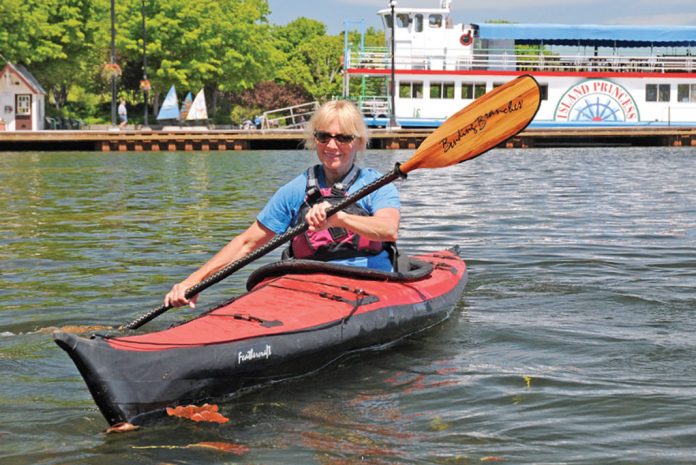
 

Folding Kayak Review: Feathercraft Kurrent

Woman paddling red folding touring kayak
Experience's Feathercraft's trademark durability and quality. | Photo: Virginia Marshall

Founded on Vancouver’s Granville Island in the late 70s, Feathercraft builds foldable kayaks with many features of narrow-beamed composite kayaks. The Kurrent is the company’s newest and lightest folding single. With its fine, upswept bow and low cockpit and decks, it has a lively performance fit and feel.

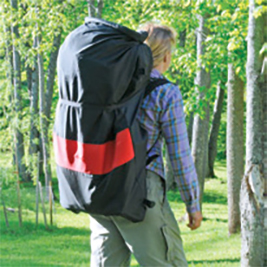
The Kurrent’s aluminum/magnesium alloy frame assembles inside the skin, cleverly using two pieces of the deck frame as levers to tension the hull. Four plastic, donut-shaped crossribs add rigidity and allow a limited amount of gear to be fed into the bow and stern for storage. Disassembled, it fits in an oversized backpack for easy carrying.

Feathercraft Kurrent Specs
Length: 13’
Width: 25”
Material: Urethane skin/aluminum alloy frame
Weight: 31 pounds
Price: $2,720 US / $2,970 CAD

feathercraft.com

Feathercraft uses a durable welded urethane for the deck and hull.

The absence of stitched seams or zippers means the skin is completely waterproof and sleek enough to pass for a hard-shell from a distance.

Strips over the keel and chines reinforce the hull along these higher wear areas.

The lightweight Kurrent accelerates swiftly and cruises about average for a 13-footer. Its shallow V hull offers an ideal blend of initial and secondary stability.

Engaging the hard chines yields snappy turns on an outside edge. Held level it tracks well, without the optional rudder or strap-on skeg.

Feathercraft’s cockpit outfitting provides one of the most comfortable and dialed rides going. The floating foot bar feels secure and is easily adjusted. Suspended hammock-like from the frame, the seat has inflatable bottom and lumbar pads, and the backrest is supportive without hindering layback maneuvers.

Woman wearing black and red duffel bag
Photo: Virginia Marshall

Rolling and edging the Kurrent is a breeze thanks to the cockpit bracing bars—removable, curved poles that provide snug knee and thigh support within the otherwise roomy cockpit.

Standard with every Feathercraft is a nylon spray deck and sea sock, which limits flooding to the cockpit area if you do take a swim. Feathercraft’s reputation for quality and durability is evident in their boats. The Kurrent is a lightweight, user-friendly kayak that rewards peripatetic paddlers of all stripes.

Ideal for: Day and overnight trips on all waters; hike- or fly-in destinations; smaller paddlers.

Assembly Time: 20–30 minutes

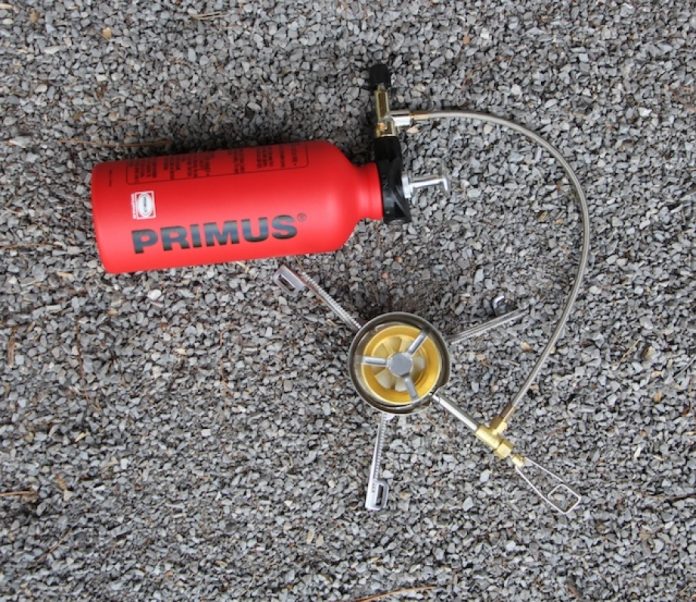
Primus OmniFuel Stove

Photo: Emma Drudge
Primus OmniFuel Stove

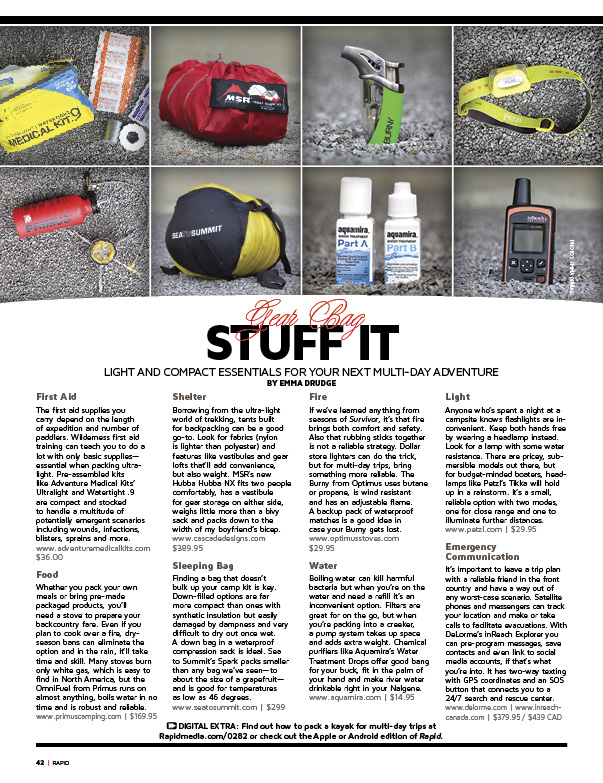
Whether you pack your own meals or bring premade packaged products, you’ll need a stove to prepare your backcountry fare. Even if you plan to cook over a fire, dry-season bans can eliminate the option and in the rain, it’ll take time and skill. Many stoves burn only white gas, which is easy to find in North America, but the OmniFuel from Primus runs on almost anything, boils water in no time and is robust and reliable.

www.primuscamping.com | $169.95

Click here for more expedition essentials in the free online edition of Rapid, Summer/Fall 2014.


RPv16i3-42

This article originally appeared in Rapid, Early Summer 2014. Read the entire issue on your desktopApple or Android device.  


Video: How To Set Up A Tarp

https://youtube.com/watch?v=tF9qoDF_2N0%3Flist%3DUUGqjPJcUWDPm9NPA439SW6g

Gord Baker from Algonquin Outfitters shares his top tips for setting up a bombproof tarp shelter on your next canoe camping trip that will protect you from the elements. Watch it now!


Stay tuned for more great paddling skill videos, including canoeing, kayaking and whitewater techniques, brought to you in partnership with Rapid Media and Ontario Tourism. 


Composite Creations Splash Canoe Review

Photo: Colin Moneypenny
Composite Creations Splash Canoe Review | Photo: Colin Moneypenny

Aliesha Greve remembers climbing in and out of all kinds of canoes when she was little, and standing around to have her measurements taken for her dad’s latest project.

Composite Creations Splash
LENGTH: 7’11”
WIDTH: 23.5”
WEIGHT: 36 LBS
PADDLER WEIGHT RANGE: 60–100 LBS
$1,700
www.compositecreations.ca

She was seven years old and her father, Al, an engineer and avid paddler, spent hours in the garage sanding a foam block into what he hoped would be the perfect kid-sized canoe design.

The idea came about one night when Al Greve, Paul Mason, Andy Phillips and a handful of their life-long paddling friends, were sitting around a campfire.

Ever thought of making a kid canoe?” someone asked Phillips, the owner of canoe manufacturer Composite Creations.

A conversation ensued about whether or not it was worth the investment: would people buy boats their kids would grow out of?

The evening ended without coming to any conclusions, but five months later, Al arrived at Phillips’ workshop door with a sanded down chunk of foam that would turn into a mold for the Splash, a seven-foot, 11- inch long, 36-pound solo canoe.

When the final design was ready, eight-year-old Aliesha and her little sister Emily were among the first pint-sized paddlers to take it for a spin.

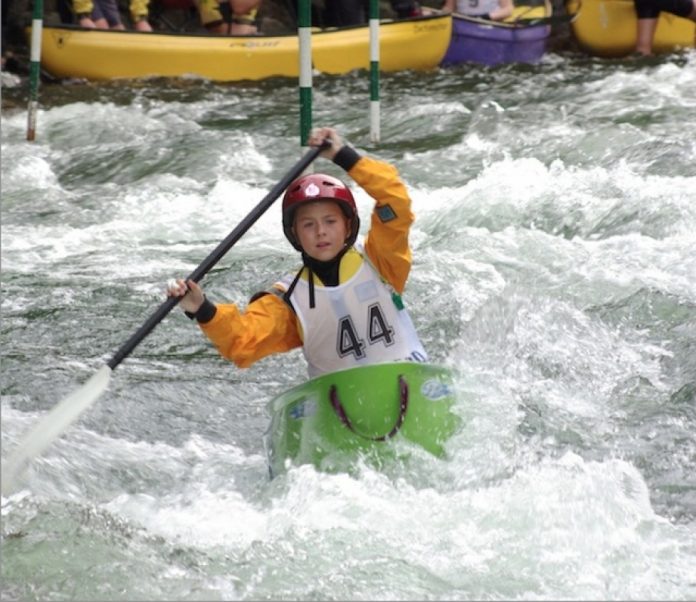
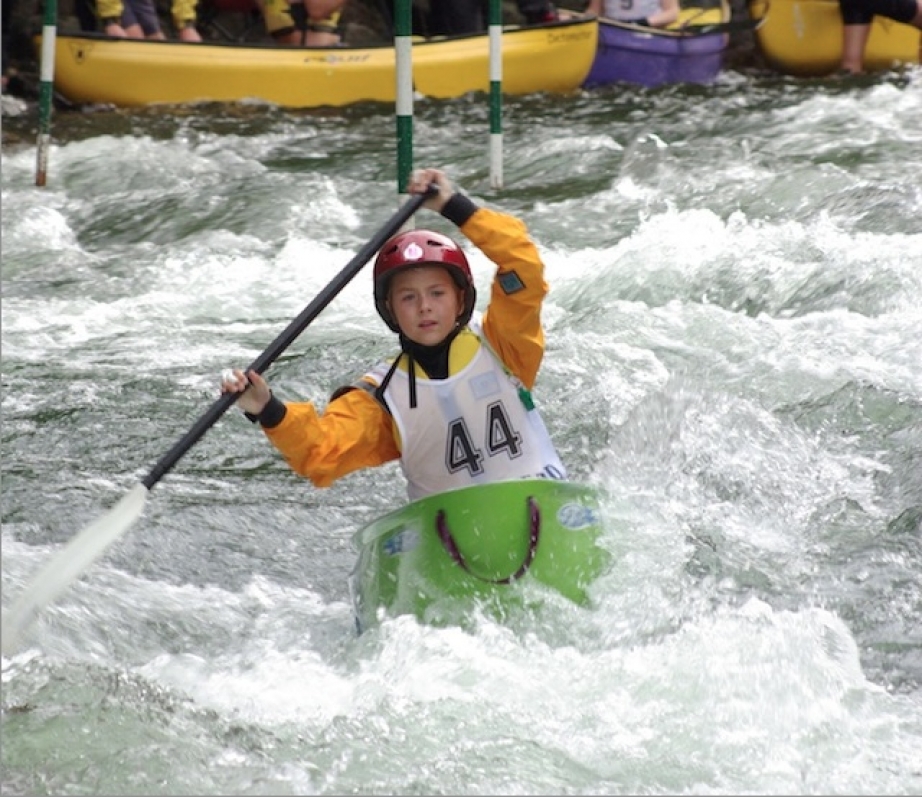
Al’s work was not for waste. After seeing kid kayakers out with their parents he wanted an OC equivalent, and today, his proud-dad praise is well warranted. At 11, Emily was featured on the cover of American Whitewater Journal running 15- foot Baby Falls on the Tellico River in Tennessee. Aliesha, who went on to win two junior national championships in women’s C-1, is now 20 and teaching paddling courses at the Madawaska Kanu Centre (MKC) which hosts a “Splash Canoe Week” just for kids.

“I learned pretty much everything I know in the Splash,” says Aliesha. “I learned the essence of canoeing at a young age.”

Phillips designs each Splash specifically for the family ordering i t. H e’s m ade o ne w ith flames and a few in a “gummi worm pattern”—a combo of bright colors dreamed up by a 10-year-old customer.

“They’re temper tantrum proof,” says Phillips of the composite hull material, which he also uses to make auto and aviation products. “A kid could throw it off a cliff and it wouldn’t hurt it.”

Its built-in tanks eliminate the need for float bags, and are custom-fitted for each baby boater, who can weigh up to 100 pounds. The Splash’s modified rocker makes it easy to manage—a bulbous front end facilitates gentle surfing and avoids uncontrolled enders on a pushier wave. It’s stable and forgiving thanks to a rounded hull.

Photo: Colin Moneypenny
Composite Creations Splash Canoe Review | Photo: Colin Moneypenny

It might be the mom and pop shop feel of the Ontario-based canoe company, or the fact that the boats are custom-built, but talking to Splash owners made one thing very clear: Composite Creations doesn’t just have customers, it has a community of clients who are keen to get their kids paddling. It’s the same reason Phillips sells the Splash at cost—“it’s about getting the next generation into the sport,” he says, not about making a profit.

The Shawanda family has three kids, now aged 12, 15 and 16, and their father Maheengun can’t say enough about what the Splash has done for his family.

When he took an interest in canoeing himself, he picked up a Splash so the kids could learn alongside him. Six years later, his family still paddles together at every opportunity and road trips to whitewater festivals every year. When his kids outgrew the Splash, Shawanda passed it on to a new owner who he hopes will have the same experience.

“It transformed everything,” says Shawanda. “We were learning together.” EMMA DRUDGE


This article on introducing friends to whitewater was published in the Summer/Fall 2014 issue of Rapid magazine.This article first appeared in the Summer/Fall 2014 issue of Rapid Magazine. Subscribe to Paddling Magazine’s print and digital editions, or browse the archives.
Lessons in Humility

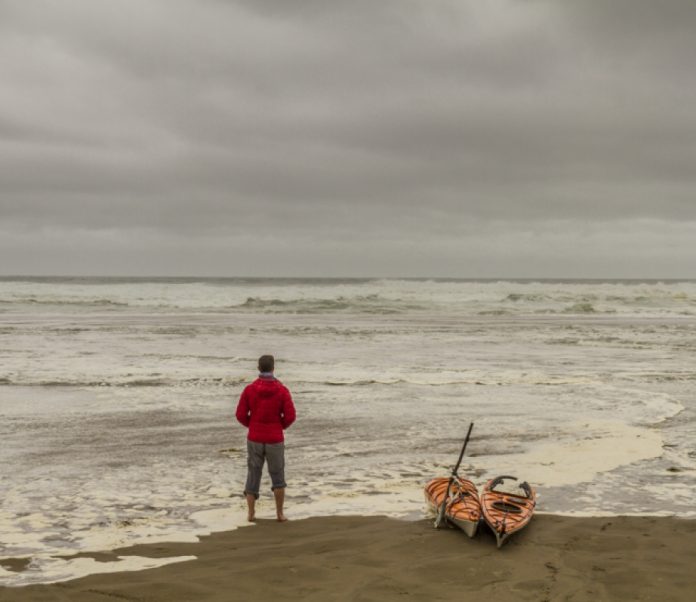
“The kayak snapped in half like a dry twig.” Photo: Daniel Fox
Lessons in Humility

A conversation with Daniel Fox of the Wild Image Project about his spectacular crash landing and plans for next year.


For Daniel Fox, like the poets and philosophers he quotes on his Wild Image Project Pinterest page, journeying into the wilderness forges connections, shapes character and brings life into sharper focus. The same elements that inspire Fox make the Quebec native’s photographs and Minute of Nature video series compelling viewing for armchair adventurers. “I try to bring a certain sense of humility to human’s relationship with nature, and I think that’s something that’s been lost and people are struggling to find that balance,” he says.

Earlier this year, Fox launched his most ambitious expedition to date, a 1,000-mile paddle from Victoria, British Columbia, to San Francisco, raising funds to send underprivileged youths on a NOLS Alaska sea kayaking course. After 30 days successfully navigating the Washington coast, Fox found himself soaked, shivering and trapped after dark beyond the breakers just south of the Columbia River. Three months after washing ashore on an Oregon beach, Fox shares the details of that harrowing night. —Virginia Marshall


The Oregon coast has many long stretches with nowhere to land. Once you start paddling, you just have to keep going.

If I had to do it again, I would postpone my departure from Astoria. I knew before setting out that the paddling conditions were not the best.

It started as a beautiful evening; the plankton bloom was going crazy. But at my scheduled safe takeout at Indian Bay, the swell was wrapping around and hitting the beach with full force. The bioluminescence lit up the breakers in the night. Even though it was totally dark, I thought I’d be able to manage.

Just as I go for it, I hear this massive roar behind me. That’s the most frightening thing. It sounded like a monster rising above me.

It totally took me by surprise. I capsized, my paddle broke in two. I rolled up with half the paddle, got knocked over again. Between waves, I managed to self-rescue and grab my spare paddle.

The capsize hit me harder than I had anticipated. I was wearing a drysuit; I thought I could spend the night on the ocean. Thirty minutes later, the wind started to blow hard and I began to shiver. That changed everything.

Being so close to civilization was a bizarre experience. I could see the houses just 200 meters away, but between us were these huge waves.

The water was just a silhouette. I watched the breakers, then picked my time and went for it.

The second wave fell on top of me—that’s when the kayak broke in two.

My biggest worry was that I was floating right in the middle of these two heavy, gear-filled pieces of kayak. If the pieces collided, they would crush me. The skirt was attached to the broken cockpit coaming—I had to play with it for a while to remove it.

Worst-case scenario, I knew I could swim to shore. Because the wind and the current were not pushing me offshore, I never thought about calling for rescue.

I held onto the kayak and waited to get pushed to shore. After 15 minutes, I felt the sand under my feet. I pulled out my sleeping bag and fell asleep on the sand. 

It was a really humbling experience. It was a beautiful day and then everything turned upside down. That’s nature, that’s life. You have to be grateful for what you have. I still have my life, my legs. It reinforced everything I believe in.

I’m going back next summer to finish the trip to San Francisco.

If I had succeeded in one shot, it would have been too easy. I think we lose sight of that. It’s the Pacific coast, it’s supposed to be hard.

PM Jan15 cover

This article first appeared in the December/January 2015 issue of Paddling Magazine.


Sweet Protection Supernova Dry Top

Photo: Greg Okimi
Sweet Protection Supernova Dry Top

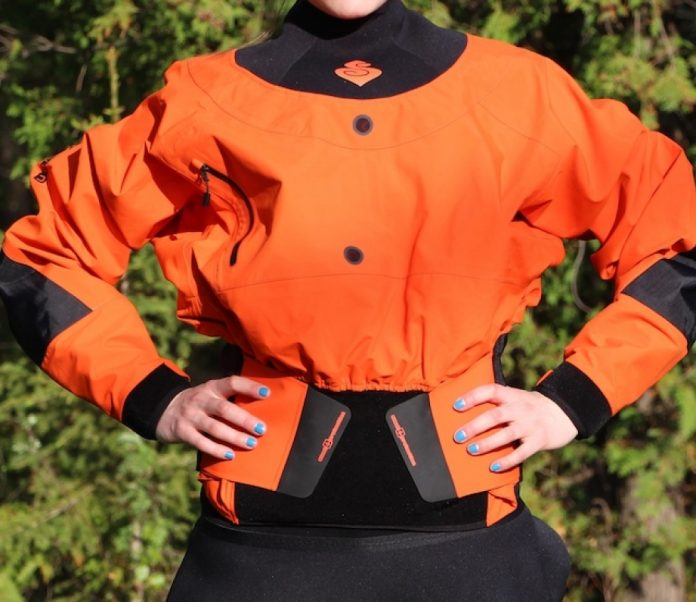
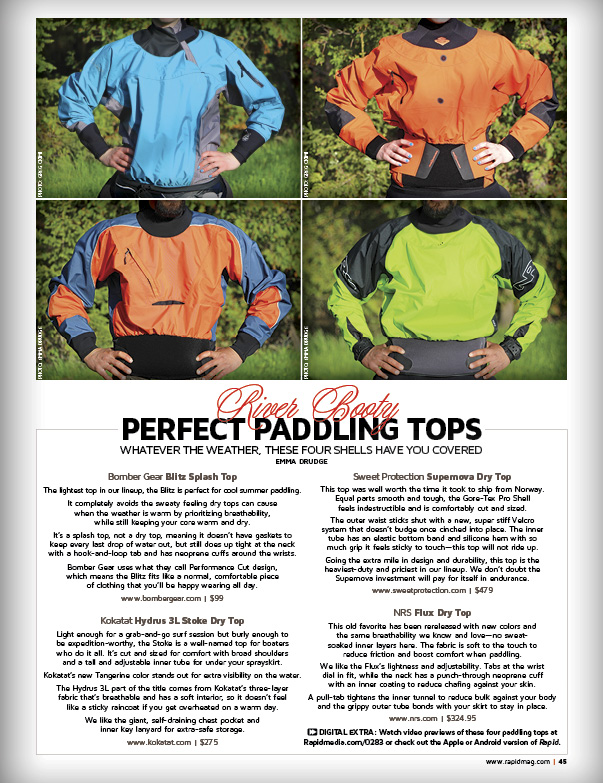
Equal parts smooth and tough, the Gore-Tex Pro Shell Supernova Dry Top feels indestructible and is comfortably cut and sized.

The outer waist sticks shut with a new, super stiff Velcro system that doesn’t budge once cinched into place. The inner tube has an elastic bottom band and silicone hem with so much grip it feels sticky to touch—this top will not ride up.

Going the extra mile in design and durability, this top is the heaviest-duty and priciest in our lineup. We don’t doubt the Supernova investment will pay for itself in endurance.

www.sweetprotection.com | $479

Click here for more dry top reviews in the free online edition of Rapid, Summer/Fall 2014.


RPv16i3-45

This article originally appeared in Rapid, Early Summer 2014. Read the entire issue on your desktopApple or Android device.  


Expedition Essential: Shelter

Photo: Emma Drudge
Expedition Essential: Shelter

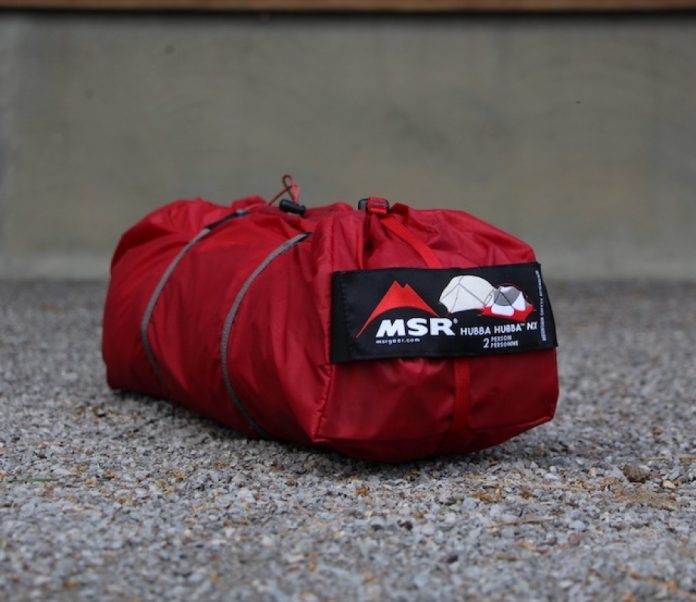
Borrowing from the ultra-light world of trekking, tents built for backpacking can be a good go-to. Watch out for fabrics (nylon is lighter than polyester) and features like vestibules and gear lofts that’ll add convenience but also add weight. MSR’s new Hubba Hubba NX fits two people comfortably, has a vestibule for gear storage on either side, weighs little more than a bivy sack and packs down to the width of a well-built bicep.

www.cascadedesigns.com | $389.95

Click here for more expedition essentials in the free online edition of Rapid, Summer/Fall 2014.


RPv16i3-42

This article originally appeared in Rapid, Early Summer 2014. Read the entire issue on your desktopApple or Android device.  


Dip & Rise

Photo: John Bryant
Dip & Rise

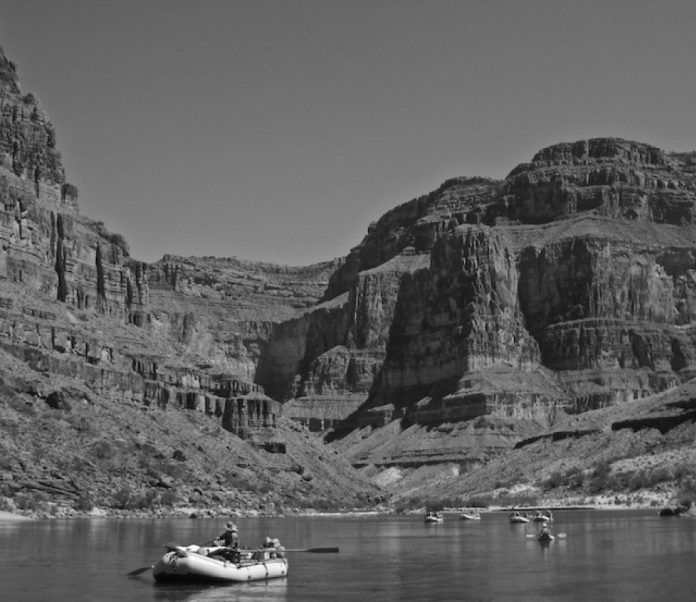
The day’s first light graces the highest point on the canyon wall and slowly begins to work its way down towards the river, illuminating layers of rock and time in the process. Shadows bend and morph by the minute, revealing unnoticed pockets and dimensions, a single sandstone wall becoming many as I drift by and gaze upon its array of intricacies. Droplets of water fall off the outstretched oars as they methodically dip and rise, dip and rise, dip and rise. 

The rhythm of lapping water is my morning music, my mantra, my prayer. Like holy words repeated over and over again, it stills my mind and centers my soul. 

Birds flutter and chirp, and in between spans of tranquility, the river narrows, tumbling over rocks and boulders. Waves build and break. Currents swirl and boil in a seemingly chaotic mess of froth and white.

We float along, listening to this language, reading the water. Treading only along currents that invite us, we are careful to heed the warnings of other paths. The river speaks to us, and by listening we are connected to it and to the beginning. We travel deeper into the heart of this place, and in doing so travel deeper into ourselves. In side canyons we rediscover the awe and wonder of childhood, exploring and laughing and loosing ourselves, existing only in the moment at hand. In others, we find ourselves overwhelmed by emotions we had stored in our own narrow, deep, hidden place. The language of water is now written on us as tears make their way down our face.

We sketch images. We write words. We take photos. We sit and stare and breathe deeply. We do whatever we can to hold on to this place. Though some of us shall return and others never again, we all know there will be times we will long to look back and to remember vividly in hopes of resurrecting these feelings again.  There were moments we felt strong, when we pushed ourselves, and others when we simply faced the challenge we had no control over. 

Staring up at moonlit canyon walls and a sliver of stars overhead, we realized our smallness and became comfortable in it. We shared stories and laughter. We celebrated the days of our birth, and professed our commitment and our love. We listened and looked each other in the eyes. We connected. And maybe in the end, that is the greatest gift of this canyon. It inspires and encourages connection, with each other, with ourselves, with the waters and the world around us. 

Here, we awake expectantly. We look forward to that first morning light, excited for the places it shall reveal. We listen for the soothing rhythm of oars as they kiss the water’s cheek, whispering holy words as they dip and rise, dip and rise, dip and rise.

Expedition Essential: Fire

Photo: Emma Drudge
Expedition Essential: Fire

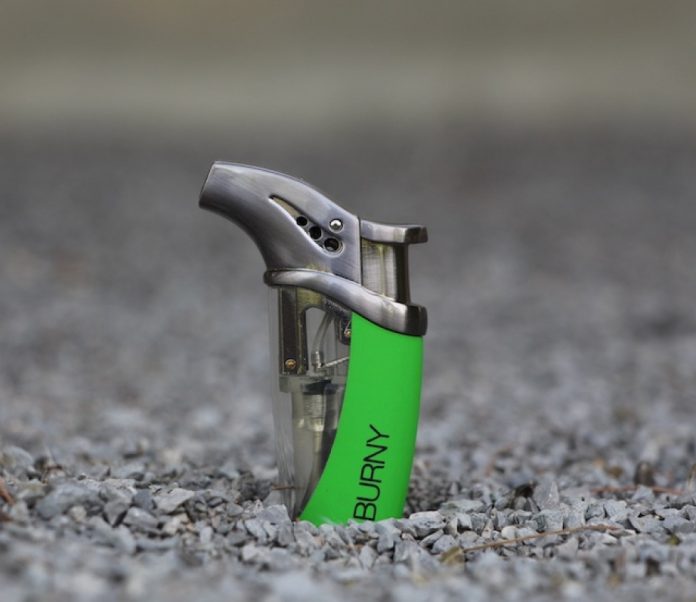
If we’ve learned anything from infinite seasons of Survivor, it’s that fire brings both comfort and safety. Also that rubbing sticks together is not a good option. Dollar store lighters can do the trick, but for multi-day trips, bring something more reliable. The Burny from Optimus uses butane or propane, is wind resistant and has an adjustable flame. A backup pack of waterproof matches is a good idea in case your little fire starter gets lost.

www.optimusstoves.com | $29.95

Click here for more expedition essentials in the free online edition of Rapid, Summer/Fall 2014.


RPv16i3-42

This article originally appeared in Rapid, Early Summer 2014. Read the entire issue on your desktopApple or Android device.