Home Blog Page 278

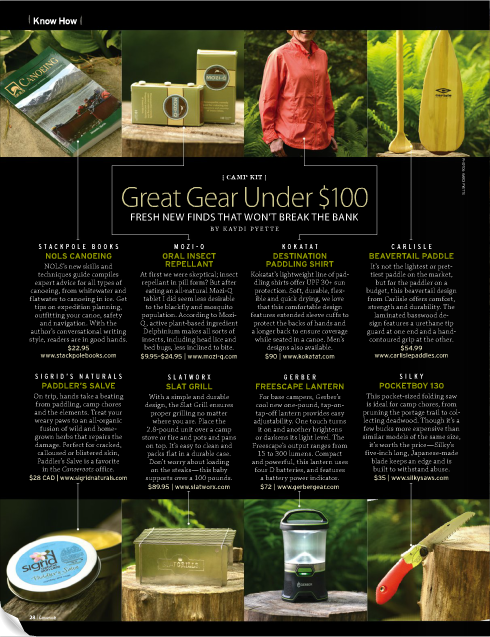
Gear: Silky Pocketboy 130

Photo: Kaydi Pyette
Silk Pocketboy 130


This pocket-sized folding saw is ideal for camp chores, from pruning the portage trail to collecting deadwood. Though it’s a few bucks more expensive than similar models of the same size, it’s worth the price—Silky’s five-inch long, Japanese-made blade keeps an edge and is built to withstand abuse.


Technical Features
– 5-inch (130 mm) blade length
– 7 teeth per inch (8 teeth per 30 mm) teeth configuration 
– 0.35 pounds (160 grams) operating weight; 0.5 pounds (220 grams) weight with carrying case 
– Clear plastic flip-lock carrying case with belt clip is included 
– Limited lifetime warranty against defects in material and workmanship

$35 | www.silky.jp 


Screen_Shot_2014-09-30_at_9.19.33_AM.pngThis article originally appeared in the Late Summer/Fall issue of Canoeroots and Family Camping. Read the entire issue on your desktop, Apple  or Android device. 

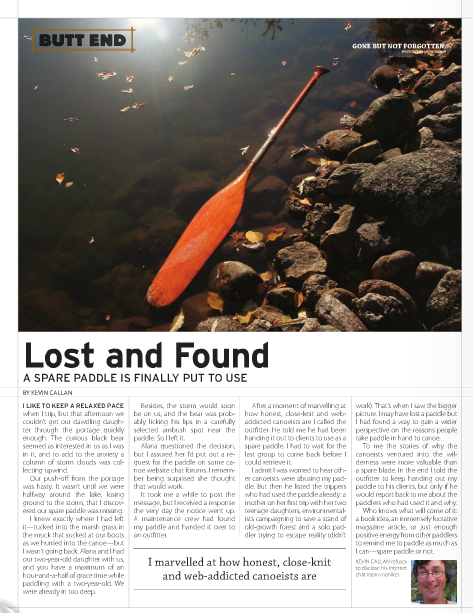
Butt End: Lost and Found

Photo: Ian Merringer
Lost Paddle - Kevin Callan

I like to keep a relaxed pace when I trip, but that afternoon we couldn’t get our dawdling daughter through the portage quickly enough. The curious black bear seemed as interested in us as I was in it, and to add to the anxiety a column of storm clouds was collecting upwind. 

Our push-off from the portage was hasty. It wasn’t until we were halfway around the lake, losing ground to the storm, that I discovered our spare paddle was missing. 

I knew exactly where I had left it—tucked into the marsh grass in the muck that sucked at our boots as we hurried into the canoe—but I wasn’t going back. Alana and I had our two-year-old daughter with us, and you have a maximum of an hour-and-a-half grace time while paddling with a two-year-old. We were already in too deep. 

Besides, the storm would soon be on us, and the bear was probably licking his lips in a carefully selected ambush sport near the paddle…Click here to continue reading in the free desktop edition of Canoeroots, Spring 2008.  

Screen_Shot_2014-10-10_at_1.49.09_PM.pngThis article originally appeared in the Late Summer/Fall issue of Canoeroots and Family Camping. Read the entire issue on your desktop, Apple or Android device. 

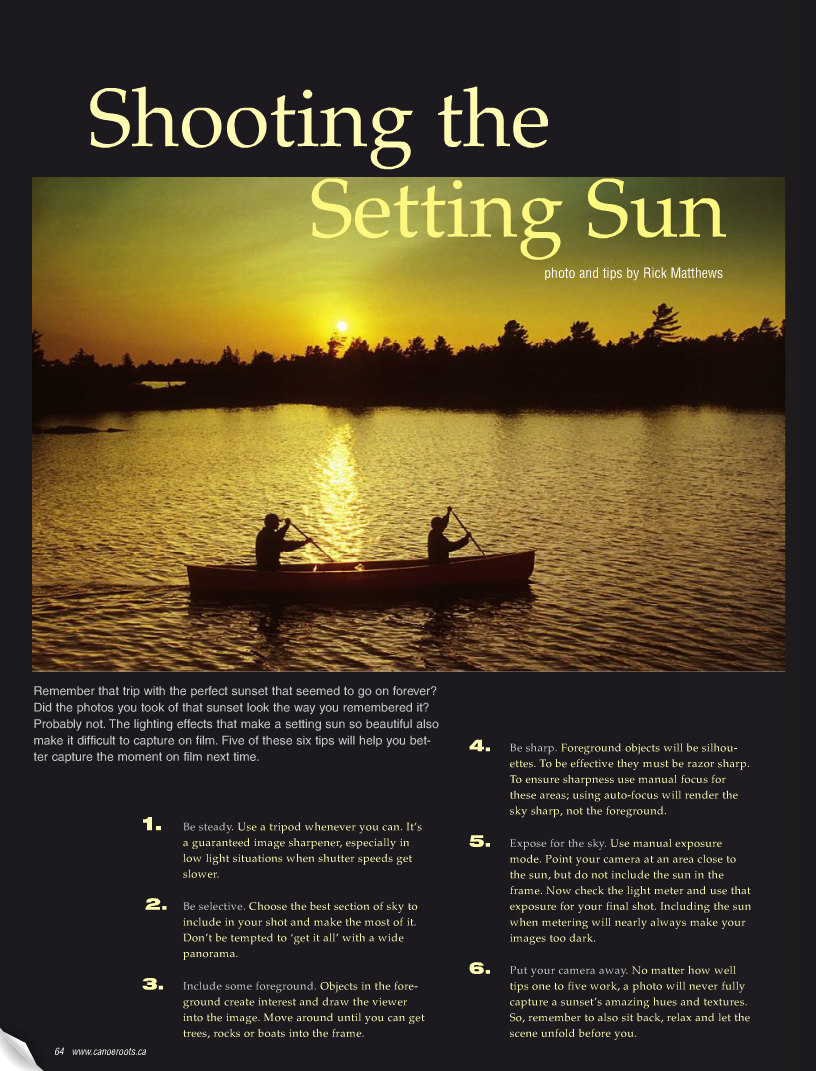
Skills: Shoot Perfect Sunsets

Photo: Rick Matthews
sunset canoe

Remember that trip with the perfect sunset that seemed to go on forever? Did the photos you took that sunset look the you remembered it? Probably not. The lighting effects that make a setting sun so beautiful also make it diffilcult to capture. 

1. Be steady. Use a trippod whenever you can. It’sa guaranteed image sharperener, especially in low light situations when shutter speeds get slower. 

2. Be selective. Choose the best section of sky to include in you shot and make the most of it. Don’t be tempted to …

Screen_Shot_2014-10-07_at_11.51.47_AM.pngThis article originally appeared in the Late Summer/Fall issue of Canoeroots and Family Camping magazine.


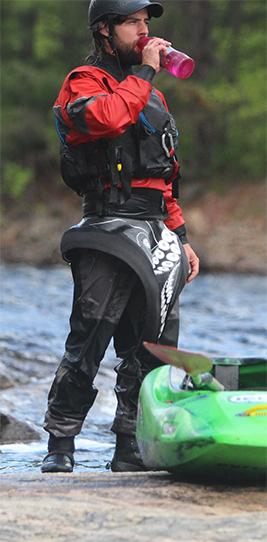
Field Test: Bomber Gear’s K-Bomb Sprayskirt

Person standing beside whitewater kayak wearing sprayskirt.
Fashion meets function. | Photo: Emma Drudge

The K-Bomb Octopod Sprayskirt from Bomber Gear explodes onto the whitewater scene as a perfect mix of function and fashion.

Man standing beside whitewater kayak wearing sprayskirtAs soon as I picked up the K-Bomb I noticed how beefy it felt. The rubber rand is just the right size to provide a great seal yet not too bulky that it’s a pain to get under your cockpit rim.

A super tough-feeling outer ring protects the high wear areas that rub on your boat; this durability will appeal to any kayaker who’s had to empty boats out by sliding them across the deck.

[ Paddling Buyer’s Guide: View all sprayskirts ]

The K-Bomb uses what Bomber Gear calls Sub Screen technology. To make it, they pressure inject Teflon-based ink into the pores of the skirt’s neoprene to create wicked water repellency with added durability. The result is an incredibly smooth-feeling fabric that sheds water fast—no more annoying drips onto your legs from water sitting on the top of the deck and seeping through.

The solid seams are sealed with a four-step process called Bomblock Construction, making them reliably strong and watertight.

Rounding out some of the thoughtful design features are a rubberized pull handle that keeps a large triangular shape for easy grabbing and the WickClip, which lets you easily buckle your skirt up and out of the way while walking. The clip is also handy for hanging to dry at the end of the day.

Available in a variety of cockpit and tunnel sizes it’s important you get the right fit as we found the skirts don’t stretch quite as much as those without the Sub Screen neoprene. I was glad to see that Bomber Gear has measurements in their extensive online sizing guide to help me find the perfect fit.

Bomber Gear makes it clear that serious equipment doesn’t have to look boring. The K-bomb Octopod is a great choice for kayakers who paddle hard and want to look good too. It is available in several prints but the intricate tentacle design of the Octopod stands out as my favorite option.

This article originally appeared in Issue 17 of Paddling Magazine. Subscribe to Paddling Magazine’s print and digital editions here, or browse the archives here.


Fashion meets function. | Photo: Emma Drudge

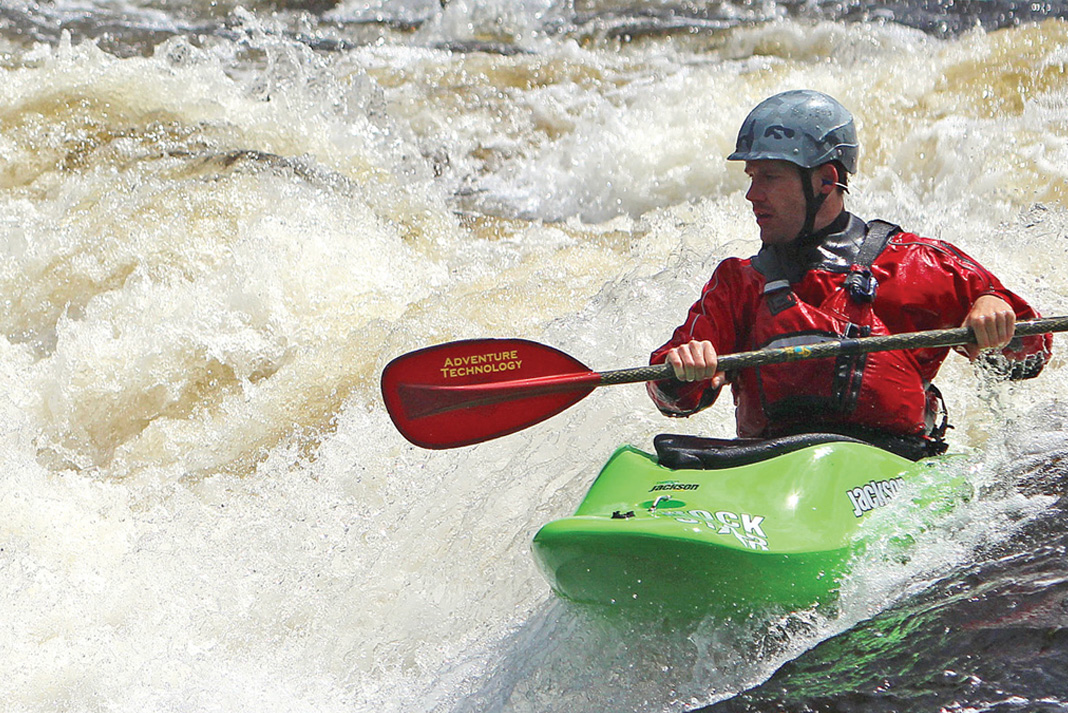
Jackson Kayak’s 2014 Rockstar

Photo: Emma Drudge
Jackson Kayak's 2014 Rockstar

Rock stars are all about putting on a show. Many start their careers with high-energy acts, running around on stage with the music cranked to 11. For some that’s as far as it goes, they hit their peak and decades later we wonder where they went.

Jackson Kayak’s 2014 Rockstar
Small/Medium/Large
Length: 5’4”/5’9”/5’11”
Width: 25”/26.5”/28”
Height: 14”/14.5”/15.5”
Volume: 48/57/65 GAL
Weight: 27/29.5/33 LBS
Paddler weight: 115–180/ 150–200/170–250 lbs
Cockpit dimensions: 32.5”x19”/34.5”x20”/36”x21”
Price: $1,249
www.jacksonkayak.com
Other stars though, the famous, long-lived favorites, mature with age. They tweak and refine their style. This is the path of the Rockstar from Jackson Kayak, which, with its new design for 2014, proves it is still in its prime.

Sitting beside its predecessor, the new Rockstar has only a few visible differences. It’s an inch shorter, has a slicier bow and a smoother, more continuous rocker profile.

It’s once I’m on a wave that the Rockstar’s refinements become apparent. This kayak’s movement is predictable. At the top of a wave it seems to wait for me to decide what to do. While the original Rockstar was twitchy, reacting to extremely subtle inputs, the newer version is more patient and highly controllable.

It will give you a good dose of air on a straight butt bounce or just as easily lay a nice, speedy carve across a wave face. You can quickly transfer one edge to the other and you’ll whip aerial blunts, cleans and pan ams with ease.

Less volume in the bow and stern and more around the paddler means I can slice ends into the water for easier cartwheels and still retain lots of pop for loops and similar tricks.

With continuous rocker compensating for the boat’s short length, the new Rockstar is as fast as ever on a wave.

As with any maturing rock star, the changes are more than just skin deep—internally, the boat has also evolved. A tighter knee and thigh area keep me in an aggressive, upright paddling position and the back band’s new cut feels secure and moves when I do.

MORE LIKELY TO POP OUT THAN FLOAT AWAY. | PHOTO: EMMA DRUDGE

Jackson’s inflatable bean bag Happy Feet fill the bow, and are removable for traditionalists like me who prefer a foam block. The Sweet Cheeks seat forms to a custom fit.

On my first ferry out towards a wave, I quickly realized that I felt really high—not in the way you might expect a rock star to be, but high out of the water— even with the Sweet Cheeks as low as they go. For beginners this extra height may be unnerving, since a higher center of gravity makes you more prone to tipping. Intermediate to advanced paddlers will enjoy that it allows for better visibility downstream and, more importantly for freestylers, more leverage for throwing tricks.

The Rockstar comes in three sizes, and if you’ve paddled an older version of this boat you might find yourself switching sizes. At 190 pounds I’m at the high end of the medium size, which fit perfectly in the original design. Being at the top of the weight range makes the boat easy to throw around while playing, but cumbersome for downriver moves—sizing up would easily solve that problem and help make wave and hole moves bigger too.

Like a lot of veteran rock stars, this updated freestyle design from Jackson is a more refined and polished performer. You can still expect high energy and big-air thrills, but now in a more predictable and controllable package.


This article on introducing friends to whitewater was published in the Summer/Fall 2014 issue of Rapid magazine.This article first appeared in the Summer/Fall 2014 issue of Rapid Magazine. Subscribe to Paddling Magazine’s print and digital editions, or browse the archives.

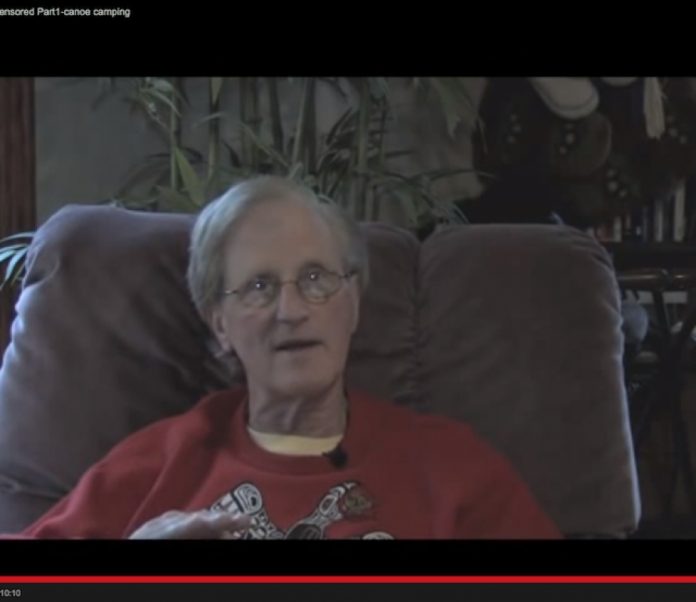
Video: Cliff Jacobson’s Canoe Camping Advice

Video: Cliff Jacobson's Canoe Camping Advice
[iframe width=”420″ height=”315″ src=”//www.youtube.com/embed/1voqypngmQY” frameborder=”0″ allowfullscreen ]

Part one of a Q&A with the opinionated and knowledgeable Cliff Jacobson on all things canoe camping related!

“This is a continuation of our interview with Cliff. We just turned the camera on and let him go wild, talking about whatever he wanted to about canoe camping and camping gear! There’s some excellent in-depth advice given here.” — MorrallRiverFilms

Gear: Oral Mosquito Repellant

Photo: Kaydi Pyette
Mozi-Q oral insect repellant | Photo: Kaydi Pyette

At first we were skeptical; insect repellant in pill form? But after eating an all-natural Mozi-Q tablet we did seem slightly less desirable to the blackfly and mosquito population in buggy May. According to Mozi-Q, active ingredient Delphinium makes all sorts of insects, including head lice and bed bugs, less inclined to bite.

From the manufacturer: “Mozi-q is a formula containing five homeopathic remedies: Staphysagria, Ledum palustre, Urtica urens, Cedron and Grindelia. They are in low C and D potencies, thereby acting at the physical level for their common indication, to reduce the frequency and severity of insect bites.”

Would you try it?

$9.95-$24.95 | www.mozi-q.com 

Screen_Shot_2014-09-30_at_9.19.33_AM.pngThis article originally appeared in the Late Summer/Fall issue of Canoeroots and Family Camping. Read the entire issue on your desktop, Apple  or Android device. 

Boat Review: Get On The Water’s DIY Cedar Strip

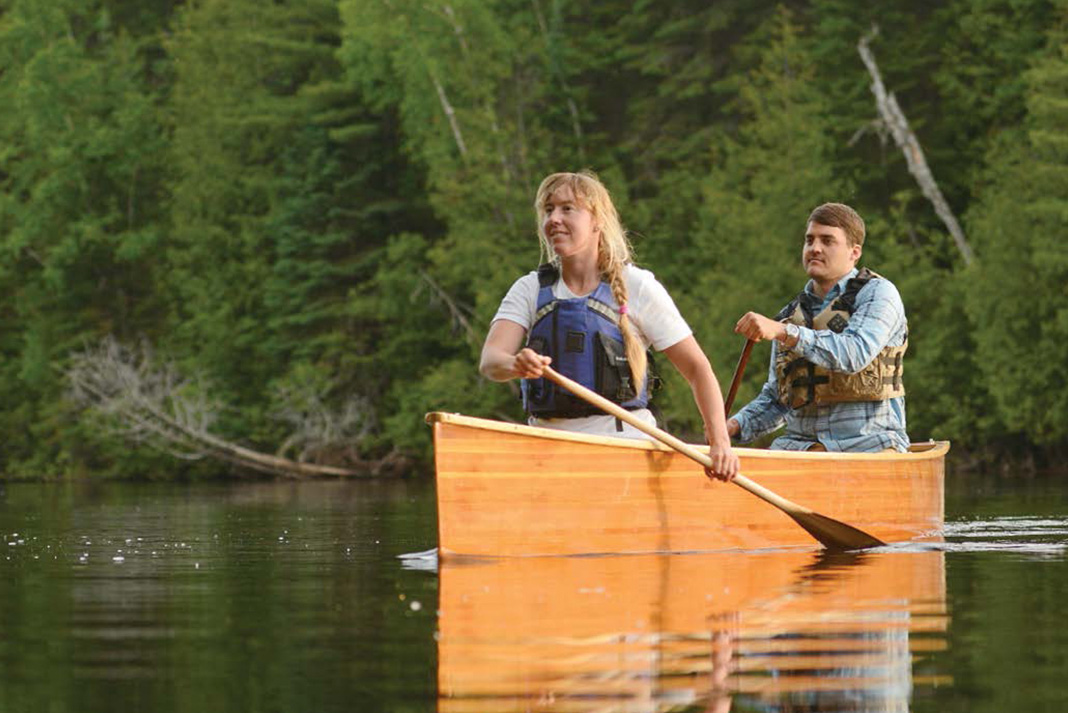
Get On The Water Touring Canoe | Photo: Kaydi Pyette

At Otto Vallinga’s backyard boat building shop in the little community of Corunna, a poster on the wall depicts the wise words of well-known wooden boat builder, Captain Pete Culler: “Any man who wants to can produce a good boat. It takes some study, some practice and, of course, experience. The experience starts coming the minute you begin and not one jot before.”

Get On The Water Touring Canoe Specs
Length. 15’7”
Weight 50 to 58 lbs (depending on construction details)
Max width 33”
Capacity 1,070 lbs
MSRP $1,500
getonthewater.ca

At the outset, building your own kit canoe can be intimidating, but the rewards are plentiful, Vallinga assures me. As the owner and founder of kit boat designer, Get On The Water, which celebrated its tenth anniversary this summer, he’s witnessed the pride and joy of customers post-build.

“There’s more satisfaction in building your own boat; to be out there in something you made, something you crafted,” he says.

Constructed using western red cedar strips, Get On The Water’s gleaming 15-foot, seven-inch Touring Canoe is beautiful. The design is the result of Vallinga’s 15-plus years in the boat-building world; a modern canoe designed for joyful paddling.

“Every wood boat is different, even when it’s the same design, because every piece of wood is different—the grain, the texture, and the way the light plays on the surface,” adds Vallinga.

On the water I find it tracks effortlessly, maneuvers gracefully and offers plenty of stability—there’s something magical and unmatched about the ride of a wooden boat on water.

At 55 pounds and with such a pretty finish, it’s not a model I would choose for rugged wilderness trips, but for a cottage cruiser and day tripper I can’t think of a more attractive option. The Touring Canoe is a perfect match for discerning recreational paddlers.

Vallinga says the building project takes about 100 hours and, though it’s not necessary, it doesn’t hurt to have a background in woodworking.

Get On The Water Touring Canoe | Photo: Kaydi Pyette

While Get On The Water offers the build plans alone for $70, purchasing the kit simplifies the project. For $1,500, your local UPS delivery guy will drop off cardboard boxes in various shapes and sizes, containing pre-cut cedar strips as well as epoxy and fiberglass sheeting. You’ll want to hold on to the 70- page instruction manual. The supplies come direct from boat-building supply shop, Noah’s Marine. For the budget-minded, a DIY build is more cost effective than the $3,000 to $4,000 purchase price of most off-the-sawhorse wooden designs.

Purchasing Vallinga’s design also comes with the assurance of assistance via phone or email, should the woodworker run into trouble, which Vallinga assures me happens rarely. Perhaps it’s my own inexperience when it comes to woodworking, but I’m surprised when he tells me that no one has ever called in a panic, claiming to have ruined their canoe.

So long as you follow the steps, you’ll end up with a water-ready boat, Vallinga says— any imperfections only add to the story of the craft. “Your wood boat, whether built from a kit or from scratch, was crafted by you for you. It was your sweat, your time, your passion that have brought it together.” —KP


Get the full article in the digital edition of Canoeroots and Family Camping, Summer/Fall 2014.Subscribe to Paddling Magazine’s print and digital editions, or browse the archives.

Winning And Losing At The Biggest Money Kayaking Race In The Country

Truth, lies and videotape. Photo: Scott MacGregor
Truth, lies and videotape.

I‘d never cheated in a kayak race before. Come to think of it, I’d never won a kayak race before, either. Now I’d done both in one shot, and it felt pretty good. I’d better explain.

The Great Canadian Kayak Challenge and Festival is the largest purse paddling race in the country. When I was invited to attend the festival, I promised to make the trip to northeastern Ontario but told guy Lamarche, Manager of Tourism, events & communications for the city of Timmins and the passion behind the event, I wouldn’t be racing. I was recovering from both a hernia operation and a bulged disk between my L4 and L5 vertebrae. I hadn’t been in a boat all summer.

It’s hard, however, to say
no to a guy who convinced a blue-collar mining town to throw a kayak party as their premier tourist event.

Every August, the festival brings together arts and culture vendors, a highland dance competition, kayak instruction, a Sunday morning paddle, a triathlon, two nights of free concerts and $20,000 worth of fireworks on the banks of the quietly meandering Mattagami River.

When I arrived Friday night, guy slapped me on the back (ouch!) and told me I was signed up for the celebrity race. he had taken care of my registration. I just needed to find a kayak.

All kayak races begin and end alongside the festival grounds and in front of huge riverside grandstands.

The most physically demanding course is the 35-kilometer elite challenge. somewhere in there is a 100-meter portage— not because it is navigation-
ally necessary, but to make the race more interesting. shorter recreational, novice and youth courses and the easy, three-kilometer celebrity invitational class round out the challenge. All divisions offer huge cash prizes, except the celebrity class.

Bows bobbing behind the starting line, I learned these guys were racing for something more precious than money: bragging rights.

Forget country starlet and Timmins high school girl Shania Twain or the dozens of NHL stars born here. This was a five-year grudge match between Timmins’ real celebrities—the local media and politicians.

Rounding the halfway point,
I was running pretty even with four other boaters: a radio personality for Q92, Timmins Best Rock, a journalist for the Timmins Press, a city councilor and, paddling beside me, the much-loved city mayor. He
told me they all knew who I was, “You’re the ringer kayak magazine editor guy brought
in to mix things up.” He was smiling, but I couldn’t tell if he was joking.

I didn’t feel much like a ringer. I was just happy to find I could sit almost comfortably in a kayak.

Two hundred meters from the finish line conversation ended. It was an all-out horse race. After 3,000 meters and 23 minutes there were only four seconds separating the first four boats across the finish line.

I took the win, but not for very long.

Overhearing two race officials talking at the finish line about the elite division rules, I asked about the other divisions.

The celebrity division, it turned out, limited boat length to 14.4 feet. I would have known this if I’d registered for the race myself, or if the marshals measured the celebrity class boats as they had for the cash divisions.

I’d raced a borrowed kayak that was two feet too long; a speed advantage that could make all the difference. I marched myself to race control and demanded to be disqualified.

The celebrity division title remains where it should, in Timmins. After five years finishing in the top five, local rock and roll DJ Tom Parisi won gold. And in this northern mining town, gold runs in the veins.

Scott MacGregor is the founder and publisher of Adventure Kayak magazine. This year’s Great Canadian Kayak Challenge and Festival takes place in August. thegreatcanadiankayakchallenge.com.


This article first appeared in the Summer 2014 issue of Adventure Kayak Magazine.  Subscribe to Paddling Magazine and get 25 years of digital magazine archives including our legacy titles: Rapid, Adventure Kayak and Canoeroots.

Fate And Friendship From The Seat Of A Kayak

two friends kayak beside each other
Paddle beside me and be my friend. | Feature photo: Ryan Creary

My good friend Tom O’Connor first paddled into my ocean more than a decade ago. Self-help gurus often expound on the powerful effects the company you keep can have on your life, counseling disciples to ditch those friends who drag them down, and hold tight to those who lift them up. For me, kayaking has been the gateway to those naturally buoyant characters— enabling me to cultivate friendships that reinforce the things most important to me.

Fate and friendship from the seat of a kayak

I first became acquainted with Tom (whose name I’ve changed to avoid embarrassing him) through email, when I was working as the editor of this magazine and he was one of many aspiring writers sending me queries about his paddling adventures. Then, one summer I bumped into him on the water.

We were both out for solo kayak trips, and when our paths crossed and we drifted together to chat for a few minutes, it seemed like the most logical thing in the world. Of course we’d run into each other in the middle of nowhere, in kayaks, and immediately start talking as if we’d known each other all our lives.

Paddle beside me and be my friend. | Feature photo: Ryan Creary

Tom moved to the West Coast for journalism school while I was living there, so we often got together for trips. I remember a dozen rounds of cribbage scores scribbled on tattered paper in the dripping winter rain. Naturally we both thought this an acceptable way to spend a February weekend—kayaking in a temperate rainforest, test paddling a leaky demo boat in a five-meter swell, stopping to bail every half hour. Tom was reviewing a hammock that clearly wasn’t made to withstand horizontal winter rains, leaving him to wrap himself in garbage bags every night. Hilarious. We laughed about it then and we laugh about it now.

In thrall to the outdoor culture of the West, I stayed there as a long as I could and then bemoaned the circumstances that brought me back east. Meanwhile, Tom confidently concluded that the maddening city and the wet coast weren’t for him. And also that he didn’t need to finish his master’s of journalism to be a journalist.

He dropped out of studying writing to actually write—something that never occurred to me in half a decade of grad school. When they tried to offer him a fast-track way to finish the degree, just so they could have the honor of calling him an alumnus, Tom politely declined.

He happily moved back to his small northern hometown and built a successful career writing about the land of his roots, wasting no energy wishing to be elsewhere. And that was where our paths ramified in wildly different directions, although we still keep in touch by email and meet once or twice a year to go kayaking.

What would Tom do?

Tom sends emails like people used to in the ‘90s, eschewing social media in favor of proper reports on his ever-wilder adventures. He orders boatloads of books at deep discount off the Internet and updates me on what he’s been reading. All the hours I squander in city traffic, doing dishes or the family’s laundry, he must spend reading. Which might explain why, though he’s a decade younger than me, Tom so quickly surpassed me in wisdom.

Once, after I emailed him that I didn’t know how I’d forgive myself for sacrificing a great travel writing opportunity to stay with my family, he wrote: “Forgive yourself by making the most of this time with your daughter and wife. It sounds hokey, but time goes by way too fast—especially when kids are involved. Do something special with them and write about it.” This was a guy in his mid-twenties offering advice to a guy in his mid-thirties.

Tom’s life has become my compass for how to live simply and focus on the most important things. Last time I drove out to the sticks to visit him, I came home wrung with doubt about how I was spending my days and resolving to apply a What Would Tom Do (WWTD) principle to my life. He so unselfconsciously embodies the dirtbag ethic of living more richly with less stuff, not out of any sort of righteous commitment, but simply because he couldn’t imagine living any other way.

WWTD means not constantly stressing about money, because none of the things I truly love are expensive. Not feeling bad that I don’t have a fancy house with more than one bathroom, or a vacation home like some of my friends (Tom believes second homes are a waste of resources, not surprising since he spends so little time in his first one). WWTD means owning little else but a garage full of kayaks and canoes and a basement full of skis. WWTD means investing more in life experiences and close friendships than in conventional definitions of getting ahead.

If Tom were a petty person, it might have split a rift between us when I admitted that I spend upwards of $1,600 a month on groceries. At my house we sometimes treat ourselves to a $30 salmon fillet from the sustainable fishmonger and an $8 pint of handmade local ice cream, topped off with a premium microbrew or a $22-a-pound, locally roasted, single origin coffee.

Last time I stayed at Tom’s house we filled our plates with samosas and hummus he’d bought from the culinary students at the local college, adding some rice from his pantry. He pulled a few beers from the back of his fridge that somebody had given him in exchange for a favor. Then he asked, “Do you want to share a tea bag?”

Success is found in following your heart

I joke that Tom is more successful than me at living the life I always wanted. Somewhere along the way he morphed from being my friend to being something more, a touchstone to a roaming existence of wilderness adventure that I once aspired to, the dream of a successful outdoor writing career and all the freedom and excitement that implies.

Even if I can’t keep up to Tom himself, I will always keep up our friendship. His stories are an inspiration; reminding me those dreams aren’t really impossible, they just required different choices than the ones I made. Choices that for me would have been daring and radical, but for Tom came as naturally as breathing.

Waterlines columnist Tim Shuff is a former editor at Adventure Kayak and embraces both the playful and serious sides of paddling.

Cover of the Summer 2014 issue of Adventure Kayak magazineThis article was first published in the Spring 2015 issue of Rapid Magazine. Subscribe to Paddling Magazine’s print and digital editions, or browse the archives.


Paddle beside me and be my friend. | Feature photo: Ryan Creary