Home Blog Page 279

Winning And Losing At The Biggest Money Kayaking Race In The Country

Truth, lies and videotape. Photo: Scott MacGregor
Truth, lies and videotape.

I‘d never cheated in a kayak race before. Come to think of it, I’d never won a kayak race before, either. Now I’d done both in one shot, and it felt pretty good. I’d better explain.

The Great Canadian Kayak Challenge and Festival is the largest purse paddling race in the country. When I was invited to attend the festival, I promised to make the trip to northeastern Ontario but told guy Lamarche, Manager of Tourism, events & communications for the city of Timmins and the passion behind the event, I wouldn’t be racing. I was recovering from both a hernia operation and a bulged disk between my L4 and L5 vertebrae. I hadn’t been in a boat all summer.

It’s hard, however, to say
no to a guy who convinced a blue-collar mining town to throw a kayak party as their premier tourist event.

Every August, the festival brings together arts and culture vendors, a highland dance competition, kayak instruction, a Sunday morning paddle, a triathlon, two nights of free concerts and $20,000 worth of fireworks on the banks of the quietly meandering Mattagami River.

When I arrived Friday night, guy slapped me on the back (ouch!) and told me I was signed up for the celebrity race. he had taken care of my registration. I just needed to find a kayak.

All kayak races begin and end alongside the festival grounds and in front of huge riverside grandstands.

The most physically demanding course is the 35-kilometer elite challenge. somewhere in there is a 100-meter portage— not because it is navigation-
ally necessary, but to make the race more interesting. shorter recreational, novice and youth courses and the easy, three-kilometer celebrity invitational class round out the challenge. All divisions offer huge cash prizes, except the celebrity class.

Bows bobbing behind the starting line, I learned these guys were racing for something more precious than money: bragging rights.

Forget country starlet and Timmins high school girl Shania Twain or the dozens of NHL stars born here. This was a five-year grudge match between Timmins’ real celebrities—the local media and politicians.

Rounding the halfway point,
I was running pretty even with four other boaters: a radio personality for Q92, Timmins Best Rock, a journalist for the Timmins Press, a city councilor and, paddling beside me, the much-loved city mayor. He
told me they all knew who I was, “You’re the ringer kayak magazine editor guy brought
in to mix things up.” He was smiling, but I couldn’t tell if he was joking.

I didn’t feel much like a ringer. I was just happy to find I could sit almost comfortably in a kayak.

Two hundred meters from the finish line conversation ended. It was an all-out horse race. After 3,000 meters and 23 minutes there were only four seconds separating the first four boats across the finish line.

I took the win, but not for very long.

Overhearing two race officials talking at the finish line about the elite division rules, I asked about the other divisions.

The celebrity division, it turned out, limited boat length to 14.4 feet. I would have known this if I’d registered for the race myself, or if the marshals measured the celebrity class boats as they had for the cash divisions.

I’d raced a borrowed kayak that was two feet too long; a speed advantage that could make all the difference. I marched myself to race control and demanded to be disqualified.

The celebrity division title remains where it should, in Timmins. After five years finishing in the top five, local rock and roll DJ Tom Parisi won gold. And in this northern mining town, gold runs in the veins.

Scott MacGregor is the founder and publisher of Adventure Kayak magazine. This year’s Great Canadian Kayak Challenge and Festival takes place in August. thegreatcanadiankayakchallenge.com.

This article first appeared in the Summer 2014 issue of Adventure Kayak Magazine.  Subscribe to Paddling Magazine and get 25 years of digital magazine archives including our legacy titles: Rapid, Adventure Kayak and Canoeroots.

Fate And Friendship From The Seat Of A Kayak

two friends kayak beside each other
Paddle beside me and be my friend. | Feature photo: Ryan Creary

My good friend Tom O’Connor first paddled into my ocean more than a decade ago. Self-help gurus often expound on the powerful effects the company you keep can have on your life, counseling disciples to ditch those friends who drag them down, and hold tight to those who lift them up. For me, kayaking has been the gateway to those naturally buoyant characters— enabling me to cultivate friendships that reinforce the things most important to me.

Fate and friendship from the seat of a kayak

I first became acquainted with Tom (whose name I’ve changed to avoid embarrassing him) through email, when I was working as the editor of this magazine and he was one of many aspiring writers sending me queries about his paddling adventures. Then, one summer I bumped into him on the water.

We were both out for solo kayak trips, and when our paths crossed and we drifted together to chat for a few minutes, it seemed like the most logical thing in the world. Of course we’d run into each other in the middle of nowhere, in kayaks, and immediately start talking as if we’d known each other all our lives.

Paddle beside me and be my friend. | Feature photo: Ryan Creary

Tom moved to the West Coast for journalism school while I was living there, so we often got together for trips. I remember a dozen rounds of cribbage scores scribbled on tattered paper in the dripping winter rain. Naturally we both thought this an acceptable way to spend a February weekend—kayaking in a temperate rainforest, test paddling a leaky demo boat in a five-meter swell, stopping to bail every half hour. Tom was reviewing a hammock that clearly wasn’t made to withstand horizontal winter rains, leaving him to wrap himself in garbage bags every night. Hilarious. We laughed about it then and we laugh about it now.

In thrall to the outdoor culture of the West, I stayed there as a long as I could and then bemoaned the circumstances that brought me back east. Meanwhile, Tom confidently concluded that the maddening city and the wet coast weren’t for him. And also that he didn’t need to finish his master’s of journalism to be a journalist.

He dropped out of studying writing to actually write—something that never occurred to me in half a decade of grad school. When they tried to offer him a fast-track way to finish the degree, just so they could have the honor of calling him an alumnus, Tom politely declined.

He happily moved back to his small northern hometown and built a successful career writing about the land of his roots, wasting no energy wishing to be elsewhere. And that was where our paths ramified in wildly different directions, although we still keep in touch by email and meet once or twice a year to go kayaking.

What would Tom do?

Tom sends emails like people used to in the ‘90s, eschewing social media in favor of proper reports on his ever-wilder adventures. He orders boatloads of books at deep discount off the Internet and updates me on what he’s been reading. All the hours I squander in city traffic, doing dishes or the family’s laundry, he must spend reading. Which might explain why, though he’s a decade younger than me, Tom so quickly surpassed me in wisdom.

Once, after I emailed him that I didn’t know how I’d forgive myself for sacrificing a great travel writing opportunity to stay with my family, he wrote: “Forgive yourself by making the most of this time with your daughter and wife. It sounds hokey, but time goes by way too fast—especially when kids are involved. Do something special with them and write about it.” This was a guy in his mid-twenties offering advice to a guy in his mid-thirties.

Tom’s life has become my compass for how to live simply and focus on the most important things. Last time I drove out to the sticks to visit him, I came home wrung with doubt about how I was spending my days and resolving to apply a What Would Tom Do (WWTD) principle to my life. He so unselfconsciously embodies the dirtbag ethic of living more richly with less stuff, not out of any sort of righteous commitment, but simply because he couldn’t imagine living any other way.

WWTD means not constantly stressing about money, because none of the things I truly love are expensive. Not feeling bad that I don’t have a fancy house with more than one bathroom, or a vacation home like some of my friends (Tom believes second homes are a waste of resources, not surprising since he spends so little time in his first one). WWTD means owning little else but a garage full of kayaks and canoes and a basement full of skis. WWTD means investing more in life experiences and close friendships than in conventional definitions of getting ahead.

If Tom were a petty person, it might have split a rift between us when I admitted that I spend upwards of $1,600 a month on groceries. At my house we sometimes treat ourselves to a $30 salmon fillet from the sustainable fishmonger and an $8 pint of handmade local ice cream, topped off with a premium microbrew or a $22-a-pound, locally roasted, single origin coffee.

Last time I stayed at Tom’s house we filled our plates with samosas and hummus he’d bought from the culinary students at the local college, adding some rice from his pantry. He pulled a few beers from the back of his fridge that somebody had given him in exchange for a favor. Then he asked, “Do you want to share a tea bag?”

Success is found in following your heart

I joke that Tom is more successful than me at living the life I always wanted. Somewhere along the way he morphed from being my friend to being something more, a touchstone to a roaming existence of wilderness adventure that I once aspired to, the dream of a successful outdoor writing career and all the freedom and excitement that implies.

Even if I can’t keep up to Tom himself, I will always keep up our friendship. His stories are an inspiration; reminding me those dreams aren’t really impossible, they just required different choices than the ones I made. Choices that for me would have been daring and radical, but for Tom came as naturally as breathing.

Waterlines columnist Tim Shuff is a former editor at Adventure Kayak and embraces both the playful and serious sides of paddling.

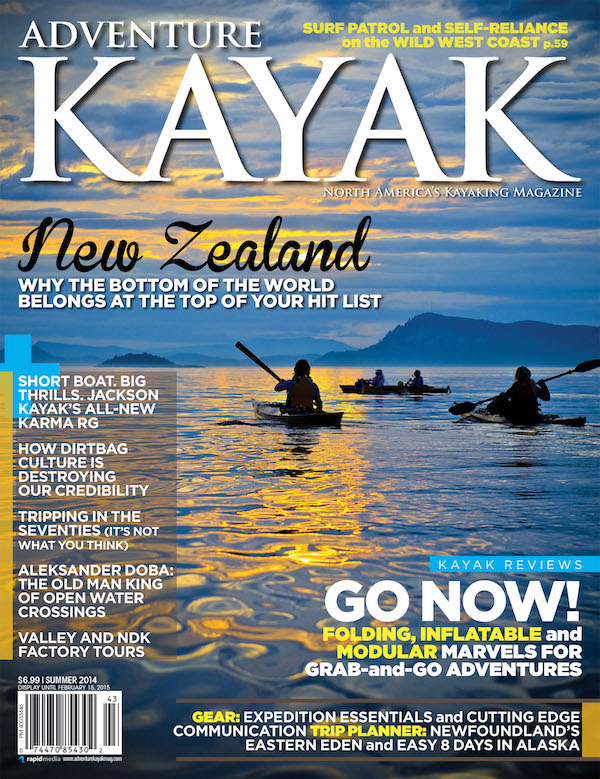
Cover of the Summer 2014 issue of Adventure Kayak magazineThis article was first published in the Spring 2015 issue of Rapid Magazine. Subscribe to Paddling Magazine’s print and digital editions, or browse the archives.


Paddle beside me and be my friend. | Feature photo: Ryan Creary


You’re Richer Than You Think

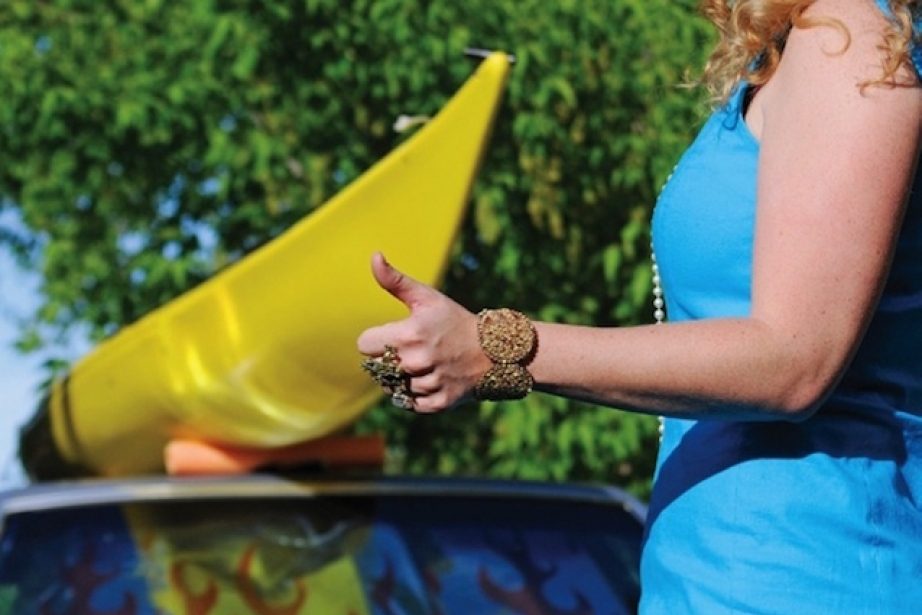
Hitching a ride back to reality. Photo: Virginia Marshall
Hitching a ride back to reality. | Photo: Virginia Marshall

The Dirtbag Stereotype

I‘m tired of the jokes. What do you call a kayaker wearing a suit? The defendant. What do you call a paddler whose van is in the shop? Homeless. 

Kayakers are often portrayed—and we portray ourselves—as the aquatic equivalent of itinerant ski bums. Every outdoor sport has its stereotype of impoverished, scruffy, mildly Kerouackian vagabonds: surfers migrating between beach parking lots or climbers squatting in Yosemite’s Camp 4. Fitz Cahall’s popular podcast, The Dirtbag Diaries, renewed the old myth for the Internet age.

It’s time to ditch the dirtbag image. First of all, it’s not true. Like most outdoor recreationalists, paddlers are relatively rich. And I don’t mean the “rich in spirit” sort of rich. I mean fat stacks of greenbacks rich. Second, and even worse than being false, the dirtbag stereotype is actually hurting us, and hurting us where it counts.

Photo by Harrison Haines from Pexels

The Outdoor Industry

According to a recent analysis by the Outdoor Recreation Industry, $646 billion was spent on outdoor recreation in the US in 2012 alone. That’s billion with a B. It’s a phenomenal amount of money, as much as Americans spend on cars and gasoline combined.

“According to a recent analysis by the Outdoor Recreation Industry, $646 billion was spent on outdoor recreation in the US in 2012 alone.”

Outdoor recreation is larger than the total economic activity in Switzerland, where wealthy Europeans vacation in St. Moritz and Mafiosi and kleptocrat dictators stash their money in numbered accounts. Outdoor recreation even approaches the GDP of Saudi Arabia. We dirtbags are as loaded as an oil Sheikh.

The outdoor industry also creates six million jobs in the US, ten times more than Apple, the darling of Silicon Valley. In corporate terms, we’re twice the total assets and revenue of General Motors and Chrysler combined. They got an $80 billion bailout when times got tough. Now who’s “too big to fail?”

Kayakers are also individually wealthy. Most are professionals with college or advanced degrees. Fifty-five percent of kayakers make over $75,000 a year. Time is a bigger barrier to the sport than cost by a factor of four. We can afford that best carbon-fiber paddle, we just may not have enough weekends and vacation days to use it.

Perhaps the dirtbag image is nostalgia for the early years when pioneering paddlers loaded into VW microbuses and spent entire summers out on trips. Or maybe the image is driven by guides and instructors—a small minority of kayakers—who make nothing close to $75K a year.

So the dirtbag myth is inaccurate. Who cares? Here’s why you should.

If we’re so wealthy, why are water trail sites being closed for lack of money to maintain them? Why are clean water laws attacked as “bad for the economy” when a $646 billion economy depends on clean water?

Money is power. Let’s embrace that power. “We just need to put our mouth where our money is.”

Money is power. Let’s embrace that power. As Adam Andis from the Sitka Conservation Society says, “We just need to put our mouth where our money is.” Let’s flood the halls of power with lobbyists. Big Oil has their lobbyists, but we have deeper pockets than Exxon or Shell. We want clean rivers, access to the shoreline, campgrounds kept open and wild places kept wild. River restoration should have the political urgency of a dip in the NASDAQ and the media breathlessness of a Justin Beiber scandal. People’s jobs are on the line.

Of course, it’s not that simple. When you lift the hatch cover on our raw economic power, it’s very decentralized. Four-fifths of the outdoor economy comes from travel rather than gear. The money goes to ferries in the San Juan Islands, the Super 8 motel near the Gauley River and my post-paddling beer more than to manufacturers and retailers. That makes our power harder to wield. Those scattered businesses may not even know how much their bread is buttered by outdoor enthusiasts.

“It’s much easier to capture the impact of pharmaceuticals or oil and gas, so that crystalizes more quickly in the minds of policy makers,” says Kirk Bailey, chief lobbyist for the Outdoor Industry Association.

The outdoor industry is also dispersed geographically, while industries such as big oil, high tech and finance have concentrated their clout locally in Texas, Silicon Valley and Wall Street, where they can affect the fortunes of governors, senators and congressmen, and create friendly political climates. But Adam Cramer, who lobbies for the Outdoor Alliance, sees an opportunity to turn the ebb into a flood. “I’ve heard floor statements from congressmen citing figures from the OIA survey,” he says. “When you put an economic argument of that magnitude on the table, it can be a game changer.”

But the game won’t change if we keep clinging to the dirtbag identity. Congressmen and governors don’t take dirtbags seriously. We’re rich, so let’s act like it.

Hitching a ride back to reality. Photo: Virginia Marshall
Hitching a ride back to reality. | Photo: Virginia Marshall

How to work together

There is one valuable thing we should take from the dirtbag lifestyle, though: how to work together. Whether it’s chipping in ingredients for a gourmet camping dinner, fixing a cracked hull on a remote beach, or uniting our voices for better policy, collaboration is where we excel.

I’m not talking about merely uniting Greenland-style kayakers and Euro- bladers, or even whitewater boaters and sea kayakers. I mean everyone who plays outside: paddlers, hikers, fishermen, skiers, climbers, hunters, mountain bikers, wilderness pogo-stick enthusiasts—the whole shebang. We should also make room under the tarp for the motorized crowd. People riding ski lifts or car camping on the coast have skin in this game, too.

What does this unified front look like? First, travel destinations like restaurants, motels, gas stations and chambers of commerce need to know who their customers are, and what they care about. Second, we need to magnify the work of groups like the Outdoor Alliance, which brings together paddlers, climbers and mountain bikers to advocate for public lands. “Being in D.C. isn’t enough. You have to have an outside game that bubbles up locally,” says Cramer, citing a union of outdoor recreationists that kept vast acres in Colorado wild.

Trade associations can mobilize gearheads to ensure we have decent places to use our gear. Individual paddlers should learn some new strokes, too: the armies who appear for river cleanups can also be armies who send emails when park funding is on the chopping block or a railroad claims it’s exempt from clean water laws.

And it’s time for new jokes. Or at least new punch lines. Not long ago a friend called for advice on a kayaking trip she was planning in Johnstone Strait. When she isn’t paddling or cycling, she’s the Chair of the Environment and Natural Resources Committee of the Oregon Senate. What do you call a kayaker wearing a suit? Madam Chairperson.

Neil Schulman is the co-founder of the Confluence Environmental Center, a paddler and a political wonk. Ask him about water policy at your peril. 


26 Reasons To Love Whitewater

Photo: Steve Shannon
26 Reasons To Love Whitewater

Why do we love whitewater? Life hacks, sex appeal, urban play, real adventure, and more. From A to Z, here are 26 things we can’t live without. (We’ll, we could do without the letter Q). This feature was originally published in Rapid, Summer/Fall 2014. 


~A~

Adventure. The real kind. We’re talking free flowing water, first descents, international exploration, or even an easy local run that gets your heart pumping, your palms sweating and reminds you you’re a living, breathing, mortal creature. In March, Google Maps launched a ‘street view’ descent of the Colorado River—it’s cool, but as paddlers we can adventure to places like the Grand Canyon in a real life, off-the-couch kind of way. 


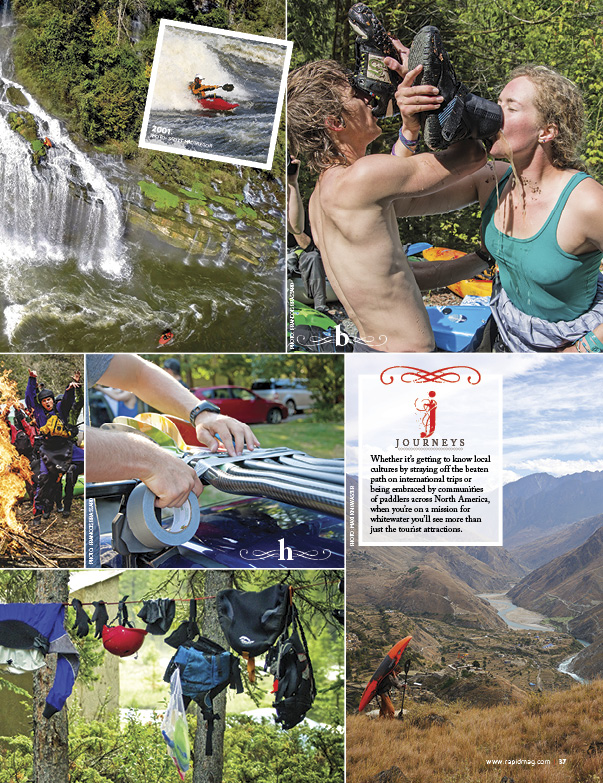
RPv16i3p37 bootie beer 


~B~ 

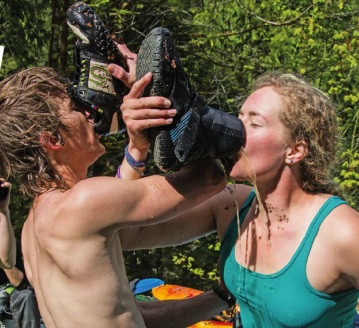
Bootie Beers. Need we say more?


 ~C~

Camaraderie. Heartwarming right? When we asked Rapid’s Facebook fans what they love most about paddling, we expected to hear about big water, epic expeditions and cascading creeks. Nope! Almost 70 percent of respondents said fellow paddlers were what made their paddling lives complete.


~D~

D-Rings. It’s amazing that such a small, simple and strategically-placed piece of metal can be so essential.


~E~

Excuses. “Oh your skirt imploded? Well in that case…bootie beer.”


RPv16i3p36 festivals


~F~

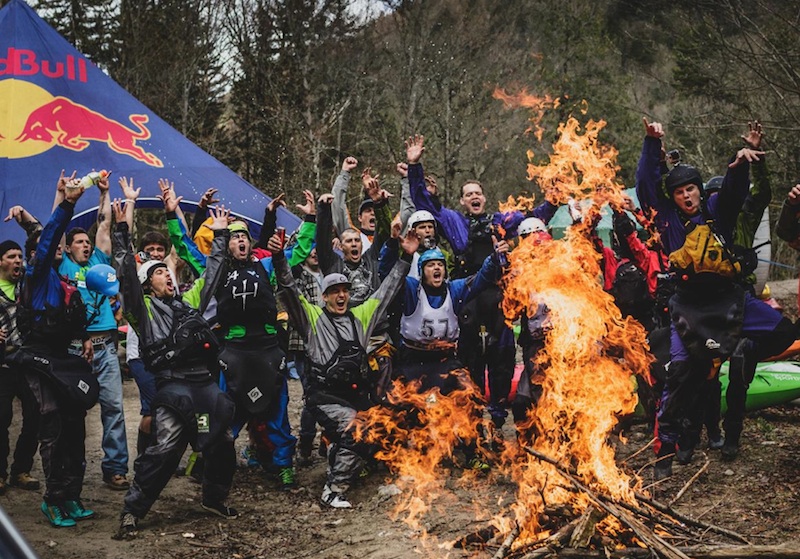
Festivals. Races, waves, podiums, concerts, big bucks and bon fires. A gathering of the greatest people you could ever hang out with? Yes, please.


~G~

Gear. In 2014 Adventure Technology launched a new unbreakable paddle design and Esquif Canoes announced a new hull material as tough as Royalex and twenty times more abrasion resistant. Kayak designs continue to evolve, drysuit designs are sleeker than ever and every year paddling products get lighter, better, faster, stronger.


RPv16i3p37 hacks~H~

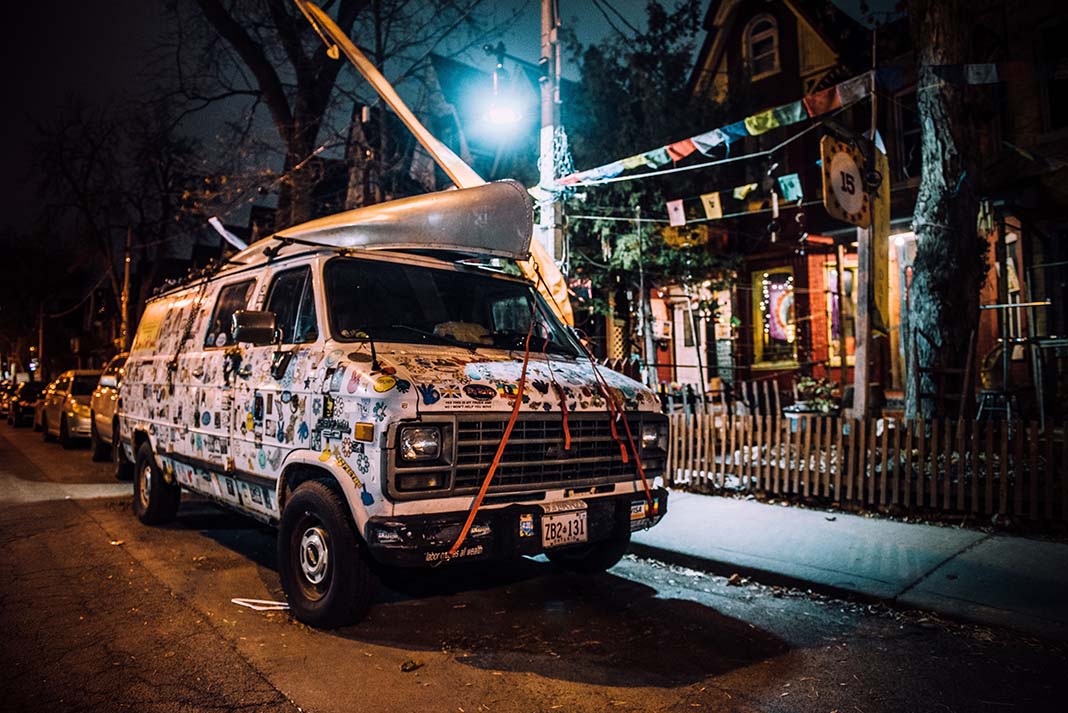
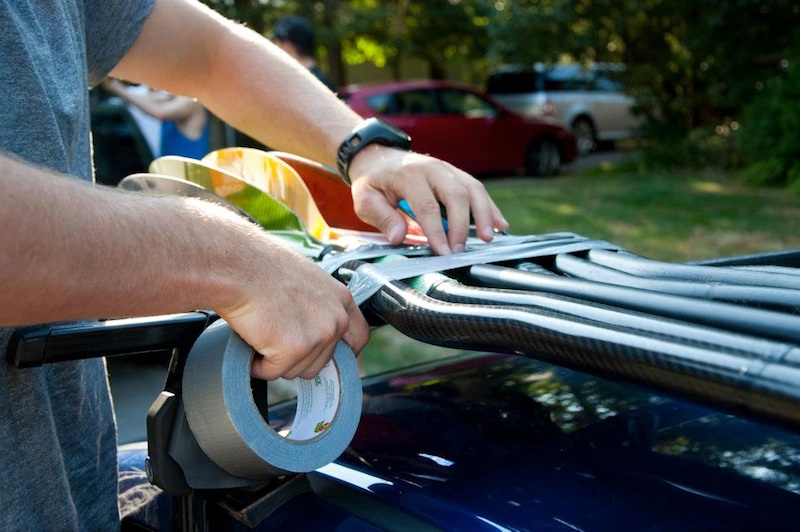
Hacks. Sure, we love a high-end, ultra-light, sexy new Gore-Tex anything as much as the next guy, but we also love how many hacks there are for boaters on a budget. Don’t have a hundred bucks to drop on new river shoes? Your high school gym class sneakers will do the trick. Can’t afford physio? Tennis ball massage. No roof rack? Pool noodles.Popped float bags? Beach balls. Don’t want a mortgage? Live in your van! 


Click here to continue reading in the free desktop edition of Rapid, Summer/Fall 2014 


RPv16i3-36RPv16i3-37


This article originally appeared in Rapid, Summer/Fall 2014. Read the entire issue on your desktopApple or Android device. 

All Paddle, No Boat

Photo: Bodi-Paddle
All Paddle, No Boat

Would you use the Bodi-Paddle for training in the off season? Designed for individuals to paddle across water without a kayak or canoe, this double-blade design provides a fun way to exercise in water and offers a new training option for participants in paddling sports.


Bodi-Paddle’s website reads: Bodi-Paddle allows people to paddle themselves across water without a boat by moving the paddles, floating and kicking. There is a central flotation and buoyancy device in the middle. The design features a wristband that users wear to attach the device to an arm. Approximately 70 inches long with detachable paddles for a convenient length of 36 inches and comes in a mesh nylon bag for convenient storage. 


Get more info here: http://bodi-paddle.com

The Arctic Man

Photo: Jim Baird
The Arctic Man

The dream began in late February 2007, when I picked up a book at an Inuit art shop. Already having a passion for canoeing and remote rivers, the epic journeys in Ernie Lyall’s An Arctic Man hijacked my thoughts.

It was years later that my brother and I finally set out on a five-week expedition on one of the most remote rivers in the world—the Kuujjua, a river that was located near many of Lyall’s adventures during his 65 years living with the Inuit people.

We wanted to experience a small part of what that life was like during Lyall’s time before climate change permanently changes the North. Well-versed in the history of exploration and hardship in the area, little did we know that we’d soon face an adventure of similar proportions to An Arctic Man.

The Kuujjua’s trout-choked waters flow west from the interior of Victoria Island and pour into the Beaufort Sea. After completing 220 river miles, our plan was to paddle 70 miles on the tempestuous ocean, finishing at the community of Ulukhaktok, NWT.

Thick lake ice remained despite a mid-July fly-in date. Low river levels meant starting our journey by dragging our heavily loaded, collapsible canoe for 18 miles—two full two days. We dragged until we wore holes in the bottom of our boat and our Achilles burned…


10-October-PM-Screenshots2_copy.jpgRead the rest of this story in the October digital edition of PADDLING Magazine, on our free iPad/iPhone/iPod Touch App or Android App or read it on your desktop here. 


Story Behind the Shot: Connections

Kayakers have made something practical and made it aesthetic. Photo: Kiliii Fish
Kayakers have made something practical and made it aesthetic.

Most paddlers justify learning to roll for safety, but those who are crazy about traditional kayaking have taken something practical and made it aesthetic. Rolling for the sake of rolling: with your hands behind your head, with no paddle, with a brick in one hand. Arms locked straitjacket-style.

One of the most prominent get-togethers for traditional enthusiasts is the South Sound Traditional Inuit Kayak Symposium (SSTIKS) in Hood Canal, Washington. Here you will find the who’s who of traditional kayaking, from well-known kayak builders like Brian Schulz (stern paddler and builder of the skin-on-frame double in this image) to world-class athletes like Greenland na- tive Maligiaq Padilla and rolling champion Helen Wilson (bow paddler).

Many of the Greenland competition rolls are difficult and take years of training to accomplish. Not surprisingly, mastering the timing and coordination to roll a tandem kayak is exponentially harder. Here, Wilson and Schulz are performing a relatively easy standard layback roll. Although their timing is slightly off for this particular roll, they went on to nail several incredibly difficult rolls in the still waters of Hood Canal.

My photography draws from the natural world and people’s interactions with it. Light inspires me—the way it shapes dimension and tells stories. On this day, the clouds were low and thinning as they drifted across the sound, casting soft directional light and creating contrast in the scene. When fog began rolling in, most people put away their cameras to keep them safe and dry. Instead, I reached for my mine. I love the way the mist gives so much atmosphere and depth to a two-dimensional photograph. With the climatic conditions just right, I shot with a wide-angle lens to capture both the paddlers and the environment that dwarfs them.

The magic of this image is that it represents the basic spirit of kayaking—the athleticism of the paddlers, serenity of place and connection to water and sky.


This article first appeared in the Summer 2014 issue of Adventure Kayak Magazine.  Subscribe to Paddling Magazine and get 25 years of digital magazine archives including our legacy titles: Rapid, Adventure Kayak and Canoeroots.
In the Hatch: H2O Paddles ECO-REC

"The lightest polymer composite recreational paddle available in the global marketplace." Photo: Courtesy H2O Paddles
"The lightest polymer composite recreational paddle available in the global marketplace."

Check out the new H2O Paddles ECO-REC, a 28oz paddle with push pin ferrule system for only $119, and a 30oz model with their Fast Ferrule system for $149.

The new ultra-lightweight ECO-REC paddle is “the lightest polymer composite recreational paddle available in the global marketplace,” says an H2O Paddles press release. “This paddle is a direct result of our commitment to be the best, we value the voice of our customers and our new ECO-REC is the culmination of that input to create a class leading paddle”, says Shillion Mongru, H2O Sales and Marketing Manager, from the press release. 

About H2O Paddles

H2O Paddles is a global supplier of High Performance Kayak and Canoe Paddles. With over 10 years of manufacturing experience, H2O has created industry leading designs such as its Crystal X blades, Super Tour Nanotechnology paddle and ergo grip Whitewater paddles. H2O holds patents and is patent pending on numerous signature design elements.

Located in Toronto Canada, H2O is a subsidiary of Dynaplas Ltd., a global high precision plastics supplier with ‘black box’ design, product validation and testing capabilities, in-house tooling facilities and injection molding machines ranging from 12t – 500t.”

What’s In the Canadian Canoe Museum

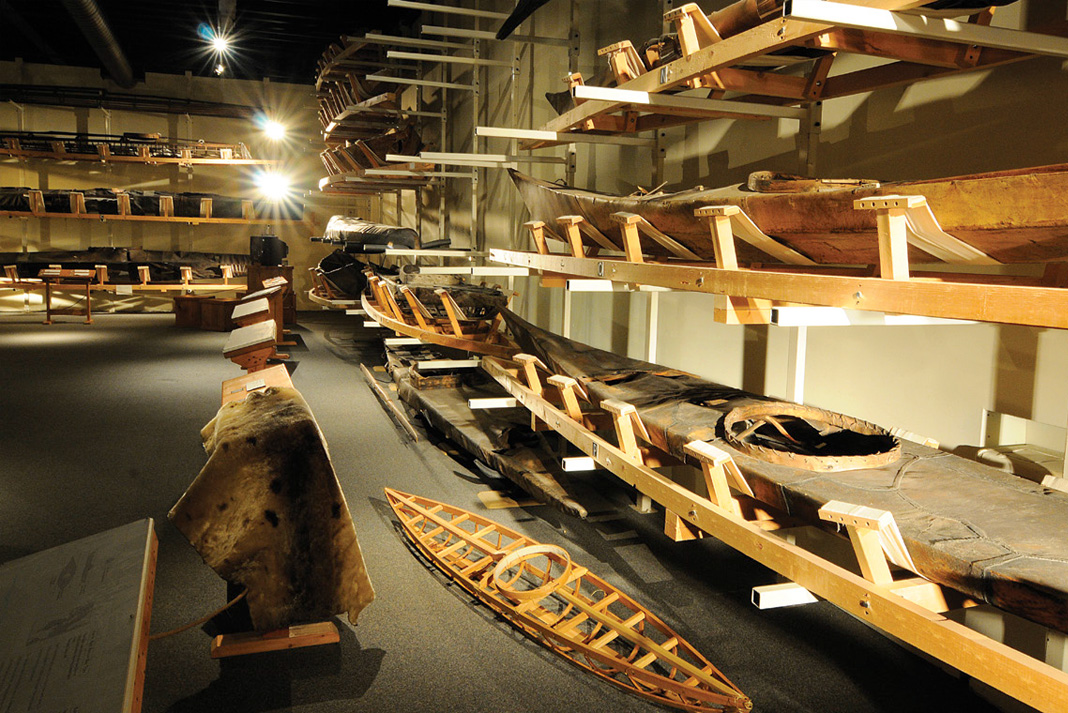
What's In the Canadian Canoe Museum | Photo: Virginia Marshall

“It’s astonishing just how sophisticated these kayak designs are,” says Canadian Canoe Museum curator Jeremy Ward, gesturing to a wall of elegant Greenland kayaks. “If you look at the influences of these very traditional forms on contemporary touring kayaks, you can see all of the design hallmarks.” The narrow beam, low volume and hard chines that today allow efficient touring and rolling, were originally designed to make the Greenland kayak the ultimate hunting craft. “If you’re hunting narwhal, beluga or seal with a harpoon, to get close enough you need a long, narrow, fast kayak, which is inherently unstable,” explains Ward. “One hand throws the harpoon while the other holds the paddle out to the side to stabilize the kayak.”

Across the room, a display of baidarka from the Western Arctic and Aleutian Islands further illustrates how hunting habits influence kayak design. “Baidarka is not an Aleutian word, it’s Russian,” says Ward. “During the Russian fur trading period, baidarka were used to access the kelp beds and hunt sea otter. This is a very rare three-person baidarka from the late 19th century that may have had a Russian agent overseeing the hunt in the middle cockpit with a paddler at either end.”

The gunwale of this circa 1930s East Hudson Bay kayak frame is composed of several pieces of smaller wood joined together, illustrating the resourcefulness
of early builders and their clever use of available materials. “Working above the treeline, assembling pieces of driftwood into a kayak frame is a tough job,” explains Ward. “You’d be accumulating wood over a long time to get enough to put together a framework.”

[ View the largest selection of boats and gear in the Paddling Buyer’s Guide ]

The skins of ringed seals, like this one, were preferred for covering the kayak frame. The cleaned skins were stitched together along waterproof, overlapping seams using braided sinew or, in more recent times, scavenged materials such as dental floss or sewing thread. Once the skins were joined into a sheet, it was stretched tightly around the kayak and sewn along the top.

What’s In the Canadian Canoe Museum | Photo: Virginia Marshall

“We had an Inuk visitor from Greenland who was an avid competitive kayaker, and he said ‘You need to take the skins off of these boats,’” Ward recalls. “When you look at the frame stringers, you can actually see the hull is being compressed by the shrinking of the skin over time. From a traditional user’s point of view, the skin was something that would get worn out or rot, and you would just remove and replace it. But for us to remove the skin is to take away the female contribution to the hull. Typically the framework was made by men, and the skins were sewn together in a stitching party by women. It’s a real community effort to make one boat.”

Along with ever-changing displays, the museum offers hands-on programming for visitors. This model kayak frame is one of five kits created by museum staff for school programs. “We based the design on a Copper Inuit kayak and used mortise and tenon joints and artificial sinew lashing so the kit can be assembled and taken apart many times,” explains Ward.


This article first appeared in the Summer 2014 issue of Adventure Kayak Magazine.  Subscribe to Paddling Magazine and get 25 years of digital magazine archives including our legacy titles: Rapid, Adventure Kayak and Canoeroots.

Avalon Peninsula: Exploring Newfoundland’s Eastern Eden

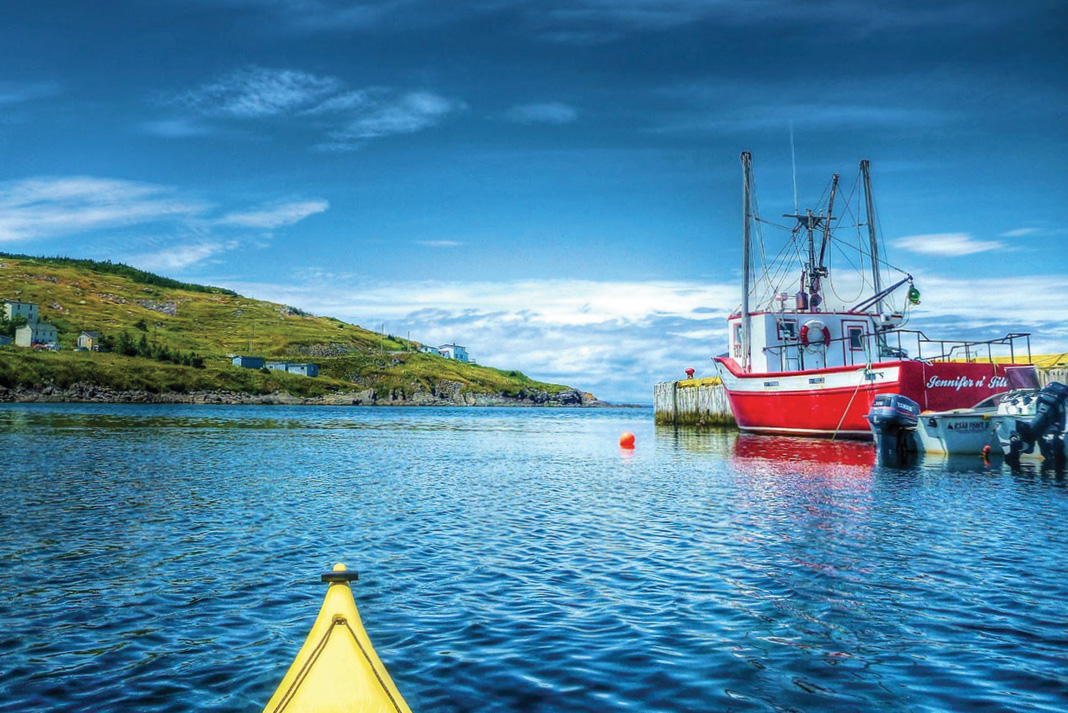
Avalon Peninsula- Exploring Newfoundland’s Eastern Eden| PHOTO: LEE GILBERT

Lee Gilbert escaped a landlocked life in the city to return to his birthplace on Newfoundland’s Avalon Peninsula, where he now pursues a quieter pace and his passion for paddling, writing and photography.

THE ROCK. Home to the most easterly shore in North America, isolated from the rest of the continent by frigid seas and a quirky, half-hour-ahead time zone all its own. Newfoundland is a place where one never knows what secrets the next cove holds, and a bastion for the childlike wonder those discoveries instill.

The waters around the Avalon are nearly 20 degrees Fahrenheit colder than the same latitudes in the Pacific. The culprit is the Labrador Current, described by Newfoundland artist Christopher Pratt as “a relentless flood of molten ice, the bloodstream of our near sub-Arctic climate.” I’ve learned to embrace the unsettled weather. Briny bays where the sea has humbled me with four-meter waves and howling gales; tranquil open ocean and brilliant sunshine; the quiet of solo paddling in a thick fog.

I’ve come to expect the sublime: close encounters with icebergs and whales, hidden caves tucked behind waterfalls, bedding down in the same forgotten coves as two-millennia-old Paleo-Eskimo peoples. Between the quaint coastal villages lie some of the last vestiges of true freedom in a prodigiously encroaching civilized world.

TRIPS

If you have a half-day enjoy the sea stacks, arches and pristine pebble beaches of sheltered Aquaforte Harbour, paddling east from the community wharf in Aquaforte to where Spout River Falls tumbles into the ocean.

If you have a day and the forecast is calm, launch from Winterton and head 10 kilometers north to Hant’s Harbour along the uninhabited outer coast of Trinity Bay, gaping up at 460-foot cliffs.

If you have a weekend tour historic Conception Bay from the shipwrecks of Avondale to the archaeology site at Cupids. En route, explore towering lighthouses, dramatic headlands, quiet coves and a 19th-century copper mine.

If you have a week paddle from Hopeall to Sunnyside in Trinity Bay. Untouched coastline and wild beauty mingle with resettled towns and colorful fishing communities with equally colorful names, like Dildo and Spread Eagle.

Avalon Peninsula- Exploring Newfoundland’s Eastern Eden| PHOTO: LEE GILBERT

STATS

POPULATION DENSITY

17 per square mile (outside St. John’s)

AVERAGE SUMMER HIGH

66°F (August)

WILDLIFE

Whale, porpoise, sea otter, seal, moose, caribou, fox, coyote, bald eagle, puffin and other seabirds.

CAMPSITES

Cobblestone, grass meadow, free-camping on any flat spot along the shore.

EXPOSURE

Easterlies draw 2,000 miles of fetch from Ireland. Also watch for gusting offshore katabatic winds.

DIVERSION

Build a traditional Newfoundland punt or dory at Winterton’s Wooden Boat Museum.

BEST EATS

Mussels, uni, sea trout, seasonal codfish caught at camp.

OUTFITTERS

The Outfitters—rentals and sales in St. John’s; day trips, multi-day tours, instruction in Bay Bulls; www.theoutfitters.nf.ca.

MUST-HAVE

Drysuit and good judgment


This article first appeared in the Summer 2014 issue of Adventure Kayak Magazine.  Subscribe to Paddling Magazine and get 25 years of digital magazine archives including our legacy titles: Rapid, Adventure Kayak and Canoeroots.