Home Blog Page 282

Extreme Family Vacations

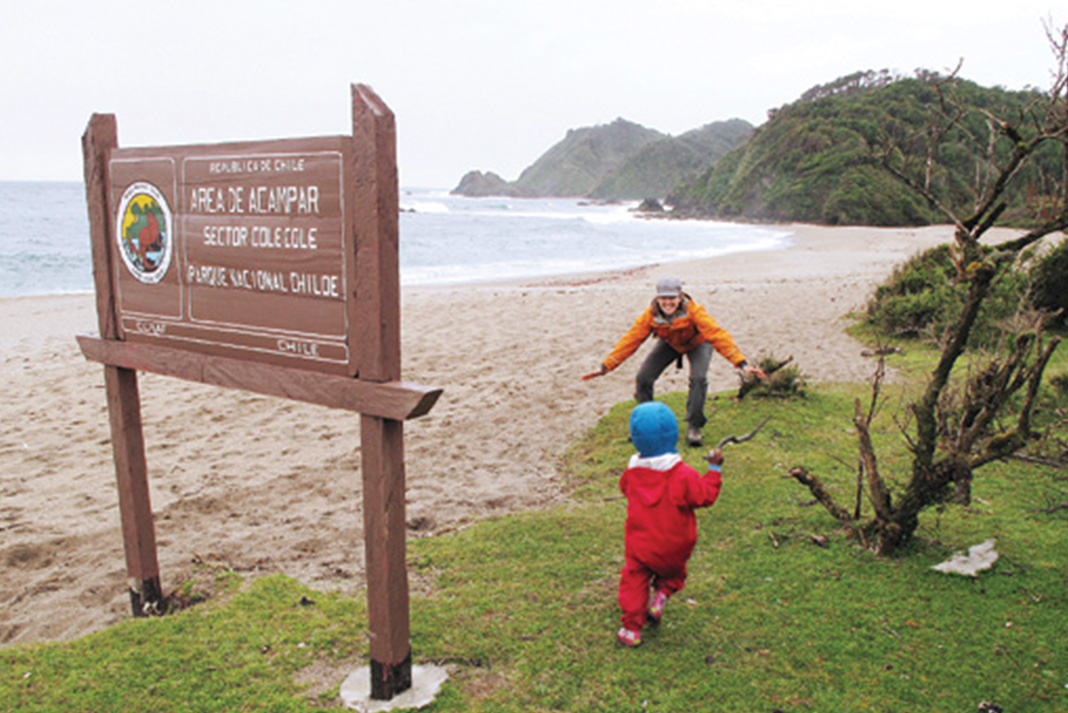
“CAN WE GO NOW? “ | PHOTO: DAVE QUINN

Forget Disney—how about llama trekking instead?

Adventure tourism isn’t just the domain of wilderness travelers and backpacking vagabonds anymore. Today’s parents are taking their children on adventurous trips all over the world in greater numbers than ever before. The children of Generation Y will be the best-traveled youngsters in history.

Whether it’s a week kayaking the coast, a month canoeing the backcountry or a season spent cycling across Patagonia, the trend is the same—today’s parents are unwilling to put their passions on hold until their kids grow up.

“The family outdoor industry is booming because the people who grew up in the ‘70s and ‘80s with the advent of backpacking, mountain biking, rock climbing and other adventure sports now have kids they want to bring along on their outdoor pursuits,” says Scott Graham, author of Extreme Kids: How To Connect With Your Children Through Today’s Extreme (and Not So Extreme) Sports. His family floated their first multi-day rafting trip when the kids were just toddlers and by age six the kids were paddling their own kayaks on multi-day trips.

The rewards are worth the extra work it takes to plan a trip that includes little ones. “Family closeness and a shared appreciation for the natural world are the benefits of family adventure travel—it’s especially important when so many electronic-gadget-addicted children and parents are losing touch,” Graham adds.

Traveling with kids brings great rewards

“Traveling with kids brings great rewards,” agrees Dan Clark, a father at the leading edge of this trend. Creators of award-winning flick Have Kids, Will Paddle, the Clark family canoed 2,000 miles to reach the Arctic Ocean in 2012. The film inspired many families to get outside on trips of their own, albeit usually shorter ones.

This summer, Clark, wife Alice, Kobi, 6, and Ava Fei, 4, are cycling 3,000 miles from southern Chile to northern Argentina, crossing windswept pampas and the jagged Andes mountain range.

“One thing I really enjoy about the pace of self-propelled travel is the opportunity to see something on the horizon, chat about it, look at it and then talk about it after,” explains Clark.

“Kids can be part of that in a canoe or on a bike, but it goes by too fast in a car. We notice so many things in our travels that we would miss in a car. We met one car-bound family in southern Chile who had yet to see a condor. Kobi heard this and was surprised because we had seen at least one every day that week.”
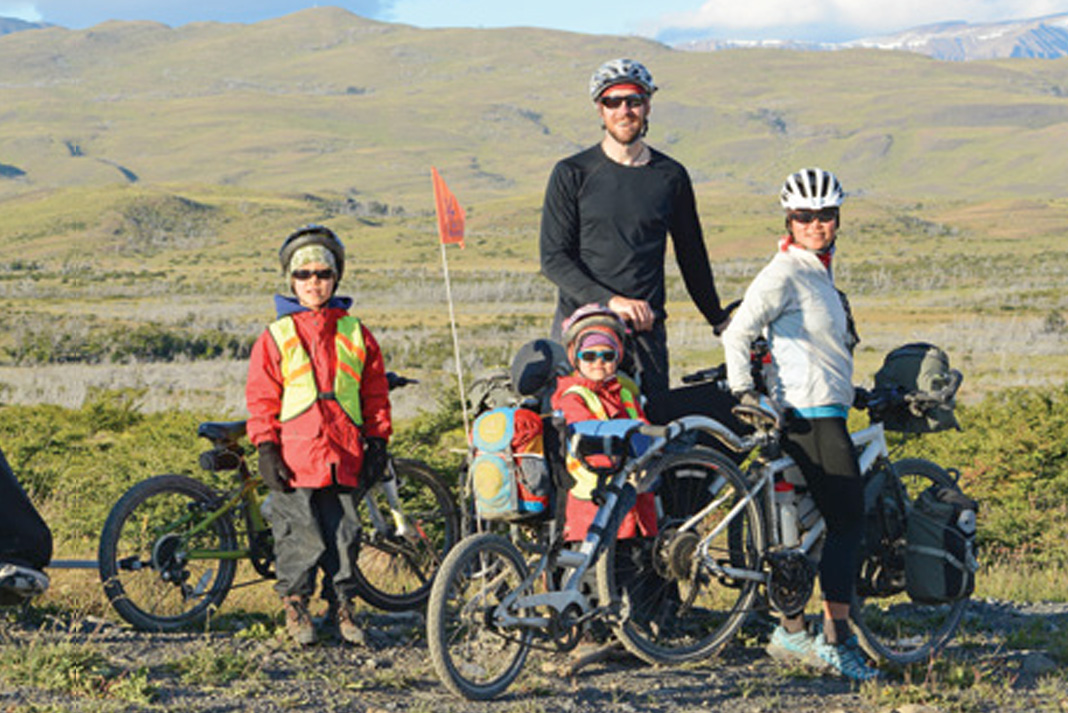
Along the way the Clarks have met like-minded families, including a German family who started their cycling journey in Alaska, about 17,000 road miles away. Clark hopes their family adventures help his kids develop goal setting skills, tolerance for adversity and an interest in exploring the world.

Some may consider an international journey with kids risky, “but most of those risks can be minimized with planning, a conservative approach and listening to the kids along the way,” Clark adds.

Graham agrees: “There’s growing recognition that the most dangerous thing we can do to our kids is allow them to become couch potatoes. The current generation of American children is the first ever that may have a shorter life expectancy than their parents. That’s alarming, and something a growing cadre of parents are recognizing and working to forestall by making sure their children are active.”

“There’s growing recognition that the most dangerous thing we can do to our kids is allow them to become couch potatoes.”

Author, TV personality and veteran traveler Bruce Kirkby spent this summer on a three-and-a-half month journey to Ladakh, India, with his wife Christine, and children, Bodie, 6, and Taj, 4. To get there they traveled from British Columbia by canoe, container ship, train, jeep and by foot—no planes allowed.

“For us, these trips are all about exposing our kids to the beauty and diversity of the planet,” explains Kirkby.

“Traveling is what Christine and I truly value—open-minded exploration of the world’s wildest places and cultures. It is what we live to do, so it would make no sense not to involve our kids,” he adds.

Brian McCutcheon, founder of ROAM Adventures Inc., runs adventure travel trips all over the planet, from week-long, laid-back paddling trips in the Great Bear Rainforest and Galapagos Islands, to multi-week treks in the Himalayas. He notes that kids are much more a part of the adventure travel scene than they were just a decade ago—40 percent of his return clients are families.

Family adventure travel doesn’t have to include far-off international destinations

Family adventure travel doesn’t have to include far-off international destinations or high-adrenaline activities to be beneficial. According to McCutcheon, what parents are craving are real experiences with their kids.

“People seem to be more busy than ever, so spending quality, meaningful time with their kids has never been more important,” he says. “A wilderness experience is so much more authentic than a contrived resort vacation—no matter how fancy the pool.”

Dave Quinn recently returned from a family surf trip in Nicaragua with his wife and two kids, Tumelo, 5, and Mariha, 1. They went for the sun, but savored the slow pace of beach life and cultural immersion.
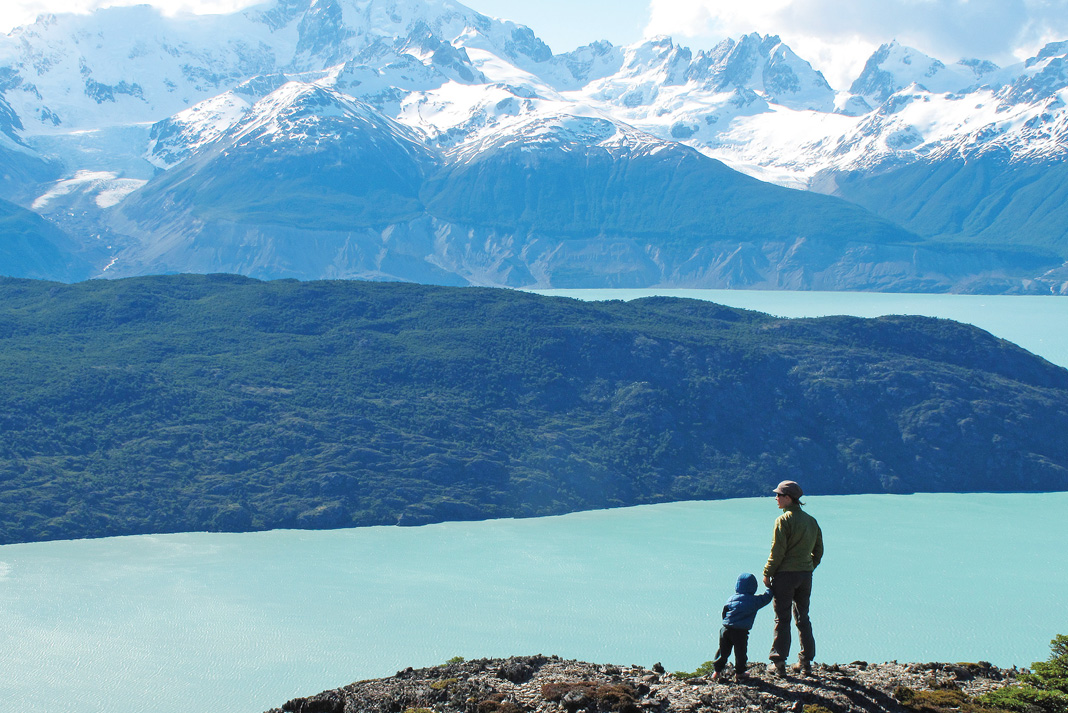
“CAN WE GO NOW? “ |
PHOTO: DAVE QUINN

Generation Fly

If you are just dipping into the family adventure travel scene, a few simple tricks can make sure you cruise through your trip.

• Get buy in » Ask your kids where they want to go, what they want to see and what they want to do. Feeling like they’re a part of the decision-making process will help keep them invested in the activities on trip.

• Travel less » Transitions are tough for all of us. The less packing and unpacking, buses, planes, trains and hotels, the easier it is on many kids. Staying in one spot can also immerse your family in the local community, which adds a whole new dimension to the travel experience.

• Avoid restaurants » What used to be a romantic evening out for two can easily become a fork-flinging, tantrum-filled nightmare. Cooking for your family is cheaper than eating out, creates a normalized sense of home and minimizes the risks of food-borne illness.

• Call the doctor » Health concerns can be a major stress when traveling with kids. Visit a pediatrician for advice on recommended medications and how to stock your first aid kit. Even where there is no risk of malaria, bring a small mosquito net to avoid sleepless, itchy kids covered in bug bites.

• Kid-friendly destinations » Everyone will have more fun if you are confident that your kids are safe, happy and healthy. Do research before you go to identify red flags—big riptides, stinging jellyfish and hordes of biting sandflies are red flags for me, but each family will have their own.
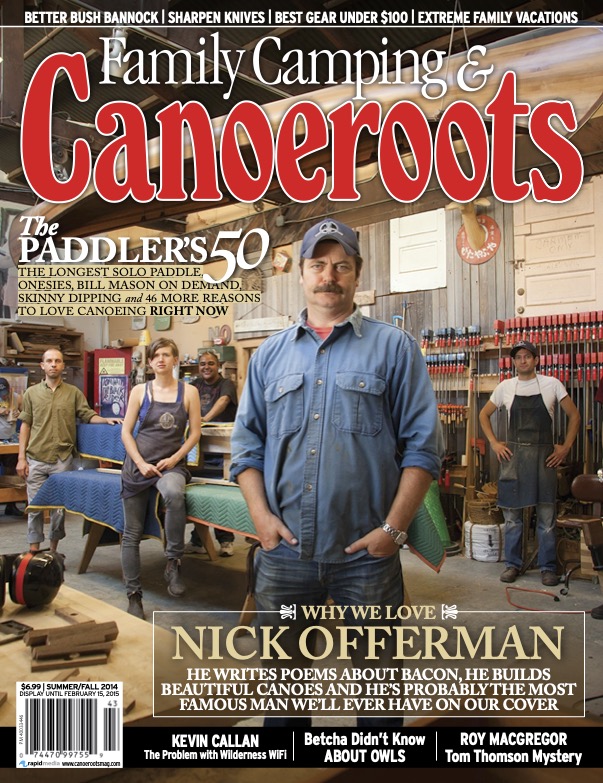

Get the full article in the digital edition of Canoeroots and Family Camping, Summer/Fall 2014.Subscribe to Paddling Magazine’s print and digital editions, or browse the archives.

Canoe Review: Swift Keewaydin

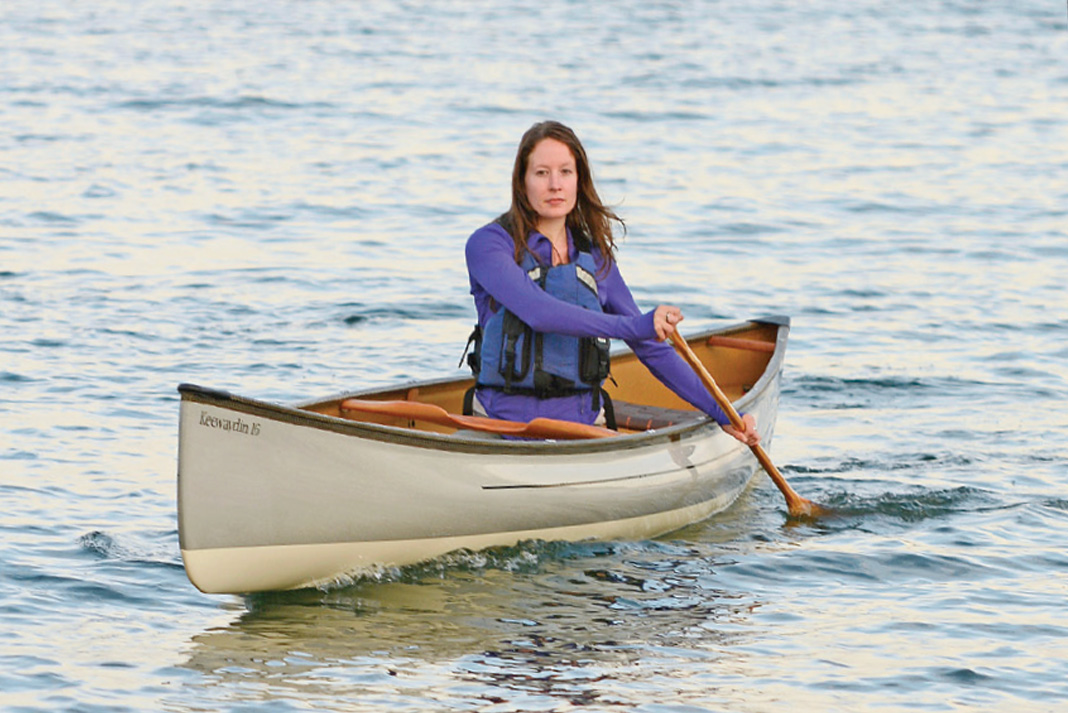
Swift Keewaydin 16 | Photo: Geoff Whitlock

Even before I paddled Swift’s Keewaydin, I heard what a lovely ride it is. Organizing a pickup date by phone, longtime Swift enthusiast-turned-employee Brian Duplante confided, “That’s my favorite canoe to paddle.” It wasn’t a hard sell, but genuine passion for the design.

Swift Keewaydin 16 Specs
Length: 16’
Material: Kevlar Fusion
Weight: 36 lbs
Width at gunwales: 32”
Optimum load: 300–575 lbs
Capacity: 950 lbs
MSRP: $3,095 base model / $3,180 with kneeling thwart
www.swiftcanoe.com

A few days later, tying down the canoe on site at Swift’s Oxtongue Lake location on the edge of Algonquin Provincial Park, owner Bill Swift Jr. added wistfully, “It’s a honey of a canoe.”

Complete in Swift’s two-tone white and silver Barracuda finish, I couldn’t help but agree—the Keewaydin is a thing of beauty. At 16 feet and just 36 pounds with dynamic lines, the Keewaydin looks as energetic as the north wind it takes its name from. I couldn’t wait to get it on the water.

First, however, I peeked into what was formerly Swift’s manufacturing facility, now their repair shop. Just big enough to work on a few canoes at a time, the simple space highlights the humble beginnings of this family-owned business.

Now surrounded by a rental fleet a thousand Swift boats strong, the buildings erected by Bill Swift Sr. in 1961—the original Algonquin Outfitters location—look like they haven’t changed much. In 1984, boat manufacturing began onsite to meet AO’s rental demands. Back then it was a franchise, making Sawyer designs.

By 1989, the Swift family was looking to branch out. To design lighter and more efficient canoes for their own operation they called in prolific designer John Winters, who dreamed up the Kipawa model and the Swift brand was born.

In the 20,000-square-foot South River factory where Swift now manufactures, they make 29 canoe, kayak and pack boat models and take pride in melding traditional design with high tech processes.

Unique to Swift canoes is its Carbon Kevlar Trim (CKT), where gunwales and hull are fused together as a single piece, adding stiffness and structural integrity, as well as a pretty finish.

“By volume, canoe gunwales are the heaviest part of the canoe. By using CKT we can reduce the weight by four to six pounds,” explains Swift Jr.

Released in 2012 and designed by David Yost, the Keewaydin 16 is now Swift’s most popular retail model. Swift Jr. attributes this to its versatility—great for daytrips as well as lightweight tripping.

On the water, the keyword for the Keewaydin is efficiency. The Keewaydin cuts through the water and chop rolls underneath the hull with little effect.

Swift Keewaydin 16 | Photo: Geoff Whitlock

Its asymmetrical hull tracks nicely in open water, yet our bow paddler was able to pull the boat around tight corners, ideal in winding and twisting streams. Swift Jr. says this is thanks to its differential rocker—two inches in the bow and half that in the stern.

On an evening solo paddle on Lake Ontario, I found it responsive and more manageable than many other boats of its length in wind and waves.

A kneeling thwart and significant tumblehome allows for comfortable cruising, without needing to reach out far over the gunwales.

Thanks to Swift’s distinctive curved and angled cherry seats, “You should feel as comfortable a few hours into the paddle as you did when you first got in,” says Swift Jr. The bow’s sliding seat also allows for on-the-fly trim adjustments.

While the Kevlar Fusion lay-up we borrowed offers the highest strength-to-weight ratio of Swift’s materials, the Keewaydin comes in a variety of lay-ups, ranging from 33 pounds in Carbon Fusion to 58 pounds in Gold Fusion with aluminum trim. Swift also manufactures 14- and 15-foot solo versions, as well as the Keewaydin 17, which Swift Jr. confesses is his personal favorite.


Get the full article in the digital edition of Canoeroots and Family Camping, Summer/Fall 2014.Subscribe to Paddling Magazine’s print and digital editions, or browse the archives.
River Styx

River Styx | Photo: Maxi Kniewasser

It was on a whim that Maxi Kniewasser and Simon Rutherford climbed into a floatplane that landed them at the put in for the Upper Nass River.

A far northern trip had them exploring the Sacred Headwaters, a basin that serves as the source of three wild rivers: the Nass, Skeena and Stikine. Known as a wild salmon habitat and home to caribou, grizzly bears, wolves and other wildlife, the Sacred Headwaters is an enchanted landscape of mountains and canyons, cut by the curvature of free-flowing rivers.

The 125-mile descent was an exploration, as their spontaneity left no time for Google Earth investigation or advice from veterans of the river.

So it was a surprise on the third day when they rounded a bend in a tight canyon and came face to face with a towering river-wide logjam, with water rushing under and through it.

“We instantly started back paddling to slow down and managed to get out on the logs,” says Kniewasser. “We were a bit in disbelief.”

A quick scout left them with no option but to portage through the beastly tangle of trees. “It was a pain in the ass,” says Kniewasser, since the wet and slippery logs made the portage a slow moving, hour-long scramble.

River Styx | Photo: Maxi Kniewasser

They balanced along branches and passed their boats through the trees, strategically picking their route, often confused with which direction to take.

Logjams are an expected obstacle for those who do some pre-trip research, a somewhat permanent fixture on the Nass. They’re not the kind of blockage that’ll just wash away one day, says Kniewasser, “unless there’s some kind of biblical flood to break it up.”

Part way through the trek, Kniewasser stopped to pull out “old faithful,” a Nikon B700 with a 24-70 lens. Perched on a pile of branches with his kayak in tow, Kniewasser pointed his camera ahead to capture this image of Rutherford picking his way through, over and under the massive tower of timber.


This article on introducing friends to whitewater was published in the Summer/Fall 2014 issue of Rapid magazine.This article first appeared in the Summer/Fall 2014 issue of Rapid Magazine. Subscribe to Paddling Magazine’s print and digital editions, or browse the archives.


Tumblehome: Into the Deep

Photo: Mike Monaghan
GOLDEN AGE OF DISCOVERY.| PHOTO: MIKE MONAGHAN

My first real rain suit came from the sports section of a discount department store. It was heavy, made of a rubberized cotton-nylon blend and camo-colored for stealth in the deep woods. Just 10 years old, I wore it proudly—around the house, in the shower and prancing in my sunny backyard, sweating like a pig and wishing for rain.

Back in those days, a rectangle of that same material served as a groundsheet. When laid inside a floorless Egyptian cotton tent, it was all that was between the dirt and me during overnight outings on the land and water trails of my youth.

The following morning, everything I owned—the Gordie Howe autographed sleeping bag from the Eaton’s catalogue, extra socks and underwear—was rolled up. It was tied with the greatest of care inside that same groundsheet in what my Boy Scout leader optimistically called a waterproofed camp kit.

By comparison, nowadays I’m camping in luxury. My über expensive, Fairy Breath Blue designer rain gear weighs less than the little pouch my childhood suit of armor came in. Stuff sacks and sealed river bags and backpacks ensure everything else stays dry. There’s a fat foam camp bed between me and the cold, hard ground. Maps and compasses used to dictate navigation; now I have photovoltaic blankets covering my loaded canoe, charging the gizmos that keep me on course as I paddle.

Wilderness gear has changed a lot in the last 50 years, and even more in the 50 years before that. Our camp kits look nothing like those of the original adventurers, the Voyageurs, who ventured forth with just the clothes on their backs, canvas tarps and tumplines. They used packs without straps, let alone suspension systems, and traveled hundreds of miles with hand-drawn maps, if they had maps at all. Imagine that!

Photo: Mike Monaghan
GOLDEN AGE OF DISCOVERY.| PHOTO: MIKE MONAGHAN

Of course, Mackenzie basin explorer George Douglas had far more advanced gear than the Voyageurs when he was exploring in the early 20th century. My dad’s generation had even more than him and, like his dad before him, my dad would look at my Scout’s gear and scoff—“That’s not real camping!”

But I disagree. As a kid, wearing that rubber rain suit and smelling like a wet dog in neoprene, I ventured into the depths of the forests and river routes near my home. I imagined I was John Rae, Edmund Hillary, Roald Amundsen or Robert Falcon Scott, exploring the wilds, climbing the peaks and racing toward the poles.

It wasn’t my ragamuffin kit that connected me to these timeless adventurers—though I imagine theirs must have smelled similarly— it was the act of exploration and discovery, full of real route finding, real risk and real adventure. In this sense, nothing has changed. Whether navigating by starlight, compass or GPS, we’re all explorers here.

I went to the woods, even in the very early days, to feel the rain on my face and to see if I had what was needed to meet the challenges the trip might present. And what I learned on the trail—about myself and others, about life and the natural world—through triumph and the occasional disaster, was something I could bring home and apply to the challenges of everyday life.

That desire has always led us into the woods, throughout the ages, in spite of what we own.

Columnist James Raffan is the Director of Development at the Canadian Canoe Museum.


Get the full article in the digital edition of Canoeroots and Family Camping, Summer/Fall 2014. Subscribe to Paddling Magazine’s print and digital editions, or browse the archives.

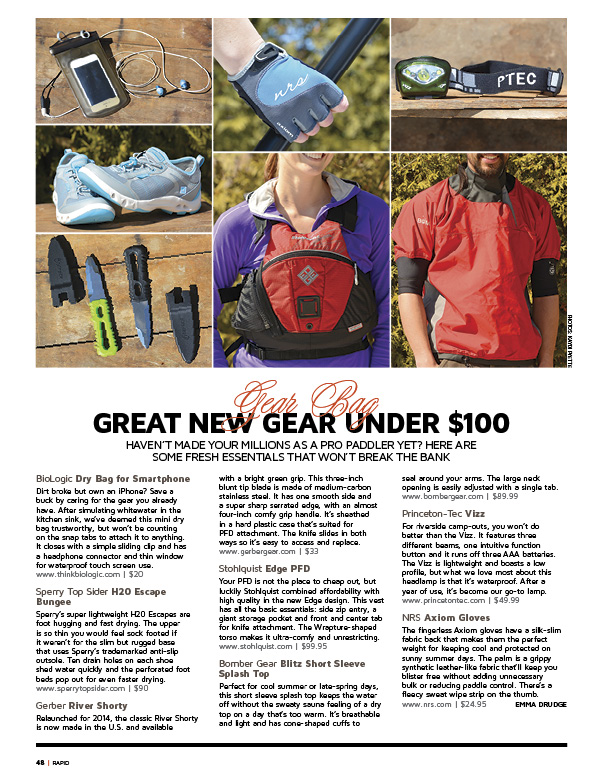
BioLogic Dry Bag For Smartphone

Photo: Kaydi Pyette
BioLogic Dry Bag For Smartphone

Dirt broke but own an iPhone? Save a buck by caring for the gear you already have. After simulating whitewater in the kitchen sink, we’ve deemed this mini drybag trustworthy, but won’t be counting on the snap tabs to attach it to anything. It closes with a simple sliding clip and has a headphone connector and thin window for waterproof touch screen use.   

www.thinkbiologic.com | $20 


RPv16i2-48

Click here to find great new gear under $100 in the free online edition of Rapid, Early Summer 2014 or download our free app for Apple or Android.


Sneak Peek: New Performance Footwear

Photos: Emma Drudge
Sneak Peek: New Performance Footwear

Often overlooked but crucially important, a good water shoe is the unsung hero of many river trips. They help keep you safe and comfortable. When it comes to some of the best water shoes for paddlers, there are no shortage of options.

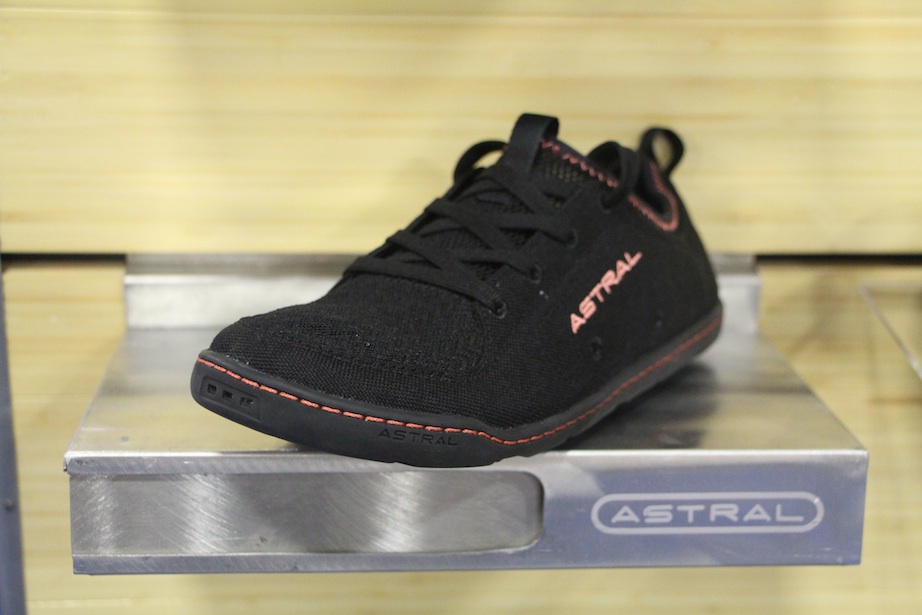
Astral

Astral is adding to their footwear collection this year, and our favorite of their new shoes is the 2015 Loyak. The Loyak is a super low, lightweight shoe that’s slim enough to jam into a kayak without compromising durability and grip. We plan to wear these minimalist moccasins on the river and around town.

astral loyak


NRS

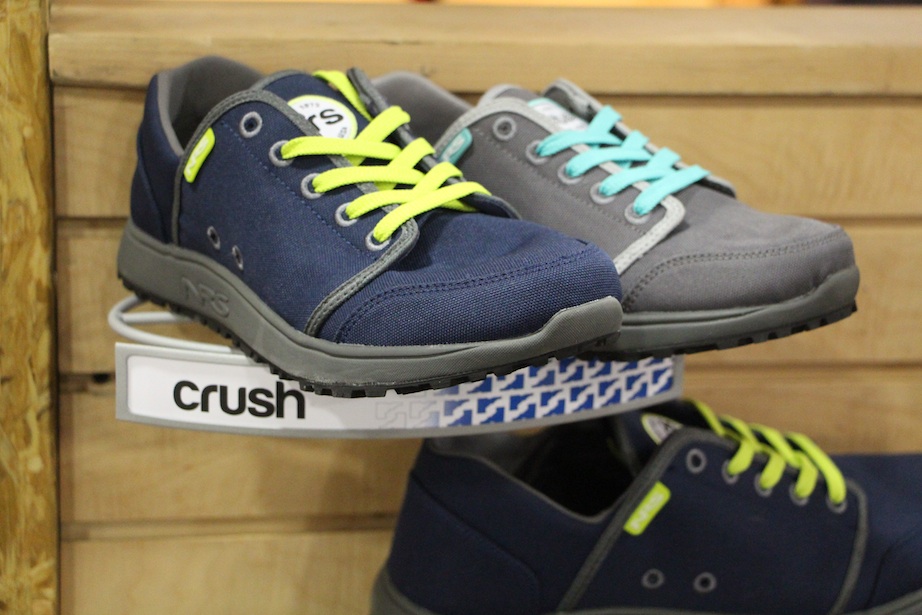
The Crush from NRS is a versatile new option. You can pull them on and tie them up or just step on the heel to wear as a slip on without damaging the structure of the shoe. They have a smooth interior for comfortable barefoot use and a solid sole for good traction on shore. They’re available in different colors and sizes for men and women. Stay tuned for a post about the expedition-worthy Velocity, another new NRS offering.

NRS Crush 


Chaco

Chaco’s new Outcross Evo line has three different options depending on your type of activity. The Evo 1 is a lightweight version with a crushable heel so it can be slipped on and off easily. The Evo 2 is a slightly heavier-duty option with a bit more support and stability for trail use, but still has great drainage for use in the water. The third and burliest Evo 3 is a more trail-focused design with great support for the portage trail.

chacos 


Sperry Top-Sider

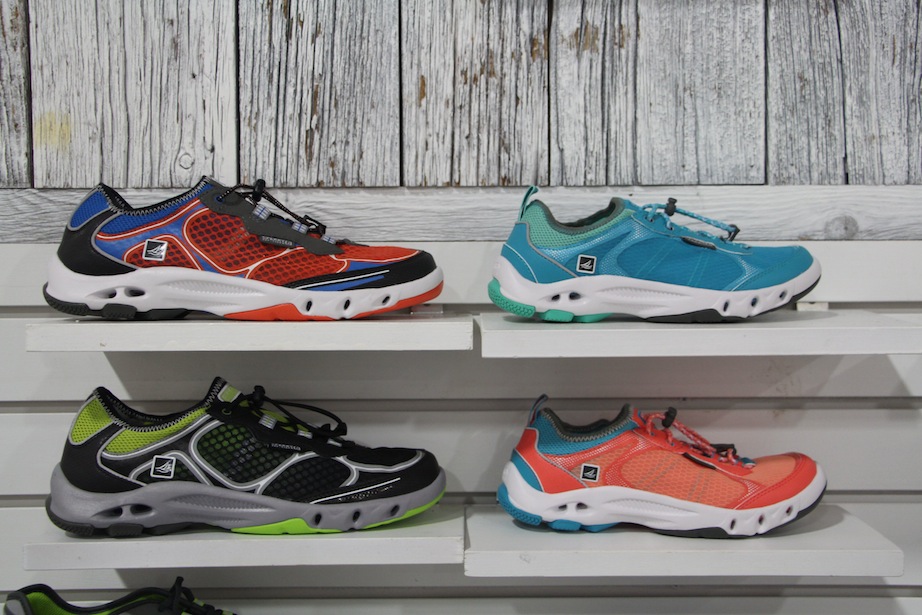
Sperry’s ultimate water shoe, the H20 Escape, is being updated for 2015 with a whole bunch of new colors and the same reliable design. Its footbed is full of tiny holes to let water run through so the shoes drain unwanted water quickly and dry in no time after they’re wet. They’re made with Sperry’s signature sole for great traction.

sperrys 


KEEN

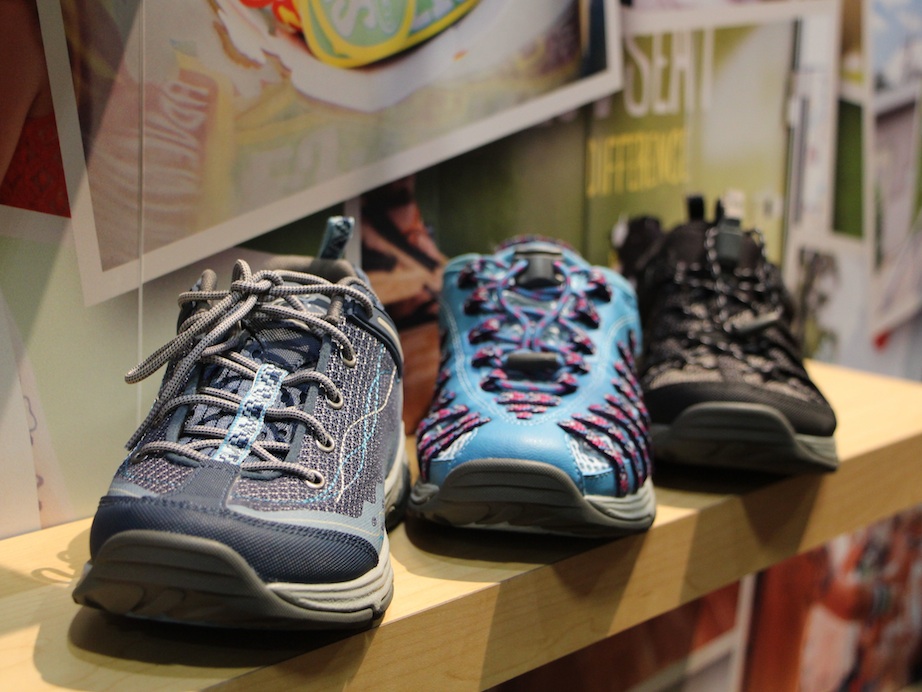
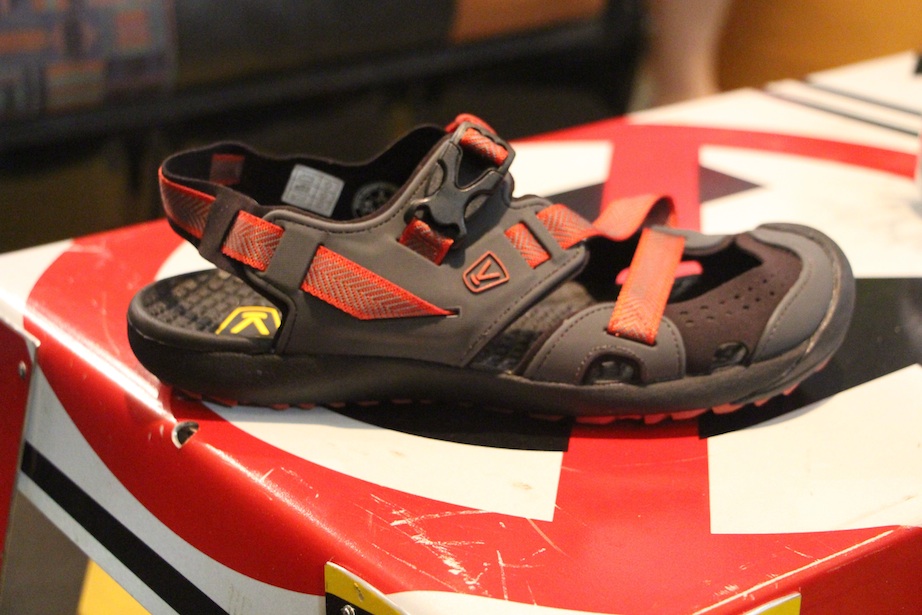
In addition to their classic designs, KEEN is beefing up their line of performance shoes for 2015. The new Zambezi is made for kayakers and rafters. It has a high-traction sole for grip on wet rocks. The webbing strap does up with a single clip—adjust the fit the first time you wear them and then just clip them on and off. The Gorgeous, another new shoe from KEEN, has a similar build but with an integrated 2mm neoprene bootie so you don’t need a separate sock for insulation.

KEEN Zambezi

Great New Gear

Scroll down to see the new NRS Siren. Photos: Emma Drudge
Great New Gear

Here are some canoeing and camping products on display at Outdoor Retailer:

Frost River

Frost River is displaying their beautiful canoe packs in the pavilions at Outdoor Retailer. Their portage-style packs are heavy water resistant waxed canvas, have solid brass buckles, harness leather reinforcements, a durable double bottom and tumplines and adjustable backpack straps. All of Frost River’s products are made in Duluth, Minnesota.

Frost river packs

Sierra Designs

Ultra-light is an understatement when it comes to the new tent from Sierra Designs. Weighing in at two pounds, nine ounces, the Tensegrity is a non-freestanding design that relies on trekking poles or sticks to stand in place. It’s a rethink of tent design altogether: the tent is wider up top to give extra shoulder and head room; it has a giant vestibule that can be adjusted down for a classic gear storage vestibule or pulled up to create a tarp-style living and cooking space. The silicone fabric is tear-resistant despite its paper-thin weight. 

Sierra Designs tent 

L.L.Bean

L.L.Bean’s new products integrate new, fast drying, lightweight synthetics without compromising the classic look and feel of their clothing. The Polartec Thermal Pro Sport Jac is a throwback style with a cottony feel that’s great for both the backcountry and bar.

LL Bean

Goal Zero

The new Venture 30 is a battery that can handle the elements. Charge it using the small built-in USB cord and then bring it into the backcoutry to keep your headlamp, camera, smartphone or tablet powered up. Pair it with one of Goal Zero’s solar panels to stay charged while you’re off the grid. Stop worrying about babying your electronics—the Venture 30 won’t be harmed by splashing or sand.

Goal zero charger

NRS

The Siren PFD from NRS is a new version of their basic Vapour PFD with a women’s specific cut and a few added features. It has a big front pocket for easily-accessible storage and a hand warming pocket for even more all-day comfort. It trims all extra weight and bulk by sticking to the basic essential features and combining them into a slim, sleek design. The Siren will be available in Spring 2015. 

NRS Siren


Outdoor Retailer-Day 2

Keep track of your heart rate, route, the weather...and the time. Photos: Ben Duchesney
Keep track of your heart rate, route, the weather...and the time.

Suunto

The Ambit3 series (above) of GPS watches from Suunto are perfect for paddlers who like to keep track of everything. The Peak model, not only keeps track of heart rate, has weather functions and is bluetooth compatible with Suunto’s new, Movescount mobile app. The app lets you decide which features are shown on the face of the watch and allows the watch to display notifications while you’re on the go. 

The Movescount app works with the watch to help you create The Suunto Movie. This feature visualizes your route on a 3D map, which includes key metrics, and you can add photos from your adventure to tell the whole story. The Peak model will be available this September, starting at $500. 

Level Six

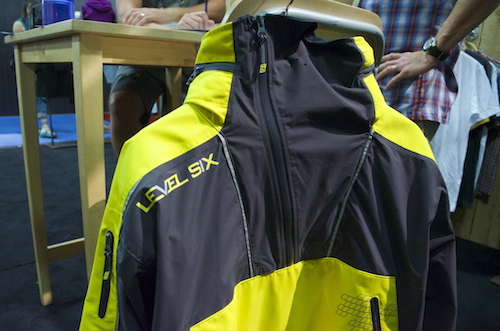
Level Six redesigned their popular Superior paddling jacket to make it more comfortable and efficient. The Superior 2.0 features a new Sidewinder zipper ensures neck comfort and a venting collar system keeps breathing heavily in the really rough weather comfortable.

A tuck away hood system has vents in the back so heavy winds can travel through the hood instead of being blown off your head. Fleece lined hand warmer pockets keep you toasty at the launch and the Dual Fabric construction lightens the jacket and keeps it more breathable in key areas. 

Level Six

ExtraSport

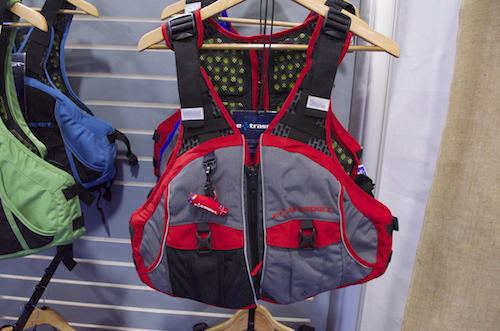
Using Extrasport’s new Bump Foam comfort system, their latest PFD, the Eon, is designed for ultimate comfort and gear storage. A mesh Baja back nests above kayak seats to deliver all day comfort. Pleated top load, fleece lined Kangaroo hand warmer pockets and multiple safety features round out the package.

Extrasport

Pyranha

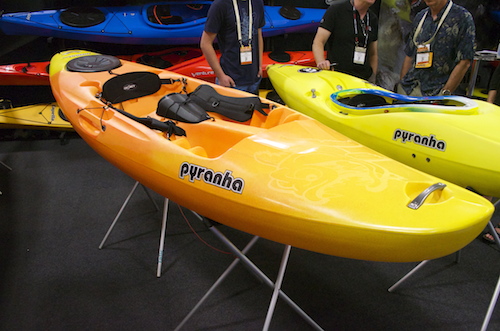
A new Fusion sit-on-top from Pyranha lests paddlers get a whitewater hull and features in a recreational kayak package. Unlike most sit-on-tops the new Fusion has a skeg to assist with tracking. Leg straps allow paddlers to tilt and carve the boat, while the open deck prevents them from feeling trapped. The hull is wider to increase stability for beginner paddlers. 

Pyranha

Goal Zero

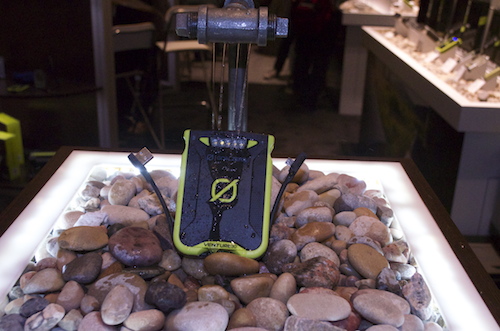
Keep your phones, tablets, cameras and other important devices charged and ready with the new Venture 30 from Goal Zero. Charge your smartphone 2-3 times or your tablet once at camp after charging the Venture via solar panels. The unit starts at $99 without the solar panels, or $169 paired with the Nomad 7 panel

The charger is weatherproof, which means “you could take a shower with it, but not a bath,” said Lisa Janssen of Goal Zero. A USB cable and micro sd cable are both built in so you never have to worry about forgetting to pack cords. There are 2 USB ports as well, and the Venture can charge two phones at 2.4 amps, at the same time, without losing ampage once the second is plugged in. The Venture will also talk with your device to deliver the ampage at a speed that won’t overcharge it. 

Goal Zero

Stellar Kayaks

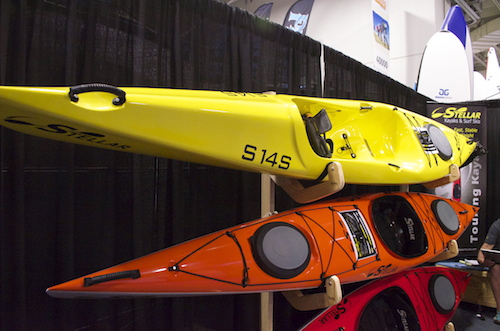
Stellar Kayaks has released a new 14 ft surfski, the S14S, designed for the recreational paddler looking for racing style. The steering system on the boat is similiar to Stellar’s other racing style systems, and the short length and low weight (starting at 26.9lbs), make carrying the boat to and from water a breeze. There are four grades available in the series, Ultra, Excel, Advantage and Sport, starting at $1,950 with the Sport.

Stellar Kayaks

Stay tuned for more of the greatest new products from Outdoor Retailer. Be sure to follow along with Adventure Kayak on our Facebook and Twitter pages!

Kayakers Lose Control in Drainage Ditch

River Roots GoPro footage of Ben Marr and Rush Sturges losing control at 72 KMH (45MPH) down a drainage ditch near Vancouver, British Columbia.

From Rush Sturges.

New Canoeing and Camping Gear

Photos: Emma Drudge
New Canoeing and Camping Gear

Outdoor Retailer’s 2014 Summer Market kicked off with an Open Air Demo Day, where hundreds of brands shared their latest and greatest in boat design and new gear—some of our favorite finds are listed below. Stay tuned to Canoeroots all week as we cover everything Outdoor Retailer has to offer. 

Old Town Canoes and Kayaks

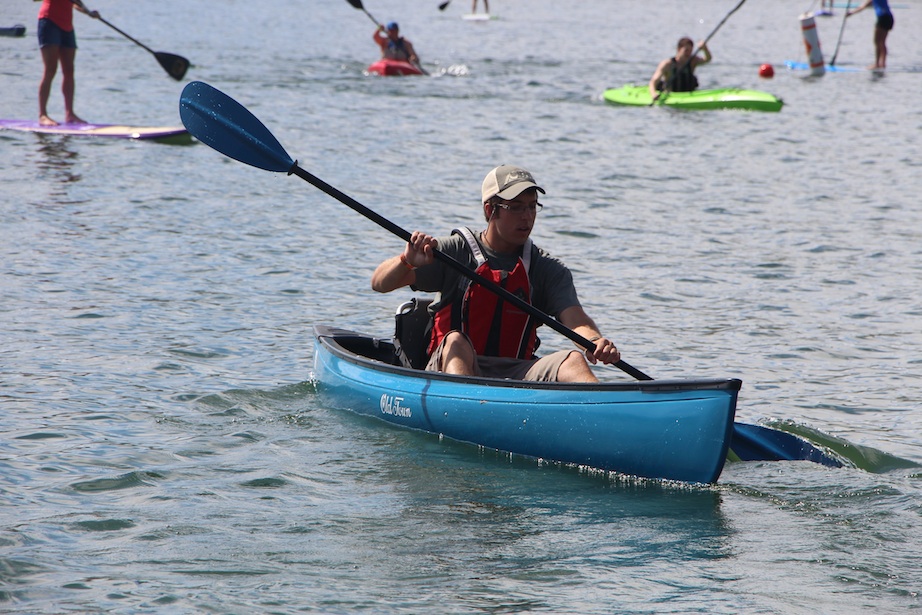
Old Town Canoes and Kayaks made a splash today with the introduction of the NEXT, a brand new canoe that joins their lineup as an accessible, entry-level design seeking to draw new paddlers into the sport and make canoeing more convenient for those who are already committed. The NEXT is lightweight, stable and very easy to maneuver with a double bladed paddle—traditionalists will enjoy it with a single blade as well.

It accelerates quickly, can carry gear and is a breeze to load on the car for spontaneous paddle sessions. Stay tuned for more on the NEXT at Canoerootsmag.com. 

Old town next copy


GoPro

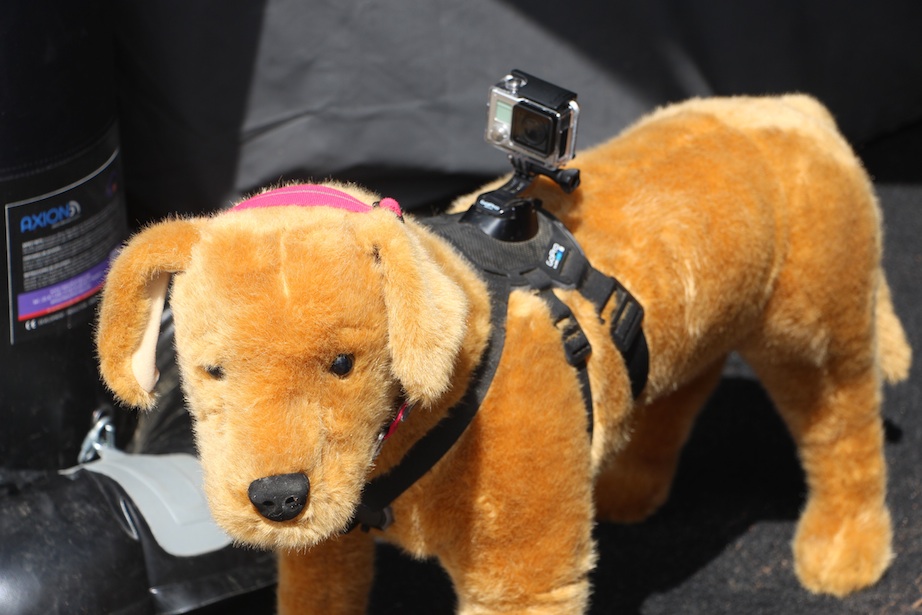
Canoeroots and Family Camping got a sneak peek at the Fetch today, a new dog harness camera mount from GoPro that is yet to be released. After years of seeing customers strap human harnesses to their furry friends, GoPro responded with a dog-specific harness that fits animals of all sizes. The harness has a chest mount and reversible back mount for GoPro cameras. 

gopro fetch


Sony

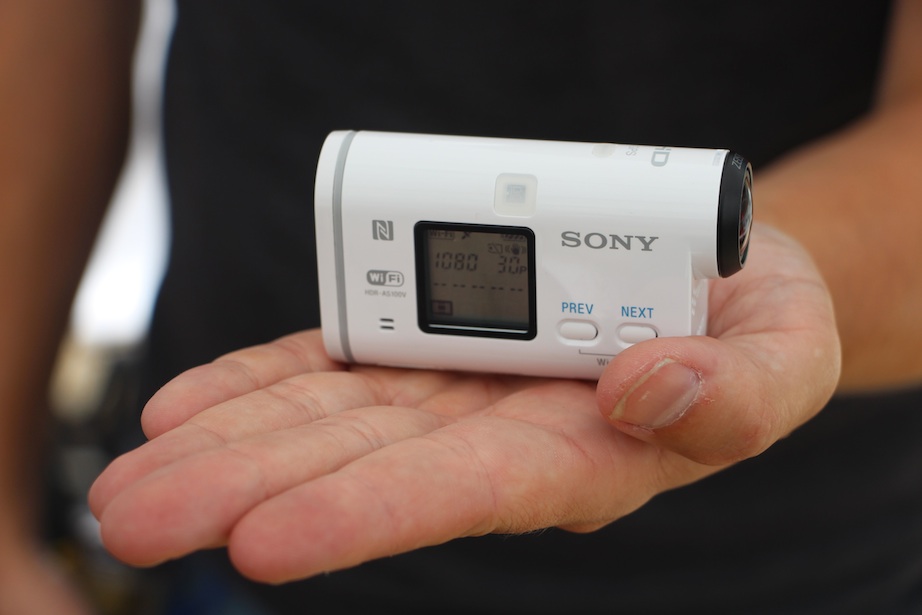
The AS100 is the new addition to Sony’s lineup of action cams. The new model has a bigger and better sensor for higher image quality. The splash proof camera can handle some moisture without any housing, and can be totally waterproofed with plastic housing for full submersion. The AS100 has streaming capability and fits in the palm of your hand.

Sony A100


Chapul Cricket Energy Bars

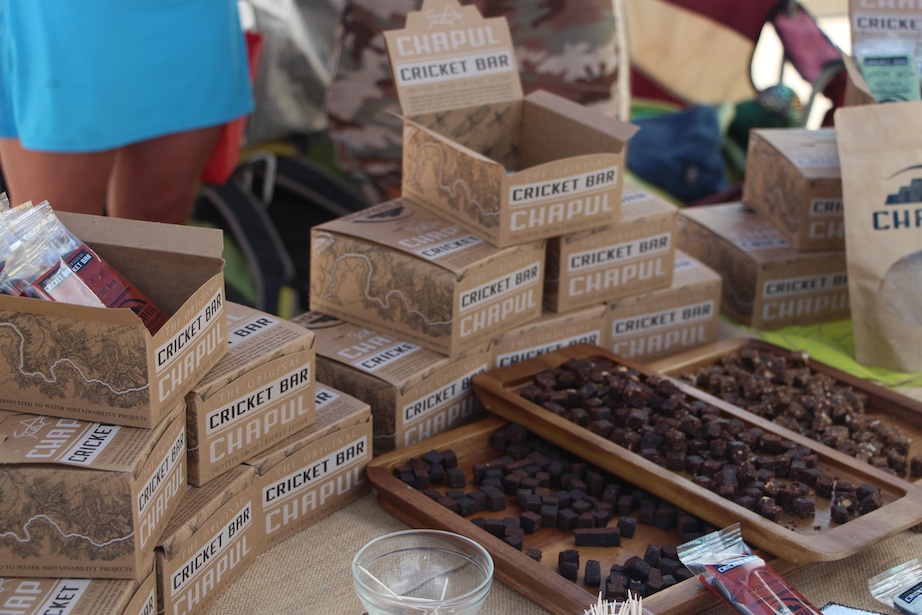
Chapul Cricket Energy Bars are new, packable snack or meal replacement bars that come from a sustainable protein source. As Chapul describes it: “Insects require less land resources, emit fewer greenhouse gases, and have a much smaller water demand than livestock and animal substitute such as soy, corn and rice.” Bonus: They’re delicious.

crickets


Primus

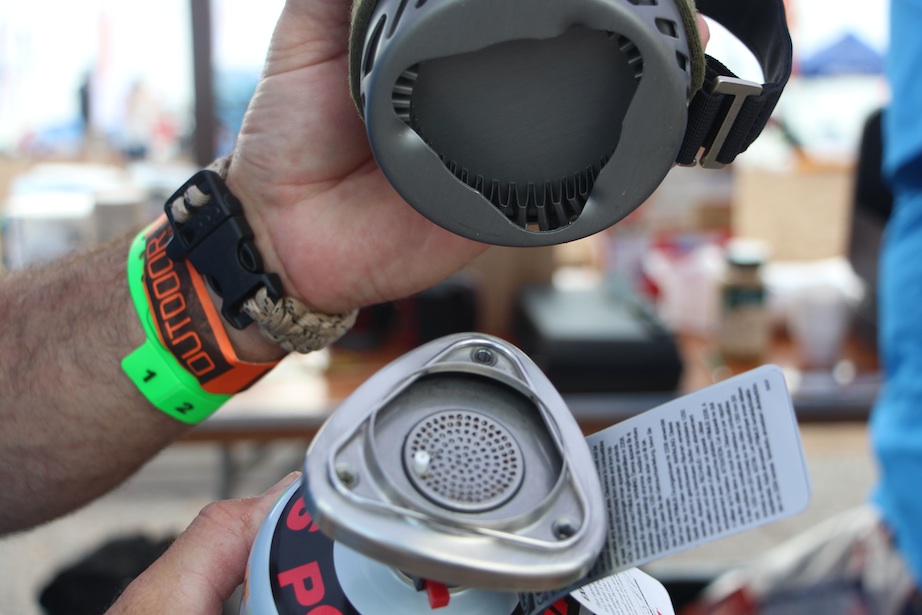
Primus is building on its already-excellent lineup of stoves by adding one handy new feature: a way to attach the pot you’re cooking in to the stove you’re cooking on. The two pieces are built to fit together and connect and detach easily so hot pots can’t slide around while you’re cooking. Additional screws help you attach other cookware to the Primus stoves.

Primus stove