A few small items and a bit of training can go a long way. Check out what Rapid’s editor has with her every time she gets out on the water.
What are your must-haves for a paddling session? Leave a note in the comments below!

A few small items and a bit of training can go a long way. Check out what Rapid’s editor has with her every time she gets out on the water.
What are your must-haves for a paddling session? Leave a note in the comments below!

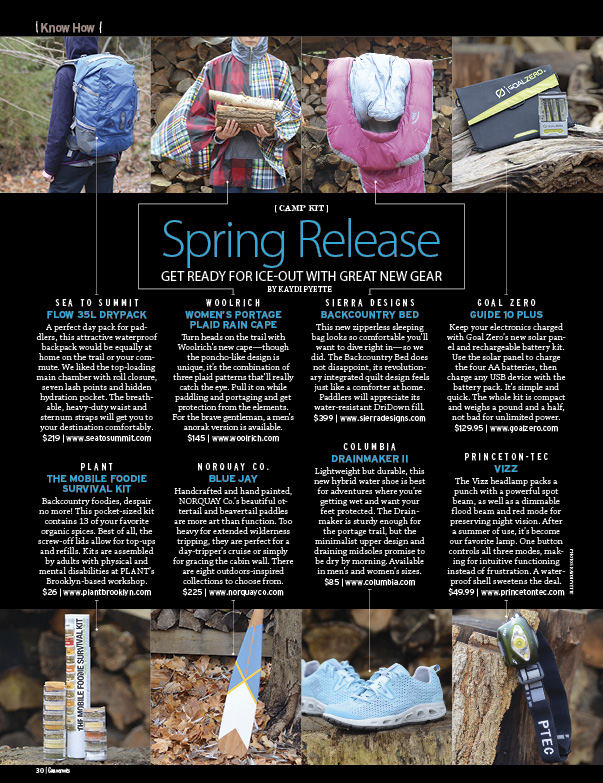
Turn heads on the trail with Woolrich’s new cape—though the poncho-like design is unique, it’s the combination of three plaid patterns that’ll really catch the eye. Pull it on while paddling and portaging and get protection from the elements. For the brave gentleman, a men’s anorak version is available.
Features:
$145 | www.woolrich.com
 This article originally appeared in Canoeroots and Family Camping, Spring 2014. Get more great gear reviews by downloading our free iPad/iPhone/iPod Touch App or Android App or read it on your desktop here.

Between squinted eyes fighting to hold back the driving rain, we surveyed our landing spot. Beyond the sandy beach, there was only dense forest of jack pine and black spruce as far as the eye could see. We zipped our jackets a little higher and adjusted our packs a little tighter. With a wave goodbye to the captain of our shuttle, the aluminum catamaran was swallowed in the mist leaving us alone. We were walking out.
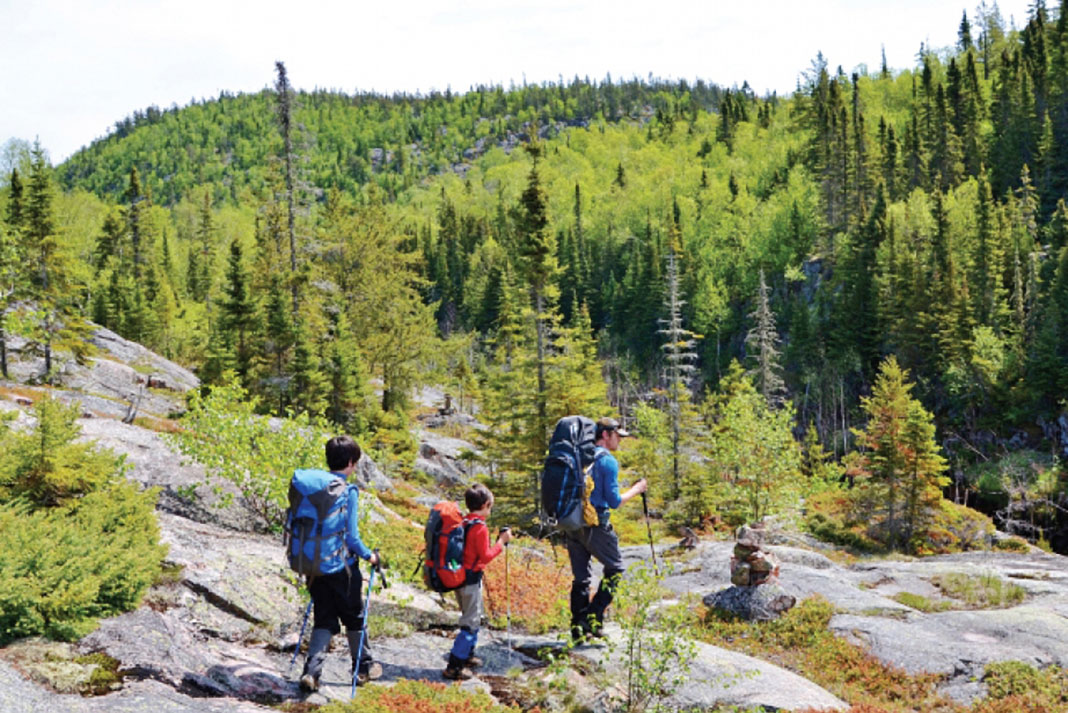
Hiking the Coastal Trail in Pukaskwa National Park on Lake Superior’s northern shore had been a family decision. My husband, Fraser, and I had carefully consulted with our sons, Luke, 10, and Zach, 8, as the remote and rugged route required planning, training and commitment on everyone’s part.
Up until then we had enjoyed multi-day canoe trips and weekend hikes as a family, but 60 kilometers over seven days burdened with heavy packs was a daunting proposition. Our biggest concern was that on this single-access-point trail, failure was not an option. Blisters and tears would not be grounds for rescue.
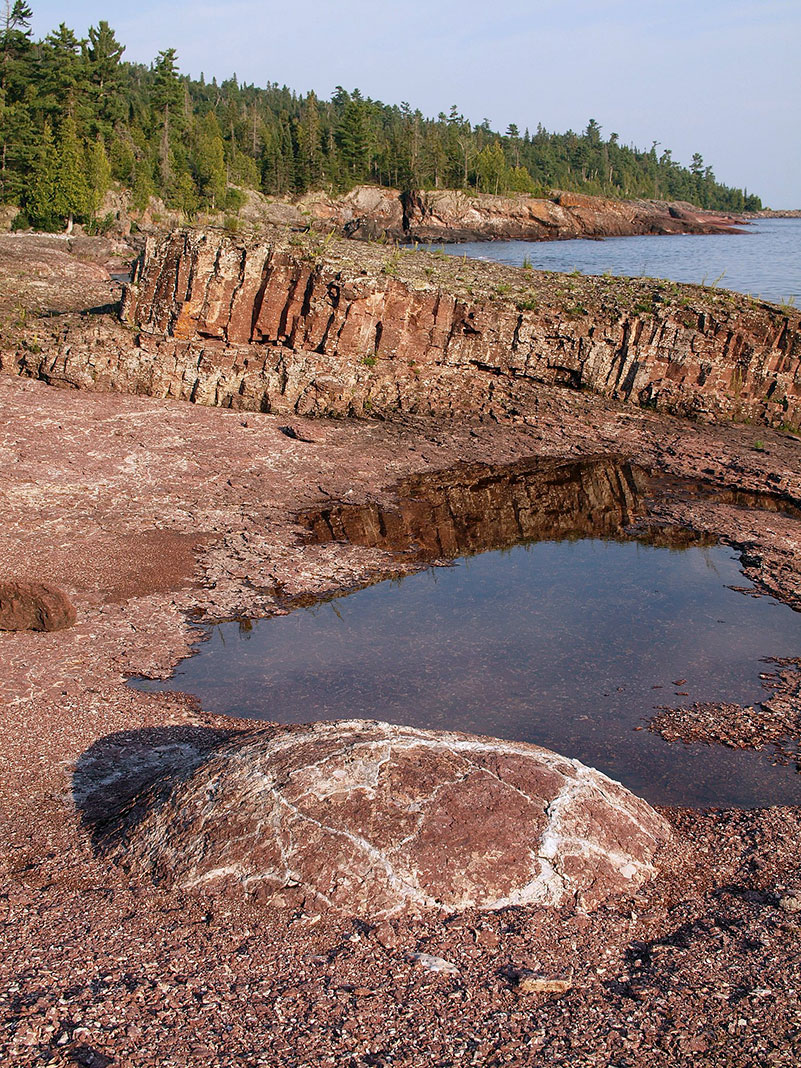
The 1,900-square-kilometer national park is the definition of isolation, part of the longest undeveloped shoreline anywhere on the Great Lakes. The solitary road that leads into the park terminates at Hattie Cove campground where we would complete our hike.
Truly a backpacker’s paradise, the trail is part of the larger, and yet to be fully realized, 1,100-kilometer Voyageur Route, which will one day carve a continuous hiking path from the eastern shore of Lake Huron to the western shore of Lake Superior.
The trail hugs the shore and is a maze of ascents and descents, fallen trees and car-sized rock slabs; at times it’s so steep hiking poles are set aside in favor of good old-fashioned scrambling. Boulder fields are vast and ankle twisting, shifting and slippery when wet. I took each step as if the next could result in a trip-ending injury, while Luke and Zach made a sport of it. I cautioned them to be careful, but “obstacles make it more interesting” they assured me.
River crossings became our favorite obstacle. Spring run-off on the White Gravel River brought wide banks and a swift current. The water was ice-cold, even more so than the brisk air. At its deepest, the river cut us at the knees and sprayed us even higher. We strategized a team effort that carried us across both figuratively and literally, Zach hitching a ride on Fraser’s back. Walk briskly, plant feet and hiking poles firmly, and keep moving.
With each river crossed, I saw the confidence growing in the boys. Their steps came more easily, the placement more precise. They called out warnings of upcoming hazards and held back branches, offering steady hands for support. Luke repeated, “Thanks for bringing us,” like a mantra and I was so glad that we had.
We fell into an easy routine. Each evening Fraser and I set up camp while the boys played at our campsite, each one seemingly plucked from a glossy travel brochure targeted at busy urbanites like us dreaming of empty beaches.
In heavy hikers, bear whistles around their necks, the kids dug in the sand, burying each other, sketching masterpieces with sticks and unearthing treasures of smoothed glass, perfect skipping stones and once, a half of a tennis ball lost from some far shore. They could have discovered gold for how thrilled they were.
With no electronics to turn to, their imaginations were entertainment. Activities that back in the city would be deemed uncool were thrilling with nobody watching to pass judgement. I was amazed by their resilience; never too tired, never bored, and rarely a complaint. When the May blackfly clouds became too thick, we climbed into our sleeping bags and I read to them from Charlie and the Chocolate Factory.
When the topography became demanding—which was often—banter was replaced with grunts of exertion and the thud of boots drumming against rock and earth. We wiped the mix of rain, sweat and bugs from our eyes and sported cuts, bruises and bites like badges of honor. For possibly the first time in their lives, our guys faced real adversity. In doing so, they were finding themselves one step at a time, proving to themselves just how capable they were, both physically and mentally.
On past trips, Fraser and I had acted like camp counselors, assuming most of the responsibilities. To complete this trip, the boys had to become our tripping partners. They carried their share of the load, did their share of the work and deserved to share the credit. Four equal members hauling gear, route finding, menu planning and bear calling.
A week of jumping crevasses, marveling over bear prints and crossing dizzying suspension bridges taught them more about problem solving, judgement and teamwork than the best efforts of parents or teachers ever could.
When determining your hiking route, take your kid’s attitude, excitement and previous experience into consideration, advises author, father and avid backpacker, Michael Lanza.
If you’re just getting started, choosing an easy to moderate hike and keeping it short and sweet is key to fostering a love of the sport, says Lanza. As editor for Backpacker magazine, he and his wife have tripped extensively with their two children, now 11 and 13.
“In moderately hilly terrain, a kid carrying little or no weight can easily maintain a two-mile-per-hour pace while walking,” he advises. Don’t ask too much of your younger child though—little ones “will go very slowly because they want to explore instead of just plodding forward.”
While adults should expect to shoulder the lion’s share of pack weight, part of maintaining a child’s interest is allowing him to contribute to an expedition.
“Don’t ask a kid to carry a pack; let the child ask to be given a pack to carry,” advises Lanza. By doing this, you create an association in the child’s mind that adults and older kids who are strong, experienced hikers carry packs. “Your child will want to be that kid, and you should then constantly compliment his ability to carry a pack,” he adds.
While adults are generally advised to carry between a quarter and a third of their body weight, making a child’s pack that heavy could put them off of the experience all together. “For a 50-pound child, I’d keep pack weight around 10 to12 pounds or less,” recommends Lanza.
To inspire participation and interest in making miles, offer small rewards. “Bring a treat they don’t often get to have to help build a positive association with hiking in their minds,” says Lanza.
Play games on trail (anything but I-Spy) and “pick a hike that has terrain features that will interest kids, like creeks or lakes that are safe to play in, waterfalls, rocks to scramble on, or the likelihood of seeing animals.”
Most importantly, aim for fun and not distance in the early years. This way you stand the best chance for a future filled with family backpacking adventures.
A superior adventure on the Lake Superior Coastal Trail. | Feature photo: Jennifer Johnson

I think the high school administrator thought I would give up on taking the group of troubled kids out into the wild after I was told the school board no longer allowed on-water activities, such as canoeing or kayaking. I don’t give up that easily. I countered the absurd regulation by changing the proposed canoe trip into a backpacking trip. There were no rules against walking. Not yet anyway.
Getting permission still wasn’t easy. I had to jump through hoops to satisfy the paranoid administration, including filling out a 12-page document reminiscent of my taxes that confirmed my trip leading experience. Of chief concern was whether I could handle a bear “situation” if it occurred while we were in the wilderness.
Despite detailing the unlikeliness of encountering a bear—and my many years handling such rare encounters—the trip almost didn’t go ahead. The handwringing and misplaced fear left me frustrated.
Cutbacks, rising costs and the ever-looming threat of litigation are all reasons that school boards are more hesitant than ever to green light wilderness trips.
It’s the students who miss out. It’s well documented that outdoor programs encourage mental and physical health. Outdoor adventure exper iences increase self-confidence as students are encouraged to navigate new challenges, manage risks and practice self-care. Immersed in nature, kids can’t help but engage with the curriculum. Plus, they skip class less—there’s 100-percent attendance for classes in the wilderness.

We had discussed what the students should do if they encountered an unwelcome ursine, but there were no bear encounters during our weeklong trek in the woods. The only wildlife sighting of note was a porcupine. It was living under an old outhouse and caused one student to let out an unholy scream in the middle of the night. Oh, and a family of raccoons that tried to steal a pair of smelly sneakers.
I found out on our return that it was the high school itself that saw all the action.
While we were playing it safe in the wilderness, a black bear took a stroll through the schoolyard on its way to feast in one of the town’s fast food restaurant dumpsters. The high school principal ordered a lock down and a tactical police unit arrived to gun down the bear. The incident made national news.
The principal didn’t see the irony of the situation.
Risk isn’t often as obvious as a 400-pound black bear with a Whopper craving, but it’s a part of everyday life. Risk exists in the wilderness and on the playground. It’s on the road, on the water and even in your home. It’s inescapable. Better to learn to manage risk and grow from that valuable experience, rather than try to hide from it.
By the end of our week in the woods, I think the students agreed with me. I’m just happy that what we learned on trip can be so readily applied to everyday life.
Kevin Callan once scared a bear away from his daughter’s sixth birthday party with nothing more than a canoe paddle. Follow his adventures at kevincallan.com.
 This article first appeared in the Early Summer 2014 issue of Canoeroots Magazine.

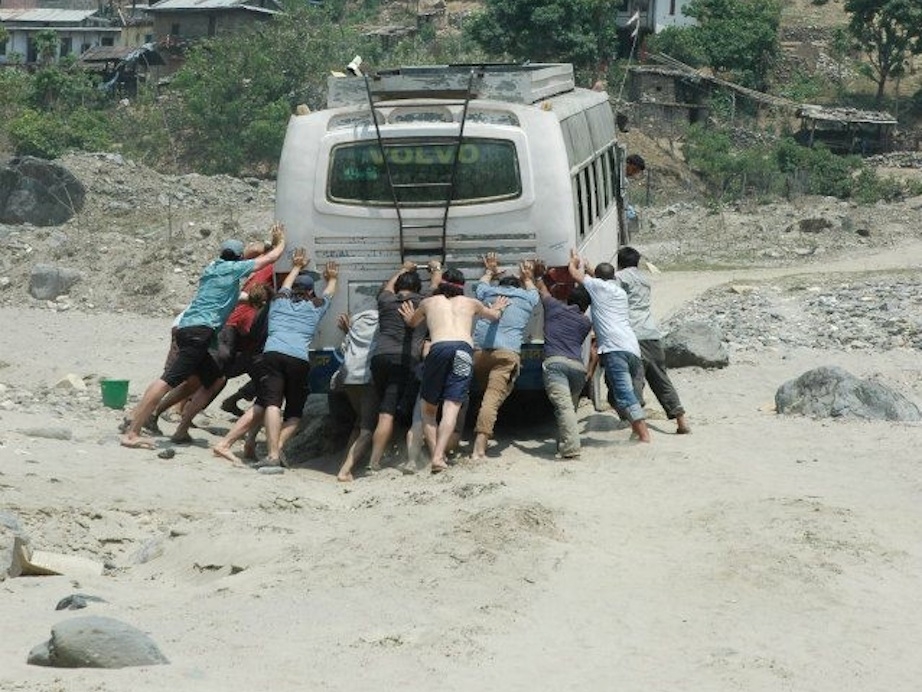
After an epic series of grunts and profanities, it happened. Our bus was finally gaining traction in the sand and on its way home from where it dropped us. We were at the put-in of the Karnali River, in Nepal. It had taken us a day and a half of bumping around in the back of that rickety bus to reach this remote Himalayan waterway that’s only run 10 times a year.
The 21-day trip would be the final exam in the first year of the Adventure Guide program at Thompson Rivers University. The program is one of the most thorough job interviews around—instructors have two whole years to watch a student’s performance on wilderness trips and whitewater to determine whether they’re a good fit for guiding.
In the year leading up to the trip, I’d been pushed so hard that the territory outside my comfort zone was starting to feel like home. Nepal took everything to the next level; it was our longest trip yet and in an utterly unfamiliar setting.
Though my 10 classmates and I had swapped gum-stained desks and true or false questions for kayaks and high-volume class IV whitewater, this was definitely still an exam.
The river’s first test came almost immediately. Sitting in an eddy by the first rapid, taking in the mountainous Nepalese landscape, my nerves went haywire. It only took one unexpected surge to send me into the water. Sheepish and annoyed, I dragged my kayak to shore, blaming the jet lag, the new boat and the days of rattling around in the back of a bus.
The learning continued through the untouched jungle of the Karnali. Eddy hopping was no longer just for scouting lines. It was the quickest way to reach shore for emergency bathroom breaks that couldn’t wait until the end of a rapid—the intestinal turmoil of international travel followed us all through the biggest whitewater of our lives.
Camping was a whole other adventure. The banks were dotted with villages and within 20 minutes of setting up a tent the entire youth population of the nearest village was standing outside, their smiles as mischievous as their intentions, as they waited for any opportunity to investigate our belongings. Armed with a Nepali vocabulary of only ‘hello’ and ‘thank you,’ the rancid smell emanating from my gear was my only defense.
As the trip went on, I realized the challenges we continually encountered were perfect guide training tests—they inspired reflection on whether or not I was prepared for a life on the river. If I wanted to translate my passion for paddling into a career, I would have to get used to this stream of ever-changing challenges.
As we paddled back to the bus, three weeks and 113 miles later, the familiar relief of passing an exam washed over me, but this time it was different. For me, completing this test meant that the challenges of the Karnali River would be the first of many. CODY NYSTROM
Jim Coffey, of Davidson, Quebec, claims to have broken the record for highest successful waterfall descent in an open canoe.
The former record, which had been unchallenged for over 20 years, was held by American Steve Frazier after descending Big Falls (16m) on the Elk River in North Carolina (USA).
Coffey’s accomplishment was made on the Cascada de Truchas (18m) on the Alsaseca River in a remote part of Mexico in the State of Veracruz.
Coffey, who owns a whitewater tour company in Mexico, had been considering running the falls for four years. Coffey states, “It is nice to get some notoriety for our sport by raising the bar. With modern boat designs and strong up and coming paddlers, i think you will see canoes going harder, faster, bigger and taller than what they have ever done before”.

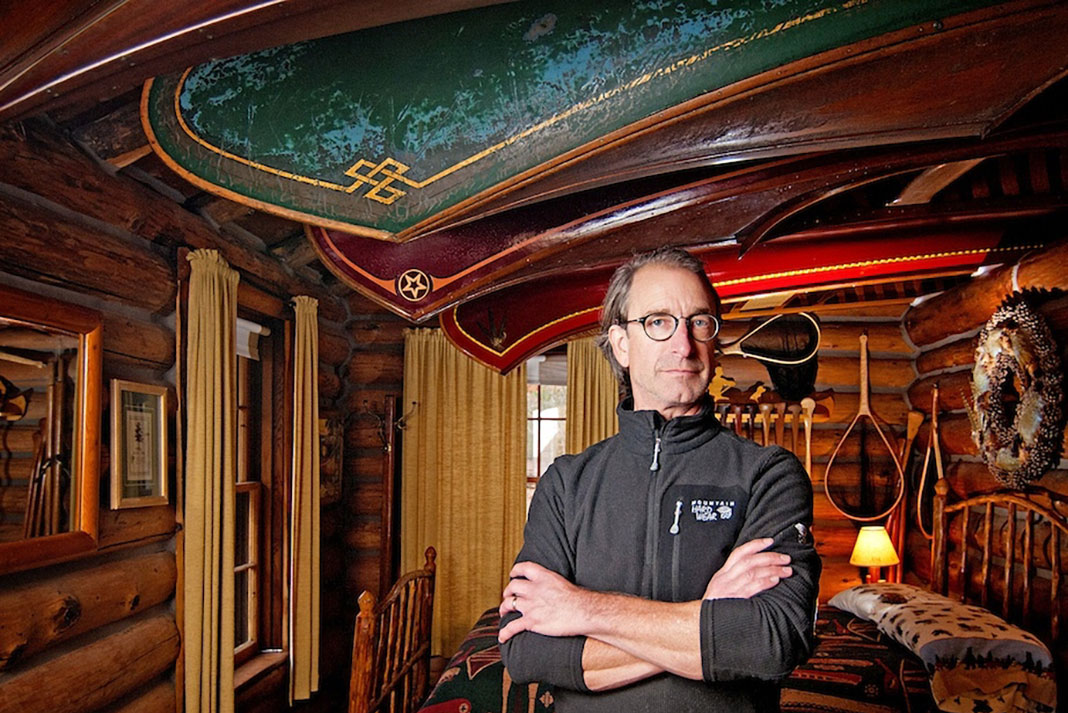
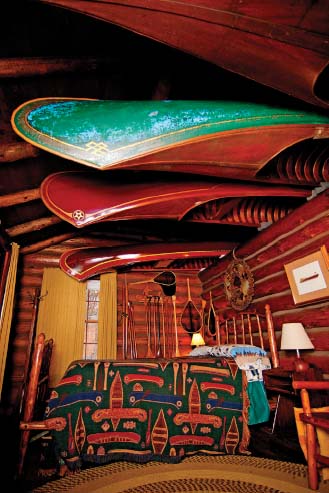
There’s more than just a little wickedness in the history of the canoe, and the largest collection of it resides in Grand Rapids, Michigan, in the possession of Ken Kelly. His collection of old-style courting canoes, vehicles of furtive love in a bygone era, fills the rafters of his quaint northern Michigan cottage, garage and the second story of a nearby warehouse.
Kelly is smitten by the old-world charm of wood and canvas canoes, particularly those of the early 20th century—models paddled by men courting women. It was a period full of music, mischief and romance.
“The magic for me is the beauty of the wood, the quality of the craftsmanship and the feel of them on the water,” says Kelly, a wine dealer who owns 22 antique canoes in total. His private collection is one of the largest in North America and one of the highest quality collections of courting canoes anywhere in the world.
While Kelly’s boats span nearly 90 years of North American canoe history, most were built for romance and style during the early 1900s, a period when courting your gal in cities like Boston, New York, Detroit and Minneapolis, meant heading out on a moonlit river for a little smooching in the canoe. It was a time when young women let their suitors do the paddling and the canoes were accessorized with phonographs, picnic baskets and pillows, all the better to canoodle with. The ardor of that era began to cool in the 1920s with the advent of the Model T Ford—couples had more options.
“The magic for me is the beauty of the wood, the quality of the craftsmanship and the feel of them on the water.”
Kelly’s favorite canoe of that era is his 1915 Alden Kingsbury, a long-nosed, 16-foot canoe he had meticulously restored. It is one of many designs that originated on the Charles River during a period when canoe builders competed for public attention; a time when “social canoeing” was popular recreation and area boat houses rented to couples for an afternoon or evening.
“It’s stylish and fast, and when I heel it over in the traditional Canadian style, it has a sweet spot and becomes very stable. It’s a slippery design that I like to paddle solo,” says Kelly. The 58-year-old is also the president of the Wooden Canoe Heritage Association, a non-profit group with 1,650 members across North America and Europe.
WCHA is made up of antique wood canoe enthusiasts, some of whom are collectors, though the membership is mainly comprised of folks that have one or more wood canoes that they intend to restore or enjoy paddling. The organization hosts its 35th national assembly this year at Paul Smith’s College in the Adirondacks. Drawing 300 to 400 people and their canoes every year, it’s the largest gathering of its kind in North America.
Kelly joined WCHA in 1994 and was elected president in 2009. The challenge today, he says, is getting paddlers interested in the old-world beauty, lore and poetry of wood canoes, when the attention is elsewhere.
“It’s a challenge trying to think of what we can do to get people who are doing the same thing in plastic and Kevlar, into wood canoes and out on the water,” says Kelly. “The on-water experience in wood is unsurpassed.”
Kelly’s fascination with antique canoes developed in 1994 after learning he could not have a motorboat on the lake where he and his wife have their cottage. He had been looking for a vintage Chris-Craft runabout and shifted to considering a wood and canvas canoe to compliment the 1933 hand-crafted log cabin on the property.
His first was a 16-foot Old Town OTCA, built in 1963. It cost $800 and needed some work.
“It was nice and had a painted design on it, but I decided to repaint it,” Kelly says. “I went to put it up on the cabin wall for winter storage and thought it looked pretty nice; why not leave that one up there and get a second one to use.
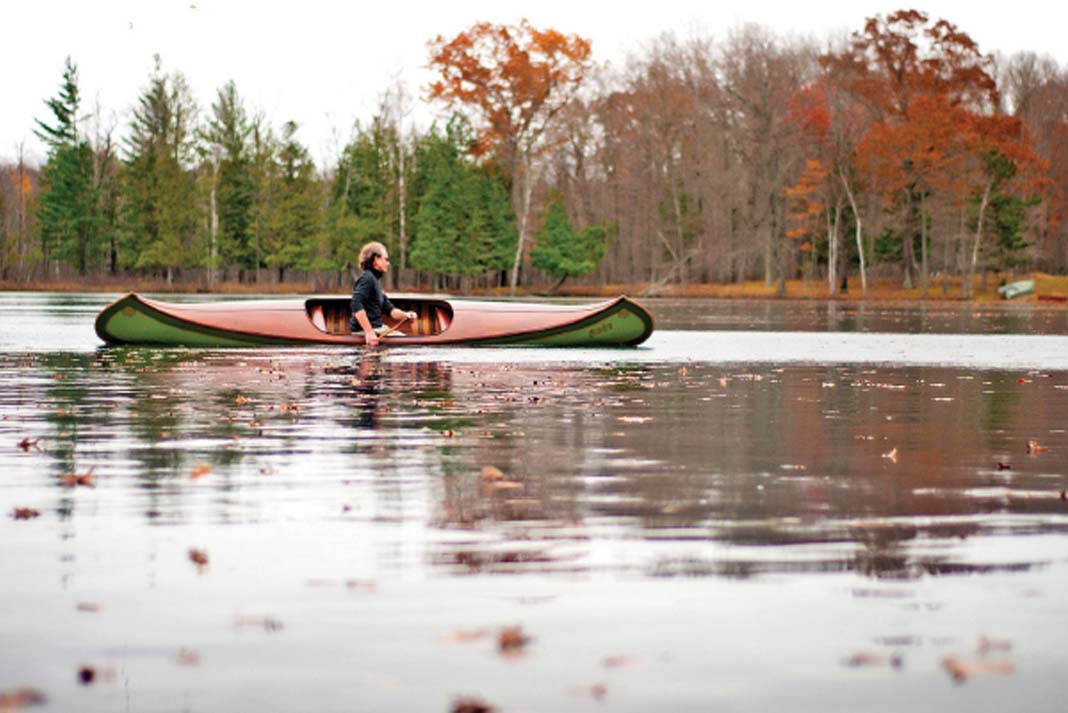
“I ended up finding a few others, mostly that needed repair, but it wasn’t very long before I had six canoes,” he adds.
“About a year after I got that first one, I realized I liked the look of the long decked courting canoe,” says Kelly, the type with the graceful, ornate designs and long, wooden decks that had no functional purpose other than style, and to create a more intimate space for turn-of-the-century couples. “I didn’t think I’d ever find one so I commissioned a builder who had an old mold and had him build me a replica of a Charles River Torpedo, a 1915- to 1920-era canoe.”
Kelly still owns that courting canoe along with 16 others, three or four of which will be displayed at the Canadian Canoe Museum in Peterborough, Ontario, starting in April when the museum opens a yearlong special exhibition called “Canoes and Romance.”
“We have gramophones, postcards, posters and great movie clips,” says John Summers, the museum’s general manager. “We have covered bigger themes in the past, such as the fur trade and exploration—this will be the pop culture of canoeing on display.
“Ken’s canoes are beautiful and courting canoes are a beautiful stage in canoeing. The flourish of the Charles River scene is a relatively small part of canoeing history, but it’s a fascinating part,” he adds.
For her part, Kelly’s wife, Mary Reed Kelly, has long known of her husband’s penchant for collecting things. She tolerates it in good humor but does not consider herself a paddler, venturing out on the water only occasionally. Before canoes, she says, there were antique watches, sports cars and furniture. Kelly is also a master-gardener and a wine collector.
“He loves the idea of having beautiful things,” Reed Kelly says. “Ken always tries to make sure they are in the best shape they can be. He takes great pride in being able to say: ‘I took care of this.’”
“His specialty is courting canoes—that’s okay with me, once in a while,” Reed Kelly says wryly.
“She is happy to go for a ride occasionally and sit in the position that a woman would when being courted and let me paddle her around,” Kelly says chuckling, okay with the fact he often plays the role of lonely courtesan.
On his own time, Kelly enjoys paddling for recreation at the cottage and with other WCHA Michigan chapter members, who gather for weekends on different rivers or lakes each year. He has recently taken to developing his freestyle paddling skills.
Kelly’s collection includes, among others, a 1916 Peterborough canoe that hangs from the ceiling of his cottage. That’s where his best canoes are displayed amid a flood of courting-era memorabilia. It is where his 1915 H.B. Arnold canoe hangs over the door to the porch. There are also classic Old Town canoes, a 1930’s Carleton, a 1920’s E.M. White and a B.N. Morris, all of which were built in Maine.
Morris is considered by many to be one of the finest wood and canvas canoe builders. Kelly’s newest addition at the cottage is a restored 18-foot B.N. Morris that was built in 1918 for the canals of Belle Isle, the Detroit, Michigan island park on the Detroit River. The canoe’s sweeping lines and graphics convey the genteel nature of the era long past.
Having 22 canoes does present logistical issues, Kelly says. Storage is one, as is the expense of having them restored. Sometimes he will sell one or more to make room for another he has found.
“The phase I am in now is that it has to be really special for me to add another, and I can’t do that unless I get rid of one,” he says.
Kelly admits he is looking for a very special Peterborough canoe, a 1904 Comfort-Craft model, commonly known as “The Girling Canoe”—just guess why.
A modern-day man with vintage tastes, Kelly views courting canoes as a vintage unmatched. And as with fine wines, if one picks well, they only get better with time.
Howard Meyerson is an award-winning outdoor writer and avid paddler from Michigan. He enjoyed paddling one of Ken Kelly’s antique canoes in 2012 on a trip down Michigan’s Au Sable River.
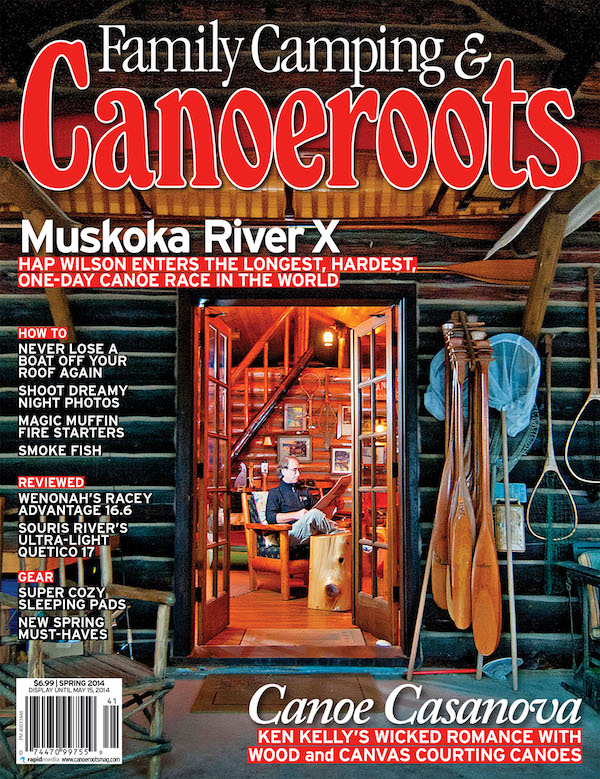 This article originally appeared in the Spring 2014 issue of Canoeroots. Subscribe to Paddling Magazine and get 25 years of digital magazine archives including our legacy titles: Rapid, Adventure Kayak and Canoeroots.
Canoe collector Ken Kelly poses in front of a few of his prized pleasure craft. | Feature photo: Judith Strieby-Raska
Practicing a kayak roll is an essential skill for experienced paddlers and those that may be the occasional weekend warrior. At the beginning of every paddling season it is highly recommended to spend time in varying water conditions and practice this kayaking skill. Roll troubleshooting was my first attempt at an instructional video, and it was one I was told countless times to avoid doing as this subject always seems to be up for great debate.
As instructors, I think we typically overcomplicate this skill for the student. We only have a certain capacity for information, especially when stressed, so I looked to keep our approach as simple as possible. This video proved to be ideal for those with some previous roll practice, although I have found beginners to respond just as well. (Click here for kayak rolling tips to help beginners and children.)
Chris Wing has been an instructor for as long as he has been a kayaker. He started H2o Dreams out of a desire to spur growth and reverence for paddle sports education all while providing a different spin to the presentation of familiar topics. Visit www.whitewaterdreams.com for more info.

In the utter darkness of midnight, stage lighting blinded Blair Trotman as he launched a Wave Sport Recon off the edge of the visible earth, plunging into the abyss 60 feet below the lip of Sutherland Falls. Then, from behind a pile of high-end camera equipment, someone told Trotman it was time for take two. And then three.
“Blair was an absolute trooper and hit the falls three times that night to ensure we got the shots we were looking for,” says Steve Shannon, who snapped this photo while tagging along on a video shoot for Dark Water, a short film by Kelsey Thompson.
The lights, dragged to the river by a crew of Revelstoke locals, gave the falls a different feel than the sunlight that lit Trotman’s practice runs earlier that day. It was hardly enough for Shannon to capture the midnight descent.
“This was primarily a shoot for Kelsey, so I was limited to shooting with the available light from his filming lights. This was extremely challenging, as you don’t need as bright of lights for shooting video as you do for capturing still images. I had to push my equipment to the absolute limits.”
He joined Trotman in the water for a moment, though not on purpose. “There were a lot of extra people milling around, getting in the way of shots and making things fairly difficult,” says Shannon. “I ended up exploring alternate angles by paddling to the other side of Blanket Creek…let’s just say I got a little wet.”
Around 1 a.m., as one of the most unique shoots of his career was wrapping up, Shannon grabbed this shot of Trotman, standing below the falls “eyeing up the monster in the dark he had just destroyed.” EMMA DRUDGE
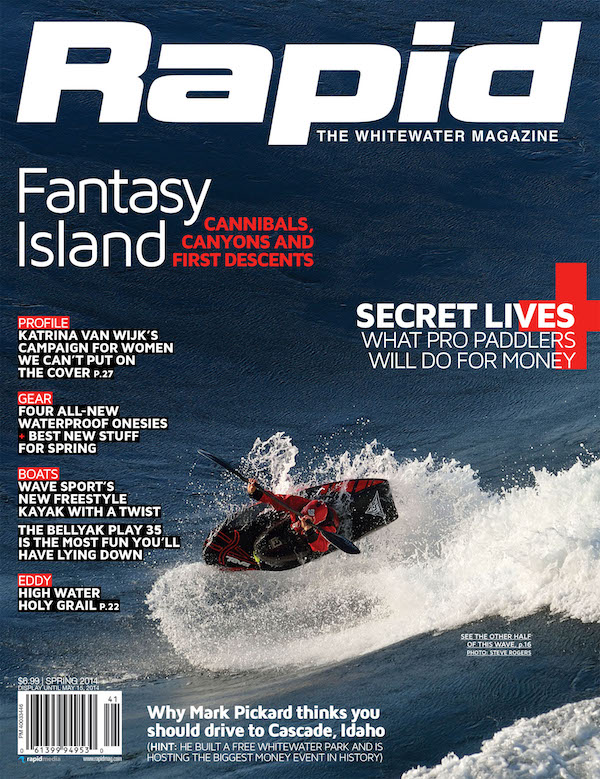 This article was first published in the Spring 2014 issue of Rapid Magazine. Subscribe to Paddling Magazine’s print and digital editions, or browse the archives.

It was somewhere along the nearly dry creek bed I was dragging up that I decided I really liked Souris River’s Quetico 17 Canoe.
Souris River Quetico 17 Canoe Specs
Length: 17’3”
Width at gunwales: 35”
Depth at bow: 20”
Depth at center: 13.5”
Depth at stern: 20”
Weight: 44 lbs (Kevlar), 42 lbs (Carbon-Tec)
MSRP: $2,995 to $3,345
We’d been on the water for eight hours, were 10 portages in and had just spent the last two miles battling a headwind. This creek was supposed to be the easy part—a straight, albeit thin, blue line on the map.
As we weaved through a maze of bulrushes and reeds under a darkening August sky, it was the kind of moment where you might start to think dark thoughts. Instead, I was impressed. This canoe was light, it was maneuverable and it felt durable. Each time we bottomed out we forged ahead on foot, pushing and pulling. Through sucking clay, over river rock and even into a hornet’s nest, the boat never so much as creaked in complaint.
At the end of that purgatory of marshland, I knew I’d found a canoe I could trip with again.
The Souris River Quetico 17 Canoe is designed to handle everything a tripper can throw at it. Its long waterline keeps it tracking straight and makes good time on big lakes. Thanks to two inches of rocker, it’s surprisingly maneuverable for a 17-foot boat, even in narrow, twisting creeks.
“Designers are quick to say that there’s no one design that does everything, but the Quetico series comes close to doing everything really well,” says Keith Robinson, designer and co-owner of manufacturer Souris River Canoes.
In designing the Quetico series, which also includes a 16-foot and 18.5-foot model, Robinson was inspired by the timeless Prospector and mimicked its water-cutting entry lines. However, the Quetico has more tumblehome than the classic design, as well as a flatter hull, making it stable enough that I felt comfortable standing up in it.
We picked up our loaner from Killarney Outfitters and immediately noticed it had enough space for a route far longer than our five days. It’s also noticeably lighter than many boats its size and, at just 44 pounds, only the three-kilometer portage en route seemed particularly arduous.
The translucent quality of the hull is unique to Souris River, a result of their Woven Color technology, which creates the boats’ bright color. Instead of paint and its additional weight, manufacturing begins with a colored polyester cloth. Combined with several layers of epoxy resin, Kevlar and glass, it makes for a very tough hull.
Founded in 1985 on the banks of the Souris River in Manitoba, the Robinsons moved their young company in the early ‘90s to Atikokan, situated on the northern edge of Quetico Provincial Park in Ontario. Back then, Souris River was producing a meager 35 canoes per year. Now they send almost 500 canoes across North America each year.
The Quetico 17 Canoe is one of their most popular models, says Robinson. Given its can-do attitude, it’s no wonder why.
Options for trim include black, silver and bronze aluminum.
Featured Photo: Kaydi Pyette

Inspiring paddlesports participation through quality coverage of the people, places, adventures, boats and gear, trends and events that make paddling something you’ll do for the rest of your life.




© 2026 RAPID MEDIA