Home Blog Page 300

5 Best Post-Paddle Stretches (+ Foam Rolling Routine)

We all know the take-out is a great place to socialize, but instead of standing around while you gab, do your boating a big favor and stretch. “After your paddle is the most effective time to get some deep stretches in,” says Heather Herbeck, a pro-kayaker and personal trainer. “Your body is warmed up and ready for you to challenge your flexibility with a few stretches.”

While overall physical fitness improves your boating, stretching can be just as beneficial. “Stretching improves performance. When your joints are flexible, it requires less energy to move from point A to point B,” explains Herbeck. “Quick movements, with limited energy expenditure, are important when paddling whitewater.”
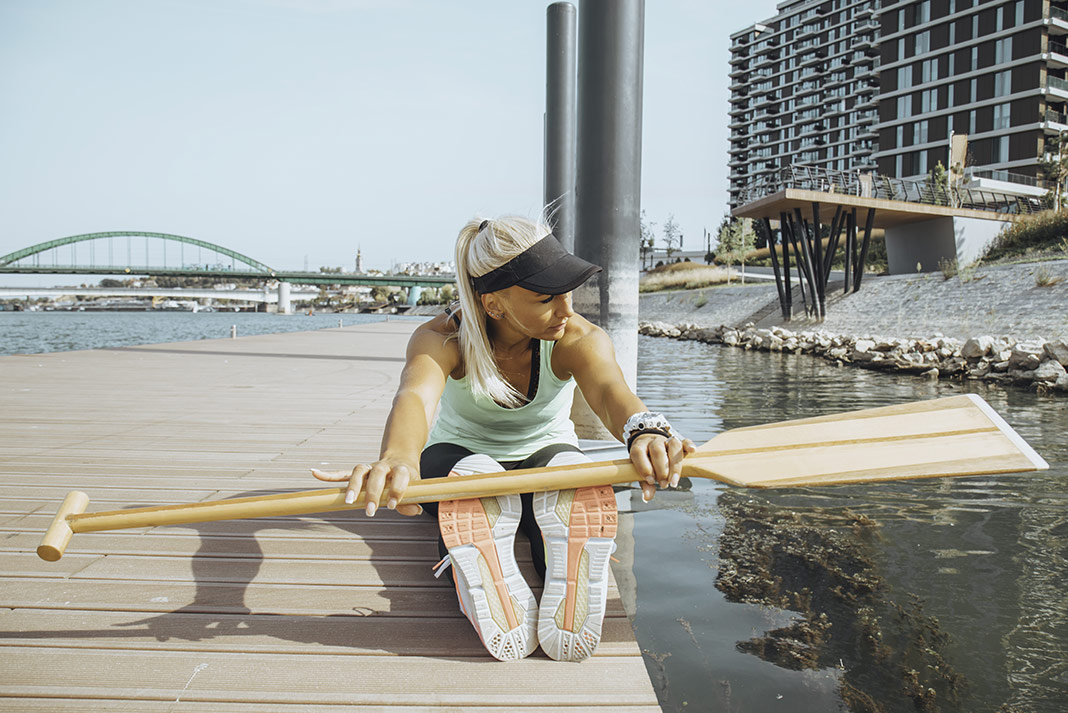
Woman stretching with a canoe paddle on a dock

Next time you go paddling, try out Herbeck’s top five stretches and feel the difference for yourself. “If you don’t stretch after paddling, you are a candidate for low back pain, bad posture, muscle weaknesses, injury and lack of range of motion,” says Herbeck. Not ideal if you plan to continue your paddling career.

Hold each stretch for at least 30 seconds and repeat on each side at least twice. For tighter areas, such as the shoulders, chest and hips, Herbeck suggests holding the stretch for one to two minutes.

[This article is part of The Ultimate Fitness Guide For Paddlers. Find all the resources you need to stay healthy and fit for paddling.] 


Top 5 post-paddling stretches

Outer back stretch
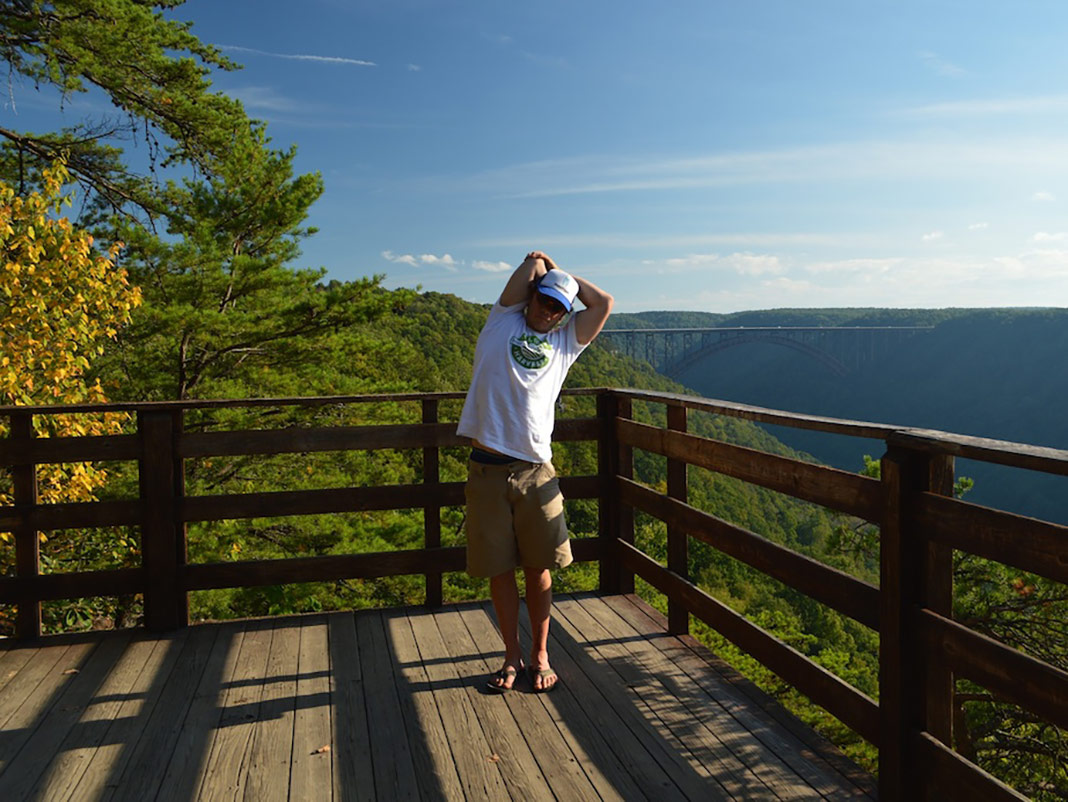
Man standing and leaning to one side with arm behind head
Photo: Sierra Stinson

“Paddlers use the muscles in their back for strong paddle strokes, which causes the muscles to become very tight,” says Herbeck.“Tight lats can sometimes inhibit the success of rolling your kayak, so keeping this area flexible is very important.”

To stretch your lats, reach one arm straight overhead. Using your free hand, grab the elbow of the extend arm and pull lightly until you feel a stretch. Lean your torso in the direction you’re pulling to intensify the stretch.

Hamstring stretch
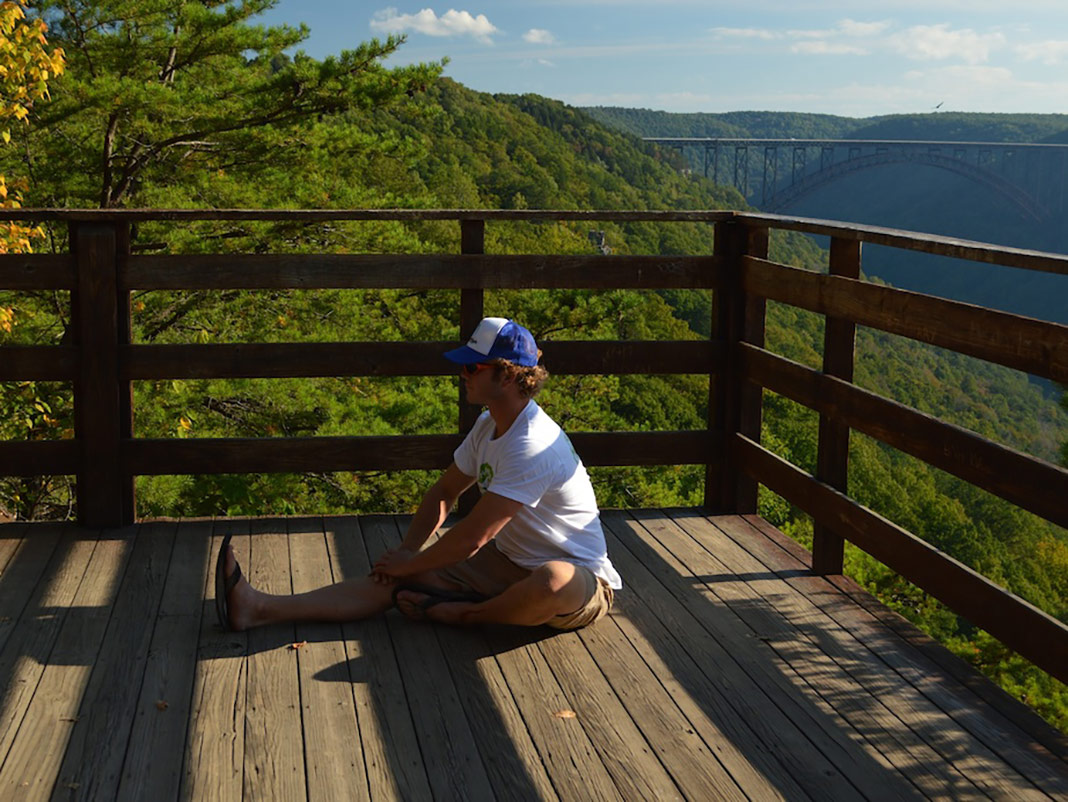
Man sitting with one leg extended in front, leaning forward.
Photo: Sierra Stinson

“Kayaking is sitting,” says Herbeck. “Too much sitting causes our hip flexors to become weak and tight, leading to limited movement because it shuts off your hamstring and butt muscles, which leads to overcompensation of the lower back.”

To stretch your hamstrings, sit on the floor and extend one leg straight in front of you and tuck the other close to your body while keeping your back flat. Lean forward from the hips, not by rounding the back.

Outer thigh stretch
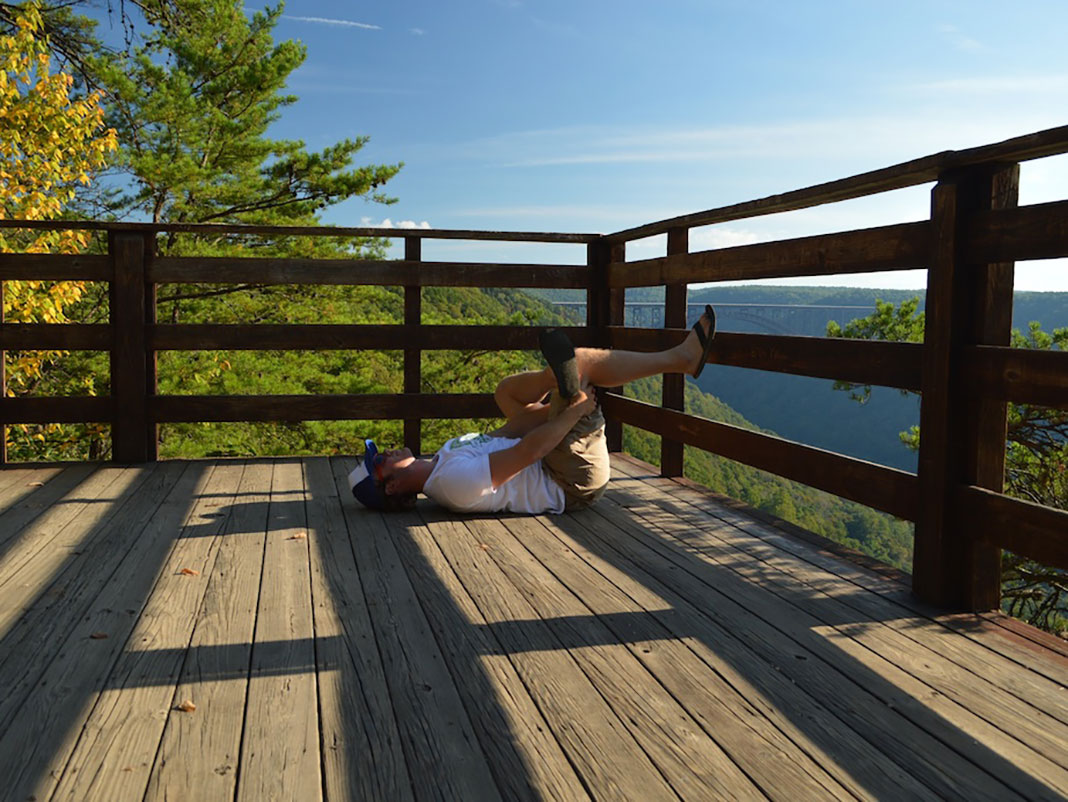
Man lying on back with legs raised
Photo: Sierra Stinson

Lie down perpendicular to a wall or solid object. Rest one foot against the wall, bending your knee at 90 degrees. Rest the opposite ankle against the bent knee. Breathe through the stretch to feel the release, and keep your upper body relaxed.

Hip flexor opener
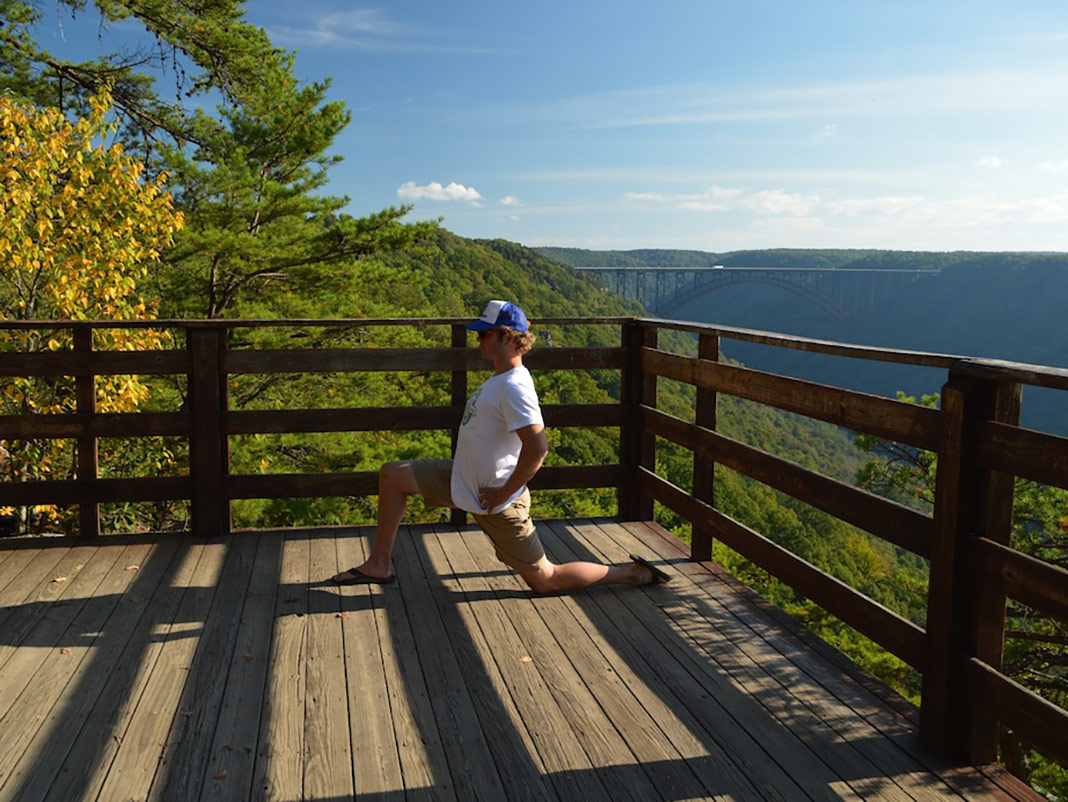
Man kneeling on one knee
Photo: Sierra Stinson

Kneel beside a wall, in case you need it for balance, and put one leg out in front as if you were doing a lunge, resting the other knee on the ground. Keep your front knee over or a little behind your ankle. Tilt your pelvis forward for a more intense stretch in the front of the hip.

Chest opener

Lie on an exercise ball facing upwards and place your arms out to your sides to form a T. Roll forward and backwards on the ball to massage your back.


Cool-down: foam rolling for paddlers

Foam rolling smoothens and lengthens muscles, and breaks up adhesions and scar tissue. It also helps your muscles relax. The result for kayakers is better blood circulation, which speeds workout recovery and boosts performance. Think of it as ironing out the wrinkles in your torn up musculature.

Foam rolling is recommended after a workout or paddle session and before stretching. It can be just as, if not more important than stretching, so if you’re short on time, just take five to 10 minutes to roll out

Here is a good routine for paddlers to follow:

Calf

Roll side to side three to five times on your lower calf, then move the roller up higher on the calf and repeat.

Hamstring

Roll side to side and lengthwise until you feel some release.

Glutes

Sit on the foam roller and roll both side to side and up and down until you feel some release.

Back
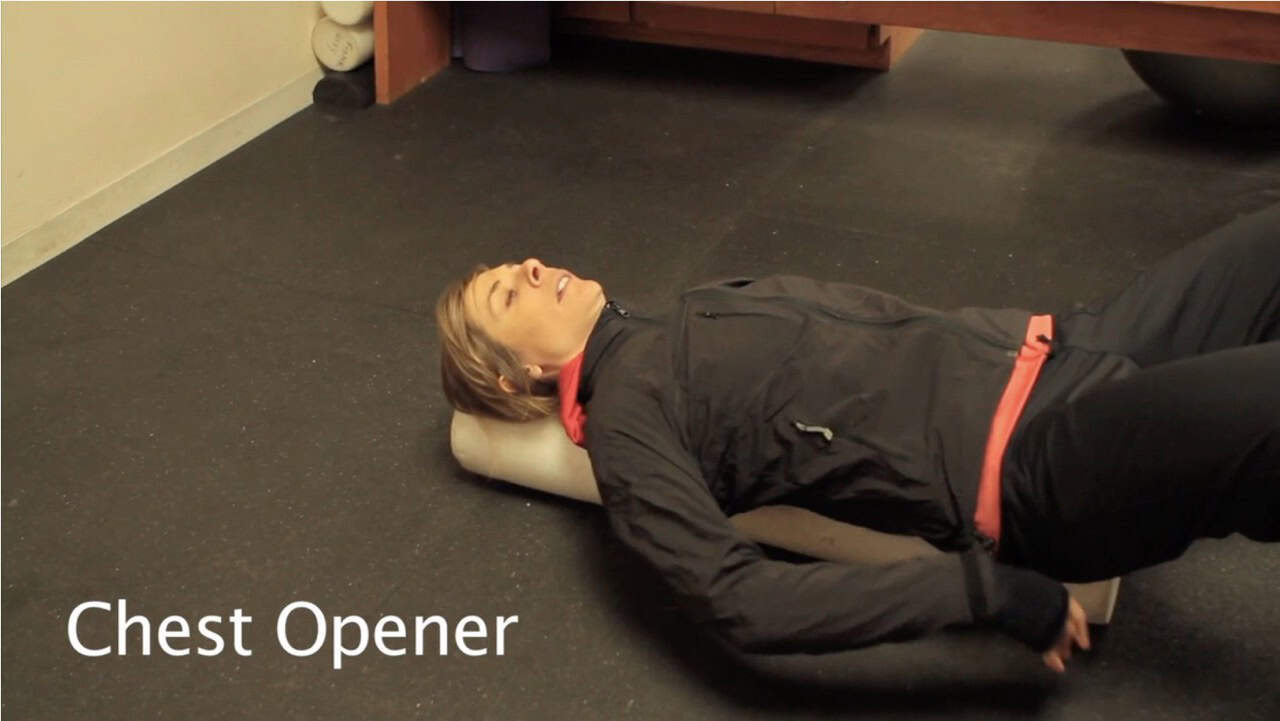
Chest Opener

Positioning: Place a foam roller horizontally on a mat. Sit with your tailbone near the roller, then slowly lean back, so the roller is aligned with your spine from your sacrum (tailbone) to your head, using a pillow or block for head support if needed.

Arm Placement (Start): Bring your feet flat on the floor with knees bent, then extend your arms out to the sides in a “T” shape, palms up, letting your shoulders relax down.

Gentle Opening: Slowly bend your elbows and bring your hands towards your shoulders (a “W” shape), then extend them back out, creating a gentle “angel wing” motion to open the chest.

Deepen the Stretch (Optional): If comfortable, slowly move your arms overhead (like making a snow angel), stopping where you feel a stretch, then return to the starting position.

Hold & Breathe: Hold the open position for 30 seconds or breathe deeply for several minutes, allowing your body to relax into the stretch.
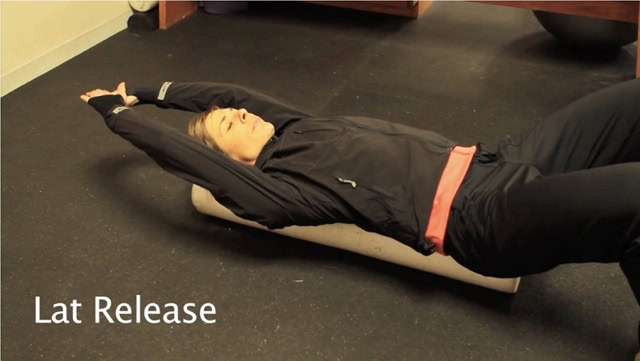
Lat Release

Position: Lie on your side with the roller or ball under your armpit/side.

Find Tender Spots: Slowly move your body to roll over the lat muscle, looking for tight or tender “trigger points”.

Incorporate Movement: Once a tender spot is found, move your arm in controlled motions (e.g., punching forward/backward, overhead sweeps, or rotating the arm) while maintaining pressure.

Breathe & Hold: Use deep breaths, holding pressure on tight spots for about 30-60 seconds, or until the tension lessens.

Repeat: Move to other spots and repeat on the other side.

IT band (outside of leg)

Turn on your side and roll out your leg lengthwise and side to side, three to five times on each leg. (This one will hurt.)

Quads

Flip over and roll out your quads lengthwise and side to side three to five times.

As you do this total body routine, avoid rolling over joints.

If you ever run into an area that feels like there is a lump, instead of rolling over it multiple times, statically press into it for 15 to 30 seconds.

Foam rollers cost between $20-40 and can be found at any store that sells fitness-related equipment. They come in different levels of firmness; an extra firm roller will dig into the fascia more and also cause more pain. A softer roller will be less painful to use.

Part of this article was first published in the November 2013 issue of Paddling Magazine. Subscribe to Paddling Magazine’s print and digital editions here, or browse the digital archives here.


Heather Herbeck has a B.Sc. in Exercise Science and is a pro-kayaker, Certified Personal Trainer and Level 1 Crossfit Trainer with over 15 years experience. 
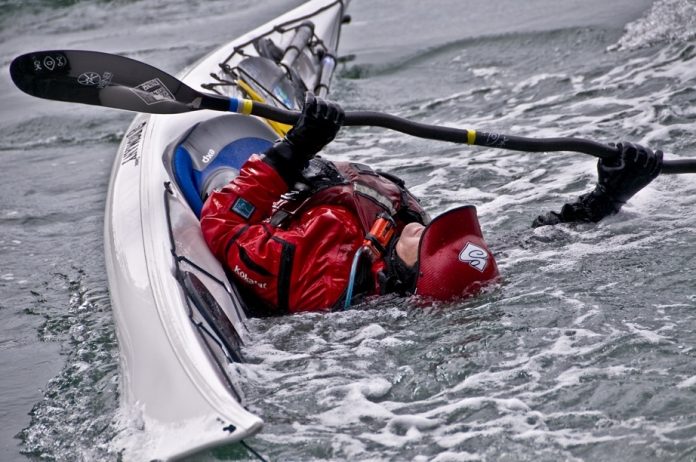
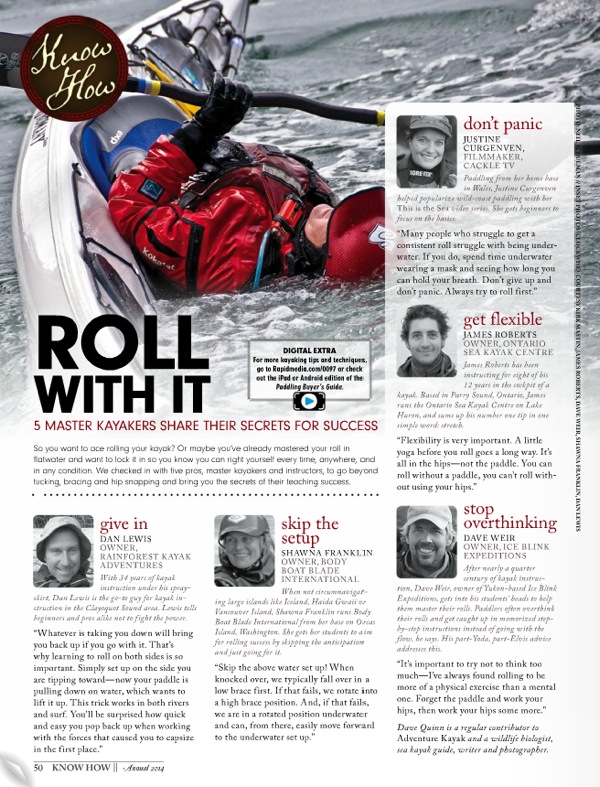
Roll With It

Photo: Neil Schulman
A sea kayak practices a roll in a wavy body of water.

So you want to ace rolling your kayak? Or maybe you’ve already mastered your roll in flatwater and want to lock it in so you know you can right yourself every time, anywhere, and in any conditions. We checked in with five pros, master kayakers and instructors, to go beyond tucking, bracing and hip snapping and bring you the secrets of their rolling success.


A PDF showing a sea kayaker rolling alongside a step by step description.


This technique feature originally appeared in Rapid Media’s 2014 Paddling Buyer’s Guide. To learn more paddling skills, download our free iPad/iPhone/iPod Touch App or Android App or continue reading here for free.

Rock the Boat: Paddle Faster

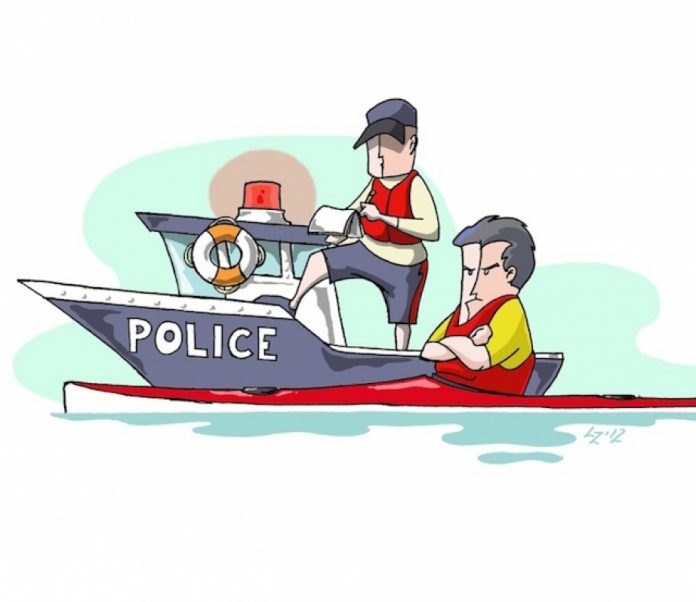
Illustration: Lorenzo Del Bianco
Rock the Boat: Paddle Faster

Pushing away from the dock and taking my first few forward strokes, I can’t help but laugh out loud. I’m paddling a rocket ship! Then, fast as a rocket, my revelry turns to apprehension—this could be headed for trouble.

Sea kayaking, as anyone who’s followed the trend of ever-faster Vancouver Island circumnavigations knows, is sliding down the slippery slope to speed addiction. Now I’m worried it will take me with it.

My borrowed rocket is the Tiderace Pace 18, one of several new surf-ski inspired crossovers that are seducing touring kayakers with the siren song of speed. This is shaping up to be a watershed year for these hybrids, with Tiderace and Zegul’s Velocity 18 joining the Rockpool Taran, Epic 18X Sport, Point 65 I8XP, Stellar S18R, Valley Rapier and KayakPro Nemo in a growing line-up.

Blending elements of racing kayaks and surf-skis—plumb bows, long waterlines, cut-away decks and aggressive seating positions—with the essentials of touring design, these boats occupy a sweet spot for racers, fitness paddlers and people who want to squeeze a long trip into just a couple days off work. The ultralight trend that hit backpacking 10 years ago is knocking on sea kayaking’s door.

If I’m drawn to speed, others must be well and truly hooked by now. I often describe myself as an attention-deficit paddler who ditches straight lines for exploring nooks, crannies and play features.

Kayak designers, it seems, may be equal parts engineer and mind reader. The 2013 designs are more touring capable, with day hatches, compass recesses and durable layups to complement more stable hull shapes that can handle the varied conditions of multi-day adventures. 

As I zip along in the Pace 18, I can’t help but imagine the possibilities. It’s stable enough to apply full power in jumbly water, covers open water quickly and has enough maneuverability that it’s not on rails. I could fit a four-day San Juan Islands trip into three, or maybe even two. It would be a terrific boat to travel the hundred miles from my home in Portland to the Pacific, with the oomph to progress into persistent westerly winds.

Wondering if these speed machines can handle larger seas? Look no further than Jeff Allen paddling the Taran around Ireland, or Freya Hoffmeister racing an Epic around Australia. While the Vancouver Island record has been fought over in traditional touring boats—Sean Morley settled on the proven capability of a Valley Nordkapp after considering the twitchier Rapier for his 2008 record-breaker—a crossover challenger is only a matter of time.

My newfound taste for speed can be blamed on my friends. Lately, five of us have been paddling around a local island for fitness. Karl—the fastest, in Epic’s crossover—ties ropes around his boat to create resistance so the rest of us can keep up in our touring kayaks.

And then there’s Lawrence, a whitewater paddler turned surf-ski evangelist. Every time I see him he asks me when I’m going to get a surf-ski. I usually mumble, “When I can sneeze on-center.” He asks me again 15 minutes later, when I’ve gone a mile and he’s already coming around the island the other way. 

Of course, some will protest that our obsession with speed means we don’t take time to enjoy nature. But making faster miles means you’ll be able to do that in camp, which you’ll reach before lunch. The catch is convincing your friends to get fast boats too, or you’ll be paddling, and eating dinner, by yourself. Or tying ropes around your boat.


Neil Schulman paddles in Portland, Oregon, at a variety of speeds.


 AKv13i1-01web


This article first appeared in Adventure Kayak, Spring 2013. Download our free iPad/iPhone/iPod Touch App or Android App or read it on your desktop here. 


5 Tips To Learn How To Sail A Kayak

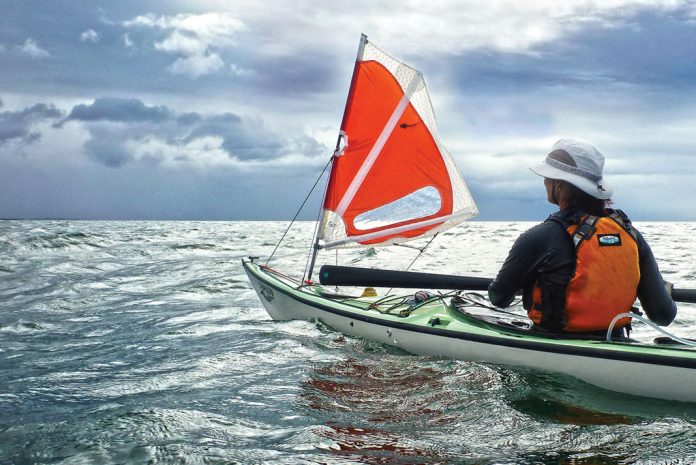
Person on a kayak with sail at the front
Set sail and away! | Feature photo: Damiano Visocnik

Somehow, I’ve wrapped the sheet line around the mast. I can’t pull it free. Fourteen knots blows my sail sideways as I try to clear a field of pilings. Fighting for control, I dig my blade in and manage to power away from the watery minefield.

Mark paddles over. “You could have just released the up-haul line,” he laughs, unwrapping the flapping tangle on my deck. I’ve officially made my first greenhorn mistake in the world of kayak sailing.

Welcome to the world of kayak sailing

I’m learning the basics of sailing a sea kayak from Mark Whitaker, co-owner of Columbia River Kayaking. I admit to being a reluctant sailor, dreading the snarled lines and the idea of spending my afternoon wrestling with an eight-square-foot sheet of sail cloth instead of paddling. But that’s changing.

[ Paddling Buyer’s Guide: View all sails, shades and rigging ]

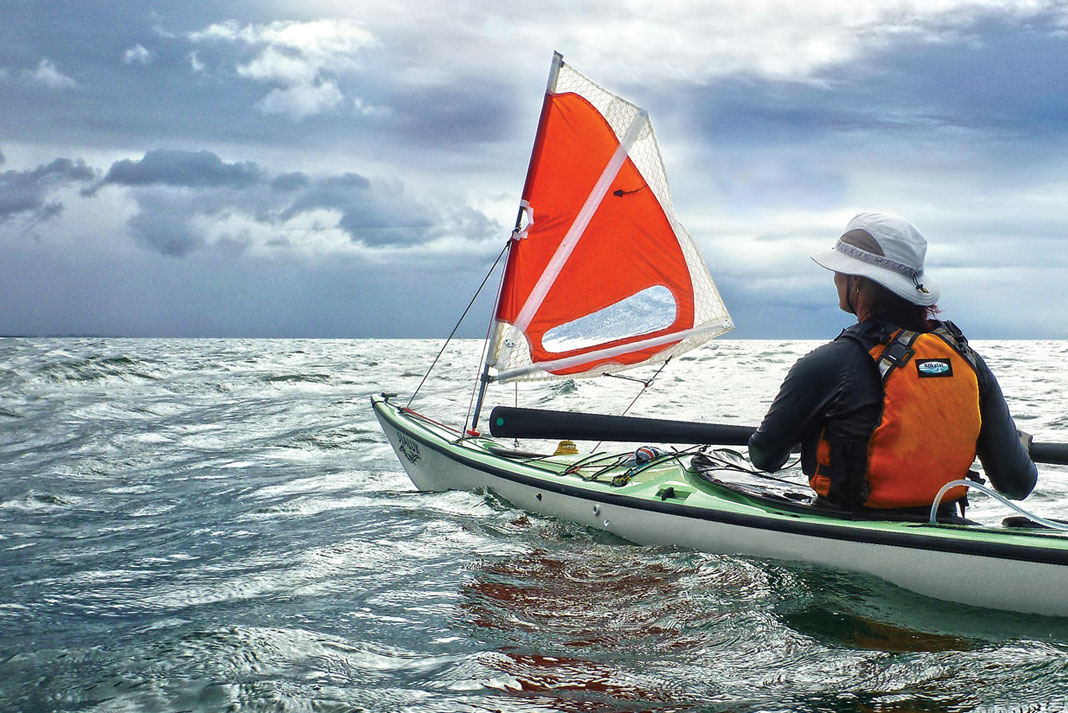
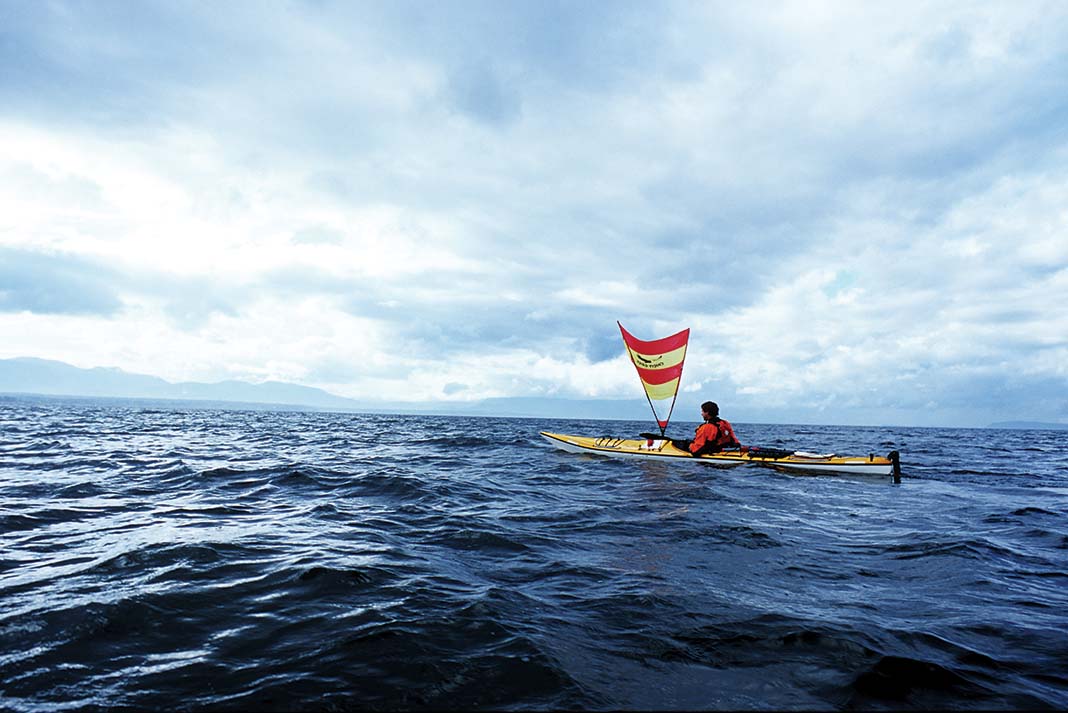
We’ve each suction-cupped an Australian-made Flat Earth Kayak Sail to our bow and Mark is showing me how to ride downwind, sail across the wind and tack upwind. These compact, “D”-shaped sails are designed to supplement the paddler’s power rather than replace it. Mounted well forward out of the paddler’s way, they permit the full range of strokes, rescues and even rolls. If necessary, the sail can be stowed quickly on the deck… unless, of course, you’re a newbie who forgets to release the anchor line.

Around the world, paddling cultures evolve to fit their environments. In Britain, kayakers surf tidal races. On the Pacific Coast, we explore swell-tossed rock gardens. Australian paddlers, meanwhile, have long been preoccupied with harnessing the wind. Down Under, sails are considered by many to be standard safety equipment, like a tow system or spare paddle, and are required by a number of kayak clubs for offshore journeys.

Person on a kayak with sail at the front
Set sail and away! | Feature photo: Damiano Visocnik

“Sails increase speed and range, reduce exposure during long crossings and conserve energy for crux moves,” says Ginni Callahan, an avid sailor who, along with business partner Whitaker, imports Flat Earth sails for Columbia River Kayaking. “You can get out of a situation faster, and raft up to sail someone who’s injured and needs help.”

Of course, it’s not quite that simple. First, I stumble through the salty sailing jargon: batten, up-haul, reefing, sheet line. Then there’s learning to catch the wind without getting yanked sideways into the drink. Edging, bracing and rolling with a sail require technique adjustments and practice.

Sydney, Australia-based kayak instructor and expedition leader Rob Mercer notes that sails magnify both the power of the paddler and the risks if something goes wrong. You’re moving much faster with a sail, which means less reaction time. Concentrating on sails and lines also shrinks the paddler’s bubble of awareness. Groups can become separated very quickly if one paddler drops his sail and the others fail to notice.

Despite the challenges, kayak sails are more user-friendly than ever before. Hobie offers sail kits for their Mirage sit-on-tops, and their Adventure and Tandem Island kayaks are fully kitted for sailing, including dual outriggers for stability. Australian manufacturers continue to lead design progression for aftermarket touring kayak sails, but North American companies like Falcon Kayak Sails, Balogh Sail Designs and WindPaddle Sails are catching up.

[ Paddling Buyer’s Guide: View all Hobie sailing kayaks ]

“There is a growing subculture embracing kayak sailing, such as the WaterTribe events on the East Coast,” says Callahan. “We’re in an age of re-combining ideas. Putting sails on kayaks is an example of that. I expect we’ll see more sails on more boats in the future.”

5 tips to learn how to sail a kayak

1 Climb the curve

There’s a lot to learn up front. Take a class or go out with experienced sailors in mild wind. Remember “mild” is defined at least partially by the size of your sail.

2 Size isn’t everything

Small sails remain manageable in stronger wind and have reduced consequences when you miscalculate. The trade-off is less wind gathering in calm conditions.

3 Manage safety issues

Practice and refine recoveries and stowing the sail in light wind.

4 Within limits

Don’t let the thrill of sailing take you beyond your limits, cautions Callahan: “Remember that if the wind dies or changes, you may have to paddle back.”

5 Mind the deck

Rigging the sail’s hardware may require deck reinforcement on kayaks with light layups. Or try a mount made from Sticky Pods, suction cups designed to attach cameras to race cars. According to Whitaker, they hold until about 45 knots.

Neil Schulman wonders if buying a sail makes him eligible for the renewable energy tax credit.

Cover of the Early Summer 2013 issue of Adventure Kayak MagazineThis article was first published in the Early Summer 2013 issue of Adventure Kayak Magazine. Subscribe to Paddling Magazine’s print and digital editions, or browse the archives.


Set sail and away! | Feature photo: Damiano Visocnik


5 Tips To Survive A Lightning Storm

lightning strikes along the edge of a water body
Know what to do when lightning strikes. | Feature photo: Raychel Sanner/Unsplash

Lightning strikes down more people than tornadoes, snowstorms and hurricanes and remains a top offender in storm-related deaths. According to Environment Canada, nine to 10 people are killed and 92 to 164 are severely injured by lightning in Canada each year. And if you’re a guy, the stats don’t point in your favour. NASA says you’re four times more likely to be struck. So here’s how to avoid this 27,760°C bolt and survive a lightning storm.

5 tips to survive a lightning storm

1 Get off the water

Head to shore as soon as you see a flash of lightning or hear a rumble of thunder.

2 Stay low

Avoid being the tallest thing around. Stay away from tall trees, hilltops, cliffs, open water and caves. Find a level spot of terrain.

3 Assume the position

Adopt the lightning ready position. Crouch down with your feet close together, preferably on an insulated Therm-a-Rest or PFD, to wait out the storm.

lightning strikes along the edge of a water body
Know what to do when lightning strikes. | Feature photo: Raychel Sanner/Unsplash

4 Avoid metal

Remove any jewellery and stay away from metal objects—this is not the time to be fiddling with aluminum tent poles.

5 Keep your distance

If you’re in a group, spread out—it’s your best chance of survival.

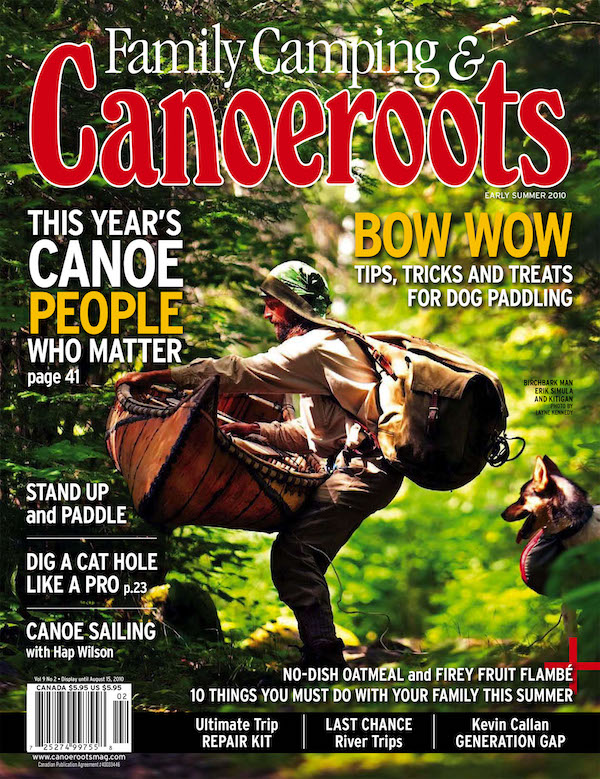
Cover of Canoeroots Magazine Early Summer 2010 issueThis article was first published in the Early Summer 2010 issue of Canoeroots Magazine. Subscribe to Paddling Magazine’s print and digital editions, or browse the archives.

Know what to do when lightning strikes. | Feature photo: Raychel Sanner/Unsplash


Scottish Clubs Are Better

Illustration: Lorenzo Del Blanco
whitewater kayak


It’s the height of the paddling season and I’m chomping at the bit. I check the calendar of a local paddling club and find…nothing. Zilch. Naught. Nada. By contrast, a casual social media group has four paddles scheduled—all beginner flatwater.

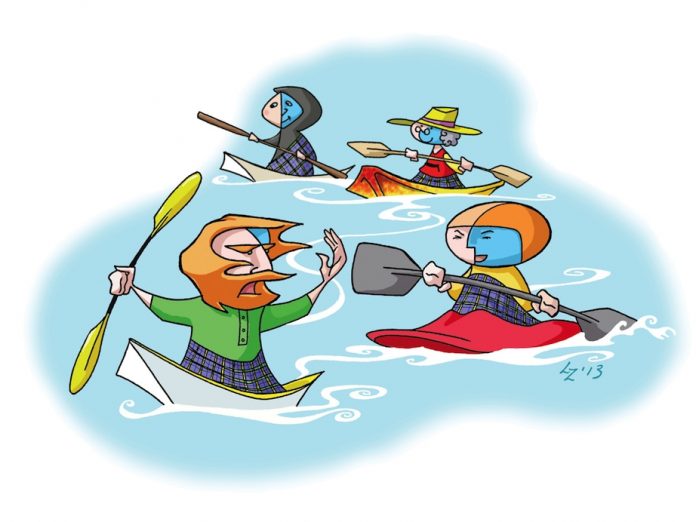
Paddling clubs are dinosaurs. Their stereotype is that of a fusty group watching slideshows about paddling, while not actually getting on the water all that much. They’ll cite cumbersome pro­cedures, declining participation and tempest-in-a-teapot internal politics. Caught between the devil of liability and a sea of seat-of-the-pants social media invites, paddling clubs occupy the neth­erworld between professional instruction and friends going out for a paddle, with the benefits of neither. It’s time to re-envision paddling clubs. It’s time to become Scottish.

I Googled my old paddling club from when I lived on Scot­land’s east coast. They offer two weekly pool sessions, river trips, weekly surf sessions, kayak polo and slalom tams, two formal balls and they take over a local pub twice a week. They supply the gear, just bring lunch and your “paddling costume.” This, in a town of 17,000 souls, compared to my current home of 2.2 million.

At their best, paddling clubs play three functions. They gener­ate new paddlers, connect existing paddlers to other paddlers and disciplines, and build a social bond.

Social media formats like Meetup.com work for novice-friendly paddles, but become problematic when they venture beyond easy trips. Their spontaneous nature seldom vets skills properly, putting too much pressure on organizers. Unlike clubs, casual get-togethers can’t insure their leaders or subsidize skill development. Paddlers will grow out of them if they aspire to more than flatwater.

Even formal clubs, which often succeed at turning new pad­dlers into more frequent or better paddlers, usually fail at attract­ing new recruits. If we want the sport to grow, this is precisely what we need. In Scotland, with no gear, the fact that all I needed to provide was a sandwich allowed me to participate in a sport I couldn’t afford. Two decades later, I’m still thoroughly addicted— to paddling, not sandwiches.

North American clubs could mimic this initiation by establish­ing a fleet of boats and gear, partnering with paddling shops to provide storage, bulk rentals and instruction—things shops do already. Like clubs, shops have a direct interest in getting the vast numbers of hikers, cyclists, fitness enthusiasts and skiers to add paddling to their quiver.

My city has three separate clubs, one each for sea kayakers, whitewater canoeists and whitewater kayakers. Each has its own vibe, but it means paying multiple dues to join all or missing out on experiences. Paddling clubs should merge, or at least collabo­rate. The multi-disciplinary Scottish club gave me a chance to paddle whitewater, ocean, surf, and play polo, as well as meet people passionate about each. Combining also offers economies of scale on storage, classes, equipment and insurance.

Let’s take a cue from the Scots. Let’s trade our spray skirts for kilts, speak in thick brogues and make our clubs what they should be: the epicenter of paddling culture.


Neil Schulman lives in Portland, Oregon, and is a regular contrib­utor to Adventure Kayak. He first paddled whitewater on the Tay River in Scotland many years ago. After a long swim, he ended up borrowing a paddling costume.

This editorial originally appeared in the 2014 Paddling Buyer’s Guide. Download our free iPad/iPhone/iPod Touch App or Android App or read it on your desktop here. 


How To Outfit Your Kayak For Increased Comfort And Performance

Photos: Sierra Stinson

Outfitting the cockpit of a kayak can make all the difference for those who are struggling with their roll, unable to paddle consistently, and worse, spending a lot of time on shore trying to stretch out cramps.

“It’s pretty obvious who spends the time outfitting their boat properly,” says Billy Harris, a pro-kayaker and white­water instructor.

Luke Vollmerhaus of Aquabatics Calgary agrees. “Outfit­ting is what keeps you comfortable and in control of your boat,” he explains.

Adjust your seat placement

To get yourself situated properly, begin with your seat since it determines the placement of the rest of your outfit­ting. Most kayak manufacturers send out boats with seats centred, but depending on your size and boat model, you may need to do some adjusting by moving the seat back­wards or forwards, and likely adding a foam foot block.

Build foot blocks

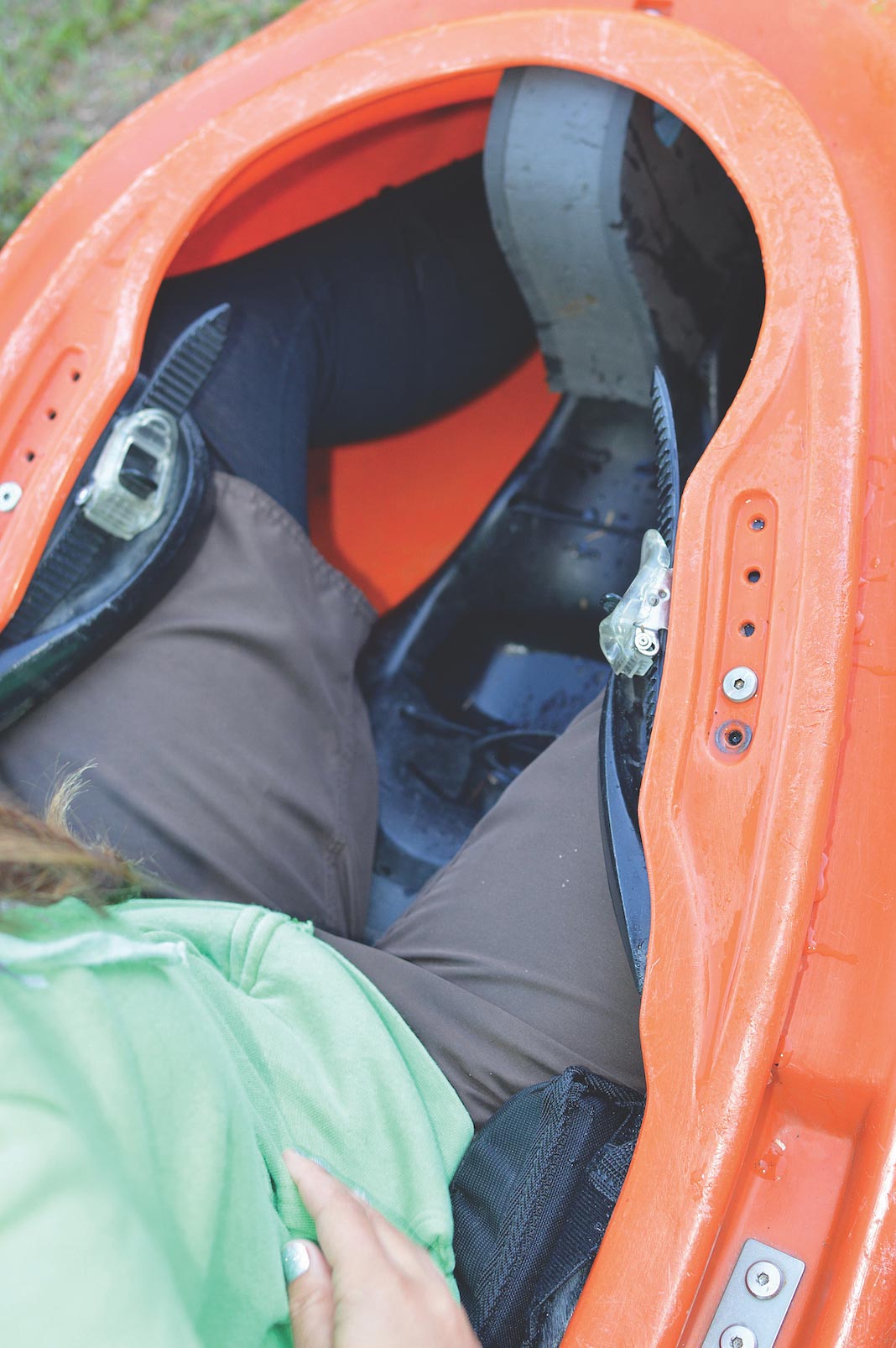
To build a foot block, use a large piece of mini-cell foam, which you can buy from your local paddling shop or in the Paddling Buyer’s Guide. You may have to cut it down or add foam shims. In the end you should be sitting frog-legged, with your legs slightly bent at the knee and feet resting on your foot block.

Person sitting in kayak
When your foot blocks are adjusted properly, your legs should be bent at the knee.

“Foot blocks are an integral feature of many playboats, providing a solid point of contact for your feet,” explains Mark “Snowy” Robertson, head designer at Dagger Kayaks. “Taking the time to correctly adjust, trim and configure your foot block can make a big difference.”

Adjust your thigh braces

Once your seat and foot block are locked in, adjust your thigh braces. There’s no right or wrong placement; some people like them high up on the leg towards the thighs, while others paddle with the braces cupping the knees.

Thigh braces pressed against someone's leg.
Adjust your thigh braces according to your own preference.

If you’re having a hard time keeping your legs flexed, Harris suggests placing a foam wedge under your knees. “It can be really helpful, especially if you’ve been finding that your feet are falling asleep,” he explains.

Tighten your backband

Tighten your backband when you think your thigh braces are in the right position. The band should sit on your lower back, just above your hipbones, and should be just tight enough to make you sit up straight.

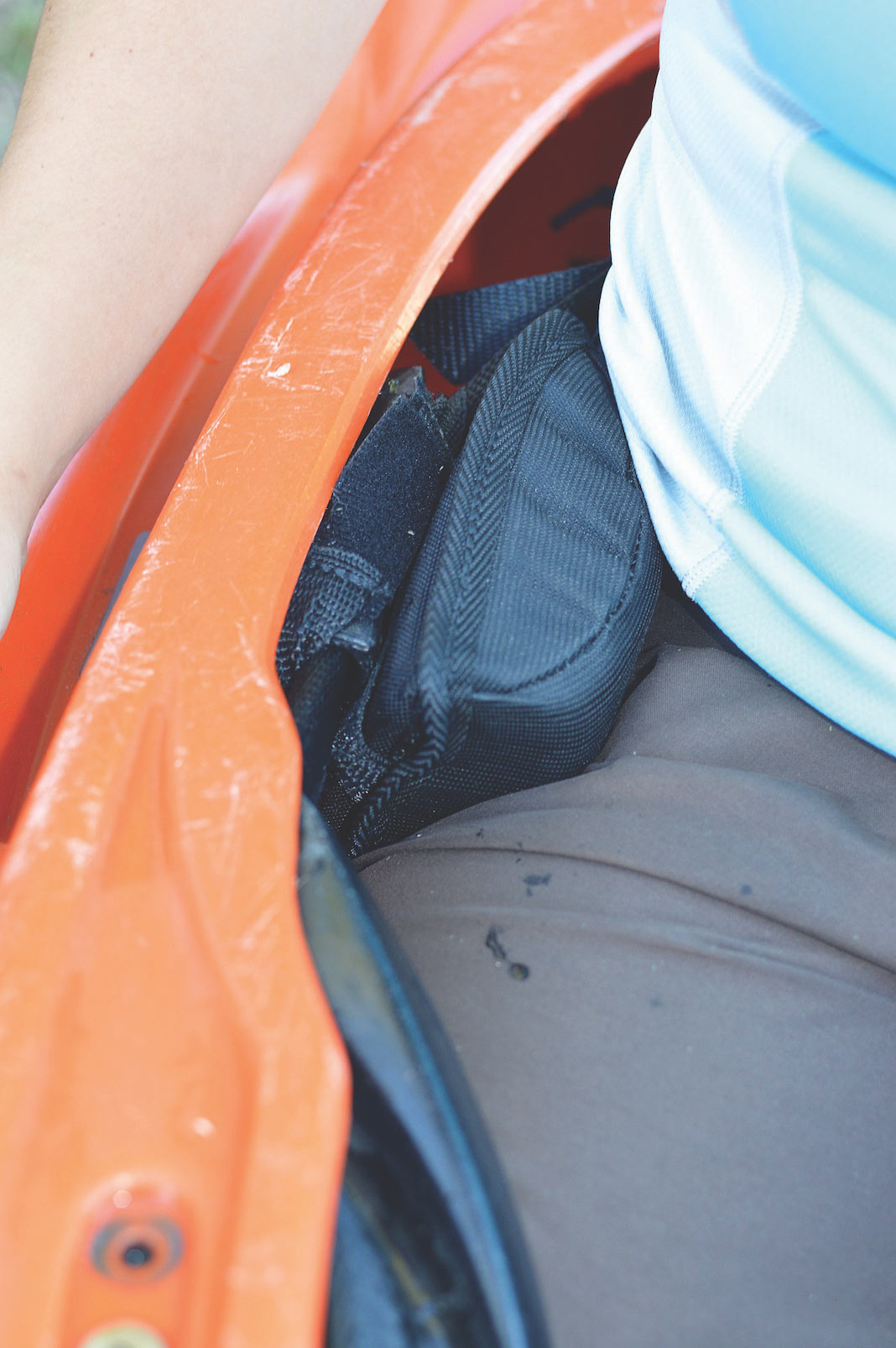
Add or remove foam from hip pads

One of the most important aspects of outfitting your whitewater kayak is the hip pads. “Sit in the boat without any hips pads, then determine how much room on either side of your hips you want to fill,” says Snowy.

[ Paddling Buyer’s Guide: View all rigging and outfitting options for your kayak ]

The pads should sit on and above your hip bones, follow­ing the natural curve of your hips. Most kayaks come with fabric pockets, which allows you to add or remove foam.

Add float bags

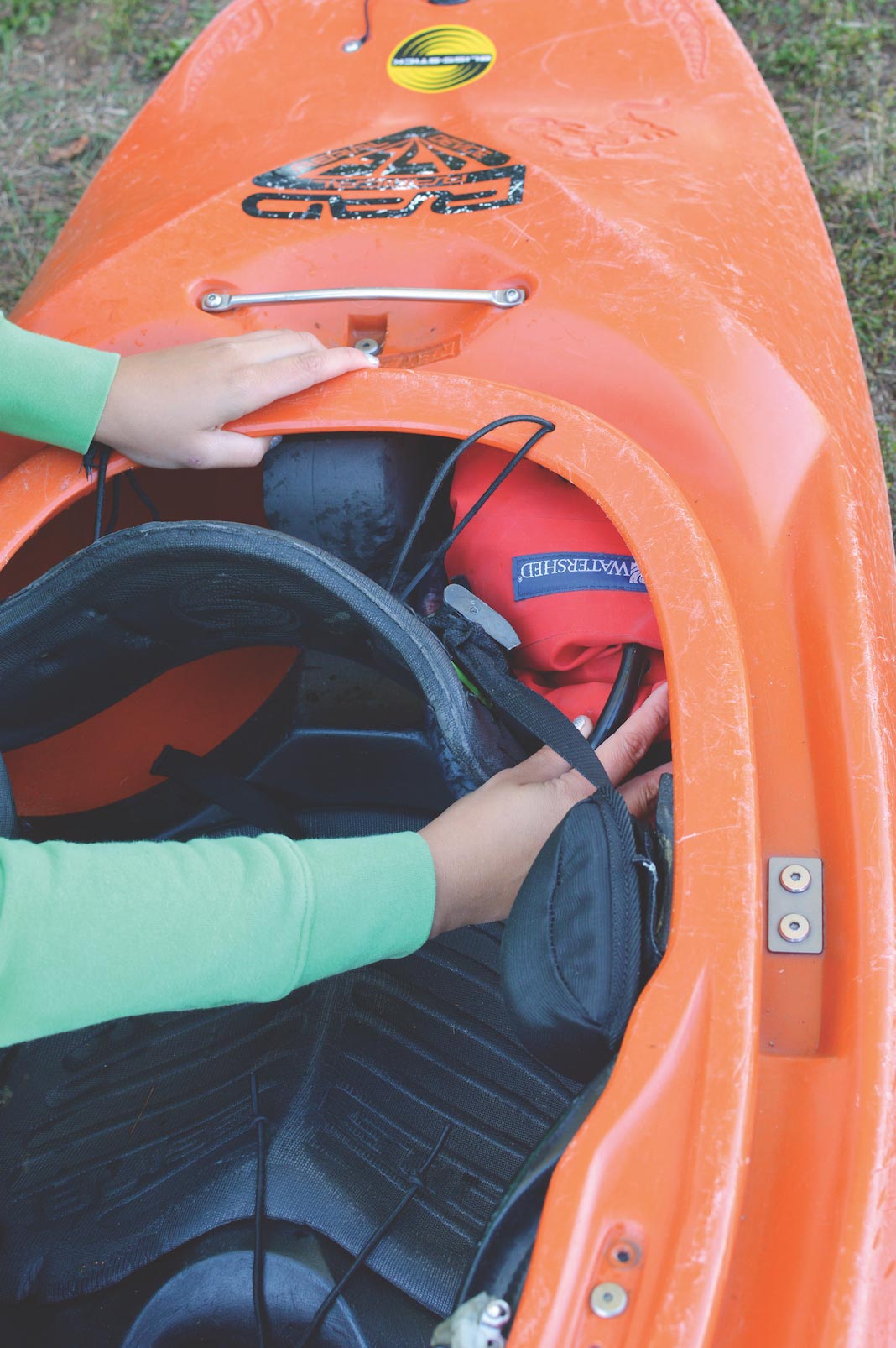
Last, but certainly not least, are floatation bags. While they don’t affect how you fit in your boat, they are an im­portant piece of outfitting—especially if you are a newbie.

Someone placing floatation bag behind seat of kayak
Be sure to outfit your kayak with at least one floatation bag.

“Float bags take up space in your kayak to displace water when your boat fills after swimming,” Vollmerhaus explains. “More than anything, they are there for the safety of the person rescuing your boat after a swim. At least one is necessary as a simple courtesy to the paddlers with you.”

Outfitting your kayak takes patience, time, and a bit of trial and error, but at the end of the day, you reap the rewards. Once you have it dialled in, spending all day in your boat will be a pleasure, not a pain.

Butt End: Cheaters Prosper

Photo: Kevin Callan
Kevin Callan on the Meanest Link in Algonquin Provincial Park

 It wasn’t for the faint of heart. I sent my paddling mate, Andy, details about the trip I had planned—a 350-kilometer loop around Algonquin Park labeled the Meanest Link.

My emails outlined the difficulty of paddling up three of the six rivers we would encounter and that we had to portage 93 times, adding up to 68 kilometers of drudging along bug-infested trails. The problem was, he didn’t read my emails. Four days into our journey, Andy told me I was never to organize another trip, not for at least 10 years.

We weren’t the typical candidates for the route. It’s usually type-A personalities, striving for perfection and personal challenge that take it on. Our reasons for adventure were solitude and relaxation. The record for completing the loop was seven and-a-half days; I allocated three weeks.

We were the turtles, not the hare. Anyone who paddles the route is celebrated for trying and, if necessary, having the sense to call it quits. Except, maybe, us.

Local paddlers developed the route in 2004 in honor of Bill Swift Sr., one of the founders of Algonquin Outfitters, a man with a tough exterior but a heart of gold. Aside from sticking to the route, there are rituals to follow—camping on a specific site, travelling only by canoe and visiting 100-year-old Camp Pathfinder. That’s where our trouble began.

Andy had a scant 16 days of holidays and I thought it would take 20 days for us to complete the trip. At first, Andy planned to leave the trip on day 16 and let me continue alone. By day 12, however, he changed his tune. He wanted to cross the finish line. Finishing together was a far better way to complete the Link, I thought. A change of plans was in order.

We had to make a few shortcuts. First, we hired a boat shuttle across Algonquin’s biggest lake, Opeongo, as it’s more than half a day’s paddle. Then we hitchhiked the three kilometers of Portage Road. Our biggest time-saver, however, was to skip paddling up the Madawaska River to visit Camp Pathfinder.

At the finish line, on the afternoon of the sixteenth day, we learned of the controversy. 

I had posted online throughout the trip, sending photos and text, but not receiving. After writing about our change in plans we received righteous online lashing. A few Meanest Link alumni disagreed with our shortcuts and labeled us cheaters. Some even wrote we didn’t deserve to travel the route and had disgraced the institution of Meanest Link paddlers. Ouch.

On one hand, all others who completed the route kept to the customary ways. But the cheater label is hard to stick when you’re honest about what’s going on. Should I have kept to the plan and left my canoemate behind only to follow the rules? Or were we right to alter our trip to cross the finish line together?

In typical 21st century fashion, I let the device that initiated the debate decide our fate. I posted the question to Facebook and Twitter. Five cursed us and over 11,000 agreed with our decision. Andy and I had completed the Meanest Link together—guilt free.

Kevin Callan lost 10 pounds on the Meanest Link. His favorite section involved dragging upstream along the Big East River for four days. He recommends you try it sometime.


This article first appeared in Rapid Media’s 2014 Paddling Buyer’s Guide. Download our free iPad/iPhone/iPod Touch App or Android App or read it on your desktop here.


Tips: Leech Removal

Photo: James Smedley


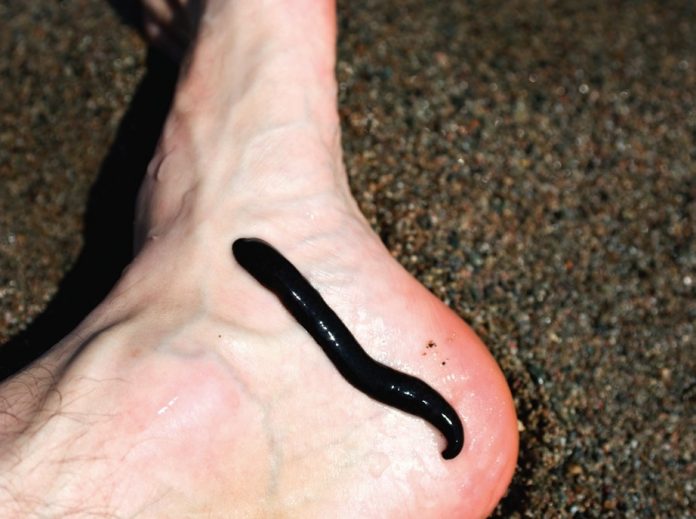
Do thoughts of the scene in the 1986 hit movie Stand By Me, where child actor Wil Wheaton pulls a fat, slimy leech out of his underpants, send chills up your spine?

If so, there’s little reason to worry—only a few species of leeches feed on humans. However, if one attaches to you, here’s what—and what not—to do.

Do

The best method is to wait 10 to 20 minutes until the leech detaches itself. But if that’s too gross, use a sharp fingernail to dislodge its sucker. Remember to always wash the wound with soap and water.

Don’t

As tempting as it might seem, don’t rip the leech off. This tears your skin and can cause infection. Another treatment commonly prescribed is the application of salt or heat from a flame. While these methods work, they cause the leech to regurgitate into the open wound, which can cause infection, or worse, disease.


Discover 21 more survival tips in Canoeroots and Family Camping’s Late Summer 2010 issue. To read it, download our free iPad/iPhone/iPod Touch App or Android App or read it here.


Keeping Polynesian Voyaging Culture Alive

Vaka Taumako Project

http://www.youtube.com/watch?v=70892066

Video Courtesy Vaka Taumako Project

The Vaka Taumako Project is trying to perserve a way of life. 

Located in Taumako, a village in the eastern Solomon Islands in the South Pacific Ocean, this community is arguably the last in the world to keep the traditional wayfinding and open ocean voyaging canoe tradition alive. They have launched an Indigogo with the help of an anthropologist to build another canoe and keep their knowledge alive.

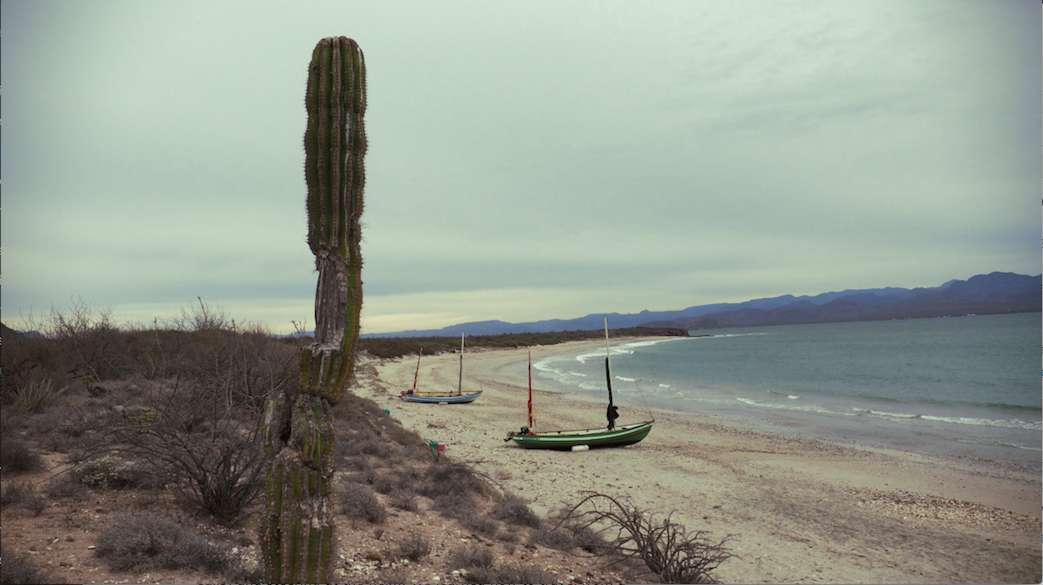
The vessel in the video is a traditional vaka, a voyaging canoe built by hand using only sustainable local natural materials. Using precise navigational skills based on a comprehensive system of wind, waves and stars, these vaka are sailed for great distances without the use of any modern technology. The maritime knowledge of Taumako Polynesians is quite possibly the only fully authentic Polynesian voyaging tradition still alive in the entire Pacific Island community, according to their Indigogo web page. 


Find out how you can help keep Polynesian voyaging culture alive and donate to the project here.