Home Blog Page 306

Base Camp: Algonquin’s Logging Museum

Courtesy of Scott MacGregor
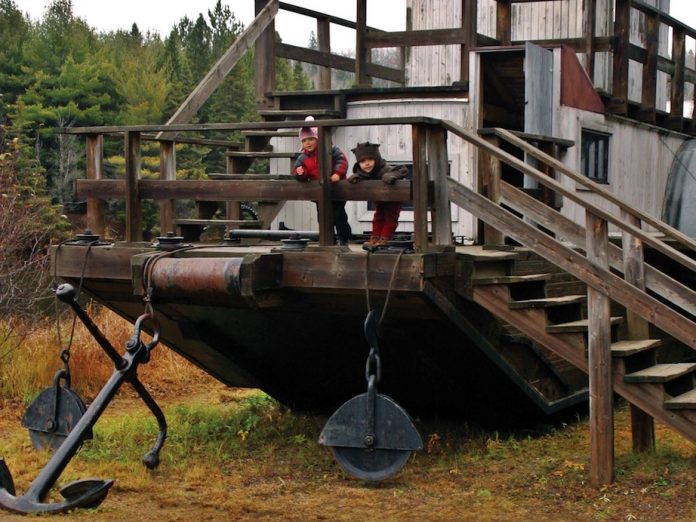
Algonquin alligator

The amphibious tugboat pictured here was invented in 1889. Called an “alligator,” it is a wood-fed paddlewheel steamer capable of warping 60,000 boom logs in a day, then winching itself on a temporary railway of logs overland to the next lake. Built in 1905 and taken out of service in 1946, the William M. is one of only three alligators remaining in existence. For the last 49 years, it has rested on the shore of a small creek 600 metres down a wheelchair accessible, stone dust path at the Algonquin Logging Museum.

Located on Highway 60 just inside Algonquin Park’s east gate, the Logging Museum has a bookstore, theatre and souvenir shop, but it’s outside—in the bush, above a log chute, behind the wheel of the William M. and aboard a locomotive—where Algonquin’s logging history really comes alive. The Logging Museum, like hundreds of others across the country, didn’t make this issue’s list of North America’s top six interpretive centres. Nevertheless, it is outdoors, interesting for kids and within an hour’s drive of my house, putting it at the top of my family’s favorites list.

By comparison, a 10-minute drive deeper into Algonquin Park is the Visitors Centre—a state-of-the-art interpretive facility opened in 1993 and heralded as a must-visit on any trip through the park. We do visit. However, all of the exhibits are indoors—like a museum, complete with a cafeteria. My four-year-old son refers to the Visitors Centre as, “you know Dad, that place where we eat pie.”

Stuffed wolves hide safely behind Plexiglas well protected from curious little fingers. The French lumberjack’s story of the log drive is interesting to small children for all of 10 seconds. After an hour inside the Visitors Centre, both kids and parents go crazy like moose with brainworm (see the exhibit if you have time). Quick kids, back outside to the wheelhouse of the William M.

In a hurried, blackberry-driven, concrete world so focused on higher marks and organized sports, it’s alluring to blow into these visitor centres for a canned, one-hour educational tour. However, study after study from education and health organizations like the American Academy of Pediatrics says free and unstructured child-centred play is healthy and even essential to the development of children. Free play is even more beneficial when it’s outdoors in nature. This means that if we want our children to learn more, be more active and be socially and emotionally well balanced, we need to turn off our ringers, get them outside and let their imaginations lead the way.

Dan Strickland, author of the Logging Museum’s interpretive guidebook, writes that the twice-rebuilt alligator will never again belch out smoke and sparks as it struggles across Algonquin’s lakes. Perhaps, but in the imaginations of my children, the log drive has just begun and there are plenty of trees to be floated downstream. “Stoke up that fire Katie, we need more steam.”

—Scott MacGregor

This article appeared in Canoeroots & Family Camping, Early Summer 2009. Download our free iPad/iPhone/iPod Touch App or Android App or read it here.

Flushed: Doin’ It Duckie Style

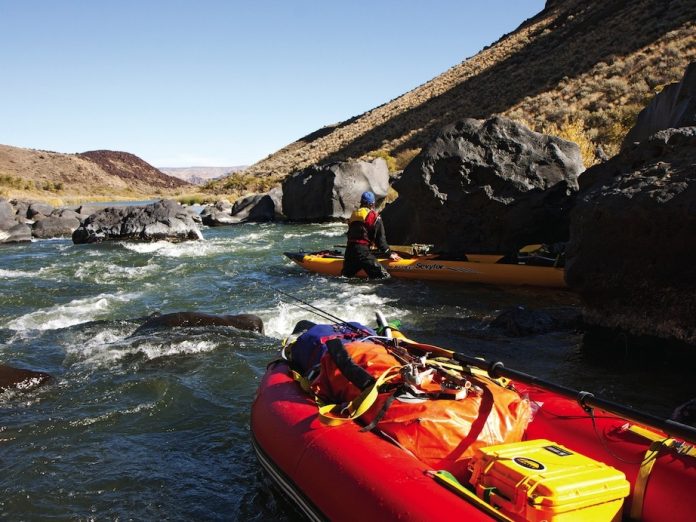
Photo: Steve Thomsen
Duckie style

My partner Steve Thomsen and I work together on field projects as a photojournalist team. Our gigs are often crossover affairs: mountain biking and fly-fishing on rafting trips, disc golf on a sea kayak expedition. Invariably, our diverse pursuits require a lot of gear.

For our latest trip—a scenic downriver journey with fly-fishing, fowl hunting and some canyoneering on the side—we pack all the typical necessities plus such eclectic luxuries as a Dutch oven, camp chairs, cooler, fly-fishing gear, SLR camera setup, espresso brewer, shotgun and shells, fresh veggies and down pillows. We are set up in the tradition of a classic safari and that’s how we like it.

Our cargo, stuffed into Rubbermaids stacked three deep, fills the bed of Steve’s Tundra truck as we roll past Boise toward the put-in for the Owyhee. Most groups run southeast Oregon’s mighty O during spring runoff, when 7,000–10,000 cfs create a three-day, class III run from Rome to Birch Creek and raft support, or a lean tripping style, is de rigueur.

We’ve chosen to run this 45-mile stretch of river in early October at a niggling 100 cfs, taking a leisurely week to do it. Because our payload is lean only in comparison to a fully loaded 18-foot Aire Cat, we’re paddling inflatable kayaks (IKs)—no raft support required, or possible given the extreme low water.

Canoes are out of the question. The first time we took open boats down the late season Owyhee, the canoes emerged so thrashed that the rental guy refused to take them back. We paid for that mistake in no small amount of change.

Without all our planned side ventures we’d probably be paddling the new crop of crossover kayaks: Liquidlogic XP10s or Pyranha Fusions, hard shell kayaks with hatches and space for a little extra—but just a little.

Steve and I know we’ll be leaving cool at the corner running the Owyhee in duckies, but so what? We’re the only ones on the river and we stopped worrying about cool a couple decades ago. Our goal is to get our butts and our swag through the canyon, and if IKs are the ticket, so be it.

Putting on the river in stellar weather, we bump inelegantly down the rapids dodging as many rocks as possible and bouncing off or sliding over the rest. Sometimes we get hung up—the beamy IK hulls refuse to go over—and have to wade out to haul the damned things free.

We drag ass in the riffles, line the boats down the messiest stuff and struggle over one truly miserable portage. We nail every lava nugget that more nimble river runners would easily slip past. More than a few times I think how fun it would be to slalom gracefully down a rapid that we’ve just pinballed through.

Still, we have no regrets. We are a different breed of boater.

We dig what meager performance we can squeeze from our rubber ducks, but our sights are set on the bigger picture: Eating Cajun-blackened quail from the Dutchie. Catching smallies on flies from stacked pools. Hiking up the canyon flanks to photograph the grandeur of the Little Grand. Exploring crumbling rock wall wind breaks built by Basque shepherds on the dry grass plateaus. Hunting for petroglyphs, partridge and bighorns. Playing a game of call-shot disc golf up the arroyo behind camp with a cold beer in hand.

When we roll up the IKs at week’s end, Steve and I agree we’ve found the perfect match to our tripping ethos. Next time we run the Owyhee, you can bet it will be duckie-style. Sure, the cool crowd would probably heckle us, but they won’t be there.

50 Of The Best Whitewater Towns To Visit Before You Die

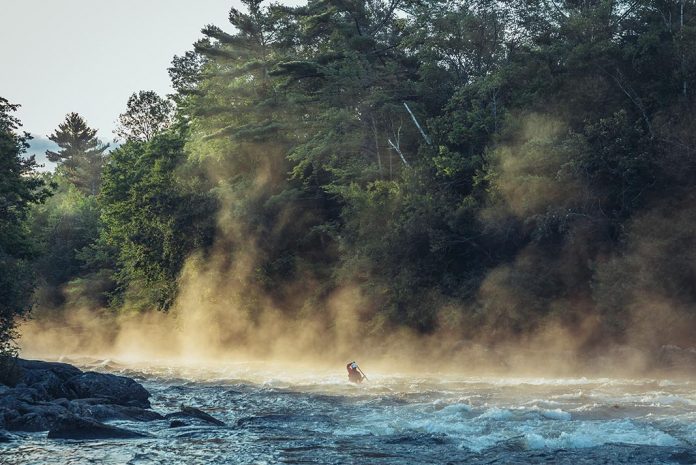
Person paddling on river with mist rising up
Madawaska River runs through Palmer Rapids and is only a two-hour drive from Ottawa. | Photo by: Image Ontario

Between all our editorial, design and sales staff, we have a combined total of 103 years of whitewater experience. That’s a lot of cycles on the calendar spent traveling bumpy put-in roads, tracing sinuous blue lines on topo maps, sharing accommodations with wintering rodent populations and generally chasing the whitewater dream.

We’re also based in the blink-and-you-miss-it timber town of Palmer Rapids. Sure there’s no nightlife (aside from community center bingo), a box of Corn Flakes costs six bucks, the general store rents only VHS and fine dining is a seasonal chip stand. But if you triangulate between the Ottawa Valley’s world-class whitewater, Algonquin Park’s thousands of wilderness lakes, and the spring creeks that tumble off the southerly edge of the Canadian Shield, you’ll find Palmer Rapids at the center.

Hopefully that provides you with some confidence that we when it comes to river towns, we know what we’re talking about. Here—in no particular order—are Paddling Magazine‘s picks for the best whitewater towns.

Best creeking towns

1. Terrace, British Columbia

2. Hood River, Oregon

3. Thunder Bay, Ontario

4. Asheville, North Carolina

5. Jasper, Alberta

6. Lake Placid, New York

7. Revelstoke, British Columbia

8. Nevada City, California

Best all-river towns

1. Fayetteville, West Virginia

2. Copperhill, Tennessee

3. Clearwater, British Columbia

4. Confluence, Pennsylvania

5. Petawawa, Ontario

6. Crested Butte, Colorado

7. Kernville, California

8. Maniwaki, Quebec

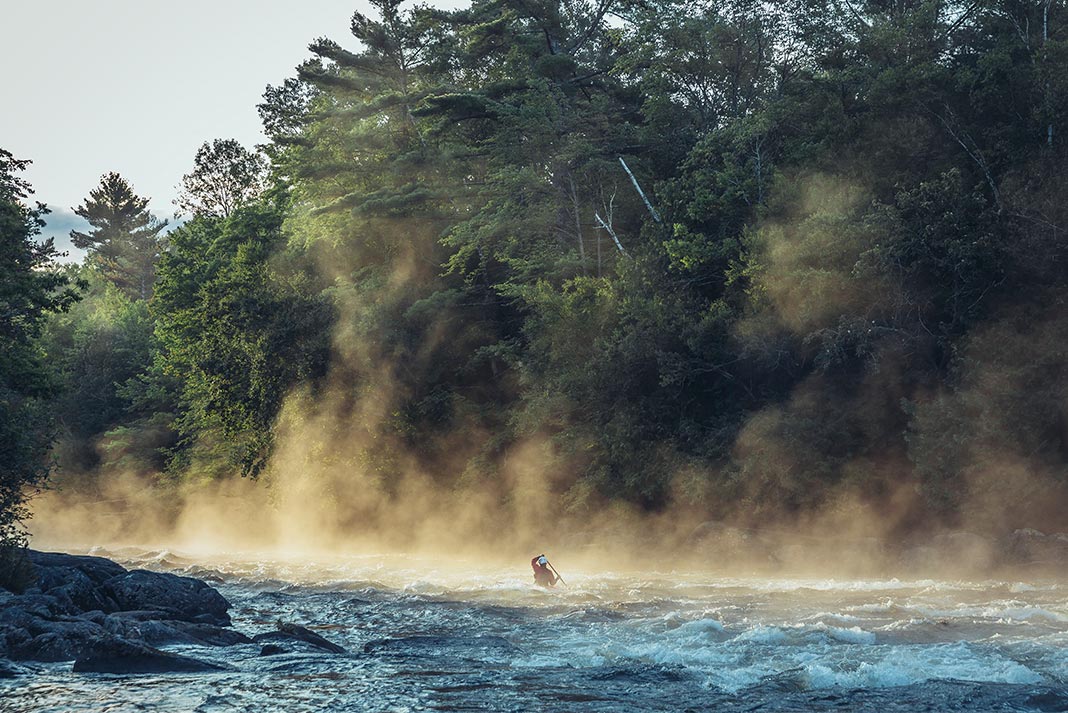
Person paddling on river with mist rising up
Madawaska River runs through Palmer Rapids and is only a two-hour drive from Ottawa. | Photo by: Image Ontario

Best newbie-friendly towns

1. Beachburg, Ontario

2. Franklin, North Carolina

3. Charlemont, Massachusetts

4. Palmer Rapids, Ontario

5. Forks of Salmon, California

6. Bingham, Maine

7. Canmore, Alberta

8. White Lake, Wisconsin

Best urban whitewater

1. Saint John, New Brunswick

2. Montreal, Quebec

3. Pueblo, Colorado

4. Ottawa, Ontario

5. Watertown, New York

6. Reno, Nevada

7. Cambridge, Ontario

8. Missoula, Montana

Best international towns

1. Sjoa, Norway

2. Pucón, Chile

3. Turrialba, Costa Rica

4. Hokitika, New Zealand

5. Thun, Switzerland

6. Jalcomulco, Mexico

7. Briançon, France

8. Oetz, Austria

9. Rotorua, New Zealand

10. Pokhara, Nepal

11. Tolmin, Soča, Slovenia

Best park ‘n’ play towns

1. Salida, Colorado

2. Trail, British Columbia

3. Fort Smith, Northwest Territories

4. San Marcos, Texas

5. Jackson, Wyoming

6. Enderby, British Columbia

7. Glenwood Springs, Colorado

Is It Better To Sit Or Kneel In A Canoe?

Photo of woman in bow of a canoe paddling
Kneeling is no longer the superior way to enjoy maximum power and stability. | Photo by: Image Ontario

When it comes to the question of whether to sit or kneel in a canoe, times are changing. Tradition always dictated that kneeling demonstrated proper technique—sitting was sloppy.

Innovation, on the other hand, has resulted in technique that has canoeists actually paddling stronger while seated. It’s not quite as easy as just changing positions, though. You’ll need to modify your paddling style to match your seated stance for added power, efficiency and comfort.

Which is more stable?

Proponents of kneeling usually argue that it’s more stable than sitting. This isn’t always true. Lower the seat and there’s no need to kneel. Properly mounted tractor seats are installed with this in mind. Tractor seats also force paddlers to keep their center of gravity over the center of buoyancy of the boat, eliminating balance issues related to sliding to one side on a bench seat.

Which provides more power?

Kneelers who claim they get more power likely do so by leaning forward and planting their paddles further ahead—reach afforded by their kneeling position. However, when paddling most canoes, this is less efficient since it causes the bow of the canoe to porpoise in the water.

[ Paddling Buyer’s Guide: View all canoes ]

Using the right paddle

The shorter, faster stroke cadence of the seated paddler lends itself to bent shaft paddles. Because tractor seats are lower than bench seats, a shorter paddle is required. Bent shaft paddles also demand less reach because of the angle the blade enters the water.

Those quick to criticize bent shaft paddles for their clumsiness when it comes to steering strokes will find that switching sides is actually easier seated than while kneeling because of the stability factors mentioned above. Replace a pry, which is ineffective with bent shaft paddles, by changing sides (hut!) and doing a draw—generally more ideal than a pry anyways because it’s more powerful. Pries can also destabilize the canoe, which can be an issue with the lower freeboard boats commonly designed for this style of paddling.

Engaging your lower body

The shortened overall height of this more modern style of boat not only reduces wind sheer, it also allows seated paddlers to comfortably reach over the sides as well as brace thighs and knees beneath the gunwales.

Bow paddlers should rest their thighs against the sides of the canoe and feet against the air chamber in front of them. Boats with tractor seats often have an optional foot brace for stern paddlers. Engaging your lower body creates the feeling of pulling the boat forward across the water rather than pushing the water backwards, behind the canoe, as is the case with straight shaft paddling common to the traditional kneeling style.

Greater comfort

Perhaps one of the greatest benefits to paddling from a seated position is the added comfort. No more sore knees, no more pins and needles. Marathon canoeists paddle almost exclusively seated with their lower bodies braced to maintain comfort over long distances while still generating maximum power.

Kneeling remains the best choice for classic soloists and paddling most technical whitewater, but if you don’t want to kneel, learn to paddle properly when seated. Just like kneeling paddlers, in order to maintain an efficient stroke, seated paddlers must sit up straight and generate power by rotating the torso rather than relying entirely on arms. They key here is not to slouch in your seat.

Zegul 520 Kayak Review

Photo: Vince Paquot
Zegul 520 Kayak Review

A review of the Zegul 520 sea kayak by Adventure Kayak magazine.

Designed in Scandinavia, built in Northern Europe and shipped to U.S. and Canadian retailers from warehouses in California, Vancouver and Montreal, Zegul Marine continues sea kayaking’s long tradition of international cross-pollination.

Founded in Sweden in 2004 by designer Johan Wirsén, Zegul kayaks are now manufactured by Tahe Marine—one of Europe’s largest and longest established composite kayak builders—on the north coast of Estonia. In 2012, a merger with new, Quebec-based paddlesport powerhouse, Kayak Distribution, brought Zegul boats to North American shores for the first time.

Zegul lists the 520 in their play boating line, but as Kayak Distribution sales and marketing director Mark Hall notes, it’s really an all-purpose kayak for touring and play.

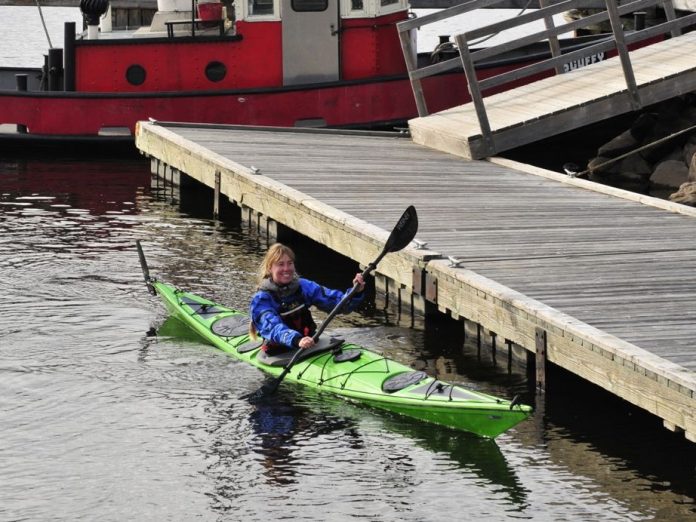
The 520 is available in two lay-ups: a glass/carbon/aramid “A-core” infusion weighing around 50 pounds, and an even stiffer, lighter vacuum-infused carbon “C-core” construction. Our lime green A-core test boat has the flawless finish of an exotic sports car, and features stylish black accents that also provide protection in high wear areas.

Zegul 520 Specs

Length: 17 ft
Width: 21 in
Weight: 42–53 lbs
Price: $3,500–$4,200

This article originally appeared in Adventure Kayak, Early Summer 2013. To continue reading the full review and watch an exclusive video review, download our free iPad/iPhone/iPod Touch App or Android App or read it here.


Why Your Canoe is 16-feet, 6-inches

Photo: James Smedley
Canoes

This article originally appeared in Canoeroots and Family Camping magazine.

If there’s one thing that most people think they know about canoe design, it’s this: A longer canoe is always faster than a shorter one.

Well over a century ago, British engineer and hydrodynamicist William Froude came up with a simple formula that, to a certain extent, proves this theory. Froude determined that the top sustain- able speed in knots of a watercraft is equal to the square root of its waterline length multiplied by a constant value of 1.34.

This means that a 16-foot canoe would have a hull speed of 5.36 knots, or roughly 10 kilometers per hour. Of course, it’s possible to propel a 16-foot canoe faster than 10 kilometers per hour, but according to Froude, beyond this speed frictional resistance increases rapidly.

However, it’s clear that Froude wasn’t thinking about paddlers. There is a threshold where a canoe becomes excessively long and in- efficient. Naval architect John Winters, whose designs are built by Swift and Hand Crafted Canoes, recalls a man who entered a “very long canoe” in a marathon race. “Despite a superhuman effort, he lost,” writes Winters in The Shape of the Canoe, a comprehensive book on canoe design. “Excessive wetted surface…did him in.”

A pair of paddlers can move a 16-foot prospector faster than two paddlers in a 26-foot voyageur canoe because of the greater surface area (and corresponding resistance) of the larger hull.

So where does this fit into canoe design? According to Winters, length is only one element juggled in the conception of a canoe.

First off, Winters outlines the canoe’s desired usage—flatwater, whitewater, sporting or tripping, solo or tandem. Then he sets an ideal cruising speed for the hull and works backwards to determine a possible length range.

Beam, draft, displacement and dozens of other measurements are compared as a ratio to length to yield values to estimate how easily the canoe will move through the water and how well it will suit a given application. This is why “boats of widely different lengths can have similar performance characteristics,” says Winters.

The reason tandem recreational canoes typically measure 15–17 feet while solos are traditionally a foot or so shorter is simply a matter of stability and space. These lengths essentially yield the most user-friendly ratios when compared to the appropriate widths to make a canoe sufficiently comfortable and voluminous.

Did the generations of Aboriginal builders who designed canoes have their own mathematical formulas? Not very likely, says Winters. “Thousands of years of trial and error are bound to get close, even if it doesn’t explain why it works.” —Conor Mihell

This article appeared in Canoeroots & Family Camping, Spring 2012. Download our free iPad/iPhone/iPod Touch App or Android App or read it here.

Editorial: A Paddler Looks At 40

Photo: Tanya MacGregor
A paddler looks at 40

I have a lot of Jimmy Buffet on my iPod. I can sing along to more than Margaritaville and I’ve read all his books. In 1998, when Jimmy turned 50 and I was toying with the idea of starting a whitewater magazine, he wrote his autobiography, A Pirate Looks at Fifty.

On the jacket of my hardcover copy Buffet summed up his life in 400 words and I thought I’d try to do the same someday. Looking down the losing end of 39, here are my 400 words, in case I don’t make it to 50.

I survived my small-town youth of motocross, snowmobiles and four wheelers. I drove an 18-wheeler hauling gasoline for awhile, graduated high school not being able to spell, and went off to university to become an engineer.

I did my first canoe trip, wrecked my grandfather’s cedarstrip, sold all my things with motors, dropped out of school and protested the first Gulf War. I got a job at an outdoor center, learned to paddle whitewater, grew my hair and got back into school in an outdoor program. I became an open boat instructor, got a job as a raft guide, swam a lot and drank too much warm beer.

I re-met the right girl (she was in my kindergarten class and I kissed her in grade two), went on to teachers’ college, graduated and sea kayaked 1,600 miles through the Great Lakes. We learned to snowboard, blew off to the mountains, slept in my truck, ran out of money, missed warm rivers and drove home.

I helped start the Paddler Co-op, a non-profit paddling school, and got the idea to start a magazine. I left the paddling school, broke up with the right girl and moved to a rented shack by the river in Palmer Rapids.

I got lonely, proposed to the right girl, bought my first computer, racked up every credit card that arrived in the mail, and launched a 16-page trial issue of Rapid. I paddled every day, learned to use spell check, ate too many frozen pizzas, married the right girl and started a sea kayak magazine and, a year later, Canoeroots.

I hired an editor, started a paddling film festival, built a house in the Valley, moved out of the shack, drove a Corvette, had a little boy, cut my hair, took over a paddling festival and bought another magazine, for a dollar—Family Camping.

I bought a good camera, took a photo of a friend running a dam, ran the photo in Rapid, almost got arrested and nearly lost my business to the hydro power company—the owner of the dam.

I launched a kayak fishing magazine, had a baby girl, lost the fight to save national river navigation rights, bought property on the river and started a web-based paddling television show. We became the magazines of the American Canoe Association, I cancelled a family paddling trip, realized it was time to slow down a little and gave up the paddling festival. I took my kids paddling.

When I realized I’d be 40 this year, I stopped drinking coffee, found my running shoes, ordered another boat and booked my first northern river trip.

Now I’m trying to figure out what comes next. 


This article originally appeared in Rapid, Early Summer 2011. Download our free iPad/iPhone/iPod Touch App or Android App or read it here.

Right to Roam

Photo: Tim and Susannah Gent
Right to Roam

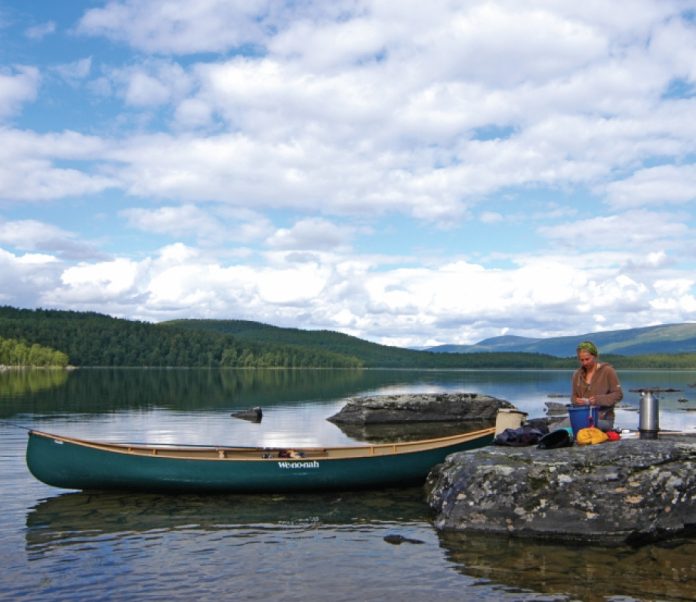
Surrounded by small wooded islands, we worked our way over deep clear water, swallows swooping low and hungry over our laden canoe. We considered two tree-covered gems before settling on our temporary home. An hour later, tent up and dinner bubbling gently over a healthy fire, an ambition had been fulfilled—canoe camping in one of the last great wildernesses in Europe. 

For British canoe campers, like my wife and myself, there are two problems: access and wilderness. Specifically, the lack of either. Though beautiful, our ever-manipulated countryside is busy making a living for someone and guarded jealously. Just to step off the roadside risks confrontation. Fields and woods are tough enough to enjoy, while our rivers and lakes are often all but unapproachable. Canoeists in overcrowded England and Wales can paddle on only three river miles in a hundred. It’s enough to make a paddler cry.

Camping is no easier. While limited opportunities do exist on crowded formal sites, to pop a tent up elsewhere, and close to water, is next to impossible. It’s the same story across much of Europe. The farther east or north you travel the better the wilderness opportunities, but one area stands out, combining beauty, space and unique access arrangements—Scandinavia. Mind you, if you want to use your own canoe, it’ll take some getting to. 

To reach our island escape, we’d driven across southern England, caught the Dover ferry to Dunkerque, and glimpsed France, Belgium, Holland, Germany and Denmark before finally crossing Öresund Bridge to Sweden. After pushing our canoe-crested, red van hard through a European tour, we were tired, but nothing could remove the grins from our faces. 

Our cheery anticipation was well founded. With a gorgeous coastline, 100,000 lakes and scores of beautiful rivers set within that vast amount of wilderness, we were in paddlers’ paradise. Adding to the glory is Sweden’s allemansrätten, literally translated to mean, “all man’s right.” 

This glorious institution, effectively a constitutionally protected right to roam, is enshrined within the very identity of Scandinavian countries, and offers some of the most mature attitudes to access found anywhere in the world. As long as you’re not causing damage, you’re free to walk, bike, ski or camp almost anywhere. 

The aim of the trip was simple. To head north along the central E45 that cuts through the heart of Sweden and experience far-flung Scandinavia for ourselves, paddling and camping as we went. The unaccustomed freedom felt good. With no need to worry about reservation schedules or plan routes in advance, we could paddle and pitch a tent wherever we liked. Few places in the developed world offer such a positive and invigorating outdoor experience.

Where do you paddle when you can go anywhere? Only to the most stunning landscapes, of course. Dropping from the jagged mountains that form an impressive natural border, we left Sweden to meet our first Norwegian fiord. Outside of Canada’s Newfoundland province, North America doesn’t offer paddling like this.

With vast towering cliffs diving deep into the ocean, these fiords also offer protection from bad weather, meaning an expedition beneath their craggy precipices is far too good to miss. We set about touching our canoe on as many fiords as we could, covering miles of spectacularly twisty Norwegian coastal roads in the process.

When we’d had enough of the coast (I suppose that’s possible), we turned back to Sweden, a landscape rich in heritage, where much of the roadway is accompanied by the flash of water between birch. 

Laisälven River soon caught our eye, at times narrow and swift, more often broad and serene. Struggling upstream one evening at the edge of a lively flow, we called it quits as our bow approached a low, bank-wide waterfall. Tired, we found the only flat land available for our tent, at the corner of a plot near a rare house. Days later, and still feeling guilty, I mentioned this suspected trespass to a fishing shop owner. He seemed surprised by my concern. 

“Allemansrätten,” he reminded me. I asked if we could really camp so close, mentioning that we must have been no more than 200 meters from the empty-looking house, technically in their garden. 

“No problem,” he replied, “even if lived in.” Pondering for a moment, he added that if the house was inhabited, perhaps anything less than 20 meters might be too close.

A long paddle upstream the next evening found us searching again. Flanking a gentle flow, the forest cover was so dense, the bank so boggy, we could find nowhere to place a tent for miles. Shoulders aching, we eventually came across a tiny space on firmer ground. Pulling ashore amidst a large shoal of hungry trout we pitched our tent, overlooked by towering conifers. 

It was only after striking camp next morning, rolling our tent away, that we found ourselves in a ring of stones. These marked a space cleared for a small Sami katta, a traditional tipi-like tent, and had just room enough for our own more modern version. It was hard to tell when the tiny clearing might last have been used, maybe not for decades. It left us with a sense of connection with the original Scandinavian inhabitants. 

Lake Sädvajaure, just short of the Arctic Circle in Sweden, offered an encounter with a more recent Sami home. We’d camped on a small island, our tent pitched on a narrow gravel beach amidst swathes of bleached dry firewood. The hours around midnight brought a stunning sunset, followed almost immediately by a clean, bright dawn. Not wishing to miss anything, we’d left the tent flap open, and as sunlight nudged another beautiful summer day across the groundsheet towards us, we set out across the lake to explore a waterfall that had roared like a distant jet engine through the brief night. Alongside the cascade, the bare poles of a modern katta sat hidden amongst the silver birch, awaiting the return of its owners with their easily transportable canvas or hide cover.

With the day already advancing fast, our eyes were now fixed on the horizon. Easing our canoe away from the shore, we left this simple home to its peaceful solitude, thoughts turned to the next lakeside camp of our own.

Freelance writer and photographer Tim Gent is a wilderness enthusiast. Living close to the sea, much of his canoeing takes place along protected sections of the English, Welsh and Scottish coast. facebook.com/t.h.gent. 
This article was originally published in the Summer 2013 issue of CanoerootsThis article first appeared in the Summer 2013 issue of Canoeroots Magazine.

 

Betcha Didn’t Know About…Silence

Photo:iStockphoto.com/NoDerog
Betcha Didn't Know About...Silence
  • You might crave it, but can you handle it? The longest anyone can bear Earth’s quietest place, an anechoic chamber at Orfield Laboratories in Minneapolis, is just 45 minutes. The chamber holds the Guinness World Record for world’s quietest place. 
  • In social animals, silence can be a sign of danger. Some scientists suggest this is why people feel comforted by humming, talking to themselves or having the radio on when alone. 
  • A silent note in a song is called a rest. Ironically, Simon and Garfunkel’s 1966 hit, The Sound of Silence, features none. 
  • After viewing the The Silence of the Lambs thriller, Martha Stewart broke up with actor Sir Anthony Hopkins, who played Hannibal “the Cannibal” Lecter. 
  • Monks in some Buddhist traditions may opt to take vows of silence. Talking during sleep isn’t ground for dismissal. 
  • Acoustic ecologists estimate that there are fewer than a dozen outdoor spaces in the United States where you can spend 20 minutes during the day without hearing noise from human activity. 
  • Natural silence is hard to find. Breath is barely audible to the human ear at 10 decibels, rustling leaves are 20 decibels and birds chirp at about 45 decibels. The loudest thunderclaps can reach up to 120 decibels. 

This article was originally published in the Summer 2013 issue of CanoerootsThis article first appeared in the Summer 2013 issue of Canoeroots Magazine.

 

Tumblehome: Origin Unknown

Photo: Graham Mackereth
Tumblehome: Origin Unknown

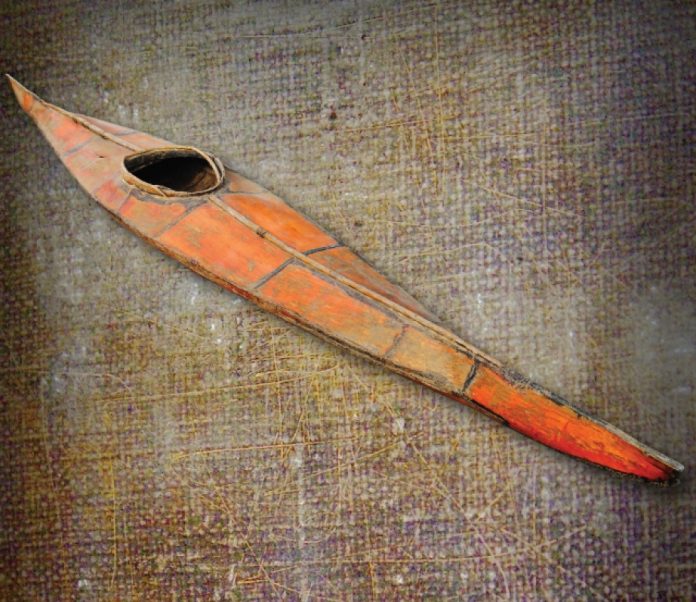
It’s always fun when something old and floaty turns up in someone’s barn or boathouse. It’s so much better when it looks like it might be the missing link—a fabled canoe that will connect the heritage of canoes and kayaks perfectly. Just like evolutionists, any good canoe museum curator is always curious about a possible missing link. And a few months ago, I thought we had it.

When Graham Mackereth from Pyranha Mouldings in the U.K. wrote me with news of what he thought might be an Inuit-style kayak made out of birch bark, I was intrigued. The only boats related to what he described are Gwichin-style canoes from the Mackenzie River Delta, more kayak than canoe, with long bark decks at one or both ends.

From his little museum in England, Mackereth took photos of his curious craft and sent them along as proof of what he had. It was nothing like the canoes from the Mackenzie Delta, or anywhere else I knew for that matter. I wrote back suggesting that this could be the missing link we’ve been searching for.

Upon examining the photos, it was clear that this was not the bark of the paper birch, if it was bark at all. After years in the boating world, the heritage of most canoes that I come across is easy to recognize. This one had me stumped. On the strength of questions raised about its history, I decided to involve a few others in the quest.

Ken Lister, of the world-famous Royal Ontario Museum, was first to chime in. He observed that the rib ends of this hybrid craft are sandwiched between the inner and outer gunwales, which made him conclude that the boat was not Native-made. 

“This is a craft that celebrates the creative mind and proves migration theories,” Lister said. “It reminds me a little bit of the Piltdown Man, with the exception that this one is actually real and quite serviceable,” he added, referring to the early-twentieth century hoax in which bone fragments were presented as the fossilized remains of a previously unknown early human.

Kayak aficionado, Vernon Doucett, joined the conversation next to say that, in his estimation, the boat was not made of bark, but maybe birch plywood. He suggested it might be built on a Ken Littledyke design, a British shop teacher who produced designs in the ‘60s and ‘70s.

Ex-pat British canoe and kayak guru, Alan Byde, added his voice, arguing that the mystery vessel reminded him of a chap in the U.K. who used two thick sheets of marine plywood to make a kayak a bit like this. “My guess is the mystery craft was built by someone who knew the Bob Vardy method. Definitely not a Ken Littledyke,” he asserted.

Which brought Mackereth back into the conversation—he’d discovered that the boat is made of a veneer made to look like bark. Based on comments from the curators and on closer examination, he’d found screws and other decidedly non-Inuit features. “Now that I know for certain that it’s from my side of the pond, I’m left with the significant question of why,” he wrote.

One mystery solved and another created. The search continues.

James Raffan is the director of the Canadian Canoe Museum. For a full version of the comments from the international curators, and for more on the hunt for the missing link, see his blog at www.jamesraffan.ca.

This article was originally published in the Summer 2013 issue of CanoerootsThis article first appeared in the Summer 2013 issue of Canoeroots Magazine.