Home Blog Page 314

River Alchemy: The Culture of Whitewater

Photo: Ben Marr

River Alchemy by Jeff Jackson is a column that appears reguarily in Rapid magazine.

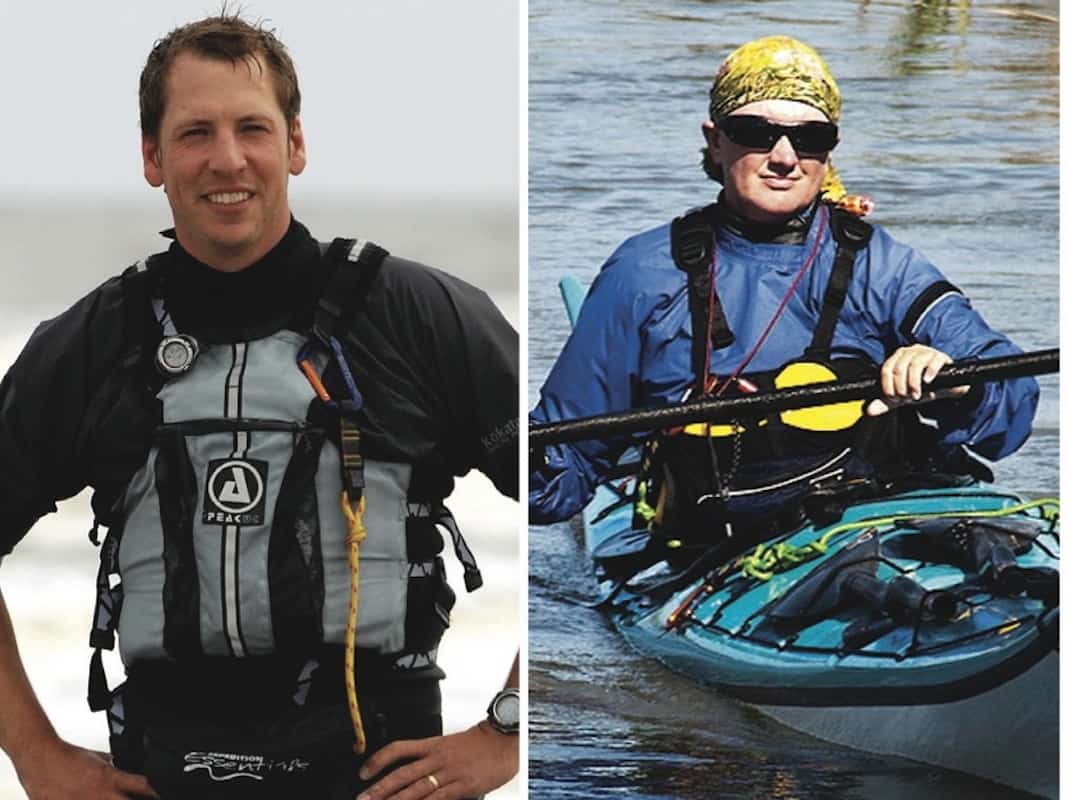
When I first noticed paddlers on my home river wearing basketball jerseys under their PFDs, I didn’t put much thought into it. After all, old jerseys sell at Value Village for $3, dry quickly and, being sleeveless, let you show off your guns. When this spring I saw paddlers wearing basketball jerseys under their PFDs but overtop of their dry tops, it occurred to me something else was at play.

We are a peculiar bunch, whitewater paddlers. All paddlers, really. Recently, I was invited to an instructor training day preceding the impressively huge MEC Paddlefest; present were sea kayak, canoe, SUP and whitewater instructors. The sea kayakers wore dry suits and were slathered in sunscreen, the canoeists wore Tilley hats and quick-dry long pants, the SUP instructors reluctantly wore PFDs as they would rather go without, and the whitewater representatives wore helmets—all this despite spending the day sheltered in the Toronto Harbourfront. While as a group we all had much in common (which was the point of the day), what separated us was culture.

Culture is the shared assumptions and values of a group, which get reflected in consistent behaviors. There is something called social identification theory, which proposes that when people choose to join a group, they also take on that culture. What’s more, when individuals really buy in, they take on that culture as part of their identity, and use it to define who they are. This explains why cowboys or biker gangs walk, talk and dress as they do, why triathletes shave their legs, and why someone may be compelled to wear a basketball jersey over his dry top.

There was a time in our short whitewater history when we spoke of New School and Old School, but we don’t anymore. The term was attached to the explosion in freestyle boat designs in the late ‘90s and a new way of paddling that was emerging. The last part of that sentence may irk some: a new way of paddling. While putting the paddle in at the toes and pulling it out at the hips has always moved the boat forward, what did change through that time were the assumptions and values surrounding paddling—a new culture was emerging. For lack of a better term, people called it new or New School, as in not what you old longboat farts are doing.

Social identification theory predicts this, as groups and individuals define themselves primarily by what they are not, especially in the early days of a culture when it is not necessarily clear exactly what they are. But we don’t talk about New and Old School anymore because the new culture became the primary culture of kayaking. It is not new anymore, it just is. It carried forward the original cultural traits from the earlier generation of paddling and added the new elements evolved from playboating.

Culture emerges from shared experience, and over the last decade and a half (up until the last three years, I would argue) we all more or less shared the same paddling experience: evolving boat designs focused on playboating, park and play became river play. But over the last handful of years that shared experience has started to splinter. As the top of the sport has pushed be- yond what the average recreational paddler can do (or even relate to), theirs becomes a different experience than the big wave/waterfall group. Recreational river play is based around different assumptions and values than those being adopted by this elite, and so a separate culture emerges once again.

Back to the basketball jersey: except to a select few, it seems ridiculous. What it does do is declare identification with a group—in this case the basketball jersey happens to represent the big wave gang. Fair enough. Like cowboy boots, a leather biker vest, shaved legs or a Teva tan, this is just the symbol of a culture. These symbols represent our identities, and while it is merely a basketball jersey, I’m not going to criticize someone for defining himor herself as a paddler.

– Jeff Jackson is a professor of Outdoor Adventure at Algonquin College in the Ottawa Valley, and is the co-author of Managing Risk: Systems Planning for Outdoor Adventure Programs, published by Direct Bearing Inc.

This article originally appeared in Rapid, Fall 2012. Download our free iPad/iPhone/iPod Touch App or Android App or read it here.

Solo Reflections

Canoeist Becky Mason and musician Ian Tamblyn unite to combine their artistic talents in this remarkable convergence of video, audio and paddling talents. Alone in her red cedar-canvas canoe Becky takes you for a wild ride above and below the crystal clear water of Lac Vert, Quebec. With Tamblyn’s original score as the backdrop and using some astonishing underwater camera angles Mason gracefully links a myriad of strokes and manoevres together into what can only be described as a canoeist’s visual and musical feast.

Director and Producer: Becky Mason and Reid McLachlan
Website: www.redcanoes.ca

The film has been featured as part of the 2012 Reel Paddling Film Fest. For details on the 2013 season, visit http://www.reelpaddlingfilmfestival.com/


Conservation Heroes

Photo: Gary and Joanie McGuffin

They’re not scientists, lawyers or full-time conservationists, yet these three paddlers have charted courses through wilderness protection, tumped long portages through dam relicensing, and urged the public to dip their paddles in the turbulent, challenging waters of environmental protection.


Kate Ross

PORTLAND, OREGON

After working as a kayak guide and instructor, Ross volunteered to help organize the Clackamas River Cleanup. The cleanup grew and she became a founding board member of We Love Clean Rivers, which helps others orchestrate river health events. She eventually parlayed this experience into a job, going from paddling instructor to the Outreach Coordinator for Willamette Riverkeeper. At WRK she gets people on the river and advocates for the river’s health. She won the Outdoor Industry Women’s Coalition First Ascent Award in 2011 as an emerging conservation leader.

Words of Wisdom “Make the river accessible. Traveling on the river is much more intimate than standing next to it, and people become exponentially more

committed to protecting rivers once they float them. We provide boats, organize shuttles and make it easy for people to experience the river.”

Jay Morrison

OTTAWA, ONTARIO

Morrison retired from the Canadian government at 57 and spent two years paddling across Canada. In 2003, looking for something to get involved in, he joined the board of the Canadian Parks & Wilderness Society, where he chairs the volunteer-driven campaign to protect the Dumoine River. He spends untold hours doing the non-glamorous work of river conservation: meeting with first nations, user groups and agencies, and testifying at hearings. The Dumoine has received interim protection, and he thinks they’re on the verge of a permanent win. Wondering whether his young daughter will have clean air, water and wild places after he’s gone keeps him motivated.

Words of Wisdom “Believe it or not, conservation is actually easy. Don’t be intimidated. Environmental groups need skills of all kinds and you probably have valuable skills you’ve developed elsewhere. Join a group, get involved and you’ll learn how to do it from professionals.”

Charlie Vincent

SALT LAKE CITY, UTAH

An engineer by training, Vincent led river trips with the University of Utah. Talking about the Green and Colorado rivers forced him to hone his knowledge of ecology and environmental impacts. He volunteered with American Whitewater in one of the most notoriously byzantine environmental processes: representing them in Federal Energy Regulatory Commission dam relicensing processes. His background as an engineer was a good match for the FERC process, and despite the multi-year relicensing process, they were able to secure flows for improved habitat and river recreation.

Words of Wisdom “It’s surprising how much impact you can have on the process. Maybe not at the first or second meeting, but it happens if you carve out the space and stick with it. If I’d known how long it would take, I might have been scared off, but I’m glad I wasn’t.”

Neil Schulman is a paddler, writer and co- founder of the Confluence Environmental Center, which develops future environmental leaders.

Almanac of Change

Photo: Wisconsin Department of Natural Resources

Aldo Leopold was a man who wore many hats: writer, philosopher, forester, professor, wildlife manager. And canoeist.

Born in Iowa in 1887, and a graduate of Yale’s School of Forestry, Leopold spent his early professional days in the American Southwest. But he is best remembered for his later years in central Wisconsin, the scene of his classic literary work, A Sand County Almanac.

Sand County is a month-to-month collection of outdoor observations and essays about wilderness, wildlife and the American land ethic. After its publication in 1948— ironically the same year Leopold died of a heart attack while fighting a brush fire on a neighbor’s farm—the book developed a life of its own. It captured an immediate and devoted readership and thrust Leopold into the same company as Thoreau and John Muir—men whose writings have had profound impact on the meaning of nature to humankind and the value of wilderness to our survival.

To Leopold, wilderness encompassed many things, tangible and otherwise, but more than anything else it was a place “big enough to absorb a two weeks’ pack trip, and

kept devoid of roads, artificial trails, cottag- es or other works of man.”

In Sand County, Leopold lamented the fact that self-propelled backcountry travel was rapidly disappearing from the American scene. He wrote: “Your Hudson Bay Indian now has a put-in, and your mountaineer a Ford.” He implored those interested in opening up every last vestige of the country to motorized traffic to pause and reflect. “Mechanized recreation already has seized nine-tenths of the woods and mountains; a decent respect for minorities should dedicate the other tenth to wilderness.”

When Leopold wanted to escape “from too much modernity,” he would seek relaxation on one of Wisconsin’s few remaining undeveloped rivers.

One of his favorites was a 50-mile stretch of the Flambeau within the 90,000-acre Flambeau River State Forest. His impressions then are hauntingly similar to those that paddlers experience today on many of America’s “wild” rivers.

“When I finally launched my own canoe in this legendary stream,” he wrote, “I found it up to expectations as a river, but as a wilderness it was on its last legs.”

Leopold was gravely concerned that civilization’s voracious appetite for wild land would ultimately threaten not only the Flambeau, but all areas that had yet to see a bulldozer, dam or timberjack.

Despite its shortcomings, he heaped praise on the Flambeau: “…at early dawn one can still hear it singing in the wilderness.”

It’s up to all of us to keep that song alive for future generations. Otherwise, as Leopold mused in closing his chapter on the Flambeau: “Perhaps our grandsons, having never seen a wild river, will never miss the chance to set a canoe in singing waters.”

Larry Rice has canoe-camped on the Flambeau and is glad to report that its tree-lined shores, abundant wildlife and nice stretches of whitewater still make it one of the most beautiful paddles anywhere.

All Who Wander Are Not Lost

Photo: David Lee

This essay originally appeared in Canoeroots and Family Camping magazine.

What am I supposed to be looking for out here in this canoe? I’m suspicious of how easy it is to zone out, rarely thinking about anything more profound than what’s for dinner.

It’s certainly not because I have all the answers to life’s more difficult quandaries. Can time spent in the Boundary Waters, Adirondacks or Algonquin really provide answers to my questions about life back home? Can hours spent on a webbed seat, kneeling, bug-bitten and sun-baked, really change my outlook on work? My relationships? My path in life? These things creep into my head when I’m out for a paddle.

Most of the time, however, I don’t think about them at all. Instead, I’m focused on the heat, the location of the next portage marker, the bugs, my aching shoulders or, most often, my next meal. My brain is just as scattered here as it is when I’m hours—or days—away, at my desk, behind the wheel of my car or lying awake at night. The meaning of life flits through my mind, then quickly gets pushed aside by the need to hit the shore for a pit stop.

I’ve spent entire Saturday afternoons contemplating the placement of a barrel and portage pack in my canoe, optimizing balance, tilt and access. Then, when I’m back at the car, tying down the boat, I become addled with guilt over not taking advantage of my surroundings to meditate on life.

Isn’t it enough to pick a route, enjoy a different place and relax with a paddle in my hands? Should I be trying to find myself? Is that really what I’m supposed to be doing out here?

So, I force the questions. I try more demanding routes to push myself, hoping to prove what I’m capable of. I slow down, be more mindful and write it all down in my Moleskine.

People are always talking about finding themselves while paddling. Bloggers broadcast mysterious deep sentiments revealed by cedar and canvas. Sales pitches promise journeys of self-discovery. People recently returned from trips glow with an aura that suggests a life-changing event.

This trip, these adventures, this paddle—they’re supposed to mean something. And maybe they do. But when I look back, I’ve never really been able to recognize a life-defining passage while it’s happening. It’s in sharing stories around the campfire circle on future trips, or in flipping back through old journals years later that I gain the perspective that I want so badly to find right away.

I snap myself out of it and focus. How much deep thought and soul-searching is enough to figure it all out? Do I really need to try so hard? I’m not sure. But I know I’m hungry. And, for now, that’ll have to be enough.


This article originally appeared in Canoeroots & Family Camping, Fall 2012. Download our freeiPad/iPhone/iPod Touch App or Android App or read it here.

10 Downtown Day Trips For Kayakers

kayakers in New York City
Feature photo: Robert Jones/Pixabay

Want a great kayak adventure but can’t afford any more days off work? We dish out the goods on ten kayak trips within city limits, from Halifax to Houston and San Francisco to Toronto.

10 downtown day trips for kayakers

1 Vancouver

Consistently ranked as one of the most liveable cities in the world, Vancouver’s oceanside location and outdoor culture make this an ideal place to explore by kayak.

Paddle past the giant cedars and temperate rainforest of Stanley Park, glide below the sweeping expanse of the Lion’s Gate Bridge (and play in the tidal race if your timing and skills are right) or head up the sheltered waters of False Creek—all framed by the beautiful Coastal Mountains.

2 Seattle

With its busy seaport, lively indie music scene and successful high-tech economy, Seattle is an intriguing city to explore from the water and beyond.

Freshwater Lake Union in the middle of Seattle has sheltered paddling conditions and a close-up view of the skyline. For a more exposed saltwater adventure and encounters with seals, whales and sea lions, the waters of Puget Sound are a paddler’s dream.

kayakers in New York City
Feature photo: Robert Jones/Pixabay

3 New York City

Overwhelmed by crowds and concrete? Escape to the Hudson River to experience the grandeur of New York City from a more peaceful perspective.

Ambitious kayakers can circumnavigate the entire island of Manhattan in eight hours—be sure to plan for currents and tides. For a more leisurely trip, paddle to the Statue of Liberty, visit Chelsea Piers or venture on a night time paddle to see the city lights.

4 Miami

Vamos a la playa! Kayak past the sun-drenched beaches of Miami to experience the buzzing beach culture and ocean side skyline.

Kayaking the sheltered canals and harbors will let you marvel at Miami’s super yachts and tropical vegetation, while paddling on the Atlantic side offers rolling surf and possible encounters with manatees, dolphins and stingrays.

golden gate bridge in san francisco
Photo: Ragnar Vorel/Unsplash

5 San Francisco

From the iconic Golden Gate Bridge to the infamous island of Alcatraz, the San Francisco Bay area has a wealth of prime destinations to explore by water.

Beginners can easily enjoy panoramic views of the Bay from close to shore while more experienced paddlers can tackle the powerful surf, tide races and rock gardens that make this coast famous.

6 Halifax

Looking for lighthouses, rocky shores and colorful fishing villages? The paddling paradise of St. Margaret’s Bay offers an archetypal East Coast experience just a 30-minute drive from downtown Halifax.

While popular Peggy’s Cove can be overrun with tourists, exploring the surrounding area by kayak will give you easy access to undisturbed beaches, birding and whale watching.

kayaker in Montreal
Photo: Miguel Ausejo/Unsplash

7 Montreal

Located on an island guarding the St. Lawrence Seaway, Montreal’s vibrant culture, lively nightlife and Old World atmosphere make this city an eternally popular destination among travelers.

From the calm waters of the Lachine Canal, you can paddle past historic buildings and stop at the Atwater Market to browse the distracting array of delicious wares. If you’re looking for an adrenaline rush, join local river surfers on the powerful standing wave by Habitat 67.

kayakers in Chicago
Photo: Antonio Janeski/Unsplash

8 Chicago

Kayaking beneath Chicago’s towering skyline gives you a unique perspective of the city’s world renowned architecture and will help you build up an appetite for the Windy City’s famous deep-dish pizza.

For a close-up view of the city, follow the canals and branches of the Chicago River, most notably the downtown Chicago Loop. Head out onto Lake Michigan for more exposed conditions and sweeping views of the cityscape.

9 Houston

Despite being the fourth largest urban center in the U.S., Houston’s elaborate network of rivers, lakes and bayous make this city popular among paddlers.

Paddling along Buffalo Bayou will bring you straight to the heart of the city, while dozens of other bayous or lakes such as 1,200-acre Sheldon Reservoir offer great bird watching and alligator spotting opportunities.

kayaker in Toronto
Photo: Dmitry Rozhkov/Wikimedia Commons

10 Toronto

Skip the long terrestrial line-ups for the CN Tower—a paddle along the Toronto waterfront will give you an incomparable view of this tallest freestanding structure in the Western Hemisphere.

The Toronto Islands offer numerous sheltered channels to explore by kayak, while Lake Ontario has fun surf when the wind cooperates. Beyond diverse paddling opportunities, the Toronto Islands also have an amusement park, cafes, outdoor art displays and beaches.

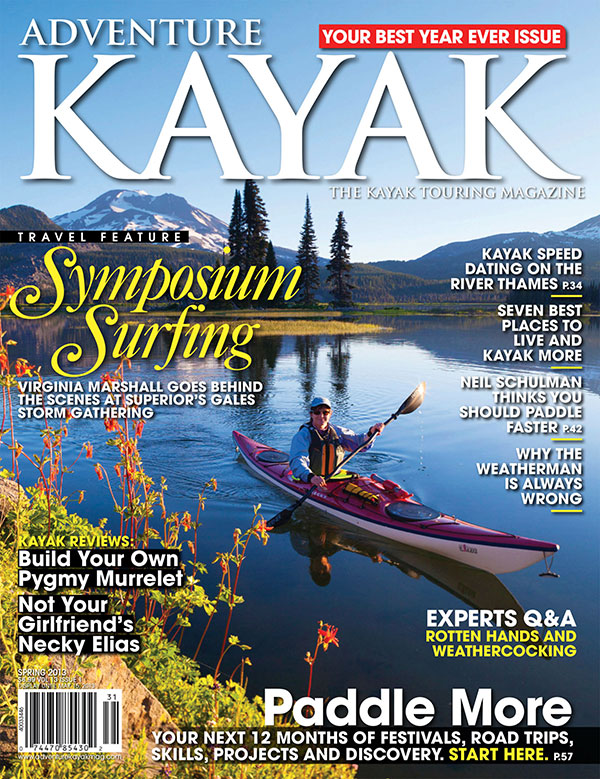
Cover of Summer/Fall 2012 issue of Adventure Kayak MagazineThis article was first published in the Summer/Fall 2012 issue of Adventure Kayak Magazine. Subscribe to Paddling Magazine’s print and digital editions, or browse the archives.

Feature photo: Robert Jones/Pixabay


Some Photos Don’t Need a Caption

photo: Virginia Marshall

The fleeting moment in time captured in the above photo—like every moment in our lives, and every photograph—is unique and unrepeatable. For me, that’s the magic of photography.

In the popular doctrine of photography, this is not a great shot. A professional eye would notice the crooked horizon, over-exposed sky and not-quite-sharp focus. A better composed portrait would not be—or at least not reveal that it was—shot at arm’s length by the subject. Nor would it be shot with a disposable camera purchased pre-loaded with Kodak Max 400 at Wal-Mart.

Professional photography instructor and frequent contributor Neil Schulman notes that in a strong image, the photographer “creates tension and anticipation through composition,” urging the viewer to imagine what happens next. This image contains no such tension, the faces seem relaxed, the anticipation passed. But that is precisely why I like it.

The disheveled hair, tanned faces and satis- fied smiles hint at an exciting story—the subtle “Just give ‘er” stitched into the polypro suggests that it might even be an epic story…

Conor called the Rock to Rock a “rite of passage”—a balls-to-the-wall straight shot down 80 kilometers of Lake Superior coast from Michipicoten Bay’s Rock Island to Sinclair Cove’s Agawa Rock. We slipped our kayaks into the river and drifted out onto the lake at 2:30 a.m. under a moonless sky. As dawn broke somewhere off Grindstone Point, a thick fogbank closed in around us and we placed all of our faith in the magnetically charged needle on Conor’s bow. Another hour of paddling and the fog lifted, the wind came howling out of the north and the lake blew itself into a seething frenzy.

Conor sailed down the wave faces, hooting with delight. The 22-foot tandem that I sterned was less nimble—it wallowed in the troughs like a wounded water buffalo, burying

Kim to her armpits while I perched high and dry on the following wave crest. Conor and the distant shore alternately appeared and vanished behind the lumpy wave tops.

As we neared the soaring rose granite and ancient pictographs of Agawa Rock, the lake seemed to tear at our victory with the combined power of its many manitous. Fuelled by Twizzlers, Mars bars, vitamin I and a fierce desire to stay upright (Kim and I had yet to master the tandem roll), we battled with sets reaching 10 feet high. I’m sure my hapless bow partner wasn’t exactly filled with confidence by my invocation, repeated loudly as each wave descend- ed over us,“holy shit, holyshit, HOLYSHIT!”

We reheated wind-chilled limbs on the sun-warmed, black basalt “survival rocks” in Sinclair Cove before huddling for this self-portrait. When I look at it now, I see all the excitement, euphoria and exhaustion of our 13-hour accomplishment.

It’s said a photograph is worth a thousand words. If this is true—and, at the risk of making my job obsolete, I believe it can be (after all, I’ve just written 500 about this one)—than a photo annual, while light on text, is immeasurably rich in stories. 

Senior editor Virginia Marshall has since upgraded her camera kit, but she still loves the written word.

Daily Image: Island Exploration

Daily Image: Island Exploration

Sander Jain photographed a sea kayaker gliding along the cliffs of grice bay’s indian island on a dark, unnaturally still January day. “The bay is a popular feeding ground for grey whales, and the scandinavian homes on indian island are a local landmark,” says Jain, whose Tofino home is just minutes from the put-in.

– Clayoquot Sound, British Columbia

Behind the Scenes at the Canadian Canoe Museum

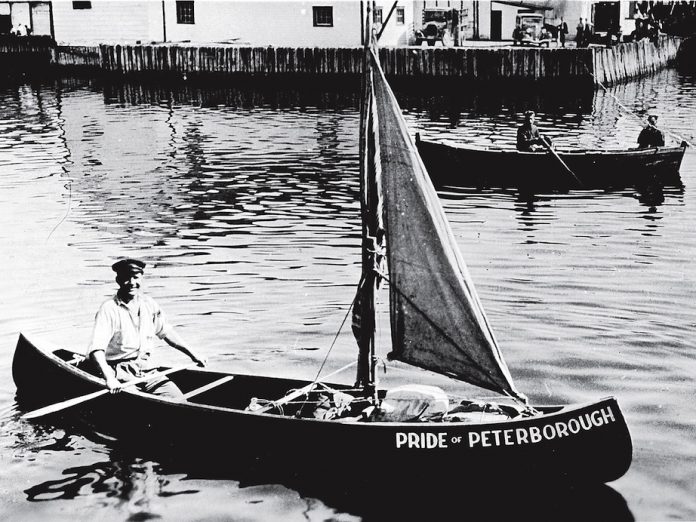
The Canoeroots magazine crew headed down to Peterborough, Ontario for a unique, behind-the-scenes tour of the Canadian Canoe Museum. Check out this video tour of the main building as well as a few looks at what they have in the warehouse out back.

Bridging the Water Gap

Photo: Patti Horton
Bridging the Water Gap

It’s easy to get wrapped up in all the Olympic fanfare and it’s impossible to miss Michael Phelps or Usain Bolt but you probably don’t know any sprint canoeing heroes. Relative to the deeply entrenched canoeing culture in North America, top-level racing has a weak following.

With marathons, outriggers, war canoes, even dragon boating, there’s no shortage of competitive spirit amongst recreational single-blade paddlers in North America. This has not, however, been translating into more and better athletes canoeing at an Olympic level.

Pam Boeteler is the president of WomenCAN International, a collective focused on gender equality in canoeing at the Olympics—an issue that she suggests is partly behind the waning interest in elite canoeing events. “There are no women’s open canoeing events at the Olympics,” says Boeteler. This despite the fact that 36 countries have established programs for women at various stages of development.

“On top of that, nobody just goes out and high-kneels recreationally,” Boeteler points out, referring to the trickier stance that elite sprint canoeists use to gain power. “We have a population who want instant gratification and don’t necessarily have the time to learn an entirely new skill.”

Paddling, unlike most elite sports in North America, doesn’t have a recreational stream to draw from.

“I started looking at the industry as a whole and over time there was this disconnect between recreational and elite paddlers,” says Wade Blackwood, executive director of the American Canoe Association.

“When the ACA and USA Canoe/Kayak (USACK) split in the ‘90s, performance dropped off, medal counts dropped off and participation at the elite level dropped off.”

As a result, the ACA is once again working together with USACK—the national governing body for paddlesports racing and a member of the national Olympic committee—in an effort to reduce the obvious disparity.

The ACA has 5,700 instructors and Blackwood hopes that by introducing the idea of competitive canoeing into beginner courses, people will become aware that they can get involved in elite paddling disciplines.

In the end, both Blackwood and Boeteler agree that increased exposure and support for local competition are the keys to bridging the gap between recreational and elite paddlers. Extending the canoeing culture leisure paddlers love into the competitive sphere is healthy forboth camps.  


This article on paddling in the Olympics was published in the Fall 2012 issue of Canoeroots magazine.

This article first appeared in the Fall 2012 issue of Adventure Kayak Magazine.