Home Blog Page 319

The River Why

Enlightenment on the river. (Photo: Maxi Kniewasser)
The River Why

My favorite book was recently adapted into a movie. But don’t bother seeing it, the Hollywood hacks butchered an iconic river book into a predictable love story—the wrong kind of love story, as in, not love of rivers.

David James Duncan’s 1984 classic The River Why was handed to me by a guide from another rafting company on the scout above Cataract Canyon’s Number 5 rapid. The worn pages spoke to me as they had to the many guides who’d read it before.

A quick look at the book makes you think it is about fishing, but it’s not. It’s about rivers, coming of age and looking for the meaning of life. Yes, there is some fishing, but don’t let that get in the way. Gus Orviston, the main character, hermits up in a remote Oregon valley to sort out his life, and one day, hiking high above his adopted fishing stream, he sees the river’s course scrawled across the valley. To his surprise, in a sort of cursive river writing, he plainly sees the river’s path spells the word “why”.

River guiding is a form of purgatory. It is somewhere between inferno and paradise; suffering and enlightening. In return for spending time in beautiful places, pulled by the current, one gets long days and responsibility disproportionate to the pay, a lack of everyday conveniences, and having to deal with clients. From my experience, these folks fall into a 10:1:1 ratio. For every 10 somewhat anonymous nice clients, there is one individual that is totally amazing and one total pain in the ass.

The trying trips are when this ratio is weighted on the back end. The strange trips are when the ratio is 0:5:5 and there are only five people in the raft.

I had such a trip in the Green River’s Canyon of Lodore. My boat included a 250-pound, heavily medicated manic depressive firefighter; a young woman just released from six months in the hospital on suicide watch; a 60-year-old woman with 20 percent vision; the female owner of a Charleston strip club; and the manager of an army boot factory inGeorgia. One fell asleep in the raft several times a day, one couldn’t be trusted to go beyond eyesight and one didn’t have any eyesight. The strip club owner was exceptionally coarse and the last was exactly as you’d expect of an army boot factory manager. They were a rag tag breakfast club, individually annoying and exceedingly exhausting.

At the time, pure suffering; in retrospect, enlightening. Taken as a group, I wouldn’t have traded them for anything. It turned on its head what I thought river guiding was all about.

David James Duncan is such a writer that the reader is pretty sure The River Why is his life story (that is, until one reads his novel The Brothers K and thinks that, too, must be his life story). It is funny and intimate, the type of narrative that makes you feel like you are inside the story. Gus thinks that this river that spells “why” is taunting him to find the meaning of life, until he slowly realizes it is not asking, but telling him, Why. “This,” writes Duncan, with what I imagine to be a wide sweep of the arms to include the river and all it touches, “all of this, is why.”

The challenges of rafting moderate whitewater seemed pretty inconsequential compared to the life histories of the cards in my raft. I was mature enough to realize that guiding was not all about me; until then, however, I did believe it was all about the rapids, the challenge, the hash marks on the map. But a blind lady giggling with surprise as we crashed waves, a suicidal girl finding the courage to try guiding the raft through an easy rapid, a strip club owner asking if it’s okay to say the Lord’s Prayer at sunrise… For these folks, it wasn’t about the rapids, but about the river, the current of life, carrying them downstream.

My 0:5:5 made me realize that this, all of this, is why.


This story originally appeared on page 18 of the Early Summer 2012 issue of Rapid magazine. Read the entire issue here.

The End of Open Boating

Is opening boating really dead? (Photo: Pascal Girard)
The End of Open Boating

If there seems to be more room in eddies lately, it may be because there are fewer hulking open boats taking up space.

Across the board, sales of OC1s are down, leaving some in the industry worrying that a cultural shift from canoes to kayaks is underway.

“We’ve dropped 70 percent in sales of open boats over the last 10 years,” says Chris Hipgrave, director of retail sales at Nantahala Outdoor Center (NOC) in North Carolina.

Kelly McDowell, owner of The Complete Paddler in Toronto, shows a similar ledger.

“There was a big drop in open boat sales two years ago, and it’s been slow ever since,” says McDowell.

Things look bleak on the supply side of the market. Dagger got out of the open boat market six years ago. Bell Canoe Works picked up Dagger’s popular Ocoee mold, adding to its slate of three hulls, but has recently stopped making canoes while the company looks for a new owner. Since announcing business woes in 2010, Evergreen Canoes—makers of the beloved Starburst—has also ceased production. That leaves Esquif, Mad River Canoe, Mohawk Canoes and now Wenonah to supply an OC1 market of questionable strength.

Jacques Chasse, owner of Esquif, says even with the exodus of canoe makers, supply exceeds demand.

“We have three or four models ready to develop, there’s just not enough market to justify new boats each year,” he says.

McDowell observes that those buying open boats tend not to be new to the sport, but older paddlers upgrading or replacing boats. Darren Bush, owner of Rutagbaga outdoor store and organizer of Wisconsin’s Canoecopia trade show, sees the same thing and is worried the issue might be generational.

“Twenty years ago, we used to sell four canoes for every kayak. Now it’s the opposite. And those who are buying canoes are 40- or 50-year-olds,” says Bush.

Bush says that most people buying open boats are coming across from learning to canoe in tandem models. “There are no beginner paddlers who come in and say, ‘I want to get into OC’. Thank you Red Bull,” says Bush, remarking that the kayak industry does a better job of portraying the sport as part of a racy lifestyle.

On that point, too, McDowell agrees. “Open boat videos are kind of boring compared to kayaking,” he concedes, a fact that might contribute to why The Complete Paddler is selling more whitewater kayaks even as canoes drop off.

Challenging this staid image, the recently released Canoe Movie 2: Uncharted Waters features talented young open boaters, pulse-quickening drops and exotic locations. But while filmmakers play catch up, the pro-kayaking trend is mirrored at Nantahala where Hipgrave reports last year NOC sold the most kayaks in its 40-year history.

Hipgrave says one of the main reasons for the dramatic shift in sales in the southeast is the feeder effect of hundreds of summer camps.

“Twenty years ago, all the camps were teaching kids whitewater in canoes. Now, except for a few hardcore canoe camps, they are all doing kayaking programs,” says Hipgrave, who points to the shorter learning curve and lower costs of kayaking.

Meanwhile, Claudia Kerckhoff-Van Wijk at Madawaska Kanu Centre in Ontario says their canoe program showed a steady growth compared to kayaking over the last 15 years, except for the past three years when canoeing held steady as kayaking demand increased. She says one of the ways they keep their canoeing component strong is to offer family weeks through the summer. Because of their versatility, canoes hold obvious benefits for paddling families.

Expanding on that family theme might be Esquif’s next move.

“If you start canoeing instead of kayaking, you will stick with it,” says Chasse of the effect of luring solo paddlers into open hulls while they are young.

Chasse says he could have an inexpensive whitewater boat for children aged seven to 10 years old on the water as early as next year. Of course, given the wreckage around him, he can be forgiven for spending time on shore scouting a line.

“I’ve been thinking a lot about it,” says Chasse. “I just have to convince myself it’s the way to go.”


This story originally appeared on page 16 of the Early Summer 2012 issue of Rapid magazine. Read the entire issue here.

Paddler Profile: Extreme Whitewater Champ Sam Sutton

Sam Sutton charging a line in Austria. (Photo: Jens Klatt)

Four years ago at the inaugural, much-hyped Adidas Sickline Extreme Kayak World Championships in Oetzal, Austria, a fiery young paddler from New Zealand stole second place, just 11/100ths of a second behind the winner, from a field of 50 top European finalists.

In 2010 and again last year, Sam Sutton, 23, took the heavy brass belt of World Champion for himself, smashing the course record in the process and adding the coveted championship to a growing list of race wins.

With his silky smooth, power-packed paddling style, Sutton is dominating the extreme racing scene. His seemingly innate ability to place perfectly timed stokes on even the hardest whitewater courses has earned him the podium at many top races, including the Teva Mountain Games and Norway’s Voss Extreme Week.

“Sam has this outstanding mental ability to relax and perform under pressure, allowing him to pull off amazing results at the crucial moments,” says fellow Kiwi racer, Josh Neilson.

Growing up within walking distance of the Kaituna River on New Zealand’s North Island, Sutton’s endless energy and enthusiasm earned him the respect and tutelage of the area’s best paddlers, including local legend James Moore and successful international competitor Kenny Mutton. But it wasn’t until Sutton’s second overseas experience in 2007, which took him from Uganda to Canada then on to California, that he got his taste for hard Class V boating. It was while running these difficult rivers that he honed his mental edge, learning to react to any situation quickly and calmly.

Wins at local races, then international events, followed. Sutton traveled to Austria hoping to prove himself at what was being billed the Extreme Race World Championships. He did just that, scooping a podium finish from Tao Berman, the only other non-European Sickline finalist.

Sutton’s talents translate into “one of the smoothest racing styles to date,” says Sickline creator and team manager, Olaf Obsommer, who signed the young Kiwi to the Sickline Team in 2008 after his outstanding performance at the World Championships.

Last year, the pair traveled the globe to produce Searching for the River God; Obsommer filming and Sutton paddling in the hardest conditions imaginable.

“What impresses me most about Sam is his character; he is not a stress maker or neurotic, he has incredible mental power,” says Obsommer, who works regularly with world-class boaters like Mariann Saether and Nick Troutman. “He is also a powerhouse yet doesn’t look like one, his movement is so fast and precise at the same time.”

[ Paddling Buyer’s Guide: View all whitewater kayaking gear and accessories ]

Catching up with Sam in his hometown of Okere Falls, NZ, you would never know he is a world champion. “My life doesn’t revolve around kayaking,” he explains with typical Kiwi candor, “it is something I enjoy doing and I do it well…so that is sweet.”

With the launch of his new business, Rotorua Rafting, on the Kaituna River last August, Sutton is busy balancing his racing career with being an entrepreneur. He’s planning another world tour for 2012, hitting all the major events: Teva Mountain Games in Vail, Extreme Outdoor Games in Italy, Voss Extreme Week in Norway, the invitation-only Whitewater Grand Prix in Chile and, of course, defending his title at Sickline.

“Someone has to keep those North Americans and Europeans at bay,” Sutton declares confidently. “I have no plans to hang up my title any time soon.”

This article originally appeared in Rapid‘s Early Summer 2012 issue. Subscribe to Paddling Magazine’s print and digital editions here, or browse the archives here.

Wenonah Recon Canoe Review

Wenonah Recon on the Madawaska River. (Photo: Michael Mechan)
Wenonah Recon Canoe Review

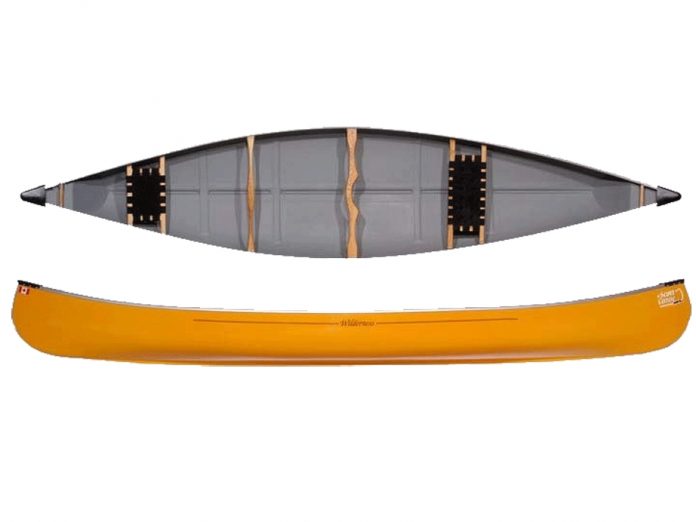
I asked Jake Greseth, Wenonah’s marketing di­rector, why they called their first solo whitewater playboat the Recon. Two reasons, he said. Re­con for reconnaissance had a nice whitewater vibe to it, and Recon for reconnect. As Greseth says, “The Recon is nothing too tricky or ex­treme, it’s a welcoming platform for those who have been-there-done-that and want to go back and do it again.”

Most open boat designs are by guys building the perfect boat for themselves. Wenonah, on the other hand, designed the Recon to be a ca­noe for the people—lots of people.

On first inspection, the Recon looked to me like a Mad River Outrage crossed with an Esquif Spark. When I learned it was co-designed by Dana Henry, this made sense. Dana Henry is the son of Jim Henry, co-founder of Mad River Ca­noe and designer of the timeless Outrage. And the last time I saw Dana, he took 30 seconds off my best time at the ACA Open Canoe Slalom Championships—on my home river. No surprise, then, to see the subtle V hull of the Outrage and an asymmetrical cab-forward shape reminiscent of the Spark.

Not everyone is excited about smaller and edgier open canoes. After 12 years of paddling OC1s less than 10 feet long, even I found get­ting back into 13 feet of Royalex was pleasantly reassuring. The Recon has no wobble or flip-flop from gunwale to gunwale like my Esquif Zoom or the Mohawk Maxim.

It takes an extra stroke to get the Recon mov­ing but it is so much faster and carries its speed so much deeper through turns. Think big for­ward stroke with a stern correction stroke… Oh, glory days.

With very little tilt, the Recon’s shallow V really holds a ferry angle. Give it more tilt and the ends magically release and the bow swings smooth­ly around. After a few big eddy turns, I started dropping the 13-foot hull into places it really shouldn’t be. The secret is to approach with a very open angle and work its release effect with an offside tilt to slam on the brakes and snap the bow upstream. Fun.

The Recon is super dry whether surfing or crashing through breaking waves. Seldom does water splash on the decks and the bow doesn’t pearl, period. Wenonah decked the Recon 30 inches from the bow and stern to shed water and add style. It looks tidy, but in my opinion just adds weight and makes draining a nuisance. If it were my boat, I’d take them off.

The highly adjustable outfitting in our Recon was the work of Wenonah western sales rep, Kurt Renner. The base of the two-piece saddle glues to the hull; the top—the part you sit on—attaches with Velcro and moves forward or backward to adjust trim. Also adjustable are the knee pads, which Velcro to strips on the floor. Single thigh straps thread through pre-installed loops. Behind the seat on each side are foam block ankle ris­ers—you’ll want to shape these to suit. Vinyl float bags are included.

With only Velcro holding it down, I thought all the foam would rip out in the first hole, but the only thing ripped out of the Recon was me. Yup, I swam. Without foot pegs and with single thigh straps, it is almost impossible to stay in. For many old school paddlers, I bet that’s okay, preferred in fact. The rest of us can order the Re­con as a naked hull and take the time to dress it ourselves.

While most of the open boat world is riding old designs or innovating with very niche models, the Recon offers class II–III canoeists a cruisy new option that’s smooth and stable, just like all solo boats used to be.


MATERIAL: ROYALEX

LENGTH: 13’

MAX WIDTH: 29”

ROCKER: 6”

HULL WEIGHT: 57 LBS

MSRP: HULL $1,099 or FACTORY OUTFITTED $1,899

www.wenonah.com


This story originally appeared on page 24 of the Early Summer 2012 issue of Rapid magazine. Read the entire issue here.

Granite Gear Superior One Gear Reivew

A review of the Granite Gear Superior One portage pack from Canoeroots & Family Camping magazine

The Superior One uses a harness reminiscent of a high-quality hiking backpack mounted onto a bag that’s sized for a canoe—a rare blend in portage packs. Its padded back panel forms for comfort and distributes weight evenly with help from wide, contoured shoulder straps and a cushy, interchangeable waist belt. Choose from two sizes to customize torso fit. Top load the colossal 121-liter capacity using dry bags for optimal protection—the Superior One is water-resistant, not proof. The Cordura and ballistic nylons used in the pack’s body bottom do, however, stand up to being dragged, snagged, tossed and sat on better than dryer, vinyl alternatives. The pack’s side pockets and lash points, features absent on lower-end models, make carrying loose items easy.

www.granitegear.com | $220


A VIDEO REVIEW OF THE GRANITE GEAR SUPERIOR ONE CANOE PACK FROM CANOEROOTS MAGAZINE


This article originally appeared in Canoeroots & Family Camping, Spring 2012. Download our freeiPad/iPhone/iPod Touch App or Android App or read it here.

The Perfect Tump

Photo: Conor Mihell
The Perfect Tump

Seventeen feet of old-school canvas and cedar makes you think differently about portages. I’ve carried relatively lightweight kevlar and Royalex canoes for hundreds of kilometers, but my big green prospector is different. It weighs an honest 82 pounds bone-dry and considerably more after a few days of travel.

Luckily, the legion of trippers who’ve lugged such waterlogged beasts in Temagami and the North Woods of Maine have come up with a clever way to bear the weight—one that’s equally effective on lighter contemporary canoes.

Maybe you’ve discovered the advantages of the tumpline on your favorite portage pack—the way it transfers weight from shoulders to spine and enables you to move massive loads. Rigged on the center thwart or carrying yoke of a canoe, the tumpline has similar advantages: a properly adjusted tump positioned just above your forehead actually lifts the canoe off of your shoulders and eliminates the pressure points of portaging. When your head and neck become fatigued, slipping out of the tump moves the weight back onto your shoulders, providing some respite on long carries.

Traditional outfitters sell leather tumplines that are designed for carrying canoes.

Look for one with a two-inch-wide head strap measuring about 15 inches long that’s securely riveted to five- to seven- foot tails. It’s also possible to build your own with leather, canvas or nylon webbing.

On canoes with carrying yokes, wrap the tails of the tumpline on either side of the contoured portion of the yoke and secure them with a simple hitch near the gunwales. The tumpline will only work if it fits tight; for me, this means fastening it to the yoke as close to the headpiece as possible.

It’s easy to use your paddles to create a carrying yoke on canoes equipped with straight center thwarts. Tie a thin cord permanently to the thwart with spaces for the paddle blades and enough room for your head in between. The blades should be aligned with your shoulders. Loosely secure the grip ends of the paddles on a seat or thwart. Then attach the tumpline, wrapping the tails so that the paddles can slide in and out of position without the need to remove the tump.

Once you’ve lifted the canoe (unfortunately a tumpline won’t help you there), slip the tump over the crown of your head and feel the weight of the canoe levitate from your shoulders. It helps to hold the tump near your jaw with one hand; use your other hand to keep the canoe resting level. 

This article on tumplines was published in the Spring 2012 issue of Canoeroots magazine.

This article first appeared in the Spring 2012 issue of Canoeroots Magazine.


Catching the Bug

Photo: Larry Rice
Catching the Bug

I really don’t know what made me want to explore the world, let alone in a canoe.

I grew up in a Chicago suburb where Wisconsin was considered somewhere far-off and foreign. Maybe it was my inexplicable interest in African wildlife; I visited Chicago’s stately Field Museum of Natural History, with its immense African Hall, every chance I got. Or maybe it was my penchant to devour classics like Robinson Crusoe, Treasure Island and The Adventures of Huckleberry Finn. Even the Mississippi River was exotic and enthralling to a city kid.

But, digging deeper, I believe it was my discovery of canoeing that helped rock my sheltered world. Seeking a means to commune with nature somewhere closer to home than Africa, I purchased an Old Town Tripper and ventured—often blundered—through places I had only imagined up to then: the Florida Everglades, Missouri Ozark rivers, spectacular canyons of the Rio Grande. My horizons quickly expanded far beyond the urban jungles and cornfields of Illinois.

Since then, I’ve been fortunate to canoe in 25 countries and on all seven continents, but I’m still humbled by how big our planet is and how precious little of it I have visited. Running my index finger over the smooth curve of a globe in my living room in central Colorado, my mind begins to wander. I dream about canoeing far-flung places with challenging waters, unfamiliar cultures and more unknowns than knowns: Botswana, Tasmania, Peru, Ellesmere Island, Vietnam, Moldova. The list goes on and on.

It’s impossible to see around the bend, which only raises the possibilities.

I like that about traveling, about paddling. Once you slip your bow into the current and let it usher you downstream, everything is possible, or seems to be.

When everything clicks on a paddling trip, I find not only the rugged wilderness I am seeking, but also a new way of appreciating the world. An appreciation of the unique qualities of the country I am visiting—its history, culture and the people I reach out to and meet along the way. Traveling by canoe allows me to discover my internal compass as well as be guided by an external one. By going with the flow, not fighting it, I find myself floating through life and oftentimes laughing along the way.

Following the path of the paddle these past 35 years, my passion for travel still burns as bright today as when I was that youngster fantasizing about tripping down Ol’ Man River.

This article on exploring the world by canoe was published in the Spring 2012 issue of Canoeroots magazine.

This article first appeared in the Spring 2012 issue of Canoeroots Magazine.


The Art of Trip

Photo: Frank Wolf
The Art of Trip

Wading through my gear stash last spring, my eyes eventually settled on the protective case that contains my video camera.

As an outdoor filmmaker, I feel a certain obligation to bring the camera along on any extended trip and attempt to craft a work of engaging cinema. Creating art from the wilderness experience is a Canadian tradition made internationally famous by emissaries like Emily Carr and Bill Mason. Inspired by these icons, I’ve done my small part through the medium of film by sharing stories set within the context of remote self-propelled expeditions.

More often than not, I travel by canoe. This summer, the plan was for my friend Todd McGowan and I to paddle through the deepest heart of Ontario’s Boreal forest via an 1,120-kilometer route that would span the length of Wabakimi Provincial Park and then continue north, eventually ending at the mouth of the Winisk River on Hudson Bay. But this trip would have one important difference: for only the second year in about a decade, I said no to filming.

Once committed to making a film, any situation on trip that is hard, beautiful, interesting or relevant demands that I pull out the camera and start recording—an all-encompassing task that inevitably changes the personal experience within the journey. After making back-to-back documentaries, it was time to let my artistic outlet lie fallow and rejuvenate. This summer the canoe trip itself—not the filming of it—would be front and center. 

If art is the expression of individual freedom, emotion and creativity, says Frank Wolf, then the canoe trip must be its highest form

I grovel up a side gully to reach the top. Peering over the edge, the looming gap between my precarious perch and the distant water takes my breath away. I inhale, step into space and let out a hoot before exploding into the liquid below. Under the surface, I look up through rising bubbles at the cliff as it bends like a Dali painting in the expanding ripples.

Experiences like this accumulate like dirt and calluses over the course of a canoe trip, eroding the thin veneer of a modern, vicarious iPhone life to reveal a basic, animal core that exists in each of us. They are moments of pure freedom. 

Painters are naturally drawn to certain processes and mediums—some choose oil, some acrylic, others go for watercolor. The key for the artist is to find something that feels right, the method and result that satisfies the creative self.

Similarly, individual canoe trippers approach the wilderness journey in their own unique ways. Some like to paddle to an island and chill out for a week. Others linger in camp, put in a few hours on the water and then linger in camp again. The beauty of canoe tripping is that it reflects the style of the individual and no matter how you go about it, the rewards are rich.

If a film or painting is considered to be art then canoe tripping is, in every sense, art.

Typical days on this journey have been 10 hours long with perhaps a half-hour break for lunch. We average almost 47 kilometers daily for the 24-day trip, including upstream, downstream, portages and dragging. I only sleep five hours a night because I’m so energized by every paddle stroke and aspect of this fresh environment that I want to jam as much action as possible into each moment. 

Todd is setting up camp when I double-back along a rough 1,100-meter portage on the Witchwood River. I hop fallen logs and zigzag through the forest as fast as I possibly can. It’s a game to test my speed and agility and see how quickly I can retrieve the last pack. Turning a corner, a knobby spruce branch wedges perfectly between my front and back leg, catapulting me headfirst into the moss. I curse the branch and look down to see a long, deep laceration on the calf of my left leg and an ugly gouge on the shin of my right. Blood pours instantly from both wounds.

I get up and continue to run, first at a hobble and then at a steady, rhythmic clip. My clenched teeth relax into a smile and everything clarifies. Blood, moss, spruce and movement in the heart of the Little North. Life is simple and I am extremely happy.

I’ve been affected by a strain of madness perhaps, but on reflection it makes perfect sense. People are hardwired for this—to physically struggle and push our bodies in nature for extended periods of time. Our ancestors ran down prey and traveled under their own power for most of the million years or so of human existence. If time is a gauge, we are only a blip apart from that way of life—a blip filled with La-Z-Boy chairs and cheesecake, but a blip nonetheless. Much like the artist whose need to create is passed to them from the DNA of prehistoric cave painters, our genetics retain that need to move. Canoe tripping is a portal that allows us to tap into this tribal call. 

Todd and I are in the Cree village of Peawanuck waiting for our plane to come and return us to urbana. In the meantime we’re hanging out at the house of the local Northern store manager, who generously offered us accommodation. I’m in the dining room hunched over a detailed map of Ontario, tracing a line over the blue veins and blotches of our completed route. I step back and admire the curves of the fresh line with a visual record of every campsite, lake and river etched in my mind.

I love making films about canoe journeys, but I realize now that making a film is simply adding another artistic layer to a thing that is itself utterly original and creative. Like an artist who is compelled to produce a painting on a blank canvas, the canoe tripper is compelled to step into a blank landscape, emerging at the end with the ultimate experience of a vision realized. If a film or painting is considered to be art then canoe tripping is, in every sense, art.

This article on art was published in the Spring 2012 issue of Canoeroots magazine.

This article first appeared in the Spring 2012 issue of Canoeroots Magazine.


A Fireside Chat with Becky Mason

Photo: Scott MacGregor
A Fireside Chat with Becky Mason

In 2011, Becky Mason toured Europe for six weeks celebrating the release of her third film, Advanced Classic Solo Canoeing. Bridging the cultural gap with canoes was an enlightening experience 11 years in the making.

Mason’s ongoing work with the global canoeing community is founded on a passion for teaching and her father’s legacy. 

Q: It’s been 11 years since you released your last film, but this one feels like it’s built on a lifetime of experiences. Tell us more about the person in the famous red cedar-canvas prospector. 

A: I’m a creative artist. That’s what i say when people ask me what I am. But there are lots of other hats that I wear in life. I’m a watercolorist. I love the creative side of canoeing, just doing all those gorgeous strokes. and, now, filmmaking—I’ve done three films. I do what makes me tick. 

Q: Instructing must make you tick, then.

A: I love teaching. I love sharing knowledge with people—how to go canoeing and how to go canoeing efficiently. People’s eyes light up when they see that they can make the canoe move more efficiently without much effort.

Q: Your path is similar to your father Bill Mason’s career in canoeing, filmmaking and fine art. Do you feel overshadowed by his legacy?

A: I miss my dad. People ask if it’s hard following in his footsteps and I say no because it’s really special. I have some characteristics of his and I’m good with that. When I was 18, I found it a bit difficult handling the whole fame thing. He was having dinner with the Queen, he was traveling, the phone was always ringing. People would come up to me and say, “You’re Bill Mason’s daughter, I can’t believe I’m meeting you.” I always thought to myself, “Yeah, but I’m a person too, in my own right.”

When I turned 19, I came into my own and realized that I could either divorce myself from his legacy or accept it and build on it. And that’s what I do. I’m building on his skills that he taught me.

Q: You share some of those skills in your new DVD.

A: Since I completed my last film, I’ve been building on that knowledge and my teaching technique has changed and improved because I’ve had a lot of interaction with people.

Every stroke covered—all 18 of them—I broke down into parts: first, an introduction covering why people need the strokes; then, I break them down in detail; the last part includes additional information like why I love the stroke and why people think it’s special. It is a neat way to cover the strokes. You’re getting a lot of information but it’s also enjoyable to hear the stories behind them.

You also get to see the thread of the stroke. It’s very important in advanced paddling to see the continuation of where you’re going and how the movement of your body and the blade are interacting.

Q: Not only do you package each stroke and present it well, the images are extremely pleasing to watch. How has your filmmaking evolved?

A: I really wanted to shoot my last film in 16mm, but it was too expensive in 2000. For this one, the digital age is upon us, so it was cheap. I filmed in high definition with a camera I rented. The color was beautiful, and I was able to pick the light levels. I’m a traditional filmmaker. I love picking light levels and letting the scenes breathe.

Location is the most important thing for a movie. I really felt strongly that i wanted to go up to Lac Vert in Quebec. When you look down, you can see up to 60 feet deep, clear as a bell. I wanted to capture that in underwater shots. It was amazing to pick a location that inspired me to get the underwater shots.

I tried underwater shots in my first movie. I dragged Jerry, my editor, around Meech Lake on a rope with a SCUBA diving apparatus and it just didn’t work. The camera blew up right when I was about to edit. This time around, I was bound and determined to get underwater shots. It’s just so beautiful to see underneath and above. 

Q: Does that enhance your ability to teach the stroke?

A: I’ve had so many comments from people who now understand what the blade is doing because they get to see it from below.

I also wanted to inset the canoeing in nature. With the underwater shots you see the beautiful white-bottomed lake. The calcium carbonate just shimmers. And then you have all the fish swimming in the lake. It’s great to show nature interacting with the strokes.

Q: This time around, you chose to launch your film in Europe first. How did that come about?

A: When I’m out canoeing, I dream a lot. It’s really beautiful canoeing at home on Meech Lake, but I like to share my skill, my love of canoeing. I get lots of requests from around the world asking me to come and teach. So, I went online to a European paddling forum and said I’d like to come to five countries and welcomed paddling clubs to invite me. Within a day, five paddling clubs piped up from the netherlands, Belgium, France, Germany and italy.

Q: Your reputation preceded you. Is there an established canoeing scene in those countries?

A: It was great! We were concerned there wouldn’t be enough paddlers in the netherlands, but I planned two classes during the day and a presentation at night, and we were able to go and teach in their beautiful country.

The Italians all knew Bill Mason’s Path of the Paddle. I teach a lot of people who have only learned from my dad’s books and it’s quite charming because some of the interpretations get a little interesting. They were so fixated. They thought the only canoe in the world was a prospector because Bill Mason said so. They followed his words to a T.

Q: Not too much culture shock then?

A: It was a good stretch. I learned to use pantomiming to teach canoeing. Canoeing is a universal language. I really learned that on the European trip because I was going through all the languages—Flemish, French, Italian, German.

The whole of Europe was so generous and kind to us. In France they laid out a huge long table with white tablecloths and champagne flutes. We were drinking champagne and eating paté all afternoon. It was great. 

Q: A far cry from a bagel with cream cheese and a bag of GORP. So what’s next?

A: My husband Reid, who coproduced the DVD with me, doesn’t know this yet but I’m going to go across North America this summer. I did it in 2006 and it’s about time I go again. I’ll take my DVD and do what I did in Europe, buzzing along the border between the U.S. and Canada, visiting all the clubs. I don’t know when I’m going to tell Reid. I’ll spring it on him; he tends to do better that way.

Interview by Scott MacGregor. Edited by Michael Mechan. 

Becky Mason’s Advanced Classic Solo Canoeing

The 43-minute film builds on Mason’s wildly successful instructional film Classic Solo Canoeing, taking paddlers for a spin in her cedar-canvas canoe on the crystal clear waters of Lac Vert, Quebec. She shares 18 expert strokes and maneuvers along with stories of nature, heritage and her past. Stunning underwater camera angles provide a unique view of techniques like the Canadian stroke, the Indian stroke and the Northwood—a stroke not covered in depth on video until now.

Special features include a six-minute bonus musical paddling video with folk artist Ian Tamblyn, outtakes from the main production and Mason’s complete original film, Classic Solo Canoeing.

Advanced Classic Solo Canoeing won the Best Instructional Paddling Film award at the 2012 Reel Paddling Film Festival.

Purchase the DVD online from redcanoes.ca 


This interview with Becky Mason was published in the Spring 2012 issue of Canoeroots magazine.

This article first appeared in the Spring 2012 issue of Canoeroots Magazine.


Tumblehome: Life After Death

A fabulous new book called The Canadian Canoe Company and the Early Peterborough Canoe Factories (Cover to Cover Press, 2011) has got me thinking about reincarnation.

According to author Ken Brown, canoe building in Peterborough, Ontario, effectively died in the early 1960s with the Canadian Canoe Company ceasing operations in October 1961 and the Peterborough Canoe Company declaring bankruptcy soon after. But the presence of this book and a quick cruise on the World Wide Web indicates that the products of these venerable canoe companies are still very much on people’s minds.

The demise of industrial canoe building in Peterborough was real enough.

Companies that had skillfully grown from an emerging 19th century cottage and craft activity into seven or eight canoe-building factories with robust domestic and international markets, struggled after WWII. Aluminum and fiberglass building techniques—innovations honed in wartime aircraft manufacturing— lent themselves naturally to canoe building. But tooling up for new materials and new

Building techniques was expensive. And training or retraining a skilled woodworking labor force to make canoes out of plastic or metal was also costly. It was only a matter of time before the wooden canoe companies floundered.

Yet Peterborough thrived through nearly a hundred years of uncommon industrial success. Ken Brown tells us that in a country bordering three oceans, in 1930 a quarter of the 778 Canadians involved in the building of small boats were employed in the landlocked center of the continent by Peterbor- ough area firms, generating a third of the annual $2 million sales in this area of the economy.

After WWII, this tapered back and, after the closure of the Peterborough companies, passed to the skilled hands of later genera- tions of small builders and hobbyists who continue to keep the tradition vibrant.

Today, you can buy Peterborough canoes at auction.

Reprints of old catalogues are available for sale in hard and soft cover. The iconic company logos are available as decals for the growing corps of builders and rebuilders from Pacific to Atlantic and Arctic to Caribbean who still love Peterborough shapes in their shops.

And then there are the T-shirts and calendars, and the advertisers who for the past 50 years have freely employed canoe imagery. Selling charcoal, beer, milk or maxipads with canoe imagery cashes in on the fact that from explorers, surveyors, itinerant clergy, police and fur traders to modern day hunters, anglers and recreational paddlers, Peterborough canoes have been involved in just about every aspect of life beyond the fringe in North America. They are part of Canada’s heritage and, as Ken Brown reminds us, part of the history of the U.S., U.K. and countries even farther afield. Advertisers know that consumers are drawn to canoe imagery because this vessel—the Peterborough canoe in particular—is part of who we are.

James Raffan is thinking of coming back as an explorer, writer and executive director of The Canadian Canoe Museum. 

This article on the Canadian Canoe Company was published in the Spring 2012 issue of Canoeroots magazine.

This article first appeared in the Spring 2012 issue of Canoeroots Magazine.