Home Blog Page 319

Top Notch Dry Tops

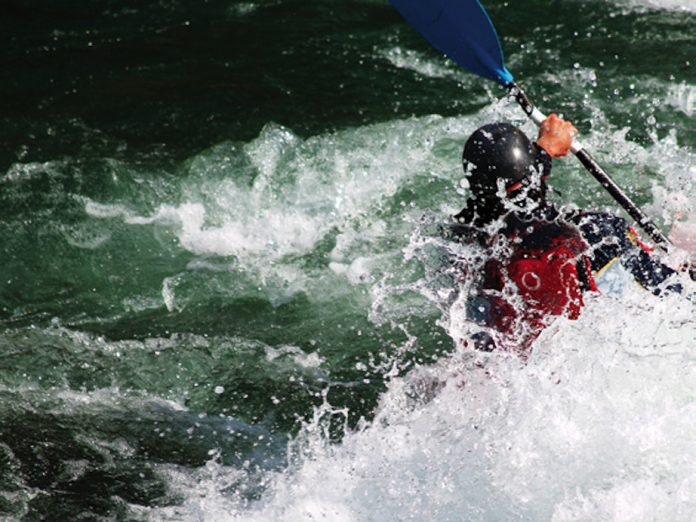
Day on the river or expedition, these dry tops are up to the challenge. (Photo: Dan Caldwell)
Top Notch Dry Tops

NRS REVOLUTION

As soon as we got our hands on this dry top, we knew it was expedition-grade. The hefty 400-denier body and Cordura elbow patches provide protection from creek beds, canyon walls and over- growth on portages. Redesigned for 2012, the Revolution is equipped with a standard neoprene collar and a
Velcro, neoprene and nylon tunnel.
Not so standard are the liquid-sealed
seams. Rather than just using seam
tape to seal the jacket, NRS has applied liquid rubber sealant to the seams and gaskets for extra leak-proof insurance. High Sign: So heavy duty you may never wear it out. Low Sign: Heavyweight protection means, well, heavy weight. www.nrsweb.com • $330


Bomber Gear BOMB LONG SLEEVE

Bomber Gear splashes back onto the whitewater scene with a new line
of dry gear including this flagship
dry top. We found the Bomb’s highly water resistant, Sub-screen
treated neoprene cuffs protected
the wrist gaskets and improved fit,
helping the sleeves stay put on our
wrists. The sticky neoprene outer
tunnel did a great job saving us from
the crop top effect of bracing and rolling. The
inner liner is a light and silky Tricot waterproof-
breathable nylon that doesn’t bunch or chafe
against bare skin. High Sign: Bomber Gear’s gaskets aren’t glued; they’re chemically fused for longer-lasting protection. Low Sign: No elbow or forearm reinforcement may lead to premature wear. www.bombergear.com • $390


Kokatat ROGUE

The lightest of the tops we tested,
 Kokatat’s high-performance expedition
top offers an ideal mix of protection
where you need it with breathability
where you want it. High wear areas
like the shoulders, elbows and fore-
arms are Cordura-reinforced, while 
the side panels are made of ultra-
breathable Gore-Tex XCR. Attention
to details like a key lanyard in the
self-draining chest pocket and a taste
ful reflective logo make this one classy jacket. High Sign: Unsurpassed fit that feels tough without any unwanted bulk. Low Sign: No imported beer for an entire season to afford this one. www.kokatat.com • $425


This story originally appeared on page 25 of the Early Summer 2012 issue of Rapid magazine. Read the entire issue here.
Recovering a Runaway Boat

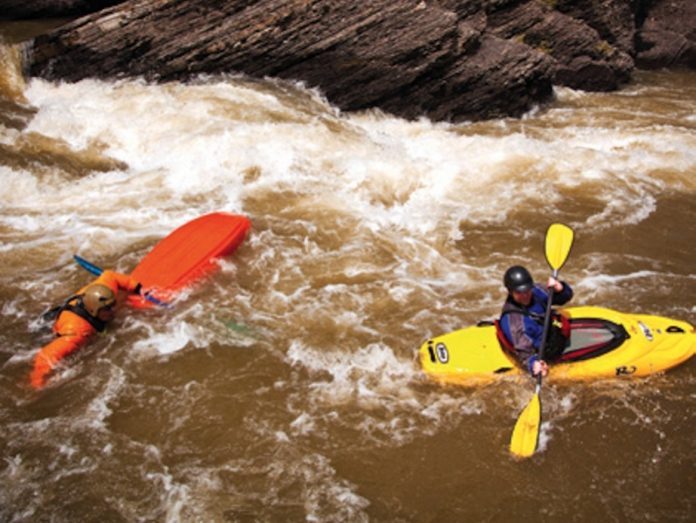
Watch out! (Photo: Ryan Creary)
Recovering a Runaway Boat

When it comes to dealing with a runaway boat, think physics. I’m not talking about the space-time continuum, but simple energy and force. A boat full of water is out of control: mass × force = life of its own. You can’t change the force of the river, but you can change the mass of the boat. An authoritative boat-over-boat to dump the water takes just 10 seconds—practice is key, which is why kayak instructors have this on lockdown. Flip the boat onto your deck, rock it back and forth just once and then flip and fire it off into the nearest eddy. This works on all but the juiciest of rivers.

Tethered towing has fallen out of favor un- less the river is pretty mellow (do you really want to be tied to that sea anchor?) but you still have to get the water out first.

The last option is the bow plow, but all you can reasonably expect is to direct the energy, rather than control it. Again, think physics: set the swamped boat on a ferry angle and make the river do the work. Your job is to bump and prod it to keep the angle. If you’re downstream, you can try ramming your bow into the open cockpit and then working it to shore. Beware, though, heavy boats have a life of their own.


This story originally appeared on page 23 of the Early Summer 2012 issue of Rapid magazine. Read the entire issue here.
Tips to Strengthen your Offside

Improving your offside requires commitment. (Photo: Beth Kennedy)

Devote some time to practice and you’ll realize there is no such thing as offside. Use these not-so-secret Jedi training tips to improve your offside skills. Commitment to using the stroke is half the battle…Do or do not, there is no try. 

FLATWATER DRILL

Starting on your onside, begin paddling in a circle with your paddle to the inside of the turn. Once you’ve developed some momentum and rhythm, switch to your offside to form a second circle in the opposite direction. Maintain a consistent circle to your offside.

If your boat starts to carve towards your onside, switch back to this side and get yourself reset on your figure of eight. Maintaining a steady, consistent tilt to the inside of your turns, or the side you’re paddling on is key.

Circles to the offside are easier when they are smaller. As you get more comfortable with the stroke, practice enlarging your circle by lessening your tilt and lengthening your stroke. 

OFFSIDE TIPS

  • Lean forward. Use a sitting-up motion to generate power from your lower body. Because your arms are crossed, it’s difficult to generate much power from them. Think about planting your paddle and moving the boat to the paddle with your lower body.
  • Prevent the paddle from hitting the side of the boat. If the paddle is close to the boat or right against it, the blade tends to get stuck under the hull, making things feel a bit tippy.
  • Develop a range of motion on your offside by reaching out and extending your body.
  • Keep your paddle in the water the whole time. Use an underwater slice recovery to bring your paddle forward for the propulsion phase of your stroke. Think about pulling the bow toward the paddle while slicing your paddle through the water—this will help you control 
the arc of your turn and keep you moving in a consistent circle on flatwater.
  • Keep your weight low and on your seat. Avoid shifting too much weight to your knees. This will prevent your bow from pearling, which often causes the whole boat to wobble and makes it difficult to hold a consistent edge. By keeping your weight centered on the saddle, you maintain stability and a steady edge.
  • Make smooth, purposeful transitions from your offside to your onside and vice versa.
  • A good way to get comfortable side surfing offside is to enter the hole on your offside. Choose a hole that is so small you’d normally pass it by for surfing and approach it from your offside. To improve your comfort further, force yourself to exit towards your offside whenever you’re surfing a hole.


This story originally appeared on page 21 of the Early Summer 2012 issue of Rapid magazine. Read the entire issue here.
The River Why

Enlightenment on the river. (Photo: Maxi Kniewasser)
The River Why

My favorite book was recently adapted into a movie. But don’t bother seeing it, the Hollywood hacks butchered an iconic river book into a predictable love story—the wrong kind of love story, as in, not love of rivers.

David James Duncan’s 1984 classic The River Why was handed to me by a guide from another rafting company on the scout above Cataract Canyon’s Number 5 rapid. The worn pages spoke to me as they had to the many guides who’d read it before.

A quick look at the book makes you think it is about fishing, but it’s not. It’s about rivers, coming of age and looking for the meaning of life. Yes, there is some fishing, but don’t let that get in the way. Gus Orviston, the main character, hermits up in a remote Oregon valley to sort out his life, and one day, hiking high above his adopted fishing stream, he sees the river’s course scrawled across the valley. To his surprise, in a sort of cursive river writing, he plainly sees the river’s path spells the word “why”.

River guiding is a form of purgatory. It is somewhere between inferno and paradise; suffering and enlightening. In return for spending time in beautiful places, pulled by the current, one gets long days and responsibility disproportionate to the pay, a lack of everyday conveniences, and having to deal with clients. From my experience, these folks fall into a 10:1:1 ratio. For every 10 somewhat anonymous nice clients, there is one individual that is totally amazing and one total pain in the ass.

The trying trips are when this ratio is weighted on the back end. The strange trips are when the ratio is 0:5:5 and there are only five people in the raft.

I had such a trip in the Green River’s Canyon of Lodore. My boat included a 250-pound, heavily medicated manic depressive firefighter; a young woman just released from six months in the hospital on suicide watch; a 60-year-old woman with 20 percent vision; the female owner of a Charleston strip club; and the manager of an army boot factory inGeorgia. One fell asleep in the raft several times a day, one couldn’t be trusted to go beyond eyesight and one didn’t have any eyesight. The strip club owner was exceptionally coarse and the last was exactly as you’d expect of an army boot factory manager. They were a rag tag breakfast club, individually annoying and exceedingly exhausting.

At the time, pure suffering; in retrospect, enlightening. Taken as a group, I wouldn’t have traded them for anything. It turned on its head what I thought river guiding was all about.

David James Duncan is such a writer that the reader is pretty sure The River Why is his life story (that is, until one reads his novel The Brothers K and thinks that, too, must be his life story). It is funny and intimate, the type of narrative that makes you feel like you are inside the story. Gus thinks that this river that spells “why” is taunting him to find the meaning of life, until he slowly realizes it is not asking, but telling him, Why. “This,” writes Duncan, with what I imagine to be a wide sweep of the arms to include the river and all it touches, “all of this, is why.”

The challenges of rafting moderate whitewater seemed pretty inconsequential compared to the life histories of the cards in my raft. I was mature enough to realize that guiding was not all about me; until then, however, I did believe it was all about the rapids, the challenge, the hash marks on the map. But a blind lady giggling with surprise as we crashed waves, a suicidal girl finding the courage to try guiding the raft through an easy rapid, a strip club owner asking if it’s okay to say the Lord’s Prayer at sunrise… For these folks, it wasn’t about the rapids, but about the river, the current of life, carrying them downstream.

My 0:5:5 made me realize that this, all of this, is why.


This story originally appeared on page 18 of the Early Summer 2012 issue of Rapid magazine. Read the entire issue here.
The End of Open Boating

Is opening boating really dead? (Photo: Pascal Girard)
The End of Open Boating

If there seems to be more room in eddies lately, it may be because there are fewer hulking open boats taking up space.

Across the board, sales of OC1s are down, leaving some in the industry worrying that a cultural shift from canoes to kayaks is underway.

“We’ve dropped 70 percent in sales of open boats over the last 10 years,” says Chris Hipgrave, director of retail sales at Nantahala Outdoor Center (NOC) in North Carolina.

Kelly McDowell, owner of The Complete Paddler in Toronto, shows a similar ledger.

“There was a big drop in open boat sales two years ago, and it’s been slow ever since,” says McDowell.

Things look bleak on the supply side of the market. Dagger got out of the open boat market six years ago. Bell Canoe Works picked up Dagger’s popular Ocoee mold, adding to its slate of three hulls, but has recently stopped making canoes while the company looks for a new owner. Since announcing business woes in 2010, Evergreen Canoes—makers of the beloved Starburst—has also ceased production. That leaves Esquif, Mad River Canoe, Mohawk Canoes and now Wenonah to supply an OC1 market of questionable strength.

Jacques Chasse, owner of Esquif, says even with the exodus of canoe makers, supply exceeds demand.

“We have three or four models ready to develop, there’s just not enough market to justify new boats each year,” he says.

McDowell observes that those buying open boats tend not to be new to the sport, but older paddlers upgrading or replacing boats. Darren Bush, owner of Rutagbaga outdoor store and organizer of Wisconsin’s Canoecopia trade show, sees the same thing and is worried the issue might be generational.

“Twenty years ago, we used to sell four canoes for every kayak. Now it’s the opposite. And those who are buying canoes are 40- or 50-year-olds,” says Bush.

Bush says that most people buying open boats are coming across from learning to canoe in tandem models. “There are no beginner paddlers who come in and say, ‘I want to get into OC’. Thank you Red Bull,” says Bush, remarking that the kayak industry does a better job of portraying the sport as part of a racy lifestyle.

On that point, too, McDowell agrees. “Open boat videos are kind of boring compared to kayaking,” he concedes, a fact that might contribute to why The Complete Paddler is selling more whitewater kayaks even as canoes drop off.

Challenging this staid image, the recently released Canoe Movie 2: Uncharted Waters features talented young open boaters, pulse-quickening drops and exotic locations. But while filmmakers play catch up, the pro-kayaking trend is mirrored at Nantahala where Hipgrave reports last year NOC sold the most kayaks in its 40-year history.

Hipgrave says one of the main reasons for the dramatic shift in sales in the southeast is the feeder effect of hundreds of summer camps.

“Twenty years ago, all the camps were teaching kids whitewater in canoes. Now, except for a few hardcore canoe camps, they are all doing kayaking programs,” says Hipgrave, who points to the shorter learning curve and lower costs of kayaking.

Meanwhile, Claudia Kerckhoff-Van Wijk at Madawaska Kanu Centre in Ontario says their canoe program showed a steady growth compared to kayaking over the last 15 years, except for the past three years when canoeing held steady as kayaking demand increased. She says one of the ways they keep their canoeing component strong is to offer family weeks through the summer. Because of their versatility, canoes hold obvious benefits for paddling families.

Expanding on that family theme might be Esquif’s next move.

“If you start canoeing instead of kayaking, you will stick with it,” says Chasse of the effect of luring solo paddlers into open hulls while they are young.

Chasse says he could have an inexpensive whitewater boat for children aged seven to 10 years old on the water as early as next year. Of course, given the wreckage around him, he can be forgiven for spending time on shore scouting a line.

“I’ve been thinking a lot about it,” says Chasse. “I just have to convince myself it’s the way to go.”


This story originally appeared on page 16 of the Early Summer 2012 issue of Rapid magazine. Read the entire issue here.
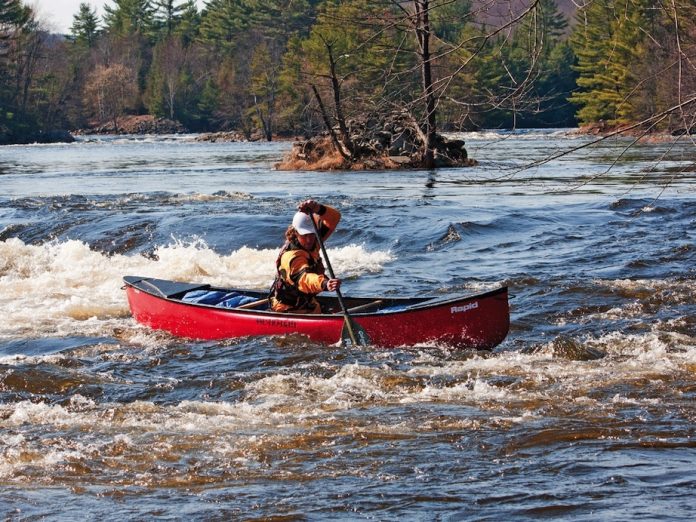
Paddler Profile: Extreme Whitewater Champ Sam Sutton

Sam Sutton charging a line in Austria. (Photo: Jens Klatt)

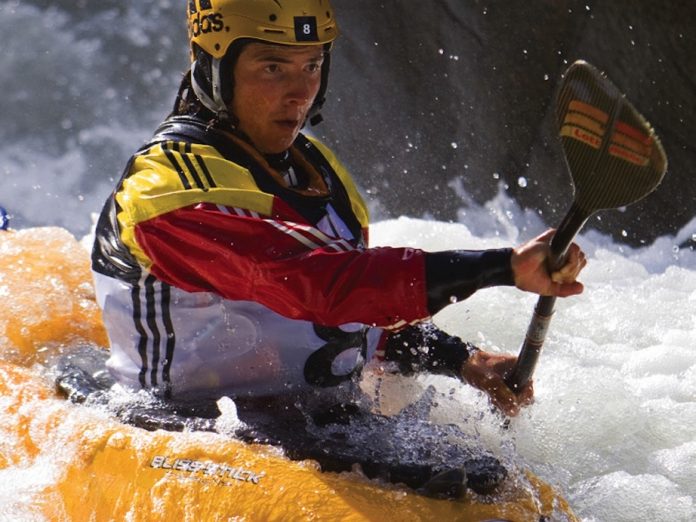
Four years ago at the inaugural, much-hyped Adidas Sickline Extreme Kayak World Championships in Oetzal, Austria, a fiery young paddler from New Zealand stole second place, just 11/100ths of a second behind the winner, from a field of 50 top European finalists.

In 2010 and again last year, Sam Sutton, 23, took the heavy brass belt of World Champion for himself, smashing the course record in the process and adding the coveted championship to a growing list of race wins.

With his silky smooth, power-packed paddling style, Sutton is dominating the extreme racing scene. His seemingly innate ability to place perfectly timed stokes on even the hardest whitewater courses has earned him the podium at many top races, including the Teva Mountain Games and Norway’s Voss Extreme Week.

“Sam has this outstanding mental ability to relax and perform under pressure, allowing him to pull off amazing results at the crucial moments,” says fellow Kiwi racer, Josh Neilson.

Growing up within walking distance of the Kaituna River on New Zealand’s North Island, Sutton’s endless energy and enthusiasm earned him the respect and tutelage of the area’s best paddlers, including local legend James Moore and successful international competitor Kenny Mutton. But it wasn’t until Sutton’s second overseas experience in 2007, which took him from Uganda to Canada then on to California, that he got his taste for hard Class V boating. It was while running these difficult rivers that he honed his mental edge, learning to react to any situation quickly and calmly.

Wins at local races, then international events, followed. Sutton traveled to Austria hoping to prove himself at what was being billed the Extreme Race World Championships. He did just that, scooping a podium finish from Tao Berman, the only other non-European Sickline finalist.

Sutton’s talents translate into “one of the smoothest racing styles to date,” says Sickline creator and team manager, Olaf Obsommer, who signed the young Kiwi to the Sickline Team in 2008 after his outstanding performance at the World Championships.

Last year, the pair traveled the globe to produce Searching for the River God; Obsommer filming and Sutton paddling in the hardest conditions imaginable.

“What impresses me most about Sam is his character; he is not a stress maker or neurotic, he has incredible mental power,” says Obsommer, who works regularly with world-class boaters like Mariann Saether and Nick Troutman. “He is also a powerhouse yet doesn’t look like one, his movement is so fast and precise at the same time.”

[ Paddling Buyer’s Guide: View all whitewater kayaking gear and accessories ]

Catching up with Sam in his hometown of Okere Falls, NZ, you would never know he is a world champion. “My life doesn’t revolve around kayaking,” he explains with typical Kiwi candor, “it is something I enjoy doing and I do it well…so that is sweet.”

With the launch of his new business, Rotorua Rafting, on the Kaituna River last August, Sutton is busy balancing his racing career with being an entrepreneur. He’s planning another world tour for 2012, hitting all the major events: Teva Mountain Games in Vail, Extreme Outdoor Games in Italy, Voss Extreme Week in Norway, the invitation-only Whitewater Grand Prix in Chile and, of course, defending his title at Sickline.

“Someone has to keep those North Americans and Europeans at bay,” Sutton declares confidently. “I have no plans to hang up my title any time soon.”

This article originally appeared in Rapid‘s Early Summer 2012 issue. Subscribe to Paddling Magazine’s print and digital editions here, or browse the archives here.

Wenonah Recon Canoe Review

Wenonah Recon on the Madawaska River. (Photo: Michael Mechan)
Wenonah Recon Canoe Review

I asked Jake Greseth, Wenonah’s marketing di­rector, why they called their first solo whitewater playboat the Recon. Two reasons, he said. Re­con for reconnaissance had a nice whitewater vibe to it, and Recon for reconnect. As Greseth says, “The Recon is nothing too tricky or ex­treme, it’s a welcoming platform for those who have been-there-done-that and want to go back and do it again.”

Most open boat designs are by guys building the perfect boat for themselves. Wenonah, on the other hand, designed the Recon to be a ca­noe for the people—lots of people.

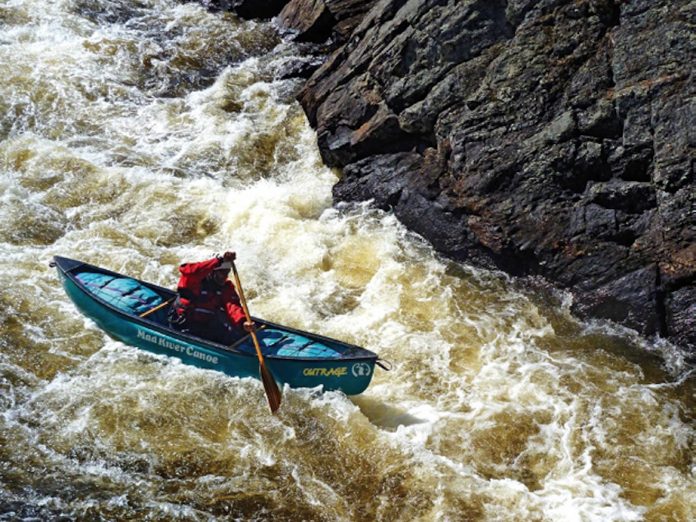
On first inspection, the Recon looked to me like a Mad River Outrage crossed with an Esquif Spark. When I learned it was co-designed by Dana Henry, this made sense. Dana Henry is the son of Jim Henry, co-founder of Mad River Ca­noe and designer of the timeless Outrage. And the last time I saw Dana, he took 30 seconds off my best time at the ACA Open Canoe Slalom Championships—on my home river. No surprise, then, to see the subtle V hull of the Outrage and an asymmetrical cab-forward shape reminiscent of the Spark.

Not everyone is excited about smaller and edgier open canoes. After 12 years of paddling OC1s less than 10 feet long, even I found get­ting back into 13 feet of Royalex was pleasantly reassuring. The Recon has no wobble or flip-flop from gunwale to gunwale like my Esquif Zoom or the Mohawk Maxim.

It takes an extra stroke to get the Recon mov­ing but it is so much faster and carries its speed so much deeper through turns. Think big for­ward stroke with a stern correction stroke… Oh, glory days.

With very little tilt, the Recon’s shallow V really holds a ferry angle. Give it more tilt and the ends magically release and the bow swings smooth­ly around. After a few big eddy turns, I started dropping the 13-foot hull into places it really shouldn’t be. The secret is to approach with a very open angle and work its release effect with an offside tilt to slam on the brakes and snap the bow upstream. Fun.

The Recon is super dry whether surfing or crashing through breaking waves. Seldom does water splash on the decks and the bow doesn’t pearl, period. Wenonah decked the Recon 30 inches from the bow and stern to shed water and add style. It looks tidy, but in my opinion just adds weight and makes draining a nuisance. If it were my boat, I’d take them off.

The highly adjustable outfitting in our Recon was the work of Wenonah western sales rep, Kurt Renner. The base of the two-piece saddle glues to the hull; the top—the part you sit on—attaches with Velcro and moves forward or backward to adjust trim. Also adjustable are the knee pads, which Velcro to strips on the floor. Single thigh straps thread through pre-installed loops. Behind the seat on each side are foam block ankle ris­ers—you’ll want to shape these to suit. Vinyl float bags are included.

With only Velcro holding it down, I thought all the foam would rip out in the first hole, but the only thing ripped out of the Recon was me. Yup, I swam. Without foot pegs and with single thigh straps, it is almost impossible to stay in. For many old school paddlers, I bet that’s okay, preferred in fact. The rest of us can order the Re­con as a naked hull and take the time to dress it ourselves.

While most of the open boat world is riding old designs or innovating with very niche models, the Recon offers class II–III canoeists a cruisy new option that’s smooth and stable, just like all solo boats used to be.


MATERIAL: ROYALEX

LENGTH: 13’

MAX WIDTH: 29”

ROCKER: 6”

HULL WEIGHT: 57 LBS

MSRP: HULL $1,099 or FACTORY OUTFITTED $1,899

www.wenonah.com


This story originally appeared on page 24 of the Early Summer 2012 issue of Rapid magazine. Read the entire issue here.
Granite Gear Superior One Gear Reivew

A review of the Granite Gear Superior One portage pack from Canoeroots & Family Camping magazine

The Superior One uses a harness reminiscent of a high-quality hiking backpack mounted onto a bag that’s sized for a canoe—a rare blend in portage packs. Its padded back panel forms for comfort and distributes weight evenly with help from wide, contoured shoulder straps and a cushy, interchangeable waist belt. Choose from two sizes to customize torso fit. Top load the colossal 121-liter capacity using dry bags for optimal protection—the Superior One is water-resistant, not proof. The Cordura and ballistic nylons used in the pack’s body bottom do, however, stand up to being dragged, snagged, tossed and sat on better than dryer, vinyl alternatives. The pack’s side pockets and lash points, features absent on lower-end models, make carrying loose items easy.

www.granitegear.com | $220


A VIDEO REVIEW OF THE GRANITE GEAR SUPERIOR ONE CANOE PACK FROM CANOEROOTS MAGAZINE


This article originally appeared in Canoeroots & Family Camping, Spring 2012. Download our freeiPad/iPhone/iPod Touch App or Android App or read it here.

The Perfect Tump

Photo: Conor Mihell
The Perfect Tump

Seventeen feet of old-school canvas and cedar makes you think differently about portages. I’ve carried relatively lightweight kevlar and Royalex canoes for hundreds of kilometers, but my big green prospector is different. It weighs an honest 82 pounds bone-dry and considerably more after a few days of travel.

Luckily, the legion of trippers who’ve lugged such waterlogged beasts in Temagami and the North Woods of Maine have come up with a clever way to bear the weight—one that’s equally effective on lighter contemporary canoes.

Maybe you’ve discovered the advantages of the tumpline on your favorite portage pack—the way it transfers weight from shoulders to spine and enables you to move massive loads. Rigged on the center thwart or carrying yoke of a canoe, the tumpline has similar advantages: a properly adjusted tump positioned just above your forehead actually lifts the canoe off of your shoulders and eliminates the pressure points of portaging. When your head and neck become fatigued, slipping out of the tump moves the weight back onto your shoulders, providing some respite on long carries.

Traditional outfitters sell leather tumplines that are designed for carrying canoes.

Look for one with a two-inch-wide head strap measuring about 15 inches long that’s securely riveted to five- to seven- foot tails. It’s also possible to build your own with leather, canvas or nylon webbing.

On canoes with carrying yokes, wrap the tails of the tumpline on either side of the contoured portion of the yoke and secure them with a simple hitch near the gunwales. The tumpline will only work if it fits tight; for me, this means fastening it to the yoke as close to the headpiece as possible.

It’s easy to use your paddles to create a carrying yoke on canoes equipped with straight center thwarts. Tie a thin cord permanently to the thwart with spaces for the paddle blades and enough room for your head in between. The blades should be aligned with your shoulders. Loosely secure the grip ends of the paddles on a seat or thwart. Then attach the tumpline, wrapping the tails so that the paddles can slide in and out of position without the need to remove the tump.

Once you’ve lifted the canoe (unfortunately a tumpline won’t help you there), slip the tump over the crown of your head and feel the weight of the canoe levitate from your shoulders. It helps to hold the tump near your jaw with one hand; use your other hand to keep the canoe resting level. 

This article on tumplines was published in the Spring 2012 issue of Canoeroots magazine.

This article first appeared in the Spring 2012 issue of Canoeroots Magazine.


Catching the Bug

Photo: Larry Rice
Catching the Bug

I really don’t know what made me want to explore the world, let alone in a canoe.

I grew up in a Chicago suburb where Wisconsin was considered somewhere far-off and foreign. Maybe it was my inexplicable interest in African wildlife; I visited Chicago’s stately Field Museum of Natural History, with its immense African Hall, every chance I got. Or maybe it was my penchant to devour classics like Robinson Crusoe, Treasure Island and The Adventures of Huckleberry Finn. Even the Mississippi River was exotic and enthralling to a city kid.

But, digging deeper, I believe it was my discovery of canoeing that helped rock my sheltered world. Seeking a means to commune with nature somewhere closer to home than Africa, I purchased an Old Town Tripper and ventured—often blundered—through places I had only imagined up to then: the Florida Everglades, Missouri Ozark rivers, spectacular canyons of the Rio Grande. My horizons quickly expanded far beyond the urban jungles and cornfields of Illinois.

Since then, I’ve been fortunate to canoe in 25 countries and on all seven continents, but I’m still humbled by how big our planet is and how precious little of it I have visited. Running my index finger over the smooth curve of a globe in my living room in central Colorado, my mind begins to wander. I dream about canoeing far-flung places with challenging waters, unfamiliar cultures and more unknowns than knowns: Botswana, Tasmania, Peru, Ellesmere Island, Vietnam, Moldova. The list goes on and on.

It’s impossible to see around the bend, which only raises the possibilities.

I like that about traveling, about paddling. Once you slip your bow into the current and let it usher you downstream, everything is possible, or seems to be.

When everything clicks on a paddling trip, I find not only the rugged wilderness I am seeking, but also a new way of appreciating the world. An appreciation of the unique qualities of the country I am visiting—its history, culture and the people I reach out to and meet along the way. Traveling by canoe allows me to discover my internal compass as well as be guided by an external one. By going with the flow, not fighting it, I find myself floating through life and oftentimes laughing along the way.

Following the path of the paddle these past 35 years, my passion for travel still burns as bright today as when I was that youngster fantasizing about tripping down Ol’ Man River.

This article on exploring the world by canoe was published in the Spring 2012 issue of Canoeroots magazine.

This article first appeared in the Spring 2012 issue of Canoeroots Magazine.