Long before I should have been out of a booster seat, I’d go on rides with my dad in his transport truck. Perched high above traffic in the air-ride seat of his freightliner, I’d watch him double clutch and shift through the gears of the 10-speed fuller transmission. I even had a belt buckle that read, “My Daddy’s a CBer” to hold up my Toughskins.
What does driving an 18-wheeler have to do with family camping? I’m sure taking me on rides was my dad’s way of giving my mother a break, but my parents were inadvertently planting seeds. The seeds I’m talking about are the early experiences that grow with us as we become teenagers and adults.
At age 18 I wrote my truck-driving licence and put myself through school by rolling up and down North America’s highways. It’s been 10 years since I’ve been a driver, yet I maintain the licence, mostly for nostalgic reasons. I love the smell of diesel fuel, the PISSSST sound of air brakes coming on, and the blue-collar charm of truck stop waitresses everywhere who always ask, “What can I getya Honey?”
Much has been written about Richard Louv’s sociological book, Last Child in the Woods. Louv writes about why our children are losing touch with nature and what it will mean for nature as today’s children become tomorrow’s recreationalists and environmental policy makers. He asks, if kids don’t care about wilderness now, why will they care later as politicians, developers or parents? Louv asks critical questions and explains societal influences but offers few practical tips for parents and educators who wish to reverse this trend.
CREATING TOMORROW’S ADVENTURERS AND STEWARTS
This winter I received an advance copy of A Natural Sense of Wonder by Rick Van Noy. Where Louv looks at the problem, Van noy offers solutions in an easy to read how-to guide. The book is a series of essays about how he engages his kids in nature. My favourite of his essays is “Creek Walking.”
My kids were playing in creeks long before they could walk. As a paddler I had my kids in canoes and kayaks and floating in rapids soon after they were born. When you’re two-feet tall even a small river is an ocean—too big to understand and too dangerous to explore on your own. But a creek is perfect.
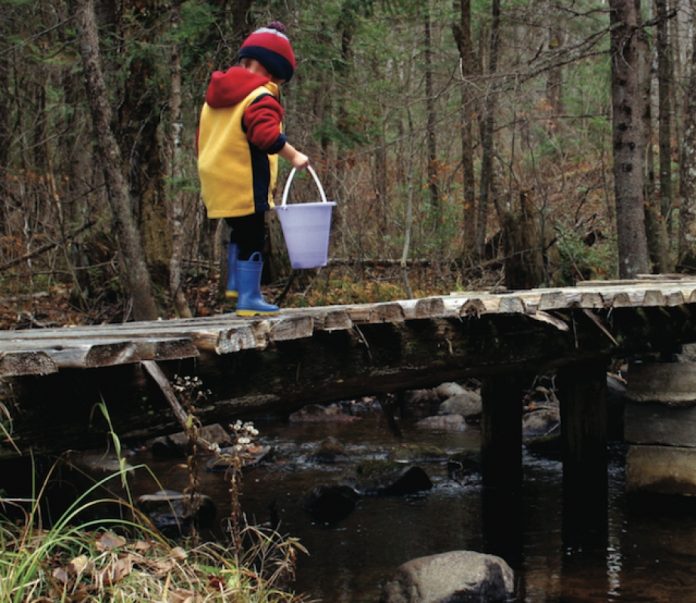
Our creek adventures began as a game. I’d gather rocks in a bucket for them and they’d bomb stick boats anxiously floating below.
As soon as they could walk this progressed to full-stream-ahead exploration. Gathering rocks turned into finding critters underneath them. Pockets are now for frogs and buckets for minnows. rubber boots last as long as their first soakers and then they’re stripping their clothes and turning a shallow pool into a gravel-bottomed bathtub. Do I care if my one- and three-year-old are buck naked in Little Eneas Creek? Not one bit.
A Natural Sense of Wonder is a practical guide for parents who want to get their kids playing outside and off concrete. Creek walking is just one of Van Noy’s suggestions. He also writes about the almost forgotten joys of walking to school, skating on ponds, building tree houses and getting dirty.
To me it’s a gardening book; a book about planting seeds and growing healthy and happy wildflowers. I hope my wildflowers grow up to be lifelong family campers, adventurers and stewards who will appreciate the natural environment the way I do a plate of greasy bacon and eggs.
 This article first appeared in the Summer 2008 issue of Canoeroots Magazine. For more great content, subscribe to Canoeroots’ print and digital editions here.
 This article first appeared in the Early Summer 2008 issue of Rapid Magazine.
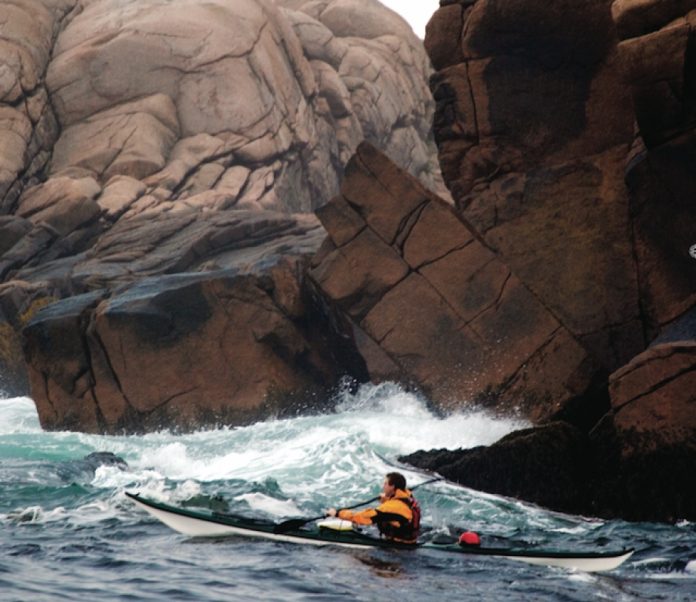
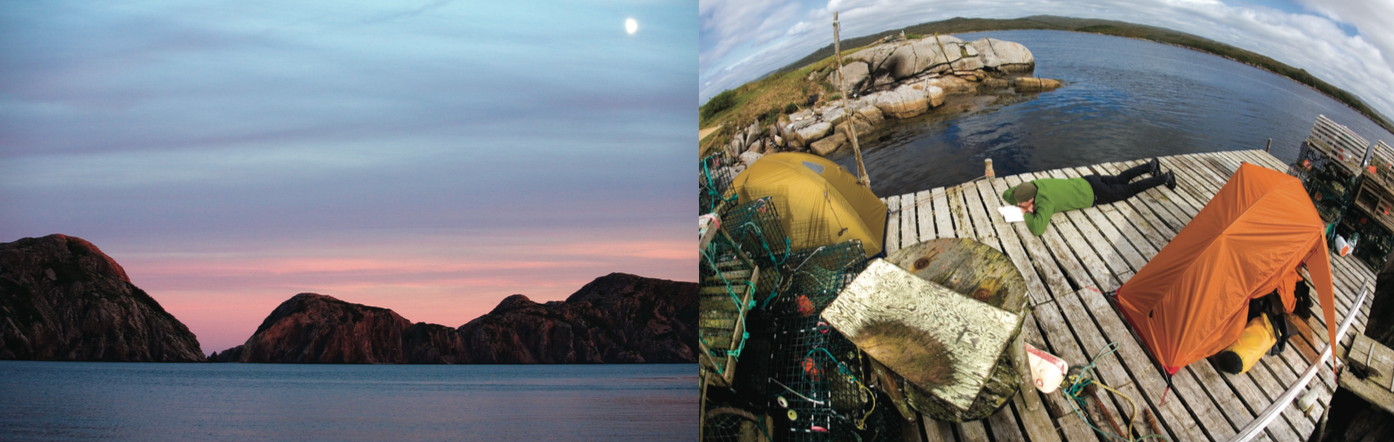
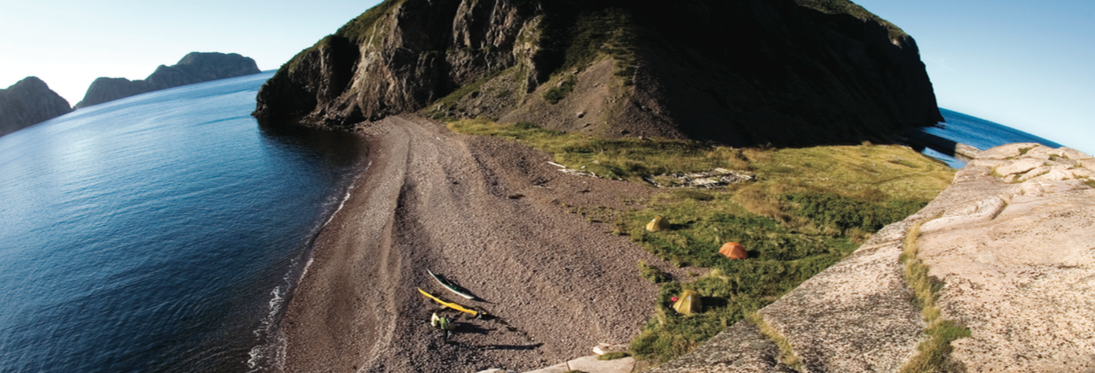
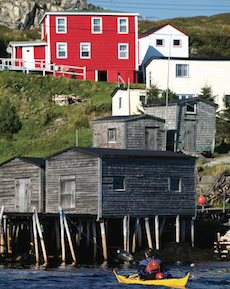 We spend two days at Cape La Hune not because of miserable weather—by now the Southwest Coast is fully enveloped in a 1,025-millibar high—but because it’s so hard to leave. Hiking up the breadbox-shaped peak behind the campsite oc- cupies an afternoon with scrambling up sloping rocks and crashing through tuckamore thickets of dwarf birch and fir trees. From the top, the Atlantic stretches uninterrupted to Antarctica, save for the inconspicuous dots of the French islands of St. Pierre and Miquelon to the south- east. Facing inland, La Hune Bay cuts a granite corridor through a sweeping expanse of tucka- more and barrens. On the treacherous descent I find an old threadbare rope—proof that the Cape La Hune outporters did more than just fish. Later on, I watch the moon rise over the rockbound coast from within the foundation of the old church, imagining the building itself departing on a barge bound for the horizon.
 This article first appeared in the Summer 2008 issue of Adventure Kayak Magazine. For more great content, subscribe to Adventure Kayak’s print and digital editions