Home Blog Page 349

Editorial: The Right to Bear Paddles

Photo: Gary McGuffin
Editorial: The Right to Bear Paddles

Imagine a smiling figure walking to the front of a crowded hall. Those nearby slap him on the back while the rest cheer. Stepping onto a stage he squints into rapid-fire camera flashes.

He grabs a paddle, raises it above his head and tells the crowd that if someone wants to take the paddle from him they will have to pry it from his “cold, dead hands.” The crowd roars; the politicians fall in line.

You probably have an easier time picturing a gun-toting Charlton Heston—movie star and former president of the National Rifle Association—in this situation rather than Paddle Canada president Richard Alexander. Here’s hoping Paddle Canada finds a way to put a little NRA firepower into its organization. The time may be coming.

As reported in the Summer 2008 issue of Canoeroots, Paddle Canada has entered a braided section of river and chosen what it hopes is the channel with the strongest current.

At first we were gun-shy about reporting on Paddle Canada’s political manoeuvres. Paddle Canada owns Kanawa magazine and the Waterwalker Film Festival, two ventures that compete, however politely, with Rapid Media’s magazines and our Reel Paddling Film Festival. We were wary of being seen as biased, but in researching the story I came to appreciate its importance.

BRINGING IN ADVOCACY AND LOBBYING

Paddle Canada was formed in 1976 to promote four pillars of recreational paddling: instruction, safety, environmental awareness and appreciation of our paddling heritage. It had struggled lately and some doubted it could continue fulfilling any part of its mandate. The 2006 sale of its member-built Ron Johnstone Paddling Centre headquarters and the liquidation of its inventory of boats, computers, staplers and a few paper clips fuelled the worries.

Alexander told me Paddle Canada will run a surplus this year for the first time in five years. He understandably feels a huge sense of accomplishment and credits the strength of the money-generating instructional program. But when I asked about the other quarters of Paddle Canada’s mandate the conversation slowed while we checked the website to remind ourselves what they were.

“Advocacy and lobbying are not primary purposes of this paddling organization,” explained Alexander.

Perhaps not now, but if Alexander continues to strengthen Paddle Canada, why couldn’t they become more a part of its purpose? Imagine for a moment if paddlers had a vehicle for wielding political influence. That’s where the famous scene with Charlton Heston comes in (the one from the NRA convention, not when he finds the Statue of Liberty on the beach in Planet of the Apes and goes ape).

The NRA marshals more than four million members, claims an 86 per cent success rate in helping the politicians it endorses get elected and is routinely ranked by members of Congress as the most powerful lobby group in the United States.

Paddle Canada could be similarly influential. After all, if the NRA can convince politi- cians not to renew a ban on semi-automatic assault rifles, which it did in 2004, then surely an activist paddling organization could lobby for more palatable things like fewer dams, more parks, rights of access and a halt to the creep of canoe licencing fees.

If we found our voice we could have politicians pandering to canoe-owning voters by promising chain gangs for portage clearing and long weekends every other week from May to October. Wide-brimmed Tilley hats would become a symbol of power and prestige.

What’s more, if we model ourselves after gun owners, our bumper stickers would become way more interesting. 
This article on Paddle Canada was published in the Summer 2008 issue of Canoeroots magazine.This article first appeared in the Summer 2008 issue of Canoeroots Magazine. For more great content, subscribe to Canoeroots’ print and digital editions here.
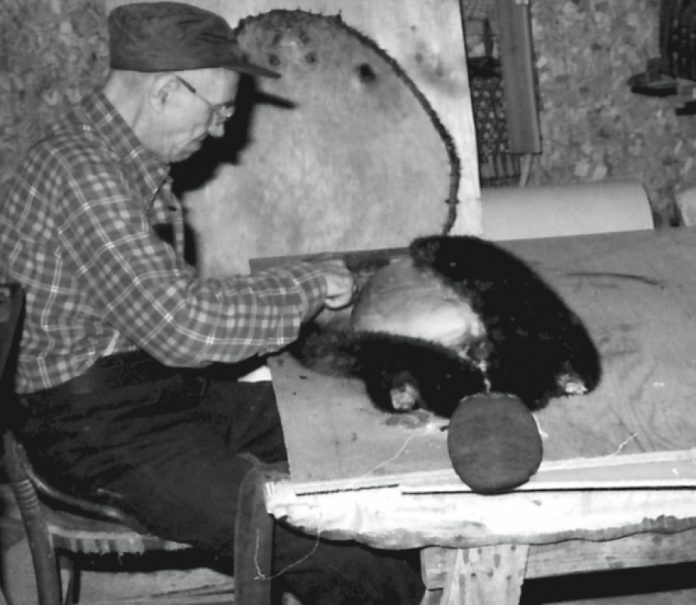
Betcha Didn’t Know About the Hudson’s Bay Company

Photo: Algonquin Park Archives 5573 (MNR)
Betcha Didn't Know About the Hudson's Bay Company
  • The Hudson’s Bay Company (HBC) is the oldest incorporated merchandising company in the English-speaking world. When you buy socks at The Bay you’re continuing a 338-year-old tradition.
  • During the first half of the 19th century, the HBC held sway over 1/12th of the earth’s land surface—allowing HBC overseas governor Sir George Simpson to be introduced at a fancy 1838 dinner as the “head of the most extended dominions in the known world, the Emperor of Russia and the Queen of England excepted.”
  • Although HBC are the initials of English heart-throb actor Helena Bonham Carter (who has never portrayed a beaver but did appear as a chimp named Ari in Planet Of The Apes), HBC also once stood for “Here Before Christ” in the minds of traders frustrated by the company’s monopolistic ways. Those who found themselves inside isolated fur trading posts often left thinking HBC stood for “Horny Boys’ Club.”
  • In a related story, it is rumoured that Sir George Simpson sired 70 children between Quebec and the Pacific during 40 years with the HBC, lending legitimacy of a sort to his title of father of the fur trade.
  • The original Latin motto of the HBC, pro pelle cutem, meaning “a skin for a skin,” sounds benign enough for a fur trading company, until one realizes that these words were interpreted by employees to mean that to join the fur trade they had to trade their own skin for the brutal and short life of a fur trader.
  • The iconic voyageur canoe paintings of Frances Anne Hopkins notwithstanding, after 1820 most HBC freight was carried not in canoes but in boats fashioned after Orcadian dories that were rowed, not paddled.
  • Though many assume that 19th-century Canada was buzzing with folk-song-singing French-Canadian and Métis voyageurs, 80 per cent of HBC employees at the time were stolid Scots from Orkney, who had as much trouble carrying a tune as they did their heavy dories.  

This article on the Hudson's Bay Company was published in the Summer 2008 issue of Canoeroots magazine.This article first appeared in the Summer 2008 issue of Canoeroots Magazine. For more great content, subscribe to Canoeroots’ print and digital editions here.
Family Camping: Creek Walking

Photo: Scott MacGregor
Family Camping: Creek Walking

Long before I should have been out of a booster seat, I’d go on rides with my dad in his transport truck. Perched high above traffic in the air-ride seat of his freightliner, I’d watch him double clutch and shift through the gears of the 10-speed fuller transmission. I even had a belt buckle that read, “My Daddy’s a CBer” to hold up my Toughskins.

What does driving an 18-wheeler have to do with family camping? I’m sure taking me on rides was my dad’s way of giving my mother a break, but my parents were inadvertently planting seeds. The seeds I’m talking about are the early experiences that grow with us as we become teenagers and adults.

At age 18 I wrote my truck-driving licence and put myself through school by rolling up and down North America’s highways. It’s been 10 years since I’ve been a driver, yet I maintain the licence, mostly for nostalgic reasons. I love the smell of diesel fuel, the PISSSST sound of air brakes coming on, and the blue-collar charm of truck stop waitresses everywhere who always ask, “What can I getya Honey?”

Much has been written about Richard Louv’s sociological book, Last Child in the Woods. Louv writes about why our children are losing touch with nature and what it will mean for nature as today’s children become tomorrow’s recreationalists and environmental policy makers. He asks, if kids don’t care about wilderness now, why will they care later as politicians, developers or parents? Louv asks critical questions and explains societal influences but offers few practical tips for parents and educators who wish to reverse this trend.

CREATING TOMORROW’S ADVENTURERS AND STEWARTS

This winter I received an advance copy of A Natural Sense of Wonder by Rick Van Noy. Where Louv looks at the problem, Van noy offers solutions in an easy to read how-to guide. The book is a series of essays about how he engages his kids in nature. My favourite of his essays is “Creek Walking.”

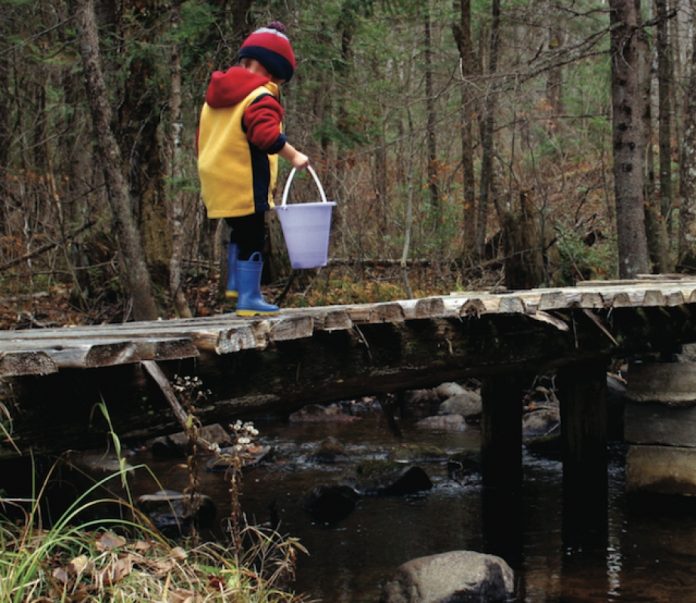
My kids were playing in creeks long before they could walk. As a paddler I had my kids in canoes and kayaks and floating in rapids soon after they were born. When you’re two-feet tall even a small river is an ocean—too big to understand and too dangerous to explore on your own. But a creek is perfect. 

Our creek adventures began as a game. I’d gather rocks in a bucket for them and they’d bomb stick boats anxiously floating below.

As soon as they could walk this progressed to full-stream-ahead exploration. Gathering rocks turned into finding critters underneath them. Pockets are now for frogs and buckets for minnows. rubber boots last as long as their first soakers and then they’re stripping their clothes and turning a shallow pool into a gravel-bottomed bathtub. Do I care if my one- and three-year-old are buck naked in Little Eneas Creek? Not one bit.

A Natural Sense of Wonder is a practical guide for parents who want to get their kids playing outside and off concrete. Creek walking is just one of Van Noy’s suggestions. He also writes about the almost forgotten joys of walking to school, skating on ponds, building tree houses and getting dirty.

To me it’s a gardening book; a book about planting seeds and growing healthy and happy wildflowers. I hope my wildflowers grow up to be lifelong family campers, adventurers and stewards who will appreciate the natural environment the way I do a plate of greasy bacon and eggs.

This article on kids and the outdoors was published in the Summer 2008 issue of Canoeroots magazine.This article first appeared in the Summer 2008 issue of Canoeroots Magazine. For more great content, subscribe to Canoeroots’ print and digital editions here.
Eating Outdoors: Full Day Menu

Photo: flickr.com/oskarlin
Eating Outdoors: Full Day Menu

So you have proven them all wrong – your camping trips and adventures didn’t end when kids entered your life. Not only do you still get out, your kids enjoy it as much as you do. But getting children to eat healthy foods is always a challenge for parents, especially while camping when they’re out of their normal routines. While in the backcountry active parents are often left wondering what to feed their kids to ensure they are getting the energy they need and are laying the foundation for a lifetime of outdoor enjoyment and healthy eating.

As with anything in Kidland, the only way to ensure a long-term connection with wilderness and to encourage healthy eating is to make it fun. Bad weather, cranky youngsters or parents, and leaky tents can make an outing difficult, but poor camp food that no one eats can outright ruin the entire trip.

Roll up your sleeves, unleash your creative spirit, and start your kids’ lifetime of wilderness appreciation the right way, with good food. Here are a few ideas—a day’s worth of recipes— that will help you and your kids have more fun and eat better in the campground or backcountry. Bon appetit! 

BREAKFAST: SUPER GRUEL

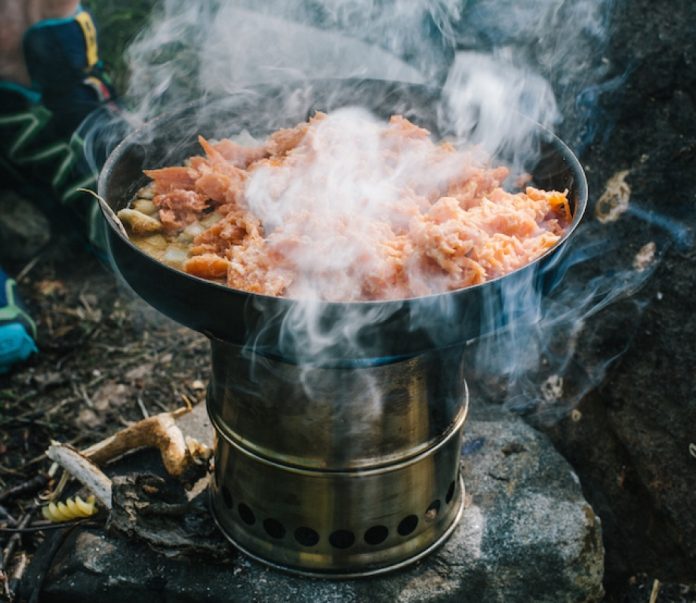
Porridge. Oatmeal. Gruel. Slop. Sludge. All these lacklustre names have been slapped onto this classic trail breakfast. Like most of my generation, I had econo-mizer parents who fed their offspring nothing but boiled oats for breakfast, every day. As a result, I grew to despise porridge with a passion normally reserved for rival soccer teams in Latin countries. That is, until I discovered Super Gruel. This recipe serves four hungry campers.

Ingredients:

  • 2 cups instant or regular oatmeal (1/2 to 3/4 cup dry oatmeal per person)
  • 3 tablespoons butter
  • Chopped dried or fresh fruit; mango, peach, apple, banana, or even raisins will do
  • Magical flavours such as a pinch of cinnamon, a wee dusting of nutmeg, a splash of vanilla, and, for the adventurous, a dash of ground cardamom
  • Decorations or disguises such as almond eyes, chocolate chip freckles, cookie noses, licorice hair, brown sugar beards, blueberry dimples

Directions:

  1. Boil roughly twice as much water by volume as you have oats. Add dried fruit first and let boil for several minutes to re-hydrate.
  2. Add oats and simmer until soft. Stir in butter and magical flavours.

  3. When cooked to your preference, remove from heat and either decorate the entire pot or individual bowls with various fruits, nuts, and cookies. Serve with milk or unwhipped whipping cream. 

LUNCH: MUD BURRITOS

In the backcountry, lunching usually starts right after breakfast and continues to dinner, especially for little ones with the metabolisms and attention spans of hummingbirds. When you’ve hidden the last of the jelly bellies along the trail and the last animal cracker lays beaten in a mushy pulp on the bottom of the canoe, it is time for a real lunch of Mud Burritos.

Ingredients:

  • 1 whole wheat burrito shell or wrap per person
  • 1 jar Nutella or other chocolate-hazelnut spread
  • 1 jar of nut butter such as almond or cashew butter
  • 1 handful of fresh or dried fruit of your choice such as banana, apple or pear

Directions:

  1. Pretend you’re a family of beavers making their winter home. Smear layers of mud (hazelnut-chocolate and nut butters) on the burrito shell and lay a line of fresh or dried fruit down the middle.

  2. Roll it up like a big burrito and eat whole or slice into bite-sized swirls. 

DINNER: PARENTAL POLENTA

This is a simple dinner that most kids and adults will enjoy. The restaurant version is very upper crust, as they say, served in individual slices with all kinds of fancy garnishes. Backcountry polenta is a deep-dish, layered pie—a true mess, which is a prerequisite for fun for most kids!
 
Ingredients: 
  • 3/4 cups polenta, a fine ground corn meal, per person
  • 1 veggie bouillon cube, or use chicken or beef for carniphiles
  • 1 small pile grated cheese of your child’s preference. I prefer Asiago but most younger kids will prefer mozzarella or cheddar
  • Parmesan cheese
  • 1 tablespoon butter
  • 1 bag or small can tomato sauce of your preference; the bags of sauce found next to the fresh pasta at the grocery store work well for this

Directions:

  1. Boil twice as much water as you have polenta. Once boiling, stir in polenta and bouillon cube.

  2. Continue stirring to avoid burning the polenta, especially if you are cooking on a backcountry stove that doesn’t simmer.

  3. As the polenta begins to thicken, stir in butter and remove from heat. Cover the polenta with an inch or so of grated cheese.

  4. Heat the tomato sauce and pour over the cheese layer. Cover this with a thin sprinkle of Parmesan cheese.

  5. Cover the pot and let sit for 3–5 minutes to melt the cheese layers. Serve by digging deep to the bottom to ensure that everyone gets polenta, sauce, and both cheese layers. 

DESSERT: ORANGE CAKES

Like most of the cool things I’ve learned in life, I learned this one from a kid. This backcountry dessert is inspiring in its simplicity. 

Ingredients:

  • 1 large fresh orange per person
  • 1 package instant lemon or chocolate cake mix—check the box before leaving town to see if you need milk or eggs for the cake mix
  • 1 roll tin foil, enough to wrap the oranges
  • 1 campfire with lots of hot coals 

Directions:

  1. Carefully slice the very top off the oranges making a hole just big enough to allow you to scoop out the orange juice and pulp with a spoon, which makes a healthy appetizer for this dessert. You should have empty orange skins with orange skin lids like miniature uncarved jack-o’-lanterns.

  2. Mix the cake mix as per directions on the package.

  3. Fill the orange skin pots with the batter. Put the orange skin tops on and wrap them in tin foil with the shiny side in.

  4. Carefully place them in hot coals. Allow them to bake for 10 to 15 minutes.

  5. Allow to cool then carefully unwrap the oranges. Open and enjoy your freshly baked orange cakes. 

This article on camp food was published in the Summer 2008 issue of Canoeroots magazine.This article first appeared in the Summer 2008 issue of Canoeroots Magazine. For more great content, subscribe to Canoeroots’ print and digital editions here.
Paddling The Stikine, The Fastest Canoe River In The West

Canyon with river running through
Don't paddle or you'll miss it. | Photo: Dave Quinn

The Stikine is huge, man. And fast,” exclaimed a canoe guide I know when I told him our plans to spend 10 days paddling 240 kilometers of the Lower Stikine River.

“The river just rips by, all those huge boilers and whirlpools. My advice: don’t paddle, or you’ll get to the end too soon.”

With this bizarre warning, we piled our gear—paddles included—into the truck and headed north.

The fastest navigable free-flowing river

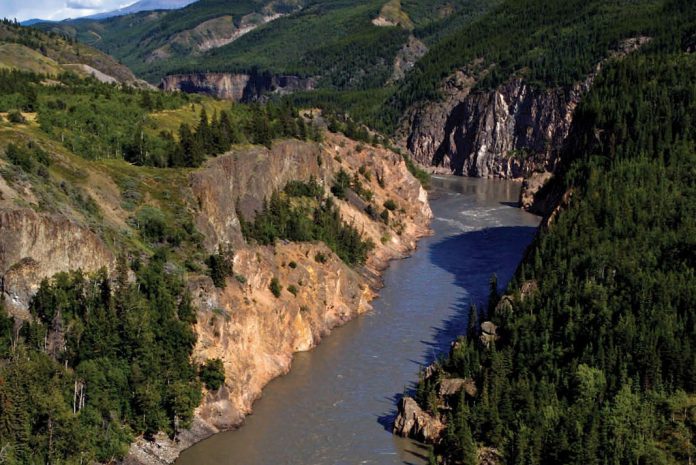
The Stikine rises on the Spatsizi Plateau in northwestern B.C. before squirting violently through the unrunnable (for mere mortals, at least) 100-kilometer Grand Canyon of the Stikine.

From the bottom of the canyon at Telegraph Creek, British Columbia, to its communion with the Pacific at Wrangell, Alaska, the river drops nearly 1.3 meters per kilometer, a grade that makes it the fastest navigable free-flowing river in North America.

Even at our put-in at Telegraph Creek the size and strength of the Stikine stuns us—a 200-meter-wide channel of silt-laden water churns by at more than 20 kilometers per hour.

The Stikine’s cargo of salt

In 1879, legendary naturalist John Muir visited the Lower Stikine, calling it, “a Yosemite 100 miles long” whose “views change with bewildering rapidity.”

As we leave the drier pine forests of the interior behind and enter into the granite and glaciers of the Coast Mountains, we understand this to be a great compliment to Yosemite. Here the river becomes a boiling, coffee-with-cream-coloured waterway several hundred meters wide. We heed my friend’s advice and stow our paddles, feet dangling over the gunwales in the icy water.

Our canoes spin a lazy dance, showcasing a 360-degree panorama of peaks. The ABS bottom of the canoe hisses through the Stikine’s cargo of silt, and the cool air hints at the scent of pulverized granite in icy water. Bewildering indeed.

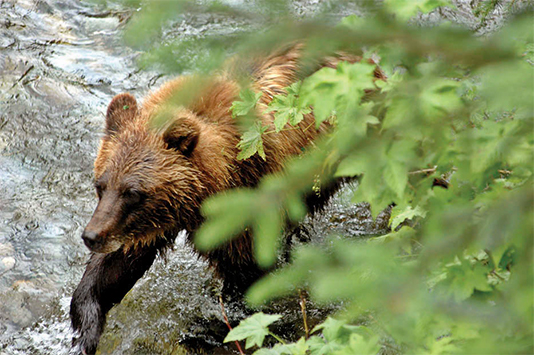
The wildness of this valley is etched on every sand and gravel bank we visit. Wolves, grizzly, black bear and moose have all scribbled their stories here. In Little Canyon—a notorious challenge both to modern canoeists and the sternwheelers that ferried 19th-century optimists inland to the Cassiar and Klondike gold rushes—we spot what looks like a bear swimming the confused waters of the 100-meter-deep rock cleft. Instead we realize that in this boiling, whirlpool-filled canyon, 170 kilometers from the sea, we are seeing our first seal.

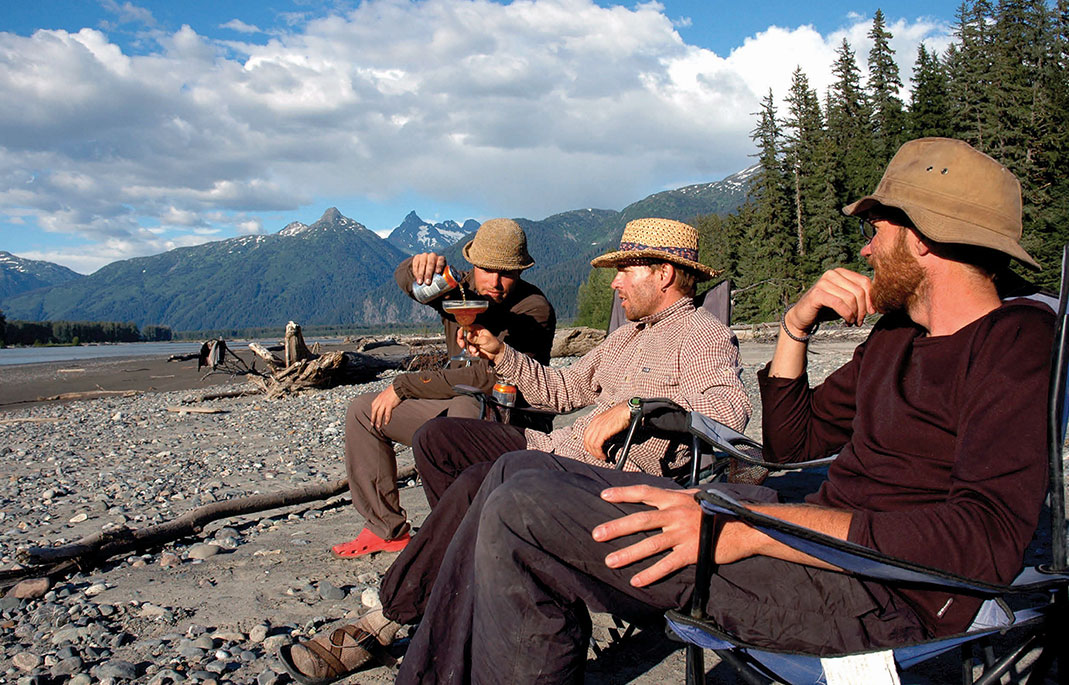
Three men sitting on sand bar pouring scotch.
This sand bar is always open. | Photo: Dave Quinn

An artery of trade and travel

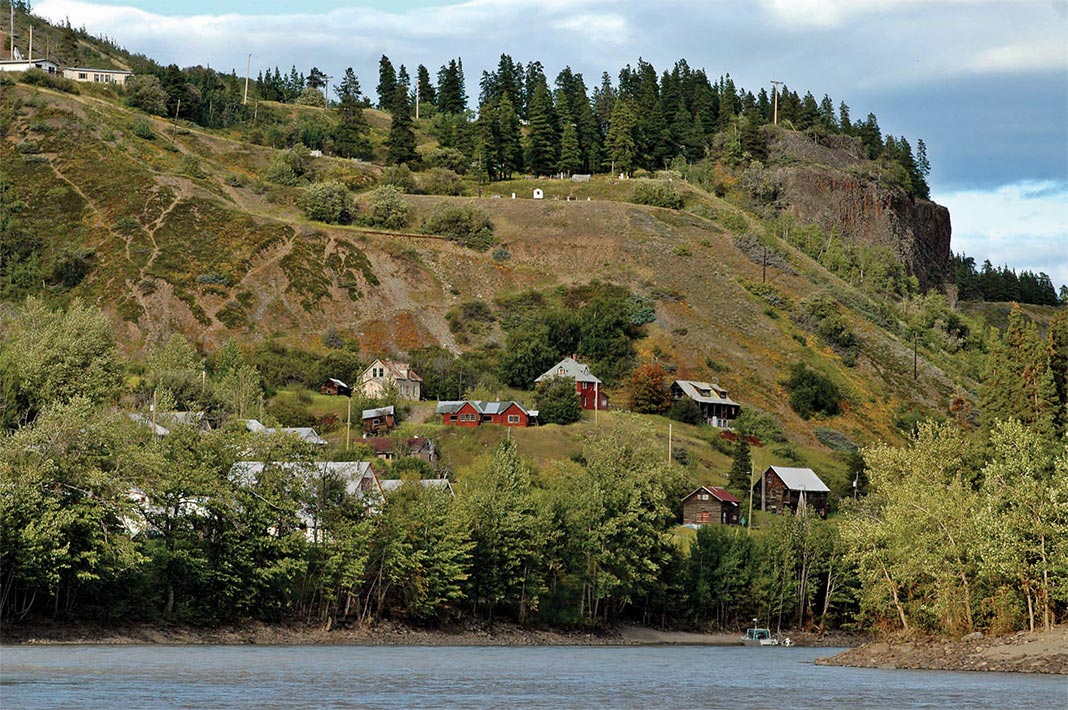
Like its scenery, the Stikine has a rich and storied past. An artery of trade and travel for millennia, local legend tells of a vast ice wall that once blocked the valley, under which the entire Stikine flowed through a gaping ice tunnel. To test whether their canoes could safely pass, traveling groups of the indigenous Tahltan would send an old woman through in a canoe. If she emerged unscathed, they knew the tunnel would offer safe passage downstream to trade with, or raid, the Tlingit villages on the coast.

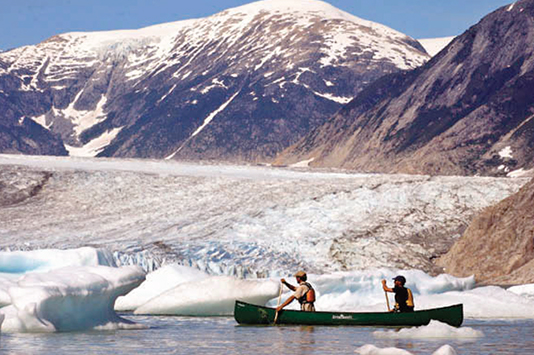
Today a remnant of this ice wall lies in a pool of its own meltblood—a large iceberg-choked lake separated from the river by a thin, treed moraine. Resisting the forward push of the river, we portage to this hidden lake and pass a day of contrasts playing chess and reading in the warm white-sand beside grounded icebergs. Ten-thousand-year-old ice commands us to break out our supposedly well-aged scotch, and we toast the Tahltan, the gold rushers and the spirit of adventure that brought us here.

[ Paddling Trip Guide: View all paddling trips in British Columbia ]

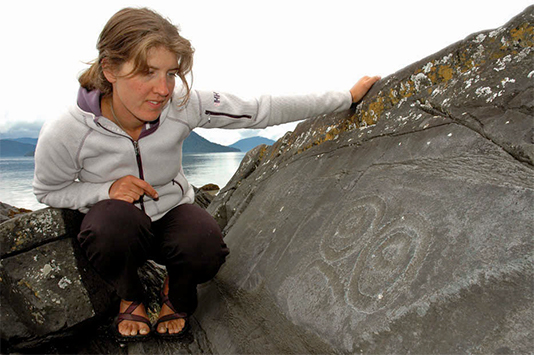
The First Nations presence on the Stikine is strong. Fading pictograms dot the shore, while sandy eddies bristle with well-tended salmon nets hung from long pine poles. Five salmon species return each year to the Stikine and have been a source of conflict for decades. Alaskan, Canadian and First Nations fishers have all angled for the grizzly’s share of the catch. Although the so-called Salmon Wars ended with a 1999 treaty, it is an uneasy truce and tensions are still palpable on both sides of the border, each country blaming the other for declining salmon stocks.

The Stikine salmon squabble was nearly rendered moot in the late 1970s when B.C. Hydro unveiled a plan to build five immense dams along the Grand Canyon of the Stikine and the Stikine’s main tributary, the Iskut River. The hubris required to build sufficient dams along this river is hard to conceive of, and I’m happy it didn’t prevail. After nearly a decade of opposition by conservationists and First Nations, the dam plans were scrapped, and Stikine River Provincial Park was created.

A landscape still unscarred by modern industry

After another diversionary side trip upstream through Shakes Slough to the granite-girded and iceberg-laden Shakes Lake, we relent to the last leg of our journey and enter Alaska.

Here the river meets its match and finally slows as it runs into Pacific tidewater. And with the tides comes fog. We feel our way by compass through nomadic sandbars and finally across five kilometers of Pacific swells from the mouth of the Stikine to the barnacle-caked dock at Wrangell where we trade the wilderness of the Stikine for the rough-and-ready, deep-fried town full of bumper stickers reminding us of the driver’s constitutional right to bear arms.

The estuary at the mouth of the Stikine is immense—the accumulated energy of this river has created a sprawling finale that encompasses a 27-kilometer-wide delta. The Stikine here seems pristine and permanent; unbreakable. It has persevered through glacial assault, First Nations battles, two gold rushes, the Salmon Wars, and B.C.’s plans to shackle it with hydro projects.

But even B.C.’s most remote rivers are within range of the crosshairs of industry, and the scopes of two industrial giants are set on the Stikine. Shell Canada has announced plans to develop coal-bed methane fields in an area known as the Sacred Headwaters—the rolling, wildlife-rich plateau where the Stikine, Nass and Skeena Rivers come to life.

Downstream in the headwaters of the Iskut River, the Lower Stikine’s main tributary, Teck Cominco and NovaGold have permits to create in Galore Creek the world’s largest copper- gold mine—an open-pit operation involving more than 80,000 hectares of Stikine wilderness, processing 65,000 tonnes of ore a day. Skyrocketing access and construction costs in booming B.C. have led to the recent suspension of the project, although the mineral giants have promised to “reassess the project and evaluate alternative development strategies.”

As paddlers, we sought out this pocket of the old world, a place still unscarred by modern industry. We are like the gold seekers who came before us, searching for something rare and precious.

Like daring to paddle too hard on the already fast waters of the Stikine, if we rush to industrialize our last wild areas, we may find we come to the end of them too soon. The power of the Stikine is such that to paddle it is to appreciate the importance of knowing when to stow your paddle.


If you go

Access

The drive up the Stewart-Cassiar Highway and along the 113-km gravel road to Telegraph Creek is an adventure in itself. Park your car and rent canoes at Stikine Riversong Inn at Telegraph Creek. To return, arrange a jetboat shuttle with Riversong ($2,200 CAD).

You can also fly or take the ferry from Seattle to Wrangell and arrange a jetboat shuttle to Telegraph Creek with either Riversong or a Wrangell-based operator. Due to border bureaucracy, air shuttles are no longer available.

Recommended reads

This article was first published in Canoeroots & Family Camping‘s Early Summer 2008 issue. Subscribe to Paddling Magazine’s print and digital editions here , or browse the archives here.


Dave Quinn wrote about paddling on Banks Island in the Northwest Territories in the August 2007 issue of Canoeroots

Butt End: Canoe Virgin

Photo: Kevin Callan
Butt End: Canoe Virgin

The first time I attempted a canoe-borne romantic escapade was shortly before an article I wrote on making love in canoes hit the newsstands. The article covered all the bases—but I had yet to do actual primary research.

I was okay with this. It was my wife, Alana, who wasn’t going to stand for it. She believed journalistic integrity demanded that we make love in a canoe. Alana left me to figure out the details while she put our three-year-old daughter to bed.

Getting out on the water was going to be impossible. We live in the middle of a city and didn’t have a babysitter. At first I thought a quick (though not that quick) solution would be to just flip the canoe over on the back lawn. But I worried the set-up would lack romantic quality. Instead, I put the 16-foot boat through our back window, rested it beside our fireplace, placed two glasses of wine on the bow seat and put a CD of nature sounds in the stereo.

The mood was set. I sat in the stern, wearing only my bathrobe, and waited for Alana to return for the big surprise. Before long she did, but with our daughter in her arms. Kyla had a slight fever and needed comforting before going to bed.

There was no getting around the embarrassment, but Kyla saved me by asking if we were going camping. I spent the next hour playing camp-out with Kyla and her dolls.

So there I was, still a canoe virgin and, according to Alana, also a complete idiot for hauling a canoe into the house and thinking she’d be up for a romantic encounter in a boat resting on a shag carpet. The good news is my daughter thinks I’m the coolest dad ever for bringing in extra props for her dollhouse. She cried the next morning when I took the canoe back outside. So did I.

The problem was, I had to write another piece about making love in a canoe for my next book. And the publisher wanted photos.

I decided to buy a blow-up doll. I went to a joke gift shop and, since I had Kyla with me and the inflatable dolls were on display in the back near some rude sex toys, I asked the sales clerk to retrieve one for me. As she went to fetch it a woman from Kyla’s daycare wandered into the store. When the woman stopped to say hello, the clerk yelled out, “Which model do you want?”

I panicked and blurted out, “The cheapest one.”

“The androgynous one it is, then,” came the reply.

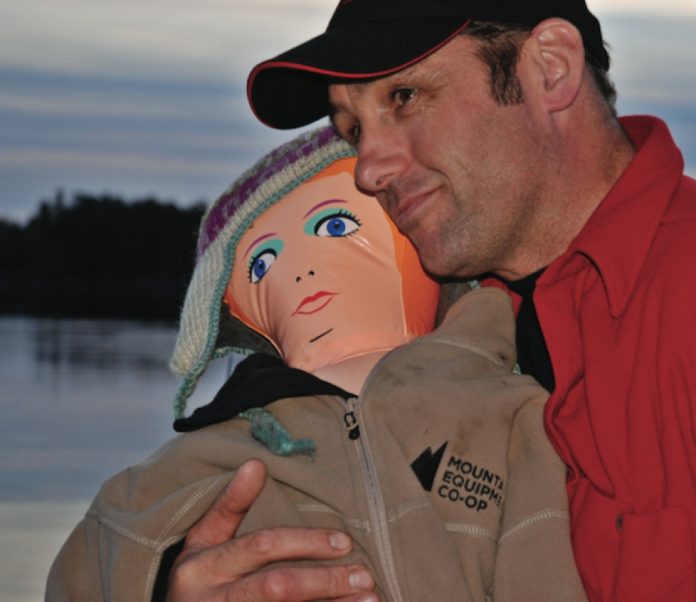
I slinked out of the store with my doll double-bagged, hoping to never see the woman from Kyla’s daycare again, and wondering how I would photograph a moment of passion involving an inflatable hermaphroditic canoeist.

For better or for worse I’m still a canoe virgin, but I was lucky enough to have a neighbour who really wanted to help me out of a tight spot. If that’s not why he offered to pose for me then I don’t want to know the real reason.

Kevin Callan does not recommend inflatable dolls as a substitute for a proper PFD. 

This article on making love in a canoe was published in the Summer 2008 issue of Canoeroots magazine.This article first appeared in the Summer 2008 issue of Canoeroots Magazine. For more great content, subscribe to Canoeroots’ print and digital editions here.
Boat Review: Pyranha’s Rev

Photo: Jensen Klatt
Boat Review: Pyranha's Rev

There’s been a revolution in playboat design the last couple of years. Designers have ever-increasing demands to create boats that are easy for the novice market to make bounce, roll and spin and for the pros to get huge air. And you can’t just let them eat cake when the proletariat cries for an affordable and single kayak that does it all. So even as a freestyler, river running must be saved from the guillotine in design.

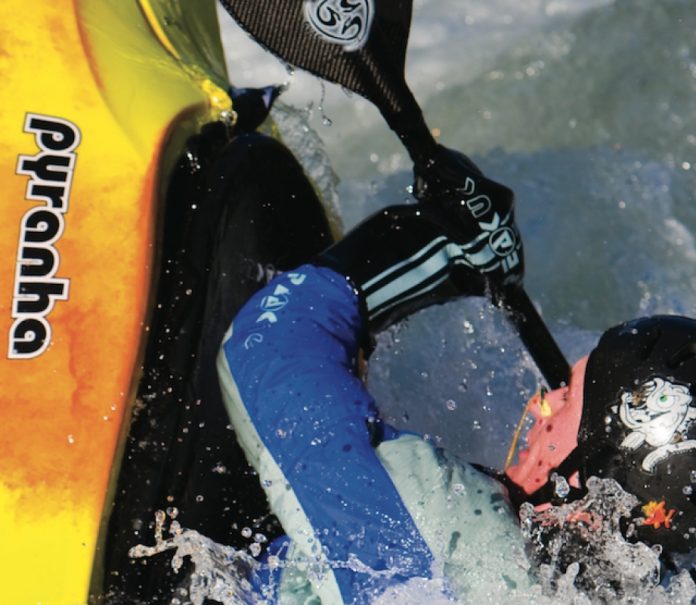
Pyranha’s new Rev takes it full circle, offering a small, medium and medium-long version, each with a Bastille-sized list of alterations to their 4-20 design to create a kayak that could make heads roll at the World Freestyle Championships in 2009. Although as purebred as freestyle kayaks come these days, Pyranha designer Graham Mackereth knew his boat had to appeal to both the expert and beginner paddler and he wanted a kayak that transitioned seamlessly from the biggest features to smallest rivers.

The wheels started turning on the Rev with some more obvious hull tweaks. Mackereth started with a far more symmetrical shape than Pyranha paddlers will be used to and moved the cockpit forward, giving the Rev a high-volume centre for lots of pop.

According to Mackereth, it is the full-length, releasing Vortex rails that allow great flat spinning. He says with a flat aft hull section and softer radius in the centre and front sections, you should find edge-to-edge transitions quick and require little effort. It feels snappier to carve but edgier for sitting and spinning, sort of like the Crazy 88, but not that edgy. The chined stern helps cut drag, adding to the Rev’s speed on a wave, which Pyranha has always been known for.

If you look closely you’ll also see Mackereth kept rolling by giving the Rev what he says are slicier ends than his previous models—oh, the forgotten joy of endless cartwheels—and finer edges will give better initiation for your other arsenal of tricks.

In late fall of ’07 the Rev made its first rounds out of the factory and around the world of official test rivers. In the hands of instructors at North Carolina’s Nantahala Outdoor Center, it impressed so much that they placed an order.

“It’s a boat that should make people look and feel better than they really are,” says NOC paddling school Director Wayne Dickert, so of course the Rev is being added to the school’s instructional fleet.

“The Rev proved to release faster, pop bigger and carve easier than any boat Pyranha has designed thus far,” says NOC store manager and boat buyer Daniel Dutton. “I especially loved initiating this boat in a hole or wave to go airborne and connected multiple tricks with control and ease.”

Keep in mind these fellows are pros, for the rest of us who take a little more time to get comfortable in a new boat, the finer points of the design may not be as obvious right away.

“It’s easy to roll, loop and flat spin if paddled aggressively; a good paddler should really be able to get the best from Rev,” Mackereth says. “But like any top-end boat, it does take a few paddles to get really dialed in. A quick test might not reflect its ultimate potential.”

One thing pros and recreational paddlers agreed upon was the Pyranha Connect 30 outfitting. The system is comfortable and easy enough to adjust, however some testers found themselves continually re-adjusting loose fittings. This does not outweigh just how responsive and forgiving the Rev truly is—two traits that have served monarchs and one English boat designer very well in the past.

SPECS

LENGTH: 6’ 1”/6’ 2”/6’ 3.5”
WIDTH: 23.5”/24”/24.4”
VOLUME: 46.2/53.1/56.8 US Gal
WEIGHT: N/A/31.4/N/A lbs
MRSP: $1,159 US
pyranha.com

Screen_Shot_2015-07-14_at_3.33.33_PM.pngThis article first appeared in the Spring 2008 issue of Rapid Magazine. For more great boat reviews, subscribe to Rapid’s print and digital editions here.
Skills: Fast and Fresh Dinner

Photo: Ian Merringer
Skills: Fast and Fresh Dinner

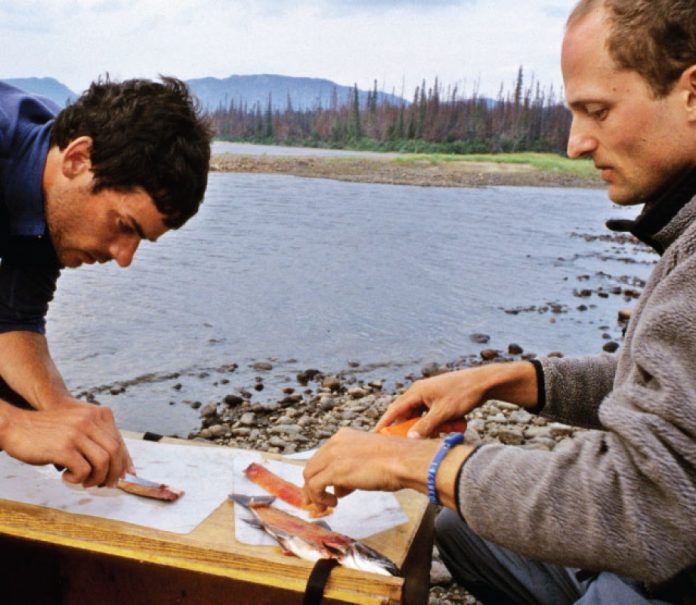
By day 10 on the Coppermine last year, even the non-fishers were angling for pan-fried char. But how exactly does that slippery critter get from your hook to the plate? Filleting a fish removes the flesh from the bones and makes cooking easier.

Fillet your fish on a flat rock or piece of wood away from the campsite and near the water’s edge so you can rinse away the evidence. 

Using a sharp, long, thin blade, slice just behind the gills to the spine as if you were removing the head. Then make an incision along the back of the fish, as close as you can to the dorsal fin. You should be able to feel the dorsal bones, which protrude from the spine, with the tip of your blade. If you can’t feel the dorsal bones, you’re leaving some flesh behind. 

Hold the flesh back as you slice and continue until you’ve cut down to the spine all the way from gills to the anal fin. This is where the ribcage ends and you can begin cutting deeper than the spine. With your blade angled down toward the spine continue with a sawing motion to separate the tail portion of the fillet from the spine.

With the fillet detached—except for where flesh meets ribcage—repeat on the other side, cutting to the spine on the other side of the dorsal fin and bones. 

The hardest part is removing the fillet from the ribcage. While holding the flesh you’ve already separated and with the blade angled down toward the ribs, gradually slice the flesh away from the bones. The flesh is thinnest over the ribcage but with patience you can get most of the meat from these bones. When you get to the end of the ribs slice along the belly and around the anal fin and anus to remove the first fillet. Repeat on the other side and you’ll have two fillets ready for the pan and a very thin fish that can go back to a deep spot in the lake. 

You can cook fillets with the skin on but I prefer to remove the skin from fish with large scales. Hold the fillet near the tail with the skin down and slice between the skin and the flesh. Work the knife back and forth with the blade on a slight angle toward the skin. The skin will neatly part from the flesh, leaving you with nothing but fresh flesh and very few bones.

Mark Scriver is a Black Feather guide and the co-author of Camp Cooking.

This article was originally published in the Spring 2008 issue of CanoerootsThis article first appeared in the Spring 2008 issue of Canoeroots Magazine.
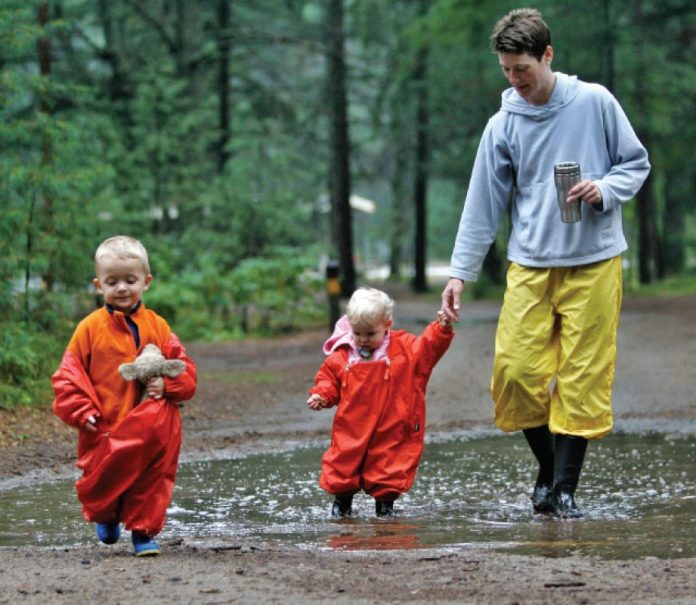
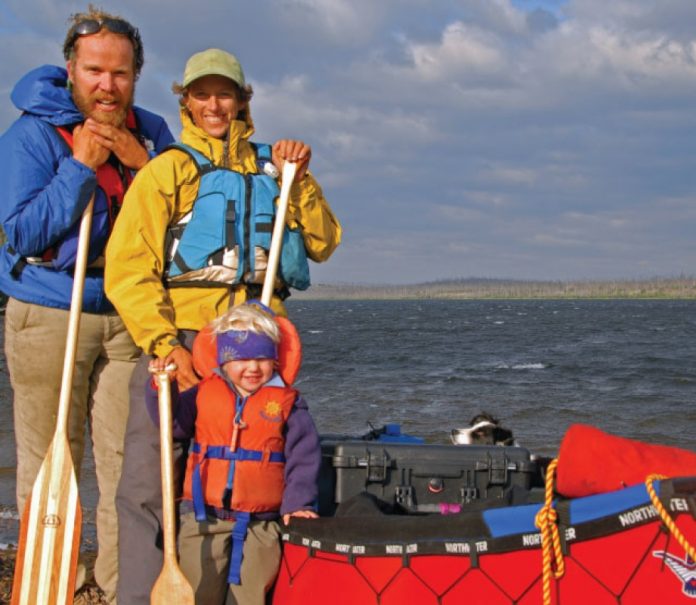
 

Family Pictures

Photo: Scott MacGregor
Family Pictures

I think I was seven when all my parents, uncles, aunts, siblings, cousins and I shuffled into a small main street studio. It was a stuffy low-ceilinged room lined with benches, strobes and an autumn-scene canvas backdrop. 

The family portrait, commissioned by my grandparents, still hangs in their hallway, a reminder to me to never dress up a skinny seven-year-old boy and his extended family and stand them in front of a two-dimensional, neutral-grey-toned wilderness and expect them to look natural. 

Portraiture, in the art world, happens when a painter depicts the visual appearance of his subjects. Just about any photograph does this, but a true portrait is more than that. A true portrait captures the essence or personality of the subject, not just a physical likeness. Think of Leonardo Da Vinci’s Mona Lisa, perhaps the most famous painting of all time. Without that smile she’d just be another Wal-Mart portrait. 

For this issue’s feature I asked our regular Family Camping photographers for tips on taking pictures for family albums. There were a few technical camera tips for making better photographs but most of the suggestions had nothing to do with buttons on the camera. Great outdoor portraits are more about natural environments, props, and simply standing back, and letting inner essences bubble to the surface. 

Some of my favourite family portraits simply capture a moment in time. Like our first cross-country ski trip; skinny dipping in the river; or the smile on my daughter’s face with her first mouthful of roasted marshmallow. Time stops for no man. But I can hang a fraction of a second of it on my wall. 

Other pictures I’m excited to show my kids in 10 or 20 years. I want to show them what they were too young or too busy to remember. I want to show them who they were. It’s one thing to tell them they loved jumping in puddles, it is another to show them mid-air and screaming.

And, there’s legacy. My legacy. My vain and backslapping ego wants my kids to know just how cool their good ol’ dad really is (or at least was). I actually grew my hair and beard, so they’d have photos of us together like this. I hope by digging through old shoeboxes of pictures (or scanning through DVDs) they’ll see just how much their parents love them. Never before have parents had the luxury of spending as much time with our kids as this generation. I want them to see the adventures we had while raising them. 

When I was growing up my parents, like most of their generation, were busy. Cameras and film were expensive, and not very handy to use—flash used to come in disposal cubes. Consequently, there are only a few cherished pictures of me, and even fewer of my younger brother. 

After three years of parenthood I have more than 2,400 family photos on my laptop. Only a couple are as good as those taken by our pros. A few more are special enough to hang in our hallway. But I guarantee you this, not a single one has an unnatural smile in front of a fake forest background. 

This article was originally published in the Spring 2008 issue of CanoerootsThis article first appeared in the Spring 2008 issue of Canoeroots Magazine.

Finding Farley

Photo: Karsten Heuer
Finding Farley

Karsten Heuer and Leanne Allison are no strangers to long expeditions. But their last undertaking to cross the country by paddle, sail and train to meet an iconic writer quickly took the form not of an expedition but a pilgrimage.

For writer Heuer and filmmaker Allison, the story began in 2005 when Heuer sent an unsolicited draft of his book Being Caribou to Farley Mowat. As childhood devotees of the 86-year-old writer the couple was amazed a few weeks later when Mowat called and invited them to visit his Cape Breton farm. Living in Canmore, Alberta, Heuer and Allison weighed the options for getting there. Then they realized that Mowat had already written a multi-volume guidebook for them: Why not plot a route over land and water, criss-crossing the settings of Mowat’s books? 

And so the Finding Farley project was born. Last May, Allison, Heuer and their two-year-old toddler Zev loaded up their Prospector and dropped it into the Bow River near their home. 

The early stretch of their journey had the family paddling through the setting of Owls in the Family and The Dog Who Wouldn’t Be, two of Mowat’s novels about growing up in the Saskatchewan prairies.

By summer, they were deep into the northern wilds, battling long portages, a thick haze of bugs and a near-miss with a sleeping polar bear. 

They followed the Cochrane and Thlewiaza Rivers through Manitoba into Nunavut, passing the barren settings of several of Mowat’s books, including No Man’s River and Lost in the Barrens. 

“Farley remembers being terrified running these rivers with his life in the trapper’s hands,” says Allison. “He knows how unforgiving the landscape can be.”

From Churchill, Manitoba, they caught a train to Quebec and then sailed across the Gulf of St. Lawrence to Newfoundland. After three days on the choppy seas they pulled into Burgeo, the setting for Mowat’s 1972 novel A Whale for the Killing. 

In early fall, the family sailed to Nova Scotia and anchored in the bay at St. Peters, where Mowat stood waiting on the shore. 

Despite having never met, the group soon fell into easy rapport. “There was already such a shared history,” says Allison. “It felt more like a reunion than an introduction.”

The family spent three days exchanging tales from the Barren Lands with the Mowats. Mowat admitted being worried throughout the family’s pilgrimage, despite—or perhaps because of—his own extensive travels across the same land. 

“He had tried a few times along the way to dissuade us,” says Allison. “So he was very happy to finally have us safely ashore.”—Amy Flynn Stuart

This article was originally published in the Spring 2008 issue of CanoerootsThis article first appeared in the Spring 2008 issue of Canoeroots Magazine.