Home Blog Page 357

Boat Review: Composite Creations’ Splash

Photo: Ian Merringer
Boat Review: Composite Creation's Splash

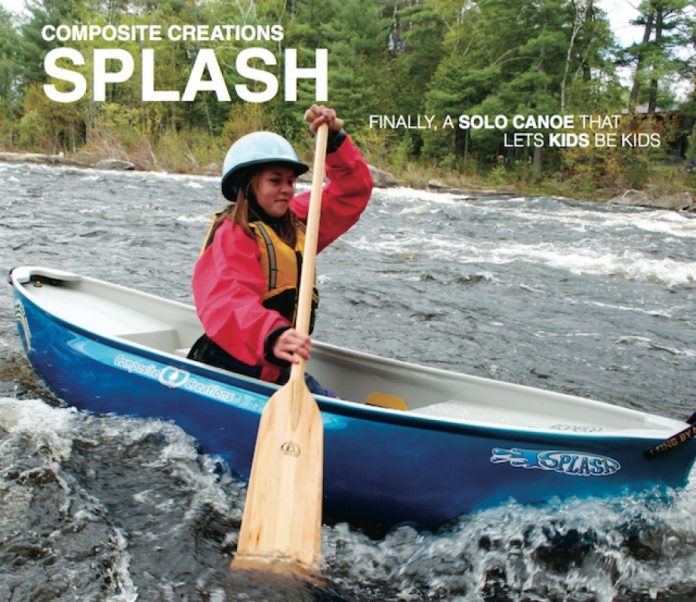
“No, I want to carry it,” insists 11-year-old Aleisha Greve when her dad offers to portage her boat upstream from the class I rapid they had been paddling to the bottom of a class II on Ontario’s Madawaska River.

Alan Greve grins, not just because he’s tired of carrying the canoes on family river days, but because the boat Aleisha begins to work her way under is one that Greve helped design.

The boat Aleisha—with a little help—eventually gets over her head is the 30-pound Splash, a new Kevlar hull from Composite Creations that is notching a first descent by dropping a solo canoe into the kids’ whitewater market.

The notion that kids could paddle whitewater as well as they play baseball or hockey if they only had a boat that fit them occurred to Greve last year on the ottawa River when he passed a kid in a Jackson Fun 1, a kayak designed for a 60-pound paddler.

A few months later at the Gull River open canoe Slalom, Greve sat down at a campfire with Andrew Phillips, owner of Composite Creations, which manufactures airline, automotive and marine parts in London, Ontario. Three days later, Greve showed up at Phillips’ shop with a canoe-sized chunk of foam and the two started shaping.

Phillips, who had already designed and manufactured a 10-foot Kevlar river runner called the Bulldog, admits his first designs were a little too aggressive. It was up to Greve, the father of a pair of pre-teen paddlers, to bring him back from the edge.

With a hull reminiscent of a scaled-down Dagger Phantom and Esquif Detonator, the Splash errs on the side of forgiveness. Pre-pubescent paddlers up to 110 pounds should be able to initiate surfs gradually thanks to a blunted bow waterline that will be slow to dig into a wave’s trough and send the boat spinning. Down below, the hull is flat enough to allow for slow surfs, but decidedly rounded chines should keep kids from getting edgy as they cross their first few dozen eddylines.

Still, as Phillips points out, if a boat is too wide for the sake of stability, kids won’t be able to properly reach over the gunwales to the water. And if you keep the rocker at a minimum for better tracking, kids won’t be able to spin the boat and go where they want to go. with a respectable three-inch rocker and 25-inch width, the Splash is no tool of adult condescension.

A new Mike Yee children’s saddle and strap outfitting set-up ensures kids’ knees will, in fact, be able to reach the hull, and the built-in bulkhead buoyancy tanks offer fuss-free floatation.

All of which is apparently okay with Aleisha, who sounds suddenly older thanks to the acoustics of the overturned canoe making her voice boom out from below the Splash on her way up the trail. She’s talking about slalom races she’s been in with her dad, in particular about crashing into a few gates she thinks he could have avoided. when the words “dead weight” slip out from below the canoe, a trailing Greve looks even prouder of his creation.

Specs

Price: $1600 + shipping
Material: Kevlar/carbon
Length: 7’10”
Width: 24″
Depth: 13″
Weight: 30 pounds
Outfitting: Mike Yee children’s saddle and straps
rapidv8i3cover.jpgThis article first appeared in the Summer 2006 issue of Rapid Magazine. For more great boat reviews, subscribe to Rapid’s print and digital editions here.
Boat Review: Riot’s Astro 54

Photo: Desre Pickers
Boat Review: Riot's Astro 54

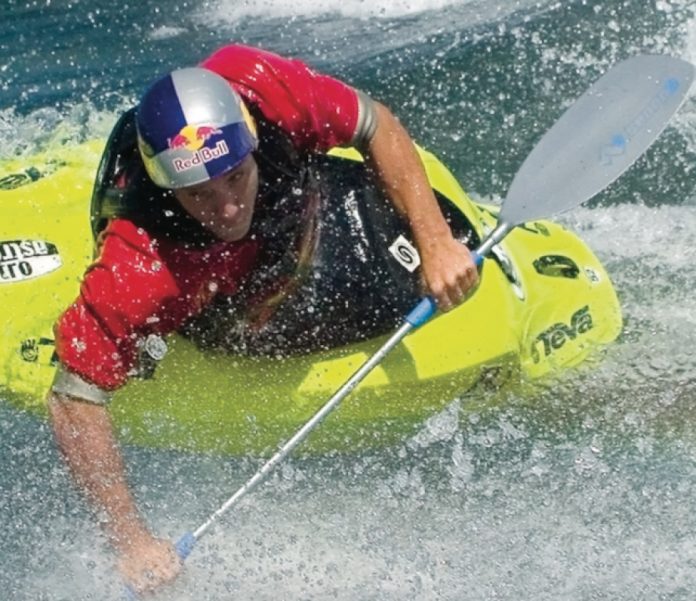
A quick glance at the Riot Astro might tell amateur kayak design historians that this is Riot’s attempt to return to the simple, and very successful, design elements of the Disco. The look is definitely familiar, but there are enough innovations here to make the Disco seem as current as platform shoes and leather bell bottoms.

The top view of the Astro shows the same wide, squared-off tips of the Disco that Riot had abandoned for several years in favour of a more surfboard-inspired hull profile. Why the retreat? According to designer Simon Martin, the increased surface area of the hull’s bottom profile keeps the boat on top of the water for easier launches and landings. The hull profile also crams more effective carving edge into the same sized package—think wakeboard, not surfboard.

Where the Astro improves on the Disco is in fairly subtle, but important, hull design details. The sides of the Astro are more flared than the Disco, allowing for easier forward to backward weight shifts while on edge. This makes it feel smoother, both when setting up for aerial moves, as well as when cartwheeling.

The most significant refinement is the Astro’s unique double chine. The bottom of the hull has a straightforward kick-rocker profile, extending the planing portion of the hull toward the ends of the boat. This isn’t new—it is the basis of modern aerial designs. The secondary chine, which is raised quite a bit from the planing hull, has a different rocker profile than the chine of the planing section. Viewed from the side, it’s as if a kick-rocker bottom has been added to a boat with a continuous rocker profile. This puts the secondary chine closer to the water in the middle of the boat—for better carving–but farther from the water toward the ends—so it is more forgiving.

Does this all add up to improved performance?

Like the Disco, the Astro launches from a pop. The Astro allows you to tap into aerial moves without generating huge down-wave speed, a real benefit to those of us that can’t always find the sweet spot on a wave, or don’t live close to Skookumchuck.

But what goes up must come down. This is where the Astro shines. The increased width in the ends and the forgiving chines allow for sticking sloppy landings. Every wave boat is a compromise between carving and landing ability. The Astro’s definitely fa- vours the touchdown.

But most of us don’t paddle on huge, fast waves. We can’t hit the New River Dries when it’s up and can’t take enough Ibuprofen to offset daily sessions on Bus Eater. Not to worry, the Astro is not just a big air machine.

Like most kick-rocker boats, it likes to be dead vertical when cartwheeling, but once on end, it is surprisingly forgiving—stable and slow in case you aren’t 18 years old or Jackie Chan. It is retentive enough to forgive less-than-perfect technique and provide enough time to enjoy a ride on a small foam pile.

Is it perfect? If you like hard-carving boats with lots of down-the-shoulder speed, then you will probably find the Astro frustrating. And this boat is only available in one size.

Riot has a winner in the Astro. It shines in the hands of expert big-wave paddlers. The rest of us can tap into moves in small holes and on eddylines that we may not have discovered otherwise. The Astro takes the Disco party to a groovy new cosmic level. 

Specs

Volume…………….. 54 gal
Length …………….. 6’2”
Width ………………. 25”
Weight Range…….. 120–210 lbs 

Thom Lambert is a moderator of the Boater Board at boatwerks.net.

rapidv8i3cover.jpgThis article first appeared in the Summer 2006 issue of Rapid Magazine. For more great boat reviews, subscribe to Rapid’s print and digital editions here.
Boat Review: The Liberty by Riot

Photo: Tim Shuff
Boat Review: The Liberty by Riot

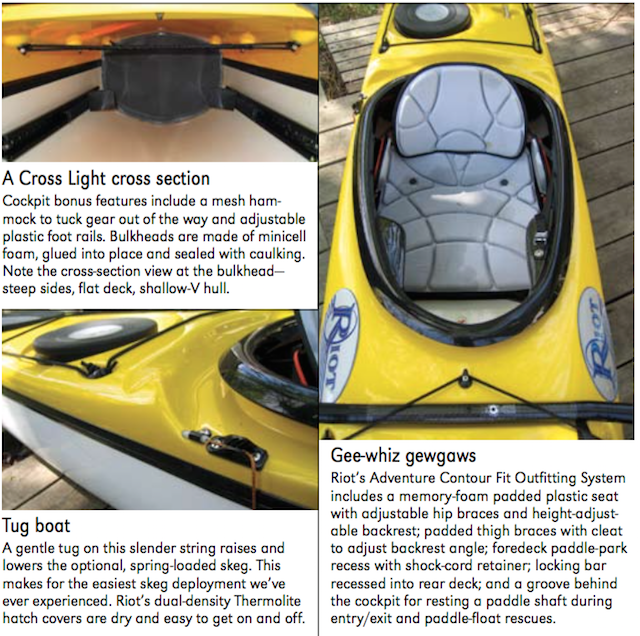
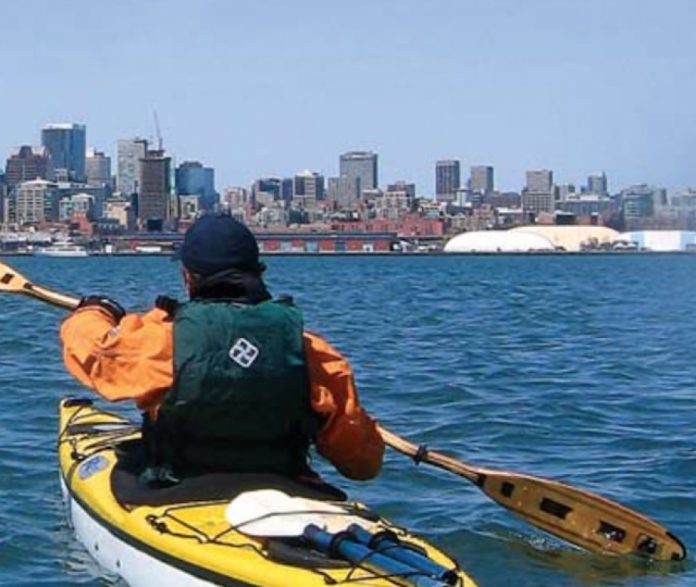
Riot’s Liberty 16 uniquely offers many performance traits of a high-end, semi-hard-chine British-style kayak in a smaller, less expensive light-touring package.

The Liberty has the slightly boxy cross section reminiscent of larger brit-style boats like the NDK explorer, Wilderness Systems Tempest or Necky Chatham 16—steep, high sides, semi-hard chine, a flat deck and very shallow V-shaped bottom.

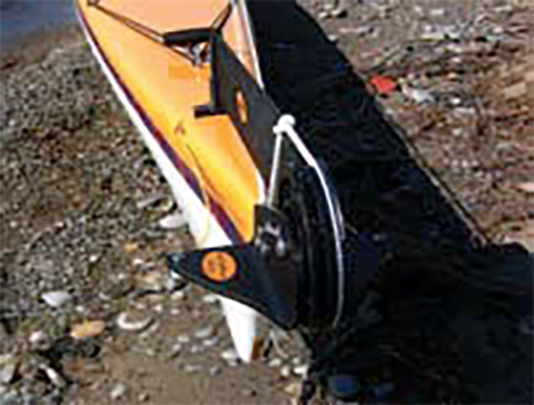
The minimal rocker and long waterline of a racing boat give the Liberty decent tracking and optimal speed for its length when paddling forward. it’s playful on edge, however, turning giddily fast when moving or spinning in place with ease. Most paddlers will want to opt for the skeg to keep from skidding into a turn when they stop paddling. One tester commented that the skeg also improved stability, which is moderate.

The Liberty 16 is a fun little boat for medium-sized paddlers. It’s plenty deep and wide enough to comfortably fit everyone in Riot’s recommended weight range of 150 to 220 pounds (68 to 100 kilos), though many will find the cockpit opening too short to exit legs-first.

Riot’s Cross Light is an ABS-acrylic vacuum-thermoformed material that offers the light weight and look of composite with the lower price and durability of poly plastic.

The Liberty 16 is a great entry-level craft for someone who wants a taste of performance or an intermediate who’s working their way into the high-performance club but not prepared to lay down the plastic (pun intended) to pay fibreglass or Kevlar initiation fees.

Screen_Shot_2015-06-25_at_3.29.13_PM.png

SPECS

length: 15 ft 5 in
width: 21.5 in
depth: 11.5 in
weight: 56 lbs
cockpit: 30.5×19.5 in
bow hatch: 16.75×9 in, 65 litres
stern hatch: 16.75×9 in, 90 litres
day hatch: 7.7 in
MRSP: $1999 CA, $1599 US – no skeg, $2149 CA, $1699 US skeg

Screen_Shot_2015-06-25_at_3.19.29_PM.pngThis article first appeared in the Summer 2006 issue of Adventure Kayak magazine. For more boat reviews, subscribe to Adventure Kayak’s print and digital editions here.
Sea Kayak Review: Boreal Design Labrador

Person paddling an orange sea kayak
Get comments about your equipment. | Photo by: Victoria Bowman

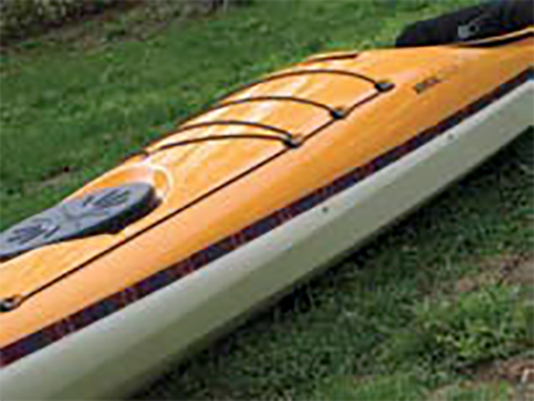
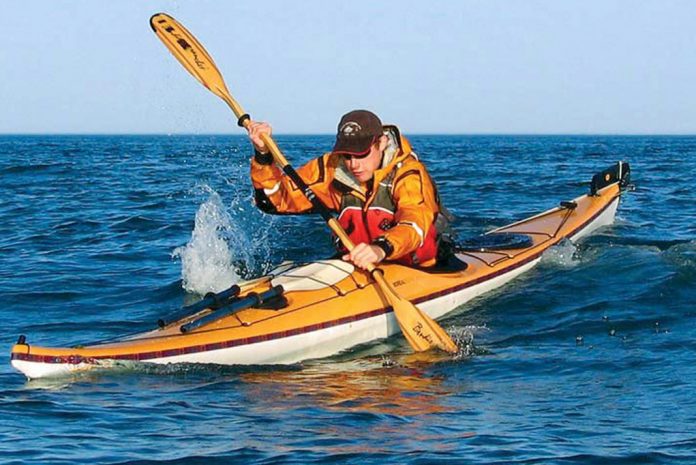
Your equipment is beautiful,” said a female passerby as I was changing into my drysuit. “Pardon?” It’s not every day that a man hears that. It took me a minute to realize she was talking about my shiny new mango-coloured Labrador demo boat. The Labrador is beautiful indeed, sleek and fast with capacity for long trips.

Long and skinny for paddlers who have the body dimensions to match, the Labrador’s narrow cockpit and rigid moulded thigh braces provide a performance fit superior to what small- to medium-sized paddlers will get from other manufacturers’ universally adjustable fit systems.

The hard-chine provides enough turnability to make course corrections and medium-fast turns with a gentle tilt—easing predictably from moderate initial stability to strong secondary without feeling floppy. The smooth shallow-arch hull adds speed by counteracting the drag of the hard chine—enough to lead the touring kayak class at races alongside other barely legal legends like the Necky Looksha II.

Boreal Design Labrador Specs
Length: 18’4″
Width: 21″
Depth: 13.25″
Weight: 57 lb fibreglass; 51 lb Kevlar; 48 lb carbon
Cockpit: 30.5″ x 16″
Bow hatch: 9.5″, 97 L
Stern hatch: 16.5″ x 11.25″, 120 L
Total volume: 400 L

borealdesign.com

Experienced paddlers can track straight and control weathercocking in moderate winds with tilt and strokes alone, but will appreciate the rudder’s efficiency for racing or long trips.

British traditionalists can make the boat as pommy as they please by mixing and matching skeg, day hatch and bucket seat options.

Glass, Kevlar, Kevlar/carbon and clear-coat choices provide more fun decisions.

Our large rear Kajaksport hatch cover seemed to leak slightly—something to check out on your own demo—but the bow was bomber.

Overall our demo showed flawless construction with pleasing touches like spectra-fibre rudder cables, strong glassed-in bulkheads, a moulded paddle-park fore of the cockpit and Boreal’s signature funky-patterned seam tape.

If you’re not already getting compliments about your beautiful equipment, put the Labrador on your short list and be ready to blush.

Cockpit of orange sea kayak
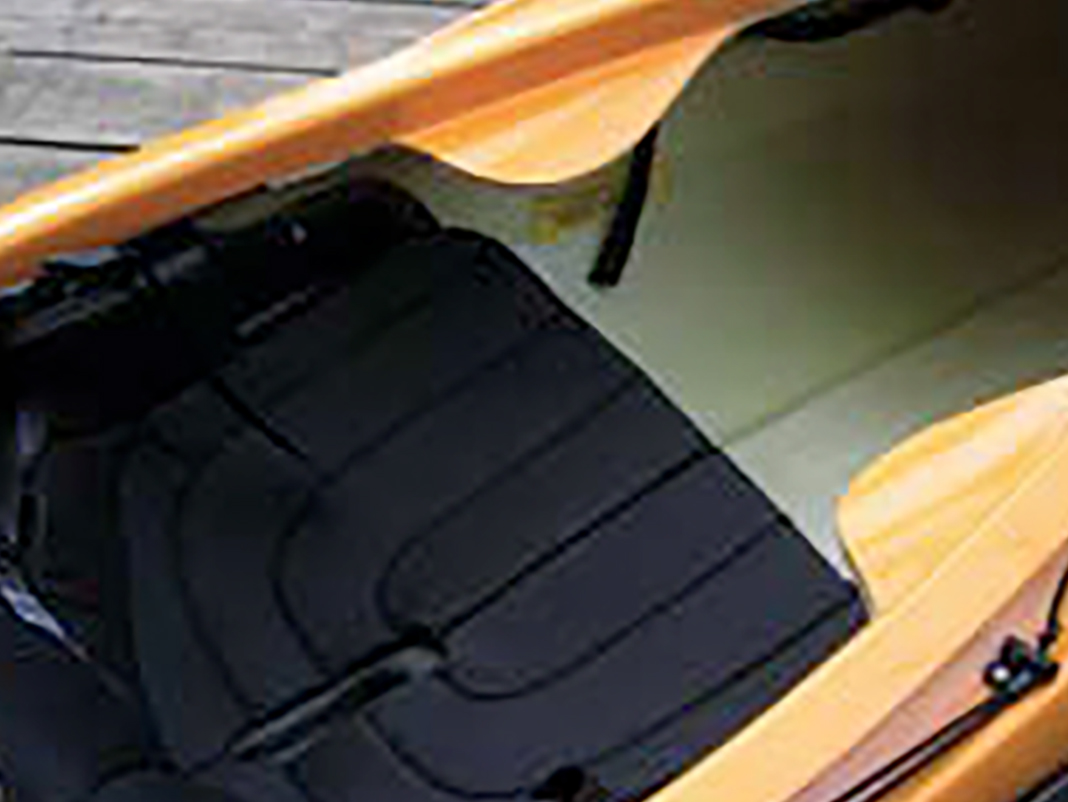
Mind the size of thy thighs. Early Labradors came with aggressive thigh braces (shown_ wonderful for paddlers with the legs of a chicken and the heart of a lion. New models have a more democratic pared-down version. Two seat options: Boreal’s new padded “comfort seat” (shown) (standard with rudder version) or a traditional bucket-with-backband (standard with skeg versions). | Photo: Tim Shuff
[ Paddling Buyer’s Guide: View all sea kayaks ] 

This article originally appeared in Adventure Kayak‘s Summer 2006 issue. Subscribe to Paddling Magazine’s print and digital editions here, or browse the archives here.


Get comments about your equipment. | Photo by: Victoria Bowman

Driven: Across the Plains to a Distant Watering Hole

Photo: Ryan Creary
Driven: Across the Plains to a Distant Watering Hole

The endless Rocky Mountain winter was showing signs of retreat: tawny tufts of grass hugged a ground that reeked of thawing dog shit; puffs of thermals enshrined the nearby peaks the way a ballerina’s tutu protects her from indecency; chunks of discarded ice ground languorously downstream from the tug of gravity. Sean, Spencer and I had long been incubating spring paddling plans. But in Alberta, seasons loiter like eighth-graders at a 7-11. Spring and winter were still deadlocked in their annual tug-of-war and the life-giving melt was still months away. It was not the place for hydrophiles.

That’s where Jessica, the belle of 1981, rolled into the picture. At 25 years, she was showing signs of her age. A full 497,458 kilometres into her life, the maroon Volvo wagon favoured one side, limping to the left like she had a degenerative hip. Shards of brittle frame crumbled like lepers’ sores with each slam of her steel doors. And she had bad gas.

Philosophers and biologists don’t always see eye to eye, but they’ll generally agree that humans separate themselves from the rest of the animal kingdom by letting rational thought guide their behaviour. But as I slung my gear into Jessica while the rest of the West slept, I wondered if the paddling sub-species might have more in common with some of our hydrophilic cousins in the animal kingdom than we do with Plato.

As the dry air ripped through my shaggy fleece, it was obvious that when it comes to paddling, measured judgment takes a back seat to the same compulsive forces that drive wildebeest on their annual 3,000-kilometre trek across the vast, arid Serengeti Plain. Unable to go more than a few days without fresh water, wildebeest are continually on the move, exposing themselves to constant attack from lions, cheetahs and packs of spotted hyenas. Sometimes it’s not even the predators that get them, but the rigours of al- ways needing to find a fresh wa- tering hole.

The hyenas were nipping at Jessica’s back bumper as she rumbled up to Sean’s place a bit late. Both Spencer and Sean were hunched over their gear bags, shivering beside the curb. We had three days, a ten-year-old’s weekly allowance between us, and our sights set on any old creek in B.C. that held enough water to float our boats.

The other cars that passed us on the road seemed so clean and business-oriented while Jessica chugged along like a circus rig moving to the next small town. As we roared over the Rockies, a late-winter emission from Sean’s poorly stored gear bag caught an airborne back-eddy and wafted forward. Spencer threatened to tie it to the roof, but the rack that held the boats was itself a dubious set-up. The 1981 factory rack was not designed for bulbous creek boats, and it didn’t help that the paint around one of the brackets was bulging with internal rust.

There was no music to drown out the sounds of the shifting boats on the three-legged rack, no backbeat for the distracting stench that was reminiscent of a Junior-A hockey team’s dressing room. Only the façade of my radio remained. It had crackled its last AM country radio station a year ago before sending itself out to pasture.

Three hours later, high from the booty hotbox, I down-shifted Jessica with savage satisfaction into B.C.’s Columbia Valley and stopped at a thin veneer of crystal-clear water rushing over a chaotic mangle of rocks in the bed of Toby Creek.

“This is ass low,” commented Sean tersely.

“I’ve paddled it with just a little more water than this,” Spencer countered, unstrapping the boats. Toby Creek’s classic Seven Canyons run wasn’t its char- acteristically explosive self today, but it fit one criteria – it had water. After the cold, early morning and the reeking ride, a few gulps of whitewater on Toby Creek would relieve some of our dehydration.

Like a heroin fix, Toby only evened us out. The next morning we wanted our high and the Bull River was our next chance at finding an intoxicating flow. But the Bull wasn’t in much of a bucking mood and it’s exclamation point ended up being not a class IV rapid but a desolate, frost-heaved logging road. With only one car we had to hoof it in tight booties for two hours to complete the shut- tle. Conversation gravitated toward paddling, but the sto- ries hid behind the veil of winter; memories were distant and hazy. Underneath it all lingered my thoughts of Jessica and the abusive terrain we pushed her over to get to another “too-damned-early” run.

The Bull left me tired, but not depleted like I am after full sphincter contractions on a wild piece of river. That drowsiness eluded us all as we camped for the second night without the benefit of a tent in the bramble bushes of a rest area. Our choice of bivouac suited our float through purga- tory. We were on the way to somewhere; we just weren’t there yet. I fell restlessly to sleep; vaguely aware that each time I shifted, a nearby thorn pulled a puff of feathers from my down bag and into the night. 

Drawn by water like a tree sinking its roots deep into the mois- ture of the earth, we woke unnaturally early and summoned ourselves to the curiously named Upper-Lower reach of the Elk. Hoping it would bring some satisfaction to our wanderings, Spencer and Sean jumped out of Jessica to check the flow. The deep-toned growl from below suggested a runnable reach. We could plainly see Leap of Faith, a robust 50-foot waterfall that tumbled off the lip like a pleated wedding dress. Early sea- son or not, Sean was an oak root boring through a lead pipe to get to water. He headed upstream to find a put-in above the falls. Spencer and I offered to run safety.

Avoiding Leap of Faith was a leap of faith in itself. The only other access into the gorge was a set of cart tracks used to lower workers to a small hydro plant. Most rail grades don’t exceed 2 per cent, pleasant for bicycling seniors. But even the gnarliest freeriders wouldn’t touch this grade; the tracks plunged to river’s edge at a 45-degree angle.

My foot slid around inside my half-dry booty as I kicked some of the loose rocks out of the way on the fourth creosote-oozing railway tie. My gut worried about Spencer behind me. A slip and he would turn into a helmeted bowling ball. My boat dug painfully into my shoulder nerves, my paddle hand tingled and my legs began to wobble. Even a fall near the bottom would have spelled disaster, but we just giggled. The trip—festering gear, greasy grub and camping an unknown distance from heaven or hell—had turned us into giddy fools. We wobbled unceremoniously to the edge. Sean made a much grander entrance than us, tossing himself over Leap of Faith and showing us his sea-legs were more stable than our land-legs.

My shaky thighs felt more comfortable jammed inside my mango boat as it carved into the current behind Spencer. I could feel the pull of the heavy water, it felt like a thick mid- summer glacial rapid on a hot day. The hours driving through an arid early spring in a boxy freight car didn’t seem so bad now. Our glass was filled to the brim and we were chugging it down.

Like most good drinks, it came in a short glass. After two kilometres we were done and had to climb out of the eroded masterpiece up a similarly steep incline, the climb made tough- er by the fact we were climbing away from water. It was like a wildebeest feeling the heat descending on another dry season after barely whetting its muzzle at the end of another Serengeti cycle. Like the wildebeests’, our journey was worth it, neces- sary. Without it, we risked withering away waiting for water to come to us.

From a distance, we could see that Jessica didn’t look as relieved as we felt. She was listing. That was normal; her shocks had absorbed their last bump long ago. But she was sagging more than that. She was flat on one side. Yesterday’s Bull must have done her harm.

“She’s got enough air to get us to Fernie,” declared Sean, a man with grease under his fingernails often enough you know you can trust him.

“You guys got five bucks?” Spencer asked as Jessica hobbled to a stop in front of Fernie’s 7-11. We pooled together some change and he came back in an instant with a bag of salt-and-vinegar chips and a can of Flat-Fix. We read the warning sign on the label, made sure we had the valve cap off, and unloaded the toxic gob into Jessica’s atrophied limb.

She drank it down like a can of Red Bull before the third period, and we slammed her heavy doors and sped away—as per the instructions—to make sure the foam spun evenly throughout the tire. The tire was now un-salvageable for the long term, but we would get home and complete the loop.

The icy air that had sent us away had lost some of its bite as we crossed back over the Rockies and into Alberta. Sean’s booties, the precarious rack and the mute radio were all a little less demoralizing. We had tasted water after the long winter’s drought. Jessica was another story. Her Flat-Fix high was wear- ing off and a faint squealing sound made me worry that one of her bearings was giving out. Either that or it was the yipping of an approaching hyena.

Raymond Schmidt wrote about re-discovering the Cascade River in the Summer, 2005, issue of Rapid. 

Screen_Shot_2016-01-13_at_12.32.57_PM.pngThis article first appeared in the Summer 2006 issue of Rapid Magazine. For more great content, subscribe to Rapid’s print and digital editions here
Anyone Who Wants to be a Open Boater…Raise Your Hand

Photo: Rick Matthews
Anyone Who Wants to be a Open Boater...Raise Your Hand

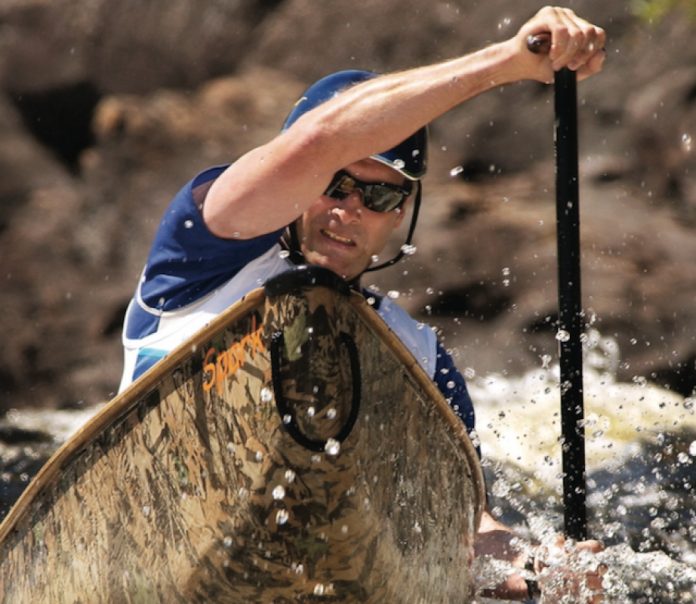
In his book Gestures, author Roger Axtell has catalogued body language from around the world. He found that similar gestures mean different things depend- ing on where you live. For example, raising your hand and extending your thumb and little finger is the sign for “cool” in hawaii, while in Mexico the same gesture will get you a drink, and in Japan it means the number six. Perhaps with increased globalization lifting your hand in this manner will get you six cold beers at bars around the world. In canoeing, the similar gesture of raising your grip hand shows that you respect the river enough to stay ready to react to anything it might throw at you.

When your grip hand is high, your paddle shaft will be vertical, next to the canoe and close to your knee—right where you want it to be.

Correction strokes are a short reach back to your hip and you need only slice the blade forward to the catch position for a power stroke. If you need a quick righting pry, no problem, your paddle is already at your side and ready for action. With your grip hand held high you can instantly twist your paddle shaft and use the blade as a bow rudder for shifts left and right.

Since most strokes originate with a vertical paddle shaft, there is rarely a reason to drop your grip hand to link different strokes. 

A high grip hand will also improve your posture and balance by keeping the paddle shaft and your arms close to your body. With your paddle next to the canoe, you are positioned to rotate at the waist to perform paddle strokes without reaching or leaning. Less leaning means fewer braces and more time for power and correction strokes.

The next time you are on the river, look around at other canoeists who are moving smoothly and appear to be paddling with little effort. You’ll probably see that their grip hand rarely drops down toward the gunwale. Paddlers that do drop their hand often appear to be bobbing their bodies while their boats twitch and lurch awkwardly from one eddy to another. Dropping your grip hand leads to poor paddling posture, a lack of stability and rushed strokes that are executed too late to be effective.

So raise your grip hand to the river. Among canoeists, this gesture will be recognized as the key to linking effective strokes, smooth paddling, great posture and, ultimately, a deep respect for the river.

Andrew Westwood is a regular contributor to Rapid. He’s an open canoe instructor at the Madawaska Kanu Centre and member of team Esquif. 

Screen_Shot_2016-01-13_at_12.32.57_PM.pngThis article first appeared in the Summer 2006 issue of Rapid Magazine. For more great content, subscribe to Rapid’s print and digital editions here
The Search Continues: the Theme in Wilderness Tripping Journals

Photo: Toni Harting
The Search Continues: the Theme in Wilderness Tripping Journals

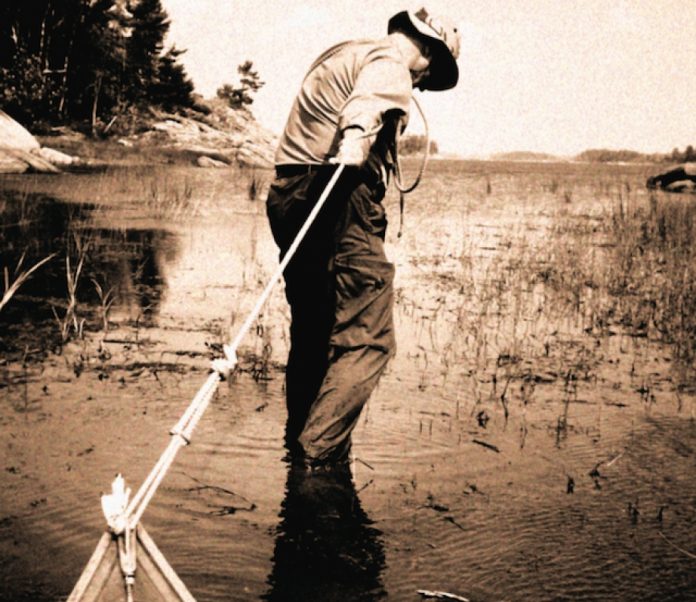
There was a logbook, covered in dust with the spine worn bare, that for years greeted expedition canoeists when they reached Fort Albany. The register was an end-of-trip ritual for canoeists who had finally made it to James bay. Sign your name, enter the date, and add a comment or two. The entries ranged from expressions of gratitude for being finished, to remorse for a trip that had ended.

But it’s what’s not written down, the story that isn’t told, that speaks louder than the pencil scratch on the page.

Bruce Hodgins—author, historian, retired professor and, with a personal canoe resume that reaches back to the 1950s, one of the architects of Canada’s canoe culture—is a man who knows about what is and isn’t found in canoeing logbooks and trip journals. Hodgins teamed up with fellow historian Gwyneth Hoyle to research the recent history of canoe travel and put it in one place. The result is the remarkable Canoeing North into the Unknown, A Record of River Travel: 1874 to 1974 (Natural Heritage, 1994), a seminal collection of the who, what, when and where of canoe tripping history.

You would not sit down and read hodgins’ and hoyle’s book from cover to cover. It’s a resource, a list of dates and names, with minimal description or qualification. entries receive equal billing and range from the famous:

“1789 Alexander Mackenzie, on his fifth crossing of the Methye Portage, travelled north, all the way down the Mackenzie River to the Arctic ocean.”

To the mundane:
“1974 Camp kandalore: John Fallis and guy Delaire led a boys group down the Missininaibi River to Moose Factory.”

To the epic:
“1930 Eric Sevareid, 17, and Walter Port, 19, canoed from their home in Minneapolis to York Factory—a total of 2,250 miles.”

I spoke with hodgins this spring. He was preparing to run the Irondale River in Ontario’s Kawartha region, even though at 75 years of age and with heart problems, his doctor no longer allows him to portage his own canoe.

I wanted to ask him about something that was missing in Canoeing North into the Unknown. It’s the same thing missing from the Fort Albany register, and that was why. Why did all those people take to the north at a time when access was difficult, trips were expensive and canoeing for pleasure was considered foolhardy? The names and dates share little of what the trip was about; the motivation, the experience as it unfolded, the stories, and the memories. What was it these people were seeking?

As Hodgins points out, in the early days of recreational tripping, canoers didn’t know much about the rivers they were travelling until they got on them. They were heading somewhere, unsure of what they would find. Hodgins thinks this is at once the reason they didn’t explain their motives, and also their motivation for going.

I prompted him with a line from the introduction to his book: “For some, the long northern river voyage is part of a quest pattern, a challenge, an exploration…a journey into the unknown.”

“Absolutely,” said Hodgins. “There is an emotional element to tripping on rivers, a re-experiencing of wonder as you discover something that was un- known to you. gwyneth was right to put “unknown” in the title. It’s the seeking out of something unknown that engages the individual.”

Hodgins’ book is intriguing because in it you don’t actually read about the quest for the unknown, but you know it is there. You can feel it from the lack of information that describes the simple trip details. For each entry there is a profound story left untold.

While the early explorers were charting vast wilderness, today’s paddlers are on their own search for something unknown to them. Pouring over a map, watching the weather, and nervously anticipating what’s around the next bend is part of the discovery on a canoe expedition. It is a personal quest, that can be discerned in trip journals, but only if you know what to look for. A camp’s map coordinates could be meticulously logged, followed by a scrawled, “The most beautiful place on earth.” Notes on an unplanned portage are followed by, “The hardest day of my life.” while short on detail, these simple lines speak volumes about the writer’s motivation; the why. The desire to challenge oneself by confronting the unknown is ultimately personal, and can only be hinted at in a few short sentences in a dusty register.

I asked Hodgins if the theme of a quest to explore the unknown persisted intact over the course of the last century and a half of canoe travel.

“Ah, yes, I still believe that the quest for the unknown is an element of why people do it,” hodgins replied, as he buckled the strap on his canoe pack and placed it by the door. It would be ready for him to pick up in the morn- ing as he went out again to experience something, something he wasn’t quite sure of yet. Those who wrote journals in the past, or will keep one in the future, likely would not admit to this emotional quest—it certainly isn’t written down anywhere in the Fort Albany journal— but it is there, between every line.

Jeff Jackson is a professor of outdoor adventure at Algonquin College in Pembroke, Ontario.

Screen_Shot_2016-01-13_at_12.32.57_PM.pngThis article first appeared in the Summer 2006 issue of Rapid Magazine. For more great content, subscribe to Rapid’s print and digital editions here
Fake Rivers Ringing Up Real Profits

Photo: Kent McCracken
Fake Rivers Ringing Up Real Profits

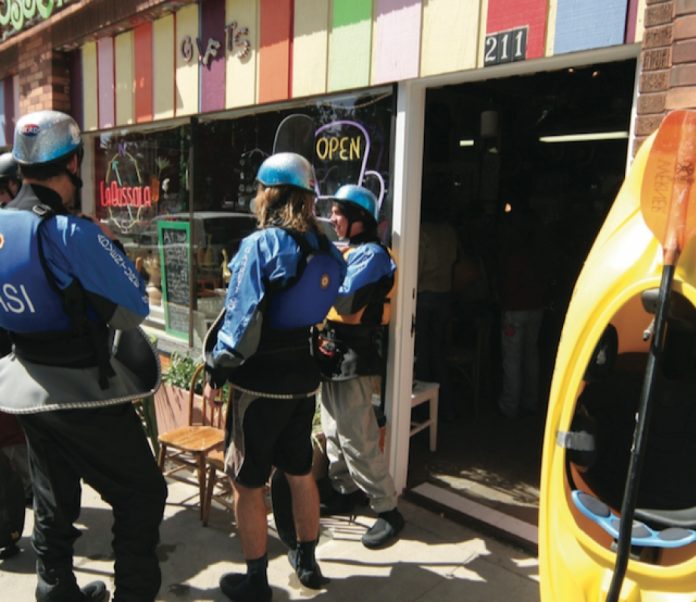
Whitewater paddlers are shedding their reputation for being dirtbags and may soon be better known as moneybags, according to speakers at a recent symposium where promoters of manufactured whitewater dis- cussed the economic benefits of urban paddling parks.

With whitewater parks located in downtown cores, paddlers have no choice but to trade cooking on campstoves and sleeping in vans for fancy restaurant meals and cozy hotel rooms. At the symposium in Colorado, city councillors from Golden, Colorado, said paddlers visiting its whitewater park—which cost $170,000 to build—spent $3 million at local businesses last summer; and in Vail, Colorado, retailers estimated ringing up $1 million in sales during just one week of rafting and whitewater events in 2005.

The first whitewater park in the United States was built in Denver, Colorado, in 1978. Since then, they’ve sprung up in droves—from Reno, Nevada, to Charlotte, North Carolina—according to Scott Shipley, a three-time U.S. Olympic kayaker and now an engineer with a firm that builds the parks.

Shipley estimates that there are currently 40 to 60 parks in the United States, many in downtown cores, but in Canada the closest thing to a whitewater park remains the altered flows and rearranged features of natural waterways like Alberta’s Kananaskis River, Ontario’s Gull River and British Columbia’s Rutherford Creek—none of which are in what you’d call a metropolitan area or within walking distance to a sushi bar.

Now several Canadian cities are consider- ing cashing in on the flow from human-made whitewater. Next year, Calgary will begin construction of a $6-million downtown facility that will divert the Bow River into an after-work pad- dling hotspot. In Saskatoon, Saskatchewan, a proposal to remove an 11-foot weir and create a multi-channel, 300-metre whitewater park on the South Saskatchewan River is working its way through the design stage. There’s early speculation about a project in Nova Scotia that would unearth the long-buried Sawmill River and make Dartmouth an urban whitewater destination. And in trying to salvage some benefit from Toronto’s failed Olympic bid, the Niagara Whitewater Park Association is negotiating with Ontario Power Generation and property owners for water rights and land access to create a park on St. Catharines’ Twelve Mile Creek.

Brock Dickinson, St. Catharines’ director of economic development, says the local business community is behind the proposal. Dickinson believes cash benefits would ex- tend beyond the construction, hotel and restaurant sectors and might open doors for St. Catharines to become a regional or national training centre.

Of course, obstacles remain in many cities. With a price tag of $6 million, Dickinson says the city won’t be able to make the park happen on its own and he doesn’t know where the money will come from. As the proposals are studied further, paddlers who want to paddle right in their home towns will have to wait and hope their politicians realize that it takes money to make money. 

Screen_Shot_2016-01-13_at_12.32.57_PM.pngThis article first appeared in the Summer 2006 issue of Rapid Magazine. For more great content, subscribe to Rapid’s print and digital editions here
Connected People

Photo: Dan Stanfield
Editorial: Connected People

Almost all the tents had been taken down and paddlers had moved on to different rivers to enjoy the last day of the Victoria Day long weekend. Palmer Fest, Ontario’s largest whitewater paddling festival, was a huge success by all accounts, except one.

As the event organizer I’d been running on only about three hours of sleep, sleep I had caught after the second band finished their second encore and we drained the last keg, sleep I had snuck in before 5 a.m. when I got up to cook pancakes for 400 people, before getting on the water to teach my morning clinic. Looking back on it, I might have been feeling a little sharp and not in the mood for her constructive feedback. However, I did ask if she had a good time at the festival.

She said I should have facilitated a framework for better communication. She told me that she didn’t meet anyone at Palmer Fest and that as the host I was missing a wonderful networking opportunity, that I was really only halfway to really connecting paddlers. I told her it sounded like she wanted me to organize a children’s birthday party.

I couldn’t image a better way of connecting paddlers than hosting Palmer Fest. We hired 30 of the friendliest instructors to teach clinics. We invited an alleyway of paddling schools, boat companies and clubs to share information and skills. We put on a supper, a breakfast and a sat- urday night party. There was even free day-care so parents could get out on the water. We even partnered with a non-profit co-operative paddling school to host the event.

I walked down to the late-night bonfire by the water and saw bongos, guitars and some dude drumming on a blue barrel while others danced crazy dances around the largest white-man fire I’d ever seen. The social scene at paddling fes- tivals is like an extended family reunion—we know we are all related but are too busy having fun to figure out how exactly.

The ease with which paddlers strike up con- versations about rivers and form instant bonds with each other is the reason I’ve built my life around paddling.

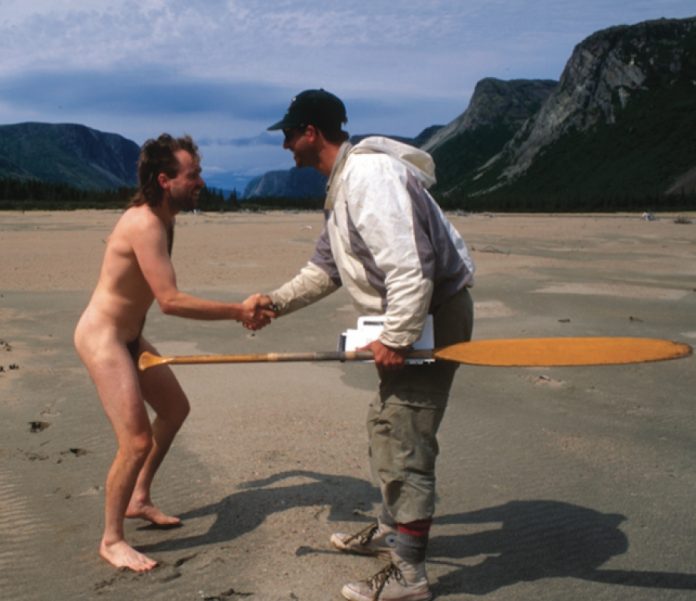
Paddlers don’t “connect” in boardrooms and don’t need to play name games to get to know one another; no, we’re more like cowboys. I remember sitting at a roadhouse establishment in Hamilton. It was 1996 and the Edmonton Eskimos were playing the Toronto Argonauts in the 84th Grey Cup CFl football championship. In walked two cowboys, real cowboys, with worn boots, saddle coats and stetsons. There was the usual hush as the locals eyeballed the new guys. The cowboys didn’t sit down alone in the corner waiting for the bartender to ask them to share their names and their favourite flavour of ice cream with everybody in the bar. no sir, they were in town for the game and were surrounded by like- minded football fans. They walked up to the bar: “Howdy, I’m Troy and this here’s my brother Bob. We’re from Alberta, and we’re here for a good time.” They shook hands with everyone, sat down and ordered 50 long necks for their new friends. By halftime they knew everyone in the joint by name. We all had a great time.

With a firm handshake, I promise you can walk up to any group of paddlers at any festival, in any campground, around any campfire, at any put-in and you will have your connection. You could try and put a label on it, call it a positive, mutually- supportive communication between contributing members of a similar community. or you could pull up a log at the fire, introduce yourself and discuss who’s running shuttle in the morning.

Screen_Shot_2016-01-13_at_12.32.57_PM.pngThis article first appeared in the Summer 2006 issue of Rapid Magazine. For more great content, subscribe to Rapid’s print and digital editions here
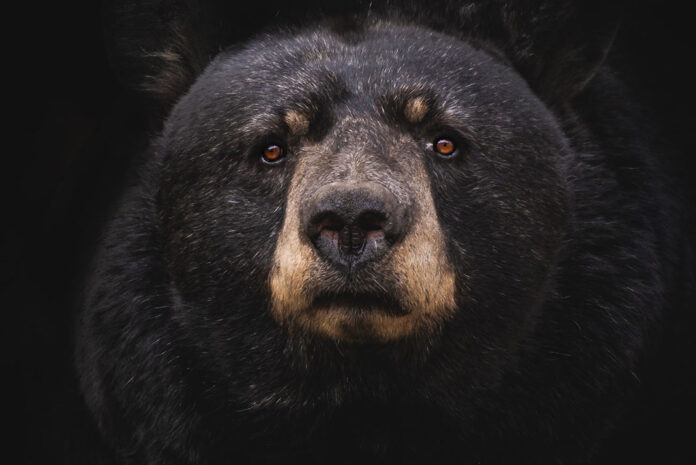
Kevin Callan’s Black Bear Bust-Up

close up of a black bear face
What’s cooking? | Feature photo: Marc Olivier Jodoin/Unsplash

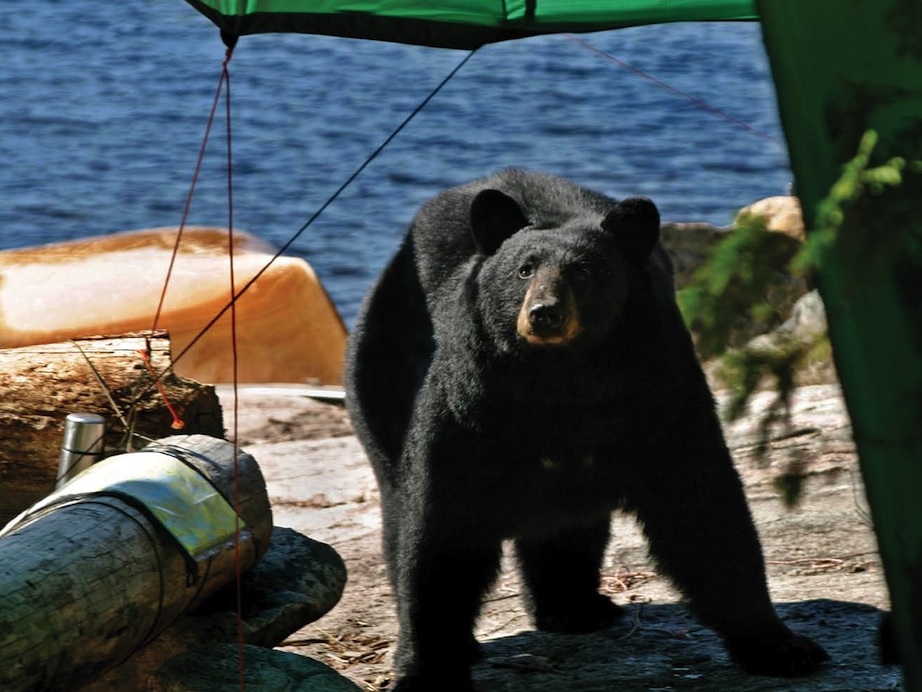
It was a relief to reach the takeout after fighting headwinds for the last three days of the trip. The rowhouse campground at the provincial park was crowded, but I was glad for the company and ready to relax. Relaxing was difficult, though, thanks to the black bear that kept dropping by looking for a snack.

Kevin Callan’s black bear bust-up

I couldn’t understand why he was picking on me. I had the cleanest site in the campground. Charlie, the bear biologist camped beside me, told me it was because the bear could sense I was scared of him.

But I was more exasperated than scared when the bear ambled into my site the second night after my peaceful dinner of mac and cheese. I grabbed a pair of pots and banged them together. The pots made a racket but it didn’t scare the bear off. It probably made the situation worse when the remnant cheesecaked noodles flew out of the pots and across the campsite.

close up of a black bear face
What’s cooking? | Feature photo: Marc Olivier Jodoin/Unsplash

I threw down the pots, grabbed a rock and tossed it at him. He gave me a stare that said, “That was stupid!” and charged.

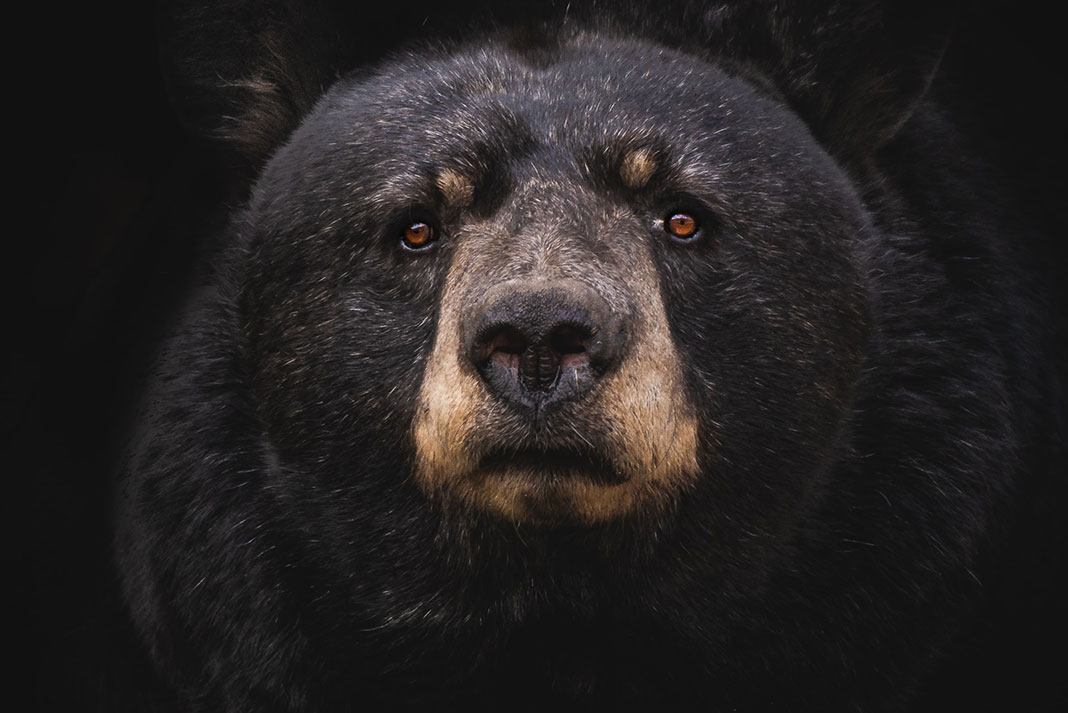
The bear bore down on me like a freight train, pulling up only five feet from me before rising up on his hind legs, snapping his teeth and growling.

My mouth hung open in fright, but the lessons from a dozen bear safety manuals leapt to mind and I waved my arms up in the air and yelled surprisingly creative things about his mother.

They must have hit home. He turned on his heels and ran to the edge of the site.

He who laughs last

That’s when I should have called it quits. But I was buzzing on fear and adrenalin and, what’s more, I was angry. Long suppressed rage from years of being picked on in grade school playgrounds welled up from somewhere deep inside me and burst out. I wouldn’t be bullied anymore. I had chased the bear out of my campsite and now I would beat him at his own game of intimidation.

Photo: iStock
The middle of your campsite is not where you want to encounter a black bear. | Photo: iStock

I advanced wild-eyed on him, snapping my teeth and making as fearsome a growling noise as a 150-pound weakling can make. The look he gave me told me he was very unimpressed. He turned and scampered down the shore, but he couldn’t be said to be running scared.

The bear swung close by a row of boats, passing two Grummans and one kayak before digging in his heels as he came to my canoe resting innocently on the beach. He gave it a sniff, and immediately went to work on it, tearing at the bow with his claws and ripping off part of the deck plate.

With a final snort in my direction he skipped off, leaving me in a macaroni-strewn campsite with unpleasant memories of schoolyard bullies once again bouncing around in my head.

Kevin Callan has gone back to banging pots nervously when confronted by bears.

Canoeroots Spring 2006 coverThis article originally appeared in the Early Summer 2006 issue of Canoeroots. Subscribe to Paddling Magazine and get 25 years of digital magazine archives including our legacy titles: Rapid, Adventure Kayak and Canoeroots.


What’s cooking? | Feature photo: Marc Olivier Jodoin/Unsplash