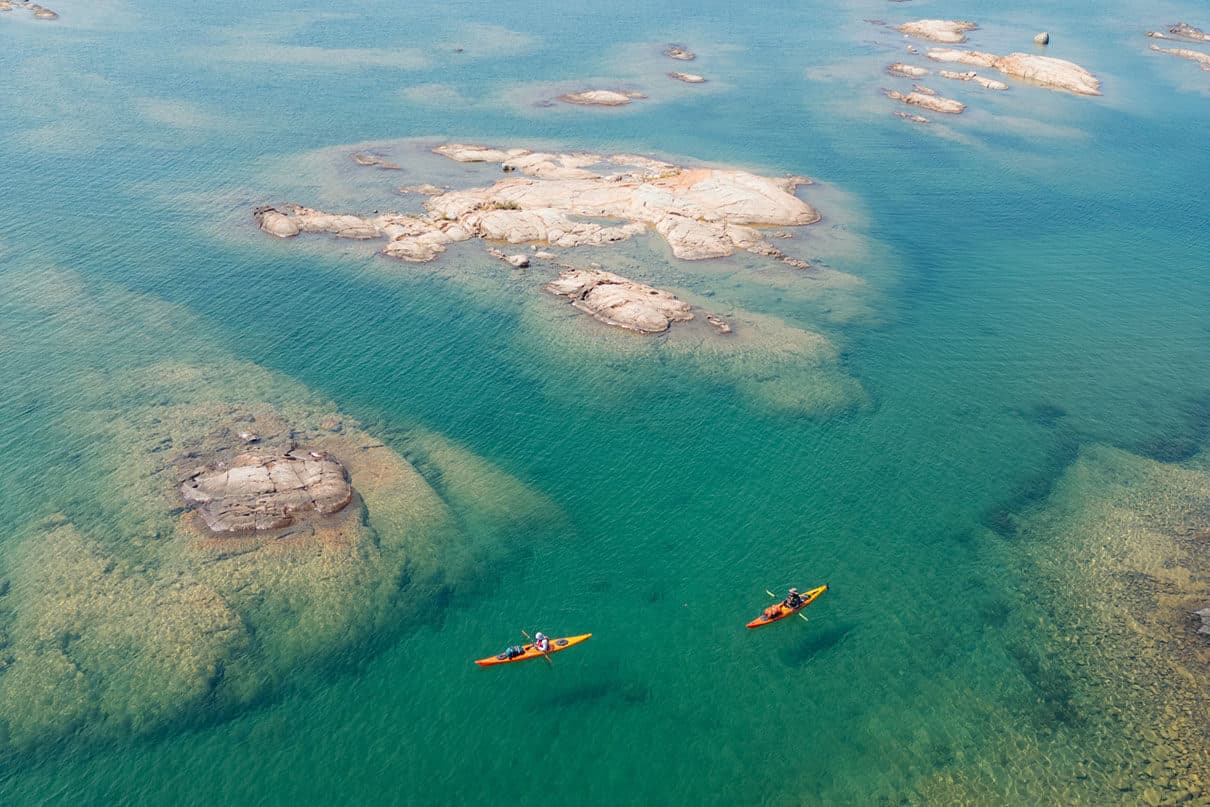
Join Paddling Magazine for a free, live webinar with Douro Kayak Expeditions, where we’ll explore what it’s really like to kayak through Portugal’s legendary Douro Valley.
For this webinar, Brenna Kelly hosts two of Portugal’s veteran guides from the Douro Valley. Together they have over 60 years of experience traveling, planning and guiding sea kayak adventures across Portugal. Join them to learn about what you can expect and how to best plan your paddling adventure in this scenic and flavour rich countryside. Wine and cheese anyone?
Photo: Douro Kayak Expeditions
Photo: Douro Kayak Expeditions
Note: A recording of the webinar will be made available to registrants via email after the live session concludes, so sign up even if you can’t attend on March 27!
Inflatable standup paddleboards have revolutionized the sport of SUP. They store in oversized luggage bags to transport, often include a pump and breakdown paddle, and provide ease in the ability to access arguably the most relaxing form of paddling there can be. Oh, and there’s no shortage of budget-friendly options out there. When I first set eyes on an inflatable years ago, I thought they were a gimmick, and wondered who would want one in place of a fiberglass layup. I shake my head today at my shortsightedness and lack of imagination.
This is because it is not convenience alone responsible for the astronomic rise of inflatable paddleboards. They would be no fun at all if it weren’t for their continually improving performance, thanks to the competitive race in innovations of their construction. As manufacturing, new materials, and layup patterns keep advancing, inflatables continue their march toward matching the performance of hard standup paddleboards.
What this all means is the inflatable paddleboard is no longer just the choice of beginners. Thanks to these advances, 12- and 14-foot boards have even made it to the SUP race scene. And the durability of inflatables has made them the go-to board for those SUPing whitewater.
The popularity of these boards has also led to an overwhelming flood of options to choose from. If you stick to a few key points in shape and construction you’ll likely end up with a board you’ll enjoy, but to help guide the search, the Paddling Mag team including myself have tested the best inflatable paddleboards available across every category there is, and provided here a selection of our favorites.
Your body loses heat much faster when immersed in cold water than it does when dry.
Avoid cotton clothing like t-shirts and jeans; they retain water and accelerate cooling when wet. Synthetic fabrics, or wool, are generally a better choice. If the water is very cold (60° fahrenheit or less), you should wear a wetsuit or drysuit.
The Jukdo is NRS’s statement that an all-around inflatable SUP can be much more than the cookie-cutter shape of a round nose and 30-some-inch wide board. They accomplish this mostly with their Integrated Shaping Technology (IST), which uses multiple air chambers to give the Jukdo unique shapes usually found on rigid boards.
What this IST looks like on the board is a dropped deck allowing NRS to lower your standing height without sacrificing volume—translation, a lower position increases your stability, especially when the river or lake gets wavey. Paddling Magazine media strategist Brenna Kelly tested the Jukdo on the waters surrounding Revelstoke, B.C., and after using the board, expressed that the raised deck edges are what separate the Jukdo from any other all-around inflatable paddleboard.
NRS also utilized IST to create a channeled hull, similar to what we see on pontoon-style kayak hulls. This channeled hull provides a smooth paddle on flat water and increases the surface area of board on water.
The Jukdo includes a set of three all-around fins and a touring fin, a well-built dual-action pump with a setting for high-pressure inflation, and a burly travel bag.
Reasons to buy
IST-developed dropped deck for increased stability
Channeled hull for smooth flatwater paddling
Z/Blend Core construction is 20 percent stiffer yet 15 percent lighter than previous NRS board generations
Options for three-fin or single-fin setup included
Consider another if
You prefer a traditionally decked inflatable
Are seeking a board specific to touring or whitewater
Bottom line
The Jukdo is an all-around inflatable paddleboard anyone will enjoy whether you are a beginner or advanced paddler. It won Paddling Magazine’s 2024 Industry Awards for the SUP category thanks in no small part to its innovations in the space.
With the number of inflatable boards I’ve paddled, I appreciated Red’s Ride 10’6” the moment I stepped onto it. The deck height at 4.7 inches sits a half to an inch lower than many other all-around boards, and at 32 inches wide, it’s a little narrower as well. I wondered if this would make the Ride feel less stable or spongy, but the flat bottom still provides plenty of stability, and when I jumped on the board, the sense I felt was more connected to the water. Beyond the paddler positioning, the board also glides well and makes smooth arching turns thanks to the rounded tail.
This may sound like an odd detail to point out, but the Ride’s deck pad is one of the most comfortable I’ve ever stood on. When the name of the sport is standup, and you plan to spend hours on your feet, this says a lot.
The Ride 10’6” also has fixed permanent twin fins, which is not the case for many boards. They are a durable and bendable construction to avoid damage, but this also means they do not detach or swap for other fin styles. It’s helpful not having to keep track of fins, nuts and bolts, but it is likely a love-it-or-hate-it feature of the Ride.
Reasons to buy
Narrower and with less height than most others in the class for a connected-to-water feel
Monocoque Structural Laminate (MSL) can be inflated to 22 PSI yet feels stiff even at lower levels of inflation thanks to reinforced composite coating
Incredibly comfortable EVA deck pad
Individual bungee straps for deck storage
Built-on twin fin setup means you’ll never have to screw keep track off or screw in fins
Consider another if
You prefer the feel of a wider or higher Inflatable SUP
The fixed fins are not your jam
You want a longer touring-specific board or a rockered board for running whitewater
Bottom line
Red Equipment builds exceptional inflatable boards, and you can feel the difference in the Ride compared to other similar-looking all-arounders the moment you step onto it.
Inflatable SUPs are supposed to be easy. Easy to store, easy to load in the car, easy to paddle. And easy on the wallet to enjoy a float on the water helps too. This is what I love most about the Niphean Classic 10’6” paddleboard, also called the Clovis Point. The board sticks close to a standard shape and dimensions that work, and costs less than $300. For that price you are getting just about everything you need to go standup paddleboarding except for a PFD. When you aren’t looking to win races or shred waves, and just want a board you can inflate for an afternoon with friends, it is all you need.
Is paddleboarding a sport where you get what you pay for? Sure. With inflatables, increased cost goes toward design performance, construction material, and the adhesive to hold it all together, but generally speaking, people are able to enjoy a budget-friendly inflatable paddleboard like Niphean’s for numerous summers without issue.
Reasons to buy
About as cheap of an inflatable paddleboard as you’ll find and still have fun
Includes every accessory you need to get on the water except a life jacket
Kayak seat add-on also available to sit down
Includes a unique keel fin that is removable if you’re not a fan
Stable feel
Consider another if
You are looking for a high-performance paddleboard for ambitious outings or difficult conditions
An inflatable kayak would better suit your needs
Bottom line
Bottom line
If the water is calling but the budget is tight, the Niphean Classic will get you off the shore so you can enjoy the sport.
You don’t need to drop a month’s rent to buy an inflatable standup paddleboard, there is a whole list of brands making solid inflatables at a low cost. What you do want to be sure of when you’re buying a low cost board is it inflates to a solid pressure and holds up well with use. It helps to buy a budget board from a brand others have come to trust, such as Retrospec.
Retrospec is a recreation equipment company found in stores like Play It Again Sports and Scheels, or online on Amazon. Their Weekender Tour is an 11’6” board on par with other popular models. Paddling Magazine publisher Cristin Plaice took the Weekender Tour to scenic spots around Revelstoke and found it to be an enjoyable board at a low cost.
The Weekender also includes a paddle, fins, pump, repair kit, and a leash for lakes and open coastal waters. Everything you need to go paddleboarding—except for a life jacket—for under $400.
Reasons to buy
Low price
In addition to the usual accessories it includes a paddle and leash
Consider another if
You have the budget for a higher-quality construction
Seeking a board geared specifically toward touring or whitewater
Bottom line
The Weekender Tour is a budget-friendly, enjoyable, and reliable inflatable paddleboard to get off the shore and on the water.
The Clipper 126 gets cruising in a way I expect from a composite touring board, not an inflatable. In the same way NRS utilizes the Integrated Shaping Technology and Z/Blend Core material to make a more detailed and rigid shape in the Jukdo mentioned earlier, they’ve done so with the Clipper. In my view, the result is more positively staggering on this touring board than on their all-around board.
With the IST details, NRS has accomplished two major design components that put the Clipper in an upper class of inflatable touring boards.
The dropped deck lowers the paddler position, something we see on composite touring and race boards. This increases stability for the paddler and allows board designers to pull in the width, creating a narrower, faster board.
The second is the V-hull at the bow. By having a wedged, peaked bow, the Clipper cuts through water and wake rather than slapping at it, making the board more efficient.
When designers are working with foam and composite rigid layups, these components are commonplace on touring boards, but on inflatables, it’s a rare few paddleboard brands with the tech capable of such features. NRS and the Clipper 126 are one of the few pulling ahead of the pack.
Reasons to buy
Integrated Shaping Technology allows for details usually found on a rigid paddleboard, including a dropped deck standing position and V-hull at the bow
Fast hull with good glide
Single-fin setup and includes both a standard touring fin and a raked-back grass fin for the shallows
Fore and aft bungee deck storage to load up for an overnight trip
Bow and stern rocker release the ends to give the board some maneuverability
Consider another if
You prefer a flat deck space in comparison to the dropped deck
You want a wider board for more initial stability—in which case the NRS also offers the 33’ wide Clipper 126W
Bottom line
The Clipper 126 pushes the boundaries of what an inflatable touring paddleboard can be, and the result rips.
Wear The Appropriate Leash When Stand Up Paddleboarding
Always wear a leash on open bodies of water like lakes, bays, and oceans. Due to the risk of snags and entrapment, leashes should only be worn on rivers if they include a quick release attached to your life jacket.
The Diatom from Sea Gods addresses a key need in paddleboarding—feeling stable and building confidence. The Diatom accomplishes this in the form of a 34-inch-wide board. But it’s not the widest point alone which increases stability. It carries this width in a more gradual taper toward the nose and tail, staying wide for longer, which also translates to higher volume at 334 liters. A big, flat surface area creates a stable paddleboard ideal for beginners, higher-weight paddlers, or even those who want a board for SUP yoga. A more stable board is usually a tradeoff for decreased speed, but the Diatom still moves along fine for those on casual outings.
Editor-in-chief Kaydi Pyette tested the Diatom on the waters surrounding Toronto. “Balancing feels effortless, and tracking is smooth, thanks to its single full-size fin. While it’s not the stiffest inflatable I’ve paddled, it’s close,” Pyette shared in approval of the Diatom.
Sea Gods’ boards are attractive inflatables for reasons beyond the thoughtful shapes. They are also decorated in the work of artist collaborations. “Sea Gods make some of the most stunning inflatable boards on the market,” Pyette also said. “Right off the bat, the Diatom wowed me with its intricate design, created by artist Jamie Locke. This eye-catching artwork is a guaranteed conversation starter—folks at the launch often stop to ogle this board.”
Reasons to buy
Wide, stable inflatable paddleboard
A solid choice for beginners, higher-weight paddlers and SUP yoga
Unique artwork collaborations
In addition to the usual accessories, it includes paddle, leash and a ground cloth to keep your board clean when rolling up
Consider another if
A faster board is needed to cover miles
Budget is a factor
Bottom line
Stable is the name of the game with the stunningly designed Sea Gods Diatom.
While inflating ISLE’s Explorer Pro, I’ve had multiple strangers walk up to tell me what a great craft it was. Among a sea of inflatables, this is always a good first sign, but what I found more intriguing was they didn’t just say what a capable paddle board it was. They walked up to tell me how much they loved it as a kayak. Up until then I’d always thought of the SUP-kayak hybrid as a value add. Throw in a cheap paddle and some seats and people will feel like they are getting more for their money. With the Explorer Pro you actually are getting three capable crafts, a touring iSUP, and either a solo or tandem recreational inflatable kayak.
ISLE walks the walk with their combo because the seat and footrest they include are well-designed. The lash points running down the entire length of the board allow the inflatable footpad to be placed wherever works best, and the kayak seat inflates to be solid, elevated, and comfortable. As a side note, having these lash points on the entire board is an underrated design component for other reasons. You can strap gear just about anywhere and incorporate cam straps or accessory cord instead of the standard thin bungee cord found on most boards.
Let’s not forget, the Explorer Pro is a touring board first, and one of the most rigid inflatable boards out there, thanks to the composite Infinity Fiber stringers, which work similarly to those old wrist slap bracelets. The stringer still lets the board roll up tight, but adding incredible rigidity when unfurled.
Reasons to buy
Well-designed kayak paddleboard combo
Up to three paddle crafts in one bag
Bundle includes adjustable seats, footrests, and paddles you can configure for SUP or kayak (can also buy board without kayak setup)
Capable 12-foot touring board
Infinity Fiber acts as composite stringers to increase rigidity
Consider another if
You’re looking for a traditional kayak
You’re seeking a shorter or wider board
Bottom line
The Explorer Pro is a well-engineered SUP-kayak hybrid—a common sentiment at local boat launches.
Riding the Hala Atcha 86 is like dropping into the river on a skateboard. The short 8’6” length, continuous rocker, peaked bow and swallow tail, wants to jump over features and shred across the face of a wave. And the thing is a blast to stand on end. Practicing pivots on the pond, I felt like a duck bobbing vertically.
There are also three more subtle features of the Atcha 86 I found well thought out for whitewater. The first is the indexed stomp pad in the center near tail, letting you know about how far back you are stepping to lift the nose. Next are the grab handles on the deck across from one another, which provide a good way to regain yourself when the sport turns into fall-down paddleboarding. And the third is the three-fin setup with the longer, spring-loaded, retractable center fin Hala calls their Stompbox. File retractable fin under necessity for rocky rivers.
Reasons to buy
Playful rocker blasts over features and keeps the nose up when surfing
Easy to standup for pivot turns
Multiple handles to regain composure post-wipeout
Three-fin setup with center, spring-loaded Stompbox
Consider another if
You want a board that is less party and more business on whitewater
You seek initial stability and glide
You plan to mostly paddle flatwater and dabble in class I and II rapids
Bottom line
The Hala Atcha 86 brings street-style skateboarding to the whitewater SUP scene.
About the length of many popular river running kayak designs, the Rivershred is the inflatable paddleboard counterpart and rips its way along stretches of whitewater. Along with Hala, Badfish is one of few brands utilizing full rocker boards, which is a game changer on whitewater.
Paddling Mag media strategist and in-house whitewater SUPer Brenna Kelly had high praise for the Rivershred’s design. “The rocker makes gliding over waves and foam piles smoother because you go over instead of plowing through,” Kelly explained. “It also allows you to be more dynamic on a river wave, gaining speed into the trough without the nose diving. And you can initiate spins and grinds easier because less of your board rail is active on the face.”
Kelly also notes the reinforced layer of PVC on the rails, and centerline of the deck and base, which Badfish calls their ExoSkeleton, to increase the stiffness of the board and provide more of a rigid board responsiveness when making moves through a rapid or cutting across a wave face.
Reasons to buy
9’6” length with full rocker carries over waves and surfs well
ExoSkeleton reinforced areas increase stiffness for rigid-like responsiveness
Included flex fins keep the board tracking without breaking upon collisions with rocks
Electric pump included with board
Consider another if
You only plan to paddle whitewater occasionally
You want a shorter, super-aggressive board for surfing
You want a larger board with less rocker for more initial stability
Bottom line
The Rivershred is a solid choice for river running and surfing, with a full-rocker design that turns whitewater into a playground.
Fishing from a SUP is a sightcaster’s game—an exciting way to cruise the coastal flats in search of tails or an alpine lake with vigilance for rising trout. Not only can you spot fish, but you put yourself in a position to let fly some phenomenal casts. This is until actually hooking a fish when the excitement turns spicy trying to avoid getting pulled into the drink. By having the right board SUP fishing is like having a sporty, mini-skiff. None may be as equipped for the task at the BOTE Rackham Aero.
The Rackham is a massive, stable platform to cast and fight fish from. But it is also designed with angler-minded addons. BOTE has included outfitting components, including a slot to stand a paddle while casting, accessory tracks in front of and around the paddler, magnetic storage to hold a lure or water bottle, and, best of all, the ability to build onto the board with their accessories including rod holders and board specific coolers—which can also serve as a seat just behind the paddler.
The Rackham Aero would be a fun setup if we stopped there, but it also has the ability to install their inflatable seats and pedal-drive system, giving it the ability to go from SUP-fishing rig to pedal fishing kayak.
Reasons to buy
Built with SUP fishing in mind
Stable platform to sight cast and fight
Many add-on accessory options made specific for BOTE boards
Can be set up as either a paddleboard or kayak
Consider another if
You want a paddleboard with a smaller footprint
Fishing from your SUP is a far second from the paddleboarding itself
Bottom line
The BOTE Rackham Aero inflatable board is a SUP-fishing machine.
There is a never-ending list of paddleboards available, and they range in price drastically. Do you have to spend a fortune on a paddleboard in order to have one you’ll enjoy? For most who just want to float on the lake or drift down your local river not at all. But like any other sport, as similar as one inflatable board looks from the next, you do get what you pay for. So what should you consider when choosing an inflatable board?
The easiest place to start is with the shape. If you aren’t sure what you are searching for, an all-around shape resembling the classic surfboard look works well in a variety of general uses. They tend to have a wide, rounded nose, are around 32 inches at their widest point, and are between five to six inches thick—attributes that when combined with their flat bottom makes them relatively stable platforms. You could paddle miles on a lake or bay, cruise down the river, and even catch some small waves with one of these all-around recreational shapes.
Touring boards tend to have a pointed nose and a narrower shape. This makes them faster, but because they are narrower they feel less stable. They are great for covering miles on open water or where paddlers need to battle wind and tides.
Whitewater boards can look similar to an all-around board, but often have more aggressive rocker where the nose and tail are uplifted drastically. This helps with performance by letting paddlers lift the board over features or when surfing waves. On flat water though, this again makes the board feel less stable, and also does not glide in straight lines as well—this is by design to maneuver in rapids.
The dimensions of any board shape play a role as well. Length, width, and thickness throughout add up to the board’s volume. Higher volume provides more buoyancy. This doesn’t always equate to more stable. A touring board may have a higher volume than an all-around board, however if much of this volume occurs in its length, not width, it could be more stable compared to other touring boards, but not compared to an all-around board with a wider belly where the paddler stands. The length-to-width tradeoff provides a sense of the board’s priorities of speed and glide or stability. Without taking other details such as rocker into account, a wider board will be more stable, and a narrower board has more potential speed.
Recommended psi is often marked on the board’s valve. Photo: Joe Potoczak
Considering terms like drop stitch and psi
Drop stitching and psi are terms thrown around in every conversation surrounding inflatable SUPs as well.
Drop stitching refers to the internal threads of the board, which allows its board-shape by not letting it balloon when inflated with air. This drop stitching is integral to these types of boards being able to exist.
Maximum psi, or pounds per square inch, as we are familiar with from other aspects of life whether it be a raft, bike or car tire, is how much air pressure a board can be inflated to. As an oversimplified rule, the higher the maximum psi a board can be inflated to, the more rigid it will be. The closer you can get to the feeling of standing on a board made of a solid material like fiberglass the better. A spongy paddleboard does not glide well at all, and it’s also more difficult to stand on. You want a paddleboard to be able reach 10 psi at a minimum, and some inflatables today can reach pressures beyond 20 psi. The drop stitch manufacturing process used, material layup, and bonding of materials all play a role in the psi a board can reach. As materials and design components—like embedded composites—advance, brands are also finding ways to make inflatable boards more rigid. It only takes one outing to see manually pumping to high psi is a lot of work, and today there are some fantastic electric paddleboard pumps available.
A well-built board bag should not be overlooked. Photo: Joe Potoczak
We took a collection of well known and innovative inflatable standup paddleboards available today out on coastal wetlands, down whitewater rapids and along lakes, to put them head-to-head and see which performed the best in their respective categories. This testing spanned Oregon, British Columbia, and Ontario to sample a variety of waterways from the perspective of different paddlers. We’ve expanded our paddleboard testing since we first published our best of list in the spring of 2025, yet over the course of the past year, many of our favorites for this list remain with little major change for the 2026 season. When making our decisions, we also considered the quality of outfitting and included accessories—bonus points provided for a good air pump.
Paddling Magazine digital editor Joe Potoczak.
About the author
Joe Potoczak is a digital editor at Paddling Magazine who has been canoeing and kayaking for 25 years, and paddleboarding for about a decade. He spent years avoiding SUP, then realized what a blast it is. Now he chooses a board over his kayak most summer days.
Like most old skills, there’s something deeply satisfying about getting where you want to go with the humble compass. I remember the feeling of accomplishment upon completing a 10-mile crossing in dense, pea soup fog on Lake Superior using only this deck-mounted nautical tool on my sea kayak. I second-guessed myself constantly along the way, only to fall back on the mantra, ”trust your instrument.”
Putting your confidence in analog technology delivers the type of patience-based reward that’s increasingly rare these days, when a smartphone navigation app can identify your position with the tap of a finger. I’ve taught sea kayaking to budding guides and navigation for natural resource college majors for over two decades, and my students have always been captivated by the simple magic of planning and following a route by map and compass. A magnetic compass also forces you to be more observant and cautious, which ultimately keeps you safer. And, it’s your ultimate backup for when the S.H.T.F. (i.e., your phone battery hits zero percent). All good reasons why it endures as an essential tool for navigation.
With any physical tool, be it a mechanical watch, carpenter’s level, or, in our case, the compass, the best are built with quality, deliver accuracy, and are either intuitive to use or capable of our most elaborate needs.
The author has seen the 70P fly under many brands, including his affixed Brunton, and yet it remains the best option for adventurous touring paddlers. | Image: Sheri Minardi
A deck-mounted 70P compass is a popular accessory on most British-built and Danish-style sea kayaks meant for expedition use. The style is designed to be installed with four screws into a recess moulded into the kayak deck, just ahead of the bow hatch, has had a variety of labels over the years, including Nexus, Comnav and Brunton. The reliable, time-tested 70P is currently produced by Silva and for sale in Canada and the United States.
A built-in marine compass like the 70P has a couple of distinct advantages over handheld orienteering compasses. It operates hands-free, so you don’t need to make any adjustments by hand. Instead, the dial reveals the direction (in degrees) that your bow is pointing. The forward placement of the compass recess mount may test your eyesight, but it also calms your stomach, allowing you to sight both the heading and the horizon to avoid seasickness.
Retrofitting your sea kayak with one of the 70P is easy once you get over the fear of drilling holes into the deck and installing the fasteners—each with a dab of marine silicone.
Reasons to buy
Permanently fixes to your kayak
Designed for marine use, meaning it’s accurate even when the boat is rocking
Consider another if
Cannot be transferred from one kayak to another
Placement toward the bow may make it difficult to see for the nearsighted
Bottom Line
A classic marine compass for serious expedition kayaking.
The Silva 58 is a marine compass that attaches to a kayak deck or canoe thwart with bungees, so it can be transferred from one boat to another and positioned where you like. The scratch-resistant dial has large, easy-to-read numbers, and the compass still works when it is tilted up to 30 degrees.
As someone who loves canoe expeditions as much as sea kayaking, the Silva 58 allows me to use the same navigational tool across different boats. For canoeing, I simply strap the compass to the stern thwart and instantly have a sense of which way the canoe is heading, which is helpful when navigating through island mazes on large lakes.
Reasons to buy
Ideal if you own multiple boats
A solid choice if your kayak lacks a recess for a 70P-style marine compass
Still reads accurately when boat is tilted
Consider another if
A removable compass is harder to line up on the kayak deck for accuracy
Bottom Line
A versatile marine compass that works on the entire fleet.
As much as I cherish my old and trusty Suunto MC-2 mirror compass for planning a route on a map and navigating through the bush, simple orienteering compasses such as the Brunton Scout ECOmpass have done the lion’s share of getting me from point A to B. For years, I’ve kept a barebones predecessor to the Scout in my PFD pocket. The updated model packs a key advanced feature: the dial can be offset to compensate for magnetic declination. This declination is the difference between true north and magnetic north, which varies from place to place on the globe and is often noted on maps. Unlike the larger Suunto MC-2, no tools are required to adjust the declination on the Scout. This allows for easy conversions between map readings and compass bearings.
What’s more, the Scout ECOmpass has a global needle that’s calibrated to work anywhere in the world. And a magnifying glass is handy for teasing out details on a map.
The Suunto MC-2 is a professional orienteering compass long trusted by outdoor enthusiasts and natural resource technicians.
The sighting mirror on the MC-2 increases your accuracy considerably in following a straight-line course through the forest or in identifying landmarks across open water. The dial can be adjusted to compensate for magnetic declination, and the needle is calibrated to work anywhere in the world. Most importantly, the made-in-Finland MC-2 is built to last with a lifetime warranty. I’ve had mine for nearly 25 years.
Teaching a college-level navigation course for natural resource students for over a decade means I’ve seen the good, the bad and the ugly when it comes to compasses. The Suunto MC-2 is the best of the best. It’s essential for anyone serious about working and playing in the outdoors. It’s an investment in a quality instrument that you won’t regret.
Reasons to buy
Durable and precise, ideal for wilderness canoe tripping
Includes an inclinometer for measuring slope, handy if your non-paddling hobbies include backcountry skiing in avalanche terrain
Consider another if
A marine compass is more practical, such as for sea kayaking
All modern iPhones come equipped with a convenient and effective compass app that’s generally more reliable and user-friendly than comparable Android apps. The free app means that if you already have an iPhone in your pocket, it is the most budget-friendly tool you’re going to find. The iPhone app is reliable and practical: it allows you to set and follow a bearing from point A to B, as well as measure the bearing to visible landmarks to compare with a map. Once you know a few tricks, you can also use it to take a bearing from a map.
The iPhone compass also differentiates between true and magnetic bearings and uses the phone’s onboard GPS to provide the latitude and longitude coordinates of your location. The only catch? It won’t work when your phone battery is drained.
Reasons to buy
A practical, free compass built into your phone
Consider another if
You want an all-around navigational tool that works with a map and without a charge
Bottom Line
If you’ve got an iPhone, you already have a reliable tool in your pocket.
Compass Buying Advice
As with any piece of outdoor gear, your aspirations and applications ultimately determine which compass is best for you. There are two main types relevant for paddlers: Orienteering compasses and marine/direct-read compasses.
Orienteering compasses
Orienteering compasses, such as the Suunto MC-2 and Brunton ECOmpass reviewed here, feature a rotating dial that allows you to measure a direction (bearing) from a map. To follow this bearing from point A to B in the real world requires you put “Red Fred in the Shed,” which means pivoting your body (or boat) so that the magnetic needle is aligned with the orienting arrow in the compass dial. This is easy when navigating on foot over land, but can be more complicated when paddling. However, if you can only afford one compass, an orienteering model will be the most versatile.
Marine/Direct-read compasses
In contrast, marine or direct-read compasses operate hands-free, showing the bearing of the direction you are facing (just like the compass in a car). This is especially convenient for paddling, but you’ll need an orienteering compass (or a navigational protractor or parallel rules) to measure a bearing from a map or chart. Marine compasses are designed to function when the dial is tilted, unlike an orienteering compass, which must remain flat. The compass app built into most smartphones operates like a marine compass.
With so many terms and numbers, navigation by compass seems complicated. But the skills are easy to develop with practice—and they will become solid and ritual with repetition, as your confidence grows. Most intermediate- to advanced-level sea kayak or canoe tripping courses include relevant navigation training. There are also many excellent books on the subject, including the classic Be Expert With Map and Compass, by Carina Kjellstrom Elgin and Bjorn Kjellstrom, which has been in print for decades.
Compared to other types of gear that see new releases annually, the compasses that are available today have been around for years with few changes. In developing my navigation skills as an expedition canoeist, sea kayak guide and instructor, I’ve had the chance to use many different products, which has allowed me to discover in the field what works best for myself and others. Over the past decade, teaching a course in outdoor navigation at a local college has further reinforced my opinions on the best compasses.
Using a compass is part of my day-to-day experience as a professional in paddlesports and the outdoors for 25 years. I prefer the challenge of using analog instruments instead of GPS units and smartphone-based navigation apps, so I usually keep my technology turned off and packed away on wilderness canoe trips and sea kayak tours.
My longest expedition was a self-supported, 55-day canoe journey across the Ungava Peninsula in Nunavik (northern Quebec), navigating a poorly documented route that included Hudson Bay, numerous rivers and hundreds of lakes—along with over 125 portages. I relied nearly exclusively on several of the compasses described in this article for planning and executing the trip.
This article was published in Issue 75 of Paddling Magazine. Subscribe to Paddling Magazine’s print and digital editions, or browse the archives.
Navigation you can count on. | Feature photo: Sheri Minardi
In 2024, longtime paddlesports retailer Todd Frank, owner of Trail Head and Trail Head River Sports in Missoula, Montana, purchased inflatable canoe manufacturer SOAR Inflatables from longtime owner Larry Laba. The move abruptly saw him join the ranks of paddlesports manufacturer as well as retailer, providing a perspective few have in this industry.
Built for Retail
For Frank, the acquisition just made sense. His existing paddlesports shop, Trail Head River Sports, already employed four canoeists on staff, and he loved the product.
“We’re thrilled with the purchase,” he says. “I knew about SOAR for years and a number of friends swore by them.” Frank was excited to take over a 30-year-old legacy brand of inflatable canoes for whitewater.
“While I wasn’t looking to expand, it was a fantastic fit,” he says.
The move also quickly thrust him into the role of paddlesport manufacturer, a far cry from his familiar role of specialty retailer.
“Retail I know and understand,” he says. “But being a manufacturer is new to me and the nuance of that is quite different. Both have similarities, but demand planning on the manufacturing end is far, far more important. That part in retail has a degree of insulation; we can and do cancel orders. But that doesn’t work well as a manufacturer.”
Longtime retailer Todd Frank in Missoula, Montana
Finding his first retailer was easy: his own Trail Head River Sports, which he opened in 2019 in a 12,000-square-foot building a mile and a half from his main Trail Head outdoor store, which has carried paddlesports for 50 years. He has since grown his distribution to include three more retailers by showcasing the boats at the Grassroots Outdoor Alliance trade show and is working to develop a tight group of retailers to bring SOAR to another layer of core boaters.
“SOAR owners are a tight-knit group that love the brand, but no one has ever seen one in a store and there’s been little opportunity for third-party validation of how awesome they are,” he says.
While he admits that retail is “a magnitude more challenging,” manufacturing has its own challenges that have required some adjustment. “Honestly, as a tiny manufacturer, I spend far more time managing the day-to-day of retail. The timelines are pretty long on manufacturing and it has some crunch times, but generally it’s easier—especially at my size.”
Frank has learned a few things from retail that he brings to the manufacturer table as well. “Be consistent, be fair, and understand that it’s boots-on-the-ground retail that builds brands. Nothing else works as well or as cost-effectively,” he says.
“As a brand, it is a different challenge, and the fun is in learning.”
As for direct-to-consumer sales while wearing each hat, he says that’s simple. “If you want retailers to support your brand, think like a retailer,” he says. “Never discount your products online, or if you do, offer the same or a larger discount to the retailers for fill-in or preseason.” That, and always charge the same shipping to DTC customers as you do to retailers.
Todd Frank (center) with the Trail Head and SOAR staff. | Photo: Courtesy Todd Frank
“If a consumer buys a boat from one of the few markets we’re in, ask them to buy it from the retailer,” he says. “If you ship it directly to them, give the shop the margin as a credit on their account. It’s easy at our size, but it’s scalable to a point.”
“If you’re one of the big ones or even a medium-sized brand, are you doing the end consumer justice by taking that sale DTC if you have a stocking dealer in the market? I see ‘good’ big vendors giving consumers the options that suit them best: One, buy from the site. Two, buy from another online retailer. Three, try saying, ‘Did you know that your local retailer is 4.2 miles from your house and has this product in stock?’”
This might add more steps, he says, but it also adds more value. “As a vendor, I may need to sell it two times—once to the retailer and again to the end consumer who visits our site,” he says. “Then we tell them they can look at it in person and save shipping in most instances. It’s just not that hard to support local retail. But we got here by brands thinking they didn’t need retailers to build the activity, support the local community, and build the brand equity they’re burning in the dumpster out back with DTC discounting.”
“It’s stupid simple,” he says. “Owning a brand has made me even more entrenched in the value of retailers. I am a retailer at heart, and even with SOAR, the magic happens with the end consumer.”
This article was first published in the 2025 issue of Paddling Business. Subscribe to Paddling Magazine’s print and digital editions, or browse the archives.
Longtime retailer Todd Frank in Missoula, Montana. | Feature photo: Courtesy Todd Frank
World’s best fallback plan. | Feature photo: Brendan Kowtecky
I have tendonitis. My brother has plantar fasciitis. My 97-year-old dad has endocarditis. Here’s what I know: ailments ending in ‘itis’ are not good.
Get-there-itis is no exception. Known formally by psychologists as plan continuation bias, it’s a cognitive trap widely studied in aviation—pilots and kayakers discuss it because it contributes to accidents. Folks generally don’t even know when they have it.
The perils of plan continuation bias
Get-there-itis happens when our original goal blinds us to new information, making us ignore better choices as they arise. It manifests as an overpowering drive to complete our original plan of action, even when it becomes clear a new and alternate course of action would be safer or smarter. A particularly nasty symptom of plan continuation bias is it intensifies the closer we get to our goal.
Here’s a common scenario: despite deteriorating conditions—building headwinds, increased swell and mounting fatigue—we continue for hours, struggling through the last desperate push to our destination. After all, we came so far, worked so hard and we’re so close. Of course, if we turned around and went with the swell and wind instead of fighting it, we could quickly retrace our steps and return to the sheltered bay we started from within 30 minutes. But we seldom do. Instead, the farther we get into our planned route, the more committed we become.
World’s best fallback plan. | Feature photo: Brendan Kowtecky
Or how about when we’re leaving a protected harbor or bay? Only once we’re in open water might we realize the wind and waves are much more significant than we’d thought. Do we reconsider? Do we turn around? Or do we stick to the plan?
Do we attempt the unanticipated surf landing on a steep beach because it was our target destination? I mean, we can see the take-out! Or do we explore more sheltered alternatives?
Sufferers of get-there-itis are susceptible to doggedly making terrible decisions over and over again. But really, it’s not even a decision. It’s more like the omission of reasoned decision-making. We forfeit consideration, operating instead in the mental vacuum of autopilot. When challenged, we just buckle down, blindly struggling to complete the task. It’s our default setting for success.
Plan continuation bias doesn’t just mean suffering through an exhausting slog; it could potentially kill you. It’s been implicated in numerous fatal paddling and aviation accidents.
Get-there-itis isn’t restricted to on-water decision-making either. Many paddlers have chosen to launch into bad conditions based on schedules alone. It starts with assertions like: “I can’t be back late,” or simply the all-encompassing and damning: “We stick to the plan!” (often shouted by some idiot in the teeth of a gale—yes, I’ve been that guy).
Plan continuation bias doesn’t solely manifest as a life-and-death struggle. That’s its deadly form, but get-there-itis can also be a non-life-threatening chronic condition: continuing to slog away at a given route or activity when no one is having fun, just because it’s part of the plan.
“We forfeit consideration, operating instead in the mental vacuum of autopilot.”
Toxic masculinity and dumb attitudes espousing tropes like “No pain, no gain,” and “Winners never quit and quitters never win” are contributing factors. Of course, “Those that never win and never quit are idiots” is also a pithy saying. I favor the adage: “When the going gets tough, the tough get thoughtful.”
That’s the key—get thoughtful. Explore plans B and C before departing, and discuss these alternatives with the group. Consider radical options like abandoning your original plan altogether. Quit sometimes. Fall off the route. Change your mind and your goals. Make flexibility a habit. Encourage it in your paddling buddies. Be receptive to it. We often have more options than we know.
Plan carefully. Then question your plan—and your commitment to it.
If we inoculate ourselves with self-awareness and carefully considered, detailed contingency plans, we are better equipped to avoid plan continuation bias. After all, sticking to the plan is often overrated anyway. Sometimes the smartest thing to do is call it quits.
Alex Matthews has been a contributor to Paddling Magazine for more than 20 years, and is the author of multiple books about sea kayaking. He lives in Victoria, British Columbia.
This article was published in Issue 74 of Paddling Magazine. Subscribe to Paddling Magazine’s print and digital editions, or browse the archives.
World’s best fallback plan. | Feature photo: Brendan Kowtecky
ACA Education Director and Smart Start co-author Kelsey Bracewell. | Feature photo: Ted Schubel
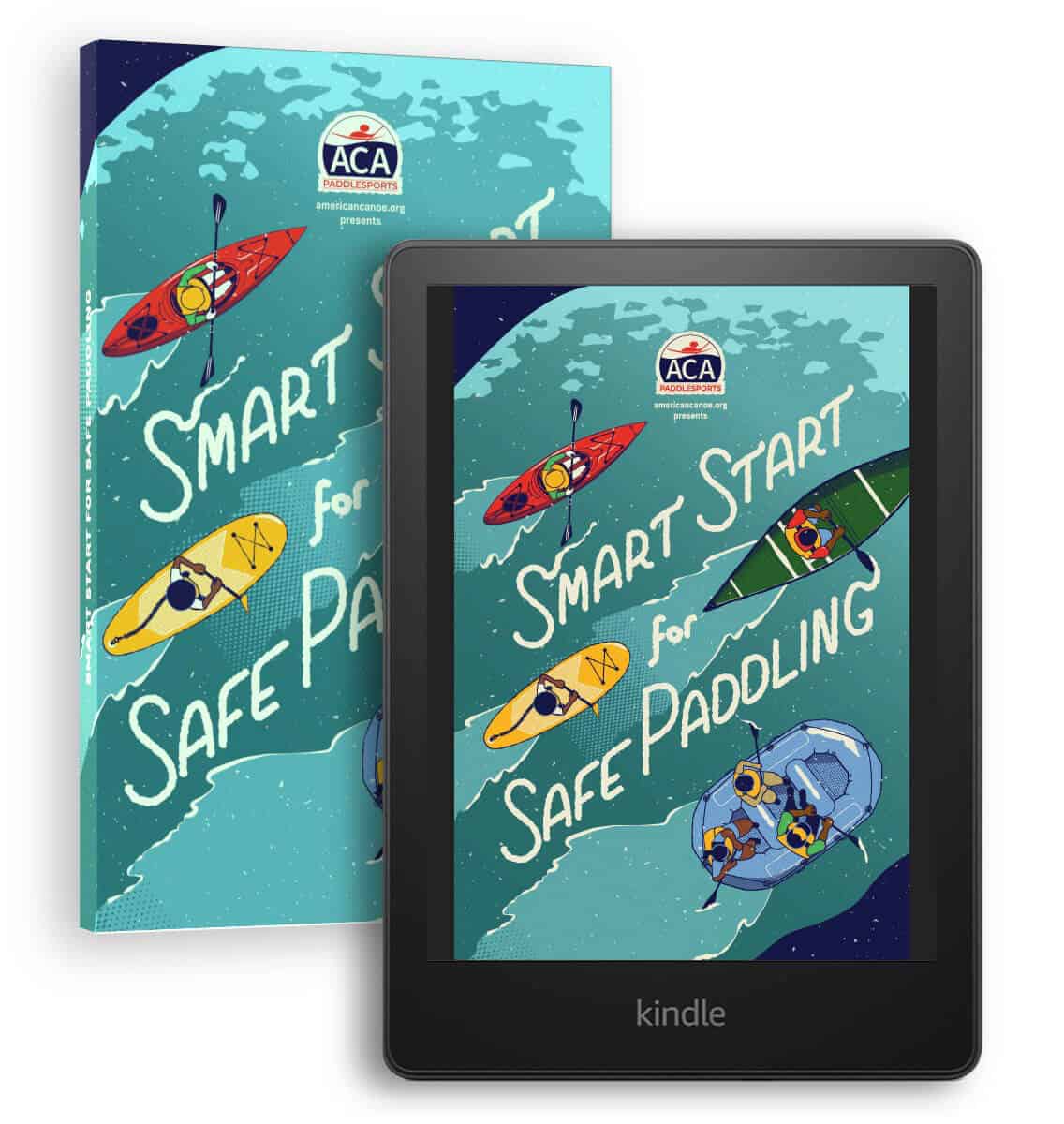
The American Canoe Association has released a new series of instructional materials aimed squarely at new paddlers. The illustrated Smart Start for Safe Paddling books are available using print-on-demand, which keeps upfront costs down and allows retailers and others to create co-branded versions, featuring local venue highlights, programs or relevant paddling tips.
ACA’s new Smart Start instructional series welcomes newcomers
The project is a new venture for the association, which celebrates its 145th anniversary this summer. Until now, the ACA’s instruction model has been heavily focused on in-person training and the certifying of highly skilled instructors and leaders who then pass their knowledge along in paddling skills courses or trips. The new Smart Start materials take a more expansive view of paddlesports instruction, starting with basic skills and knowledge that are accessible to anyone, anywhere at very low cost, says ACA Education Director Kelsey Bracewell.
ACA Education Director and Smart Start co-author Kelsey Bracewell. | Feature photo: Ted Schubel
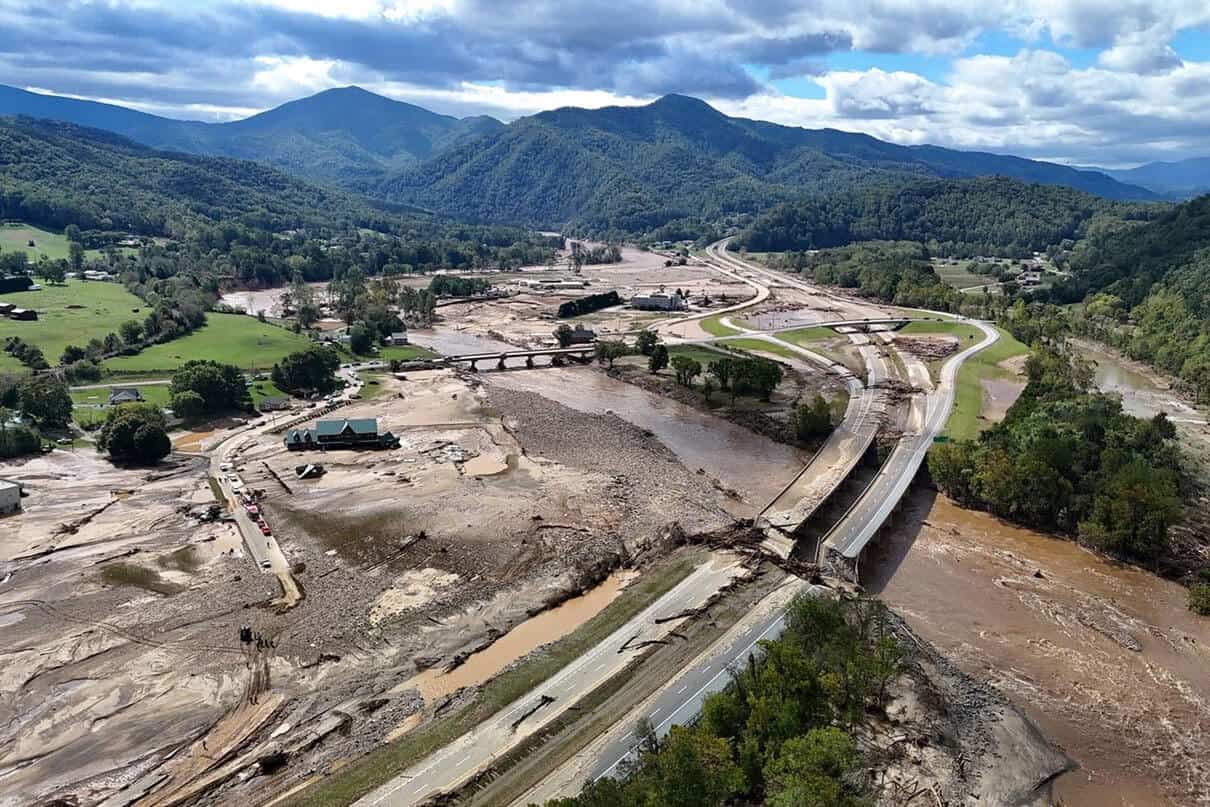
The idea took shape late last summer, when Bracewell joined forces with former ACA President Robin Pope and ACA Public Policy Chief Brett Mayer. Right away, the project ran into an unforeseen challenge in Hurricane Helene, which tore a path through Western North Carolina, home to Mayer and Pope.
“Brett lives in Asheville and was deeply affected,” Bracewell says. Pope’s home is on higher ground, but as a medical professional, his time was in high demand in the aftermath of the storm.
Somehow, the trio carved out time for the project. “I feel an even greater sense of pride in the fact that we were able to produce this in the wake of all of that happening,” Bracewell says. “It shows Robin and Brett’s dedication not only to their work with ACA, but to the paddling community as a whole.”
The result is a comprehensive resource collection which is centered around a three-book series designed to remove barriers for beginner paddlers. The primary manual is accompanied by a student workbook and a facilitator’s guide to help any paddling leader deliver high-quality content in engaging and memorable ways. The tone and design of the project is designed to be inviting, approachable and jargon-free.
“These books—print or digital—are complementary resources,” Bracewell says. “There’s so much heart, soul, expertise and care that went into them, and they fit perfectly together.”
While the ACA remains committed to its traditional instruction model—the association has certified more than 52,000 paddling instructors since 1972—Bracewell sees Smart Start as a vital new tool to engage a new audience. “The ACA has trained so many accomplished paddlers, instructors and expedition leaders who have fascinating stories and tips to share. As interesting and valuable as that is, it’s sometimes hard for people who just bought a boat at Tractor Supply or Costco to relate to and firmly grasp.” To be fair, the same can go for someone who just purchased their first boat from a specialty retailer.
The writers recognized the need for plainspoken accessibility. Pope is a physician’s assistant with a data analysis background and many years of class V paddling experience. Mayer is a science teacher, also with many years of highly technical whitewater paddling experience. The challenge became translating that expertise for an audience that is brand-new to paddling. “We wanted to provide clear, consistent content at a third- or fourth-grade reading level,” Bracewell says. “We wanted to demystify the first-time paddling experience for newcomers, and for these materials to make sense to someone who doesn’t already know essential safety skills and paddling lingo.”
Accessibility also influenced the distribution method. Rather than stock warehouses of print copies, ACA chose a print-on-demand model, allowing individuals to order single copies and shops or clubs to place bulk orders with significant discounts. Retailers, outfitters and community programs can customize the books with their logos, photos and localized content.
Bracewell says the industry has a big role to play in pointing new paddlers toward safe and positive experiences in the sport. “If you’re a brand or a retailer or an outfitter, I would ask you to get one of these books—or let me send you one—and tell me what you think about the content’s relevance to your customers and clients,” she says. “If you like it, stock it. And let me know what your customers think.”
At its core, Smart Start for Safe Paddling is about welcoming people to the water with clarity, warmth and encouragement. “My hope is that it provides the entry point a lot of people need,” Bracewell says. “And that it becomes a quality and consistent tool that can be used anywhere.”
This article was first published in the 2025 issue of Paddling Business. Subscribe to Paddling Magazine’s print and digital editions, or browse the archives.
ACA Education Director and Smart Start co-author Kelsey Bracewell. | Feature photo: Ted Schubel
For paddlers living in the big city, paddling trips are often reserved for long weekends and vacations. Rather than make the regular trek north to Algonquin, one Ontario paddler took matters into his own hands, designing the perfect custom build for his neighborhood paddle.
Matt Morris’ Custom Canoe
Five years ago at his local park in Kitchener, Ontario, Matt Morris passed a small waterway along his local bike path and noticed a sign next to a lake. The sign clearly showed that there was no fishing allowed, no swimming allowed but below those messages was the image of a sailboat. Morris had never seen a boat on the small lake and decided to call the city and inquire about boating on the lake.
Not only, the city told him, was boating allowed, but it was encouraged.
“I said man, if I could design a boat to then tow behind my bicycle and enjoy this beautiful piece of water, why not?” shared Morris.
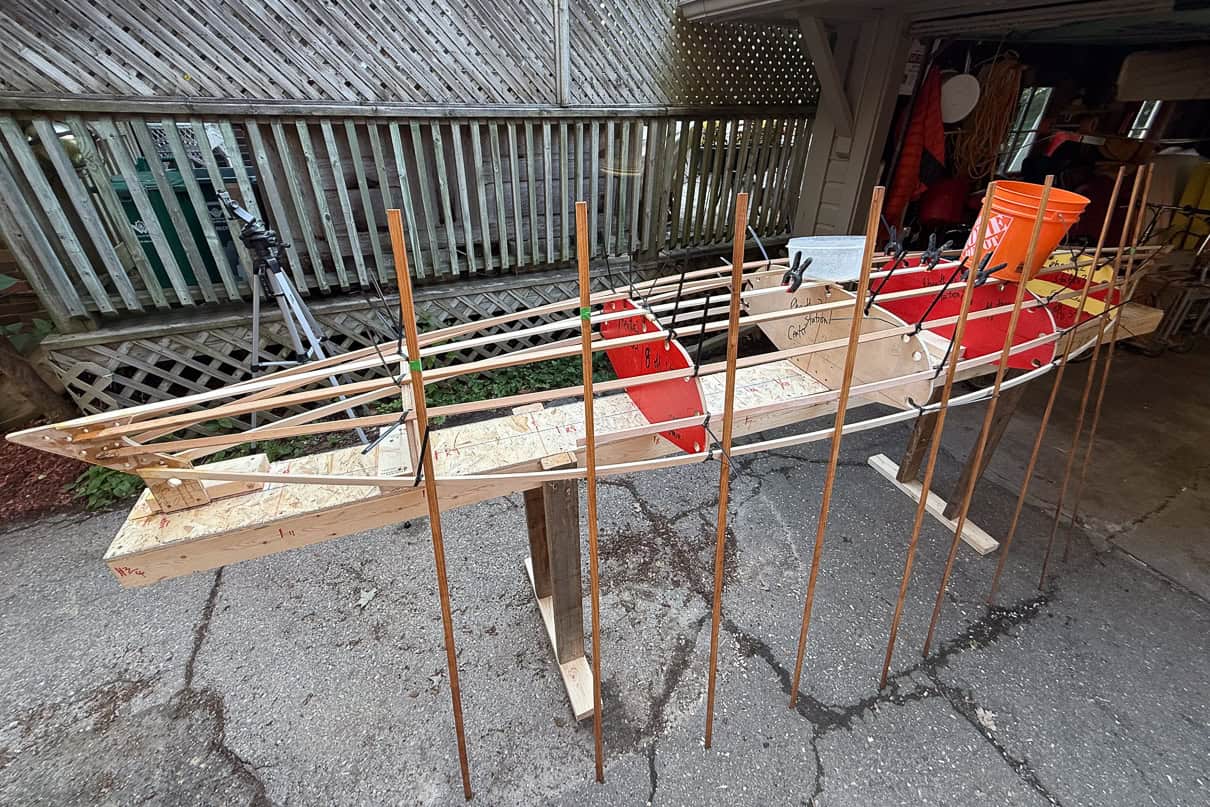
The construction of the Pheather 2. Image courtesy Matt Morris.
Morris then set to work, making two crafts designed for him to bike to the park and then paddle his local waterway before arriving at the Pheather 2, his most recent canoe. Designed to be lightweight and easy to transport, Morris tailored the Pheather 2 to his specific local paddle with the aim of getting out on the water as part of his lifestyle, rather than a rare trip.
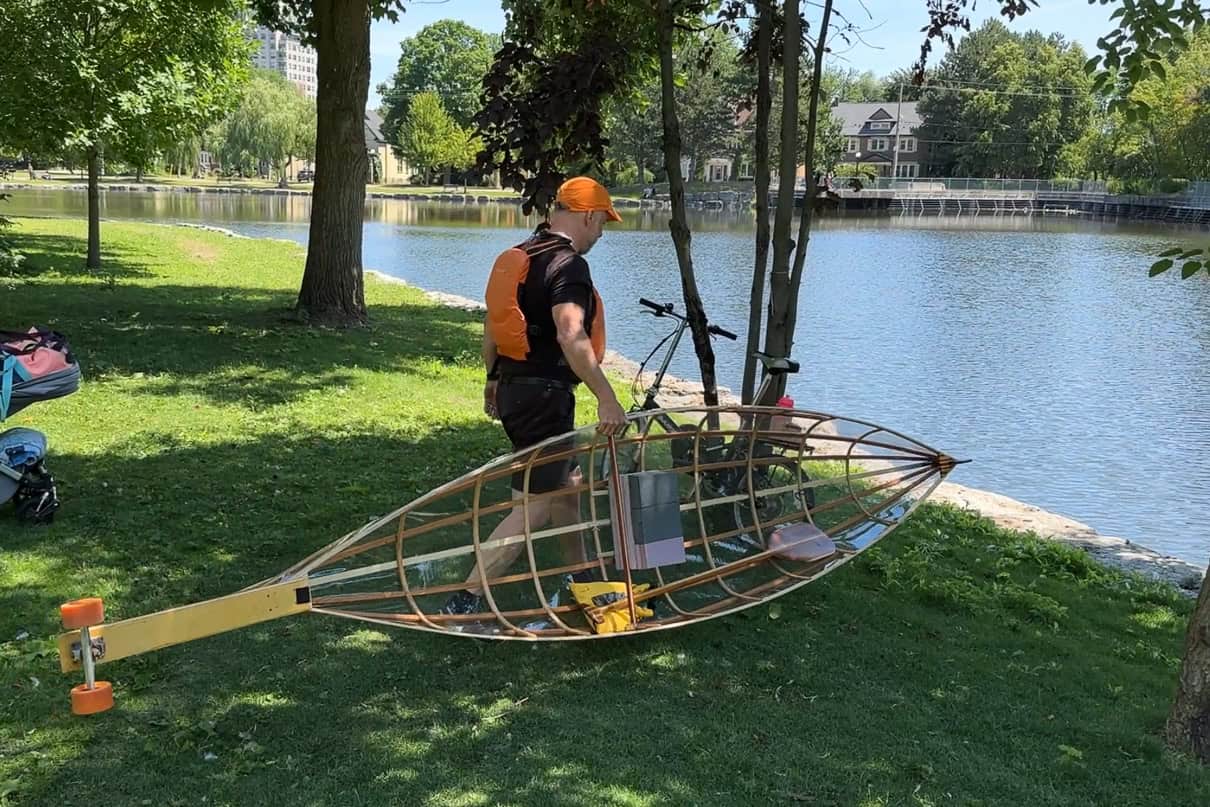
In addition to keeping the boat lightweight and bike-ready, Morris also opted for a clear hull to give him a view of what’s happening beneath the surface.
“I now ride down the trail with a super light boat. I pop it on the water, go for a little paddle, and then ride home,” shared Morris. “I can do the whole thing in under an hour.
Morris also shared that in summer 2025, he was able to get out on the water 90 times.
Finding urban waters to paddle
While one may not typically think of a city as a place to paddle, that doesn’t mean it’s a place you can’t hop in a boat and take it for a spin. Morris shared that the biggest piece in him finding a local urban paddling route was to inquire about typically overlooked waterways, as you don’t know what’s allowed until you ask.
Even now as Morris is a regular paddler on his local urban lake, he shared that he’s often still asked by other park users if he’s allowed to paddle there.
Morris launches his custom canoe on his local waterway. Image courtesy Matt Morris.
“I’m now actually meeting with the city as they now redo our big park in Waterloo to explore ways of getting more people on the water, whether it be canoe rentals or paddle boats or whatever” said Morris. “To use the water in the core of a city is so often overlooked.”
As for paddlers seeking their own urban adventures, Morris recommends starting with being bold.
“Ask questions, call the city, get permission,” shared Morris. “If you have a canoe, go to the trouble of tying it to your car and driving the two kilometres or two miles down to the water and throw it in and see how it feels. You might be surprised at what a neat opportunity it is.”
Building a custom canoe for your custom local paddling route
For Morris, the biggest aspect of creating a canoe he could bike to his local urban lake was keeping the weight of the paddlecraft low. The Pheather 2 weighs just over 11 pounds.
“I really noticed the lightness of the lighter canoe,” shared Morris. “[It’s] much more enjoyable for the cycling part.”
For Morris, the second biggest challenge was creating a mechanism to attach his canoe to his bike.
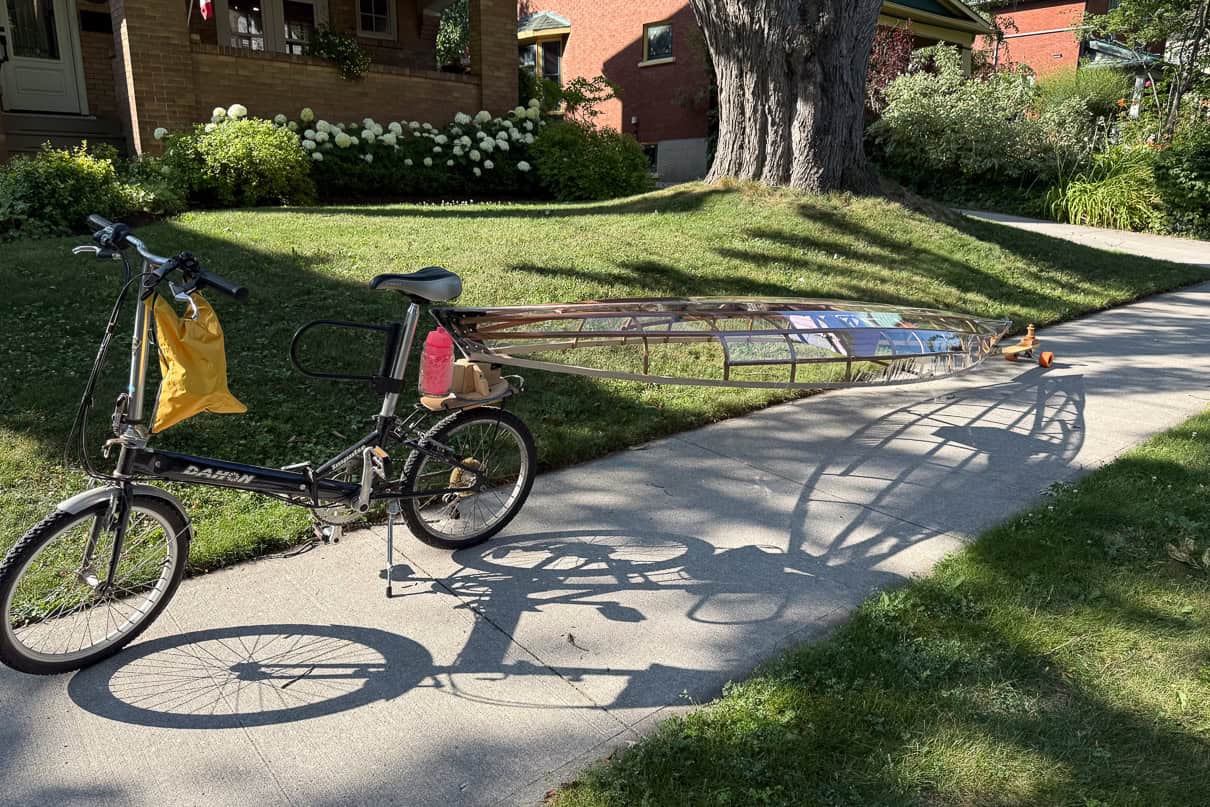
Morris’ custom canoe build attached to his bike. Image courtesy Matt Morris.
“There’s a number of ways to attach a canoe to wheels,” shared Morris. “I used longboard wheels, which I found very workable. There’s never an issue with stability.”
Morris added lights on to the back end of his setup for additional safety, and wears a PFD as he cycles. He secures his paddle to the inside of the canoe with a bungee, and his safety kit snaps on to his handlebars.
For the construction of the canoe, Morris used a mix of woods for his custom build, with maple from a tree cut down in the park he paddles in today, local Ash, mulberry from a park in Waterloo and, notably, pine from a porch at the house the band Supertramp used to stay at when they were in town.
“My boat is made partly with the pine that Supertramp walked on,” said Morris.
For the clear skin of the boat, Morris used vinyl.
The man, the myth, the legend. | Feature photo: Courtesy Cliff Jacobson
My friend Cliff Jacobson and I have a lot in common. We both worked as foresters, taught environmental science and led outdoor skills programs for youth. We’ve both published wilderness canoeing books and spent years presenting at outdoor shows. But let’s be clear: Cliff is one of a kind.
At 84, the renowned outdoor author still prances along a portage trail like a teenager at prom. He’s as small as a leprechaun, but tougher than Paul Bunyan. As saintly as Mother Teresa, but more opinionated than Muhammad Ali. His bestselling book, Canoeing Wild Rivers, remains the go-to resource for wilderness canoe expeditions. This is the guy who got married at Wilberforce Falls on the Hood River. How cool is that?
Cliff Jacobson on what’s changed for better and worse in 70 years of canoeing
Cliff discovered camping and canoeing at the age of 12 in a mouse-ridden Scout camp on amosquito-infested Michigan woodlot. The year was 1952. Tents were made of moldy canvas, not lightweight nylon, clanky aluminum Grumman canoes were the new thing, and camp clothes were trap-door union suits covered over by ratty wool sweaters and pants.
The man, the myth, the legend. | Feature photo: Courtesy Cliff Jacobson
From those humble beginnings, Cliff became a worldwide authority on wilderness paddling. He has sold nearly a million copies of his guidebooks and was crowned a Legend of Paddling by the ACA. Tripping gear has evolved, but Cliff still prefers old-school tubular PFDs, which “moved with your body like the folds of an accordion.” He believes freeze-dried foods taste just as bland as they did 35 years ago. And he uses a tump, carves a classic J-stroke, and remains enamored with vast wilderness.
Cliff’s last presentation was in March at Canoecopia, the world’s largest consumer paddlesports show, where he held the audience rapt one last time with his distinctive camp opinions and tall tales of wilderness wanderings.
His days on stage may be over, but Cliff isn’t going anywhere. He’ll keep paddling and championing the backcountry lifestyle. And yes, he’ll still cruise backroads in his little red roadster, top down, Tilley hat on.
The good, the bad & the grumbly
In his own words, Cliff Jacobson weighs in on what’s changed for better and worse in his 70 years on the water.
CANOES: “I love lightweight canoes. My lightest solo—a Bell Yellowstone solo—weighs just 28 pounds. My heaviest, a Northstar Phoenix, weighs 41 pounds. I’m 84. Lightweight canoes are marvelous.”
PADDLES: “Better paddles, by a long shot. What I would have given for a 12-degree bent shaft, carbon fiber paddle when I was young.”
DURABILITY: “Overrated. If you wrap the heaviest, most durable canoe, it’s a goner. It may fold back into shape and be ‘paddleable,’
but when you get home, you won’t want it. Better to buy a light canoe and take some lessons. Very good paddlers seldom seriously damage their canoes.”
RULES: “Regulations and permits have exploded. As John Muir would say, freedom of the hills isn’t so free and easy anymore.”
PLANNING: “In the early days, we would write to the Catholic parishes along our intended route for advice. We ordered stereo pairs of aerial photos and, by studying them, could determine the location and path of dicey portages. Planning took months; now it’s all online. And even the most obscure rivers have detailed trip guides. Good or bad? You be the judge.”
COOKWARE: “Remember the old Sigg pots and aluminum fuel bottles? Much better than the goofy little kits they sell today. Paddlers need $50 titanium cups like a hole in their canoe.”
WILDERNESS: “The huge caribou herds on the northern rivers are much smaller now. There was a feeling of deep remoteness when canoeing subarctic and Arctic rivers. This has been shattered with satellite phones, sat communicators and GPS units. Today, we rely more on things than skills.”
This article was published in Issue 74 of Paddling Magazine. Subscribe to Paddling Magazine’s print and digital editions, or browse the archives.
The man, the myth, the legend. | Feature photo: Courtesy Cliff Jacobson
No barrier to entry. | Feature photo: Kurt Gardner Photography
Last summer I took my family on a three-week trip. Getting our minivan to the take-out needed a shuttle. I called the only game in town and braced myself for the quote, sure it would be several hundred bucks.
“That’ll be eighteen twenty-six,” they said.
Seems awfully cheap—and oddly specific. Must be some sort of hourly rate, I thought. Then it dawned on me: $1,826! Did I accidentally ask for the floatplane charter?
That was just to get us on the water. Park fees totaled $500. And it could have been more. Car camping starts around $50 a night and climbs from there—for a square of dirt with pit toilets and noisy neighbors. That used to be the price of a motel.
Has kayaking gotten too expensive?
After the shuttle and permits, we still bought hundreds of dollars worth of freeze-dried food. Plus, a $400 satellite beacon with a monthly subscription for safety. But as a family vacation, it was still relatively affordable because I already owned all the equipment—kayaks, paddles, tents and other gear I’ve spent my whole adult life accumulating. I can take my kids because we bought all our equipment last century. I pity anyone who tries to start this sport from scratch in 2025. One of those fancy British fiberglass kayaks costs $6,000. Top-end drysuit: $2,400. Carbon fiber paddle: $580. Rescue PFD: $300. That’s $10,000 in equipment costs just to begin. Don’t have the equipment or the skills to go alone? The same trip guided was $28,000 for a family of four.
I look around at prices these days and wonder if my favorite pastime has become an unaffordable luxury.
No barrier to entry. | Feature photo: Kurt Gardner Photography
Another option used to be to send your kids to camp. Not at today’s prices! The hefty sum I once paid to send my daughter to a rustic sleepover camp for a month seems cheap now. This year the same session costs $7,000, after tax. I couldn’t even hope to earn that much while she was away. You’d never guess from the lineup of luxury SUVs on drop-off day that the whole experience boils down to a month living in a screened-in shack with no hydro or internet, swimming, singing songs and paddling.
My wife and I chose this camp because it was cheaper than the ones we used to go to. Her former camp still offers the 36-day backcountry rite of passage she fondly remembers from 30 years ago, except its cost has quadrupled to $21,645. My kids are SOL because we didn’t become hedge fund managers.
Maybe I’ve just reached the stage in life where I compare the price of everything to some bygone era when you could buy a candy bar for a nickel. But what’s happening in paddling reflects a larger trend squeezing people everywhere. Something, somewhere, is conspiring to jack up the prices of ordinary things. The promise of a nation, a wistful recent election speech said, is “hard work gets you a great life, with a beautiful house, on a safe street, under a proud flag.” And, one might add, enough money to go kayaking and to send your kids to summer camp. Yet the covenant is broken. These lives we feel are our birthright are suddenly out of reach for many, and it’s getting people riled up and placing blame.
Inflation is part of the cause, to be sure—now, add tariffs. Plus, undoubtedly, insurance. You can’t run a business these days without worrying about getting sued. A mountain guide friend complained a U.S. liability policy could cost him $50,000. It’s no different in the paddling world. Why else would camps cost so much when the kids sleep outdoors and paddle beat-up aluminum canoes?
My kids are SOL because we didn’t become hedge fund managers.
Another cost driver is how hyper-specialized and high-tech outdoor sports have become. When I first started paddling, outdoor gear was made from simple materials like metal and wood. There were no Gore-Tex drysuits. Now it’s carbon fiber everything, and there’s a different bike, ski, kayak, canoe, outfit and paddle for every specific occasion and condition. Take mountain biking, something I’ve wanted to get into but find totally inaccessible because the bikes cost $10,000, and YouTube keeps feeding me videos of riders doing backflips. The barrier to entry has become unattainable.
Like the SUV I want to buy but can’t afford to insure because it’s too likely to be stolen, I suspect these creeping costs are a sign we’re trying to prop up a recreational lifestyle that has become too rarefied and unsustainable and the bill is coming due.
We can’t fix all the root causes. But there is an easy solution: go back to the grassroots. Somewhere near you, there are regular people with regular jobs finding ways to keep doing the sport they love and making it accessible to others.
This year I joined my hometown paddling club, an organization I’d largely ignored until now, thinking I had to be completely self-sufficient with my suburban garage full of boats for every esoteric branch of the sport piquing my interest.
There’s a beautiful old boathouse by the harbor, full of watercraft and PFDs and paddles for everyone to share. Members volunteer to run events. Kids and adults ride there on bikes. You can paddle from spring through fall for only a few hundred bucks.
“You know, kayaking is a blue-collar sport,” one member pointed out to me the other day, who had been racing kayaks for 50 years. “Wealthy families go to their cottages for the summer. The kids who stay in town come to the club and become the best paddlers.”
I realized he wasn’t talking about summer camps and wilderness trips, fancy equipment and certification badges. He was talking about paddling. The elementally pure act of propelling yourself across water with a blade and human power—plus all the community that grows around the love of it, joining together to make it more affordable and accessible.
Paddling doesn’t need to be any more complicated or expensive than that.
Tim Shuff is a former editor of Adventure Kayak magazine.
This article was published in Issue 74 of Paddling Magazine. Subscribe to Paddling Magazine’s print and digital editions, or browse the archives.
No barrier to entry. | Feature photo: Kurt Gardner Photography
As much as I love the hands-on engagement and rewards of using old-school, tried-and-true navigation tools like magnetic compasses and paper maps, there’s something to be said for technology. But it took me a long time to admit that.
I’m not afraid of technology, but I’ve always preferred to avoid it. Thus, my adoption of navigation apps for my smartphone has been gradual. It started with the intro to navigation course I teach for natural environment students at my local college. The curriculum focuses on using handheld compasses and physical maps, but over time, there’s been more pressure to integrate technology.
Developing new lessons for “GPS-enabled navigation tools” forced me to learn different smartphone navigation apps. The experience has made me a reluctant convert. And, when I finally upgraded my personal smartphone last year, I truly appreciated just how handy, confidence-inspiring and evolved nav tech has become. Whether it’s used for crossing open water in the fog by sea kayak, bushwhacking between lakes on a wilderness canoe trip, trekking through trailless hills or just chasing my students through the bush, these are the apps that have earned an icon on my home screen.
Check with those who have local knowledge of man-made and natural hazards, e.g. low-head dams; sweepers, strainers and undercuts; tides and currents; and rocks and shoals.
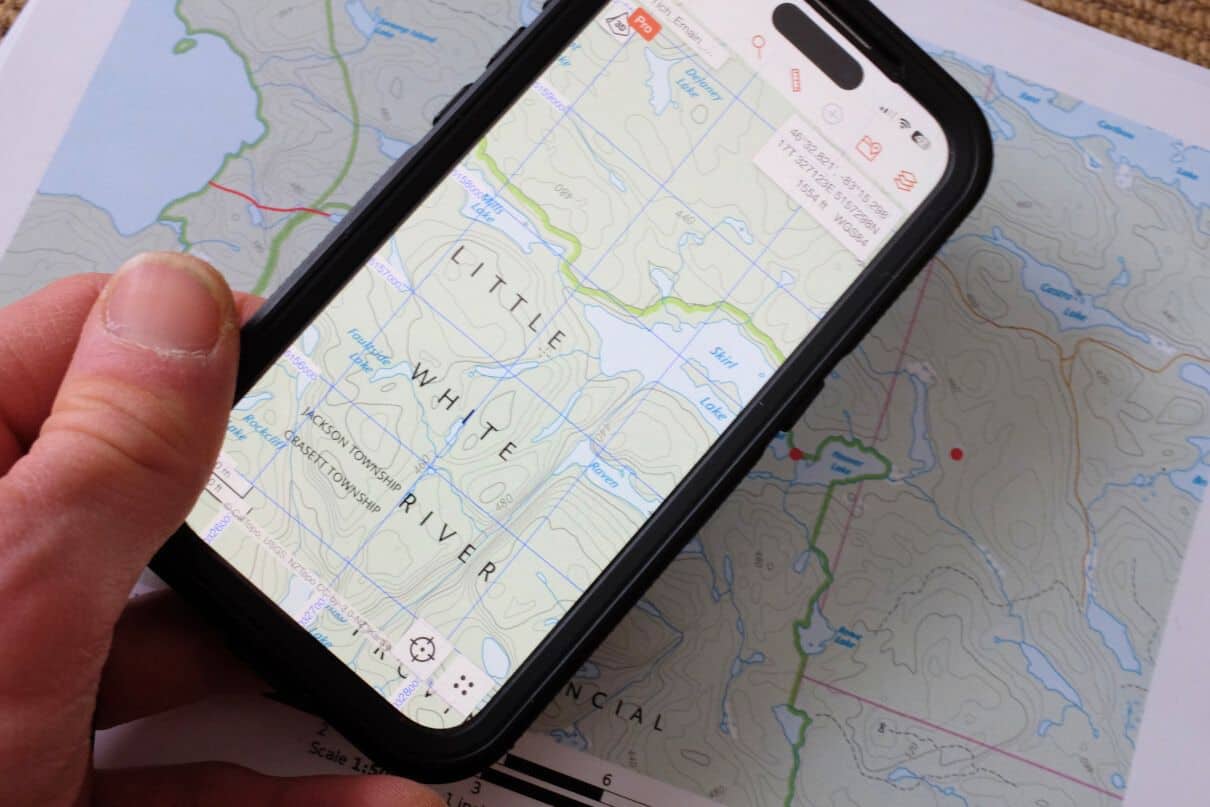
CalTopo has been my go-to route planning tool since a friend told me about the desktop version seven years ago. As its name implies, CalTopo gives you access to scanned topographic maps (at familiar scales of 1:50,000 and 1:24,000 in Canada and the U.S., respectively) for the entire world, and marine charts for the United States that make it a valuable boating app. Satellite imagery is also available to get real-world impressions of the lay of the land and water features, among other base map layers.
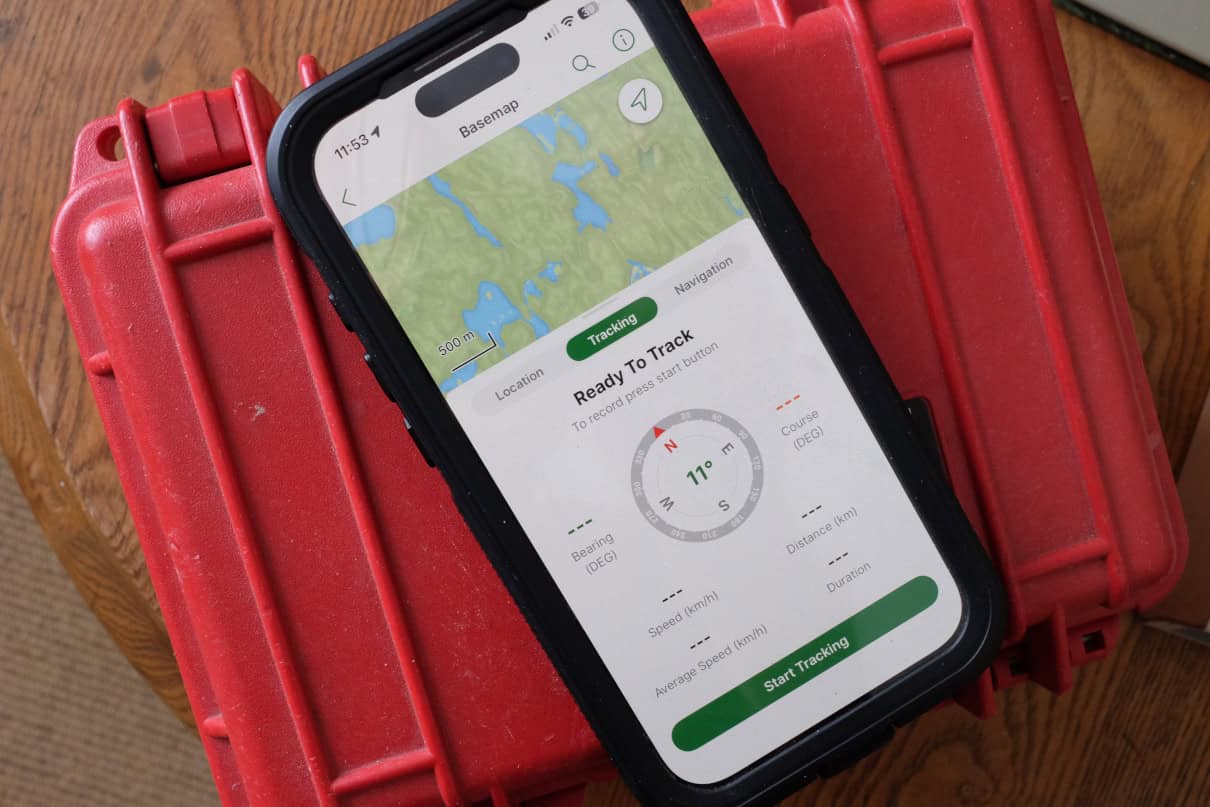
With the desktop version, it’s easy to plan a route, marking points of interest, measuring distances and bearings, as well as calculating slope — handy for predicting the level of difficulty of an unknown wilderness river. The maps can be exported to print as PDFs or used to navigate in the field using the mobile version, which uses your phone’s GPS to indicate your position and the direction you’re facing on the map. Just like a handheld GPS unit, you can also mark waypoints in the field, calculate distances and use the app to navigate from point to point.
I like CalTopo because it’s simple and intuitive for those familiar with paper versions of the base map layers it relies on. The basic version is free, and on the desktop platform you can save routes and print letter-sized maps. Upgrading to the Pro version allows you to print up to 48-by-96-inch map sheets. The free mobile version provides access to maps and pre-planned routes wherever cell service is available; the $20 US per year mobile subscription allows you to download maps for offline use (included within the Pro subscription).
Reasons to buy
Basic version is powerful and free
GPS integration is especially handy if you like old-school topographic maps or marine chart
Consider another if
You’re less interested in route planning
Bottom line
CalTopo is easy to use with a wide array of route-planning functions, which dovetail seamlessly into a GPS-enabled mobile app.
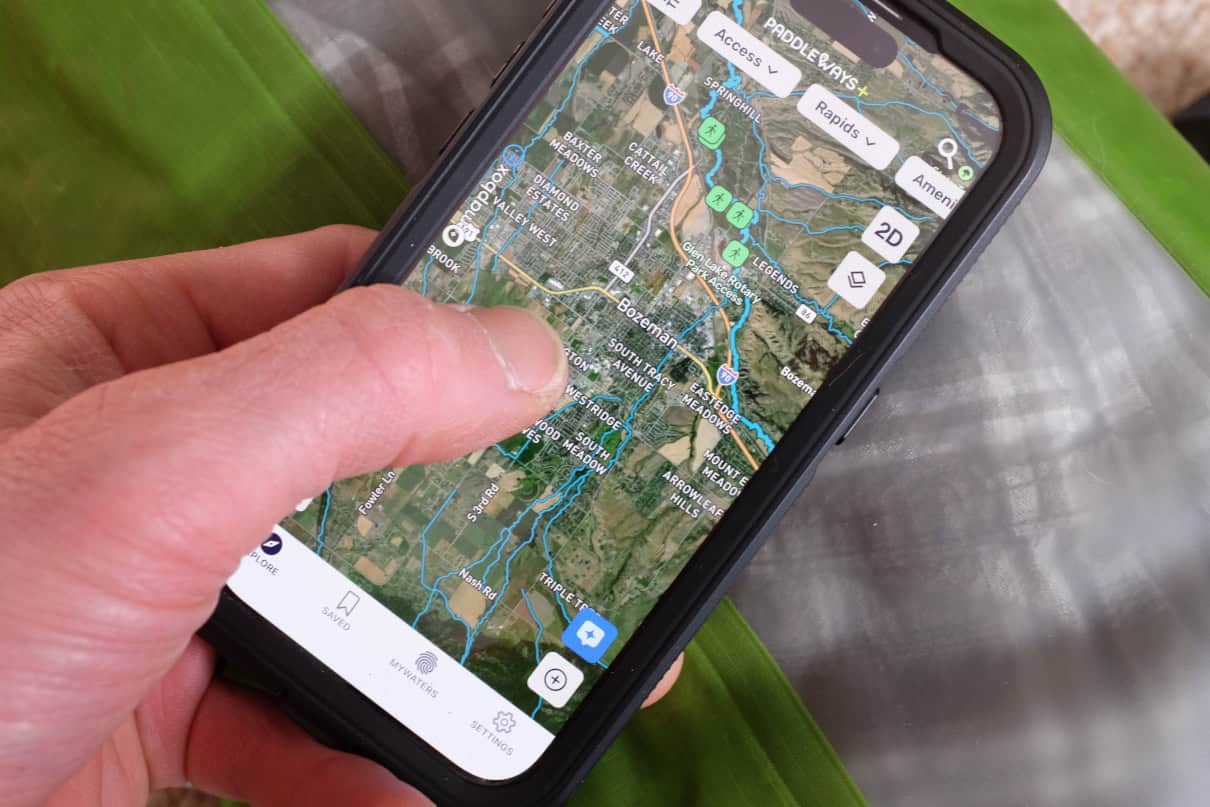
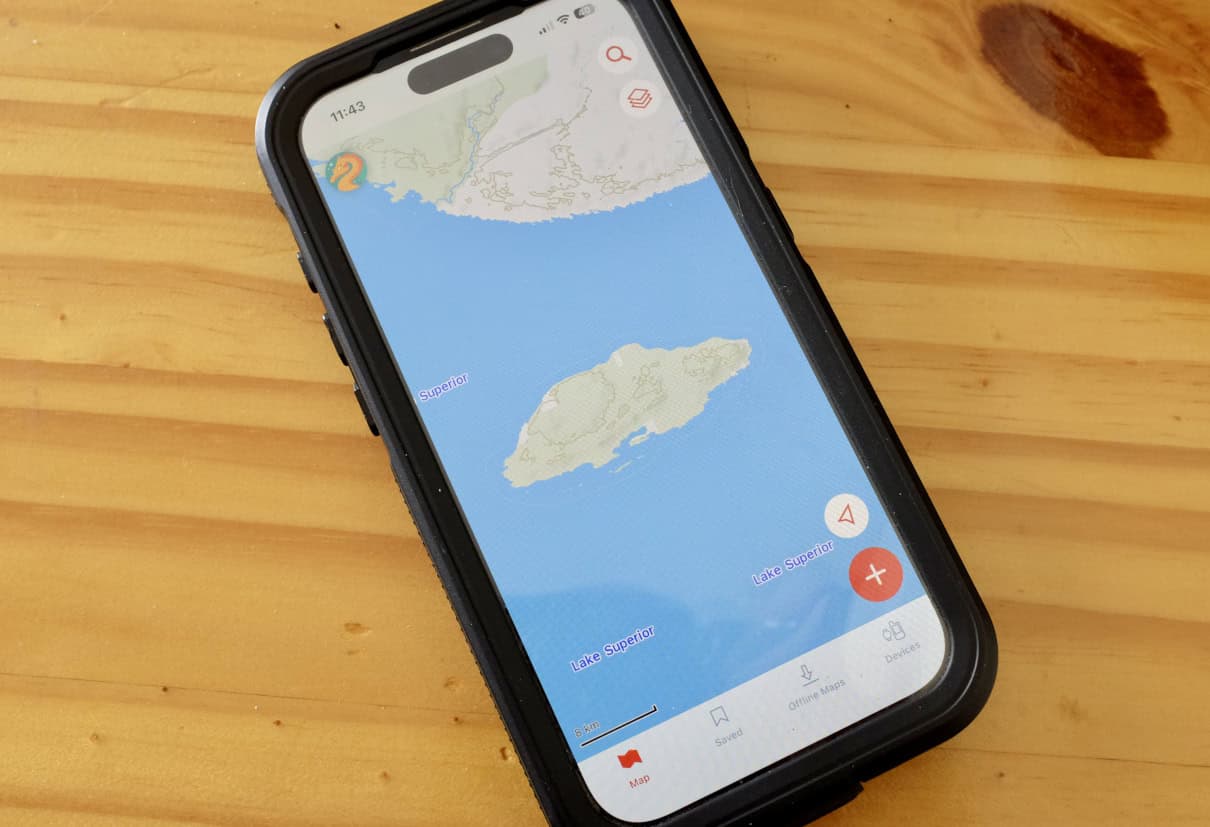
PaddleWays is a community-driven app that offers great intel for finding new places to paddle. It provides guidebook descriptions, paddler reviews and difficulty ratings of primarily river routes across the United States, along with planning tools like detailed maps, launch sites and flow gauges (with optimum levels). Once you’ve selected a route, you can measure distances in accurate river miles, highlight points of interest and set alerts for portages, campsites and rapids. It also allows you to see public and private lands.
Base map layers are the usual Satellite, Outdoor and Street map modes used in other navigation apps, viewable in 2D and 3D versions. Maps, GPS functions and details are available offline when you upgrade to the annual subscription. The app also helps you connect with other paddlers and local outfitters for recent data, shuttle services and permits. While PaddleWays is clearly focused on river paddlers, the ever-growing, user-driven database includes some lake and ocean routes for canoe trippers and touring kayakers.
Reasons to buy
Great for whitewater paddlers in the United States looking for an interactive tool, with key pieces of local knowledge
Social media functions allow you to connect with other boaters and outfitters
Consider another if
You are not a U.S. paddler
The majority of your paddling does not occur on rivers
Bottom line
An excellent interface for social boaters looking for rivers to paddle in the United States.
I use Avenza Maps in the navigation course I teach for first-year natural environment students. It’s the platform most commonly used in industry, with good crossover for paddlers and hikers. Avenza is quickly replacing handheld GPS units among resource professionals. It has all the same capacities of an advanced GPS unit with access to a huge database of map products, which can be purchased and downloaded for offline use.
Perhaps because my recreational use of Avenza came with the pressure to be able to explain and teach it to college students, I initially found the interface more confusing than the more basic CalTopo platform. But with practice, it became intuitive to use. For paddlers, it provides access to a wide array of maps, including government topographic maps and marine charts, as well as park maps and detailed “adventure” maps. This huge diversity of source material is one of Avenza’s strengths, along with GPS capabilities and a digital compass that’s accurate, intuitive and deals with the complications of magnetic declination.
Reasons to buy
Provides easy, cost-effective access to a vast array of maps, which can be accessed offline
Powerful GPS functionality
Consider another if
You’re a Luddite who would rather not learn a new smartphone application
Bottom line
With tons of maps and powerful functions, Avenza turns your smartphone into a serious navigational tool.
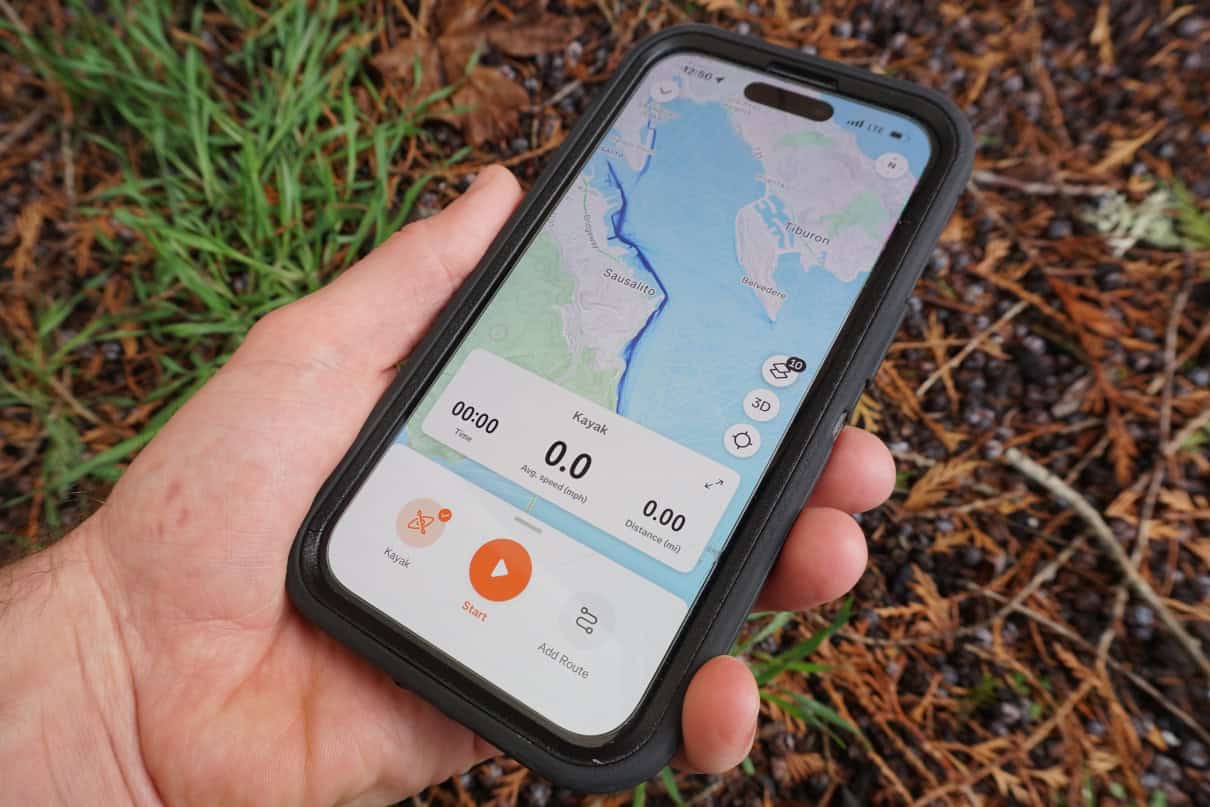
Unless you’ve been living under a rock, you’ve no doubt heard of (and have probably used) Strava for outdoor sports like running, cycling and nordic skiing. Strava is great for paddlers, too, especially if you love keeping track of your speed, distance and time on the water. The mapping feature is a great way to discover new routes, and also enables basic offline navigation by showing you where you are and where you are heading. Most importantly, Strava allows you to connect with like-minded enthusiasts with powerful social media components.
Once you’ve installed the app you can use your phone to track your activity and collect data, using its onboard GPS. However, many users pair Strava with a more streamlined, GPS-enabled fitness watch and use a separate app such as Garmin Connect or Apple Fitness to transfer activity details to the Strava app. Using a fitness watch also allows you to unlock some of Strava’s more advanced functions, such as tracking heart rate zones.
The free version of Strava is all I’ve ever needed, but a paid subscription gives you far more tools to analyze your workout stats and plan routes.
Reasons to buy
Great for fitness types and those with a competitive edge
Consider another if
You want detailed maps and navigation capabilities
Bottom line
An addictive, functional platform for adventure athletes.
Carry A Waterproof VHF Radio, Use Your Phone Only As A Backup
A handheld VHF marine band radio allows you to communicate with the Coast Guard and other boat traffic. Use Channel 16 only for hailing and emergencies. The radio should be waterproof, because it is virtually certain to get wet.
A cell phone, even if in a waterproof case or sealable bag, might not work, so don’t rely on it as the primary means of emergency communication.
As smartphones and app-based navigational tools have largely rendered handheld GPS units obsolete, tech giant Garmin has been forced to innovate with its own apps to make its devices even more powerful. Garmin Explore allows you to plan routes online or on a mobile device, mark waypoints, download relevant topographic and satellite maps and sync your data with other Garmin devices, such as a GPS unit or satellite communicator. The app works offline, making it very practical for wilderness paddlers, and, since it’s phone-based, it is far faster and easier to use for composing satellite messages and inputting other information.
The app also offers unlimited cloud storage to organize data, keep track of statistics and share your routes. The basic Garmin Explore app is free for Garmin customers. An expanded selection of maps for around the world, including high-resolution satellite imagery, is available with an Outdoor Maps+ subscription.
Reasons to buy
A free add-on to enhance your Garmin GPS, smartwatch or satellite communicator
Easy to use, excels offline and offers unlimited cloud-based storage
Consider another if
– You’re not an existing Garmin product owner
Bottom line
A great tool to make your Garmin navigation and communication devices even more useful.
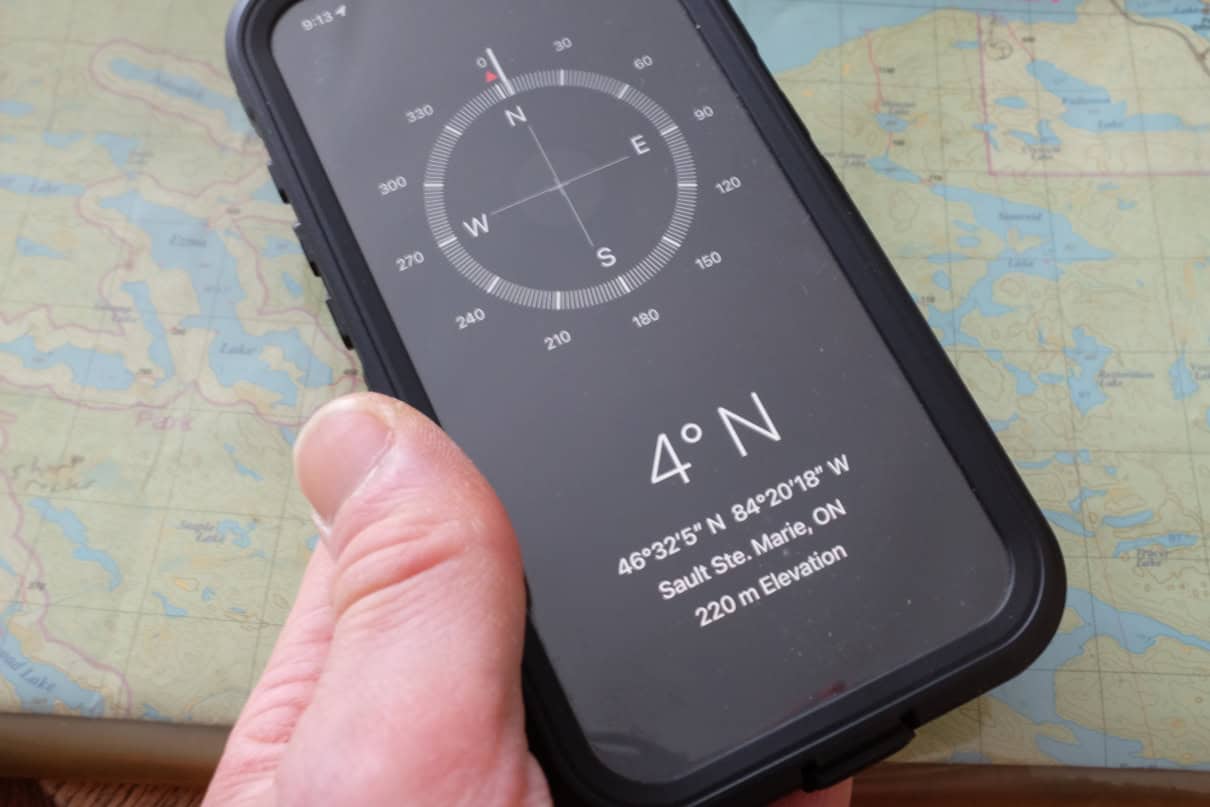
The compass app installed on every iPhone is accurate and handy. Teaching navigation to college students, I often deal with students arriving to class without their required old-school manual compass. As an alternative, I request they use the compass app on their phone, and, in my experience, iPhones outperform Androids (a compass app is not built in on some Android models but free downloads are available).
The iPhone compass is accurate in measuring magnetic bearings as well as true bearings that compensate for declination. It also allows you to follow a course. Much like a marine compass, the one built into every iPhone isn’t affected by tilt, so you can hold your phone out with a straight arm at eye level to take more precise sightings. What’s more, the iPhone compass also includes elevation and your location in latitude and longitude coordinates, which can be cross-referenced to identify your position on a map.
Reasons to buy
It’s free and available for iPhone users
A trustworthy backup for manual compasses
Consider another if
You’d rather disconnect in the outdoors
You are looking for a more powerful, GPS-enabled navigation app with mapping functions
Bottom line
Built in and ready to get you out of a jam — as long as your iPhone batteries have a charge.
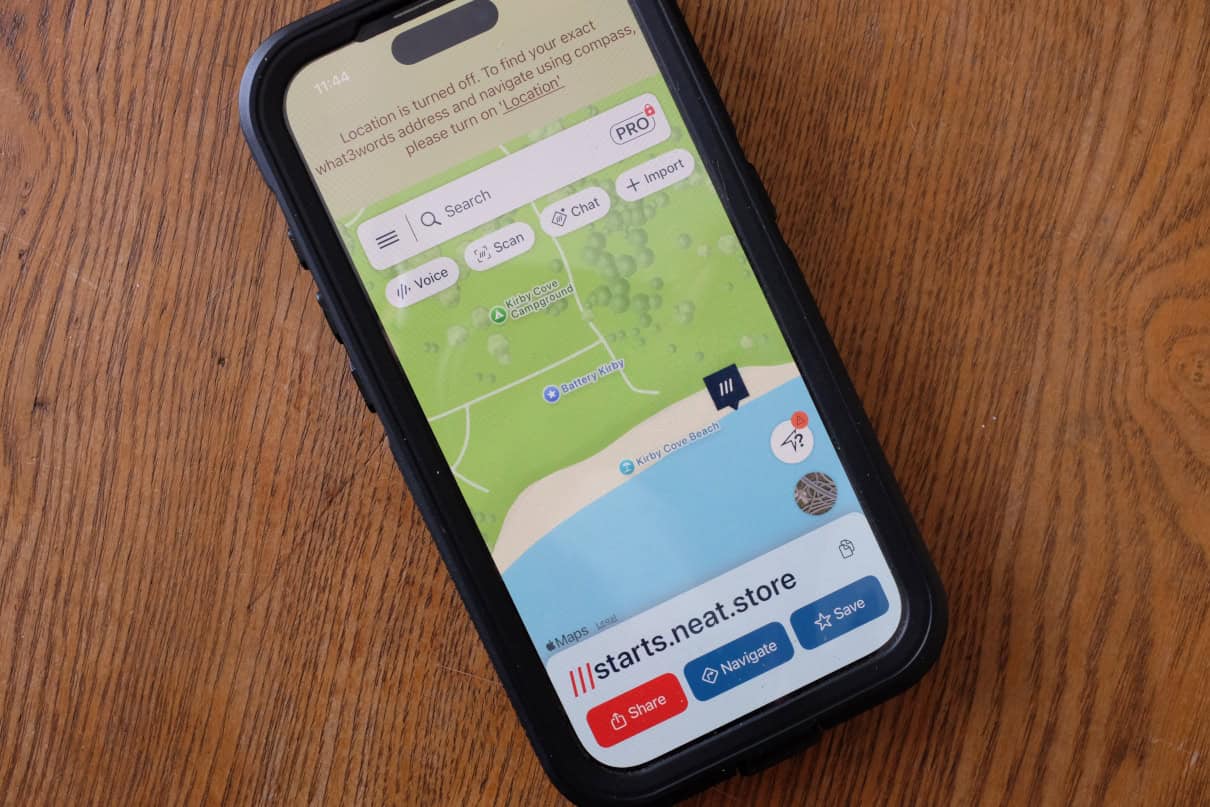
What3Words eliminates the confusing number salad of conventional latitude and longitude or UTM grid position references and replaces them with words. Essentially, the app divides the globe into 3-by-3-meter squares and assigns three unique words to each. These word-based coordinates can be used in other navigation apps, such as Avenza Maps, to communicate your position to others or input points of interest along a route.
Though it is not well used by some government agencies (such as the Canadian and U.S. coast guards), What3Words is increasingly becoming a go-to system for land-based search and rescue because of its simplicity. The app is free, and it works offline by using your phone’s internal GPS. Just remember, you’ll need a satellite communication device if you want to share your location when you’re outside of cell service.
Reasons to buy
Simple, free tool in case you get lost
Precise position finding (3-meter resolution)
Consider another if
You are looking for a more multi-functional navigation app
Bottom line
A free and nearly foolproof way to identify and share your position.
Check The Weather
Plan for changing weather conditions. Prepare for the worst case.
Don’t forget to check tide, currents, or river levels.
Things To Consider When Choosing Navigation Apps
The best piece of advice for choosing a navigation app — as it is for purchasing just about anything – is to try before you buy. Luckily, basic, free versions of all of the products featured here make it easy for you to test out the various interfaces before committing to making a purchase. Even then, some app developers allow the choice for monthly versus annual subscriptions. While it’s always cheaper to subscribe for a year, you could also try the product for a month before making a longer-term decision. Some apps also come with free trial periods for premium features — just be sure to mark your calendar with the date when fees kick in.
Like any piece of technology, there are pros and cons for each of the products we’ve highlighted. Consider how you will use a navigation app before committing to making a purchase. A big consideration is whether or not you need offline capabilities; with cell phone signals pushing further and further into the hinterlands, you may not need to worry about a product that supports true “wilderness” use.
Don’t discount the convenience of free apps, too. For example, the basic CalTopo platform is a great route planning tool that’s also easy to use in the field; What3Words is a free download that could save your life if you become lost; and the compass built into every iPhone is highly functional. It’s worth taking all of these products for a test drive so you know how they work in case you find yourself in a pinch.
How We Tested
I’ve been teaching outdoor navigation to college students for over a decade. Though I prefer hands-on, manual technology, it’s become apparent over time that navigation apps have solidified their role in making it easier to get around. Testing this technology has been equal parts fulfilling my responsibilities as an educator with my personal passion for outdoor adventure sports like sea kayaking, canoeing, trail running and backcountry skiing.
Why Trust Us
I’ve worked as a sea kayak and canoe guide, outdoor educator and environmental journalist for over 20 years. During that time I’ve seen the emergence of civilian GPS units, satellite communicators and development of smartphone apps that are rapidly making everything else obsolete. All the while, I’ve kept my magnetic compass and paper maps close while picking and choosing which are the best navigation apps to enhance my personal pursuits.


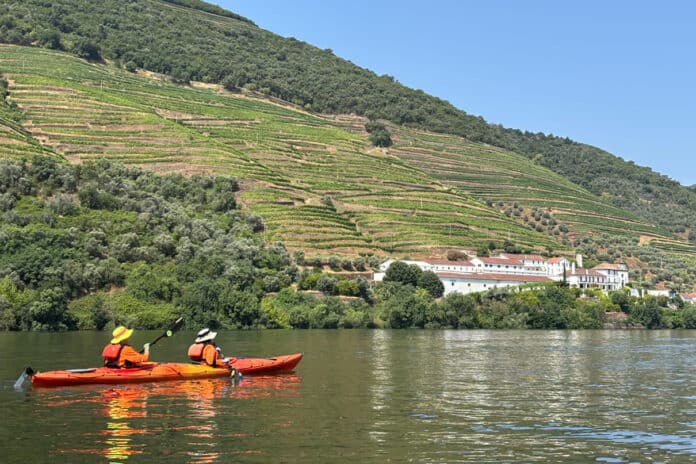
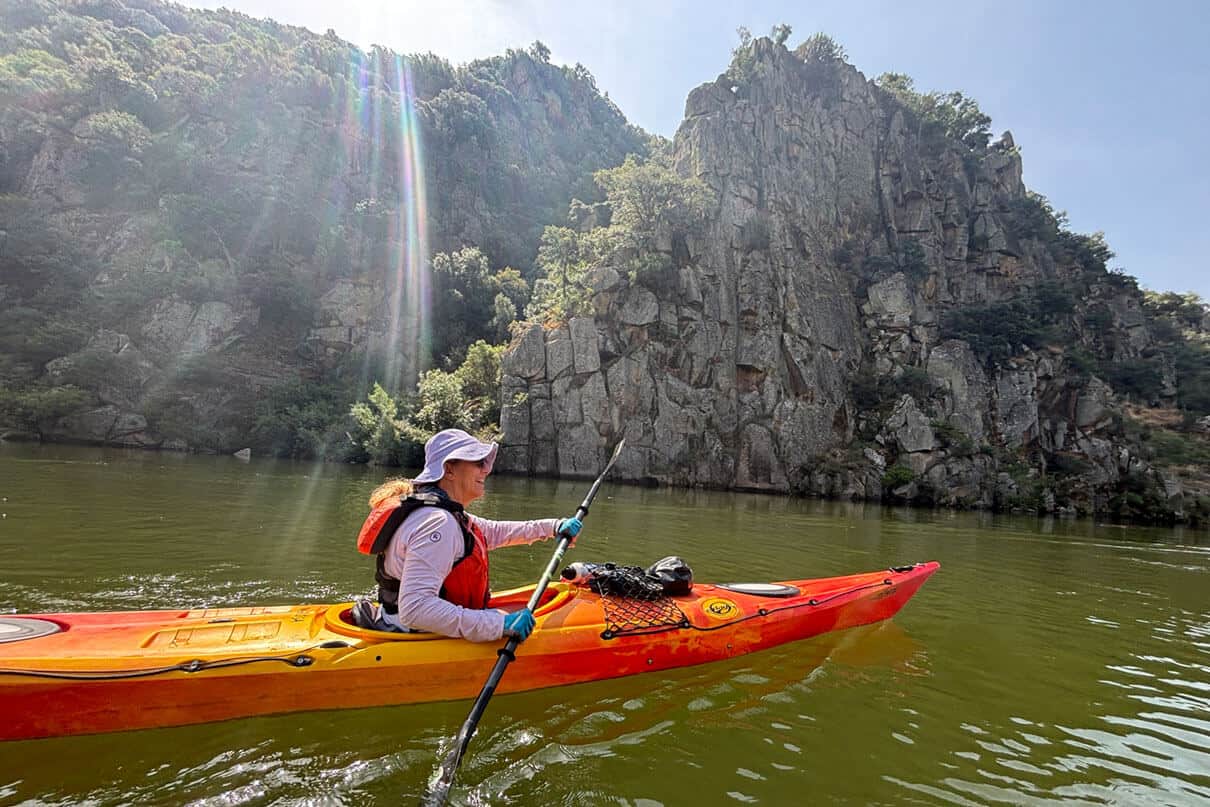
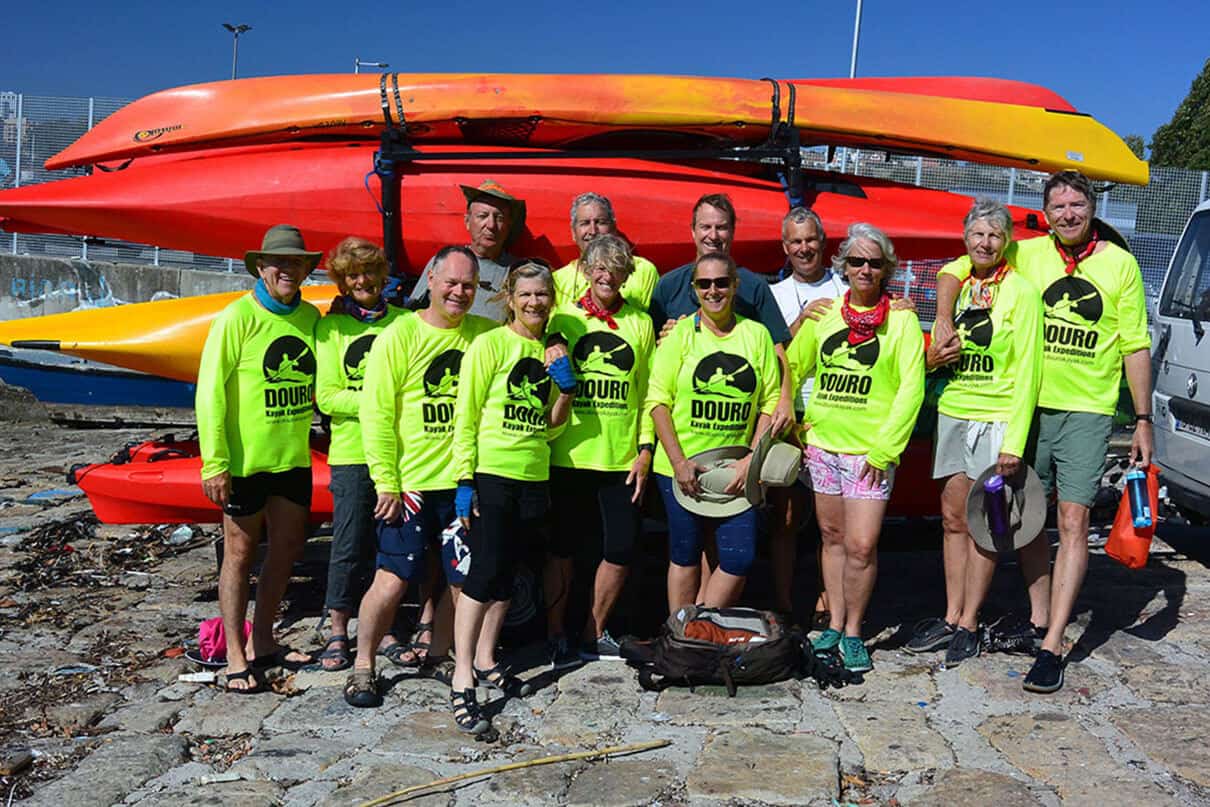

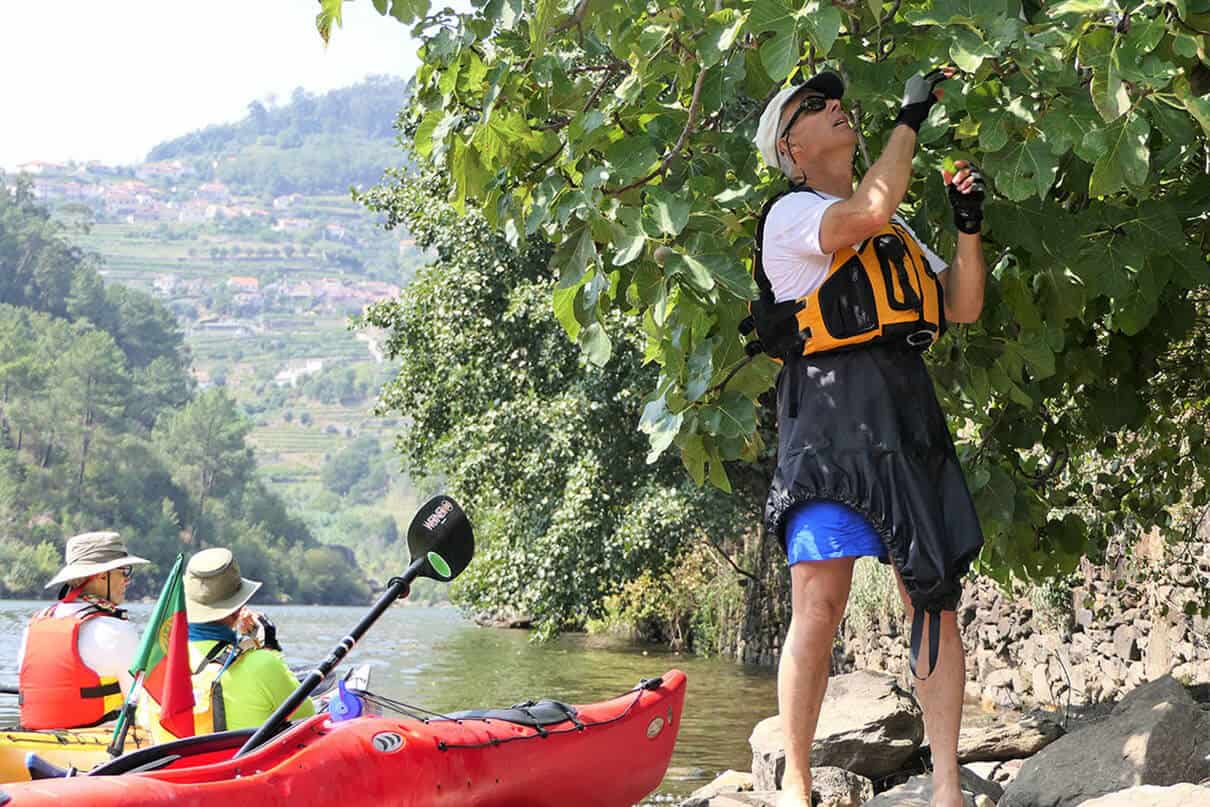
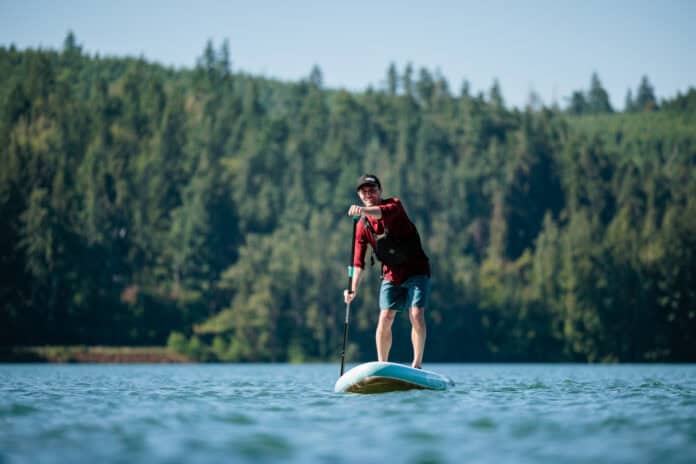
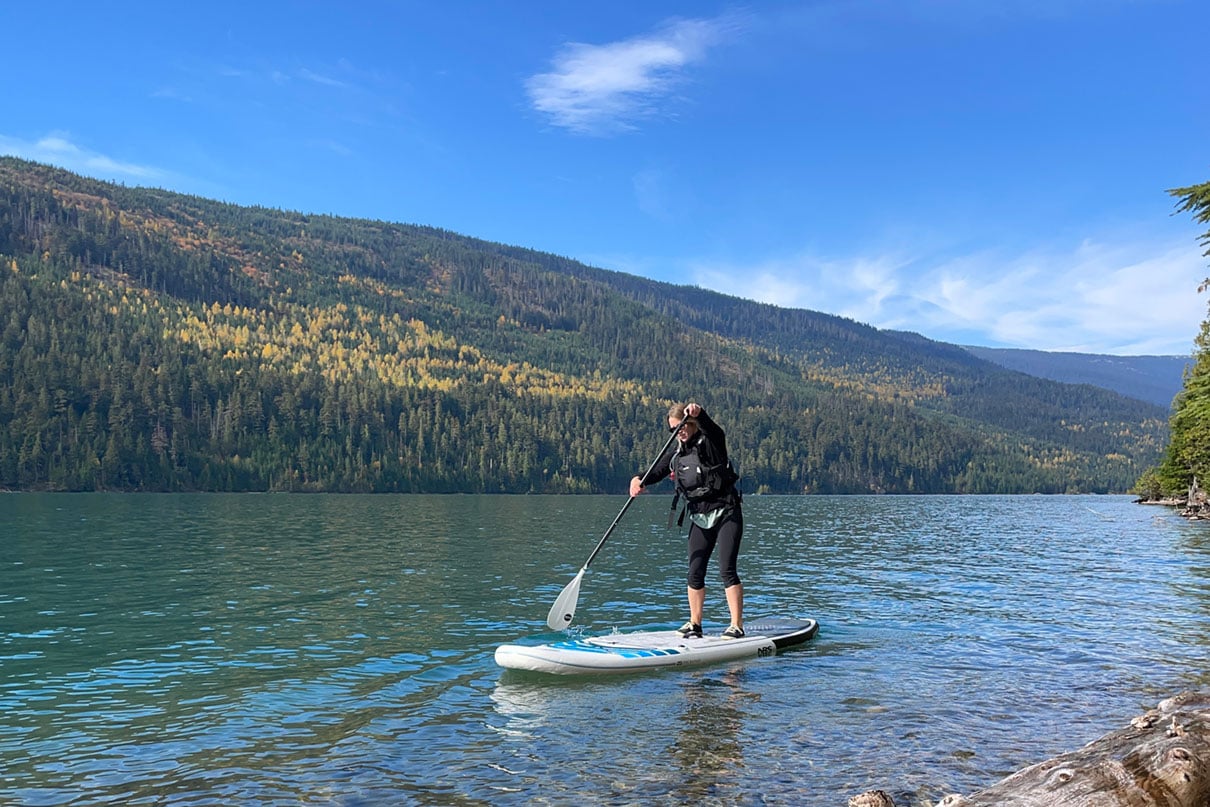

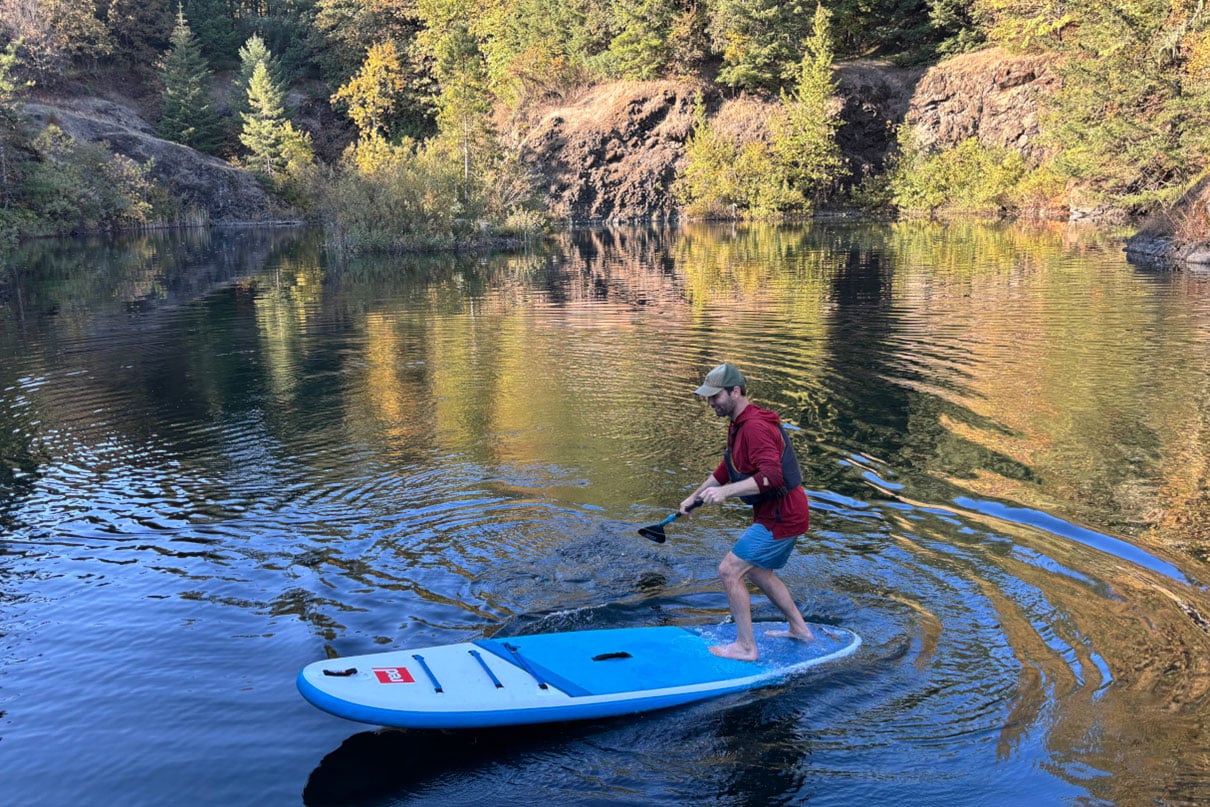

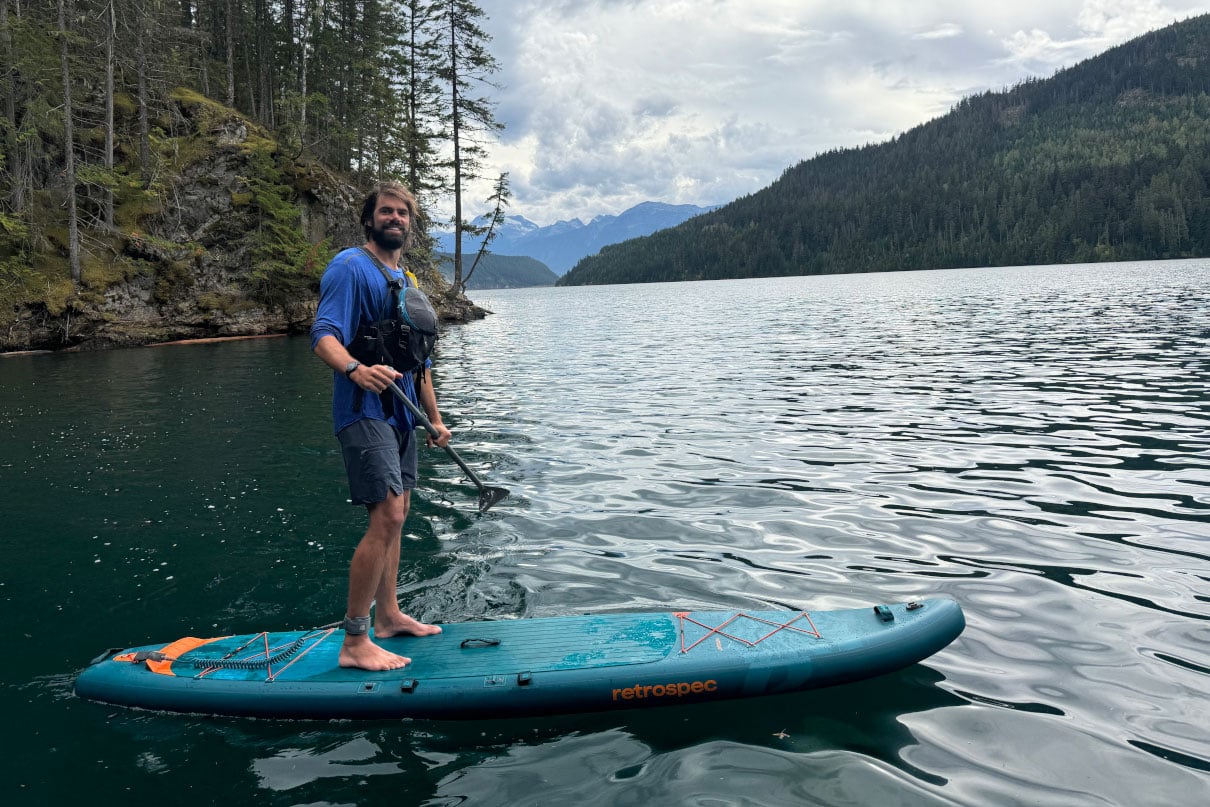
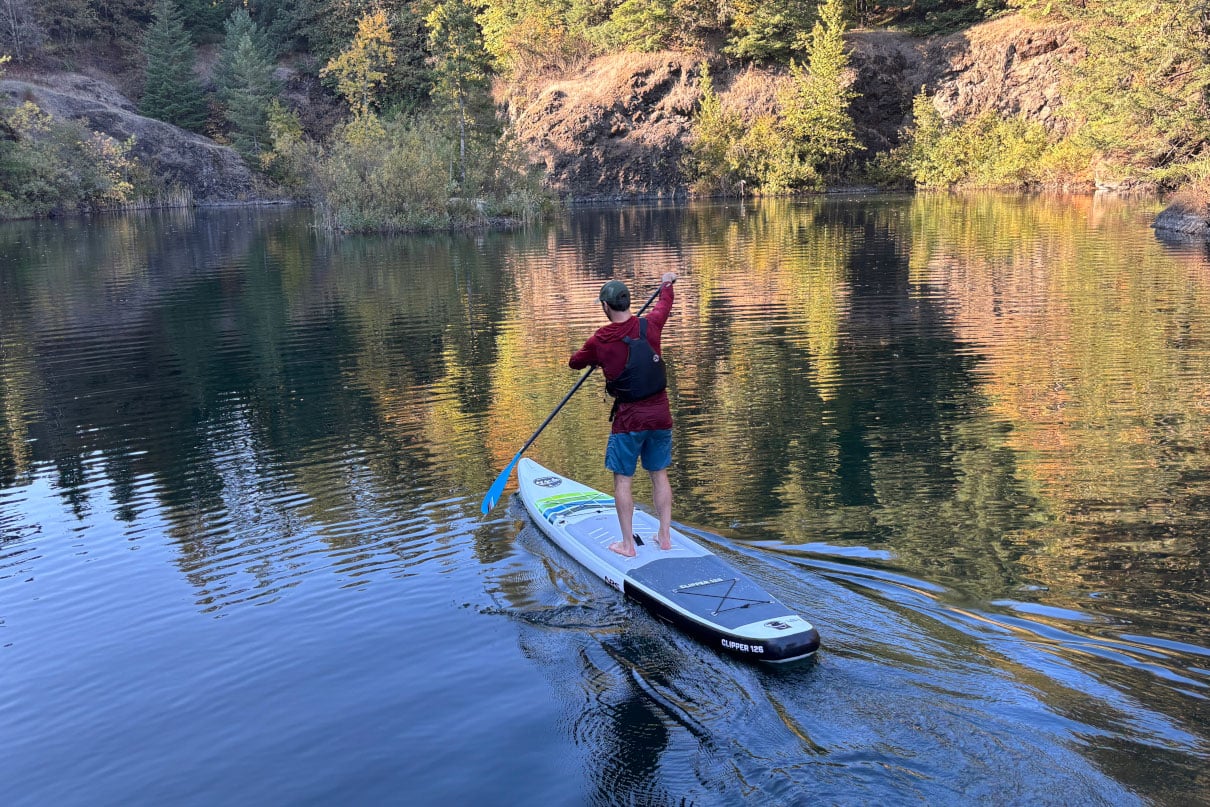
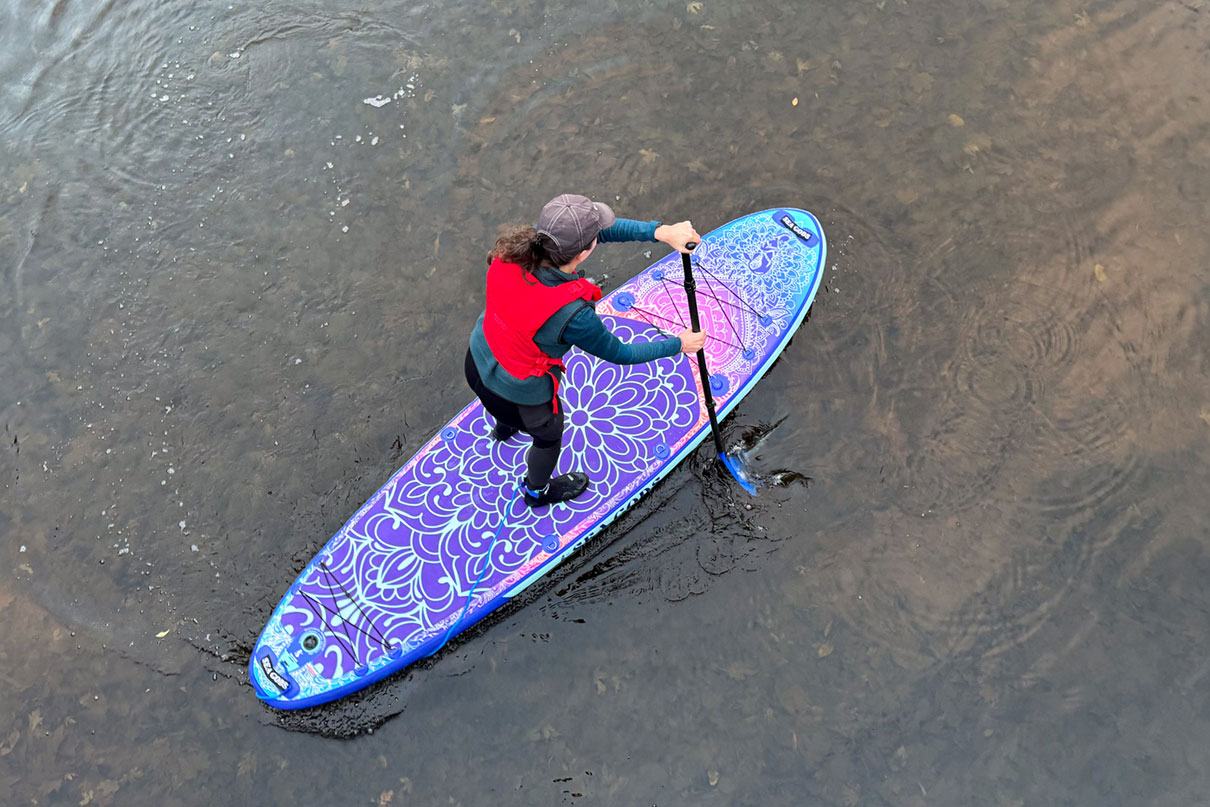
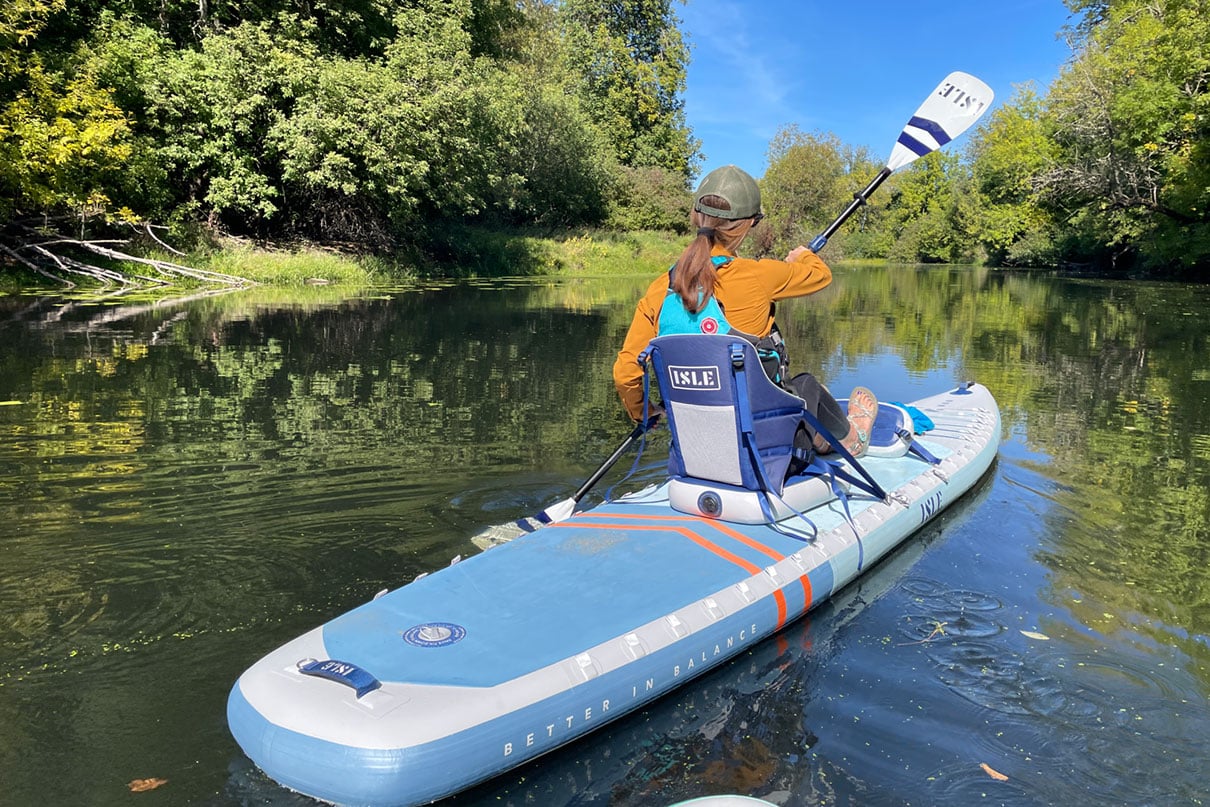
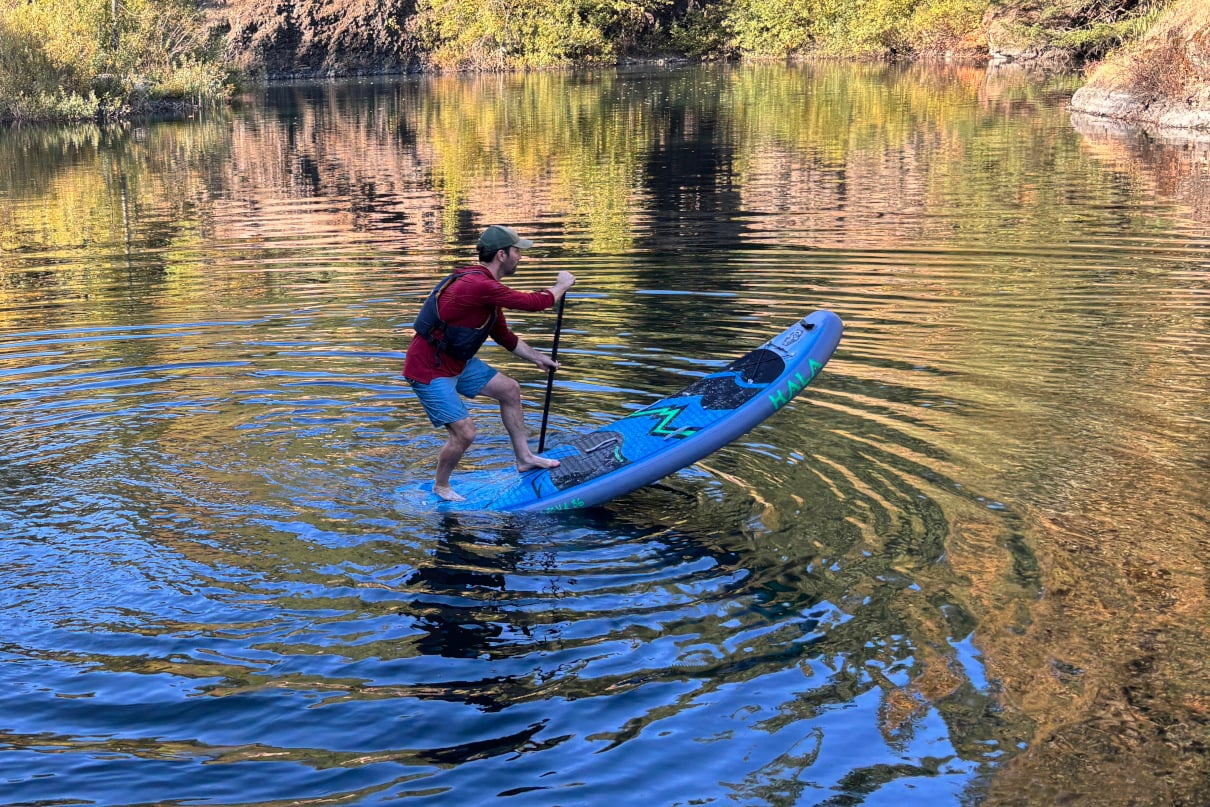
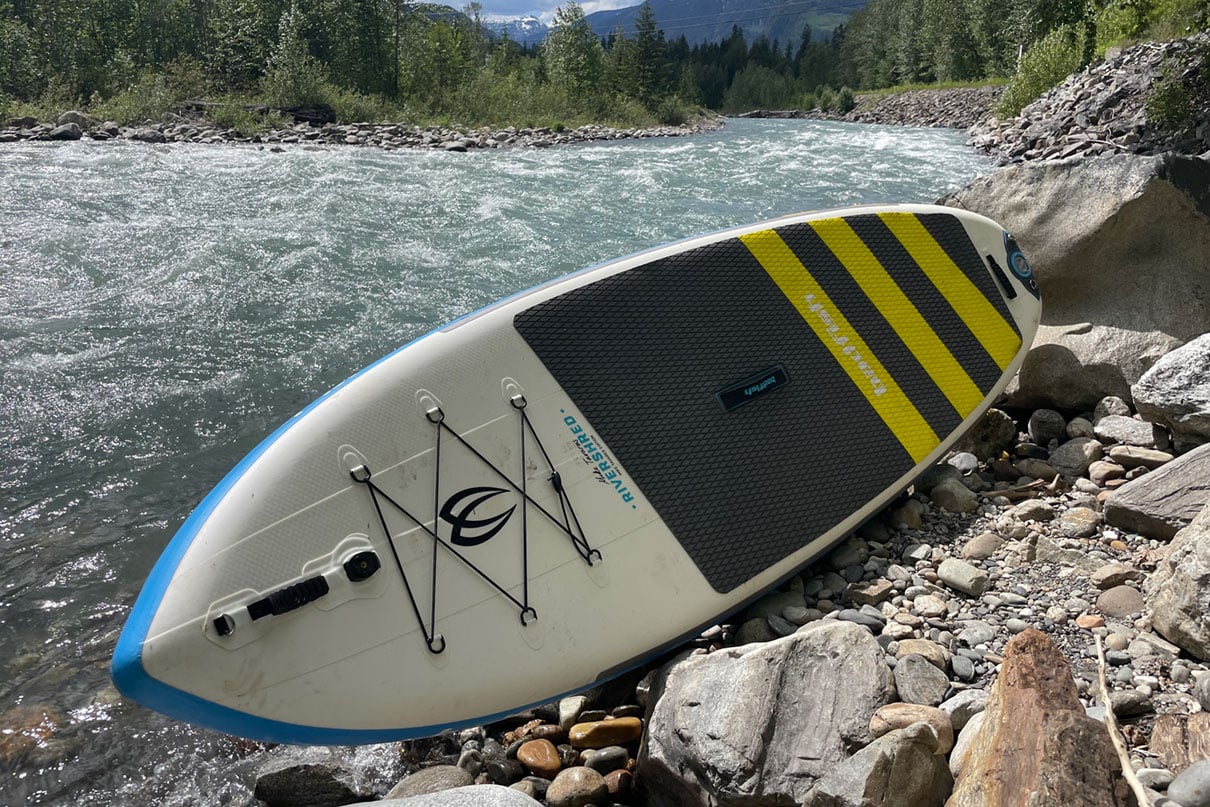
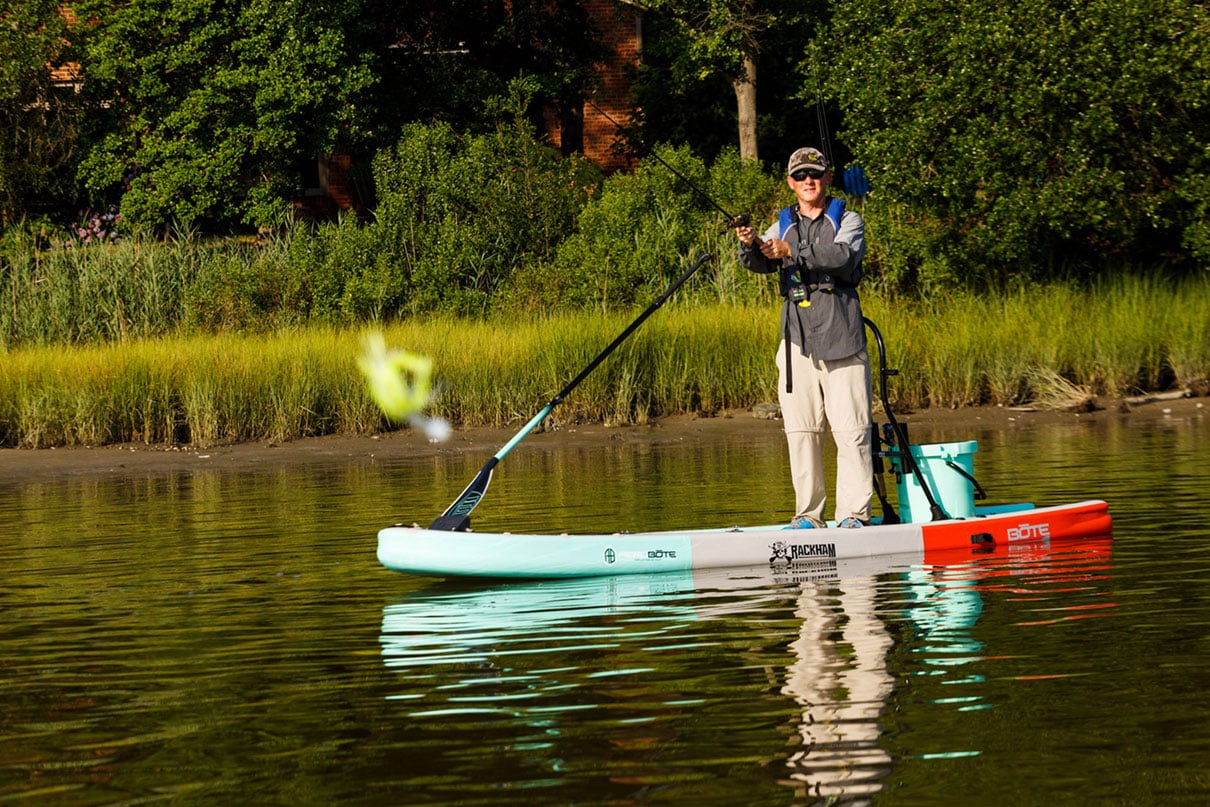
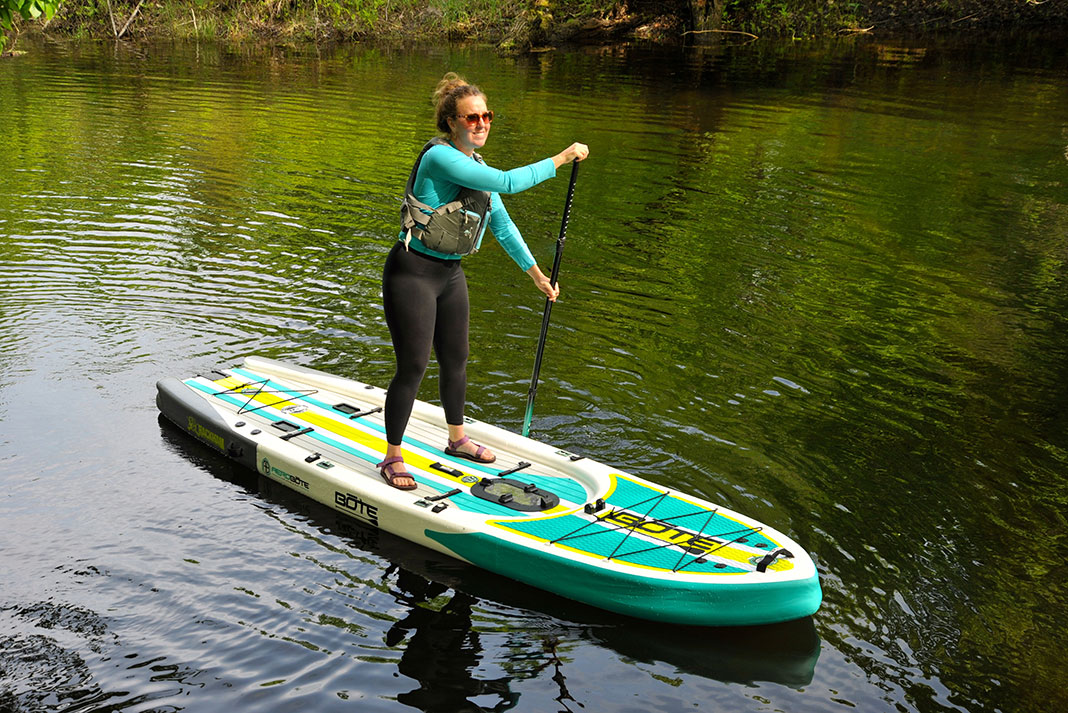
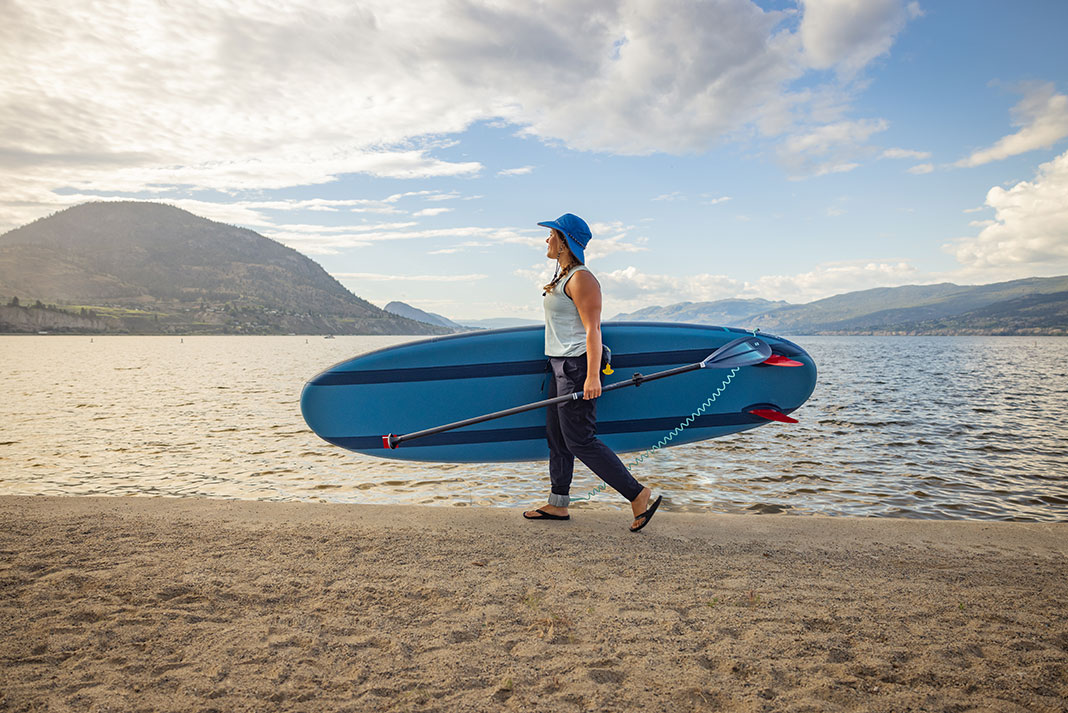
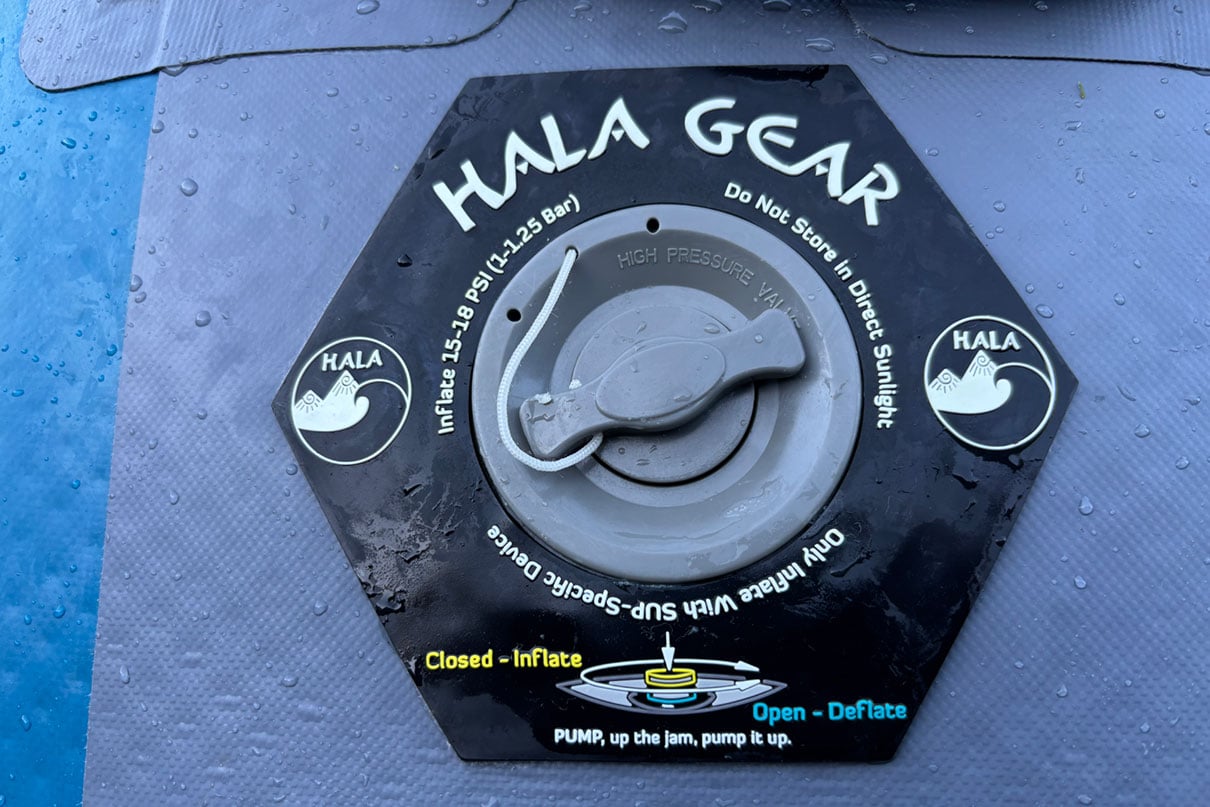
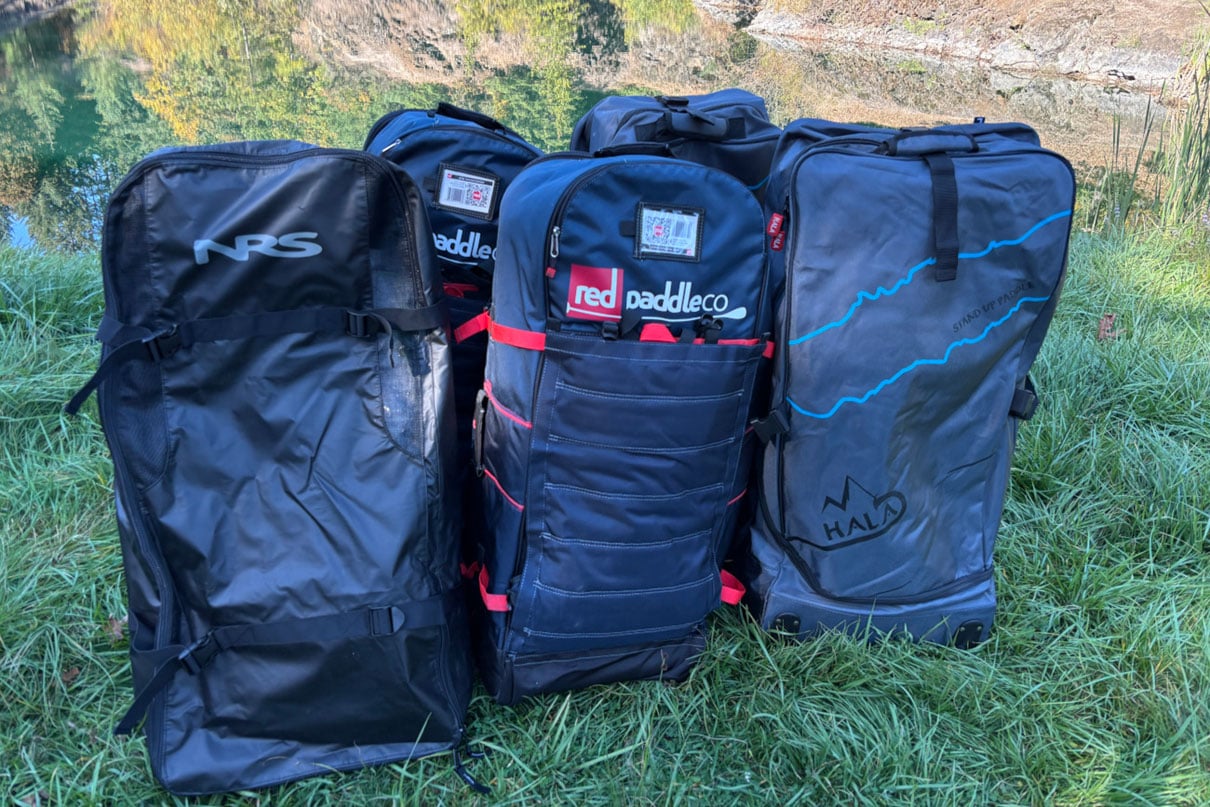

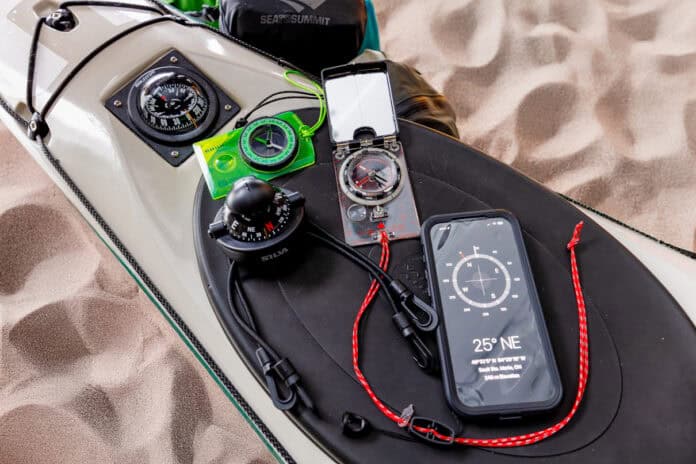
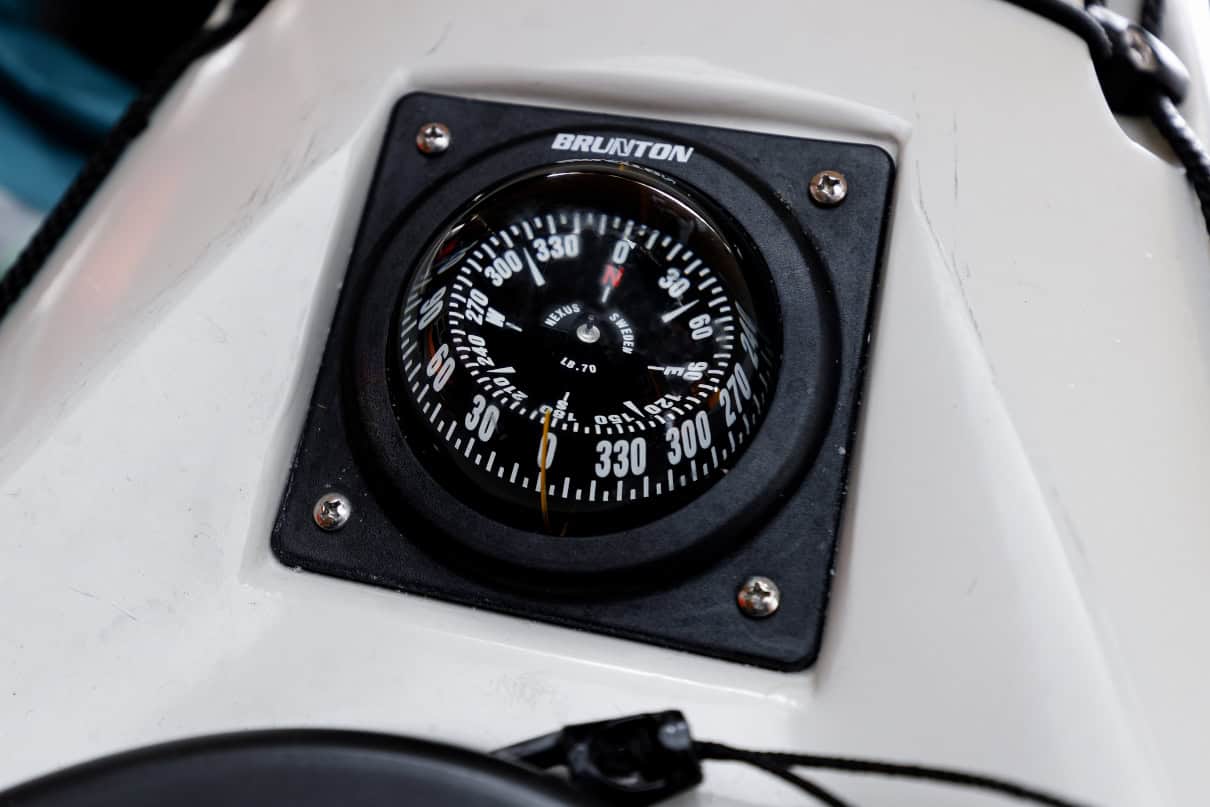
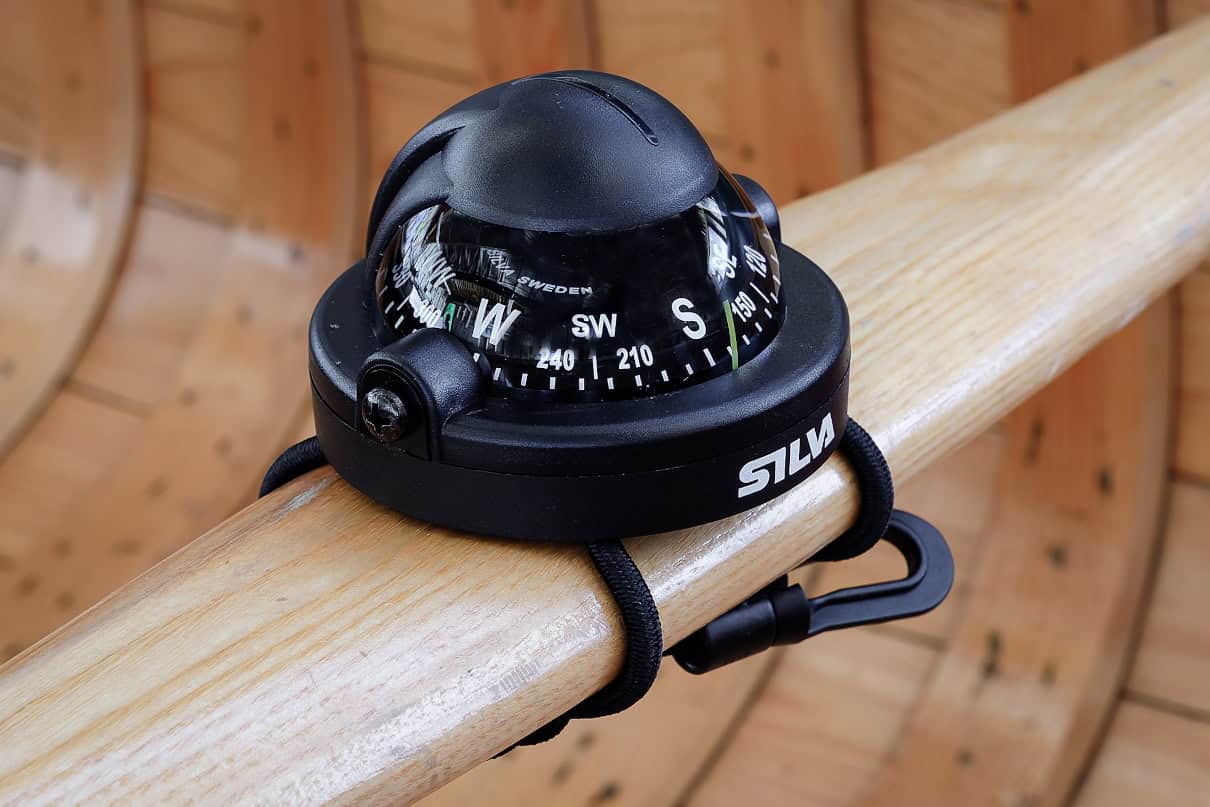

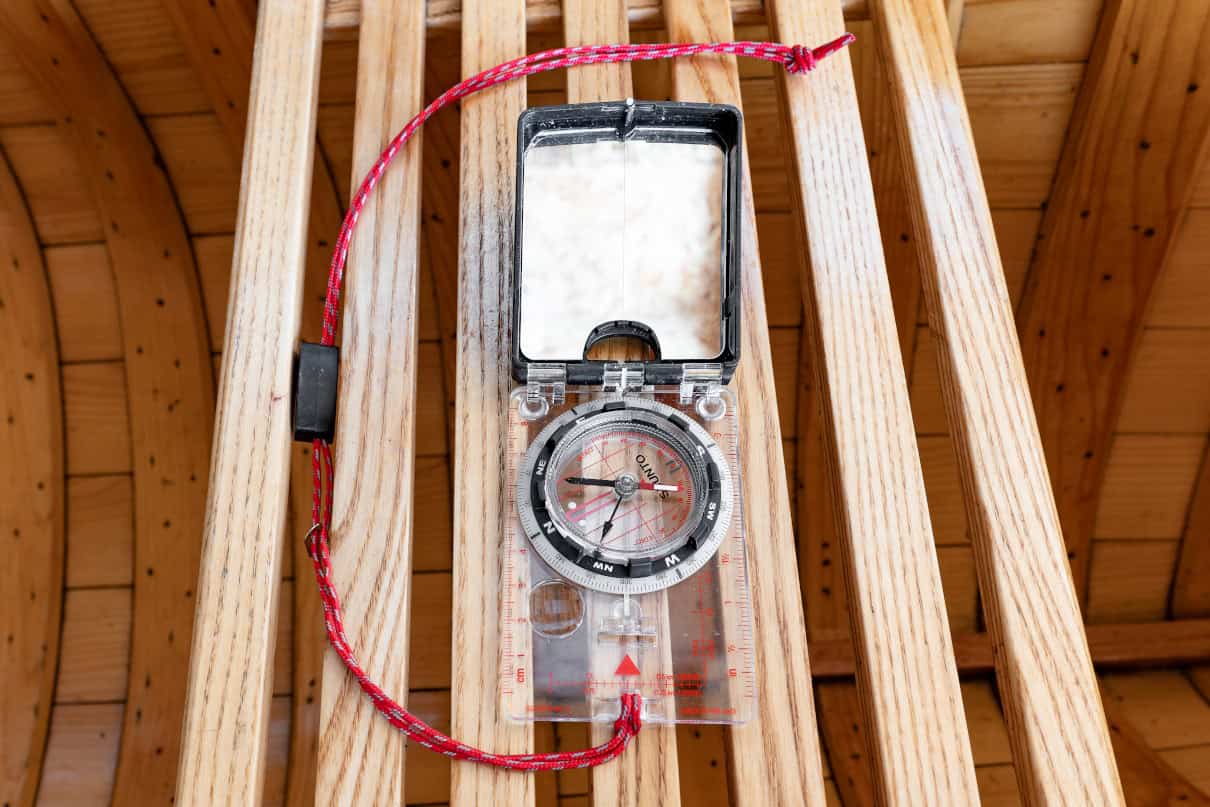

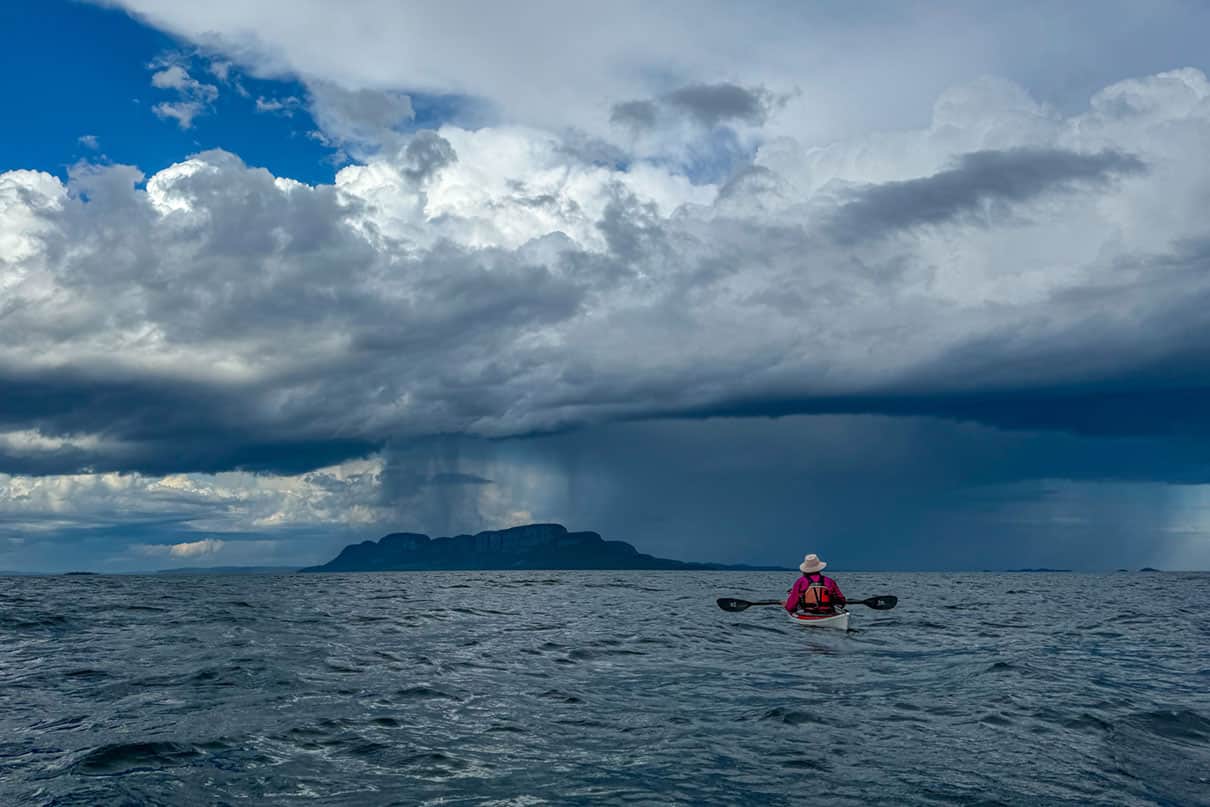
 This article was published in Issue 75 of Paddling Magazine.

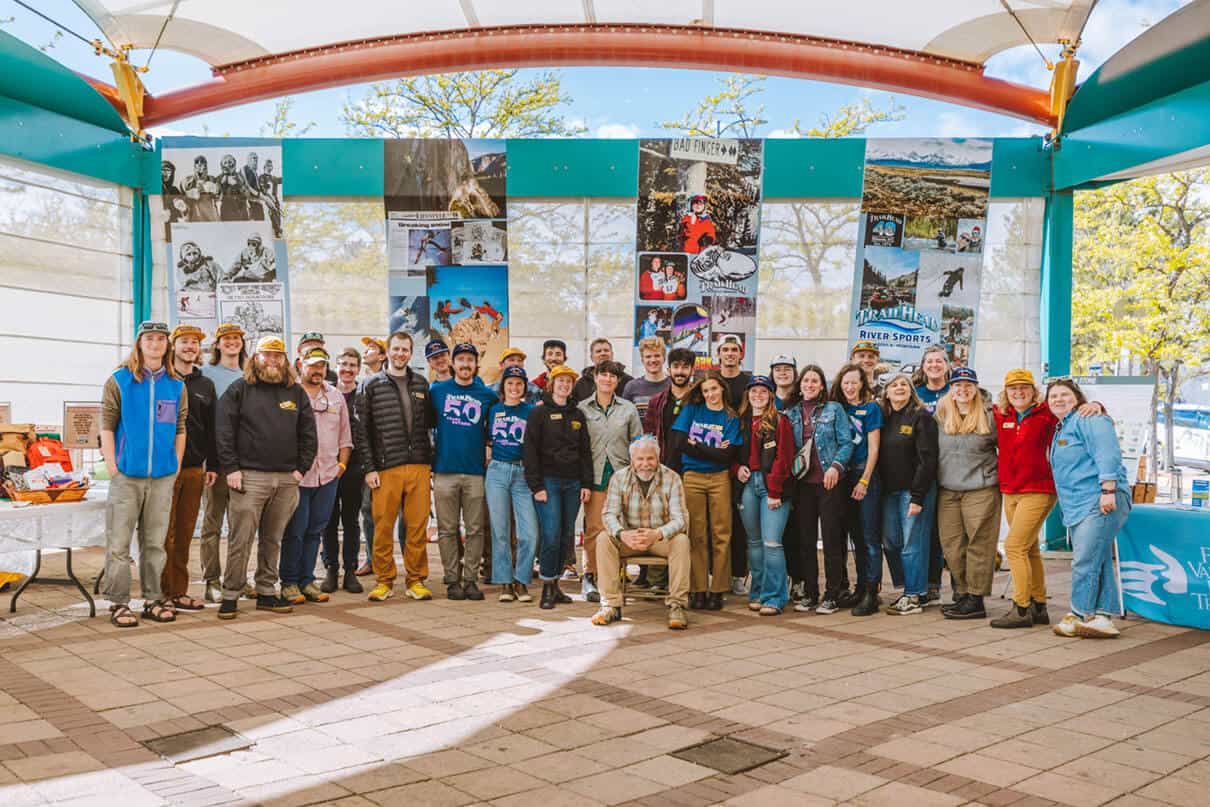
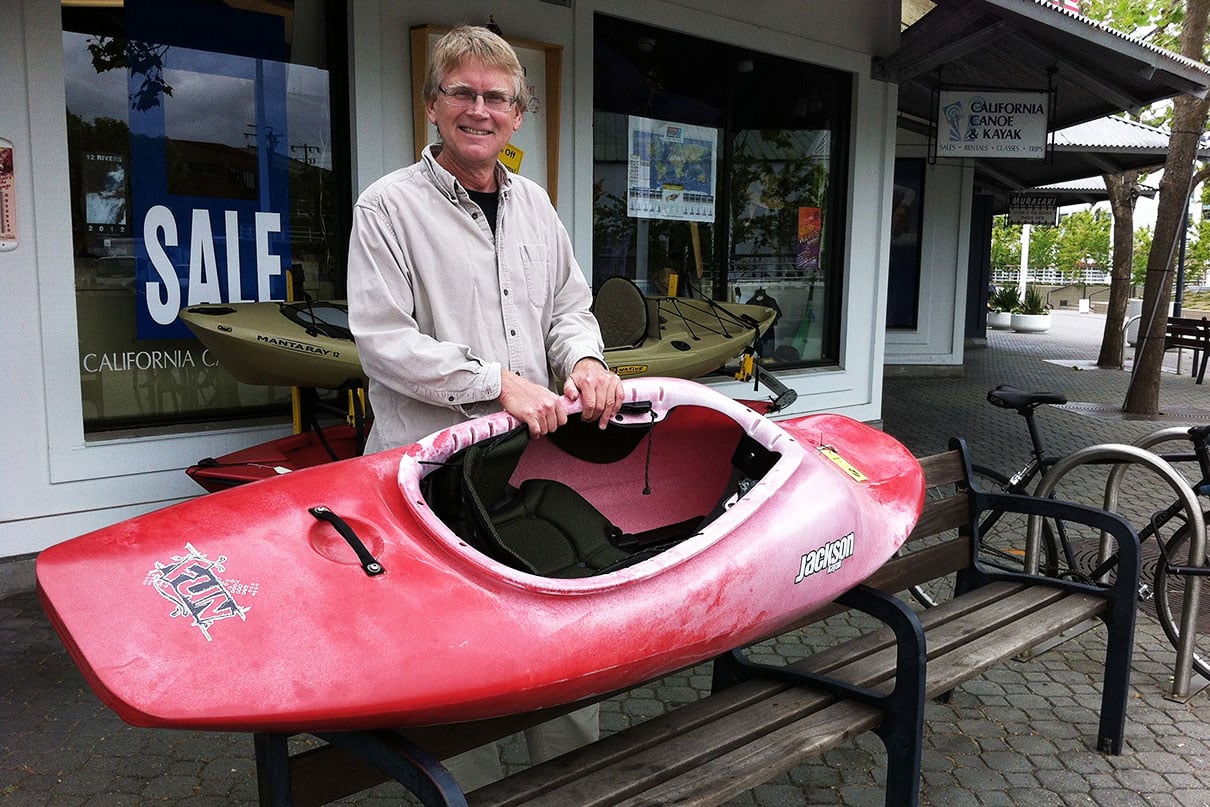
 This article was first published in the 2025 issue of Paddling Business.

 This article was published in Issue 74 of Paddling Magazine.