Home Blog Page 63

Wave Theory: Is The Classic Kayaker Greeting Making A Comeback?

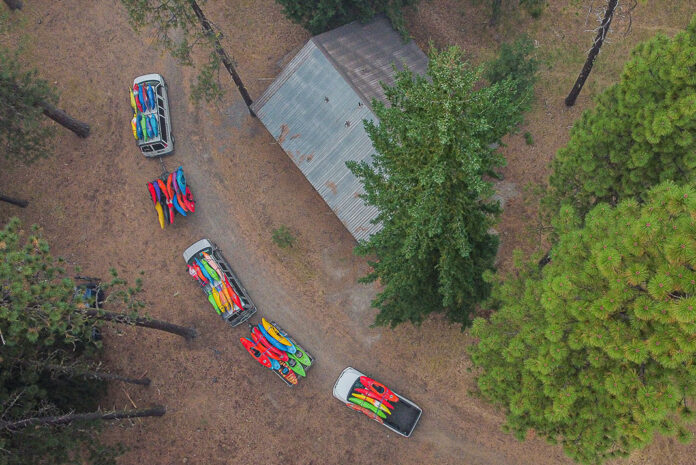
overhead photo of a pair of vans hauling many many river kayaks
Unofficial rule of thumb: one wave per boat strapped to the roof. | Feature photo: Kalob Grady

I used to drive a Volkswagen Westfalia van. Just out of college, kayak on the roof, Tevas on my feet—I thought I was pretty cool. For full-time guide life the Westfalia was pretty ideal, except that it broke down all the time and, with the motor in the back, could not blow enough warm air on the windshield to defrost it on cold mornings.

Little known fact: All Volkswagen van drivers wave when they pass each other on the highway. A recognition, I suppose, of a kindred spirit and another person possibly as cool as you. I could be wrong, but I don’t think Dodge Caravan drivers wave to each other, if they did it’d be perhaps a recognition of another person as uncool as you. A kayak on the roof can similarly warrant a wave from a passing fellow paddler on the highway—but this seems to vary over time and place.
My van died long ago and I now drive a pickup truck, but I don’t wave to other pickup truck drivers and they don’t wave to me. But when I bike to work or go for a road ride, I wave at other cyclists. They wave back. When I walk down the sidewalk, I don’t wave; neither do the other pedestrians. What is going on here?

Wave theory: Is the classic kayaker greeting making a comeback?

There is a surprising amount of research and zero confirmed theories as to the origin of the wave. This line of inquiry resides everywhere from archeology to psychology, sociology and even economics.
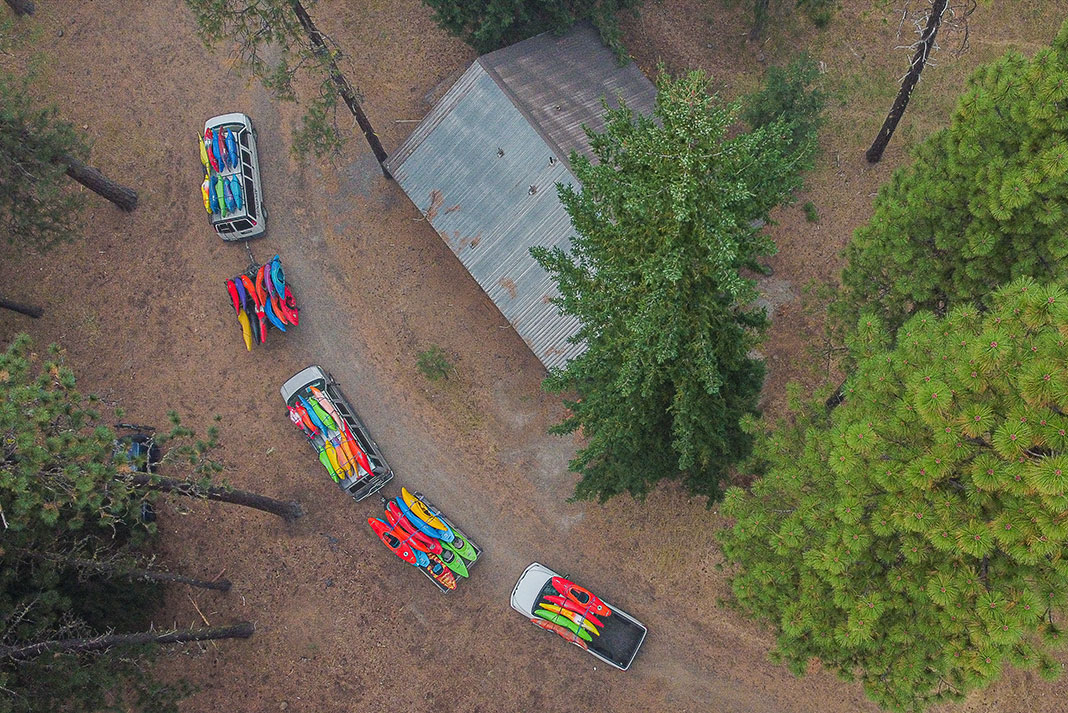
overhead photo of a pair of vans hauling many many river kayaks
Unofficial rule of thumb: one wave per boat strapped to the roof. | Feature photo: Kalob Grady

One school of thought is that the wave is derived from the salute, which itself is derived from removing one’s hat as a show of respect, which in turn may be derived from Knights of the Round Table tipping their helmet visors up in greeting. Sounds like wishful thinking, as the wave likely predates hats and helmets by a thousand years.

Another school of thought, with a bit more momentum behind it, is that showing one’s palm to someone is confirmation one means no harm and hides no weapon. I’m not sure if this view is optimistic or pessimistic about human nature.

The rise and fall of the wave

I recall a cartoon by the great kayaker/humorist William Nealy, from way back in the 80s, of two kayakers pulled over on opposite sides of the interstate, running across the grassy median with arms wide, lining up for a hug. The 80s were a time when meeting another kayaker on the road was a novelty, and honking, waving and general joyousness was typical. That mellowed in the 90s to a more restrained flash of fingers above the steering wheel, with an occasional keener going overboard.

Where I paddle on the Ottawa River, through the go-go boom days of the late 90s and early 2000s, the wave fell away. It was really busy with kayaks then—a boat on every vehicle on the road, put-in and take-out parking lots overflowing, and crowds and lines in the eddies. Other kayakers were competition rather than community. Drivers avoided eye contact when another kayaker was spotted on the road. Weird. And a bit sad.

It’s not that way anymore, at least where I live.
Hearty hellos are back in style

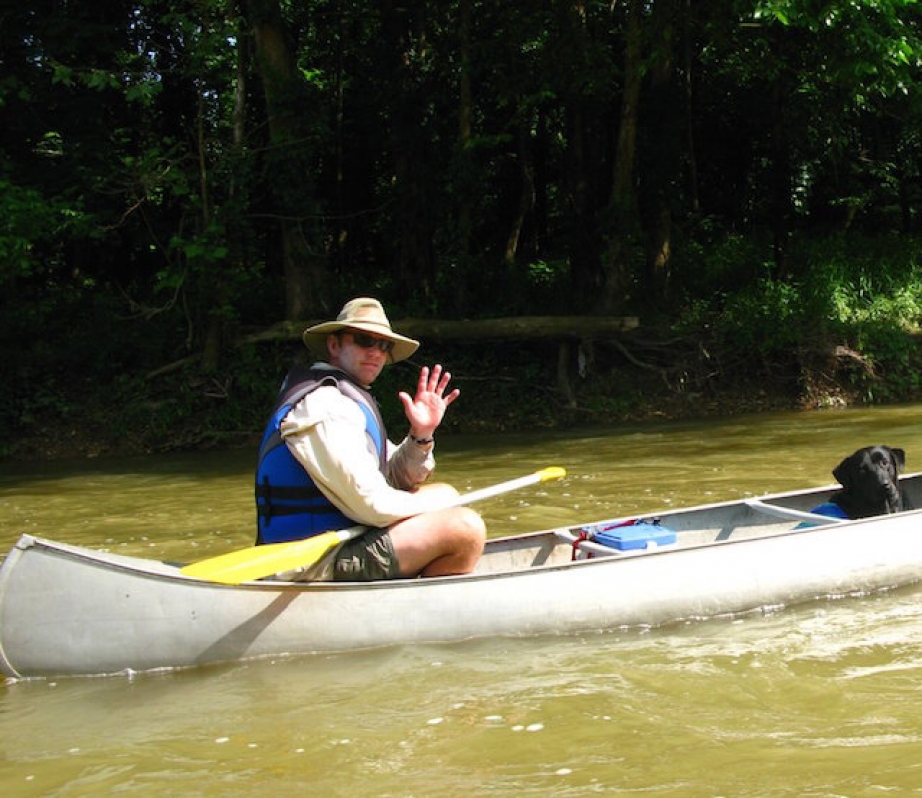
The wave has been slowly making a comeback, perhaps signaling the days of viewing other kayakers as rivalries are behind us. Things haven’t quite gone back to the early days, with joyous celebrations at the sight of a fellow boater—but the subtle wave is still a welcome sight, a recognition that we are part of the same awesome community.

Recently I drove to the city of Ottawa to drop off a boat, on the same day as the cult favorite Movember Whitewater Classic kayak race on the Ottawa River. Kayakers were coming from the city to the river; I was going the other way. I am pleased to report every single kayak-topped car waved. I happily waved back.

[ Browse the widest selection of boats and gear in the Paddling Buyer’s Guide ]

Jeff Jackson is a risk management consultant and professor of outdoor adventure at Algonquin College. Alchemy first appeared in the Summer 2000 issue of Rapid.
Cover of the 2023 Paddling Buyer’s GuideThis article was first published in the 2023 Paddling Buyer’s Guide. Subscribe to Paddling Magazine’s print and digital editions, or browse the archives.


Unofficial rule of thumb: one wave per boat strapped to the roof. | Feature photo: Kalob Grady
 

Inside The Mind Of Unstoppable Endurance SUP Athlete Tom Jones

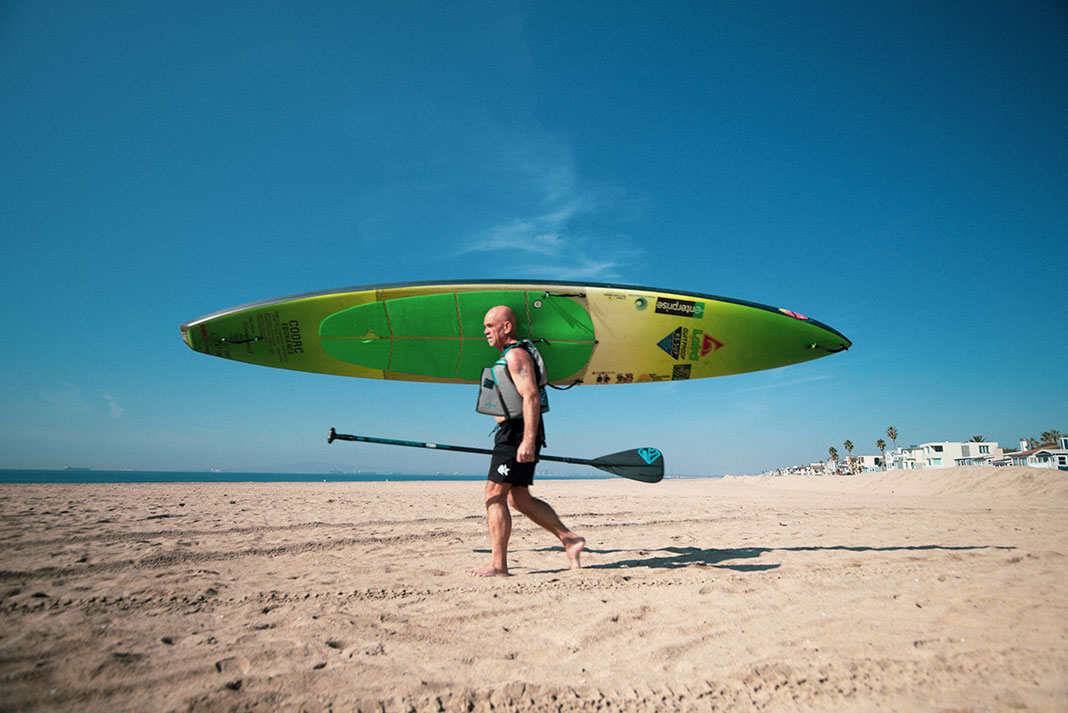
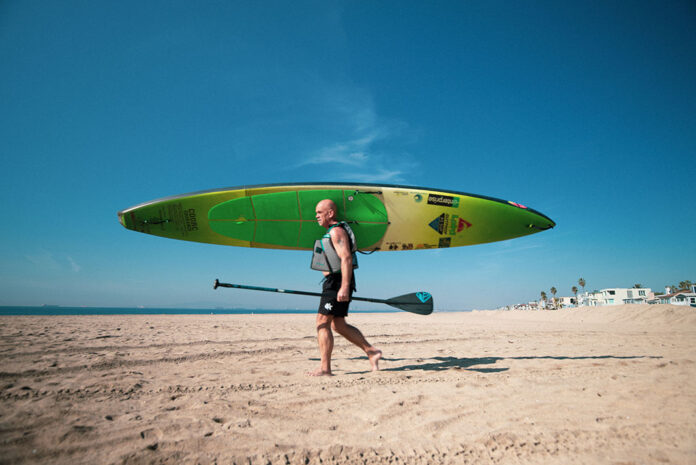
SUP athlete Tom Jones heading out for another day of training
SUP athlete Tom Jones heading out for another day of training in preparation for his next endurance feat. | Feature photo: Ryan Murtha

You never forget your first shark.

Tom Jones was about 50 miles south of Oregon paddling his standup paddleboard down the harsh Northern California coast when his safety, a burly man on a WaveRunner, pointed to the water and shrieked. Beneath the surface, Jones watched a 17-foot great white shark roll onto its back and glide three feet beneath the motorized watercraft.

“Our language doesn’t facilitate the words to say how frightened I was,” says Jones.

What to do but keep moving? The crew would go on to see sharks nearly every day on their way to Mexico. They persevered through wind, rain and treacherous coastline to establish a SUP endurance record: 1,250 miles in 93 days.

Inside the mind of unstoppable endurance SUP athlete Tom Jones

If Jones had the water experience he has today, he says he would never have gone in the first place. “Everything was a death sentence.”

When Jones set off on that first epic paddle, he’d only been standup paddleboarding for about six months. His water experience—despite living within a mile of the coast in Huntington Beach, California—was limited.

SUP athlete Tom Jones heading out for another day of training
SUP athlete Tom Jones heading out for another day of training in preparation for his next endurance feat. | Feature photo: Ryan Murtha

Jones was a fighter, picking up the sport in his late teens. He excelled in the ring, retiring with a 51-4 professional record. But after a career fighting for himself in the ring, he was ready to do something for others.

His endurance challenges began on land, running absurd distances for causes. “My why was in place and it was strong enough and it kept me going,” he says of a particularly wet run. It’s part of what he calls his “quitproof” mentality.

[ Paddling Buyer’s Guide: View all touring paddleboards ]

Making connections and finding the right reason why

In the past, his why has included fellow veterans and foster kids, the latter a cause particularly close to his heart as he grew up in care and had a difficult childhood. But the why for his first SUP endurance feat didn’t involve people.

Jones connected with Charles Moore, the man who discovered the Great Pacific Garbage Patch, and was horrified to learn about its effects on the environment. He’d found his new cause.

By the numbers

2: Number of SUP records Jones established – The first-ever long-distance SUP record, paddleboarding 1,250 miles in 93 days, and the first-ever flatwater record, paddling 500 miles in 16 days.

1: Number of SUP records broken – Long-distance SUP record, paddleboarding 1,507 miles in 93 days.

5 million – Number of paddle strokes Jones took on the journey from Key West to New York City.

60 – Low estimate for the number of great white sharks spotted on the paddle from Oregon to Mexico.

16 – Number of days it took Jones to paddle 500 miles.

The paddle from Oregon to Mexico in 2007 was originally supposed to be done prone. At least, that was the plan, until Jones saw a picture of SUP pioneer Laird Hamilton standing tall on a wave, extra-long paddle in hand. It seemed to be a more efficient way to travel long distances. Jones flew to Hawaii where he charmed Hamilton into teaching him the new sport.

About half a year later, he established the sport’s first endurance record.

In 2010, Jones set out on a new endurance paddle, this time on the east coast, traveling 1,507 miles in 95 days.

A year later, Jones established a new flatwater SUP distance record: 500 miles in 16 days on Smith Mountain Lake in Virginia.

He’s built perfectly for these types of challenges. “He will not give up,” Hamilton told Standup Paddling. “And his cardiovascular capacity is outstanding. Couple the two and you have your hands full with Tom.”

What’s next for the SUP athlete?

Motivated by a cause, Jones can’t bring himself to quit.

In 2024, Jones is set to tackle a new challenge: paddleboarding from the Texas/Mexico border to Key West, Florida. But this time, he’ll have company. Entrepreneur Heather Stone completes a yearly challenge and, like Jones prior to his 2007 paddle, has little experience on a SUP. It’s another endurance event designed to grab attention, this time for a still-to-be-determined veteran-related cause.

“It truly is better to give than to receive,” says Jones. “I love using my athletic abilities to champion worthwhile causes and I’m going to continue to do it until the day I die.”

Cover of the 2023 Paddling Buyer’s GuideThis article was first published in the 2023 Paddling Buyer’s Guide. Subscribe to Paddling Magazine’s print and digital editions, or browse the archives.


SUP athlete Tom Jones heading out for another day of training in preparation for his next endurance feat. | Feature photo: Ryan Murtha


Take A SUP Tour Of The Newest Whitewater Park In The South

In July of 2023, the much anticipated Montgomery Whitewater opened to the public. The $90 million whitewater park is the latest in the U.S. to offer artificial river channels to an urban community. Prior to the park’s opening, whitewater standup paddleboarder Paul Clark took a tour of the facility and published his first runs in the video featured above.

Montgomery Whitewater brings rapids to the Montgomery metropolitan area and its population of 386,000 in Alabama. The 120-acre facility is the latest creation from kayaking great Scott Shipley and his engineering firm, S2O Design.

S2O Design is also the group who’ve constructed a collection of whitewater venues you’ve likely heard of. The U.S. National Whitewater Center in Charlotte, Boise Whitewater Park, and Riversport Rapids in Oklahoma City, to name just a few.

[ Discover your next whitewater destination in the Paddling Trip Guide ]

Montgomery Whitewater features two channels of class II-IV action. The first being a mellower, 1,900-foot-long recreation channel. The other being a 1,600-foot-long competition channel capable of hosting Olympic-caliber whitewater races. Montgomery Whitewater also features S2O’s signature RapidBlocs to create ever-changing features.

“We want to be able to bring international competitors here and have that Olympic standard course,” Shipley told the Montgomery Advertiser. “But we also want to make the hurdle to getting your church groups, and your school groups, and your family and friends out on that whitewater.”

Montgomery Whitewater has all the elements to entertain rafters and kayakers alike. Throw in those warm Southern temps and proximity to I-65 and I-85, and the park promises to be a year-round whitewater playground.

Visit Montgomery Whitewater to learn more.


How The Next Generation Of Folding Kayaks Is Making Paddling More Accessible

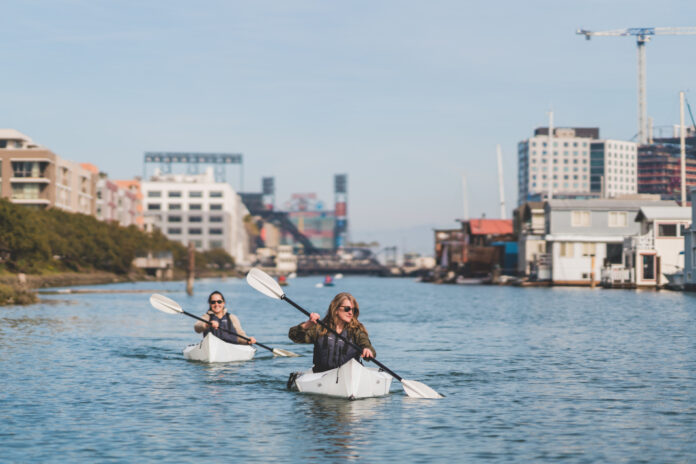
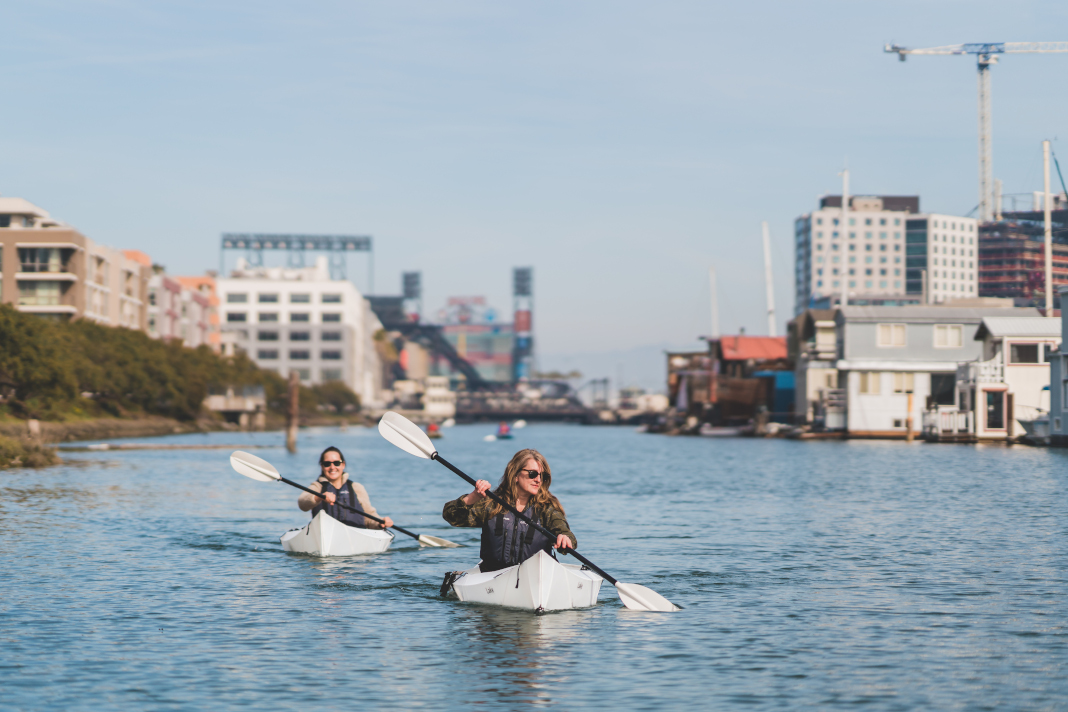
Two people paddling folding kayak on an urban waterway.
Oru kayaks on an urban waterway. Image: FATE Factory / courtesy of Oru Kayak

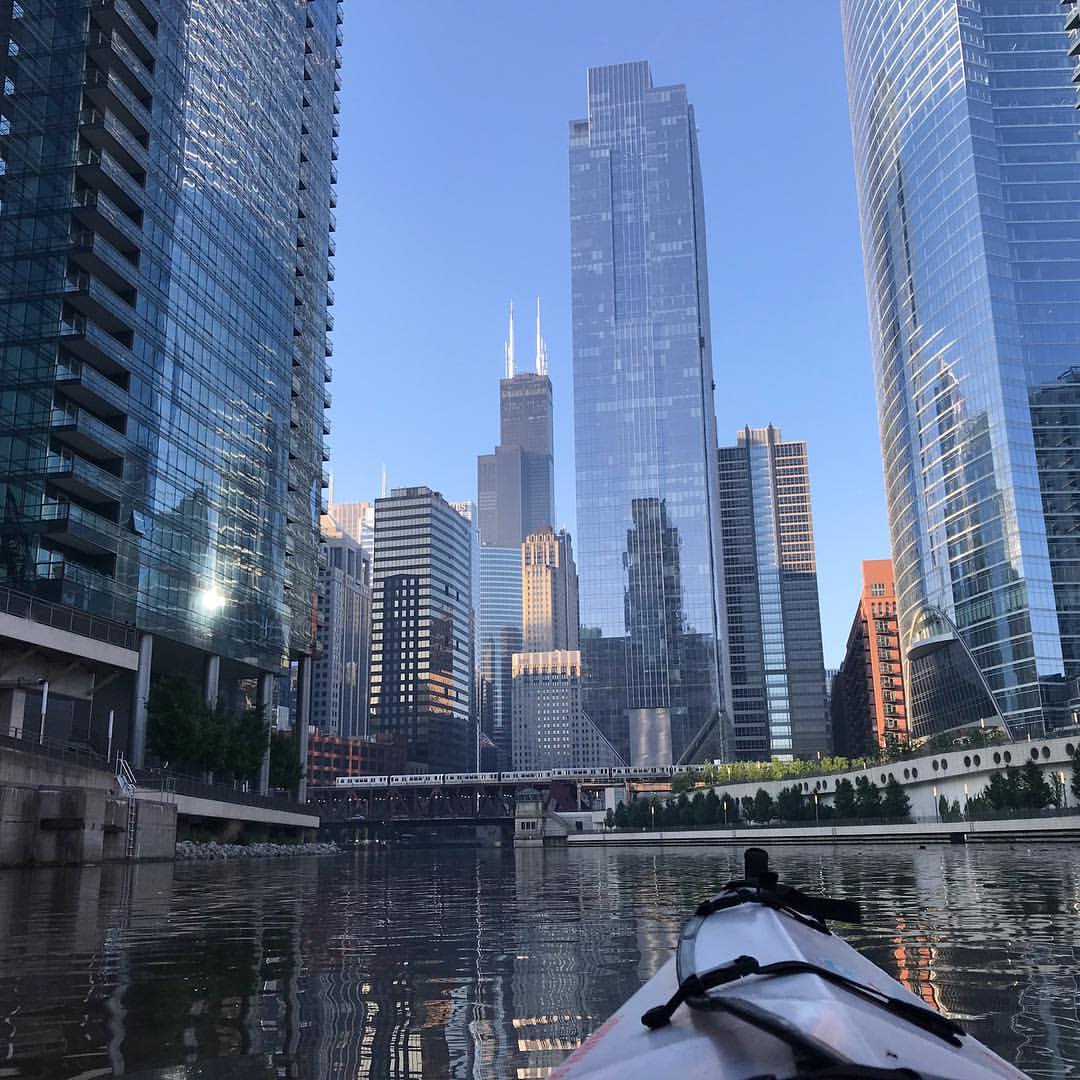
In a city of 2.7 million, Chicagoland resident Mike Paus finds solitude gazing up at the skyscrapers and historic truss bridges from the cockpit of his 12-foot folding kayak. He likes to paddle in the morning when there aren’t many people around—only turtles, ducks and freighter ships arriving from ports worldwide.

“You have it all to yourself,” says Paus, who owns an Oru Beach LT kayak. “It’s very good to just get away from it all and collect your thoughts. I encourage anybody who wants to improve their mental health to go take up kayaking, even in the city. You’ll be surprised how much calm there is.”

Chicago view from paddler in a folding kayak.
Chicago views from the bow of an Oru. | Photo: Mike Paus

Being on the water affords a perspective of the city most residents miss, says Paus, whether it’s seeing wildlife, like the endangered black-crowned night heron, or watching a 100-year-old steel bridge creak open to let tall vessels pass.

“I’m usually above that bridge,” says Paus. “But seeing what it looks like from underneath is a great perspective that you get when you’re kayaking.”

How the next generation of folding kayaks is making paddling more accessible

Recent innovations in folding kayak design have made it easier for urbanites like Paus to access paddling.

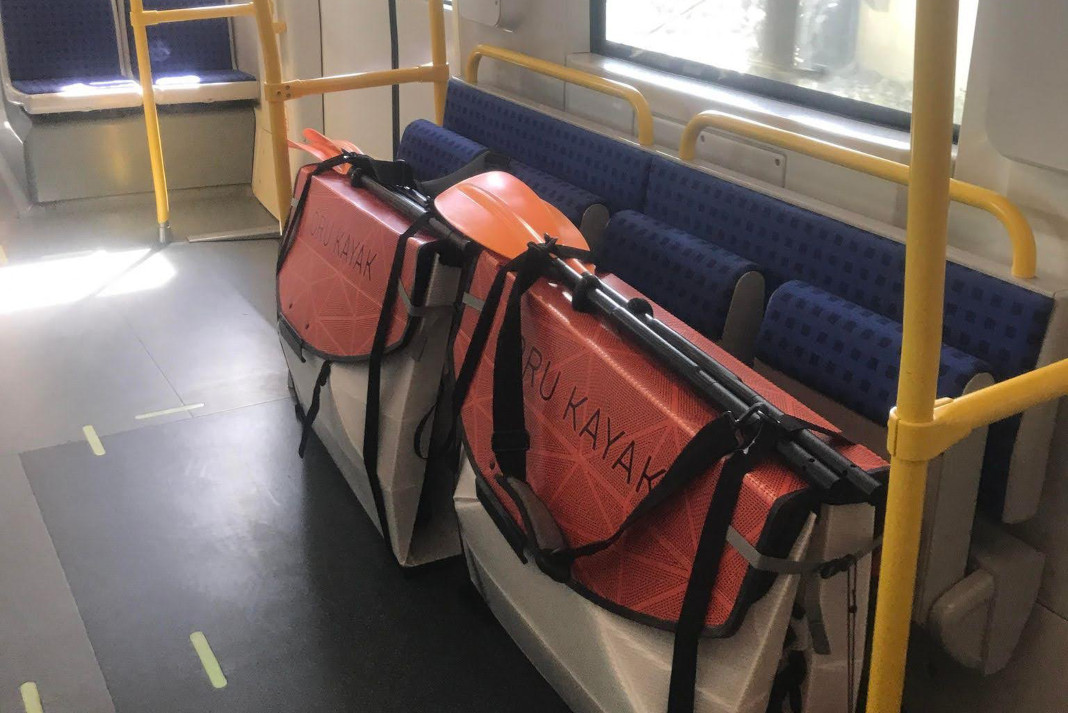
Brands like Oru, Tucktec, Terravent and Mycanoe now make affordable, lightweight kayaks which fold up small enough to store in a closet. You don’t need a roof rack, or even a car, to transport these next-generation foldables. Ranging in weight from the 20-pound Oru Lake to the 42-pound Oru Tandem Haven TT, they’re easy to throw in the trunk of a car or carry on the subway. You can even check them on an airplane.

Oru folding kayaks on the O Train.
Oru folding kayaks on the O Train. | Photo: Courtesy Michelle Tribe

Paus, who lives in a 600-foot condo, takes his Oru Beach LT pretty much everywhere he goes: the L train, the trunk of his Saturn Vue, and on business trips around the U.S. Paus logs his paddles by taking one photo each time he goes out, then uploading it into an album called “Oru Paddles.” Since he purchased his Oru in 2018, he’s taken it out 450 times. He’s already more than halfway to his goal of paddling all 50 states. So far he’s paddled 27—reaching as far west as San Francisco, California, and east to Camden, New Jersey.

Emergence of the new folding scene

Before Oru came on the scene in 2013 with its origami design, most of the folding kayaks on the market were skin-on-frames. These are not only pricier—the most economical, the Pakboats Puffin Saco, retails for $1,339—but also more complicated and time-consuming to put together.

By contrast, the most affordable folding kayak on the market today, the eight-foot Tucktec, retails for $349. Thanks to its system of pleats and clamps, it can be assembled in five minutes or less.

Paus has gotten his assembly time for the Beach LT down to four minutes. It’s so easy he doesn’t hesitate to pull off anywhere that looks kayakable to check it out.

Two people paddling folding kayak on an urban waterway.
Oru kayaks on an urban waterway. | Photo: FATE Factory / courtesy Oru Kayak

Oru cofounder Anton Willis was inspired to create the origami kayak when he moved to a small studio apartment in San Francisco and had to store his 16-foot hard-shell at his father’s house.

His co-founder Ardy Sobhani says urban kayakers want the freedom to explore the great outdoors, and Oru provides that. According to Sobhani, 40 percent of current sales go to urban areas. Their top ship-to locations are San Francisco, Seattle and Portland.

Tucktec, based outside Myrtle Beach, South Carolina, ships the most kayaks to Seattle, Portland and Chicago. The Canadian city of Toronto comes in at sixth.

“There’s a (Tucktec) kayak in just about every city that you can think of, which is pretty cool,” says Tucktec General Manager Pete Connell.

For people living in the most densely populated cities in North America, a folding kayak is more than cool. It can be the difference whether the much-needed physical and emotional benefits of paddling are available at all.

“There is something about being on the water alone that is just rejuvenating for me,” shares Barbara Fonseca, a busy mom from the Bronx, New York. “It doesn’t even feel like I’m in the city when I’m on the water.

Fonseca doesn’t always paddle alone—sometimes she is joined by her son and his friends. She has multiple Tucktecs folded in duffel bags ready to go. “The launch is about a 10–15 minute drive from me,” she says. “but it’s public transportation accessible and I could get there even if I didn’t have a car.”

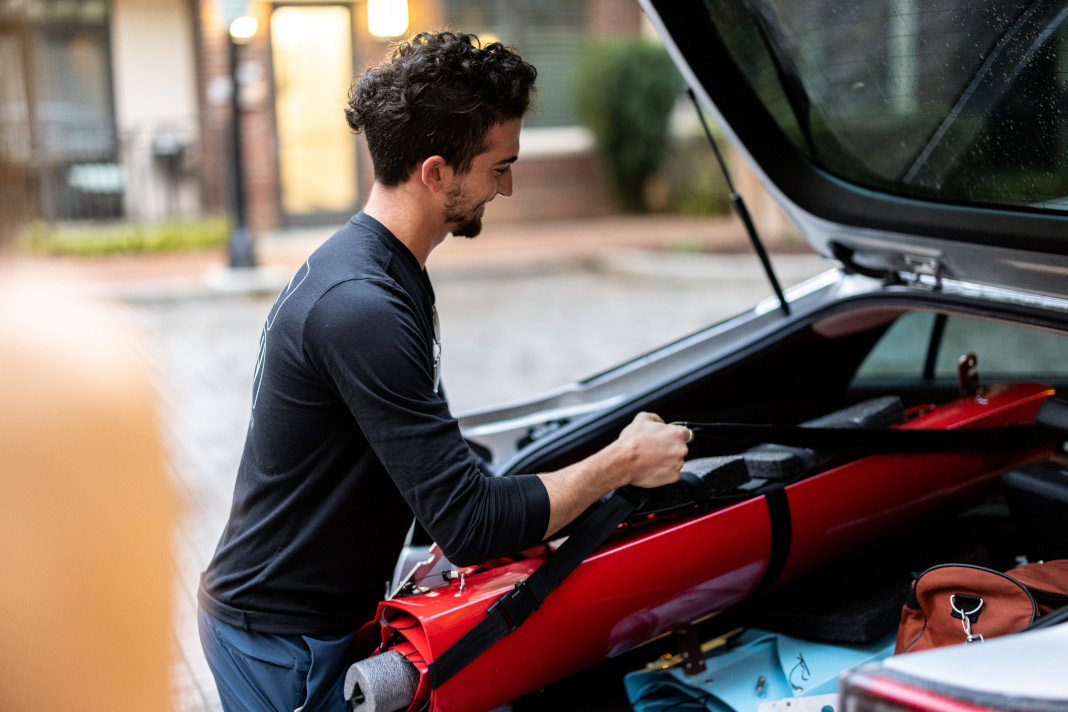
Man loading folding kayak into the back of a car.
Loading up a Tucktec. | Photo: Courtesy Tucktec

The growing folding community is a tale of many cities

Any folding kayak owner will tell you they attract quite a bit of attention when they show up at the launch with a boat in a bag. But in larger metropolitan areas, people have more of a habit of keeping to themselves. If you take a closer look at Tucktec’s shipping data, you see sales aren’t just correlated to population density but also to how many folding kayaks are already there. Connell believes there is a social element at play here, with a sweet spot in medium-sized cities.

Group walking with portable folding kayaks.
The social and portable folding kayak. | Photo: Tucktec

“You get into that medium-sized city, where, say, there are 40 people at the water instead of a thousand,” shares Connell. “Now you’ve got a better chance of those people behaving more socially and paying more attention to what’s going on around them.”

“I look at it like a viral thing,” Connell explains. “We plant one or two (kayaks) there, you see them, the interest starts to get garnered, and we go back to that original concept. Eight people see it; four go to the website, and one of them buys a kayak.”

This is exactly what happened to Michelle Tribe of Ottawa, Canada, who decided to buy folding kayaks after a “lovely chat” with an Oru kayaker she encountered on the Rideau Canal in Ottawa. She’d considered inflatables but didn’t like the idea of carrying around a pump.

“I thought they would be a perfect fit for our downtown, car-free lifestyle,” she says. “We use a car-sharing service, so we’re able to take our Oru kayaks all around the Ottawa area to try new-to-us rivers, streams, and lakes.“

“Our goal has never been to try to take over traditional kayaks,” Pete Connell explains. “We want a durable and sustainable alternative to the inflatable kayak. He laughs. “You know, I can fit six of these in my Honda Accord. Eight if I really try. Don’t ask me how I got to know that.”


Magical Strokes: Celebrating The 100th Anniversary Of The Prospector Canoe

person portages a Prospector canoe along the banks of a raging river
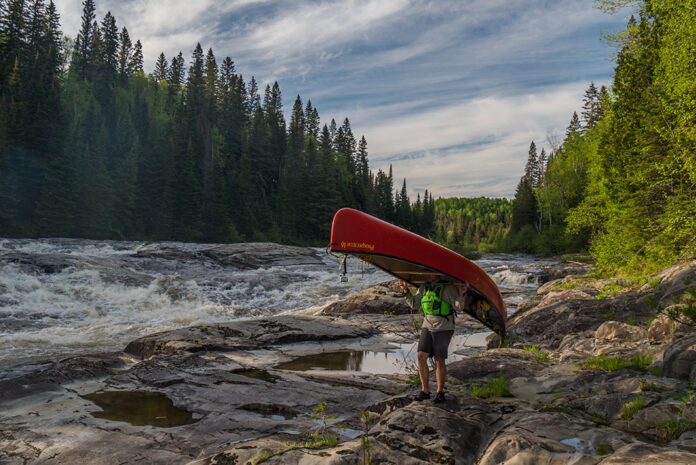
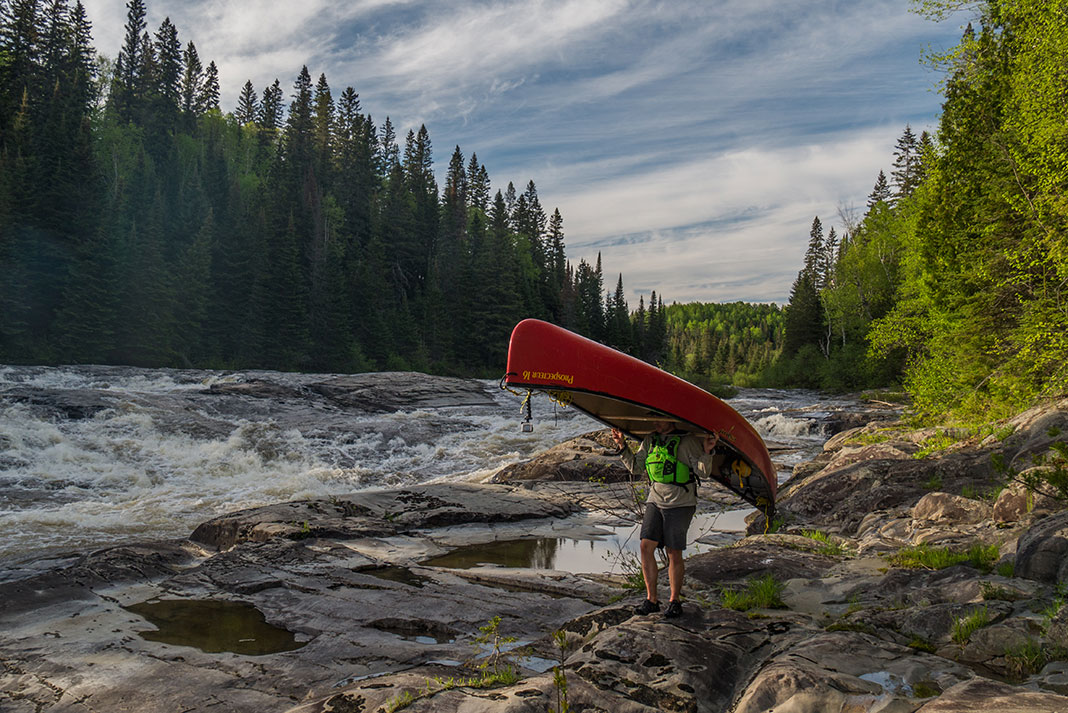
Esquif is another brand carrying forward the Prospector tradition, producing contemporary 15-, 16- and 17-foot lengths. What the GSC canoemen would have given for a T-Formex version of their 18-footer. | Feature photo: Brad Jennings

Canada’s favorite canoe wears many faces. It’s been that way since the beginning, when the Chestnut Canoe Company debuted the Prospector model canoes in response to demands from rockhounds of the Geological Survey of Canada (GSC). That was in 1923, and the Fredericton, New Brunswick-based wood-canvas canoe manufacturer was rebuilding from a devastating fire the year before.

Magical strokes: Celebrating the 100th anniversary of the Prospector canoe

A profile of the Prospector canoe design would be far simpler if its origins were tied to one builder. While the design likely originated in New Brunswick, Chestnut cannot claim sole ownership. For close to four decades, Chestnut, the Peterborough Canoe Company and the Canadian Canoe Company shared an identical lineup of canoes, including Prospectors in various lengths. Based on the original wood-canvas Prospectors remaining in service, it’s clear the Chestnut decal was most common. Such a tangled genealogy sets the stage for what remains a complicated history of an iconic canoe.

person portages a Prospector canoe along the banks of a raging river
Esquif is another brand carrying forward the Prospector tradition, producing contemporary 15-, 16- and 17-foot lengths. What the GSC canoemen would have given for a T-Formex version of their 18-footer. | Feature photo: Brad Jennings

Developing the “ultimate all-around canoe”

Like so many personalities in Canada’s past, the Prospector was born out of the colonization of the northern frontier. Before the advent of bush planes, the GSC was Chestnut’s biggest customer. Its “canoemen” complained the cottage-grade Pleasure canoes of the day didn’t have nearly enough capacity for the heavy loads of geological exploration. At the same time, oversized Freighter canoes were too cumbersome to paddle and portage. Wilderness journeys and claim staking demanded high-volume and seaworthy canoes that performed well in whitewater and on windswept lakes.

As a stopgap measure, Chestnut and its sister companies had offered up to three inches of additional depth in the sleek Cruiser models which early builders had copied from local Indigenous birchbark canoes and early wood-canvas models from Maine. The Prospector, claimed Chestnut’s 1925 catalog, “embodies the good points of both our Cruiser and Pleasure model and is sure to please anyone looking for a light canoe of large carrying capacity.”

Chestnut initially offered 15-, 16-, 17- and 18-footers in 1923; 12- and 14-foot models came a few years later. Most were also made in Y-stern configurations to accept an outboard motor. Each model had unique proportions and personalities on the water that went beyond differences in length. For all the praise today’s bestselling 16-foot Prospector receives from modern paddlers, including Bill Mason and Kevin Callan, as the “ultimate all-around canoe,” it was less popular than the hulking 18-footer in the early days.

The shape of wood-canvas Prospectors evolved slightly over time as builders’ forms deteriorated and were modified or replaced. The Peterborough version, which went out of production when the company folded in 1961, was sleeker in the stems and less rockered than the Chestnut. Historian Dan Miller’s website, The Wooden Canoe Museum, tracks the changes over time, revealed in fractions of inches in beam and depth. More noticeable is the inflation of price: a 16-foot Chestnut Prospector went from $77 in 1925 to $624 in 1976.

[ Paddling Buyer’s Guide: View all canoes ]

Prospectors paddle into the modern era

Mason lamented the end of the Chestnut Prospector when the company went bankrupt in 1979. Yet Mason’s lavish praise ushered the design into the modern era, and now just about every contemporary builder makes a Prospector. London, Ontario-based Nova Craft Canoe was among the first, developing a composite replica in 1984. Ottawa’s Trailhead Canoes took measurements from Mason’s Chestnut original for its fiberglass, aramid and plastic clones.

For better or worse, limitations in molding and economies of scale encouraged most modern manufacturers to stray from the subtle differences between the Prospector models. For example, Nova Craft’s Prospectors have the exact same width, depth and rocker across 15-, 16-, 17- and 18-foot lengths. Today, the canoe is best defined as a general category of wilderness tripper with above-average depth, width and rocker.

For a true Prospector, you have to go back to wood-canvas. Only one original Chestnut form remains in commercial service today. Wakefield, Quebec-based builder Headwaters Canoes still makes one or two 18-foot Prospectors per year, ordered by hard-core traditionalists. The century-old Chestnut form shows its age, and Headwaters’ builders Kate Prince and Jamie Bartle must carefully align inner gunwales and stems to assure a symmetrical canoe before bending steam-bent cedar ribs over the weathered mold.

The result after over 100 hours of manual labor is a beautiful canoe whose graceful performance in wind, waves and rapids with an expedition load belies its behemoth dimensions and 90-pound heft. The Prospector, as Chestnut historian Roger MacGregor notes, is “one of these magical strokes, a judicious combination of the finest shapes at just the right spot along the hull.”

Conor Mihell’s first Rapid Media article appeared in the 2005 Buyer’s Guide issue of Canoeroots.

Cover of the 2023 Paddling Buyer’s GuideThis article was first published in the 2023 Paddling Buyer’s Guide. Subscribe to Paddling Magazine’s print and digital editions, or browse the archives.


Esquif is another brand carrying forward the Prospector tradition, producing contemporary 15-, 16- and 17-foot lengths. What the GSC canoemen would have given for a T-Formex version of their 18-footer. | Feature photo: Brad Jennings


Beluga ‘Spy Whale’ Steals Kayaker’s GoPro (Video)

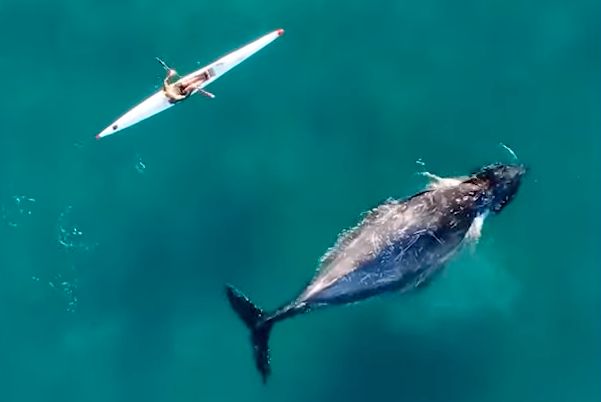
Joachim Larssen was paddling in the harbor of Hammerfest in Norway in 2019 when he encountered an inquisitive beluga whale. After a few moments, the beluga whale stole Larssen’s GoPro camera, which fell to the bottom of the harbor. The beluga retrieved it and returned it to Larssen.

A Spy Whale Compromised

There is much more to the story than a quirky encounter captured on camera though. When the whale first arrived in the harbor, he was wearing what appeared to be a strap for a camera mount with the words “Equipment St. Petersburg.” With this telling apparel, and his comfortable behavior around humans, many believe the beluga may be a Russian-trained spy whale. The beluga was dubbed with a playful name fitting of the theory, blending the Norwegian word for whale and the name of the Russian president to form, Hvaldimir.

Hvaldi, as he is also affectionately referred to, spent some time in the harbor following his arrival to the bemusement of locals before moving along. He has traveled the Norwegian coast in the years since the GoPro encounter. And as recently as May 2023, Hvaldimir resurfaced in the waters of Sweden.

Saving Hvaldimir

Whale conservationists believe Hvaldimir is at risk. His comfort around humans has led to injuries from boat propellers and fish hooks. He has a knack for picking up intriguing foreign items with his mouth. And in Sweden, it’s said the fish stocks are lower than in Norway, and they worry whether the whale has an adequate diet.

“He is a friendly, tamed, displaced, formerly captive whale who relies on humans for social interaction,” OneWhale, a nonprofit established to protect Hvaldimir, told NPR. “Belugas are highly social whales and he has been living all alone the past four years.”

[ Touring kayaks for your next whale-watching excursion ]

For now, Hvladimir continues to roam the seas, but for his welfare, OneWhale has a long-term vision to create a 500-acre marine reserve in northern Norway where Hvladmir can be rehabilitated. The hope is that the reserve will carry them to the goal of releasing the former spy whale into a population of wild belugas, free of his life of espionage and sea kayakers’ rough POV edits.


4 Best Two-Way Satellite Communicators For Off-Grid Adventures

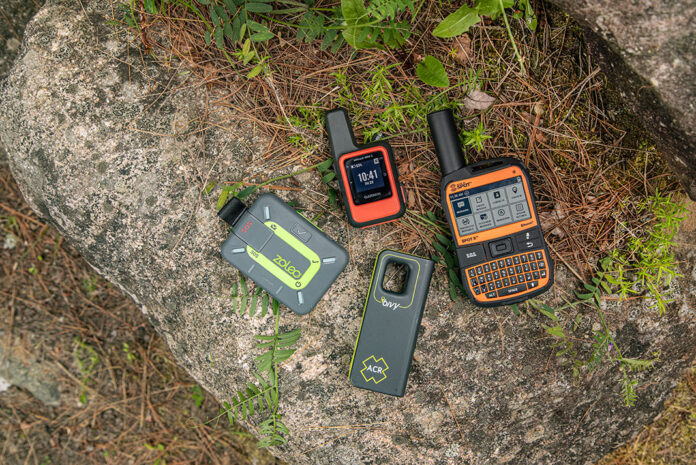
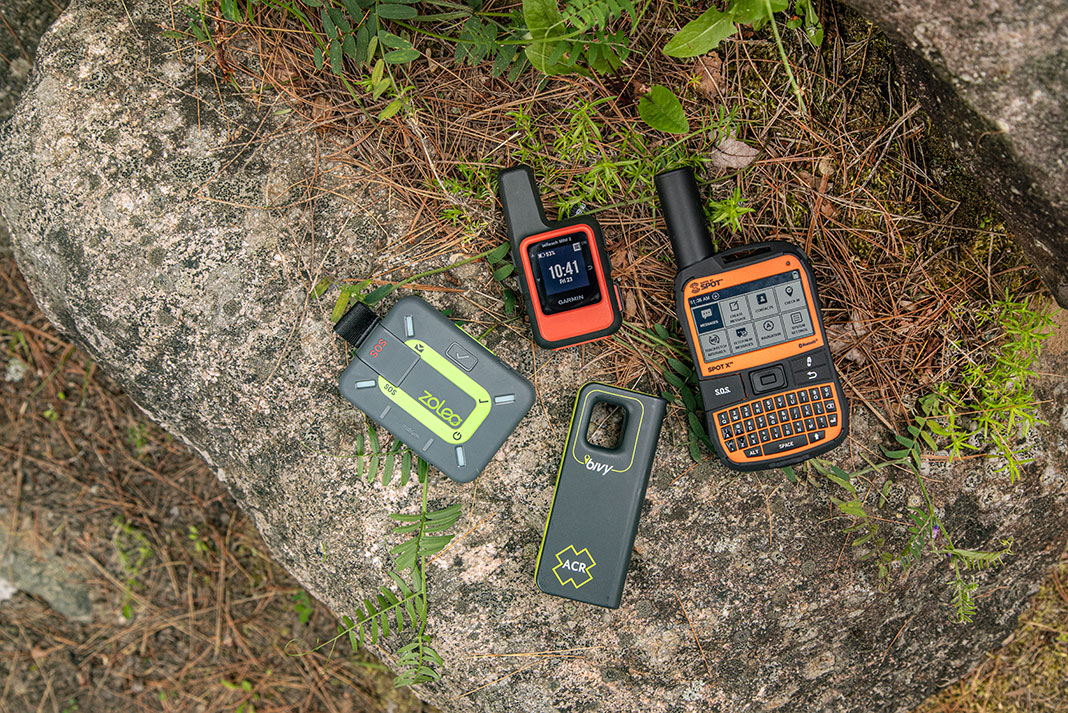
four satellite communicators sit on a rock
The latest technology means you get to choose how much you stay in touch with the outside (or, in this case, inside) world. | Feature photo: Mike Hewis

Backcountry travel used to mean you were unreachable for long stretches, unless you happened to carry a bulky, brick-shaped satellite phone along for the ride. But the selection of satellite communication devices has grown by leaps and bounds in recent years, with the latest generation of gizmos offering all the bells and whistles of smartphone-enabled apps. Is it time to upgrade your ability to send messages from space? Stay in range and in touch with our selections for the best two-way satellite communicators for paddlers.

4 best two-way satellite communicators for off-grid adventures

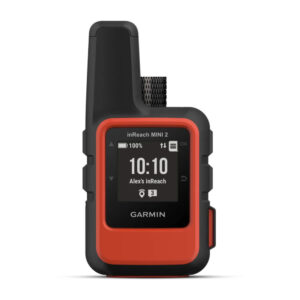
Garmin inReach Mini 2

1 Garmin inReach Mini 2

$399 | garmin.com

Updated in 2022, the inReach Mini 2 remains a favorite for those looking for robust mapping capabilities, two-way messaging, SOS and weather reports in a compact package. If you go on extended paddling trips, it’s worth upgrading from the Mini to the Mini 2 to benefit from the longer battery life—now lasting for 14 days in the 10-minute tracking mode compared to 90 hours previously—as well as the ability to add more waypoints, courses and activities.

When compared to the competition, the Mini 2 gets bonus points for being a fully standalone device, offering all the same features whether it’s connected to your phone or not. Without a keyboard, writing a custom message on the device can be tedious, but this is less of an issue if you plan to mainly use the three check-in messages and the 20 Quick Text messages for communication—or if you plan to primarily use the device with your phone. Connecting the device to the Explore app on your phone will allow you to take full of advantage of the extensive mapping features, including marking and navigating to waypoints, tracking your progress, backtracking to your starting point, and following preprogrammed routes. And since Garmin uses the powerful Iridium satellite network, the Mini will keep you connected anywhere on Earth.

One drawback—or advantage, depending how you look at it—to the inReach Mini 2 is that your contacts cannot initiate text message conversations with you, they can only reply to messages you’ve sent them. You should also keep in mind the activation fee and monthly and annual tiered plans when pricing out the device.

Buy from:

AMAZON BACKCOUNTRY BASS PRO SHOP REI

ZOLEO satellite communicator

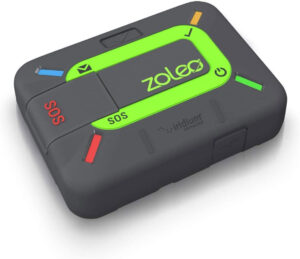
2 ZOLEO

$199 | zoleo.com

The ZOLEO lets you keep things sweet and simple, offering two-way messaging, SOS and weather reports on even its most basic plan. An optional add-on will give you access to location sharing and tracking capabilities. With no screen on the device, the ZOLEO is meant to be used with your cell phone; we found the ZOLEO app to be the simplest and most intuitive to use out of all the devices.

In the event your phone is out of commission, there are buttons on the device for sending a predefined check-in message and SOS alert. You’ll also get a designated phone number and email address, making it easy for contacts to initiate conversations with you.

One standout feature is that the ZOLEO will attempt to send all messages over Wi-Fi or cellular network first—a boon if you are on one of the lower tier plans with limited messaging. If you are out of range, though, the Iridium satellite network will provide you coverage. An activation fee for the device does apply. You can also suspend your plan when not in use and retain your number and email address for a fee of $4 per month.

Buy from:

AMAZON BASS PRO SHOP MEC REI

ACR Bivy Stick

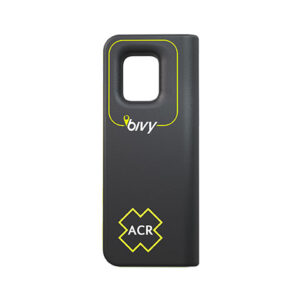
3 ACR Bivy Stick

$299 | acrartex.com

ACR is the newest company delving into the two-way satellite communication market. The Bivy Stick is best used when paired with your cell phone, though you can use it as a standalone device to signal SOS, send a preset check-in message and start/stop tracking. All plans come with tracking and you’ll receive a dedicated phone number and email for the device. The Bivy Stick also searches for Wi-Fi or a cell signal before sending via the Iridium satellite network.

Those who love collecting and analyzing their activity data will appreciate the unique features of the Bivy Stick: the ability to label tracked adventures with an activity type and access stats including time, distance, vertical, calories burned, average speed and top speed. You can also search for hiking, paddling, climbing and offroading routes in a given area, making it easy to plan your next adventure.

A deciding factor for those who only need a satellite communicator for a small window of time each year—like, the paddling season—is that the Bivy Stick has no activation or deactivation fees and credits roll over month to month.

Buy from:

AMAZON BASS PRO SHOP REI WALMART

SPOT X satellite communicator

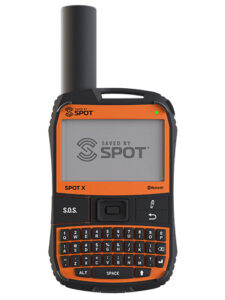
4 SPOT X

$249 | findmespot.com

This isn’t the SPOT X you thought you knew. This SPOT X comes with Bluetooth capabilities allowing you to link up to your phone. It’s still a fully standalone device, though, and for many, the SPOT X gets the edge over the competition thanks to its handy QWERTY keyboard that makes writing custom messages that much easier—the tradeoff being that this is the heaviest and largest device on this list. You also get one check-in message and 14 preset messages, all of which you predefine. For some, the lack of weather reports is a deal-breaker.

SPOT is the only device on this list that uses the Globalstar satellite network, providing ample coverage for paddling destinationsin North America, South America and Australia. Check the coverage map for full service details. With the SPOT X you’ll get a dedicated phone number and all plans have tracking included. There is an activation fee and an additional charge if you choose one of the flex plans which only require a one-month subscription.

Buy from:

AMAZON BASS PRO SHOP MEC REI

four satellite communicators sit on a rock
The latest technology means you get to choose how much you stay in touch with the outside (or, in this case, inside) world. | Feature photo: Mike Hewis

And don’t forget to safeguard your device with a waterproof pouch.

Cover of the 2023 Paddling Buyer’s GuideThis article was first published in the 2023 Paddling Buyer’s Guide. Subscribe to Paddling Magazine’s print and digital editions, or browse the archives.


The latest technology means you get to choose how much you stay in touch with the outside (or, in this case, inside) world. | Feature photo: Mike Hewis


The Most Controversial Paddle-In Camping Trip

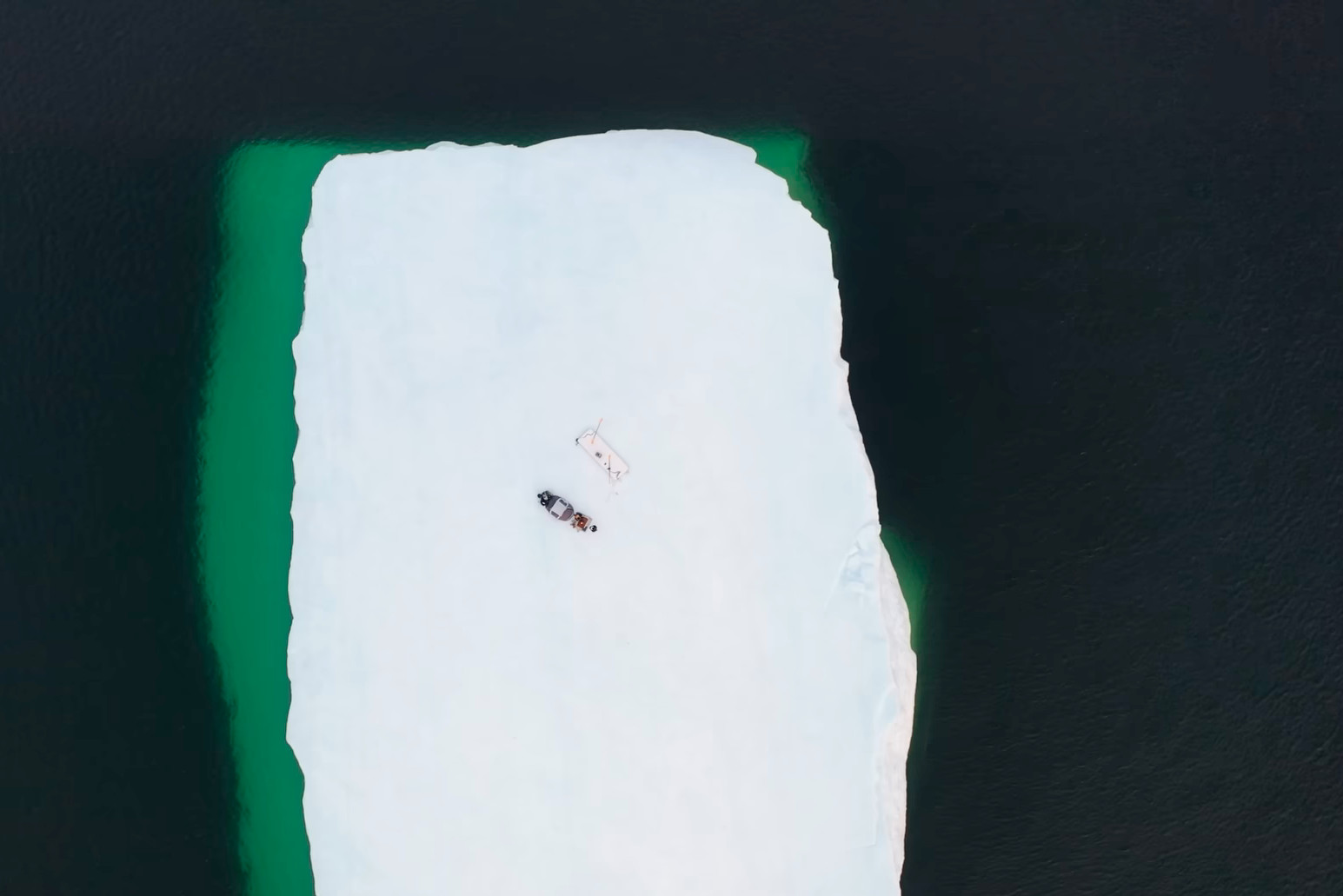
Two paddlers have drawn recent media attention for their choice of an unusual campsite—an iceberg. Ethan Harold and Ammar Alkassm of New York State took an inflatable raft just off the coast of Twillingate in Newfoundland to set up for the night on one of the area’s floating strips of frozen water.

The duo set out on the stunt in June to film what would be the first episode for their YouTube channel, Orange Carabiner. The video was published in July. Spoiler, Harold and Alkassm returned safely from the iceberg camping trip. But since they embarked on the campout, their stunt has continued to draw attention.

As news stories populated on Harold and Alkassm’s iceberg camping trip, two predictable sides appeared from the local communities and comment sections across the web. Those who called the act foolhardy and selfish claimed the pair were ignorant of the dangers of icebergs and were putting the lives of local first responders at risk. Others expressed that people should let the pair live their lives and not put guardrails on the endeavors of individuals. The episode has renewed perennial conversations in the outdoors, including who should be responsible for the cost of rescue.

The Dangers Of Camping On An Iceberg

For those unfamiliar with what makes camping on an iceberg so controversial, here’s a bit of information on these peaceful looking hunks of ice drifting in the ocean. They come into the world violently, calving off the edges of glaciers. An iceberg in its infantile stage is erratic in shape and weight distribution, making it prone to rolling.

Even a well-established iceberg that appears stable can be melting below the surface. Many of us are familiar with the idea that most of an iceberg’s mass is beneath the water. When this is no longer the case, the iceberg becomes top-heavy and can roll.

Last but not least is the splintering of an iceberg. The action has been reported to be capable of emitting a roar equivalent to the sound of 214 supertankers. In their video, Harold and Alkassm even remark how they heard the boom of calving ice nearby through the night and how it sounded as if Newfoundland was being bombed.

According to studies, a rolling iceberg can produce the force of a magnitude five earthquake. Bearing all this in mind, the concerns are understandable.

The Gray Line Between Calculated Adventure And Foolhardy Stunt

We see all sorts of athletes take what can be called selfish risks. Many extreme stunts are questioned and receive criticism from the public, so it begs the question if Orange Carabiner’s act is any different.

In a follow-up CBC article on Orange Carabiner’s camping trip, the news outlet interviewed Canadian climber Will Gadd. Gadd has ascended a frozen Niagara Falls, bolted his way up glaciers on Mount Kilimanjaro, and, yes, ice-climbed ‘bergs in Newfoundland and Greenland. Gadd’s athletic stunts have appeared in the pages of National Geographic.

In the article, Gadd clearly states what the dangers of icebergs are. On the climbs, he has had a support dinghy nearby. Those involved were also wearing drysuits and survival suits the entire time.

After watching Orange Carabiner’s YouTube video, Gadd told CBC, “Camping on an iceberg is, bluntly, stupid.” And adds, “They were remarkably clueless.”

Controversy surrounds a pair of paddlers who went on an iceberg
Feature Image: Orange Carabiner / YouTube

Orange Carabiner Responds To Criticisms

In another article with the CBC, the pair responded to questions regarding their outing. “We did do a lot of research leading up to this,” Harold told CBC.

Harold went on to state, “We spent a couple of months planning equipment, where we want to go, what to expect, what our criteria is for what we want to mount, are we going to be close to land, what’s the current like, what’s the wind speed, the water. We tried to take every possible factor into account but we also acknowledge, yes, it’s not an extremely safe thing to do.”

Harold claims the locals they encountered on their trip were nothing but supportive and even gave them advice. Alkassm explained they spent a couple days picking a suitable iceberg, eventually choosing one close to shore, in shallow water and that wasn’t drifting.

The Orange Carabiner duo began the trip with a rented tandem sit-on-top kayak which developed a crack. This left them to make the paddle to the iceberg on a Bestway Sun Deck, an inflatable floating deck described as a pool or lake accessory. It is constructed of triple laminated drop stitch PVC, similar to many inflatable standup paddleboards. On the paddle to the iceberg, Alkassm is wearing a neoprene top with board shorts. They establish in the video that water temperatures were 38 degrees Fahrenheit. On the iceberg, Harold is also seen not wearing any microspikes or crampons, walking on the ice at camp.

At Risk Of A Trend

Harold and Alkassm aren’t the only paddlers posting recent iceberg camping adventures to YouTube. In early July, Everest Maher published a video of his solo kayaking trip to camp on an iceberg in Alaska.

Within all the chatter surrounding the Orange Carabiner video, the pair are the first to acknowledge what they did was dangerous. But they are also concise to say that was part of the appeal.

“A lot of things in life are dangerous that we encourage. For example, UFC, boxing. People that climb Everest—you lose a lot of people a year—but they do it because they’re pursuing something they truly love,” Harold told CBC.

Gadd’s comments echo that the risks of an activity to an individual itself are not necessarily the deterrent if known and accepted. Nor are the financial burden of a rescue which he says pales in comparison to lifestyle associated health risks society combats daily. There is another factor, though, that Gadd considers as a veteran adventure athlete when making these types of decisions.

“One of the biggest concerns for me personally is trying to minimize the amount of risk I would put a rescuer in,” Gadd told CBC.

The pair from Orange Carabiner do not encourage anyone else to follow in their footsteps. But, in today’s viral world, we are well aware of how quickly a social media trend can take off unwittingly with the force of, say, a rolling mass of ice. Whether their stunt falls in the column of endeavors capturing the limitless human spirit or the likes of taking a selfie with a bison is a question unlikely to reach a unanimous answer.


Mark Fuhrmann Completes Record-Breaking Reverse The Bad Expedition

Photo Courtesy of Reverse the Bad

02 August 2023

Reverse the bad_red logo

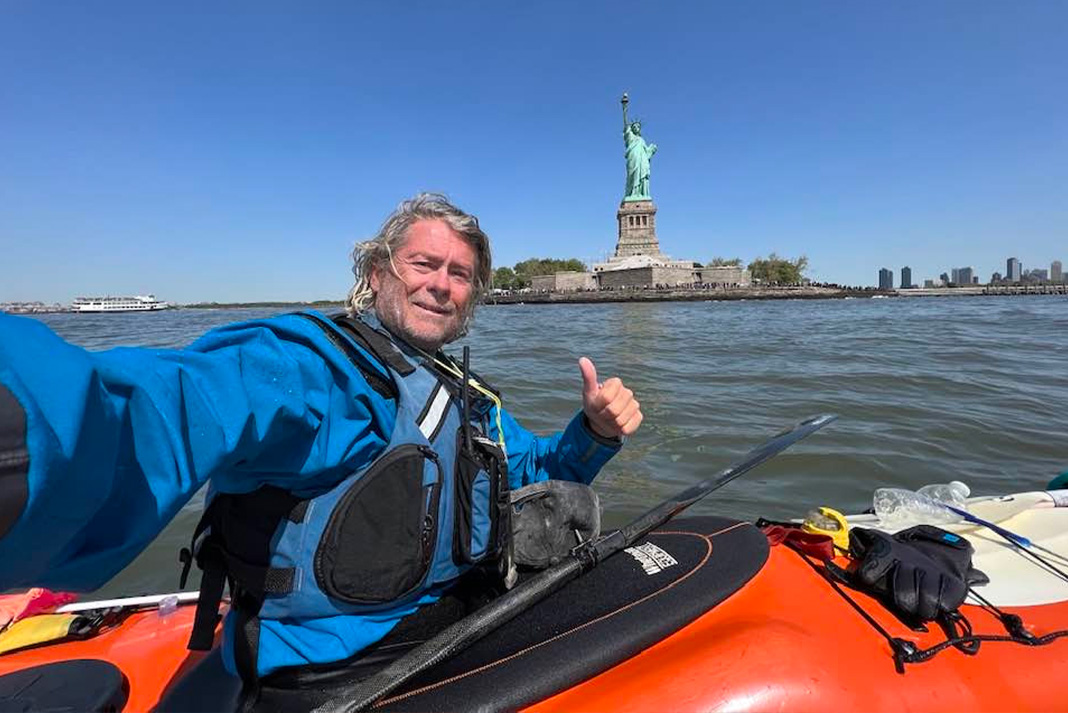
After 268 days in his kayak, 1,643 hours of paddling and a journey of almost 11,000 kilometers, 65-year-old Mark Fuhrmann has today completed his epic Reverse the Bad charity expedition across Canada and the United States.

In doing so, he becomes the first person to solo kayak the Greater Loop circuit, beginning (and ending) in Halifax, Nova Scotia and traversing the Great Lakes, the Illinois, the Mississippi, the Tennessee and Tombigbee rivers, before hitting the Gulf of Mexico and heading up the Atlantic Coast.

Mark Ervin giving a thumbs up from his red sea kayak in front of the Statue of Liberty.
Photo: Courtesy of Reverse the Bad

Paddling for positivity

A smiling, but understandably exhausted, Fuhrmann, stepped out of his kayak—possibly for the last time—greeting well-wishers with the memorable line, “Can I get a beer, please?” As it transpired, he got more than one.

The Canadian native, who relocated to Oslo, Norway in the 1990s, set out from Halifax on June 2 last year. His aim, apart from traveling across North America, was raising much-needed funds for charities Doctors Without Borders and Captains Without Borders, as well as pushing a message of “positivity, community and caring for our troubled times.”

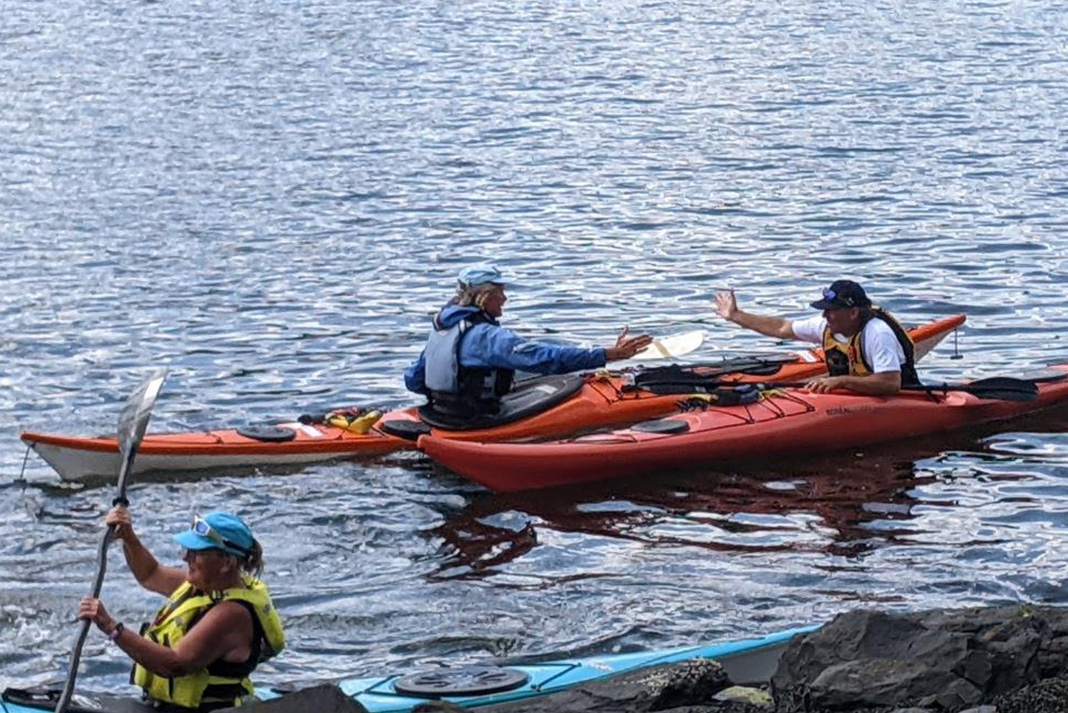
Mark extends hand to fellow kayaker for a high five
Photo: Courtesy of Reverse the Bad

Deep connections

“It’s been a hell of a trip,” he exclaims, “but worth every minute of exertion, discomfort and pain. Not only to raise money and awareness, but also to have such a genuine experience; one where I feel I’ve really connected with nature, people and something deep within myself. Looking back, I’m truly grateful for every day, in addition to the immense, and touching, generosity of an army of supporters en route.

“But that doesn’t mean I’m planning another trip anytime soon!”

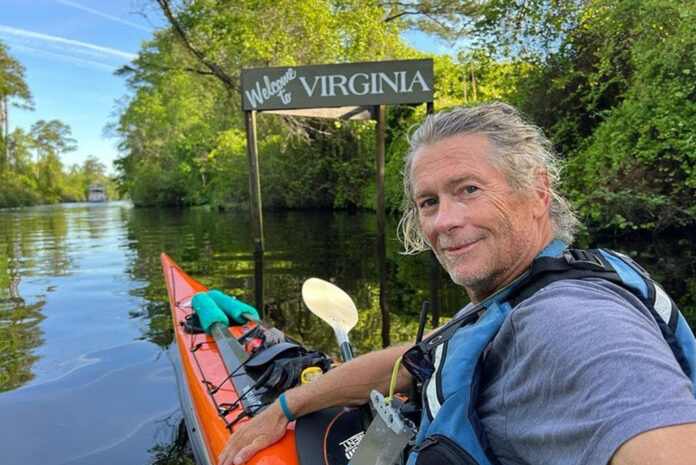
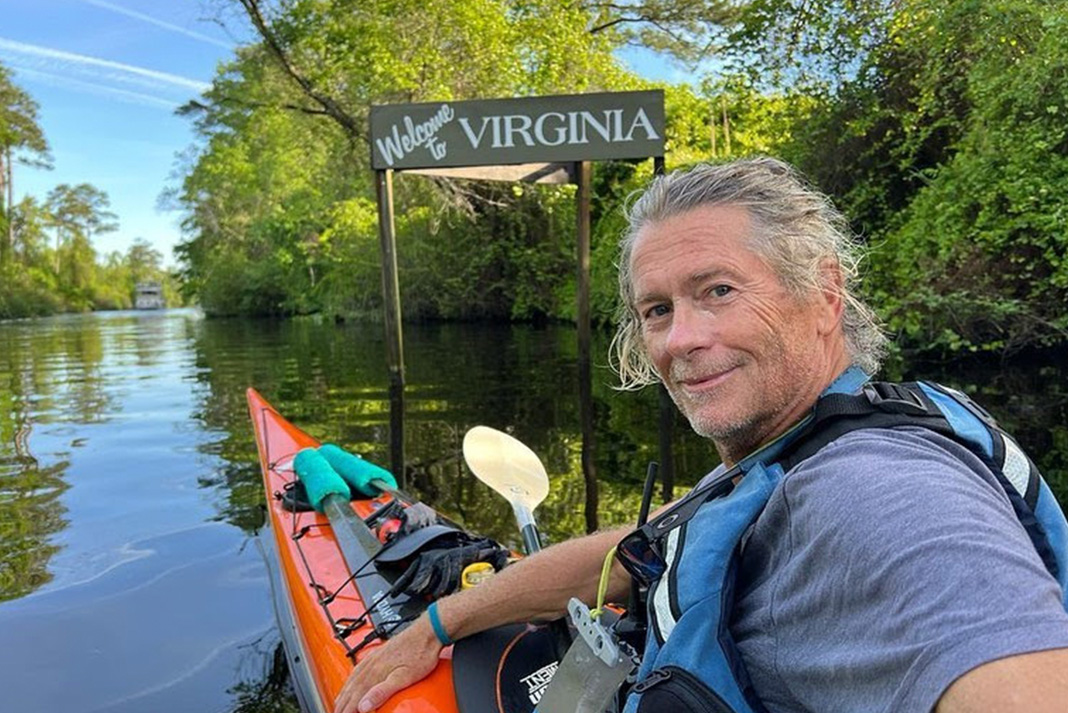
Mark in his red sea kayak in front of sign reading "Welcome to Virginia"
Photo: Courtesy of Reverse the Bad

Extreme endurance

Fuhrmann, who also completed a charity kayak from Oslo to Athens, Greece in 2017, says the last leg of the journey was arguably the toughest of all. He had to navigate through 23 days of continuous fog, tackle extreme tides and currents—particularly in the Bay of Fundy—and struggled to find anywhere to pitch his tent on the rocky, treacherous coastline.

“Some evenings I had to drag my kayak up three or four metres of rock inclines, while others I was lucky enough to sleep on moored lobster vessels. There were some challenging waves too, as well as a lot of ferries and fishing boats to avoid. It’s been incredibly draining… and I’m looking forward to a good night’s sleep, in an actual bed.”

He’s also eager to see his family, including his young grandchildren, and friends face to face, and may throw a small party when he’s back in Norway.

“I think we have to celebrate the fact I survived,” he says with a big grin, adding, “I hope the folks back home feel the same way too.”

Vital support

Mark chose the Reverse the Bad charities as his late wife was a doctor, while the company he ran before retirement—Blue-C—is a specialist maritime PR and communications firm. Captains Without Borders focuses on providing education scholarships and assistance to individuals from disadvantaged backgrounds looking to forge careers at sea.

There’s still time to donate to the charities through the Reverse the Bad website and help out these incredibly worthy causes. Please see www.mark-ervin.com

3 Pieces Of Gear Martin Trahan Won’t Canoe Camp Without

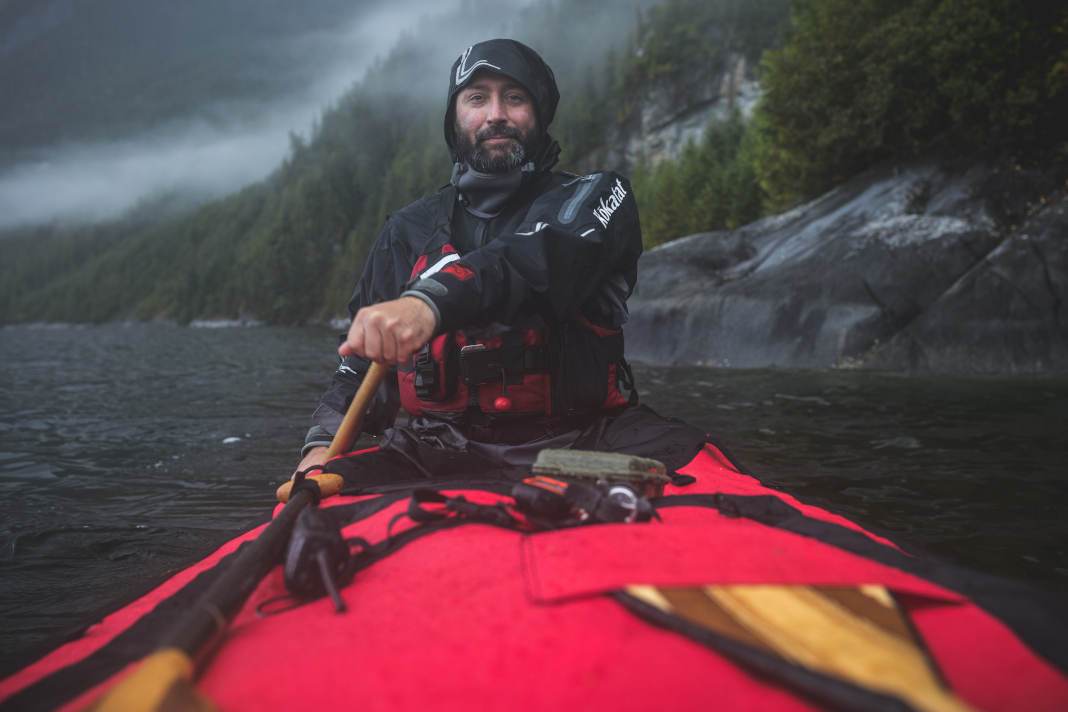
Martin Trahan on a canoe expedition.
Martin Trahan. Feature Image: Yan Kaczynski

I’ve canoed over 20,000 kilometers across North America, both in my native country Canada and in the U.S. Recently I made my first long-distance paddling adventure over in Europe, with a successful traverse of France.

When people ask me what my favorite pieces of canoe camping equipment are, they often expect me to name a boat model, a well-crafted paddle or some indispensable technical wear. It tends to surprise them when I mention my favorite canoe equipment for months-long expeditions are, in fact, a few simpler luxuries.

Martin Trahan’s favorite outdoor gear for long-distance canoe expeditions

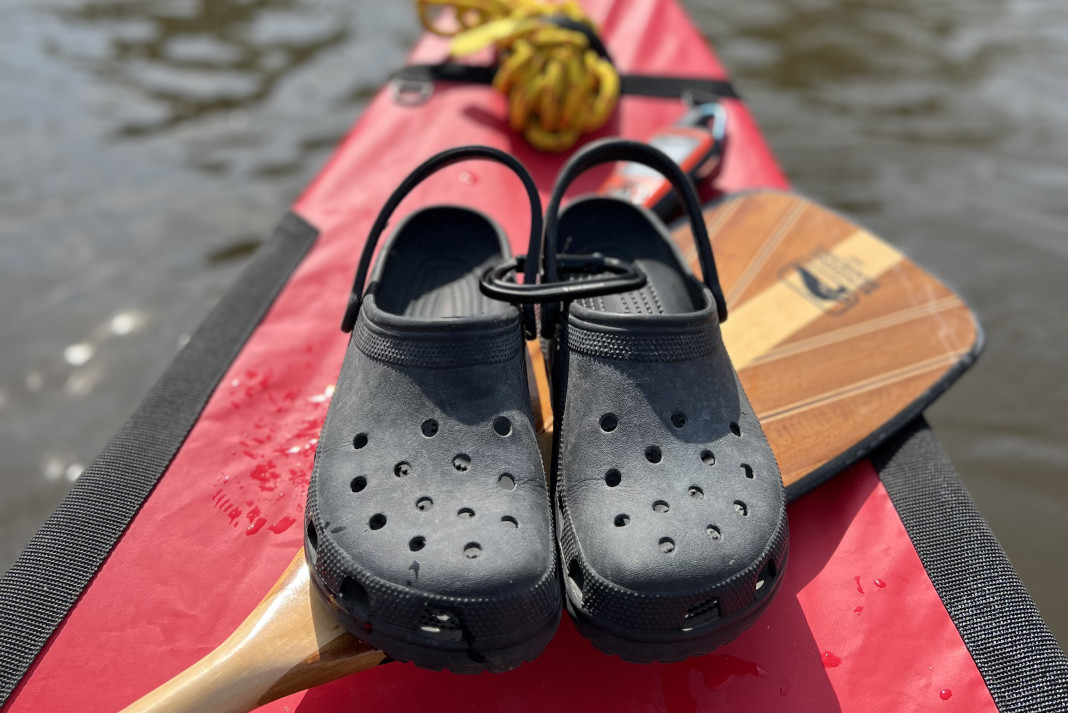
Crocs sandals for canoe camping
Crocs sandals. | Photo: Martin Trahan

1 Crocs sandals

crocs.com

Crocs sandals are hideous, awkward and ugly, but they’re amazingly comfortable, even when wet. Also, they offer excellent toe protection. They’re indestructible, versatile, dry quickly, hang easily with a carabiner and are perfect for slipping on when leaving the tent. However, be sure to shake them before putting them on to avoid stepping on a hairy spider or a large, slimy slug.

After spending the day in my neoprene socks and water shoes, my feet are impregnated with a strong, disgusting smell. Crocs are antibacterial and odor-resistant. So even if I use them for several hours with stinking feet, they don’t really absorb odors. What’s more, they are very easy to clean.

The cult of Crocs is real, but we will always find people who hate them. Life is better in Crocs. It’s a fact we don’t need science to prove.

Buy from:

AMAZON BACKCOUNTRY MEC

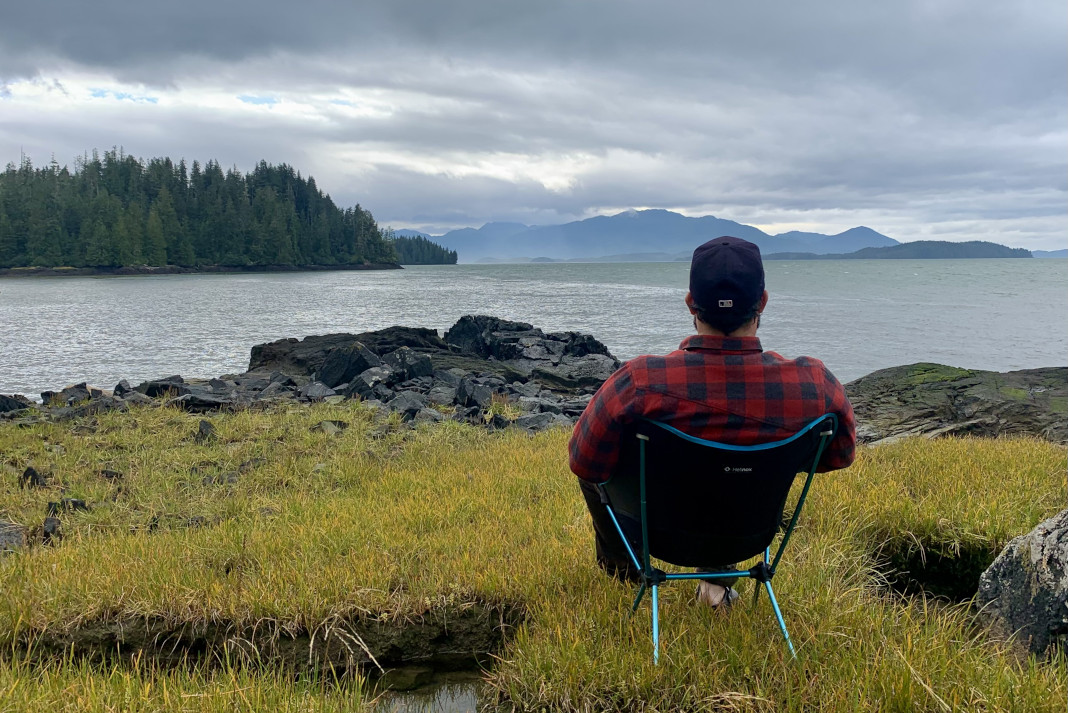
Man sitting in a Helinox Chair One looking out at the water.
Helinox Chair One. | Photo: Martin Trahan

2 Helinox Chair One

$109 | helinox.com

When I was younger, I was often laughed at for bringing a chair along on my canoe camping adventures. My ego could take it, but I was shaken nonetheless. Then, as I grew older, I began to fully embrace myself. My Helinox Chair One accompanies me wherever I go. It’s compact, solid, light and so comfortable.

Comfort makes all the difference when I’m out in nature for days or weeks at a time. The same friends who used to make fun of me are the same ones who now offer me chocolate or candy to borrow my chair for an evening around the fire. The campfire is where we gather in the morning or after a long day on the water. It’s a happy place to drink an early morning hot coffee or a whisky at night. Those special moments always feel better when sitting in a chair.

Buy from:

AMAZON BACKCOUNTRY MEC

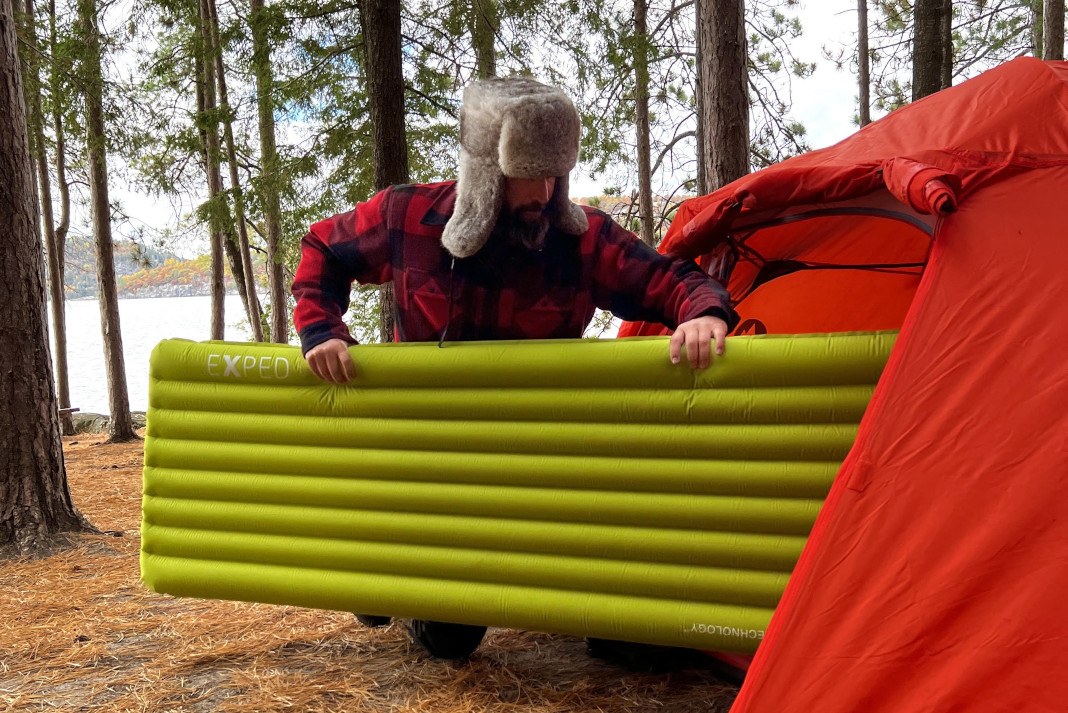
Exped Ultra 5R sleeping pad.
Exped Ultra 5R sleeping pad. Photo: Martin Trahan

3 Exped Ultra 5R sleeping pad

$199 | expedusa.com

Exped’s Ultra 5R sleeping pad is exceptional and of the highest quality. The long, wide, seven-centimeter-thick model offers unrivaled comfort and, above all, makes me forget my backache for a good night’s sleep. The thick sleeping pad helps prevent my sleeping bag from getting wet when the tent floor is damp.

I’m always taking good care of my gear. I’ve been using Exped sleeping mats for eight years and haven’t broken any of them. However, even if it’s sturdy, I wouldn’t make love on it because, you know, there’s a limit to how far you can go. It’s expensive, but I’ve never missed my bed thanks to it. Sleep is invaluable to me during expeditions, so it’s well worth the investment, in my opinion.

Buy from:

AMAZON REI

Martin Trahan on a canoe expedition.
Martin Trahan. | Feature photo: Yan Kaczynski

Feature photo: Yan Kaczynski