Home Blog Page 72

Best Canoeing Books To Read

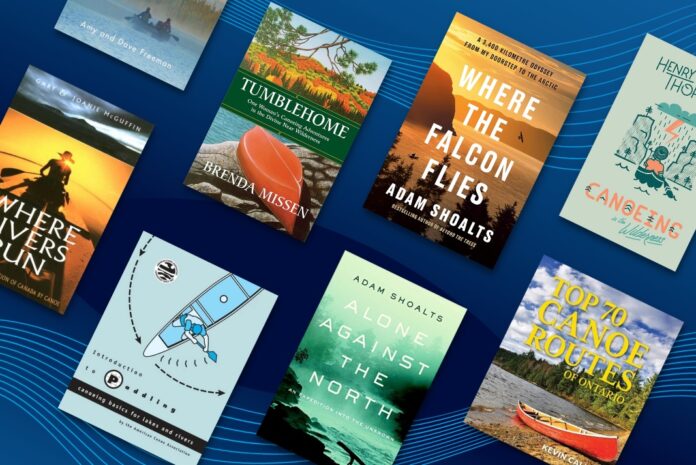
Whether looking for a book to get you through to the next paddling season or to read in your hammock after a long day on the water, this list of the best canoeing books promises to enthrall readers with stories of adventure, friendship, courage, daring and skill. Spanning tales expeditions, self-exploration and trip inspiration, celebrate the timeless allure of adventure by canoe with this list of some of our favorite canoeing reads, as well as the best new releases.
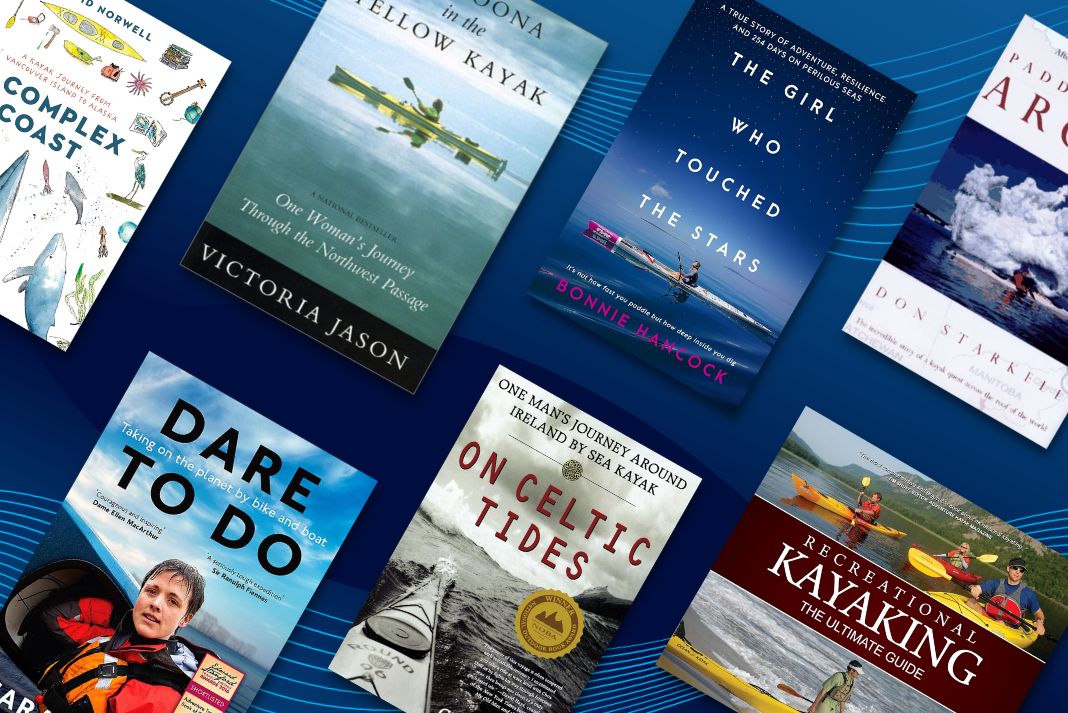
Best canoeing books: New releases
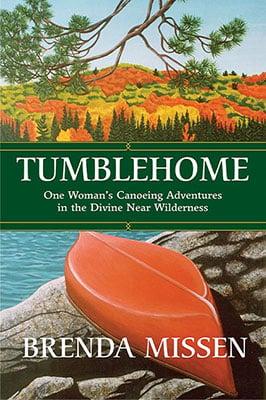
cover of Tumblehome: One Woman's Canoeing Adventures in the Divine Near-Wilderness

Tumblehome: One Woman’s Canoeing Adventures in the Divine Near-Wilderness

By Brenda Missen

On a warm August evening, Brenda Missen, a 37-year-old single, unattached writer, pitches her tent beside a lake in Canada’s 7,600 square-kilometre [3,000 square-mile] Algonquin Provincial Park. She is on a four-night “reconnaissance mission,” an hour’s paddle from the parking lot, to find out if she has the capability—and nerve—to one day take a real canoe trip in the park interior by herself. Paddling and portaging from her campsite by day and surviving imaginary bear attacks by night, she decides she’s ready. Then a ranger arrives to check her permit, and an inexplicable, powerful intuition tells her this is the person she’s meant to marry. Going solo may not be necessary after all.

But the fairy tale unravels. In the wake of a broken engagement to her One True Paddling Partner, Brenda ventures into the near wilderness on a series of solo canoe trips that blow all her perceptions of romance, relationships, God, and her own self (gently) out of the water. In our high-tech, urban age, when so many people are disconnected from the natural world, Tumblehome—part spiritual memoir, part travel adventure, and great part ode to the Earth—is a timely and important exploration of where our real roots lie.

Buy from:

ABE BOOKS ALIBRIS AMAZON BARNES & NOBLE BETTER WORLD BOOKS BOOKSHOP.ORG THRIFTBOOKS WALMART
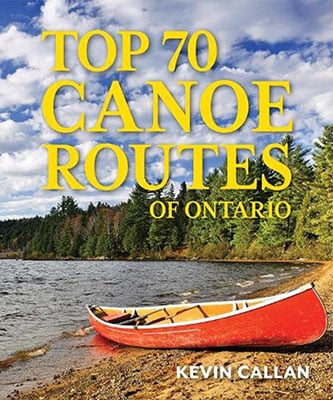

cover of Top 70 Canoe Routes of Ontario

Top 70 Canoe Routes of Ontario

By Kevin Callan

A new edition of the best-selling guide, expanded with 10 more routes and over 50 more pages. Ontario is blessed with some of the most scenic and enjoyable lakes and rivers in the world—it truly is a paddler’s paradise. This updated and expanded third edition is destined to become the classic guide to the very best canoeing the province has to offer. Top 70 Canoe Routes of Ontario includes 10 more of Kevin Callan’s favorite canoe excursions. While some of these routes are well known to paddlers province-wide, others are hidden secrets. The trips range from day-long paddles to week-long expeditions and are divided amongst nine regions: Southern Ontario, Cottage Country, Algonquin, Central Ontario, Eastern Ontario, Temagami, Ontario’s Near North, Northern Ontario and Northwestern Ontario.

Kevin offers paddlers all they will need to complete each route, including accurate maps of all access points, portage lengths, important river features and campsites—all embellished with historical notes and Kevin’s trademark humor. He also includes a detailed “Before You Go” section in which he shares the expertise that has earned him the title of Canada’s Happy Camper.

Buy from:

ABE BOOKS ALIBRIS AMAZON BARNES & NOBLE BETTER WORLD BOOKS BIBLIO BOOKSHOP.ORG THRIFTBOOKS WALMART
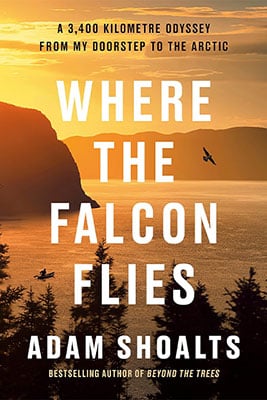

cover of Where the Falcon Flies: A 3,400 Kilometre Odyssey From My Doorstep to the Arctic

Where the Falcon Flies: A 3,400 Kilometre Odyssey From My Doorstep to the Arctic

By Adam Shoalts

From Canada’s most accomplished adventurer and storyteller comes a gripping journey into the vastness of Canada’s landscape and history.

Looking out his porch window one spring morning, Adam Shoalts spotted a majestic peregrine falcon flying across the neighbouring fields near Lake Erie. Each spring, falcons migrate from southernmost Canada to remote arctic mountains. Grabbing his backpack and canoe, Shoalts resolved to follow the falcon’s route north on an astonishing 3,400-kilometre journey to the Arctic.

Along the way, he faces a huge variety of challenges and obstacles, including storms on the Great Lakes, finding campsites in the urban wilderness of Toronto and Montreal, avoiding busy commercial freighter traffic, gale force winds, massive hydroelectric dams, bushwhacking without trails, dealing with hunger, multiple bear encounters, and navigating whitewater rapids on icy northern rivers far from any help.

In his signature style, Shoalts roams as much across space as he does time, winding his way through a stunning diversity of landscapes ranging from lush Carolinian forests to lonely windswept mountains, salty seas to trackless swamps, pristine lakes to glittering mega-cities, as well as the sites of long ago battles, shipwrecks, forgotten forts, and abandoned trading posts. Through his travels, he reveals how interconnected wild places are, from the loneliest depths of the northern wilderness to busy urban parks, and the vital importance of these connections.

Where the Falcon Flies invites readers on an extraordinary armchair adventure that spans five ecoregions and centuries of fascinating history, and is a masterwork by one of Canada’s most successful and audacious authors.

Buy from:

ABE BOOKS ALIBRIS AMAZON BARNES & NOBLE BETTER WORLD BOOKS BIBLIO BOOKSHOP.ORG THRIFTBOOKS WALMART


Best canoeing books to read
cover of A Thousand Miles in the Rob Roy Canoe on Rivers and Lakes of Europe

A Thousand Miles in the Rob Roy Canoe on Rivers and Lakes of Europe

By J. MacGregor

This scarce antiquarian book is a facsimile reprint of the original. Due to its age, it may contain imperfections such as marks, notations, marginalia and flawed pages. Because we believe this work is culturally important, we have made it available as part of our commitment for protecting, preserving, and promoting the world’s literature in affordable, high quality, modern editions that are true to the original work.

Buy from:

ABE BOOKS AMAZON BARNES & NOBLE BETTER WORLD BOOKS BIBLIO BOOKSHOP.ORG THRIFTBOOKS

A Year in the Wilderness: Bearing Witness in the Boundary Waters

By Amy Freeman

Since its establishment as a federally protected wilderness in 1964, the Boundary Waters has become one of our nation’s most valuable―and most frequently visited―natural treasures. When Amy and Dave Freeman learned of toxic mining proposed within this area’s watershed, they decided to take action―by spending a year in the wilderness, and sharing their experience through video, photos, and blogs with an audience of hundreds of thousands of concerned citizens. This book tells the deeper story of their adventure in northern Minnesota: of loons whistling under a moonrise, of ice booming as it forms and cracks, of a moose and her calf swimming across a misty lake.

Buy from:

ABE BOOKS AMAZON BARNES & NOBLE BETTER WORLD BOOKS BIBLIO BOOKSHOP.ORG THRIFTBOOKS WALMART

cover of Alone Against the North: An Expedition into the Unknown

Alone Against the North: An Expedition into the Unknown

By Adam Shoalts

When Adam Shoalts ventured into the largest unexplored wilderness on the planet, he hoped to set foot where no one had ever gone before. What he discovered surprised even him.

Shoalts was no stranger to the wilderness. He had hacked his way through jungles and swamp, had stared down polar bears and climbed mountains. But one spot on the map called out to him irresistibly: the Hudson Bay Lowlands, a trackless expanse of muskeg and lonely rivers, caribou and wolf—an Amazon of the north, parts of which to this day remain unexplored.

Cutting through this forbidding landscape is a river no explorer, trapper, or canoeist had left any record of paddling. It was this river that Shoalts was obsessively determined to explore.

It took him several attempts, and years of research. But finally, alone, he found the headwaters of the mysterious river. He believed he had discovered what he had set out to find. But the adventure had just begun. Unexpected dangers awaited him downstream.

Gripping and often poetic, Alone Against the North is a classic adventure story of single-minded obsession, physical hardship, and the restless sense of wonder that every explorer has in common.

But what does exploration mean in an age when satellite imagery of even the remotest corner of the planet is available to anyone with a phone? Is there anything left to explore?

What Shoalts discovered as he paddled downriver was a series of unmapped waterfalls that could easily have killed him. Just as astonishing was the media reaction when he got back to civilization. He was crowned “Canada’s Indiana Jones” and appeared on morning television. He was feted by the Royal Canadian Geographical Society and congratulated by the Governor General. People were enthralled by Shoalts’s proof that the world is bigger than we think.

Shoalts’s story makes it clear that the world can become known only by getting out of our cars and armchairs, and setting out into the unknown, where every step is different from the one before, and something you may never have imagined lies around the next curve in the river.

Buy from:

ABE BOOKS AMAZON BARNES & NOBLE BETTER WORLD BOOKS BIBLIO THRIFTBOOKS WALMART

cover of Braving It: A Father, a Daughter, and an Unforgettable Journey into the Alaskan Wild

Braving It: A Father, a Daughter, and an Unforgettable Journey into the Alaskan Wild

By James Campbell

Alaska’s Arctic National Wildlife Refuge, home to only a handful of people, is a harsh and lonely place. So when James Campbell’s cousin Heimo Korth asked him to spend a summer building a cabin in the rugged Interior, Campbell hesitated about inviting his fifteen-year-old daughter, Aidan, to join him: Would she be able to withstand clouds of mosquitoes, the threat of grizzlies, bathing in an ice-cold river, and hours of grueling labor peeling and hauling logs?

But once there, Aidan embraced the wild. She even agreed to return a few months later to help the Korths work their traplines and hunt for caribou and moose. Despite windchills of 50 degrees below zero, father and daughter ventured out daily to track, hunt, and trap. Under the supervision of Edna, Heimo’s Yupik Eskimo wife, Aidan grew more confident in the woods.

Campbell knew that in traditional Eskimo cultures, some daughters earned a rite of passage usually reserved for young men. So he decided to take Aidan back to Alaska one final time before she left home. It would be their third and most ambitious trip, backpacking over Alaska’s Brooks Range to the headwaters of the mighty Hulahula River, where they would assemble a folding canoe and paddle to the Arctic Ocean. The journey would test them, and their relationship, in one of the planet’s most remote places: a land of wolves, musk oxen, Dall sheep, golden eagles, and polar bears.

At turns poignant and humorous, Braving It is an ode to America’s disappearing wilderness and a profound meditation on what it means for a child to grow up—and a parent to finally, fully let go.

Buy from:

ABE BOOKS AMAZON BARNES & NOBLE BETTER WORLD BOOKS BIBLIO THRIFTBOOKS WALMART
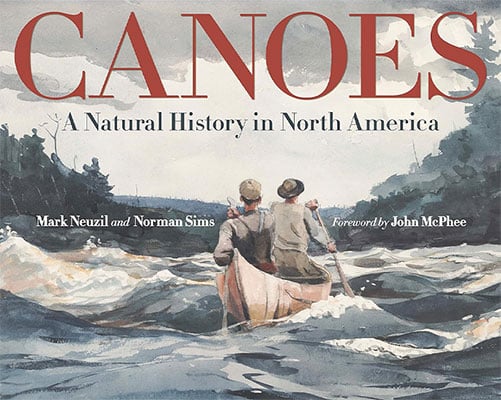
cover of Canoes: A Natural History in North America

Canoes:
A Natural History in North America

By Mark Neuzil

Ancient records of canoes are found from the Pacific Northwest to the coast of Maine, in Minnesota and Mexico, in the Southeast and across the Caribbean. And if a native of those distant times might encounter a canoe of our day—whether birch bark or dugout or a modern marvel made of carbon fiber—its silhouette would be instantly recognizable. This is the story of that singular American artifact, so little changed over time: of canoes, old and new, the people who made them, and the labors and adventures they shared. With features of technology, industry, art, and survival, the canoe carries us deep into the natural and cultural history of North America.

In the foreword by Pulitzer Prize-winner John McPhee, we dip into the experience of canoeing, from the thrilling challenges of childhood camp expeditions to the moving reflections of long-time paddlers. The pages that follow are filled with historical photographs and artwork, authors Neuzil and Sims describe the dugout and birch bark craft from their first known appearance through the exploration of Canada by fur traders, to the recreational movements that promoted all-wood and wood-and-canvas canoes. Modern materials such as aluminum, fiberglass, and plastic expanded participation and connected canoeists with emerging environmental movements.

Finally, Canoes lets us hear the voices of past paddlers like Alexander Mackenzie, the first European to cross North America, using birch bark and dugout canoes a decade before Lewis and Clark went overland, Henry Thoreau, Eric Sevareid, Edwin Tappan Adney, and others. Their stories are a tribute to the First Peoples who, 500 or 1,000 or even 5,000 years ago, built a craft designed to such perfection that it has plied the waters fundamentally unchanged ever since.

Buy from:

ABE BOOKS ALIBRIS AMAZON BARNES & NOBLE BETTER WORLD BOOKS BIBLIO BOOKSHOP.ORG THRIFTBOOKS WALMART
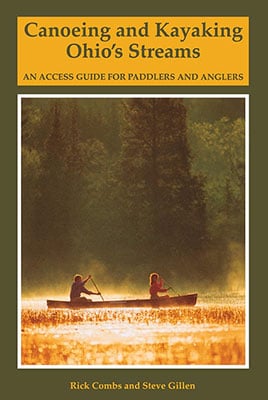

cover of Canoeing and Kayaking Ohio's Streams: An Access Guide for Paddlers and Anglers

Canoeing and Kayaking Ohio’s Streams: An Access Guide for Paddlers and Anglers

By Richard Combs

Whether you are looking for a quiet float along a rural stretch of flat water or an exciting paddle through Class IV rapids, this book will guide your way. As well as being a comprehensive guide to the many rivers and streams in the state, Canoeing & Kayaking Ohio’s Streams includes chapters on water safety, paddling instructions, how to read and rate white water, and even tips for paddling with children. For each of over 45 rivers in the state, you will find suggested stopover point for natural and human history, information on potential hazards and portages, detailed maps with river miles and car shuttle miles from access points, and listings of game-fish for each waterway.

Buy from:

ABE BOOKS AMAZON BARNES & NOBLE BETTER WORLD BOOKS BOOKSHOP.ORG THRIFTBOOKS WALMART

cover of Canoeing in the Wilderness

Canoeing in the Wilderness

By Henry David Thoreau

Thoreau paints the woods and waterways of Maine with the same loving hand that described his Walden home, and entertains with the successes and difficulties of the trip and the quirks of his companion and their guide, Joseph Polis, told with a wit and insight that can only be found in Thoreau.

Buy from:

ABE BOOKS ALIBRIS AMAZON BARNES & NOBLE BETTER WORLD BOOKS BIBLIO BOOKSHOP.ORG THRIFTBOOKS WALMART

cover of Canoeing the Mountains: Christian Leadership in Uncharted Territory

Canoeing the Mountains: Christian Leadership in Uncharted Territory

By Tod Bolsinger

Explorers Lewis and Clark had to adapt. While they had prepared to find a waterway to the Pacific Ocean, instead they found themselves in the Rocky Mountains. You too may feel that you are leading in a cultural context you were not expecting. You may even feel that your training holds you back more often than it carries you along. Drawing from his extensive experience as a pastor and consultant, Tod Bolsinger brings decades of expertise in guiding churches and organizations through uncharted territory. He offers a combination of illuminating insights and practical tools to help you reimagine what effective leadership looks like in our rapidly changing world. If you’re going to scale the mountains of ministry, you need to leave behind canoes and find new navigational tools. Now expanded with a study guide, this book will set you on the right course to lead with confidence and courage.

Buy from:

ABE BOOKS AMAZON BARNES & NOBLE BETTER WORLD BOOKS BIBLIO BOOKSHOP.ORG THRIFTBOOKS WALMART
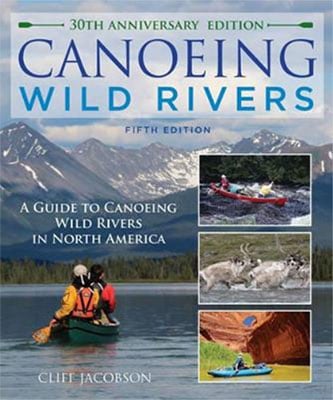

cover of Canoeing Wild Rivers: The 30th Anniversary Guide to Expedition Canoeing in North America

Canoeing Wild Rivers: The 30th Anniversary Guide to Expedition Canoeing in North America

By Cliff Jacobson

The 30th Anniversary Edition of the classic Expedition Canoeing has long been considered the premier guide to canoeing and exploring North America’s waterways. This thirtieth-anniversary edition expertly details everything you need to know about paddling the continent’s wild rivers. Outdoors writer and wilderness canoe guide Cliff Jacobson draws on his thirty-plus years of river running to give you sound advice, fresh new ideas, and advanced techniques for canoeing in the wilderness. Completely updated and revised, inside you’ll find dozens of full-color photos, how-to illustrations, source charts, canoeing and camping tricks, a chapter full of hard-won advice from more than twenty-five of Jacobson’s fellow canoeing experts, and a brand new chapter devoted to paddling desert and swamp rivers.

Buy from:

ABE BOOKS AMAZON BARNES & NOBLE BETTER WORLD BOOKS BOOKSHOP.ORG THRIFTBOOKS WALMART
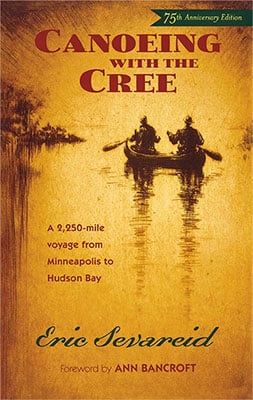

cover of Canoeing With The Cree

Canoeing With The Cree

By Eric Sevareid

In 1930 two novice paddlers—Eric Sevareid and Walter C. Port—launched a secondhand 18-foot canvas canoe into the Minnesota River at Fort Snelling for an ambitious summer-long journey from Minneapolis to Hudson Bay. Without benefit of radio, motor, or good maps, the teenagers made their way over 2,250 miles of rivers, lakes, and difficult portages. Nearly four months later, after shooting hundreds of sets of rapids and surviving exceedingly bad conditions and even worse advice, the ragged, hungry adventurers arrived in York Factory on Hudson Bay—with winter freeze-up on their heels. First published in 1935, Canoeing with the Cree is Sevareid’s classic account of this youthful odyssey.

Buy from:

ABE BOOKS ALIBRIS AMAZON BARNES & NOBLE BETTER WORLD BOOKS BIBLIO BOOKSHOP.ORG THRIFTBOOKS WALMART
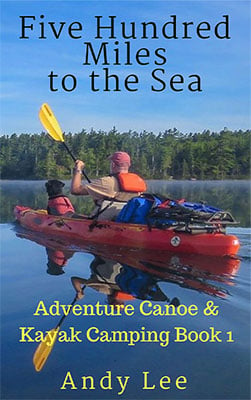

cover of Five Hundred Miles to the Sea

Five Hundred Miles to the Sea

By Andy Lee

Next time you drive across that bridge on your way to work look down at the river below and ask it where did it come from and where is it going. Then ask yourself if you would like to thru-paddle that river from beginning to end and see first it hand for yourself, with all of its mysteries and all of its adventures. If the answer is yes, or even maybe, you will enjoy reading Five Hundred Miles to the Sea.

The author paddled and camped over 500 river miles on the Jackson, Cowpasture and James Rivers from the mountains of western Virginia to the sandy beaches of the Atlantic Ocean and he tells you how you can do it, too. Follow his well-well-practiced advice and you will have an unfair advantage over other trippers.

Whatever paddling adventures you desire, you will find answers to many of your questions and many solid tips and tricks to make your journey easier, safer and more fun in Five Hundred Miles to the Sea.

Buy from:
AMAZON


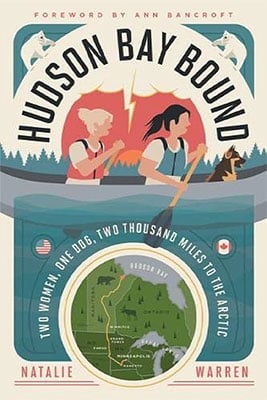
cover of Hudson Bay Bound: Two Women, One Dog, Two Thousand Miles to the Arctic

Hudson Bay Bound: Two Women, One Dog, Two Thousand Miles to the Arctic

By Natalie Warren

The remarkable eighty-five-day journey of the first two women to canoe the 2,000-mile route from Minneapolis to Hudson Bay.

Unrelenting winds, carnivorous polar bears, snake nests, sweltering heat, and constant hunger. Paddling from Minneapolis to Hudson Bay, following the 2,000-mile route made famous by Eric Sevareid in his 1935 classic Canoeing with the Cree [see above], Natalie Warren and Ann Raiho faced unexpected trials, some harrowing, some simply odd. But for the two friends-the first women to make this expedition-there was one timeless challenge: the occasional pitfalls that test character and friendship. Warren’s spellbinding account retraces the women’s journey from inspiration to Arctic waters, giving readers an insider view from the practicalities of planning a three-month canoe expedition to the successful accomplishment of the adventure of a lifetime.

Along the route we meet the people who live and work on the waterways, including denizens of a resort who supply much-needed sustenance; a solitary resident in the wilderness who helps plug a leak; and the people of the Cree First Nation at Norway House, where the canoeists acquire a furry companion. Describing the tensions that erupt between the women (who at one point communicate with each other only by note) and the natural and human-made phenomena they encounter—from islands of trash to waterfalls and a wolf pack—Warren brings us into her experience, and we join these modern women (and their dog) as they recreate this historic trip, including the pleasures and perils, the sexism, the social and environmental implications, and the enduring wonder of the wilderness.

Buy from:

ABE BOOKS ALIBRIS AMAZON BARNES & NOBLE BETTER WORLD BOOKS BIBLIO BOOKSHOP.ORG THRIFTBOOKS WALMART
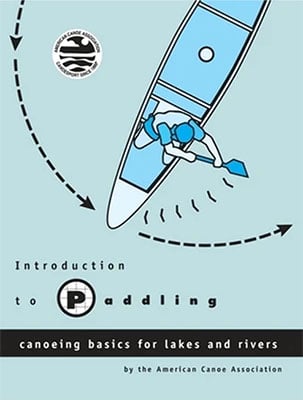
cover of Introduction to Paddling: Canoeing Basics for Lakes and Rivers

Introduction to Paddling: Canoeing Basics for Lakes and Rivers

By the American Canoe Association

Written by the American Canoe Association and the Ohio Department of Natural Resources, Introduction to Paddling is an easy-to-understand guide to flatwater and river paddling. Based on an earlier work by the Ohio DNR, Flat-water Paddler, this amply illustrated book tells beginning paddlers everything they need to know, from appropriate clothing to the parts of the boat, from correct strokes to proper safety concerns. Good for instructors and those who like to teach themselves, this book is an important resource for those who like to paddle or want to start.

Buy from:

ABE BOOKS AMAZON BARNES & NOBLE BETTER WORLD BOOKS BIBLIO BOOKSHOP.ORG THRIFTBOOKS WALMART
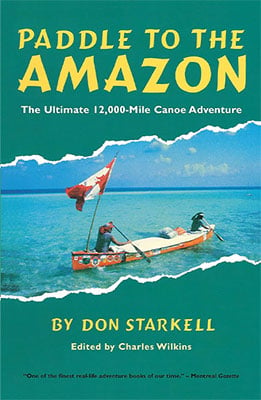

cover of Paddle to the Amazon

Paddle to the Amazon

By Don Starkell

A mind-blowing tale of an epic 12,000-mile paddle trip from Winnipeg to the Amazon in a three-seater canoe. Worth reading for the journey itself, the book also gives stark examples of the impact of ego, group dynamics, preparation and cultural awareness on the success and challenges of an expedition.

Buy from:

ABE BOOKS ALIBRIS AMAZON BARNES & NOBLE BETTER WORLD BOOKS BIBLIO BOOKSHOP.ORG THRIFTBOOKS WALMART
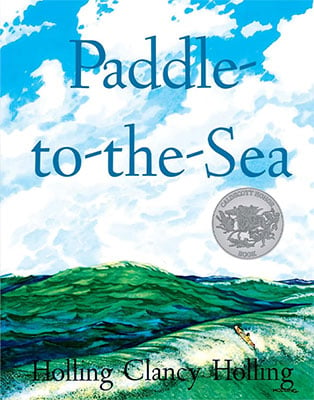

cover of Paddle to the Sea

Paddle to the Sea

By Holling C. Holling

This classic 1941 children’s book (later turned into a film by Bill Mason) follows the story of a canoe carved by a First Nations boy, which ends up journeying through the Great Lakes to the Atlantic. Part whimsical tale, part geography lesson, this book may have the young ones in your life curiously eyeing local waterways.

Buy from:

ABE BOOKS ALIBRIS AMAZON BARNES & NOBLE BETTER WORLD BOOKS BIBLIO BOOKSHOP.ORG THRIFTBOOKS WALMART
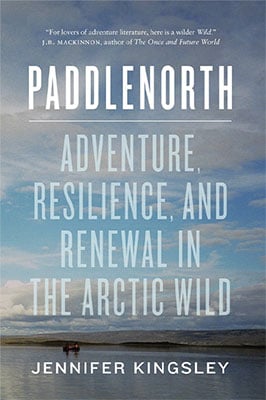

cover of Paddlenorth: Adventure, Resilience, and Renewal in the Arctic Wild

Paddlenorth: Adventure, Resilience, and Renewal in the Arctic Wild

By Jennifer Kingsley

While including the requisite overview on the history, culture, and ecology of the remote Back River, much of Kingsley’s reflections on her 54-day river trip focus on her personal journey, group dynamics and the insights gained from facing the challenges of a wilderness expedition.

Buy from:

ABE BOOKS AMAZON BARNES & NOBLE BETTER WORLD BOOKS BIBLIO BOOKSHOP.ORG THRIFTBOOKS WALMART
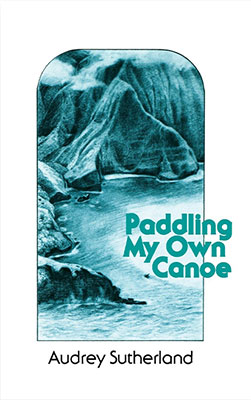

cover of Paddling My Own Canoe

Paddling My Own Canoe

By Audrey Sutherland

With minimal gear, an inflatable kayak and a can-do attitude like no other, Sutherland coolly embarked on epic thousand kilometer journeys along the remote north shore of Molokai and the coast of Alaska. Sutherland’s writing inspires, shatters perceived barriers and may make you question our dependence on GPS, GoPros and Gore-Tex gear.

Buy from:

ABE BOOKS ALIBRIS AMAZON BARNES & NOBLE BETTER WORLD BOOKS BIBLIO BOOKSHOP.ORG THRIFTBOOKS WALMART
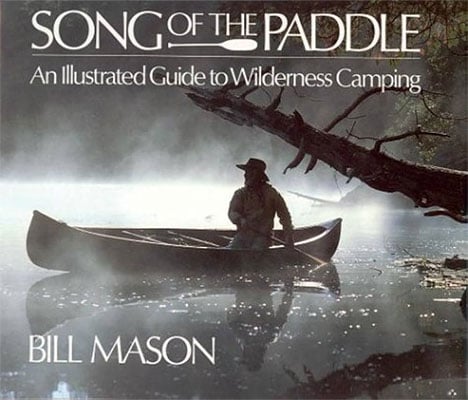

cover of Song of the Paddle: An Illustrated Guide to Wilderness Camping

Song of the Paddle: An Illustrated Guide to Wilderness Camping

By Bill Mason

The return of a classic paddling guide. More than a how-to camping and paddling guide, Song of the Paddle is a philosophical guide to outdoor living. Written by the acclaimed paddler and outdoorsman, Bill Mason, the book leads readers on a journey of exploration and discovery. Mason writes from an intensely subjective viewpoint and the advice is practical and sound. He emphasizes the difference in perception between camping (rough) and outdoor living (comfort). Each page is packed with hard-won tips and tricks for enjoying the great outdoors. No detail is ignored—from keeping campfire smoke out of your eyes to ensuring children are safely occupied around the campsite.

Mason’s personal accounts and details of memorable expeditions are certain to kindle the reader’s sense of adventure. Abundantly illustrated by photographs and sketches, novice campers and seasoned paddlers alike will get more out of their outdoor experience thanks to Song of the Paddle.

Buy from:

ABE BOOKS ALIBRIS AMAZON BETTER WORLD BOOKS BIBLIO THRIFTBOOKS WALMART
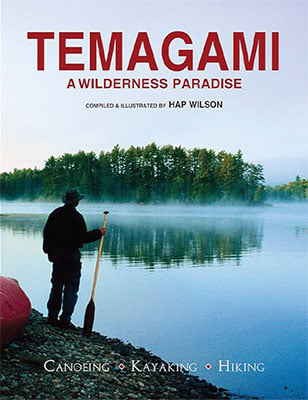

cover of Temagami – A Wilderness Paradise

Temagami: A Wilderness Paradise

By Hap Wilson

Features the best canoe, kayak and hiking routes in the wild Temagami region of Ontario.

“Compiled by Hap Wilson, an outdoor writer who has more than thirty years of experience as a wilderness guide … personally documented maps … far more information than a volume this size might lead the reader to expect.”

Thunder Bay Chronicle-Journal

Temagami: A Wilderness Paradise is fully updated for the first time in over 10 years. Temagami is one of the northern hemisphere’s most desirable and pristine wilderness areas. Each year thousands visit this 10,000 km2 wilderness area in Central Ontario in search of rugged solitude and authentic backwoods adventure.This comprehensive guidebook details 25 of the best canoeing, kayaking and hiking routes and contains notes on the region’s history, geography, archaeology, flora and fauna, as well as important outfitting, camping and safety tips.

Buy from:

ABE BOOKS ALIBRIS AMAZON BARNES & NOBLE BETTER WORLD BOOKS BIBLIO BOOKSHOP.ORG THRIFTBOOKS WALMART
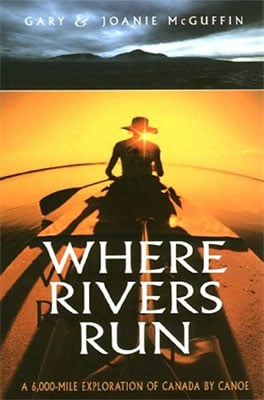

cover of Where Rivers Run

Where Rivers Run

By Gary and Joanie McGuffin

Atypical honeymoon story. To fulfill their dream of traveling from sea to sea in a canoe, wilderness adventurers Joanie and Gary McGuffin, recently married, set out from the Gulf of St. Lawrence (Atlantic Ocean) and two years and 6,000 miles later reached the Beaufort Sea (Arctic Ocean). Along the way, they faced innumerable hardships and challenged some of Canada’s most dangerous rivers. In the process, they discovered a Canada that few will ever see.

Buy from:

ABE BOOKS ALIBRIS AMAZON BIBLIO WALMART
 

Paddlefest 2023 Registration Is Open

Photo Courtesy: Ohio River Paddlefest

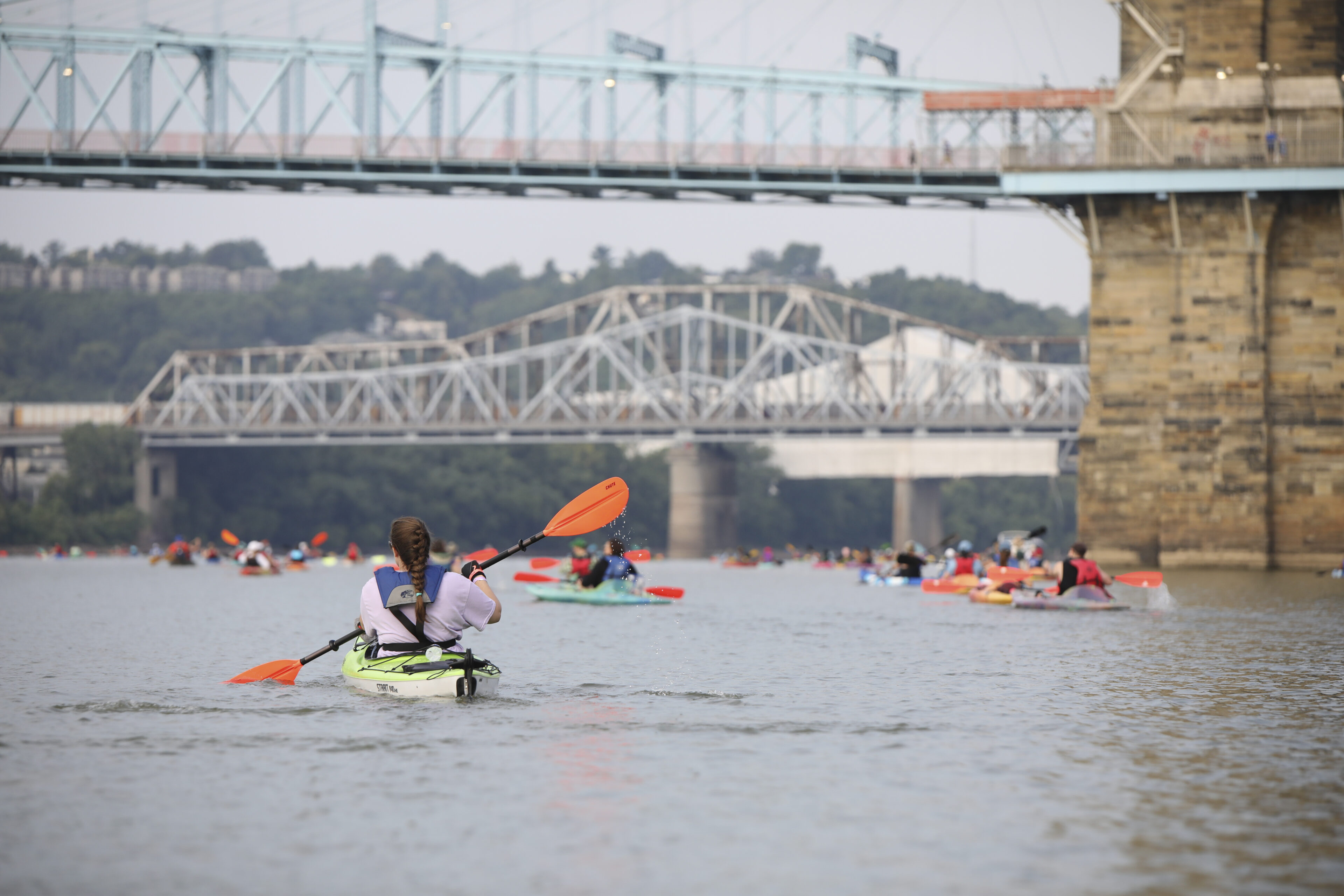
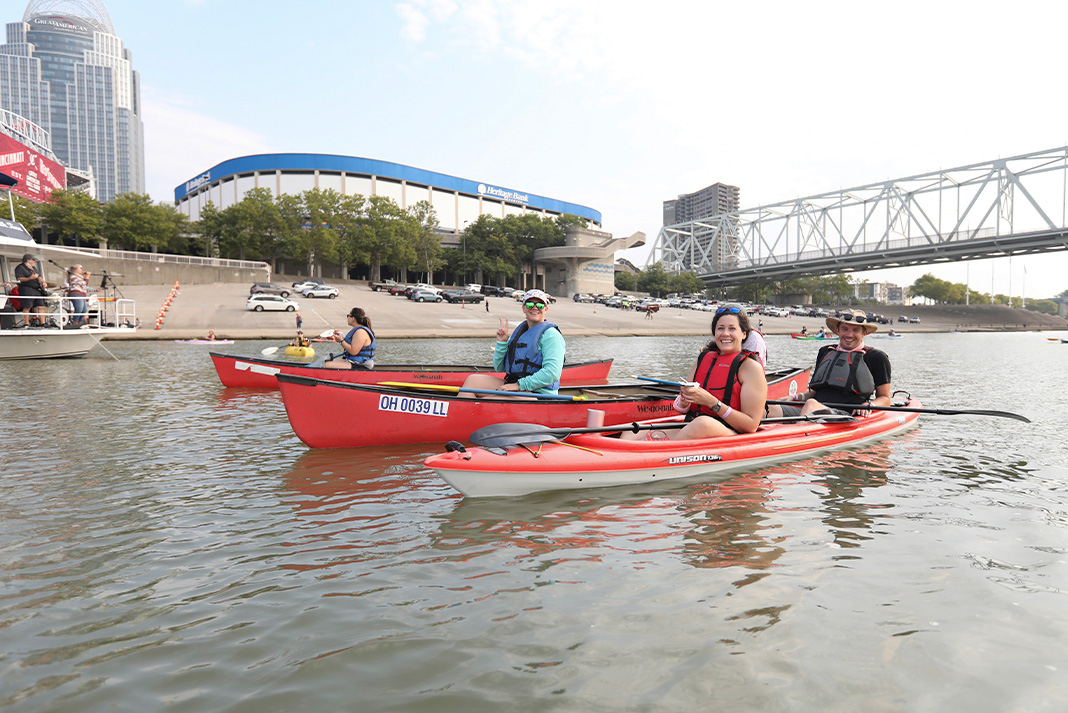
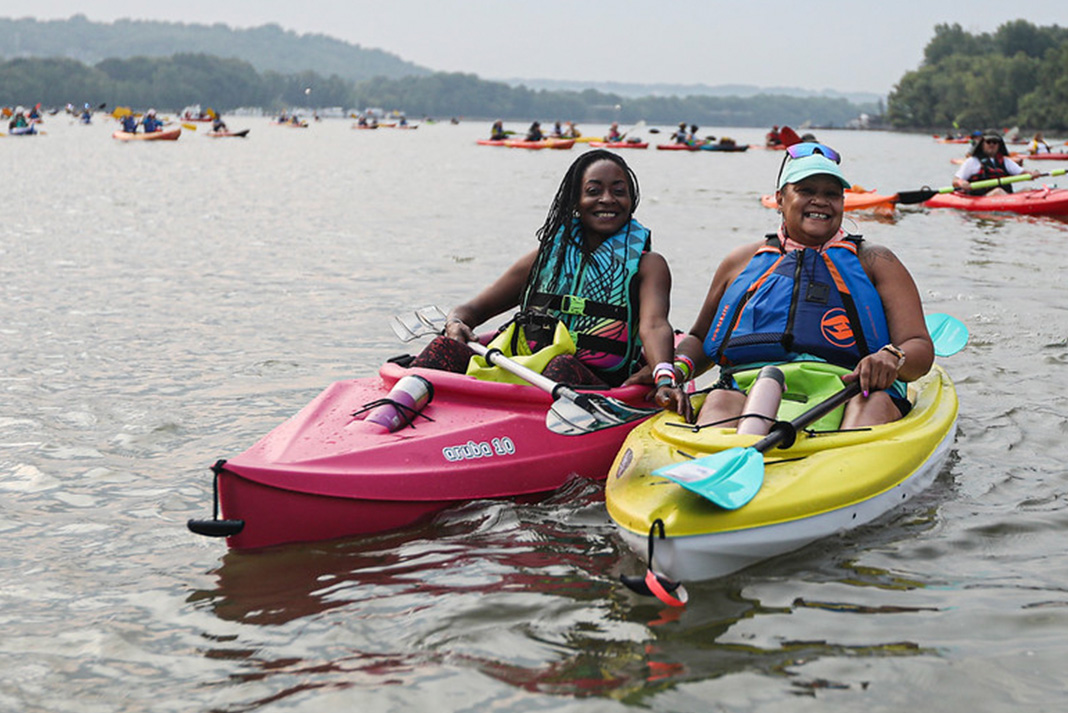
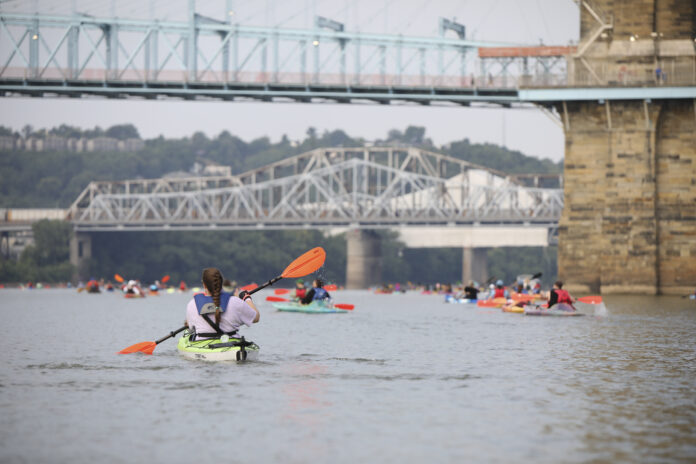
CINCINNATI, OHIO – Registration for Ohio River Paddlefest 2023 is now open! Local nonprofit Adventure Crew will host the nation’s largest paddling event, now in its 22nd year, on Saturday, August 5. Adventure Crew’s increasingly popular Outdoors for All Expo, a free community event celebrating all things outdoors, will kick off Paddlefest weekend on Friday, August 4.

“Between Ohio River Paddlefest and the Outdoors for All Expo, Paddlefest weekend has become a can’t-miss event for outdoor enthusiasts,” said Miriam Wise, director of support and engagement for Adventure Crew. “Mark your calendars and invite your friends and family to join us the first weekend in August for this much-loved annual tradition.”

Photo Courtesy: Ohio River Paddlefest

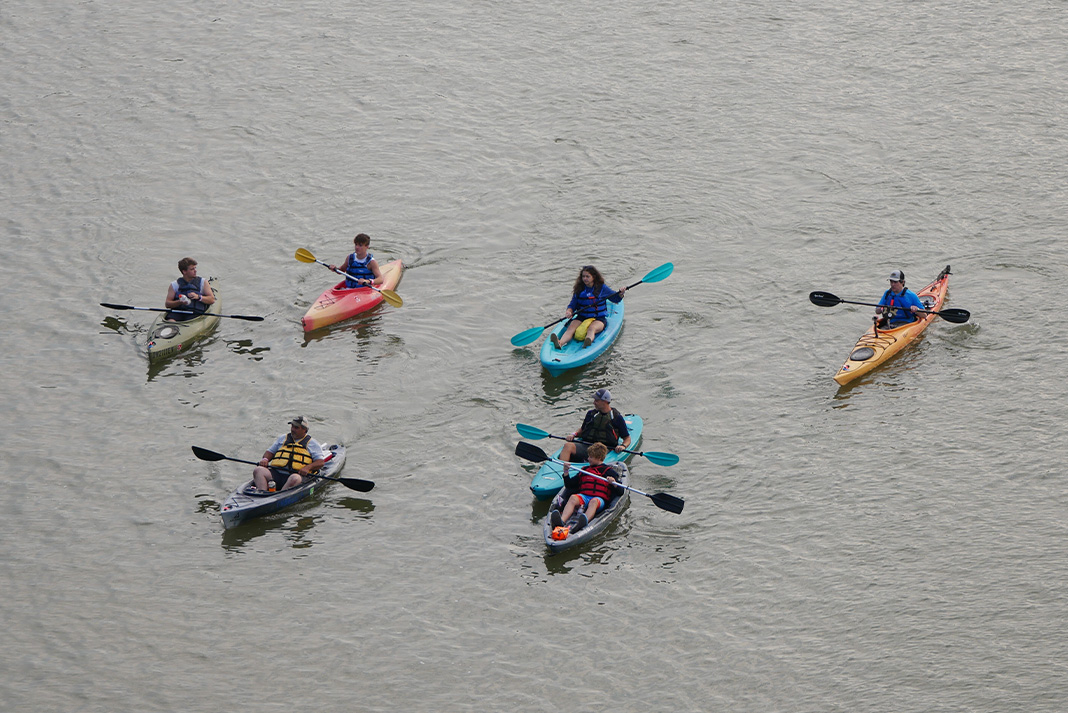
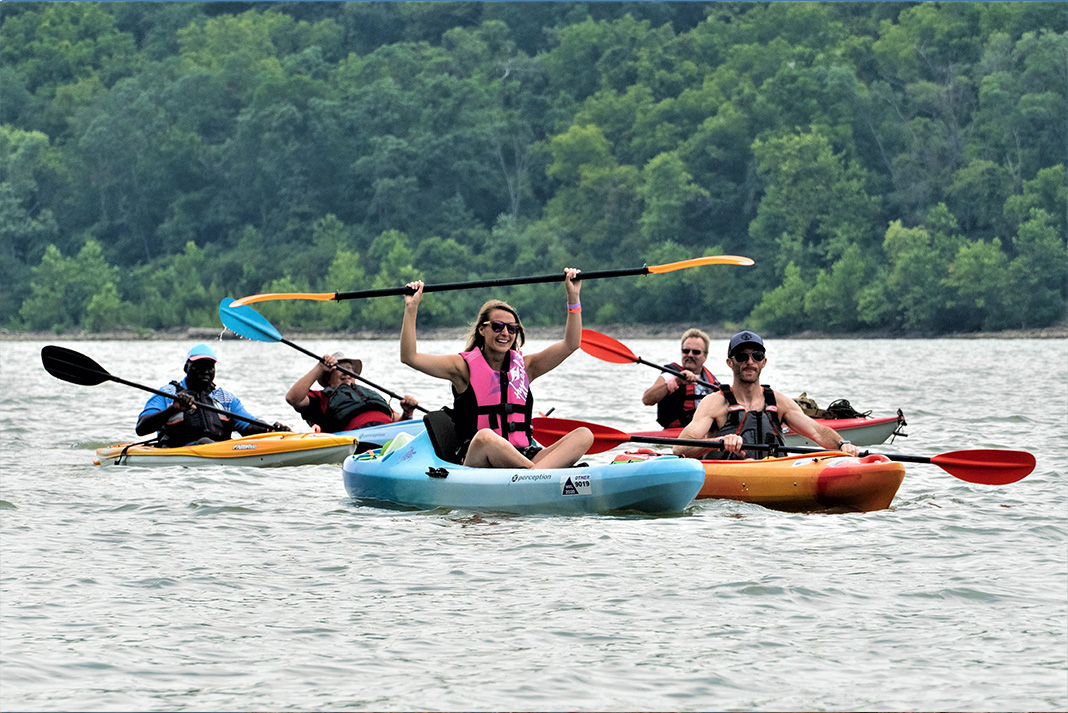
Paddlefest brings 2,000 paddlers in kayaks, canoes and SUPs to the Ohio River each August. Participants can choose between two distances to paddle the Ohio while it’s closed to motorized traffic, making the event accessible to paddlers of all skill levels. The 9-mile paddle ends with a Finish Line Festival, featuring music by The Sunburners, food trucks and MadTree beer, at Gilday Recreation Complex in Riverside. For a shorter adventure, the 4.5-mile Paddlefest MINI finishes at the Public Landing in Downtown Cincinnati. Both paddling routes start at Schmidt Recreation Complex, 2944 Humbert Ave. in the East End.

Friday night’s pre-party, the Outdoors for All Expo, is free and open to the public. The event has grown to feature some 50 exhibitors, including local parks, outdoor outfitters, adventure experts and environmentally minded organizations. With hands-on demos, live music, raffles, MadTree beer and food trucks, there are activities to engage attendees of all ages. This year’s Expo runs from 4-9:30 p.m. at Schmidt Recreation Complex. Organizations interested in exhibiting can apply on the event website.

New to the weekend is a kayak bass fishing tournament spanning both Friday and Saturday that lets anglers compete for prizes and bragging rights while fishing any of three tributaries of the Ohio: Great Miami River, Licking River or Little Miami River. More details on the tournament will be shared on the event website.

For Saturday morning’s Paddlefest, participants can use their own boats, or they can rent them with advance registration. (Those wishing to rent a boat should sign up early: Rental boats are limited and sell out every year.)

Registration for the paddle is now open. Early bird pricing (available through April 30) for the 9-mile paddle is $50 for adults; $25 for youth (17 and under); the 4.5-mile paddle is $45 for adults; $20 for youth. Full pricing details are available on the Paddlefest website.

Paddlefest is organized by and benefits Adventure Crew, a nonprofit that connects city teens in Cincinnati and Northern Kentucky with nature and each other through engaging outdoor adventures.

“Every dollar we raise through Paddlefest supports that mission,” Wise said. “So by signing up to paddle on Saturday or buying raffle tickets and a beer on Friday, you’re helping us get city teens who might not otherwise have access to nature out on adventures like hiking, biking and of course, paddling. It’s a great way to share your love of the outdoors while having a great time in the process.”

Paddlefest organizers are currently accepting sponsorships for the event.

Photo Courtesy: Ohio River Paddlefest

About Ohio River Paddlefest

The Ohio River Paddlefest is recognized as the nation’s largest paddling celebration, with 2,000 participants traveling up to nine miles through downtown Cincinnati/Northern Kentucky in canoes, kayaks and other human-powered craft. Established in 2001, the event, which is held the first Saturday in August each year, is a project of Adventure Crew. For more information, visit www.ohioriverpaddlefest.org.

About Adventure Crew

Adventure Crew is a 501(c)3 nonprofit organization dedicated to connecting city teens in Greater Cincinnati with nature and each other through engaging outdoor adventures. Founded in 2013, the nonprofit now serves all Cincinnati Public Schools (CPS) high schools, seventh and eighth graders in select CPS elementary schools, and six schools in Northern Kentucky – a total of 25 schools and a roster of nearly 1,000 students per year. Through challenging monthly adventures, city teens develop the courageous spirit to step out of their comfort zone and discover new worlds – outside in nature and inside themselves. This deep connection to nature will set a positive course for their lives – and help create the next generation of environmental stewards. For more information, visit www.adventurecrew.org.


An Inside Look At The Rigors Of Guide School (Video)

What does it take to become a river guide for one of the largest whitewater outfitters in North America? In “Guide School,” OARS pulls back the veil on their rigorous nine-day California Whitewater Rafting Guide School on the American River in a five-part series.

The series shares the learning experience of students as well as profiles their instructors, with the hope of illuminating the allure of becoming a guide. One of the most notable being the bonds built between fellow guides, which can become one of our strongest connections to the river.

For veteran guides, the OARS series is a walk down memory lane to those formative days. And for those looking to go down the guiding path, “Guide School” provides a sneak peek at what makes training one of the most unforgettable experiences in your paddling career.


First Look: The Dagger Vanguard Is The Result Of A 15-Year Evolution In Modern Longboats

Fifteen years ago, Dagger Kayaks redefined the long creek boat with the release of the Green Boat. Now the brand is attempting to reinvent the category once again. After four years of prototypes, the Dagger Vanguard 12.0 has finally made its way to the paddling public for spring 2023.

Dagger’s 15-Year Evolution In Longboats

When Dagger’s Green Boat was made, it was built for one thing: winning the namesake extreme race in the Southeast U.S.

In downriver whitewater races, a kayak over nine feet is categorized as a longboat. In whitewater races with a longboat class, it’s generally accepted that to have the fastest time on the river you’ll need to be piloting from the seat of one. Choosing to do so in extreme races, namely the Green Race, provides the potential to unlock speed. But not without the hazard of the length turning up the difficulty significantly.

Up until 2006, paddlers vying to win the Green Race were likely doing so in a Prijon Tornado, an old-school creek boat nearly 12 feet long. The Tornado had a long displacement hull, some rocker, and a half-decent amount of volume. The Tornado still somewhat resembled the creek boats being paddled in the mid-2000s. But modern designs were progressing, and the Tornado was looking its age, having been created in 1995, including because of its lack of safety features.

Then Pat Keller showed up to the Green Race in 2006 with the Dagger prototype that changed the game. The Green Boat certainly drew inspiration from the Tornado. But it was the first kayak purpose-built for winning an extreme race. It drew on design knowledge from other disciplines like slalom, as well as the latest creek boats of the time. Keller won, and the Green Boat instantly became the bar for the kayak design needed to win the race.

That said, when the Green Boat was envisioned, one of the hurdles was whether anyone outside a subculture of paddlers in the South would actually buy one. Dagger took their chances, and in 2008 the Green Boat was released in full production.

Today each major whitewater brand available in the U.S. has its take on a longboat. So it’s fitting now for Dagger to lead the field in releasing the second generation of the category. As the Vanguard was being developed, the brand had a new perspective in mind for what they hoped to accomplish with the design.

“One of the things we had in the back of our mind was how can we make this boat feel like an everyday creek boat a little bit more? How do we make it less of a transition from your regular creek boat into a longboat?” shares Snowy Robertson, kayak designer at Dagger.

Todd Wells with Dagger Vanguard.
Todd Wells with the new Dagger Vanguard. | Image: Dagger Kayaks // YouTube

Developing The Dagger Vanguard 12.0

Asking this question took Robertson and the Dagger team on a journey to develop the Vanguard that began in 2019. The first prototype of the Vanguard was a 12-foot, six-inch speed machine—nine inches longer than the Green Boat. Robertson says the boat was fast on flatwater but cumbersome to drive in technical whitewater. So they changed course, pulling the length back to 12 feet, and looked toward current creek boats, including the Phantom and Code, and the characteristics that make them feel more effortless than ever in whitewater.

“We wanted to remove that percentage of extra effort,” says Robertson. “Nine-foot creek boats nowadays are highly maneuverable. We wanted to offer that in the longer package. We looked at getting more planing surface through the center section and more of a defined rail. You are also sitting up on the surface a bit more, rather than being down in the water as the Green Boat was.

“We’re definitely using less of that waterline, and so it’s slower through the flatwater,” Robertson explains. “But we found that you can be much more precise with where you place the boat, and the bow is much easier to keep on the surface. We honestly found that we were using less effort and being less fatigued than you would’ve been with our other longer boats, which were seemingly faster.”

New Dagger Vanguard
Sage Donnelly and Adam Edwards paddling the Vanguard in the Pacific Northwest. Feature Image: Dagger Kayaks / YouTube

A Boat Built Beyond Race Day

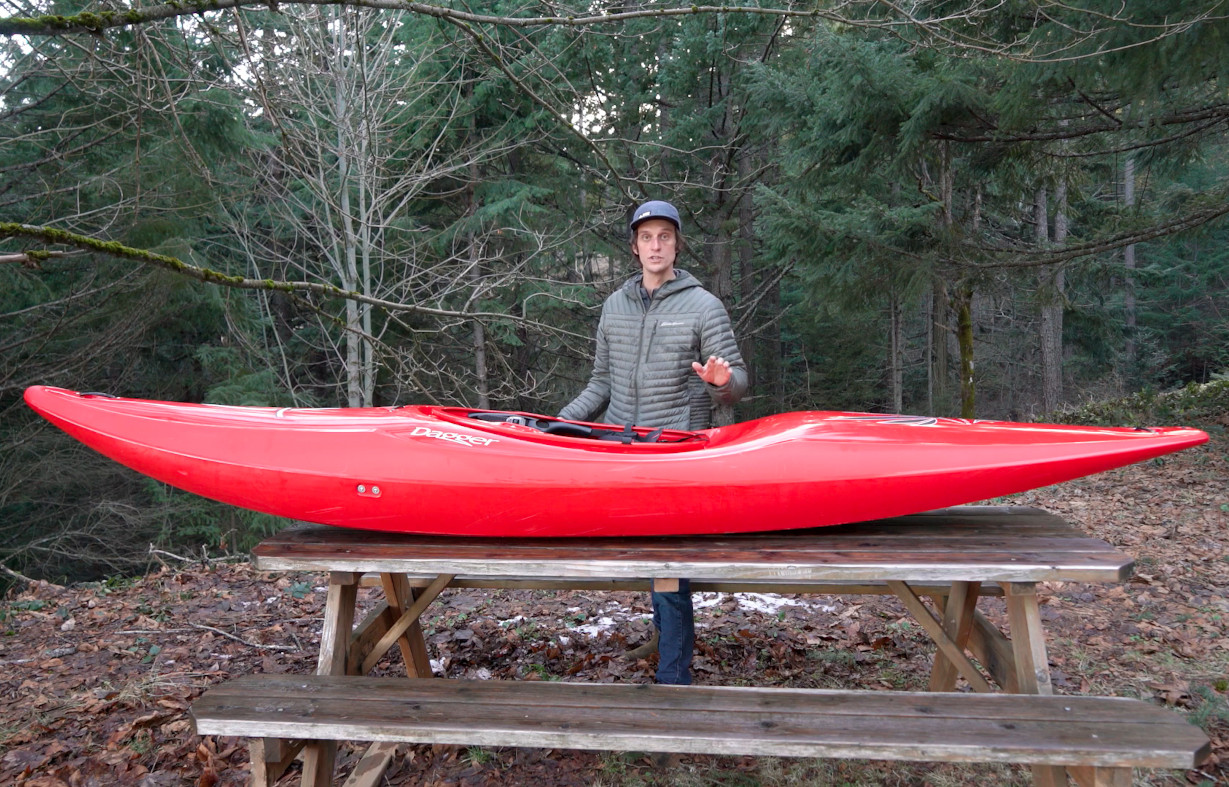
Following Robertson and Dagger’s four-year R&D effort is the finalized Vanguard 12.0. In Dagger’s unveiling video, Team Manager Todd Wells walks through the features of the design Robertson discussed. He also notes the natural feeling cockpit, that the boat is capable of spinning from the center, and the tapered stern with reduced volume that frees it from the water, while also making it capable of some slicing—which other recent creek boats have moved toward.

[ Find the entire Dagger fleet in the Paddling Buyer’s Guide ]

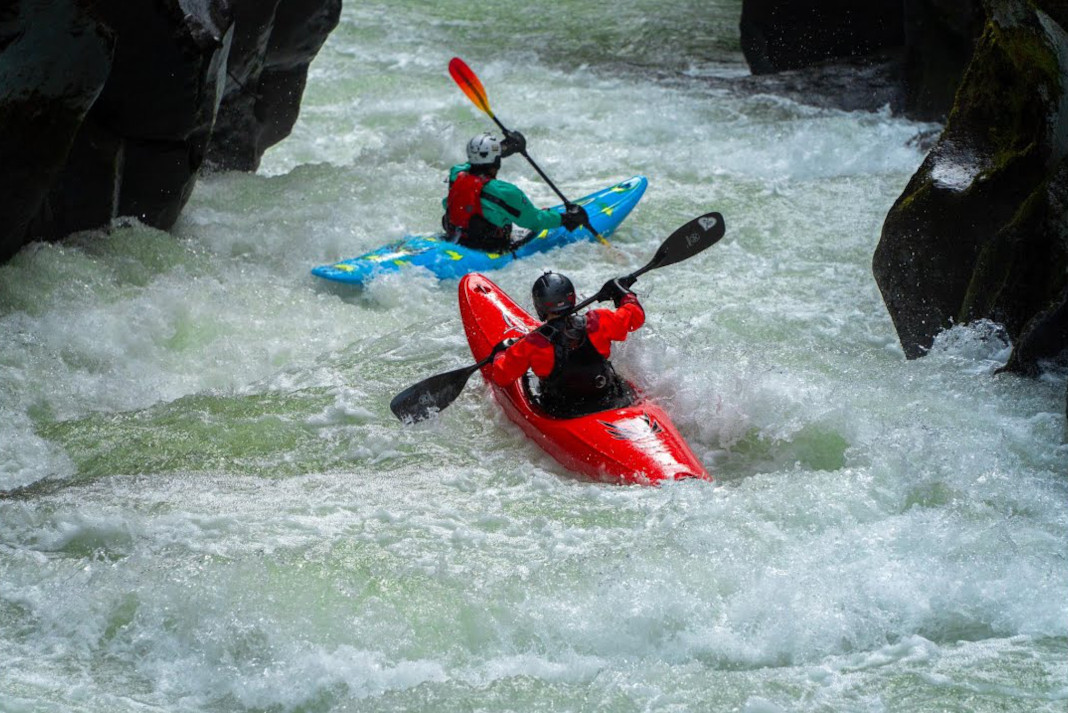
What stands out most watching footage of athletes in the Vanguard is exactly what Robertson refers to: the ease of the Vanguard as a longboat. On a run like the Little White Salmon, the paddlers don’t look like they are laboriously driving a longboat. Instead, it seems like just another day on a classic section of steep, pushy class IV-V whitewater. In fact, last year Todd Wells won the Little White Salmon Race in the 12-foot prototype of the Vanguard, an event not known to harbor longboats on the roster. But Robertson says with the ease the Vanguard paddles compared to previous longboats, expect to see more on the starting line.

“This year will be even more telling of people stepping up and paddling longer boats on there because the style of the boat is just more comfortable and familiar in that whitewater,” says Robertson. “It’s a more manageable and approachable boat and will open up harder paddling scenarios in a 12-foot boat than we’ve ever thought possible.”

Dagger Vanguard 12.0 Specifications

Length: 12′ / 366 CM
Width: 25″ / 63.5 CM
Volume: 104 GAL / 393 L
Boat Weight: 60.5 LBS. / 27 KG
Paddler Weight: 120 – 280 LBS. / 54 – 127 KG

Find more info on the new Dagger Vanguard.


Win a Kayak: Old Town Sportsman PDL 120 Giveaway

Hot Takes From Freestyle Pros At The 2023 US Big Wave Event

Makinley Kate Hargrove surfing at Good Wave, site of the US Team Trials.
Makinley Kate Hargrove surfing Good Wave. Feature Image: Rob Giersch

The 2023 ICF Canoe Freestyle World Championship will be returning to a big-wave venue this year, with high-flying whitewater athletes making their way to the RushSouth Whitewater Park in Georgia in October. Good Wave promises to be one of the most exciting features for a general viewing audience since the 2015 Worlds on Garburator on the Ottawa River.

But before we get to Worlds, U.S. athletes must vie for a spot to represent their flag. The 2023 U.S. Freestyle Team Trials will also give us a sneak peek at the feature and the caliber of performances we can expect to see from international competitors later this year. So far one factor appears evident: some athletes are showcasing their home river advantage.

Here’s what the pros are saying about Good Wave and how they see the action unfolding for U.S. selection March 11-12:

“The wave is very challenging and the water levels affect it a lot. For the men, Steven Wright and Mason Hargrove are looking really good. There’s a huge turnout for the ladies here and they’re all bringing their A-game. Most of my sessions we’ve had more ladies than men, it’s been awesome. For junior women, local girl Makinley Kate is killing it!”

Sage Donnelly

“The local Hargroves show consistency on the wave and Makinley Kate is one of the strongest ladies on the water, even in the senior class.”

Emily Jackson

“Good Wave is very fun but I’m finding it pretty difficult to get some of my favorite tricks that I thought always came easy to me like helixes and clean blunts. The challenge has been a great experience and really my goal here was to learn how to surf this wave.”

Elaine Campbell

“Good Wave is a very interesting feature and you honestly never know when the time is right to throw a trick. The bounce flurries and this makes it tricky to line up and throw your move which can easily result in you flushing off.”

Landon Miller


View this post on Instagram


A post shared by Jackson Kayak (@jackson.kayak)

“I think it’s going to be a very competitive competition all around, from the junior men’s to senior women to C1. I’m excited to see it unravel and who will claim those elusive Team USA spots.”

Mason Hargrove

“The wave is a great feature to really challenge every competitor. It doesn’t give up passes or air easily and the set up is quite hard. The venue as a whole is going to be amazing. Columbus, Georgia has really come up in the ranks. I think it’ll be one of the best Worlds events we have had, rivaling the 2009 Worlds in Thun, Switzerland.”

Adriene Levknecht

The competition kicks off Saturday, March 11 at 9 a.m. EST. Stay updated by following USA Freestyle Kayaking.


Feature Image: Makinley Kate Hargrove shows the aerial potential of Good Wave. | Photo: by Rob Giersch


California Kayaker Turns Snow-Buried Home Into Seal Launch (Video)

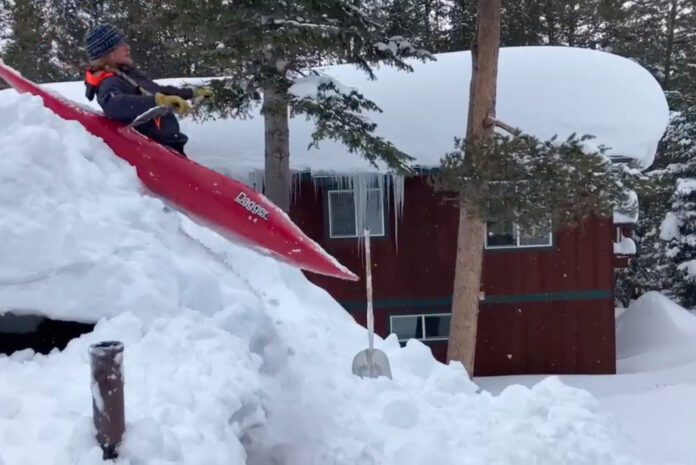
Kayaker launches off roof in snow-buried California.
Feature Image: Susan Kocher / Twitter


California’s Sierras are in the midst of an atmospheric river that has been pummeling the region with snow. In the past two weeks, the region has seen as much as 15 feet in places. And the Central Sierra Snow Lab on Donner Pass has measured more than 600 inches of cumulative snowfall for the 2022-2023 season.

While the exceptional snowpack is great news for spring runoff and reservoirs, paddlers digging their way out are trying to make the best of current circumstances. As South Lake Tahoe resident Susie Kocher shares in this video.


Bill Parks The Founder Of Northwest River Supplies Passes Away

Bill Parks reflects on his journey at NRS
NRS founder Bill Parks on the past and present of the half-century-old river supply company. | Feature photo: Courtesy NRS

MOSCOW, IDAHO — On March 5, 2023, Bill Parks, the founder and president of Northwest River Supplies (NRS) passed away peacefully of natural causes at St. Luke’s Hospital in Boise, Idaho at the age of 88.

Bill Parks reflects on his journey at NRS
NRS founder Bill Parks on the past and present of the half-century-old river supply company. | Feature photo: Courtesy NRS

NRS released the following statement:

“It is with heavy hearts filled with fond memories, laughter, love and respect that we inform you all of the passing of Bill Parks. Bill was known as a businessman, river runner, and educator, but he was foremost a humanitarian. He leaves behind a 50-year legacy of serving customers and community, people and the planet, steadfast in his belief that business can be a force for good in the world.

“When first starting NRS, his business philosophy was considered unorthodox by many of his peers. While the prevailing theory of the time held that a business’s only responsibility was to produce profit for its shareholders, Bill believed that a company could aspire to have a positive impact on the lives of its customers and employees, and to be a force for good in the world. He wanted to start his own company, in part, to simply prove his ideas could work.

“It’s about the people at NRS now.” Bill Parks, Founder of Northwest River Supplies (1934 — 2023)

“In the spring of 1969, Bill found his way aboard a rafting trip through the Grand Canyon, an experience that would change his life—and the outdoor industry—forever. Bill became hooked on river running, bought a Montgomery Ward raft for $69, and talked his way onto any river trip he could find. He saw potential for the sport to grow, and potential for a company to supply that sport with quality gear and a commitment to service. In 1972, Bill took $2,000 of his personal savings, stocked an inventory of gear in his garage and started Northwest River Supplies, Inc.

“After founding NRS, Bill moved to Moscow, Idaho to join the faculty at the University of Idaho in the College of Business and Economics. He continued to build NRS while teaching full time, often hiring his students to assist customers, help out in the warehouse and fulfill orders.

“NRS grew to become a multi-million-dollar international company, and in 2013 Bill began taking steps to plan for a future without him. While he had received numerous offers from investors over the years, Bill decided to invest in what he believed in: the people. Bill helped finance a deal to transfer all NRS stock to the company’s workers, and in early 2014 NRS became 100% employee owned.

“Even in his final days, he was discussing business with NRS managers. His wife and best friend, Donna Holmes Parks was by his side until the end.

“Bill took pleasure in celebrating the NRS 50th Anniversary last year and reflecting on the company’s progress, saying, “I’m proud to say that NRS is truly led by its people. Sometimes you guys tell me that I’m important to the company, and I pretend to believe it. But it’s about the people at NRS now.’”

Learn more about Bill Parks: https://www.nrs.com/about/bill-parks/

About NRS

100% employee-owned, NRS is the world’s leading supplier of equipment and apparel for water recreation, safety and rescue. Founded in 1972 with a vision to create a better kind of company, NRS is dedicated to promoting the health and well-being of its customers, employees and community. For more information on NRS, visit www.nrs.com, email the company at service@nrs.com or call 877.677.4327.


Vanishing Trails: Canoeists Retrace Ancient Routes To Hudson Bay

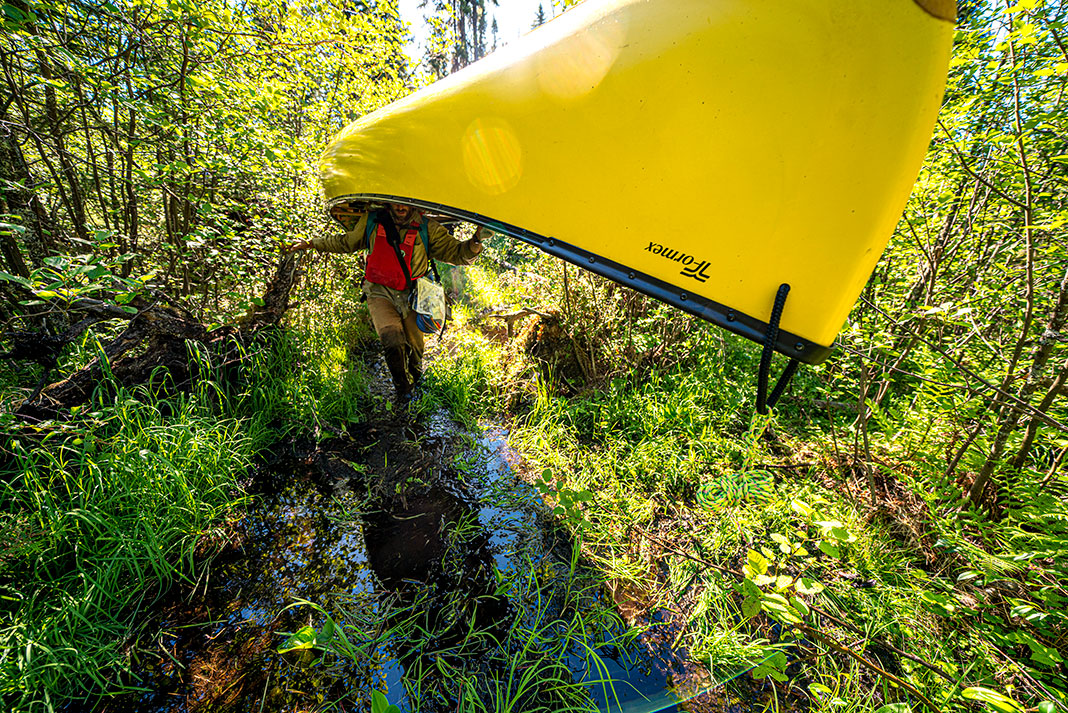
David Jackson carries yellow canoe along a swampy route to Hudson Bay
The second of three carries heading to the height-of-land crossover from the Eabmet River in the Albany watershed to the Marten Drinking River in the Attawapiskat Watershed. | Feature photo: David Jackson

The crackle of embers stirred sleep from my eyes and snapped the daze I had fallen into. I glanced left and noticed Leah had dozed off too, her face being bit by bugs. I looked out at the hazy mist of midnight along the Severn River, rolling a few more logs in the fire and adjusting my belt. The leather had three new holes, souvenirs marking the rigor of the old canoe routes that had led us here, to the Hudson Bay Lowlands.

I was to stay attentive, for earlier in the day we noticed polar bear tracks creeping in the shallows, stalking caribou, and it was just the two of us. I wiped some of the blackflies from Leah’s face, little smears of blood following, and urged her to the tent. We stood up together, two skinny figures at the end of a ragged journey. Strong yet weary of the gnawing hunger that wasn’t letting calories stick to our ribs.

Canoeists retrace ancient routes to Hudson Bay

We had traveled 1,200 kilometers over two months, facing all the joys and challenges a long canoe journey delivers in Northern Ontario. Hard rivers, gorgeous sunsets, a mix of beautiful and bad campsites, a standoff with a wolverine, enough walleye for two lifetimes, near misses with wildfires and, of course, bad bugs. We followed a route of vanishing trails, a fading network of once-bustling portages crisscrossing between watersheds. These thousand-year-old trails have all but faded back into the wild mosaic of the landscape.

David Jackson carries yellow canoe along a swampy route to Hudson Bay
The second of three carries heading to the height-of-land crossover from the Eabmet River in the Albany watershed to the Marten Drinking River in the Attawapiskat Watershed. | Feature photo: David Jackson

Fifty-eight days earlier, Leah and I had left the Pikitigushi River bridge east of Armstrong, Ontario, and paddled north. We began on the eastern edge of Wabakimi Provincial Park bound for the distant coastal Hudson Bay community of Fort Severn. When we started, we carried five packs weighing 600 pounds total, enough to deliver us to the polar bear-dense region without resupply.

Gathering stories, following trails

The route was not a conventional line for canoeing to Hudson Bay. Instead, it was a dream from my work as a photojournalist. While covering stories in the Nishnawbe Aski Nation communities found along these waterways, I often talked with the friends I made on assignments about the rivers and lakes at their doorsteps. I heard stories about where someone was born or about the journey the community of Nibinamik made when its residents took canoes loaded with their possessions and paddled and portaged from their former community of Landsdowne House 150 kilometers northwest to the Winisk River, where they settled.

I wondered about the trails they had taken and if those trails would still be there. I told my new friends I would return by paddle to visit them someday.

man starts a campfire with wood shavings on the Winisk River
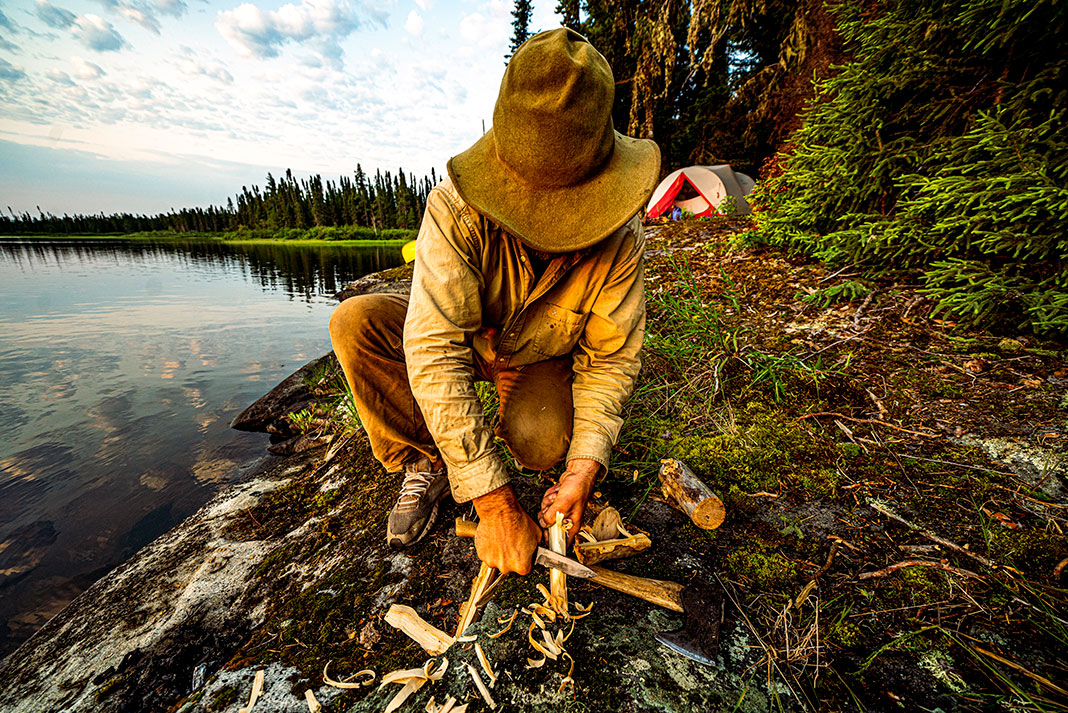
Wood shavings when there’s no bark on the Winisk River. | Photo: David Jackson

Back home, I studied the Canoe Atlas of the Little North to figure out how possible it was.

The line Leah and I drew went something like this: Whitesands, Fort Hope, Neskantaga, Nibinamik, Wunnimun Lake, Kingfisher Lake, Big Trout Lake, Wapekeka, and down into Fort Severn. The places in between are the traditional trails of the Nishnawbe, a series of carrying places often 8,000 years old. While we hoped to find joy and challenge, the portages were first eked out of the forest for hunting, seasonal migrations and to travel the complex land of muskeg, bedrock, water and stunted trees we now call Northern Ontario.

On each river we were challenged. The Marten Drinking River was dark and deep, with steep bouldery rapids and rock ledges covered in jack pine and spruce. Beside a rapid early in the morning, I made wood shavings in the misting rain, my hands aching in the cold, wishing there was birchbark closer to camp. Our little twig stove for boiling water sat beside a fireplace now grown-in with moss. We found these most everywhere we stopped.

We came to a gorge where we heard there was a long carry-around and all morning we searched. Paddling from the edge of a swamp to the brink of the rapid, which fell into a small canyon, we searched in vain for the faint trail to deliver us safely below. All we found were beaver trails and moose highways.

A search for signs of the past

If Nishnawbe had used this trail for thousands of years, and later the fur trade companies, there must be something that remained. At least, that’s what we told ourselves on the edge of the buggy spruce glade.

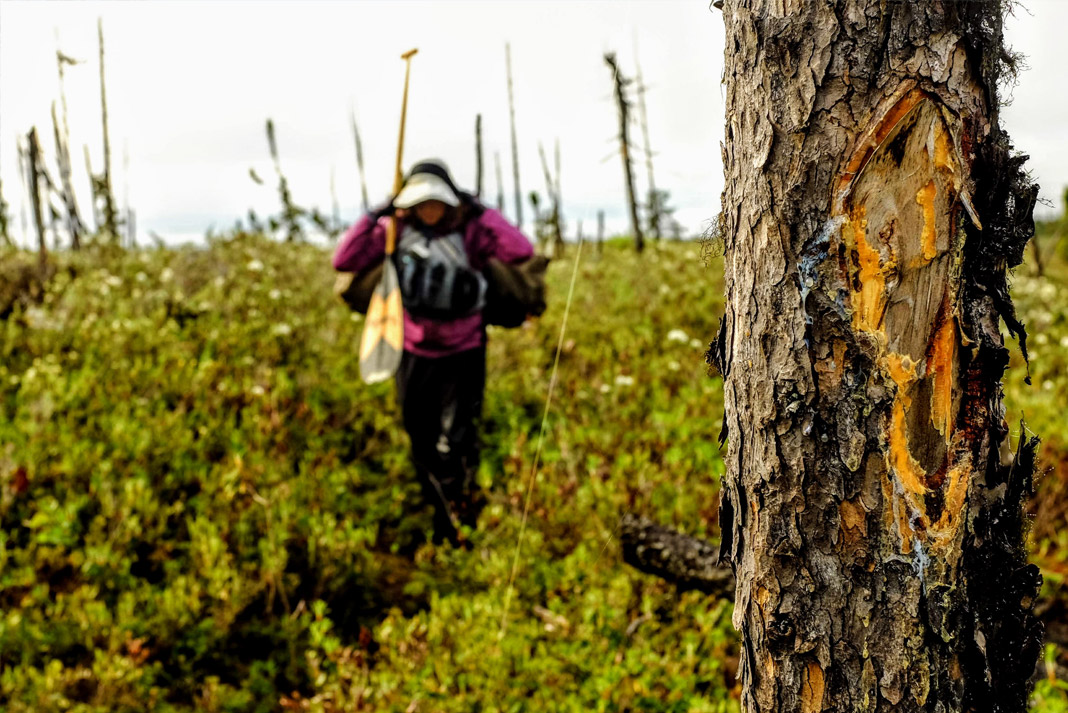
Descending into the gorge seemed reckless, so we reconsidered the first place we landed, in the corner of a swamp, a likely carrying place for a wooden canoe to land. Moving deliberately, scanning every scrape and butt end of a tree, my eyes settled on something I hadn’t noticed: a groove. If I looked at the trail, I missed it, but if I looked just above, I saw in my peripheral vision a faint trough in the deep moss, almost undetectable.

For hours we carefully retraced this faint hint of the past, following the trail of ghosts.

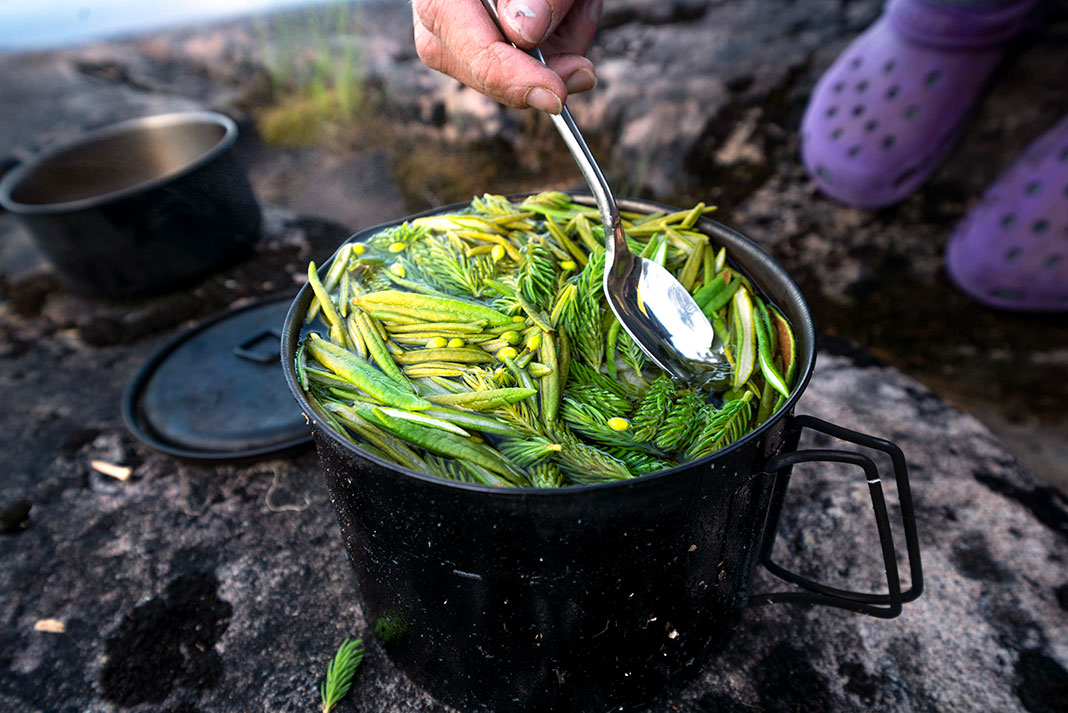
That evening, on the downstream side of the long, tedious carry, we drank spruce tip tea and talked about this beautiful river. If it were anywhere else in the province, it would be a summer highway of canoeists. Instead, these traveling corridors between watersheds, once the bloodline of the north, have all but disappeared into the boreal, gone with the winds and fire. For us, the journey is more important than our destination. The soul of a trip is in connecting the places in between.

two people in bug jackets at a campsite along an ancient canoe to Hudson Bay with everything tinted yellow by the smoke of a nearby forest fire
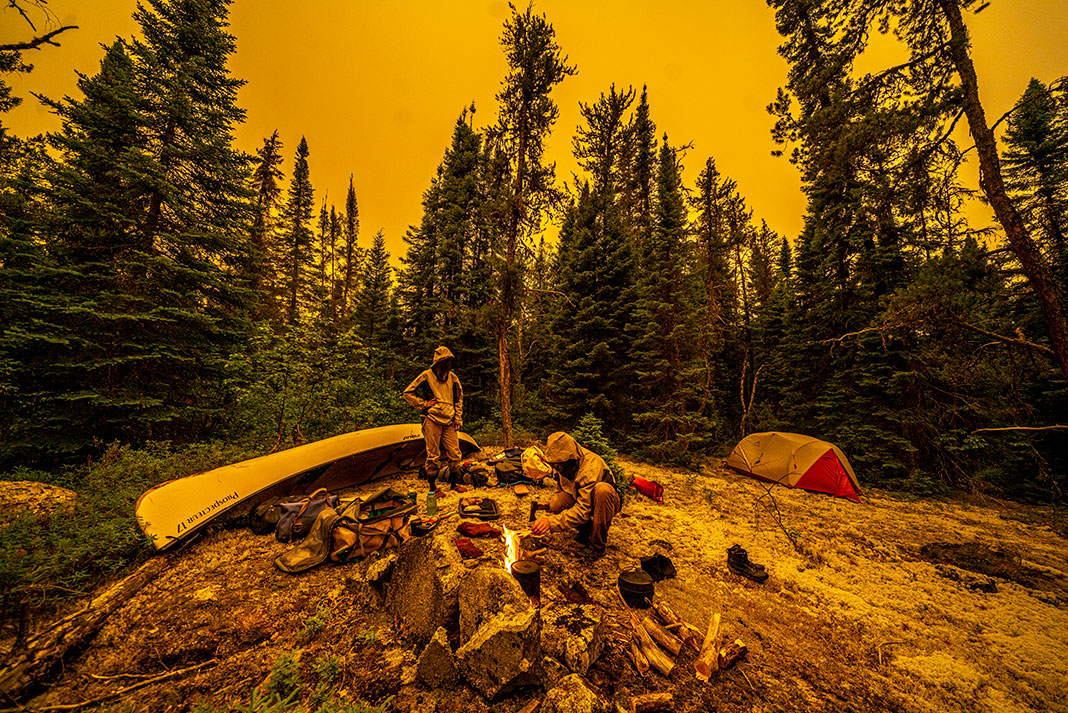
In the final crossover of the trip to reach the Fawn River, we were stuck in a series of waterless creeks with a fire just a few kilometers away, creating a huge anxiety that we would be burned alive in those dry creeks surrounded by volatile jack pine. | Photo: David Jackson

Ten days later, we found ourselves in the middle of the crossover the Nibinamik people used in the 1970s when fleeing the turbulent times of Landsdowne House and marveled at their creativity. The route was little more than a succession of small heights of land on Winisk River tributaries as it crossed from the Attawapiskat River, but the going was convoluted. Lakes like Onisabaweigan appear as a shotgun blast on our map, and navigating was a nightmare. In some places, there were winter trappers’ trails; in most places, we were left with muskeg headwater lakes, dry boulder beds where a glacial stream once flowed, and never a rock or suitable campsite.

Embracing the timeless spirit of travel

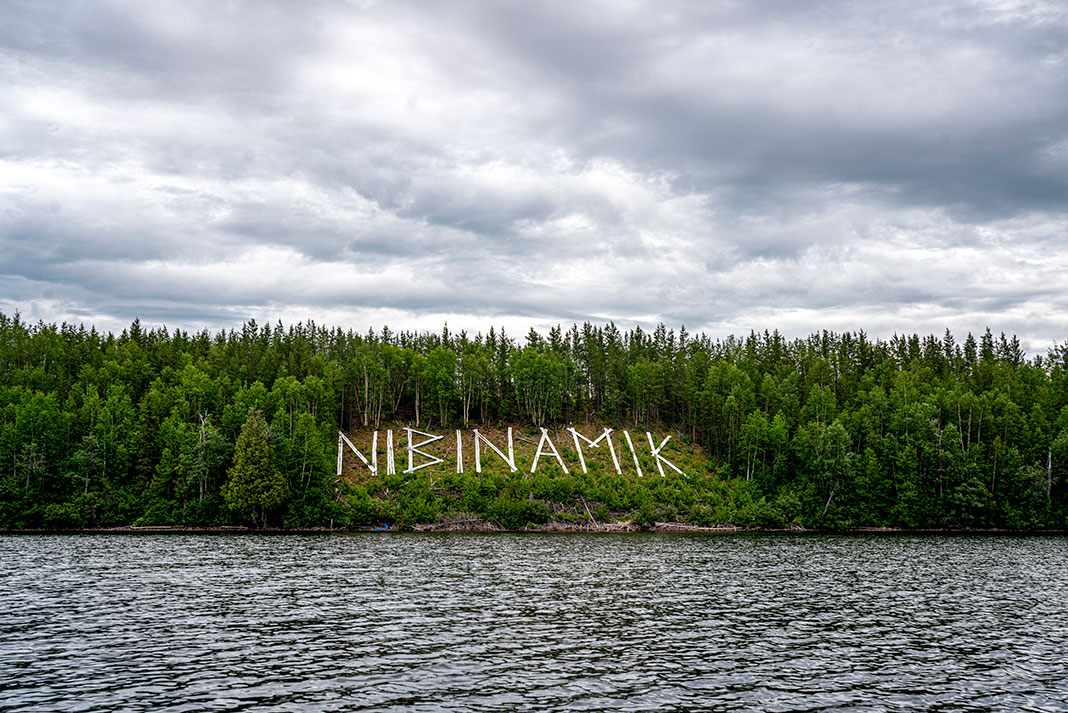
By the time we reached Nibinamik, we were beat down after a descent of Horley Creek. Nibinamik was locked down in Covid protocols like everywhere else on our journey. We could not stop, resupply or visit old friends. Still, passing by the giant wooden Nibinamik sign built into the town’s esker, made by the late Sam Beaver, we smiled at the Northern Hollywood homage.

Sprawled out on a bald rock island of Big Trout Lake, our tent in the spruce at the center, we luxuriated and swam in the cold, turquoise water. The lake reminded us of Lake Superior, except to the south we watched plumes of smoke rise from a forest fire we had narrowly skirted. What was supposed to be old trails through a network of creeks dividing the Asheweig and Fawn rivers was relentless portaging down 15 kilometers of dry creeks and over long out-of-use trails. Leah’s neck was a swollen war zone of blood and bites.

a woman's neck is covered in black fly bites during a canoe expedition to Hudson Bay
Vampires are real. | Photo: David Jackson

We understand why people don’t travel these ways anymore. Perhaps it’s too hard, the margins of joy too thin for people to devote months to. Busy schedules and limited holidays have encroached on what the essence of a canoe trip has always been—a process of reading the landscape by pack and paddle, a journey to uncover the story of river and lake.

These old canoe routes to Hudson Bay may mean nothing to a bucket list, but they mean everything to the spirit of traveling. Their intricacies represent a fundamental connection to the freedom we gain with time and patience. When we let a trail fade, we part ways with a story thousands of years in the making.

a covered pot sits on a campfire at dusk with beached yellow canoe and river behind
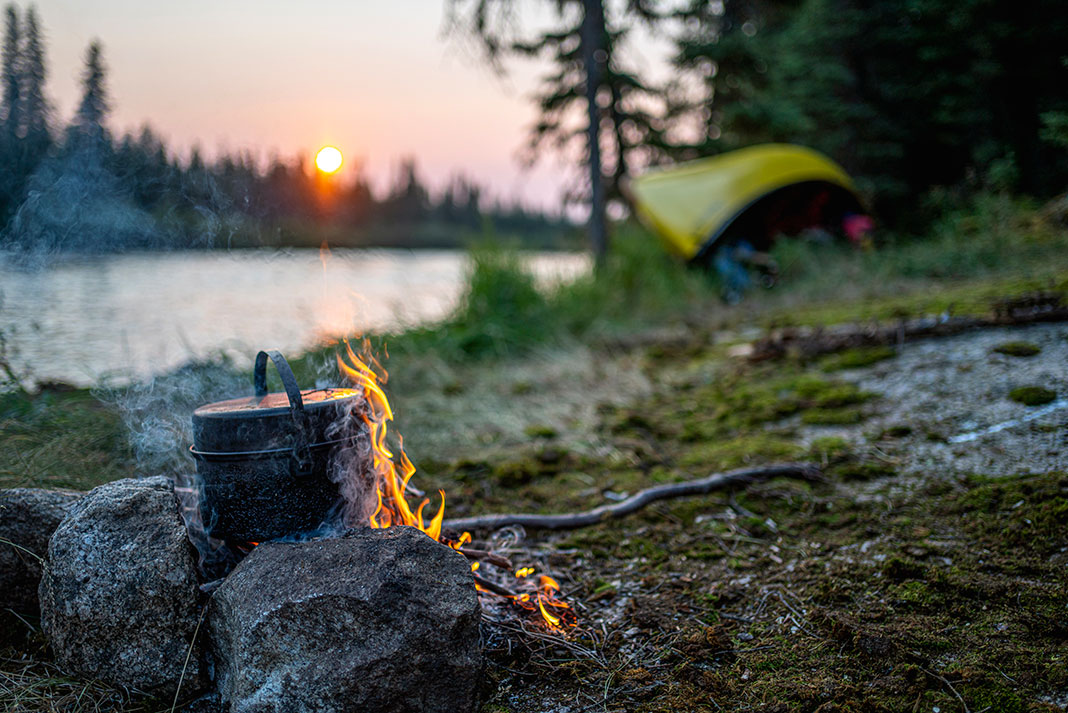
Life on the trail, Fawn River. | Photo: David Jackson

When I woke Leah on the banks of the Severn, we shivered against an icy wind not quite cold enough to knock the bugs down. The fire had become a smoldering heap of coals. I kicked at them, their glow mesmerizing my sleepless fog until Leah poured river water over them and steam rose fast to the grey sky. I placed my hand on Leah’s shoulder. We were to be in Fort Severn the following evening.

In time, our world would whisk back to planes, trains and automobiles as we made our way home. But for a moment, we felt the enormity of where the trails had brought us, and we wondered how many others had come this way. It’s hard to say who might next walk the lines we followed and if they will notice the signs we left. Maybe all trails fade someday. Yet, even when these old routes disappear further into the recesses of time, we will remember these vanishing trails that brought us so far.

David Jackson is a photojournalist who calls the north shore of Lake Superior home. Follow his adventures @davidjackson__.

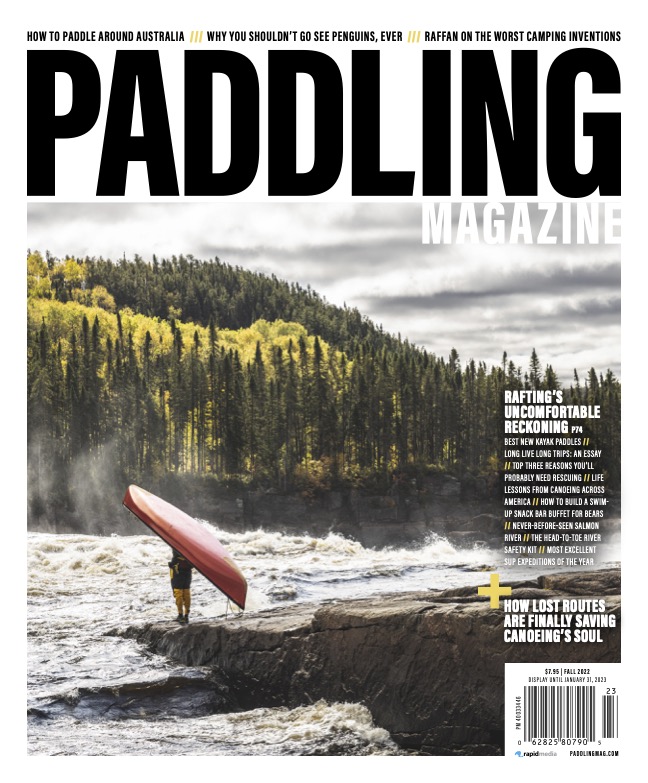
Cover of Paddling Magazine issue 68This article was first published in the Fall 2022 issue of Paddling Magazine. Subscribe to Paddling Magazine’s print and digital editions, or browse the archives.

The second of three carries heading to the height-of-land crossover from the Eabmet River in the Albany watershed to the Marten Drinking River in the Attawapiskat Watershed. | Feature photo: David Jackson


Kayaker Completes Solo Unsupported Crossing Of South Atlantic Ocean

Richard Kohler completes unsupported crossing of Southern Atlantic Ocean
Feature Image: richardkohler.co.za/

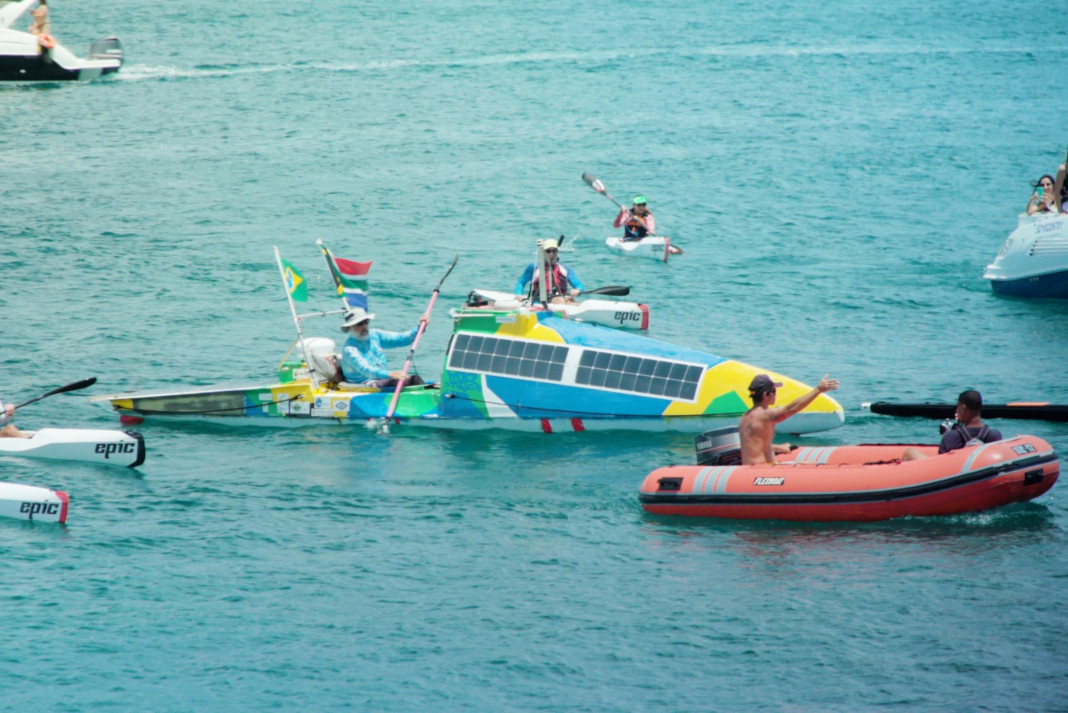
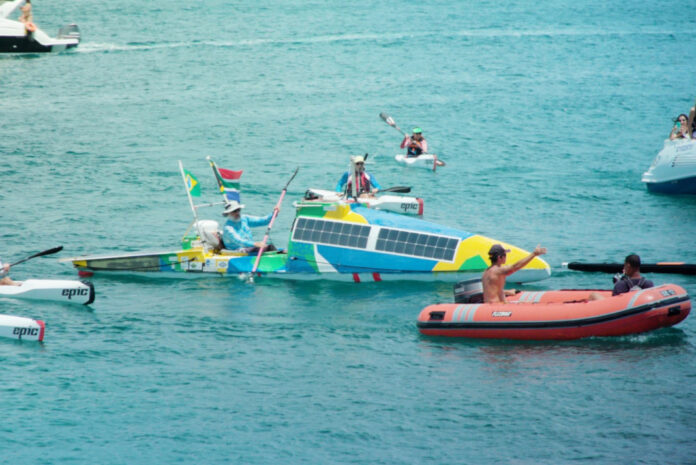
On February 19, 2023, kayaker Richard Kohler landed on the shore of Salvador, Brazil. Kohler completed a more than 4,000-mile, solo, unsupported kayak crossing of the South Atlantic Ocean in two months.

Richard Kohler completes unsupported crossing of Southern Atlantic Ocean
Feature Image: richardkohler.co.za/

“It’s been a dream of mine to cross an ocean alone. Paddling a kayak across the ocean has been a ten-year dream and the last five years of planning and execution. I am very relieved that I had what it takes for an adventure like this but also very grateful that it has come to an end,” Kohler said upon his arrival in Salvador, according to a press release on his website.

The South African began his expedition called Ocean X on December 18, 2022, from Granger Bay Harbour. Just 63 days later, he landed on the sandy beach of Porto Praia do Porto da Barra in Salvador, just inside the mouth of the Bay of All Saints.

These sorts of endeavors are nothing new to Kohler. The paddler, who turned 53 during his crossing was the first known person to kayak solo along the entire 3300 km South African coast. As well as the first person to solo SUP the length of the Breede River in South Africa. Kohler has also sailed the equivalent of three times around the world as a professional yachtsman.

Kohler’s unsupported kayak crossing of the South Atlantic was more than just for the record books. The kayaker also used the expedition as a fundraiser for Operation Smile, an organization operating in 34 countries to assist millions of children in receiving costly medical care. Kohler’s crossing raised 600,000 South African Rand for the organization.

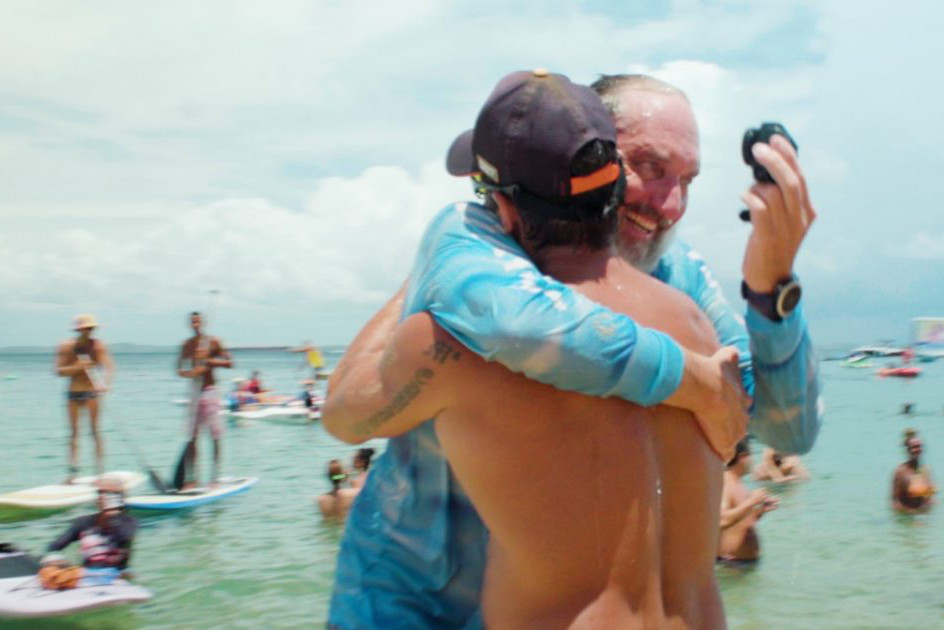
Richard Kohler greeted in Brazil after crossing Atlantic by kayak.
Image: richardkohler.co.za/

“The crowning glory must be the phenomenal success of the fund raising for Operation Smile South Africa. We have raised over half a million Rand ensuring that more than a hundred children will receive corrective cleft surgery,” Kohler also stated in the press release on his site.

“The experience is one that I will cherish for the rest of my days, but more importantly I hope that my story has inspired others to dream and to act on their dreams. I would like to thank all my sponsors, supporters, followers, donators, my exceptional shore team and my family for getting me across the ocean.”