The Green Race in North Carolina has proven one of the most exciting whitewater races for nearly three decades. The 27th chapter of the self-proclaimed, “greatest show in all of sports” promises to be as entertaining as ever. Fortunately, you can watch all the fast lines and carnage from the comfort of your home by streaming the Green Race live.
For 24 iterations watching the Green Race meant paddling the class IV-V+ section of river or hiking the 800-foot descent on the two-mile Pulliam Creek Trail. But this changed in 2020 when organizers turned their gaze on the future of the race toward the spectating experience. That year, the Green Race was broadcast live for the first time. That meant the athletic event in a remote gorge was brought to viewers around the globe. A new benchmark for the race had been set.
For 2022, the Green Race marks its third year as a pay-per-view sporting spectacle — complete with drones and commentary. So fire up the hors d’oeuvres, grab some cold beverages and invite your paddling buddies over because the first racer is set to start at noon ET on November 5.
Hear us now and believe this later… We are here to pump you up.
| Feature photo: Scott MacGregor
Inflatable paddleboards are built tough to withstand many seasons of on-the-water adventures. But even the best high-end boards will benefit from an easy, common-sense maintenance routine.
Prolong the life of your inflatable board by keeping it clean, protecting it from sun and moisture damage, and repairing common problems. Follow these 10 commandments of inflatable paddleboard maintenance and your board will stay looking and riding great for years to come.
10 tips to maintain your inflatable paddleboard
1 Rinse and repeat
Rinse with fresh water after every use. This will extend the longevity of your board by preventing a build-up of abrasive dirt, salt and grime. Most of the time, a quick spray down with a garden hose is all that’s required. Lay the board flat on the ground or a board stand, rinse the bottom first, and then flip it over and spray down the deck. An inflated board is easier to clean but not necessary.
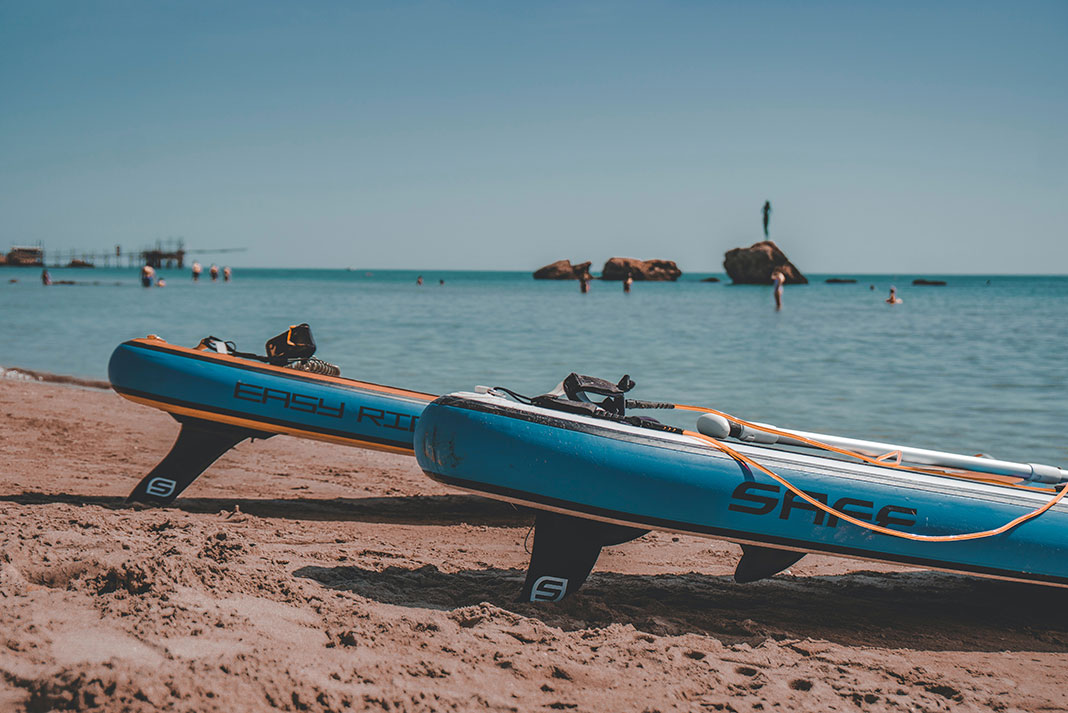
Don’t forget to rinse off your inflatable SUP after each use—especially in saltwater. | Photo: Marco Ottaviano/Pexels
Be sure to thoroughly rinse the fin boxes, attachment points, handles and deck pad. Allow the board to air-dry in the shade, or use a soft towel to wipe it down.
2 Stay spotless
Periodically cleaning your board with a solution of mild soapy water is the best way to prevent stains and remove stubborn dirt, river scum and travel grime. Dishwashing soap and warm water or a gentle cleaning solution like Simple Green work great without being too harsh on your board. You can use a soft-bristled scrubbing brush to remove residue from the deck pad and other surfaces, avoiding graphics that can be damaged from vigorous cleaning. After sudsing up, rinse thoroughly with fresh water.
For stubborn marks, try a baking soda solution, magic eraser or non-abrasive PVC cleaning product such as mold remover. However, these should only be used on the PVC, not the deck pad or graphics.
3 Avoid a mold mine
Moisture inside your board can cause mildew and premature wear. Proper storage in a cool and dry place is key to avoiding mildew damage and bacterial growth. If you notice moisture inside your board, you can dry it out by locking the valve in the open position and blowing air into the board using a pump or vacuum exhaust.
Mildew on the outside of the board—for example, on a board that has been rolled or folded for storage—can be cleaned with a mold remover intended for use on PVC materials.
Inflatable paddleboards are designed for use in saltwater, however, proper cleaning and maintenance are essential for those using their board on the sea. Because saltwater is so corrosive, it’s critical to rinse your board and paddling equipment with fresh water after every use. Don’t forget to thoroughly rinse your fins, leash, paddle and PFD as well.
5 Maintain inflation valves
Keeping your inflatable board’s valves clean is key to avoiding air leaks. If the threads or sealing surfaces become dirty, the valve may not close fully. Listen and feel for air escaping at the valve if your board seems to lose pressure after inflation. Simply pressing briefly on the valve stem when the board is fully inflated will create a blast of air that is enough to dislodge any debris. If this doesn’t fix the problem, lock the valve in the open position and use a cotton swab moistened with 303 Protectant to clean inside the valve area and around the sealing surfaces.
A loose valve can also create a slow leak. Check your board’s repair kit for a valve wrench to tighten the valve, or remove it for a more thorough cleaning or replacement.
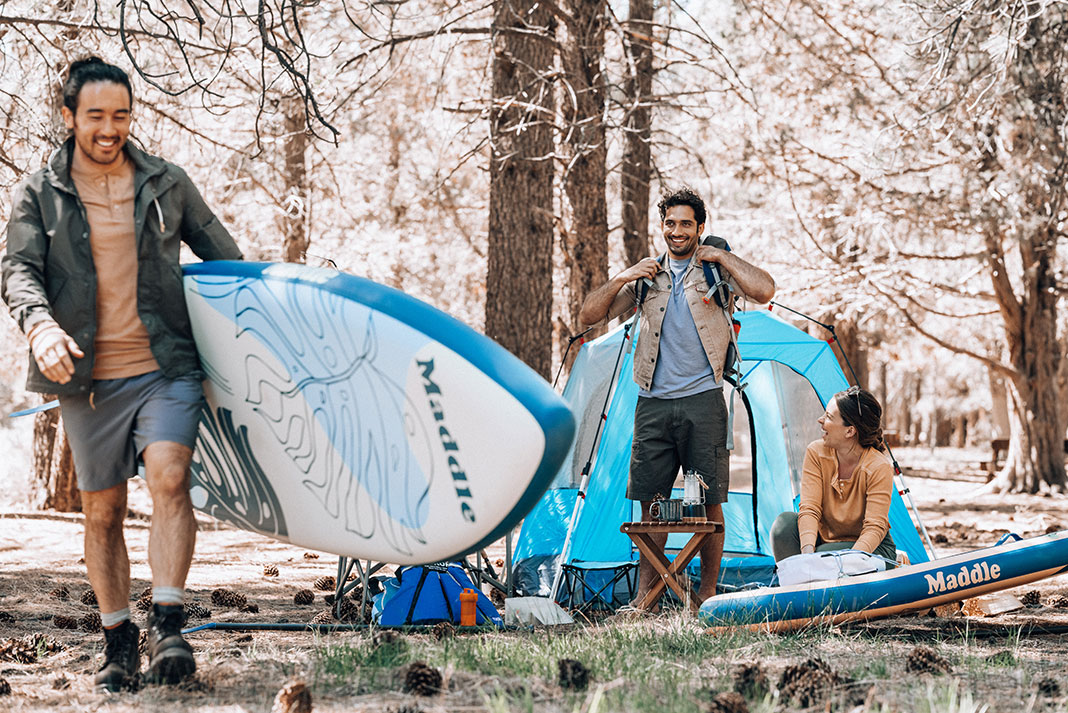
Maintain your valves for easy inflation and less leaks. | Photo: Courtesy Maddle
A final word on inflation: if you’re using an electric pump to fill your board, most manufacturers recommend using a hand pump to top off the last 10 to 20 percent. This avoids over-inflation, the most common cause of inflatable board damage. Never use an air compressor to blow up your board. It is too much, too fast, and can also introduce contaminants into your valves and board and void your warranty.
6 Care for fins
The removable fin or fins at the back of your board help it track straight and perform its best. They’re also the most fragile part of your inflatable paddleboard. Always set your board down with the fins facing the sky, and never put anything heavy on the board if it is resting on its fin. If you do damage or break your fin, don’t panic. Most major brands use a universal fin box that will accept a wide range of replacement SUP or longboard fins.
7 Always wear sunscreen
Inflatable paddleboards are constructed with UV-treated materials designed to withstand the sun’s powerful rays. However, even these materials will break down with prolonged exposure to damaging UV radiation. You can enhance your board’s resistance to sunlight degradation by applying a UV-blocking spray such as 303 Protectant. Think of it as sunscreen for your board and gear.
After cleaning your board, treat the deck, rails and bottom with 303 Protectant once or twice a year. Avoid the urge to apply the product more frequently since excessive use can damage your board.
8 Deflate for storage
Leaving your board out in the hot sun when fully inflated can cause the air inside to heat up and expand. The result is overinflation, which can lead to leaks, ruptures and other damage. Always store your board in the shade, out of the sun when you’re not on the water. Know your board’s maximum recommended inflation pressure and check the air pressure regularly, especially if you’re on and off the water throughout the day. Your board may need a top up for optimum rigidity, or you may need to release a bit of air.
If your inflated board will sit in the sun on a hot day, let some air out of the board to allow for expansion. Now, when it does heat up, there’s room inside to keep the pressure below the recommended maximum. This is also a good rule for transporting your inflated board on your roof rack.
9 Store indoors for long periods
When storing your inflatable paddleboard for longer periods of time, make sure it is completely dry prior to storage and choose a cool, dry place out of the sun. Storing indoors is best to avoid moisture or temperature-related damage. One of the best things about inflatable paddleboards is they don’t take up much space when rolled up, so you can stash your board in the back of a closet or under the stairwell.
Many inflatable paddleboard manufacturers recommend deflating your board to about five psi of pressure, leaving it lightly inflated and loosely rolled during storage. Keeping some air in your board while you store it will reduce the chances of any folds or seams becoming weak areas over time.
10 Maintain your pump
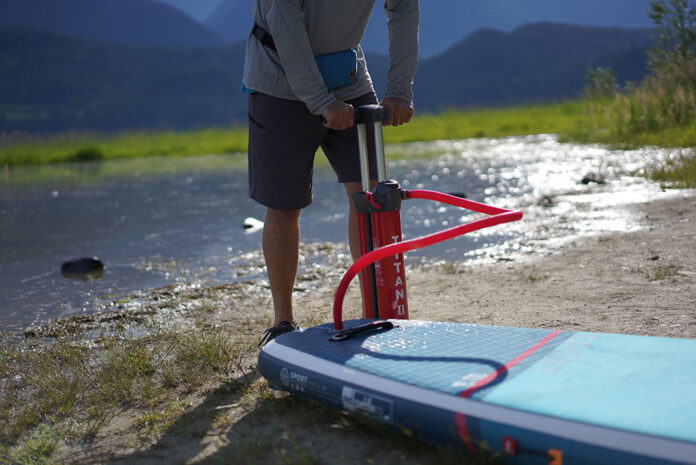
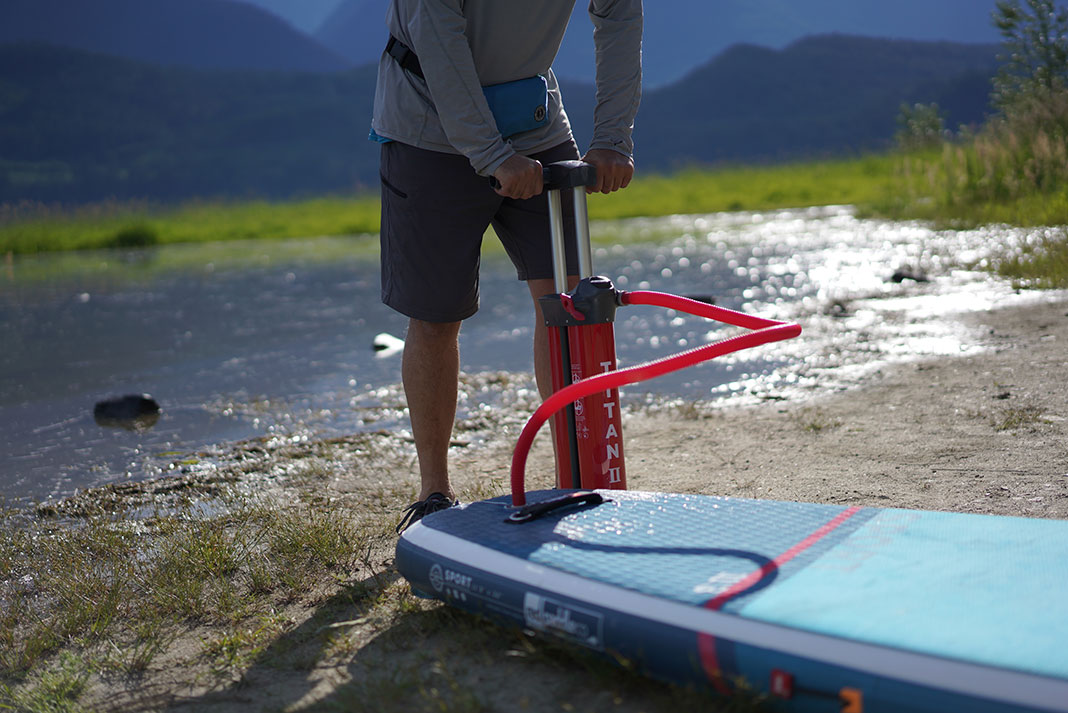
Like the boards themselves, SUP pumps benefit from routine maintenance to keep them working smoothly and efficiently. Manufacturers often provide hand pumps that are simple and easy to service, but you might want to take a look at our listing of the best electric paddleboard pumps.
Hear us now and believe this later… We are here to pump you up. | Feature photo: Scott MacGregor
Look for a couple of screws allowing you to remove the top of the pump. You can check inside the pump and remove any dirt or sand from the chamber, shaft and filter. Next, check the O-ring on the pump plunger—if it looks dry or damaged, lubricate it with a bit of lithium grease or replace it with a new, greased O-ring. Voila, your pump will be back up to optimum pressure, and your arms will thank you.
This article was first published in the Summer 2022 issue of Paddling Magazine. Subscribe to Paddling Magazine’s print and digital editions, or browse the archives.
Hear us now and believe this later… We are here to pump you up. | Feature photo: Scott MacGregor
Without question, there is no stroke we use more often in kayaking than the forward stroke. The ability to execute a completely effective and efficient forward stroke is perhaps more complex though than we give credit.
When we hit the water, we often quickly move on to more exciting techniques and spend the rest of our paddling days living with the habits developed with those first strokes. The truth is whether you are new to kayaking or a veteran of the sport, the forward stroke can always use work. In this video, Jackson Kayak athlete Boyd Ruppelt goes over the elements of a proper forward kayak stroke.
Ruppelt opens by explaining the benefits of a solid forward stroke.
“The reality is, efficiency is your friend,” he says. “You want to have endurance as a kayaker because you’re going to be paddling a lot. Also, the more momentum you have, the more control you have. Another reason is injury prevention. Having good technique keeps you from getting hurt.”
Here are a few key points Ruppelt shares to help your kayak forward stroke:
Posture
“Make sure that you’re sitting up nice and tall. Straighten your spine. [Run] an imaginary line going through your head and out your crown. Hinge forward slightly at the hips rather than just hunching forward.”
“If you’re sitting in a chair, imagine turning your body without turning your legs, leaving your legs forward—that’s step one. Step two is picking something to look at. You should be able to rotate your body without turning your head.”
Bringing The Paddle In The Mix
“All I’m going to do is rotate my body. Without moving my legs and without moving my head, plant the paddle at your feet. As you unwind your body and pull the stroke, pull it with your whole body. Rotating your torso, pull the paddle out at your hips.
“You should be lined up where your opposite hand and opposite elbow are in alignment with the center of the kayak. The top arm should be positioned about shoulder high to forehead high.”
Top Arm As A Fulcrum
“Your top hand really needs to be a fulcrum for the lever. You can have a lot more power using your entire body to rotate your core. You’re going to know you’ve got it right when your paddle blade enters the water quietly without a lot of splash and exits just as smoothly.”
For top picks and expert reviews, check out Paddling Magazine’s guide to the best whitewater kayaks here.
Respite on Bigsby Island, Georgian Bay. | Feature photo: Scott Parent
This lunch stop on Bigsby Island in Lake Huron was a special moment. My daughter and I were 22 days into a 32-day tandem expedition across the great lake, starting from Bootaagani-Minis (Drummond Island) in Michigan, with the goal of reaching Penetanguishene in Ontario, Canada. We traveled on a 14-foot-long Blu Wave SUP Catalina.
Early in the expedition, we both contended with concerns over the challenges ahead and our precious cargo on board. For me, that meant my nine-year-old daughter. For my daughter, Acadia, it meant the glass vials containing water samples we were collecting along the journey and the equipment for microplastics sampling.
Father-daughter tandem expedition explores Lake Huron
The expedition started as an idea to trace the 1828 migration of my Metis ancestors across Lake Huron, from Drummond Island to Penetanguishene. It was Acadia’s idea to turn the trip into an environmental journey and take water samples for microplastics research, something she learned about through the Lake Huron Coastal Centre for Conservation. We carried with us a deep-water sampler and collected some of the first deep water data for Lake Huron, so we could learn more about the threat of plastic pollution.
We experienced the full monty of weather, wind and waves as we traveled the coastlines of Lake Huron’s three bodies of water—the North Channel, Lake Huron proper and Georgian Bay. The lake’s long shorelines present unique challenges to navigate. Along the eastern shoreline of Manitoulin Island, the largest freshwater island in the world, the winds turned with us, and we journeyed consecutive three-leg days, paddling in the morning, afternoon and evening. Along the north shore of Georgian Bay, we had strong winds and half-meter chop hitting us broadside but were able to bounce forward using the inlets and islands as handrails.
Respite on Bigsby Island, Georgian Bay. | Feature photo: Scott Parent
A welcome break at Bigsby Island
Here at Bigsby, we had reached the archipelagic eastern shoreline of Georgian Bay. And with approximately 300 kilometers of our journey behind us and a little more than 150 kilometers ahead, we were paddling into the labyrinthine Thirty Thousand Islands region. The day had been piping hot. Having paddled 15 kilometers that morning, we opted to relax for the afternoon and resume paddling later that evening. We took a water sample and cast a line. We caught a smallmouth bass and shared a shore lunch and a swim.
[ Plan your next Great Lakes adventure with the Paddling Trip Guide ]
In this photo, Poly, the polypropylene waterfowl—a duck decoy we’d been trolling behind us since finding it washed up on Greene Island—watches over Acadia as she loads the water sampling gear on the SUP. The block of blue foam, small plastic bucket and oil can on board were removed from islands along the way. We found plastic garbage at every campsite, lunch spot and pee break we made. We hauled out what we could.
As for the water samples? Microplastics were present in 42 of the 44 samples analyzed, mainly in the form of fibers. Those deep-water samples proved the presence of microplastics at depths of 50 feet in some channels.
Everything is interconnected
Since this transformative journey in July 2019, I’ve seen how prevalent microplastic pollution is across Lake Huron and how it has permeated the habitats of all wild creatures across the region. The journey also underscored the interconnectedness of all things—Acadia recognizes the water we swim in at home is affected because it’s all the same system. Through our documentary, Three Waters, we hope to bring the same realization to everyone connected to the Great Lakes region.
The Three Waters documentary about this expedition premiered in April 2022. Find screenings near you via writer Scott Parent’s Instagram @scottparentphoto.
This article was first published in the Summer 2022 issue of Paddling Magazine. Subscribe to Paddling Magazine’s print and digital editions, or browse the archives.
Respite on Bigsby Island, Georgian Bay. | Feature photo: Scott Parent
Denver, CO: The Big Gear Show announced today that it will hold its next show June 8-11, 2023, in Denver, Colorado, at the Colorado Convention Center. The show will co-locate with its sister e-bike show: (e)revolution. The Big Gear Show and (e)revolution represent a new era of industry events called B2B2C, or “business to business to consumer,” and will consist of two industry days and two consumer days.
Since its inception, The Big Gear Show has redefined what outdoor industry events should look like. Building on its unique multi-category format, the show is expanding to a more inclusive platform welcoming consumers into the mix. In addition to showcasing outdoor, cycling, climbing, paddlesports and camping gear, The Big Gear Show will add relevant categories like overland, trail running, and gear that you wear, like functional and technical footwear and apparel.
“Our ethos has always been to embrace both retailers and consumers and we feel like now is the time to bring our industry to where the people are,” said Kenji Haroutunian, show director, adding, “When we first announced The Big Gear Show in 2020, we envisioned it taking place inside an accessible center city location, designed to incorporate product demonstrations as well as consumer engagement. Now our original vision is realized.”
In welcoming The Big Gear Show, Governor Jared Polis said, “Colorado’s outdoor recreation opportunities are not only a lot of fun, but the outdoor industry is a big part of our thriving economy, creating good-paying jobs, supporting our small businesses across the state, and connecting people to our world-class outdoors. As a business person, I am excited about the opportunity that The Big Gear Show presents for our entrepreneurs and for our state to expand and showcase our inclusive and booming outdoor recreation industry and products.”
The show’s move to Denver provides exhibitors with access to over three million people and one of the most active outdoor populations in the country. By co-locating with (e)revolution, The Big Gear Show will attract new and more diverse participants to learn about the innovative gear promoting active outdoor recreation. Moreover, 80 percent of Colorado’s population lives within 100 miles of downtown Denver, creating a hive of activity all focused on healthy and responsible recreation outdoors.
Photo: Scott Dressel-Martin // VisitDenver
Haroutunian noted, “We recognize early June is a busy time for the industry. But we feel there is no better time than June to gather the industry and kick off the outdoor industry’s summer recreation season.”
The Big Gear Show continues its promise of discovery in an exciting new format, providing opportunities for retail buyers in finding new resources with the added benefit of the show occurring at the start of the peak summer buying season. The show remains committed to being retailer-centric with first-look opportunities at next year’s gear, continuation of the retailer travel subsidy program, and retailer-focused education programming. Zones dedicated to product demonstration and testing are integrated into the show itself, letting attendees get hands-on experience with new products.
(e)revolution Show Director Lance Camisasca stated, “E-bikes are the fastest-growing segment in the entire active outdoor lifestyle industry. With the surging popularity in e-bikes and the increase in cross-merchandising of e-bikes in more traditional outdoor stores, the co-location of The Big Gear Show with (e)revolution makes all the sense in the world. It exponentially increases the potential for discovery by retailers, the media and consumers.”
Additionally, Camisasca noted, “The Big Gear Show will remain popular for all bike and accessory brands that wish to show their products to the growing number of outdoor retail stores with strong interests in cycling and crossover products”
“Colorado is excited to host The Big Gear Show and its forward-looking concept of an inclusive industry gathering of consumers and retailers,” said Outdoor Recreation Industry Office Director Conor Hall. “Events like The Big Gear Show and (e)revolution are important components in our push to ensure Colorado is a national leader in outdoor recreation and remains the gathering place of the industry where brands, retailers and consumers come together to learn, network and celebrate the great outdoors.”
Exhibitors can begin booking exhibit space starting now, with early bird pricing available through December 15, 2022. Retailers and media registration will also be available, with consumer registration open in early 2023.
For more information contact:
Dave Petri
Lost Paddle Events
336-429-6860 | dave@lostpaddle.com
About The Big Gear Show
The Big Gear Show is redefining what an outdoor industry trade show should be. By embracing a wide range of outdoor recreation activities, this new B2B2C experiential model prioritizes meeting the needs of specialty retailers and their customers. The Big Gear Show features the gear that gets people outdoors, amplifying the stories of innovation and access for a new outdoor consumer base. Now in its third year, the event will not only gather professionals from the top outdoor recreation specialty retailers, brands and media, but will also be the first of its kind to invite consumers to attend.
About (e)revolution
(e)revolution is the world’s first B2B2C e-bike expo focused solely on the needs of e-bike brands, dealers, suppliers and consumers. A four-day event that provides brands and suppliers opportunities to engage directly with e-bike retailers and cyclists, providing education, demonstrations, and industry networking and social events. The show takes place in Denver, Colorado at the Colorado Convention Center in June 2023.
About Lost Paddle Events
Lost Paddle Events is the leader in retailer and consumer-focused trade shows. Led by a team of industry trade show experts across multiple outdoor recreation categories, Lost Paddle Events produces outdoor-focused events across a range of outdoor recreation categories. Its events include the premiere multi-category trade show, The Big Gear Show; the first of its kind e-bike trade show, (e)revolution; and consumer-centric sports shows, including the Saltwater Fishing Expo, Chicagoland Fishing Travel & Outdoor Expo, and World Fishing & Outdoor Expo.
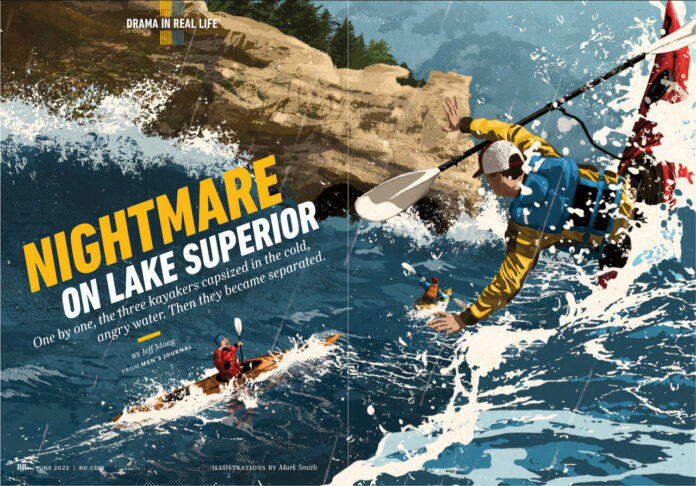
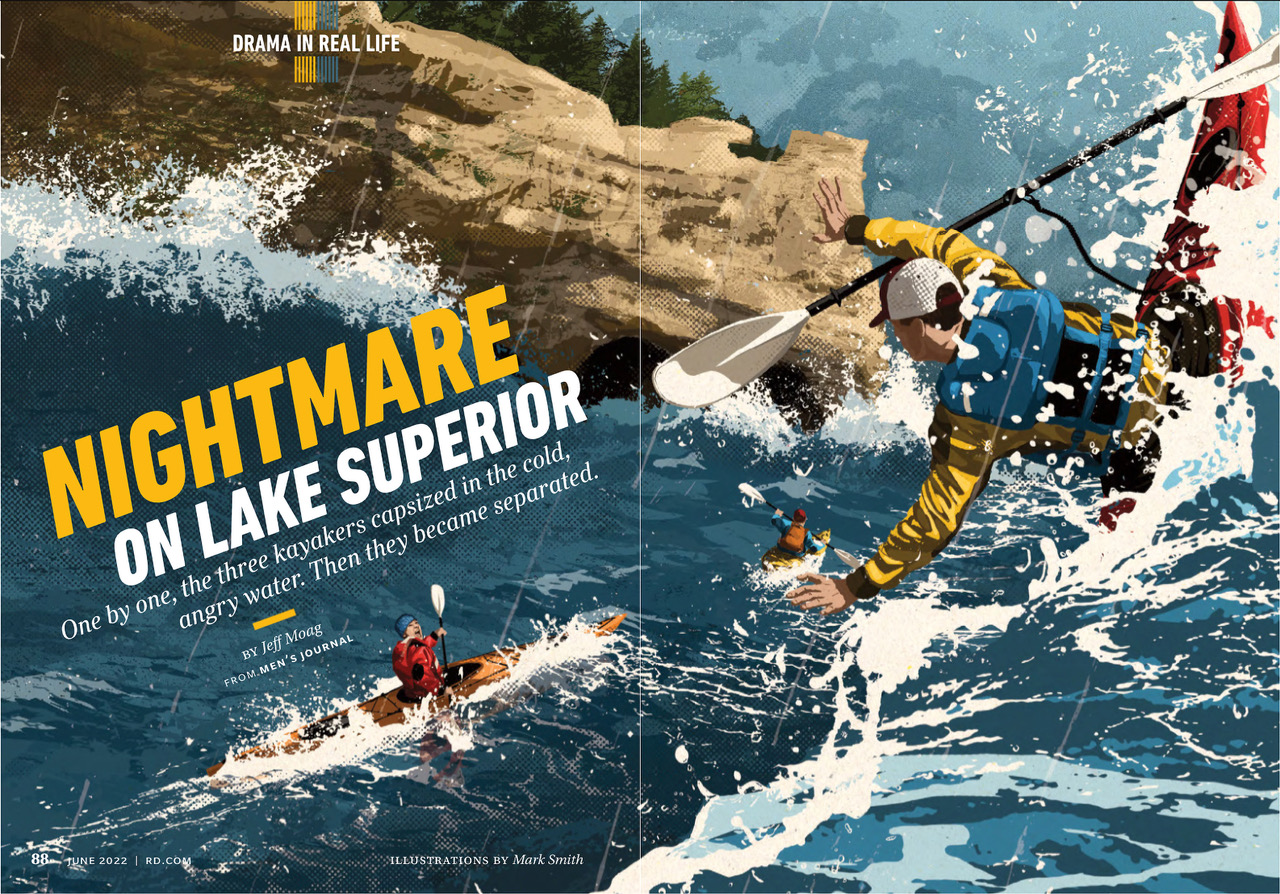
The opening page illustration that Reader’s Digest commissioned Mark Smith to develop for the Nightmare on Lake Superior story.
October 25, 2022, ORLANDO, Fla – The world’s largest paid-circulation magazine, Reader’s Digest, recently published a paddling safety story written as part of the Water Sports Foundation program Lessons for Life: Accidents As Learning Experiences. The WSF Content Director Jeff Moag wrote the article, Nightmare On Lake Superior, which was first published in Men’s Journal and Paddling Magazine.
Lessons For Life uses stories and videos about true-life incidents to promote boating and paddling safety. The story Reader’s Digest published was about three friends whose paddling adventure on Lake Superior turned into a life-threatening ordeal when a sudden storm caught them off-guard. All three men capsized and became separated in the squall. Moag’s story describes each paddler’s harrowing experience, describing both how they got into the potentially deadly situation and how they managed to survive.
Reader’s Digest Global Rights Manager Thomas Dombrowolski said, “Each month, Reader’s Digest publishes a Drama In Real Life column. It is one of our longest-running features and a reader favorite. We typically commission these features ourselves, but when we came across the Lake Superior story, we thought it was perfect the way it is.”
The story was republished in the June 2022 Reader’s Digest, reaching more than 40 million subscribers in 70 countries.
The opening page illustration that Reader’s Digest commissioned Mark Smith to develop for the Nightmare On Lake Superior story.
“It’s an honor to have my work picked up by the world’s largest subscription magazine, especially since it validates the premise of our Lessons For Life program,” Moag said. “At the WSF, we believe good storytelling is the best and most memorable way to share lifesaving safety advice.”
Since 2017, the WSF has published 22 Lessons For Life narratives and 15 videos, in cooperation with 13 major enthusiast titles such as Boating, Men’s Journal, Cruising World, Saltwater Sportsman, Paddling Magazine, Kayak Angler, BassFan, In-Fisherman, Florida Sportsman and Paddling.com. The goal is to engage readers in the story and use the narrative to show the audience how to stay safe and incident-free in their own boating and paddling adventures.
Other WSF Lessons For Life stories have also gone viral, including Heroic Rescue at Destin Pass, about a family whose boat capsized in strong currents. The four-minute video has been viewed more than 2.5 million times on various platforms. All the Lessons For Life stories and videos are archived on the WSF website: WaterSportsFoundation.com.
The Water Sports Foundation is the non-profit educational arm of the Water Sports Industry Association which represents more than 500 corporate members. Since 2011, the Water Sports Foundation has been a U.S. Coast Guard non-profit grant recipient. The Lessons For Life: Accidents As Learning Experiences project contracted Moag to produce real-life stories distributed to boaters as educational material. The project has been highly successful capped by the recent honors bestowed by Reader’s Digest.
The Water Sports Foundation is a U.S. Coast Guard recreational boating safety outreach partner and is currently managing seven outreach grant projects each promoting safer boating and paddling to specific U.S. targeted audiences.
About the Water Sports Foundation
Headquartered in Orlando, Florida, the WSF has successfully managed dozens of boating safety outreach projects since 2011 as a U.S. Coast Guard non-profit grant recipient. The Sport Fish Restoration and Boating Trust Fund administered through Congressional action provides funding for the U.S. Coast Guard’s recreational boating safety non-profit grants program. For more information, contact Jim Emmons, WSF executive director, at info@WaterSportsFoundation.com.
If there is one thing groups like the Neptune Rangers have shown us, it’s that the image of sea kayaking isn’t just paddling bays in your ball cap watching birds and marine mammals. The Neptune Rangers, born of the lineage of sea kayak rock gardening groups such as the Tsunami Rangers, have spent a solid decade posting their exploits to YouTube.
The result, is a classic treasure trove of timelessly gnarly videos serving as inspiration for the kind of playground the whitewater of the sea can be. Not to mention plenty of cringe-inducing beatdowns.
Here are five classics from the Neptune Rangers:
1. Insane Fun in Mendocino
The Northern California coast of Mendocino is a rock gardening heaven. In Bill Vonnegut’s summary he mentions he wasn’t planning to bring the camera this day. Fortunately for us he did. Insane Fun In Mendocino features one of the biggest coastal drops we’ve seen.
2. Trapped Inside at Devil’s Slide
When the swell period increases from 12 to 21 seconds, the Neptune Rangers are in for some serious swell. Half Moon Bay is home to the notorious big wave surfing break Mavericks, so there is plenty of power to the ocean in these parts. The Neptune Rangers get a slice of unpredicted outside sets in Trapped Inside at Devil’s Slide.
[ Find your boat to play the ocean in the Paddling Buyer’s Guide ]
3. Om Mani Padme OMG!
A compilation of slot moves, drops, and carnage. Om Mani Padme OMG! is a compilation of greatest hits from the goods off Mendocino and Big Sur.
4. Bad Reputation
What does a typical day of riding with the Neptune Rangers look like? Bad Reputation captures the disorderly fun of the paddling crew.
5. IDH – Rocking The Ages
Plenty of action, and a bit of ecology studies thrown in the mix. The only question is whether the disturbance is happening at an intermediate or frequent rate in the Neptune Ranger’s IDH- Rocking The Ages.
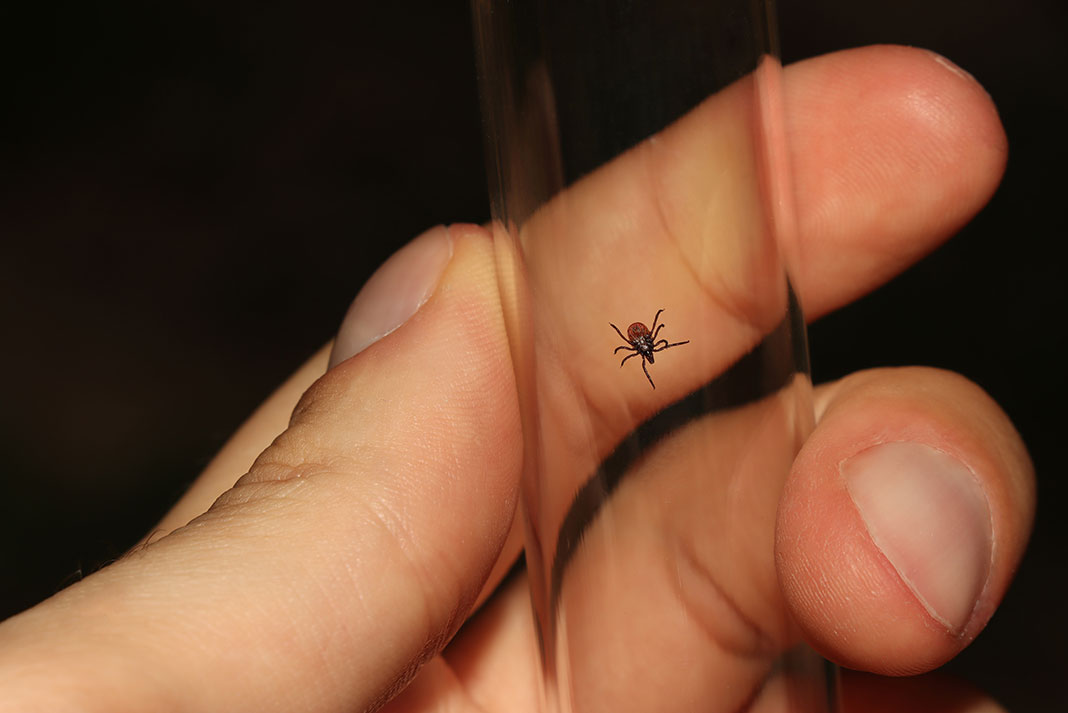
“Hey, man—can I catch a ride?” A tick reaches out its front legs, questing for its next blood meal. | Feature photo: iStock
I discovered a tick embedded in my crotch. Where? I was on day five of a 10-day canoe trip across Quetico Provincial Park. Ticks love to attach themselves to dark, moist places where the tissue is soft and thin. Think armpits, behind ears and knees, and, you guessed it, the vulnerable groin.
Of course, I panicked and gave it a yank instead of gingerly removing it with tweezers. My hastiness left half the tick under my skin. Yuck.
Worried about infection and catching potentially debilitating Lyme disease, I asked my long-suffering canoe buddy, Andy, to have a look at the wound. He politely refused. I used the mirror on my forestry compass to dig out the remainder of the arachnid.
For the rest of the trip, I suffered from phantom tick syndrome. You know what I mean. My skin crawled as I imagined ticks creeping silently on their eight tiny legs across my body. Every itch and tickle was heightened, making me yank up my shirt and pantlegs to inspect my unblemished skin underneath.
Expert tips to deal with the great tick invasion
Most backcountry paddlers can manage ravenous mosquitos and blackflies, no problem. But ticks are freaky. And over the last few years, I’ve heard more complaints from canoeists about ticks invading their favorite paddling paradises—ticks thriving where there were no ticks before.
That’s because the range of several species of ticks has increased dramatically throughout North America. Fortunately, of the 200 species of ticks in America, only a handful spread bacterial or viral pathogens. They vary by region. The mid-West has Rocky Mountain spotted fever spread by dog ticks. The Heartland virus, spread by Lone Star ticks, made headlines this spring in the southeastern states. In the northeastern states and parts of Canada, Lyme disease spread by blacklegged ticks has everyone talking. The U.S. Center for Disease Control and Prevention estimates nearly half a million Americans get Lyme disease each year.
Don’t get ticked off. | Photo: Marino Linic/Unsplash
It wasn’t always this way. In the past two decades, the number of U.S. counties with an established blacklegged tick population has more than doubled. In addition, the blacklegged tick’s range expands north at a rate of 25 to 50 miles a year. In the ‘70s, there was just one known colony of blacklegged ticks in Canada, located on the north shore of Lake Erie. However, by the 2000s, blacklegged ticks were found all over southern Ontario, Quebec, Manitoba, and the Atlantic provinces, and huge swaths of those provinces are now considered Lyme disease risk areas. According to scientists, the increase of ticks and their expanding range is partly due to milder winters.
How to handle ticks on trip
The good news, if there is any, is that even with the expansion of the ticks’ ranges, the methods to prevent a bite remain the same. Long, light-colored pants with socks tucked in and long sleeves will help protect paddlers, as will applying bug juice with DEET around the ankles. Some paddlers prefer clothing impregnated with the pesticide permethrin.
[ Browse the widest selection of boats and gear in the Paddling Buyer’s Guide ]
Even with those precautions, I still recommend performing tick checks every night in camp. It’s crucial in heavily tick-infested areas. It’s best to use the buddy system. Just make sure to choose a paddling partner who has your, erm, backside.
This article was first published in the Summer 2022 issue of Paddling Magazine. Subscribe to Paddling Magazine’s print and digital editions, or browse the archives.
“Hey, man—can I catch a ride?” A tick reaches out its front legs, questing for its next blood meal. | Feature photo: iStock
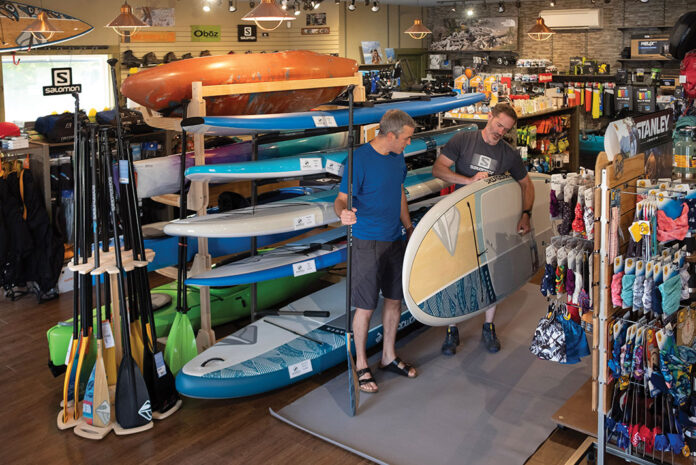
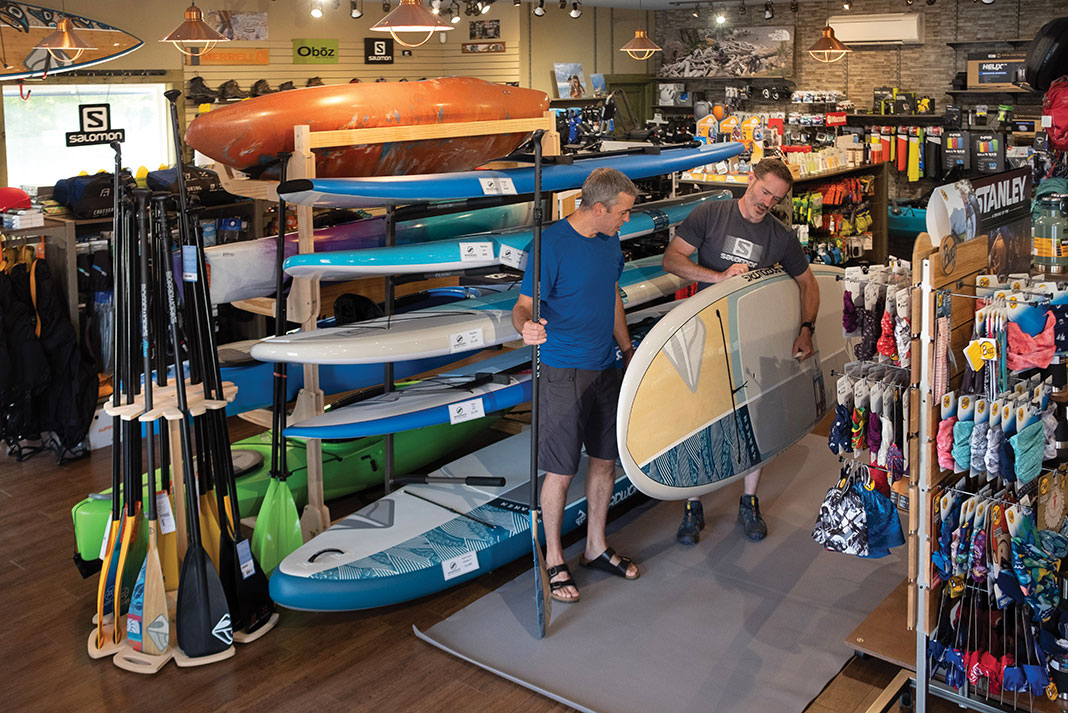
Accessories give the edge to specialty stores with sales staff who know the sport. | Feature photo: Mark Hemmings
There’s a mantra in sports that says you don’t become a champion overnight. The idea has gained a lot of press thanks to British cycling coach Dave Brailsford, who coined the term marginal gains for the process of incremental improvement he used to guide the British cycling team to 16 gold medals over two Olympics and seven Tour de France wins in eight years.
Brailsford famously had his team’s shop floor painted white so no errant speck of dust would find its way into an athlete’s bike. While some critics have suggested his famous attention to detail paid even bigger dividends in the field of pharmaceutical enhancement, the point is Brailsford didn’t try to grab the golden ring with one all-in, high-stakes gamble.
The difference between red ink and black often comes down to the margins. And nothing returns margins like accessories, says YakAttack Marketing Manager John Hipsher.
“A kayak has maybe 30 points of margin after—or sometimes even before—shipping costs,” Hipsher says. “I offer retailers a base margin of 40. That’s even before any preseason discounts, so you can get most accessories with free shipping and closer to 50 percent margin.”
Accessories give the edge to specialty stores with sales staff who know the sport. | Feature photo: Mark Hemmings
Don’t Sell Naked
When Sawyer Paddles and Oars opened its retail store, Member/Manager Zac Kauffman recognized the company’s signature products are, in essence, high-end accessories. Sawyer Station does a brisk business in rafts, kayaks and standup paddleboards, as well as the paddles and oars the 40-year-old parent company makes just up the road. But those big ticket items are only the start, Kauffman says.
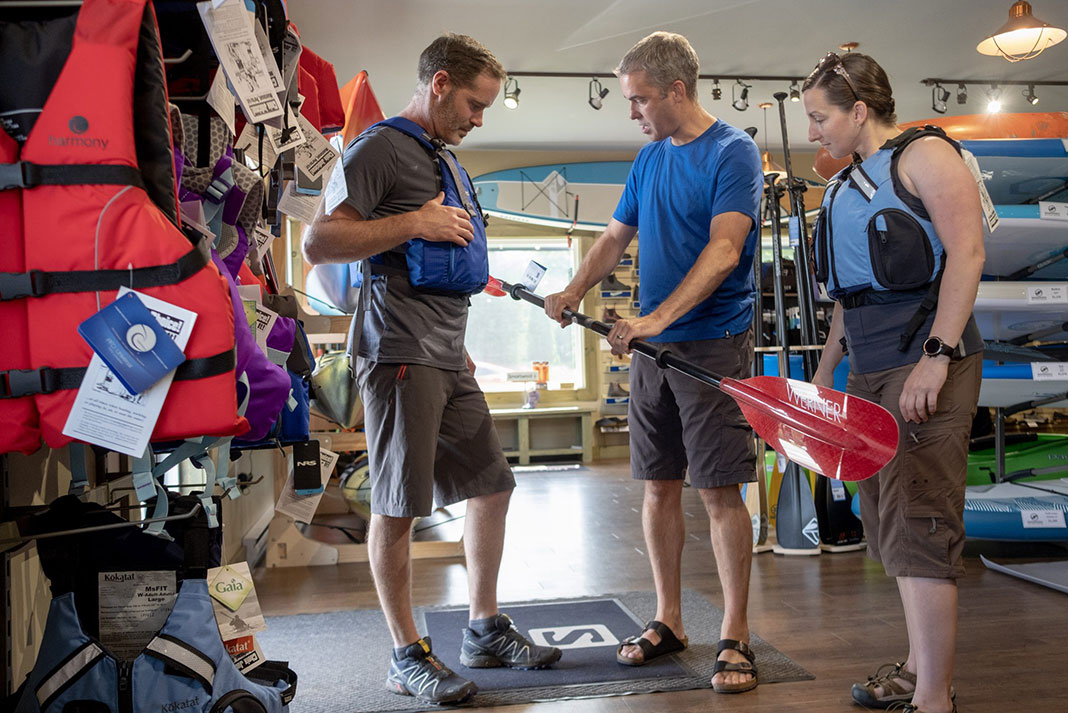
“We pretty much approach our whole concept as, ’Let’s get something out the door that we can accessorize,’” he says. “If we’re going to sell someone a river SUP paddle, let’s also sell them a board and everything else to go with it: The leash, the life jacket, the helmet, the shoes. We don’t sell anything naked.”
Leverage Your Knowledge
Accessory sales offer an edge to specialty stores whose staff can articulate the need for particular items. If a shop caters to a variety of paddlesports customers, it can try to bring in staff with expertise in each area.
“Back in my retail days, I’d hear my climbing guy or my trail running guy try to sell an East Tennessee bubba fisherman a Jackson Big Rig, and it just didn’t work,” Hipsher says. “They don’t speak the same language.”
Equally important is keeping the door open to all customers even if they make their big purchase elsewhere, says John Warta, owner of Paddler’s Cove in Washington, New Jersey. That’s true even if the customer made a bad purchase, such as the plus-sized gent who stopped by Warta’s store after buying a box store kayak that wasn’t even rated to hold his weight.
“I don’t ever say, ‘Hey, you got the wrong one.’ Instead, I try to show them the differences and see if I can turn on a light bulb,” Warta says. “He may go back and pick up the next bigger kayak, and that’s okay. We’ll get some business from him later, or we’ll get his neighbor’s business.”
Some Assembly Required
Hipsher is the first to say kayak fishing is a different retail environment. “I wouldn’t say touring kayakers and canoeists aren’t gear minded, but fishing guys are on a whole different level,” he says. “They’re total gear whores.”
Modern fishing kayaks are frequently equipped with sophisticated fish finding electronics. Still, not everyone is comfortable running electrical wires in their kayaks, let alone grabbing a drill and augering holes in the deck. That’s where installation has become both a source of revenue and a powerful sales tool, Hipsher says.
At the Dugout Bait and Tackle in Marietta, Georgia, the average out-the-door cost for a fully equipped Hobie or Jackson is nearly double the base kayak price, Hipsher says.
While touring boats present less opportunity for dealer accessory sales and wrenching, there is still a market for kayak rudder installations, canoe spraydecks and other custom modifications better performed by experts.
The term accessory is as broad as you want it to be. A life jacket is a paddling accessory, albeit a mandatory one. So is a roof rack. Sunglasses? Sure, if you say so. It all comes down to floor space.
“We don’t have a huge sales floor, so we basically draw the line at clothing,” says Kauffman, noting plenty of nearby stores specialize in outdoor apparel. “We identify as hard goods and hard good accessories—all the essentials you need to have with you for paddling and safety.”
This article was first published in the 2023 issue of Paddling Business. Inside you’ll find the year’s hottest gear for canoeing, kayaking, whitewater and paddleboarding. Plus: Industry leaders on the post-pandemic landscape, 50 years of paddlesports, the rise and fall of ACK and more. READ IT NOW »
Accessories give the edge to specialty stores with sales staff who know the sport. | Feature photo: Mark Hemmings
Each spring, a flock of whitewater athletes migrate to the rivers of Eastern Canada, in pursuit of the massive water flooding Ontario and Quebec as snow and ice thaw. What started as an unofficial gathering, has morphed into an annual expectation known as the Stakeout.
A decade ago it may have seemed every Canadian wave rideable by kayak had been found. Every freestyle maneuver revealed. But in the years since, the athletes of the Stakeout continue to discover monstrous big waves and push the progression of whitewater kayaking.
Dane Jackson’s short film is an ode to what the world’s elite whitewater athletes await in anticipation the moment the first snowflakes hit the ground in fall.




 This article was first published in the Summer 2022 issue of Paddling Magazine.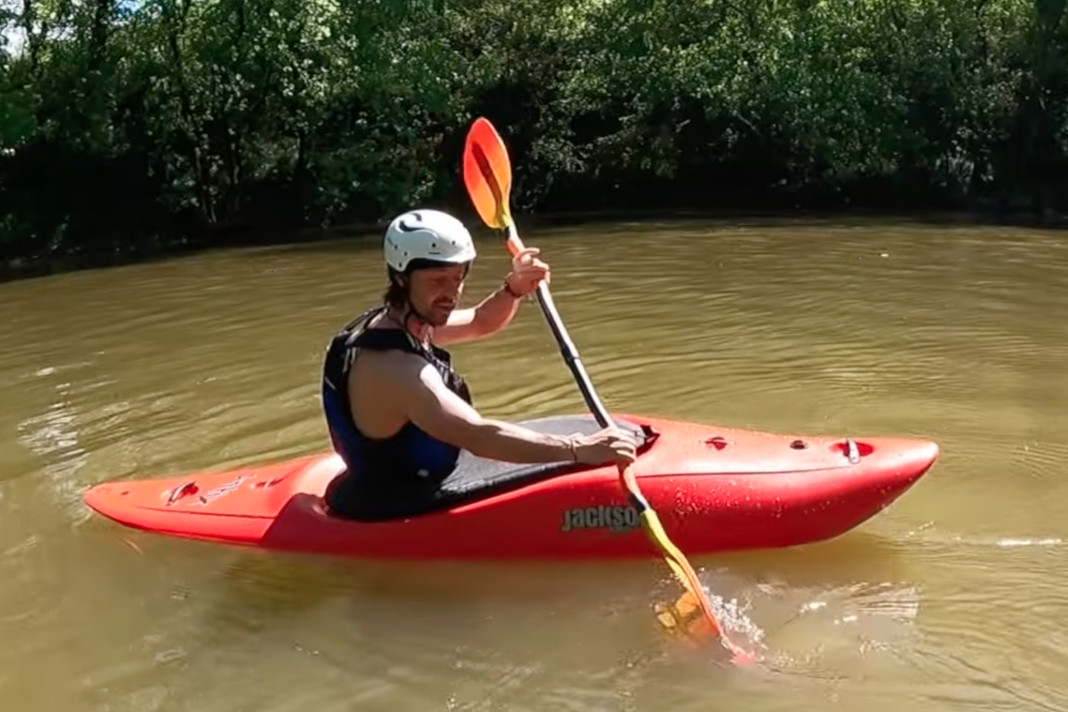



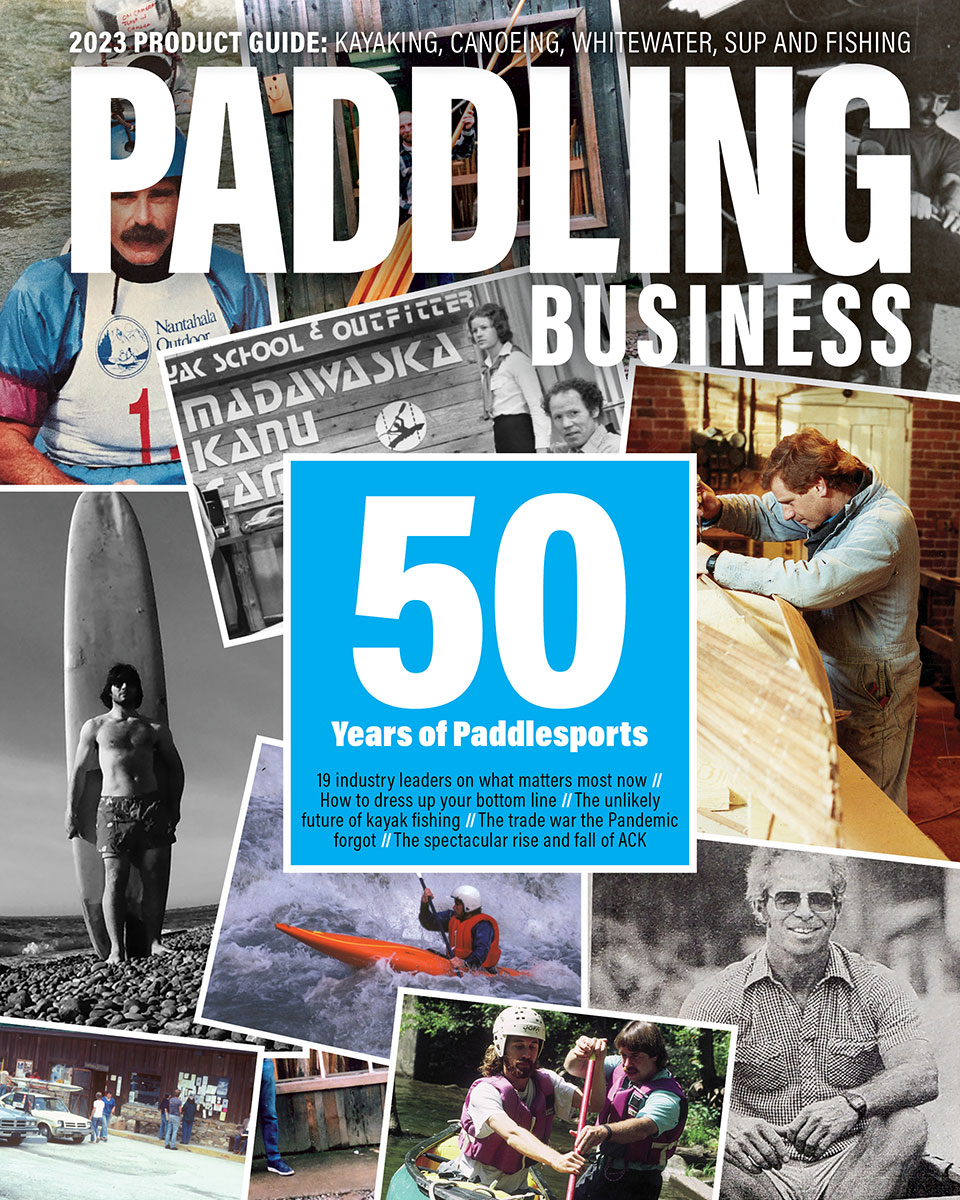 This article was first published in the 2023 issue of Paddling Business. Inside you’ll find the year’s hottest gear for canoeing, kayaking, whitewater and paddleboarding. Plus: Industry leaders on the post-pandemic landscape, 50 years of paddlesports, the rise and fall of ACK and more.



