Home Blog Page 81

Level Six Celebrates 25 Years With New Logo Launch

Canadian water sports brand Level Six is celebrating 25 years in business with the release of a new logo as a stand-alone symbol of the company. What began from selling board shorts and simple paddling gear from the back of a van at local river events, Level Six has evolved into a river-culture movement and has become known as a key brand for experiencing life on the water.

Over the last 25 years, Level Six has demonstrated their commitment to create a respectful, inclusive, and supportive culture both internal to the company and across the watersports community. The transformation from a small, naive company to their current status as a positive model of social and environmental responsibility led to the realization that it was time for a logo that better represented what the company has become.

“We want our community to believe in us as a modern innovator of watersports products that is equally appealing to all genders and all levels of enthusiasm,” says CEO and Founder Stig Larsson. “This new logo represents the river that flows through everyone, encouraging us to do our best for our communities and our planet.”

In speaking about the company’s social and environmental actions, Chief Operating Officer Kevin Cook highlights their efforts to reduce waste and use more recycled materials throughout the product line, while also investing in diversity and inclusiveness in paddlesports through the company’s Youth Scholarship Program. “From our in-house repair facilities that keep useful items out of landfills to opening up new doors to underprivileged youth who wouldn’t normally have a chance to experience the sport of kayaking, I’m proud of the brand Level Six has become and I look forward to initiating even more change in our community going forward.”

Level Six has a 25-year history of grassroots innovation and out-of-the-box thinking that has contributed to their positioning as a leader in the watersports community. From design and development to product life cycle management and community support, Level Six has worked tirelessly to embrace river culture and create a brand paddlers can believe in and trust. Their new logo is sure to carry on and expand this narrative for years to come.
25 YEARS OF EVOLUTION

Level Six was formed during a winter training camp in Costa Rica by two Canadian World Cup paddlers who were frustrated with the lack of a unified culture around paddlesports and unsatisfied with the designs on the market at that time. The foundation of Level Six grew from bold design ideas that made sense without compromising quality, function and style from those two relatively immature paddlers. They felt the current industry leaders were not embracing the river culture that was forming, and realized paddlers needed a brand to believe in.

What began from selling board shorts and simple paddling gear from the back of a van at local river events, Level Six has grown over the last 25 years, gaining shelf space at local and then national and international retailers. Over these years the brand has evolved into a river culture movement and, as new ways to experience the water evolved, it has become known as a key brand for experiencing life on the water.

As Level Six matured and grew, so did our understanding of our impact as a global company on the community that we belong to. Commitment to our ethics and values has led Level Six to create a respectful, inclusive and supportive culture both internal to our company and across the watersports community. We operate through a positive model of social and environmental responsibility and undertake commitments to support these values.

On the environmental front, we have committed 1% of our sales toward Watershed Conservation, while also mitigating our environmental impact by increasingly using recycled materials in our products and packaging, eliminating poly bags from 95% of our products, and significantly reducing the use of materials made from petroleum sources. More recently, we have invested in a fully operational repair facility to ensure we can repair and up-cycle all of our products, including complicated latex gasket repair and seam tape replacement. We see this as a major milestone in our sustainability initiatives, as well as a commitment to our customers who support and believe in our vision.

We have also renewed our social commitment by establishing a Youth Scholarship Program allowing underprivileged youth to experience paddlesports. We then expanded our social leadership initiatives to become one of the first paddlesport brands to support programs like Project Canoe and Hudson River Riders to help bring diversity and inclusiveness into the outdoors.

Looking back at the past 25 years, our history of grassroots innovation and out-of-the-box thinking has contributed to our brand development. The transformation from a small, naive company to our current and future trajectory has led to the realization that it was time for our logo to catch up with the company we have become.

We want our community to believe in us as a modern innovator of water sports products that is equally appealing to all genders and all levels of enthusiasm. We want a logo that can stand alone and visually represent the river that flows through us to encourage us to do our best for our communities and our planet. We are extremely proud of the brand we have become and look forward to initiating even more change in our community in the years to come.
Replay: 2022 ICF Whitewater Freestyle World Cup

Alabama Rivers are having a moment. The second longest paddling race in the world on the Alabama River has been underway since last weekend; meanwhile, to the east on the Chattahoochee River, the first of two 2022 ICF Whitewater Canoe Freestyle World Cup events took place on Ambush Wave October 3-5.

The whitewater park on the Chattahoochee is often referred to as being in Columbus, Georgia. Geographically, however, the river and its savory big-water features are shared between the Georgia city and neighboring Phenix City, Alabama.

The waves on the lower Chattahoochee are about as far south as it gets for big whitewater in the U.S. The site provides a slice of the Ottawa River or White Nile type features freestyle paddlers travel the world for. The caliber of consistent waves are what earned the Chattahoochee the opportunity to host the 2022 ICF Canoe Freestyle World Cup. The World Cup provides a preview of next year’s world championship event to be hosted on the Georgia-Alabama line.

[ Find your next Southeast river in the Paddling Trip Guide ]

Nantahala Outdoor Center And The Wesser Foundation Launch Guide Scholarship

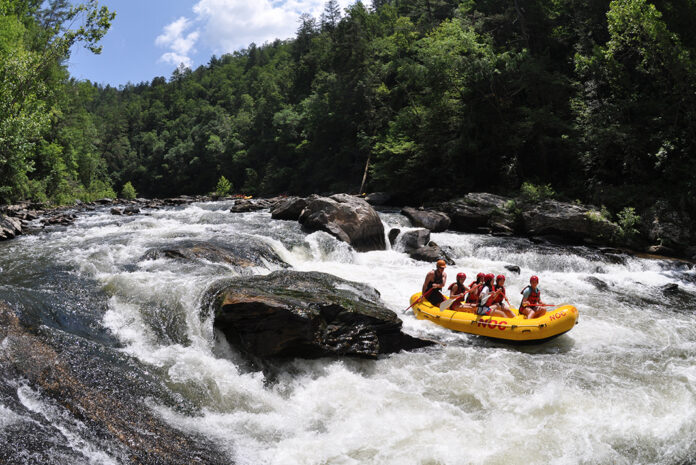
Group going down a rapid in a yellow raft
Photo: Courtesy Nantahala Outdoor Center

Bryson City, N.C. (September 20, 2022)— Nantahala Outdoor Center (NOC) is proud to partner with The Wesser Foundation Inc. to launch the Founders Scholarship, for the purpose of creating opportunities for those with limited resources to begin a career in whitewater. The scholarship is open for applicants for the 2023 season and will cover the cost of Guide School training, equipment, housing, and meal plans.

NOC, the Leaders in Outdoor Adventure Since 1972, has taught more guides than anyone in the industry. Elite river guide instructors offer hands-on experience teaching river reading, guide paddle strokes and communication, river safety and rescue, boat features and rigging, and more. Students come away from the experience with self-confidence, leadership skills, teamwork, and environmental knowledge.

“NOC has been teaching and training river guides for over 50 years,” said Kristin Kastelic, NOC Marketing Director. “With this scholarship, we hope to open up the opportunity for more careers in whitewater and a connection to the outdoors, to even more people that might not have the resources to take the leap.”

The Wesser Foundation was established by Jess Austin, who met the same challenges early in his career. Austin had to forego becoming a river guide in his 20s as he pursued law school. Now retired, he finally made his dream come true and works at NOC as a river guide, taking families down the Nantahala River every spring through the fall.

“My wife and I established the Founders Scholarship as a way of removing systemic barriers for anyone attempting to access a career in the outdoors,” said Jess Austin, President of the Wesser Foundation, NOC Lead River Guide, and the visionary behind the scholarship. “As someone who had to put aside outdoor aspirations due to financial barriers, I’m inspired to remove limitations and help more folks gain access to careers and training in the outdoors.”

Chosen scholarship recipients will attend NOC’s renowned Guide School, where participants spend five days in the field training with experienced instructors. Along with learning guide skills, chosen recipients will also be outfitted with essential river gear and equipment, take first aid and CPR training and certifications, and receive complimentary staff housing and meals while employed at Nantahala Outdoor Center during the River Guide season.

Those interested in the Founders Scholarship are encouraged to apply at noc.com/about/founders-scholarship. The selection and interview process for the scholarships will begin in the winter of 2022-2023 and be announced in the spring.

###

About Nantahala Outdoor Center

Nantahala Outdoor Center is the nation’s largest outdoor recreation company with operations spanning Georgia, North Carolina, South Carolina, and Tennessee. Over a million guests visit NOC annually to embark on a diverse collection of more than 120 different river and land-based itineraries, learn to kayak at NOC’s world-renowned Paddling School, travel abroad with NOC’s Adventure Travel program, test the latest outdoor gear and shop at its LEED-certified flagship retail stores or enjoy NOC’s resort amenities such as its three restaurants and multi-tiered lodging. NOC has been recognized by The New York Times as the “Nation’s Premiere Paddling School,” “The Best Place to Learn” by Outside, and as “One of the Best Outfitters on Earth” by National Geographic Adventure.


Feature photo: Courtesy Nantahala Outdoor Center

Follow The 650-Mile Paddle Race Across Alabama

Racers taking off from starting line at the Great Alabama 650
Image: Alabama 650


See below for latest race update 2:00 p.m. CT, October 3.

On October 1, a group of 20 endurance-paddling athletes will take off from a boat dock on Weiss Lake, in the northeast corner of Alabama. They embark on a 650-mile race that nearly follows a source-to-sea route of the Alabama River. This is the Great Alabama 650, founded in 2019, the second longest paddling race in the world.

Enduring The Great Alabama 650

Compared to other long distance races, such as the Yukon 1000, the 650 has athletes descending a diverse range of waterways. The Alabama 650 begins in a chain of lakes in the Appalachian foothills. Then followed by a section of whitewater on the Coosa River before eventually joining the widening Alabama River. The Alabama River continues a serpentining path across the state toward the maze of the Mobile-Tensaw Delta, often called the Amazon of North America.

Just when paddlers have put nearly the entire watershed behind them and their energy has been sapped, they must embark on an open-water 30-mile crossing of Mobile Bay to reach this finish at Fort Morgan on the Gulf of Mexico.

“You aren’t finished until you cross that open span of the Mobile Bay,” declares Paul Cox, who holds the current Alabama 650 record of 4 days, 17 hours and 2 minutes with race partner Joe Mann. “You go all that way, 600 miles, and then you have the worst part right at the end.” Cox and Mann nearly saw their 2021 run wrecked when they capsized in the bay. But the team recovered and still managed to finish in record fashion.

Cox will have a different perspective on the long distance event this year, chasing competitors through the state as a race volunteer. Supporting the athletes of the 650 is a perspective Cox has appreciated firsthand, and he looks forward to returning the favor. He says, the people of Alabama come out to remote stretches of river for a few moments of hoisting a sign and cheering them on. That gesture of support is a big part of what has made the long distance race stand out to him.

Follow The Action

The good news for paddling enthusiasts is that you don’t have to make a trip cross country to witness the race. Live tracking of the Alabama 650 will be available on their website AL650.com.

[ Find the fastest ships in the galaxy in the Paddling Buyer’s Guide ]

You can also learn more about the race itself by visiting AL650.com Stay tuned for further coverage of the Great Alabama 650.

Race Updates

October 3, 2022: Solo male paddler Bobby Johnson currently leads the race. As of 2:00 p.m. CT, Johnson has reached race mile 254, approaching the halfway point of the Alabama 650.

Salli O’Donnell holds second place, following closely behind Johnson. O’Donnell trails by just three miles. The pair closely contested the inaugural 2019 event, which Johnson eventually won.

Now it appears Johnson and O’Donnell are again in a race to win the 2022 Alabama 650, but not without company. Another solo female paddler, Frances Hiscox chases the two.

Eleven total boats are on the course. Five solo female paddlers, three solo male paddlers, and three tandem teams.

Continue to track the race live at: AL650.com.


BOTE Announces The Last Cowboy Limited Edition Collection

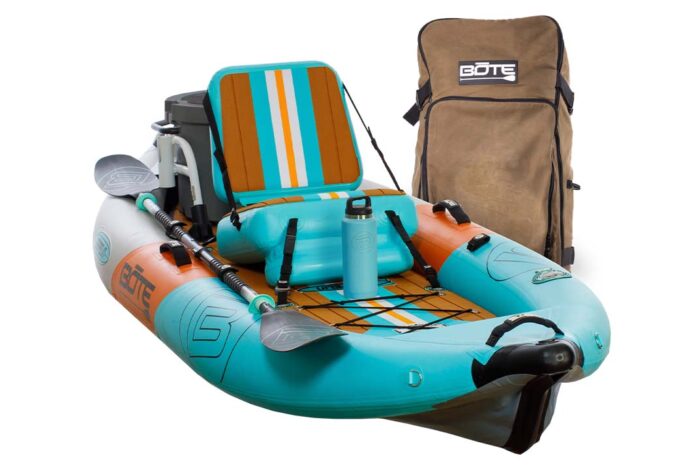
BOTE, the longstanding innovation leader in the paddleboard, kayak and water lifestyle space, announces its limited edition Last Cowboy collection. Inspired by the locals—the ones working before the sun rises and those choosing to sleep under the stars.
​​
​Whether in the field, on the water or around the farm, this gear stands up to the elements and looks good doing it.

Last Cowboy Collection

FEATURES

  • Waxed canvas
  • Water resistant
  • Everlasting durability
  • Craftsman inspired material

PRODUCTS

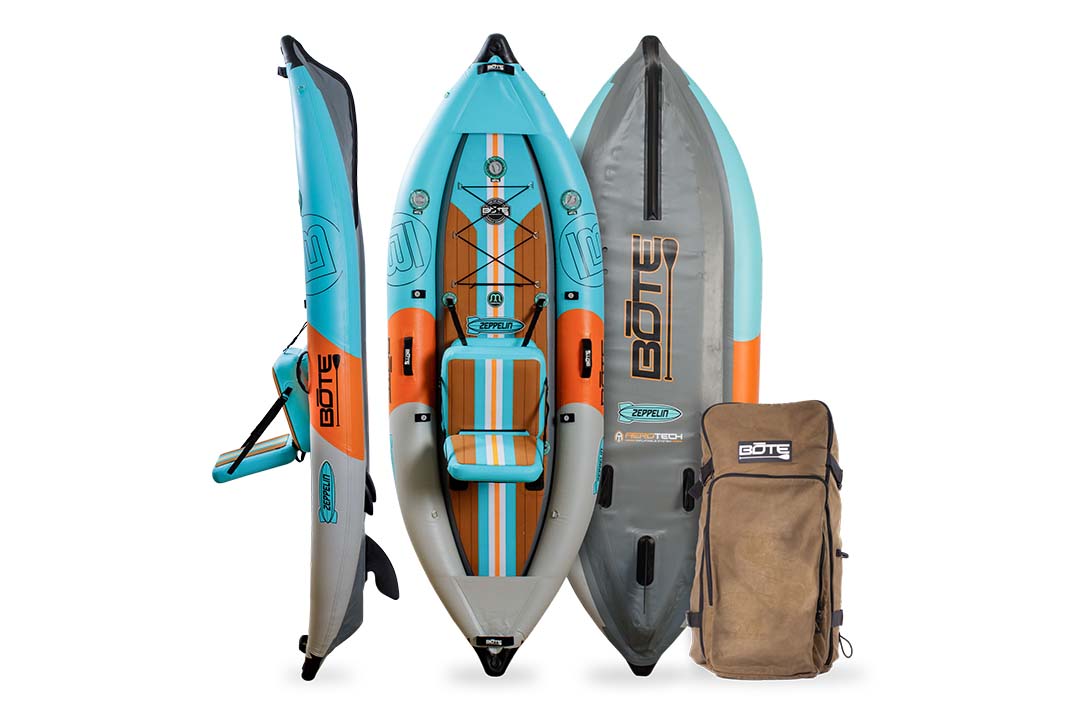
  • Zeppelin Aero 10′ Last Cowboy Inflatable Kayak
  • Highwater Tote
  • Highwater Duffel
  • Highwater Slingpack
  • Highwater Backpack
  • KULA Soft 2.5
  • Zeppelin Aero 10′ Last Cowboy Inflatable Kayak Package

See website for more.

About BOTE

BOTE is driven by a singular yet broad-reaching mission: To stand apart through industry-shaping innovation, fresh ideas and simplicity to create a product that defines a lifestyle. It is this mission that keeps BOTE pushing the boundaries of both technology and style to bring customers a product that not only looks beautiful and performs flawlessly, but that stirs the soul and inspires adventure. Born from standup paddleboards and now pioneering inflatable kayaks, floating dock systems, and more—BOTE continues to strive for advancement and embrace individuality.

Liquidlogic Remasters A Classic Kayak For Modern River Running With The RMX (Video)

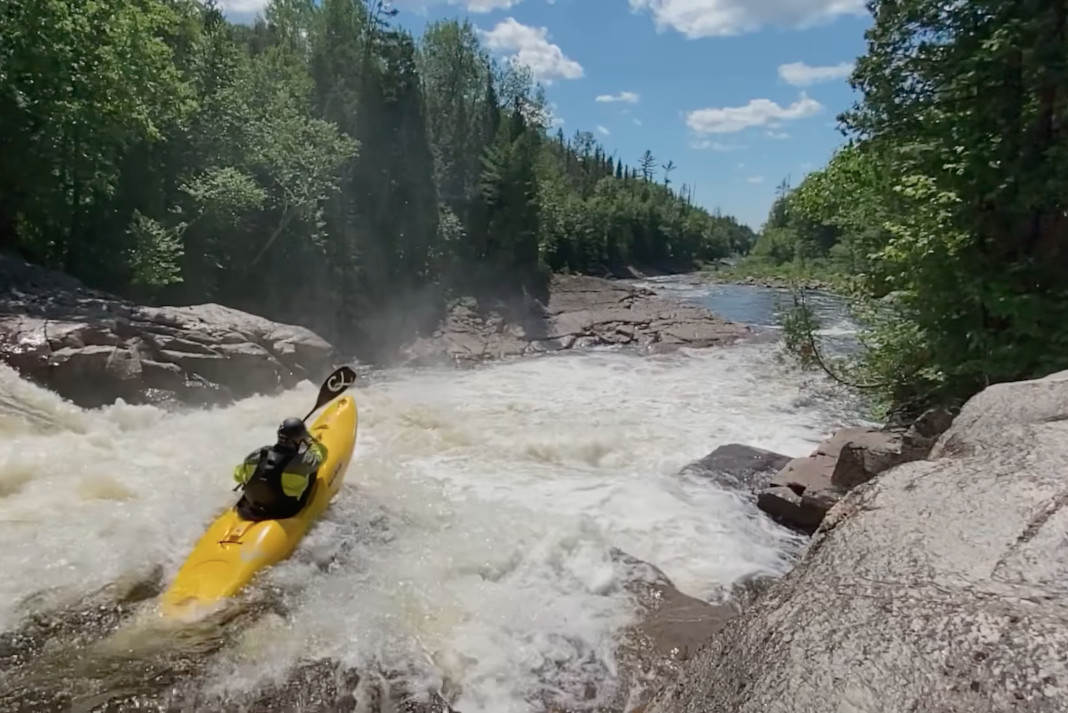
RMX Kayak entering a rapid.
Image: Liquidlogic Kayaks / Facebook

Liquidlogic couldn’t have known when they released the Remix nearly 15 years ago it would become their longest running kayak in production to date, and a favorite not just for kayak instruction, but advanced paddlers pushing the limits on difficult rivers. With the progression of kayak design in recent years, the enduring Remix is due for, well remastering. It seems that kayak has arrived with Liquidlogic’s announcement of the RMX by designer Shane Benedict.

Introducing The Liquidlogic RMX Whitewater Kayak

From the RMX video featuring Shane Benedict:

“The longest running boat that Liquidlogic has ever made is the Remix. The Remix came around at a funny time in kayak design. Everything was getting shorter. They were heading down to around eight feet.

Shane Benedict with the RMX kayak
Shane Benedict. Image: Liquidlogic Kayaks / Facebook

“That shortness made them easy to handle in tight, technical situations for sure, but you lost performance. You lost speed. You lost glide. That’s one thing we were excited about with going back up to nine feet when we developed the Remix nearly 15 years ago. That boat was developed to be a beginner boat and an all-river craft. But those same attributes, the intuitiveness, the speed, the skip, and the carvy feel. Those are attributes the most advanced paddlers in the world want as well. And that’s what we wanted to bring in the RMX.

“The same thing is sort of happening now. The boats are longer, so it’s not that. But all the boats are rockering up. There’s huge rocker on both ends. Yes, it does make it easier to paddle and easier to handle. But once again we are losing that performance feel.

[ Find your next river running kayak in the Paddling Buyer’s Guide ]

“What we’ve done with RMX is drop the stern rocker. It’s a little bit more than the original Remix, but less than a lot of what’s happening right now. Right now, boats are effectively getting shorter in their waterline. So they are getting that same thing, easy to spin and do all this stuff. But you start to lose that performance feel. We are trying to bring that back with a modernization. So the RMX is an attempt at that new, intuitive-feeling boat, that will take care of you and be an all-river craft. And beginners can use it, but also the best paddlers in the world are going to take it to the hardest rivers.

RMX Kayak entering a rapid.
Image: Liquidlogic Kayaks / Facebook

“The RMX is three different sections of boat to me. You’ve got the middle. That’s your foundation that takes care of you. That’s your stability, your spin. It’s got a nice flat hull so you can move it around real easily.

“But then on the front you’ve got a Mack Truck. You’ve got the Alpha bow rocker. And it just wants to run over everything.

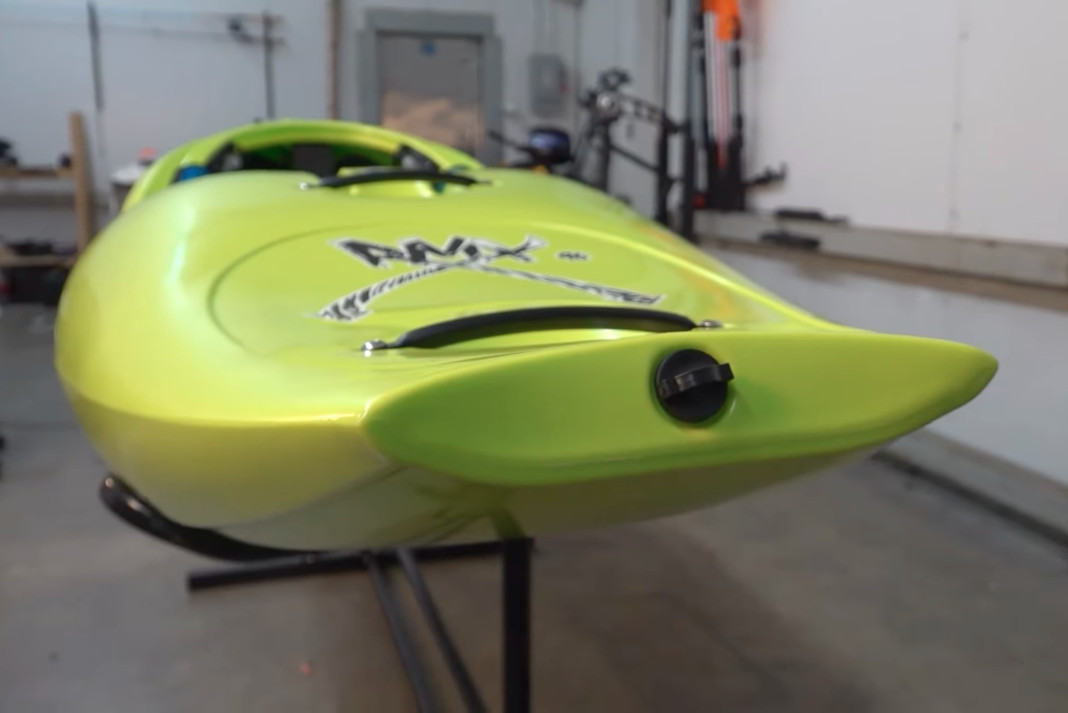
“You’ve also got the tail, which is performance. That tucked down volume allows you to pivot quickly, or to do a really nice water boof by tucking that tail under water. But also, I’ve carried the chines out wide, all the way to the end, and the tail is a little extra wide as well. That does a couple of things: Speed through rapids especially, skipping out of the bottom of drops, and the chines being held out wider give you really nice carving arcs as you are working your way downstream.

“The simple way I’ve started to describe the RMX is it is the speed and DNA of the old Remix, but we’ve added in the big tank bow rocker, and flat chined hull.”

Stern of RMX
Image: Liquidlogic Kayaks / Facebook

Liquidlogic Kayaks RMX Specifications

Large

Length: 9’6”

Width: 27.25”

Volume: 96 gallons

Medium

Length: 9’4”

Width: 26.75”

Volume: 86 gallons

Learn more about the RMX at: liquidlogickayaks.com.

News: Cyril Derreumaux Completes Pacific Crossing To Hawaii

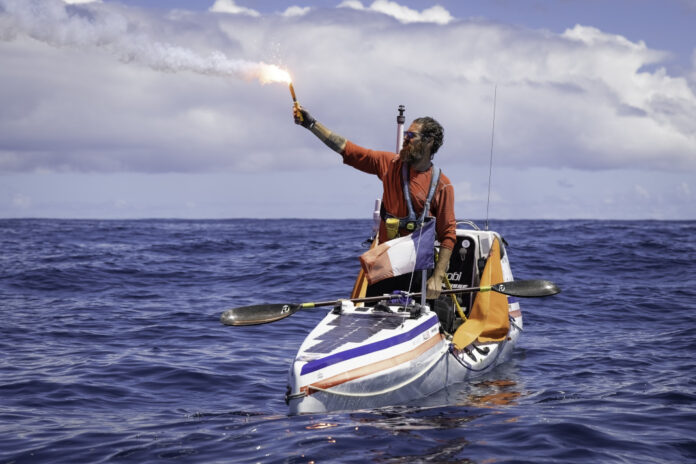
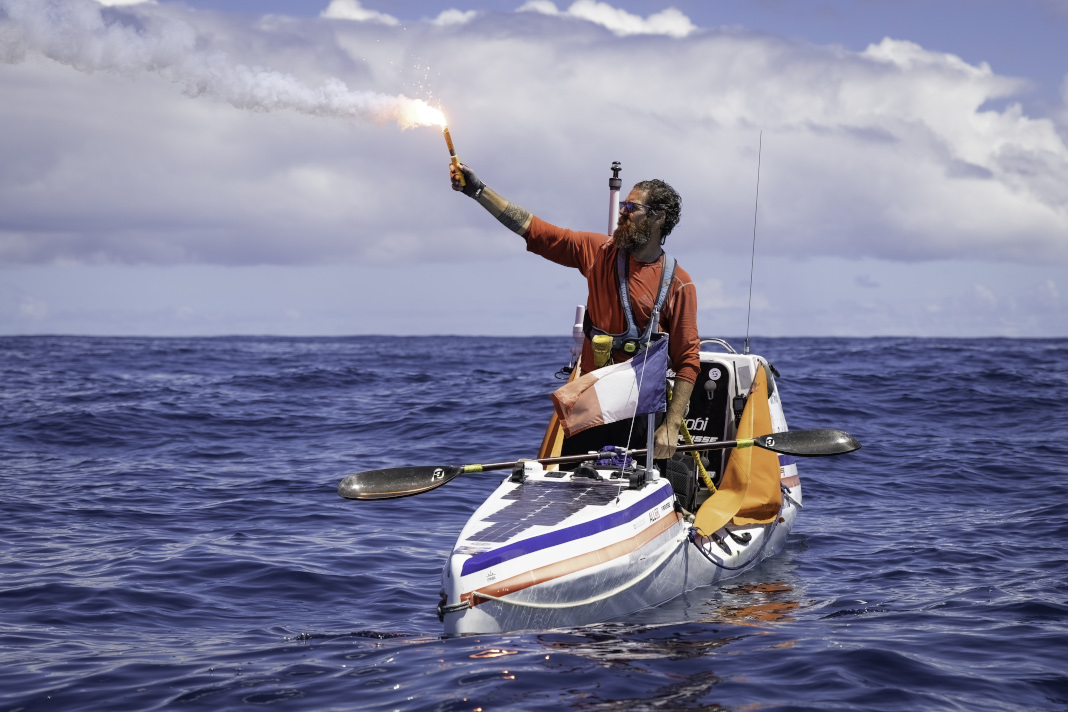
Cyril Derreumaux reaches Hawaii
Image: Tom Gomes

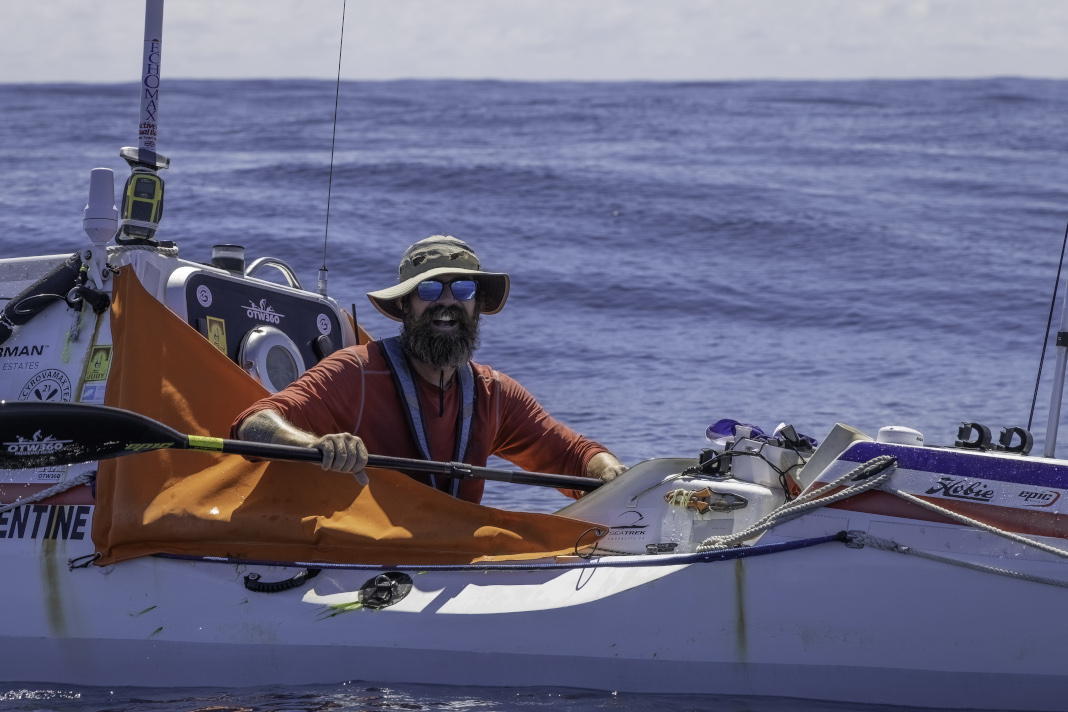
On September 20, 2022, Cyril Derreumaux paddled into the town of Hilo, on the island of Hawaii. After 91 days and nine hours at sea and paddling 2,544 nautical miles, Derreumaux completed his attempt to paddle the Pacific from California to Hawaii, becoming just the second solo kayaker to accomplish the feat.

Man holding torch out from kayak
Cyril Derreumaux reaches Hawaii. Photo: Tom Gomes

Cyril Derreumaux’s quest to paddle the Pacific from California to Hawaii

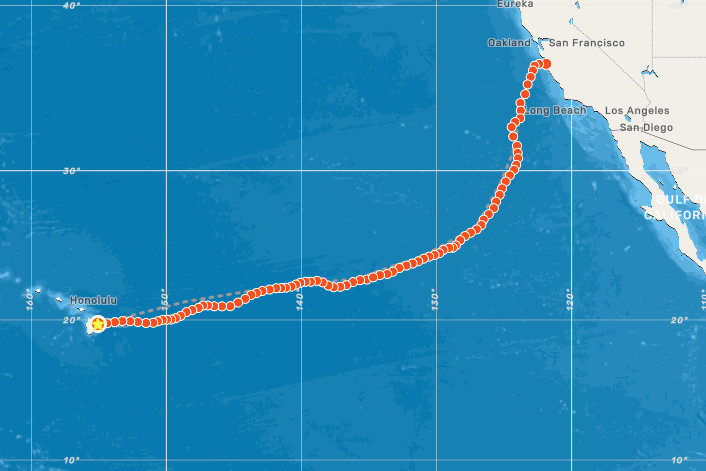
Derreumaux began the Pacific voyage on June 21 from Monterey, California. The 2022 expedition was his second attempt, following a 2021 expedition ending within a week due to deteriorating ocean conditions. This did not deter Derreumaux from making another go at the lonely and grueling endeavor.

The original goal for completing the paddle was around 70 days. However, Derreumaux once again faced adversities early on, including brutal winds and gear malfunctions.

Map of Cyril Derreumaux's Pacific crossing.
Map of Derreumaux’s Expedition. Image: TravelMap

“A west wind comes from the west and blows toward the east. When this happens I am blown back towards the land. This is what has been happening for last two days so I have been doing 10 hours each day to make progress towards south west (Hawaii),” Derreumaux wrote via his Garmin inReach on day 16.

“But most frustrating is the loss that occurs at night. As soon as I stop paddling the wind blows me off course. If I lose 15 miles during the night I have to make them back up the next day.”

On day 18, Derreumaux had to create a port to drain a flooded compartment within his kayak. He did so by glueing the screw top of an apple sauce packet to the side of the boat, then drilling a hole through it.

Image: Tom Gomes

Then on day 46, Derreumaux lost his electric water desalination system, which meant he would have to produce drinking water manually.

“It had been making weird noises for a couple of weeks now, and I could hear some of these were not sounding ‘right.’ On the day it started to make new noises that were a bit alarming to me, until the power went off from one second to another.”

Derreumaux understood the timeline, and eventually, the destination, would need to be adjusted because of the challenges he had been facing. On day 66, Derreumaux and his support team made the call to change his destination from Waikiki to Hilo. This effectively cut six days from a trip that would already be stretching his body and rations thin due to an unscheduled extra month at sea.

Entering Hilo and joining a daring few

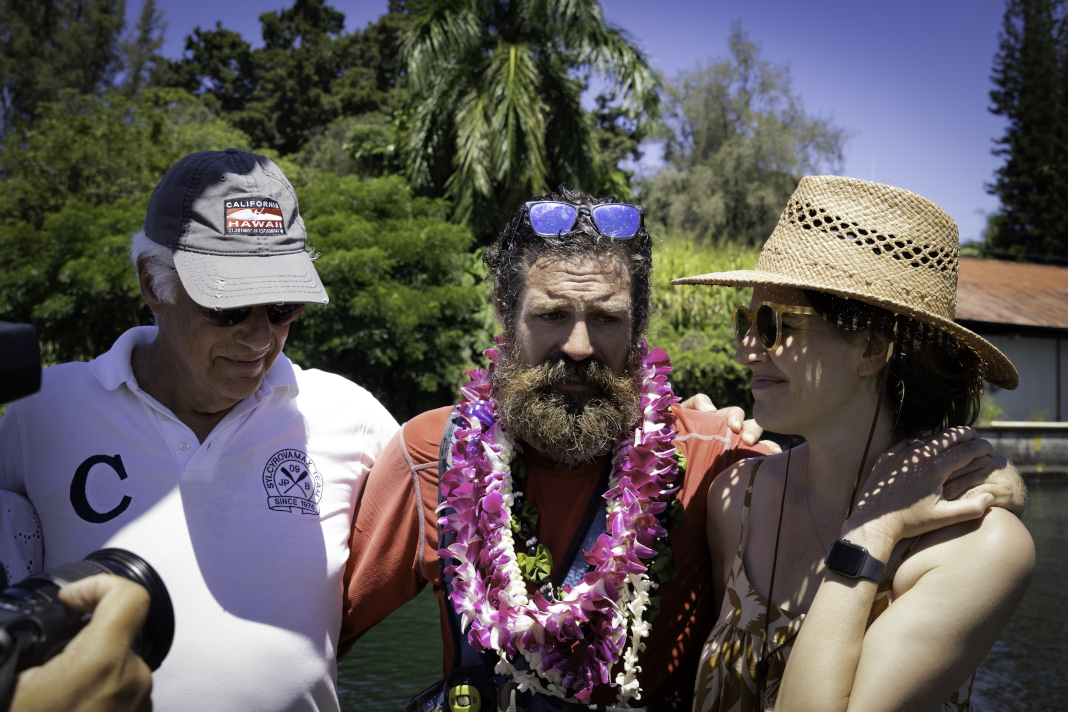
At midday on September 20, 2022, Cyril Derreumaux paddled up the mouth of the Wailoa River in Hilo. When he reached shore, his hands were taken by family and supporters on the dock, who helped the paddler out of his craft and onto land—his first time on solid ground in three months.

Cyril Derreumaux with family in Hawaii
Image: Tom Gomes

Derreumaux is just the third solo paddler to complete the Pacific voyage from California to Hawaii. His inspiration for the trip largely came from the historic 1987 journey of Ed Gillet, who impressively reached Maui in 63 days, using an off-the-shelf touring kayak and without the communication devices available today. Gillet’s trip was a tale shared among paddlers for years and was eventually chronicled in depth in the 2018 book, The Pacific Alone.

Gillet stood alone as the only paddler to have completed the endeavor for over 30 years until the Spanish standup paddleboarder Antonio de la Rosa did so in 2019. Now, 46-year-old Derreumaux joins the short list of solo expedition paddlers to have successfully reached Hawaii.


It’s Time To Change How We Pay For Paddling

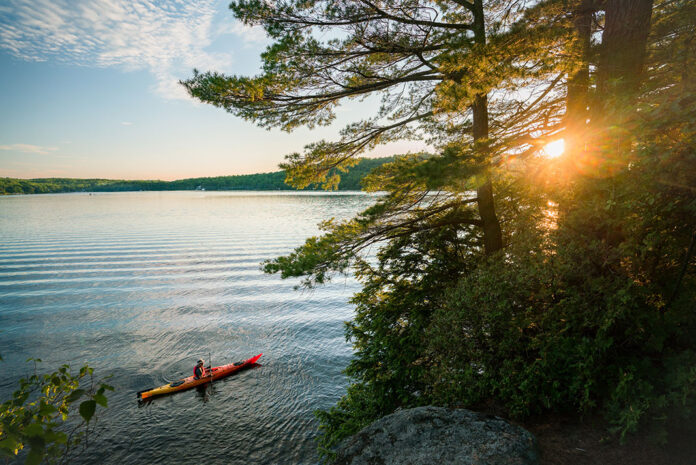
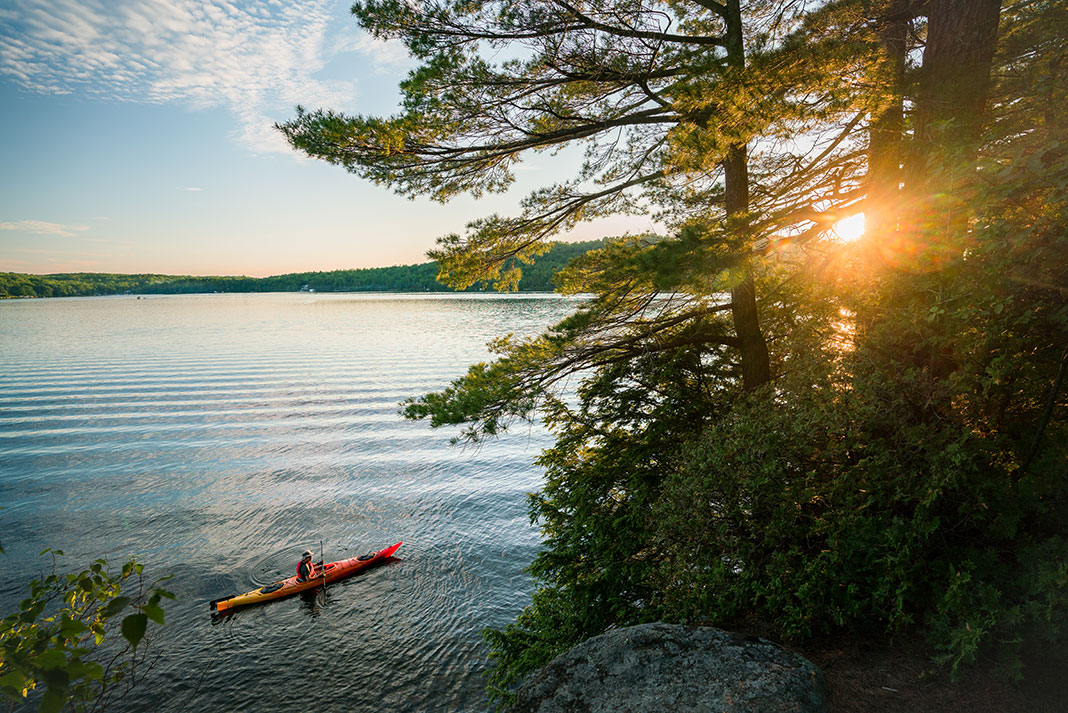
touring kayaker paddles past a pine tree silhouetted by the sun on a calm lake
The only constants in life are death and taxes—and kayaking. | Feature photo: Nicholas Spooner

I beach my kayak at a paddle-in campground. A fee box wants $12 to camp on a not-quite-flat spot with no access to drinking water. Next to the box is a garbage can overflowing with trash. The vault toilet, equally overflowing with aroma, has no toilet paper or hand sanitizer. I walk back to my kayak for my wallet and TP, muttering that we kayakers should have listened to Arthur Cecil Pigou. How we pay for paddling—and yes, we pay—is broken. Let’s fix it.


It’s time to change how we pay for paddling

Pigou was a climber, not a kayaker, about a hundred years ago. And he was an economist. If we want to keep kayaking, we need to get to know the guy.

Kayakers think of paddling expenses as kayaks, drysuits, carbon fiber paddles and plane fares to tropical getaways. But my glove compartment holds five passes for different park districts, boat ramps and national forests. We also shell out for access, permits and camping, not to mention programs to keep water clean and restore habitat. And we’ve been paying more for less for a long time. Oregon just jacked up its camping fees at state parks to a whopping $42.

Costs rise, but management funding has failed to roll up, down 16 percent in real terms in the past two decades. The deluge of outdoor recreation during the pandemic magnified the crisis. My home state grew from 2.8 million people when I first slid into a Perception Dancer to 4.2 million today. During those decades, we’ve opened just two new state parks.

touring kayaker paddles past a pine tree silhouetted by the sun on a calm lake
The only constants in life are death and taxes—and kayaking. | Feature photo: Nicholas Spooner

User fees are based on the principle of “user benefits, so user pays.” That makes sense on paper but fails in reality. User fees account for just 11 percent of site management budgets, with maintenance backlogs as long as a thousand surfskis laid end to end, as of 2019. And the more you raise user fees, the bigger barrier you create to participation—price folks out, and they’ll stop coming.

“User fees cannot fund agencies struggling to keep up with operations, let alone add additional recreation infrastructure to meet growing populations and increased demand for outdoor recreation,” the Outdoor Industry Association noted in 2017.

The right disincentives can promote more positive behavior

Back when Pigou was climbing in the Lake District and teaching economics at Cambridge after World War I, he devised tax structures to tax things we don’t want, like smoking, burning carbon, water pollution, instead of things that are good for society, like income, employment, property and outdoor recreation. Pigouvian taxes put the money into offsetting those negative impacts, like health care or environmental restoration. As the higher cost of cigarettes leads folks to ditch the habit, less money for smoking cessation won’t be a big deal.

What we’re doing with paddling right now is the opposite. Paddling is a human-powered, low-carbon activity and builds an environmental stewardship ethic. Instead of jacking up the price on camping and still not having the bucks for toilet paper, we should tax what we want less of and use those funds to repair our outdoor recreation sites.

[ Browse the widest selection of boats and gear in the Paddling Buyer’s Guide ]

What would a Pigouvian setup to support kayaking look like? How about a hefty tax on two-stroke motors, which dump half their fuel into the water unburnt? And another on disposable plastic bottles turning the sea into an endocrine disrupter goo? I bet Arthur Cecil would be into that.

Neil Schulman writes, kayaks, photographs and does conservation work in Oregon, where outdoor recreation is (under)funded by the state lottery.

This article was first published in the Early Summer 2022 issue of Paddling Magazine. Subscribe to Paddling Magazine’s print and digital editions, or browse the archives.


The only constants in life are death and taxes—and kayaking. | Feature photo: Nicholas Spooner


Watch The 2022 Extreme Kayak Championships (Video)

On September 23, a collection of the best whitewater racers in the world will make their way to a starting ramp above a steep, chaotic section of river known as the Wellerbrücke. The fastest will win the 2022 Oetz Trophy – Extreme Kayaking Championships.

The 2022 Extreme Kayak Championships begin

The second annual Oetz Trophy continues its reign as the successor to the former Adidas Sickline. The race provides an intense, one-minute time-trial course on the technical class V of the Wellerbrücke section on the Ötztaler Ache in Austria.

The 2021 event saw plenty of excitement, with unforeseen high-water and the crowning of champions Laura Hofberger and Dane Jackson.

Racing kicks off Friday, September 23 at 9:30 a.m. CET (3:30 a.m. ET) with the finals scheduled to start Saturday at 3:15 p.m. CET (9:15 a.m. ET).

You can watch the finals by live stream on the Oetz Trophy page or by using the embedded video above.

2022 Oetz Trophy Schedule (Central European Time)

Friday, September 23, 2022
9:30 am – 12:30 p.m. Qualifying heats men’s/women’s – 1st run
01:30 – 04:30 p.m. Qualifying heats men’s/women’s – 2nd run

Saturday, September 24, 2022
10:00 am – 12:00 p.m. Quarterfinals
01:00 – 02:15 p.m. Semifinals
03:15 – 04:00 p.m. Finals

2021 Highlight Video


5 Most Commonly Asked Questions About Kayaking, According To Google

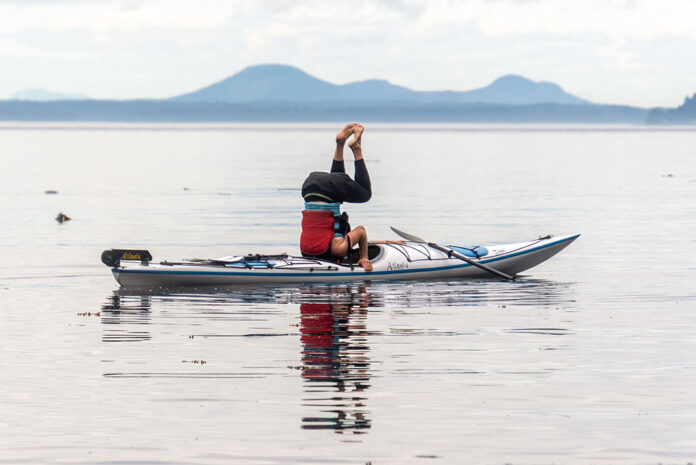
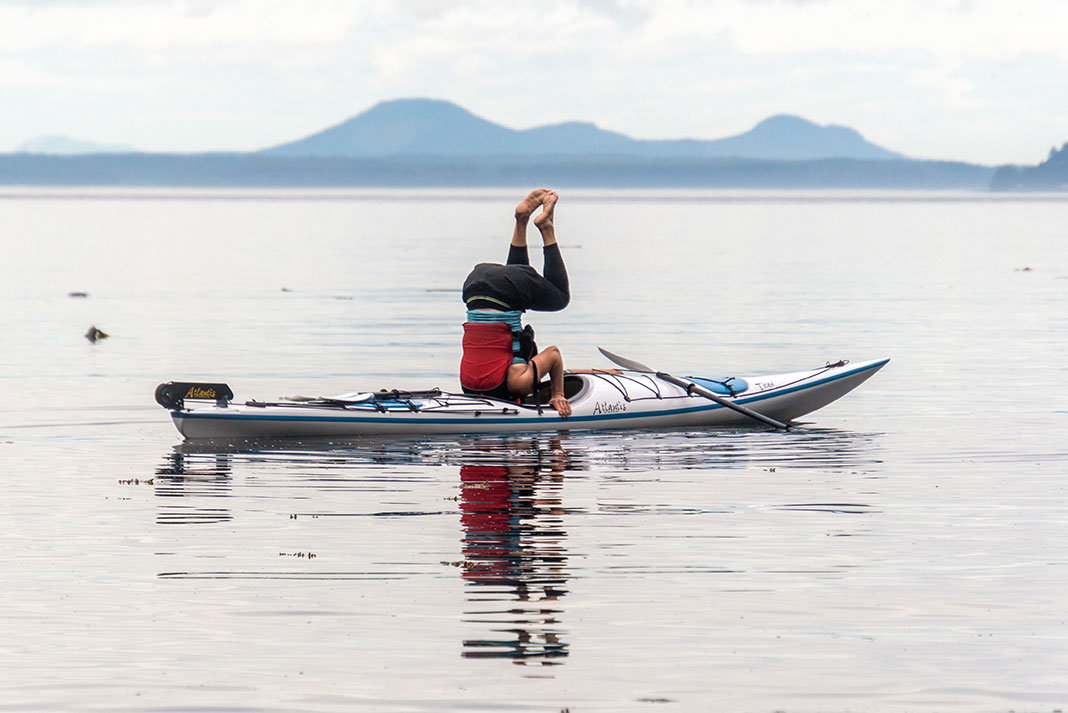
man performs a headstand while kayaking in calm waters with mountains in background
“Yep, there’s definitely a bulkhead in here.” | Feature photo: Brendan Kowtecky

The internet is a miraculous place. The sum knowledge of the human experience is at our fingertips and with a few clicks we can find answers to all of life’s most common questions about kayaking and just about any other topic.

How many ounces are there in a cup? Eight. Is it safe to feed your dog onions? Nope. What’s the best way to get wine stains out of the carpet? Add a tablespoon of dishwashing soap and a tablespoon of white vinegar to two cups of warm water, blot gently.

Fortunately for us, Google compiled the most popular kayaking queries. Here are my serious answers to what seem like stupid questions.

5 most commonly asked questions about kayaking, according to Google

1 Can kayaks sink?

All boats can sink. Heck, ships sink. If Lake Superior can sink the 730-foot-long Edmund Fitzgerald capable of carrying a load of iron ore 26,000 tons more than it weighed empty, it certainly can sink a 15-foot kayak.

However, kayak designers go to great lengths to keep kayaks afloat. At a minimum, a kayak should have some foam in the bow and stern to prevent it from sinking completely. However, sinking isn’t usually the problem to worry about. Instead, you need a kayak to float high enough in the water when swamped so you can paddle to a safe spot and empty out. Bulkheads with properly sealed hatches allow for this but aren’t features found in the cheaper kayaks on the market.

man performs a headstand on a kayak in calm waters with mountains in background, and his head is sticking inside the cockpit
“Yep, there’s definitely a bulkhead in here.” | Feature photo: Brendan Kowtecky

2 Do inflatable kayaks work?

Perhaps it’s not surprising this is one of the most commonly asked kayaking questions when Amazon’s top result for the search term ‘kayak’ is the inflatable Intex Explorer K2.

Do inflatable kayaks work? Sure. So long as we’re not talking about the glorified pool toys at the SuperSaverMart. Many are as durable as an inflatable unicorn and move through the water like a limp iguana. Quality inflatable kayaks perform well and pack away conveniently for transport and storage. You’ll find them in your local paddle shop, not where you get your groceries.

3 Can you paddle a pedal kayak? How far?

Pedal drive kayaks are great for scooting across the water hands-free, using the stronger muscles of your legs to propel your craft. They’re especially popular as fishing kayaks because anglers don’t have to fuss around with the paddle when casting or landing a fish.

Of course, if you want to fuss around with the paddle you can, but pedal kayaks get pretty big. Some pedal kayaks are up to 44 inches wide and weigh more than 100 pounds—they’ve gone to pedals to move this big stable platform for a reason. You can paddle them as far as you’d like, I suppose. For those who want to make miles solely by paddle power, consider a longer, sleeker and more efficient touring kayak, capable of circumnavigating continents.

4 Are kayaks dangerous?

Of the estimated 37 million Americans who went paddling in 2020, 202 paddlers died according to the U.S. Coast Guard. Where cause of death was known, 75 percent of fatal boating accident victims drowned. Of those drowning victims, 86 percent were not wearing a life jacket.

The majority of paddling accidents and fatalities involve beginners—nearly three-quarters of victims had less than 100 hours experience. Reduce your risk by always wearing a life jacket, dressing for cold-water immersion, checking the weather forecast before leaving shore, and always paddle sober and with a partner.

5 Why are kayaks so expensive?

Not all kayaks are expensive. I saw one just the other day at a big feed store that sells farm equipment, and it wasn’t much more than $100. It was made out of lightweight plastic that reminded me of a kiddie pool and it had a cup holder. 

However, real kayaks range anywhere from $400 to $4,000 dollars. Quality kayaks cost this much because a lot goes into building them. Plastic kayaks are made in molds costing tens of thousands of dollars and cooked in ovens that cost even more. Fiberglass kayaks take a week or more to build—by hand. Want a comfortable seat? Hatches and bulkheads for safety? A rudder or skeg? A lot goes into making a quality kayak and all those details add up. They’re definitely worth the price, especially since kayaks don’t become obsolete and can last a lifetime with proper care.

This article was first published in the Early Summer 2022 issue of Paddling Magazine. Subscribe to Paddling Magazine’s print and digital editions, or browse the archives.


“Yep, there’s definitely a bulkhead in here.” | Feature photo: Brendan Kowtecky