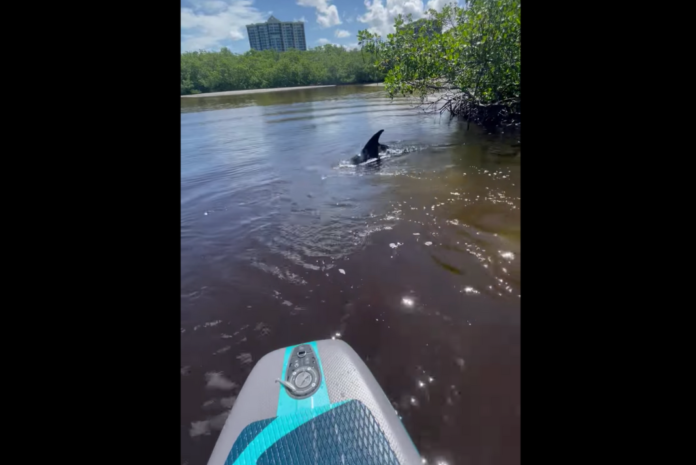
Donny Bass is an experienced paddleboarder and kayak angler based out of Florida. Over the Fourth Of July long weekend, he and his family were out paddling in Naples, Florida when they were unexpectedly greeted by a curious bottlenose dolphin. The once-in-a-lifetime moment shows the dolphin swimming playfully within touching distance of the paddleboard, then underneath and around it.
Dolphin watching regulations require boaters and kayakers to keep a minimum of 50 to 100 yards away, depending on the state. Responsible paddlers endeavor to maintain this at all times, and rare exceptional encounters do not represent a typical paddling experience.
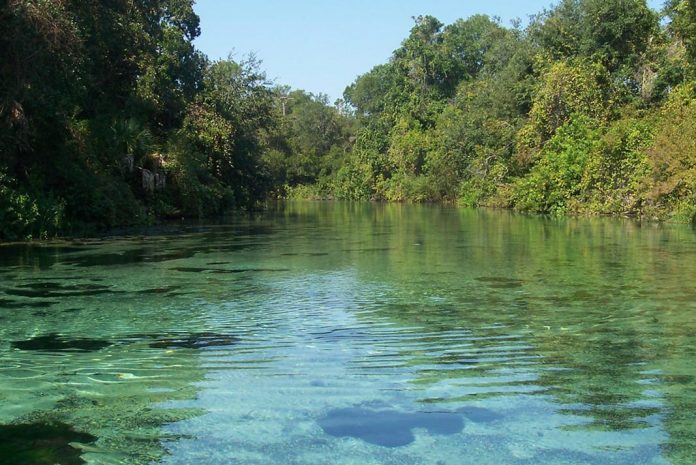
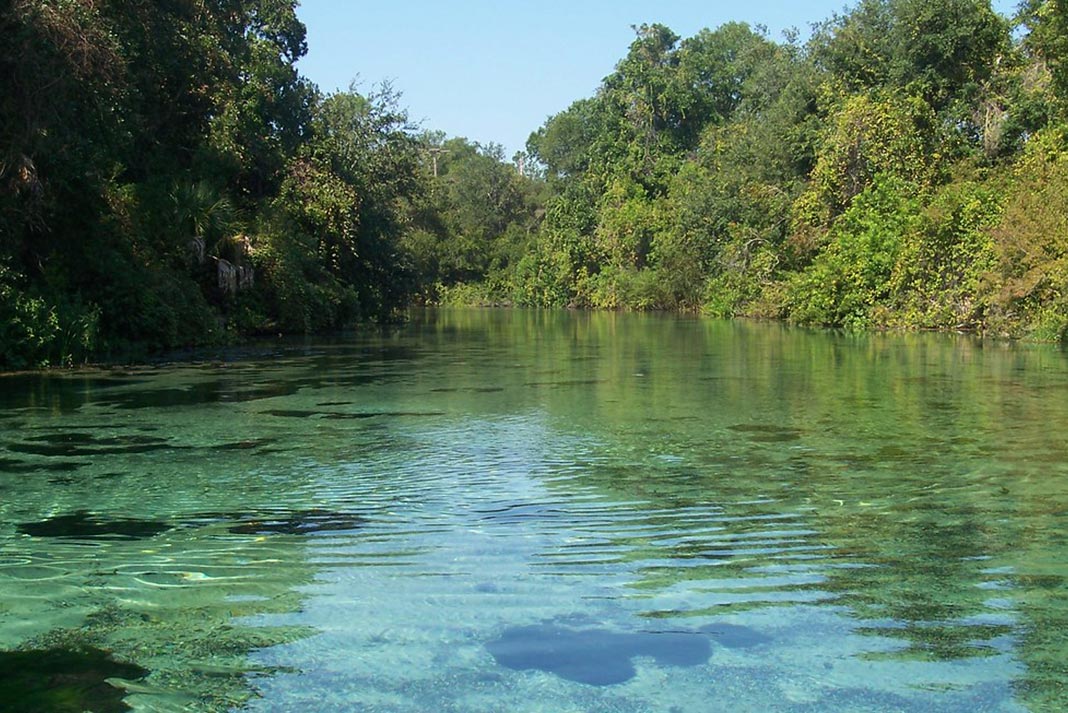
Paddle the blue-green waters of the Weeki Wachee. | Photo by: Paul Clark/Flickr
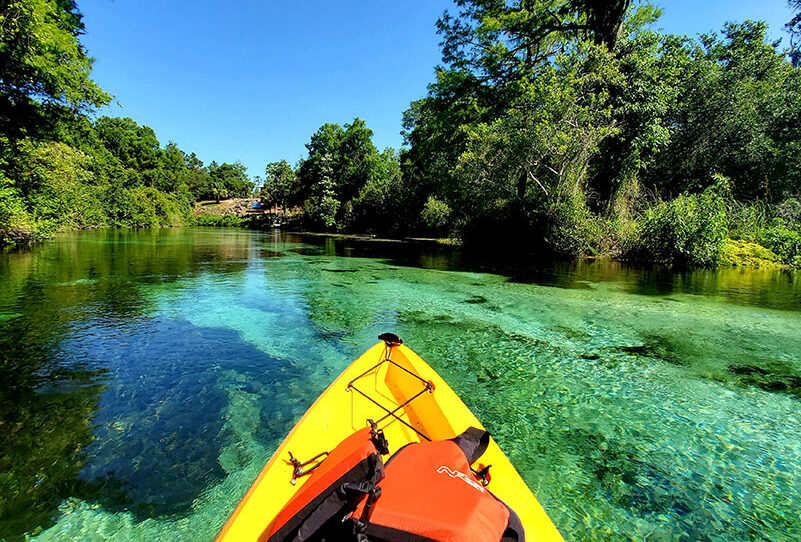
The Weeki Wachee River affords some of the most stunning kayaking in Florida. At eight miles long, the river flows from Weeki Wachee Springs—located about an hour north of Tampa—to the Gulf of Mexico near Bayport. The beautiful thing about kayaking the Weeki Wachee, besides the beauty of your surroundings, of course, is it’s accessible to everyone, from beginners to advanced paddlers.
Weeki Wachee Springs itself is quite the tourist attraction, as it’s so deep the bottom has never been found. It’s classified as a first magnitude spring, which means it’s in the largest flow volume of springs in the world. To earn this classification, there must be a minimum of 64.4 million gallons of water per day, or 100 cubic feet of water per second, discharged from the spring. Weeki Wachee Spring has over 117 million gallons of clear, fresh, 74-degree-Fahrenheit water bubbling up out of the subterranean caverns each day. Northwest Florida Water Management has an informative infographic on how springs work that’s worth checking out if you’re visiting the area.
Weeki Wachee Springs is a sensitive ecological habitat. | Photo: Adobe Stock
In 1947, a state park was established around the spring by Newt Perry, who specialized in underwater stunts. The mermaid show Weeki Wachee Springs State Park is known for was created by Perry himself, who taught the women he hired how to perform synchronized underwater routines while breathing from proprietary air tubes hidden in the scenery. The park still draws heavily on this heritage, with “mermaid” performances that run 365 days a year.
The mermaid show is a draw for many—maybe even you!—but if Weeki Wachee kayaking is what you’re after, this guide will take you through everything you to need to know before setting out on this stretch of crystal-clear water and through the riot of greens and blues of the floodplain.
Can I bring my own kayak?
Yes, you can bring your own kayak to Weeki Wachee Springs State Park. It costs $10 per vessel to use the park’s private boat launch (reservations are required). There are other places to launch your kayak farther west on Cortez Boulevard; however, kayakers are encouraged to use the boat launch at the springs, as the natural banks of the river are sensitive to erosion and damage from human activity.
It should be noted that inflatable tubes and rafts are not allowed in the park. Inflatable kayaks and inflatable standup paddleboards are permitted, provided they are U.S. Coast Guard-certified (most commercially available boats have this certification from the manufacturer; you can double-check on your boat).
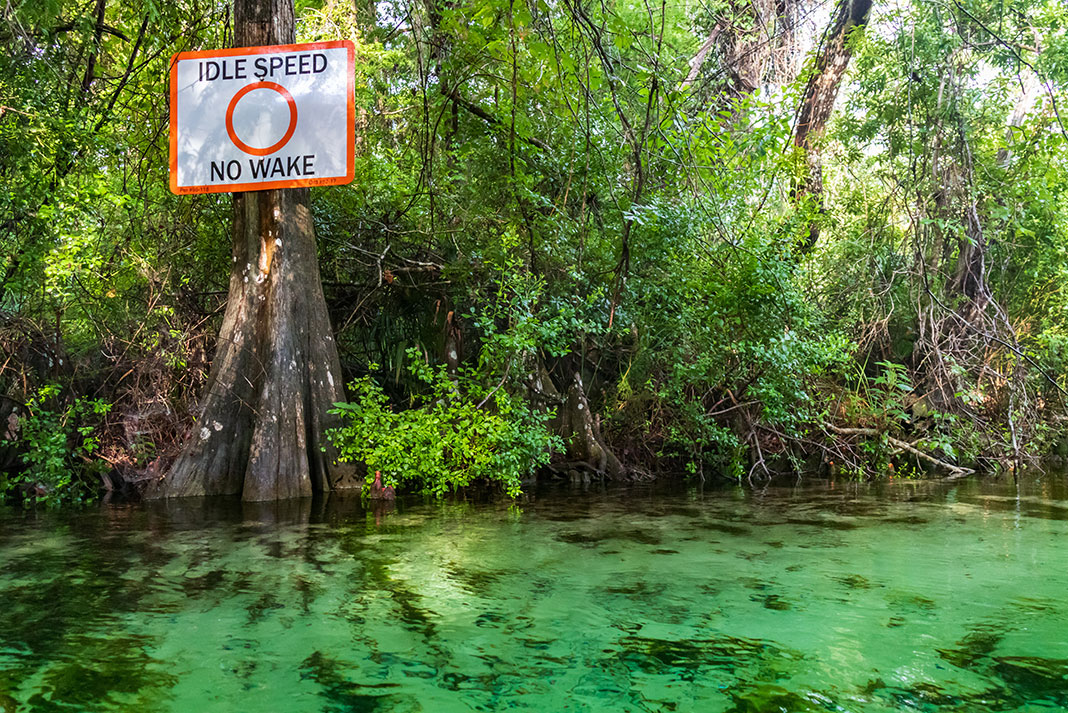
In an effort to minimize environmental impact on the very sensitive ecosystem of Weeki Wachee, motorized recreational watercraft are not permitted on the river. The full USCG regulations for small crafts can be found here.
Weeki Wachee trip options
There are three main options for the best kayak trips on the Weeki Wachee River, based on the experience level of your group and desired difficulty level.
On any of these routes, make sure to take some photos for your walls at home—the crystal-clear, blue-green waters with bright splashes from kayaks and paddles make for incredibly stunning photos.
Best for inexperienced paddlers
The most straightforward and beginner-friendly of the kayaking trips in the Weeki Wachee area involves putting in at Weeki Wachee Springs and paddling to Rogers Park, in the town of Weeki Wachee Gardens. This 3.5-hour stretch of river gives all paddlers an awe-inspiring view of Florida’s landscape and wildlife.
Take some photos of the crystal-clear, blue-green waters for your walls at home. | Photo: Autumn Kuney/Unsplash
Weeki Fresh Water Adventures is the only kayak rental company in the park, and provides all the required gear as well as a shuttle for $40 per person. The other option available from Weeki Fresh Water Adventures is the shuttle service. Note that the company will not shuttle personal boats, but you’re welcome to take the shuttle back to your vehicle and then pick up your kayak.
Best for intermediate paddlers
The intermediate route option is Bayport to Rogers Park; this trip is a shorter distance at two miles long, but is made more challenging by the boat traffic, navigation skills that are required in this stretch of water, and the fact that you’ll be paddling upriver.
There are no shuttles available for this route, so you’ll need to arrange your own or paddle back downstream for a four-mile round trip.
Best for advanced paddlers
Those looking for a challenging adventure can make the journey from Rogers Park to Weeki Wachee Springs. This route will take you six miles upstream—again, you will either need to arrange your own shuttle or paddle back downstream for a 12-mile trip that will take a full day to complete.
There are some challenging elements on this route. At some points the river gets narrower and the current picks up, requiring a higher level of skill and composure on the water than the other more serene areas on the Weeki Wachee.
You’ll need to pay a $2 entrance fee at Rogers Park, but otherwise there are no costs to this route if you have your own kayak. If you need to rent, check out Kayak Shack Adventures, located across from Rogers Park. Costs are $35 for a solo kayak and $40 for a tandem. Reservations aren’t required, but are highly recommended.
Wildlife abounds along the Weeki Wachee—there aren’t many other places that so beautifully exemplify the natural world of Florida. Keep your camera at the ready for unforgettable shots of manatees, alligators, raccoons, otters, and numerous birds like ducks, ibis, pelicans, herons, osprey, wood storks and cormorants.
Many paddlers are particularly interested in kayaking with the manatees that call the river home; however, you should always be respectful of them (and any wildlife, for that matter). There are only about 2,500 of these gentle sea mammals left in the world, and any threat to their habitat like plastic containers or straws can have a big negative impact on their survival. Florida State Parks are very attentive to the ecological situation in the area, and have banned all single-use plastics inside the park. Please keep their efforts going when you’re outside the park boundaries as well!
The best viewing opportunities of manatees in Florida are around springs; the clear water allows you to get a good look at them while these curious marine mammals cruise by to curiously check you out too.
There are alligators in Weeki Wachee—but don’t worry, you’re not likely to see them while kayaking. Alligator habitats are in the marshland where guests are not likely to go. Alligators do not naturally view humans as prey, so they’re most likely to keep to themselves. Key West Aquarium has some great facts on their webpage that will ensure you’re informed on alligators in Florida.
Paddle the blue-green waters of the Weeki Wachee. | Photo: Paul Clark/Flickr
Weeki Wachee kayaking rules
Weeki Wachee Springs is a sensitive ecological habitat. As such, there are some guidelines for spending time in the park. The following items are not permitted on the Weeki Wachee River:
Alcoholic beverages
Pets
Inflatable inner tubes
Rafts or similar floatation devices
Motorized vessels of any type
Disposable items such as plastic, aluminum, glass, styrofoam paper and fireworks
Exercise your common sense and empathy for the creatures whose home you’re visiting, and everyone will be happy!
The Weeki Wachee Springs State Park webpage provides a good overview of the offerings and activities in the park, and is a great resource for any closures or weather warnings in the area.
Paddle the blue-green waters of the Weeki Wachee. | Feature photo: Paul Clark/Flickr
For centuries, the waterways of modern-day Quebec have been central to the development of its landscape and culture. With one of the largest reserves of freshwater in the world, tens of thousands of rivers and some three million bodies of water, it’s a paddler’s paradise. Regardless of whether you’re looking for a half-day family-friendly tour or a multiday whitewater excursion, you’ll find tour operators and outfitters that will help you make it happen.
We’ve rounded up 10 of our favorite kayak tours, each designed to immerse you in La Belle Province’s culture, nature and history.
[ View all paddling tours in Quebec in the Paddling Trip Guide ]
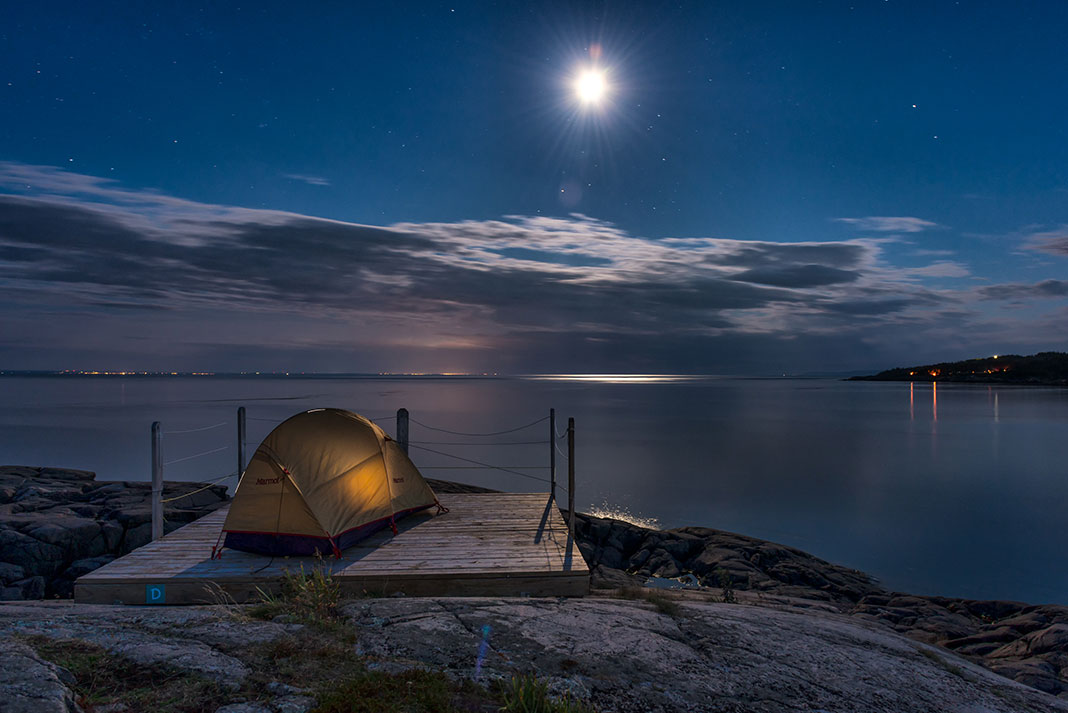
Everyone should experience a night kayak tour at least once. | Photo: Mer et Monde Ecotours
See bioluminescence by sea kayak with Mer et Monde
Imagine your kayak gliding across the water in the dark of night, while whales call out to one another below. Your only guiding light? Bioluminescence, which lights up the water with each stroke you take.
On a guided night tour with Mer et Monde Ecotours, you’ll spend three hours exploring the waters of the St. Lawrence by double kayak, witnessing the magic of bioluminescence and getting the opportunity to listen to whales through a hydrophone. Tours run out of Les Bergeronnes, a town located about a four-hour drive northeast of Quebec City.
Kayaking the St. Lawrence River in this area in the summer is idyllic, as the waters are calm and the surrounds peaceful.
Sea kayaking is a blast on the Mingan River. | Photo: Heliconia Paddle Tales
Glamp and sea kayak along the Mingan Archipelago
If you’re looking for a truly tranquil and relaxing getaway, then look no further than Noryak Adventures. The tour operator runs full-day and multiday sea kayaking expeditions within Mingan Archipelago National Park Reserve; a region known for its limestone outcroppings, seabird colonies—including Atlantic puffins—and wildlife such as whales and gray seals.
On Noryak’s four-day sea kayaking adventure, you can explore the area’s thousands of islands and islets from your base camp at Grande Ile, and spend each night sleeping in tents with comfortable inflatable mattresses. Other luxe touches include hot showers, a mosquito net shelter and a full camp kitchen, where you’ll be treated to meals cooked using local produce and seafood.
Fun for the whole family. | Photo: Quatre Natures
Start ‘em young just outside Quebec City
Are you a beginner paddler or maybe even a keen kayaker who wants to share your love of the water with your kids? There’s no better way to do so than on a tour meant for families with children aged three and up.
Quatre Natures’ guided two-hour family kayak Québec City tour from Île d’Orléans is designed especially for little ones. There’s no distance goal, and timing is based around when the tide is highest—and therefore the currents are the weakest, making this the ideal St. Lawrence kayak excursion for kids.
There’s no better way to start the day. | Photo: Marc Loiselle
Kayak Saguenay Fjord and watch the sunrise
Early birds may get the worm—but they also get to see the best sunrises, as the world shifts from night to day. If you’re an early morning enthusiast, check into Parc Aventures Cap Jaseux—an eco-camp with treehouses, log cabins, geodesic domes and unbelievably futuristic hanging spheres—and then set your alarm for 4:30 a.m. That’s when your 2.5-hour Saguenay Fjord kayaking adventure will start, where calls from the common loon will signal the beginning of a new day. You could also visit Fjord En Kayak, a two-time winner of the GOLD MEDAL AWARD of the Grand Prix of the Tourism, where you can have your pick of sea kayaking excursions, from one hour tours to six day trips. With options for groups, families, and experienced paddlers you’ll be sure to find an adventure to suit your needs.
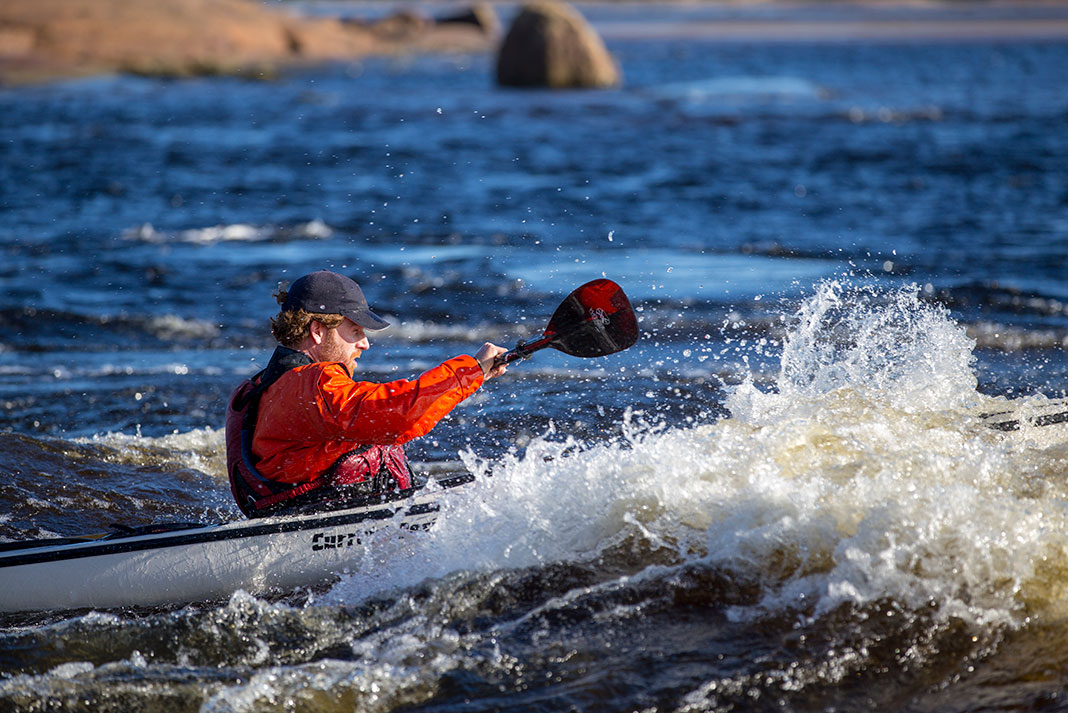
The wilds of the Matapédia River are not to be missed. | Photo: Cedric Binette
Get an introduction to whitewater kayaking on the Matapédia River
Nature Aventure offers guided tours ranging in skill level and length from two hours up to a full week. But if you only have a day to spare, their Matapédia Package offers a taster of kayaking the Gaspé Peninsula and provides a great introduction to whitewater for beginner and novice paddlers.
The 20-km guided river journey can be completed by canoe, kayak or even SUP—if you’re ambitious, as there are class I rapids along the way—and includes a lunch stop. Keep an eye out for salmon pits, beavers and river otters on your journey.
History and an aquatic adventure. | Photo: Sherb-History
Hear ghost stories on the water in Sherbrooke
Even if you’re not a history buff, you’ll likely be enthralled by the tales shared aboard a kayak on the Magog River and Lac des Nations. Sherb-History offers an unusual combination of history and aquatic adventure on its guided kayak tours in Sherbrooke, including its night tour.
Over the course of 2.5 hours, you’ll learn more about the area’s culture, environment, biodiversity and, of course, history, with lanterns and light-up armbands shedding some more light on the situation.
DTour Tremblant offers rentals and shuttle services for the Riviere du Diable. | Photo: DTour Tremblant
Kayak Riviere du Diable and explore Quebec’s largest park by water
The Diable River in Mont-Tremblant National Park—Quebec’s largest and oldest protected area—has long been a go-to destination for canoeists and kayakers, with plenty of outfitters offering rentals along the river’s edge. DTour Tremblant, for example, offers single and tandem kayak rentals as well as shuttle services for a half-day self-guided trip.
Despite the river’s foreboding name, this is an easy and meandering excursion that’s suitable for families, with chances to spot great blue herons, kingfishers, beavers and white-tailed deer along the way. This family-friendly activity is suitable for children who weigh more than 20 lbs.
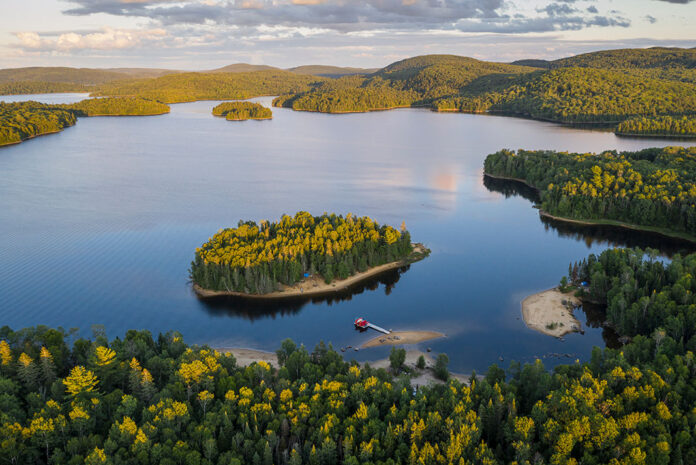
Kiamika Regional Park was made to be explored by paddle. | Photo: Mathieu Dupuis
Paddle from island to island in Parc Regional Kiamika
Drive roughly three hours northwest of Montréal, and you’ll discover one of the largest bodies of water in the Laurentides: the Kiamika Reservoir. In addition to the reservoir, Kiamika Regional Park is home to 10 lakes, 40 islands and ancient trees that are centuries old. Both the Kilby sector and the Barrage sector are suitable for kayaking, with Ecolodge Kiamika offering single and tandem kayak rentals.
While the kayak excursions are self-guided, the campground—which features glamping tents and cabins—does offer Aboriginal-guided canoe trips. The overnight experience is led by an Innu ambassador and includes a night spent in a traditional tepee. SUPs, canoes and rabaskas—capable of carrying up to 10 paddlers—are also available for rent.
Find a sea kayaking adventure that suits you with Attitude Nordique Plein Air. | Photo: Attitude Nordique Plein Air
Have an epicurean adventure experience at Baie-Comeau
Yes, this is a sea kayaking trip. But as operator Attitude Nordique Plein Air explains, it’s intended to be casual—and, more importantly, fun! You’ll get kitted out to paddle in a tandem kayak, but you’ll also have the opportunity to try out ziplines that fly across the waters of the St. Lawrence—a one-of-a-kind opportunity within Quebec.
Then, once you return to shore, you’ll be treated to a barbecue of grilled meats, served alongside locally produced beer and gin.
The waters of Quebec are clear and clean, beckoning paddlers from all over.
Look for Atlantic Salmon along the Bonaventure River
Boasting some of the clearest water in the world, the Bonaventure River on the Gaspé Peninsula is known for its Atlantic salmon, class I and II rapids, and pristine wilderness. On the 20-km self-guided “Famous Tour” with Cime Aventures, you can choose to descend the river by kayak, canoe or SUP—although experience is highly recommended for the latter two options, due to the sections of rapids.
A shorter 9-km version also exists for families, bypassing the rapids and featuring a combination of calm and fast-flowing water.
Fancy moves you will never use—unless you want to be a better paddler. | Feature photo: Virginia Marshall
Sea kayakers can be a serious bunch when the time calls for action, but those same paddlers spend time honing their skills through play, and so should you. Unusual kayak skills such as the bowling ball roll or standing on the deck behind the cockpit are not just a fun waste of time, but are building blocks for your growth as a paddler.
Playing in your kayak is a fun, stress-free way of developing your balance and boat control, as many of these stunts have practical applications. Capsize while holding an XL bag of GORP? No problem. Wet launching off the side of a Patagonian tugboat? Not a worry, because you’ve been there before when the stakes were lower.
Van Doren prepares to show off his skills. | Photo: Virginia Marshall
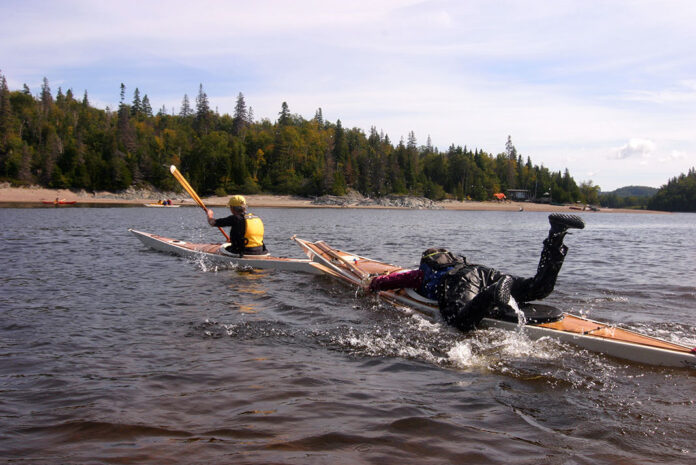
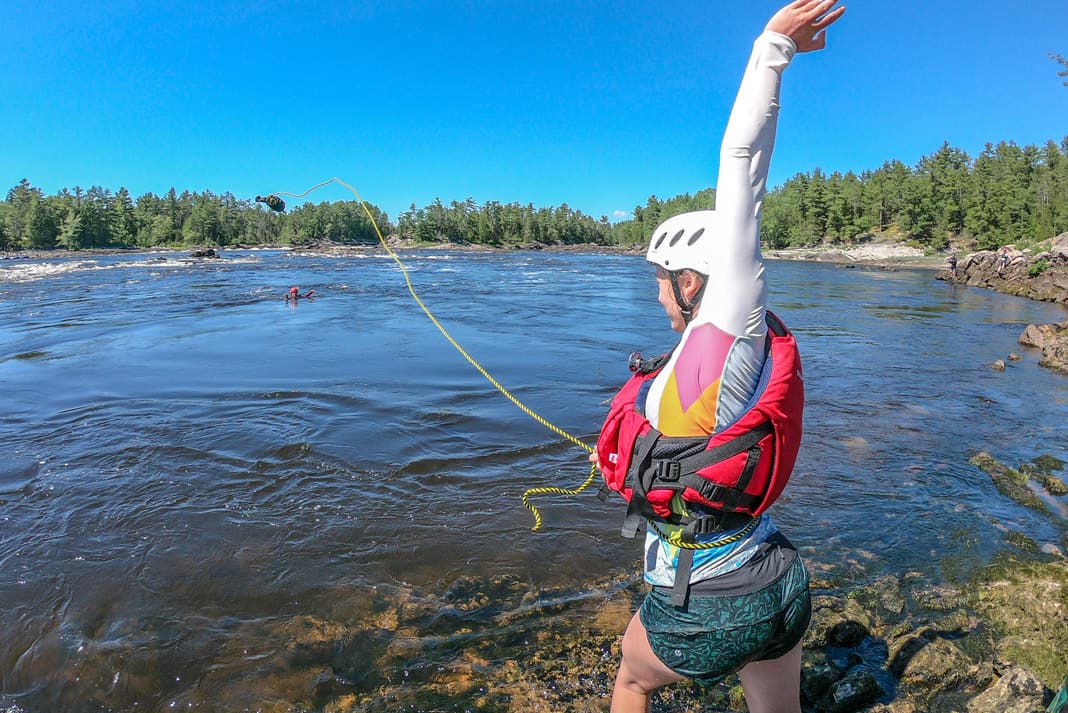
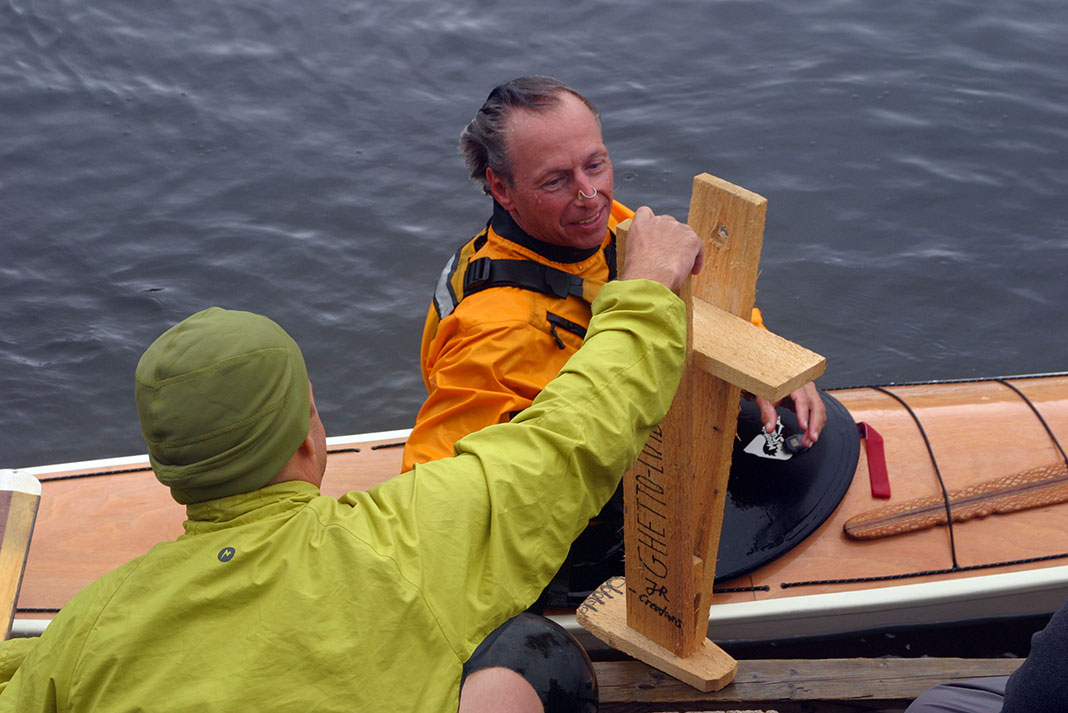
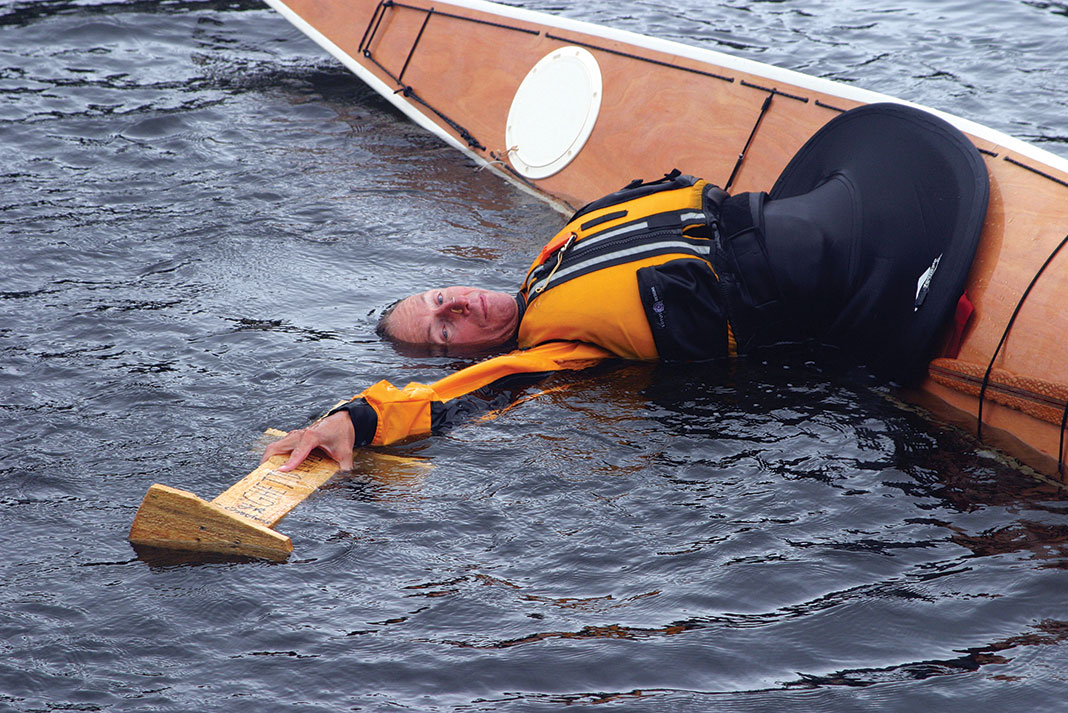
Van Doren demonstrates a kayak roll with yet another unusual object. | Photo: Virginia Marshall
1 Learn the impossible roll
Greenland rolling guru Doug Van Doren shows how to roll anytime, anywhere.
An influential pioneer in the early introduction of traditional style paddling in North America during the ‘80s and ‘90s, Doug Van Doren may be best known to his students and symposium-goers for his outrageous improvised rolls. Van Doren says his rolling demos are definite crowd pleasers, but more importantly, useful teaching tools as well.
“I’m usually handed an object cold—I’ve never tried rolling with it before—so I have to figure out on the spot, in front of a crowd, what might work.
“I look at the object and try to work out if it might correspond with a roll I’ve done before.
“One of my early improv rolls was a metal folding chair—it’s not as easy as it sounds. I figured a chair is a little bit like a seal bladder [used in a traditional Inuit roll]—it has quite a lot of surface area. The trouble of course is that it sinks, so you have to get the resistance on the water before it does.
“Because rolling is mostly body mechanics, the real issue is figuring out how the object that you have can help you or hinder you the least. I once did a forward roll with a bicycle seat just because it seemed like that would probably work. I’ve rolled with an axe, garden rake, heavy metal chain, shovel, bowling ball and a latex glove that I blew up underwater—I dubbed that one the stupid roll.
“The improvised rolls help develop good technique because you have to not think about the weird object in your hand and focus instead on what really rolls the boat, and that’s body mechanics. If it distracts you, then you’re sunk. When you’re out in real conditions and have to roll, there are a lot of distractions—it’s usually in big surf, the water’s cold or maybe you’ve broken a paddle.
“I’m a proponent of playing in the boat—playing with rolling and playing in general. I like to sit on the afterdeck and paddle with my feet on the foredeck—that’s really good for balance and quick bracing. I love to do stuff like lying on the deck and paddling with my hands. Scrabbling from the water into the boat teaches comfort and familiarity with the kayak. Plus it’s fun, and frankly that’s what kayaking is all about.”
Get in your kayak and try something unusual to improve your paddling skills. | Photo: Virginia Marshall
2 Stand tall
Get a refreshing perspective on boat stability.
Ginni Callahan, Leon Sommé, Shawna Franklin, Justine Curgenven and Greenland-style guru Doug Van Doren do it. So does the salty and sultry Freya Hoffmeister (when she’s not standing on her head or paddling around South America). Rising on trembling legs to stand triumphantly above your seat-bound peers will not only win you accolades, it will drive home with wet finality the importance of J-leans and staying centered while edging.
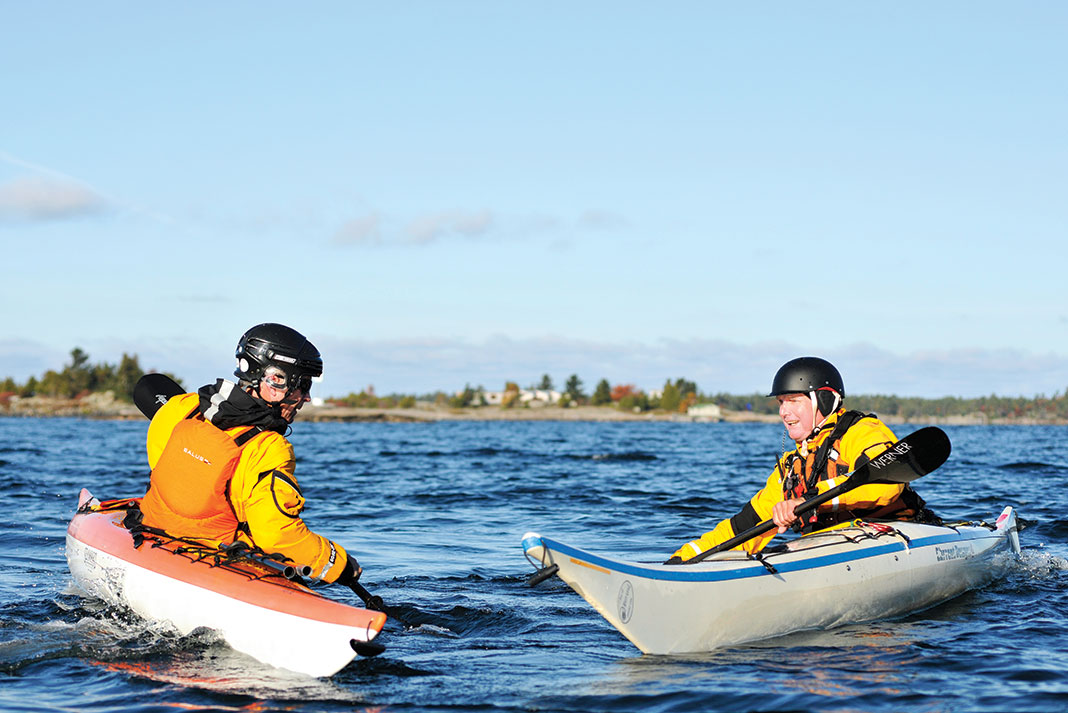
The hardiest kayakus erectus step it up to the back deck. Increase the challenge by elevating at the same time as your tandem partner. Work together and this trick gets easier, fail to support each other and it will all be over faster than Cher’s latest romance. A variation that builds group cooperation and communication is the raft-and-stand. Paddlers raft up side-by-side and hold together while one member of the raft stands and walks across the boats. Practical applications include on-water boat exchanges and rescues.
3 Add a twist
Think cross-bow draws are fancy?
If you’ve messed around with static bow jams, you’ve probably figured out bow draws and bow rudders. If you need a review, a bow draw uses the pressure of water on the power face of the blade and is generally performed moving forwards. A bow rudder uses pressure on the back of the blade and is most frequently used when traveling backwards.
Perhaps you’ve even mastered cross-bow draws and rudders (reaching across the bow to perform the stroke on the opposite side). Congratulations, these are admirable achievements and handy skills for turning or staying straight when paddling and surfing. True showmanship, however, is found in the originality of the performance—why not see how many different ways you can perform the same stroke?
Sure, a reverse-inverted-cross-bow jam puts the blade in the water the same way as a standard cross-bow rudder, but the necessary contortions are so much cooler. Pre- and post-paddle stretching recommended.
True performance kayaking. | Photo: Megan Gamble
4 Less is more
One-armed high brace turns leave a hand free for other important tasks—like waving to your fans.
Using a brace lends support to aggressively edged turns, allowing you to crank your kayak around quicker. Most paddlers learn the low brace turn, while some rough water kayakers employ a high brace for turning across a wave face. But often overlooked is the one-armed high brace, an elegant flatwater maneuver that defines true performance kayaking.
To execute this move, begin as you would for a low brace turn, building up some speed and then initiating the turn with a sweep stroke on the opposite side. Switch from edging into your sweep to edging into the turn.
Now this is where it gets fun. Let go of the paddle with your outside hand (left hand if you’re turning right) and use your inside hand to lift the paddle shaft over your head and extend the paddle into the turn. Allow the shaft to rest across the back of your inside shoulder, drop the blade’s power face onto the water with a climbing angle, and edge your boat farther than you’ve ever dared. See if you can dip your cockpit coaming under the water. With your outside hand unoccupied, you’re free to wave graciously or blow kisses to your fans.
Graceful or violent—it’s up to you. | Photo: Virginia Marshall
5 Thumbs up
Try synchronized sweeping.
Practicing pivot turns isn’t terribly exciting, but this exercise turns lazy circles into a graceful dance or full-contact competition, depending on inclinations and testosterone levels. Grab a partner and position your kayaks bow-to-stern, side-by-side about five feet apart. Now begin alternating forward and reverse sweep strokes to pivot together in unison. Speed up and see how fast you can go without ramming.
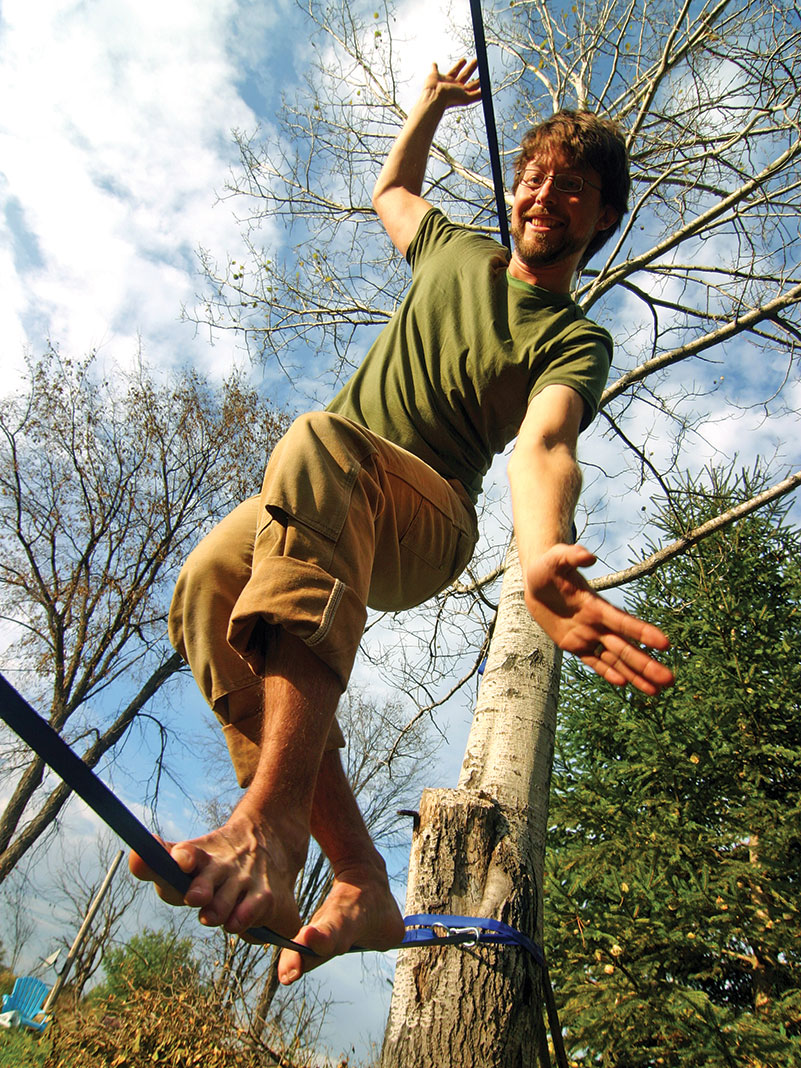
Slacklining for balance. | Photo: Virginia Marshall
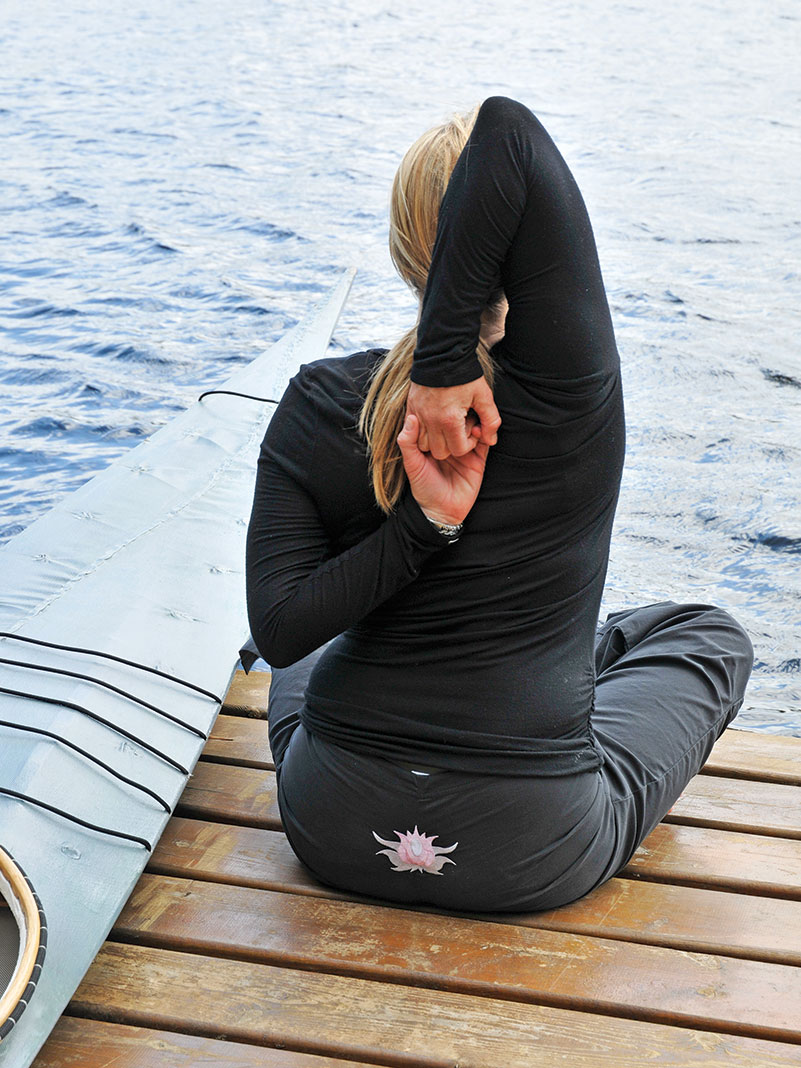
Yoga for flexibility. | Photo: Virginia Marshall
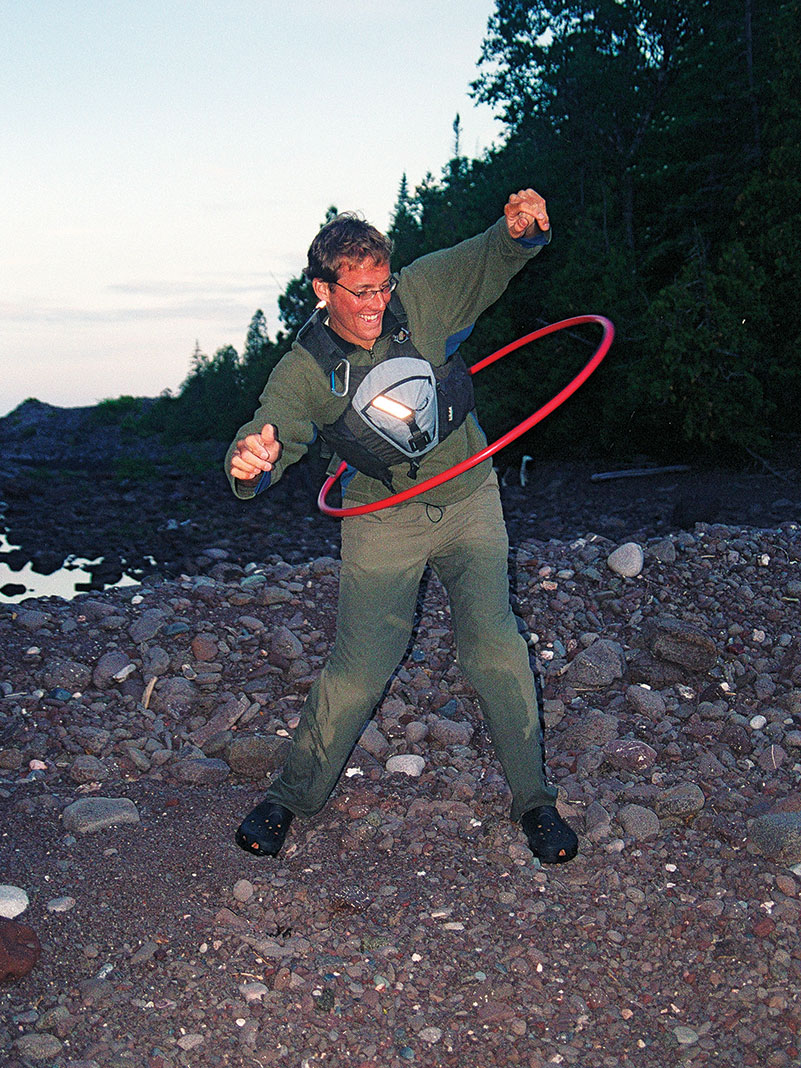
Hula hooping for rhythm (and to look cool). | Photo: Virginia Marshall
6 Expand your interests
Cross-train for excellence on and off the water.
Serious sea kayakers know the importance of cross-training for paddling fitness. Not-so-serious kayakers know it’s just fun to dabble. Three of our favorites:
Slacklining
Portable, set-up-anywhere training for improving balance, core strength and focus.
Yoga
Improves posture, increases flexibility and core strength.
Hula hooping
Limbers up hips and exercises all-important upper and lower body isolation.
This article was first published in the Summer/Fall 2011 issue of Adventure Kayak Magazine. Subscribe to Paddling Magazine’s print and digital editions, or browse the archives.
Fancy moves you will never use—unless you want to be a better paddler. | Feature photo: Virginia Marshall
Which type of canoe paddle reigns supreme, bent- or straight-shafted? It all depends. | Feature photo: Virginia Marshall
Much debate and conjecture have surrounded the argument for straight shaft versus bent shaft canoe paddles, and vice versa. We asked two of lakewater canoeing’s most respected paddlers—Boundary Waters veteran and bent shaft believer Cliff Jacobson, and guidebook author and straight shaft advocate Kevin Callan—to defend their chosen sticks. They leapt at the opportunity like gallant knights called to duty. Jacobson and Callan duel with words and paddles rather than swords and shields, but the result is every bit as entertaining…and vicious.
Cliff Jacobson: When I learned that Kevin prefers straight paddles to bent blades for lake cruising, I just rolled my eyes. I fear that boy has spent too much time in the Ontario bush!
Kevin Callan: I don’t use a bent shaft paddle. The reason is simple. I’m Canadian. Bent shaft paddling is the domain of Boundary Waters canoeheads, hence the term Minnesota Switch to describe their characteristic stroke.
Which type of canoe paddle reigns supreme, bent or straight shaft? It all depends on your perspective. | Feature photo: Virginia Marshall
Touché
KC: I tried a bent blade and immediately saw the appeal for beginner paddlers. First-time canoeists automatically attempt to travel in a straight line by switching their paddles from side to side. Paddling with a bent shaft encourages this natural reaction, with the stern paddler hollering “Hutt!” every three strokes to indicate the right moment for both paddlers to switch. But I’m not a greenhorn canoeist, so using the J stroke, or even better, the Canadian stroke, gets me across the lake straight and in style.
CJ: The fact is, every performance-minded canoeist on the planet prefers a bent shaft for racing, cruising and general all-round canoeing. Even your precious J stroke is best done bent. Why? Because the bent blade runs partly under the canoe during the stroke, whereas a straight blade runs alongside. It is a canoeing axiom that the closer to the keel line you paddle, the less directional correction is needed.
Regardless of how you paddle, the efficiency of bent blades beats straight shafts hands-down. A straight paddle lifts water at the end of the stroke, slowing the canoe. With a bent paddle, the water is pushed nearly straight back.
[ Paddling Buyer’s Guide: View all bent shaft canoe paddles ]
Parry
KC: I respect the physics behind the bent shaft. However, I’ve never cared about how fast I go while out there.
Speaking of physics, bent shafts are crap when it comes to maneuverability—try one in fast water or to turn quickly. A straight blade acts the same in both directions. If you’re doing a draw and immediately want to pry, you can. It’s the difference between wrapping your canoe around a rock mid-rapid or running a perfect line.
CJ: It’s not about speed. It’s about efficiency and being kind to your body. Paddling a straight shaft is all pull back. With a bent paddle, it’s more push down. This reduces stress on your arms and back. There is also less twisting of the shaft and your hand during the stroke, minimizing carpal tunnel and tennis elbow injuries. This is a huge advantage if you are paddling solo for hours at a time. As to maneuverability, I’ll reluctantly concede that for serious rapids, straight blades do rule.
Coup de grace
KC: I generally keep myself healthy and fit by paddling a lot and not forcing each stroke. I can’t think of anything more relaxing and effortless than Canadian stroking down a lake with a five- to six- inch-wide straight shaft, wooden paddle. Call using a traditional paddle crazy. Or accept it as a choice that reflects the real reason we go on canoe trips in the first place—to slow down.
But heck, if Cliff and I go paddling together, it would work out perfect if he was in the bow with the power of a bent shaft and I was in the stern with the poise of a straight shaft. We’d be like a married couple dancing across the lake.
CJ: Yeah, Kevin, I get it. What a deal! I’m actually all for slowing down. Frankly, I find that lollygagging along with a bent shaft is far more relaxing. But then, I use a pitch stroke that maximizes the advantage of the bent blade.
Kevin won’t like me having the last word, but for all you non-Luddites I’d like to share this final tip: There are good and bad bent shaft paddles. My favorites are made of carbon fiber and have 12-degree bends.
This article was first published in the Spring 2011 issue of Canoeroots Magazine. Subscribe to Paddling Magazine’s print and digital editions, or browse the archives.
Which type of canoe paddle reigns supreme, bent or straight shaft? It all depends on your perspective. | Feature photo: Virginia Marshall
Parents of young children, don’t you miss the great outdoors? Great news: bringing kids along on trip doesn’t have to put a damper on your taste for adventure. Whether you love to get outside on foot, by caravan or in the cockpit of your kayak, our family camping experts share their top tips and tricks for creating amazing and memorable trips everyone will love.
Your less-enlightened friends will assure you that kids mean your outdoor days are over. Step one: ignore them.
Never too early
Kids are never too young to get outside. “Earlier is better,” says outdoors supermom Alice Young-Clark—in some ways, it’s easier too. “We started at three months. There was no extra food or water to carry while nursing, although you do have to deal with diapers.”
Your less-enlightened friends will assure you that kids mean your outdoor days are over. Ignore them. | Feature photo: Bruce Kirkby
Maintain goodwill
If you’re worried your terrific tot will become the tent terror of campground C by night, introduce yourself to your closest neighbors and offer earplugs. You’ll find most campers are just excited that your little one is enjoying the outdoors.
Get their feet wet
For kids new to camping, make an adventure of using sleeping bags, pads and jacket pillows at home before a trip, removing this variable from the new experience. Set up the tent in the backyard to introduce them to it before embarking on an adventure.
[ Plan your next family paddling adventure with the Paddling Trip Guide ]
Reminders of home
Pack just a little bit of home with you. Whether it is your child’s favorite bowl and spoon or The Lorax for the thousandth reading, familiar items help anchor the idea that your family is home as long as you are together.
The world is your toy chest
Practice nonattachment and leave most toys behind. “Toys matter very little because kids gather many treasures along the way,” explains Young-Clark. “This way, kids learn to find and collect, and let go of things.”
Kids’ choice
Offer some (pre-screened) options and let your kids help plan the trip. Do they want to camp at a beach or visit a waterfall? They’ll buy in if they feel like the trip is theirs as well.
Double the fun
Nothing makes a camping trip more fun for your kids than when they can bring a buddy. The real bonus is for parents: whining is just not cool in front of your friends.
Adults seek out big views, remote areas and wildlife. Kids just want to play. | Photo: Morgan David de Lossy/Unsplash
5 kid-sized camping tips
Ramp up to adventure
Be realistic and know your child’s limits. “The average time a kid will only spend 30 to 40 minutes in a canoe or on a hiking a trail, especially if they’re under five,” notes author Kevin Callan. “We introduced our daughter to canoe tripping slowly by going on a half-day outing, then a full day, then a weekend, and so on. If you don’t move up the ladder of progress slowly, your child will definitely come crashing down.”
To make longer days with kids work, take lots of breaks and eat like hobbits. “In addition to stopping for anything interesting, be sure to take regular breaks for breakfast, second breakfast, lunch, snack, supper, and bed time snack,” says Young-Clark.
Set attainable goals
As a rule of thumb, older kids can hike half a mile per day for each year of age. Regardless of the distance you choose, expect “Are we there yet?” to be a common refrain.
Fun comes first
Adults seek out big views, remote areas and wildlife. Kids just want to play. “They want to play in water, climb on rocks, crawl through narrow crevices, and throw stones,” explains Michael Lanza. “Choose destinations that you know will provide natural features that engage and excite kids. Make them want to go out again.”
Lose your agenda
Happy camper Callan re-learned the meaning of living in the moment from his daughter. “Kyla taught me to slow down and spend time looking at things. I remember her looking at an anthill for over half an hour,” he says. What’s important is sharing the experience. If being together is the goal, every trip will be a success, whether you’re camping by car, canoe, ski, foot or llama.
Parents willing to play the role of camp counselor will be the heroes of the day. | Photo: Brooks Rice/Unsplash
3 ways to stay entertained
Keep kids occupied
No matter how tired you are, your kids will still need activities to fill the day. Instead of beach naps, parents willing to play the role of camp counselor and armed with songs, stories, puzzles, crafts, cooking projects and games will be the heroes of the day.
Crafting a keepsake
A family trip scrapbook is a beautiful keepsake and the ultimate rainy day activity. Bring basic craft supplies and use needles, pebbles, bark and lichen from the forest floor to have everyone add their own touch to daily journal pages.
Budding naturalists
Bring field guides for flora and fauna in the area. Being able to point out and name local plants and animals and interesting facts about both can be a great way to keep kids aware of their surroundings.
Your tent will become a nylon funhouse, so pack a little extra padding so kids can roll and leap at will. | Photo: Dave Quinn
5 tips to remember on trip
Up off the ground
Managing the pebble and moose poop intake of a crawling toddler quickly becomes exhausting. If you have very young campers, bring a Bumbo Chair or playpen so they have somewhere off the ground to sit.
Pack extra padding
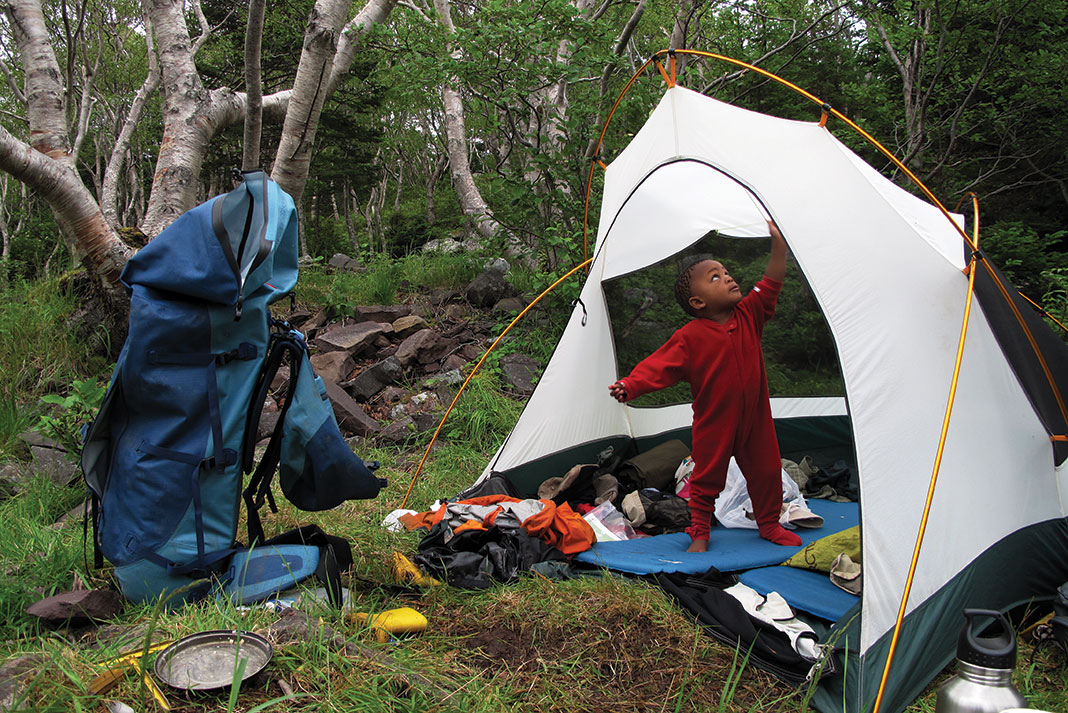
Your tent will become a nylon funhouse, whether you like it or not. It’s all fun and games until someone bonks their head on the root or rock that kept you awake all night. Bring an extra sleeping mat or two so kids can roll and leap at will or line the tent floor with foam floor tiles.
Communicate clear boundaries
Constant reminders about cliff edges and water hazards will become tedious—for you and the kids. Instead, explain the hazard and make appropriate rules together, such as clear boundaries (like, “Don’t go past that big tree” or “Wear your PFD to play near the water”). “Experienced older kids need less instruction and can be given more freedom,” explains Lanza, “but don’t assume older kids who are beginners will understand every potential hazard.”
Make a game of having kids help with age-appropriate camp chores. Five-year-olds can help gather kindling, an eight-year-old can help start a fire, and a 12-year-old can be responsible for a meal.
Laugh off the missteps
Accept that things will go wrong while on a trip. “You can count on that,” guarantees Callan. “If you can laugh at the misfortunes, the moderate ones at least, kids will learn to relax and do the same.”
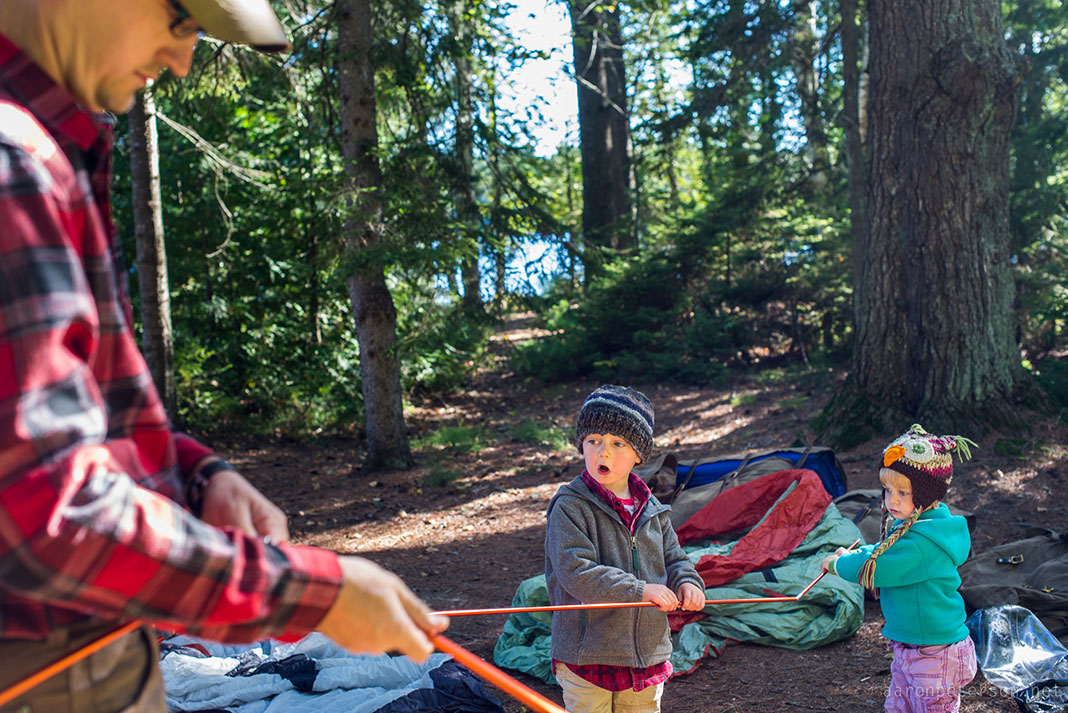
Whether a task is perceived as a painful chore or a perk often depends on whose idea it was. | Photo: Aaron Peterson
5 tips for dealing with gear
Loosen those purse strings
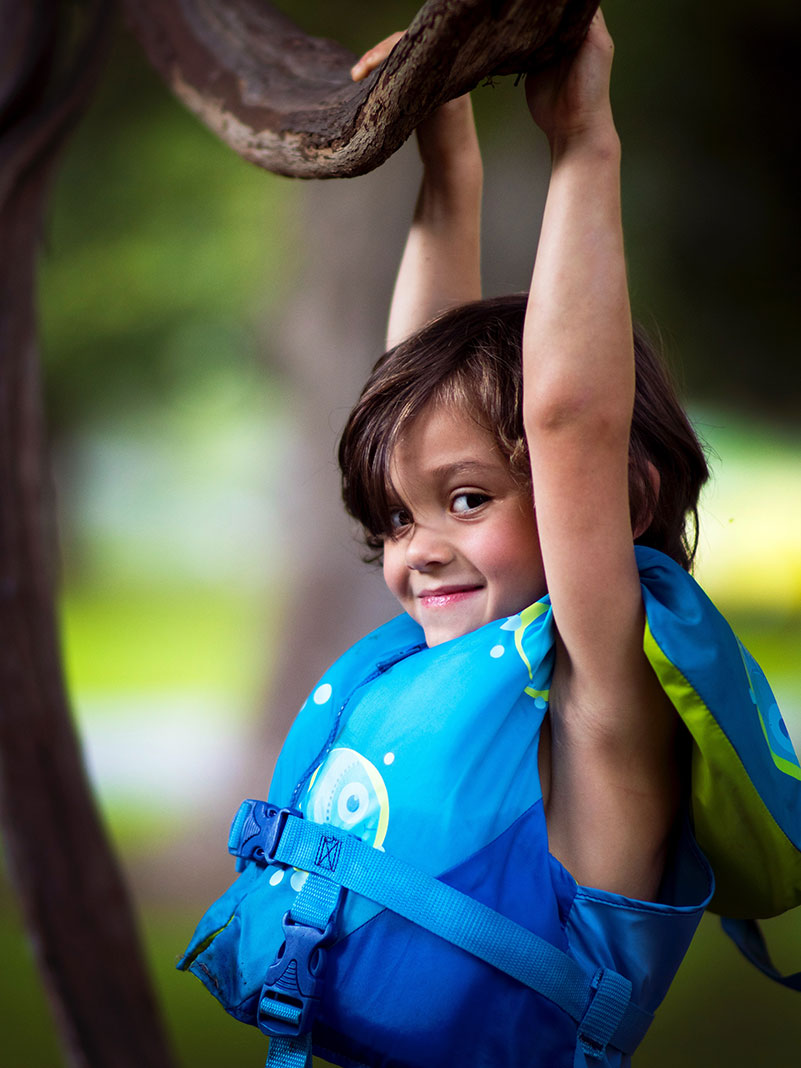
Maybe you can make do with that old, scruffy PFD that rubs your nipples raw, but make sure your child is comfortable with well-fitting, quality gear in a color they like—or you’ll hear about it.
Get your kids used to the idea of walking early, and they will grow into strong hikers. “I preferred a child-carrier backpack to a stroller, even in urban settings, for those occasions when my kids needed a break from walking,” explains Lanza. “It gives you exercise, is more convenient on stairs, and helps communicate to kids that our family carries packs—that we’re hikers.”
Timing is everything
Whether a task is perceived as a painful chore or a perk often depends on whose idea it was. Don’t force your kids to carry packs, instead wait until they ask for one, adds Lanza.
Prepare for the elements
Since kids can’t regulate their body temperature as well as adults, half the stress of traveling with them becomes keeping them either dry, cool or warm. Weather-appropriate layers are a no-brainer, but an ultra-light trekking umbrella is a welcome shield from the elements and will become a staple in your camp kit.
If you wear your PFD, your kids will wear their PFD. | Photo: Jordan Bergendahl/Pexels
Age-appropriate sleeping quarters
Instead of a crib, consider using a portable shelter, such as a Kidco Peapod for babies and toddlers. It is also a great bug-proof nap nest.
3 ways to come home safely
Set a safe example
If you wear your PFD and helmet, your kids will wear their PFD and helmet. Parents that force their children to wear safety gear without wearing their own are asking for a battle.
Wear a whistle
In the backcountry, have your kids wear a whistle on a lanyard and instruct on how to use it. Explain what it means to be lost (when you can’t find Mom or Dad), and what to do: stop, blow your whistle three times, and listen for a response, then repeat.
If you’re more than a 911 call away from help, Mom and Dad should invest in a wilderness first aid course for peace of mind.
This article was first published in the Spring 2015 issue of Canoeroots Magazine. Subscribe to Paddling Magazine’s print and digital editions, or browse the archives.
Your less-enlightened friends will assure you that kids mean your outdoor days are over. Ignore them. | Feature photo: Bruce Kirkby
The U.S. Coast Guard has released its 2021 boating accident data.
“The good news is that after the explosive growth and record number of accidents and fatalities that occurred during the pandemic year of 2020, the number of recreational boating incidents and fatalities declined in 2021,” says Water Sports Foundation Executive Director Jim Emmons.
Total deaths fell from 767 in 2020 to 658 in 2021, a 14.2 percent decline. However, “Paddlecraft deaths still remain high, and kayaks are listed as the vessel type with the second highest fatalities behind open motorboats,” Emmons adds. There were 160 fatalities while kayaking, canoeing and paddleboarding in 2021, versus 164 in 2020.
The U.S. Coast Guard reports:
Kayaks are listed as the vessel type with the second highest fatalities (15 percent), behind open motorboats (44 percent)
In 2021, there were 96 fatalities while kayaking, compared to 112 in 2020
In 2021, there were 46 fatalities while canoeing, compared to 42 in 2020
In 2021, there were 18 fatalities while standup paddleboarding, compared to 10 in 2020
Where cause of death was known, 81 percent of fatal boating accident victims drowned. Of those victims with reported life jacket usage, 83 percent were not wearing a life jacket
Alcohol use is the leading known contributing factor in fatal recreational boating accidents; where the primary cause was known, it was listed as the leading factor in 16 percent of deaths
Take a paddling safety course from the American Canoe Association (ACA), your local paddling shop or outfitter, or other reputable source.
Take a boating safety course from the U.S. Coast Guard Auxiliary, U.S. Power Squadrons® or your own state’s boating agency.
Take on-the-water skills training.
Wear A Life Jacket
Everyone, even strong swimmers, needs to wear a life jacket at all times when on the water. It is extremely difficult to put a life jacket on once you fall into the water. Even a light wind can blow any paddlecraft away from you, faster than you can swim.
Always wear a USCG-approved Level 70 or Type III life jacket designed for paddling.
Dress For Immersion, Not Air Temperature
Your body loses heat much faster when immersed in cold water than it does when dry.
Avoid cotton clothing like t-shirts and jeans; they retain water and accelerate cooling when wet. Synthetic fabrics, or wool, are generally a better choice. If the water is very cold (60° fahrenheit or less), you should wear a wetsuit or drysuit.
Check The Weather
Plan for changing weather conditions. Prepare for the worst case.
Don’t forget to check tide, currents, or river levels.
Know The Local Hazards
Check navigation charts before you launch.
Check with those who have local knowledge of man-made and natural hazards, e.g. low-head dams; sweepers, strainers and undercuts; tides and currents; and rocks and shoals.
Paddle Sober And Smart
Never mix alcohol and paddling. Coast Guard and state BUI (boating under the influence) laws apply to all vessels. This includes canoes, kayaks, SUPs and rafts.
The U.S. Coast Guard compiles statistics on reported recreational boating accidents. These statistics are from accident reports filed by the owners and operators of recreational vessels involved in accidents. The 50 states, five U.S. territories and the District of Columbia submit accident report data to the Coast Guard for inclusion. Access the full 2021 Boating Accident Report Data here.
SERENITY NOW, INSANITY LATER. | PHOTO: FRANCIS LÉPINE/ BIOSPHEREPHOTOGRAPHIE.CA
It’s not easy being a paddler in the city. Expensive real estate, limited boat storage, premium parking, traffic congestion and polluted waters conspire to make metropolitan kayakers feel like they’re paddling against the current. Here are eight secrets to city survival, gained from years of experience paddling and battling through the worst urban woes.
Easier said, right? But waterfront city living gives you the best of both worlds—urban convenience out the back door, watery wildness out the front. Walk your kayak down to the dock for a sunrise paddle, or size up surf conditions from the kitchen window.
To accomplish this it helps to lower your standards. I managed waterfront living as a student by renting rooms in dilapidated houses, subletting, housesitting and moving indiscriminately between basements, garrets and laundry closets. My bed was a Therm-a-Rest air mattress on shipping pallets, but I lived in some of the Pacific Rim’s priciest oceanfront ‘hoods for less than $400 a month.
The next best thing to living on the water is to park your boat there. | Photo: Jocelyn Allen/Unsplash
2 Get your boat a waterfront pad
The next best thing to living on the water is to park your boat there. The 50-odd cubic feet required to store a kayak is a slice of waterfront that almost anyone can afford.
Just be prepared to get in line. My local paddling club has been full for years. Every spring I get an email from someone who’s de-cluttering the waitlist, asking what skills I might have to volunteer if I were chosen to join, which hints at a suspiciously biased selection process. I promised to wash and wax everyone’s kayaks, and attached a swimsuit photo, but I haven’t heard back.
3 Ditch your car
Like all booming cities, my town is in a state of perpetual gridlock, construction and repair. The road to my local put-in has been closed for more than a year. Driving to the water means running a gauntlet of street closures, flag-persons, single-lane bridges and traffic jams that crop up around various special events and seasonal attractions. I pass a Cirque du Soleil show, a bustling Chinese grocer and a waterfront pool bar, capacity 3,000, where Justin Bieber likes to go when he’s in town.
At the beach, I have to fight the other three million city residents for parking. One time, the only available space was along a strip of vacant and overgrown waterfront. Forced to portage through a network of shrubby singletrack, I encountered an unusual number of deeply tanned and extraordinarily friendly middle-aged men before reaching the water.
Had I sorted out waterfront storage as per section two, I could have biked to the water in 10 minutes. Until I get into that paddling club, I’m shopping for a kayak trailer for my bicycle.
People are sharing everything these days: cars, tools, houses. Like these items, good kayaks are expensive, but durable and long lasting. Why own three boats that only get used for hours a week? I’ll bet one kayak could serve five or 10 people. We could store it by the water, share the lock combo, and set up online reservations. I’m thinking of starting a community library for outdoor gear of all kinds, so I don’t have to own a nest egg’s worth of kayaks, canoes, surf skis and paddleboards for every conceivable mode of watery play. Want to join?
5 Cover your cockpit
Pricey real estate and high populations make homelessness a problem in our cities, notably among wildlife. Spiders and slugs are my customary cockpit stowaways. But twice, raccoons have turned one of my kayaks into a fetid winter den or part-time port-a-potty. And readers may remember an earlier reference in this column to a kayak bulkhead that was devoured—in the spring I found a gaping hatch full of pungent foam crumbs. These poor vermin are, like us paddlers, just wild creatures trying to eke out a living in a hostile urban jungle, but that does not make us allies. Shell out for a good cockpit cover.
6 Check the water quality
In the city, weather conditions are generally tamer, but along with the forecast I also check online water quality reports. After heavy rains, the E. coli count skyrockets. It’s okay to paddle, but wait a couple days before attempting rolls or rescues.
SERENITY NOW, INSANITY LATER. | PHOTO: FRANCIS LÉPINE/ BIOSPHEREPHOTOGRAPHIE.CA
7 Embrace the offseason
Come fall, the circus leaves town, the beachgoers are replaced by migrating birds, parking lots empty, the bacterial counts drop and the algae blooms die off. Frigid temps wrap the busiest beaches in a cloak of peace, wildness and free parking. To love off-season paddling, all you need is a drysuit.
8 Adopt a watery state of mind
The key to overcoming the travails of urban paddling is to let your time on the water be a gateway to a new pattern of thought. For me, being surrounded by millions of other humans threatens to turn every petty annoyance into a personal battle: the guy who cut me off at the stoplight, the gentrifying hordes driving up house prices, the construction workers blocking the roads. It’s all somebody’s fault. Nature inverts this mentality; out there, it’s not about you or anybody else. All you can control is your attitude. And that’s calming.
One of my favorite places to paddle is a large peninsula that’s younger than I am—it’s constructed entirely of construction waste. As new glass condos overtake the ephemeral downtown, truckloads of rubble are dumped here for infinite repose, raising the lakebed to become parkland, a refuge for coyotes and waterfowl.
The bulldozed remains of so many expressways and buildings have a timeless, wild quality that belies their manmade origins. It used to make me angry that all I had to look at were the crumbled corpses of factories and warehouses. That the weathered driftwood and fragrant kelp beds of my student days in the Pacific Northwest had been cruelly replaced by broken concrete telephone poles and mangled knots of rebar twisting out of the shallows like jagged reefs.
But paddling is paddling. It tires your muscles and opens your mind in the same way, no matter how urban. Whatever the headaches of getting on the water and home again, you’re a better person for it.
This article first appeared in the Spring 2015 issue of Adventure Kayak magazine. Subscribe to Paddling Magazine and get 25 years of digital magazine archives including our legacy titles: Rapid, Adventure Kayak and Canoeroots.
Every June 26th, The Canadian Canoe Museums celebrates its favourite holiday of the year – National Canoe Day.
June 26th was coined National Canoe Day by The Canadian Canoe Museum following a CBC campaign that, in 2007, declared the canoe one of the Seven Wonders of Canada. Ever since, and in many ways – from proclamations to paddling parties – Canadians have connected and shared their affinity for canoes. Since the COVID-19 pandemic, National Canoe Day has also been celebrated virtually.
This will be The Canadian Canoe Museum’s final National Canoe Day celebration at its current location before the museum embarks on its final “portage” to the water’s edge, where it will make its new home. For the past two years, the CCM has enjoyed expanding its celebrations online during the pandemic, allowing more paddlers to join in and connect over their passion for canoes (and the occasional kayak here and there). This year, The Canadian Canoe Museum will be celebrating virtually and in person at the Museum so that those near and far can participate.
[ View the largest selection of canoes in the Paddling Buyer’s Guide ]
Join the online National Canoe Day celebrations from anywhere in the world
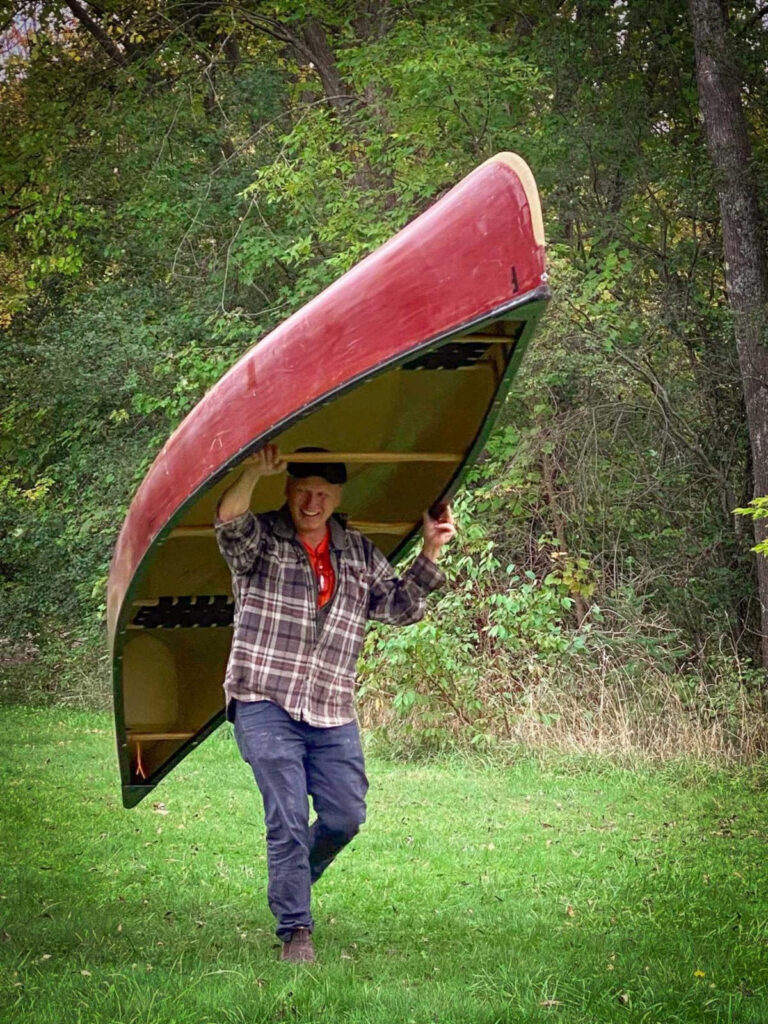
Portaging can be one of the most challenging parts of a canoe trip – and the CCM is about to embark on a long, final “portage” as staff prepare to move more than 600+ canoes and kayaks (and even more small artifacts) to the new museum. To help with this “big lift,” you are invited to join the CCM on a virtual portage.
Share a picture (new or old) of you portaging your canoe with the hashtag #PortagePic on June 26th and tag The Canadian Canoe Museum on Facebook, Twitter, or Instagram (@cndncanoemuseum). The museum wants to hear your best (and worst!) portaging stories. CCM staff will be liking, commenting, and sharing on social media throughout the day, along with a few special guests.
Free Admission To The Canadian Canoe Museum
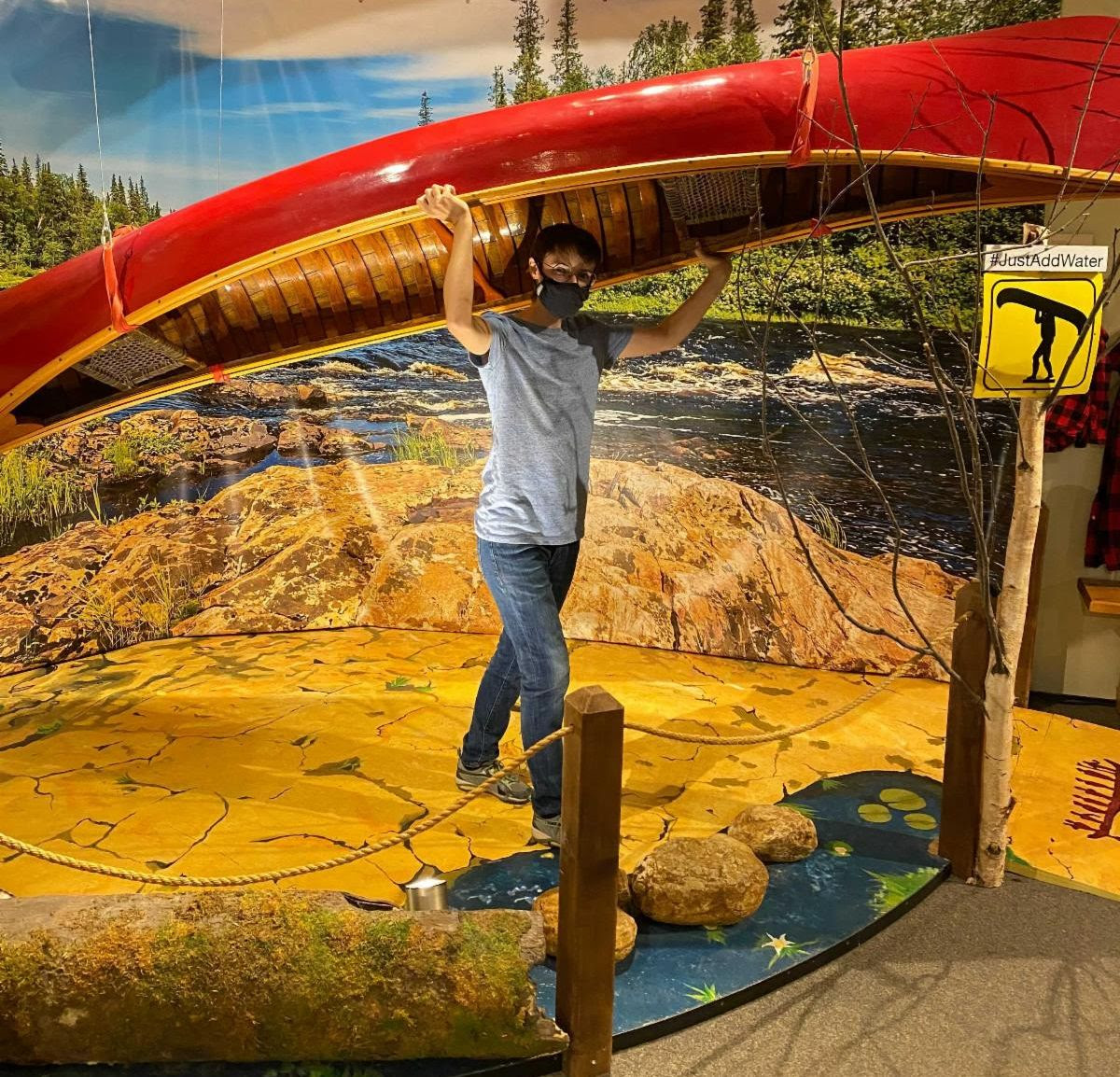
On June 26th, admission to The Canadian Canoe Museum will be free. The Museum will be open from 10 a.m. to 4 p.m.
This is a perfect opportunity to visit for the first time or once more before the museum closes on Labour Day in preparation for its move. Visitors can also participate in sharing their own #PortagePic by taking a photo at the portage photo booth in the front lobby.
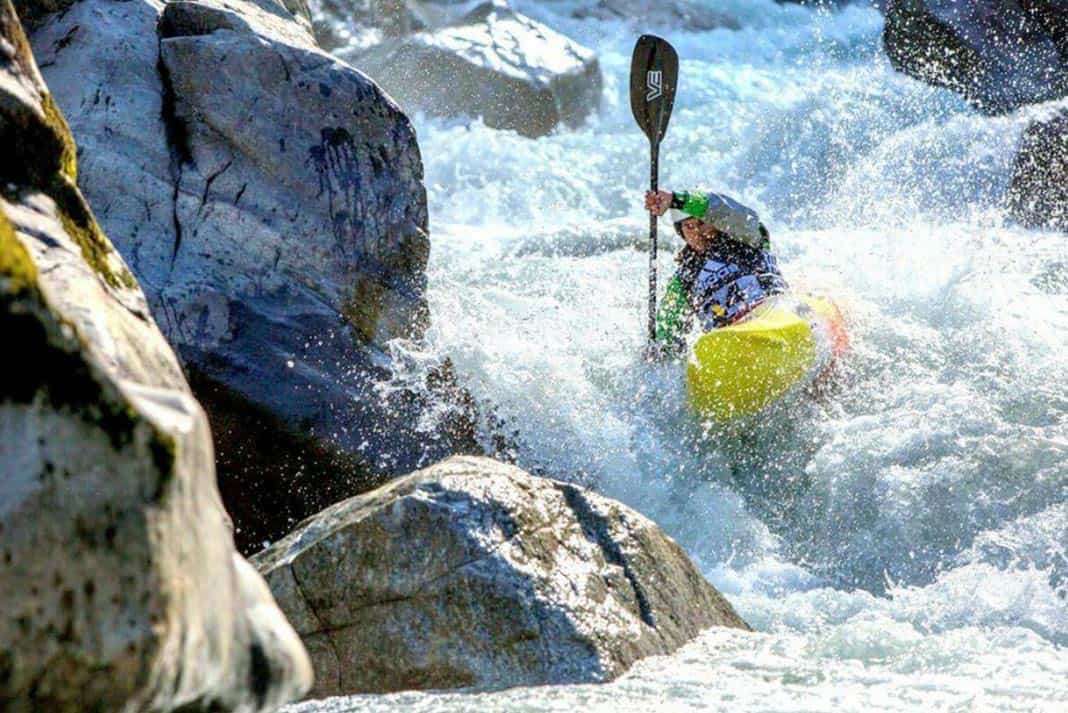
What to avoid, and how to escape if you do get caught in a hydraulic. | Feature photo: Courtesy Pyranha
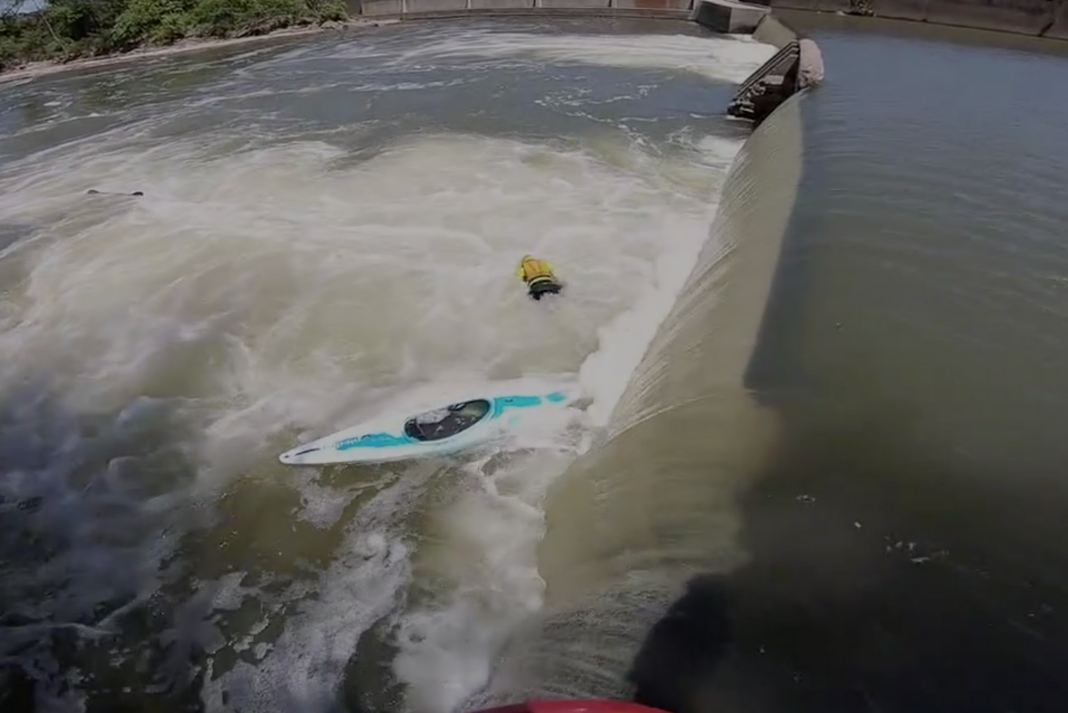
Russ Schroeder realized this wasn’t your typical spin cycle after the one-minute mark. Slipping off-line and into the don’t-go-there left side of the Petawawa River’s Suicide Rapid, Schroeder hit a retentive pour-over and flipped. The whitewater kayaker’s training on how to escape a hydraulic kicked in—but would it be enough?
“I knew the boat wasn’t going to flush, says Schroeder, “so I pulled my sprayskirt.”
What to avoid, and how to escape if you do get caught in a hydraulic. | Feature photo: Courtesy Pyranha
Pinched in a narrow trough, he swam hard across the hole, grabbing for any water moving downriver; curled into a ball to try to reach the downstream current along the river bottom; and kicked off the rock whenever his body came into contact with something solid. After an estimated two minutes—an eternity in the disorienting, hypoxic realm of a powerful recirculation—Schroeder had exhausted every textbook hole-escape technique.
“I finally just went limp,” he remembers, “then I flushed.”
Two techniques to handle hydraulics
1 Deal with it
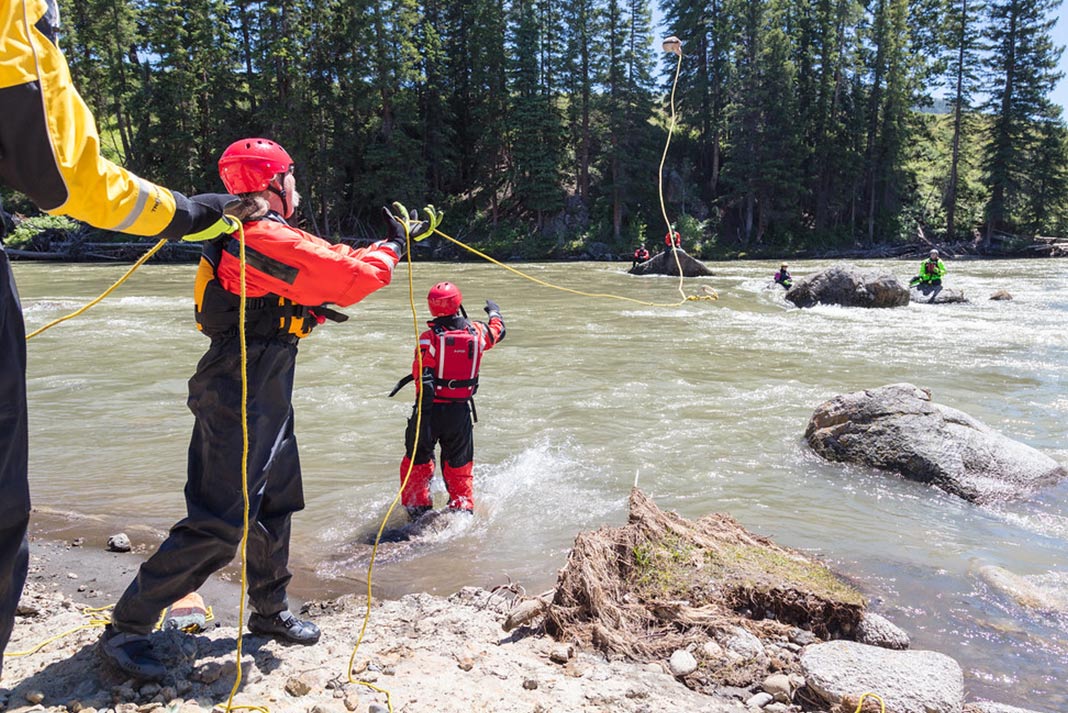
Swiftwater Rescue professionals like Rescue Canada’s Matt Cuccaro teach two proven self-rescue strategies for hole-escapes: swim for the side or swim for the bottom. Schroeder’s full-body surrender, which he admits was more the result of beginning to lose consciousness than a considered tactic, is a last resort.
[ Paddling Trip Guide: View all whitewater rescue courses ]
“Stay active—it’s all about reaching for that water that’s moving downstream,” says Cuccaro. If you can’t get to a side, swim hard into the current and curl into a ball. With any luck, you’ll be driven deep into the flushing current below the recirculation.
Paddling in pairs opens up more rescue options if you end up in a tough spot. | Photo: Pixabay
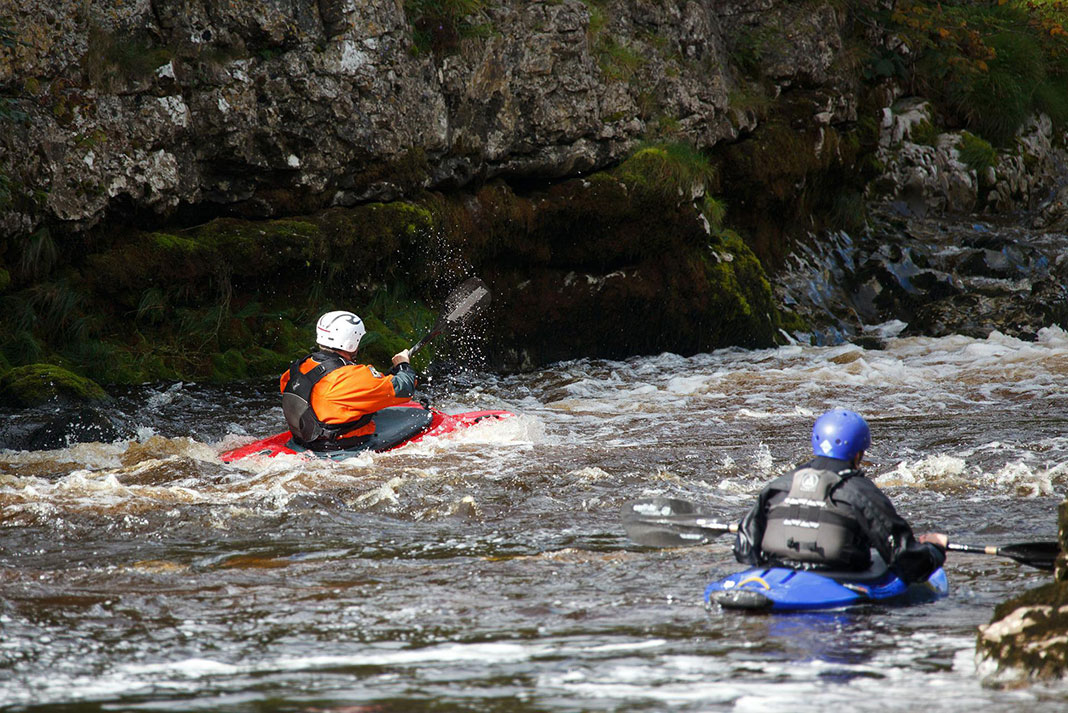
Paddling in a group increases safety and rescue options. During his swim, Schroeder was unable to grab his sole paddling partner’s throw bag. Tag line and live bait rescues were potential lifesavers not possible with just one rescuer.
Thorough scouting is the best way to steer clear of a sticky situation. Be especially wary of frowning holes—those with edges that curve upstream, feeding back into the center—and quiet, or relatively unaerated, hydraulics. The latter recirculate well below the surface so are particularly hazardous for swimmers.
The critical factor is the distance between the pour-over slot and the boil line, which delineates where current begins moving downstream. In general, walk around anything with a boil line over half a boat length.
This article was first published in the Summer/Fall 2010 issue of Rapid Magazine. Subscribe to Paddling Magazine’s print and digital editions, or browse the archives.
What to avoid, and how to escape if you do get caught in a hydraulic. | Feature photo: Courtesy Pyranha


 This article was first published in the Summer/Fall 2011 issue of Adventure Kayak Magazine.
 This article first appeared in the Spring 2015 issue of Adventure Kayak magazine.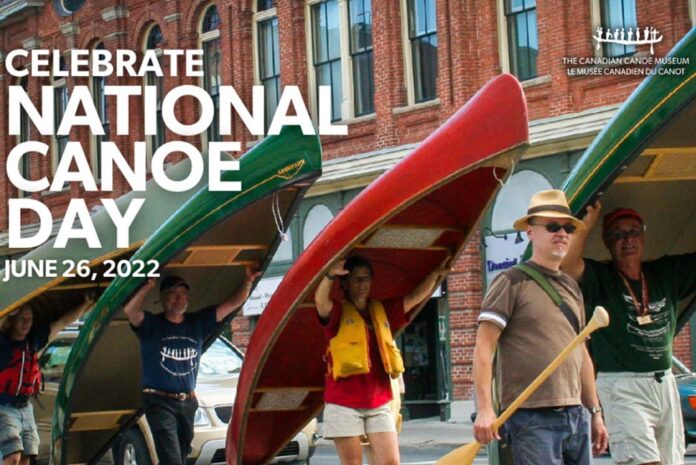
 Join the online National Canoe Day celebrations from anywhere in the world
 Free Admission To The Canadian Canoe Museum
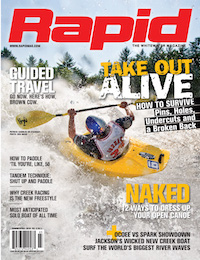 This article was first published in the Summer/Fall 2010 issue of Rapid Magazine.



