The unfortunate reality of river kayaking is that there are often deadly hazards. Getting pinned is one of the worst of them.
Things can take a turn in an instant when a member of your group finds themself pinned—especially if the pin is holding the boat or the paddler in a position where breathing is impaired. Having a knowledgeable, fast-acting safety team can mean the difference between life and death in these scenarios.
A group of experienced kayakers ran into trouble on Richland Creek, Arizona when one member of the group got stuck in a vertical pin. Watch the video and read the first-hand account below to discover what happened next.
Words By Derek Hankins:
“’Apple Pie Rapid’ has a notorious sieve on the left side, only in play at high water. A member of our crew was pushed off line and happened to find the sieve, and pinned bow first, upside down. Fortunately, he was able to hold himself up on a log that was stuffed under the rock already. The log was also preventing him from being able to pull his sprayskirt, so he was essentially stuck.
I realized he was in a bad situation and tried to get to him as quickly as possible, leaving behind my throw rope in my boat as I was focused on getting to him and stabilizing him. When I got to him I tried to grab him but the water was too deep and turbulent to safely reach him in the sieve.
Thankfully, another member of our crew was right behind me with a rope that we were able to get to him and pull him out of his shoes and through his sprayskirt.
In hindsight, I should have taken the extra couple of seconds and grabbed my rope, something I will make sure I do from now on. We were able to extract the kayak with a z-drag. Swift Water Rescue is an integral part of running whitewater, you never know when you will find yourself in a life or death situation. It is always good to be prepared for whatever may happen, and just hope you don’t need it. Stay safe out there folks.”
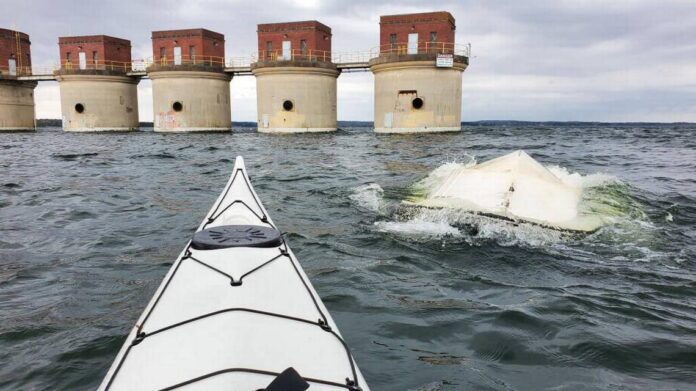
The view from Allen’s boat as he rushed to rescue two men from a capsized motorboat. | Photo courtesy Allen Hutto
Allen Hutto was having one of those days.
He’d loaded his sea kayak for an early morning paddle, but on the way to the lake his car picked up a nail. Repairing the flat took a couple of hours.
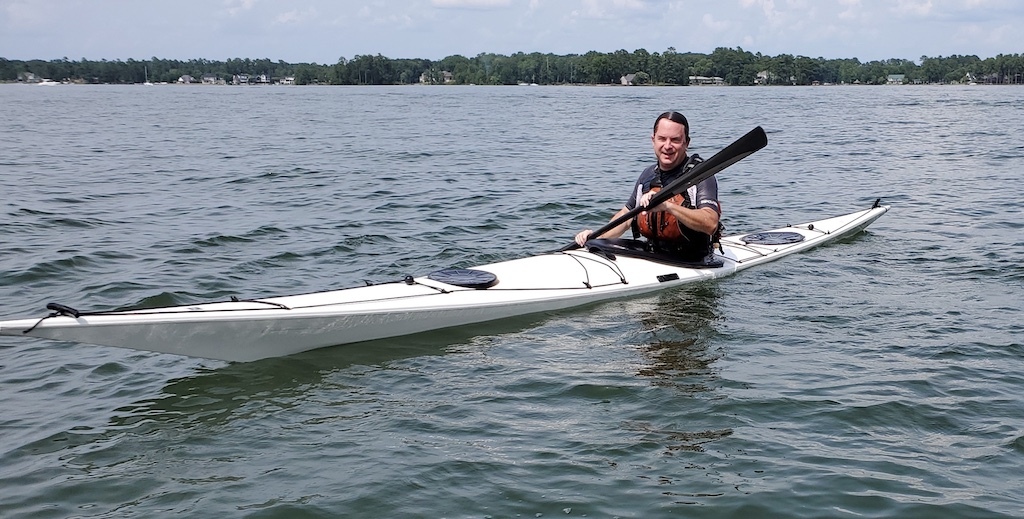
The wind was whipping when he finally got to the boat launch at Lake Murray near Columbia, South Carolina, and most of the boat traffic had already called it a day. Not Allen. He’s been sea kayaking for 35 years and worked hard to improve his skills, training with the likes of Derek Hutchinson and Nigel Foster and earning his Level 4 Open Water certification from the American Canoe Association.
Allen enjoys paddling in lively water, and the wind ripping across Lake Murray was just what he needed to get his mind off the flat tire and the workweek ahead.
Kevin Outlaw and Will Dobose were having a day too. The longtime friends had gone out fishing that morning in Will’s 16-foot skiff and were well offshore when the wind began to rise. As they motored toward the ramp, the waves grew steadily larger.
[ Paddling Buyer’s Guide: See all rescue kits ]
Lake Murray is formed by the Saluda Dam, which stretches a mile and a half across the eastern end of the reservoir. It was the world’s largest earthen dam when it was built in the 1930s, and when the wind blows out of the west as it was that day, the waves pile up against the dam and double back on themselves. Kevin and Will would have to pass through this gauntlet of rough water to reach the boat ramp at the north end of the dam.
Kevin had his life jacket on and buckled before leaving the boat ramp. Though an avid fisherman, he’s not at all comfortable around water. In fact, in his 33 years Kevin had never ventured more than knee-deep in a lake or ocean. “If I go on the lake, I’m going to fish,” he explains. “I’m not going for any water sports or nothing like that.”
Kevin says urged Will to wear a life jacket too, but Will refused. The life jacket was too tight, he said. Later, as Kevin struggled to guide the little skiff though the building waves, there was no way he could put it on.
“The wind was so heavy, it was pushing more water into the boat than the bilge pump could put out,” Kevin recalls. “It just happened so quick.”
Allen had honed his kayaking skills for years, earning his ACA Level 4 Open Water certification. | Photo courtesy Allen Hutto
Allen estimates he was about 100 yards from Kevin and Will when their boat rolled over, near a set of massive concrete and brick towers that draw water into the dam’s hydroelectric turbines.
“They were about 90 degrees off my course and I just happened to look over and I saw the boat capsize,” he says.
In all the safety scenarios Allen had practiced at kayak symposiums, during his guide training and with paddling friends, this one had never come up: One kayaker, single-handed, aiding two big men in open water.
Allen didn’t hesitate. “I started yelling, ‘I’m coming! I’m coming!’ And I just spun around and hauled ass over there,” says Allen, who estimates it took him about a minute to reach the capsized skiff.
As he approached he could see Kevin floating in his life jacket, and Will holding tight to him with a look of panic in his eyes.
“I don’t think that other guy could swim,” Allen says, referring to Will.
In fact, neither Kevin nor Will is much of a swimmer. In the 60-odd seconds it took Allen to arrive, Kevin’s life jacket was the only thing keeping both of them afloat. “Will was holding on to me and I was staying afloat for the most part,” Kevin says. “So my thing was to make sure that Will didn’t let go. I kept telling him, ‘He’s just about here. He’s just about here.’”
When Allen reached the men he told them to grab the bow of his kayak, and once they’d latched on he took a moment to reassure them, saying, “We’re going to get you out of this. You’re going to be fine.”
Allen knew he was taking a chance assisting the two men, but the idea of not helping them never crossed his mind. “The only thing that went through my head was ‘Get your ass over there and help them,’” Allen says. He was in a Nigel Dennis Latitude sea kayak with a bomber spray skirt, dressed for the conditions with a full compliment of self-rescue gear. Most of all, he had years of rough-water paddling experience and rescue practice.
[ Plan your next rescue training with the Paddling Trip Guide ]
“I focused on getting them to hold onto the boat properly and just being ready to brace if I had to,” said Allen, who was using a Greenland-style paddle. Then, with Kevin and Will stabilized, Allen took a moment to assess the situation. The wind was pushing the trio toward the intake towers. Allen back-paddled between two of the stacks and took a hard look at the boulder-clad edge of the dam. It was about 400 feet downwind, across a jumble of rebounding waves. It wouldn’t be easy, but with 15 to 20 knots of wind at their backs Allen was confidant he could tow both Kevin and Will to shore. But then what?
“That dam is rip-rap, and the waves were coming down the length of the lake,” he says. “It would have been hard to get them up on those rocks without them getting banged up pretty good.”
Fortunately it didn’t come to that. Allen spotted a pontoon boat a short distance away and was able to get its attention. A few minutes later it chugged into position, and Allen helped Kevin and Will climb aboard. Soon they were safe ashore.
Allen is careful not to claim he saved anyone’s life that day. After all, Kevin was wearing a life jacket, and with the water temperature in the high 50s they had time—though not a lot of it—before hypothermia would set in. “Maybe they could have got to shore,” Allen muses. Then, after a moment, he adds, “The guy who didn’t have a life jacket on, I genuinely think he was in trouble.”
We’ll never know for certain what would have happened to Kevin and Will if Allen had not been there. Ultimately, the question is less important than the fact he was prepared to help. All those years paddling—the courses he took to improve his stroke, to master his roll, learn rescue techniques and incident management—they paid off that day on Lake Murray.
The rest came down to chance. “If I hadn’t had that nail on the tire, I wouldn’t have been there,” he says. “It was just one of those right place, right time things.”
This article was produced under a grant from the Sport Fish Restoration and Boating Trust Fund, administered by the U.S. Coast Guard.
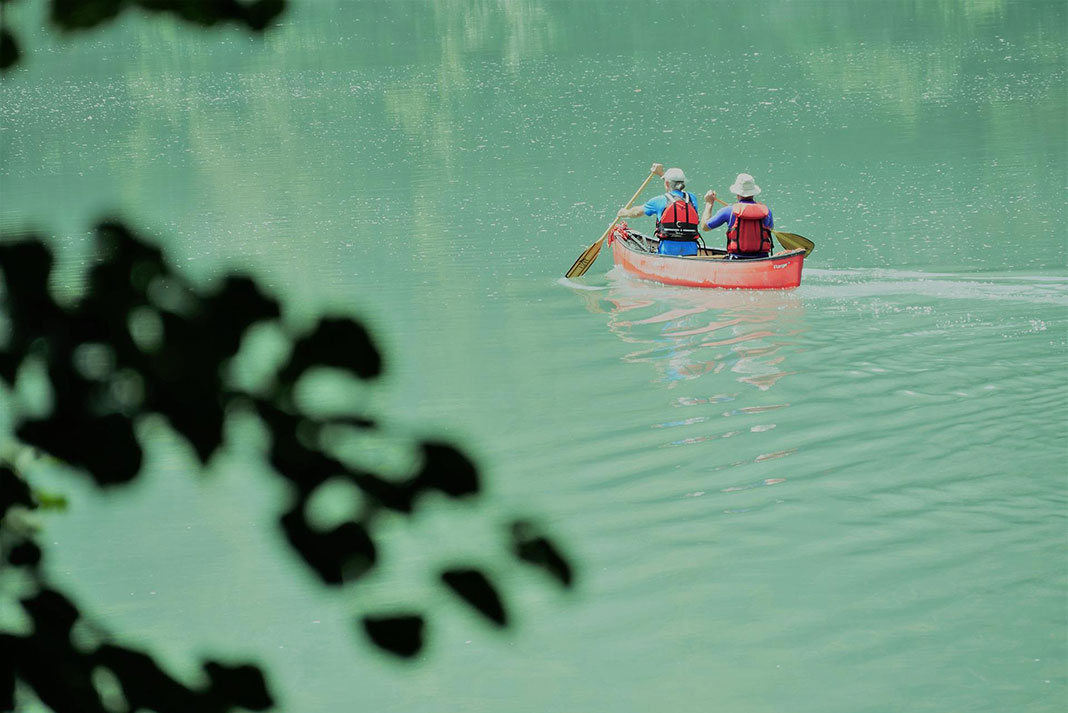
Turquoise waters are great, but canoeists everywhere can experience the health benefits associated with Blue Zones. | Feature photo: Jacques Tiberi/Pixabay
I recently became a great aunt at the age of 33. Perhaps it’s because all my own great aunts are either gone or very elderly, but it got me to thinking about my own future. From lifestyle factors to geographical clusters called Blue Zones, theories abound about how to live longer. But canoeists don’t need to go blue in the face trying to turn back the clock—we experience health benefits wherever we paddle. Here’s how to make your own personal Blue Zone.
If I’m lucky enough to make it into my 80s, I hope to be like some of my heroes. Octogenarian adventurers like Dale Sanders (oldest person to thru-hike the 2,200-mile Appalachian Trail at the age of 82), Audrey Sutherland (Hawaiian paddler who continued paddling in Alaska into her early 80s) and Helen Thayer (hiked the length of Death Valley solo and unsupported at the age of 80). These adventurers didn’t let age stop them, even if it slowed them.
Getting younger by the mile on the Spanish River in northern Ontario. | Photo: Kaydi Pyette
Not only did these aged adventurers keep tripping long past the time many throw in the towel, they even did so past the average life expectancy of Canadians (82.3 years) and Americans (78.9 years).
Want to prolong your life expectancy by more than a decade? Who wouldn’t?
Lifestyle factors are no surprise
A study published last year in the medical journal Circulation suggests following five not-so-secret guidelines: don’t smoke, maintain a healthy weight, do moderate to vigorous exercise, don’t drink too much alcohol and eat a healthy diet.
Adhering to those five lifestyle factors was associated with 14 additional years of life expectancy among women and 12.2 additional years among men. While it sounds simple, the study’s co-author, Harvard Medical School professor Dr. Meir Stampfer, noted just eight percent of North Americans abide by the guidelines.
[ See the largest selection of canoes in the Paddling Buyer’s Guide ]
In addition to the lifestyle stuff everyone knows, even if not everyone follows, there’s additional scientific evidence offering advice on how you can live long into your golden years. And it’s good news for canoeists.
Finding the Blue Zone within you
Dan Buettner, a National Geographic researcher, coined the term Blue Zone more than a decade ago to describe geographical pockets with a high rate of centenarians and residents enjoying more years of good health. These seven pockets around the world include Italy’s Sardina, Icaria in Greece and Japan’s Okinawa, and share many lifestyle factors in common. Fortunately, you needn’t move overseas to reap the rewards—you can make your own Blue Zone on your next canoe trip.
Turquoise waters are great, but canoeists everywhere can experience the health benefits associated with Blue Zones. | Feature photo: Jacques Tiberi/Pixabay
In addition to the usual eat right and stay active habits, Blue Zones feature strong social ties, spiritual connections, and stress reduction as fixtures in the community. These factors are natural to nurture on a canoe trip.
What better place to reconnect with an old friendship or cement a new one than the shared experience of adventure? And regardless of faith or denomination, time in the wilderness and gazing at the stars leaves many feeling like they’re part of something bigger than themselves.
Not only has time outside and on the water been shown to reduce stress hormones, but the relaxation and extra sleep bestowed just by vacationing has its own life-extending benefits.
Even better for trippers with bucket list northern trips in mind, there’s evidence to suggest the longer the vacation, the richer the rewards. Participants in a 40-year study by the University of Helsinki had a 37 percent higher risk of dying if they took three weeks or less annual vacation compared to those who took more than three weeks annually.
“Don’t think having an otherwise healthy lifestyle will compensate for working too hard and not taking holidays,” study author and professor Timo Strandberg told Travel + Leisure magazine. “Vacations can be a good way to relieve stress.”
Have you submitted your vacation request for a big summer canoe trip yet? Go on—it’s good for you.
This article was first published in Issue 60 of Paddling Magazine. Subscribe to Paddling Magazine’s print and digital editions, or browse the archives.
Turquoise waters are great, but canoeists everywhere can experience the health benefits associated with Blue Zones. | Feature photo: Jacques Tiberi/Pixabay
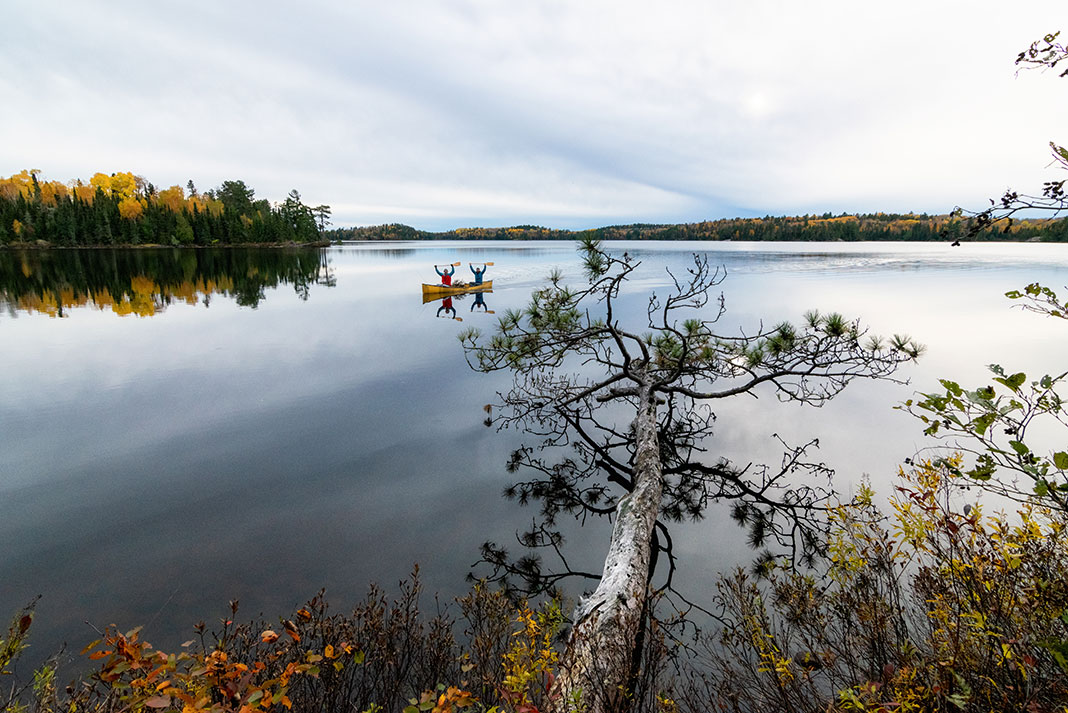
With over 1,200 miles of canoeable lakes and rivers, you could spend a lifetime exploring the pristine waters and rugged portage trails of the Boundary Waters Canoe Area Wilderness. Regardless of whether that’s your plan or if you just want a taste of what the North Woods has to offer, you’ll need some ideas for where to start. Here you’ll find the best Boundary Waters routes, across a variety of trip lengths.
Use your imagination and be honest about your paddling skills and fitness when studying maps to plan a Boundary Waters canoe trip. Remember to think about your expectations; for example, do you want the focus of the trip to be fishing, relaxing, having fun as a family, or pushing yourself to cover distance? Then develop an itinerary to match.
Local outfitters are your best source of route information. They know the lay of the land and can recommend the perfect route for your experience level and expectations. The trips below make for great starting points, but don’t be afraid to make adjustments to create what is truly the “best” Boundary Waters canoe trip for you.
Once you’ve selected your route, it’s time to secure your permit. Permits for the Boundary Waters are based on entry points and can be reserved online in advance for trips taking place between May 1 and September 30. A self-serve registration system is used at entry points during the rest of the year.
Venture into the Boundary Waters, if only for a day. | Photo: Paul Vincent
Best Boundary Waters day trips
Sawbill Lake and surrounding lakes
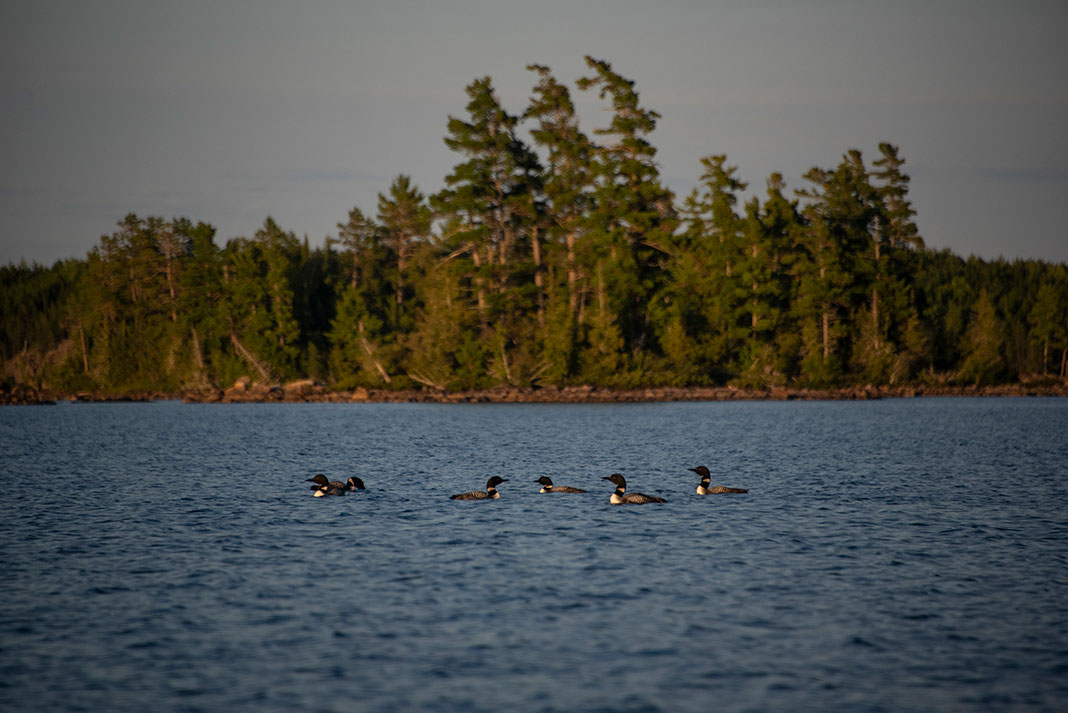
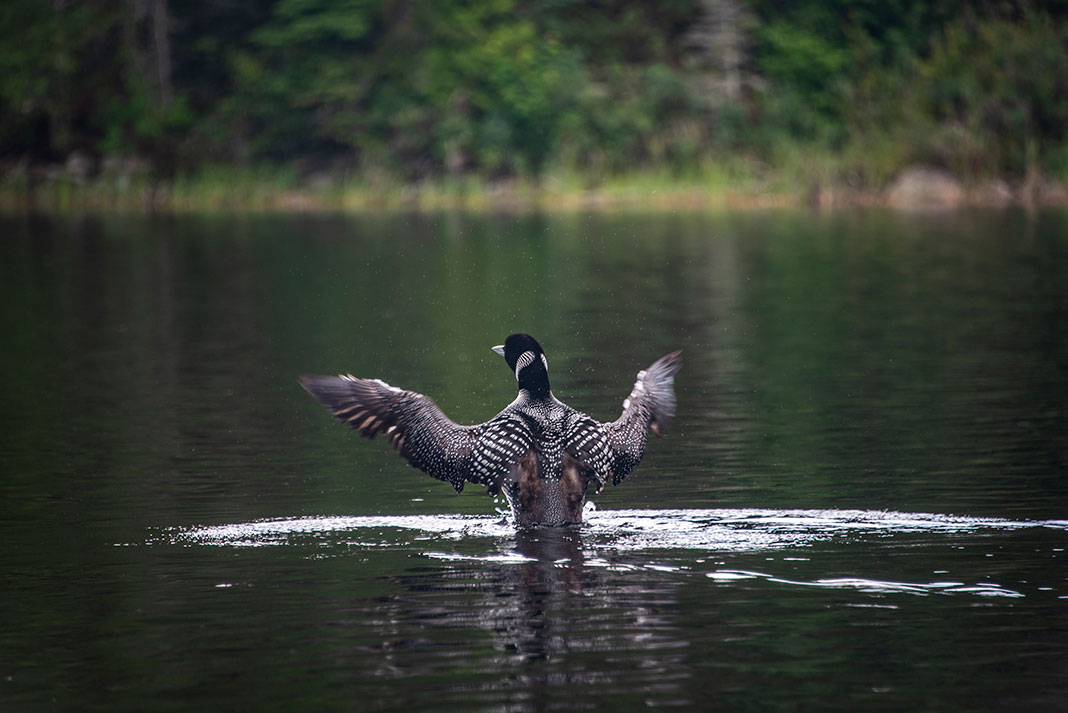
If you only have a half-day, explore the Sawbill Lake area. It’s a great entry point for all experience levels, including beginners. Start at Sawbill and then take the short, easy portages over to Alton, Kelso or Smoke lakes. You might see moose, loons, eagles and beavers. Look for gnarled, weathered trees growing out of rock, tamaracks, bog flora, various mosses and intriguing glacial erratic boulders.
[ View all Minnesota paddling adventures in the Paddling Trip Guide ]
Clearwater and Mountain lakes
If you have the whole day to explore, paddle Clearwater Lake on the eastern side of the wilderness area. A quick portage to Mountain Lake will add to your adventure. You will find towering cliffs, inspiring scenery, crystal-clear water and abundant wildlife along this historic voyageur trail.
If I portage today am I less a whitewater paddler than I was before? | Feature photo: Ben Kitching/Unsplash
One of the loneliest places in the world is in the slow drift leading into a stiff rapid. The quiet and calm, the river’s current compressing and picking up speed, and a roaring horizon line falling away in the near distance. It’s not a spot for second thoughts, but in that instant I often wonder—is this what defines a whitewater paddler? And what about the rapids we choose not to run?
Portaging doesn’t make you less of a whitewater paddler
The lip of a rapid is a favorite place for me, although it feels exposed—the commitment having already been made but still waiting for the show to begin. This is especially the case today, on a solo wilderness raft trip. The Petawawa is a personal favorite. It’s a drop-and-pool river with slow, smooth entries leading into short and steep ledges or long and technical boulder gardens. I’ve run it every year for the last 15 years, but today feels different.
We river runners are a peculiar lot, we are dedicated to our skill-intensive craft that takes us to inaccessible but beautiful places. That we use the word “we”—as in we see ourselves as a unique group—is predicted by what sociologists refer to as social identity theory.
Social identity refers to how we grow to define ourselves as individuals by choosing to be a part of a certain group. When we buy into a group, in this case calling ourselves whitewater paddlers, social identity goes on to predict that we also adopt that group’s values and behaviors. It’s why paddlers wear Gore-Tex, chug booty beers and talk about going to church. Group values and sentiments become our own. As the academic S. Alexander Haslam writes, “We are motivated to live up to norms and to achieve goals that are relevant to our self-definition.”
Under pressure. | Photo: Rob Faubert
Proving yourself on the Petawawa
The Petawawa through Algonquin Park is a classic canoe trip with a couple portages. In an oar rig, it becomes stellar class III, with one notable exception. It is this exception that dogs my thoughts. Crooked Chute is a real rapid. Its long technical entry compresses and tips downward, into a steep and fast full 90-degree turn that needs to set up threading big holes, finishing with a long run out full of demanding moves between pinning rocks. At high water it’s a full class V, at medium flows a beefy IV with mandatory hole hits, and at low water a technical class IV. At a high water class V it’s a portage every time, no question, given the remote setting. The low water IV I’m perfectly comfortable with, as rowing rapids of technical difficulty is my thing. It’s the in-between I’m worried about.
For the first day and a half on the river I find myself worrying over what the water level will be at Crooked. I scan for clues in the early rapids as to what it will be like farther downstream. In camp the first night I fall asleep rehearsing the different lines in my mind, nervous for the beefy hole punching.
Weird. I rarely worry about what’s downstream. I ask myself what it is I’m fretting over, visiting the usual suspects: getting old, becoming risk averse, losing my skills. It’s none of these. What I am worried about is making the call between a beefy IV and a too-beefy IV. Why has this routine scouting decision become a conflict? This is where social identity comes in.
If I portage today am I less a whitewater paddler than I was before? | Feature photo: Ben Kitching/Unsplash
Whitewater is who we are
I’m a river person. Rivers have shaped what I do, where I live and what I believe. I identify myself as a river guide and a whitewater paddler, even though what used to be 200 days a year on the oars is now more like 20, half of which are on class II fly fishing rivers.
My conflict? If I decide that a rapid is over my head, does that mean I can still claim membership in the whitewater guild? That I’ve run the rapid every trip before this only makes me more self-conscious. If I portage today am I less a whitewater paddler than I was before? This is ridiculous, of course, and the pressure is entirely self-imposed. It is a solo trip, after all.
[ Plan your next whitewater paddling adventure with the Paddling Trip Guide ]
On the portage around Crooked Rapid I have a lot of time to think. Whitewater is not just what we do but who we are. Deciding a rapid is too tough today has little to do with my identity. As a river runner I believe the worth of any one rapid is only as good as the whole river trip it contributes to.
A whitewater paddler from start to end
The entry float into a big rapid may be a lonely place, but I take solace in knowing I’m part of a bigger group. It’s a group of people who run rivers from put-in to take-out. Sometimes we run every drop along the way; often we don’t. Either way, it’s okay. Membership in this tribe isn’t based on a single stunt, but a lifestyle, moving us from shore to shore, seeking flow.
If I portage today am I less a whitewater paddler than I was before? | Feature photo: Ben Kitching/Unsplash
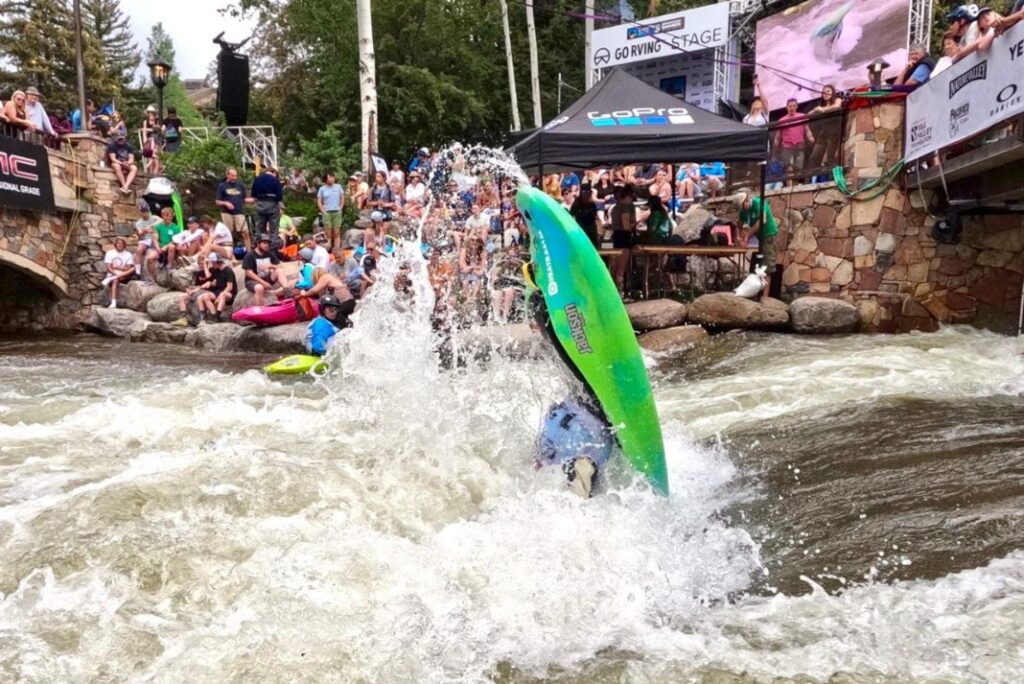
On June 7-12, 2022 we saw a return of one of the paddling community’s favorite summer events: the GoPro Mountain Games in Vail, Colorado. The annual event hosts over 30 competitions spanning 11 disciplines–everything from climbing and slacklining to photography and dog aquatics (yes, you read that right).
It’s no surprise that for us water enthusiasts, the most entertaining parts were the 9 paddlesports events. Here’s a recap of the best action from the past week, in case you missed it.
The Homestake Creek race attracts expert kayakers from all over the world. Photo by Rick Lohre.
June 8 | TINCUP Steep Creek Championships
The first paddling event of the competition–the TINCUP Steep Creek Championships–kicked off on Wednesday morning at Homestake Creek (located just outside the town of Red Cliff, Colorado).
Due to the race course’s steep, creeky character—it’s approximately ¼ mile long and drops a whopping 480′ per mile—this event presents the most hazards of all the kayaking competitions.
13 expert kayak competitors stepped up to the challenge, hoping to take home a piece of the impressive $7,000 prize purse.
Dane Jackson, a welcome and familiar face at the Mountain Games, managed to snag first place with a combined run time of 03:53:70.
Thursday’s GoPro Gore IV Challenge & GMC Kayak Freestyle Qualifiers had the crowds oohing and ahhing all day long. Photo by Rick Lohre.
June 9 | GoPro Gore IV Kayak Challenge & GMC Kayak Freestyle Qualifiers
The Gore IV Kayak Challenge offers a nice alternative for those looking for mellower whitewater than Homestake Creek. This race’s difficulty doesn’t lie in its gnarly features, but in its sheer length. It’s a 4.5-mile race down a class III-IV continuous creek that flows through the village.
The Jackson siblings took first place in both Men’s and Women’s categories. Dane Jackson crossed the finish line with a time of 23:23:37, while Emily came in at 24:55:03. See the full results for the Men’s and Women’s Gore IV Challenge.
Arguably the main–and most visually spectacular–event of the games, is the Kayak Freestyle competition. The world’s best playboaters come together in an old-fashioned throw-down at the Vail Whitewater Park.
Each kayaker has a timed run to throw his best cartwheels, loops, tricky-wu’s, phonics monkeys, space godzilla’s and more in an attempt to impress the judges for the highest combined score.
This year’s competition had a great turnout with 21 men and 5 women competing in the qualifiers. The top 5 women and the top 10 men advanced to the finals. Keep reading to see how they got on.
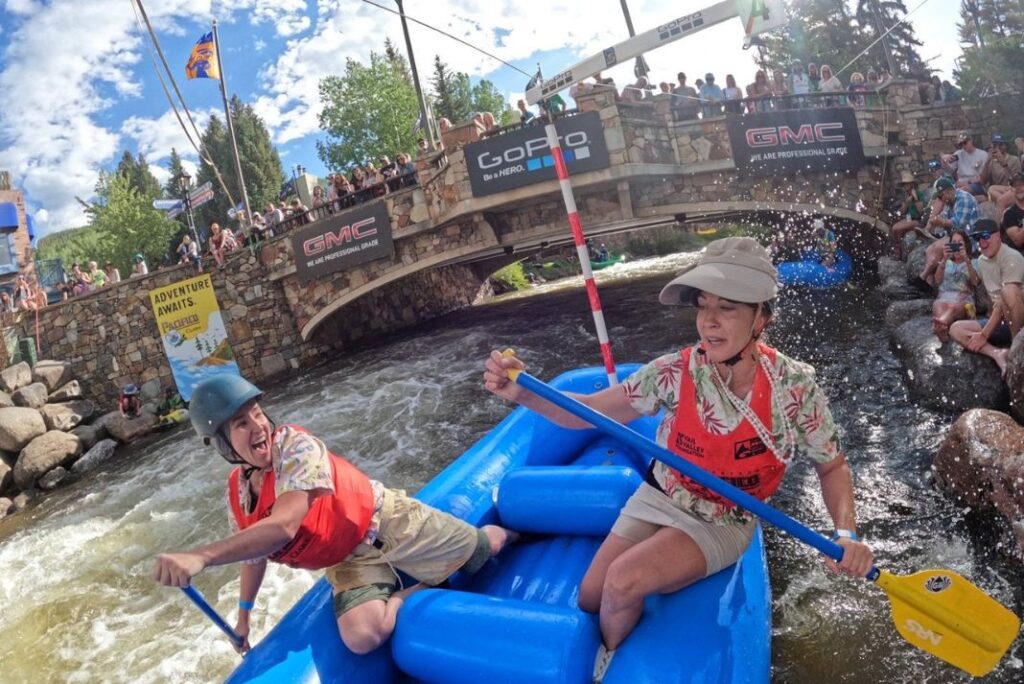
Two-person teams had the chance to showcase their speed, agility and aggression in a timed qualifying run through the heart of Vail Village on Gore Creek. Photo by Zach Mahone.
June 10 | Pacifico Raft Cross
Fun for rafters and spectators, the Pacifico Raft Cross combines the speed of downriver sprints with the water slaughter of 8-Ball. Two-person teams showcased their speed and agility in a times race through Vail Village on Gore Creek.
“Team Gorbie” (comprised of Dane Jackson and Nick Troutman) took the win with “Team Bush” (comprised of Riley Frank Jacob McConne) close behind in second place. Get the full results from this event here.
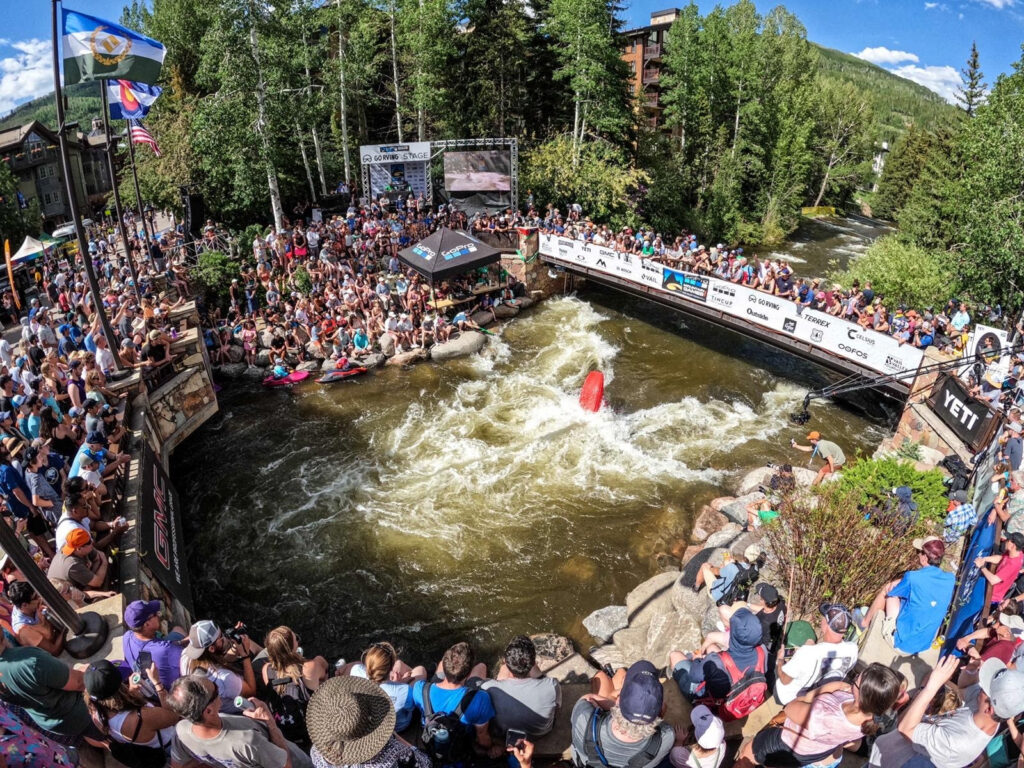
Crowds huddle on the International Bridge for the “main event”. Photo by John Ryan Lockman.
June 11 | GMC Kayak Freestyle
Large crowds gathered around the International Bridge in the heart of Vail on Saturday for what many consider the main act: the GMC Kayak Freestyle finals.
Emily Jackson and brother Dane Jackson have dominated the games in the past few years and 2022 brought no surprises in that regard. Both siblings won their respective competitions with impressive final runs.
Dane finished with a combined score of 1415.00–an over 400-point lead on the second-place competitor, Stephen Wright. Emily finished with a combined score of 630 points. Olivia McGinnes came in at second with a score of 600. Get the full results for the men’s category here and the women’s category here.
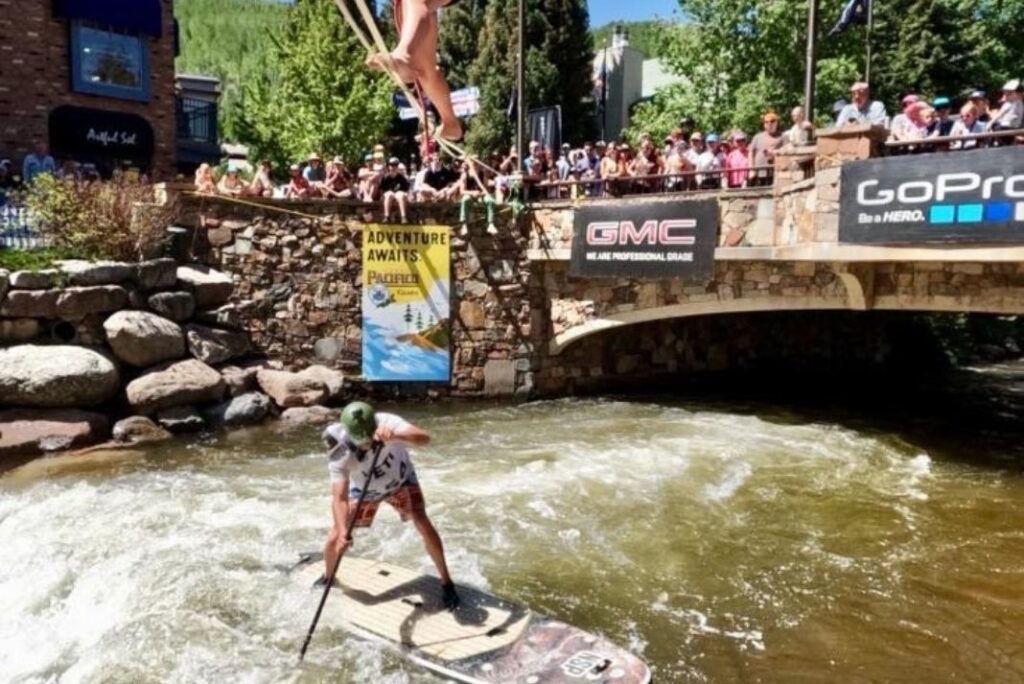
Paddleboarders put their speed and skills to the test in the Gore Creek downriver race against the clock. Photo by Julie Lohre.
June 12 | YETI Down River SUP Sprint
As we can see from the attendance and crowd support this year, the YETI Down River SUP is gaining traction and is quickly becoming a fan favorite.
Starting in East Vail, the 3-mile head-to-head race brought standup paddlers into the heart of Vail, where they put their speed and skills to the test on the class II-III rapids of Gore Creek.
Spencer Lacy took home first place in the men’s category with a winning time of 00:20:13.43, closely followed by Miles Harvey in second place with a time of 0:20:19.70.
In the women’s division, Chloe Harvey won her spot at the top of the podium with a finish time of 21:55.87, followed by Reta Boychuck in second place with a time of 22:06.14.
Get the full men’s and women’s here. Catch the Junior SUP results here.
The 8-ball kayak race is the definition of full-contact kayaking. Competitors consider themselves lucky if they get through this one carnage-free.
After floating to the start at the Covered Bridge, a handful of competitors shoved and sprinted their way down a 200-meter sprint course on narrow Gore Creek. Boaters had to avoid being knocked off course by the “8 Ballers”— described by event organizers as, “loathsome kayakers in full body armor waiting patiently to attack the sprinters”.
Emily Jackson nudged, jostled and charged her way into first place in the women’s final—achieving a triple crown title in all her events. For the men’s division, London Aguon won first place, with Nick Troutman coming in second and Dane Jackson securing third.
So you want to try a northern paddling trip? | Feature photo: Peter Mather
Northern rivers offer adventurous paddlers an experience unlike anything they can find further south—truly epic trips through dramatic, untamed landscapes. But northern paddling involves a higher level of difficulty than other trips. A decade of Quetico Park canoeing won’t prepare you for the Far North, so don’t get in over your head! From essential skills to trip planning tips, this expert advice from experienced wilderness paddlers will help you prepare when the wild north awaits.
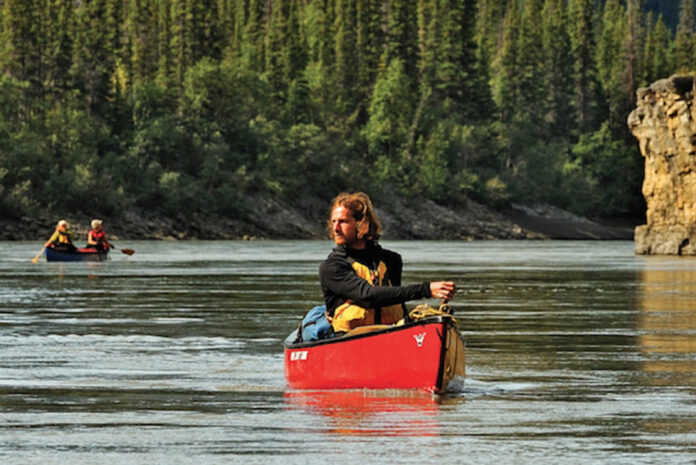
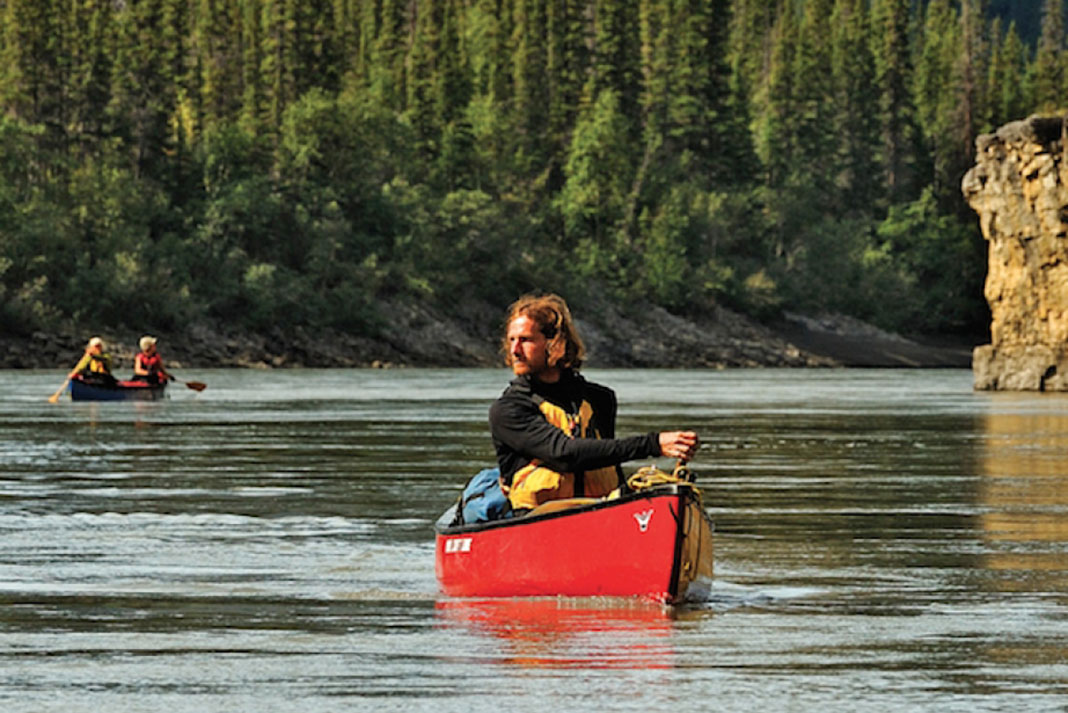
Canoeing an Arctic river is like canoeing a southern river, with these exceptions: the water is bitterly cold, a capsize can be fatal; distances are deceptive, an open water crossing that appears to be a quarter-mile may be 20; continuous rapids, wider and more powerful rivers; there is no turning back once the floatplane drops you off. Build experience slowly on challenging southern rivers, tripping when the water is cold and the weather is bad. Read every canoeing book and publication you can find. It takes time to develop respect for a powerful northern river—don’t rush it.
Most important, make your first trip with an experienced guide. If you have strong basic canoeing skills, can turn the other cheek to bad weather and persistent bugs, and have a high tolerance for portaging long distances and paddling many hours without sleep—you’ll learn a lot and come back smiling.
— CJ
So you want to try a northern paddling trip? | Feature photo: Peter Mather
2 How much time?
Twenty to 50 miles a day is reasonable on placid water where there are few portages. But it’s a recipe for disaster in the unknown. Figure an average of 15 miles per day and allow one day in five for bad weather and the unexpected. If you anticipate many rapids and portages, reduce the mileage even more.
It’s wise to make a daily travel plan with your projected miles per day based on the obstacles along your route. On trip, keep track of your actual miles so you know if you’re ahead of or behind schedule.
If a storm plays havoc with your schedule, your best plan is to camp and wait for favorable weather, then make up lost time when the weather improves. The sun sets late in the Far North so you can paddle well into the night.
— CJ
3 How much will it cost?
About 80 percent of your cost is transportation. For this reason, a longer trip may actually be less expensive than a shorter one.
For example, say you plan to canoe the Hood River in Nunavut. You’ll drive to Yellowknife where you’ll charter a Twin Otter. You can begin at the headwaters of the Hood near Takijuk Lake, or at Point Lake about 200 miles to the south. If you begin at Point Lake, you’ll eliminate about 400 miles of flying—at roughly $12 per mile, that’s a savings of $4,800! But you will need more time to canoe the river.
You can also save big by using folding canoes (like the Pakboats PakCanoe 170) that fit inside your chartered airplane. On an Alaskan trip, our crew of six eliminated one flight and saved $2,100 this way.
Other costs include auto fuel, food and maps. For a 400-mile trip, you may need a dozen 1:50,000 scale maps at $12 apiece. Bush roads are tough on cars; plan to replace a tire or windshield. Equipment also takes a beating.
Is it worth the high price to canoe a remote Arctic river? The first time you see a herd of muskoxen or mingle among a thousand caribou, you’ll know you’ve spent your money well.
— CJ
[ Plan your next northern paddling adventure with the Paddling Trip Guide ]
4 pro tips for your northern paddling trip
1 Beat the bugs
If you think the bugs are bad in southern paddling parks, don’t go to the Barren Lands—at least not without a good dose of know-how, self-composure and bug dope.
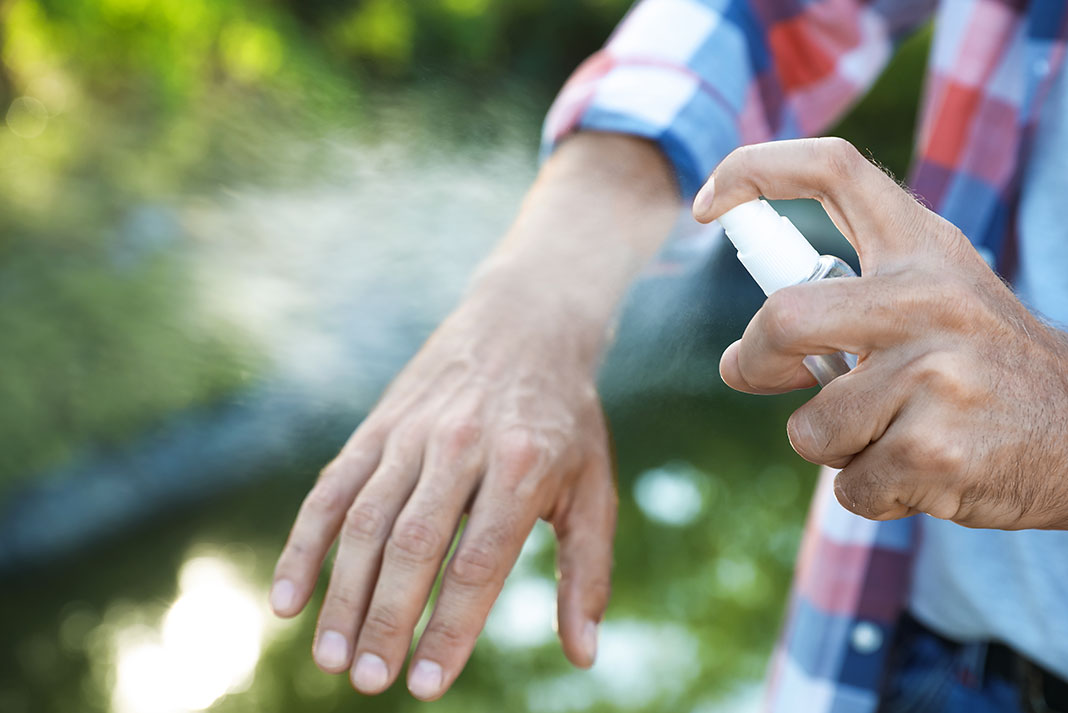
Two of the best non-toxic repellents are Repel oil of lemon eucalyptus and Biteblocker Organic Xtreme. I don’t use DEET—it melts plastic, so why would you put it on your skin?
Both garlic and vitamin C have excellent properties as antihistamines, relieving the effects of bug bites but doing little to prevent the actual bombardment. In fact, garlic, like bananas, contains potassium—and that’s a bug attractant.
Above the treeline, the paddling window enjoys little respite from the onslaught of blackflies. | Photo: Adobe Stock
Research your choice of landscape. Forested areas generally have avoidable seasons for blackflies, mosquitoes, ticks, deerflies and horseflies. Above the treeline, the paddling window enjoys little respite from the onslaught of blackflies.
Wear loose, light-colored clothing and a bug jacket. A bug tent will preserve your sanity in camp. Commercial bug awnings can be slung from trees; in the Arctic you’ll also need poles, extra guy-lines and hefty pegs.
Biting insects are attracted to carbon dioxide and chemicals found in perspiration. If you sweat easily and work hard, the bugs will be worse. So, if none of this works…try carrying a live chicken under your arm while humming middle “C”.
Putting together a tight, well-rounded and workable group is a lot of work and you’ll do well to remember these commandments.
Compatibility: A good crew is invested in the safety and happiness of all its members—there’s no room for selfishness, insensitivity or arrogance. Friends often get along better than random family members—old scars and residual animosities may blossom again under strain.
Experience: This can be tricky, each person needs to make an honest assessment of his or her abilities. If you’re doing whitewater or big, cold lakes then you better have at least one experienced paddler in each canoe and spend the first day training the others.
Judgment: Maturity and level-headedness are more critical than technical proficiency. A crew member who knows when to portage is far better than one who is eager to tackle every rapid.
Rationale: Why do you want to go? Is this a journey or a competition? Find out what everyone hopes to get out of the trip, make sure these goals are harmonious, and develop a trip philosophy agreeable to all.
Size: On remote northern rivers, a group of six is safest—this provides ample room if you lose a canoe in a rapid. Otherwise, a group of four offers the optimum blend of safety, harmony, easy food prep and campsite selection, and availability of group members. Larger than six, and you’ll almost certainly have compatibility issues.
There’s really no reason to carry a gun on any canoe trip, even those in Alaska and the Northwest Territories. The exception might be if you’ll canoe where grizzly and polar bear encounters are common. Most recommended is a 12-gauge pump shotgun, with high-performance slugs. The compact Marlin Guide rifles in .450 Marlin and .45-70 caliber are also popular. A waterproof gun case is essential, tie the case into your canoe so it won’t be lost if you capsize. Check state, provincial and park regulations before you pack heat—some areas prohibit firearms.
— CJ
A floatplane sits and awaits its next charter in Whitehorse, Yukon. | Photo: Kristina Delp/Unsplash
4 Getting to the river
By car: Drive the “Dumpster” highway or Wollaston Lake tote road and you’ll see why the most important person on a canoe trip is an auto mechanic! You need high clearance, two full-size spare tires and a bug screen. Trailers should have minimum 15-inch wheels and spares.
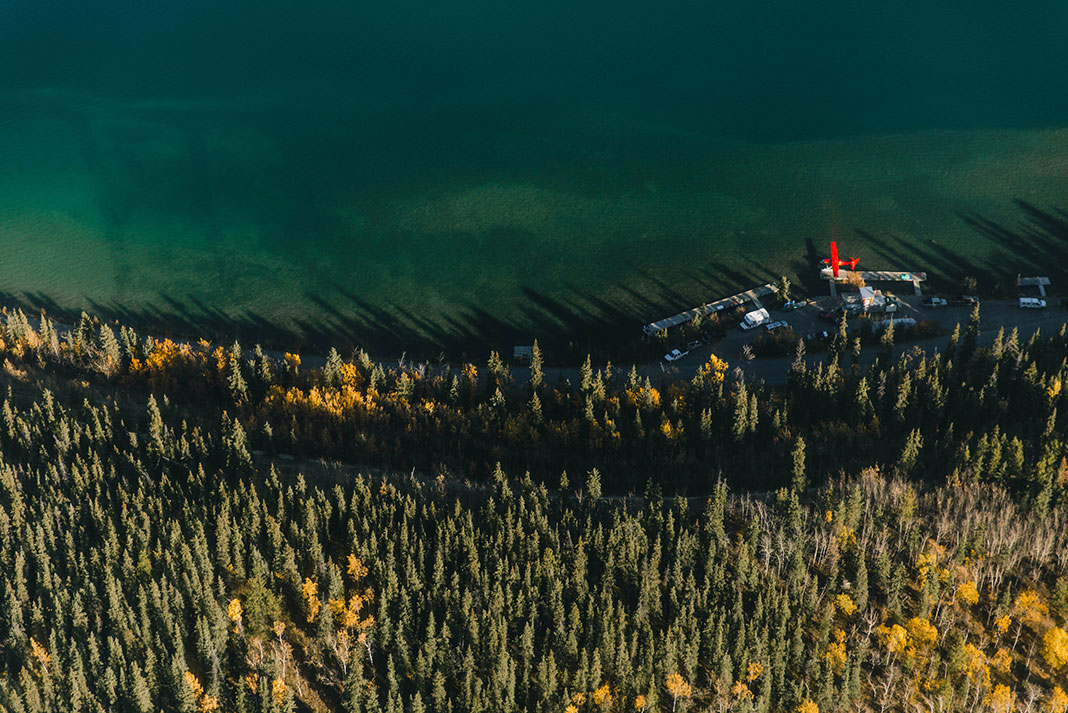
By floatplane: Until recently, if you had a party of six, a Twin Otter was the cheapest way to fly because everything fit inside the airplane. For safety reasons, some companies will no longer fly passengers and canoes together. Smaller planes—Single Otters, Caravans and Beavers—will carry just one canoe on the floats.
Tip: Communicate with airplanes up to about 15 miles away using a handheld VHF aircraft radio (a marine radio won’t work). Get your pilot’s radio frequency when you book your flight. The emergency channel is 121.5 MHz.
By train: Bush trains will often—but not always—stop at a requested mile marker to take on and let off passengers. Call the nearest stationmaster for details, and book tickets in advance. Unless you are on the roster, even remote bush trains may steam right past your frantic waves.
Tip: Canoes accompanied by their owners are usually considered excess baggage and travel for about the same fare as a passenger.
By boat: If you end your trip on Hudson Bay, the safest plan is to charter a boat to Arviat or Churchill. Bring a CB radio so you can talk to your boat captain and get his channel information before you leave home.
First you need to find the portage. On a river, if your map doesn’t show which side the portage is on, select the shore with lower elevation or less vegetation. The path of least resistance is most often the correct one. For the same reason, portages are usually located on the inside of river bends.
On a wilderness river where the trail is unsure, carry light gear over the portage, then return for the canoes and heavy packs—or better yet, scout the trail before you portage anything.
Portages on remote rivers within the treeline are seldom marked or maintained. First walk the portage with a map, compass, GPS, folding saw and roll of yellow surveyor’s tape. Flag confusing turns and saw limbs that can hang up a canoe. Last person over the trail collects the yellow ribbon.
In the treeless tundra, carry canoes and packs to a distant spot and stack in a pile. Place paddles upright in the pile to act as flags. Continue portaging from pile to pile until everything is across. Choose brightly colored packs and canoes—drab colors blend into the tundra.
Don’t carry a second pack on your chest—falls follow when you can’t see your feet. Instead, equip your packs with tumplines so you can carry everything on your back.
Pack in odd units—three or five packs per canoe, not two or four. This will equalize the number of trips you and your partner make over the portage.
Every team takes responsibility for the gear in their canoe and inventories it at the end of the portage. To avoid confusion, don’t shift items from boat to boat or portage another canoe’s gear unless you tell the occupants.
Topographical maps are your lifelines on a wilderness canoe trip. A GPS is not a substitute for paper maps! Experienced trippers rely on 1:250,000 scale maps; aging eyes prefer more detailed 1:50,000 maps.
Before you go, mark the miles on your maps. I mark every four miles on 1:250,000 maps and each mile on 1:50,000 maps. This works out to a mark roughly every inch. Since the average speed of a loaded tripping canoe is four miles—or one inch—per hour, this makes it easy to keep track of your progress in the field. If you keep an eye on your watch, you’ll seldom be far off schedule.
Next, determine the drop of the river. Label the elevations where each contour line crosses the river and indicate whether the elevation is in meters or feet. Make a table like the one in the example. Note how many feet per mile the river drops between contour intervals. Generally, a drop of less than 10 feet per mile is easy paddling, more than 15 and things can get hairy.
The average speed of a loaded tripping canoe is four miles per hour. | Photo: Brad/Unsplash
River size matters—a small, shallow river with a drop of 40 feet per mile and constant gradient may be runnable while a big river with the same drop is not. And, of course, it depends on how the drop is distributed—as an even descent or by a series of falls.
Map rules:
The closer together the contour lines, the greater the drop. Tightly spaced contour lines that cross the river indicate a falls; parallel to the river represent a canyon.
The closed “V” end of a contour line always points upstream.
The contour interval (CI) is given in the map margin. The larger the CI, the less clear the characteristics of the river.
On broad, continuous northern rivers, the backferry is an essential tool. It allows you to pick you way through large waves without taking on water. If you master this technique, you won’t need a spray deck, even in solid class III rapids. Retrieving a swamped canoe with a spray deck is much more difficult and this outfit can be a real pain if there are many portages, not to mention the extra 10 pounds in material.
Back ferries can also buy you time in a rapid to boat scout and assess your next move. You can save a lot of scouting time on sections where you feel comfortable using this technique. Remember, it’s easiest to back ferry from a stronger current towards a weaker one; for example, from the outside of a river bend to the slower flow on the inside of the curve.
As for a front ferry, the downstream partner—in this case, the bow paddler—sets the angle. This can be achieved using a reverse J stroke or reverse sweep stroke. The stern paddler simply provides power, back paddling against the current.
If your ferry angle becomes too open, the best way to recover it is for the bow paddler to use either a cross draw or back draw. Most people need more practice with these strokes— excellent descriptions are found in Paul Mason and Mark Scriver’s Thrill of the Paddle (p.58–59, Key Porter Books). Even though these strokes don’t generate reverse momentum, you will recover the angle much faster. And, if you end up losing it, you still have the option to switch to a front ferry.
When running a long, powerful rapid is too risky and portaging would be strenuous and time consuming, lining is often the best option.
The cardinal rule of lining is to keep the upstream end of the canoe closer to shore than the downstream end. Otherwise, the current will catch the upstream end and swing the canoe broadside out into the main channel. The trickiest part comes when you have to cross reactionaries, or diagonal breaking waves. For a few seconds, the upstream end needs to be further from shore in order to swing the canoe perpendicularly through the wave. If it isn’t perpendicular, the canoe will flip and get sucked into the main current.
Lining requires skill, agility and coordination. Good communication is imperative if you’re lining with two people. If the shore allows you to walk down with the canoe, you may prefer to handle both ropes alone. The length of your ropes is very important. Twenty feet of rope on the downstream end and 30 feet upstream works well for most terrain. Make loops alternately on each side of your hand with the extra rope, so you can let go just what you need and still keep a good hold on the rest. Longer ropes, like your throw bag, are difficult to handle and, if you drop them, can more easily become entangled.
After you’re done, be sure to take 30 seconds to safely stow the lining ropes so you won’t get caught up in them if you dump.
— EL
Alaska’s Gates of the Arctic National Park and Preserve. | Photo: National Park Service, Alaska Region
Where to go paddling in the north
Seasoned northern paddlers share their favorite routes and dream destinations:
Hood, Mountain and Moisie rivers.
Dream trip: entire Back River.
— Gail Shields
Finlay, Churchill, Turnagain/Kechika, Gataga/Kechika,
Porcupine/Fond du Lac, Seal and Tatshenshini/Alsek rivers.
Wish list: Grand Canyon of the Liard, Coppermine,
Horton, Bonnett Plume and Kazan rivers.
— Laurel Archer
Mountain, Nahanni, Hood, Firth, Tatshenshini and Natla-Keele rivers.
Wish list: Bonnet Plume, Back and Thomsen rivers.
— Mark Scriver
Thelon, Coppermine, Wolverine River and Nejanilini Lake, Bloodvein, Seal, Hayes, Lady Evelyn and Dumoine rivers. Pigeon, Sasasiginnigak and Leyond rivers (all Manitoba).
Wish list: Kazan River and Hanbury River from Great Slave Lake.
— Hap Wilson
Yukon and Wind rivers.
Wish list: Mountain, Nahanni, Thelon and Back rivers.
— Charlotte Jacklein
Hood River—if you can afford to do just one Arctic river, this is it. Thlewiaza/Thanne, North Knife, Snake, Peel, MacFarland, Kopka, Burnside and South Seal rivers. Caribou River—worst bugs on the planet! Latiseino and Kautikeino rivers, Norway and Finland.
There’s something special about going from headwaters
to ocean, like the Hood and Coppermine rivers.
Dream trip: a Barren Land trip with no blackflies, a flatwater trip with only tailwinds and any trip with the fish biting and blueberries and strawberries ripe at the same time.
— Wally Schaber
This article was first published in the Early Summer 2012 issue of Canoeroots Magazine. Subscribe to Paddling Magazine’s print and digital editions, or browse the archives.
So you want to try a northern paddling trip? | Feature photo: Peter Mather
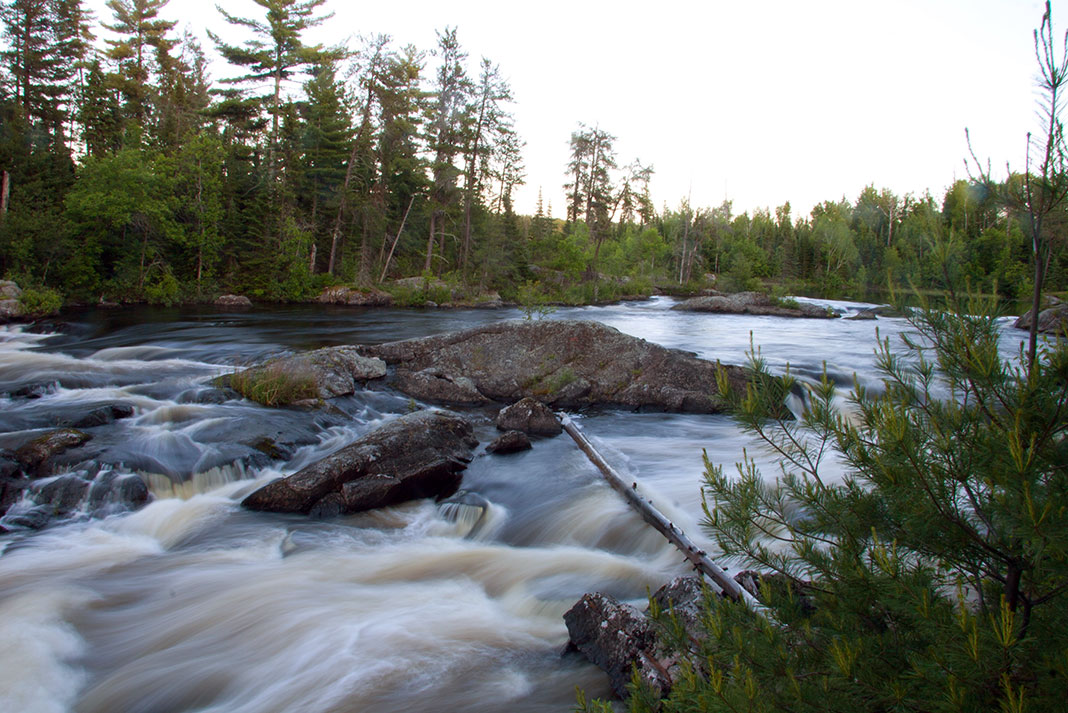
With 1.1 million acres, 1,175 lakes and 2,000 campsites, there are an endless number of places to visit in the Boundary Waters Wilderness Canoe Area. Plan your backcountry canoe trip around hitting up some of these sites, or choose a resort or cabin that will give you access to great activities.
Paddling ranks top of the list, of course. You can explore access point and nearby lakes by kayak or paddleboard, or use a canoe to head into the heart of the wilderness. That aside, here are some of the other best things to do in the Boundary Waters.
See what you can see at the top of the Eagle Mountain Trail. | Photo: Margret Raasch // @margretraasch
Hiking in the Boundary Waters
Though known for its water trails, the Boundary Waters’ hiking trails are worth the effort. There are 20+ trails near or within the borders of the Boundary Waters. Some are short and sweet, while others require multiple days to complete. You’ll find a mix of loops and out-and-back, as well as those that can only be accessed by paddle. Try the Eagle Mountain Trail—this 3.5-mile hike will take you to the top of Eagle Mountain which is the highest point in Minnesota.
Take in the calming beauty of Lower Basswood Falls. | Photo: Levi Glines // @levi.glines
Boundary Waters waterfalls
The international border between the U.S. and Canada is more defined by stunning waterfalls than a line on the map. The traditional voyageur route along Lac La Croix, Iron and Basswood lakes includes gorgeous cascades like Rebecca, Curtain, Lower Basswood and Upper Basswood falls, making this a great destination for experienced canoe trippers looking for the finest scenery.
There are plenty of much more accessible waterfalls, too, including Fifty Foot Falls near the Limekiln Campground, High Falls near the Rabbit Campground, and Grass River Cascade near the Kekekabic Campground.
Find mesmerizing pictographs for yourself. | Photo: Ed Collier // @ecollierphoto
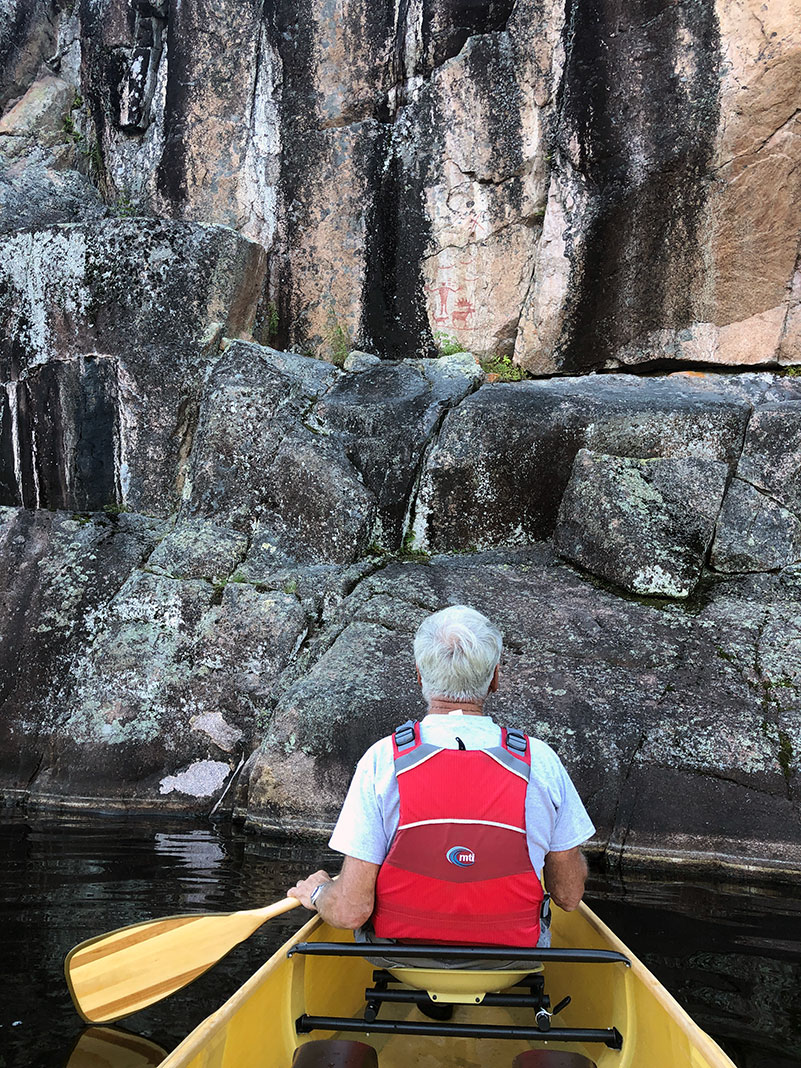
Boundary Waters pictographs
Ancient pictographs on rock faces along North Woods lakes are a humbling reminder we aren’t the first people to paddle these waters. Indigenous pictographs can be found in numerous places across the Minnesota Boundary Waters, including vivid images at North Hegman Lake that are estimated to date back 500 to 1,000 years. Pictographs should be visited with utmost respect; avoid touching these important cultural sites.
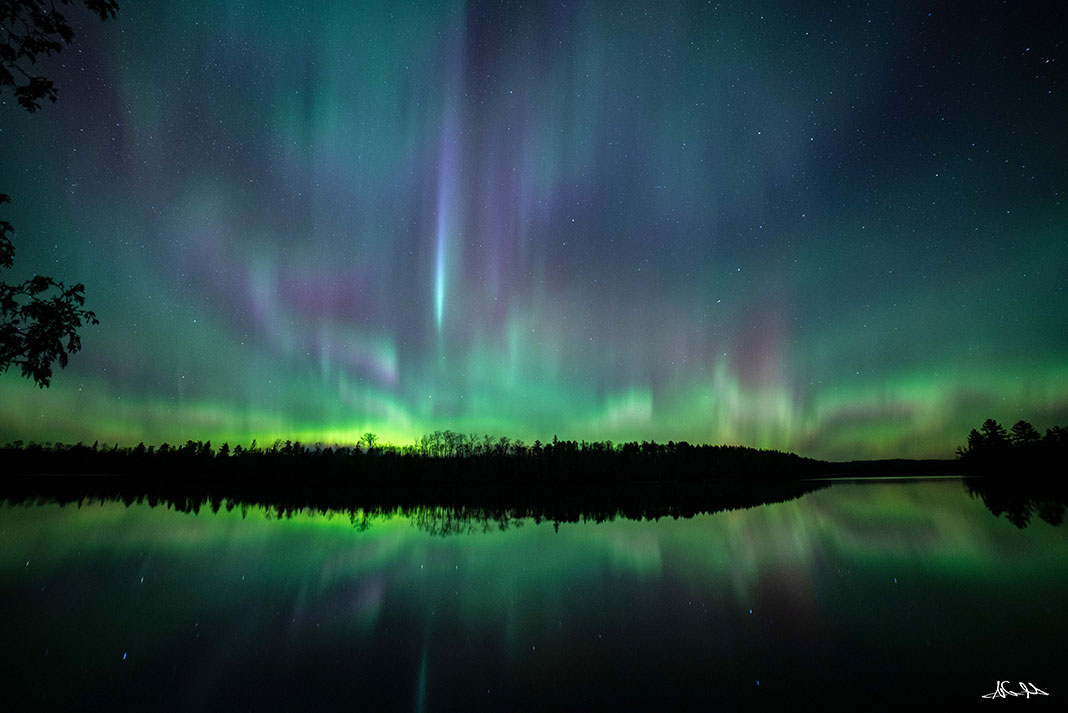
Witness the glory of the Northern Lights. | Photo: Alex Falconer // @alexfalconrt
Aurora borealis Boundary Waters
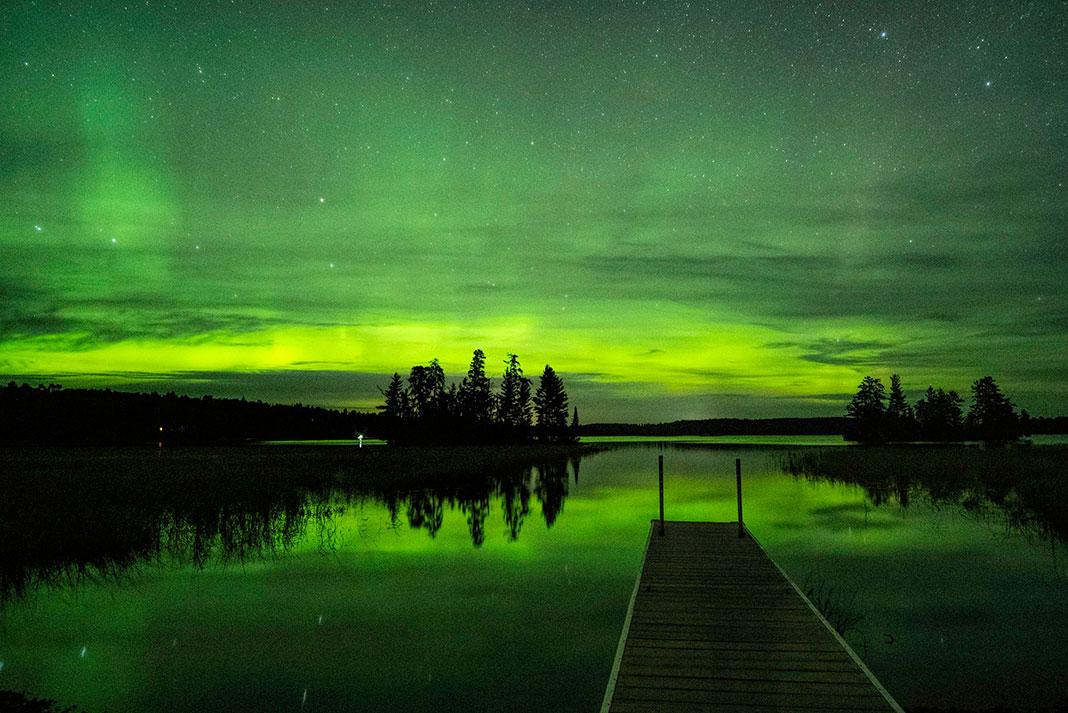
Dark skies and a northern latitude make the Boundary Waters a great place to view the aurora borealis. Late summer and autumn are best, with activity usually peaking around midnight. NOAA Space Weather provides an accurate short-term forecast for the aurora borealis around the world.
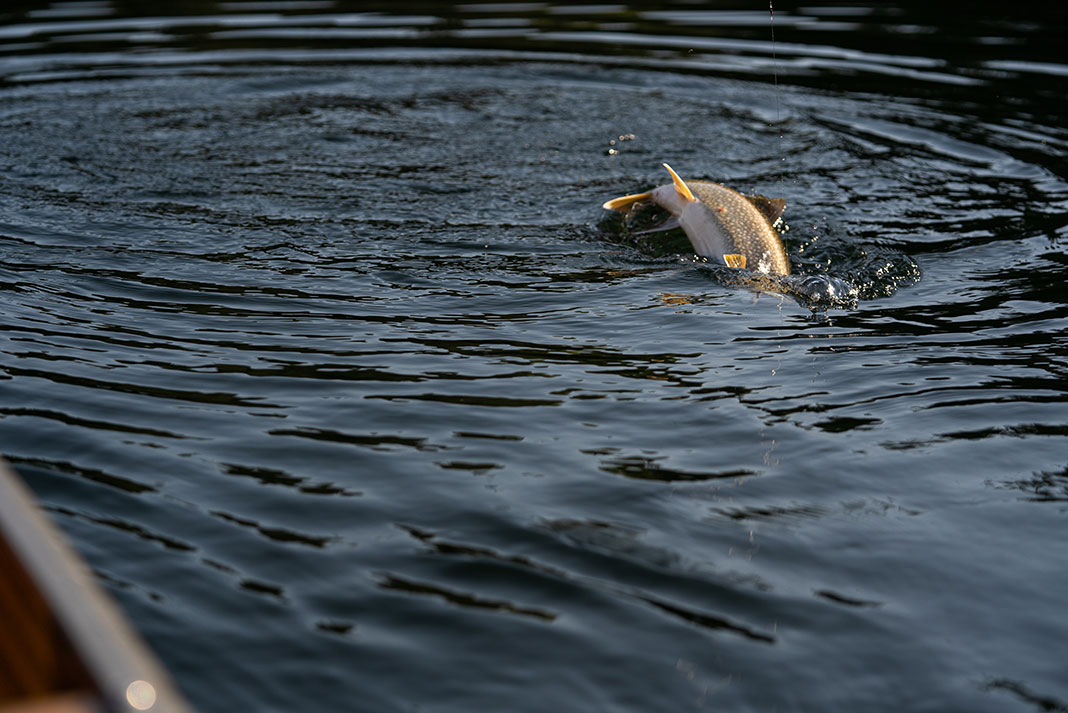
Reel in a fish or two. | Photo: Brian Hallberg // @brian_hallberg
Boundary Waters fishing
An entire article could be written about fishing in the Boundary Waters. Northern Minnesota contains some of the best fishing opportunities on the planet, and there’s no better way to find big fish than to get off the beaten track by traveling in a canoe. You’ll find great fishing for smallmouth and largemouth bass, northern pike, and walleye across the region.
[ View all Boundary Waters Canoe Area trips in the Paddling Trip Guide ]
Look for larger lakes, such as Basswood, Saganaga, Seagull and Knife, if you wish to catch lake trout. Don’t be afraid to fish in moving water, too—especially for trophy northerns that lurk in eddies of calm water around rocks.
With so many amazing attractions, it’s hard to narrow down a list of the best places in the Boundary Waters. Like many of the world’s greatest outdoor destinations, every Boundary Waters visitor will have their own favorites.
For extreme solitude, try Rifle Lake, which boasts a single campsite for ultimate seclusion. For iconic freshwater scenery that captures the mood of the Boundary Waters, paddle into Knife Lake, along the U.S.-Canada border. For outstanding fishing, wet a line in Seagull Lake. For easy access, float the Kawishiwi River. For islands, try Saganaga Lake. Lastly, for a taste of this region’s rich Indigenous past, visit the pictographs on North Hegman Lake.
Are you looking for a touch of luxury in the wilderness? There are many options for Boundary Waters accommodations, providing comfortable base camps to stay and do day trips, go on hikes and participate in other outdoor activities. You’ll find both classic cabins and all-inclusive resorts. For a unique experience, try Boundary Waters glamping—that is, glamorous camping.
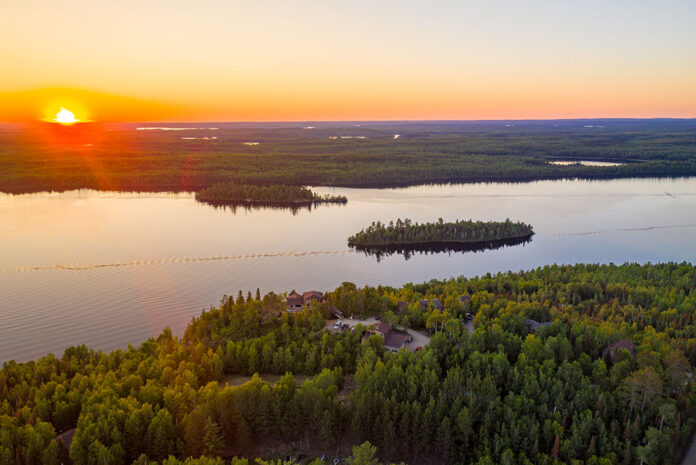
Drive-in campgrounds are also available in the region for tent camping and RVs. Most Boundary Waters accommodations are located on the water, so they’re perfect for day paddling. A stay at a cabin or resort is also a great reward upon finishing a backcountry canoe trip.
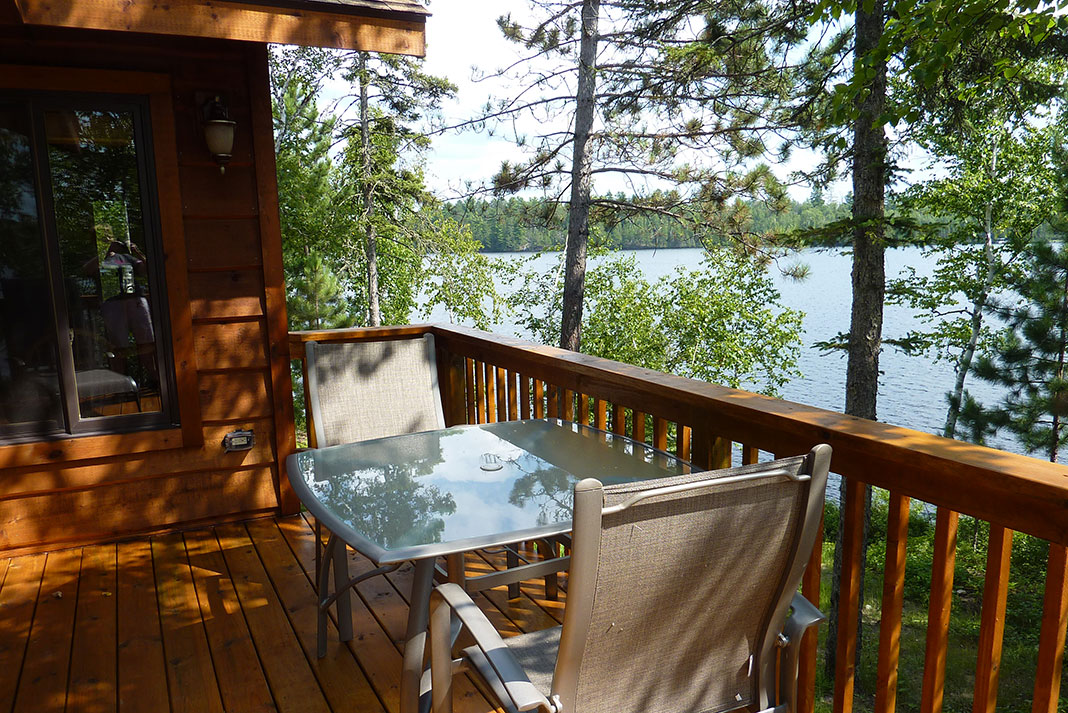
Boundary Waters cabin rentals are a good option for those looking for do-it-yourself accommodations. You get your own private space—often with simple cooking facilities, or the option of lodge-based meals if you’d rather not cook—in wonderful locations. If you’re truly looking to DIY, start by checking out vacation rentals in Ely on VRBO.
Many outfitters offer cabin rentals and canoe trip planning services, allowing you to design a more complete vacation. One example is Seagull Outfitters, which has cabins on one of the Boundary Waters’ best lakes, located on the east side of the wilderness and accessed off of Highway 61. Tuscarora Lodge and Canoe Outfitters is another operator that combines accommodations with canoe trip planning, rentals and outfitting, also located on Seagull Lake.
[ View all Boundary Waters Canoe Area trips in the Paddling Trip Guide ]
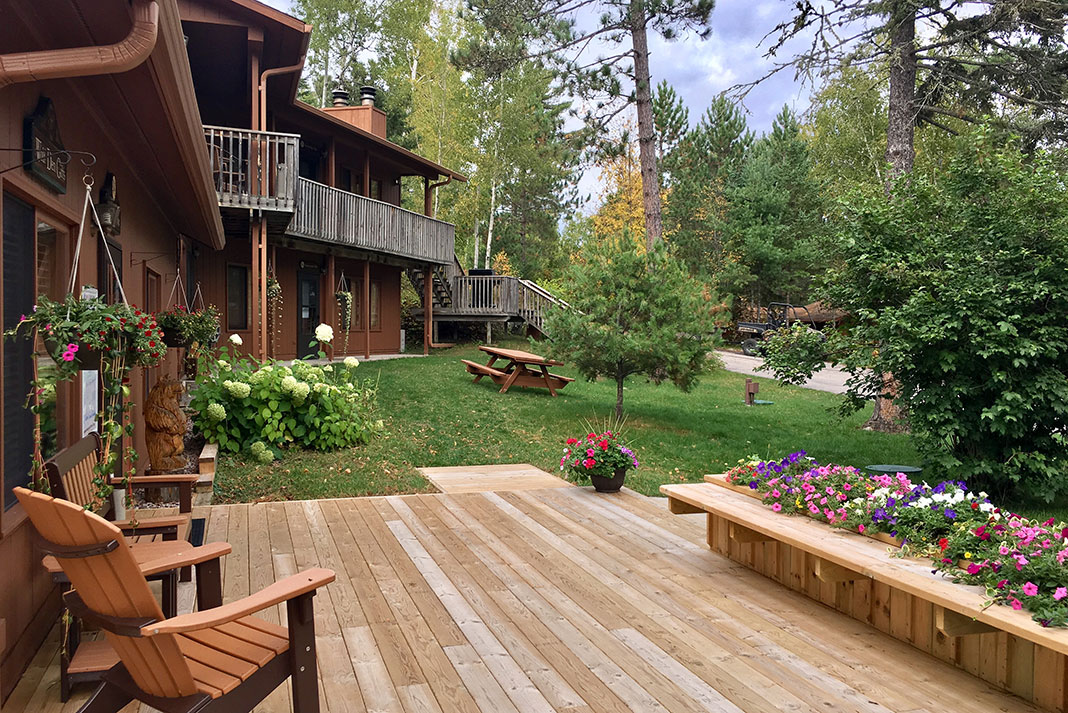
Cabin rentals also make for a great base camp if you’re looking for more comfortable accommodations to set off on day trips. One example is Fenske Lake Cabins, which offers private waterfront cabin rentals near Ely, on the edge of the Boundary Waters. Vosburgh’s Custom Cabin Rentals also offers a wide array of vacation rentals near Ely that are perfect for paddlers. Meanwhile, Gunflint Lodge, one of the oldest establishments in the area, located on the Gunflint Trail on the east side of the Boundary Waters, offers three rustic, pet-friendly cabins as well as a luxe waterfront lodge.
The Boundary Waters supports dozens of well-established resorts for a more all-inclusive wilderness retreat. Many are geared to support paddlers, anglers and general outdoor enthusiasts, and all include great services—such as meals, canoe and boat rentals, guided tours and outfitting packages—to make your vacation easy to plan and enjoy.
Start your search for an amazing northern Minnesota vacation with these great Boundary Waters resorts:
River Point Resort & Outfitting Co.
River Point Resort & Outfitting Co. is a family-run resort on the South Kawishiwi River and Birch Lake, near Ely. The facility is equally attractive to anglers seeking world-class walleye, northern pike and bass, canoe trippers wishing to start or finish their Boundary Waters adventure in style, and families looking for a comfortable way to experience the outdoors.
Rockwood Lodge and Outfitters
Rockwood Lodge and Outfitters provides everything you need on the Gunflint Trail. Rockwood has a lodge, cabins and a rustic bunkhouse for no-frills accommodations. The company also offers full canoe trip planning and outfitting.
La Tourell’s
La Tourell’s is a long-standing fishing and canoe trip outfitter with lodge facilities on Moose Lake, east of Ely. It holds the distinction of being the closest lodge to the Boundary Waters, located at the end of the road and just outside of the wilderness area.
Grand Ely Lodge
The Grand Ely Lodge is a little bit different, offering an impressive facility with cozy rooms and upscale amenities, including a swimming pool and full restaurant.
Not quite ready for wilderness camping? Get a taste of the Boundary Waters at a Minnesota campground. There are six campgrounds in Superior National Forest, including:
Cadotte Lake – 27 sites
Birch Lake – 30 sites and two cabins
Fall Lake – 64 sites, and a favorite for RV campers
Fenske Lake – 16 sites, all tent camping
South Kawishiwi River – 33 sites, including one group site that accommodates up to 35 people
Whiteface – 30 sites, plus group sites and a walk- or paddle-in backcountry campsite
Canoe Country Outfitters Campground is located on Moose Lake, 20 miles east of Ely, and a popular entry point for Boundary Waters canoe trips. Canoe rentals, cabins, electrical sites and showers are available, as well as laundry facilities, sauna and a convenience store.
Timber Trail Campground
Timber Trail Campground features a mix of waterfront campsites and secluded forested campsites, all with water and electric hook-ups. Tent and RV sites are available, as well as waterfront cabins.
Located on Flour Lake, Golden Eagle Lodge and Campground has nine sites for tents or RVs with water and electric hook-ups. The resort features 10 waterfront cabins and a main lodge.
Glamping is “glamorous camping”—a cross between lodge-based accommodations and tenting. For Boundary Waters glamping check out Ely’s Riverside Island Campsites, which offers comfortable canvas tents with beds in a remote island setting.
Feature photo: Anthony Pompa // @anthony_pompa @truenorthexp
Take a wilderness vacation in the Boundary Waters! Going guided eliminates the challenge of selecting a route, arranging permits, preparing a menu, and lining up canoeing and camping gear. You’ll also benefit from local knowledge and a more intimate backcountry experience, with the opportunity to learn wilderness skills and travel safely.
Guided trips are perfect for novices, families and individuals looking to join a group. There are plenty of options for Boundary Waters guided canoe trips. Here’s a glimpse of what you have to choose from.
Looking to access the Boundary Waters from the east, via Minnesota’s Highway 61? Border Lakes Tour Company is a Grand Marais-based outfitter that offers a range of day and multiday guided trips, making for the perfect introduction to the Boundary Waters for beginners.
Clearwater Outfitters
Located on the Gunflint trail, Clearwater Outfitters delivers a range of custom guided canoe trips. Bring your own group and objectives and the outfitter will develop an all-inclusive canoe tour that meets your needs. Price per person varies with group size; a four-day trip for four people costs $1,240 per person.
This Ely-based outfitter offers personalized guided canoe trips for groups of up to eight, ranging from two to eight days, with longer expeditions available. Ely Outfitting Company guides will teach you the camping and paddling skills you’ll need for future trips, while providing insight into the local history and your natural surroundings. Price per person varies with group size; a four-day trip for four people costs $870 per person.
[ View all Boundary Waters Canoe Area trips in the Paddling Trip Guide ]
Moose Track Adventures
Consider Ely-based Moose Track Adventures if you’re a diehard angler looking for an all-inclusive, guided Boundary Waters canoe trip with lots of great fishing and an insider scoop. Price per person varies with group size; a four-day trip for four people costs $857 per person.
This long-standing Ely-based outfitter provides custom trips for groups as well as scheduled guided canoe trips with unique themes, including a women’s-only canoe trip, a wolf-howl canoe trip, and a guided canoe trip with special guest Cliff Jacobson, a popular canoe instructor. Prices for a one-week trip range from $1,395 to $1,695 per person. Piragis also offers a practical “Jump Start” guide service, which includes a one-day primer with a professional guide to set you off on a successful trip.
Stone Harbor Wilderness Supply
Based in Grand Marais, Stone Harbor Wilderness Supply offers Boundary Waters canoe day trips starting at $150 per person and a four-day guided kayak camping trip on sprawling Saganaga Lake starting at $725 per person.
Looking for a canoe day trip while visiting Ely? Way to Go Adventures offers half- and full-day outings. Expect to pay $285 for a four-hour, two-person trip and $425 for an eight-hour, two-person trip.
This long-standing Boundary Waters guide service delivers a five-day “classic” canoe trip on Brule and Winchell lakes that lives up to its description. Prices with Wilderness Inquiry start at $775 per person with several departure dates offered through the summer months.


 This article was produced under a grant from the Sport Fish Restoration and Boating Trust Fund, administered by the U.S. Coast Guard.