

In March 2025, Emily Broderson started her Garmin watch and pushed out into the Withlacoochee River, west of Orlando, Florida. Over the next two days, she paddled the length of the waterway’s navigable 100 miles. When she finished, she submitted her GPX track and photos to claim her spot as the holder of the Fastest Known Paddle, or FKP, for the Withlacoochee.
Fastest Known Paddle could be the new frontier in paddlesports
At the time, the Fastest Known Paddle website (fastestknownpaddle.org) had only been up for a couple of months. It was launched in January of 2025 by Scott Miller, coholder of the Guinness World Record for paddling down the Mississippi River. Miller knew there was a need for a clearinghouse besides Guinness to record paddling records.
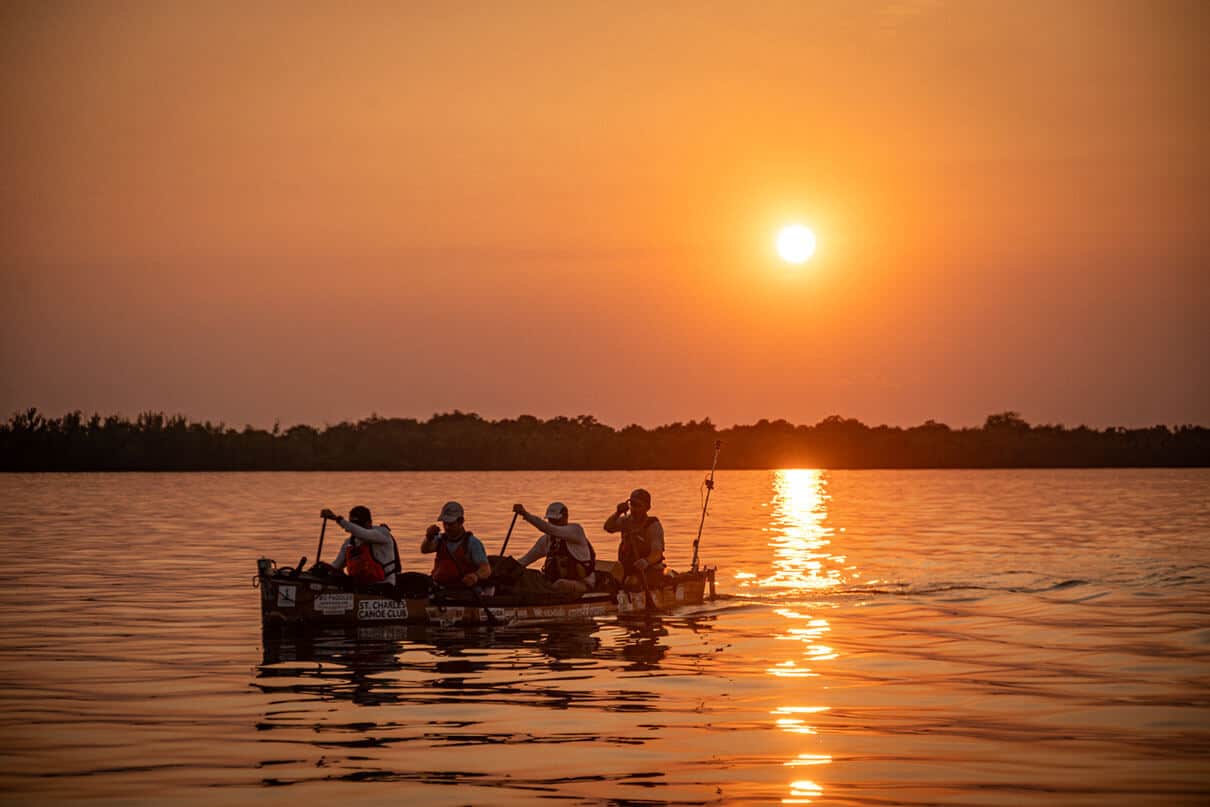
Taking a page from the a Known Time website launched in 2018 by ultrarunners Buzz Burrell and Peter Bakwin, he launched Fastest Known Paddle. Burrell and Bakwin’s site helped drive a massive trend, and it now has more than 6,000 FKT running routes logged across the world. Miller hopes FKP can do the same for paddling.
Famous Speed Records
Missouri River: In 1980, Verlen Kruger and Steve Landick paddled 2,341 miles in 33 days, 18 hours, 45 minutes.
Wisconsin River: In 1995, Mike Schnitzka and Bill Perdzock paddled 424 miles in 4 days, 2 hours, 22 minutes.
Red River, Manitoba: In 2023, Sean Stoesz paddled 128 miles in 1 day, 4 hours, 48 minutes.
Mississippi River: In 2023, Judson Steinback, Paul Cox, Wally Werderich and Scott Miller paddled 2,320 miles in 16 days, 20 hours, 16 minutes.
Before he set up the site, Miller contacted Burrell, who advised him to make things clear and impartial, and helped him distinguish between supported and unsupported FKP attempts. After he got the site up, Miller filled in some preexisting FKPs, like Sean Stoesz’s 2023 Red River 200 in Manitoba, Mike Schnitzka and Bill Perdzock’s 1995 Wisconsin River FKP, and Verlen Kruger and Steve Landick’s 1980 Missouri River record.
At the time of writing, there were a total of 23 FKPs on the site. But with a quarter million rivers in North America alone, there’s room for more.
“I think it’s fantastic,” says Broderson, who is also president of the Minnesota Canoe Association. “I’m super excited about it. The site is well done, and Scott brings a ton of organizing energy. I hope it inspires people to go out and do something a little competitive.”
Some paddlers will certainly do that. Others, like Wally Werderich and Mike Kies, who set an FKP on the 187-mile Fox River in Wisconsin and Illinois, used their 43-hour attempt to raise awareness and money along the way for the Illinois Park & Recreation Foundation.
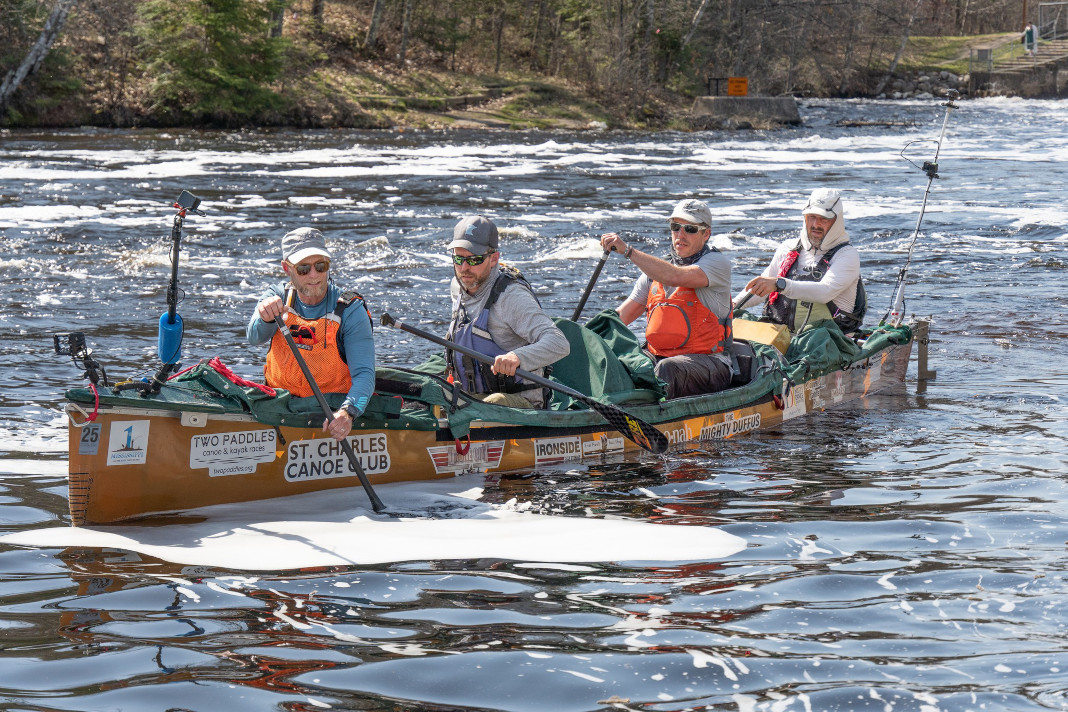
There are three things you need to do to establish an FKP. First, unless the route has been established, you must complete a route proposal form. Next, you fill out a pre-FKP form. Lastly, after you’ve finished, you need to fill out a post-FKP form. To confirm an FKP, you’ll need photos, a GPX track and a trip report. The GPS data can be taken from a Garmin inReach or SPOT tracker, or from your phone using a navigation app like Strava, Footpath or Navionics. You can also use a GPS watch and download your GPX data from Strava. Miller said some paddlers use two devices, charging one while the other records data. You can submit multiple tracks, as long as they line up to account for the route. He urges people to practice data collection before starting an actual FKP attempt.
“I’ve been pleased to have people making submissions,” says Miller. “It’s growing organically. But really, I just wanted to do this as a community service. It’s like a choose-your-own-adventure thing. It’s a way to inject a little adventure into your life on your own timeline.”
In June 2026, Scott Miller will lead a team across seven states while attempting to break Verlen Kruger and Steve Landick’s 45-year-old speed record on the Missouri River. Learn more at missouririverspeedrecord.com.
 This article was published in Issue 74 of Paddling Magazine.
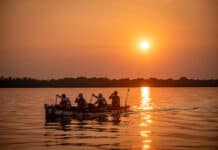
 Full tilt: Scott Miller, creator of the Fastest Known Paddle website, is seen in the stern during 2023’s record-setting Mississippi speed run. Watch a documentary about the journey at wildernessmindset.com. | Feature photo: Courtesy Wilderness Mindset







Why is the word “known” used in this concept? It seems rather superfluous, at best, and just plain silly and pretentious, at worst.