Solo your canoe so you can discover your own adventure while spending quality time alone in nature. From a practical standpoint, practicing solo canoeing will also make you a better, more skilled paddler.
Francis Boyes of Smoothwater Outfitters (smoothwater.com) in Temagami, Ontario, offers his top tips on how to become a skilled soloist. Discover which paddle you should use, how best to position yourself in the boat and how to perform the C-stoke in this video.
Paddlers are often thrown into uncomfortable situations—from dealing with cold water swims to handling unexpected injuries. The best leaders are those who are best prepared.
Not sure how you measure up? The ability to answer these 10 questions correctly can mean the difference between you being an asset to your group, or a burden.
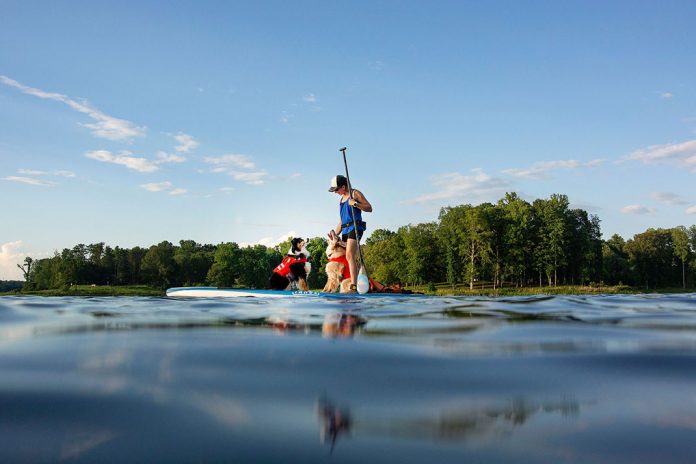
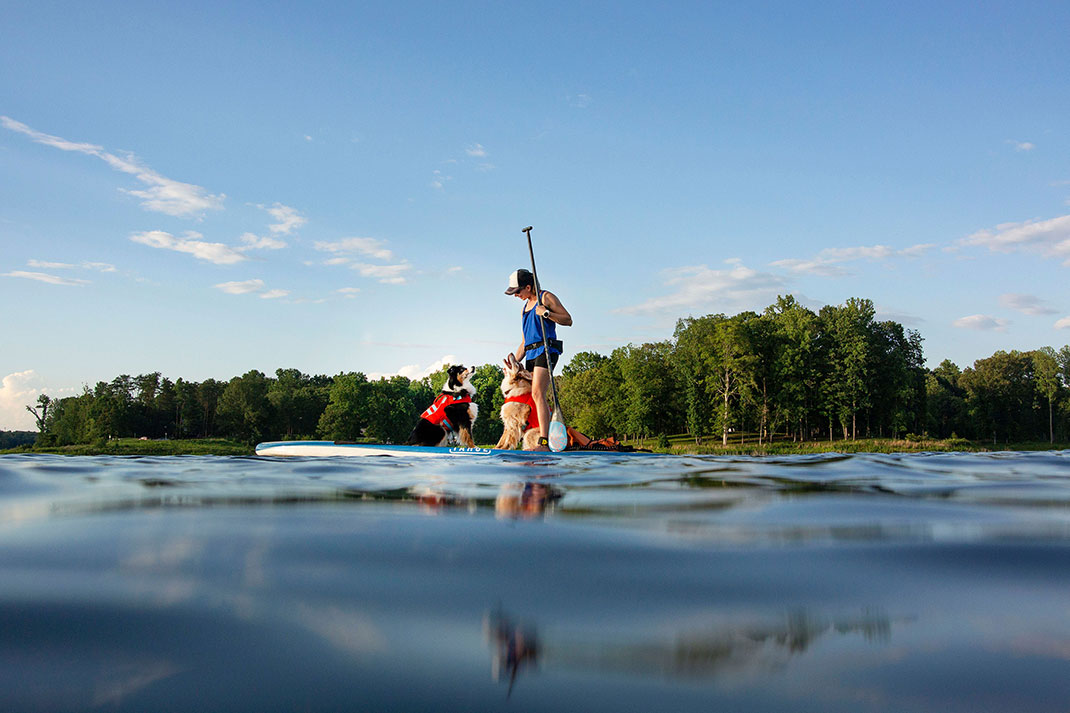
Making memories that will last fur-ever. | Photo: Courtesy Maria Christina Schultz
Learning how to standup paddleboard with your dog can seem daunting, but it’s easier than you might think. Many dogs pick up the sport as quickly as their humans. The trick is making the learning process fun while keeping safety in mind. This means having the right gear, being a confident paddleboarder so you can inspire confidence in your pooch, and training your dog to understand the board is a place to chill out and let you do all the work. Master that and you’ll be well on your way to creating an even stronger bond with your pup.
Here’s what you need to know to get started paddleboarding with a dog.
Best paddleboards for dogs
Having an appropriately sized board is one of the most significant factors in making you and your dog feel comfortable on the water. Add your body weight plus your dog’s to make sure the board in question has an appropriate capacity and volume to accommodate your dynamic duo. A chihuahua won’t make any difference, but a golden retriever or German shepherd on board might mean you need to size up. A wider board will also provide more stability; look for something in the 30- to 34-inch range.
Dog on inflatable paddleboard
Inflatable paddleboards are a dog-friendly choice. The rubber surface helps your pup’s pads grip the board. If your pup makes an unexpected wet exit, the material of the inflatable board is durable and offers some traction for scrabbling reentries. Wondering, “will my dog pop an inflatable paddleboard?” Don’t worry about your pup’s nails puncturing the board—the material is way tougher than that.
Dogs on hard paddleboards
Hard boards are okay for pets too. Aim for a full-length deck pad to ensure your pup has grip—they’ll feel more comfortable with traction underfoot and will be less likely to slide off too.
Dog life jackets for paddleboarding
Both you and your dog should always wear life jackets while on the water. Most dog life jackets have a handy suitcase-style handle on the back to aid in heaving your dog back on the board if he falls off. The life jacket also increases visibility in the water and, of course, keeps your pup afloat if he gets tired.
To help Fido understand the board is a safe place to sit and stay put, follow these steps to introduce your pup to your paddleboard.
How to get your dog on a paddleboard
First, place the board in a familiar and safe environment, like the backyard or living room, for your dog to investigate. After allowing your pup to sniff it, lure your dog onto the deck of the board with a treat. When your dog has all four paws on the board, mark the good behavior with verbal praise and reward with a tasty treat.
Next, ask for behaviors like sit and down on the board and reward. Work on sit stays and down stays on the board, gradually increasing the duration of the stay. Work on a release command, like “Okay!” to give your dog permission to exit the board.
Once your dog is reliably staying on the board, introduce the life jacket, and repeat practicing sit and down stays while wearing the life jacket. Once the dog is again comfortable, introduce the paddle. Make sure your dog is comfortable with the paddle moving around him while on the board maintaining a stay. Then stand on the board next to the dog. Be patient, this process could take days.
Once you’ve introduced the board, PFD and paddle, take your board to the water. Choose a glassy day. Don’t expect to go far or fast on the first outing. Even just sitting together out on the water is an excellent first excursion.
Keep training fun and your training sessions short and sweet, with tons of praise, treats and positive reinforcement. Gradually introduce longer duration when your dog is comfortable. Ensure they’re having fun before trying longer excursions. And keep rewarding the pup for their good behavior to create positive associations.
Making memories that will last fur-ever. | Photo: Courtesy Maria Christina Schultz
Five more pro tips for success
These are my top five tips to make paddleboarding with your dog safe and enjoyable.
1 Be confident
When you paddle with your furry friend, they’re looking to you for guidance and confidence. If you’re anxious, they’ll pick up on that. To make your pup feel safe, you need to be comfortable on the board and a competent paddler.
2
Stay within comfort levels
The more wind, current and the larger Fido is, the harder you will have to work. Know the forecast, keep an eye on conditions and always err on the side of caution, staying within your paddling limits. Also, keep an eye on your dog’s comfort level—remember, dogs may not understand the so-called fun of epic mileage or miserable weather.
3
Always wear your leash
When a dog jumps off, it can knock you off too and cause the board to travel. If it’s a windy day, the board will get away from you quickly. A leash is key to keeping your board close in an upset, but is only recommended for flatwater environments. Coiled leashes are best for flatwater, so it won’t hang off the sides of the board and get caught on objects in the water. Make sure your dog has mastered staying on the board before attempting to paddle waterways with a current.
4
Your dog’s leash is optional
A well-trained dog shouldn’t need a leash while on a paddleboard. If you take the time to help your dog understand the board is a place to sit and stay on until released, you should be fine leash-free. However, if your pup is not reliable, you may feel safer leashing your dog and I recommend a short, four-foot leash attached to the dog’s life jacket, not the collar. Never tie your dog to the paddleboard and never leash your dog in current.
5
Make a swim plan
Know what to do when you fall off the board. First, recover the board—easy if you’re wearing a leash—then the dog and any other gear. If your dog likes to swim, you can practice self-rescuing together under controlled circumstances with lots of rewards, so it’s not a scary experience when it happens for real.
Maria Christina Schultz is a standup paddleboard instructor and author of How To SUP With Your Pup. She lives in Virginia with her three Australian shepherds.
This article was first published in Paddling Magazine Issue 64. Subscribe to Paddling Magazine’s print and digital editions here, or download the Paddling Magazine app and browse the digital archives here.
Making memories that will last fur-ever. | Feature photo: Courtesy Maria Christina Schultz
After decades of exploring, where do the boldest sea kayakers, whitewater boaters and canoe trippers fantasize about paddling? That’s the question that inspired Paddling Magazine to query some of our long-time contributors and favorite nomadic aquaphiles to ask after their dream destinations, most challenging expeditions and what a life of exploration really means anyways.
In this series of profiles, these exceptional water-wanderers share their top trips, best advice and biggest blunders. And whether their ambitious journeys were taken in the name of discovery, education, environment or glory, these legends affirm what we already know: There’s far more to explore by paddle than anyone could fit in a lifetime—but don’t let that stop you from trying.
[ Plan your next adventure with the Paddling Trip Guide ]
Ben Stookesberry has made a career of leading expeditions around the world, notching more than 130 first descents on class V and VI rivers in 36 countries and counting. His missions have ranged from Central Africa and Pakistan to Patagonia and Bhutan and everywhere in between, except Antarctica.
Location: Missoula, Montana
Occupation: Professional kayaker and adventure film producer
Next Project: A headwaters descent of the Jatunyacu River in Ecuador
Stookesberry on the South Fork Clearwater in Northern Idaho. | Photo: John Webster
Q & A with Ben Stookesberry
1 One river I dream of returning to is…
the Nachvak River in the Torngat Mountains of Canada. This location still captivates me because of the absolute remoteness and endeavor just to reach and return from it.
2
One destination I dream of paddling but haven’t yet is…
the Bob Marshall Wilderness. I want to paddle here because of the proximity to my home in Missoula and the number of beautiful rivers born there.
3
My biggest pet peeve is…
procrastination because I am so good at it.
4
One thing I can’t live without is…
a positive attitude.
5
The greatest advice I ever got was…
take on a task you think may be impossible and try that.
6
The kayak I’m paddling most right now is a…
Jackson Kayak Zen 3.
7
The best paddling companions…
form a small, cohesive, caring group.
8
The hardest part about making that dream trip happen is…
simply committing to trying to make it happen regardless of the outcome.
9
My best advice for young paddlers is…
to find your internal drive and passion and follow that, as opposed to the passion and pursuit of others. Whether flatwater or class VI, your passion will keep you paddling and positive for the rest of your life.
10
Happiness is…
the satisfaction of a hard-earned night spent on the river where only a little sustenance and sleep are
required to wake up and continue downstream.
the Rio Appaporis in Colombia and it taught me patience and persistence in small group relations.
About 500 miles into the expedition, the team was taken hostage by the FARC. The team dynamics had been so strained up until then that, for the first time on the expedition, the team was all working together. The soldiers held the paddlers in jungle camps over three days. Eventually, their gear was returned, and they were free to continue. Instead, they flew out from a small airstrip in a nearby village. Read more about the ordeal here.
12
What scares me most is…
drowning.
“It’s why I portage,” Stookesberry adds. “Yet, drowning is a black hole I face and intend to face for the rest of my life. Most river enthusiasts have trauma from the loss of someone close in the river. And that trauma needs some serious, in-depth discussion.”
13
My favorite camp meal is…
lentil noodles with sauteed veggies.
14
The true gift of big trips is…
to disconnect from the superfluous and connect deeply with the absolute necessities.
This article was first published in Paddling Magazine Issue 64. Subscribe to Paddling Magazine’s print and digital editions here, or download the Paddling Magazine app and browse the digital archives here.
Stookesberry on the South Fork Clearwater in Northern Idaho. | Photo: John Webster
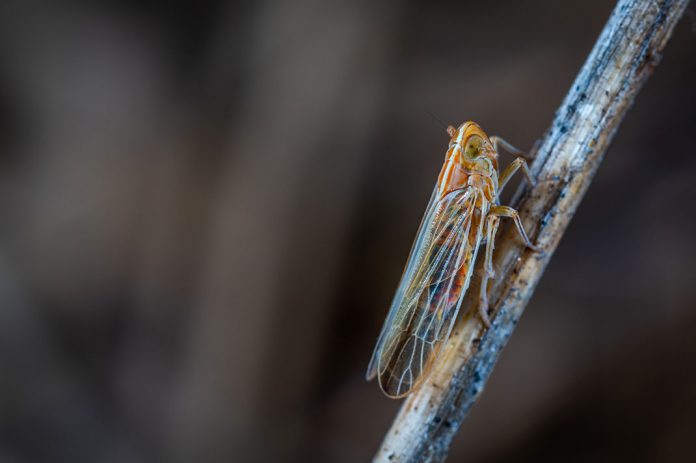
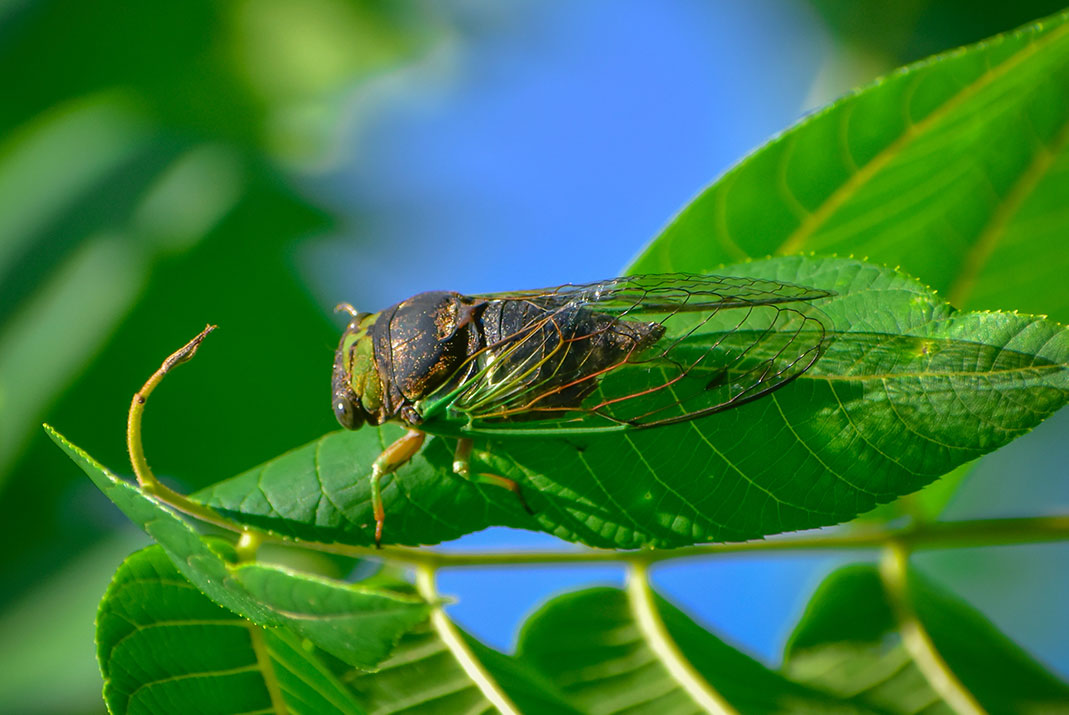
1 There are 3,400 species of cicada worldwide. While the majority emerge every two to five years, periodical cicadas are special. They spend either 13 or 17 years underground, and they are only found in the United States. This spring, nearly one trillion periodical cicadas emerged across 15 central and eastern states. They are part of Brood X.
Photo by Chris F // Pexels
2The last time Brood X rose from the ground in hordes was 2004. That year, Americans re-elected George W. Bush. The Boston Red Sox won the World Series for the first time since 1918, Martha Stewart was sentenced to five months in prison, Google introduced Gmail, and Mark Zuckerberg launched Facebook from his Harvard dorm room.
3Cicadas are all buzz and no bite. Males make their characteristic mating cry by contracting their abdominal muscles, which creates a pulse of sound. The din of millions can reach 100 decibels, equivalent to a jackhammer.
4According to Smithsonian Magazine, back in 1970, three cycles ago, Brood X’s calls inspired Bob Dylan to write the song “Day of the Locusts.” He sings: “Yeah, the locusts sang such a sweet melody, Oh, the locusts sang off in the distance, Yeah, the locusts sang and they were singing for me.”
5However, cicadas are not locusts, Bob. Locusts are a type of grasshopper; while cicadas are part of the Hemiptera family, along with aphids and stink bugs. The mix-up is common—emerging cicadas were also misidentified as a biblical plague of locusts by early American colonists. In fact, a group of cicadas is called a plague.
6Cicada 3301 is a nickname given to a mysterious organization that posted puzzles online to recruit codebreakers. The last puzzle, published in 2014, has yet to be solved. The puzzles focused on data security and cryptography. According to the Washington Post, it’s one of the “top five eeriest, unsolved mysteries of the Internet.” Many have speculated the puzzles are a recruitment tool for the CIA or MI6.
[ Find your next paddling adventure in the Paddling Trip Guide ]
7Clumsy and just over an inch in length, cicadas make an easy snack for birds, reptiles and mammals. Researchers believe by emerging all at once in densities of up to 1.5 million per acre, cicadas overwhelm their predators, who binge eat, get full and then leave the surviving cicadas free to get busy.
Photo by Egor Kamelev // Pexels
8Cicadas are above ground for a good time, but not a long time. Though the 13- or 17-year lifespan of periodical cicadas is one of the longest of any insect, they typically spend just four to six weeks on the surface to mate. The first portion of a periodical cicada’s life is spent underground as a nymph feeding on liquid sucked from plant roots. After sucking sap for 17 years, you’d be ready to let loose too.
This article was first published in Paddling Magazine Issue 64. Subscribe to Paddling Magazine’s print and digital editions here, or download the Paddling Magazine app and browse the digital archives here.
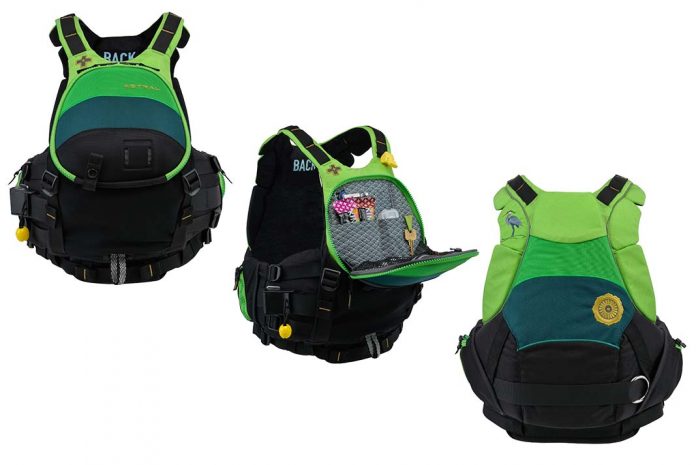
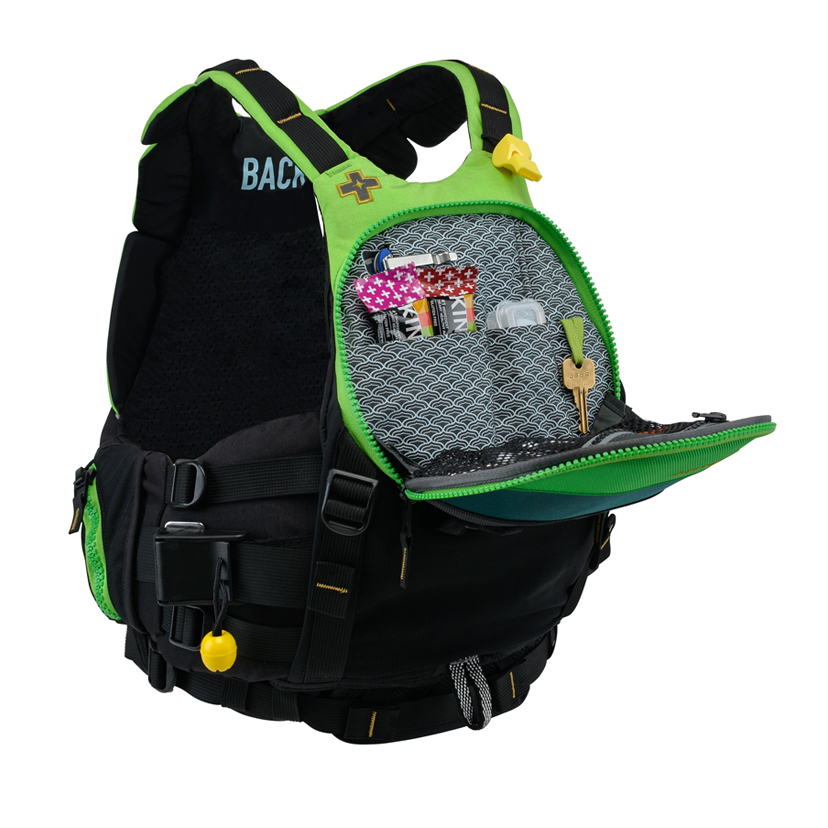
Astral Pays Homage to Iconic and Influential Green River with Limited Edition Lifejacket
Astral, manufacturer of industry-leading PFDs and footwear, is proud to unveil its latest limited edition lifejacket, the LE Heron GreenJacket: a tribute to the iconic Green River that has played such a formative role for Astral, its employees, and whitewater kayaking as a sport. Astral will donate 10% of all proceeds from the lifejacket to the Green River Access Fund, which works to maintain permanent public access to the river.
Located just south of Astral’s Asheville headquarters, the Green River is perhaps best known for “the Narrows”: a stretch of highly technical whitewater that is the site of the Green River Race, considered by many to be the pinnacle of whitewater racing in the southeast. Since the first official descent of the Narrows in 1988, the Green River has played a formative role in many paddlers’ lives, including Astral Founder & CEO Philip Curry, who was among the first few groups to run the Narrows consistently in the early 1990’s.
“It’s like you have a knot in your soul or your mind and [the Green] just loosens it and it’s gone,” says Curry of the Green’s effect and its significance in his own life. “You finish that river feeling so clean and refreshed. Mentally, spiritually, and physically.”
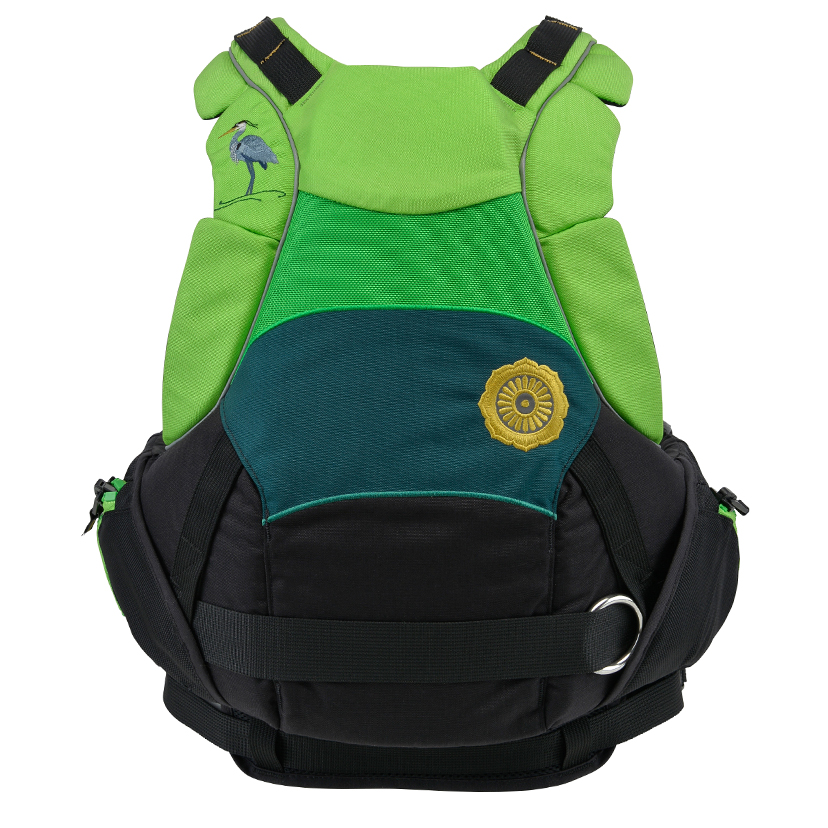
The latest of Astral’s perennially popular Limited Edition lifejackets, the Heron GreenJacket honors the Green River and the communities served by its waters. The design reduces its environmental impact by repurposing fabric and materials leftover from previous PFD productions. A heron embroidered on the back panel of the jacket honors the true keepers of the river and the spirits they represent. Astral will donate 10% of the Limited Edition Heron GreenJacket proceeds to the Green River Access Fund to help fund the future parking lot and river access on Gallimore Rd.
“In the beginning the Green was considered one of the hardest runs done. Now it’s one of many training grounds for what is considered hard,” says Shane Benedict, co-founder of Liquidlogic Kayaks and President of the Board for the Green River Access Fund. “The significance of that is that at some point you will see just about anyone who has ever committed to paddling in a large way come through the Green River at some point in their life…The Green River Community is home because so many of us committed everything to the river, the area, and the people that made that same commitment.”
The legendary Greenjacket has been selected as one of the best life jackets for whitewater paddlers by Paddling Magazine’s editors.
About Astral
Since 2002, Astral has been on a mission to protect the maximum amount of soil and water and create products that elevate your experience in Nature. Astral is strategically operated from Seattle, Portland, Austin, Asheville, Salt Lake, Bend, Denver, and Saigon.
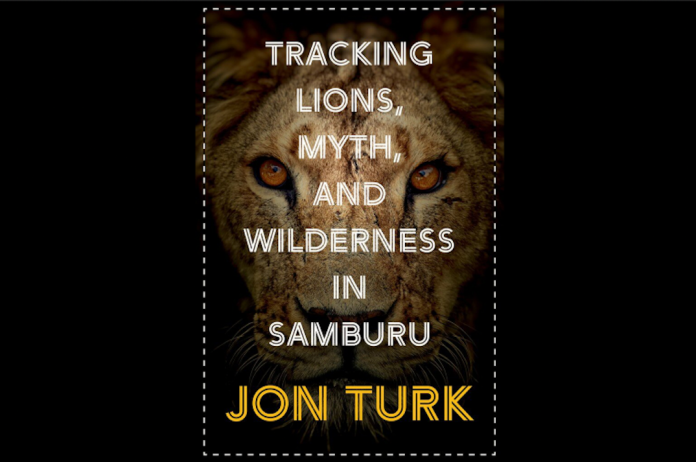
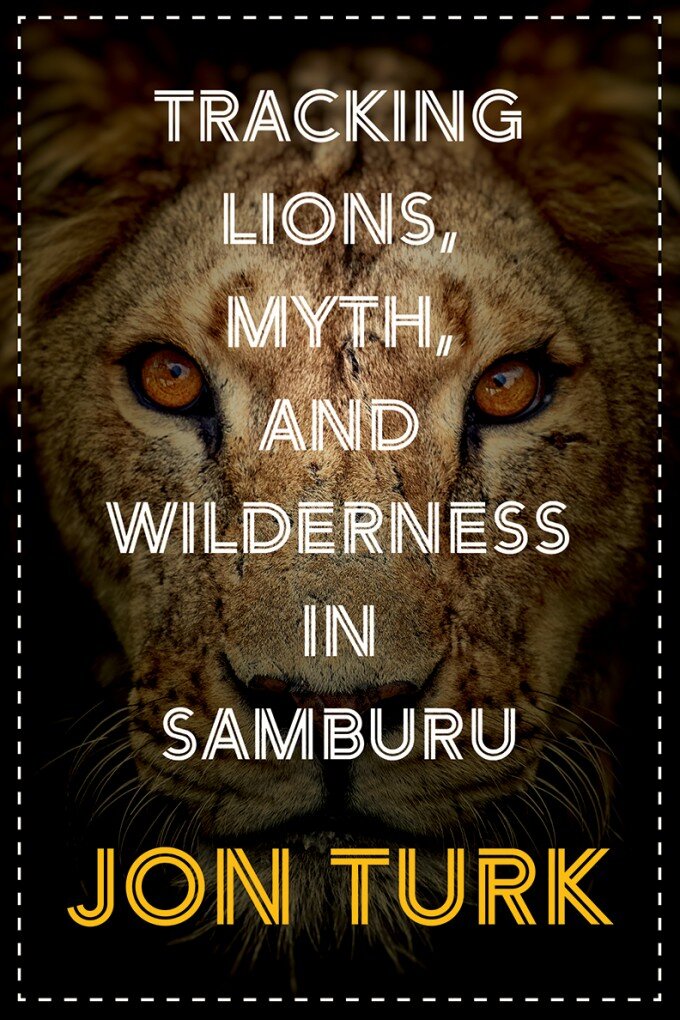
Known for his circumnavigation of Ellesmere Island, his North Pacific crossing from Japan to Alaska, and kayaking around Cape Horn, author and adventurer Jon Turk takes readers to the parched savannah and deep into human history and mythology in his new—and allegedly last—book, Tracking Lions, Myth and Wilderness in Samburu. In his signature storytelling style, Turk wraps philosophy, science and adventure into a mind-expanding read.
While tracking a lion with a Samburu headman and then, later, eluding human assailants who may be tracking him, Turk experiences people at their best and worst. As the tracker and the tracked, he investigates how the stories we tell each other can be molded into innovation, love and co-operation—or harnessed to launch armies. In Tracking Lions, Myth, and Wilderness in Samburu, Turk explores the wisdom that endowed our Stone Age ancestors to survive and how myth, art and ceremony have often been hijacked and distorted. And though there is no paddling in this tale, it’s ultimately a story about our relationship with wild places on this planet, Turk says.
Below, Turk shares how a lion-tracking expedition in Kenya turned into the book he’s been waiting 50 years to write. Pick up a copy of Tracking Lions, Myth, and Wilderness in Samburu at your local independent book retailer, or order on Amazon online.
Paddling Magazine: How did this expedition come about?
Jon Turk: I’m a believer that unusual travel suggestions are dancing lessons from God. I was giving a talk at the Harvard Travellers Club in Cambridge, and after the talk, a woman came up to me and said, I need somebody to work on a lion tracking mission. She could have easily hired a graduate student or young person—somebody schooled in the techniques of wildlife biology, which I’m not—but she asked me to come, and I said, yes.
PM: It sounds like you got more than you bargained for when you arrived. Tell us what happened next.
JT: On day three of my visit, a lion ate one of the local cows. I went out with the local headman depot to track this lion. On my way out of camp, somebody hands me a wooden club. It’s a beautiful stone age implement, and I realize this is my weapon. The tracker has no gun, no machete, no nothing. What we have to face the lion is this club. And off we go.
So, we’re walking, we’re following the tracks, and we’re fairly close to the lion. And my first reaction is I’m really angry that I’m put in such great risk when we have no defense. If this lion comes whipping out of the bushes with intent, we’re dead. And then I realize I’m getting a paleo-survival lesson here. I’m vulnerable. I have Stone Age tools and weaponry. There are two of us. How do you survive?
I had brought one book with me on this journey, Sapiens by Yuval Noah Harari. And he talks about what skills people used to survive in the Stone Age. And it was our collective community, tribalism, storytelling, mythology, and art that gave us the power to survive. And you feel that very much when you’re walking through the savannah, tracking a lion armed only with a stick. I started to view my whole stay in Samburu not as a Western scientific journey into tracking lions, but as a paleo journey into understanding where power comes from. It’s an extension of my five years in Siberia with Moolynaut, a shaman who I’ve written about in several books.
And then we have an about-face. Due to all kinds of political mumbo jumbo, all of a sudden it’s become dangerous. One of the guys in the village gets shot and there’s been a massacre in a neighboring village. There’s some bad trouble going on.
Through a combination of Harari’s book and other research, I come to see the turning point where our strengths become our weaknesses, where our storytelling and mythology—that once was our survival—has been hijacked by evil people to convince us to kill one another. And seeing that dichotomy, that Yin and Yang, the wonder, the magic, the power and the evil is what the book is about.
Jon Turk is a scientist, author and National Geographic award-winning explorer. | Photo: jonturk.net
PM: What drove you to tell this story now?
JT: I’ve been an environmental writer for 50 years, half a century. I wrote my first environmental science textbook in 1971. There are three levels of dealing with environmental problems. One is the technical level: if we use too much gas, we can get a hybrid or an electric car, something which uses less gas. The other is the social aspects. For example, if you’re driving to work, you can carpool, and by making social changes, you can reduce your fuel consumption. And when I wrote my first environmental science book in 1971, I was allowed to talk about technological problems and social solutions.
But I felt at the time there was a third level, a spiritual level, I wasn’t allowed to talk about. And for 50 years, almost 40 books, I’ve written science books and my trade books and innumerable magazine articles. I’ve not been allowed to talk about the spiritual solutions to our environmental problem. Humanity is in such a fix right now that the surface solutions are not enough. So, this book has been lingering in my mind for literally 50 years. And now I’m 75; this is my last go at it.
PM: You write: “Why do people continue to destroy ecosystems when the evidence is uncontroversial that humans are living in an unsustainable manner on a finite planet? Why do nations continue to go to war? … Perhaps I’m a fool to tackle these questions on this my last major writing project but fool or not, here I am at the keyboard.” What answers do you arrive at?
JT: We are storytelling people, and we are enraptured by the stories told to us. Stories have brought us together as a tribe and helped us survive against lions while carrying only stone clubs. And the stories unified us and made us a cooperative species. So that the sum was greater than the parts. People in the Stone Age could not survive without the tribe. Stories brought the tribe together. Now we get all these stories, but it’s turned around 180 degrees.
The stories which gave us power are now the stories killing us. The stories are we need this, we need that, or this person is selling such-and-such, and we need to buy it. Someone tells us that we have to fill our bucketlists and get on a plane and fly to Nepal to have a good time rather than going for a walk in the backyard and watching the leaves fall.
You read in the paper every day about ecological devastation, but the stories still overcome us. If I buy such-and-such a thing, then I’ll have more friends. Or, all the good-looking girls or good-looking boys will like me because I’m drinking a Pepsi cola. When you reduce it down to that, it sounds pretty silly. But we all do it.
We have to understand, at an intellectual level, how we’re being manipulated and reject the manipulation. It’s important to understand our weakness, our foible, and how it came to be through evolution—how this great strength becomes our great weakness. And, once we understand how we’ve been duped, then we can see it and reject it.
The solution is to live in the now. I didn’t make this up. This has been around for a while. There are many paths towards finding presence and finding contentment in the now. There are a lot of ways to free ourselves. But I have spent my life in nature. And if there’s one overpowering message in this book, it’s that the more time we spend in nature, the more time we’re drawn into the now, the less powerful these outside stories become. And the closer we can take this journey to what we call this consciousness revolution or this spiritual journey into a way of saving the planet.
Our Stone Age ancestors found power to survive through wonder, art, cooperation, storytelling, ceremony and love—not tools and armaments—but these ideas have been hijacked and distorted with this modern consumer-oriented, oil-soaked world. We can find our way back through nature’s healing.
I do believe that there is a path back. Nature isn’t the only way. But from my experience, it’s the most effective way to draw out of this screen time, all the ads, all the politics, everything falls away from you, out of you. It’s just a cathartic clean-out.
At 75, with so many exceptional expeditions to your name, what does adventure mean to you nowadays?
At the end of the Ellesmere expedition, Erik Boomer and I completed the circumnavigation of Ellesmere in 104 days. And we were waiting for a flight out and my body shut down, and I almost died. That had a profound effect on me. In the hospital, when I’m lying there, I think, “Okay, Jon, what did you do? Well, you pushed it as far as you can push it, you’re done.”
75 is not 25. That’s a fact. So, you have to decide whether you’re going to be bummed out, or whether you’re not going to be bummed out. And I’d rather not be bummed out.
Last winter, my body was telling me I can’t go to Nepal and do a winter ascent of Annapurna and the pandemic situation was telling me I can’t go to Fernie, British Columbia, and go skiing with my friends. So, my wife and I packed up our van and we spent the winter living out in very remote sections of the Southwest desert, just kind of hanging out, staying safe from COVID, riding our mountain bikes, hiking, and hanging out in the desert.
And it was low-key in the sense that I’m not going to write any articles for Mountain Bike News and I’m not going to win any expedition of the year awards. But it was deeply, deeply joyful.
Just my wife and myself, alone in the desert for months. We spent six and a half months out there. My love of being outside has not diminished one nano-whatever—it’s 100 percent. But you change what you’re doing. And you see the beauty and the love in what you’re doing. I mean, it sounds a little corny, but that’s just the way it is.
The softer edges of the Rewind don’t catch much water, which makes it ideal for running steeper, creekier rivers. | Photo: Scott MacGregor
The Dagger Rewind’s release back in the fall of 2019 was accompanied by much anticipation and fanfare. Dagger claimed the Axiom replacement to be the new ultimate downriver-play whitewater kayak. They said the Rewind is perfect for paddlers of all abilities and for rivers from class I to V. Terms like “instant classic” were bandied about. That August, the Rewind was declared the best new whitewater boat of the year in Paddling Magazine Industry Awards.
So, lots of hype. How about now, almost two years later?
The Rewind pays homage to the retro-slice revolution. You know, the low-volume stern that’s back in style for downriver play.
Unless you’ve been living in a hole, you’re aware of the half-slice boat trend. Older paddlers are reliving their glory days. Younger, or let’s just say newer, paddlers are discovering how much fun old-school river features can be in a boat with speed and a low volume squirty stern. It’s fun again to run a variety of whitewater, as well as adding an extra challenge to class III to IV where a creek boat might be overkill.
Arguably, Dagger started this retro genre with the Axiom way back in 2009. The Axiom (read our full Dagger Axiom Review) was a progression of the RPM (read Dagger Re-Releases The RPM), featuring ample rocker, increased bow volume and a flattish stern. Back then, it was ahead of its time. By the time the Rewind dropped 10 years later, every major kayak manufacturer had their own version of a half-slice. And it was past time for Dagger to up the game.
At first glance, the Rewind and its predecessor look a fair bit alike, but the team at Dagger has learned a lot since then.
The softer edges of the Rewind don’t catch much water, which makes it ideal for running steeper, creekier rivers. | Photo: Scott MacGregor
Ample bow volume and rocker helps the Rewind resurface and maintain speed after drops, while its slicey, low-volume stern turns every eddyline into a play opportunity. | Photo: Scott MacGregor
The Rewind is three inches longer than the Axiom. It’s wider at the tail. And has more volume and more rocker in the bow. And the Rewind has overall softer lines than the Axiom.
On the water, the Rewind actually feels a lot like a scaled-down Phantom, Dagger’s nine-foot-long race-boat-style creeker. That’s not surprising since the two share a rocker and bow profile. With aggressive creek boat rocker up front, this bow boofs with ease, effortlessly rides up and over hydraulics and can carry you through almost everything, so long as your weight is forward. The bow of the Rewind releases more easily, making it easier to make mid-current pivots and changes in direction than the Axiom.
My medium Rewind loaner measures eight feet, nine inches long. It’s fast on the water, though not as fast as Pyranha’s Ripper. My Ripper measures nine feet for comparison. Even though the Rewind can charge hard, it remains playful, responsive and stable. It’s a good mix of attributes to provide confidence to paddlers of all abilities.
The bow is cool, but it’s the stern of these boats everyone gets really excited about. The Rewind is optimized to pivot, squirt and get vertical. I found it far easier to get the tail slicing through with the Rewind than with the Axiom. The Axiom felt like it would hit a wall of volume you had to either push through or get rejected. The stern of the Rewind more smoothly slices at any angle.
Dagger’s rotomolded seat with Contour Ergo Creek outfitting features ratcheting leg-lifter and backband adjustments for comfort and control, and Step-out wall and adjustable volume foot braces for added safety. | Photo: Scott MacGregor
The softer edges of the Rewind don’t catch much water, which makes it ideal for running steeper, creekier rivers. It cooperates well with big water too, though the Axiom did slightly better in that regard, in my opinion. And make no mistake, the Rewind is a fantastic surfer.
At 6’2” and 165 pounds, I’m right in the middle of the paddler weight recommendation for the medium size, and this size feels great. Lots of volume in the bow means I can fit my long legs and creeking shoes.
The Rewind comes with Dagger’s easily adjustable Contour Ergo Creek outfitting, as opposed to Dagger’s playboat style found in the Jitsu. The burlier creeking outfitting with step-out wall and volume adjustable foot brace with toe cups will make paddlers feel even more confident taking the Rewind down meatier rapids.
With this safer outfitting choice, Dagger has really emphasized the river running and downriver eddyline play qualities over playboating and surfing qualities. Another thing I love about this outfitting is the ratchet between your legs to raise the front of the seat and lock you into the thigh braces to shred waves.
Safety and comfort are what I’ve come to expect from Dagger’s outfitting. Of course, the downside to all this outfitting is more plastic. The medium is 43 pounds. I am still reasonably comfortable carrying the Rewind for longer distances on my shoulder. Its good bow-to-stern balance helps.
The Rewind is available in four colors, Cosmos seen here, red, a pinky-bluey-purple swirl Dagger calls Aurora, and Aqua-Fresh, which is blue and white with a red stripe, just like the minty toothpaste. | Photo: Scott MacGregor
The Rewind is available in four colors and four sizes. The kid’s extra small size is still the Axiom hull and outfitting with a new Rewind logo.
Come to think it, we’ve all been pretty much living in a hole since the release of the Rewind. Those early adopters lucky enough to snag the first few out of the mold before the pandemic production chaos will tell you they love the new Rewind. It’s better than the Axiom. The only challenging part about paddling this boat is finding one.
This article was first published in Paddling Magazine Issue 64. Subscribe to Paddling Magazine’s print and digital editions here, or download the Paddling Magazine app and browse the digital archives here.
The softer edges of the Rewind don’t catch much water, which makes it ideal for running steeper, creekier rivers. | Feature photo: Scott MacGregor
A woman paddleboarding at a Florida spring experienced an uncomfortably close encounter with an alligator. In a recent interview, the paddleboarder claimed that the “gator” in question tried snapping at her board, just moments before the camera started rolling.
“This gator comes out of nowhere and it comes in between the two kayaks and straight for my paddleboard and then he opened his mouth and almost bit my paddleboard,” Vicky Baker said in an interview with News 6.
Baker can be seen swatting at the alligator with her paddle in an attempt to nudge it out of her way. Unsurprisingly, the large reptile retaliated with a warning hiss.
Though both parties came away from the incident unharmed, Baker suspects the alligator may have previously been fed by humans and may pose a threat to others on the water. She made sure to alert park rangers to the situation before leaving the park.
After decades of exploring, where do the boldest sea kayakers, whitewater boaters and canoe trippers fantasize about paddling? That’s the question that inspired Paddling Magazine to query some of our long-time contributors and favorite nomadic aquaphiles to ask after their dream destinations, most challenging expeditions and what a life of exploration really means anyways.
In this series of profiles, these exceptional water-wanderers share their top trips, best advice and biggest blunders. And whether their ambitious journeys were taken in the name of discovery, education, environment or glory, these legends affirm what we already know: There’s far more to explore by paddle than anyone could fit in a lifetime—but don’t let that stop you from trying.
[ Plan your next adventure with the Paddling Trip Guide ]
Amy and Dave Freeman have traveled more than 30,000 miles by kayak, canoe and dogsled through some of the world’s wildest places, from the Amazon to the Arctic. The couple is known for mixing tripping with advocacy for Minnesota’s Boundary Waters Canoe Area Wilderness (BWCA), which is threatened by a proposed nearby sulfide-ore mine. The Freemans paddled a petition canoe carrying thousands of signatures 101 days from Ely, Minnesota, to Washington, D.C, and later spent 365 consecutive days in the BWCA, highlighting this unique and fragile region.
Location: Sailboat on the ocean or BWCA
Occupation: Wilderness guides and advocates
Current Project: Sailing on a several-month journey
from Grenada back to the U.S.
Doing what they love is their day job. | Photo: Nate Ptacek
Q&A with Amy Freeman
1My favorite paddling destination I’d like to return to is…
the British Columbia coast. We kayaked the Inside Passage in 2010 and it felt like we barely scratched
the surface.
2My biggest pet peeve is…
when people call sea kayaks “sit-in” kayaks.
3My biggest blunder was…
leaving my sprayskirt in my kayak overnight on a Lake Superior trip in October. In the morning, it was frozen solid.
4Our most challenging expedition was…
a three-year, 12,000-mile journey across North America by canoe, sea kayak and dogsled and it taught us if we break things into small steps, we can do anything.
5One thing Dave will never do again is…
pack oatmeal for breakfast every day for a multi-month trip.
Q&A with Dave Freeman
1
One destination I dream of returning to is…
the Yukon’s Peel River Watershed. This location still captivates me because the vast mountain-studded wilderness is raw and wild, and the whitewater canoeing is excellent.
2One place I dream of paddling but haven’t yet is…
Greenland. I want to paddle here because it seems like the ultimate place to kayak with icebergs, fjords and glaciers galore.
3My biggest pet peeve is…
watching people paddle with a bent shaft facing the wrong way.
to travel slowly because when you travel by kayak, canoe or dogsled, the land speaks to you and that was from Leeroy, a Dene Elder who lives on Great Bear Lake.
5The best paddling companions are…
positive, hard-working and caring.
6My best advice for young paddlers is…
have fun and try to find more experienced paddlers who can help you progress more quickly and with less drama.
“And don’t be afraid to dream big,” adds Dave. “If you have a big trip in mind, start planning and saving, sharpen your skills and go for it. For the last 25 years, my job has been to paddle and explore wild places and share those wild places with people. There are lots of ways to make it work, but if you love to paddle and spend time outside, then, with a little creativity, some penny pinching and a healthy dose of grit, you can get paid to paddle and explore.”
7Happiness is…
doing what you love.
8What scares me most is…
that the lakes, rivers, oceans and wild spaces we love to paddle and explore will not remain for future generations.
This article was first published in Paddling Magazine Issue 64. Subscribe to Paddling Magazine’s print and digital editions here, or download the Paddling Magazine app and browse the digital archives here.
Doing what they love is their day job. | Photo: Nate Ptacek