Warning: Close encounters like these may be over-whale-ming. | Photo: Zach Baranowski
As winter closes in on the Arctic, it becomes a dreamland. The short days are an endless transition from sunrise to sunset, with soft light illuminating the sky before the landscape plunges into complete darkness for a long winter.
Each year, winter’s arrival brings billions of Atlantic herring following the Gulf Stream, seeking shelter in Norway’s northern fjords. Hungry orcas and humpback whales follow, ready to feed. Frigid waters well up from the continental shelf here, carrying nutrients that support the planet’s largest cold water reef.
Warning: Close encounters like these may be over-whale-ming. | Photo: Zach Baranowski
I set out with fellow photographers to experience the Arctic Ocean firsthand. During the first couple days on the ocean, we spent more time roaming on the boat than in the water, as the humpbacks and orcas were on the move, chasing the herring into the fjords. International guidelines recommend keeping a distance of at least 300 feet from whales. We were careful, allowing the cetaceans to approach us and cutting the engine to avoid disturbing them when they neared.
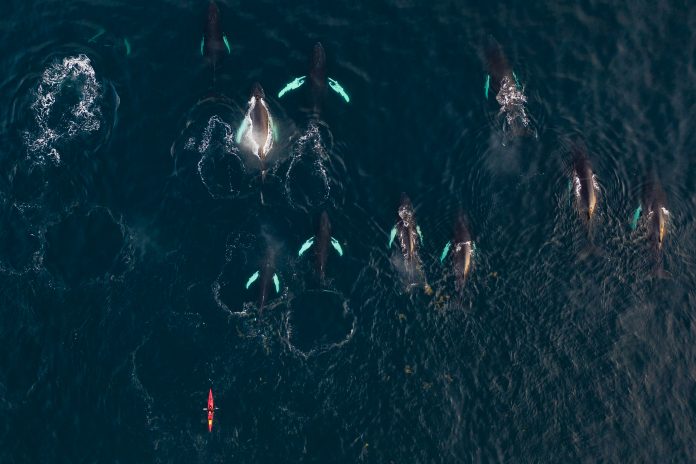
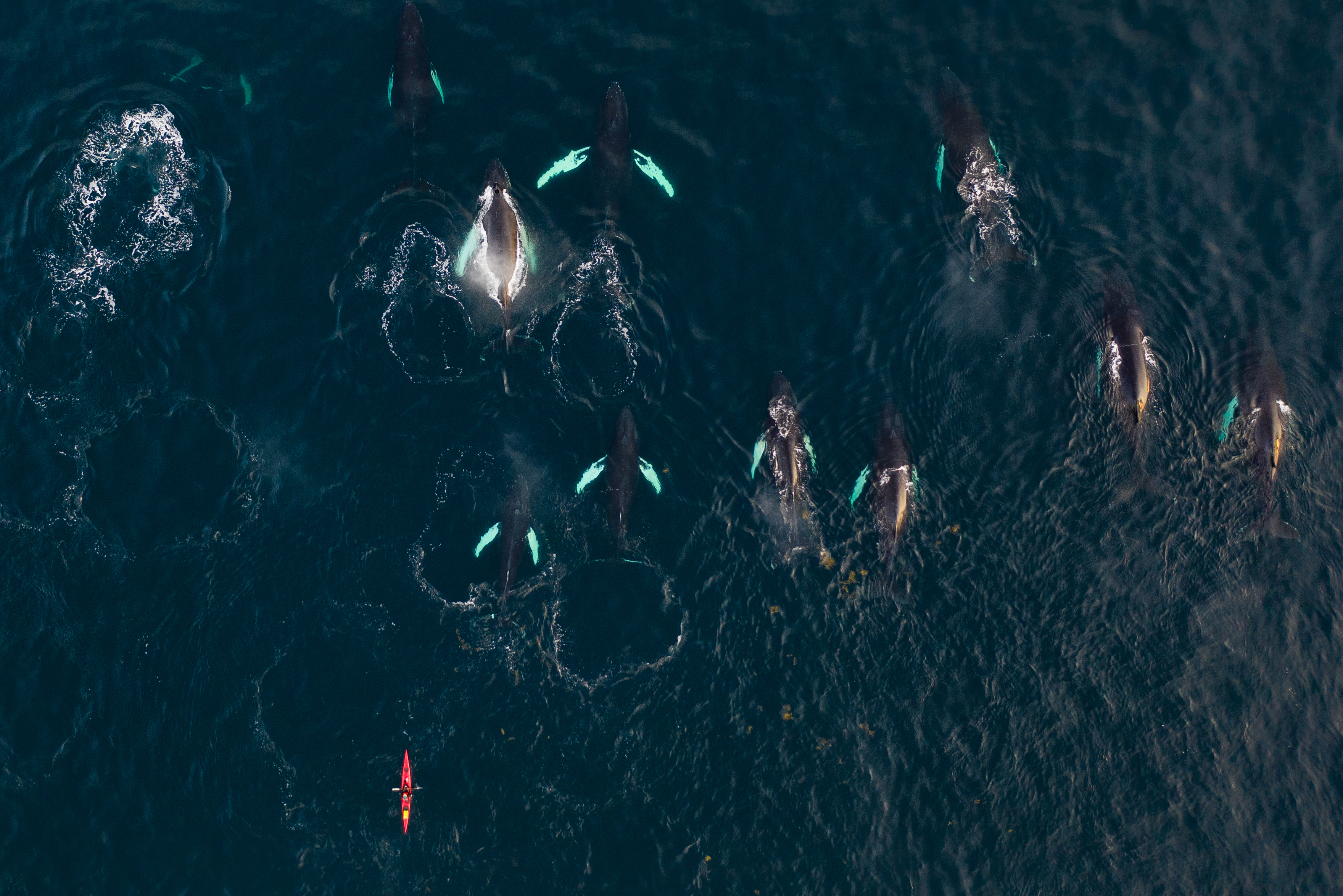
When we crossed paths with this lone kayaker, I got my first real sense of the enormity of these humpbacks as I photographed them from above with a drone. The sea kayak was dwarfed in comparison to even the smallest whale in the pod. It can be hard to grasp the size of these whales when all you can see is a fluke or dorsal fin. Their bodies reach lengths of up to 54 feet—the size of a school bus—and weigh up to 40 tons. An adult humpback can swallow 220 pounds of herring in a single gulp.
Someone on our boat remarked on how brave this kayaker must be to paddle amongst the pod. While humpbacks are considered gentle giants, people have been injured and even killed when too close to a breaching whale or tail slap.
It is a privilege to witness one of the richest marine ecosystems in the world, which exists thanks to a delicate balance. Increased tourism, shipping traffic, oil exploration and other anthropogenic activities can affect the populations of orcas, humpbacks and other marine life in the Arctic.
As winter closes in on the Arctic, it becomes a dreamland. The short days are an endless transition from sunrise to sunset, with soft light illuminating the sky before the landscape plunges into complete darkness for a long winter.
Norway is western Europe’s largest oil and gas producer, and with a December 2020 Supreme Court verdict further opening up its Arctic to more oil drilling, the country is on track to operate more oil wells than ever. Disturbances can mean trouble for cetaceans, especially during the crucial months while they feed on the herring before journeying 3,000 miles back to the Caribbean, one of the longest migratory journeys of any mammal on Earth.
On my final day in the fjords and with just a few hours of daylight to work with, we spotted a pod of orcas and humpback whales feeding on a ball of herring. I spent two hours photographing them in the frigid Arctic waters, watching the feeding frenzy and the graceful giants glide effortlessly through the water.
As Arctic water rushed into my wetsuit, I wished for the dry warmth of a kayak. But, the longer I observed the humpback passing in and out of a ball of herring, disappearing into the shadowy distance then reappearing, the more I forgot about the creeping chill. As it circled back, I saw the ominous glow of the white markings on its vast pectoral fins gliding in the darkness as it approached within meters of me. A moment and feeling I won’t ever forget.
This article was first published in Paddling Magazine Issue 63. Subscribe to Paddling Magazine’s print and digital editions here, or browse the digital archives here.
Zach Baranowski is an award-winning freelance photographer specializing in outdoor adventure and wildlife connections.
Warning: Close encounters like these may be over-whale-ming. | Photo: Zach Baranowski
“Of all my Great Lake adventures this one ranks among my most favorite.” tells Mike Stout, a long time Twin Cities resident. He adds, “The conditions were perfect, views spectacular, and with every journey there is the need to overcome.”
Photo: Mike Stout
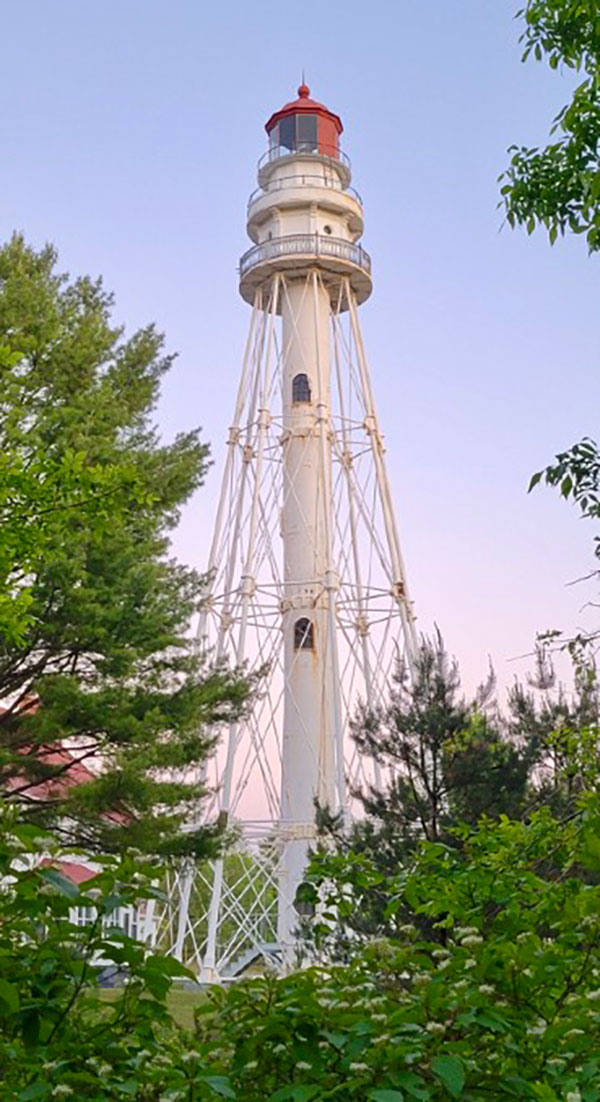
The day’s journey begins under the shadows of Wisconsin’s Rawley Point Lighthouse to Michigan’s Big Sable Lighthouse.
The biggest challenge on this trip is the unseasonably hot temperature reaching into the mid 80s and cold water in the low 50s. Because he dresses to the temperature of the water, in the unlikely event of a spill, he wore 1.5 ml neoprene pants and long sleeve top, and 3.0 ml booties. The combination of the beating sun, calm winds, and bright reflection coming off the lake, and wearing his thick wet suit, he must pause every hour to generously hydrate to avoid the onset of heat exhaustion.
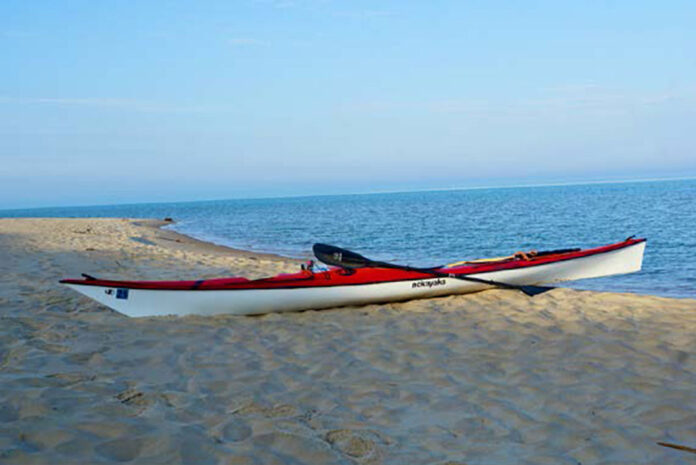
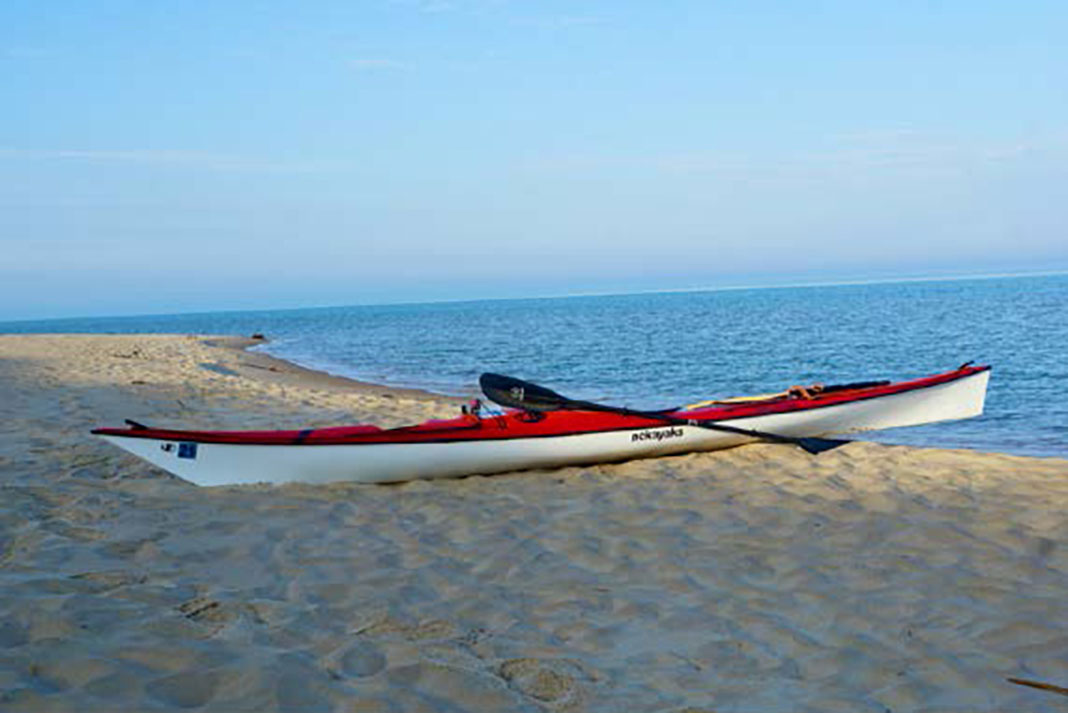
After watching the brilliant red and orange sunrise, eating a hearty breakfast, and staging his 17’2” open sea NC Kayak, at about 7:30AM he is ready to launch. He looks over Lake Michigan and takes in the beauty of this incredible blue sea with its gentle waves and thinks to himself, “I am truly blessed.”
His goal is to complete the crossing in 16 hours (+/- 1 hour). With excellent lake conditions he thinks it may possible to finish as quickly as 14 hours. He doesn’t give the though of a record pace too much time as he fears it may jinx the opportunity.
As he slips his protective skirt over his neoprene pants and long sleeve top, then secures his PFD, Stout takes one last look over the horizon and takes in the view of Lake Michigan view and takes a deep breath. “Of all the Great Lakes this is my favorite and today it feels as if she is welcoming me on.”
With his kayak halfway in the water he slips into the cockpit and get comfortably positioned. Everything is feeling good and so right. He then launches onto the beautiful calm of Lake Michigan. The clear sky and rising sun present ideal conditions for a wondrous journey.
Photo: Mike Stout
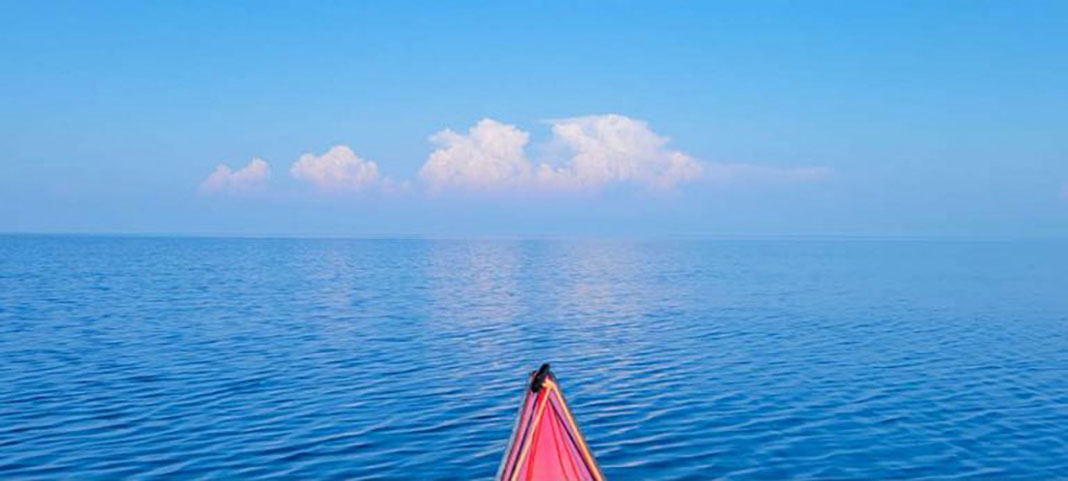
In the middle of Lake Michigan surrounded by hundreds of square miles of brilliant shades of blue, stunning pastels beaming through the distant soft white clouds, incredible lake reflections of even greater color, Stout shares, “I can’t help but be in awe. Plus, to hear no sound other than my paddle breaking the surface of the calm lake or drops of water falling from the paddle when I pause, it’s hard to express how blessed I feel. I wish others could be with me to enjoy this wondrous experience.”
In the early evening Stout spots the soft cast of land miles away, then notices a discernible white shape. He is certain it is Ludington’s Big Sable Lighthouse, his Michigan destination and home for the evening. Confident that it is, all he must do is keep my kayak pointed in that direction and enjoy the remains journey and its remarkable views, calm, and serenity.
On this trip he is not alone. There are two fresh water freighters hugging Michigan’s west coast. When he crosses the trailing wake of the first it is no more than a subtle lake roll.
About 12 miles out there is a gaggle of geese of maybe 30 or more. Pooled together they have no worries until he approaches them from the middle of the lake. They’re spooked and take off. So near he can feel the breeze generated from the collection of their powerful large wings.
As the sun sets and the sky turns dark the final guiding point comes from the beacon from atop Michigan’s Big Sable Lighthouse.
Stout shares, “I enjoy paddling the Great Lakes under the cover of darkness the most. It is then when I look above and achieve a special closeness to God and where the phrase that I often here, “There are a thousand angels looking over you,” comes to mind. It is here where I achieve an incredible sense of peace while feeling the weight of what feels like many around me. At times the likeness of my parents, brother, and grandparents so vivid, it feels so real. At times I can see their expressions of worry, disbelief, and pride on their faces. It is for this reason I am eager to return for another Great Lake nighttime adventure, to experience something so surreal and otherwise not possible.”
Feature photo: Mike Stout
With Big Sable Lighthouse straight ahead and not far, he looks down to make sure everything is properly packed away. He then picks up my speed to prepare for a soft landing on Michigan’s gradual and pristine sandy beach. He looks up and to his surprise, the combination of his headlight and the lighthouse’s backlight reveals the large impenetrable steel wall protecting Big Sable. Just as quickly, he reverse paddles to slow his momentum and escape a certain head-on collision.
Having zig zagged across Lake Michigan, following the sun and chasing distant clouds he finishes his 56 mile course in 15.4 hours.
Before he crawls into his sleeping bag for the night, he stands alone on shore and takes in the beauty of Big Sable Point Lighthouse, then looks over the lake, glances to the stars, and gives thanks for yet another grand adventure.
I can’t help but think, “How blessed am I?.”
Thank you for your interest is sharing the story about my most recent Great Lakes crossing.
Since picking up the sport six seasons ago I have paddled over 5,300 miles. Highlights include having paddled across Great Lakes Michigan (3), Superior (1), and Lake Huron (1). I made the round trip across the Straits of Mackinac and tapped the massive columns of the Mackinac Bridge. I have competed in races from across the country: Seventy48 in Washington, 150 mile Campus to Coast race in Michigan, as well as Wisconsin and Minnesota.
Again, thank you for your consideration. I trust your readers will find this record setting Great Lakes crossing and plans for an in season three-peat of interest. If I can provide additional insights or answer any questions, don’t hesitate to ask.
With 891,163 square kilometers of freshwater covering the country, Canadians have many options when it comes to deciding where to kayak. Yet despite the sizeable number of paddling destinations, not everyone has the same ability to participate in kayaking. Shoulder injuries, disabilities and the aches and pains of getting older prevent many from realizing the physical and mental health benefits of paddling.
Two organizations are working together to change all that by making specialized kayak paddles and equipment available to Canadians who might not normally be able to kayak. Angle Oar LLC, a US-based company that manufactures adaptive kayaking equipment, and Abilities in Motion, a Canadian-based non-profit organization that promotes inclusive paddling, have joined together to bring the equipment to Canada.
Photo: Hope Foundation
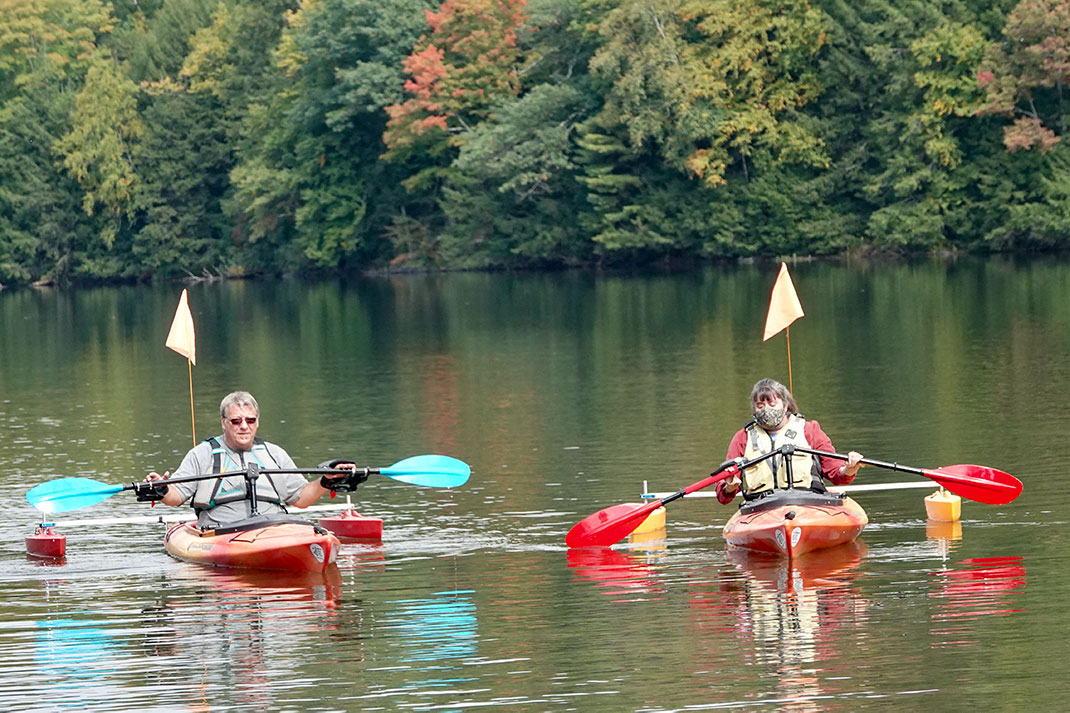
The availability of adaptive kayaking, or universal kayaking as it is sometimes called, has been steadily growing in both Canada and the US. By making small adjustments to the kayak, the paddle and/or the related accessories, many people with strength or mobility limitations can kayak independently.
“We’ve had countless customers with significant paralysis due to a stroke or spinal cord injury find that they could kayak with our mount-supported paddling systems,” notes Meg McCall, Founder & CEO of Angle Oar. “For many, it was their first time out of a wheelchair and moving independently in years. It’s been life changing.”
Adaptations range from extra paddling to support someone’s torso, outriggers for added stability, wrist grips for people unable to grasp the blade, and mounted kayak paddles which require less strength to paddle.
Angle Oar’s paddling systems use mounts that attach to the kayak and support the weight of the paddle, reducing stress on the shoulders, back and joints. The company has a patented paddle, Versa, that angles downwards on each side, requiring a smaller range of motion from the paddler. It can also be used straight, like a traditional paddle. The company’s customers include people with disabilities, experienced paddlers who’ve had rotator cuff surgery, adaptive paddling programs, and kayak retail and rental shops.
Photo: Hope Foundation
“We’ve been offering adaptations and making kayaking accessible in Ontario and beyond for more than a decade. We were aware of Angle Oar’s innovative paddling products for some time, but we didn’t have a good solution for overcoming the significant shipping costs,” says Pauline Halstead, Executive Director of Abilities in Motion (AIM). “After a lot of research and some creative brainstorming, Meg and I figured out a way to bring them into Canada in a way that was more affordable to consumers.”
Halstead, who has been a pioneer in Canada’s adaptive paddling movement, was recently appointed as chairperson of the newly created Adaptive Paddling Committee at Paddle Canada.
The need for adaptive paddling resources in Canada is clear. More than 5.3 million Canadians live with some form of disability that affects their level of freedom, independence or quality of life, according to Statistics Canada. An estimated 2.7 million of them have a mobility disability that limits their daily activities. In addition, roughly 6 million Canadians have arthritis, and shoulder pain is on of the most common musculoskeletal complaints among Canadian adults, according to one study.
Canadians interested in purchasing adaptive kayaking equipment can visit the Abilities in Motion website at abilitiesinmotion.ca for details on how to take advantage of the discounted pricing available through this new collaboration. They can also visit the AIM site to learn more about the upcoming paddling event in August, Hands Across the Water, which raises funds to support people with disabilities.
——-
Meg McCall, Founder & CEO Angle Oar LLC meg@angleoar.com
(805) 439-3056
“It was the scariest day of my life,” said Holly Spence in an interview with CNN after her traumatic ordeal; an ordeal that involved two close friends, two dogs and one 10-foot pink flamingo.
It was on Spence’s 30th birthday that the trio decided to take the flamingo out for a float close to the shore of Alaska’s White Sands beach in Kodiak.
Spence, along with her roommate and her roommate’s brother, climbed onto the giant inflatable with their two dogs in a shallow area of the beach, anticipating a leisurely float—something that the trio had done in previous years without issue, she said.
“If we get too far out, we notice right away and pull it back,” she said. But on this particular day—a day of clear sky, sunshine and wind—things didn’t go exactly to plan.
Although the group had packed some extra clothes, blankets, snacks and non-alcoholic drinks for supplies, life jackets and paddles didn’t make it onto their packing list. So, when the wind picked up and they were swept further away from the shoreline than they anticipated, things got a little hairy.
“It was a little windy but I never thought in a million years we would be drug out so fast and so far,” she said. The wind and currents proved to be too much for the trio, and they soon found themselves solely at the mercy of the elements.
[ Shop all Safety & Rescue Gear in the Paddling Buyer’s Guide ]
In just under an hour, the group came to a holt on some offshore rocks on the far side of the bay. Alaska State Troopers and US Coast Guard were called, however, the conditions were deemed too treacherous for the boats, so a helicopter hoist was used to rescue the group.
“It was a complete freak accident and we had to be rescued,” Spence said in an interview.
The trio had some scrapes and bumps from the rocks, but luckily no one was seriously injured. “It was the scariest day of my life,” Spence said. “I don’t think i’ll ever do something like this again.”
PELICAN INTERNATIONAL INC. ACQUIRES ADVANCED ELEMENTS INC.
Laval, Quebec, Canada, June 14, 2021 – As part of its strategic plan, Pelican International Inc., the world leader in the paddle sports industry, acquires Advanced Elements Inc., a pioneer in the inflatable market, through its wholly owned subsidiary Confluence Outdoors LLC. This acquisition broadens Pelican’s portfolio in the paddle sports industry, as it now offers all of its quality products with a complete range of technology, in addition to positioning Pelican as a key player in inflatable watercraft development and innovation.
“This transaction fits perfectly into our strategy to further consolidate our position as a world leader within the paddle sports industry and to offer high-quality and high-performance products to diverse consumers across all ages and backgrounds who want to explore the world outdoors. The Advanced Elements acquisition carves a path forward to help us become the premier brand of inflatable kayaks and SUPs in more than 50 countries. It’s an ideal addition to our product offering to reach our audience across traditional and e-commerce channels,” said Danick Lavoie, President and CEO of Pelican International.
“Pelican is excited by the acquisition of Advanced Elements as it provides us with another well-respected and recognizable brand to offer our extensive distribution network in order to meet the fast-growing demand for inflatable kayaks and SUPs. I look forward to this next chapter in our growth strategy,” stated Frederic Guay, Senior Vice-president, Global Sales and Marketing, Pelican International.
“At Advanced Elements we have sought and envisioned this partnership for a long time and are thrilled to join the Pelican International Group with a complete and powerful line-up of products. We wanted a business collaboration that would bring us to the next level and leverage our know-how and leadership position in the inflatable and SUP markets, and we could not hope for a better partner. I am confident that this next phase in our venture will define this market as both our passions for technology and our focus on customer needs will set us apart,” said Clay Haller, Co-founder and President of Advanced Elements.
During the transaction, Reed Smith served as legal counsel to Pelican and Tonkon Torp LLP served as legal counsel to Advanced Elements.
About Pelican International
At Pelican, we are world leaders within the water and nautical sports industry. Renowned for exceptional quality, innovation and expertise, Pelican has become the foremost global authority in the design and manufacture of kayaks, canoes, pedal boats, stand-up paddle boards (SUPs), fishing boats, and watersport accessories. As an international driving force within the industry, we offer both paddle sports and everyday outdoor enthusiasts a diverse array of products through our portfolio of seven well-known brands: Pelican®, Wilderness Systems®,
Perception®, Dagger®, Mad River Canoe®, Harmony Gear®, and Boardworks®.
Pelican has over 935 employees across three manufacturing sites in North America—this strategically located distribution footprint allows our clientele to easily procure kayaks, paddle boards and boats anywhere they choose to enjoy the water. Pelican constantly innovates to
offer the best paddling sports products across all categories and price ranges. Above all, our passionate team seeks to positively impact the lives of outdoor enthusiasts by providing safe pleasure crafts so they can relish the wild beauty of nature while keeping sustainability and social responsibility in mind.
About Advanced Elements Inc.
We at California-born Advanced Elements have the express goal of developing new and unique paddle sports products that enhance customers’ outdoor experience. Our focus is on designing and manufacturing inflatable kayaks with cutting-edge technology and providing excellent customer service. We are deeply involved in product development with patented technology, striving to develop inflatable kayaks, iSUPs, and paddle sports accessories that excel in performance, quality and portability. All of our products have been crafted to give paddlers the tools they need and the value they deserve.
Charging down the risk spectrum somewhere between consciously and subconsciously competent. | Photo: Kyle Gorenko
I’m excited for spring, and I’m sure you are too. With a year of COVID-19 behind us, we have a better sense of what to expect this paddling season. Last year, we didn’t know what we didn’t know about this pandemic. Now at least, we know what we don’t know.
Last spring, my local area was under stay-at-home orders. Staying local is easy for me as there are iconic paddling options just down the road in Algonquin Park. One of my stand-out memories last May was driving 20 minutes away to a big lake, typically bustling with boat and campground traffic. I was the only person there. As far as I could see—for eight miles—mine was the only boat on the water.
It was beautiful, remarkably peaceful and a little spooky.
Contrast that to summer and fall, when the Covid bump was in full effect. In my area, rental outfitters booked out 100 percent every weekend and 80 percent each weekday. Kayaks and canoes sold out, and retailers and manufacturers had a banner year. Thirty percent more interior camping permits were sold than any year in history. Campgrounds within a few hours’ drive of any urban center were booked solid—every single campsite.
The boom continued months past the usual paddling season. My college guide training whitewater trip in November has never seen another group in the 10 years we’ve run it. This year, there were three other groups on the river at the same time. Unbelievable.
It was a record-setting year by all counts. Algonquin Park had three deaths last summer—one hiker and two canoeists.
One was a first-timer in a rental canoe, swamped in wind waves and drowned wearing a life jacket on a blustery fall day. The other an experienced whitewater canoeist who fell in while scouting a rapid, possibly hitting her head.
Newspapers across North America reported recreation rates, park usage and rescue operations were all up as people stayed and played closer to home.
William S. Howell was a scholar at the University of Minnesota from the 1950s through to the ‘70s. He coined the terms, consciously competent and unconsciously incompetent. These terms are applied to a wide range of topics, but nowhere more so than in outdoor decision-making theory. It has borrowed—plagiarized, really—Howell’s language in safety discussions.
Charging down the risk spectrum somewhere between consciously and subconsciously competent. | Photo: Kyle Gorenko
The term unconsciously incompetent applies to novices who don’t know what they don’t know. This progresses to consciously incompetent participants, those who know what they don’t know, then to the consciously competent, who are those who know what they know. Finally, enthusiasts become subconsciously competent—competent without having to think about it.
It is easy to slag newbies in the outdoor world, especially with the advantage of hindsight and smugness. Those who work in the outdoor sector genuinely worry about the unconsciously incompetent. We know the road to competency is a long and bumpy one, with few shortcuts. The simple act of paddling a kayak or canoe can open the door to high-risk interactions.
According to the American Whitewater Accident Database, there was an increase of fatalities on rivers last summer involving inexperienced paddlers. Many involved recreational kayaks in fast water or mild rapids, and many of the victims were not wearing life jackets. “This was almost certainly part of the COVID-19 outdoor recreation growth spurt,” says database manager Charlie Walbridge.
Just as interesting to me, however, are the consciously competent. Those who mistake their comfort or complacency with expertise. Within their comfort zone, they are competent, but they failed to recognize when a line was crossed, and they were out of their depth.
SAR helicopter teams were also busy last summer, rescuing paddlers from remote river locations where new paddlers just wouldn’t end up. Whether it was accessible hotspots becoming busier that motivated people to be more ambitious in their outings and strike into unfamiliar territory, or simply that 30 percent more use comes with 30 percent more interaction with the inherent risks of paddling, there were obvious examples in 2020 of people beyond their abilities.
[ Paddling Trip Guide: Take a guided canoe, kayak, SUP or rafting trip this summer to help you become consciously competent ]
Howell indicated those most open to learning are the consciously incompetent and consciously competent—the key being conscientiousness. This summer, we know more about what we don’t know, whether it be about adapting to a pandemic or its effects on outdoor adventure. Competency is our goal, but not necessary. Being conscientious enough to know when we’re playing within our limits, and when we’re not, is what matters.
This article was first published in Paddling Magazine Issue 63. Subscribe to Paddling Magazine’s print and digital editions here, or browse the digital archives here.
Jeff Jackson is a professor of outdoor recreation at Algonquin College near the banks of the Ottawa River.
Charging down the risk spectrum somewhere between consciously and subconsciously competent. | Photo: Kyle Gorenko
WHITEWATER ONTARIO ANNOUNCES THE OTTAWA RIVER PUBLIC ACCESS PROJECT AND LAUNCHES A PROJECT WEBSITE TO SOLICIT FEEDBACK
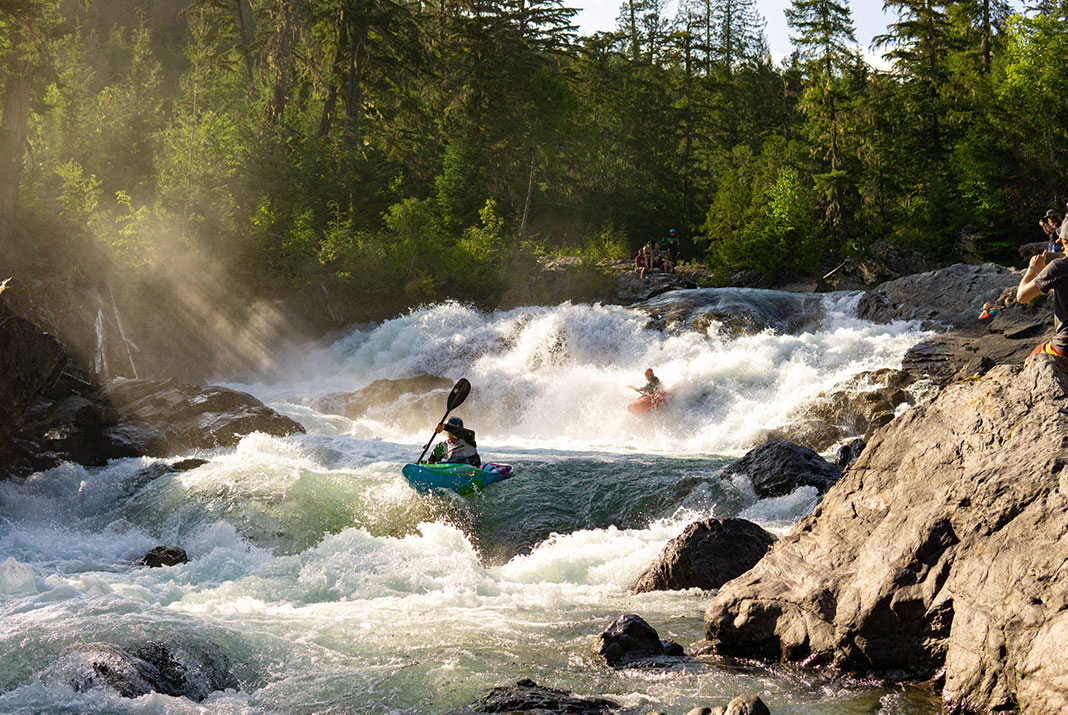
The Ottawa River is an internationally renowned whitewater river enjoyed by recreational kayakers, canoeists and rafters. Public access has been an ongoing concern for years as the sport of whitewater kayaking, canoeing, and private rafting has grown in the Ottawa Valley. Over the last several months, there has been a dedicated team of volunteers working on a proposal to secure a free, public take out on the Ottawa River and leave a lasting legacy for future generations.
On Wednesday, June 16th, the Township of Whitewater Region’s Council will receive a presentation by delegates from Whitewater Ontario to discuss a partnership with the paddling community for a public takeout.
A website dedicated to securing a public take out on the Ottawa River has been created and all who enjoy and value the Ottawa River are encouraged to voice their concerns regarding public access via the form on the website. All submissions will be kept confidential and only used to supplement the presentation being given to Council.
River u sers are also encouraged to attend a public Paddler’s Community Meeting via GoToMeeting on Sunday, June 13th from 7:30pm – 9pm EST (additional meeting details can be found below). The Ottawa River Public Access Committee will be providing an update on the project, as well as answering any questions users may have – all are welcome and you may sign into the meeting anonymously.
For further updates, continue to check back to ottawariveraccess.ca or follow us on Facebook and Instagram.
Ottawa River Access – Paddling Community Engagement Meeting
Sunday, June 13, 2021 7:30 PM – 8:30 PM (EDT)
Please join my meeting from your computer, tablet or smartphone.
You can also dial in using your phone. Canada: +1 (647) 497-9391
Access Code: 713-863-861
PHOTO WHITEWATER ONTARIO
QUESTIONS?
Contact: Sierra Stinsoninfo@ottawariveraccess.ca
ABOUT THE OTTAWA RIVER:
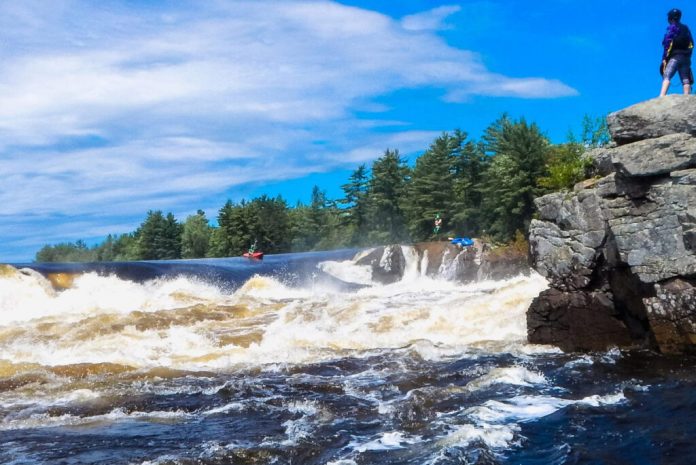
The Rocher Fendu section of the Ottawa River has been paddled for hundreds of years. These waters run through the unceded, unsurrendered traditional Territory of the Anishinabe Algonquin Nation. We recognize the Algonquins as the customary keepers and defenders of the Ottawa River Watershed and its tributaries.
ABOUT WHITEWATER ONTARIO
Whitewater Ontario is the sport governing body in the province, and represents provincial interests within the national body Whitewater Canada and the Canadian Canoe Association. Whitewater Ontario is a volunteer-driven organization uniting, supporting, and sustaining the inclusive development of the whitewater paddling community and resources.
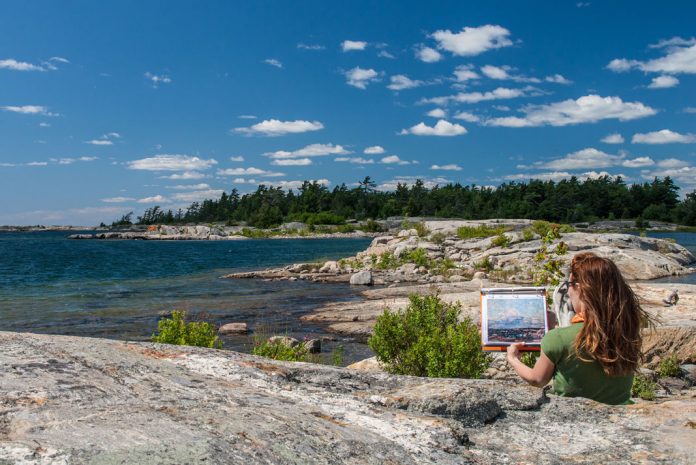
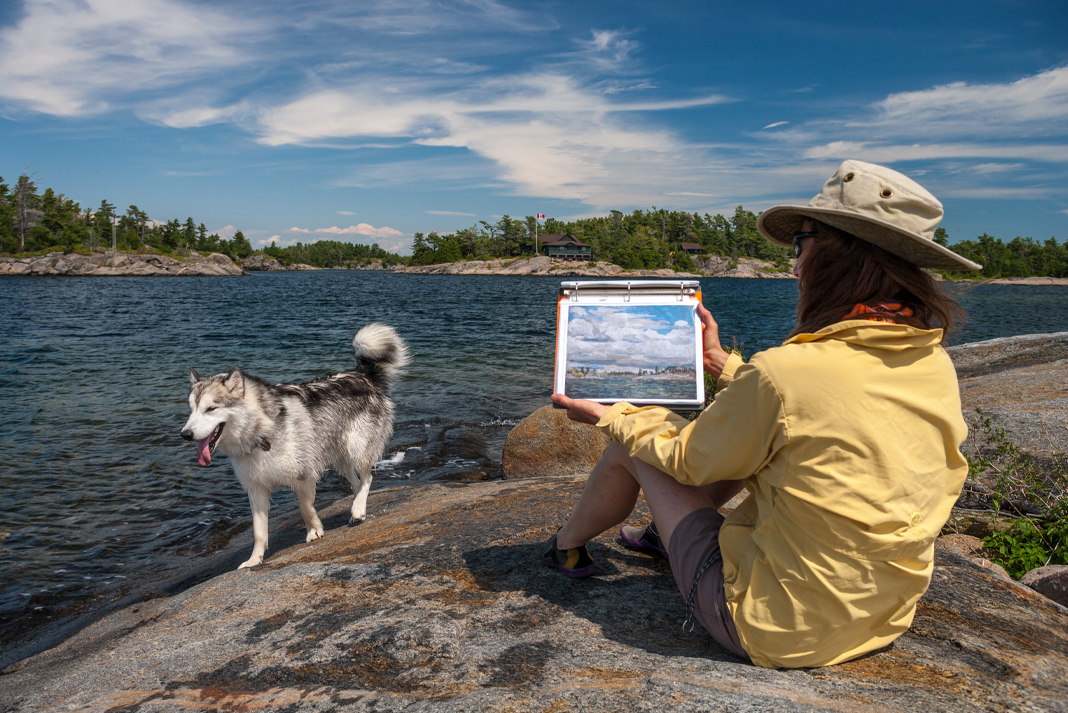
On Georgian Bay, Joanie McGuffin holds up a reproduction of Windy Day: Rough Weather in the Islands by Tom Thomson. The original painting hanging in the National Gallery of Canada was gifted to Dr. James MacCallum in 1914 when Tom Thomson was staying at his cottage not far from where this sketch was painted. | Photos by Gary McGuffin
Their paintbrushes swept expertly through the oil paint, not unlike their paddles cut deftly through the water. It’s been 101 years since the Group of Seven first showed their works in downtown Toronto, Canada, and helped shape a distinctive Canadian art style. Though they received scorn for their untraditional rugged landscapes at first, the painting sites in Northern Ontario kept calling them back.
Many of their iconic images would have been impossible to create without canoes to access the painting sites. Blackflies in their brushes be damned, the Group painted, paddled and camped for weeks and months at a time to capture remote vistas.
Many of the Group of Seven painting sites are still untouched. Through research and intimate knowledge of the landscapes through their own many trips, intrepid paddlers Gary and Joanie McGuffin have found and mapped hundreds of the exact locations where the artists sat and sketched or painted.
According to the McGuffins, there is still much work to be done to identify additional painting sites and ensure responsible ways to share these national treasures with the rest of the world.
[ Paddling Trip Guide: View all canoe trips in Ontario ]
The Group of Seven
Considered among the most famous of Canadian artists for their wilderness landscape paintings, the Group of Seven should have been eight. The seven founding members in 1919 were Franklin Carmichael, Lawren S. Harris, A.Y. Jackson, Frank Johnston, Arthur Lismer, J.E.H. MacDonald and Frederick Varley.
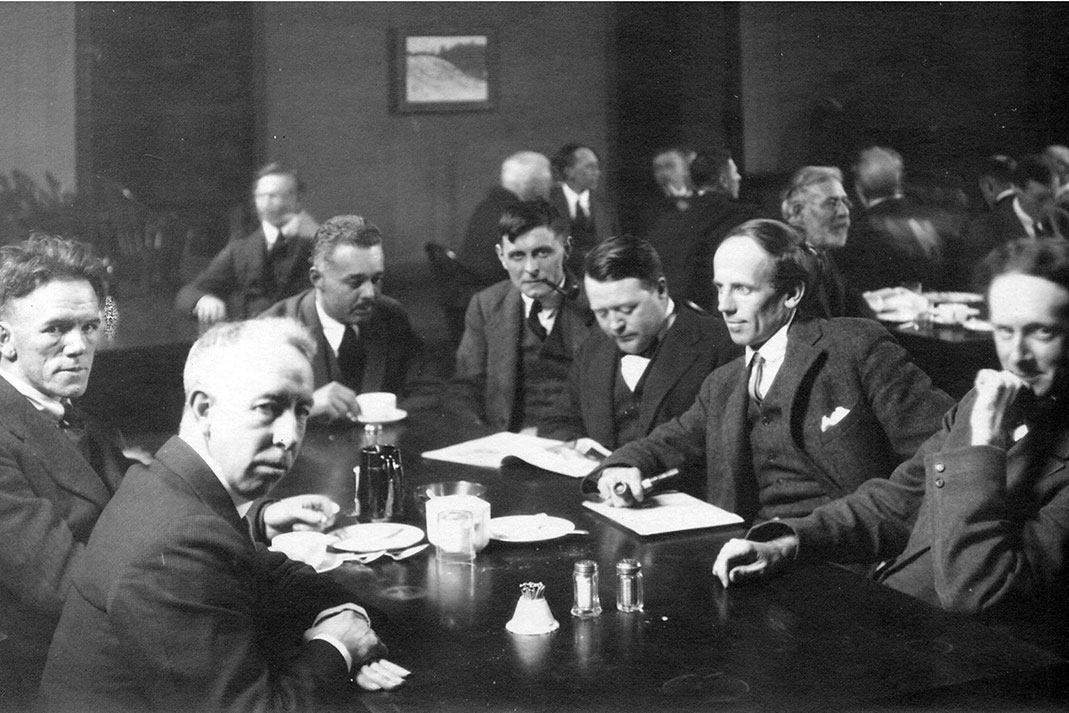
Six of the Group of Seven, plus their friend Barker Fairley, in 1920. From left to right: Frederick Varley, A. Y. Jackson, Lawren Harris, Barker Fairley, Frank Johnston, Arthur Lismer, and J. E. H. MacDonald. It was taken at The Arts and Letters Club of Toronto. | Photo: Public Domain
Tom Thomson is often considered the eighth member and credited with cajoling the group out of the city and into Algonquin Provincial Park. Thomson died in a canoeing incident in Algonquin in 1917 before the group officially formed, but their works are often displayed together. His influence on the Group of Seven is unmistakable.
“The North Country and painting were his life and he made us partners in his devotion to it. We canoed and camped, lived and painted drawn together by an irresistible urge to concentrate our vision to create an art embodying the very character and spirit of the country,” wrote Lawren Harris of Thomson in a letter to a friend.
While the Group of Seven were artists, they were also adventurers—even rebels—looking to break from traditional European art methods and the confines of urban life. Bold color palettes, liberal use of paint and the precision of their imprecision captured the essence of strength and fragility in nature. Fracturing light and shadows, foreground and distance, they froze moments, offering a fleeting glimpse of Northern Ontario.
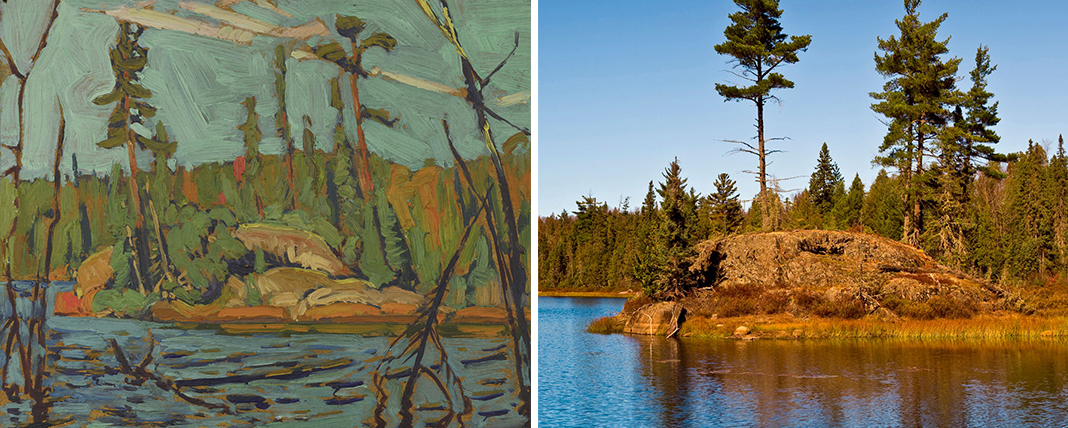
J.E.H. MacDonald’s Moose Lake Algoma, 1919, now at the McMichael Gallery, depicts this exact scene. The island, captured from more than one vantage point by MacDonald, was a short distance from their Algoma Central Railway cabin on Mongoose Lake in Northern Ontario. Photo: Gary McGuffin // J.E.H. MacDonald (1873–1932), Moose Lake, Algoma, 1920, McMichael Canadian Art Collection
Many of their paintings were from the Ontario paddling paradises of Algonquin, Georgian Bay and the Algoma regions, but over the years, the Group of Seven traveled and painted the Arctic, Rockies, East Coast and Quebec.
Their first exhibition at the Art Gallery of Toronto was May 7, 1920. Before the exhibition, it was widely believed the Canadian landscape was not worthy of being painted. Of the 120 paintings on display, just six sold. Being such a departure from the European tradition, the criticism of their work was derisive, yet something captured the hearts and imagination of the masses.
“In these strong and solemn landscapes of the north I felt as if the Canadian soul was unveiling to me something secret and high and beautiful… And so, the work of the Group of Seven resulted from a love of the land, and it was this spirit that instructed us how the land should be painted.”~ Lawren Harris
“The Group of Seven not only translated what they saw into a vivid visual language of their own, but through that language they taught us to appreciate the natural beauty of Canada in all its vast scale and variety,” said Ian A.C. Dejardin, executive director of the McMichael Canadian Art Collection. “Many Canadians continue to see the country through the Group’s eyes.”
In commemoration of the centenary of their first exhibition, more than 280 of the Group’s finest pieces are displayed in a yearlong exhibit at the McMichael gallery in Kleinburg, Ontario.
Modern-day treasure hunt
Because the Group of Seven did not keep notes of where each artwork was made, each painting is a puzzle waiting to be solved. The hunt to identify the locations of the sketches and paintings and the routes the Group paddled is at the heart of the McGuffins’ 2015 film Painted Land: In Search of the Group of Seven.
The award-winning documentary toured viewers through archival film footage, letters, journals and photographs. Viewers see the Group less as artists and more as avid paddlers, campers and hikers. Drone footage shows the McGuffins and art historian Michael Burtch paddling the same lakes and hiking the same bluffs as they pinpoint the exact locations where the Group of Seven painted. It’s a modern-day treasure hunt.
Luna, the dog, isn’t interested in Joanie holding a reproduction of Cottage on a Rocky Shore, Summer 1914 on Georgian Bay (National Gallery).
In 2009, the McGuffins and Burtch set out to identify 100 locations where the Group of Seven’s most iconic paintings were sketched. Those sketches were small-scale paintings made as references to inform their later large-scale oil paintings. The trio quickly surpassed the goal as they found that one location could lead to discovering several painting sites from more than one member of the group.
From the remote locations they sketched from, it’s obvious some of the Group of Seven were formidable in their paddling and hiking. They were trailblazers through the natural landscape as on the canvas. Neither rapids nor steep, slick verticals stopped the painters from lugging their paint kits to the perfect wilderness vantage points between 1918 and 1928.
Gary McGuffin and boatbuilder Skip Izon designed the McGuffins’ tandem canoe used for the project, which was then manufactured by Souris River Canoes in Atikokan, Ontario. The Skeena aimed to be light enough for portages, maneuverable for rapids, seaworthy enough for Lake Superior, with a bow design to make it easier to pull up on shore.
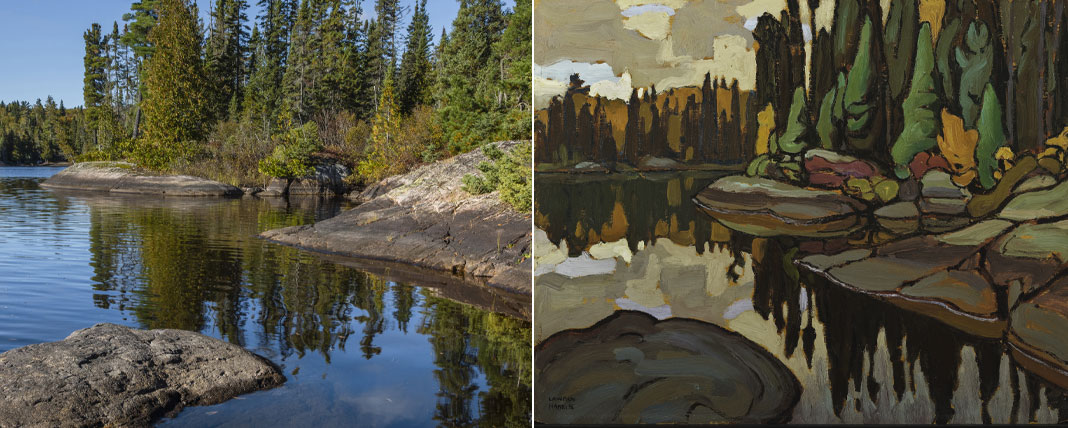
Above: Algoma Reflections by Lawren Harris, was painted on Sand Lake, a five-day paddle up the Sand River from Lake Superior. | Photo: Gary McGuffin // Lawren S. Harris (1885 –1970), Algoma Reflections, c. 1919, McMichael Canadian Art Collection
X marks the spot
Though a handful of the Group’s painting locations are publicly known, the McGuffins hesitate to publish the GPS coordinates of the more than 400 painting sites they have identified just yet. There’s little or no infrastructure to ensure responsible tourism or provide the cultural interpretation for the region they feel is critical. The McGuffins want all the sites to be respected and honored so others can paddle the same waters and experience a unique part of Canadian history for themselves.
Gary’s current project is to enter all site coordinates into a database that will live online and eventually allow users to virtually visit the Group’s painting sites. He imagines a catalog raisonné, a comprehensive, annotated listing of all the known artworks by each Group of Seven artist paired with a photo and description of the site that inspired it.
“You might have been paddling by it your whole life—just deke 20 feet off the portage trail and it’s right there,” he says.
While some painting sites are protected within the boundaries of provincial and national parks, many are not. As conservationists, the McGuffins hope the painted areas will gain notoriety and protection, perhaps as a UNESCO World Heritage Site. The McGuffin’s grand, long-term vision is an economic shift to replace resource extraction and industrial development in Northern Ontario with eco- and cultural tourism as its primary economic driver.
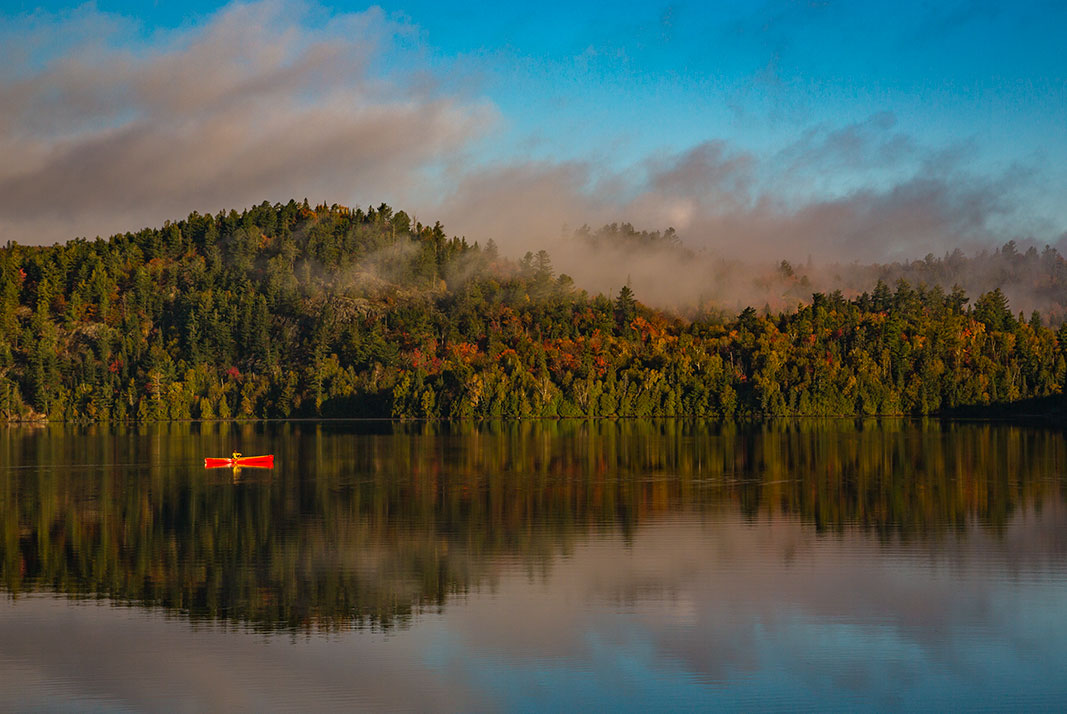
Paddling into the A.Y. Jackson painting October Morning on a misty October morning on Wart Lake, Northern Ontario.
“Morning mists still grey on the river…sketch kits loaded…the canoeists
are off down the river … gliding through yellow floating leaves, breaking the still reflections of crimson, and gold, and green.”~ J.E.H. MacDonald
The goal of preserving the Group of Seven corridor for future generations motivates the McGuffins to continue searching for more painting sites. This summer, Gary will turn his attention to the Slate Islands. Not only is it one of his favorite areas to paddle along Lake Superior, but he is confident he’ll identify more Group of Seven painting sites here. Even if his and Joanie’s conservation efforts are overruled by industry or in the name of progress through more wind turbines or dams, which changed the face of paintings like J.E.H. MacDonald’s “Falls, Montreal River,” the painting sites will be preserved through photographs.
Today, some of the painting sites are inaccessible to the public because they’re on private property or because the infrastructure to access them, like the Algoma Central Railway, has been shuttered. However, along the North Shore, Naturally Superior Adventures offers a multi-day Group of Seven themed sea kayak tour on Lake Superior from Jackfish to Pukaskwa National Park. These islands and inlets, coves and coastlines, endless skies and distant horizons called to Harris, Carmichael, Casson and Jackson throughout the 1920s. Part of this stretch includes Neys Provincial Park. A steep 4.5-kilometer trail to the Pic Island Overlook is the site of several Group of Seven paintings.
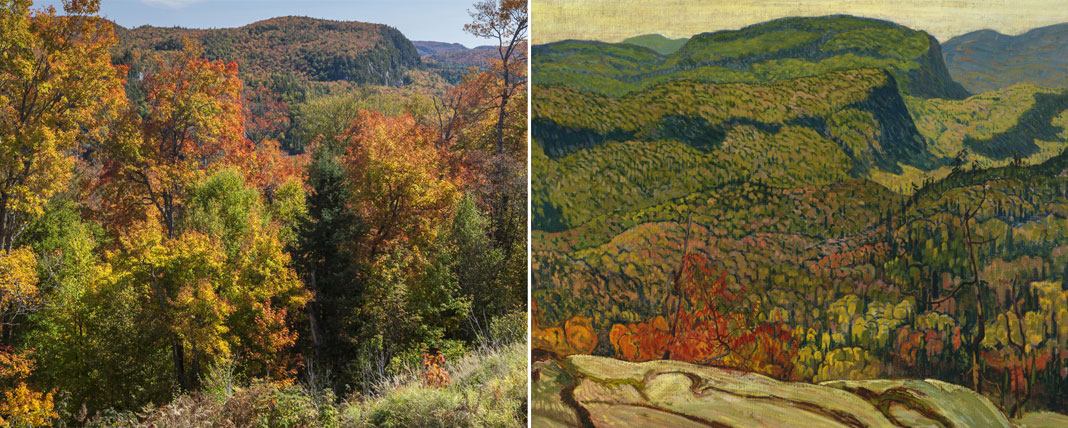
This wilderness scene inspired J.E.H. MacDonald to create Forest Wilderness from the same place that he painted Solemn Land. He was once quoted as saying: “The most important thing a painter can do is find a good place to sit.” | Photo: Gary McGuffin // J.E.H. MacDonald (1873–1932), Forest Wilderness, 1921, McMichael Canadian Art Collection
In busy Algonquin Provincial Park, it’s well known Tom Thomson painted at dozens of sites around popular and accessible Canoe Lake. However, the McGuffins fear painting sites may be loved to death if exact locations are publicized. The McGuffin’s second goal is to support interpretative tours to weave Group of Seven art history with natural history and Indigenous knowledge of many of the painting sites.
“The campsite and the portages were always there. That’s where the Group painted because that’s where people have always been,” Gary adds. “We want to preserve the integrity of the sites while sharing this knowledge with the world.”
In the meantime, Bartlett Lodge resort and The Portage Store, an outfitter and retailer, offer occasional Group of Seven themed tours in freighter canoes.
For those wanting to celebrate the centennial of the Group of Seven without getting off the beaten path, there are driving tours in the Algoma and Algonquin regions. You can also experience the paintings firsthand at the National Gallery of Canada in Ottawa and the Art Gallery of Ontario in Toronto. But with the Group of Seven’s paintings paying homage to the wilderness, the best way to celebrate their 101st anniversary is by paddling and hiking among the rocks, trees, lakes and skies mirrored on their canvases. Tread lightly.
This article was first published in Paddling Magazine Issue 63. Subscribe to Paddling Magazine’s print and digital editions here, or browse the digital archives here.
Dr. Nadine Robinson is an award-winning freelance writer and outdoor enthusiast. She is based in Northern Ontario; you can find her online at @theinkran.
On Georgian Bay, Joanie McGuffin holds up a reproduction of Windy Day: Rough Weather in the Islands by Tom Thomson. The original painting hanging in the National Gallery of Canada was gifted to Dr. James MacCallum in 1914 when Tom Thomson was staying at his cottage not far from where this sketch was painted. | Photos by Gary McGuffin
As sea ice melts and weather patterns become drastically altered, adapting to the whims of climate change has become a necessity of life in polar regions and for the adventurers who test their limits in these capricious places. Since completing his first North Pole trip in 1990, Norwegian explorer Børge Ousland has observed the changes in real time, including a 30 percent decrease in ice coverage in the Arctic Ocean and a corresponding reduction in ice thickness from 10 to 12 feet to barely six.
On one hand, sketchy ice imposes serious safety hazards for those who are inclined to ski to the North Pole. On the other, melting conditions inspired a 2019 journey by Ousland and South African adventurer Mike Horn heralded as “the boldest polar expedition of modern times.”
Ousland describes the expedition as “a classical polar trip.” Like Roald Amundsen, the pioneering Norwegian polar explorer he’s been compared to, the 57-year-old Ousland endeavored to access the icecap by boat. Horn conceived the plan: Setting off from Alaska aboard Horn’s 105-foot Pangaea, the pair would sail north, before skiing unsupported for 12 weeks over the pole, ultimately meeting the sailboat on the Norwegian side of the globe to finish their trip.
The expedition was timed for autumn for the least ice coverage, to enable the Pangaea to penetrate as far north as possible; typical North Pole bids are made in March and April when the ice is thickest and daylight returns. Ousland and Horn would ski into the complete darkness of Arctic winter.
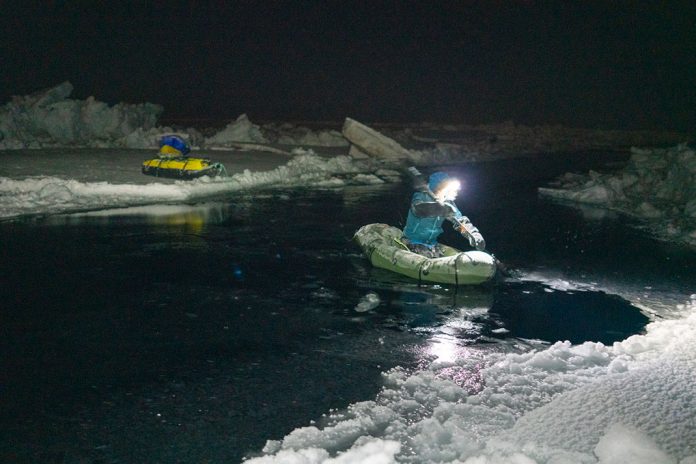
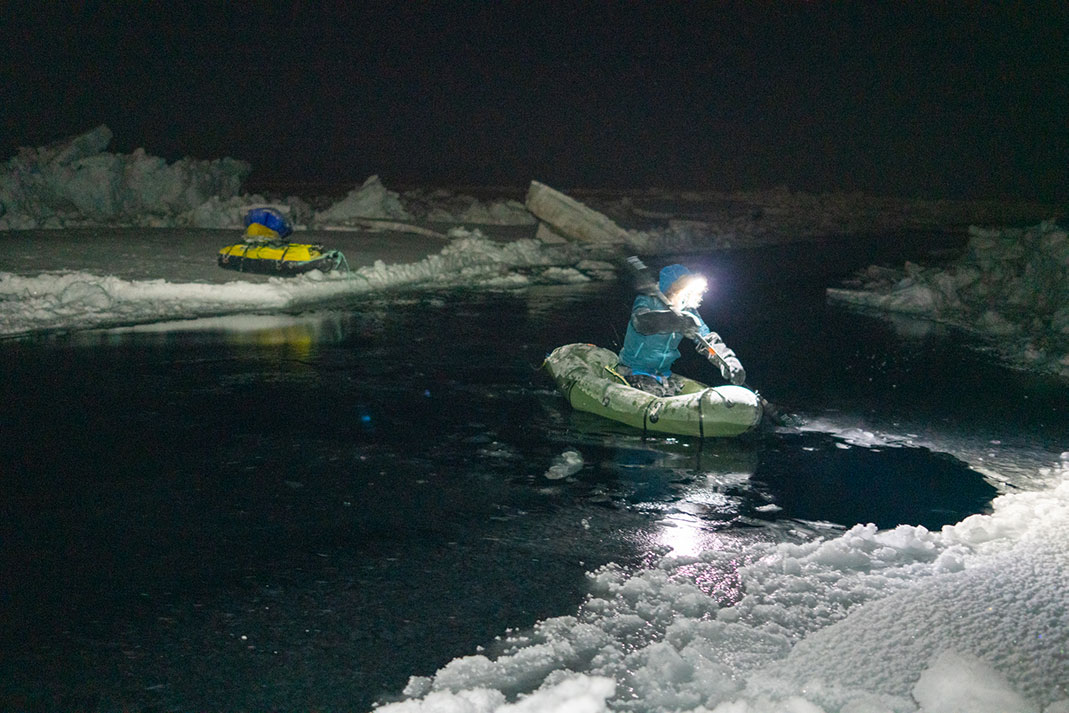
On September 11, Pangaea was thwarted by ice at 85.3 degrees north, establishing a new record. Before stepping into their bindings and setting off on a 1,000-mile ski with 410-pound sleds in tow, Ousland and Horn each inflated an Alpacka Yak packraft. Thirty years ago, Ousland would never imagine traveling across the polar north with a raft and paddle strapped to his sled. He got the idea after using packrafts on a summer trip on Alaska’s Stikine River in 2015. The alternative strategy to crossing expanses of frigid open water in the sea ice is to swim, but “that would take too much time and energy,” Ousland says.
Typically used for amphibious summertime journeys, packrafts had never been used for an Arctic expedition like this. Ousland tested his raft by leaving it for a weekend at an Oslo ice cream factory. The fabric survived the deep freeze, convincing the adventurer these lightweight, doughnut-shaped boats could serve as life rafts in the -40ºF temperatures.
[ Paddling Buyer’s Guide: View all packrafts ]
The bulk of their load consisted of 85 days of provisions, with the intention of ramping up their caloric intake from 5,000 calories per day to 6,000 by the journey’s end. This meant covering 11 miles per day—a target that became an immediate challenge as ice conditions were even more precarious than anticipated. Aboard their packrafts, Ousland and Horn used ski poles to skim over areas of thin, clear ice that might’ve buckled under a skier’s weight. They paddled across leads of open water, ribbons of 4,000-foot-deep seawater up to 400 yards wide and 40 miles long.
Each water crossing meant removing their packrafts from their sled, climbing into the cockpit and gingerly paddling across, with the oversized, waterproof and buoyant sleds jerking and dragging behind them, threatening their stability. If that image isn’t terrifying enough, it’s mind-blowing to consider doing this in complete darkness (the pair packed 22 pounds of batteries for their headlamps).
“We got used to it, but we never really liked it, knowing that water was the most dangerous thing and it is so easy to have an accident.”
“We got used to it, but we never really liked it, knowing that water was the most dangerous thing and it is so easy to have an accident,” Ousland recalls. “We were sitting on our knees in the rafts when paddling, so we were quite top-heavy, and we had a couple of near misses where we easily could have toppled.”
Scouting the ice and getting in and out of the rafts slowed Ousland and Horn’s progress considerably. What’s more, the pair’s estimated daily mileage banked on favorable drift from ocean currents, which normally flow from the Pacific to the Atlantic side—and have been employed by polar explorers since the 1800s. However, Ousland and Horn encountered an opposing current, likely on account of the thinner ice being more subject to winds than currents. As a result, the pair struggled to make five miles per day through October. It took them 36 days to reach the North Pole.
The situation became desperate when Horn’s frostbitten fingers became badly infected and barely usable. The pair lost a soul-crushing 28 miles of headway due to wind drift in a blizzard on November 14. With less than two weeks of food remaining, expedition manager Lars Ebbesen made a satellite phone call to implore the pair to accept rescue from a passing icebreaker. At such a dark and hostile time of year, Ebbesen reminded them it was their only chance to bail out. Newspapers in Norway and around Europe tracking the expedition speculated on Ousland’s plight. But the iconic explorer was resolute. He told Ebbesen, “No, we will continue.”
On Day 77, with 200 miles to go, Ousland created a new measurement of time: the 30-hour day. Facing exhaustion, the pair somehow managed a string of 20-mile days. Meanwhile, Pangaea faced its own ice challenges in its efforts to reposition itself to meet the skiers on the Norwegian side of the globe; the Lance, a heavy-duty icebreaker, was summoned by Ebbersen to intercept them.
The explorers used the packrafts to cross open channels of water and dangerously thin ice. Thirty years ago, these fissures in the sea ice, called leads, were small enough to ski around. But as temperatures rise, leads have grown larger and more common. | Photo: Courtesy Børge Ousland
Ousland and Horn caught a joyous glimpse of the Lance’s lights on the dark horizon on Day 86. Shortly after that, so close to success, Horn broke through thin ice—his awkward fall and desperate kicks to escape the frigid water captured in a haunting video by Ousland’s low-light camera. Ousland pitched camp hastily and Horn rewarmed over a camp stove in the tent. Later, Horn admitted to feeling “emptied of emotions…[like] I’d just survived something I shouldn’t have survived.” Yet, barely a few hours later, they were on the move again, launching the packrafts to cross one last span of open water.
Ousland and Horn reached the Lance on December 7, marking the first successful North Pole crossing with boat access on both ends. Each man had lost over 20 pounds.
Weeks later, Ousland was awarded the 2019 Adventurer of the Year—and he announced this would be his last long polar expedition. No doubt, the changing Arctic will require the next generation of adventurers to adopt creative solutions to probe its depths, Ousland says. “I am pleased to learn that I still could do it and that I could take the cold,” he adds. “It’s hard to say if this trip will be possible in the future.”
This article was first published in Paddling Magazine Issue 63. Subscribe to Paddling Magazine’s print and digital editions here, or browse the digital archives here.
Less than halfway through the trip, the men entered the Arctic winter and trekked through perpetual darkness, with only their headlamps and the moon offering any light. | Photo: Borge Ousland
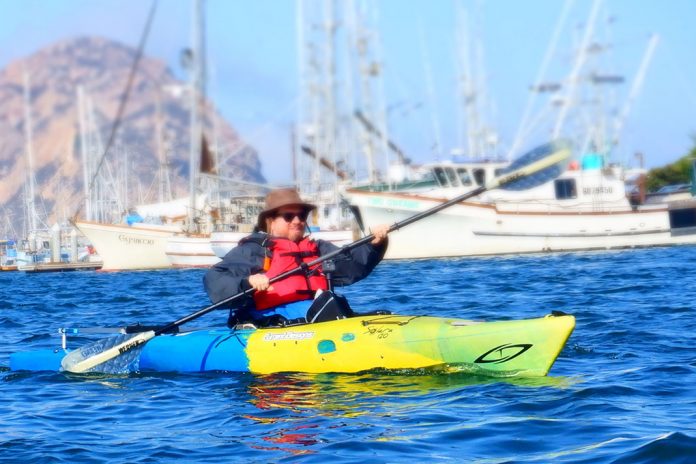
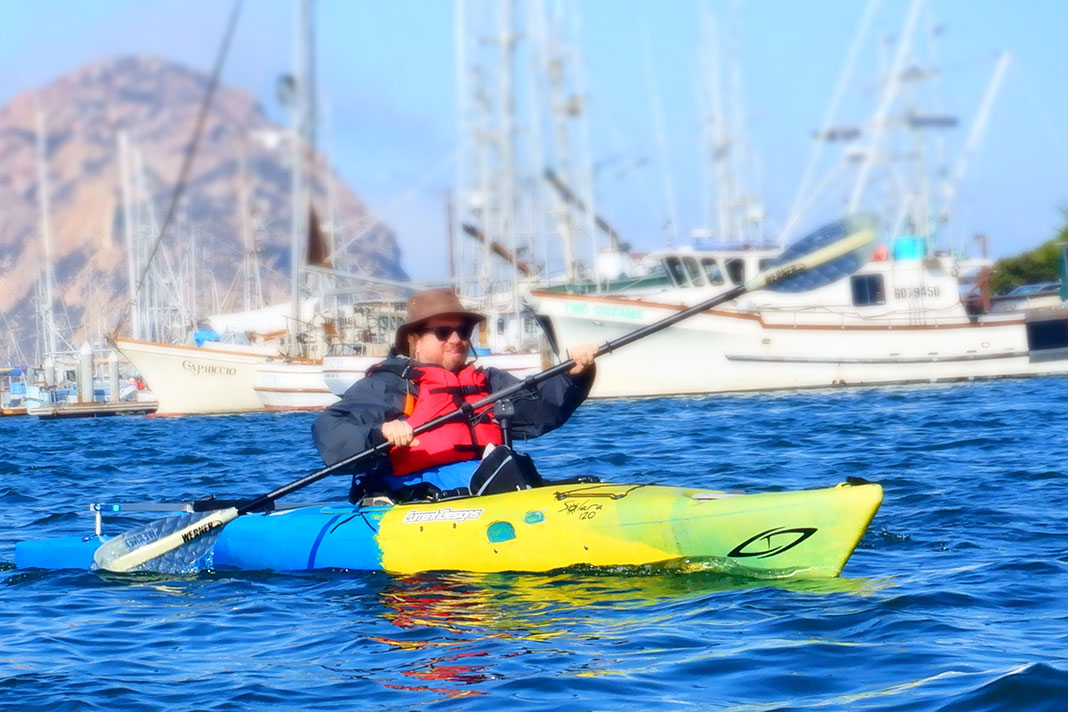
Solo kayaker Steve Best was out for a paddle on the west side of Howe Sound near Squamish, British Columbia when he spotted a fellow paddler in desperate need of assistance.
Best was flagged down by a man sitting on rocks on the shoreline, “I came across a guy on the shore. He was stranded there,” he told Global News. After paddling over there, Best learned that the distressed canoeist had been stranded alone for four days after his canoe had overturned and slipped away from him.
“He asked if it was Saturday or Sunday, and I told him it was Tuesday. So he’d been stuck for a while.” Best recalled.
“He was certainly wet,” said Scott Shaw-MacPherson, Deputy Royal Marine Search and Rescue in the video. “His sleeping bag that he had managed to keep with him when he lost his boat was pretty soaked. He said his spirits were going down in a hurry.”
The canoeist was in surprisingly good condition when he was found by rescuers and was reunited with his family soon after. He had been able to grab some food and supplies from his boat before he lost it, which had enabled him to stay comfortable throughout the 4-day ordeal.
“I think this person set out quite prepared,” said Shaw-MacPherson, “but it just goes to show how quick a simple slip-up can turn into a harrowing situation.”


 This article was first published in Paddling Magazine Issue 63. Subscribe to Paddling Magazine’s print and digital editions here, or browse the digital archives here.