Home Blog Page 124

Kokatat Elevate Sage Donnelly and Tom Dollé to Pro Team

Two of paddling’s hottest young stars, Sage Donnelly of Carson City, NV, and Tom Dollé of Lyon, France, have moved up to Kokatat’s Pro Team. The two reigning World Champions have long been Kokatat ambassadors.

“Sage and Tom have emerged from the junior ranks as two of the best paddlers in the world,” said Lisa Kincaid, Kokatat’s Promotional Marketing Manager.

Donnelly began paddling with her parents in their tandem at age two and entered her first competition at age 6. In 2015 she won the Jr. Women’s Freestyle World Championships. Today she is one of the most multifaceted paddlers in the world, competing in freestyle, slalom, SUP and creek races. In 2019 Donnelly won the Sr. Women’s Freestyle World Championships.

Dollé grew up in a house of paddlers. His father owned a kayak shop and he began paddling at age 9. Dollé quickly fell in love with freestyle and in 2017 won the Jr. Men’s Freestyle World Championships. In 2019 he finished 4th in the Sr. Men’s Freestyle World Championships and won the Sr. Men’s C1 Freestyle World Championships.

 To learn more about Dollé and Donnelly and Kokatat’s team of paddlers visit kokatat.com.

About Kokatat Inc.

Kokatat has been manufacturing paddling gear in Arcata, California for 50 years. At a time when many technical apparel brands were moving manufacturing offshore, Kokatat continued to invest in infrastructure in the United States. Kokatat founder Steve O’Meara was committed to the development of the finest and driest paddling apparel in the world and recognized the need to control and continually evolve the development of our dry wear. In the early days, Kokatat worked closely with W.L. Gore & Associates, makers of GORE-TEX®, to refine the sewing and sealing techniques required for full immersion suits and tops. Today, our hands-on approach to manufacturing continues to set the standard in paddling apparel. Into the water with Kokatat! Learn more at kokatat.com

22nd Yukon River Quest Set to Start in Modified Race

22nd Yukon River Quest set to start in modified race

The race roster is set for the 22nd Yukon River Quest, which will begin on Wednesday, June 23 in Whitehorse, Yukon Territory, Canada. This year’s field, as of today’s date, will feature 48 teams with 136 paddlers from the Yukon and three Canadian provinces.

After several years of record-setting registration numbers, the 2021 race will look a bit different. Following the cancellation of the 2020 event, organizers adjusted this year’s format and scale to meet COVID-19 guidelines. Only Yukoners and other Canadians who meet the territory’s current requirements for visitors were eligible to register, and the race has an approved COVID safety plan.

“It was really important” that the race go ahead in some form this year, said YRQ board president Peter Coates. “We’re one of the first events of the summer, we’re one of the first headline events that’s actually happening” after a year of shutdown.

     The race is the highlight of the paddling summer in the north, keeping teams, volunteers, support crews, and spectators coming back year after year.

Except for 10 hours of mandatory rest, adventure and marathon paddlers race non-stop over the 715 kilometers (444 miles) to Dawson City. Held annually in the north during the last week of June (around the summer solstice), it is a true “Race to the Midnight Sun,” drawing many of the world’s best paddlers.

Following the race is a lot of fun, whether you are watching from alongside the river or sitting at home. All teams are required to have activated SPOT or InReach tracking devices, which greatly aid those following the race on their computers or mobile devices. Just follow the Race Tracker link at www.yukonriverquest.com and also watch for updates and photos on the race’s Facebook and Instagram pages. You can even replay the race when it’s all over!

The adjusted total possible 2022 race purse is now $12,997 (CAD) based on the paid registration of 41 teams in the full-distance YRQ as of June 1 (down from the usual 100-125 teams). The prize money structure awards the top three male, female and mixed teams per class as long as they beat another team in their class and finish within 25% of the top team in the class. A complete prize breakdown can be found in the race rules on the website.

 “It’s the smallest race we’ve had since 2002,” Coates said, “so in some ways the race has reverted to where it was two decades ago. But it’s not going to stay there. Next year is going to be in enormous demand.”

Who to Watch on the River in 2021

 Most of this year’s COVID-reduced field of 48 teams is made up of Yukoners who will be hoping for a high river and fast times, but there will be challengers from across Canada. Here’s a breakdown of teams that could win their categories (disclaimer: there are sometimes surprises that we miss):

  • Solo canoe (C1): 2 teams (1 man, 1 woman)– This is an easy pick – it’s just a matter of who will finish first, the woman or the man. Defending women’s champion “Gulo Gulo,” Whitehorse’s Alison Eremenko, is a strong paddler, and she will be out to beat “That’s a Paddlin’,” Duncan Hillhouse of Whitehorse. He is paddling for the Yukon Humane Society.
  • Solo kayak (K1): 8 teams (3 women, 5 men) – The K1 field should be led by a pair of familiar faces: “Golden Retriever” Wayne Anderson of Alberta, the 2016 and 2018 K1 champ, and veteran YRQ racer “Veni Vidi Vici,” Thomas de Jager of Whitehorse. They were teammates in the winning 2017 voyageur “Yukon Wide Adventures” (a team captained by de Jager that also won in 2018) and de Jager has been a top three finisher in solo kayak as well. The women’s race favorite is “Victorious Secret,” Mirjam Fleming, who placed third in the 2019 race. She will be challenged by fellow Whitehorse paddlers Amy Lank and Crystal Shimoon, who have raced the YRQ before, but will be going solo for the first time.
  • Stand Up Paddleboard (SUP): 3 teams (3 men) – This division will have a new champion for the first time since this class was added a few years ago (four-time SUP champ Bart de Zwart from Hawaii is not in the field). The favorite is Ontario’s “Riveryeti” Mike Crouzat, who won the 40K OX race in the 2019 Muskoka River X and has placed numerous times in various classes. He will be challenged by two Albertans, “SuperiorSUPer” Alex Joseph and “wuzSUP” Billy Bender.
  • Tandem canoe (C2): 15 teams (1 women’s, 7 mixed, 7 men’s) – Tandem canoe remains the oldest and most popular class in the race, and occasionally produces an overall winner, as in 2016 and 2019. This year’s C2 favorite is “Ottawa Valley Boys” with Mike De Abreu and Sebastian Courville of Ontario. With a different partner, De Abreu finished second in 2017 and third in 2018, while Courville and his partner won the mixed division in 2018 and were second in 2019. Several local teams could give them a run, especially strong men’s and mixed teams captained by Dan Girouard, Spencer Edelman, Margo Millette, Carmen Gustafson, and Jason Biensch – all have been in top boats in past races.
  • Tandem kayak (K2): 0 teams – This field is empty due mainly to the lack of international teams. There is one local team in the Half Quest (see below).
  • Four-person canoe (C4): 5 teams (1 women’s, 1 mixed, 3 men’s teams) – The C4 class is poised to produce this year’s overall winner and a fast time. “Solstice Solderworks” includes Yukoners Stephen Mooney and Greg McHale, overall winners in a K2 way back in 2005. Mooney also has some early K1 titles and more recently was in the YWA voyageur boat with teammate Gus Oliveira of B.C. that won twooverall titles. Dan Kuhl, a two-time finisher from Whitehorse in C2 and VC, rounds out the 4-person team. But watch out for the “Soggy Bottom Boys,” a group of top- notch local athletes: Nansen Murray, Knute Johnsgaard, Colin Abbott, and Matthias Purdon, and mixed “Team Frost” captained by Pauline Frost and daughter Alice Frost, with Elisha Sidoun and Bryan Allemang, a past C1 champion.
  • Voyageur canoe (VC): 8 teams (3 women’s, 3 mixed, 2 men’s) – All eyes this year will be following the 20th anniversary Paddlers Abreast team from the Yukon. They will be joined by veteran women’s teams “Stix Together,” which has dominated this class in recent years, and “Team WHOA.” The fastest team likely will be the veteran mixed team “Ts’alvit,” but watch out for mixed “Team CAP” and men’s team “Northwestel.”
  • Half Quest: 7 teams (5 C2, 1 K2, 1 K1): There’s no prize money in this shorterexperimental race from Whitehorse to Carmacks. Most will be testing their ability to deal with what it takes to be a marathon paddler in the north. Good luck to all!

Bios of all teams and any charities they support may be found under the Racers tab on the event website: www.yukonriverquest.com

Paddlers who have finished multiple YRQs also now covet entrance into the “Great River Club” which was unveiled for the 20th anniversary in 2018. Racers who have logged 5,000 and 10,000 kilometers are members of that club and receive special pins.

The Start & Race Route

The start will look a little different this year. Instead of the traditional mass start, racers will line up at Rotary Peace Park and be called down to the waterfront in order for a staggered launch. Teams will be called every fifteen seconds, and will then head to their boats to hit the water. Access to the park and the start area will be restricted only to racers, support crews, and race personnel, but spectators are welcome to spread out along the waterfront. The horn will blow at noon, and even without the chaos of the mass start, watching the racers set off for Dawson City should still be a spectacular sight.

Those from afar will be able to watch via a Facebook Live link to CKRW-The Rush. Then it’s a long paddle on Lake Laberge, through the waning light of the midnight sun on the Thirtymile heritage section, and then on to Carmacks and the first possible rest stop at Coal Mine Campground. This year, racers have the choice to complete all, some, or none of their mandatory ten hours of rest at Carmacks. When they’re ready, or if they choose to go straight on, the paddlers head down Five Finger Rapid, to the second rest stop at Minto Landing, where they can complete the balance of their ten hours if they didn’t do so at Carmacks. Then comes the final push to Dawson City. Teams will finish sometime between the afternoon of Friday, June 25 and Saturday, June 26 just before midnight, the official end of the race.

There will be no finish banquet this year, but awards will be given out on Sunday morning along the Dawson City riverfront, near the gazebo, at 10 a.m. A complete race schedule is posted online and will appear with several stories about the race in a special Whitehorse Star race supplement the week before the race.

More Volunteers, Sponsors Welcome

Like many great Yukon events, the River Quest could not happen without a tremendous volunteer effort from those in our river communities. Volunteers help out in Whitehorse, Carmacks, Minto Resort, Dawson City, and a few remote checkpoints along the river. There are still spots available, particularly for Carmacks and for volunteers with access to motorized boats, so if you are interested in volunteering, please check the Volunteer tab on the website to see where you could help and fill out a volunteer form.

The race is organized by the Yukon River Marathon Paddling Association, based in Whitehorse. Major sponsors on board for 2021 are: Yukon 1000 Race Timing Software, Gold Trail Jewellers (Dawson City), Paddeljumper, CKRW – The Rush, Air North, Kanoe People, yukoninfo.com, Whitehorse Star, City of Whitehorse, Up North Adventures, Total North Communications, Superior Roofing YT, Yukon Civil Air Search & Rescue, Yukon Wide Adventures, The Coal Mine Campground (Carmacks), Fireweed Helicopters, North 60 Petro, makeIT Solutions, and the Selkirk Development Corporation (Minto Resort).

Many small businesses also support the race by sponsoring bibs worn by paddlers. A complete sponsor list appears on the race website along with a link to a sponsor package.


Swept Away

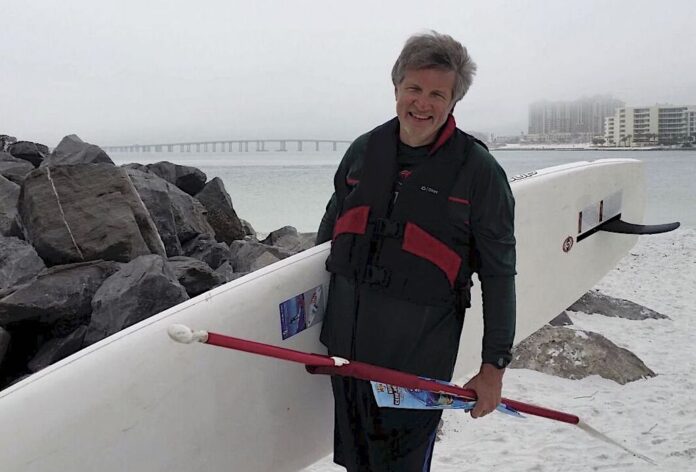
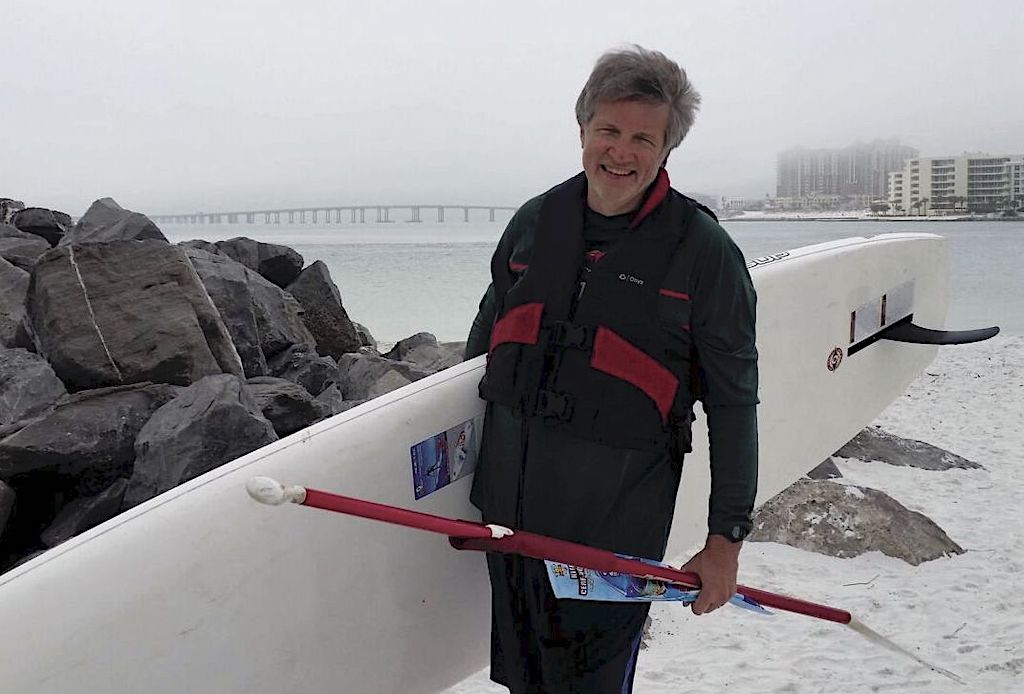
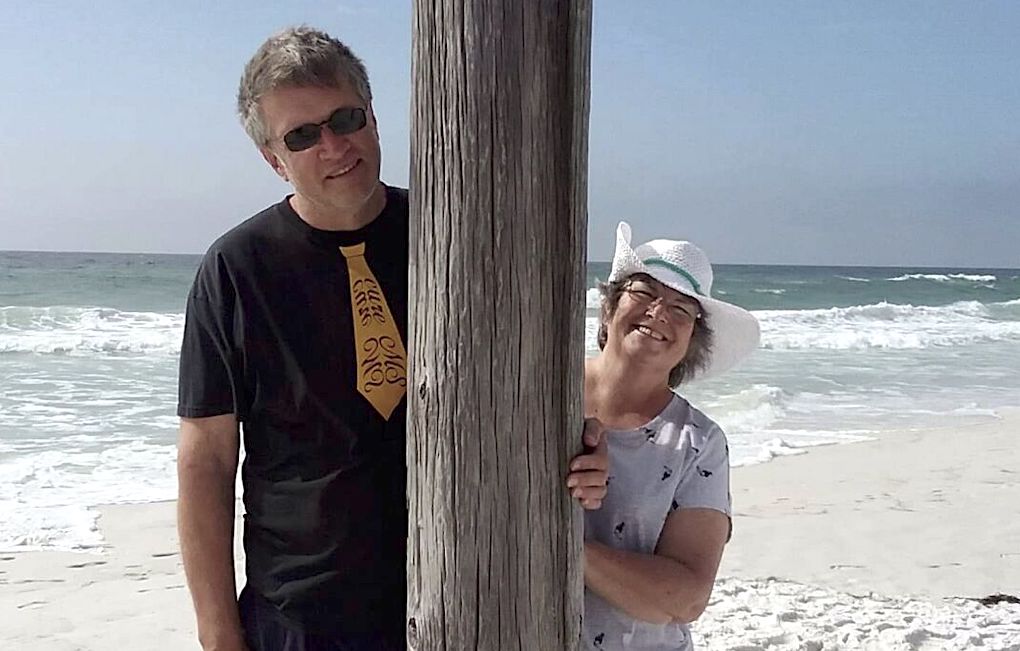
David Schink with his paddleboard on the beach in Destin, Florida
David Schink with his paddleboard on the beach in Destin, Florida where he paddled most days. | Feature photo: Courtesy Judy Schink

A cell phone in a waterproof pouch might have made the difference. Or if he’d chosen his paddleboard that day, rather than the sit-inside kayak that filled with water when capsized. Perhaps if the wind had been calm or the current hadn’t been running so strongly, David Schink would have come home cheerful and energized, as he did almost every day after paddling. Instead, the kayaker went missing with barely a trace.

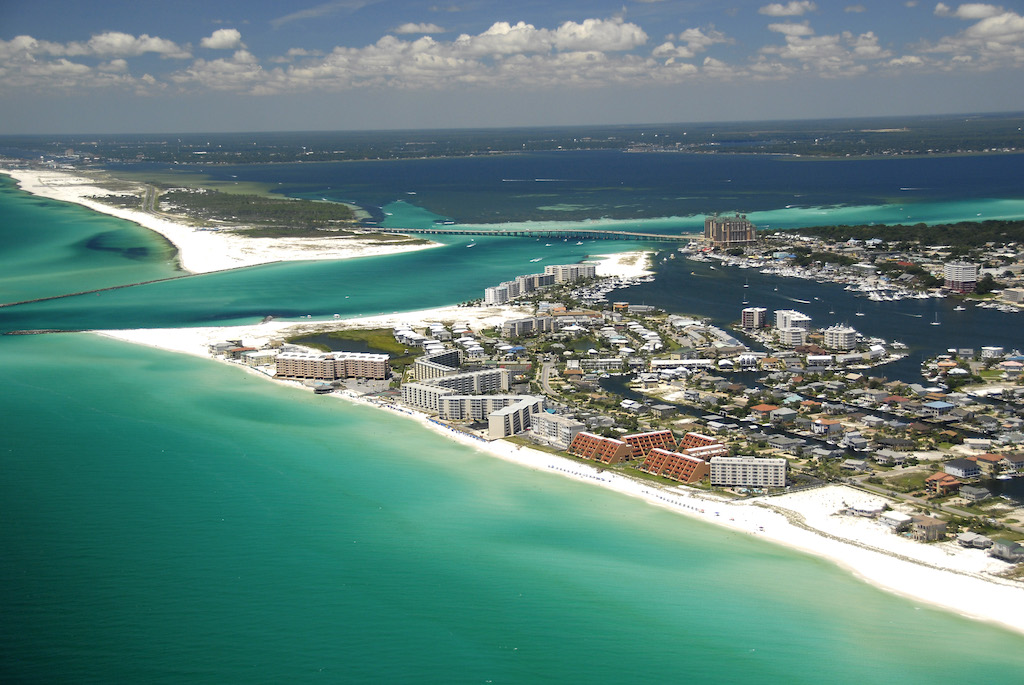
The what-ifs scroll through Judy Schink’s mind when she thinks back to the February day her husband of 38 years hustled out the door to look for dolphins in Destin, Florida, a seaside community built around a protected bay and a narrow pass to the Gulf of Mexico that is notorious for strong tidal currents.

“He didn’t say goodbye,” Judy recalls. “He said ‘See you later—we’ll go for a walk when I get back.’”

Mistakes Seal Sad Fate of Missing Kayaker

David Schink was no rookie paddler, Judy says. One of their first purchases as a couple was a canoe, and they spent summers at a lake house in Minnesota, paddling, sailing and water skiing with their three boys. David ran marathons and triathlons. He swam competitively in college and once rode his bicycle across Minnesota. At 61 he’d lost little of his athlete’s endurance and none of his enthusiasm for the water.

David Schink with his paddleboard on the beach in Destin, Florida where he paddled most days. | Photo: Courtesy Judy Schink

“He absolutely loved to paddle board every single day,” Judy says. “He was 6’5″ and he would pick up the paddleboard and carry it around like it was nothing. He just was exuberant when he was on the water, and he was so big and powerful I think he felt he could muscle his way out of anything.” It wasn’t unusual for David to be out after dark. At home in Minnesota, he loved to watch the sunset from the Mississippi and paddle home after dusk on the glassy water.

The couple began traveling to Florida six years ago, escaping the Minnesota winters with Judy’s mother, who has cold-induced asthma. They stayed in a condo a few steps from beach and paddled together most days, David on his paddleboard and Judy in a 10-foot sit-inside kayak. Sometimes, though, David would paddle alone, and on those occasions he liked to stretch his horizons. A week or so before he disappeared, a fishing boat stopped to check on him about a mile offshore, Judy says. “I remember when he came back to me, he said ‘That was a good workout.’”

David and Judy Schink enjoy a walk on the beach. | Photo: Courtesy Judy Schink

February 13 was a Saturday, and David left to go paddling earlier than usual, about 2:30 in the afternoon. He didn’t tell Judy precisely where he was going, and he didn’t take his cell phone because he didn’t want to risk getting it wet. He threw on a lightweight jacket and carried the kayak and his paddle to the water. As usual, he wore his life jacket. No one saw him launch, and Judy still isn’t sure where he went that day. She only knows that he didn’t come back.

Around sunset Judy and her sister went looking for David, Judy walking the beach along the Gulf shore and her sister searching the bay side. They called the Coast Guard when they returned, at about 7 p.m. that evening. Authorities initiated a search, but were hampered by the lack of information. “Nobody saw him launch, and we never were able to determine that night where he launched the kayak or where he went,” said Lt. Brian Parkton of the Okaloosa County Sheriff’s Department.

Wherever David was, he was alone with no way of calling for help.

If either of those factors had been different—if David had been carrying a cell phone or handheld VHF, or if he’d been paddling with one or more other paddlers—the outcome may have been different. And if he’d been using his paddleboard or a kayak better suited to open water, it’s possible he would have survived.

Another incident leads to different outcome

A remarkably similar kayaking incident in nearby Panama City illustrates the importance of these factors, and may shed some light on David’s last hours. Alex Ochoa and David Rose have much in common with David Shink. Ochoa is an athletic 60-year-old, and Rose is an avid recreational paddler. The pair went out on a windy day in Panama City, through a pass known for strong tidal currents. And as David often did, they encountered dolphins in the Gulf.

The men lost themselves in the moment, says Paul Barnard, the boating safety officer for the U.S. Coast Guard’s Heartland District, who wrote a compelling account of the incident. When the dolphins left, the duo realized that despite paddling hard into the headwind for 15 minutes, they were farther from shore than when they’d started. “The wind had picked up and was now howling,” Barnard wrote. “They dug in and started paddling against the forceful flow of the water boiling out of the pass.”

The search continued for 49 hours and covered more than 12,000 square miles. David was never found.

They became separated as Rose battled his way to the shore of a barrier island, dragged his kayak to the bay side and then ferried across the ripping current in the pass to reach his truck, where he’d left his cell phone. The effort covered about a mile of distance and consumed more than 90 minutes.

Ochoa in the meantime had lasted about 10 minutes before a rogue wave toppled his kayak. Like David’s kayak, the inexpensive craft was small and slow—no match for the conditions in the Gulf that day. But unlike David’s sit-inside kayak, Ochoa’s was a sit-on-top. It didn’t fill with water when it capsized, and Ochoa was able to scramble back aboard. He didn’t trust himself to stay upright in the heavy chop, so he lay on his belly and paddled with his arms like a surfer, promising himself again and again, “I am not going to quit.”

Rescuers responding to Rose’s 911 call searched for nearly two hours before spotting Ochoa three miles offshore, just minutes before darkness fell. The near escape illustrates the importance of a timely distress call, and the multiple factors stacked against David Schink.

In both cases, the paddlers underestimated the risk of short, seemingly routine outings. They didn’t leave a float plan despite challenging conditions, and none of the three brought their cell phones with them for fear of getting them wet, says Barnard, who is an avid kayaker himself.

The kayaker went missing near the East Pass of Destin, Florida
An aerial view of Destin, Florida. The narrow East Pass is subject to powerful tidal currents. | Photo: Courtesy Destin Fort Walton Beach Film Commission.

Communication is key in emergencies

“There are very simple ways to protect cell phones and you simply cannot go on a voyage in or near open water without the means to communicate a potential emergency,” he says. The dramatic rescue last summer of a 17-year-old paddleboarder who called rescuers after being swept offshore attests to the value of a cell phone in an inexpensive waterproof case.

Barnard recommends a layered communications strategy incorporating both a cell phone and a handheld VHF radio. Every paddler should also carry a ditch bag with a few essential items for safety, survival and signalling. Barnard carries a personal locator beacon (PLB) capable of sending a distress signal and tracking his location to rescuers anywhere in the world.

Barnard also stresses the importance of a timely response, which could have been facilitated if David had left a detailed float plan with Judy. That wasn’t his habit though, and because he frequently stayed out after sunset she didn’t notify authorities right away.

Weather and darkness complicated the search. Coast Guard and local authorities were also hampered by lack of information about David’s planned route. Because they didn’t know whether he’d stayed within the protected bay or gone out through the pass, they searched both areas. The Okaloosa Sheriff’s Department searched the harbor and pass using drones equipped with thermal night vision. The Coast Guard deployed a patrol boat, helicopter and search plane, in addition to the 87-foot cutter Albacore.

“He didn’t say goodbye. He said ‘See you later—we’ll go for a walk when I get back.’” — Judy Schink

“Every Coast Guard SAR [Search and Rescue] controller you talk to will say it’s better to involve us early in the process than later,” Barnard says. “Even if there’s still some uncertainty in your mind, go ahead and share that uncertainty with us and we will begin the process of sorting out whether we need to gather some more information or whether we need to roll.”

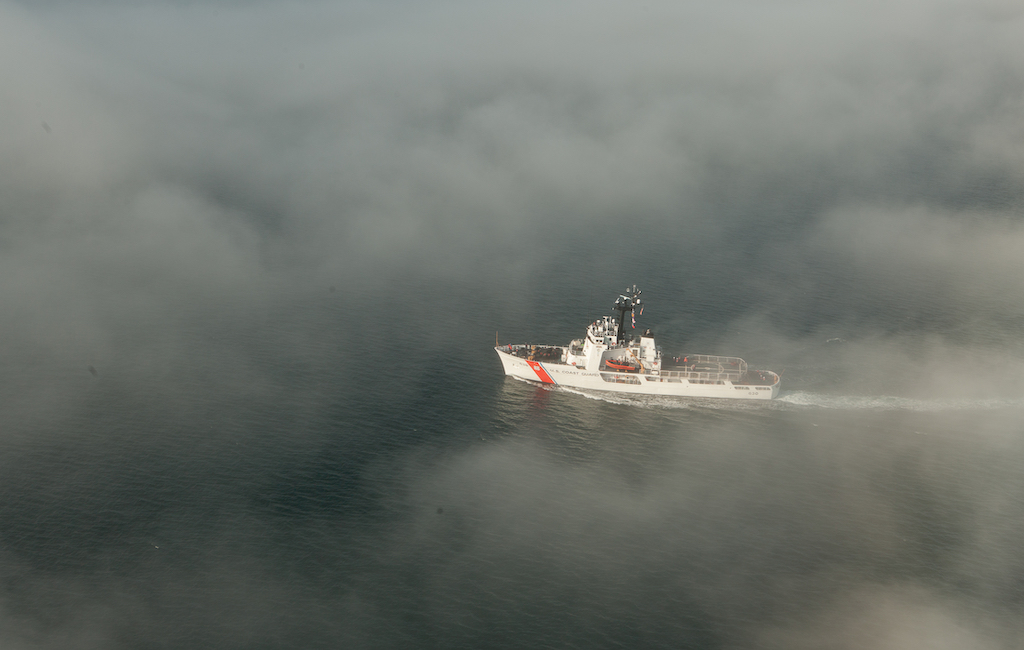
When daylight finally came Sunday morning the area was covered in heavy fog. Word went out to the local fishing fleet to look for the missing kayaker, but in the poor weather only four boats responded.

The Coast Guard eventually located David’s kayak in the Gulf that afternoon, some 20 miles southwest of Destin. It was full of water, and one half of the two-piece paddle was wedged purposefully in the cockpit. Judy believes the paddle may have broken or come apart as David paddled for shore. The Coast Guard continued searching for David, who was wearing a life jacket and could have survived up to 40 hours in the approximately 65-degree water. The search continued for 49 hours and eventually covered more than 12,000 square miles. David was never found.

Fog hampers the Coast Guard's search for the missing kayaker
The search for David was hampered by fog on Sunday morning. | Photo courtesy of the U.S. Coast Guard

Aqua Alert offers hope for boaters

Judy Schink knows there’s nothing she can do now to bring David back, but she’s determined that his death not be in vain. “I will do whatever I can to make sure this doesn’t happen to others,” she says.

As she wrestles with the what-ifs of her husband’s disappearance, one stays with her: What if there were an Amber Alert for boaters—a way to notify all boaters instantly when a fellow mariner is missing or in need of assistance? Judy and her grown sons have taken the concept and run with it, networking with the Coast Guard’s Barnard, the mayor of Destin and other officials to develop what they are calling the “Aqua Alert.”

Barnard says the Coast Guard has been exploring a similar concept using a phone app that transmits the agency’s urgent marine information broadcasts—the alerts that go out to mariners on VHF Channel 16—via cellular networks. That could make a real difference, says Barnard, who estimates that only about half of the boats in U.S. waters are equipped with VHF radios, and that of those, even fewer are switched on and tuned to Channel 16 with someone listening. But these days most people have a cell phone in their pocket, even when they’re out boating.

Don’t be the next missing kayaker

An Aqua Alert system could make boating safer for people in every type of craft, from kayaks to oceangoing vessels. The most powerful lesson paddlers can take from David Schink’s disappearance, and Alex Ochoa’s narrow escape, are also the simplest: Never paddle alone. Leave a float plan with friends or loved ones. Know the limits of your boat and gear. And always carry the means to call for help.

David Schink with his paddleboard on the beach in Destin, Florida where he paddled most days. | Feature photo: Courtesy Judy Schink


This article was produced under a grant from the Sport Fish Restoration and Boating Trust Fund, administered by the U.S. Coast Guard.
 

How Chuck Commanda’s Handcrafted Birchbark Canoes Are Bringing People Together

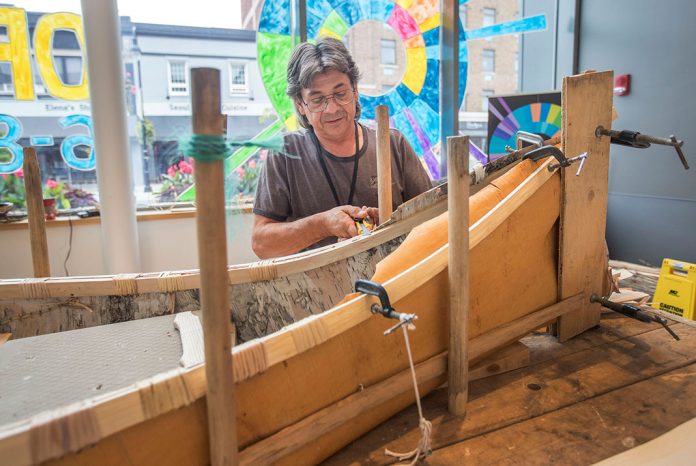
Chuck Commanada's birchbark canoes are crafted by hand, using traditional methods he learned from his grandparents. | Photo: Bob Tymczyszyn

Chuck Commanda is an unlikely superhero—and this is certainly the last thing he expected to be doing for a living. But in his sweat-stained T-shirt and faded jeans, here is a guy who is changing the world by collaboratively building birchbark canoes.

One of 12 grandchildren of Algonquin master canoe builders, William and Mary Commanda, Chuck remembers doing the skut work of his grans as they were harvesting bark and doing the building in their yard in Kitigan-Zibi, an Anishinabeg First Nation community in the Gatineau Hills north of Ottawa. The elder Commandas were reputed to have built more than 100 birchbark canoes, four of which have permanent homes in the Canadian Canoe Museum.

“Harder than it looks,” Chuck says of the work. “It wasn’t as if they were actually trying to teach us anything. The grandchildren were just there, doing the lifting and carrying, helping here and there. Somehow it stuck with me, but I never ever thought this was something I’d be doing for my livelihood.”

Man working on birchbark canoe in shop.
Chuck Commanada’s birchbark canoes are crafted by hand, using traditional methods he learned from his grandparents. | Photo: Bob Tymczyszyn

Fast forward 40-odd years, and Chuck is in a curling rink during the pandemic, on a frosty November day, working on what might be his fiftieth (he’s lost count) community birchbark canoe build since 2008. No one is more surprised than him that he left a lucrative cultural craft business, making and selling traditional Algonquin birchbark baskets—a vocation that put him in the rotunda of the Smithsonian Museum in Washington, DC, demonstrating the Anishinaabe craft to tens of thousands of curious onlookers. He set it aside with just a little encouragement from his grandfather, William.

“While he was building, my grandfather talked about the teachings of the Seven Fires wampum belt he kept for the Anishinaabe people. He always said we’re in the Seventh Fire now, a time when all people should be coming together as one to look after Mother Earth.”

Bark canoe building is, in part, about fulfilling this sacred prophecy. Moving from baskets to canoes—same materials, same techniques—has allowed Chuck to heed his grandfather’s dream and has added a significant dimension to his bark building practice.

For a 12-foot canoe, Chuck might spend three or four days harvesting about 700 feet of spruce root for lashings before building. Sourcing the birchbark and unknotted cedar can be another issue. Public builds are community events and typically take a couple weeks. Up to a dozen volunteers help, and each canoe is seen by hundreds of spectators.

With his hands and his heart, using traditional bark and split spruce root stitching formed with hand-split cedar ribs, gunwales and planking, with a different gaggle of willing onlookers and volunteers in each place, Chuck is building a canoe, yes.

With his hands and his heart, using traditional bark and split spruce root stitching formed with hand-split cedar ribs, gunwales and planking, with a different gaggle of willing onlookers and volunteers in each place, Chuck is building a canoe, yes. He is also nurturing pride in traditional know-how for Indigenous participants and building significant awareness and cross-cultural connections for everyone else.

[ Paddling Trip Guide: Learn how to work with birch bark by taking an Artisan Workshop at the Canadian Canoe Museum ]

He’s worked in schools, museums, parks, Indigenous communities and non-Indigenous communities through central Canada. In his quiet way, Chuck is now in the reconciliation business. A birchbark crusader doing his bit to right the wrongs of residential schools and generations of injustice, bringing people together, one stitch, one boat, one project and one illuminating shared moment at a time.

Chuck Commanda recently joined the National Council of the Canadian Canoe Museum, where James Raffan is the Director of External Relations. Watch the two in conversation at below.

This article was first published in Paddling Magazine Issue 63. Subscribe to Paddling Magazine’s print and digital editions here, or browse the digital archives here.

Chuck Commanada’s birchbark canoes are crafted by hand, using traditional methods he learned from his grandparents. | Photo: Bob Tymczyszyn

Mike Shoreman’s Remarkable Recovery Continues To Inspire The SUP Community

Man wearing wetsuit and paddling on paddleboard.
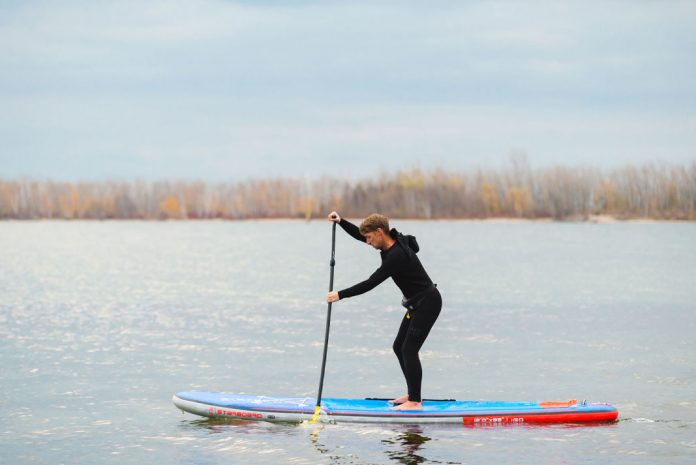
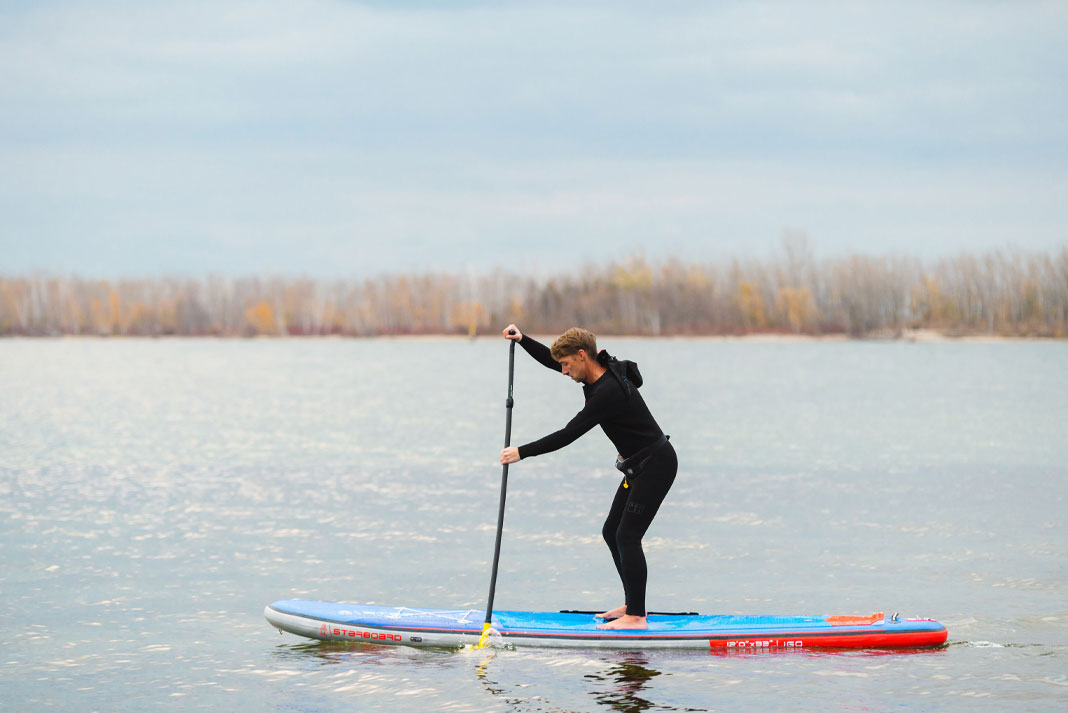
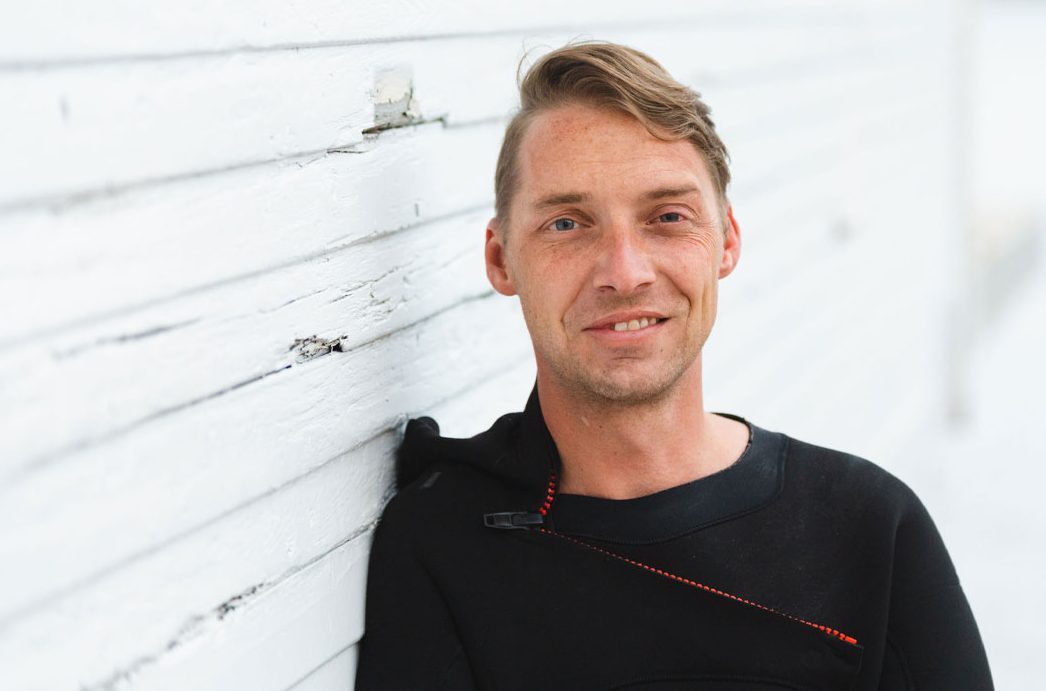
“When facing rough waters, we have two options: sink or swim,” writes Mike Shoreman in his new book, Crash and Rise: From Victim to Thriving Survivor. | Photo: Gillian Foster

Michael Shoreman had been paddleboarding for a decade when he went out on the Toronto waterfront on a late October afternoon three years ago.

“It was the end of the season, and so I went out to take it all in,” he says. “It’s quite something when you are on the water, looking at the city, knowing it’s busy and full of noise and you are out there watching the birds and wildlife. It’s such a relaxing, therapeutic experience.”

Sounds pleasant, but Shoreman remembers the outing well because it was his last before being struck by an illness and hearing from doctors he would never stand on a paddleboard again.

That November, the dormant chickenpox virus from his childhood reared up in the facial nerve near his right ear. Called Ramsay Hunt syndrome, the condition can be debilitating, causing facial paralysis, vertigo, speech impediments and, crucially, a loss of balance. Shoreman’s case was misdiagnosed at first and he missed vital early treatment. His life was turned upside down, with plenty of uncertainty about when, or if, it would right itself.

The following April, doctors told him there would be permanent damage because the outbreak was not caught early, causing a greatly diminished sense of balance. Shoreman’s mind immediately went to paddleboarding.

Shoreman hadn’t been just a casual paddleboarder. The sport was the rail on which his social life pivoted and it provided his livelihood. He had fully dedicated himself to it five years earlier while on a trip to India.

“I was in Varanasi, a very holy city, where people come to say goodbye to their loved ones. The sun was going down and people were setting candles alight and floating them out on the river on lotus flowers.”

Man wearing wetsuit and paddling on paddleboard.
“When facing rough waters, we have two options: sink or swim,” writes Mike Shoreman in his new book, Crash and Rise: From Victim to Thriving Survivor. | Photo: Gillian Foster

Shoreman describes it as a lightbulb moment. “I thought to myself, ‘I want to light up the water with people back home.’”

He started a business getting new paddleboarders on the water to enjoy the skyline at sunset.

His business grew rapidly over the next three years. How many thousands of people he introduced to the sport, he can’t begin to guess.

[ Paddling Trip Guide: View all SUP instruction and skills clinics ]

Then, what he describes as a tsunami hit him from behind and upended everything.

Shoreman says he felt like he was drowning in the new reality of being physically impaired, with the apparent loss of his pastime, support network and livelihood. That winter and spring were filled with despair. He didn’t even want to be seen in public as he attempted to rehabilitate and come to terms with his new limitations.

“When the sun hit my face out on the water, I felt home again.”

The following May, he got an email from the Canadian Safe Boating Council, asking him to do the media demonstration for an upcoming on-water day. In years past he would have done it as a matter of course. This year, he assumed he had to say no. But he called them back a few days later and asked if he could oversee friends who would do it in his place, keeping him involved, to a degree.

Shoreman remembers thinking, “I have to reach for this lifeline and start to say, ‘yes.’”

At the end of the day, it was just him and his two friends on the beach. One asked if he would try to float on the board. He lasted three minutes sitting on the board, an effort that exhausted him.

“When the sun hit my face out on the water, I felt home again,” says Shoreman. “I knew this wasn’t the end.”

In fact, it was a beginning, of a sort.

“Saying ‘yes’ that day brought me back to the surface,” says Shoreman. “I realized, every time you say yes, the next time gets easier.”

It’s a lesson he took to the stage, entering and winning Speaker Slam, Canada’s largest inspirational speaker series. His speech has since been viewed more than four million times and spawned a “Paddles up!” social media meme that saw thousands of paddleboarders from all continents raise their paddles in his honor.

“When facing rough waters, we have two options: sink or swim,” writes Mike Shoreman in his new book, Crash and Rise: From Victim to Thriving Survivor. | Photos: Gillian Foster
Shoreman is working hard to help make paddleboarding more accessible. | Photo: Gillian Foster

Shoreman is now able to stand on a board again—for about 15 minutes at a time. He says he almost did a pivot turn last summer, and while he knows his abilities will never be what they once were, he’s grateful for where he’s gotten.

His condition won’t let him reopen his business and participate in the sport the way he once did; it’s too exhausting for him. Instead, he’s directing his efforts toward leveraging his newfound fame into trying to make paddleboarding into a more inclusive and accessible sport.

“Like it or not, I’ve become a recognizable face, the unbalanced paddleboarder. My face can be used for good if I can make paddleboarding more accessible for people who haven’t had access.”

Shoreman is an ambassador for advocacy and mental health organizations and part of a new Paddle Canada advisory board for adaptive paddling for people with different abilities. He’s speaking with instruction and business associations and others in the paddleboarding industry, asking, “How can we make it as accessible as possible? What adaptations need to be made in gear, in programs?”

He’ll still go to the beach, maybe less often. But when he does, he hopes he sees operators set up on beaches with equipment and skills to offer paddleboarding to people who never thought it would be possible for them.

Because Shoreman believes, now more than ever, that “Everyone should have the opportunity to light up the water.”

This article was first published in Paddling Magazine Issue 63. Subscribe to Paddling Magazine’s print and digital editions here, or browse the digital archives here.

“When facing rough waters, we have two options: sink or swim,” writes Mike Shoreman in his new book, Crash and Rise: From Victim to Thriving Survivor. | Photos: Gillian Foster

9 Non-Essentials You Must Bring On Your Next Canoe Trip

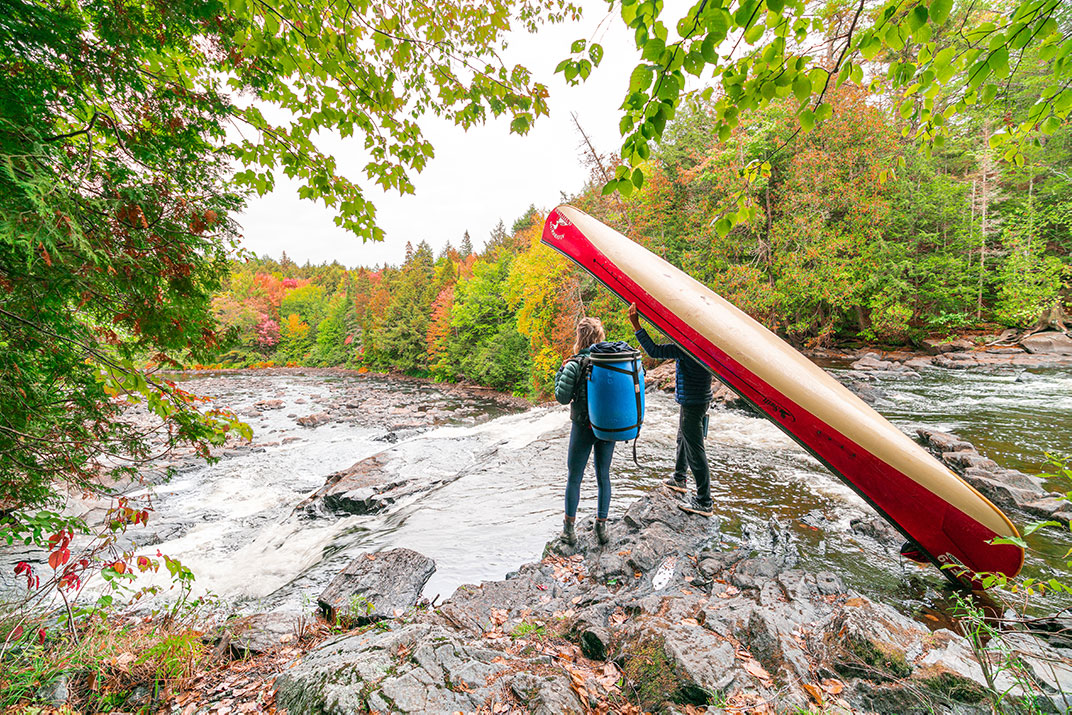
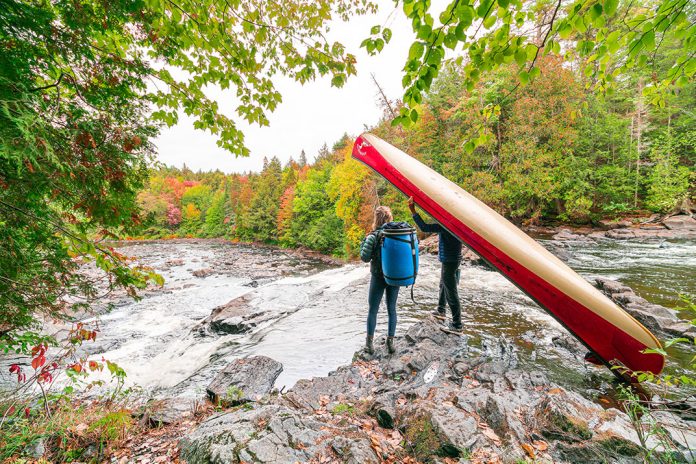
Two people standing at top of waterfall, one with canoe and other with blue barrel.
Gear you don't have to, but should bring. | Photo: Karam Nwilati

When Elena Wood and Karam Nwilati set off on a three-week trip in a rental canoe nicknamed Truffle, it was their first big trip, and “neither one of us really knew exactly what we were doing,” she says. The duo turned the adventure into a short film, which is as much an ode to their learning curve as the Algonquin Park wilderness they explore.

Throughout the documentary, the duo good-naturedly gripes about the weight of their gear as they double-carry portages and pine for pizza but say they wouldn’t change a thing—except to bring more peanut butter. Here are their top picks for the best of the non-essential essentials they carried. —Eds


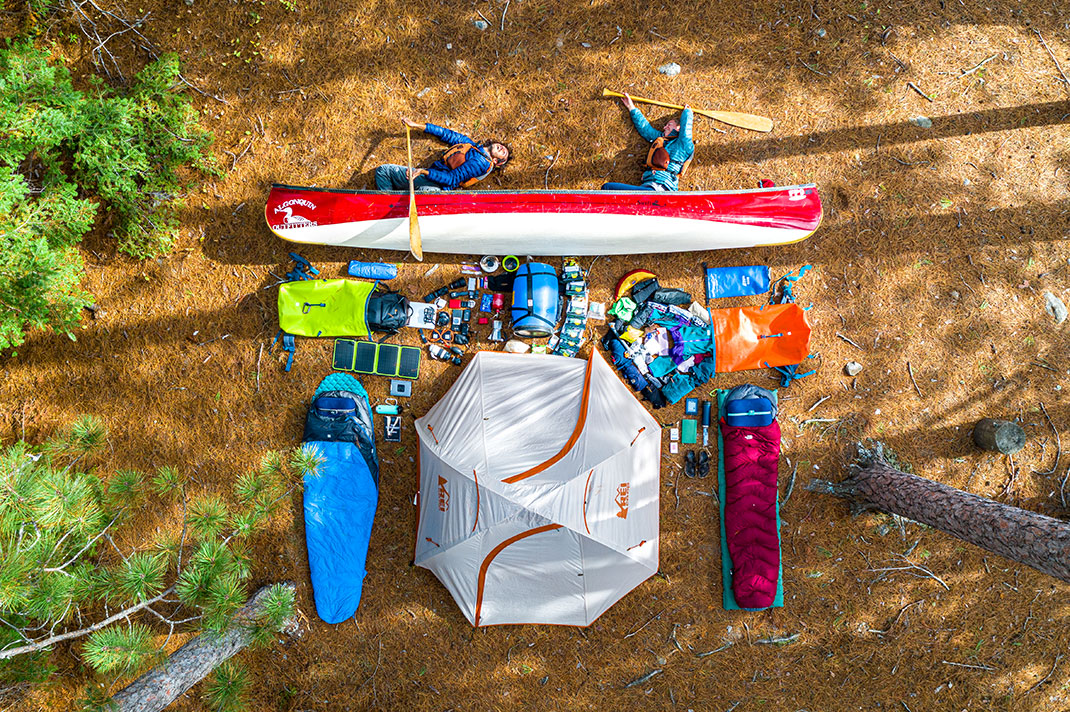
Overhead shot of campsite with gear all laid out.
This shot was taken the old-fashioned way—hanging a camera from a branch and hoping for the best. | Photo: Karam Nwilati

Karam & Elena’s essential non-essentials

1Hammock

A big part of slow travel is precisely that, slowing down. And there’s no better way to slow down than snuggling up in sleeping bags in a hammock overlooking a wilderness lake, 30 miles from the closest road.

BUY ON AMAZON BUY AT WALMART

2E-reader

Paper books smell, feel and read differently. But on a multi-week trip, pack an e-reader—just preferably not a Kindle because we don’t like Amazon. Pre-download as many books as your heart desires, or just Dune in my case, to optimize your hammock time.

BUY ON AMAZON BUY AT WALMART

[ View all canoe gear and accessories in the Paddling Buyer’s Guide ]

3

Dehydrated meals

Our Harvest Foodworks dinners were an absolute highlight. The just-add-water meals rehydrate in about 10 minutes, which is a blessing after a long day. Plus, they’re all completely vegetarian.

BUY ON AMAZON BUY AT WALMART

4
MIZU Water Filters

These babies are the bomb! Fill up the bottle, close the lid, which contains a filter, and you can immediately drink via the straw. None of the fussiness about waiting a certain amount of time with chemical treatment or needing an additional pump—just water on demand. Perfect for staying hydrated on the water.

BUY ON AMAZON

5

Film gear

Our camera gear weighed 22 pounds. I shot our documentary on the Sony Alpha 7RII with four lenses: 16-35mm, 70-200mm, 50mm, and 24-70mm. We also had a lot of accessories: Gorillapod tripod, intervalometer for time-lapses, on-camera mic, extra batteries and a battery pack. We didn’t have a drone—I took the first shot in this article by throwing a rope over a branch and then pulling my camera up while facing down.

6 Solar panels 

Recharging film equipment was essential. With the Goal Zero Nomad 28 Plus in full sunlight, we could directly recharge mics, camera batteries and a laptop used for file transfers.

BUY ON AMAZON BUY AT WALMART

Two people standing at top of waterfall, one with canoe and other with blue barrel.
Gear you don’t have to, but should bring. | Photo: Karam Nwilati

7 Menstrual cup

Fifty-one percent of the population menstruates, but unless you’re on an all-women trip, the topic is taboo around most campfires. Elena wants to lessen the stigma around periods and give women more information about options to camp at ease. “Reusable cups aren’t for everyone, but they are comfortable, only need to be emptied twice a day, and are easy to clean with boiled water. And, since they’re zero-waste, they’re perfect for longer canoe trips,” she says.

BUY ON AMAZON BUY AT WALMART

8 Dear Diary 

My diary comes everywhere. Setting out on our trip, we already knew we wanted to make a film of our adventure, so I wrote detailed entries to remember every little fact, emotion and meal. The accuracy with which I could recall a specific feeling or smell from the trip when writing the video script was purely due to my diary keeping. Reading it over puts me back amongst the lakes and loons.

BUY ON AMAZON BUY AT WALMART

[ Plan your next paddling adventure with the Paddling Trip Guide ]

9 Analog camera

Whereas I focused on catching moments on video, Elena—who has much less patience with filming—prefers to point and shoot, capturing quick snaps. Photos on film are raw and untouched, totally different from the digital footage we would later cut and edit. Bonus: wait a year before developing the film so you can re-live the adventure.

BUY ON AMAZON BUY AT WALMART


Other canoeing accessories we recommend

In addition to Karam and Elena’s list, there are a few more canoe trip accessories you should consider adding to your gear closet. These might not be as fun as those listed above and are in no way essential, but they will move your canoe trip from great to awesome in short order.

Drybags

Drybags are game-changers for canoeists. You can store electronics, extra sets of water treatment and matches, ID, maps and books. They are also great for packing a day kit with lunch and sunscreen, and their straps can be hooked onto the gunwales or thwarts of a canoe for secure placement and easy access.

They come in a range of sizes and shapes to suit everything you want to protect from your beloved DSLR camera to your daily medications. Never have to worry about your gear getting rained on again.

LEARN MORE BUY ON AMAZON BUY FROM WALMART

Canoe rack

Show your canoe some love with a canoe rack to call home when it’s not cruising lakes and rivers. It is no secret that proper storage of a canoe can extend the boat’s life by decades.

LEARN MORE BUY ON AMAZON BUY FROM WALMART

Emergency communication device

Increase your ability to stay safe and in touch on long and remote canoe trips with electronics like a satellite phone or satellite messenger. Even though canoe trips are a great time to get away from constantly being plugged in, having a means of communication just in case is great investment in your well-being, even if it stays happily stored in a drybag for the duration of your expedition.

LEARN MORE BUY ON AMAZON BUY FROM WALMART

Canoe mounts

Can you picture yourself relaxing in your canoe waiting for a fish to bite with a cup of hot coffee in hand? Make your canoeing activities simpler with a mount. Mount functions range from holding your paddle to your fishing rod to your cup of coffee, and allow you to simplify and worry less about your different possessions falling out of the boat when not in use.

LEARN MORE BUY ON AMAZON BUY FROM WALMART

Canoe cart

Canoe carts can be a serious luxury when transporting your boat. They are relatively small given their large utility, can fit in the trunk, and have sturdy wheels designed for roots and rocky trails. If you are unable or not interested in putting your canoe on your back, a canoe cart is a great option for getting your boat to the water.

Some adventurers also use canoe carts on long expeditions to make endless portages more bearable.

LEARN MORE BUY ON AMAZON BUY FROM WALMART

This article was first published in Paddling Magazine Issue 63. Subscribe to Paddling Magazine’s print and digital editions here, or browse the digital archives here.

This shot was taken the old-fashioned way—hanging a camera from a branch and hoping for the best. | Photo: Karam Nwilati

Whitewater Kayakers Save Moose Calf From Drowning (Video)

Ben Clark and Scott Linton were paddling on the Sheep River in Southwestern Alberta when they spotted the unexpected.

The two experienced whitewater kayakers were taking a rest-stop after navigating the technical rapids upstream, when they noticed a moose calf curled up on a cliff shelf opposite them—just barely above river level. 

The calf spotted the kayakers almost simultaneously. It stood up, lost its footing, and helplessly fell into the fast-moving water below.

The Sheep River is primarily glacier-fed and can reach frigidly low temperatures during springtime. Cold water aside, Clark knew full well that the calf, if unhelped, was headed straight towards one of the larger rapids on the river. A swim through it could prove fatal.

The duo knew they needed to act fast. “We jumped out of the boats and went into rescue mode at the same time trying to keep an eye out for mama,” Clark recalled.

[ Plan your next paddling adventure with the Paddling Trip Guide ]

In late spring, cow moose with young calves are very protective and are known to attack humans who come too close.

Linton waded out into the river while holding onto a throw rope and managed to grab the calf from the flow. With assistance from Clark, he brought the calf to the river’s edge and began to rub it’s body to retain its warmth.

Linton and Clark were quick to leave the scene after their rescue success. “The calf walked up into the sun and started to call for mom so we got the heck outta there,” said Clark.

Footage credit: Ben Clark// @theleagueofbeautifulminds

Mustang Survival Announces Acquisition of Ocean Rodeo Dry Wear

Mustang Survival
Mustang Survival Logo

Burnaby, BC – Mustang Survival®, the North American brand known for innovative solutions for the most demanding marine environments, is excited to announce the acquisition of the Ocean Rodeo Dry Wear business.  The innovative dry wear solutions for action watersports and commercial marine will be merged into the already impressive Mustang Survival Recreation and Professional dry wear assortment.

California based Wing Group, a leading manufacturer of inflatable sponsons, small combat craft, whitewater rafting solutions, life rafts, and marine doors and windows, facilitated the recently closed acquisition of Ocean Rodeo Dry Wear with the sole purpose of building on its recreational portfolio.  The move deepens the dry wear product offering as Mustang Survival works to its global marketplace presence.

The amalgamation of Ocean Rodeo Dry Wear with Mustang Survival will immediately enhance its offerings in Recreational dry wear.  In addition, Mustang Survival acquires interest in an impressive portfolio of intellectual property that the team of designers, developers, and engineers at Mustang Survival will be able to utilize in a larger way as the trusted leader in innovative dry wear solutions from off-shore sailing, kayak angling, paddling, and commercial marine. The acquisition and Mustang Survival’s push into Recreation watersports will be paired with a huge investment in grass roots marketing and winning with communities.

Commenting on the announcement, Mustang Survival President, Jason Leggatt, highlights the opportunities it creates. “At the core, Mustang Survival and Ocean Rodeo have a deep shared commitment to technology and innovation.  Our dry wear solutions are tried and tested in the deep cold of the Pacific Northwest and we know what it takes to build world-class, premium dry wear solutions for the most demanding consumers in the world.  This acquisition will be a catalyst that drives us forward to achieving our vision of being a worldwide watersports brand in active dry wear.”

The Wing Group led by President and CEO Andrew Branagh has been expanding its core product offering and reach with acquisitions aligned with its values and mission.  Speaking about the acquisition, “Ocean Rodeo represented an incredible opportunity to become more relevant in the active watersports market. Combining the Mustang Survival Brand, DNA and product, together with Ocean Rodeo technology we can now offer a full assortment of dry wear solutions to increase the commercial appeal to a broader selection of customers”.

Mustang Survival is currently working with all Ocean Rodeo Dry Wear customers and suppliers to develop a smooth business transition. Product will be showcased and sold via the Mustang Survival website, and all customer service and operations of the business will be handled by Mustang Survival teams going forward.

About Mustang Survival

Established in 1967 by Irv Davies, the inventor of the world’s first Floater™ Coat, Mustang Survival has been designing and manufacturing lifesaving solutions for more than 50 years.  Through constant innovation and inspired technical solutions, Mustang Survival strives to bolster performance, encourage exploration, and inspire adventure in the marine environment. We are committed to the protection and enhancement of those who push themselves to extremes whether for work, duty, or to escape the daily grind.  Headquartered in Burnaby, BC, Canada, Mustang Survival has more than 250 associates across the US and Canada.  For more information, please visit www.mustangsurvival.com.

Mustang Survival. Saving lives since 1967.

About The Wing Group

The Wing Group is privately owned and led by President and CEO Andrew Branagh and includes Wing Inflatables, Henshaw Inflatables, Patten Company, FabTek Industries and Mustang Survival.  The Wing Group is the industry leader in manufacturing sponsons, inflatable craft, and much more.  For over 30 years Wing’s first in the field innovative use of polyurethane and pioneering new technology have led to the development of sponsons and boats that are lighter, last longer, look better and outperform our competition.  The Wing Group has built an unparalleled reputation for providing professional inflatables solutions whether for a private yacht management company requiring an expeditionary craft, a military detachment operating a fixed-wing airframe requiring automatically deployed personnel life rafts, or a special forces unit that depends on the best performing combat rubber raiding craft.

Nepal’s Legendary Karnali River Is A Kayaker’s Dream

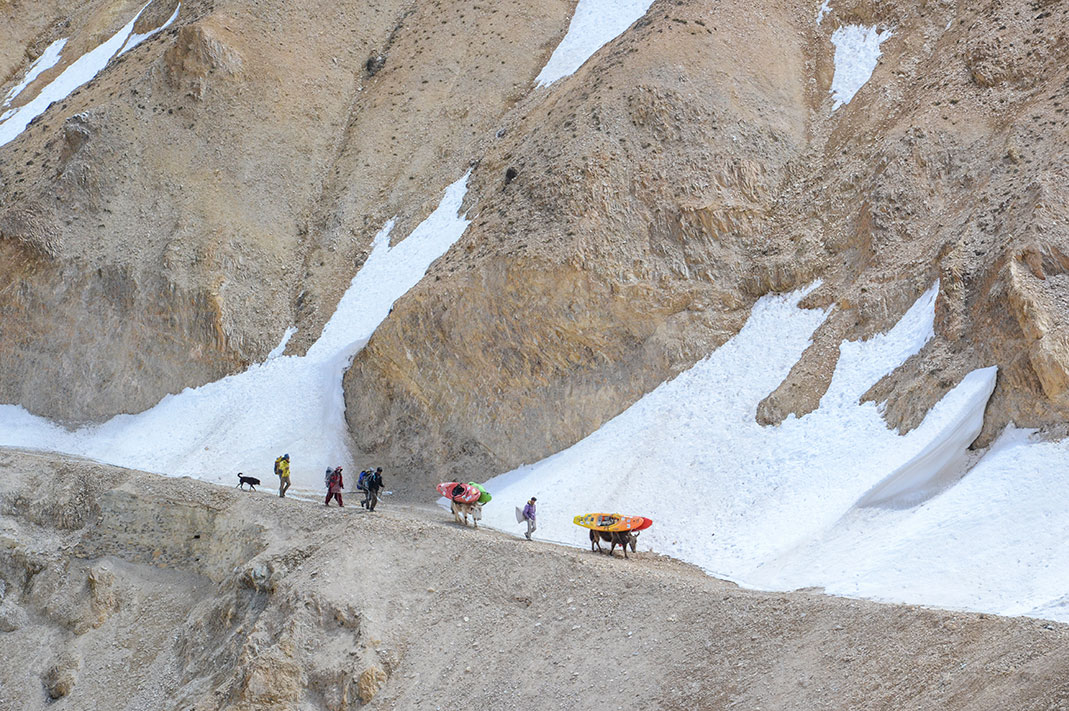
Four people, a dog, and two yaks carrying whitewater kayaks, walking along a narrow path on the side of a mountain with snow.
The Karnali River is the last major undammed river in Nepal. | Photos: Mikel Sarasola

Due to the increasing frequency and pressure of development and dams, some expedition kayakers are shifting their sights to rivers that won’t be runnable forever. This is the era of last descents.

Nepal’s Karnali is a river of both religious significance and kayaking legend, and one that has been under the shadow of proposed hydroelectric development for years. It falls from the sacred Mount Kailash in southwestern Tibet and flows south from the Tibetan plateau, cutting through the Himalayas before draining into India’s Sharda River, and eventually contributing to the mighty Ganges.

[ Plan your next kayak expedition with the Paddling Trip Guide ]

Since the upper section was first run in 1999 by Scott Lindgren, the Karnali has become a classic Nepali river for kayakers, known for its big volume, glacial-fed whitewater and expedition potential. As decades of rumors about a hydropower dam turned into diggers and dump trucks on the Karnali’s shores in 2018, Spanish kayaker Mikel Sarasola seized his chance to paddle it and capture Nepal’s last free-flowing river in a film.

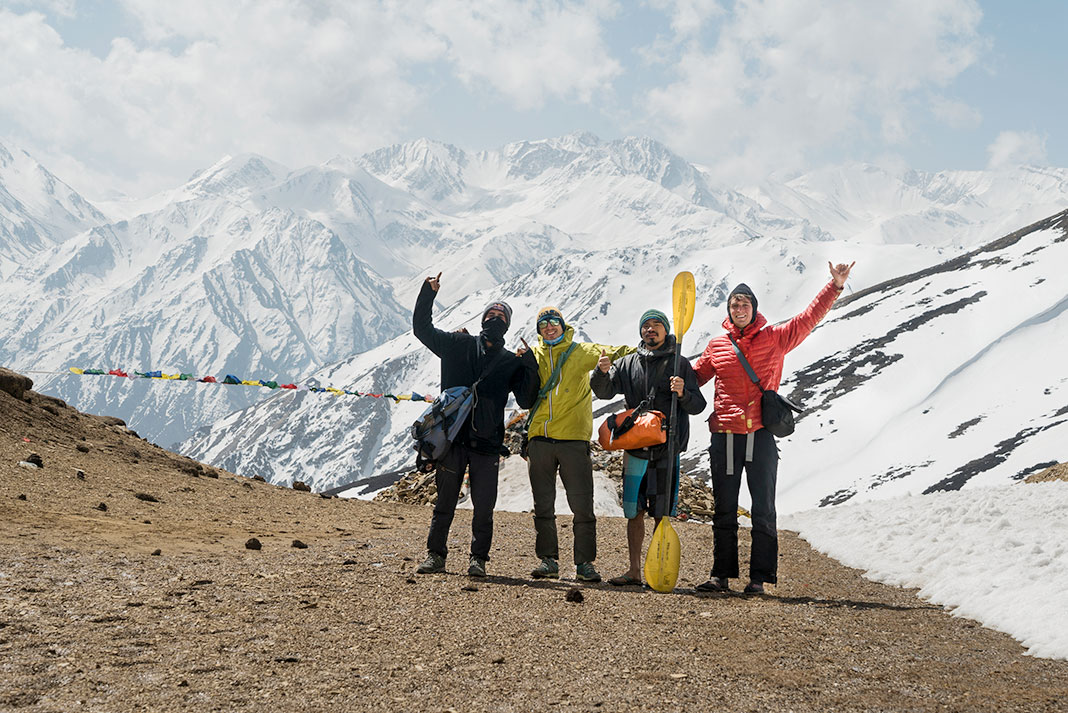
Four people standing with bags and a kayak paddle, with snow-covered mountains in background.
The journey begins. | Photo: Mikel Sarasola

Joined by fellow Spaniard Aniol Serrasolses, American Todd Wells and Nepali kayaker Surjan Tamang, the team flew to the mountain-nestled town of Simikot. They hired porters to help transport boats and gear to the put-in 60 miles away, which included crossing a 14,700-foot snow-covered mountain pass.

“At that altitude, and with only four porters, it was just not enough for all the equipment we were carrying,” says Sarasola. “Luckily for us, we were able to use two yaks. It took us a bit to fit our boats on the yaks, but they helped a lot.”

Putting on the river at Hilsa, a small town on the border between Nepal and Tibet, the team started at 12,000 feet of elevation. They navigated the class IV to V sections of Shiva’s Gorge and Ganesh Gorge, which challenged the group with must-make moves and tough lines. “Big boulders, full of siphons and vertical walls is what we found,” says Sarasola. Surrounded by 20,000-foot-plus peaks, these sections were a highlight of the trip. During the nine-day, 250-mile self-supported mission, the team descended 11,000 feet.

Four people, a dog, and two yaks carrying whitewater kayaks, walking along a narrow path on the side of a mountain with snow.
Enlisting the help of yaks for the ‘yaks. | Photo: Mikel Sarasola

During the expedition, access roads were being built to start construction, and the massive hydroelectric project was never far from the paddlers’ thoughts. Three hydropower dams are planned for the Karnali River’s main stem, with another couple dozen proposed on tributary streams throughout the watershed. Since the expedition, construction progress has been slow and controversial, in part because of politics with neighboring India, the potential buyer of the generated power.

“We wanted to paddle the river to understand the resources and value of the Karnali watershed and to tell the story of the Karnali as it was,” says Sarasola. The Nepal River Conservation Trust Foundation supported the trip. Sarasola hopes his new film, The Tears Of Shiva, will show the world the beauty of the valley and what the hydropower project would destroy. “We know our film won’t make a change by itself, but it supports the many initiatives happening that can lead to a change for Nepal and its politics in terms of hydropower construction. This film was a chance to give a voice to the local people,” he says.

The film delivers a combination of kayaker POV of the whitewater and a yak’s-eye-view of the remote villages, harsh Himalayan landscapes and hardy locals. It also explores the development of hydropower in Nepal and the massive environmental and economic changes transforming the river system will bring. In January 2021, The Kathmandu Post reported that construction started on a tunnel to divert water to build a dam on the Karnali.

Mount Kailash is the source of the Karnali and neighboring Indus and is revered as one of the world’s holiest places by Buddhists and Hindus. In Hinduism, the mountain is recognized as the home of the deity Shiva.

“We felt like we were paddling on the tears of Shiva,” says Sarasola referring to the name of the film and emotions on the expedition. A last descent is not something to be celebrated, he says. With perspective and footage of what soon may be flooded, plugged, drained and diverted in a political chess game surrounding energy production, gratitude replaced celebration at the end of the trip, as the team said farewell to one of the best multi-day runs in the world.

This article was first published in Paddling Magazine Issue 63. Subscribe to Paddling Magazine’s print and digital editions here, or browse the digital archives here.

Contribute to the protection of Nepal’s rivers by supporting The Nepal River Conservation Trust.

Ojibway Artist Patrick Hunter Teams up with Canada Canoe Paddles for a One-of-a-Kind Art Series

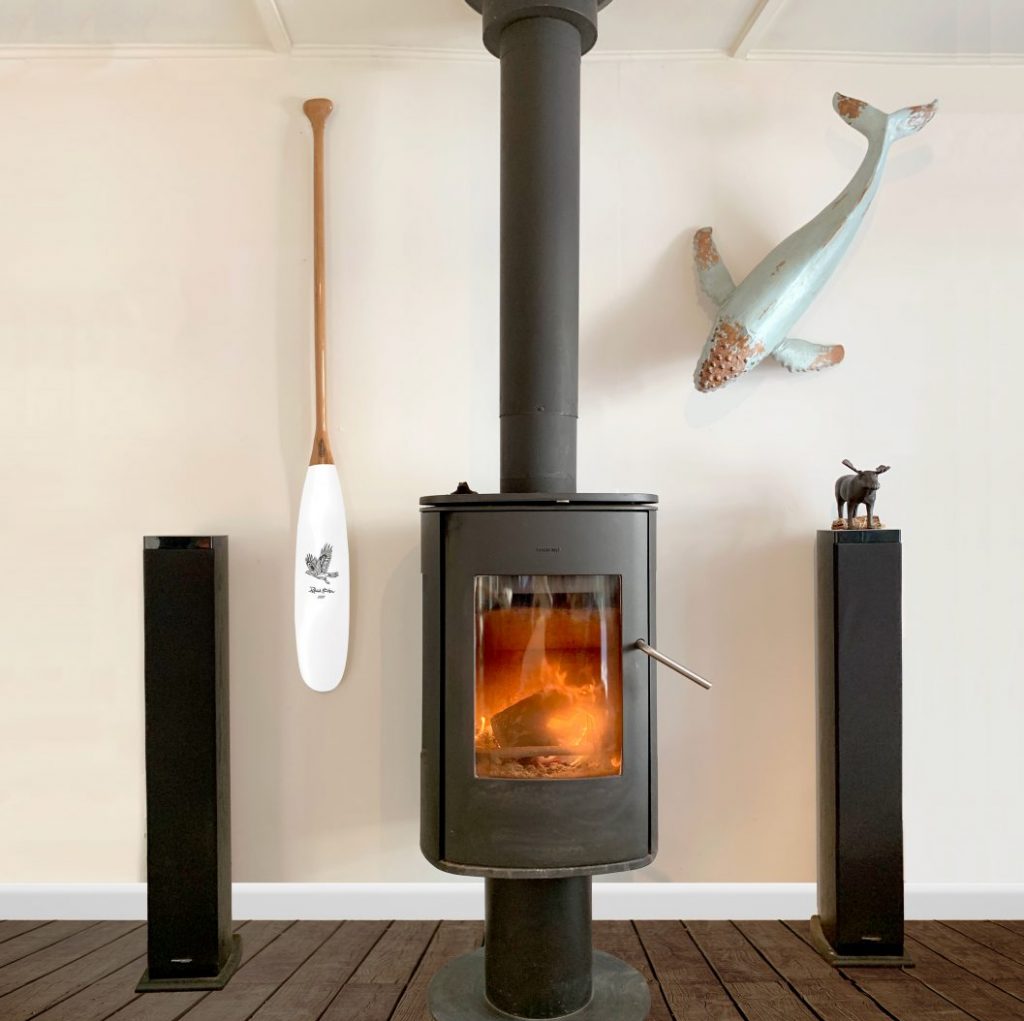
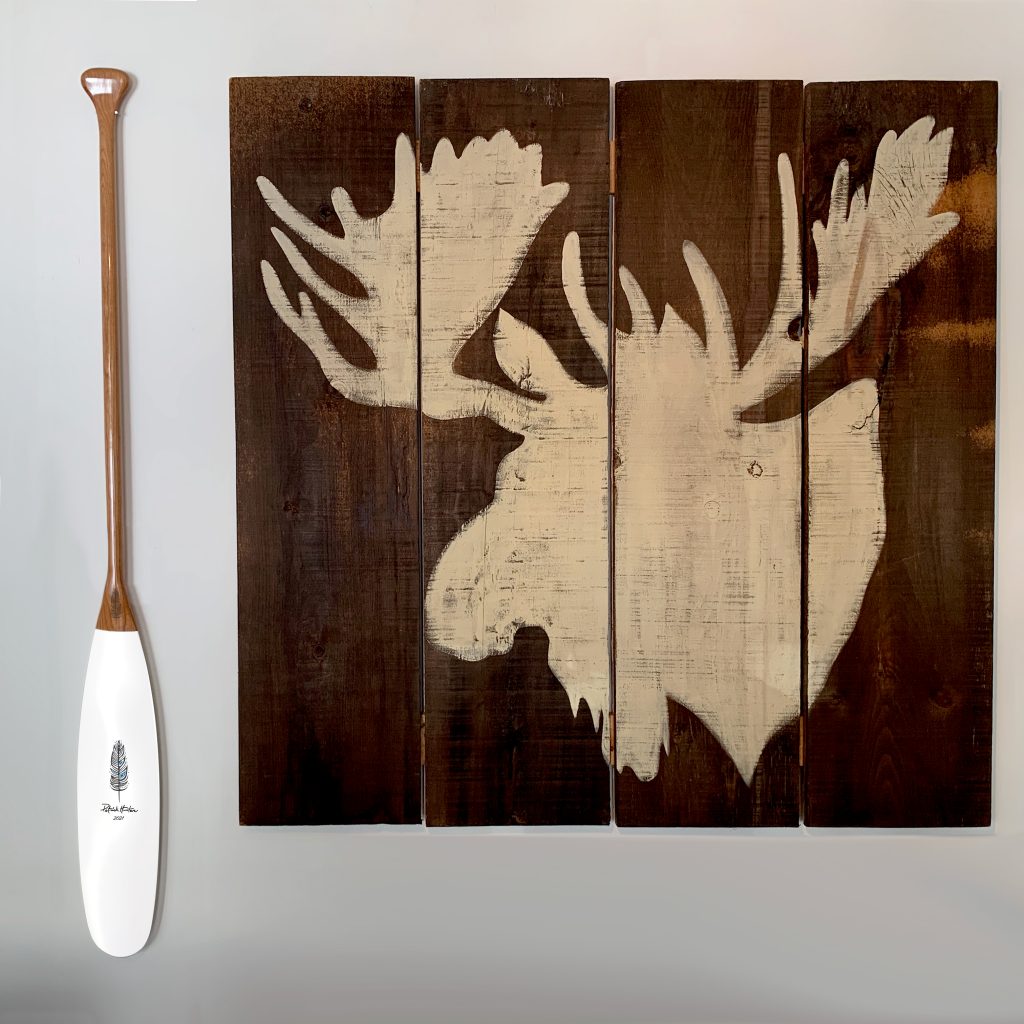
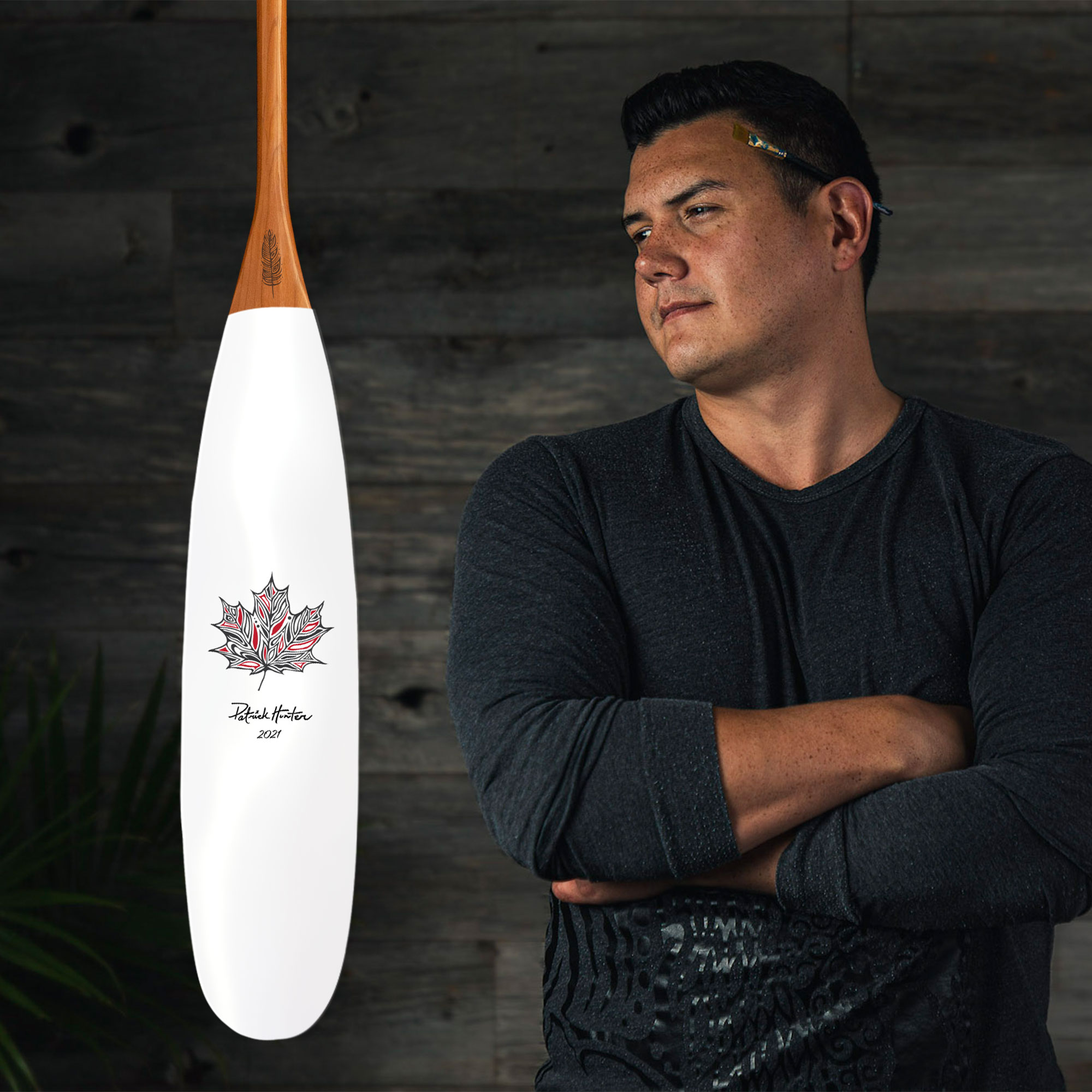
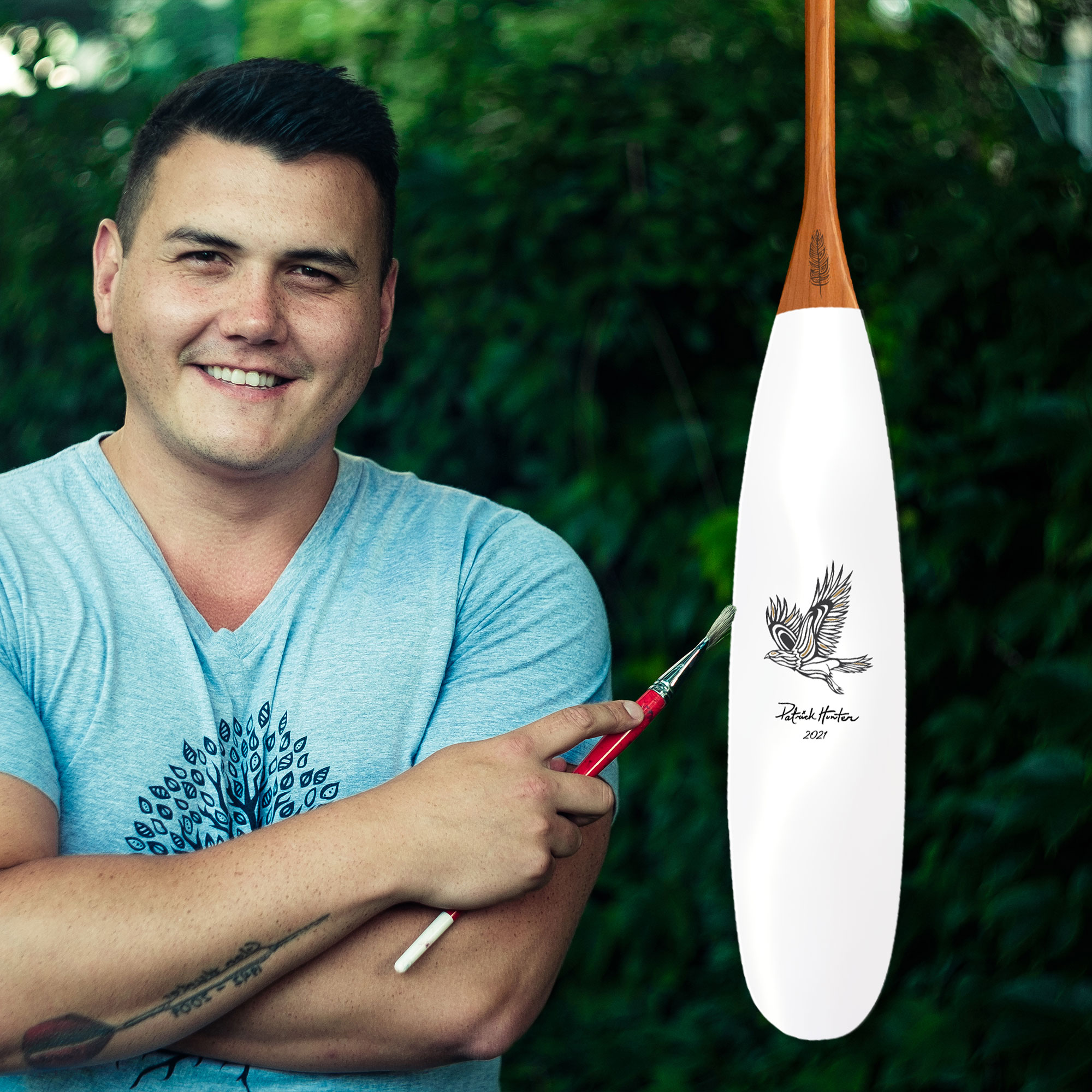
June is Canada’s National Indigenous History Month and Ojibway artist Patrick Hunter is marking this year’s event with the launch of a first time ever collection of artisan canoe paddles.

Patrick Hunter is a 2 Spirit Ojibway artist best known for his paintings in the Woodland Art style who is also making a name for himself in the corporate world through collaborations with RBC and BMO Banks, Ernst & Young, West Elm, Staples, eBay, CTV and the Chicago Blackhawks to name a few.

“There’s an Indigenous story of people, culture and rich history that I’m trying to share with Canadians through my art” says Hunter as inspiration for his work.

Hunter was approached by Canada Canoe Paddles, a Toronto based company that partners with iconic Canadian brands like the CBC, The Tragically Hip and the Hudson’s Bay Company to create artisanal canoe paddles for display in cottages, cabins, homes and offices. “It is commonly acknowledged that Canadians are born with a paddle in their hands” remarks company founder Mario Zeskoski and even our late Prime Minister Pierre Trudeau identified its special role when he noted “paddling a canoe is a source of enrichment and inner renewal.”

“Working with Patrick on an Indigenous paddle series seemed like the perfect way to showcase his work and provide Canadians with a unique artistic expression of the native lands we all call home” says Zeskoski. The canoe paddle became Hunter’s canvas upon which his art would would come to life.

The art collaboration will consist of four canoe paddle designs featuring Canadian themes done in Hunter’s Woodland Art style. “When I paint, I look into my subject matter to not only see its inner composition but also its spiritual side” says Hunter who was inspired by viewing original works of painter Norval Morrisseau in his hometown of Red Lake.

The paddles will be sold as a limited edition series individually numbered from 1 to 300. “Once they’re sold, they’re gone” says Zeskoski, “making them a special addition to anyone’s cottage or home whether you’re a paddler, outdoor enthusiast or someone who just appreciates the beauty of Canada’s wilderness as seen through a different lens”.

A portion of the proceeds will go to Hunter’s workshop initiative where he provides new generations the confidence they need to pick up a paintbrush. “Seeing how people react to what I create brings me the greatest joy and drives me to continue growing as an artist and a voice for Indigenous culture” says Hunter. “I look forward to making new acquaintances through my art as I continue on my creative journey”.

The Patrick Hunter Canoe Paddle collection is available now for pre-release sale at canadacanoepaddles.ca.

About Canada Canoe Paddles

Canada Canoe Paddles is a Toronto-based company (est. 2021) that was borne out of the desire to celebrate the canoe paddle’s storied past and the special place that it holds for Canadians. Whether going to camp as a kid, family outings in provincial parks or more ambitious portage trips, the trusty canoe paddle was always there. The association with other iconic Canadian brands and imagery was a way to elevate the canoe paddle from a means of propulsion to a decorative artform to adorn the walls of cottages, cabins, homes and offices.

“With the pandemic, people have not been able to travel, go camping or get to their out of city retreats so the canoe paddle represented a bit of a pick me up boost and visual reminder that outdoor adventure would soon make a return” says Canada Canoe Paddle founder Zeskoski.

Canada Canoe Paddles first collaboration in 2021 was with The Tragically Hip that comprised two paddle designs. A Limited Edition series consisting of 300 paddles sold out in just 34 hours. A Legacy paddle design is still available and continues to get picked up online by The Hip fans as well as Canadian music enthusiasts.

The partnership with Patrick Hunter is the latest Canada Canoe Paddle venture that utilizes the artist’s Indigenous drawings on a limited series collection. “We are grateful for the opportunity to play a role in Patrick’s artistic journey and help raise awareness of Indigenous culture in Canada” says Zeskoski.

Canada Canoe Paddles will continue looking to work with other brands, corporations and individuals for whom the noble canoe paddle is synonymous with ties to Canada, the outdoors and the indomitable spirit of adventure. To learn more, visit https://paddlepromotions.ca.

Patrick Hunter Bio

Patrick Hunter is a 2 Spirit Ojibway artist best known for his paintings in the Woodland Art style who is also making a name for himself in the corporate world through collaborations with RBC and BMO Banks, Ernst & Young, West Elm, Staples, eBay, CTV and the Chicago Blackhawks to name a few. “There’s an Indigenous story of people, culture and rich history that I’m trying to share with Canadians through my art” says Hunter as inspiration for his work.

Hunter’s introduction to the Woodland Art form began in his community of Red Lake, ON in high school. “Indigenous works were just so celebrated in my community and everywhere you looked. When I learned what the symbolism was, I felt more connected to my culture and that maybe it would be something I could one day be good at”.

In 2007, Hunter assisted in the early development of Shingwauk University in Sault Ste. Marie, ON, the first accredited University from a First Nations worldview. In 2008, Hunter attended Sault College where he flourished in the 3-year graphic design program. Hunter found his fit and embraced a two-term role as the President of the Indigenous Students Council which provided programming and advocacy for Indigenous students at the college.

Hunter made the move to Toronto in 2011 to begin a career as a graphic designer. Here he began to find his calling and fully commit to the kind of art he wanted to create. “I learned early on that designing the things I wanted to see brought to life gave me so much more joy than trying to interpret an employer’s point of view. When you design from the heart, that’s what resonates with people.”

To date, Patrick Hunter has had many collaborations in various forms with: eBay Canada, RBC & BMO Banks, EGALE Canada, STAPLES Promotional Products, Global Affairs Canada, the Prince’s Trust Canada, ROGERS, the Canadian Gay & Lesbian Chamber of Commerce, EY, Toronto City Hall, Village Media, Ontario Trillium Foundation, Harbourfront Centre, Tapestry Opera, SIGG North America, Evergreen Brickworks, West Elm, CTV’s “Cardinal”, CBC, the Metro Toronto Convention Centre, 5Rivers Publishing, Massey College, Bruce Power, Camp OOCH, Sault College, Algoma University, Red Lake Regional Heritage Centre, Timeraiser, Pure Gold Mining, Organization of Canadian Nuclear Industries, and the Red Lake Lions Club.

His works can be viewed in buildings around Toronto such as at CBC Headquarters, Toronto City Hall, TD & BMO banks, The Prince’s Trust Canada, Rogers Headquarters, and the Ontario Trillium Foundation. “I think it’s important for companies today to realize the land they are on was once another culture’s territory. Public acknowledgments of that fact are such a great first step towards being on the right side of history.”

Patrick currently resides in Toronto, but still makes regular journeys home to Red Lake to stay inspired, be with family and teach art classes to the next generation of Woodland artists.