Home Blog Page 139

The Gender Gap In Whitewater Kayaking Prize Money Payouts

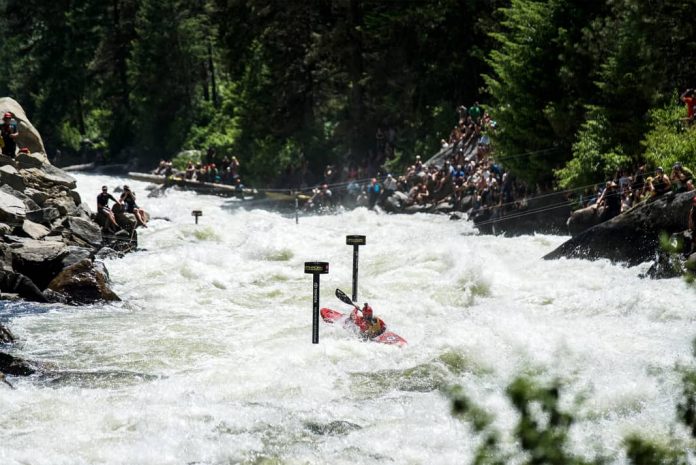
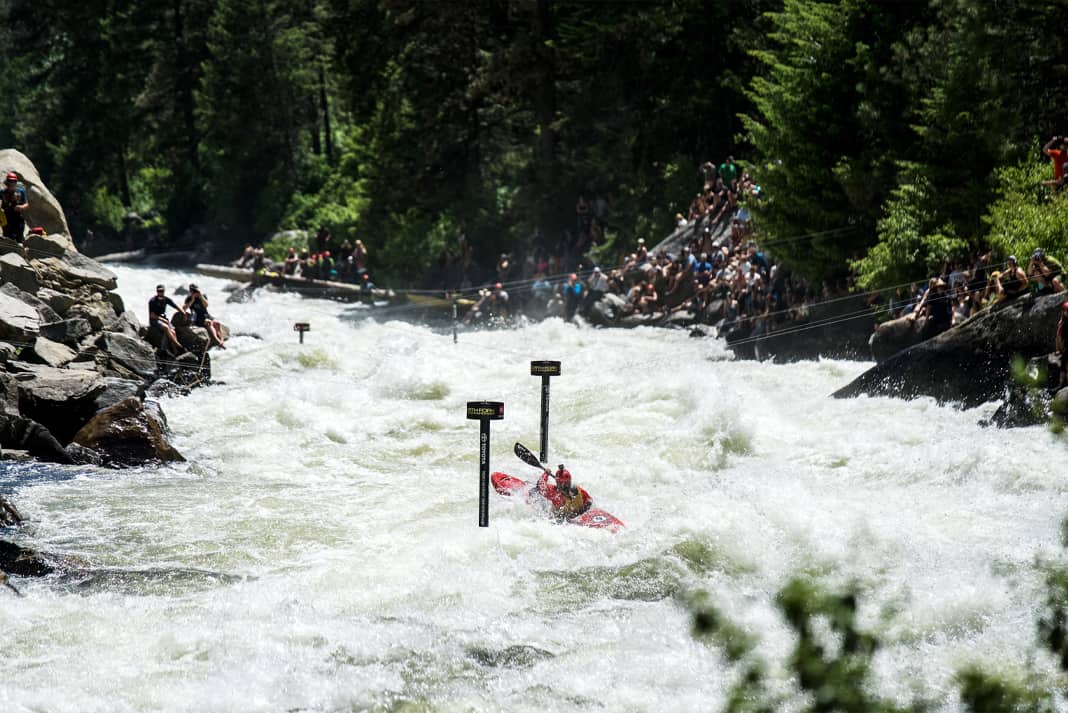
Mariann Sæther was crowned Queen of the North Fork Championship in 2019. It was the first year the NFC offered a women’s category, and with it the competition offered equal prize money. | Photo: North Fork Championship // Liam Kelly

As a competitive whitewater kayaker, it has always been my dream to stand on top of the podium for a professional competition. In May 2016, I achieved my goal. I won the pro women’s category at CKS Paddlefest, a freestyle kayaking competition in Buena Vista, Colorado. I was so excited about my win, I didn’t even notice the envelope of cash handed to the men’s winner was twice as thick as mine.

The same thing happened in 2017 at Montreal Eau Vive, a multi-stage competition on the St. Lawrence River in downtown Montreal. The competition hosts two big wave freestyle events and a big water boatercross, with Jet Skis and jet boats as shuttles to and from the waves. There is always a strong turnout of athletes at the event. 

As I was called up to stand on the top block of the podium, the event organizer announced, “And $500 prize to the pro women’s category winner!”

I was ecstatic. It paid for my travel expenses, entry fee, camping fee and food for the weekend. I came out of the event with my bank account unchanged. I was stoked—until the men’s winner was announced.
kayaking gender pay gap
Mariann Sæther was crowned Queen of the North Fork Championship in 2019. It was the first year the NFC offered a women’s category, and with it the competition offered equal prize money. | Photo: North Fork Championship // Liam Kelly
A thousand dollars was awarded to Nick Troutman, who took the top spot in the men’s category. Nick and I surfed the exact same waves and raced the exact same boatercross rapid. We paid the same entry fee, and we each earned the top spot in our respective categories. And yet, I got paid just enough to cover my expenses for the weekend, while he left with cash in his pocket.

The gender pay gap in athletic competitions is not unique to whitewater kayaking.

Last summer, the surfing world heard outcry when the Billabong Pro Junior Series paid the male champion twice as much as the female champion. A photo of the two holding their respective prize winnings went viral as commenters argued both for and against the World Surf League’s unequal payout. “Did the girls surf a different ocean that was easier we don’t know about? This is pathetic!” one online commenter wrote.

Event organizers justified the gender pay gap by saying there were fewer female competitors than male competitors, and therefore less female entry fees going into the pool for prize money. World Surf League Australia manager Will Hayden-Smith told SBS News that, “Men get double the prize money only because there are double the competitors.” I’ve been given the same reason every time I’ve been paid less than a man in a kayaking competition.

Being paid less than the male category for the same competition result is the same as being publicly told I’m less valued. This is a slap in the face. If we want to increase the number of female competitors in an event, we need to pay them as if we want them there.

“No matter gender or discipline, we compete in the same sport, on the same river and feature,” eight-time Freestyle Kayak World Champion Claire O’Hara told me.“We pay the same entry fees and complete the same training and preparations. It’s not the competitor’s fault there are fewer entries in one class than the other. Discriminating based on this factor is so far behind the times. I would love to see the sport ensure athletes are rewarded equally for their achievements.”

Being paid less than the male category for the same
competition result is the same as being publicly told I’m less
valued. If we want to increase the number of female competitors
in an event, we need to pay them as if we want them there.

The gender pay gap is also not unique to adventure sports. Since 1991, the U.S. women’s soccer team has won four World Cup titles and four Olympic gold medals. The U.S. men’s team has won neither. According to CBS News, “For the 2015 [Women’s World Cup] Final, an estimated 30 million people watched on TV in the U.S. as Carli Lloyd’s three goals sealed a huge win against Japan. It was and remains the highest rated soccer match in American history, including games played by the U.S. men.” And yet, the U.S. women were being paid one third as much as the U.S. men. In March 2019, the team launched a lawsuit for equal pay.

Last June, Forbes released “The World’s Highest Paid Athletes” list for 2018. This list breaks down the top 100 highest paid athletes in the world based on their prize winnings, salaries and bonuses earned between June 1, 2017, and June 1, 2018. No women were on the list.

With statistics like this, it comes as no surprise competition rosters see far fewer women than men. How are women supposed to afford the costs of training, travel, coaching and competition fees if they are at a financial disadvantage from the start?

A social media user expressed a common sentiment when he commented on the Billabong Junior Series surf photo saying, “Surfing, like most sports, is a predominantly male sport. More people watch men’s surfing, and more men surf than women.” Are more people watching men’s surfing because it is more appealing? Or, are more people watching men’s surfing because it’s what the media has always streamed?

Just three percent of TV sports coverage is devoted to women in the United States, according to Cheryl Cooky, a Purdue University professor and co-author of a 30-year study on the quality and quantity of men’s and women’s sports coverage. In an article about the U.S. Women’s Soccer Team published by The Atlantic, Cooky says our perceptions of how interesting women’s sports are have come from the media itself.

“Men’s sports are going to seem more exciting,” she says. “They have higher production values, higher-quality coverage, and higher-quality commentary… When you watch women’s sports, and there are fewer camera angles, fewer cuts to shot, fewer instant replays—yeah, it’s going to seem to be a slower game, [and] it’s going to seem to be less exciting.”

“Audiences will not get excited about women’s sport as it gets minimal exposure in the media, and the media would justify the lack of coverage by saying female athletics do not generate enough audience engagement,” agrees Valeria Perasso, a news correspondent at BBC News.

In freestyle kayaking competitions, the competition format goes like this: Junior Women compete first, followed by Junior Men, followed by Pro Women, and then Pro Men. The male category always competes last. It’s the headlining act. With the male category almost universally highlighted by the media as the main event, it receives more engagement than the women’s category, and entire sports get mischaracterized as “predominantly male.”

Our own media is part of the problem. The editor of Kayak Session, Anna Bruno says since she has been in charge, there has been just one female athlete featured on the magazine cover. Almost 20 years of Rapid magazine has seen just one female whitewater paddler featured on the cover—in a swimsuit. No wonder there are fewer women kayaking than men—it’s portrayed as a male sport.

It is clear the gender gap in athletics and whitewater—in media representation, participation numbers and prize money—stems from the much larger issue of inherent sexism in our culture. What can we do to fix it? Equal prize payouts for male and female categories is an excellent place to start.

A big wave freestyle kayaker, Brooke Hess is from Missoula, Montana, and a member of the U.S. National Freestyle Team.


Mariann Sæther was crowned Queen of the North Fork Championship in 2019. It was the first year the NFC offered a women’s category, and with it the competition offered equal prize money. | Photo: North Fork Championship // Liam Kelly
 

Fake Bushcrafters’ Lasting Impacts

fake bushcrafters tripod cooking technique
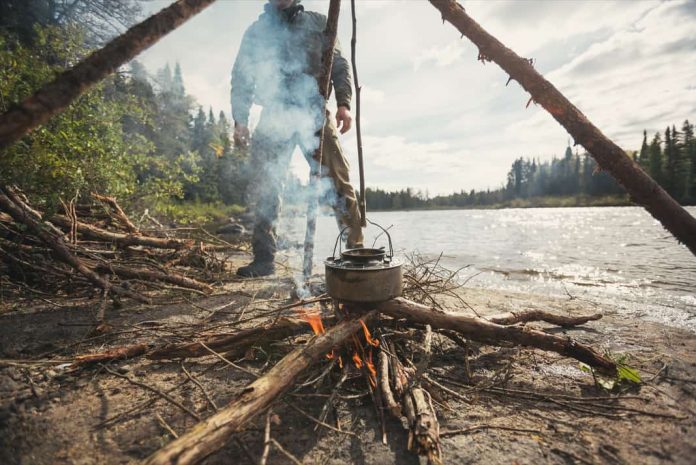
This tripod cooking technique is a low impact bushcraft skill and easy to dismantle And leave no trace—Kevin Callan approved. | Photo: Ontario Tourism / Goh Iromoto

What an eyesore. The campsite, an idyllic pitch of granite and pine in central Algonquin Park, had been blemished by of a couple of yahoo bushcrafters. 

They had cut down standing trees to build a makeshift lean-to shelter and lashed it together with cordage made of young saplings. An elaborate kitchen area, complete with a table, storage compartments and a circle of benches was constructed. Conifer boughs were cut to make a bed, set in front of a large fire pit away from the designated metal fire grate placed by the park wardens.

I saw them paddle off before I reached the site. They were dressed in camouflage fatigues and I imagined the majority of their gear was purchased at army surplus stores. The only things not green were their bright white Tilley hats disappearing into the distance.

They weren’t doomsday preppers practicing for a worst-case scenario or campers playing some dystopian future fantasy game—they were worse. They were fake bushcrafters.

The term bushcraft has been around for a long time. It’s generally defined as skills to help one thrive in the wilderness. To quote bushcrafter Steve Watts, “Without the context, it’s just arts and crafts.”

Bushcraft techniques have been employed for millennia by indigenous peoples. Today, bushcraft is enjoying an in-vogue moment and become a bit of a catch-all term.

Bushcraft can refer to everything from firecraft, tracking, navigation by natural means to higher-impact techniques inappropriate (and even illegal) in some managed wilderness areas—like cutting boughs for bedding or live branches for cordage, and non-emergency shelter building. Don’t even get me started on the campers who attempt to reestablish the configuration of their living rooms’ furniture at campsites and leave it for the next camper and have the audacity to call it bushcraft. It’s crappy camp carpentry.

I find a fundamental difference in the way the wilderness is treated by people who believe they’re out in the woods to thrive versus survive. Real bushcrafters practice leave no trace camping—the guys I met were just ignorant slobs who watched way too many “wilderness survival” YouTube videos and were playing make-believe. It’s when less-than-ethical techniques practiced by unskilled campers then show off their exploits on their social media pages and video channels that bad behavior can get passed off as the norm for others to adopt. It’s creating a strong movement of false prophets.

[Buyer’s Guide: View All Camp Kitchen Gear]

I find North America to be far more plagued by false bushcraft messiahs than Europe or Australia. For some, the term bushcraft seems to be just another way to say you’re a camper that’s mixed both modern wilderness skills and primitive techniques. Closer to home, it’s too often a way for buddies to act out a survival TV show for the weekend.

Building a shelter to weather a storm is definitely a wilderness skill. Going to a protected wilderness park on a warm summer day, cutting down living trees to build a half-ass lean-to and leaving the structure intact when you leave—well, that’s just ignorance.

Would it be different if these immoral bushcrafters kept clear of provincial, state and national parks and practiced their skills in remote areas, like Crown land? Some say, yes, but I’m undecided. Regardless of the designation of the land you camp on, everyone should follow leave no trace principles. You never know when another happy camper will be paddling by next.


Kevin Callan is the author of 18 books, including the best-selling The Happy Camper and his popular series of paddling guides.

This tripod cooking technique is a low impact bushcraft skill and easy to dismantle And leave no trace—Kevin Callan approved. | Photo: Ontario Tourism / Goh Iromoto

The Big Gear Show’s Bold, New, Almost-Pandemic-Proof Plan

Photo Courtesy of Courtesy of Deer Valley Resort

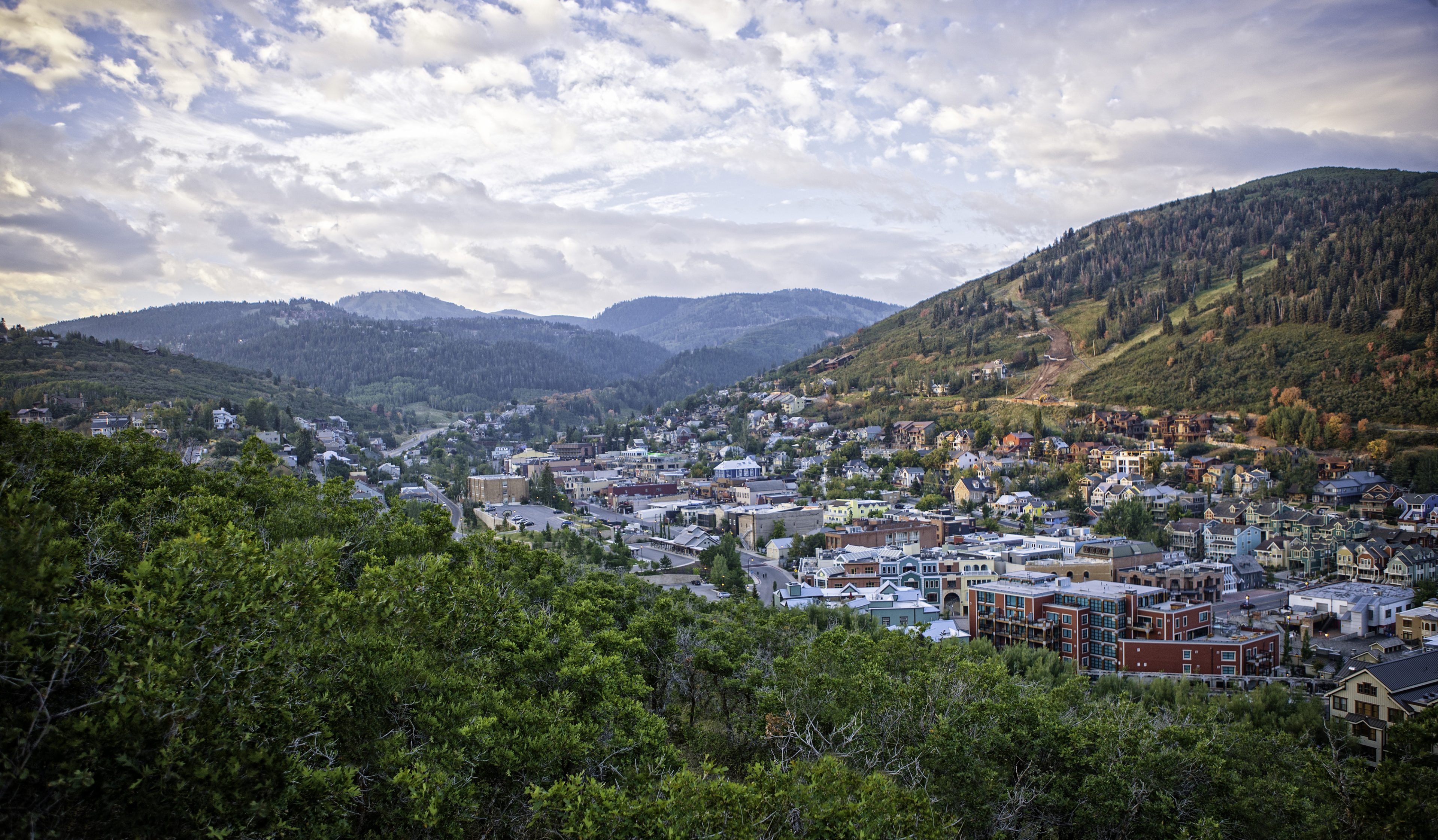
The middle of a pandemic is an odd time to launch a new trade show, but there’s nothing conventional about the vision Darren Bush and Sutton Bacon have for their hardgoods-focused exhibition, The Big Gear Show, which debuts August 3-5, 2021, in Park City, Utah.

The industry veterans behind Paddlesports Retailer, which was discontinued after a three-year run in Oklahoma City, have reworked the formula yet again. Co-founders Sutton Bacon and Darren Bush have ditched the convention hall, moving their new show outside and expanding it to combine paddlesports with cycling, climbing and select camping brands. The idea is to double-down on gear, without compromising the show’s schedule to accommodate soft-goods manufacturers.

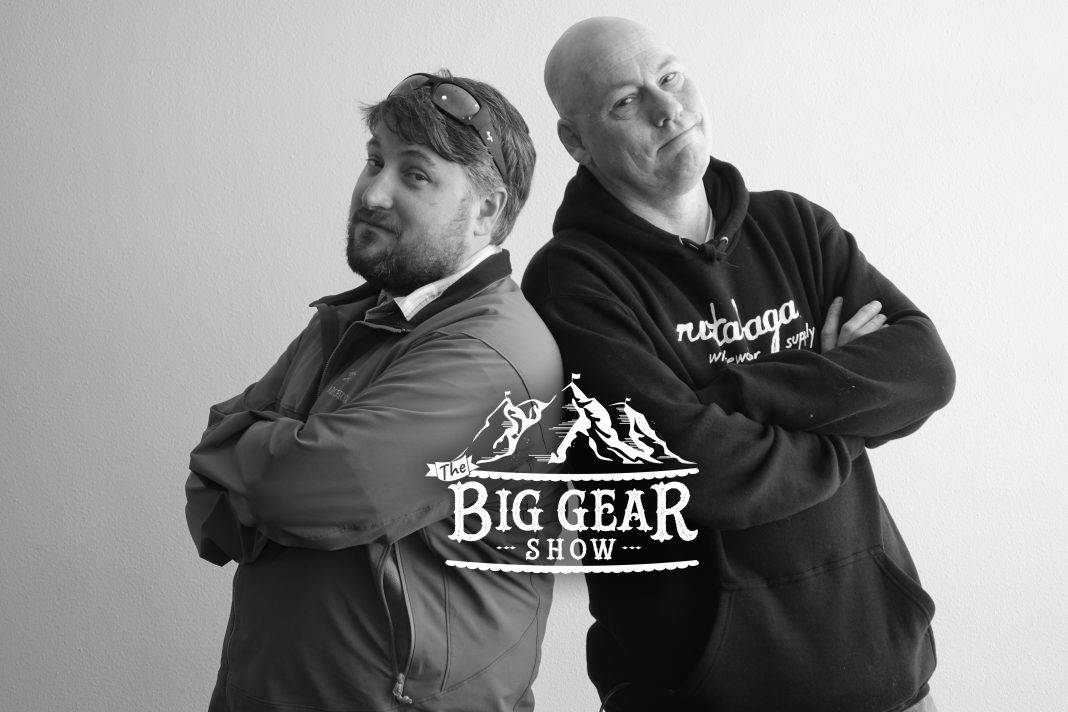
The Big Gear Show co-founders: Sutton Bacon and Darren Bush. | Photo: Paddling Magazine Archives

Timing has been the persistent bugaboo of outdoor industry tradeshows. In recent years, the behemoth Outdoor Retailer Summer Market has moved steadily left on the calendar, drawn by the gravitational pull of apparel and footwear giants who do most of their manufacturing in Asia. A decade ago, Summer OR took place in the second week of August; next year it’s scheduled for June 15-17.

“The entire outdoor industry has been wrapped around the axle of the apparel side of the industry. There’s just no boat company on Earth that’s going to have prototypes ready in June,” Bacon said.

By the same token, an August show is far too late for soft-goods companies. “For a soft-goods manufacturer that makes stuff in Asia, there’s no point in going to a show in September. Not only has the stuff been made—it’s probably in our warehouse already,” said Immersion Research president John Weld.

[Discover the best gear of the year in the Paddling Buyer’s Guide.]

Bacon and Bush believe the answer to these irreconcilable differences is an amicable separation. Their Big Gear Show will jettison most of the soft-goods brands and turn its focus and schedule strictly to gear. The show was due to launch in August 2020 at the Salt Palace in Salt Lake City, but was canceled due to the Covid-19 pandemic, as were other tradeshows. For the re-launch, they’re moving the whole shebang outside.

Park City is 32 miles (51 km) southeast of downtown Salt Lake City in Utah. | Photo: Courtesy Visit Park City

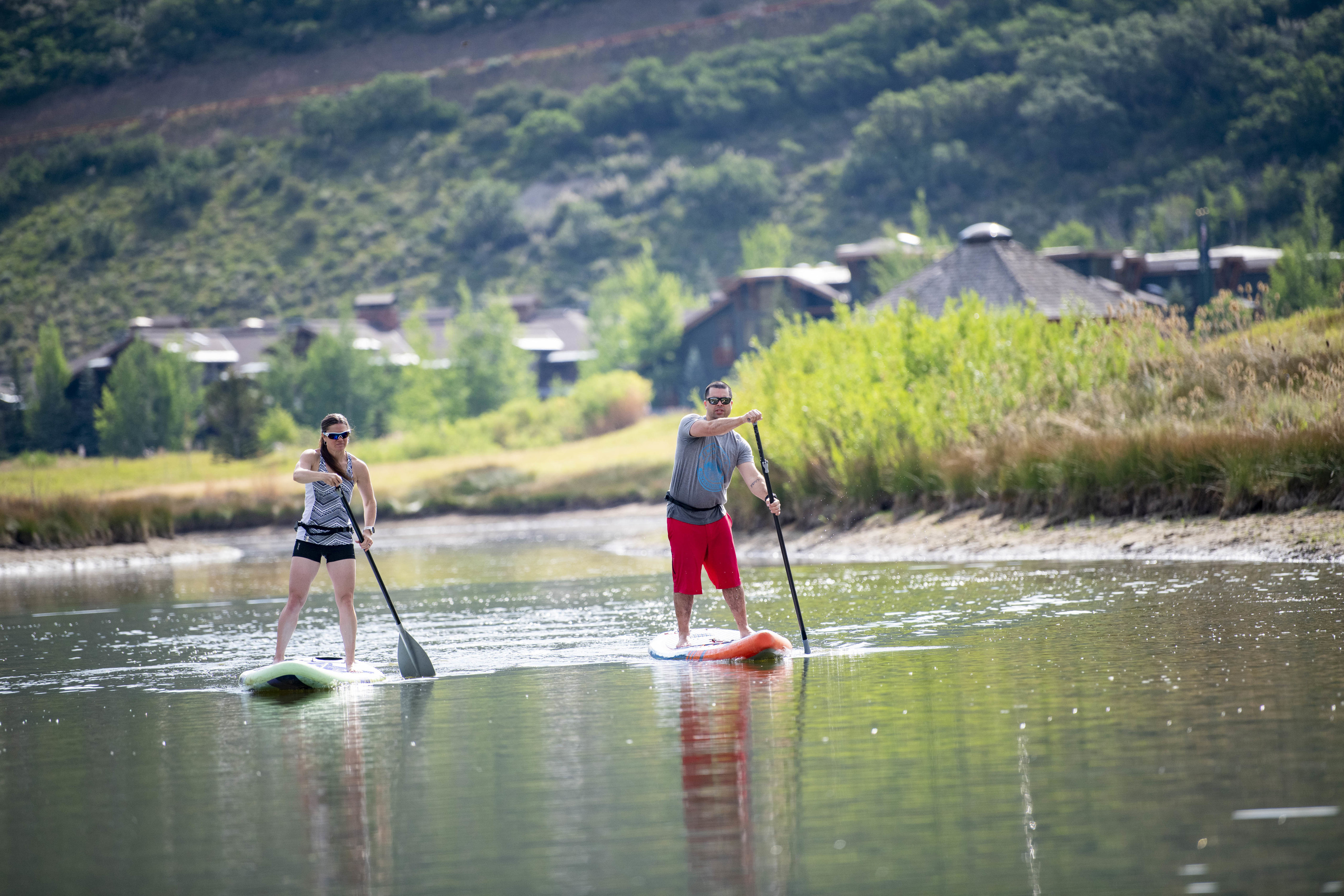
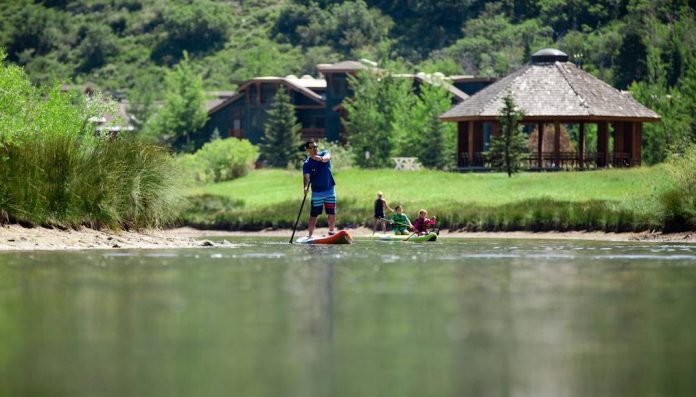
Park City’s Deer Valley Resort will host the event, with paddling brands exhibiting along the shoreline of seven acres of ponds. The bike companies will set up near the chairlifts, providing easy access to mountain bike trails, as well as smooth asphalt for the roadies.

“Unlike a lot of outdoor goods that can be probably sold over Zoom, paddlesports buyers have to sit in the boat and use the paddle and gear to make buying decisions,” said Bacon, who stresses the show’s overriding philosophy is “for retailers, by retailers.” Besides the opportunities for hands-on testing, the planning comes down to two driving factors: Covid and cost.

While it would be folly to predict how the virus will impact an event nine months from now, a smaller show at an outdoor venue in August seems to present less risk than large indoor shows such as ICAST or Outdoor Retailer, whose venue, the Colorado Convention Center, is currently on standby as an emergency Covid hospital. Outdoor Retailer is on the schedule for June 2021, but with the pandemic spiking and vaccine distribution in question, it’s anyone’s guess whether it will go off as planned. That means The Big Gear Show could be the only game in town next summer.

The outdoor venue is also key to the show’s relatively low exhibitor fees, which are roughly half that of Outdoor Retailer. With lakeside pop-ups replacing an indoor convention center, and without the union and vendor markups that go hand-in-hand with such venues, manufacturers will save on everything from booth costs to setup fees. Retailers will also benefit from off-season room rates and a lodging subsidy of up to $400.

Bacon and Bush have assembled an all-star cast to organize the Big Gear Show, including former Interbike showrunner Lance Camisasca and Outdoor Retailer director Kenji Haroutunian. The Grassroots Outdoor Alliance and the National Bicycle Dealers Association have endorsed the show.

Park City’s Deer Valley Resort will host The Big Gear Show in 2021. | Photo: Courtesy Visit Park City

The prospect of a smaller, gear-focused show in August is appealing, says Sean Creary, owner of River and Trail Outdoor Company in Rothesay, New Brunswick. He’s skipped Outdoor Retailer the last few years—ironically, even in June that show comes after most of his soft-goods orders are in—but had found the Paddlesports Retailer schedule much more to his liking.

“Paddlesports Retailer was fantastic because we went to the show in August and got to see all the gear, paddles, boats and boards and then do our buy at the end of September,” he said. “So it aligned perfectly.”

The big question mark for Creary is the pandemic. “The final decision will come down to the Covid situation next summer,” he said. “That would be the reason why we don’t go.” Creary will make his own assessment about whether it’s safe, but the decision could be out of his hands. As a Canadian retailer, he will only be able to attend if the ban on nonessential cross-border travel is lifted.

Dave Lindo, owner of OKC Kayak and Tulsa Kayak in Oklahoma, says his decision will likely depend on vendor participation. Many brands have not yet committed or even received formal invitations. The event was only announced at the end of October, and invitations to retailers went out in November.

As of December 4, 2020, companies that have accepted invitations include: Appomattox River Company, ACK/Summit Sports, Alder Creek, Bill Jackson’s, Canoe Kentucky, Crawdaddy Outdoors, Dolphin/Economy, Earth’s Edge, Get Outdoors, Idaho River Sports, LL Bean, Massey’s Outfitters, Moosejaw, Mountainman Outdoor Supply, Nantahala Outdoor Center, Outdoor Gear Exchange, Outdoorplay, Pack & Paddle, Pack Rat Outdoor Center, REI, River Sports Outfitters, Rutabaga, Scheels, The Trail Head, Travel Country and Wilderness Supply.

While informal talks with key brands have been ongoing, official bids to manufacturers are still in the works as organizers poll retailers about which companies they want to see at the show.

[Discover the best gear of the year in the Paddling Buyer’s Guide.]

That’s a key component of the Big Gear Show’s curated approach, Bacon said. “Our motto has been for retailers by retailers, and we’ve stuck to that mantra through the Paddlesports Retailer shows and this show,” Bacon said. “We wanted to get the input and feedback and buy-in from the retailers prior to going back out to the trade.”

The show has space for 250 exhibitors and 500 retailers, roughly split between the paddlesports, bike and outdoors sectors, said Bacon, who characterized the response thus far as “extremely strong.” That translates to about 150 paddlesports retailers—and if they come there’s little doubt the major manufacturers will follow.

The Salty Single Blade of Coastal Canoeing

Coastal canoeing
“In the deep space of the sea, I have found my moon.” —Jacques Yves Cousteau | Photo: Penny Huang

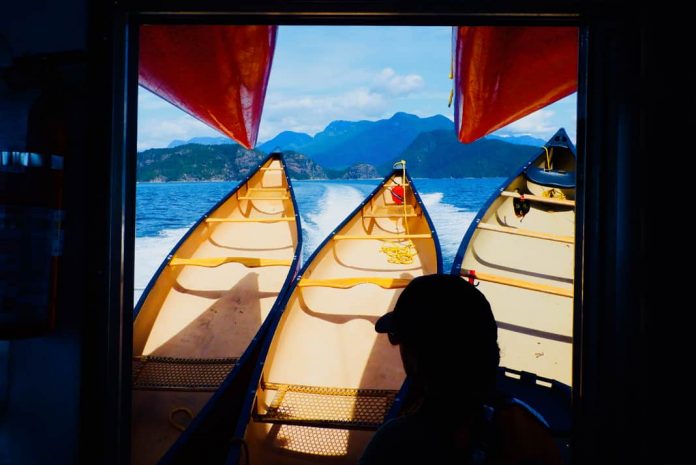
I have always been a canoeist, but when I moved to the British Columbia coast 12 years ago, everyone was paddling kayaks. I joined in, mostly casting aside my single blade and tandem tripping boat. In the decade since, I’ve occasionally met a rare and unusual species of paddler—the coastal canoeist.

Newfoundlander Richard Alexander helped create Paddle Canada’s ocean canoeing curriculum and he is one of just five instructor trainers in the discipline in Canada. In his mind, the canoe is the ultimate wilderness tripping boat for every type of water. “A lot of the great northern river trips end on the ocean,” he points out. These trips are the Holy Grails of expedition paddling, he says, and canoes have the versatility to navigate all sections—portages, river, lake and ocean.

When I first arrived on the coast, I was amazed by the amount of gear sea kayakers packed. Roll-up tables and chairs, multiple kitchen sinks, two-burner stoves and propane tanks are standard, especially in guiding circles. If you like to travel in luxury, a canoe can handle the excessive load without all the packing problems associated with kayak hatch Tetris. And portaging is never an issue on the ocean.

“I can carry comfortable chairs, lots of water, food for two to three weeks, beer rather than spirits, fresh produce in a cooler, all without packing problems,” confirms Alan Thompson, a Paddle Canada ocean canoeing instructor trainer.

More important than load, what about safety? Canoes are harder to rescue in big waves, especially when loaded, and even harder to self-rescue. Instructor Tony Shaw says the vulnerabilities of the craft might breed better judgment. Now in his 70s and still teaching courses, Shaw says, “It is the very fact canoeists know the limits of our choice that makes us safe and careful paddlers.”

Training programs tend to focus heavily on the development of situational awareness and judgment. It’s about knowing when to go out and when to stay at the campsite and enjoy the beer, camp chair and library of hardback books.

Ocean canoeing is not just about being conservative. Paddle Canada’s Thompson has been paddling the British Columbia coast in a Prospector since the mid-90s. He’s traveled to places where canoes are seldom seen, including the Brooks Peninsula on the west coast of Vancouver Island. He says if you’re willing to wait out the weather, a canoe can go to the same places as kayaks. Plus, because of their durability and the ease of getting in and out, canoes can sometimes land and launch in situations where a loaded kayak cannot. Big swell and waves? Alan says throw a spray deck on and you’ve got a craft that can handle it.

“Your badass cred increases exponentially when you’re an ocean canoeist,” adds new instructor Julia McIntyre-Smith. A Musgamagw Dzawa’daenuxw from Ukwanalis (Kingcome), British Columbia, she says, “Our elders tell stories of the whole community canoeing down to Steveston to pick apples, then onwards to the U.S. to pick hops.” The route covers hundreds of nautical miles and includes significant crossings, current and exposure.

The canoe is closely connected to the history of the coast.

“Indigenous people have done it for thousands of years, why shouldn’t we?” asks Pete Smolders, a former instructor for Coastline Challenge, a program taking adjudicated youth on 26-day trips on the West Coast.

Some instructors also say sea kayaking gets novice paddlers on ocean terrain too quickly. Conversely, paddling a canoe requires practice and technique to do at all. “It’s the difference between banging on a drum and playing the fiddle,” says Alexander, arguing coastal canoeing takes more skill than sea kayaking.

His challenge to the naysayers? “Follow me and see if you can do it!”


Fiona Hough has worked as a paddlesports guide, instructor and trainer for more than 25 years. Find a coastal canoeing course at www.paddlecanada.com.

“In the deep space of the sea, I have found my moon.” —Jacques Yves Cousteau | Photo: Penny Huang

The Great Future Of Plastic Sea Kayaks

A sea kayaker bounces off a rock in a plastic kayak
Seas the day. | Photo: Christopher Lockyer

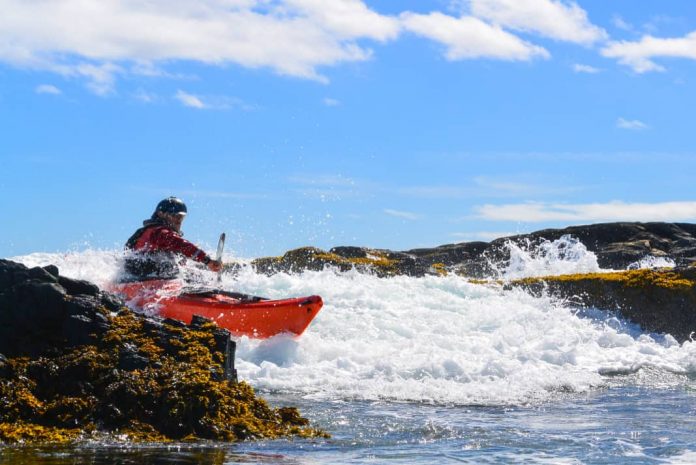
I watched the swell, trying to gauge when I’d have water to ride over the barnacle-covered rock. I got the timing right, but the angle wrong. I cleared the barnacles and careened into the nearby rock wall, scraping the side of my kayak. The collision bounced me back onto the rock—but after the water had left. I hit it sideways, then slid off awkwardly and upside down into deep water. I rolled up, chuckling. Then I did something I wouldn’t have done a year before: tried the same move two more times until I got it right.

A sea kayaker bounces off a rock in a plastic kayak
Seas the day. | Photo: Christopher Lockyer

That’s because a year earlier, I’d have been paddling a fiberglass boat I might have cracked. At best, I’d have some annoying work replacing the gelcoat. But on this day, I was paddling rotomolded Tupperware.

For years, I’d been a stickler for fiberglass sea kayaks. When I got my first kayak, I saved to buy a fiberglass sea kayak instead of plastic. Lighter, faster, repairable, prettier, modifiable for custom bulkheads, so what’s not to like? Well, two decades later, I’ve got my first plastic sea kayak. And I have a confession: I love it. As Mr. McGuire tells Dustin Hoffman in The Graduate, “There’s a great future in plastics. Think about it. Will you think about it?”

Plastic boats can be heavy, slow and decay in UV if not stored properly. But I believe there is a great future in plastics for kayaking, regardless. If you’ve seen a whitewater boat any more recently than 1972, you’ll know they’ve all been plastic since slalom coach Tom Johnson produced the rotomolded polyethylene Holoform River Chaser five years after The Graduate hit the cinemas. At least he listened to Mr. McGuire. Johnson had figured out fiberglass cracks when you hit a rock hard, and rivers are full of rocks.

[Paddling Buyer’s Guide: View All Plastic Sea Kayaks]

Coastlines have rocks too. In a plastic boat, I can play with abandon and not worry about bangs and scrapes. I felt the same freedom I felt the first time I knew I had a reliable roll—I could play hard, and if I capsized it wouldn’t be a big deal. Now I can whack a rock and bounce off like a kid who takes a hard fall but is still made of rubber. With this confidence, I can play harder. The harder I play, the more my skills will grow.

Sure, polyethylene boats have downsides. Molded hatch rims and foam bulkheads tend to leak more than glass boats. They’re slower. Poly boats have a life expectancy and may become squishy and oil can in heat or on storage racks. My plastic boat is super heavy—and my friends already think my fiberglass kayaks are too heavy. But that’s because they’ve been repaired so many times and were built heavy to survive rock contact. I groan when I lift it by myself, and I’m not getting any younger, either.

Sea kayaking has taken on some characteristics of whitewater, and so it’s worth noting why some things work for whitewater. Whitewater paddlers don’t keep their boats for decades, so the lifespan of plastic isn’t an issue. Sea kayaking is in the midst of a bunch of design innovations, so we’re wheeling and dealing our boats more often anyway. We camp less and paddle shorter distances to cool spots more, so speed and extra-dry gear storage are less critical. Ocean play and crossover kayaks have taken sea kayaks into plastic-only terrain. I’ve taken rotomolded sea kayaks on multi-day trips down class II and III rivers.

[Paddling Buyer’s Guide: View All Fiberglass Sea Kayaks]

One endorsement came when I decided to finally patch a few dings in one of my best-loved fiberglass boats. I marked a lot of spots to repair the gelcoat with tape, mixed up the toxic goo, and posted a picture on social media. Before the catalyst had been added, my phone pinged. It was a text from a friend, saying “I haven’t paddled a glass boat in years. Enjoy the fumes.”

But that’s not the most significant endorsement. The biggest endorsement was when I looked over at my friend and asked if he wanted to try that rock move on the Oregon coast. He avoided eye contact and said, “Hmmm. Maybe in a plastic boat.”

So please, Mrs. Robinson, laugh about it, shout about it, when you’ve got to choose.


Neil Schulman has many kayaks in his Portland, Oregon garage. Fifty percent are plastic. The other half could use some repair.

Seas the day. | Photo: Christopher Lockyer


The Key To A Perfect Paddling Stroke Is All In Your Head

technique behind good strokes
Nothing is forever except change. And kayaks. | Photo: JP DANKO

Don’t think of moving water past the boat. Think of moving yourself and the boat past the paddle,” my instructor said during my first formal paddling lesson as a kid. On many occasions since I’ve heard similar tips.

“Think of the water like concrete. Bury your paddle and imagine it doesn’t move.”

This concept of moving past the paddle took on new meaning for me recently, not just kinesthetically but also metaphorically.

Even after all these decades of paddling, my paddling technique wasn’t great. I was confident I was an excellent paddler, but I was underperforming in races. Race results don’t lie, so I hired a professional coach to do a video analysis of my stroke. Then I filed the videos away on my hard drive and was far too busy to look at them for several weeks. I was avoiding the doctor for fear of bad news, far too comfortable in my ego as an expert paddler who didn’t need any advice.

First, the blow. The bad news sinks in. Then the eventual dawning I’ve just opened up a blind spot.

After internalizing the video feedback, the “move-the-boat” feeling finally clicked.

On the water, I’ve started to imagine I’m on a skateboard. The paddle is a tree or a post I grab to slingshot myself forward, like when snowboarders grab things to haul themselves along the flats.

There’s a shockwave passed through my body, from my palms on the blade through to my feet that zings my boat forward. The energy translates into pure speed. It’s electric and addictive. And when strung into a consistent rhythm it’s often the jolt I need to get me through the day, even stronger than my morning cup of coffee. I’ve felt it myself and I’ve seen it in the eyes of my family—when one of us hits the breaking point and then sets off with a paddle and boat or board and comes home with a smile, a complete reset. It’s just one of the reasons we do this sport. It changes us. This is the other meaning of moving yourself past the paddle.

The other day my eight-year-old, George, was having a terrible time. School’s out, and his high expectations of endless summer fun crashed on the realities of all his friends being out of town and our strict limits on his use of the family iPad. He was sullen, moping around with, in my wife’s coarse parlance, “a turd in his pocket,” until I offered to take him paddling, slathered him in sunscreen and squeezed him into his wetsuit.

We headed out into huge waves on the lake, found a beach with water so high we had to throw our paddleboards into the trees. We swam in the waves, then relaunched and surfed back to the car. George was happily running off at the mouth about the birds we saw, a dead fish, everything.

“Dad, smokestacks are like cigarettes. Dad, that boat has a barbecue. Dad, did you get pooed on by those cormorants?”

For the beginner, the illusion of moving water
with your paddle gradually yields to the realization
that, in essence, the water is moving you.

Maybe it is always ourselves we manipulate through outdoor pursuits. What else could we be doing when climbing a rock or paddling on the ocean? The rock doesn’t care. The sea doesn’t change because we dipped our paddles into it. Perhaps unique compared to some other human endeavors is these activities have no useful effect on the world. They make no tangible difference. And, according to the no-trace ethic, success is defined by having zero impact on the environment at all. So, what are we doing out there, exactly?

The water is changing us.

There’s a famous quote from John Muir that showed up, funnily enough, on the wrapper of a teabag I’d packed for a long coastal journey: “I only went out for a walk and finally concluded to stay out until sundown, for going out, I found, was really going in.” Forgive me the wilderness cliché, but like the maxim of moving the boat past the paddle, it’s worth letting it steep until you fully understand—or maybe seeking some external feedback, and seeing whether you’re doing as well as you think you are.

For the beginner, the illusion of moving water with your paddle gradually yields to the realization that, in essence, the water is moving you. Or rather, by acting on the water, you are acting on yourself. Imagine the rock climber, trying to unlock a complex sequence of moves, really working to unlock something in herself—mastery, a feeling of triumph, the momentary satisfaction of feeling perfectly at home in the world.

Only when you understand it’s yourself you are moving do you really begin to paddle well. The water and the paddle are stationary, you are the one who is moving, changing. You are transformed. You see new things. You get tired. You are renewed. You have revelations. You travel and arrive at new destinations and conclusions.

[Paddling Buyer’s Guide: Shop All Paddles]

When I was putting off looking at the videos, resisting the harsh truth of my paddling flaws, I was trapped in a fixed mindset, determined I wasn’t the factor that had to change. I was going to keep pushing the water past the paddle, dammit. It took a shift in mindset to grow—a painful transition. I had to swallow my pride.

Once I opened up to the idea of changing myself, it was liberating and revelatory. It’s a lot easier than changing the world. It’s a lot easier to send a kayak skipping along the surface of an ocean than move the ocean itself. And in the end, relatively speaking, it has the same effect.

Our minds are easily moved. The world is intractable, but our brains are fluid. As if we are sorcerers, and we can dip our paddles into the concrete of the ocean and send the earth spinning on its axis, feel the rush of space zinging past our ears.


Tim Shuff is a former editor of Adventure Kayak magazine.

Nothing is forever except change. And kayaks. | Photo: JP DANKO


New Flush Drowning Research For Kayakers

New study concludes cold water plays a role in the likelihood of flush drowning but it’s more complicated than that. | Photo: Daniel Stewart

I‘ve had my share of swims, as I’m sure you have too. Especially in the early days when my kayaking universe was expanding outwards. I was compelled—as perhaps you were, too—to climb the difficulty ladder to prove my abilities somehow (prove to whom?).

As a raft guide in the east, flipping and swimming is part of the game, but those tend to be pretty predictable and controlled, if such a thing can be said.

I’ve had long swims, cold swims, stuck-in-holes and bashing-rocks swims. One where I was left stranded clinging to a rock face and had to await my buddy’s lowered rope. One that left a bruise on my thigh that took five months to go away. But I’ve never had a desperate swim.

New research into the causes of whitewater drownings is attempting to understand flush drownings. In their research article, “Flush Drowning as a Cause of Whitewater Deaths,” two Colorado medical doctors looked at whitewater fatality data from the American Whitewater Association and attempted to parse out the significant variables. Plug the article title into Google Scholar to read the full text.

Flush drowning research
New study concludes cold water plays a role in the likelihood of flush drowning but it’s more complicated than that. | Photo: Daniel Stewart

Flush drownings could be construed as mysterious, for these do not seem to have a direct cause. Whitewater folks would colloquially call a flush drowning a situation where a long swim results in death, with no apparent complications like head impact or strainers. The research authors focused on water temperature and geography, as their data set compared western river fatalities to those in the east. The authors concluded cold water plays a role in the likelihood of flush drowning.

An aside: As an academic researcher myself, there are rigorous protocols in examining data and making claims of absolute truth. For our niche whitewater activity, we have largely escaped academic interest, and as such, any new findings are going to seem pretty self-evident. However, the research literature has to build itself one block at a time, taking pains to prove what is already evident to the rest of us.

So, the research authors conclude there is a correlation between cold water and flush drownings, primarily due to the data showing far fewer flush drownings in the east. Perhaps this is because of water temperature—which is warmer in the east. But, I argue, this is more likely due to the continuous nature of western rivers.

Any swim is a long swim in the west. Every second in the water increases the chance of drowning. Longer swims equal more exposure to the risk of drowning, regardless of temperature. By contrast, the eastern rivers data showed a far higher proportion of entrapment fatalities. By these authors’ logic then, are entrapment fatalities correlated with warm water? The first research trap drilled into Ph.D. students is correlation is not causation. Cold water is correlated to flush drowning; warm water is correlated with entrapment. This says very little about what caused what.

In my guide role, I’ve had my share of chasing down long swims. The Tutshi near Whitehorse is one notable memory, where the paddler swam for more than a mile before finally getting him into an eddy, exhausted and puking up water.

Desperate.

Another was on the Yampa in Colorado with early summer flood levels and swimmers in the water for a mile.

But I’ve also hauled up desperate swimmers who were in the water for just seconds. One was a kid, no PFD, 10 years ago at a favorite play spot. He was playing along the shore with his buddies and fell in. After 15 long seconds, he resurfaced. I hauled him onto my bow and got him to shore, near drowned, dazed and terrified.

[Paddling Buyer’s Guide: Shop All Whitewater PFDs]

Flush drowning is drowning. We don’t need an overriding reason to drown. We don’t need to be hit on the head or stuffed under a rock. We only need to suck water into our lungs. It can happen to any of us, which is why we wear PFDs, which is still no guarantee.

Every second spent swimming in whitewater ups the odds of sucking in water, no doubt complicated by cold water slowing us down, high gradient and water speed keeping us from getting to shore. Or a crappy old PFD that does not really float anymore. This is all correlated, but the cause is sucking in water.

We need to continue to wrap our heads around the opposite of our collective experience. Swimming in whitewater exposes us to drowning, even though it does not happen very often.

Jeff Jackson is an outdoor education professor at Algonquin College and a risk management consultant.

This article was first published inPaddling Magazine Issue 62. Subscribe to Paddling Magazine’s print and digital editions here , or browse the archives here.


New study concludes cold water plays a role in the likelihood of flush drowning but it’s more complicated than that. | Photo: Daniel Stewart


How 8 Famous Rapids Got Their Names

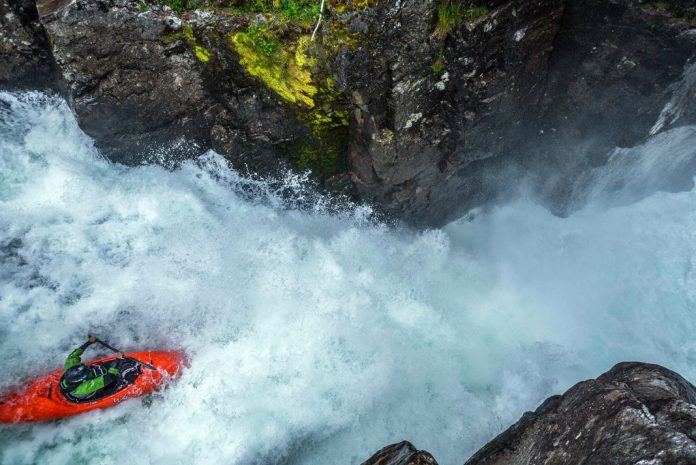
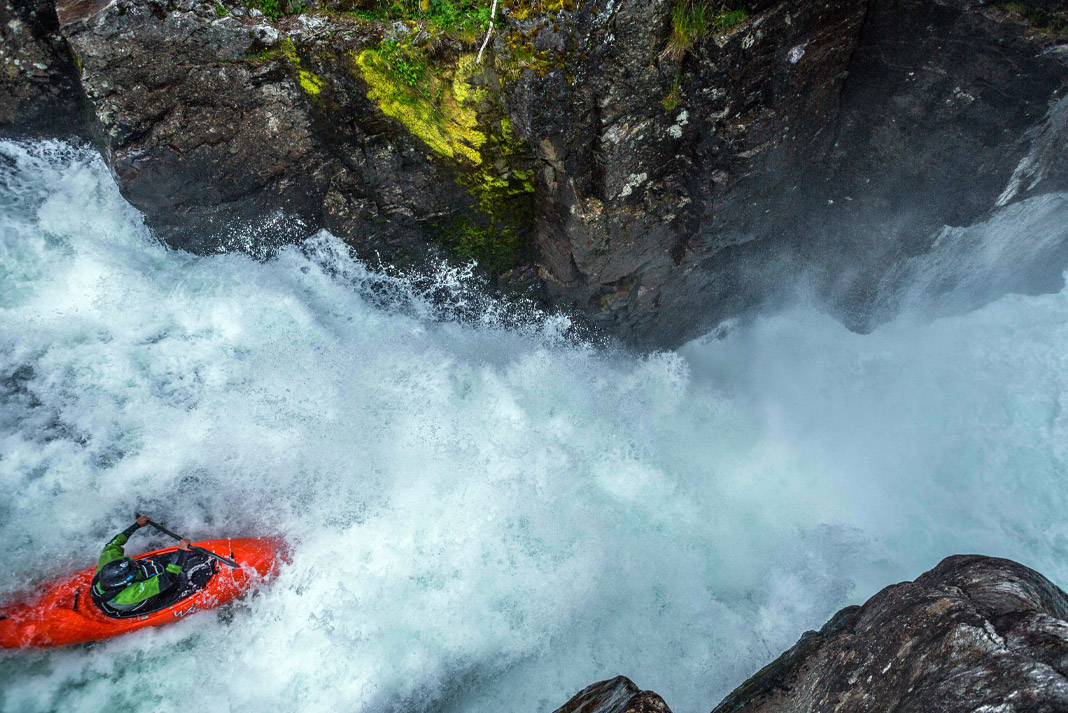
New Zealand’s Cole O’Connor Straton on Money Drop near the town of Voss in Norway. | Photo: Ciaran Heurteau

What’s in a name? When it comes to world-famous rapids, the answer is found in the stories of local people and paddlers who have launched themselves over the brink, for better or worse. Brooke Hess shares the surprising, true tales of notable rapids from Norway to New Zealand to the Northwest Territories.

How 8 famous rapids got their names

1 Money Drop, Norway

Held annually in Voss, Norway, Ekstremsportveko is the largest extreme sports festival in the world. At the 1999 Ekstremsportveko, event organizers offered South African paddler, Shane Raw, along with his buddies, Erik Martinsen, Arnd Schaeftlein and Mark Eames, 2,000 Norweigan Krone each to run a large and intimidating waterfall on the Strandaelvi River just outside of Voss in front of busloads of spectators. One-by-one, all four of the men peeled out of the eddy just above the drop and had smooth lines in front of hundreds of spectators. They collected their 8,000 Krone ($780 USD) from the organizers, headed to the bar, and aptly named the waterfall Money Drop.

How famous rapids got their names
New Zealand’s Cole O’Connor Straton on Money Drop near the town of Voss in Norway. | Feature photo: Ciaran Heurteau

2 Tutea Falls, Kaituna River, New Zealand

The Kaituna River runs through Okere Falls, a small town just outside of Rotorua, and is one of New Zealand’s most popular whitewater rivers. The river was named for its abundant food source for the local Maori, the indigenous people of New Zealand. Kai = food and Tuna = eels.  The local iwi (tribe), Ngati Pikiao, are the guardians of the Kaituna River. Tutea Falls, the 21-foot drop mid-way down the Kaituna’s commercial stretch, was named after Tutea, a Maori chief.

3 Disaster Falls, Green River, USA

In 1869, John Wesley Powell led a scientific expedition of the Green and Colorado rivers in the southwestern United States. The three-month-long expedition began in Wyoming at Green River Station and covered river miles through notable canyons such as the Flaming Gorge, the Gates of Ladore, Glen Canyon, and the Grand Canyon of the Colorado. Disaster Falls was named early on in the expedition when the crew crashed and destroyed a boat in the rapid, losing many crucial supplies, including nearly all of the barometers brought for measuring altitude while mapping river miles. Just after the crash, Powell saw some of his men on shore celebrating. Hoping they had found the barometers, he was only slightly disappointed when he learned they were celebrating the recovery of several bottles of whiskey.

4 Separation Rapid, Grand Canyon of the Colorado, USA

Another rapid descended by John Wesley Powell’s expedition, Separation Rapid, got its name when the crew had already spent 99 days on the river. They were low on rations and had just encountered one of the worst rapids yet. High tensions throughout the group made three men decide to desert the expedition. Instead of continuing down the river with the rest of the crew, the three men hiked up what is now named Separation Canyon. They were never seen again.

5 Gringos Revueltos, Quijos River, Ecuador

Gringos Revueltos translates to “scrambled foreigner.” A big hole in the middle of the rapid was for a long time host to a competition among the gringos who visited the Quijos River. Everyone who visited the river had to go for a surf in the hole. Your score would be your age plus how many seconds you lasted.

7 Valley of Headless Men, Nahanni River, Northwest Territories, Canada

This story encompasses an entire river valley, rather than just a rapid, but the story is so unusual it needs to be included. In 1908, brothers Willie and Frank McLeod embarked on a mission into the Nahanni Valley in search of gold. They never returned. Two years later, their headless bodies were found on the banks of the Nahanni River. Nine years later, Martin Jorgenson succumbed to the same fate while on a similar quest for gold. The heads of these men were never found, and the mystery of who murdered them was never solved.

8 Molly’s Nipple, Slave River, Northwest Territories, Canada

In the early days of rafting exploration on the Slave River, many rapids were named during a single run of the river. Richard’s Bane was named when one of the expedition team members flipped his raft. The crew then set up camp and immediately proceeded to drink away the painful memories of the day. In the morning, slightly hungover from the previous night’s festivities, the expedition paddled a long stretch of flatwater to the first rapid of the day. In his hungover state, Richard insisted the rapid looked exactly like his girlfriend’s breast—but only while laying in one exact spot on the rocks next to the rapid. It’s been known as Molly’s Nipple ever since. The next rapid—Sambuca—was named for the drink enjoyed the night before.

Cover of Paddling Magazine, Issue 62This article was first published in the Fall 2020 issue of Paddling Magazine. Subscribe to Paddling Magazine’s print and digital editions, or browse the archives.


New Zealand’s Cole O’Connor Straton on Money Drop near the town of Voss in Norway. | Feature photo: Ciaran Heurteau


Boat Review: WaveSport ACE Kayak

WaveSport logo used for the ACE kayak review
Feature Image courtesy WaveSport

Unlike the XXX and EZs, WaveSport stepped out of the flat-bottomed, kicker rocker trend. Instead of a completely flat planing surface with sharply upswept ends, Eric Jackson (EJ) built the ACE with continuous rocker. He maximized the planing surface by bringing out the edge and narrowing the width of the release chine. The WaveSport ACE, like the EZ has plenty of flare and the shear seam (where the hull meets the deck) is high. So what does this all mean on a wave?

WaveSport ACE Specs
(4.7 / 5.1)
Length: 7’1” / 7’4”
Width: 26” / 26.5”
Volume: 47 / 51 U.S. gal
Standard Features:
F.A.T. 2.0 outfitting, bow and stern grab loops, stainless steel security bars
MSRP: $1,688 CAD
[ Paddling Buyer’s Guide: See all freestyle kayaks ]

WaveSport’s ACE is a flatwater phenom

Front surfing the WaveSport ACE, especially as a C1, you’ll notice it feels as though you are continuously blasting. We think this is due to the rounded hull rocker; instead of sitting flat on a pronounced planing surface, the ACE teeters back onto the stern. We’re sure some paddlers will appreciate how easy it is to front surf as the bow rides high, but it is trickier to spin because you have to bring your weight forward to get it planing. We found moving the seat as far forward as possible helped balance the weight over the centre pivot point, helping to level the boat on the face of the wave and drastically improving performance.

ACE gets into the groove

Sliding sideways down into the trough, the WaveSport ACE wants to hop instead of planing out on stable hull surface. It is less retentive than the similar sized EZ and more likely to flush off smaller river features. Don’t get us wrong, it’ll spin, just not as well as larger, flatter boats. As the size and speed of the wave increases the ACE has no problem breaking loose.

One of the big techniques leaps for kayakers and especially C1 paddlers is when they realize how useful a pivot turn is for running rivers. In low volume boats it is easier to make course corrections by slicing the stern under than dragging the bow around using cross-bow draws. The ACE’s stern is so slicey it offers little or no resistance in a pivot turn. The ACE has a couple of other nice river running attributes: the continuous rocker provides better slide—especially important for C1 paddlers—than a similar length, flat hulled boat, and it holds a line better than the EZ.

EJ seems to be designing boats that require a very active style of paddling. This seems a design direction that reflects the paddling style of WaveSport pro men paddlers, who are all fairly beefy guys. The ACE doesn’t have the huge cockpit volume that makes a boat retentive in a hole. Instead the ACE requires constant retention strokes, or super clean technique. This allows more advanced paddlers to control the boat with strokes and body movement instead of letting the water do most of the work. Essentially, you can flatwater cartwheel anywhere in a hole. Getting it into the groove, the WaveSport ACE is super smooth from end to end, and an incredible flatwater toy.

Featuring new adjustable bulkhead

The F.A.T. 2,0 outfitting available in WaveSport boats is outstanding. This year WaveSport switched to the proven fixed-rail, moveable seat system and opened the hip pads so pre-cut bits of foam can be stuffed in for a customized fit. The seat cover opens so you can layer foam for a higher seat position and added leverage. For C1, WaveSport cockpits are large enough for a wide knee stance and allow your legs to fit under the coaming providing lateral support. We’ve heard rumblings of a bolt-in console but for now, gut the boat and buy foam.

While other companies were busily working on the best way to pre-cut and glue foam foot blocks WaveSport developed an adjustable bulkhead. The internal plastic nosecone is roughly shaped to fit the contours of your foot and connects to a cam strap accessible in the cockpit. Comfortable and novel for experienced paddlers—imagine how inviting this system looks to the new paddlers.

[ Plan your next whitewater kayaking adventure with the Paddling Trip Guide ]

Get active with the WaveSport ACE

The WaveSport ACE is going to sell well as a kayak or converted C1 on the virtue of its easy surfing and super-easy, ego-boosting flatwater performance and off the shelf fit. It doesn’t perform as well on small waves and is less retentive in holes, making it a better fit for intermediate and advanced freestyle paddlers who have the control to throw it around. As a kayak or C1, once you master the slicey system the ACE is a smooth boat to get down the river.

This article was first published in the Early Summer 2005 issue of Rapid Magazine. Subscribe to Paddling Magazine’s print and digital editions, or browse the archives.


Boat Review: Titan Genesis Kayak

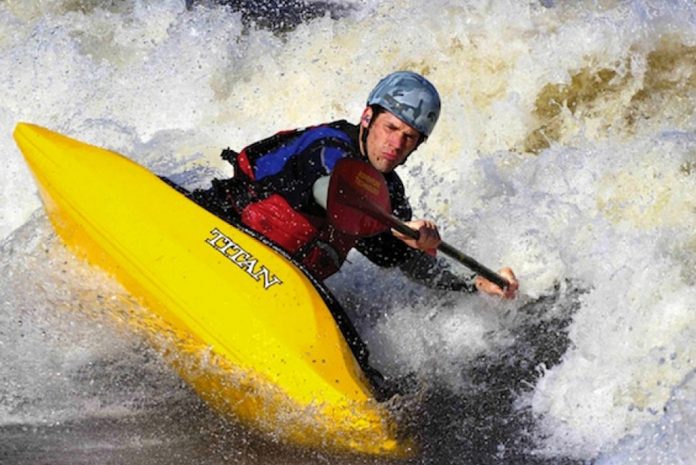
Man paddles a Titan Genesis freestyle kayak through whitewater rapids
Feature Photo: Jo-Anne Caldwell

When I was 12, my friends were divided into two camps—Super Nintendo and Sega Genesis. Most of my friends chose the Super Nintendo, probably because of peer pressure, but a few went with the Sega Genesis. It was sleek, super fun to play and, well, it looked really cool—just like the latest version of the Titan Genesis kayak.

Titan Genesis Specs
(V:II / V:III)
Length: 5’9.5” / 6’0.5”
Width: 26” / 27.5”
Volume: 55 / 66 U.S. gal
Weight: 30 / 33 lbs
Weight Range: 120-180 / 165-260 lbs
MSRP: $1,100
www.titankayaks.com
[ Paddling Buyer’s Guide: See all freestyle kayaks ]

Titan’s Genesis is a friendly freestyle kayak

Upon first look, the arrow-like shape of the bow immediately stands out. Thinking this design might be tailored to the advanced paddler, we asked Titan owner and lead designer, Anthony Yap, about its styling. “Don’t be mistaken—while this is a high performance boat, it is by no means an advanced paddler’s boat,” he replied. “The goal was to create a high performance freestyle boat that is still friendly and easy to use. After years of prototyping we believe we’ve hit the nail on the head.” After a few rides of our own in the Titan Genesis kayak, we agree.

The Genesis excels in whitewater

The bow plugs deep and straight, easily allowing the boat to get vertical. Coupled with its short stern, the Titan Genesis comes around lightning fast. The slicy bow and stern initiate effortlessly, giving it a well-balanced feel when linking ends.

On a wave, the Genesis immediately feels both stable and predictable. While some of the newer playboats on the market have a very twitchy feel, we found the Titan Genesis responsive and controllable. Putting it on edge results in a nice, hard carve that releases without a Herculean effort, allowing you to throw blunts or cut back in another direction.

Man paddles a Titan Genesis freestyle kayak through whitewater rapids
Feature Photo: Jo-Anne Caldwell

Spins come easily thanks to the loose feel of the hull, but we did notice that momentum stalls slightly just as the boat reaches 180 degrees on a wave. On the other hand, the Genesis backsurfs like a dream and we were happy to stop it there. For many paddlers backwards is not a position of comfort or control, but if you find yourself always flushing after tricks that land you in a backsurf, the Titan Genesis might be your best friend.

Functional performance outfitting

The outfitting lacks the sleek refinements of the hull but is functional, durable and most importantly, comfortable. A foam foot block, adjustable one-piece molded seat, ratcheting backband with hip pads ingeniously mounted on flexible flaps that pull closer as you ratchet and strong aluminum thigh brackets all give you great contact with the boat and allow for long play sessions without the need for yoga between rides. It’s not the easiest outfitting to set up, but take the time and you’ll find that tiny adjustments make a huge difference in performance.

[ Plan your next whitewater kayaking adventure with the Paddling Trip Guide ]

Try your hand at the Titan Genesis kayak

The Titan Genesis kayak is a comfortable, unique looking ride that is equally at home on a wave, in a hole and on all the rapids in between. If you are looking for a new playboat, add it to your list of boats to try before just caving to peer pressure and buying the same boat as your friends. You might find it’s a way better system for your style—just like Sega’s Genesis.

This article was first published in the Fall 2012 issue of Rapid Magazine. Subscribe to Paddling Magazine’s print and digital editions, or browse the archives.