Home Blog Page 147

Boat Review: Dagger Stratos 14.5 Kayak

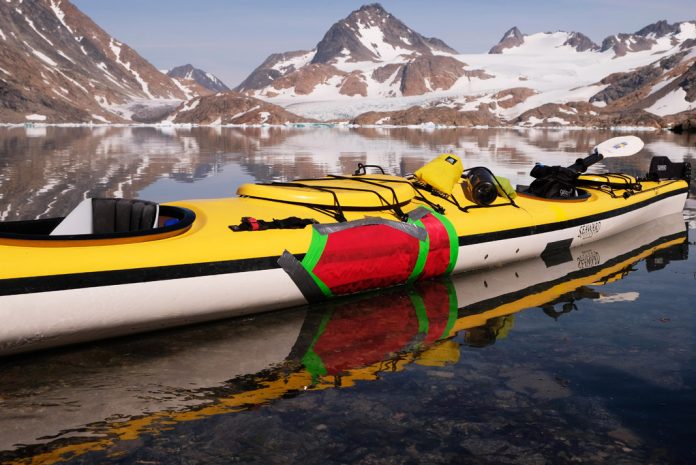
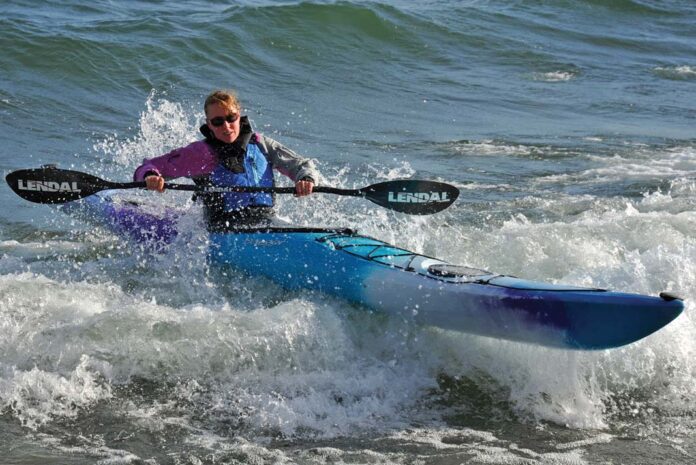
Blast from the past. | Photo: Po Marshall

Retro-sensible or reprehensible—the swirling colorful markings of our demo Dagger Stratos 14.5 kayaks aren’t to everyone’s taste, but they’re an apropos homage to the brand’s illustrious history, and to the last time Dagger registered on the radar of many sea kayakers.

Dagger Stratos 14.5 Specs
(S / L)
Length: 14’6” / 14’6”
Width: 23” / 24.5”
Cockpit: 36” × 18” / 35” × 19”
Weight: 54.5 / 53 lbs
Max Capacity: 275 / 300 lbs
MSRP: $1,359 USD or $1,829 CAD
[ Paddling Buyer’s Guide: See the Dagger Stratos 14.5 L kayak ]

The Dagger Stratos 14.5 is a return to form

Since the heady heyday of the neon nineties and early aughts—when the brand’s boats were chosen for momentous expeditions to Cape Horn and Antarctica, and company catalogs proudly claimed “Dagger builds the most technologically advanced touring kayaks in the world”—Dagger has coasted on a small handful of unmemorable designs. For the past seven years, they’ve produced only a solitary touring offering, the Alchemy.

Where the Alchemy offered a capable but largely invisible entry into the crowded light touring market, the polychromatic Dagger Stratos 14.5 is a head-turning performer in the exciting and still-emerging realm of ocean play kayaks. More than that, at 14-and-a-half feet long with muscular lines and decisive hard chines, it’s as fun in flatwater as it is fearless in the rough stuff.

The Stratos is at home in the surf

On my first tour in the Stratos out to a string of whalesback granite islands, the forecasted blow never arrives and only a gentle zephyr ripples the channel. Unlike highly specialized ocean play kayaks, think P&H’s Hammer or Jackson’s Karma RG, the Dagger Stratos 14.5 retains a shallow-V displacement hull, which is faster when touring than surf-specific planing hulls. I have no trouble keeping pace with the 16- and 17-foot sea kayaks in our group, or hauling my weight on a quick overnight.

For the rest of the week, my eyes wander from the computer screen to the trees outside my office windows. When I notice heavy gusts scattering the last leaves of autumn like rusty embers from a dying fire, I toss the Stratos on my roof rack and head for the nearest exposed waters. Rollers crash against the rocky shore, but the Stratos’ rugged polyethylene hull slides off the cobbles and into the surf without complaint.

[ Plan your next kayaking adventure with the Paddling Trip Guide ]

It’s clear before I catch my first wave that the Dagger Stratos 14.5 is at home in dynamic water. The upswept, flared bow launches over incoming waves and deflects spray out of my eyes. Just the right amount of rocker means I can spot a promising set and crank the boat around with two well-timed sweep strokes.

The waves are steep, densely arranged and fast moving. While I do miss a few sets that a lighter composite hull could have caught, the Stratos has adequate get-up-and-go, and it’s remarkably nimble on a wave face. Chalk it up to those hard chines for carving, direction changes and cutbacks, and a low-volume stern that doesn’t pin in the wave like traditional touring designs.

Even if you’re not into surfing (yet), the Stratos’ stable, confident edges benefit new paddlers and all those who may find themselves in rough waters.
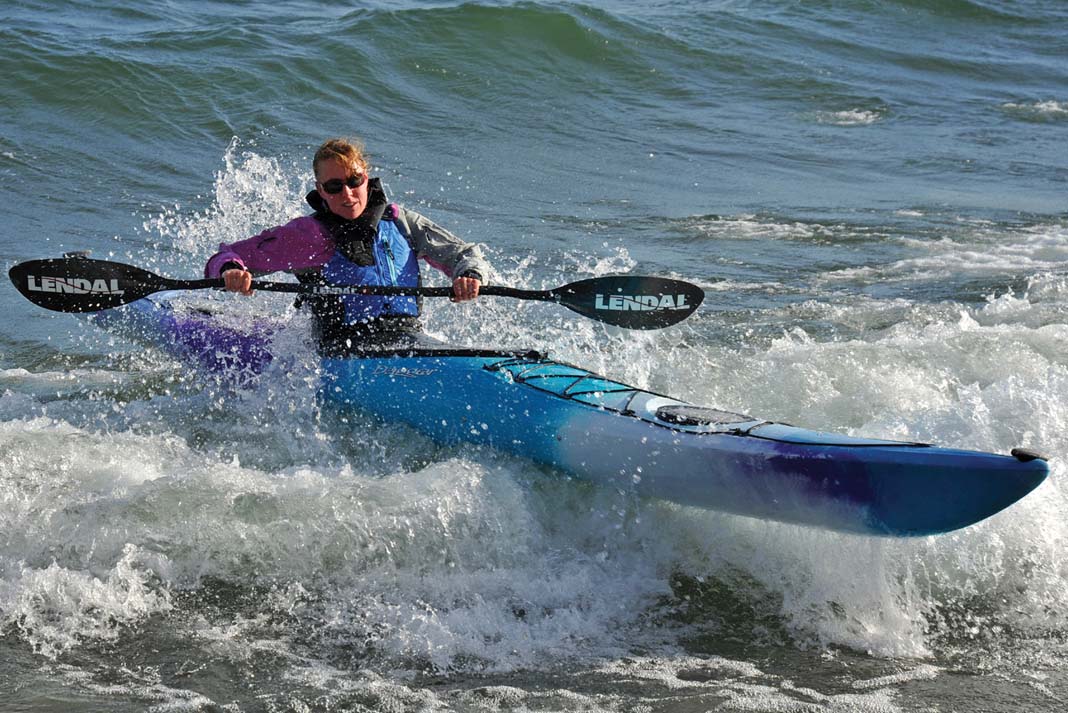
BLAST FROM THE PAST.
| PHOTO: PO MARSHALL

Dagger has helped define modern kayaking

Sitting down to write this review, I pour over PDFs of archived Dagger catalogs dating back to 1988—an edifying and entertaining flashback to kayak touring’s boom years. In fact, it leaves me more than a little nostalgic for the excitement and breathless innovation of that all-too-brief era. “No other manufacturer has come up with so many profound advancements year to year,” boasts a 1999 design statement.

Some of those—like form-fitting rubber hatches, computer modeling, and vacuum-assisted composite molding—remain hallmarks of today’s performance kayaks. Others, like electronically welded plastic bulkheads, have regrettably become a part of kayaking history.

[ Paddling Buyer’s Guide: See all Dagger kayaks ]

Hit the surf with the Dagger Stratos 14.5

The Dagger Stratos 14.5 kayak channels those glory days and unleashes a thoroughly modern design with just the right dash of retro steeze. Cool, dude.


This article originally appeared in Adventure Kayak
Spring 2016 issue.

Subscribe to Paddling Magazine and get 25 years of digital magazine archives including our legacy titles: Rapid, Adventure Kayak and Canoeroots.
Boat Review: WaveSport Ethos 10 Kayak

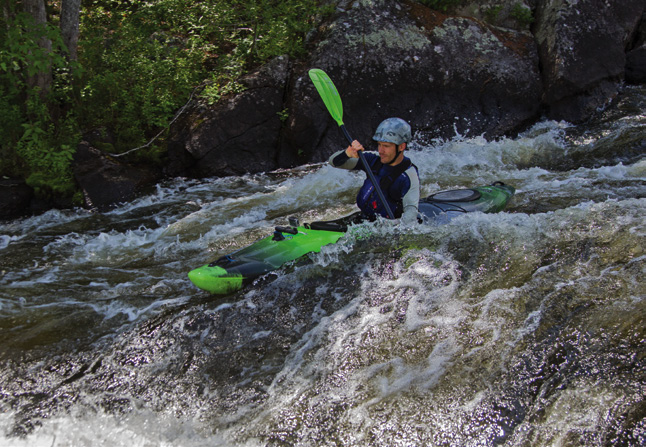
Wave Sport Kayaks Ethos Ten | Photo: Rapid Staff

In 2013 when WaveSport released their version of a crossover we weren’t at all surprised the Ethos was crossing from one river to say, I don’t know, longer rivers with lakes in between. WaveSport calls this category river trekking. Around my neck of the woods that kind of talk used to mean a canoe trip, which is a completely different skill set, not to mention a different mindset. And so classic overnight runs were left to guys in plaid jackets, until now with the WaveSport Ethos 10.

WaveSport Ethos 10 Specs
Length: 10’3”
Width: 27”
Cockpit: 36” × 20.5”
Volume: 100 U.S. gal
Weight: 54 lbs
Weight Range: 150-260 lbs
MSRP: $1,085 USD or $1,135 CAD

The WaveSport Ethos 10 packs on the miles

WaveSport makes two different sizes of the Ethos, the Ethos 9 and 10. It struck me as funny in a way to brand them by length (all brands except Pyranha do this too), when length isn’t really the factor here. Sure, there is six more inches of plastic at both ends to swing around the river, but the big factor is just how much more volume 12 inches buys you.

Although my 170 pounds would drop into the weight ranges of both sizes, I’d never consider the smaller boat. Why? There is a 20-gallon difference in volume. That’s the difference between living and living well. We learned very quickly as soon as we had space to pack camping gear, we packed as much as we could.

[ Plan your next kayak river running adventure with the Paddling Trip Guide ]
Wave Sport Kayaks Ethos Ten | Photo: Rapid Staff

Quality outfitting with CORE WhiteOut

Both the Ethos 9 and 10 are available with WaveSport’s CORE WhiteOut outfitting system. On longer trips you’ll appreciate the adjustability of quality outfitting. On a few runs we ratcheted ourselves in as snuggly as we would in our creek boats and that’s great. What is even better is the ability to change my sitting position by lifting and lowering my legs and changing my back band fit for longer stretches of flat or slower moving water. I also loved that it was easy to access the storage behind the back band and that the seat very simply slid back and forth for trimming. You know what else is pretty clever? The hip pads flip up into shoulder pads for portages.

WaveSport (and Dagger too) also addresses one of my personal pet peeves. It drives me crazy when the little nuts and washers fastening the foot brace rails come loose and drop into the bottom of the boat. I hate it even more when they vibrate loose on the drive and disappear before we reach the put-in. In the Ethos they hang on rubber tabs. Thank you, WaveSport.

Wave Sport Kayaks Ethos Ten | Photo: Rapid Staff

Speedy on creeks and rivers

So how does the WaveSport Ethos 10 paddle? Like a progressively rockered, soft-chined, 10-foot-long creek boat. So, it’s pretty good. Stable, dry, not twitchy on boily eddy lines. It’s faster than you probably remember any whitewater boat being and that alone is silly fun. We didn’t have the radar gun out on the river, but it feels faster than the Katana and Rogue and not quite as fast as the Fusion. We’re splitting hairs here.

Go farther in the WaveSport Ethos 10

What do I really love about crossovers? I’m not too proud to admit it. I love the spring-loaded drop skeg. At first I didn’t use it on the WaveSport Ethos 10. I thought it was silly. Then I used it only on the windy flats. Then in swifty currents. Then in big boils. And by the end I used it pretty much anywhere that wasn’t super technical. Lazy? No way. I’m just saving my energy for a game of bocce once we reach camp. For more top picks and expert reviews, check out Paddling Magazine’s guide to the best whitewater kayaks here.


Screen_Shot_2015-07-07_at_3.09.09_PM.png

This article first appeared in the Fall 2015 issue of Rapid Magazine.

Subscribe to Paddling Magazine and get 25 years of digital magazine archives including our legacy titles: Rapid, Adventure Kayak and Canoeroots.

Boat Review: Current Designs Gulfstream Kayak

Two paddlers in Gulfstream kayaks from Current Designs
Feature Photo: Current Designs

The Current Designs Gulfstream is a performance kayak incorporating classic British design features that make the boat a pleasure to paddle. The Gulfstream comes equipped with a retractable skeg and a small day hatch behind the cockpit on the starboard side. The hull is a shallow V configuration resulting in good tracking and excellent turning when tilted.

Current Designs Gulfstream Specs
Length: 16’
Width: 23.25”
Cockpit: 16.5” × 33.25”
Rear Hatch: 11” × 16.5”
Forward Hatch: 9.5” in diameter
Total Volume: 92 U.S. gal
Weight:
52 lbs (fiberglass)
46 lbs (Kevlar)
MSRP:
$3,395 (fiberglass)
$3,945 (Kevlar)
$1,895 (rotomoulded)
[ Paddling Buyer’s Guide: See all sea & touring kayaks ]

The Gulfstream is a pleasure to paddle

Current Designs’ Gulfstream is a relatively light boat and is well balanced from bow to stern, making loading and carrying reasonably easy. The Gulfstream has a Swede-style upswept bow with a low, flat stern deck giving the boat an overall sleek look.

The cockpit rim is set slightly under the level of the bow deck and combined with the recessed deck fittings, contributes to the aesthetically clean lines and functionally smooth deck surface for ease of re-entry during self-rescues. The perimeter lines rest snuggly on the surface but stretch enough to grab easily. The bungee rigging is positioned within easy reach. The rigging also includes an adjustable bowline.

Our testers commented on the Current Designs quality workmanship and amenities right down to the mermaid and dolphin graphic on the bow of the Gulfstream.

[ Plan your next kayak expedition with the Paddling Trip Guide ]

Getting into the Gulfstream

With the Gulfstream, Current Designs has provided enough carrying capacity for expended trips. The day hatch adds practicality by providing convenient storage for smaller items such as lunch, a first aid kit and sunscreen. It can, however, be awkward to reach in rough seas. The larger stern hatch is somewhat reduced in size to accommodate the day hatch bulkhead, making stuffing of larger dry bags difficult. The hatch covers are rubber, combining a gasket with a bungee fastening system. The cover is tethered but the bungee is not, so accidental loss is possible.

A range of medium (170 lbs) to large (235 lbs) paddlers were comfortable in the Gulfstream. Larger-sized testers were especially pleased with the roomy cockpit but the narrow seat created pressure points at the front edges of the seat for those with bigger legs. The fixed foot braces and padded knee cups ensured positive contact for the paddler. The backband provides comfortable lumbar support when properly adjusted and unclips to facilitate access to the area behind the seat. Smaller paddlers would do well trying the Gulfstream’s cousin the Slipstream.

[ Paddling Buyer’s Guide: See all sea kayaks for smaller adults ]

Tilt the boat to turn quickly

The V hull made the initial stability feel a little tippy for smaller or less experienced paddlers. This improved with the addition of gear and forward momentum. The Gulfstream however, really wants to be put on the edge. The secondary stability was excellent. Without feeling unstable the Gulfstream can be comfortably tilted to the cockpit coaming both while stationary and under power.

Two paddlers in Gulfstream kayaks from Current Designs
Feature Photo: Current Designs

The skeg deploys with a sliding toggle recessed into the right side, next to the cockpit. The system is smooth and offers various depths of skeg deployment. When deployed the skeg was extremely effective at locking the track of the boat in varying wind and swell conditions. It was also easily retracted for quick beach landings.

The style of the hull and the lack of a rudder make it very difficult to turn the Current Designs Gulfstream without tilt. It is necessary to use strong initiation strokes and moderate to aggressive outside tilt to turn the boat quickly. These characteristics make the boat feel very sporty and responsive with more advanced paddling techniques. Minor adjustments in direction are easily achieved with subtle tilt variations. The Gulfstream responds very well to this technique in preventing broaches while surfing or with a tailwind. The boat tracks into the wind well both with and without the skeg. Quartering winds cause weathercocking with the skeg retracted but with the skeg fully deployed, strong 40-50 km/h winds are no match for the hull of this boat.

Go further with the Current Designs Gulfstream

The Current Designs Gulfstream is a kayak for paddlers who are midsize and up. The boat’s carrying capacity is sufficient for longer trips, but gear needs to be reorganized into the three smaller hatches. The Gulfstream really comes into its own when paddled aggressively under heavy conditions. It reacts quickly and precisely to an experienced paddler’s actions, but is forgiving enough to be enjoyed by serious recreational paddlers. The Gulfstream is a boat many will grow into and few will outgrow.

This article was first published in the Summer 2001 issue of Adventure Kayak Magazine. Subscribe to Paddling Magazine’s print and digital editions, or browse the archives.


Boat Review: Perception Sonoma 13.5 Airalite Kayak

woman opens the hatch of a Perception Sonoma 13.5 kayak in Airalite
Boat Review: The Sonoma 13.5 by Perception

People who buy homes that they can barely afford are “house poor.” With a Kevlar boat that’s worth more than my pickup and most of my possessions combined, I am “kayak poor.” Maybe I should have bought a Perception Sonoma 13.5, a kayak that’s made of a new kind of plastic with the shiny finish, light weight and sharp lines of a composite boat at half the price.

Perception Sonoma 13.5 Specs
Length: 13’5”
Width: 23”
Cockpit: 33.25” × 18.75”
Storage: 20.35 U.S. gal
Weight: 38 lbs
Max Capacity: 225 lbs
MSRP: $1,099 USD or $1,599 CAD
[ Paddling Buyer’s Guide: See all Perception kayaks ]

Introducing the Sonoma 13.5 in Airalite

The Perception Sonoma 13.5 is the first boat to be made of Airalite, a type of plastic that Perception Kayaks compares to the material used in those missile-shaped car-top storage boxes from your favourite roof rack company. Airalite comes in flat sheets that are heated in an oven and vacuum-moulded to kayak shape.

Airalite is not quite as impact-resistant as regular rotomoulded plastic and should be cared for like fiberglass. The folks at Perception say this material is pretty strong, and no problems have been reported since they smashed a bottle of Spumante Bambino over the bow last New Year’s Eve.

High-end features included

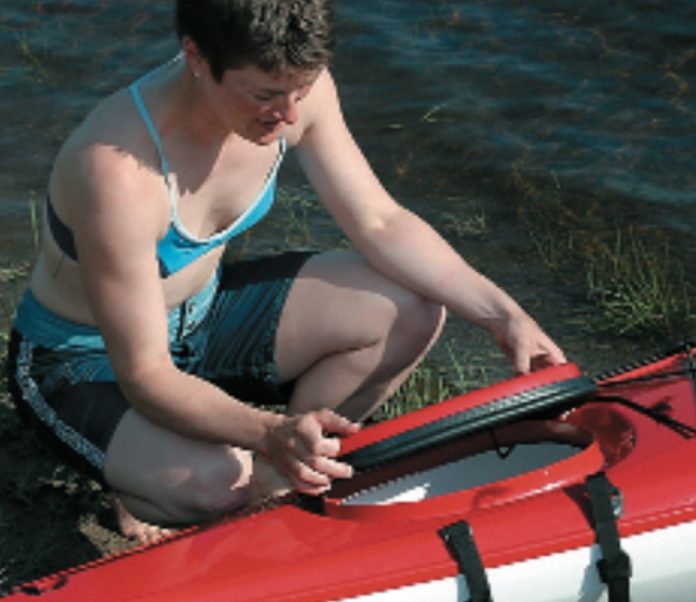
Perception has kept the Sonoma’s design simple by including only one hatch. There’s a rear storage compartment enclosed by a foam bulkhead behind the seat. The cockpit extends into the bow with a foam pillar at the front end for rigidity and floatation.

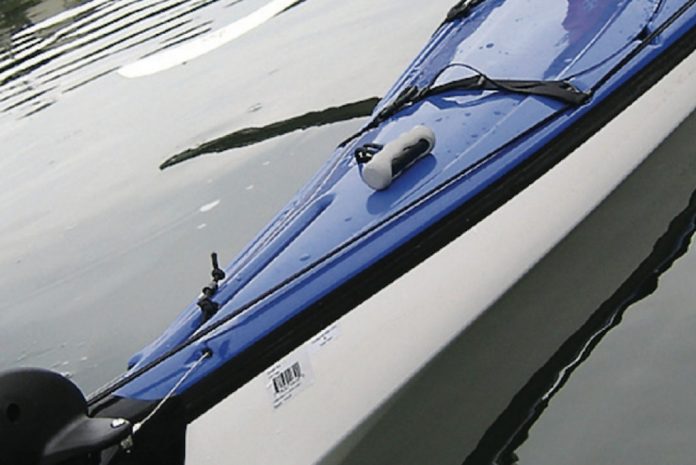
The Perception Sonoma 13.5 has many features of a higher-end boat including heavy-duty deck bungees and comfortable, retracting grab handles. We were able to tilt, brace and roll quite easily with stock outfitting, thanks to solid support from the adjustable plastic foot pegs. One random nitpick: our shiny Perception decals peeled off in the sun.

Perception doesn’t skimp on performance

Here’s the deal. Most lightweight, light-touring boats or fancy recreational boats are wide, slow and downright boring once you’ve figured out how to keep her going in a straight line. The theory must be that if you don’t have any money, you don’t want performance. With the Sonoma 13.5, however, Perception has released an economy car designed by a Formula One racer.

The 23-inch-wide, shallow-V, hard-chined hull makes her a little shaky when you first climb in, especially if the only other boats you’ve tried are Dodge Diplomats and Crown Vics. Get it moving and toss it into the corners with a little outside tilt and it snaps through the pylons. If you’ve ever wondered what all the hard-chine fuss is about but have never really noticed it in long touring boats, try the 13.5 foot Sonoma.

If you plan to eventually upgrade to a full-sized composite tripping boat, you’ll want to keep the sporty Sonoma as your day trip or play boat. The Sonoma 13.5 is a surfable, rollable kayak in a cutdown size that’s comfortable to paddle in wind and waves, easy to turn, easy to store, and easy to load on and off the car.

[ Plan your next kayak day touring adventure with the Paddling Trip Guide ]

Show out with the Perception Sonoma 13.5

The Perception Sonoma 13.5 in Airalite is a lot of boat for the price. It’ll make you look “kayak rich,” but your benefactors will still want to know who gets the boat.

This article was first published in the Fall 2003 issue of Adventure Kayak Magazine. Subscribe to Paddling Magazine’s print and digital editions, or browse the archives.

Boat Review: Perception Carolina 13.5 Airalite Kayak

The Carolina 13.5 kayak in Airalite from Perception Kayaks
Feature Photo: Tim Shuff

In 1993, retired pilot Hugo Vihlen sailed alone across the Atlantic Ocean from Newfoundland to Great Britain in a boat that was shorter than its captain was tall, seizing the record for a trans-oceanic crossing in the smallest boat by a suitably narrow margin. Vihlen’s record-setting trip is a good bit of trivia for any paddler of the Perception Carolina 13.5 to invoke when facing skeptical remarks from snobs in 18-footers.

Perception Carolina 13.5 Specs
Length: 13’7.5”
Width: 24.25”
Cockpit: 38” × 21”
Weight: 41 lbs
Dry Storage: 29 U.S. gal
Max Capacity: 350 lbs
MSRP:
$1,600 USD or $2,350 CAD
(without rudder)
$1,750 USD or $2,500 CAD
(with rudder)
[ Paddling Buyer’s Guide: See the Perception Carolina 14.0 kayak ]

Go short and sweet with the Carolina 13.5

New for 2005, Perception Kayaks offers the shortest version yet of their popular Carolina series in both conventional rotomoulded plastic and the new lighter, glossier, Airalite thermoformed plastic.  The features and performance of the Carolina should be enough to take the wind out of the sails of any “lengthist” who dismisses a short kayak.

At 13.5 feet, this Carolina skirts the recreational category. But with the features, fit, performance and price of a touring boat, it’s slotted into the more highfalutin group that Perception dubs “day touring.” The Airalite model is enough of an upgrade from the roto version to be a completely different boat. It’s 20 percent lighter and much better suited to real touring and performance paddling.

[ Plan your next kayak day touring adventure with the Paddling Trip Guide ]

Venture into small spaces

We had a great time testing the Airalite model in light winds and currents on a sheltered tidal inlet. The kayak’s short length facilitated manoeuvring in small bays, poking along the shore and playing in tidal rapids.

The Perception Carolina 13.5 is an impressively spirited and capable little kayak with a sophisticated, responsive hull design featuring a shallow V bottom, a fair bit of rocker and a semi-hard chine. The comfortable initial stability puts most paddlers at ease and rock-solid secondary lets you really get into a tilt to take advantage of the hard chine’s quick-turning performance. Beginners and intermediates can be confident that the Carolina will grow with them into more advanced skills like tilt turns and sculling.

Carolina has ergonomic excellence

The Perception Carolina 13.5 has a cockpit you could cross the Atlantic in. One tester said “It’s the most comfortable kayak seat I’ve ever sat in,” and commented on the good ergonomics for older paddlers with back and hip problems. The seat is thermoformed plastic with contoured padding. The backband, with thick neoprene padding and a ratchet system for micro-tuning on the fly, supports the back in an anatomical position and is a perfect compromise between a skinny whitewater-style backband and a cushy La-Z-Boy backrest. Padded, contoured thigh braces are moulded into the cockpit coaming. There’s plenty of width and height for beefy builds, but a 5’ 10” height maxes out the legroom.

The Carolina 13.5 kayak in Airalite from Perception Kayaks
Feature Photo: Tim Shuff

Unique to the Airalite model is a hatch system found on high-end kayaks: an airtight neoprene seal protected from spray and sun by a hard outer cover that straps down flush to the deck. These hatches have large easy-stuff openings and stayed completely dry. The ample 110 litres of dry storage fore and aft is separated from the cockpit by foam bulkheads.

Rudderly wonderful

Competent paddlers won’t require the optional thermoplastic rudder to track and turn but it’s a nice feature for long-haul paddling. With the rudder retracted, the Carolina tends to skid into a turn like other short boats when you stop paddling. Other features aft include straps over the hatch that are long enough to secure paddles and fishing rods, plus bungees and a notch in the rear deck for paddle float rescues. The rubberized grab handle is very comfortable with a moulded handgrip—it’s loose on the back deck for easy access but the bow handle is tethered with bungees to keep it from flopping around in waves.

[ Paddling Buyer’s Guide: See all Perception kayaks ]

The Perception Carolina 13.5 has outsized value

For the price of a Carolina 13.5 in Airalite, some shoppers will be tempted to move on to larger designs and composites. However, small paddlers looking for manoeuvrability and the best performance and features they can get in a kayak of this length and weight will want to shortlist this boat.

The Perception Carolina 13.5 will be most at home on quiet lakes, sheltered bays and meandering rivers. And, of course, a trans-oceanic voyage is never out of the question. To beat Vihlen’s record, though, you’ll have to wait for the Carolina 5.3!

This article was first published in the Fall 2005 issue of Adventure Kayak Magazine. Subscribe to Paddling Magazine’s print and digital editions, or browse the archives.


MyCanoe POP: Meet the most packable canoe

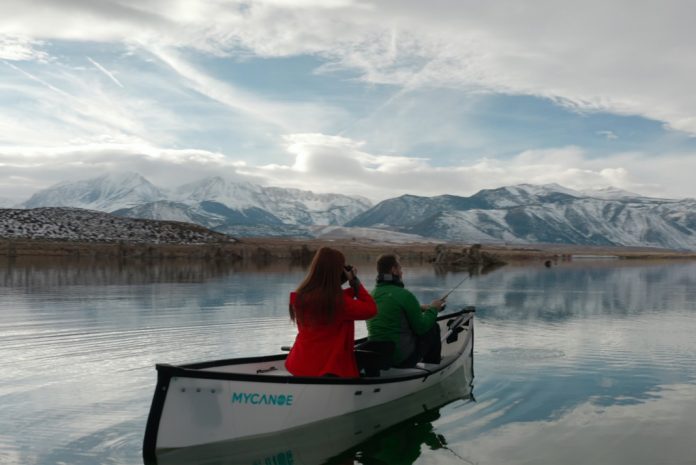
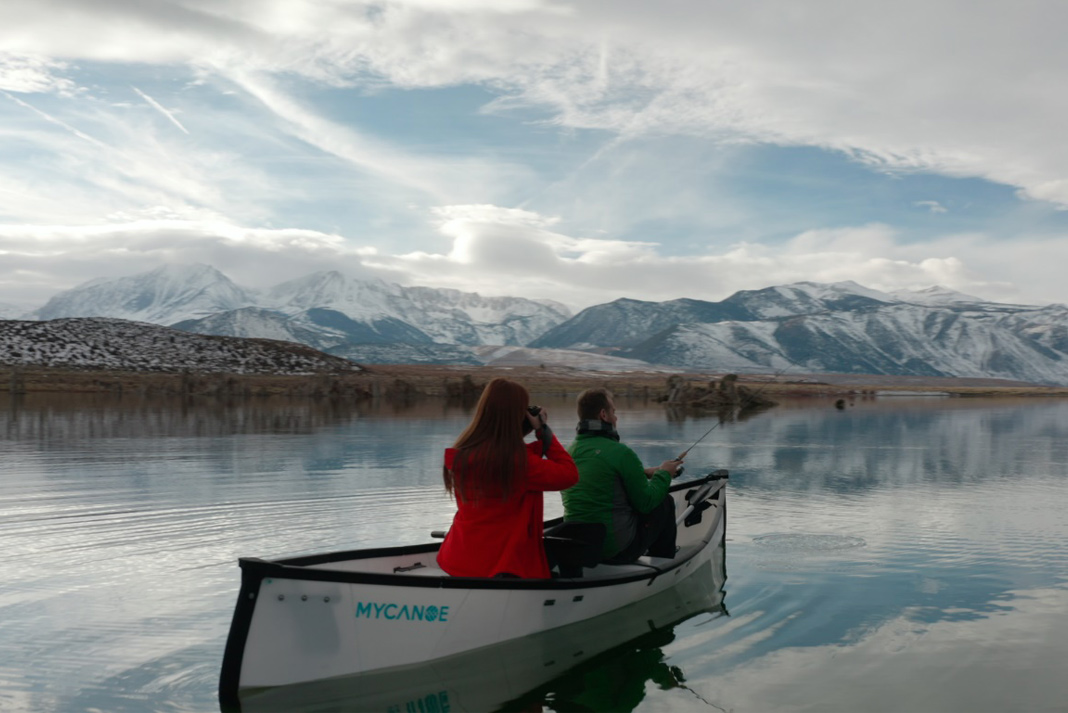
Two people paddling in a MyCanoe POP folding canoe
Feature Photo: MyCanoe

Canoes are a great way to enjoy the outdoors alone or with a friend, calmly paddling through the water and exploring at your own pace. However, canoes can be hard to manage simply because of their size. In order to bring canoes to people with limited space, MyCanoe developed a lightweight boat that comes together like origami: the MyCanoe POP. Within 5 minutes, the foldable case opens up into a 14.5-foot canoe with two seats.

[ Paddling Buyer’s Guide: See all folding canoes ]

The MyCanoe POP takes shape

A lot of thought was put into the design of the canoe and its carrying case. The case itself becomes the canoe’s floor, adding structural support and ensuring it won’t get lost throughout the day.

Each MyCanoe POP is made entirely out of marine-grade UV-treated custom double-layer polypropylene which is able to withstand 20,000 fold cycles. Even with daily canoe outings, the folded segments should last well over 10 years. In the off chance the canoe develops a hole, MyCanoe comes with a free repair kit.

Two people can easily enjoy MyCanoe before reaching the maximum load of 440 pounds. Even if someone manages to capsize the vessel, the canoe will still float. In an emergency situation, MyCanoe remains the safest place to be in the water.

Setup has been simplified

MyCanoe POP takes only 5 minutes to set up. For those who own a previous boat from MyCanoe—no more installation of metal rods with a mallet. POP has built-in keels at bow and stern that significantly improved tracking and stability. You can stand-up paddle if you’ve done SUP!

The new gunwales are made with a much stronger material and glide locks, thus compatible with off-the-shelf accessories, such as motor brackets, fishing rod holders and cup holders. POP comes with a waterproof dry bag to keep your valuables.

Optional rowing system (oar locks) is also greatly improved—no more Velcro. You can move oar lock locations anywhere along the gunwales and even install two sets for two rowers! POP’s new flat floor will provide paddlers more comforts and room. The modern design of the MyCanoe POP will attract spectators while you set it up or paddle.

Two people paddling in a MyCanoe POP folding canoe
Feature Photo: MyCanoe

The ultimate in stow-and-go canoeing

At the end of the day, breaking down MyCanoe POP takes only 3 minutes. This 52-pound canoe folds up into a relatively small case on two feet tall and three feet wide. Such a small package ensures an easy fit in most small cars, under a bed, or inside a closet. Until you are ready for another adventure, MyCanoe stays out of your way.

[ Plan your next canoe adventure with the Paddling Trip Guide ]

Additional accessories are also available to customize the canoe to your needs. Anyone going fishing from their canoe might want stabilizers. These clip on the new gunwale system and provide a much more steady ride.

Get into the fold with the MyCanoe POP

POP from MyCanoe will be available first through Kickstarter. Early buyers can grab it over 40% below the suggested retail price of $1,390.


Why You Should Always Have A Kayak Repair Kit

A sea kayak with patches from a kayak repair kit
Feature Photo: Steve Ruskay

The east coast of Greenland is a source of bounty and burden, feast and famine. These waters have choked mariners for centuries, marked by the shipwrecks and grave sites that dot the shores of the Ammassalik Fjord. The worst can also strike kayakers when least expected, so you should always pack a kayak repair kit and learn how to use it to avoid joining the sad list of wrecks.

[ Plan your next sea kayaking & touring adventure with the Paddling Trip Guide ]

Lessons from a Greenland field repair

Stuck on a floe with nowhere to go

It was in the Ammassalik Fjord where I found myself floating on a 30-by 30-foot piece of sea ice with a group of guests a kilometer from shore. We were all standing on the floe because just minutes before a wide lede we’d been paddling along had narrowed due to shifting ice, catching and crushing one of our tandem sea kayaks with its paddlers inside. The ice receded as quickly as it approached, turning hazard into an island of safety.

The tandem pair were uninjured and in good spirits, but the 22-foot fiberglass kayak bore a smattering of nine full-thickness holes and cracks scattered from bow to stern. Most severe was a crack at the bulkhead extending a foot-and-a-half in length, and partially below the waterline. This kayak was fatally damaged, but our only way back to shore was to find a fix.

Improvising a way to patch the hull

Fothering is an almost lost nautical technique for quickly repairing a damaged ship. Sailors used fabric from sails to cover holes from the outside of hulls to stem leaks. Early mariners and Arctic explorers used this technique in times of desperation, to save ships from sinking after running aground or contacting with ice.

Using Vise-Grip pliers and a pair of gloves, we transformed an MSR Dragonfly stove into a torch. Drying and warming the damaged surfaces of the kayak was the first step to a successful repair job.

The kit includes anything that will help repair your kayak

The holes and cracks were far too large to solely rely on duct tape patches, so we dissected a dromedary water bag, harvesting the fabric for fothering patches. Any AquaSeal glue we could squeeze from the tube in the subzero temperatures was used to fill hollows between fabric and hull.

Then came the duct tape, Tenacious Tape and medical tape—any tape we could muster—to further seal fabric to hull. We used the stove to melt the edges wherever tape was applied, and pressed the adhesive into place with a heated pot lid.

In the end, every piece of repair equipment we had—every inch of tape, and every ounce of adhesive—played a part. After two hours of careful concentration, the freshly repaired kayak was ready to be put to the test. And it proved watertight.

A kayak repair kit provides peace of mind

Making a field fiberglass repair is difficult in ideal conditions, let alone stranded on an ice floe off the coast of Greenland. What surprised me most was how quickly the ice went from hazard to refuge in the unpredictable conditions of the Arctic. But even if you are paddling in the calmest of waters your kayak repair kit will provide safety and peace of mind, a refuge of its own.

This article was first published in Issue 54 of Paddling Magazine. Subscribe to Paddling Magazine’s print and digital editions, or browse the archives.


Kayaking Big Waterfalls: Dropping In On The New Extreme Sport

Bren Orton kayaking over Alexandra Falls in Northern Canada
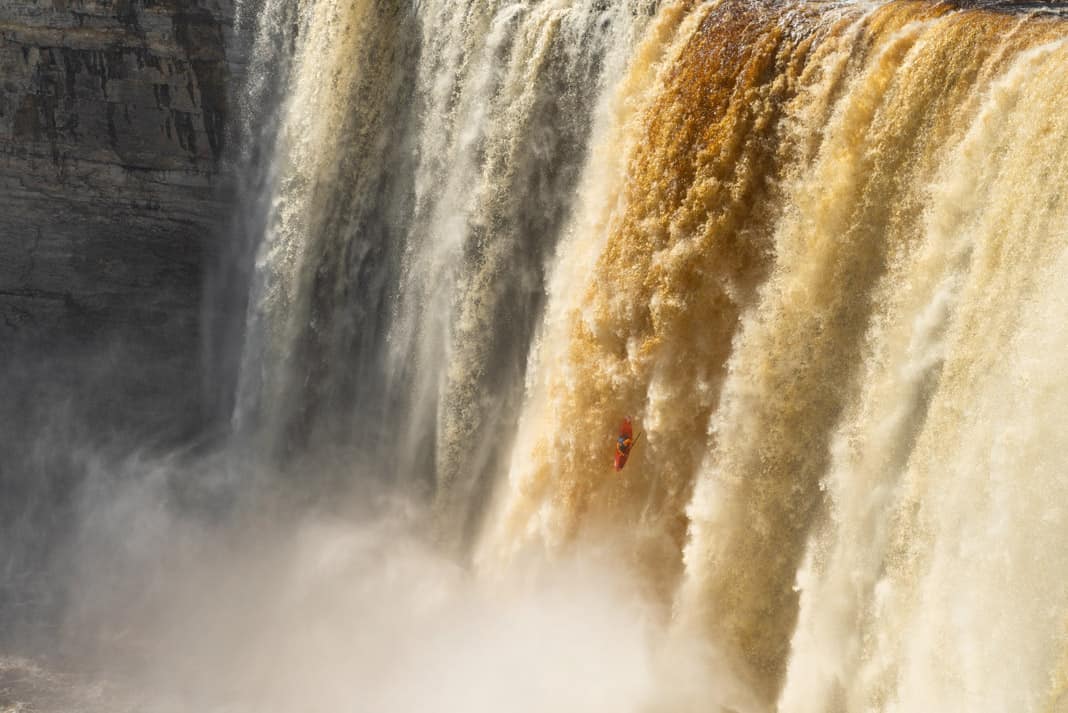
Bren Orton on Northern Canada’s 107-foot-tall Alexandra Falls in August 2018. | Feature Photo: Kalob Grady

On April 29, 2009, Tyler Bradt set a new world record when he successfully descended 186-foot-tall Palouse Falls in Washington State. In doing so, Bradt smashed his own previous world record, made two years earlier on 107-foot Alexandra Falls in Canada’s Northwest Territories. Bradt also provided a new high-water mark for others to measure themselves against. Among the small group of elite athletes who specialize in “dropping,” or kayaking over big waterfalls, no height seems out of reach.

Can kayakers conquer even bigger waterfalls?

In the decade since Bradt’s world-record run, a dozen or so waterfalls with heights more than 100 feet have been successfully run by a handful of athletes. Kayaking over such big waterfalls, freefall lasts 2.5 to 3.75 seconds, and impact speeds range from 35 to 60 miles per hour.

Leading up to his most recent world record attempt, Bradt was confident in his skill but concerned about his spraydeck staying on his kayak in the pressure at the bottom of the falls. Not only does an intact spraydeck create buoyancy, but a descent is only considered successful if the kayaker stays in his boat.

“We rely equally on athleticism and our equipment. The more extreme the sport, the more critical the role equipment plays,” Bradt says. “Any sport pushed beyond the limitations of gear can be incredibly dangerous.”

“All we are waiting for now is the next perfect drop to be found.”

A homemade solution to keep you in place

For his descent, Bradt invented what he calls a chastity belt. The system keeps his deck from imploding when the kayak hits the surface at the bottom of a big drop. “The chastity belt allowed me to run Palouse with a higher degree of safety and also ensured I remained in my boat at the bottom to set the world record,” he says. In Bradt’s case, the chastity belt was a big piece of the puzzle to try kayaking such a monstrous waterfall.

“The biggest issue we face in terms of gear is we are such a small segment of action sports, so anything you want to do, you have to do Tyler-style—100 percent homemade and home-tested,” says Rafa Ortiz, who notched the first descent of 129-foot Big Banana Falls in Mexico, currently the second tallest drop on record. Ortiz was also the second athlete to descend Palouse Falls.

“I think athletes are pushing the big drop game pretty strong and the gear and boat technology is where it needs to be,” says Send’s Adrian Mattern. “All we are waiting for now is the next perfect drop to be found.”

Picking the perfect waterfall

A perfect waterfall must have several features, including a lip allowing a kayaker to calmly come to the edge and stare down the landing, a flow rate adequately breaking the surface tension of the pool, an open pool at the base with no caves, and the ability to set safety behind the curtain.

“Progression is only as good as the athlete
pushing the sport,” says Dane Jackson

For Mattern and Send co-founder Bren Orton, 2018 was a colossal year. Both notched a descent on Mexico’s Big Banana Falls and Canada’s Alexandra Falls. “No single piece of equipment will facilitate progression in sending taller drops. Pushing height will come with the right person and the right waterfall,” says Orton. “As big waterfalls become more standard, we can only hope specific safety features will be built into kayaks to prevent injury or death. Much like racing restraints in a race car don’t help a driver go faster around the track, but by God do you want one if you crash.”

Gear advancements alone won’t take the sport to mega heights, but the minimal gains can go a long way. Similar to Bradt inventing a way to ensure his spraydeck would not implode on Palouse, a more compact life jacket without compromising flotation and sleeker helmet design could assist a kayaker in being able to tuck tighter and be as hydrodynamic as possible upon impact. Outfitting to reinforce the integrity of boat design is another often wish-listed feature for high flying boaters.

Bren Orton dropping Alexandra Falls in Northern Canada
Bren Orton on Northern Canada’s 107-foot-tall Alexandra Falls in August 2018. | Photo: Kalob Grady

How big is too big to drop?

To break the current world record, kayakers will have to consider more than just personal skill and safety. “We don’t know what is possible because we have not seen the drop. There is a chance the next waterfall discovered is 191 feet tall, just breaking the record,” says Mattern. “In this case, we know a body can sustain a descent. However, the next waterfall could be 220 feet or higher, and we will be forced to look into whether a human can withstand the impact.”

Kayaking off a waterfall more than 220 feet high would entail at least four seconds of freefall and a big impact—more than 60 miles per hour.

“Progression is only as good as the athlete pushing the sport,” says Dane Jackson who has successfully descended four waterfalls in the triple-digit club. “It comes down to continuing to develop new techniques for adjusting angles and keeping the boat in control during freefall.”

This entails athletes spending time on smaller waterfalls, getting accustomed to freefall and dialing in the ability to make micro-adjustments. Mid-air mindfulness is key to controlling the angle of the kayak in search of the most hydrodynamic—and therefore least forceful—impact at the bottom of the falls.

Kayaking big waterfalls means scaling new heights

“As someone who has run the two highest waterfalls, I know we can go higher,” says Ortiz. “It’s not for me anymore, but I know there will be kids who want to go taller and who will find a way.”

This article was first published in Issue 56 of Paddling Magazine. Subscribe to Paddling Magazine’s print and digital editions, or browse the archives.


Boat Review: Riot Booster Kayak

Riot Kayaks, manufacturer of the Riot Booster kayak
Logo provided courtesy Riot Kayaks

A name like Booster would be almost condescending if not for Riot’s sculpted detailing, superhero graphics and metallic finish that make sitting in the boat feel like you are in Batman’s secret new play machine. With the Riot Booster kayak, angular edges and crisp detailing are maintained while adding some innovations that push the limits of forward-thinking outfitting.

Riot Booster Specs
(50 / 55 / 60)
Length: 7’2” / 7’2.5” / 7’3”
Width: 24.5” / 25” / 25.5”
Volume: 50 / 55 / 60 U.S. gal
Weight: 35 / 35 / 36 lbs
Playboating Capacity:
110-170 / 160-220 / 210-220 lbs
River Running Capacity:
80-130 / 130-180 / 170-220 lbs
MSRP: $1,495 CAD
[ Paddling Buyer’s Guide: See all kayak playboats ]

Strap in with the Riot Booster

The first thing you will notice about the Booster is Riot’s new Elastomer Outfitting, a totally new concept in kayak cockpit design. It looks like a rachet-buckle-crazed snowboarder outfitted the boat. There are five beefy rachet buckles: two on the backband, one between your legs for the adjustable bulkhead footrest, and one on each thigh strap, yes thigh straps. You just sit down on a sculpted foam seat and start cranking ratchets to dial in your fit without spending a day working with bulk foam and contact cement.

Rethinking the kayak cockpit

The thigh brace system is the largest departure from traditional outfitting. You still use the inside of the deck as the primary thigh braces, but the thigh straps stay in contact with your legs when you relax them. We couldn’t quite figure the system out, so we contacted Corran Addison for his design perspective.

“It’s like wearing a soft snowboard boot rather than a hard boot. The soft boot has hard contact points under the boot, and the high back behind the boot. But the boot itself flexes and follows your movements, while a hard boot simply restricts them.”

Does it work in kayaking? Well, we’re not sure the thigh straps contribute to more boat control but we didn’t notice any lack of control either. It just feels different. We did notice a comfortable, flexible feel while sitting in the eddy and despite all the ratchets and buckles you don’t need to be a whitewater Houdini to enter and exit the Riot Booster.

[ Plan your next kayak river running adventure with the Paddling Trip Guide ]

The rigid backband is mounted to a fixed plastic pillar keeping the backband in position. Add a vertical height adjustment and this is an ideal system that we’re sure will be ripped off.

The Booster makes smooth transitions

Riot is known for edgy, high performance hull designs that are more than a handful for your average paddler. But not the Riot Booster kayak. It is forgiving, super stable, and predictable due to a softer edge between the release chine and the sidewall of the boat. Riot has always had low, sharp seam lines—the Booster has a higher, softer seam line. At first it feels like Riot may have tuned the performance out of this boat to make it easy to paddle. Not true.

A playboat isn’t just about busting moves on a wave, it is about transitions—getting out onto the wave, recovering from a move not-yet-nailed, and getting down-river to the next spot. The Booster makes all the transitions that much easier, helping you save your energy for on-the-wave fun. The Riot Booster planes into a slightly nose-up position riding over seams and deflection waves. Hitting eddies is confidence inspiring, with no secondary edge grab common with many high performance boats.

The Booster has less of the super fast carve of many Riot kayaks, but is no slouch in a good play spot. If you want more play than river running, get in the smallest size you can. The Booster cartwheels at any angle, which allowed testers to ease from flat spins into more vertical moves. Once vertical the Booster is stable and easy to control because of a very even taper from the ends of the cockpit—no cockpit bubble, so no bounce. The large planing surface and rockered ends free of harsh edges makes spins super easy with the trademark Riot ability to carry a spin through the sideways position that carries other boats off the waves.

Run and play with the Riot Booster kayak

Overall, the Riot Booster kayak fits into a popular performance category somewhere between the Pyranha Inazones, and dedicated park-and-play boats. If you are looking for more play than your old river runner, but still want to run rivers with confidence there is now a Riot boat for you.

This article was first published in the Early Summer 2005 issue of Rapid Magazine. Subscribe to Paddling Magazine’s print and digital editions, or browse the archives.


Boat Review: Impex Currituck Kayak

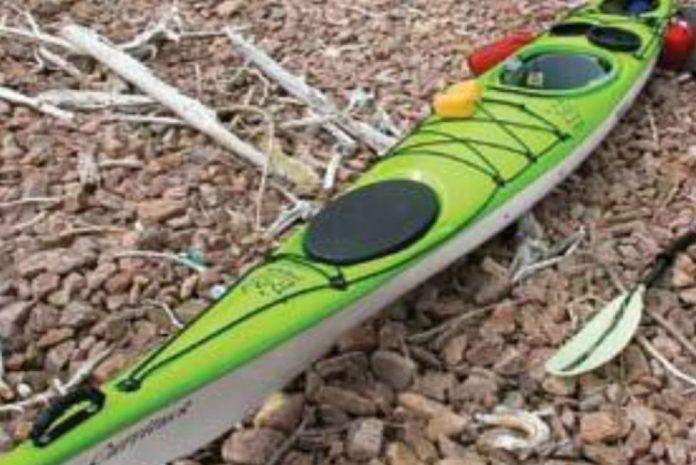
an impex currituck kayak sitting on pebbles
Feature Photo: Ryan Creary

We recently took the Impex Currituck (formerly the Formula Pursuit in Canada) on a two-week trip to the Southeast Coast of Newfoundland, where it was paddled by our photographer, who had limited sea kayaking experience.

Impex Currituck Specs
Length: 17’
Width: 21.5”
Cockpit: 16” × 30”
Volume: 80 U.S. gal
Weight: 55 lbs (fiberglass)
MSRP: $2,995 USD or $3,095 CAD
[ Plan your next Atlantic Canada sea kayaking adventure with the Paddling Trip Guide ]

The Currituck performs with ease

The Currituck is the third largest of Impex’s four “performance touring” kayaks which emphasize a balance of turning and speed for all-around use. Impex bills it as a “performance Greenland-style boat that is easy to paddle.”

We chose the Impex Currituck because with bow, day and stern hatches of 57, 34 and 72 litres respectively, the Currituck has excellent capacity—slightly more than the popular expedition kayak the NDK Explorer—yet is built for average-sized paddlers. It’s rated for paddler weights of 150 to 220 pounds, and the metal foot pegs are set for shorter than six feet tall. The “ideal” Impex Currituck paddler would be about 5’9” and 160 pounds.

[ Paddling Buyer’s Guide: See all sea kayaks for average-sized adults ]

At 17 feet the Currituck falls neatly between the lengths of popular, comparable boats like the Romany (16’) and Explorer (17’8”).

Among the swells

On day one, we paddled in five-metre swells in the wake of a tropical depression, thus confirming the boat’s user friendly performance in high seas. The Valley hatches proved to be completely watertight, keeping the camera gear dry.

Shortly after, we permanently kinked the skeg table and thus learned the Currituck performs reasonably well in crosswinds and following seas, weathercocking only slightly.

The medium-hard chine and shallow-V hull provided a combination of primary stability for taking photos, and secondary stability for easy edging and predictability in rough water. Some find it slightly tippy unloaded (which facilitates edging), but stable when loaded. A few testers observed that the Impex Currituck’s secondary stability has some “falling points” through a roll, as opposed to smooth transitions, but most were impressed with its edging, rolling and sculling performance.

The two other boats on our trip were Valley Nordkapps, which are unfairly eight inches longer and renowned for speed. The Currituck was of average speed by comparison, but easier to manoeuvre with its shorter length and harder chines.

Impex works wonders in glass

Impex kayaks, made in Ontario, Canada, were among the first in North America to have fiberglass bulkheads and seams and are one of the few that still have fiberglass seats. The seat is comfortably padded with an Immersion Research neoprene pad and a very cushy, adjustable, gel-core back band.

Among the Currituck’s many features are two sets of carrying handles, one for rescues and the other for boat carrying. Rounded, duckbill-shaped ends also make it easy to grab the hull to carry a fully loaded boat.

Get all-around performance with the Impex Currituck

Overall, the Impex Currituck delivers a textbook compromise between touring capacity and playfulness, between tracking and turning. Justifiably popular, this is an excellent, full-featured, all-around touring boat at a reasonable price, suited for midsized paddlers of all abilities.

This article was first published in the Spring 2008 issue of Adventure Kayak Magazine. Subscribe to Paddling Magazine’s print and digital editions, or browse the archives.