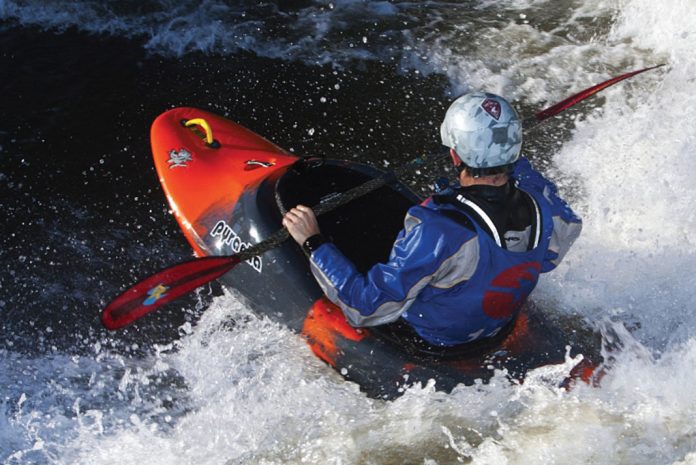
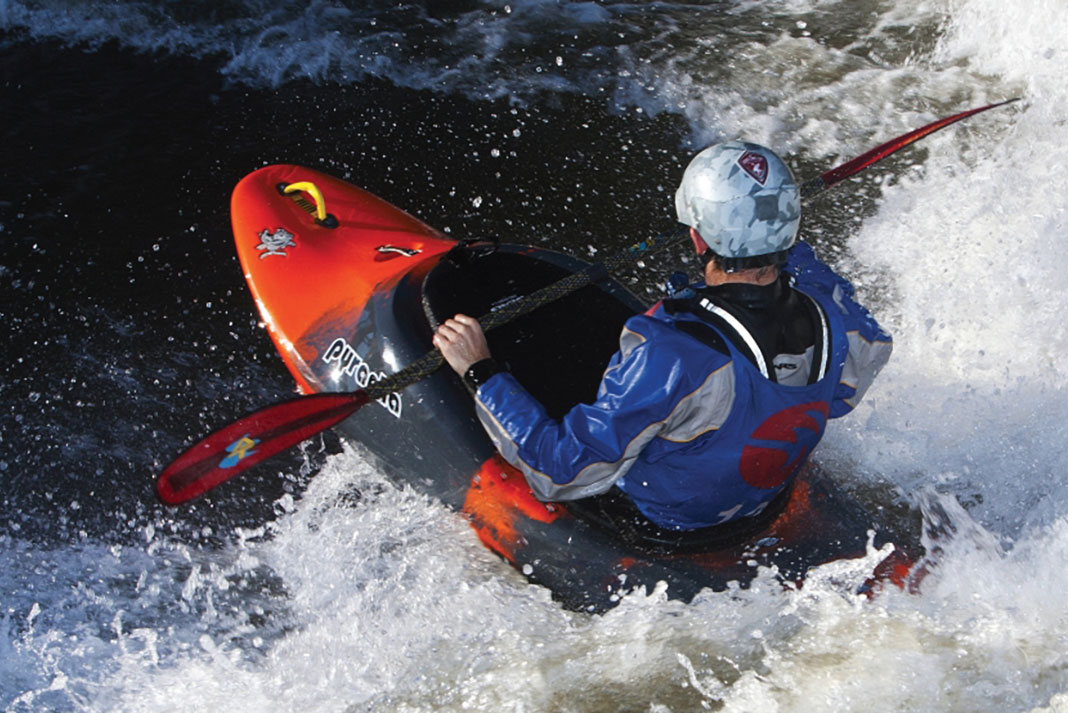
It looks like 2011 is shaping up to be Pyranha’s year of play. This season, two new designs are spawned into the family born with last year’s Molan. First up is the Pyranha Varun, a fun and friendly river play boat that’s already turning heads. Later this spring, the Loki will be a long, classically styled old school mover.
“There are two ways a kayak can take shape,” Pyranha designer Richard Taylor says. “We either know exactly where we want it to sit and what form it’s going to take, or it can be a very organic process with lots of conceptual work first. The Varun took the first route.”
Borrowing design features and ethos from the freestyle success of the Molan, the Pyranha Varun shares its center planing hull section and two-way rails concept, with numerous refinements and modifications to create a stable, easy carving, user-friendly ride.
“We’ve taken the concepts that worked really well for the Molan and applied them to a river running scenario,” continues Taylor. The Varun gains 11 inches but only 1.5 gallons of volume over its muse, resulting in slicey ends for squirts, stalls, cartwheels and other old school downriver moves.
The Varun has plenty of moves in store
Pyranha worked hard on the volume distribution, creating a boat that feels well balanced, with plenty of pop for more advanced playboating moves.
Feature Photo: Scott MacGregor
Lower volume behind the cockpit makes for easy rolling. Taylor says volume allocation—along with paddling position and overall bow and stern height—take cues from another success, 2005’s much-loved Pyranha Seven-O.
One of the challenges with the Molan were its slippery carving edges. The Varun’s shallower stern hull and sidewall angles make it easier for beginner and intermediate paddlers to transition edge to edge, and carve around on features and in and out of eddies. It’s still fast and loose on a wave like the Molan, with enough rocker to prevent pearling when surfing. Blasting downriver, we noted that the bow ramps up and over holes and reactionaries rather than diving in—perfect and predictable for all but the steepest holes, where we back endered knowing better.
Reliable Connect 30 outfitting
Outfitting is Pyranha’s tried and tested Connect 30. Secure, adjustable and proven to withstand abuse, it even includes a roll of peel and-stick foam for the knee area. With all its engineered outfitting, the Varun still uses prescored foot foam. While it offers carve-it-once and-be-done simplicity, it cannot be adjusted for different users or even a different pair of water shoes.
Ramp up your play with the Pyranha Varun
The versatile Pyranha Varun is a solid choice for fun, comfortable and forgiving play-as-you-go downriver paddling and adventurous big water runs. Funny, we said much the same of the InaZone 12 years ago. Pyranha remains committed to those who enjoy the whole river and…well, we still like to stern squirt.
It may not be purely chance that Liquidlogic’s highly anticipated, latest playboat is this year’s only fresh freestyle design. Chalk it up to clever marketing, a keen sense of timing, a fresh remix of winning ingredients, or all three, but this time Liquidlogic has pulled from their ovens a sweet playboat—the Liquidlogic Biscuit kayak.
Liquidlogic Biscuit Specs
(45 / 55 / 65)
Length: 5’11” / 6’1” / 6’3”
Width: 24” / 25” / 26”
Volume: 45 / 55 / 65 U.S. gal
Weight: 30 / 32 / 34 lbs
Weight Range: 100-160 / 140-200 / 180-240 lbs
MSRP:$1,049 USD or $1,149 CAD
[ Paddling Buyer’s Guide: See all Liquidlogic kayaks ]
Liquidlogic’s Biscuit is a return to form
While other boat companies rest on one, two and three-year-old freestyle hits, pinching development pennies and waiting out this year’s economic slowdown, Liquidlogic has seized a perfect comeback opportunity. With a string of forgettable designs stretching back six years—culminating most recently in the coolly received Ronin—the Biscuit needed to make a big splash.
Spinnier, bumpier, and slicier
Borrowing hull design and rocker profile elements from Liquidlogic’s much loved and not forgotten 2003 Space Cadet series, the Biscuit embodies all the best attributes of these classic boats while adding cleaner edges and armchair comfort. Designer Shane Benedict says the key features of the Liquidlogic Biscuit is a larger spin surface, the distinctive “bumper” (more on that in a moment) and slicier, broadened ends.
While Benedict’s previous freestyle designs relied on a spin disc—a very distinct planing surface on which the hull spins—the Biscuit’s planing area is larger and less defined. A larger planing surface means the hull slips and spins down a wave face like butter in a hot frying pan, but Benedict cautions, “The problem with adding a ton of spin surface is that you can start to make the boat boxy feeling [because it gets too wide] or twitchy [because designers can’t use much flare on a super-wide hull, and flare is what typically provides secondary stability]— that’s where the bumper comes in.”
The bumper is likely the first thing you’ll notice about the Liquidlogic Biscuit—it’s quite unique. A modest bulge that wraps all the way around the trim, little boat’s waterline, Benedict says the bumper allows for a synergy of two disparate traits: a super loose hull and a forgiving ride. While the generous planning surface maximizes looseness, the bumper’s extra width creates space for a second chine to temper the transition between hard carving edge and sidewall, producing a more forgiving ride. Above the bumper, the sidewalls squeeze back together so the paddler’s legs are in a more upright and comfortable position.
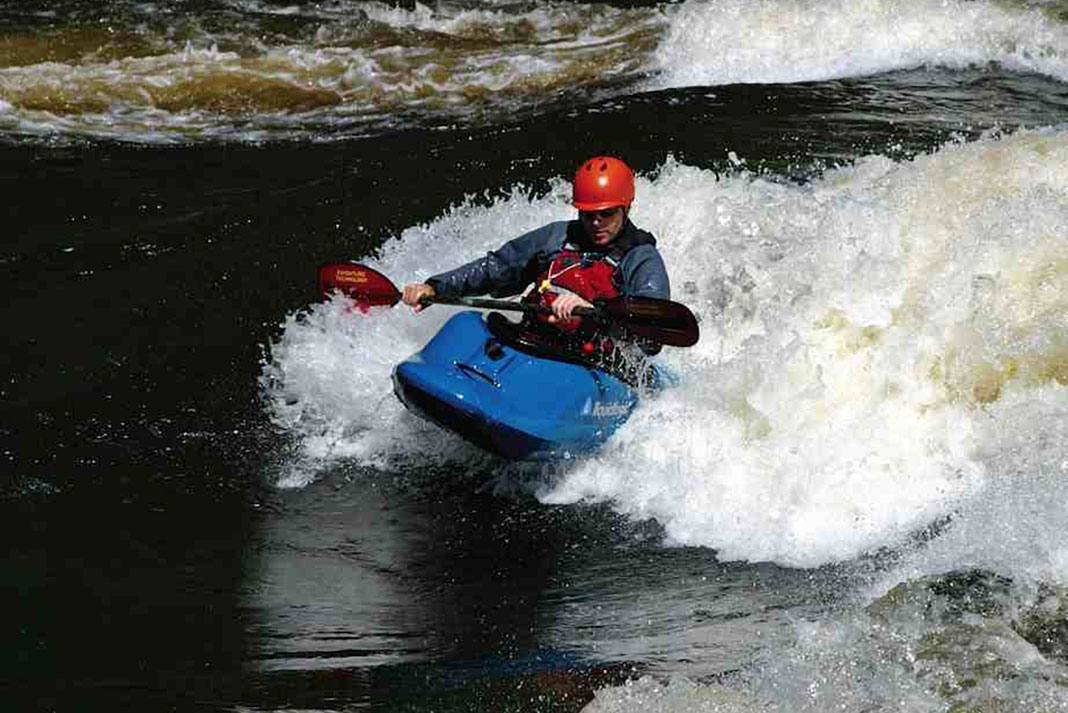
Like the Space Cadet, the Biscuit flies above a wave with the same alacrity it shows for spinning down the face. As eagerly airborne as the Frisbee dog it was named after (yes, Benedict named the boat after his hyper-energetic mutt), the Biscuit jumps huge and lands on its feet. The boat’s lazy acceleration on edge is not really an issue as it can be thrown from pretty much anywhere without carving.
Feature Photo: Scott MacGregor
Playing with the Liquidlogic Biscuit around the Ottawa, we’d say it’s best suited to ambitious intermediate paddlers looking to amp up their game—especially their aerial tricks—on smaller and mid-size waves. Get it on anything bigger like Buseater and it takes time to learn how to harness the flighty Biscuit. It responds best when paddled aggressively—let out too much leash and you’ll be hanging on for dear life.
If Benedict’s design sword wasn’t at its sharpest with the Ronin, his latest creation, the Liquidlogic Biscuit, is cutting edge. If that is not enough, one look at the plush Liquidlogic Bad Ass wall-to-wall carpet outfitting and fully foamed foot box—or Cone of Comfort—and you’ll be convinced that it’s finally time to trade up your six-year-old Space Cadet.
Suds and strokes have long been linked through time, much like coffee and donuts. Few things are more satisfying after paddling all day in the sun than cracking a cold bottle. And many a bottle of beer has been stamped or labelled with the timeless image of a canoe, designed to evoke just such a feeling and thirst from us when we’re away from the water. We survey the best (and very worst) of canoe beer to celebrate this time-honored connection.
[ See the widest selection of canoes in the Paddling Buyer’s Guide ]
Celebrating canoe beer
First, the worst canoe brew
The first canoeing brew however was God-awful trail-made bière d’epinette—a spruce beer blending natural boreal forest sugars, sweetened with molasses, fermented with yeasts from dried wild berries and aged for days in the sun. With a moose-piss pour, dirty whitewater head and lingering naphtha gas finish, this was not the finest beer. However, the hardworking voyageurs must have thought, “It’s better to have a bottle in front of me than a frontal lobotomy.”
Guinness Brewery in Ireland was one of the earliest commercial breweries to link canoeing and brewing. In the 1950s, they created an ad campaign featuring a stylized Indian in full headdress holding up over his head a canoe containing five happy voyageurs; the slogan read, “Guinness—Him Strong.” What this ad lacked in cultural sensitivity it made up for by propelling Guinness’ earthy, thick black stout to one of the best-selling beers and one of the best-known brands in the world.
Closer to home, a succession of Canadian breweries have made the canoe connection. Who can forget the Labatt Blue television ads featuring William and Jacques paddling a bark canoe across the country in search of the perfect all-Canadian libation? These spots may well have been inspired by the Niagara Falls Brewing Company’s Trapper beer, which featured a black-bearded coureur des bois paddling out of the label.
And there’s the Algonquin Brewing Company in Formosa, Ontario, showing a bark canoe in profile with two shirtless First Nation paddlers on a low-alcohol brew bottle called Algonquin Canadian Light.
Great labels, but what about the beer? For a while many beer drinkers wondered if canoes on the label meant contents were, “near water.” That notion changed in 1984 when Toronto’s first micro-brewery, Upper Canada Brewing Company, created a family of unapologetic, all-natural beers and proudly plunked likenesses of Arthur Heming’s and Frances Anne Hopkins’ classic voyageur paintings on the labels. Upper Canada started a tradition of robust beers that harkened back to the days of biere de l’epinette, only with great body, memorable taste and a smooth finish. What these labels promised by way of a refreshing whitewater splash across the face, the beer delivered.
Feature Photo: Rapid Staff
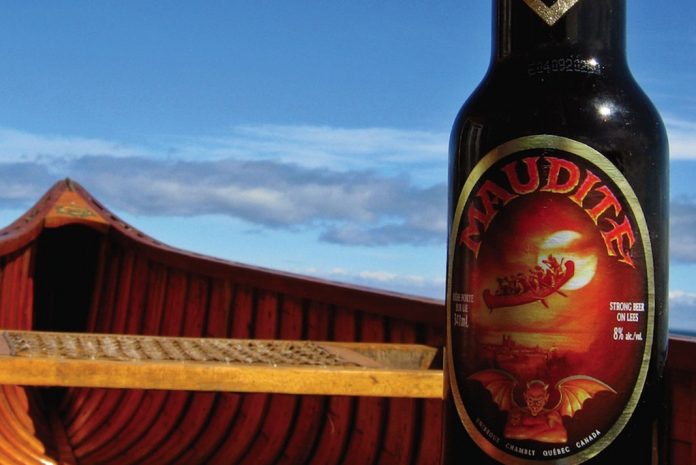
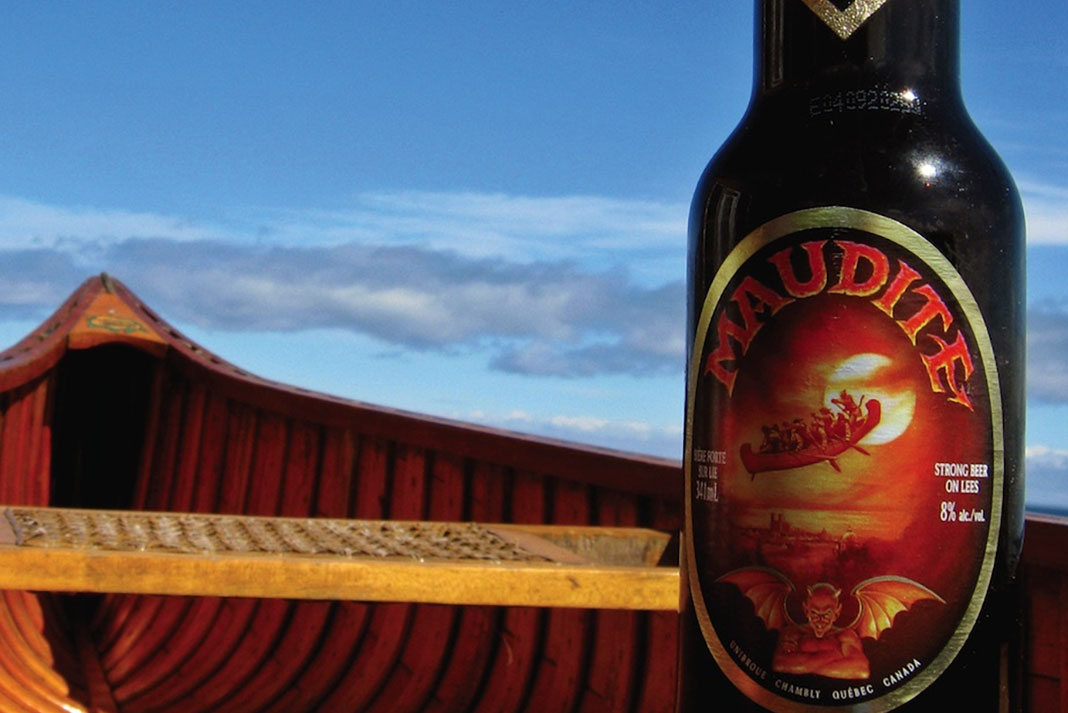
The same is true with Unibroue’s Maudite—English translation, the damned—a bottle-conditioned ale resplendent with a rendering of the Quebecoise folk tale la Chasse Galerie’s flying canoe on the label. At eight per cent alcohol, too many of The Damned could tip your boat. And the tradition goes on.
On the lighter side, Moosehead Breweries in St. John, New Brunswick, came out last year with a new slow-brewed lifestyle beer called Cracked Canoe. Nice label. But dodgy beer one reviewer called “vaguely beer-like.”
[ Plan your next B.C. canoeing adventure with the Paddling Trip Guide ]
You can have both great taste and a canoe on the bottle. In today’s beerscape, the best all-round canoe brew hails from the CANOE Brewpub, Marina and Restaurant on the harbor in Victoria, B.C. Their handcrafted Red Canoe Lager is a winner—superb label with even better beer inside—and as good a reason as any to set off across the continent by canoe.
This article was first published in the Early Summer 2010 issue of Canoeroots Magazine. Subscribe to Paddling Magazine’s print and digital editions, or browse the archives.
SADDLE UP AND WATCH THE SPARKS FLY. | PHOTO: ADVENTURE KAYAK STAFF
I had never paddled a P&H Scorpio before Bay of Fundy Sea Kayak Symposium founder Christopher Lockyer sat me in a loaner LV. It was a sublime September morning at the put-in for the Shubenacadie River, a rollicking freight train of crashing haystacks and swirling eddylines. It’s not every kayak that feels instantly intuitive, but the P&H Scorpio MKII LV was just such a boat.
Six years after the original Scorpio launched in 2009, P&H is introducing a second generation—the Scorpio MKII. First to be released is the LV, the smallest of three sizes available this paddling season. Manufactured at P&H’s factory in Great Britain, our orange demo LV is among the first to arrive on North American shores.
From the moment we hit the water, it’s apparent the MKII and I enjoy the same chemistry as its predecessor.
Given the popularity of the original, P&H has sensibly left the Scorpio LV’s best features untouched. Touring and ocean (or river) play paddlers will find the MKII uses the same CoreLite construction—a triple-layer polyethylene that adds a bit of weight but is more durable and rigid than standard PE plastics. Rounded chines and a shallow V hull make the MKII responsive and maneuverable, while tried-and-true dimensions—16 feet, eight inches long with a svelte 21-inch beam—deliver an optimum blend of speed and stability for more experienced paddlers.
Feedback from half a decade’s worth of expedition paddlers and weekend warriors has also led to some significant improvements. “The MKII has a slightly different volume distribution,” says U.S. head of operations, Brian Day.
On the water, added volume around the knees means a more comfortable, super dialed-in seating position. The updated stern has less rocker behind the rear hatch, which translates to improved tracking and handling in crosswinds and following seas.
The P&H Scorpio LV is specially sized for smaller paddlers
The most welcome change for many—especially rolling aficionados and paddlers with shorter torsos—is the lowered deck height behind the cockpit. The original P&H Scorpio LV was no barge, but the MKII is even easier to roll and re-enter.
Some tweaks are more subtle. The recessed slider control for the skeg or optional Skudder (more on that below) has moved in front of the cockpit, readily accessible yet out of the way of my knuckles.
SADDLE UP AND WATCH THE SPARKS FLY. | PHOTO: ADVENTURE KAYAK STAFF
Accessorize your boat with skudders and sails
Introduced last year to P&H and sister brand Venture Kayaks, the Skudder serves as a skeg when partially deployed, and an under-stern rudder—controlled by toe pedals on the foot braces—when fully deployed. While Skudder-like systems were pioneered by New Zealand designer Don Currie in the ‘90s, P&H is the first widely available manufacturer to embrace this clever concept—along with another accessory thriving down under: the kayak sail.
In 2014, P&H partnered with Australia’s Flat Earth Kayak Sails to offer a compact sail system that can be retrofitted—with a bit of engineering—to many touring kayaks. Outfitted with sail-ready hardware and a reinforced area for the mast foot, the MKII makes installation dead simple and the redesigned front deck accommodates the furled sail when not in use.
Reconnect with the P&H Scorpio MKII LV
The drizzly, early spring afternoon I first launch the P&H Scorpio MKII LV isn’t charged with the same breathless promise as that magnificent morning on the Shubie, yet I scarcely notice the sting of the March wind. P&H says they’ve made “many little changes,” adding up to a new-feeling boat, but discovering those differences feels more like rekindling an old flame.
This article was first published in the Early Summer 2015 issue of Adventure Kayak Magazine. Subscribe to Paddling Magazine’s print and digital editions, or browse the archives.
The Whisky is a new design from famed sea kayaker Nigel Foster. Designed for a Swedish company by an Englishman who now makes his home in America, built in China and named after a drink from Scotland—the Point 65 Whisky 16 kayak is truly an international undertaking.
[ Paddling Buyer’s Guide: See all Point 65 kayaks ]
Point 65’s Whisky 16 is a neat ride
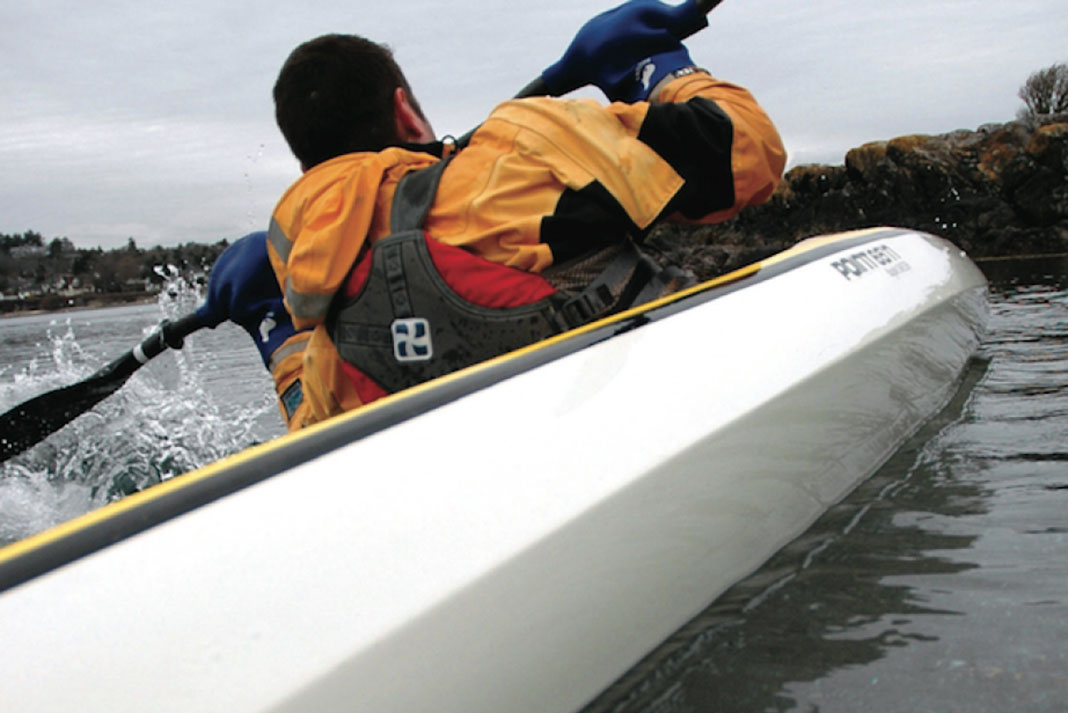
Rather than producing yet another generic “me too” sea kayak, Foster continues his record of distinctive designs, boldly pushing the Point 65 Whisky 16 deeper into the playboat niche than most would be willing to go.
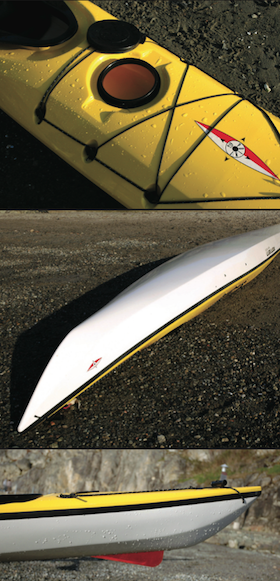
Clearly the hull was conceived with play and surfing in mind. It is highly rockered for manoeuvrability, with a very hard chine running the full length of its flat hull. Volume carries well into the ends and the bow in particular is very full, almost bulbous, and buoyant. The cockpit is quite far back.
There are large oval rubber hatches bow and stern, a smaller 20-centimetre round day hatch, and a 15-centimetre hatch on the fore deck within easy reach of the cockpit.
The Chinese build quality is reasonable but could use refinement. The boat felt solid, but multiple leaks into the cockpit were disappointing (one suspects the builder will have this resolved in short order). The Whisky 16 is also heavy for its size. And with the balance point of the kayak being forward of the cockpit, it’s an awkward solo carry.
[ Plan your next kayak adventure with the Paddling Trip Guide ]
Track and maneuver with sober precision
The fit is excellent and suits a wide range of paddlers. The backband offers good support and the thigh braces create a nice knee pocket that makes edging and rolling easy.
Feature Photo: Alex Matthews
Afloat, the boxy cross-sectional shape and 22-inch beam yield solid primary stability and tons of secondary. It’s fun tossing the Whisky on edge, although due to its extreme rocker, it doesn’t require edging for tight turns; the boat virtually spins 180 degrees with one sweep!
Given the extremely high manoeuvrability, tracking was a pleasant surprise. The Point 65 Whisky 16 is easy to paddle in a straight line. Even in high winds where I expected the high-riding bow to deflect, the Whisky was easy to control. When the bow did wander, it was easy to bring back on course.
The Whisky goes wave surfing
Is is a warning sign to design a hatch specifically to carry your booze? How about naming your new boat after your favorite alcoholic beverage? We don’t think so. The Whisky hatch is useful for all sorts of things.
The flat hull and hard chines combine with the stern-weighted position of the cockpit for very good surfing characteristics. The full bow does a great job of staying on the surface too; the downside is its tendency to slam down hard on the backside of oncoming waves.
Even fully deployed, the Whisky 16’s distinctive clear plastic skeg doesn’t present much surface area, yet it provides good tracking and effectively counters the boat’s slight tendency to weathercock in wind.
The Whisky 16 from Point 65 is primarily a day-paddler that excels in play spots like rock gardens, tidal features and surf breaks. But it also works surprisingly well as a do-everything kayak. It has decent speed and, other than its tendency to “slam” in chop, it’s enjoyable to paddle in a wide variety of conditions and can carry enough gear for a few days. The Whisky 16 is a different and a very fun kayak.
This article was first published in the Summer 2009 issue of Adventure Kayak Magazine. Subscribe to Paddling Magazine’s print and digital editions, or browse the archives.
The Floodwood Pond Loop is an excellent backcountry trip for folks just breaking into the sport of canoe tripping or for seasoned paddlers looking to visit the North Adirondack area. The route is run almost entirely on state land, allowing for minimal development along the way—truly offering a wilderness experience. Additionally, more than 75% of the trip is paddled through creeks and ponds that do not permit motors.
With excellent backcountry camping along the whole route, it’s easy to forget your daily responsibilities and to leave the city-life behind. All camping on the route is free-to-use and first-come-first-serve. Additionally, for parties of 8 or less, no permits or pre-registrations are required.
[ Plan your next canoe tripping adventure with the Paddling Trip Guide ]
Adirondack canoe trips: Floodwood Pond Loop
Floodwood Pond Loop is located in the Northern Adirondacks in Upstate NY, consisting on the following bodies of water: Floodwood Pond, Fish Creek, Little Square Pond, Fish Creek Ponds, Follensby Clear Pond, Polliwog Pond, Hoel Pond, Turtle Pond, Slang Pond and Long Pond.
Travel to the North Adirondack area
By car, the closest sizeable village is Saranac Lake, NY. Put-in is at state canoe launch on Floodwood Pond near St. Regis Canoe Outfitters’ Floodwood Outpost. Floodwood Pond is located in Lake Clear, NY about 30 minutes from downtown Saranac Lake.
Those arriving from further afield can fly into Adirondack Regional Airport (SLK), Lake Clear, NY.
Accommodations for Adirondack canoe trips
Most people take 2-4 days to complete the route. All camping along the route is free-to-use and first-come-first-serve. Any camper/party is permitted a maximum of 3 consecutive nights per site. Sites on Turtle, Slang, and Long Ponds are limited to a maximum of 8 people per party. Sites from Floodwood Pond through Hoel Pond allow a maximum of 12 per party, but a free permit from the Forest Ranger is required for any party larger than 9. It is strongly urged to contact a local outfitter for all the necessary permits and regulations a party must follow for the area.
Several motels, hotels, and B&B’s can be found in the Village of Saranac Lake (about 30 minutes from put-in/take-out) and in the village of Lake Placid (about 45 minutes from put-in/take-out). A semi-complete list of those lodgings can be found at the St. Regis Canoe Outfitters website. The closest hotel/B&B is Sunday Pond Bed & Breakfast in Lake Clear, NY (about 15 minutes from launch point).
There are approximately 16 drive-up primitive campsites along Floodwood Rd. (the road used to get to the put-in) that are all free-to-use and first-come-first-serve. Same rules apply to these campsites that apply to the ones from Floodwood Pond through Hoel Pond. Camping at any of these sites makes for an easy early morning put-in or an easy place to stay before a drive back home.
Guidance on gear for the Floodwood Pond Loop
All gear and boats can be rented from St. Regis Canoe Outfitters, located conveniently at the put-in/take-out. SRCO specializes in lightweight Kevlar canoes and kayaks as well as durable Royalex canoes and poly-rotomold kayaks. SRCO stocks the finest line of camping gear both for rent and purchase. SRCO also carries a full line of freeze dried meals and trail snacks. Full outfitting packages (including food) are available through SRCO or one can rent gear and boats by the piece.
[ See the largest selection of canoes and kayaks in the Paddling Buyer’s Guide ]
Reservations for gear and boats should be made in advance if possible. SRCO can transport individuals, parties, and gear anywhere in the area to and from the put-in/take-out.
From the Village of Saranac Lake, follow State Rt. 86 north; make a left onto Rt. 186 at blinking yellow light. Rt. 186 turns into State Rt. 30. Follow Rt. 30 past golf course, Floodwood Rd. will be immediately after golf course on right. Bear left at the mailboxes on Floodwood Rd. and drive until you reach St. Regis Canoe Outfitters’ Floodwood Outpost. Put-in is at the state canoe launch on Floodwood Pond. The launch is 4.1 miles down Floodwood Rd. from State Rt. 30. Parking area and SRCO’s Floodwood Outpost are located about 100 yards from the put-in on Floodwood Pond; parking is free. Floodwood Rd. is 12.4 miles from downtown Saranac Lake. The put-in on Floodwood Pond is located 16.5 miles from downtown Saranac Lake.
Floodwood Rd. is a graded multi-use gravel road. Expect to meet bird watchers, campers, bicyclists, and families walking in the road.
Feature Photo: St. Regis Canoe Outfitters
Your route around the Floodwood Pond Loop
The Floodwood Pond Loop is run in a counter-clockwise direction and includes small ponds and narrow creeks. The route is all flatwater paddling. There are 5 portages total, the longest are 0.75 mile and 0.5 mile. All other portages are under 0.25 mile.
The route begins on Floodwood Pond at the state launch, about 100 yards from the parking area. From Floodwood Pond one enters the mouth of Fish Creek. Paddling down Fish Creek one arrives in Little Square Pond. After a short paddle across Little Square Pond one enters back into Fish Creek which flows into Fish Creek Ponds. On Fish Creek Ponds are state campgrounds. Motor boats are permitted on these ponds but the campgrounds offer toilets and running water.
From Fish Creek Ponds one paddles up Spider Creek into Follensby Clear Pond. On the northern end of Follensby Clear Pond is the first portage of the trip to Polliwog Pond. After a short paddle on Polliwog Pond parties encounter their next portage. This 0.5 mile portage to Hoel Pond does cross Floodwood Rd. and caution should be exercised. From Hoel Pond one paddles across to their next portage.
A short carry up and over a defunct railroad will lead paddlers into Turtle Pond and the St. Regis Canoe Area. Crossing Turtle Pond brings parties to Slang Pond which is connected by a very short, shallow creek. From Slang, paddlers have a flat 0.25 mile portage to Long Pond. From Long Pond, paddlers find their final portage of the trip. The 0.75 mile, fairly hilly, portage leads parties back to their cars.
Why go canoe tripping in the Adirondacks?
With several other smaller ponds surrounding the route, and most of them being only a short portage away, there are numerous chances for exploration, different fishing opportunities, or places to relax and swim. Long Pond Mountain on Long Pond, with a trailhead accessible by canoe or kayak only, is a highly recommended side hike along the route. From the mostly bald summit one can see almost the entire area that they have paddled and many other mountains and bodies of water in the area. There are several other flat side hikes along the route as well. Numerous sandy shorelines and islands make for perfect lunch and swim spots along the whole trip. Additionally, be sure to keep one’s eyes open as moose, bear, many species of birds, including bald eagles, fishers, beavers, otters, deer, and several other smaller critters all frequent the area they like to call home.
Black fly season is from mid-May to mid-June in the Adirondacks. Strong bug spray is a must and head nets are recommended at this time of year. It is not uncommon for the temperatures to dip into the 40s or lower at night in the Adirondacks, even during July and August. Be prepared with plenty of layers and a warm sleeping bag. Make sure all food is properly stored with a bear barrel or a proper bear hang.
Few paddlers are capable of what marathon canoe racers do every other weekend—keeping pace through a 1,000-mile course, enduring both grinding monotony and gruelling pain and winning sprint finishes to end 15-hour races. We wanted to know how they do it, so we three experts to share their marathon canoe racing techniques. Meet the canoe racers who have proven to be the toughest of the tough.
Bragging rights: Three-time winner of La Classique de Canots de la Mauricie, the Triple Crown event starting in La Tuque, Quebec, and finishing in Trois-Rivières, Quebec.
Marathon canoe racing techniques
Is it better to lead or follow?
“Riding another boat’s wash can be nice for a time, but I always prefer to be leading at the finish.” – Lynne Witte
“I prefer to give the competition a good view of my back right after the start. In a stage race, if I have the lead after the first day then I might draft behind the second-place canoe.” – Rod Price
“Being part of the pack can be more fun than having a big lead, but if you have a good lead you can set your own pace, which is a great advantage in a long race. Of course, knowing that others won’t catch up is also fun.” – Steve Lajoie
[ See the widest selection of canoes in the Paddling Buyer’s Guide ]
What is your training regimen?
“During the spring, I’m paddling five days a week with two-hour weekday sessions and four- or five-hour weekend sessions. During the racing season, I’m out five to six days a week, including two three- to four-hour sessions, some six hour workouts for marathon training and weekday interval training. I also bike and run in the summer with my dogs and cross country ski and dog sled in the winter.” – Lynne Witte
“Living in Florida, I train on the water all year. Three to four paddling workouts a week. Weekday sessions are between one and a half to three hours, weekend sessions can be 12 hours if a big race is coming up.” – Rod Price
“During the summer, I paddle five to six times a week and run five kilometers four times a week. During the winter, I cross-country ski four times a week. In all, I train from 12 to 20 hours a week.” – Steve Lajoie
Feature photo is used under Creative Commons license. | Feature Photo: flickr.com/paddling
How do you stay motivated?
“I set goals for each race. If I’m flagging, I focus on the time or placing I’ve set for myself.” – Lynne Witte
“I focus on the competition and assume they are struggling too. Sometimes you only need to be stronger than your competition for a few minutes at a key moment in a race.” – Rod Price
“I keep things simple by focusing on the moment at hand, and not what’s to come. What is to come in long races could make anyone lose motivation.” – Steve Lajoie
“There is only one remedy: to eat. The best foods are basic. For longe races, it’s potatoes, cheese and chicken. For shorter races, its grapes and watermelon.” – Lynne Witte
“I view my body as an engine. If I am fatigued, I need more fuel, so I’ll increase my energy intake. I like to drink Perpetuem by Hammer Nutrition. I also eat a lot of bananas and a variety of snack bars.” – Rod Price
“I stay quiet and focus on my technique, especially the catch. The catch is the most important part of the stroke. You have to be strong in the beginning of the stroke and then smooth it out. I also try to avoid bonking before it happens by eating and drinking. I drink about one liter every hour, switching between water and Powerade. The best foods are fruit, PowerBars and Hammer Gels.” – Steve Lajoie
How can aspiring marathon canoe racers improve their own racing technique?
“Get your own C1 and find a local group to spend time with experienced paddlers. Paddlers like to help each other.” – Lynne Witte
“Jump in! Remember that even a disappointing result makes you stronger.” – Rod Price
“Be prepared for a long haul. It takes many years to get good.” – Steve Lajoie
[ Plan your next canoe racing adventure with the Paddling Trip Guide ]
Pro kayaker and personal trainer Heather Herbeck is here to help you improve your fitness and get the most out of the upcoming paddling season. Jumpstart your off-season kayak training with this exercise plan designed to improve your paddling strength and endurance.
Muscular Strength is the amount of resistance your muscle can take in a single contraction. Muscular strength is important for taking on sudden, external forces while kayaking and maintaining proper and safe body mechanics. It helps you go where you want to go when paddling challenging lines through rapids and it’s needed for carrying your kayak, putting your kayak on top of a vehicle and putting on your sprayskirt.
Muscular Endurance is the ability of a muscle or group of muscles, to work continuously for a long time without tiring. This is important for improving posture and alignment, thus decreasing the likelihood of acute or chronic injury.
Goal: Build muscular strength and endurance with exercises specific to paddling.
Time: January and February (8 weeks)
Frequency: Three times a week on land and 1-2 times a week on water
Duration: 3-5 sets of 6-10 reps for strength; 3-5 sets of 12-15 reps for endurance.
Training exercises for kayaking strength
Start your full year of kayak fitness training by focusing on these basic exercises. These exercises for kayaking strength are demonstrated in the video below:
Kettlebell swings, swinging kettlebell high and also keeping it low with more weight
Overhead press
Cleans
Goblet squats
Pull-ups
Cable rows
Push-ups
Remember to focus on technique. With strength training, you need to move with purpose—execute slow and controlled movements and work each exercise at a weight that causes fatigue at the end of the set.
When the main paddling season wraps up, go back to the basics: general endurance and strength training. Cross-training with other activities will work on stability, mobility and flexibility. This time should also be used to rest overused areas of the body and work on healing any injuries.
Continue cross-training for overall fitness. Emphasize strength-building activities.
Note: Use caution with these exercises
A good base of muscular strength and endurance is encouraged before jumping right into these exercises. If you don’t have that base yet, start these exercises very slowly and spend some time working to perfect form. This type of training is not for everyone—we are all unique. This is just a general program.
Heather Herbeck has a B.Sc. in Exercise Science and is a pro kayaker, Certified Personal Trainer and Level 1 Crossfit Trainer with over 15 years experience. Check out her website at Fitness and Sport Evolution for more.
Small plastic kayaks used to fall into the category of “first boats” and were considered a stepping-stone to the ownership of a “real” sea kayak. These boats were designed to be stable and comfortable with beginners in mind, but they would also fit the needs of more advanced paddlers if only they offered the performance features of the larger expedition kayaks. Manufacturers are finally catching on to this dynamic, and one good solution is the new Current Designs Squamish, a small plastic kayak that is a real paddlers’ boat.
Current Designs Squamish Specs
Length: 15’8”
Width: 23”
Depth: 13.5”
Cockpit: 29” × 16”
Volume: 67 U.S. gal
Front Hatch:
9” diameter, 14.5 U.S. gal
Rear Hatch:
16.5” × 11”, 14.5 U.S. gal
Weight: 55 lbs
MSRP:$1,549 CAD
Current Designs’ Squamish is more than a great first boat
Current Designs has blended the concepts of North America and Britain into the development of the Squamish. The soft-chine, V-hull design typical of CD’s classic Solstice line usually comes with an external rudder system. Instead, CD equipped the Squamish with a retractable skeg more common on hard-chine British designs. The resulting combination is the superior initial stability of a soft-chine hull plus the secure feel you get from rigid foot pedals of a rudderless boat. Now paddlers who wouldn’t necessarily tilt and engage a hard chine can still have the simplicity of a skeg and the low-profile stern deck of British boats.
The Current Designs Squamish is trimmed with full deck riggings, recessed deck fittings and a bowline. You might want to modify the carrying handles or else get used to the sound of them banging around. On most CD boats the handles sit back from the ends of the boat and rest on the deck, but the toggles on the Squamish are attached to the ends of the boat so they can swing down and whack the hull with every wave.
The plastic lid over the front hatch deflects waves, protects the 8” round rubber hatch-cover from UV rays, and gives clean lines to the low-profile bow deck. The Kajak Sport rubber hatch-covers are roped on and a bungee locks them in place. The rear hatch has a larger opening that accommodates awkward items. To fully use the shallow 55-litre stern compartment you have to stuff evenly around the internal skeg box.
[ Paddling Buyer’s Guide: See all kayaks with skegs ]
Our only other peeve was that when we were playing in the surf the stern hatch on our Squamish seeped some water, nothing major but enough to pool slightly at the bulkhead. We admit these are petty gripes when you consider that the Current Designs Squamish is such a reasonably priced boat or, as the CD marketing folks put it, “abundantly affordable relative to quality.”
Perfectly sized for petite paddlers
The Squamish is ultimately set apart by its geometry. The shallow cockpit, narrow seat, low thigh braces and low-profile bow deck are great for small to medium-sized paddlers. Petite paddlers used to sinking into deeper boats can enjoy feeling like they’re not peering through the steering wheel of a ‘78 Fleetwood Cadillac. The smaller-boats-for-smaller-paddlers theory only breaks down when you start packing for an expedition. The Current Designs Squamish is an ideal day or overnight tripper and could join on longer trips but expect to share some of your load.
Cruise in comfort with the Current Designs Squamish
The Current Designs Squamish is a great first boat, but don’t peg it in the beginner-boat category. If you’re a small person it might be the first boat that fits you. And for day trips it might be the first boat you choose while your “real” sea kayak sits in the garage waiting for a longer trip.
This article was first published in the Winter 2003 issue of Adventure Kayak Magazine. Subscribe to Paddling Magazine’s print and digital editions, or browse the archives.
THE MIRAGE REVOLUTION 13
By Hobie Kayaksbody | Feature Photo: Vince Paquot
I dream about penguins and hippos. And kayaking. When I awake, I wonder if the visions were an unconscious attempt to make sense of the uniquely equipped boat I had strapped to my roof rack the previous evening—the Hobie Mirage Revolution 13 kayak.
[ Paddling Buyer’s Guide: See the Hobie Mirage Revolution 13 kayak ]
Pick how to paddle with the Revolution 13
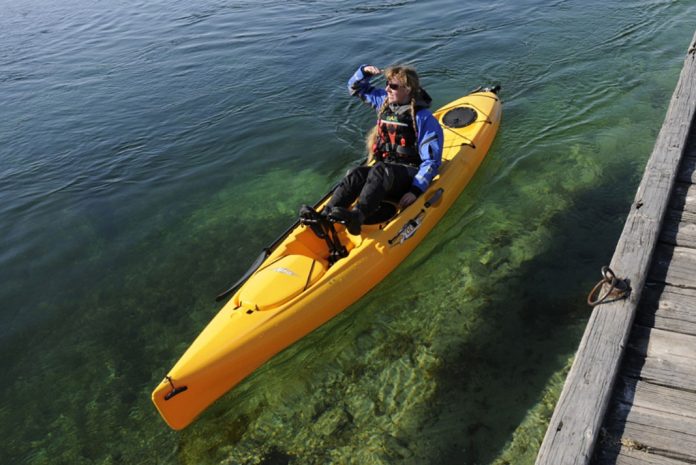
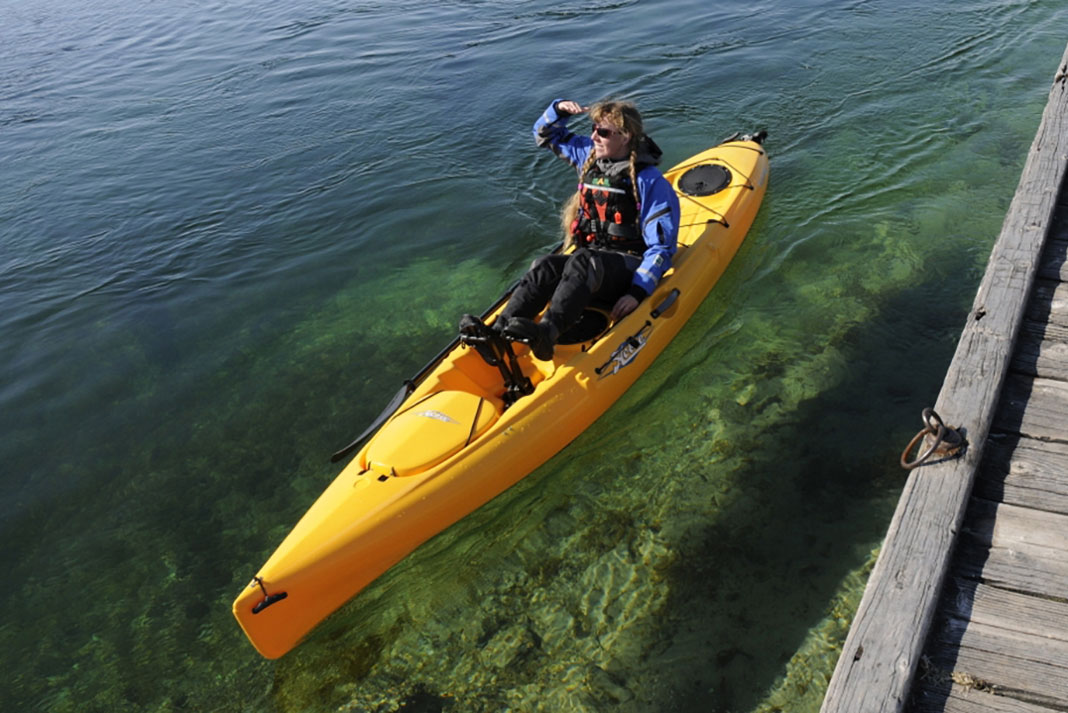
The popular do-it-all model in the Mirage sit-on-top line, the Revolution 13 can be propelled with either paddle or pedals thanks to Hobie’s ingenious MirageDrive. Taking engineering cues from the graceful underwater flight of penguins, the MirageDrive’s flexible hydrofoil fins scissor the water with each leisurely push of the pedals, propelling the kayak at cruising speeds matching those of a sprinting paddler.
Using your legs has other advantages as well: think less effort, Jillian Michaels quads, and leaving your hands free to photograph, cast or snack. It’s also a great option for paddlers who suffer from upper body or back strain—switch from paddle to pedals to use an entirely different muscle group while giving your back a break.
[ Paddling Buyer’s Guide: See all Hobie kayaks ]
The Hobie Revolution 13 is a pleasure to pedal
Being a pedal boat neophyte, I worried about maneuvering while pedaling and steering with the small hand lever that controls the Revolution’s rudder. The lake still looked distinctly Antarctic (remember the longest winter ever?), and I hoped to steer my polyethylene penguin well clear of the ice shelves. I needn’t have fretted. While the hand-operated rudder and Hobie’s lean-back-and-put-your-feet-up pedal position went against every grain of my paddler’s intuition, it’s an undeniably comfortable, efficient and even addictive way to chew the miles.
At 83 pounds fully rigged, the Revolution is something of a hippo to maneuver on land (ask a friend to help carry or, better yet, get Hobie’s handy kayak cart), but on the water the MirageDrive literally gives this kayak wings. With the fins and rudder deployed, the Revolution dances across the water, pirouetting in tight circles and flying through wind chop.
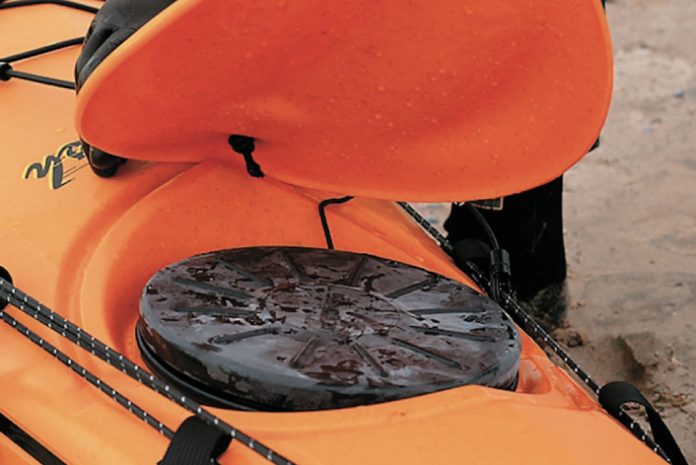
Curious as to the Revolution’s aptitude for longer tours, I packed the eight-inch round stern and center hatches and cavernous bow hatch with enough kit for a weekend escape. The added weight barely registered. Even fully loaded, it responded promptly to rudder inputs or paddle strokes, and swiftly accelerated to cruising speed with just a few kicks of the pedals.
Excellent primary stability and a spacious on-deck cargo area make the Revolution 13 an ideal platform for kayak anglers or furry companions. Aspiring sailors can drop Hobie’s optional downwind sail kit into an inconspicuous footing near the bow, free from the unnerving sketchiness that accompanies attempts to harness the wind in less forgiving craft.
THE MIRAGE REVOLUTION 13 By Hobie Kayaksbody | Feature Photo: Vince Paquot
When it comes to rough water performance, the MirageDrive fins further increase stability, much like the daggerboard on a sailboat. If you do manage to capsize or fall overboard, self-rescue is as simple as scrambling back onto your seat and watching the floodwaters drain through the scupper holes. One addition we’d like to see is full perimeter lines to increase the number of grab holds, in the water and on land.
Perhaps the inspiration for Hobie’s clever engineering solutions came to their designers in their dreams—it worked for Thomas Edison, after all. Despite my grasping, my own recent hypnagogic revelation probably says less about the attributes of the Revolution 13 than it does my expanding paddling proclivities. The image of disparate species sharing their waters represents an unlikely admission from a diehard paddler: there’s room in my kayak for pedals
Penguin Power
MirageDrive fins propel the Revolution forward with each pedal push, and fold flush to the hull for skimming over shallows. There’s no reverse gear—grab your paddle to back up.
Stow or Go
Use the rudder when pedaling to avoid traveling in circles. When retracted for paddling or transport, the rudder twists flat against the deck. Now that’s smart.
Lumbar Lovin’
Hobie’s high-back padded seat features an inflatable lumbar support for all-day comfort. Rudder controls, center hatch, pedal adjustments and dual fishing rod holders are within easy reach.
This article first appeared in the Early Summer 2014 issue of Adventure Kayak Magazine. Subscribe to Paddling Magazine and get 25 years of digital magazine archives including our legacy titles: Rapid, Adventure Kayak and Canoeroots.




 This article first appeared in the Early Summer 2014 issue of Adventure Kayak Magazine.



