Home Blog Page 156

6 Tips To Supercharge Your Next River Run

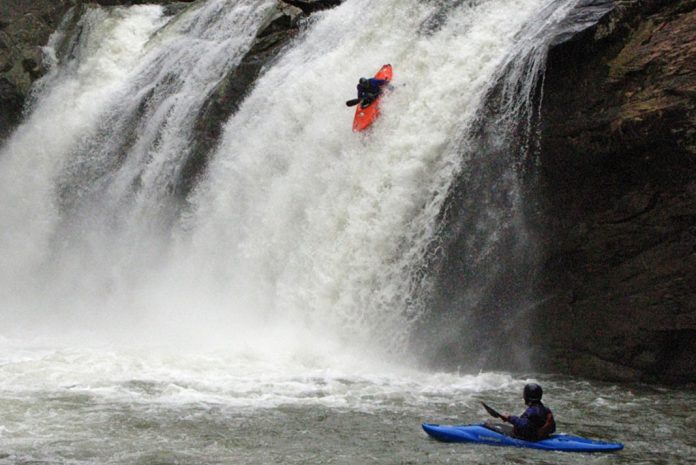
Kayaker running a waterfall with another kayaker waiting below.
Feature Photo: Flickr user Jeff Moore http://bit.ly/1jNlqZo

Running rivers is one of the best ways to spend a day. From excitement at the put-in to battling butterflies before a challenging new feature to laughing with your friends at the evening campfire, engaging with these waterways is life-enriching. If you’re new to river running, here are some tips to supercharge your run and have longer, stronger and happier kayaking days.
6 tips to supercharge your next river run

1 Eat breakfast

There are so many details involved in getting to the river—ideally with all your gear—that its easy to feel too rushed for breakfast. Skip the first meal of the day however, and you will not only have low energy but will also be less equipped to handle cold conditions. Make the time to prepare a breakfast with protein, complex carbohydrates and some fruit. Think an egg and bacon sandwich on whole wheat toast and a smoothie or oatmeal with peanut butter and blueberries.
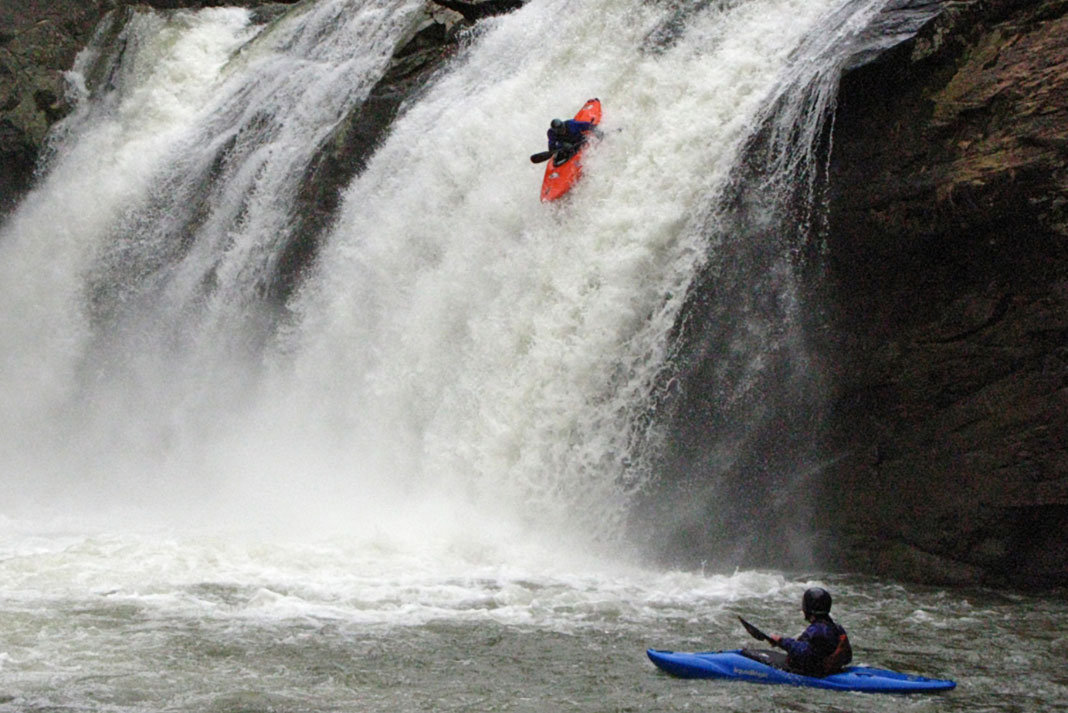
Kayaker running a waterfall with another kayaker waiting below.
Feature Photo: Jeff Moore/Flickr

2 Take rest days

When you have the time and freedom to paddle, it’s tempting to want to be on the river every day. Like any other sport however, your body needs rest days. If you’ve been paddling for so many consecutive days you can’t recall your last time on land, schedule a day to take it easy. Sleep in, stretch and eat nutritious food. Taking care of your body will allow you to be a better paddler and push your limits further.

3 Avoid (or at least limit) hangovers

Having beers with paddling friends is a great way to celebrate an awesome day on the river. If you want to amp up your river running, try to avoid going too wild and getting into your boat the next day with a hangover. Hangovers can limit our cognitive functioning, reaction time and memory, all factors that can affect your performance on the river (or at the very worst compromise safety). Your body on a hangover is also seriously dehydrated, so a day of strenuous activity will feel much tougher than it should.

4 Foam roll after kayaking
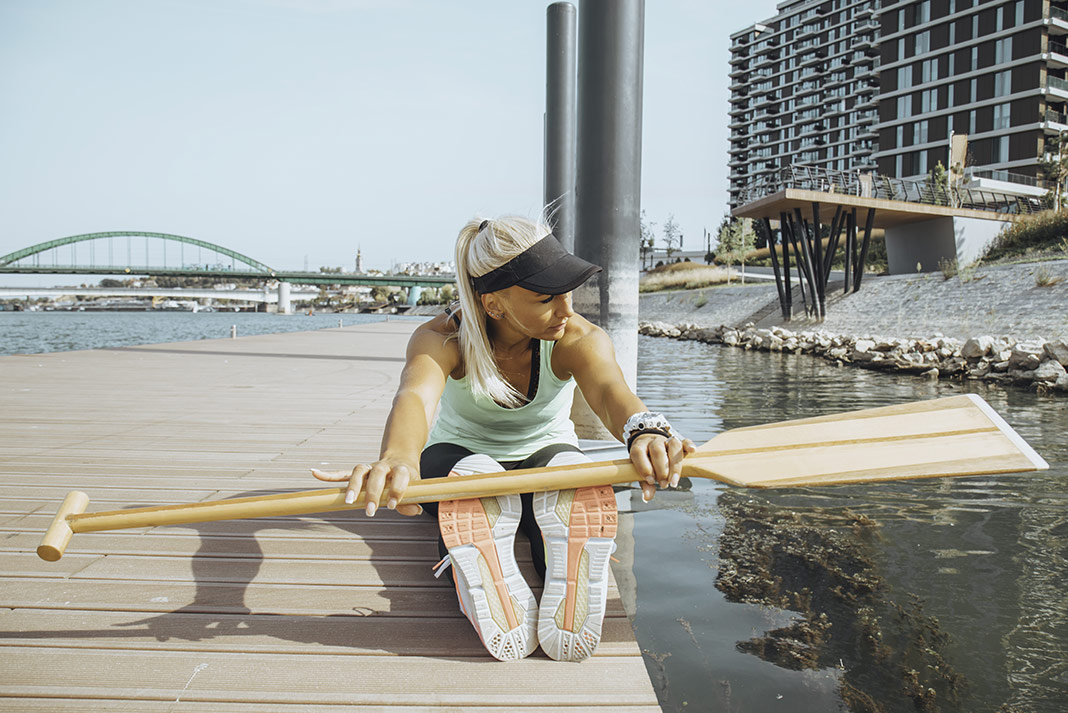
When you return from the river, resist the urge to sink into the couch and instead spend 20 minutes using a foam roller. These inexpensive tools smooth and lengthen your muscles and can increase your paddling performance. Foam rollers are also a great tool to use when recovering from muscle injuries, although you should be sure to consult a physiotherapist or other professional for advice specific to your ailment. Using them before stretching is a great routine to adopt to supercharge your river running.

5 Use visualization

Visualization is a powerful tool that helps prepare for challenging or new situations. Athletes like Tiger Woods uses mental rehearsal to prepare for high stakes situations. Whitewater kayaker Nouria Newman likes to sit in her boat before a race, close her eyes and visualize each gate she will go through on the run. Next time you come to a rapid, try sitting on the shore after you’ve scouted and visualize every move you want to make.

[ Plan your next adventure with the Paddling Trip Guide ]

6 Bring the right snacks

Being hungry on the river is an easy way to lose focus. Take time to pack filling and nutrient dense snacks and a lunch to keep you satisfied and full of energy. Snacks that offer complex carbohydrates, protein and fiber are good choices. Think beef jerky, cheese strings, fruit, nuts and energy bars. Make sure you pack things that you will actually eat and keep them in an accessible place so you don’t put off eating until you are weak, cold and cranky.


Putting these tips into practice

Whitewater kayaking can be a blast, but the physical and mental exertion means that you may feel depleted during your trip. With a bit of planning and some careful consideration you can get the most out of the experience. Keep these six river kayaking tips in mind when you next prepare to hit the swifts and your run will be one to remember.

Feature Photo: Jeff Moore/Flickr
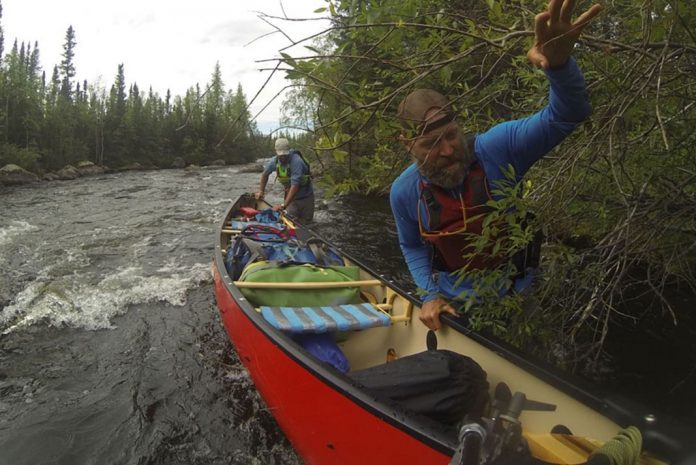
 

T-Formex Review: Frank Wolf Canoes 1,800 KM To Test New Material

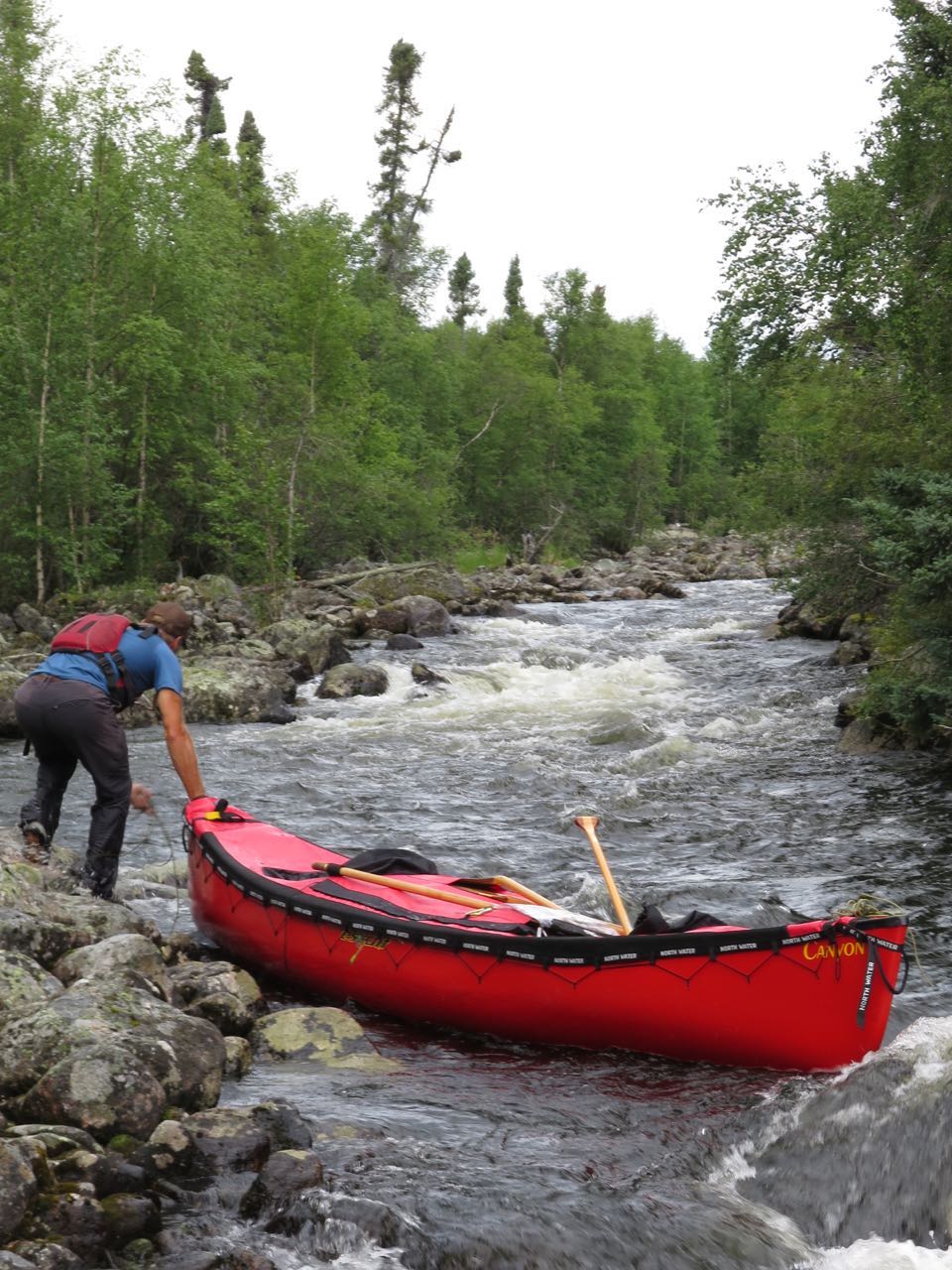
Frank Wolf testing an Esquif Canyon canoe in T-Formex
Photo: Frank Wolf

When plastics conglomerate Poly-One shut down production of Royalex in 2013, canoe manufacturers scrambled to replace the favored hull material of whitewater and expedition paddlers. In Spring 2016, Esquif Canoes from Frampton, Quebec, began rolling out their line of T-Formex canoes and I was lucky enough to be one of the first to test the new product and provide my T-Formex review. Basically, I was their willing guinea pig.

Successor to the Royalex crown

Within the canoe industry, many manufacturers looked to composite materials as a Royalex replacement. Only one canoe company took on the gargantuan task of creating a hull material with the parallel properties of weight, durability and performance that Royalex possessed.

T-Formex looks, feels and acts like Royalex, with a seemingly indistinguishable ABS foam core sandwich construction.

Canoe tripping in the Canyon

To test the material’s durability and functionality, my friend Shawn Campbell and I set out from La Ronge, Saskatchewan in an Esquif Canyon on an 1,800-kilometer, 44-day journey to Baker Lake, Nunavut.

I’ve used prospectors as my hull design of choice for all of my expeditions since 2007, however Esquif hadn’t made any prospectors with T-Formex at the time of our departure. So I ended up using the Canyon—a whitewater tripping model that’s a hair shorter (16’5”) and has more rocker (4.5”) than the Esquif’s Prospecteur 17.

Testing the T-Formex canoe on rocky rivers
Nothing wrong with a little bump and grind. | Photo: Frank Wolf

I was unsure about the new canoe model at first, since a large portion of our journey would be lake and upstream travel.

An immediate drawback was that the Canyon definitely required more correction strokes than the Prospecteur, but after a couple of days I got used to it. I ration out food for my canoe expeditions based on a 40-kilometer per day average, and in the end we were a little better than that number. So the combined upstream, downstream and lake speed with the Canyon was pretty much the same as with the Prospecteur.

Payload and maneuverability to spare

Our sole re-supply stop was 15 days into our trip at Lac Brochet, Manitoba, from where we paddled away with 30 days of food to the finish. The 1000-pound capacity craft easily absorbed our payload, leaving lots of freeboard. Though not as good at tracking in still water, the advantage of the Canyon over a prospector design became apparent in the whitewater and windy lakes on the second half of the tour.

[ Plan your next adventure in Canada’s North with the Paddling Trip Guide ]

The Canyon’s maneuverability was gauged in the tight confines of an unnamed river that flows from Nunim Lake and eventually to Kasba Lake. Characterized by narrow flumes that snaked around boulders and logs, the river required instantaneous manoeuvres in order to avoid getting hung up or worse. Even with a full load, the canoe stayed nimble and turned on a dime whenever we needed it.

We ran the entire thousand-kilometer length of the Kazan River as part of the route, and found that the Canyon rode really dry when running through the haystacks and holes of its high-volume rapids.

On big, windy lakes like Kasba and Ennadai, we paddled extended, exposed stretches in meter-high waves and the Canyon danced up and over the breakers with ease. Its deep bow was more effective at shedding water than a Prospector or asymmetric canoe. Overall, I found the Canyon to be a great river tripper that’s versatile enough to excel in any water conditions.

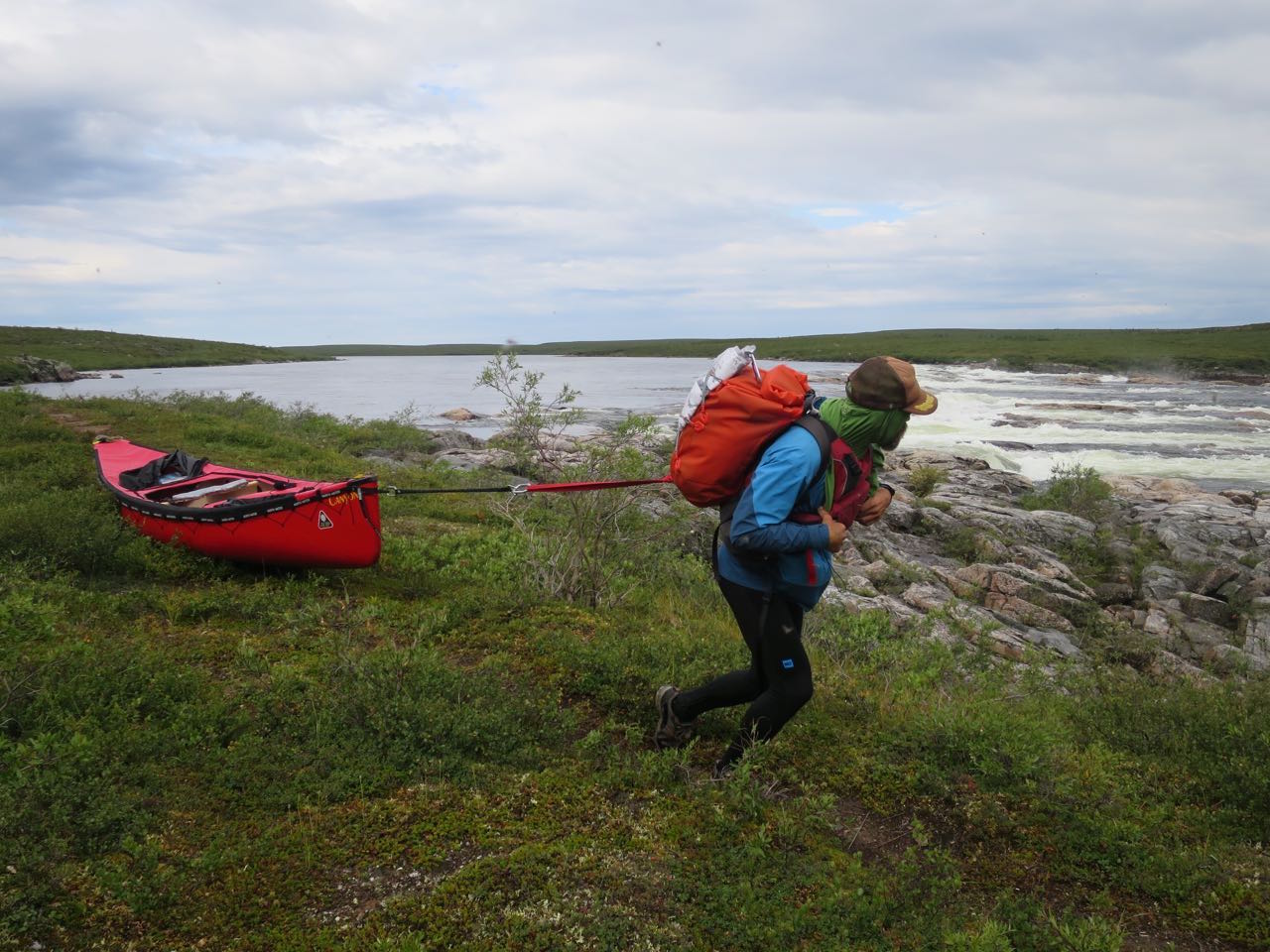
Pulling the T-Formex canoe on a portage
Long way to go. | Photo: Frank Wolf

T-Formex Review: It’s a winner

As much as I enjoyed the Canyon, it’s the material that everyone asks me about. And as for my T-Formex review itself, I was impressed.

On our way to the divide at Nunim, we traveled upstream through a shallow creek system for several days, which often involving dragging the canoe fully loaded over rocks. From this experience, I definitely found T-Formex held up better than Royalex. It seems to be stiffer—not gouging as easily when being ground over sharp rocks or dragged through dense bush and rough tundra. Portaging with the canoe on my shoulders was no problem either—the spec weight is the same as Esquif’s previous models, which is great.

In order to truly test the durability of the material, we decided not to install Kevlar skid plates. Despite this, the wear on the bow and stern by the end of the trip was surprisingly minimal with no denting despite the endless hard hits the canoe took. As well, T-Formex slides easily over shallow boulders and ledges in rapids so property-wise, I found it to be as forgiving and predictable as Royalex.

[ Paddling Buyer’s Guide: See all plastic laminate canoes (i.e. T-Formex, Royalex) ]

In my opinion, lovers of Royalex should rejoice. It’s back and better than ever in the form of T-Formex. No need to handle your canoes with kid gloves any more—you’ll be beating the heck out of your T-Formex canoe for years to come.

More canoes in T-Formex coming soon

Long-term goals of Esquif include providing T-Formex sheets to all manufacturers who want them, so paddlers should look out for their favorite canoe brands to utilize this promising new material down the road. Keep a close eye on your local canoe retailer’s shelves and you too could do a T-Formex review.


Packraft Review: AIRE BAKraft Expedition

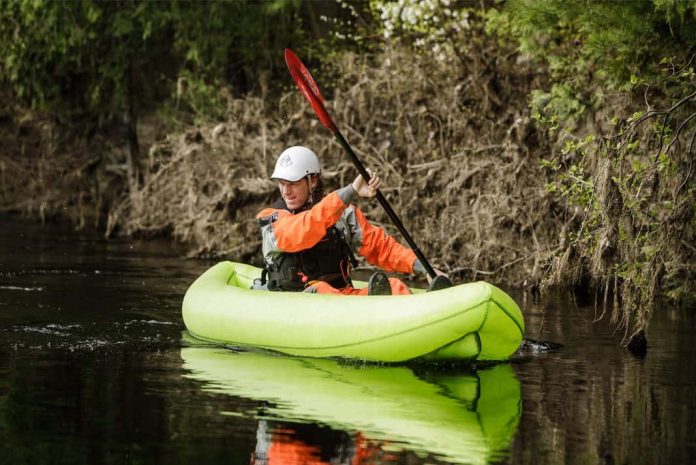
Man paddling the AIRE BAKraft Expedition inflatable packraft

Ihad recently returned from a tradeshow where the new AIRE BAKraft Expedition packraft was revealed when I received an email from Cameron Dubé pitching a bikepacking packrafting story. I immediately wrote back telling him I’d source the boats if he’d organize the food.

AIRE BAKraft
Expedition Specs
Length: 10’2”
Width: 40”
Weight: 12 lbs
Primary Materials: Aramid, i.e. Kevlar, Nomex, Twaron
Self Bailing: Yes
Number of Paddlers: Solo
Outfitting: Back reset, thigh braces

The BAKraft Expedition bails itself out

Soon after the Second World War inflatable packable rafts used as survival equipment in airplanes began to appear in army surplus stores. Legend has it that in 1952, Dick and Isabelle Griffith did the first recorded whitewater packraft river run when they descended Copper Canyon in Mexico.

Sixty-five years later, packrafting seems like it’s the new big thing. Companies like Alpacka, Kokopelli and AIRE all making whitewater-specific lightweight inflatables that you can carry up rivers and paddle back down.

When AIRE first released their tiny BAKraft Hybrid in 2015 I interviewed marketing manager Sheena Coles. The original BAKraft is just seven feet long and only seven pounds. It was the first self-bailing packraft not requiring a skirt to keep out the water. Water runs out through holes in the inflated floor like any modern raft or inflatable kayak.

When Cam pitched the story last fall, I called Sheena and she sent us two pre-productions versions of the new AIRE BAKraft Expedition.

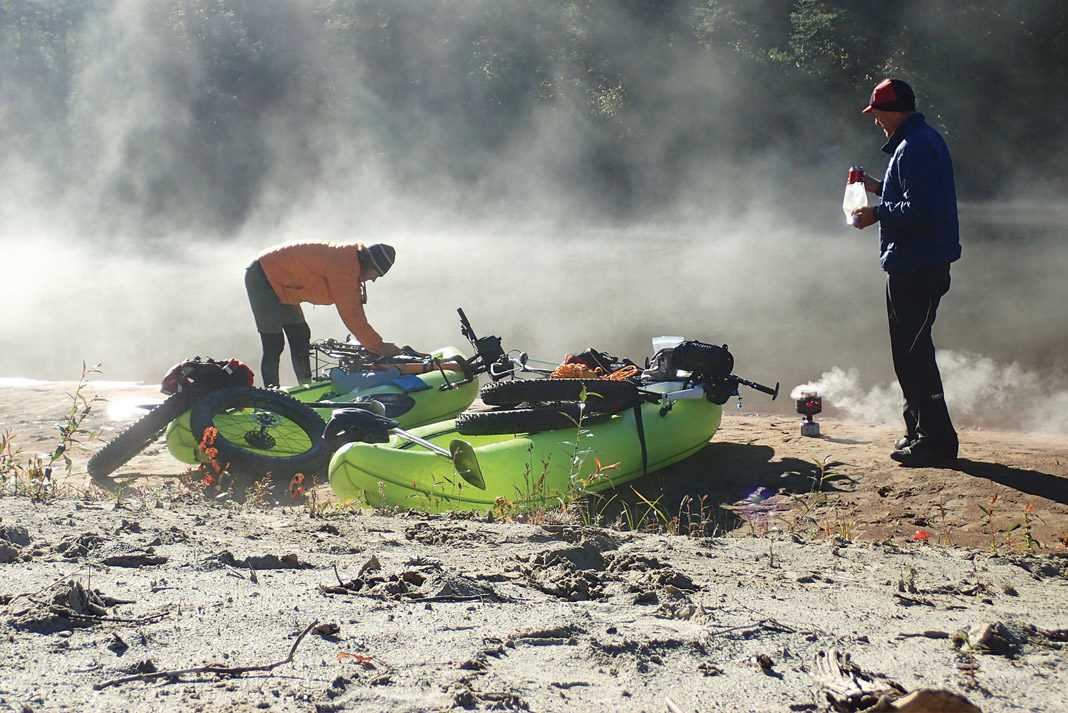
Two men load bikes into an inflatable packraft
Scott and Cam pack their fat bikes on to the AIRE BAKraft Expedition. | Photo: Scott MacGregor

Embarking on an Expedition

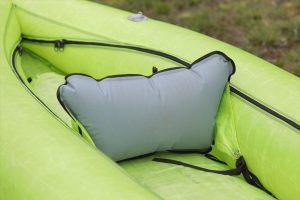
To keep the pack weight to a minimum—only 10.5 pounds—AIRE’s storage bag comes with a hose and doubles as an inflator. Fill the bag with air and squeeze it through the hose into the raft. Fill the bag with air, squeeze it into the raft. It’s a cleverly primitive and tedious system. But it works.

After the bike ride up the river, in less than an hour we’d completely changed sports and shoved off from our sandbar. Typically in packrafts the bikes would be laying across the bow over top of our legs. We were happy to have opted for AIRE’s 10-foot Expedition and the room to have the bikes behind us for easier paddling and seeing our lines down the rapids ahead.

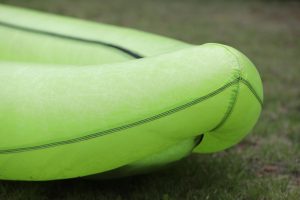
AIRE has included a daisy chain of lash tabs where the floor joins the collar. The seat and standard-issue thigh straps fasten in this way. The rest of the tabs we used to lash in drybags and the bikes. We had way more room in the Expedition than you’d ever carry on a bike.

BAKraft has a tough exterior

AIRE makes their rafts and inflatable kayaks with an outer shell to protect the inner bladders. The BAKrafts are the same. The bladder is an ultralight urethane AIREcell and the shell is a tough new Dyneema fabric. Dyneema feels like those reusable waxy sheets that hippy moms put in lunch kits to wrap sandwiches, except the Expedition material has a ripstop weave.

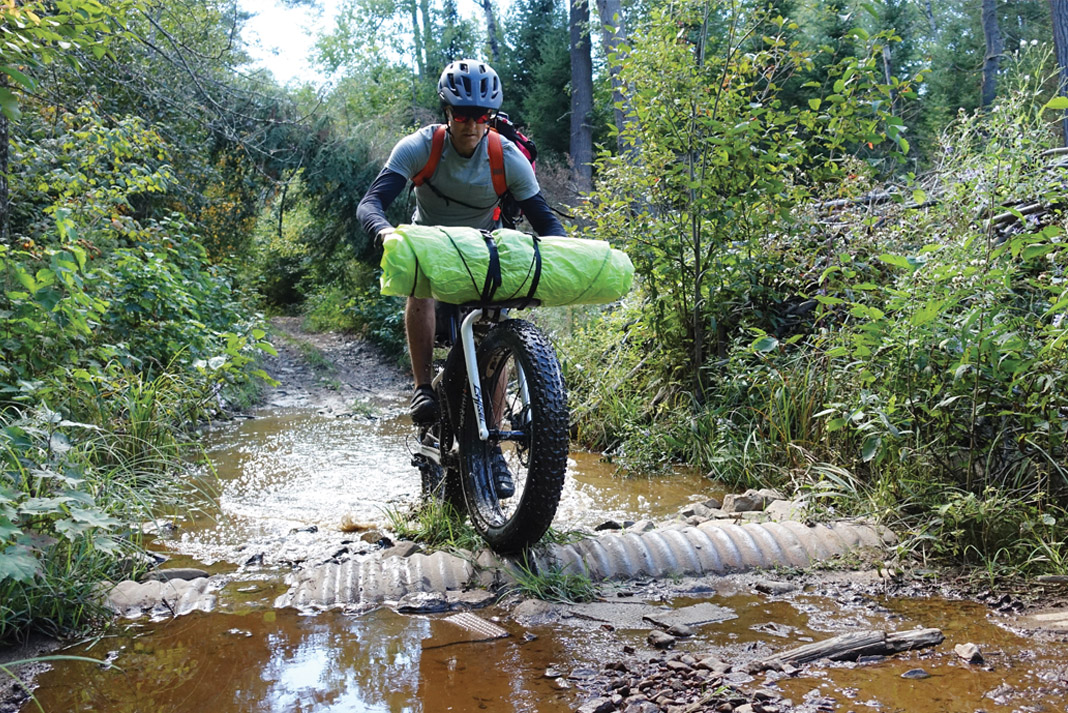
man riding a fat bike through puddles while carrying a rolled-up packraft
Roll up the AIRE BAKraft Expedition and strap it to your handlebars. | Photo: Scott MacGregor

Very quickly we stopped thinking of the AIRE BAKraft Expedition as a packraft. How does it paddle? Just like an inflatable kayak. The boats pumped up firm and are extremely capable river runners. Even if you’re not packing a bike but just running whitewater rivers, carrying an extra three pounds to get a 10-foot kayak is worth it. Some guys go this route just so they can sleep in their boats with bug netting or a tarp draped over top.

We’d been paddling a solid seven hours when it started to get dark. The fading light wasn’t enough for us to distinguish deep water from thousands of shallow pillows in the boogie water swifts.

“How much abrasion do you think these floors will take,” I shouted over to Cam. We were both scrubbing up on rocks just below the surface. I felt like we were kids at a birthday party knocking around balloons waiting for them to pop. But they didn’t pop.

We were surely the first self-supported
fat bike packraft trip the river has ever seen.

In fact not only did we not pop the Expeditions, the rocks didn’t even leave a scratch or a scuff on the Dyneema. This material slides off rocks better than any raft or hard boat I’ve ever paddled. I feel like this is just the beginning for Dyneema. I bet we’ll see beefier variations appear throughout AIRE’s line of kayaks, rafts and fishing tubes.

If by chance we did puncture one of the Expeditions, AIRE includes a field repair kit. Simply patch the bladder and sew up the hull with the included needle and thread.

Break new ground with the AIRE BAKraft Expedition

We were surely the first self-supported fat bike packraft trip the river has ever seen. Not to mention one of the first trips in the pre-production AIRE BAKraft Expedition. Imagine the possibilities presented by this very capable whitewater river runner that packs smaller than a four-slice toaster or can be rolled and strapped to your handlebars. Endless.

This article was first published in Issue 51 of Paddling Magazine. Subscribe to Paddling Magazine’s print and digital editions, or browse the archives.


Water Sports Foundation Welcomes Veteran Paddling And Boating Journalist Jeff Moag As Content Director

Water Sports Foundation

The Water Sports Foundation (WSF) welcomes outdoor writer and editor Jeff Moag as its new Content Director, with responsibility for managing the non-profit’s media campaigns promoting safe boating and paddling. Moag will also oversee development of a new website and expanded social-media presence for the leading boating-safety foundation established in 2004.

Moag was editor-in-chief of Canoe & Kayak magazine for eight years, and led the team that founded Kayak Fish magazine, SUP the Mag and the Canoe and Kayak Awards. Moag also has worked as a freelance writer and producer for clients including Adventure Journal, Outside, Men’s Journal, The Washington Post, and the Tuck School of Business at Dartmouth. He is a lifelong waterman with experience in power boats and sailing in addition to whitewater kayaking, canoeing and sea kayaking. He’s trained in swift water rescue.

Since 2018, Moag has directed the WSF’s U.S. Coast Guard non-profit boating safety grant titled Lessons for Life: Accidents as Learning Experiences, a campaign that uses video and written narratives of true-life boating accidents and near escapes to deliver safe boating messages. Moag looks forward to an expanded role at the WSF, using his storytelling chops to animate the non-profit’s broad-ranging campaigns to increase life jacket wear, reduce impaired boating, and reach recreational boaters and paddlers through enthusiast media such as boating and paddling magazines and radio outreach to Spanish-speaking Americans.

“The Water Sports Foundation has been a leading voice for boating and paddling safety for nearly a decade,” Moag said. “I’ve been privileged to assist in this important work, first as an editor at Canoe & Kayak, and later as producer of our Lessons for Life program. I’ve seen the positive impact of these campaigns first-hand, and I’m thrilled to take a larger role as the WSF continues to expand its innovative safety content and build its online and social media presence.”

“Jeff Moag’s experience and energy will contribute substantially to the WSF’s boating-safety mission,” said WSF Executive Director, Jim Emmons. “Jeff is an award-winning journalist who brings a deep understanding of boating safety and enthusiast media to our team, plus he already has experience working with the Water Sports Foundation.”

Moag’s responsibilities as Content Director include overseeing the design and launch of a new Water Sports Foundation website and growing the non-profit’s audience on Twitter, Facebook, and Instagram. Moag will also manage the WSF’s YouTube channel, which features nearly 200 boating and paddling safety videos.

Since 2011, the WSF has been a U.S. Coast Guard Boating Safety Outreach partner through its non-profit organization recreational boating safety grants program. The WSF currently manages seven boating safety outreach grant projects, including programs designed to, among others, increase life jacket wear rates; reduce the rate of impaired boating; increase awareness of boater education; and target boating-safety messages to powerboaters, paddlers and Spanish-speaking Americans. The WSF also enlists the boating and paddling industries to promote safe-boating messages to their customers. The WSF has been responsible for the production of nearly 200 safety video PSA’s and hundreds of safety articles, generating more than one billion impressions through its twenty-two media brand partners.

“This work saves lives,” Emmons said. “For a decade, our follow-up Attitude and Behavior Studies show that the WSF’s outreach campaigns are changing the public’s attitudes and behaviors about safety. The Coast Guard has reported a reduction in boating casualties for three consecutive years. Our job at the WSF is to do everything we can to extend that trend. Jeff shares that goal, and I’m confident his experience and safety knowledge will help us achieve it.”

***

Headquartered in Orlando, FL, the Water Sports Foundation is the non-profit educational arm of the Water Sports Industry Association (WSIA.net).  Since 2011 the WSF has received U.S. Coast Guard boating and paddling safety outreach funding through their non-profit grant program. The Sport Fish Restoration and Boating Trust Fund administered through Congressional action provides funding for the U.S. Coast Guard’s recreational boating safety initiatives.

Video: The River That Flows Both Ways

In August 2019, Brendan Davis and Kirk Muir Horton paddled 315 miles from source to sea down the Hudson River. Starting in the Adirondacks and ending at the Statue of Liberty, their trip was about as unpredictable and complex as the river itself.

The trip started off as a way for Brendan to pay tribute to the source of his childhood exploration. But the Hudson offered discoveries and challenges along the way, both aquatic and otherwise, that tested and formed a bond between the new friends, and in turn between them and the Hudson.

[Discover the best packrafts of the year in the Paddling Buyer’s Guide.]

Without much paddling experience, and with a relatively new friendship to boot, they took their 10-foot inflatable raft to Lake Tear of the Clouds and started their journey downriver. Brendan and Kirk encountered dry riverbeds and class III whitewater, and battled heavy tides. When things went wrong they hitched rides on rafts, boats, and cars. In times of need strangers became friends. From a trickle to the sea, they explore the river, revisited Brendan’s childhood home in Cornwall, NY, and traveled down one of America’s most influential yet endangered rivers. —From the filmmaker

Boat Review: Current Designs Ignite Kayak

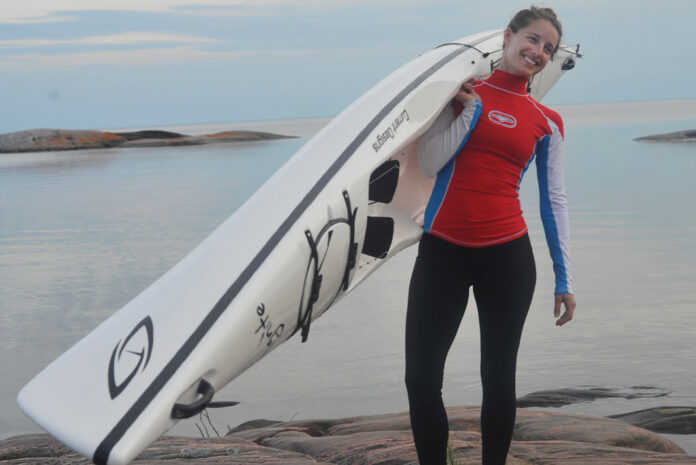
Current Designs Ignite | Feature Photo: Virginia Marshall

The name is appropriate for the Current Designs Ignite, a highly capable hybrid that fills the gap between high-end surfskis and sit-on-top recreational kayaks. For touring kayakers, it could spark an interest in go-fast fitness paddling or even recreational racing. For fitness freaks and race geeks, it could ignite the possibility of taking that first overnight trip.

Current Designs Ignite Specs
Length: 16’
Width: 24”
Weight: 39 lbs
Material: Fiberglass/Aramid
MSRP: $2,599
www.cdkayak.com

The CD Ignite races ahead

The Ignite blends the stability and predictable handling of Current Designs’ popular Solstice GT touring hull with the open cockpit of a surfski, then adds spacious watertight storage compartments. It’s a chimera that may well be the most versatile speed machine we’ve paddled.

Cruise or sprint

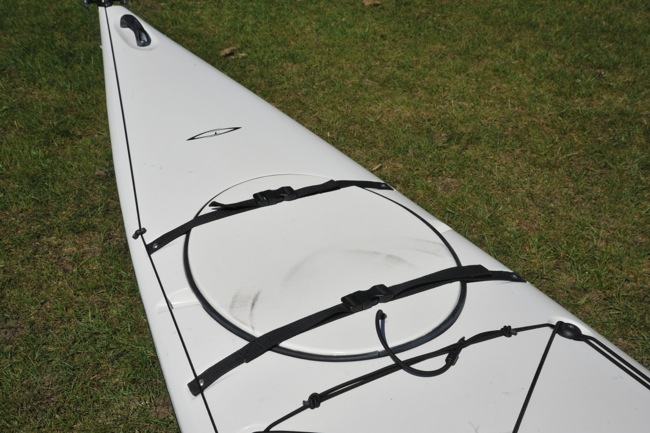
Two hatches offer 125 litres of dry storage (that’s double what you’d have backpacking), but the buckles-lid-neoprene-hatch-cover system was the fiddliest of any test boat—making getting at your gear a chore for stiff fingers and smaller hands.

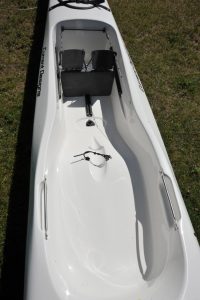
Detail of the Current Designs Ignite's cockpit
The Ignite’s cockpit. | Photo: Virginia Marshall

The waterline on this 16-footer was the longest we tested and, not surprisingly, accelerated effortlessly to the fastest cruising and sprint speeds.

[ Paddling Buyer’s Guide: See all racing & training kayaks ]

Sleek, minimalist styling

The Current Designs Ignite is all about smooth and sleek. The shallow-V hull and soft chines offer lively, seamless edging. The beam is widest behind the cockpit, where it measures 24 inches, for a longer, more efficient entry and minimal drag.

That minimalist approach extends to the Ignite’s deck rigging, where we noted the lack of perimeter lines and a single bungee X on the stern. Handles are positioned beside the cockpit at the boat’s balance point to assist with shoulder carries or re-boarding.

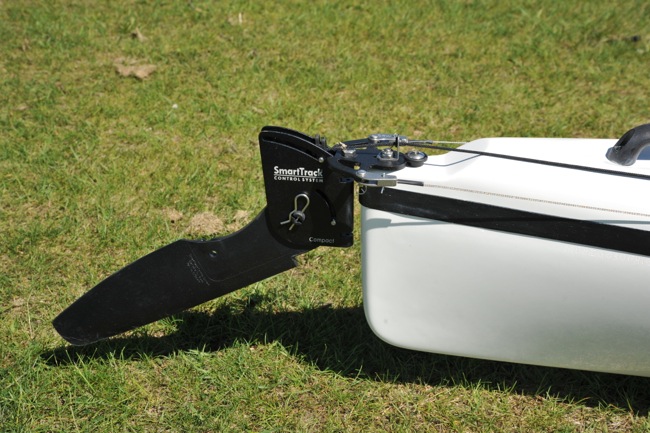
Speaking of which, the Ignite weighs in at a manageable 39 pounds, thanks to its fiberglass/Aramid layup, carbon rudder footboard and frills-free (yet surprisingly comfortable) seat pan.

Make haste in the Current Designs Ignite

Blending the long waterline and open cockpit of a surfski with two roomy watertight hatches and reassuring stability, the Current Designs Ignite is an ideal starter ‘ski for fitness and light touring. Whether you seek to cruise or sprint—or ideally, both—the Ignite is a hybrid with easy maneuverability on and off the water.


Video Review of the Current Designs Ignite Kayak:


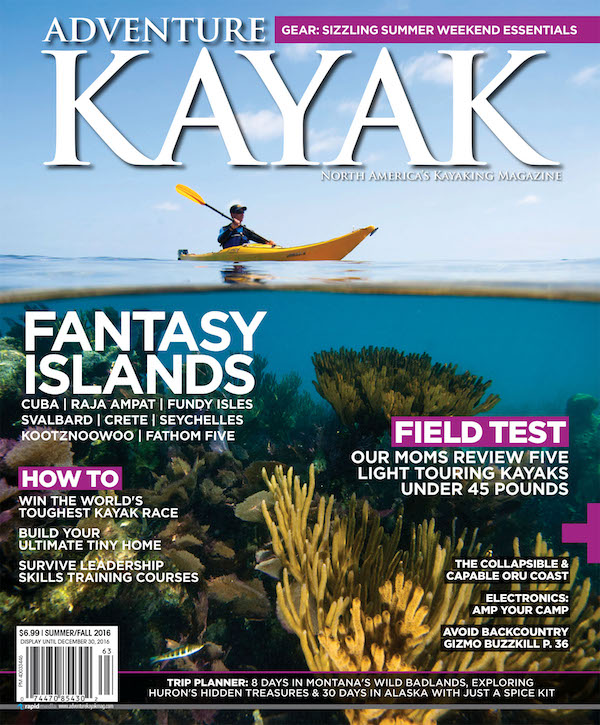
This article originally appeared in the Adventure Kayak
Summer/Fall 2016 issue.
Subscribe to Paddling Magazine and get 25 years of digital magazine archives including our legacy titles: Rapid, Adventure Kayak and Canoeroots.

Boat Review: Esquif Excite Canoe

Esquif Canoes’ Excite
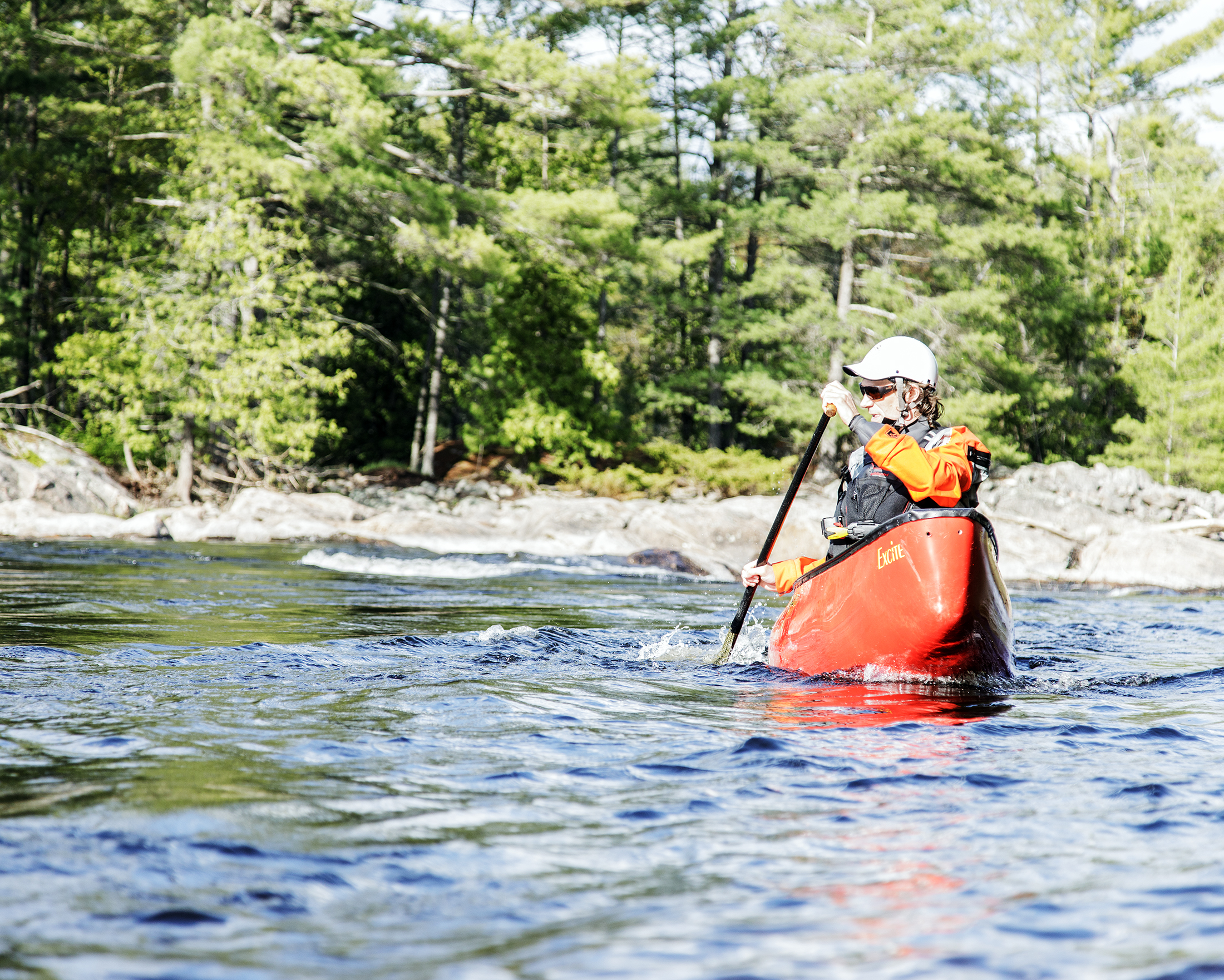
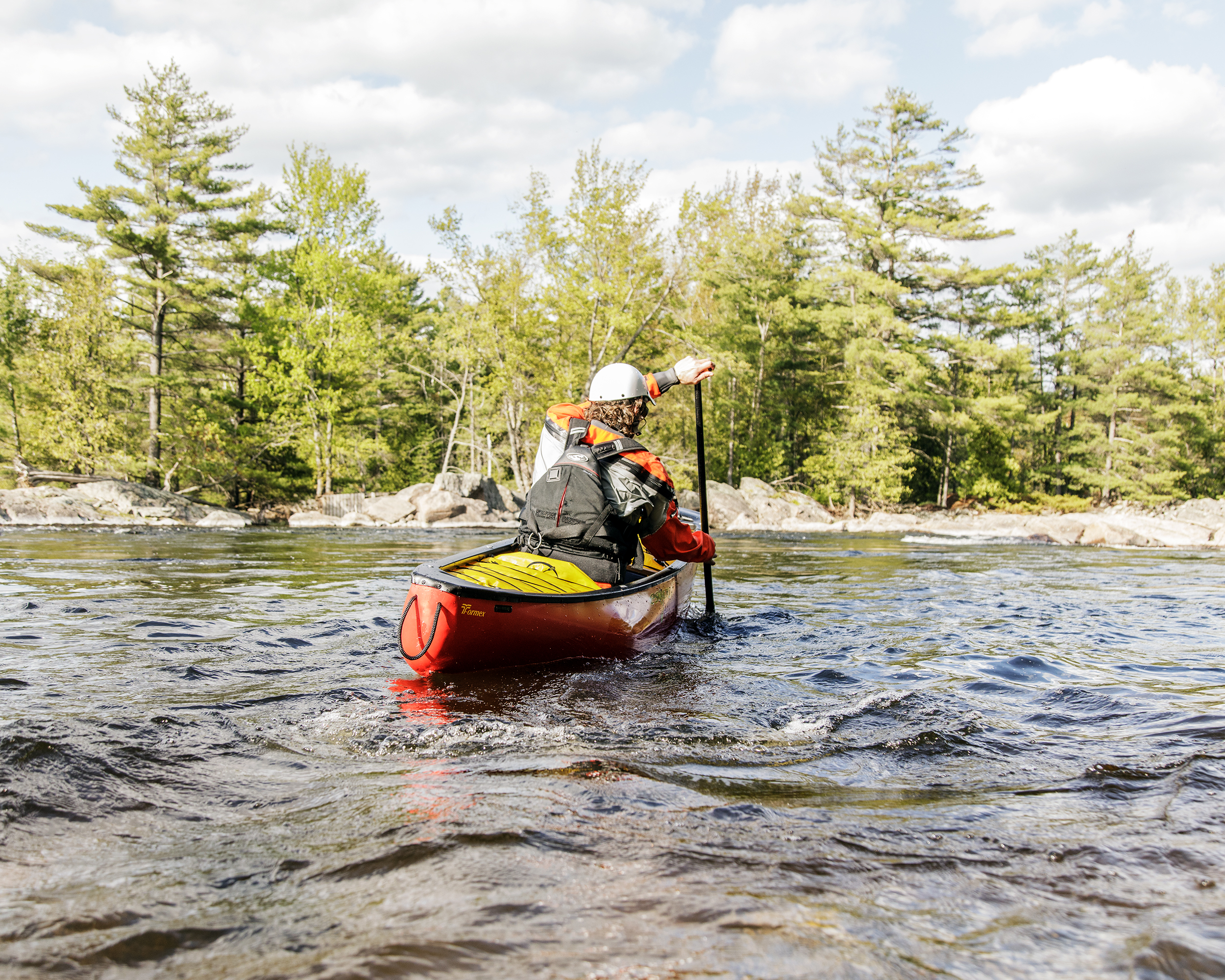
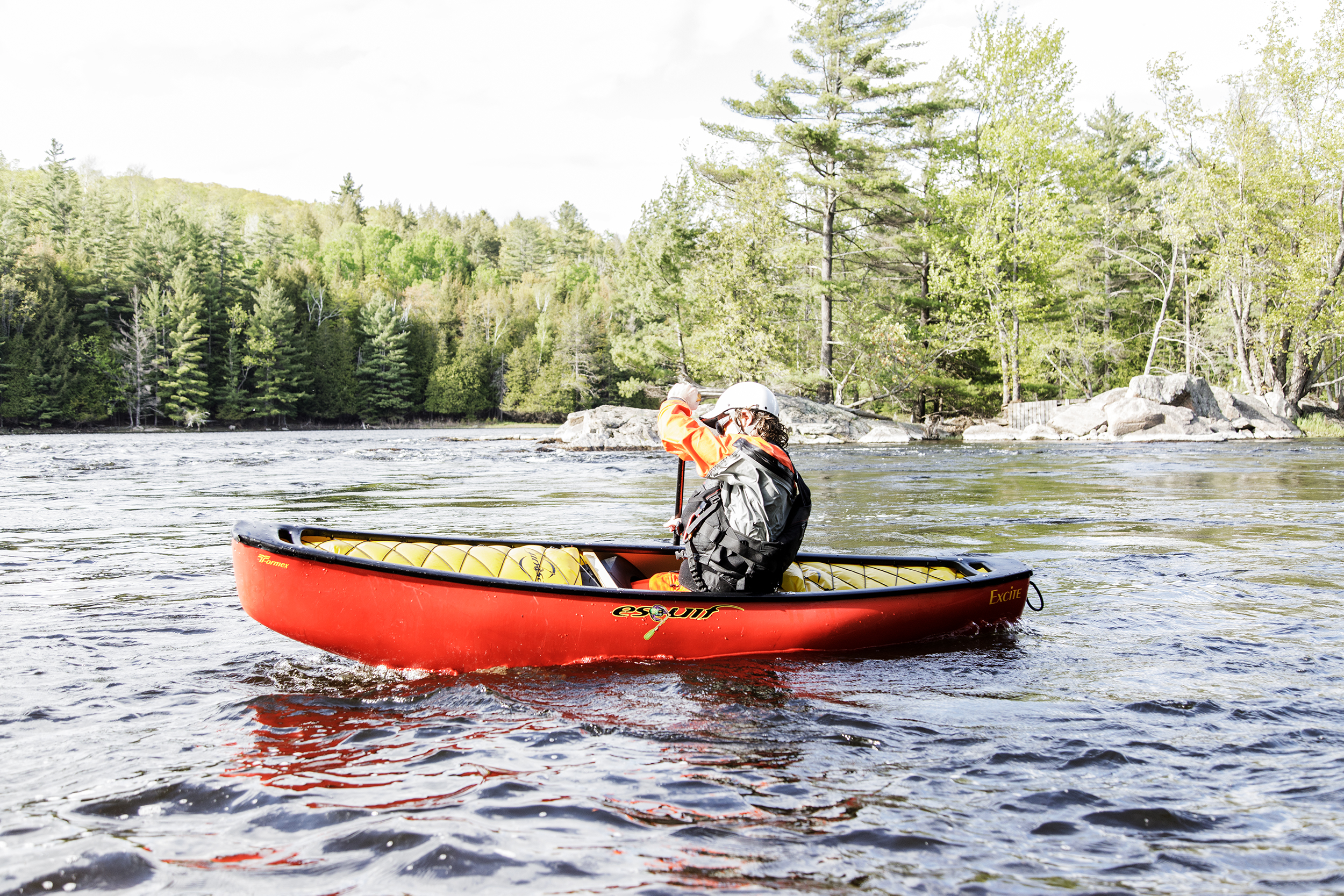
Esquif’s Excite is an exciting design, full of new ideas about what makes a canoe fun to paddle. | Photo: Alex Traynor

Getting in the new Esquif Excite canoe, I couldn’t get Secret’s antiperspirant tagline out of my head: Strong enough for a man, but made for a woman. While one of the most famous advertising campaigns of all time, I don’t really know what it means. The Excite, on the other hand, was designed first for women, and then up-sized for men. Doesn’t have quite the same ring to it, but the boat is awesome.

Esquif Excite Specs
Length: 9’6”
Width: 26”
Depth: 16”
Weight: 44 lbs
MSRP: $2,000 USD / $2,225 CAD (with wood trim)
www.esquif.com

Esquif’s Excite is a radical departure

Sabrina Barm is the first female canoeist to compete in North Carolina’s infamous Green River Race, and at the time she had competed in two Adidas Sickline Extreme Kayak World Championships paddling OC1 against fields of kayakers.

Let’s just say she’s a badass open boater. Barm’s also an automotive engineer with a background in boat design. With an extreme race resume and a few theories on acceleration, precision, hull speed and ergonomics, she approached Esquif Canoes owner Jacques Chasse about designing a polyethylene creeking and river running canoe specifically designed for smaller paddlers, namely women. Seemingly never too small a niche for Esquif, Chasse gave Barm the green light.

An interview with Barm about her Esquif Extasy first appeared in the Early Summer 2018 issue of Paddling Magazine. Followed by a full review of the Esquif Extasy in the Fall 2018 issue.

The Extasy is the most radically different canoe design we’d ever tested. I just wished I weighed 40 pounds less and had thinner hips—words I thought I’d never write—for squeezing between the integrated polyethylene gunwales. I wasn’t the only one. Enough Esquif team paddlers and other dudes were sneaking runs in Barm’s lawn dart to convince Chasse he needed to upsize the Extasy, and thus the Excite was born.

Canoe strokes - carving
In a neutral or slightly stern-heavy position, the bow releases and the Excite pivots like a Flying Saucer. Come forward and the bow engages to carve. | Photo: Alex Traynor

Turned out in T-Formex

The Esquif Excite isn’t just a chubbier Extasy, but a completely new boat inspired by it. First of all, the Extasy is rotomolded polyethylene like the L’edge, Spanish Fly and almost every whitewater kayak on the river. The Excite, like most full-size solo canoes, uses a plastic laminate material. Unless you’ve been living in a cave, you’ll know Esquif saved whitewater canoeing by coming up with its own special blend to replace Royalex, called T-Formex.

The top edges are capped with black vinyl gunwales and deck plates. The Extasy is available with bulkhead outfitting, and because the Excite’s T-Formex inner layer allows glue-in anchors, it is also available with pedestal saddle and straps.

The Extasy is super light, which is one of the best features for women and smaller paddlers on the water, portage trail and while roof topping. The Excite, on the other hand, is not super light. Our tester was an even 50 pounds with bulkhead outfitting and good nylon bags. This is the least exciting part of this new design. In my opinion, Chasse overbuilds most of his canoes. Admirable, but please make me an Excite Light—it even rhymes. I promise, Jacques, I won’t make a warranty claim when I wear through the chines in 10 years.

Giving new shape to open boating fun

Just looking at the Excite, you can tell this boat is going to be fun. The mid-section—let’s call it the cockpit of the Excite—sits above a 15-inch wide and 32-inch long flat section. On either side, the boat widens with six-inch pontoon-like bulbous sections just behind your hips. The bow sweeps up sort of like the Spark or the old Dagger Prophet. The stern radically narrows and kicks up the rocker aggressively 10 inches behind the seat. If you’re not following along, let’s just say this is not your typical symmetrical canoe. And it doesn’t paddle like anything you’ve ever tried before—except maybe the Extasy, if you could fit in it.

[ Plan your next paddling adventure with the Paddling Trip Guide ]

On the water, the Esquif Excite is exciting. The wide cockpit with stern kick rocker and an upswept bow makes it feel like you’re sitting and kneeling on a beach ball or one of those Flying Saucer snow sleds. Coming forward with your weight to engage the narrow bow makes it feel faster. Do this on the way into an eddy and it carves. Stay centered or come back a little bit and the bow releases making the Excite one of the most aggressive offside tilt-to-pivot boats we’ve tested. So snappy. So fun. This isn’t just awesome for micro eddies; it’s fantastic for mid-current pivots for changing direction.

Need to jump over a reactionary wave or boof a hole? Just come back a little and the Excite tips back on the rockered stern, lightening the bow dancing up and over as dry as can be.

The Excite is also one of the most fun solo boats I’ve ever surfed. The wide flat saucer section is super stable on the wave. On a steep wave, the tricked-up stern takes the profile of the wave face or pile rather than sending you down into the trough. The high-volume rockered bow seldom locks into the upstream water. It’s like you’re surfing on the saucer. The Excite is so free of locking in, I could even drop my T-grip hand and rudder to carve back on my offside. You need to try it.

Okay, you’ve probably figured out I really like the Esquif Excite. But I don’t like swimming. I swam more out of the Excite than I have in years. Here’s my excuse.

I don’t think the Excite is hard to roll. I just had the float bags fully inflated, filling the bow and stern tight to the foam bulkhead. The bulkhead has only two small holes through it—holes too small to equalize the water to my offside quickly enough. I’d be drilling holes, cutting channels or installing a saddle and straps. Problem solved.

[ Paddling Buyer’s Guide: See all Esquif canoes ]

The Esquif Excite lives up to its billing

Almost any new open boat is exciting. The Excite is truly an exciting new boat full of fresh ideas about what makes a canoe fun to paddle. Even better, most dudes will be excited that they don’t have to lose 50 pounds to go surfing or creeking in this radical boat.

This article was first published in Issue 59 of Paddling Magazine. Subscribe to Paddling Magazine’s print and digital editions, or browse the archives.


Esquif’s Excite is an exciting design, full of new ideas about what makes a canoe fun to paddle. | Feature Photo: Alex Traynor


Canadian Canoe Museum Searching For New Building Site, Terminates Lease With Parks Canada

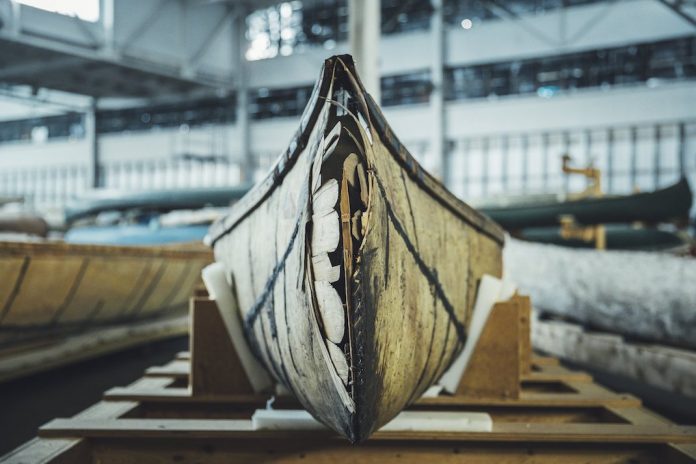
Canadian Canoe Museum searches for new site

The Canadian Canoe Museum (CCM) announced today that it has terminated its lease agreement with Parks Canada for the land located alongside the Peterborough Lift Lock on the Trent-Severn Waterway at 353 Hunter Street East. This is where the new canoe museum was to be built. As announced in May of this year, this location, owned by Parks Canada, was found to contain an industrial solvent, the chemical compound trichloroethylene (TCE) in addition to a variety of other chemicals. This, together with the costs associated with clearing the contamination, the resulting unavoidable project delays and inevitable rising costs have rendered the site no longer viable for the new museum build.

“The Canadian Canoe Museum and Parks Canada have worked together to reach an amicable dissolution to the Lift Lock lease agreement at no additional punitive cost to the museum,” said Carolyn Hyslop, executive director, The Canadian Canoe Museum.

CCM is engaged in a proactive site selection process and is reviewing multiple alternative sites, located in Peterborough, to determine where it will construct its new museum. Feasibility studies and environmental assessments will be conducted before selecting the new site for the building of a new canoe museum. The project is expected to be shovel-ready by the end of 2021.

“We are in the process of identifying and selecting a new site for what will be a revised museum design that will complement the waterfront site selection. CCM is committed to being a key economic contributor to Peterborough and the Kawarthas,” noted Ms. Hyslop. “CCM remains dedicated to building a home that will permit us to share 100 per cent of our collection in a facility that meets conservation standards, to creating a new suite of exhibitions and to increasing opportunities for in-person, digital and on-water programming.”

Hyslop went on to say, “CCM is profoundly grateful to those who have supported our original build project. We had a beautiful, award-winning design that was perfectly suited for the Lift Lock location that is regretfully utterly non-transferable to another location.

“Recognizing the deep attachment and disappointment shared by all involved in the face of current circumstances, CCM looks forward to announcing the selection of a new site in Peterborough that will help us advance this important project by the end of the year.

“The Canadian Canoe Museum looks forward to delivering on the commitments to its current donors and funding partners who have expressed continued strong support for the new project to come as it creates a vibrant cultural attraction that welcomes visitors to walk into the museum through the front door and paddle out the back door,” concluded Ms. Hyslop.

Will We Ever See Olympic Paddleboarding?

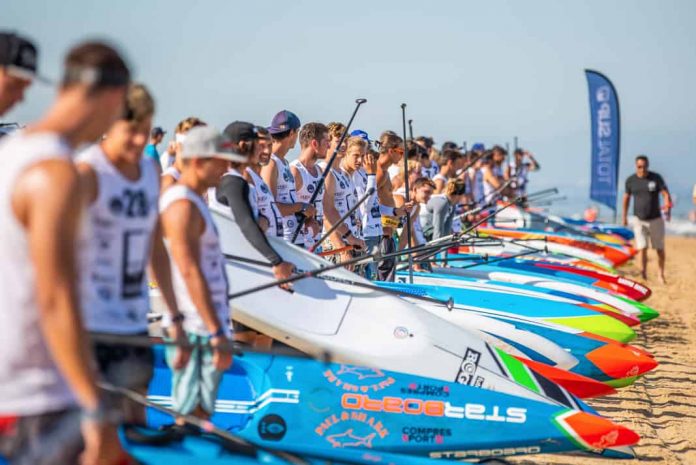
A group of standup paddleboard racers stand at the starting line
On your mark, get set... go wait until 2028. | Feature Photo: Georgia Schofield

Standup paddleboard racing has just missed its chance to be included in the Olympics for the Paris 2024 games. The list of proposed new sports released at the end of February again includes wave surfing, which appears at the Games for the first time in Tokyo 2020, but excludes SUP. So for those honing their paddleboard skills in hopes of Olympic glory, you’ll have to wait and see if the sport makes the cut for Los Angeles in 2028.

[ Paddling Buyer’s Guide: See all racing paddleboards ]

Who’s in charge around here?

If this seems too long to wait for one of our favorite watersports to receive Olympic recognition, blame the petty politics of the two international federations dueling for authority over America’s fast-growing sport. Paddleboarding’s Olympic future is officially on hold until the International Canoe Federation (ICF) and the International Surfing Association (ISA) can settle a bitter argument over which one should be the sport’s exclusive governing body.

Is SUP racing paddling or surfing? It seems like a silly argument paddlers could resolve with an arm wrestle or a coin toss over a pint, yet the disagreement between the ICF and the ISA has become so bitter and protracted the matter is now in the hands of lawyers at the Court of Arbitration for Sport (CAS) in Switzerland, with a decision expected sometime later this year. Until then, the International Olympic Committee is not entertaining any more submissions for Olympic paddleboarding.

ISA sees itself as the incumbent

The California-based ISA would seem to be a logical choice to be in charge of ushering SUP onto the world stage. The association, founded in 1964 and recognized by the International Olympic Committee as the World Governing Body for Surfing, brought surfing to the Olympics through patient lobbying efforts. It was a quest harkening back to 1912 when Olympic champion swimmer and father of modern surfing Duke Kahanamoku first pitched surfing to the IOC.

The ISA officially recognized SUP as a core discipline in 2008, hosting a SUP world championship annually since 2012. It claims to have invested $5 million into the sport, and successfully lobbied for SUP’s inclusion in the 2019 Pan Am Games, the 2019 ANOC World Beach Games, and the 2017 Central American Games. The ISA presented both SUP and surfing to the Tokyo 2020 organizing committee, but only surfing was selected, alongside four other new sports—karate, baseball, skateboarding and sport climbing—as part of the Olympics’ stated initiative to become more “youthful and vibrant.”

“As is clear, the ISA is the real long-standing sole governing body for standup paddle, and has existed as such without interference or objection for a decade. It is a shame, and a detriment to all involved in the sport, this governance has been challenged by the ICF,” said the ISA in a statement last summer.

ICF has other ideas

But the Johnny-come-lately to the Olympic paddleboarding scene, the Switzerland-based ICF, while accused of having no history or culture in the sport of SUP, comes well qualified as the Olympic governing body of paddlesports for nearly a century. It will celebrate its 100th anniversary in 2024. Sprint canoe has been in the Olympics since 1936, and slalom first appeared in 1972 and has been a permanent fixture since 1992.

“Given the long history of canoeing in the Olympics we believe we are the best equipped to fight for SUP’s Olympic future,” said the ICF’s spokesperson Ross Solly. “Currently the IOC is waiting for the CAS decision before it will start to entertain submissions. However, we are working very hard to ensure when the opportunity does present itself, we will be able to make a solid case for SUP to be included in the Olympics.” Despite the ISA’s fierce objections, last November the ICF congress voted unanimously to “continue to fight for the right to oversee standup paddling.”

Paddling vs. Surfing—which is it?

So, is SUP primarily paddling or is it surfing? The ISA’s definition of surfing comprehensively includes “Standup paddle (SUP) racing and surfing…and all other wave riding activities on any type of waves, and on flat water using wave riding equipment.” According to the ISA, even if you’re paddling a displacement-hull touring board on a calm cottage lake, you are still surfing.

The ICF claims, on the other hand, a person who uses a paddle as their primary form of propulsion is canoeing. According to Solly, “SUP is a natural fit for the ICF. It involves athletes standing with a paddle. As well as on the ocean, SUP also takes place on rivers and lakes, where surfing does not. Canoeing also includes ocean racing and surf ski, so we cover SUP in all forms.”

Negotiations to divvy up responsibility for the sport fizzled. The ICF says it proposed looking after flatwater and inland SUP racing and leaving SUP ocean events to the ISA, but that the ISA wasn’t having it. While the ISA claims it offered the ICF control of something called “Stand Up Canoe Racing.” After mediation failed last year, the issue escalated to a full CAS arbitration hearing.

Sometime in the last couple of years, the attention of the two governing bodies seemed to turn towards their political infighting at the expense of the growth and betterment of the sport itself. The ISA blames the ICF’s intervention for ruining its efforts to have SUP included in the 2018 Youth Olympic Games and other events. And in August 2018 the ICF was set to host its first SUP World Championships in Portugal when the ISA’s national affiliate stepped in to force its cancellation, getting Portugal’s court of sport to rule that only the national surfing federation could organize SUP events. It’s unlikely that anyone looking forward to racing in any of these events much cared whether it was organized by surf people or canoe people, as long as it was organized by someone.

[ Plan your next paddleboarding adventure with the Paddling Trip Guide ]

Olympic paddleboarding may have to wait

It’s easy to conclude that none of this serves the cause of the sport itself or the core community of dedicated paddlers. Christopher Parker, editor of SUP Racer, in a pointed opinion piece called the feud “an all-out propaganda war that risks engulfing the community. And the first casualty is going to be the sport itself… The ICF and ISA are acting like selfish parents going through a messy divorce and arguing over custody of an adopted child. Nobody is asking what the child actually wants, and neither parent realizes their child moved out of home a year ago anyway.”

Parker points out SUP racing only counts for five percent of the sport as a whole and Olympic paddleboarding would only schedule a race or two every four years, so it’s questionable whether SUP paddlers should really care about the Olympics at all.

But in a world where most people don’t even know that SUP racing exists, the international profile of the Olympics would be a huge boost. And SUP, being a marginal underdog to both the paddling and surfing worlds, needs the deep pockets and political clout of one of the established international federations to play the Olympic game—paddlers probably don’t care which one, as long as that organization goes back to focusing on what’s best for the sport.

[ This article was published in July 2019. For our most recent story about SUP in the Olympics click here. ]

This article was first published in Issue 57 of Paddling Magazine. Subscribe to Paddling Magazine’s print and digital editions, or browse the archives.


On your mark, get set…wait until 2028 for Olympic paddleboarding. | Feature Photo: Georgia Schofield

Guide To Kayak Boofing Techniques

Ask any extreme paddler what constitutes a “smaller drop” and you’ll get as many questions as answers. Smaller is a relative term of course, but most paddlers would probably agree that nine small drops out of 10 are done with a boof. Learn more about kayak boofing techniques below.

[ Paddling Buyer’s Guide: See all kayaks ]

Definition: What is boofing?

Boofing is that “pull from the bow, knee lift, acceleration” move that lifts you clean off the lip of a drop and prevents your bow from diving on landing. Even in the best conditions, you need to choose the right boof and pay attention to the bow–stern trajectory of the boat, as landing dead flat, even off smaller drops, is a real shock.

Why boof?

Most of the time, inadvertent pencilling off small drops works out—but when it doesn’t, the results can be crushing. If there’s something lurking down below or when you are unsure what is down below, keep the bow up on the surface.

Small drops and pourovers with sticky recirculations are good places to boof. You can land on the boil, skip off, and ricochet clean of the drop. This is great for tighter recirculations, or when you have a must-make move immediately downstream. A clean boof means you are more likely to land in control and on line for the next move.

Basic Boofing: 3 Easy Steps

The boof can be broken down into 3 key steps: cross-current speed, stroke timing, and edge transfer. Many intermediate paddlers think the boof is just a big vertical stroke. This is a bit of a misconception and we have found this teaching progression is a great way to learn how to boof.

Cross-current speed

Having cross current speed gives you the proper set-up for the boof. It is important to dial in, controlling your cross-current speed on basic eddy lines before moving on.

Stroke timing

When enough cross-current speed has been generated, you will typically take the boof stroke on the downstream side. With enough cross-current speed, you can plant the blade in the water as you are nearing the eddy line. As the paddle blade approaches the eddy line, you can pull on a vertical power stroke and try to pull your hips past the eddy line.

Edge transfer

As you are nearing the eddy line, lift your upstream edge as you prepare to take your boof stroke. As you land the boof, transfer your edge, which allows you to accelerate past the feature you just boofed over.

Breakdown of Kayak Boofing Techniques

Sweep-and-Leap Boof

On small drops with a smooth green lip, a well-timed sweep and pull stroke can lift the boat clear of the water and allow for a controlled launch. Approach the drop slowly, so you are in control and the boat is loose on the water rather than embedded in the flow or caught in its own wave. The bow should be somewhat off of perpendicular to the recirculation below—say 30–45 degrees or so.

As the bow reaches the lip, sweep the bow downstream and up, into the air, off your stern upstream edge. When the boat extends out over the drop, thrust your hips forward, transition to the opposite edge, and throw your upper body forward to help the stern clear the falling water.

You land on an outstretched power stroke on the side opposite to the initiation sweep. On bigger drops you’ll need less sweep, or more angle to the drop, because you are falling further and the boat has more time to spin. Brandon Knapp is the airborne master of sweep-and-leap boofing and often floats off the lip, timing the sweep and pull and landing at an angle to shoot clear off of a crosscurrent or boil.

Power Boof

Sometimes, in desperate or extreme situations, there is no substitute for a power (or even more power) boof. You can execute power boofs on almost all drops. Powerful strokes, good strength and a light boat make power boofing easier.

The concept is to pull with a lifting power stroke so the bow rises as you fall. To be smooth, start with some forward lean, rotate the upper body with a long reach to the bow for a forward stroke, then wait until the boat starts to drop. With your paddle reached over the lip of the drop into the curtain of falling water, pull and lift with your knees. Keep your power stroke close to the boat and don’t lean too far back—pull with the upper body more or less neutral, heaving the boat forward as it teeters off the lip.

[ Plan your next kayaking adventure with the Paddling Trip Guide ]

Trajectory Boof

Whenever possible, skip or ramp off existing features to assist with your boof. Use pillows on the edge of a drop, folds at the lip, edges of boulders or protruding ledges, even the tops of waves. All of these offer some object to start the bow moving upwards.

Generally, speed is an asset for trajectory boofs, and charging the object means you carry more speed and generate more lift. The ability to hit your line is critical; missing the object or failing to generate lift mean you launch at speed into the drop, with little chance of timing a leap or power stroke. When a trajectory boof is done well, you lean back a little to launch, sit up in midair, and bounce high as the hull rebounds. Warranty departments wince at this maneuver.

Body Position

While many paddlers initiate boofs leaning back in their boats, it is better to stay relatively neutral or even throw your body forward when the boat is airborne to keep the bow down a little while you drop. This forward thrust generates additional forward momentum while in the air.

Double-pumping (two consecutive strokes on the same side) allows your arms to generate momentum after the launch. Tao Berman is the master of this move, and often generates that extra bit of forward momentum while in the air by stroking on one side to boof, then air stroking on the same side. This also helps with balance and avoids the dreaded barrel roll to the offside that can occur on bigger drops where you’re falling a long way.

Practice makes perfect

Timing is critical when running small drops, and practice is important to having a reliable kayak boofing technique. When on the river, utilize every possible object or drop to learn to launch the bow high and land clean.

Man boofing a kayak in whitewater
Photo: Jock Bradley

Try out these kayak boofing techniques for yourself

Thanks for checking out our guide to boofing. We hope it is useful and helps to get you looping at your local play hole and beyond. If you have any further questions, please don’t hesitate to contact us at courses@aquabatics.com.

This article was first published in the Summer 2003 issue of Rapid Magazine. Subscribe to Paddling Magazine’s print and digital editions, or browse the archives.


For more great instructional videos, check out our YouTube channel at www.youtube.com/aquabaticscalgary or our website at www.aquabaticscalgary.com.