Home Blog Page 160

Boat Review: Zet Toro Kayak

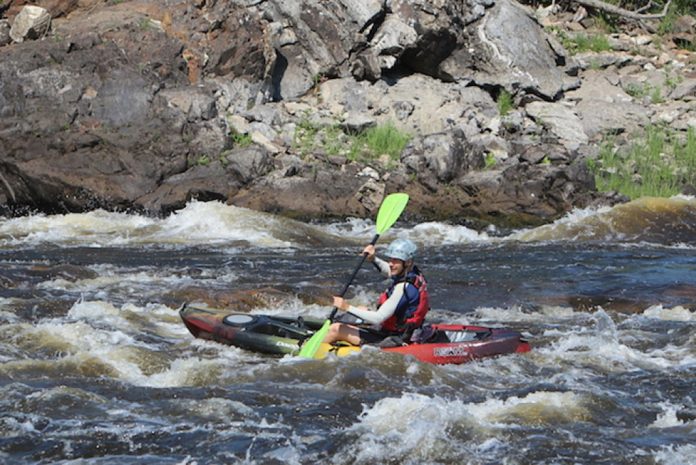
The hammer of Toro is good for punching through holes. | Photo: Kathy Smith

Confidence inspiring. If I had to sum up the Zet Toro kayak in two words, that would be it. When the brand new Toro was delivered to my front door there was still two feet of snow on the ground and the ice was clear on only a few of my local runs. Paddling a new boat on icy-cold rivers with rusty skills and muscles not yet awoken from winter hibernation. What could go wrong? Apparently, nothing.

[ Paddling Buyer’s Guide: See all creekboats ]

Introducing Zet Kayaks

Czech kayak producer Zelezny, whitewater extreme racer Honza Lasko and slalom champion Viktor Legat founded Zet Kayaks in 2007. Based in Prague, Zet Kayaks is well established in Europe but only expanded online distribution to North America three years ago. There are four boats in their current lineup—all creekboats that can also be used as all around river runners. Zet tells us the Toro is designed to perform as everything from an entry-level river runner to an extreme creek racer.
Zet 2
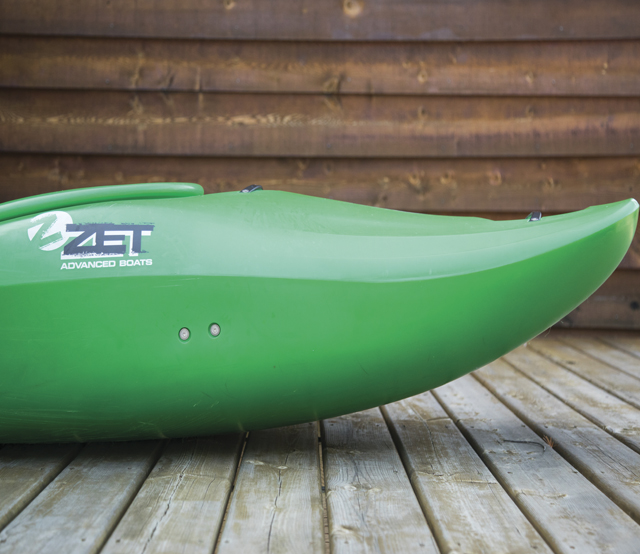
The Toro’s bow narrows noticeably along its length towards the tip; Zet designed this narrowing beginning at the hip and ending just past the knees to offer enough space for quick paddle commands.

Take a seat in the Toro

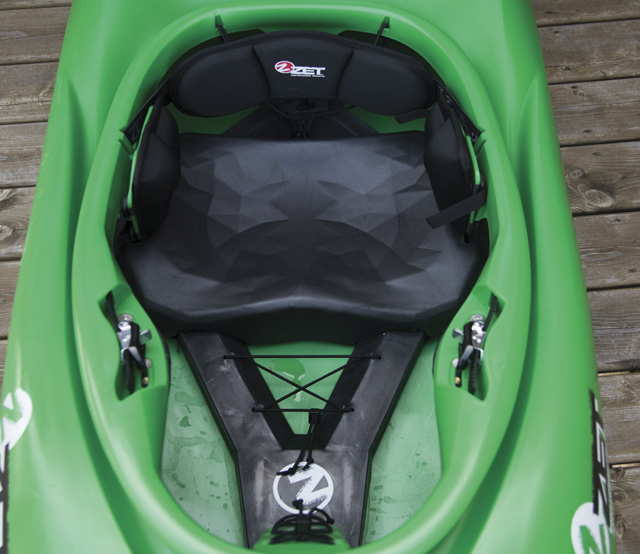
The seat in the Toro is a pre-shaped closed-cell foam affair that is fastened to a diamond-shaped plastic structure, which fits snugly under the bow and stern foam pillars. This seat structure is no doubt designed to provide support to the hull over years of abuse. The hip pads are attached to adjustable plastic plates that are attached with hex bolts through the cockpit rim and into the sides of the seat. It’s solid and less complicated than it sounds.

Zet claims there is eight centimeters of fore and aft seat adjustment but we couldn’t figure it out and left it as it came. The included hex wrench stored behind the seat is a nice touch.

The actual seat part is closed-cell foam, so it’s warm and won’t water sponge. The backband works well and adjusts with ratchets just around the well-shaped foam thigh hooks—adjustable forward and back and angled with the hex wrench. This is a set it and forget it type cockpit.

I’m five foot ten, 175 pounds and a have a 32-inch inseam. The 270-centimeter boat—the only size it comes in—fits me well. This makes sense as Zet says the Toro is ideal for a paddler between 145 to 210 pounds. I was snug in the hip pads without any shims, the foot braces were in the third last hole and the thigh hooks were all the way forward.

Go fast and push hard

Zet designed the Toro with a displacement style hull, continuous rocker from bow to stern and edges only on the rear half of the kayak. The Toro accelerates quickly and tracks like a dream. With no edges on the bow there’s nothing for the water to grab to mess with your ferry angle, or squirrel you about paddling through boils. Yet the edges on the stern were just enough to be able to carve on a wave, hold a jet ferry and maintain a line when punching through a hole.

My favorite part about the Toro is also my least favorite part. The lack of edges on the bow that make maintaining a ferry angle and holding a line through a rapid so easy also make catching eddies and carving turns a bit more work.
zet 3
The seat has approximately eight centimeters of fore and aft adjustment using two hex bolts concealed behind the hip pads. Constructed of closed cell foam, the sturdy and simple seat is designed to resist water sponging.

For my paddling style I prefer planing hull style creekers—like the Dagger Mamba—with harder edges on the bow, which means dropping edge and leaning forward to let the boat pivot you into the eddy. In the Zet Toro I found I had to really lean back to engage the edges and perform more of a backwards sweep to bring the boat around. This made catching mid-river micro-eddies more challenging. Without much in the way of an edge to carve a turn on, more application of muscle power for finer course adjustments was required. Planing hull creek boats with more aggressive edges allow for the boat to be turned simply by tilting it over. With some forward speed the boat will turn and carve just like a pair of skis. Displacement hull creekers, or boats with less aggressive edges like the Toro require more of a stop, pivot and go approach.

Smooth maneuvers

At 8’10” the Zet Toro is approximately the same length as a large Jackson Kayak Zen or a Liquidlogic Flying Squirrel 85. It was fairly fast compared to my previous creeker, the Dagger Mamba 8.6, but not as fast as my Pyranha 9R. I suspect this is due to the ample bow and stern rocker keeping the overall waterline length shorter than some of the aforementioned aggressive racing designs, which also means greater maneuvrability. I found this to be especially true while being able to change direction mid-rapid and accelerate around features very smoothly.

Whenever the bow rocker was insufficient to climb over a feature, the tapered bow and curved deck allowed me to easily punch through and surface quickly without losing too much speed. Despite its length, the ample stern rocker made boofing easy and stomping a drop gentle on my spine. At 27 inches wide the Toro is similar in width if not slightly wider to many other creekers and river runners on the market. I found it to be very stable and I even managed to keep my hair dry almost all weekend.

[ Plan your next adventure with the Paddling Trip Guide ]

Get in the Toro ahead of the crowd

The Zet Toro was a great fit for early season, high water runs. I also felt pretty special being the only paddler in a Zet kayak on the river. As their online distribution expands in North America, I don’t expect that to last long.


This article originally appeared in Rapid
Early Summer 2017 issue.

Subscribe to Paddling Magazine and get 25 years of digital magazine archives including our legacy titles: Rapid, Adventure Kayak and Canoeroots.
Boat Review: Nova Craft Fox 14 Solo Canoe

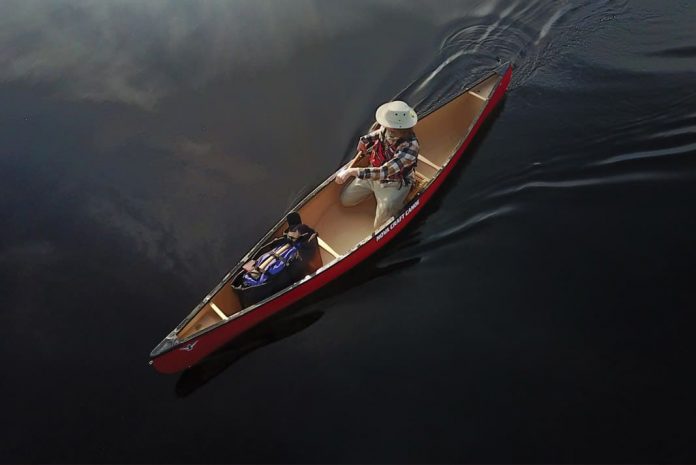
Ariel view of a man paddling canoe on a lake
Perfect solo tripping companion for making miles. | Photo: Timothy J. Baklinski
Nova Craft Fox 14 Specs
Length: 14’
Width: 32”
Depth: 13”
Rocker: Minimal
Capacity: 550 lbs
Weight: TuffStuff, 43 lbs
MSRP: $2,499 CAD

Over the years Paddling Magazine has tested and reviewed a dozen or more Nova Craft canoes. My kids learned to paddle in the 12-foot Teddy and way back in ‘99 we included the Supernova in a whitewater solo canoe shootout. Now we belatedly add the Nova Craft Fox 14 solo canoe to our list.

Where I’m from a solo tripping canoe is a 15- or 16-foot symmetrically shaped tandem canoe spun around backwards,  just like in Bill Mason’s 1977 Path of the Paddle instructional series. We are products of our training and old habits die hard.

On the other hand, the Fox 14 is the style of canoe you’d single-handedly pull from the rack when venturing into the Boundary Water Canoe Area. We enjoyed it so much it’s getting a proper review here, about 47 years past due.

Set off in the Fox 14 solo

Tim Miller, Nova Craft’s founder and owner, exhibits at Rutabaga’s annual Canoecopia Show every spring. The show is held in Madison, Wisconsin drawing 20,000 avid paddlers, paddlers who escape to places like the uninterrupted 90-mile stretch of the Wisconsin River and into the Boundary Waters.

“Five or six years ago we started getting so many requests at the show for a 14-foot solo canoe that we drove home and set to work on the design,” remembers Miller. “Shortly afterward we got notice that Royalex was going out of production. Our focus shifted to creating alternative materials and reconfiguring our shop to ramp up composite canoe production.”

The Fox 14 is TuffStuff

Project Fox 14 was put away and left in hibernation until now. This new 14-foot solo canoe came to us in Nova Craft’s dependable TuffStuff—the durable composite material created while the Fox was asleep. Our tester weighs a respectable 43 pounds and so far, according to Miller, TuffStuff has been the most popular selling layup. Customers are intrigued by the durability and reasonable weight. The Fox, like most of Nova Craft’s line, is also available in fiberglass, Blue Steel, Aramid and Aramid Lite.

If it were me, I’d suck up the couple hundred bucks and go with the Aramid Lite to save seven pounds. The Fox isn’t a whitewater boat and the Aramid Lite is plenty durable for my backcountry adventures. While I have my credit card out, I’d upgrade from aluminum to ash gunwales. Not because it is any lighter; Nova Craft just does such a pretty job with their wood trim. It takes a canoe made of space-age materials and makes the touch points softer, quieter and more authentic. I blame Bill Mason for this tendency also.

How to update a classic

So how do you come up with a new solo canoe design? If you’re Miller, you look around at what’s already working.

The Nova Craft Cronje 17′ is an old Chestnut Canoe Company design and a popular touring canoe for those looking to carry heavy loads for long distances. Its symmetrical low-profile hull design gives it a fair advantage against blustery winds. When you cut three feet out of the Cronje you get something that looks like the new Fox 14: generous 32-inch beam and an impressive 550-pound carrying capacity, fit for a fortnight or more of solo adventures.

On one of my recent fitness kicks I ordered a solo training canoe. Sixteen and a half feet long, 29.5 inches wide, complete with a tractor seat and foot pegs. This is not the Fox 14.

On Nova Craft’s website, you’ll find the Fox in their recreational lineup. I don’t think that’s right either. Yes, you are going to find a great number of these turned over on cottage docks waiting for early morning misty paddles. That’s fine, the Fox won’t spill your coffee. Some people may even paddle the Fox like a pack canoe with a kayak paddle. For me though, the Fox should be classified alongside the Cronje as a cruiser or solo lakewater tripper.

traditional braided canoe seat
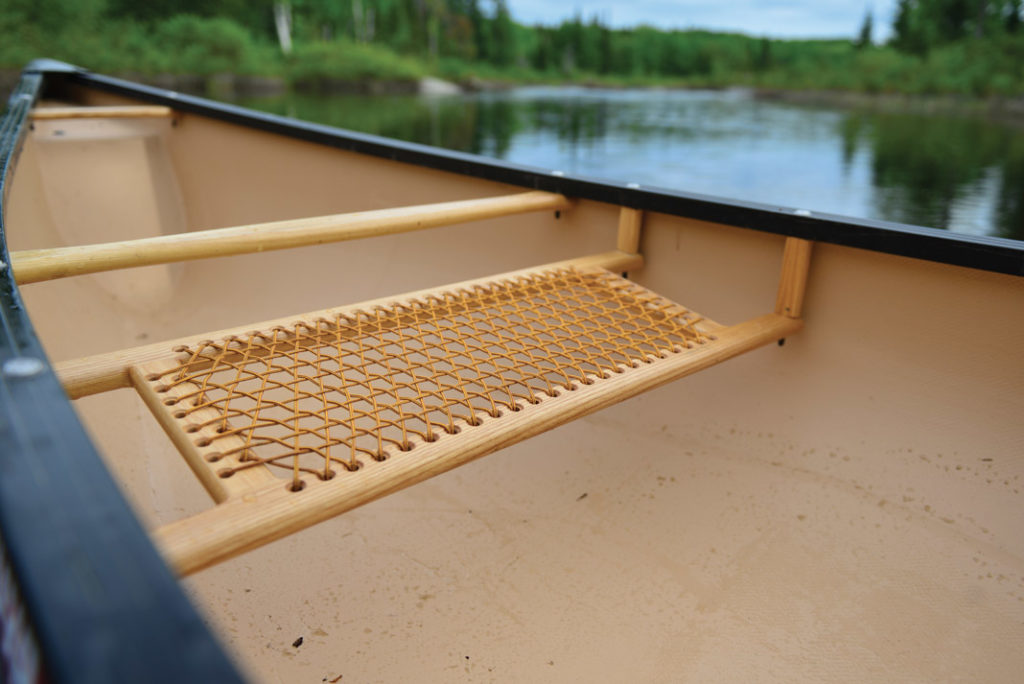
One may prefer to use a kayak paddle but kneeling on the ash and laced traditional canoe seat works just fine too. You’ll need to install a removable yoke for backcountry adventures. | Photo: Timothy J. Baklinski

On the water

With very little rocker, the Fox 14 scoots right along. Tilt it over a little and it turns beautifully. I didn’t miss the extra two feet of my tandem Prospector—two feet that for the most part wasn’t in the water anyway.

If you’re not launching from docks or floating lazy uninterrupted rivers and you want to be free to wander anywhere you’ll have to order, like I did, a yoke and hardware.

Go lakewater tripping in the Fox 14

If you’re looking for a solo tripping canoe with classic lines that you can lift and launch anywhere, the Nova Craft Fox 14 could be for you. One more thing—apparently the Fox 14 is available in nine different color options but I’d go with red. You know who to blame.

This article was first published in Issue 51 of Paddling Magazine. Subscribe to Paddling Magazine’s print and digital editions, or browse the archives.


Video review of the Nova Craft Fox 14 Canoe:


The 7 Worst Tips Given To Beginner Kayakers

3 kayakers helping another kayaker who is swimming
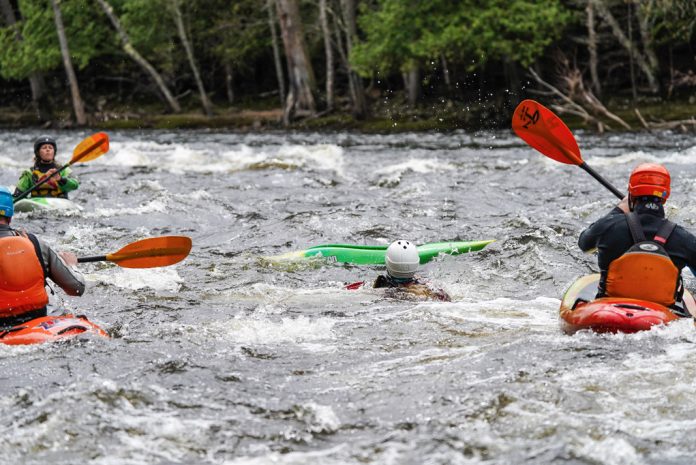
Just keep swimming. | Feature Photo: Gabriel Rivett-Carnac

We’ve all been there. Do you remember the horrible advice you got on your first day of paddling? It starts with so much hope and ambition, and it can make or break a person’s passion for paddling. With so much at stake it pays to be wary of beginner kayak tips we hear from well-meaning friends and acquaintances. Instead, first-timers should focus on getting proper instruction from qualified experts.

Learning through the tears

My first instructor was James Roddick. I was 10 and he was patient. I’m thankful James took the time to guide me through the tears. He didn’t tell me what I wanted to hear, he told me what I needed to hear. Unfortunately, too many first-time kayakers and potential enthusiasts don’t have a James.

Maybe they had a friend who told them it would all be fine and to just tag along, or an instructor who passed on information which sounded good but fell apart in action.

I’m convinced whitewater kayaking could boast twice as many paddlers if kayakers’ first experiences unfolded differently.

If you were lucky, you never had to hear any of the following beginner kayak tips. If you did and still kayak, congratulations on persevering.

The worst beginner kayak tips

1. “You have to be able to roll to have fun”

Not so. This is only valid if taken down a big, munchy river on a first outing, which is a recipe for a bad time anyways. The experience beginners gain in a kayak before perfecting the roll is valuable—think boat control, stroke technique and simply being comfortable in the water. Especially when learning on a warm and deep river, having fun and being outside comes first—a roll can easily come second.

2. “One day, you can go kayaking by yourself”

Truly cringeworthy. At one point, we’ve all seen a solo boater paddle past, mullet gracefully tussled by the wind, and wondered, “Will I ever be confident enough to kayak alone?” The answer is no. Even for experienced boaters on their home rivers, we never know when something might go wrong and we might be in need of a helping hand. Solo boating is more risk than reward—and besides, kayaking is way more fun with friends.

3. “You can only run something blind once”

Beginners shouldn’t run anything blind. Faithfully duckying along behind a more experienced paddler doesn’t teach much about reading current, identifying obstacles and creating a strategy if the newbie never gets out of their boat for a new perspective. This advice often stems from a lazy group leader not wanting to take the time to scout a rapid they have run hundreds of times so they say, “It’s good, go down the middle.” Better to scout and style, than blindly crash and burn.

4. “You don’t need your boat or gear to fit you until you get more into the sport”

No one says this about running shoes, so why say it about boats? The fact is, the right paddle, a few pieces of hip foam and a foot block can make the difference for students learning to roll and even just controlling a kayak. The added benefit of a well-fitting boat is all energy is transmitted into your desired movement—especially confidence-inspiring for beginners.

[ See all boats and gear in the Paddling Buyer’s Guide ]

5. “Do it for the ‘Gram”

Worst motivating logic ever. If ever doing anything to impress someone else, you’re doing it for the wrong reason. This is a philosophy extending far beyond kayaking too. Ask yourself: If no one was to ever find out, would I still want to do this thing? If the answer is no, you have your decision.

6. “Paddle hard!”

When instructors tell beginners to paddle hard, what they usually mean is they want the beginner to keep paddling in rapids to maintain stability and momentum. So just say so. Shouting “paddle hard” before each set creates the notion force, as opposed to finesse, is what gets someone down a river. And all the flailing is exhausting for the rest of us to watch.

7. “Don’t worry, you’ll be fine”

Red flag. The single worst piece of advice to give or receive. Often overheard stated by a group of friends who want someone to learn, but don’t want to sacrifice a day to teach at an appropriate pace. All too often beginners are roped onto rivers too steep, fast and consequential. A bad swim can turn someone off entirely. If you take the time to introduce a friend, really take the time and make sure it’s as much fun for them as it is for you.

This article was first published in Issue 55 of Paddling Magazine. Subscribe to Paddling Magazine’s print and digital editions, or browse the archives.


Just keep swimming. | Feature Photo: Gabriel Rivett-Carnac


Kokatat Hustle PFD and HustleR Rescue PFD

Matt Porter with Kokatat Hustle R PFD

Getting into your kayak without a life vest is like driving your car without a seatbelt. Not only might you run into trouble and endanger yourself, but failing to take the proper precautions can also endanger others, including those who may come to your assistance. Fortunately, paddlers and rescuers can both breathe easier with the Kokatat Hustle PFD and the HustleR rescue PFD.

Get into the vest

Hustle PFD

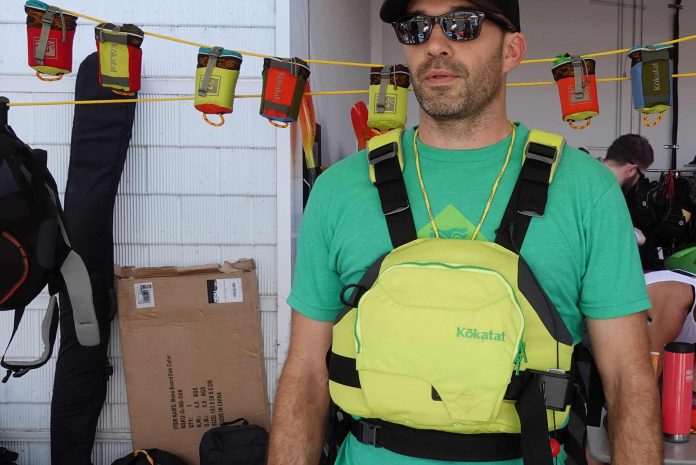
The Hustle is a full-function, Type 3 side-entry life vest with a large pocket for gear and single lash-tab for accessories.

The Hustle is constructed out of free-floating GAIA foam that is formed to fit the torso and covered with ripstop nylon. Three-sided adjustment dials in fit for comfort and safety.

HustleR Rescue PFD

Stepping up to the HustleR, guides, teachers and rescuers get a full rescue vest with the same fit and comfort as the Hustle in a pull-over vest. The HustleR adds quick release safety harness, O-ring, protected rescue lash tab and is a Type 5 vest.

The HustleR provides full back coverage with cut-away sides for full range of motion. It is covered with tough, dependable and stain-resistant 500D Cordura.

Video review of the Kokatat Hustle PFD and HustleR rescue PFD:


Boat Review: Jackson Kayak All-Star

Man paddles in whitewater in the Jackson Kayak All-Star freestyle boat
Feature Photo: Rapid Staff
Jackson Kayak Specs
Star / All-Star / Super-Star
Length: 5’8” / 6’0” / 6’4”
Width: 24.5” / 28” / 32.5”
Volume: 44 / 52 / 60 U.S. gal
Cockpit Size: 19” × 32.5” / 20.25” × 34.5” / 21” × 36”
Weight Range: 100-130 / 140-170 / 170-210 lbs
MSRP: $995 USD / $1,295 CAD

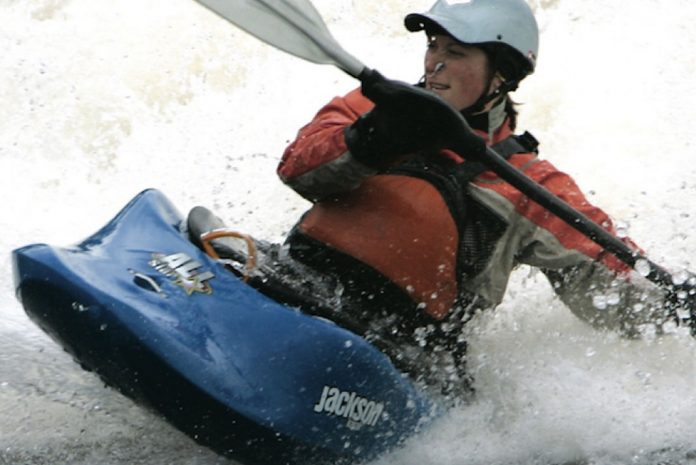
The Jackson Kayak All-Star, with designer Eric Jackson inside, won the 2005 freestyle world championships. Its balanced ends and light weight make for lightning-fast moves. Great freestyle boats provide amplitude in aerial moves and speed and carving on waves, and the All-Star delivers on both accounts. The hull and deck come together for the best of both wave and hole moves.

[ Paddling Buyer’s Guide: See all Jackson kayaks ]

Feel like an All-Star

When you really feel like a going for a wild ride, paddle the Jackson Kayak All-Star (or one of the other two sizes that fit you—the Star and Super-Star).

We received feedback like this:

“This boat makes me squeal.
On a big wave the All-Star is crazy.”

“It was like getting double-bounced on a trampoline… you know it’s going to happen but you don’t know when, or how high.”

“I screamed the entire ride. I accomplished nothing and just held on for dear life. I loved it.”

Get the picture?

No matter how far forward we moved the seat, the All-Star’s bow bounced all over the wave. “When I threw a move it was because I thought, ‘Hey I’m in the air, I should try hucking something.’” Perfect maybe for the air junkies, unnerving for the control freaks.

Sit back and relax between runs

When you’re not feeling loopy (which it also does really well) the Jackson Kayak All-Star is quite happy letting intermediates float around the river on its super-wide hull. The bow rides just above water level, just like the ZG, so pearling isn’t a problem.

Inside, the Jackson outfitting is noticeably less swanky than the other, comparatively posh, setups. Once you’re out on the water and past the lacklustre showroom appeal you realize the outfitting—including the cheesy-looking backband on a rope—does work, and keeps the overall weight low.

[ Plan your next adventure with the Paddling Trip Guide ]

All-Star pros and cons

PROS: Bow bounces all over the place. Otherwise stable, predictable and forgiving.

CONS: Bow bounces all over the place. Unsophisticated outfitting.


Boat Review: Valley Etain 17.5 Kayak

Man paddling in a Valley Etain 17.5 sea kayak
Feature Photo: Alex Matthews
Valley Etain 17.5 Specs
Length: 17’5”
Width: 21.25”
Weight: 60 lbs
Volume: 60 U.S. gal
Cockpit Size: 19” × 32.5”
Weight Range: 100-130 lbs
MSRP: $3,479 USD Diolene (fiberglass) / $4,349 USD Carbon/Kevlar
www.valleyseakayaks.com

Valley may be the most venerable sea kayak manufacturer in the world. Their signature model—the Nordkapp—has achieved truly iconic status. But that kind of success cuts both ways: lauded for their classic kayaks, what can Valley do for an encore? The answer is a carefully planned departure from classic form with the Valley Etain 17.5 sea kayak.

Into the Valley Etain

Swede-form stability

While Valleys have traditionally been fish-form hulls (where the widest point of the boat is forward of the mid-point), the Etain is slightly Swede-form (widest point aft of the mid-point). Moving the volume sternward generally creates better stability, more cargo capacity, improved sense of glide and allows the foredeck to be a little narrower to accommodate a more vertical paddle stroke.

Aesthetically the Etain is a handsome, if rather conventional looking, British sea kayak. The bow and stern are upswept, and the deck is clean and uncluttered. Refinements include carrying toggles neatly held in place by shock cords and a security lock bar aft of the cockpit.

The Etain is available in two sizes: the 17.5 on test here and its larger sister the 17.7. Three lay-up options exist: standard Diolene fiberglass, carbon/Kevlar and triple-layer polyethylene (17.7 only).

[ Paddling Buyer’s Guide: See all sea kayaks ]

A comfortable and well mannered expedition kayak

Weighing in at 60 pounds with optional keel strip reinforcement, our carbon/Kevlar test boat was no featherweight, but it was stiff and neatly finished throughout.
 Afloat, the Valley Etain has reassuring initial stability, certainly more than the Nordkapp. She’s not as fast as her famous sibling, but overall speed and glide are quite good and the boat accelerates quickly. The Etain also feels smaller than it really is thanks to the Swede-form shape. I really liked the seating position, finding it very comfortable and conducive to good control and drive.

Tracking is quite stiff on an even keel. However, when edged aggressively the volume in the back of the boat allows the stern to skid round for tighter turns. The Etain composite kayak feels great on edge when gliding through a turn or surfing a wave, but secondary stability is less reassuring when stationary.

The Valley Etain is well mannered in wind with only a minor tendency to weathercock, which is easily controlled by adjusting the skeg. In waves and current, handling is poised and predictable with no unpleasant surprises: it’s a good choice for rough water duty.

[ Plan your next adventure with the Paddling Trip Guide ]

The Valley Etain is a welcome addition

While not quite as fast or as maneuverable as the Nordkapp, the Etain’s superior carrying capacity, tracking and initial stability make her a great choice for paddlers who want a dependable and more user-friendly expedition kayak. As a touring platform, the Etain is a very credible addition to the Valley family.

Video review of the Valley Etain:


Is The High Price Of Gore-Tex Really Worth It?

A group of expedition kayakers stand on a beach wearing Gore Tex outdoor gear
Guaranteed to keep you dry and looking like a Power Ranger. | Feature Photo: Virginia Marshall

We’re standing at a trail junction in the October rain, stuffing our faces with trail mix. It’s a damp, cold, off-season backpacking trip sometime in my young adulthood. Four hikers are climbing the switchbacks below us, clad in red rain gear with black patches on the shoulders and elbows. “Uh-oh,” my friend says. “Here comes the Gore-Tex mafia.” Three decades later, Gore-Tex and its distinctive look is still with us, but in light of the material’s high price, is Gore-Tex worth it?

In praise of waterproofing progress

First of all, I know of no link between Gore-Tex and Vito Corleone. Second, I love Gore-Tex. I live in one of the wetter and windier places in North America. Gore-Tex keeps me dry. In the days before waterproof-breathable shells, rain gear made me wetter on the inside than the outside.

My Gore-Tex drysuit extends my paddling season from five months to 12. It improves my overall paddling experience more than skegs or carbon fiber paddles. But like all revolutionary inventions, Gore-Tex came with complications and unintended consequences—it accentuated class divides in the outdoors.

Roughing it in the rain

When Gore-Tex first came out in 1976, I was in high school, just venturing out on my first backpacking trips on my own. Outdoor gear consisted of olive-drab itchy wool pants, rubber rain slickers and giant fluffy wool socks. Gore-Tex was, of course, both better and more expensive.

It was the first serious “outdoor technical clothing” and it helped bring outdoor gear from army surplus stores to specialized retailers. It also had a distinctive look. That’s why my pal and I could stand atop a damp ridge and estimate the tax brackets of hikers far below, and know it was higher than ours.

Waterproof fabric and the social divide

As the saying goes, timing is everything. Gore-Tex arrived as class divides were coming into sharp relief elsewhere. The first Gore-Tex jacket entered the hearts and minds of the outdoors world in earnest in the ‘80s. That’s when America also plunged into the world of supply-side Reaganomics, Gordon Gekko, Ivan Boesky, and the S&L Crisis.

Class divides in the outdoors is particularly irksome, since it’s supposed to be equal ground. Stephen Mather, the first head of the U.S. National Park Service, saw campgrounds and trails as places where visitors of all backgrounds could rub elbows. There were enough things to divide us. Fabric didn’t need to be one of them.

Fast-forward three decades. Virtually every outdoor apparel company has come out with their own proprietary waterproof-breathable fabric. But Gore-Tex, a closely guarded trade secret that has gone through many iterations, remains at the top of the heap in price and prestige. Like all our gear, it has evolved—my first drysuit had no waterproof socks or relief zipper. You can imagine how well that worked after three cups of coffee. Things are much better now.

Gore-Tex is still a big investment

However, the economic divide Gore-Tex put on display is still with us. The Gini Coefficient, a measure of income inequality, has climbed like an ever-flooding tide in the U.S. and Canada since 1980. Yes, people spend a lot more money on golf, downhill skiing and sailing, but sea kayaking gear is still expensive for the average American household earning $56,000 a year. The average Gore-Tex drysuit costs close to two percent of that. This has a chilling effect on gear designed to keep adventurers warm and dry. According to the annual Outdoor Participation Report, the cost of gear is the second highest reason people don’t participate in outdoor recreation. More than 40 percent of the people who do are making $75,000-plus salaries, according to the same report.

Faced with the expense, most new paddlers try to save a few bucks with a more budget-friendly option. They may buy a wetsuit or a drysuit made from other materials, which, in my experience, doesn’t compare. Sooner or later, many admit defeat and plop down the big bucks. I did the same for many years until I sucked it up and paid more than twice as much for my first modern drysuit as I did for my first used kayak.

[ Plan your next paddling adventure with the Paddling Trip Guide ]

So, is Gore-Tex Worth It?

More analysis may give the lie to the expense myth. I started paddling in earnest about 30 years ago, and I’m only on my second drysuit. After getting a bit soaked on a hike recently, I finally admitted my Gore-Tex mountaineering jacket was wearing out and grimaced at the cost of replacing it. That bugged me until I looked at my refrigerator. On the fridge is a photo of me standing on the summit of a glaciated peak, wearing that same jacket. I’m waving my ice ax and smiling at the camera with a face with less grey hair and fewer wrinkles than I have now. That photo was taken 18 years ago.

This article was first published in Issue 58 of Paddling Magazine. Subscribe to Paddling Magazine’s print and digital editions, or browse the archives.


Guaranteed to keep you dry and looking like a Power Ranger. | Feature Photo: Virginia Marshall


The Ultimate Guide To Kayaking At Night

A paddler kayaks towards a mountain under a starry sky at night.
Welcome to the dark side. | Photo: Paul Zizka

Paddling in the dark is like entering a new world. On a moonlit lake, a familiar route becomes exotic. The sounds of the bow cutting through the water and droplets off a paddle are accentuated. And when there’s no moon and clear skies, stargazing from the water can be out of this world. Plus, natural phenomena like the aurora borealis or kayaking among bioluminescence are only visible at night. There are plenty of reasons to get on the water between dusk and dawn, so here’s what you need to know to kayak at night safely and legally.

Know The Risks

Let’s be real. Paddling at night has all the inherent dangers of daytime paddling and then some. Not the least of which is it can take longer to mount a response and locate a distressed paddler in an emergency. Adopt a common-sense risk management strategy based on the conditions. All the regular dos and do nots of paddling apply—wear your PFD, leave a float plan with a trusted friend, and check the weather before you paddle. Consider modifying your usual on-water behavior by sticking closer to shore and paddling at night only with a buddy.

Don’t paddle at night or in limited visibility in water navigated by powerboats or sailboats, unless experienced in night navigation lights and signals.

Light It Up

The specific legalities of paddling at night differ based on region, so it’s best to double-check with local guidelines. Both Transport Canada and the United States Coast Guard consider kayaks and canoes to be “vessels under oars.This means paddlers are required to carry “an electric torch or lighted lantern showing a white light which shall be exhibited in sufficient time to prevent collision” on the water between sunset and sunrise.

This torch could be the same dinky waterproof flashlight included in many commercially sold bailer bucket kits. But if you’re regularly on the water between sunset and sunrise, you’ll want something suited to seeing and being seen. If paddling in an area without motorized vessels, opt for a handheld, waterproof, 360-degree light tethered within reach. Some paddlers prefer a waterproof headlamp; however, these tend to “blind” companions and are cumbersome if you should need to signal behind you.

Whatever light source you choose, remember that a light placed in your line of sight or reflected into your eyes—from a headlamp reflecting off the shiny deck of your kayak, for example—will impair your night vision.

Some states, like Texas, require a kayak light be visible at all times after dark, but most don’t, allowing you the option to paddle by the moon and starlight. Double-check your local regulations.

A kayaker paddles under a starry sky towards a mountain on a calm lake.
Welcome to the dark side. | Feature photo: Paul Zizka

If sharing the water with motorboats, you need to get lit up. Kayaks are so low to the water motorboats may overlook them, and a kayak’s small light can easily be mistaken for a light onshore or far away. The best way to ensure visibility to boaters is to mount an elevated white light on the aft deck. Ideally, the light should shine continuously in 360 degrees and be unobstructed by the kayaker or seat. If you don’t do much paddling at night, use a suction cup mount instead of affixing the mount to the deck. In addition to this mounted light, a kayaker should still have a secondary handheld, waterproof light in case forward visibility is needed and for signaling. Paddlers sharing the water with motorboats must paddle defensively.

Red and green lights—called sidelights—on the bow can provide some visibility upfront without affecting a paddler’s vision but are not required on kayaks by either the Canadian or American coast guards. There are a series of specific coast guard regulations for installing sidelights a paddler needs to follow if she chooses to use them. Other lighting configurations might look cool but are not officially coast guard approved.

Sending Out An SOS

For added safety, night paddlers should also wear an emergency light, typically a small 360-degree, battery-powered LED light that can be seen more than one nautical mile away and can strobe to signal rescue crews in case of an emergency. This 360-degree light can be attached to your PFD’s shoulder strap so it’s always with you. Some newer models are automatically triggered when submerged in water. Of course, you could be floating for a while unless able to alert someone to your predicament with a phone or satellite communications device. An emergency light is just one part of a safety system.

Dress The Part

As with any kayaking mission, what you wear depends on the air and water temperatures where you’re paddling. If you wear a wetsuit or drysuit during the day, the night isn’t any different. Layering is always essential, and it’s a good idea to take one more layer with you at night than you would in the day. Stuff it in a drybag, and if you need it, you’ll be glad to have it.

Where To Go

The best place to kayak at night is a small lake or lazy river you’re familiar with. Choose a route you’ve paddled a handful of times during the day, so you know the landmarks, duration of the paddle and any hazards or alternate routes that could turn you around. Consider big trees, marinas, cliffs, large buildings or lighthouses as landmarks on your journey, but keep in mind some familiar sights may be unrecognizable by night.

On larger lakes, be especially aware of incoming weather and wind and the possibility of getting lost. If paddling a loop, it’s best to launch from a marina or other brightly lit location. On a wilderness lake, rather than leaving an unattended campfire, place a bright lantern on shore to guide you home.

You can use a phone or GPS device for nighttime navigation, but having an analog form of navigation as your primary navigation source is preferable. And knowing the area like the back of your hand is best.

This article was first published in Paddling Magazine Issue 62. Subscribe to Paddling Magazine’s print and digital editions here, or browse the archives here.


Welcome to the dark side. | Feature photo: Paul Zizka


Boat Review: Dagger Roam 9.5 Sit-On-Top Kayak

Man paddles the Dagger Roam 9.5 sit-on-top kayak in rapids
Feature Photo: Rapid Staff

If you peer in through the window of my garage you’d notice I’m a guy with a lot of hobbies. A stunning array of kayaks, canoes, bikes, and other gear ensure that I’ll never actually be able to put a car inside. For those who are more space conscious, the Dagger Roam 9.5 is a sit-on-top kayak that does it all—while only taking up one spot in the garage.

Dagger Roam 9.5 Specs
Length: 9’9”
Width: 31.5”
Weight: 56 lbs
Max Capacity: 250 lbs
[ Paddling Buyer’s Guide: See all Dagger Kayaks ]

A license to Roam

While I still like having specialized gear—a freestyle kayak for park and play, my creeker for class IV-V—lately I’ve been mixing things together. Wanting to fish but run a bit of whitewater too. Going on an overnight camp trip with my dogs on some offshore islands. And it’s this kind of paddling that Dagger’s Roam is truly designed for.

Storage to spare

The Roam comes in two sizes, 9.5 and 11.5, and both are kitted out with some pretty nifty features. A large waterproof hatch in the bow can handle enough gear for a few nights out in the woods or pretty much any of the luxury items you might want on a day trip—food, beverages, waterproof radio and selfie stick. It also opens up into the hull so longer items like your fishing rod can slide in there easily too.

In the stern is a smaller hatch that, while not as big as the bow hatch, still has enough volume for gear and allows you to shift things around to trim the boat out how you want it.

Cargo net positive

Above the stern hatch is a clever dual-purpose cargo net. It’s great for storing snacks and loose things you want easy access to while paddling but the coolest part is that it quickly releases and, with the thigh braces, turns into a backpack for day hikes.

Screen_Shot_2015-07-23_at_11.29.00_AM.pngAside from transforming the cargo net into a backpack, the thigh braces are a very key component in what Dagger calls its Contour Surround Seating System. They can be easily clipped in or out using small carabineers and are clearly labeled so that even a confused raft guide like me was able to figure it out and adjust them quickly.


Roam into the rapids

If you are going to be getting into rougher water, they are key to keeping you locked in and allowing you some edge control. The rest of the outfitting includes easy-to-adjust foot pegs, a high, wide and plush back band, comfortable hip hugging pads and a leg lifter to lock you in as good as any whitewater boat.

We interviewed the Roam designer Mark “Snowy” Robertson at Outdoor Retailer and while he said the Roam could be rolled I personally didn’t have much luck—I did get it halfway several times.

However, after a swim it was super easy it was to get back on the boat. With large, easy to grip handles centered on both sides of the boat I was able to grab on, do a few wounded dolphin kicks and flop back into the driver’s seat. Maybe not as quick as rolling but way quicker than swimming to shore, emptying out, hopping back in and trying to get a sprayskirt on.

The Dagger Roam 9.5 isn’t designed as a full-on whitewater boat (recommended for class I to III) but I made it one anyway. If you have long choppy rivers without too many moves required it’s great fun. It isn’t exactly a dry ride in bigger waves, as the bow likes to ride over the first wave and then plow into the trough of the second, but because of the scuppers (which you can plug if you don’t need them) it drained very quickly.

You don’t need to worry too much about technique in boils or on all but the biggest eddy lines either as it sits high enough above the water. I even managed to catch a few surfs on some flatter green waves. There certainly wasn’t any aggressive carving moves, or much of anything other than front surfing, but damn it was fun.

[ Plan your next adventure with the Paddling Trip Guide ]

Glide across the flats

On the flats the Dagger Roam 9.5 isn’t in a huge hurry but why are you racing through nature anyway? What it gives up in speed it makes up for in stability. You can fish, take photos or transport two shifty beagles and not ever feel like you are going to flip.

The Roam also comes with an easy to deploy drop skeg that makes paddling straight a sure thing. Call me lazy for using it, but I say I’m just efficient.

One thing that needs to be mentioned: getting this type of boat to the water isn’t so fun. I am used to throwing a kayak over my shoulder or canoe over my head and easily bouncing down the trail. With sit-on-tops, I still haven’t found the technique. I tried over the head, thigh strap on the shoulder and eventually gave in to dragging it. Not ideal, but the plastic didn’t seem to mind.

The Dagger Roam 9.5 gives you the best of both worlds

The Dagger Roam sit-on-top kayak isn’t a flatwater or whitewater boat—it’s both. It would be a great go-to ride for the multi-sport enthusiast.


Boat Review: Epic V10 Sport

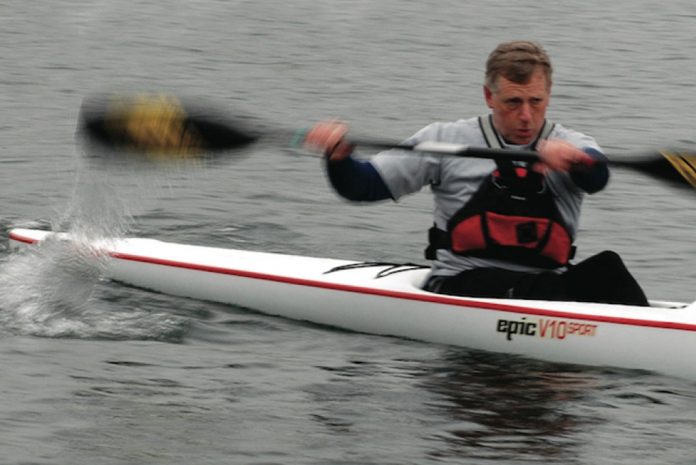
Man paddling in an Epic V10 Sport surfski
Feature Photo: Alex Matthews

Like many sea kayakers, I haven’t had much experience with surfskis. I’ve been to Hawaii and occasionally jumped on a ski or outrigger, but while I’m not quite a surfski virgin, I’m hardly experienced when it comes to these fast but often tippy sit-on-tops. Enter the Epic V10 Sport.

Epic V10 Sport Specs
Value / Performance / Ultra
Length: 20’
Width: 19”
Weight: 37 / 33 / 25 lbs
MSRP: $1,895 / $2,395 / $3,395 USD
[ Paddling Buyer’s Guide: See all surf ski kayaks ]

The V10 series was an Epic undertaking

Epic surfskis are the brainchild of two-time Olympic gold medalist Greg Barton and the South African paddling phenomenon Oscar Chalupsky—the 11-time world surfski champion. The pair have harnessed computer design to the task of making a surfski that is fast yet comfortably stable. The name of their V10 series is reputedly a nod to the nine prototypes they rejected before arriving at the ultimate design.

While Epic produces two full-on racing skis for experts seeking championship titles—the V10 and the V10L (a lower volume version of the V10 designed for smaller paddlers)—the V10 Sport is a slightly backed-off version that is almost as speedy and more stable. It’s the perfect training and recreational racing ski for paddlers like me who are making the leap from stable touring kayaks.

Of the three layups available, “Ultra” is the lightest, using a kevlar and a Nomex honeycomb core; “Performance” is heavier but more durable; and “Value” uses a more economical fibreglass construction. Our Ultra test boat was very light and stiff, and I must admit that a 25-pound boat is addictive, especially when it comes to carrying it any distance.

An exhilarating ride

Afloat, the Epic V10 Sport is fun. Before climbing aboard I was concerned about stability, but once in the seat, I found that the sport has decent primary and solid secondary stability should you dip an edge. The seat is surprisingly large for a 19-inch-wide boat, and my skinny butt slid around more than I would have liked.

The deep footwell was comfortable and its high sidewalls provided good bracing for the sides of my calves. Despite the venturi drain in the footwell, on sprint starts water from the well will flow up into the seat and straight into your crotch—very exhilarating in cold water. The subtle front deck cutaway allows for a closer, more vertical stroke. Deck rigging is minimal but efficient, with spots to stash a few essentials like a hydration pack and a couple of energy bars.

Low Bow Wow

While many traditional sea kayaks have long upswept bows that overhang the water, the V10 Sport’s plumb bow drops almost straight down into the water. This approach provides maximum waterline length for best efficiency and speed through the water.

Float It Before You Boat It

Like most performance skis, the Epic V10 Sport is fitted with an under-stern rudder that precludes beaching the boat. The rudder’s placement forward of the stern is optimal for control, and keeps it submerged even in big seas when the stern itself may be lifted clear of the water by waves.

Feet Fit Swell

The single large footwell allows paddlers to comfortably place their heels together, and the clever fully adjustable footbrace is very quick to set up for different leg lengths. A high-capacity venturi drain draws water out of the bottom of the footwell.

[ Plan your next adventure with the Paddling Trip Guide ]

Get slick with the Epic V10 Sport

If you’ve never tried a surfski, or if you have and were intimidated by another ski’s low stability, then jump on the user-friendly Epic V10 Sport. It’s one slick ride and it’s a great feeling to have so much glide and speed on the water.