Home Blog Page 183

How Photographer Used Blacklight To Capture This Amazing Whitewater Photo

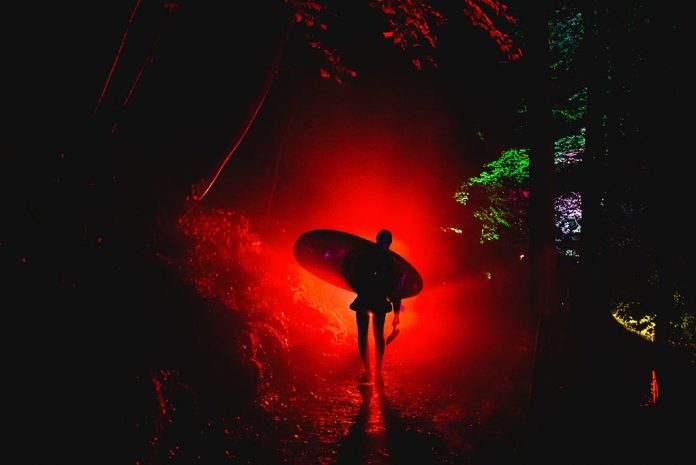
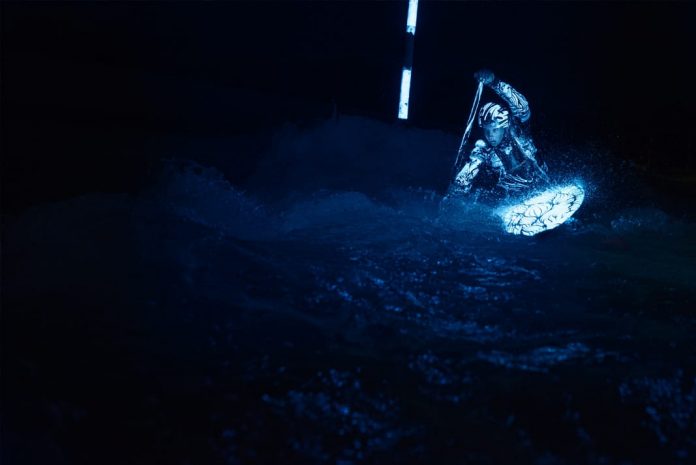
Flourescene refers to the colored glow many substances emit when exposed to UV. | Photo: Markus Berger

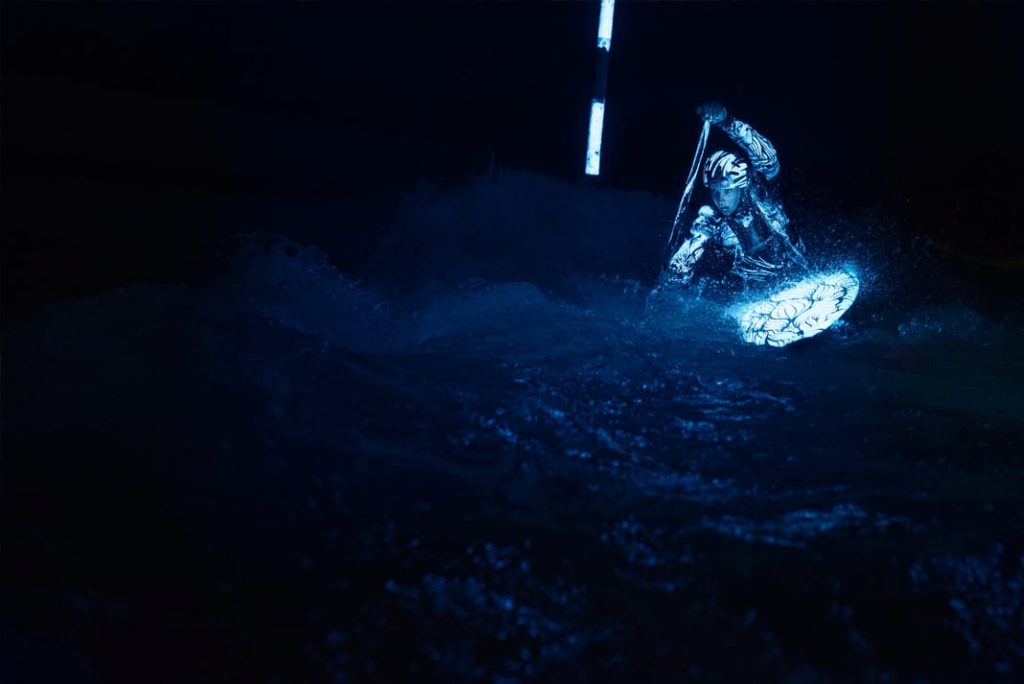
Blacklight photography creates images using ultraviolet radiation and fluorescent inks and paints, captured in pitch darkness. It’s typically used in portraiture; if done well the results are otherworldly, revealing colors and textures beyond the usual perception of the human eye. “In blacklight photography, the flash doesn’t actually light the scene but rather provides UV light illuminating certain elements in the picture,” explains Markus Berger, an Austrian commercial photographer. “Those illuminations bring light to the scene and work as actual light sources.”

Tracking a moving subject to compose and focus an image in the dark makes blacklight sports photography exponentially more difficult. But the challenge didn’t stop Berger, a Red Bull-sponsored lensman, from attaching ultraviolet filters to his Broncolor flashes and capturing ethereal images of BMX riders, skateboarders and breakdancers. Recently, he partnered with Viktoria Wolffhardt, an Austrian ICF canoe slalom athlete, to add the dynamic nature of flowing water to the list of technical difficulties.

Berger and Wolffhardt met at the artificial whitewater course at the Vienna Watersport Arena for the shoot. In daylight, they worked together to determine the best angle and perspective for a photograph. “I always consult with the athlete and try to work as close as possible to get credible outcomes serving both photographic but also sport-specific excellence,” notes Berger.
Flourescene refers to the colored glow many substances emit when exposed to UV. | Photo: Markus Berger
Flourescene refers to the colored glow many substances emit when exposed to UV. |
Photo: Markus Berger
As darkness fell, Wolffhardt put on her wetsuit and helmet and Austrian visual artist Emanuel Jesse applied a design to her head and body blending into the one applied to her C1 kayak. “All the lines needed to flow and represent water,” Berger says. “We were just hoping the paint would hold up and not wash off after Viki’s first try.”

At nightfall, Wolffhardt launched and made her first descent through the gates. “This was the point when I learned water is just unpredictable,” recalls Berger. “Even though we had a fixed location and specific action in mind, every time Viki passed it was slightly different. That’s just the way it is with water. You have to go with the flow and stay alert to capture the moment when it arises.”

The unpredictably of moving water forces a photographer to stay in the moment, says Berger. “It brings you a bit closer to life.”

[ Paddling Buyer’s Guide: See the largest selection of boats and gear ]

Berger was amazed at Wolffhardt’s stamina. “She was tireless and simply amazing. She gave me at least 30 attempts to capture the image I wanted,” he says. “That is what stands out for me with this project—the heart and passion put in by the people who were there and believed in it from the beginning.”

As for the resulting images, Berger says he’s proud to have created pieces of art having never been done before. “I think the combination of street art, a high-class athlete, the nature of the water, and the way it was all photographed is a cool combination capturing the passion in so many ways,” he adds. “I think people today are used to looking at hundreds of images in a minute. But I still believe you can look at one great image for hundreds of minutes and find new details and stories.”

“That’s what this is all about—taking the time and allowing the photograph to sink in.”

Flourescene refers to the colored glow many substances emit when exposed to UV. | Photo: Markus Berger
 

Why Now Is The Perfect Time For Canoe Adventures

woman paddling a canoe loaded with camping gear
neither rich or retired. just free. | Photo: jay kolsch

Some people still think venturing off into wild places is a dangerous past-time. My 91-year-old grandmother is one of them.

Whether I’m out for a weekend or a week, she worries. After each canoe trip, she asks me the same series of questions: Did I see any bears? Did I see any snakes? What about eels? She is also typically concerned about whether or not I washed my hair. The answer to all of the above is usually, “No, Grandma.”

Growing up in the Great Depression, she’s from the era where folks were too busy trying to put bread on the table to go wilderness camping for fun. According to her, the only people who had adventures were either rich or retired. Thankfully, a lot has changed.

According to the Adventure Travel Trade Association, in 2013 the adventure tourism industry was valued at a whopping $263 billion worldwide.

That number is expected to grow by almost 50 percent by 2020. Traditional sun and sand or sightseeing holidays are losing ground to more adventurous activities, like canoeing.

[ Plan your next adventure with the Paddling Trip Guide ]

Experiences that challenge and satiate the explorer within aren’t just for the rich and the restless anymore. In fact, Millennials, families and Baby Boomers make up some of the largest growing segments.

The idea of people spending years dreaming and saving up for a challenging and even occasionally uncomfortable vacation is a notion that would confound my grandma. Her last foray on the water with a single blade predates Gore-Tex, ripstop fabrics and Kevlar—who am I kidding, it predates aluminum—so I forgive her for being a little skeptical.

Wilderness tripping looks a whole lot different today than it did just a couple of decades ago. Instead of setting off with a route scrawled on the back of a bar napkin, the average tripper now carries a topographic map and location-broadcasting electronics—a smartphone, if not a GPS or satellite communicator.

Space-age technology and materials may lack a certain degree of coureur de bois mystique, but what they might offer is far more tangible and valuable. Safety and accessibility. For everyone. Even my grandmother.

It’s a good time to be an adventurous paddler. With just the click of a mouse, it’s easy to connect with outfitters, fellow paddlers, and even guidebook authors to get firsthand accounts and personal insights on routes.

It’s also easier than ever to find quality shops to buy or rent equipment or to find professional instruction. And thanks to social media and the Paddling Trip Guide, there’s no shortage of gorgeous images of watery locales to spur fantasies.

Whether you’re dreaming of a trip near or far, short or long, with your paddling mates or even with your grandmother, consider this a guidebook to your dreams.

Kaydi Pyette is the former editor of Canoeroots magazine.

Neither rich or retired. Just free. Feature Photo: Jay Kolsch

4 Secrets To Photographing Amazing Bow Shots

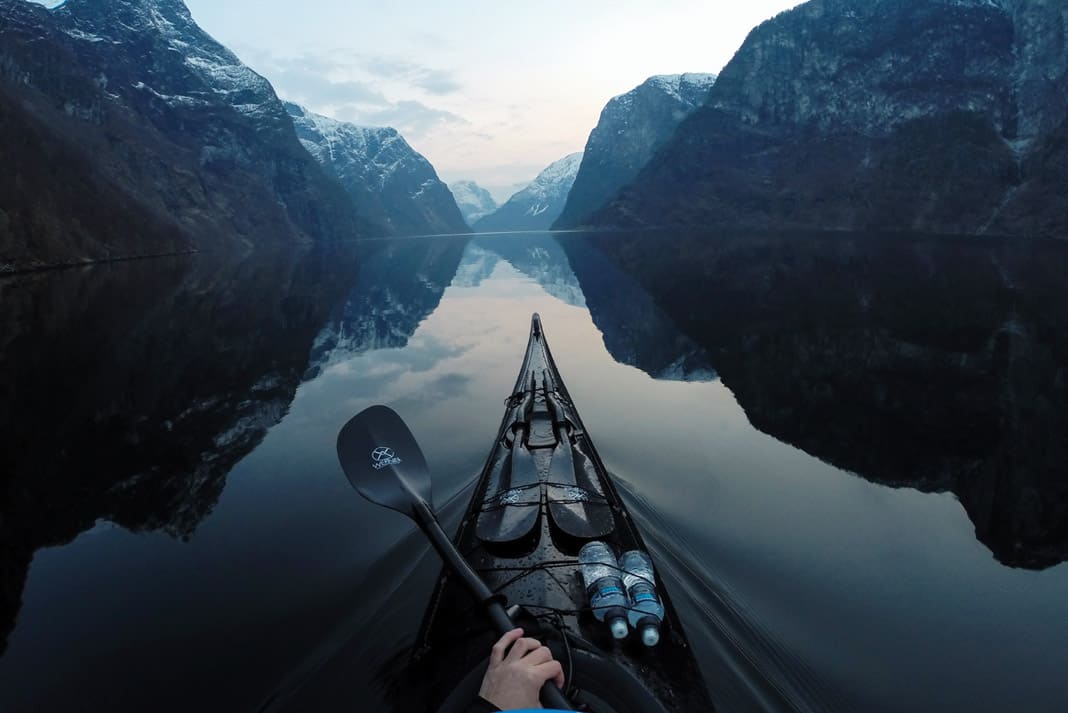
a scenic view of mountains with the bow of a kayak and kayak paddles
Number of bow shots SUBMITTED last year: 534. Number of bow shots we published: Just this one. and the one on page 16. and the one on page 23. | Photo: Tomasz Furmanek

At the Paddling Magazine office, bow shots are a bit of a joke. Sure, we all take them—but we receive so many submissions featuring the pointed prow of our favorite vessel they tend to blur together, each as unremarkable as the last. The work of Tomasz Furmanek is different.

The Norwegian photographer has built a career on wonderfully composed bow shots. And since none of us are going to stop shooting from the cockpit anytime soon, we implore you to use Furmanek’s top tips to take your bow shots from meh to outrageously good.

a scenic view of mountains with the bow of a kayak and kayak paddles
Number of bow shots submitted last year: 534. Number of bow shots we published: Just this one. and maybe a few others… | Photo: Tomasz Furmanek

1. Light

The best light for taking photos is usually during the golden hour, just after sunrise or just before sunset. The periods with low light, just before sunrise and after sunset, called the blue hour, are also very good.

Shooting at this time often means calmer conditions on the water, which will help achieve a nice reflection in the photo. Since you’ll be shooting in lower light conditions, it’s best to have the camera mounted on a helmet, or stabilized in your kayak by holding it close to your body.

Shooting on the water presents unstable conditions with paddler, kayak and water surface all potentially in motion. I usually take five photos of each scene to ensure I get a sharp one.

2. Plan ahead for your bow shot

Research or visit your photo location prior to arriving. This helps pre-visualize the composition of the photo so you know where you need to be to catch the light. Free online apps (try www.photoephemeris.com) have information on where the sun will be at different times of day for locations around the globe.

Keep your kayak bow clean and avoid unnecessary equipment on top of the kayak. Some gear, like a spare paddle, can add interest to the photo, so long as it’s placed in a visually appealing way. Wetting the bow before taking a photo will give the bow some shine, sometimes even making the colors of the environment reflect in the deck of the kayak.

3. Composition

Getting a good bow shot usually requires breaking some of the rules of composition. The kayak bow is a triangle with leading lines that direct the viewer’s attention towards the tip of the kayak and into the scenery beyond it.

In calm conditions when the water surface looks like a mirror, it is good to have horizontal symmetry of the reflection. The symmetry that may be boring in a normal photo makes bow shots more balanced. Point your bow where you want to direct the viewer’s attention.

4. Settings and editing

Even if taking photos in automatic mode, I recommend underexposing the photo just a bit to get more details in the highlights. The darker shadows can be lightened in photo editing, but software can’t fix blown-out highlights.

If possible, shoot raw files as this offers the most editing options, however, Photoshop Express Mobile is a free smartphone app that works well for JPG images.

Tomasz Furmanek started shooting from his kayak three years ago, aiming to capture Norway’s wild and beautiful fjords and lakes and to motivate others to visit these remote locations by kayak.

Bonafide Kayaks and Big Adventures Join Forces in Merger

Bonafide Kayaks and Big Adventures Join Forces in Merger.

Native Watercraft and Liquidlogic Kayaks, together with Bonafide Kayaks, announced the merger of their businesses on October 31, 2019. Bonafide Kayaks founder Luther Cifers will serve the combined business as President.

“This partnership is simply ideal,” says Cifers. “It not only represents seamless philosophical alignment, but also brings together a diversity of strengths that will make this new business even stronger than the sum of its parts. Native and Bonafide are both known for offering unique and compelling products, and this merger allows us to combine our strengths, while building on the distinctiveness of each brand to develop industry leading product technologies that enhance the kayak fishing experience.”

Kelley Woolsey will serve as Vice President of Sales and Marketing, bringing a strong legacy of brand building and business development to the combined enterprise. “Our combination of brands: Native, Bonafide, Liquidlogic, and Hurricane, is really special. The team behind them is equally so, representing both industry experience and fresh, creative ideas. This will allow us to better serve our dealers by providing a complete offering of high demand specialty products and industry-leading customer service.”

Don Grigg, CEO of Native, Liquidlogic, and Hurricane, will serve as CEO of the combined companies. “Bringing these businesses together does so many positive things,” Grigg explains, “We both had amazing teams prior to this merger, and working together towards a common vision is going to be great for all of us. We’re confident that the collective in both people and brands will be a significant and positive force in the industry for years to come. From an operational and logistics standpoint, increased scale will work in our favor, allowing us to better serve our customers in all aspects of the business.”

[See Bonafide Kayaks in the Paddling Buyer’s Guide] 

Bonafide Kayaks was founded by Luther Cifers in 2017, and began shipping its unique, premium fishing kayaks in January, 2018, rapidly ascending as a leading brand in the premium tier of paddle kayaks. As its name and its motto, “Live the Story You Want to Tell” indicate, Bonafide has been characterized by authenticity: in corporate philosophy, product design, and brand culture.

BIG Adventures is a paddlesports industry leader and innovator with the Native Watercraft, Liquidlogic, and Hurricane Aquasports brands. Each brand’s innovation and success is fueled by a deep passion for creating the best experience on the water. Native Watercraft’s proprietary Propel Pedal Drive system has set the standard for pedal driven fishing kayaks. Liquidlogic has long been a leader in whitewater, crossover and recreational designs. Hurricane has defined the recreational lightweight kayak category.

Get Outside With Paddling Magazine’s Trip Guide

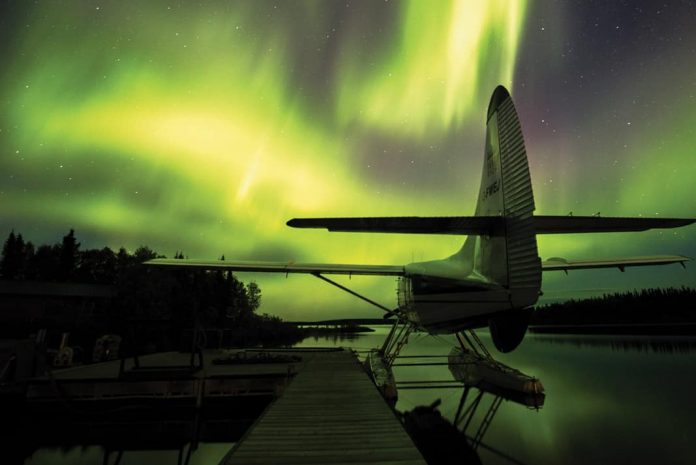
a seaplane docked with green northern lights in the sky
what happens in vegas can stay in vegas. | Photo: Jay Siemens

Paddling is complicated. Not the simple act of placing a blade in the water and pulling your body forward. That part children figure out in a matter of minutes without any training.

I watched hundreds of families do just this at the East Coast Paddlesports Symposium. The volunteers tried in vain to provide rudimentary instruction. But really moms and dads and kids just want to get on the water and figure it out for themselves. And they do.

We’ve been figuring it out for ourselves for generations, probably since the first sheets of birch bark were stitched together and since the first sealskin was stretched over a driftwood frame. How hard can it be, right? A little trial and error and presto we’re gathering beaver pelts and harpooning narwhals.

Elsewhere in James Island County Park, there were experts delivering seminars on packing, route finding, navigation, and menu planning. This is how canoeing, kayaking, paddleboarding and kayak fishing gets interesting. I like to paddle, but I love to travel. This is also how paddling gets complicated.

Planning and preparing all the details of a wilderness paddling adventure can be part of the fun. I love it but only when I have time to pore over maps and putter away at checklists.

Compared to the heyday of backcountry travel in the 1980s and ‘90s households today have fewer holidays and more distractions. With all the little details to consider paddling trips are postponed, sometimes indefinitely.

Why? Because I would rather you venture to Nahanni’s Virginia Falls than Niagara Falls

This must be why people go on cruises and all-inclusive island vacations. I will never go on a cruise, but I get it.

In the outdoor industry white papers, kayaking and standup paddleboarding participation are up. Canoeing is also hot again, making the top ten lists for aspirational activities in America. This new Paddling Trip Guide is well timed. People want to get on the water but have less time to plan than ever before.

Last summer, I almost booked a trip to the Whistler Bike Park instead of going on our annual family canoe trip. Why? Because they make it so damn easy. In two phone calls, one to the airline and one to the hotel I could have had it all organized—transportation, lodging, bike rentals, lift tickets and meals.

Many canoe and kayak outfitters are simplifying their offerings and streamlining their businesses to meet new clients’ needs. Their websites no longer list every widget of rental equipment they have to offer. Nobody has time for all that. I’ll take your six-day, all-inclusive, please. Here’s my credit card number. Kids, we’re going canoeing!

[ Paddling Buyer’s Guide: See all canoes ]

If 20 years ago you told me paddlers would or could book a vacation on the Internet, I’d have told you to open a window and get your head out of the epoxy and resin fumes. But this is the way things are going. Many of the 190 trips and services featured in this issue can be booked this way. More will surely follow.

My goal with this Paddling Trip Guide is two-fold. I want to inspire you to travel to destinations you may have not considered before while introducing you to companies who can remove the barriers and make your trips happen.

Many trips in this year’s guide are all-inclusive vacations but wait, there’s more. Inside you’ll find paddling skills clinics and rescue courses. Maybe you just need equipment rentals, a water taxi, food or a night in a cozy room before you head out. That’s here too. We don’t have every outfitter in every region offering every service, but we’re working on it.

Why?

I would rather you venture to Nahanni’s Virginia Falls than Niagara Falls. I’d rather you be mesmerized by the northern lights than the Vegas Strip lights. I’d rather you spot a bull moose in Northern Ontario than Mickey Mouse. Don’t even get me started about orcas at Sea World versus seeing them on the wild coast of British Columbia.

The Paddling Trip Guide is paddling made easy. Call now. I promise you won’t regret it.

Scott MacGregor is the founder and publisher of Paddling Magazine, Kayak Angler Magazine, and Paddling Business Magazine.

What happens in Vegas, can stay in Vegas. Feature Photo: Jay Siemens

Packraft Review: Kokopelli Packraft Rogue-Lite

Kokopelli Rogue-Lite
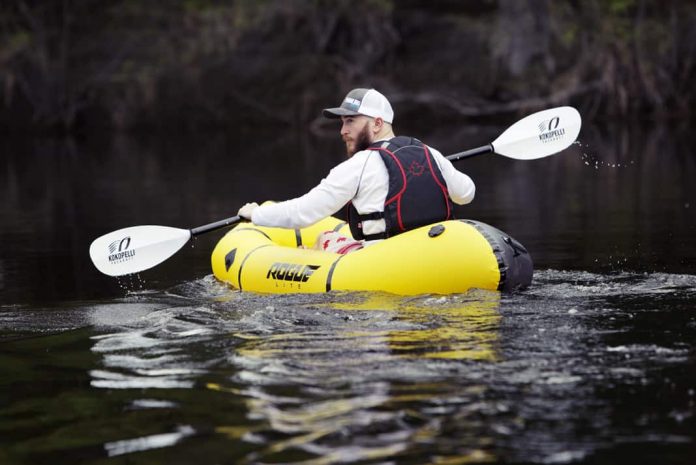
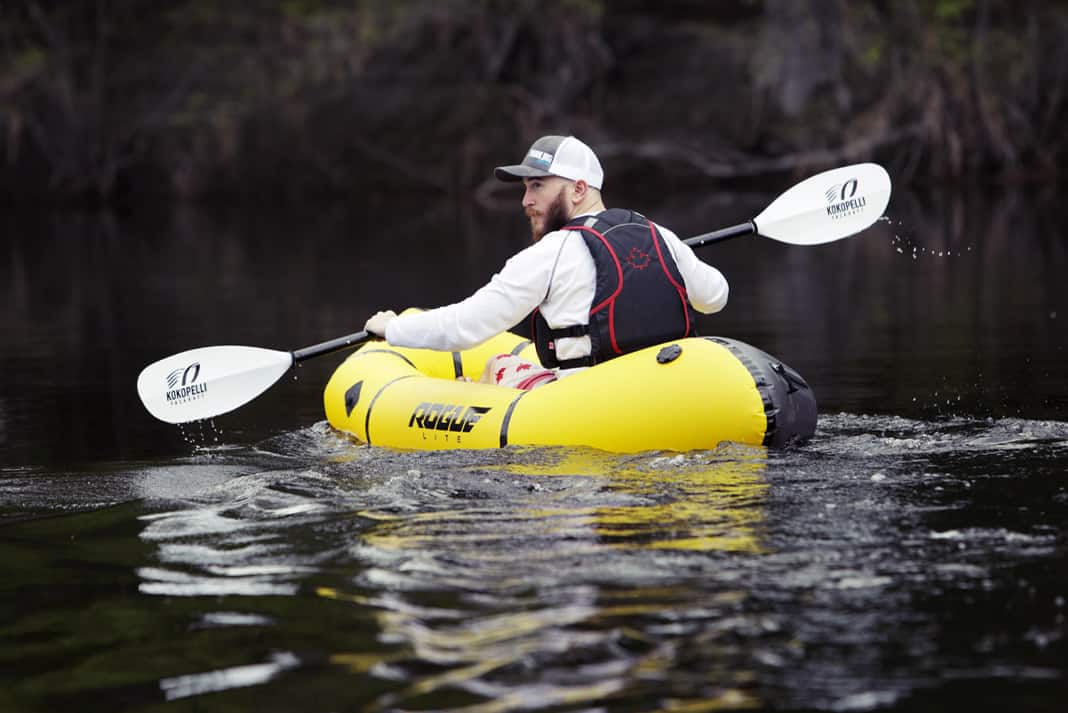
Kokopelli Rogue-Lite | Photo: Michael Hewis

Calling all adventure seekers. Whether you’re exploring high alpine lakes, need a river shuttle for your bikepacking adventures, or simply want the convenience of being able to store your kayak in a breadbox, Kokopelli’s Rogue-Lite delivers big action in a six-pound package.

Kokopelli Rogue-Lite Specs
Assembly Time 3-12 minutes
Paddlers 
Length 
7 ft 
Width 
37 in
Material 
Urethane-coated nylon
Weight 
6 lbs
Price 
$825 USD
kokopellipackraft.com

With the Rogue-Lite, Kokopelli has created an ultra-lightweight, one-person, inflatable packraft capable of handling lakes and rivers that can also be packed onto the front handlebars. No small feat.

Like many minimalist packraft set-ups, the Rogue-Lite’s storage bag doubles as its inflation bag and pump. There’s some technique to master here but try it a few times and inflation happens faster. Even after a few tries, we’re still five minutes off the three-minute inflation estimate Kokopelli suggests. A fun challenge and certainly not a deal breaker.

The Rogue series is the first in the Kokopelli lineup to offer a Kevlar-reinforced floor system to maximize durability while reducing weight and packing size. One of the main differences between the Rogue-Lite and its predecessor is the original Rogue comes with a spraydeck, adding extra comfort and protection from the elements but also half a pound.

Both Rogues feature slight rocker in the bows and large-volume sterns, boasting excellent maneuverability and stability in flat water and on gentle rivers. With a waterline less than seven feet, the Rogues wouldn’t be your first choice for high-mileage lake routes.

Kokopelli Rogue-Lite [ A ]

Kokopelli has included four strategically placed nylon loop D-rings for secure gear storage and just enough space in the Rogue-Lite to make it suitable for ultralight multi-day trips.

The innovative 21-inch-long Tizip, optional on the Rogue-Lite, makes this packraft even more versatile, giving paddlers access to the inside of the packraft’s pontoons to stuff more gear. Use with drybags, just in case, of course.

Kokopelli Rogue-Lite
Kokopelli Rogue-Lite | Photo: Michael Hewis

The four-inch-thick inflatable seat cushion keeps paddlers comfortable and offers a bit of height, improving paddling position. Kokopelli notes the Rogue-Lite does not come with the Rogue’s backband, but says, “leaning—chilling—against the stern or your backpack is comfortable and cool.”


Kokopelli Rogue-Lite | Photo: Michael Hewis

Learning To Never Paddle Impaired—The Hard Way

As a United Stated Coast Guard nonprofit grant recipient, the Water Sports Sports Foundation produces paddling safety outreach materials and distributes them through boating and paddling media providers.

Paddlesports currently has an inordinately high rate of accidents and deaths that for the past five years has been increasing, while power boating stats have been decreasing during the same period.

The goal is to create heightened public awareness of safer paddling making paddlesports safer and to ultimately reduce the total number of paddlesports-related deaths annually.


Salty Jefferson explains how you should never paddle impaired.
Image: Water Sports Foundation/YouTube

Speaker 1: This is the best day ever! Hailey, Hailey let’s go paddling right now!

Speaker 2: Are you sure that’s a good idea?

Speaker 1: Right now!

Salty Jefferson: I learned that lesson the hard way!

Speakers 1 & 2: Paddling legend Salty Jefferson!

Salty Jefferson: One night, I thought it would be a good idea to take out this gal I was seeing, Tonya. I loaded up the canoe with everything we needed: roses, candles, even some of that fine canned champagne. She leaned in for the kiss, but we flipped. Tonya didn’t make it. But from that day forward I never paddled impaired again.

Paddle Sober And Smart
  • Never mix alcohol and paddling. Coast Guard and state BUI (boating under the influence) laws apply to all vessels. This includes canoes, kayaks, SUPs and rafts.


How Paddleboarding Brings New People To Paddlesports

Let’s be honest, standup paddling is sexy. The sport is a favorite among advertisers and consumers alike, regularly getting cameos in everything from kitschy car commercials to aspirational travel magazines. Standup paddling burst onto the scene more than a decade ago and is still very much in vogue.

“There’s a romance with SUP like you’re kind of surfing because you’re standing up and feeling the glide,” says Infinity SUP owner Dave Boehne. “Everybody wants to be a surfer.”

Standup paddling rode this wave of hype and exponential growth during its formative years, but recent growing pains and industry-wide belt-tightening have raised questions about the sport’s long-term sustainability. Getting people to try SUP is easy; keeping them coming back for more is tougher.

Of the estimated 3.3 million people who participated in standup paddling in 2017, the Stand Up Paddle Industry Association (SUPIA) reckons 85 to 90 percent did so at the recreational level. While this may not scream SUP addiction, it does suggest the gateway to the broader world of water sports is wide open, says Kristin Thomas, SUPIA executive director.

Thomas believes SUP is helping the growth of other paddlesports, from outrigger canoeing to recreational kayaking. “It’s a gateway to not only the water itself but also to water culture,” she says.

One reason for that is SUP’s accessibility, says Elaine Newbold, co-owner with her husband Randy of Crystal Lake Adventure Sports in Frankfort and Beulah, Michigan. SUP’s broad appeal and low barrier to entry mean more people in the Newbolds’ two retail stores and on the water—in all types of paddlecraft. The cross-fertilization is most evident in their kiosk on Lake Michigan, where they do a brisk rental business in kayaks, SUPs and bicycles.

“We are all in it together. What you paddle doesn’t matter”

“We rent and sell both SUPs and kayaks. And a lot of times when we rent a SUP we’ll rent a kayak at the same time, if one member of the family maybe wants to SUP and another prefers to kayak,” Newbold says, echoing Thomas’ assessment of SUP as a paddlesports gateway. “It’s fun and adventurous, but it’s not intimidating. I love seeing the mom with the kids and the dog on the board. It’s all really fun for the whole family.”

SUP may have started as the cool new kid on the block, but it seems to be settling into its niche as one more way to enjoy getting on the water. And while the SUP industry by itself is not sustainable in every region, working together with the broader paddlesports community presents an exciting opportunity for everyone.

Nowhere has this trend played out more notably than the event space. Whereas marquee races like the Pacific Paddle Games (PPG) placed a heavy focus on the elite side of SUP competition, regional events like the Chattajack 31 welcome all comers. Historically a canoe and kayak event, participation in the Chattanooga, Tennessee, race surged when organizers opened entries to standup paddlers. Now SUPs make up about half the field, and while PPG has been suspended for 2019, the Chattajack 31 sold out 600 spots in only minutes.

“If you look at events having gone by the wayside, they were all geared towards the elite,” says Dan Van Dyke, executive director of both the Standup for the Cure and the Hanohano Ocean Challenge in San Diego. “It’s clear that normal people don’t want to spend $185 to enter a race, so that they can give prize money to the top five guys.”
Most SUP paddlers couldn’t name even one of those top pro paddlers, but you can be sure they know the folks in their local paddling group—no matter whether their vessel of choice is a standup board, outrigger canoe or recreational kayak.

[ Paddling Buyer’s Guide: View all paddleboards ]

“Inclusivity is the future of our sport,” says Van Dyke. “We are all in it together. What you paddle doesn’t matter.”

Because in the end, it’s the water, not the craft, bringing people together.

Why Paddlesport Predictions Suck

Photo: Klaus Listl

It was 2007 and I walked into the Las Vegas Convention Center for the world’s largest sportfishing trade show. I had in my hands ink-still-wet copies of the premiere issue of Kayak Angler magazine. Turns out I was a bit early to the game. If it wasn’t my long hair and flip-flops getting me laughed out of ICAST booths of every major fishing brand, it was my enthusiasm about the big, bright, shiny, profitable future of kayak fishing. Twelve years later, I still remember the words of every marketing director, “You’ll never get 230-pound bass anglers into those goddamn tippy things, let alone land a five-pound smallmouth.”

The Danish physicist Niels Bohr said, “Prediction is very difficult, especially if it’s about the future.”

Every year in Paddling Business we round up a bunch of industry insiders, pundits, investors, sages, swamis and fortune tellers to predict the near-certain future of canoeing, kayaking, rafting and paddleboarding.

Almost invariably, they’re making straight-line assumptions based on current paddlesports trends. The problem with this way of thinking is what’s going on now won’t and can’t go on forever. Designs evolve, society reassesses its values, new materials emerge to replace the obsolete, and maybe some simple, new idea changes everything we thought we knew.

On top of pioneering revolutionary tech products, Steve Jobs was celebrated for predicting the future.

In 1985, Jobs predicted the use of personal computers would spread into the home. Computers at the time were clunky boxes of industrial grey plastic and metal used only by companies and schools.

Jobs didn’t make straight-line assumptions based on current trends. In fact, one of his favorite quotes goes, “The best way to predict the future is to invent it.”

Steve Jobs sent Apple on a trajectory to, “put an incredibly great computer in a book.” Apple was inventing the future.

Today, kayaks now travel in backpacks on city buses. Conveyor belts feed concrete rivers. SUP yoga is a thing. The Coast Guard allows CO2-charged self-inflating fanny packs. And kayak fishing is well on its way to being bigger than the rest of paddlesports put together, mostly because we’re now building boats bass anglers won’t fall out of.

What is the future of paddlesports? They say you can’t predict the future because current trends won’t and can’t go on forever. But here’s the thing. Unlike the world of technology, paddling in North America has been going on since forever. And probably always will. And if this year’s Paddlesports Retailer New Product Showcase is any indication, it’s going to be even better than what we have now.

Scott MacGregor is the founder and publisher of Paddling Business, Paddling Magazine and Kayak Angler.

Featured Photo: Klaus Listl

Inflatable Kayak Review: Aquaglide Chelan 155 HB XL

Aquaglide’s Chelan 155 HB XL has the speed, tracking capabilities and design elements paddlers want in a light touring tandem design, and then some.

Aquaglide Chelan 155 HB XL
Assembly Time 10 minutes
Paddlers 1 – 3
Length 
15 ft 5 in
Width 
36 in
Material 
PVC
Weight 
35 lbs
Price 
$1,099.95 USD
aquaglide.com

The Chelan 155 arrived at our office in a 28- by 24- by 20-inch box, about the size of a large suitcase. The 155 is the big brother to Aquaglide’s smaller Chelan touring designs, the Chelan 120 and 140, a solo design and smaller tandem respectively. The whole series combines tough Duratex tube construction with rigid floors for durable and long-lasting designs.

[ View all inflatable kayaks in the Paddling Buyer’s Guide ]

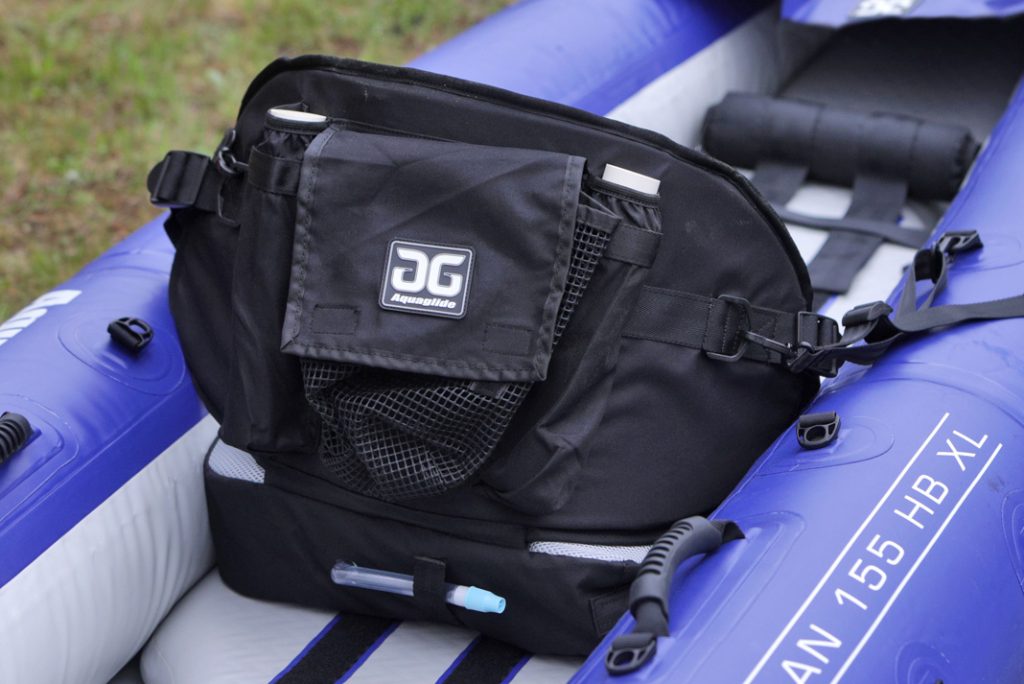
After inflating its three chambers to the recommended six psi, we installed the seats. The Chelan 155’s seats provide lots of features, including a cushy inflatable cushion, high backrest, integrated mesh storage pockets on the seat backs and integrated fishing rod holders. The seats are secured via Velcro and straps.

Two black Velcro strips run the length of the floor, which means the seats can be easily moved to trim the kayak and adjust configuration—solo, tandem or even tandem facing one another—then secured with clips to the many lash tabs along the length of the boat. Our tester model also came with an inflatable jump seat for a junior paddler. Unique footrests attach to the same Velcro floor strips.

The thoughtful features on the Chelan 155 don’t end there. Splash guards at either side of the cockpit help keep paddlers dry. Comfortable molded handles make transport easy and a removable fin helps with tracking. 
The Chelan 155 has a long waterline, just a little rocker, and sharp plastic bow contributing to impressive glide on the water. It’s been designed with lake touring in mind, and also to handle class II rapids and friendly ocean conditions.

Aquaglide Chelan 155 HB XL bThis spacious kayak offers ample room for multi-day tours. Think 600-pound capacity, storage underneath the decks for mid-sized drybags, bungees on the decks, lots of room and accessible tie down options along the length of the boat for securing gear. Tandem paddlers would need to be thoughtful in their packing, but a solo paddler can pretty much bring everything they’d put in a canoe.

For paddlers adventuring in colder climates who are looking for more protection or for those who just prefer a closed-deck kayak, there’s an optional accessory spraydeck. Comes with Aquaglide’s convenient travel backpack.