Home Blog Page 186

Kayak Gear & Accessories: Everything You Need To Go Kayaking

Delta Kayaks FusionEVO
Feature photo: Courtesy Delta Kayaks

Akayak and the right kayak gear and accessories allows you to be in the great outdoors and on the water comfortably, safely and more often. Having a good kayak is not enough. To thrive, you need all the proper kayaking gear and accessories to match your kayak, the waterway, the environment and weather conditions, and the type and length of adventures on which you will be happiest.

I’m going kayaking, what do I need?

Well, it depends. On warm and sunny summer afternoons at the lake, you may need just a paddle, life jacket and just a few safety items compared to what you may pack for a week-long kayak camping trip on the ocean or a run down a class III whitewater river. The gear and equipment you need to go kayaking depend on many different factors, like: the type of kayak, the waterway you’re paddling, the conditions, the temperature of the water and air, the distance and duration you’ll be paddling, and why you’re out there in the first place. There is a basic essentials list for every type of kayaking and then there is all the extra stuff—the fun stuff and the gear and equipment making life on the water or around camp more comfortable and enjoyable.

The basics

The kayak gear and accessories basics list could be as short as a paddle and a life jacket. But this is still not enough to satisfy basic safety requirements in many regions, nor is it best practice. Check your local regulations to be sure.

If you want to keep your lunch dry, the basics list just got longer. If you want to stay dry or catch a fish, even longer still. The basics list here is required by law and/or recommended in most regions and should be considered the bare minimum. Most kayakers always have more with them. Add to your basics list from the specific kayak gear and accessory lists below.

  • Kayak
  • Paddle (1 per paddler), plus spare
  • Life jacket (PFD)
  • Whistle
  • Bailer or pump
  • Rescue throw rope
  • Sprayskirt (for cold weather/water)
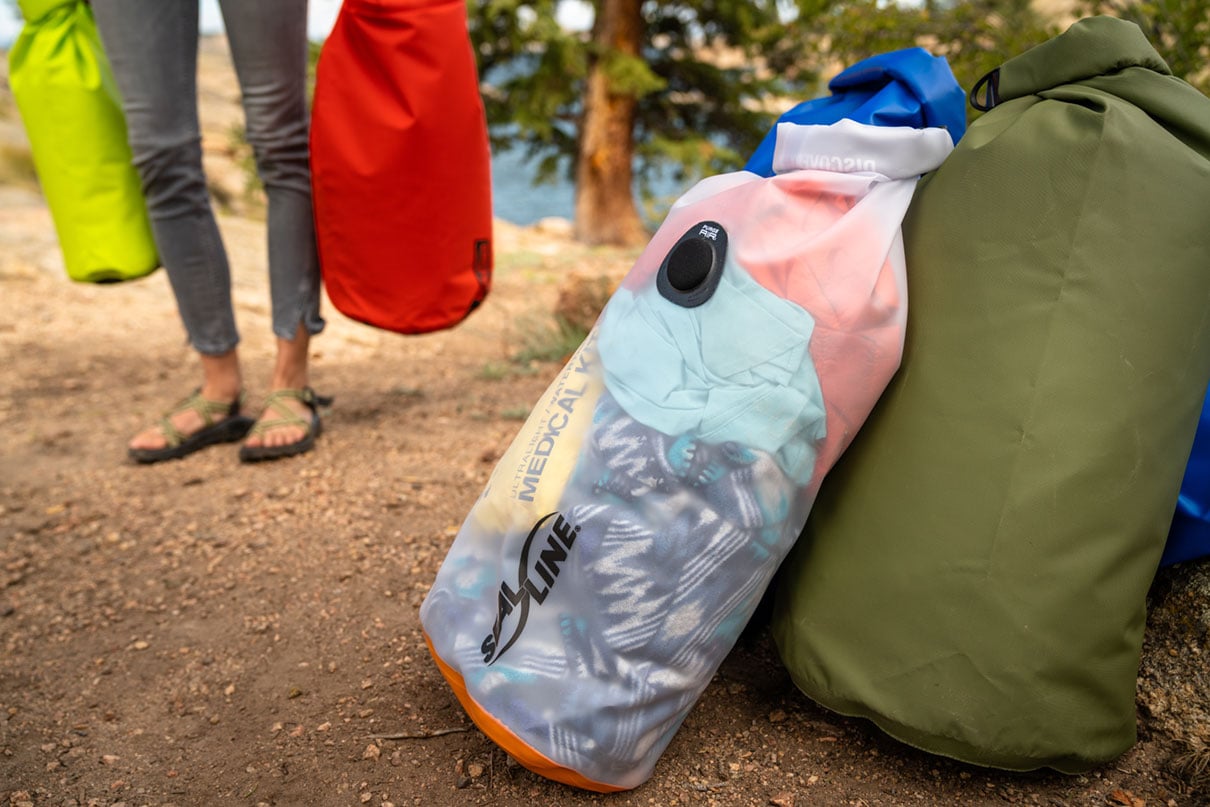
  • Dry bag for personal items
PHOTO: Eddyline Kayaks
Photo: Courtesy Eddyline Kayaks

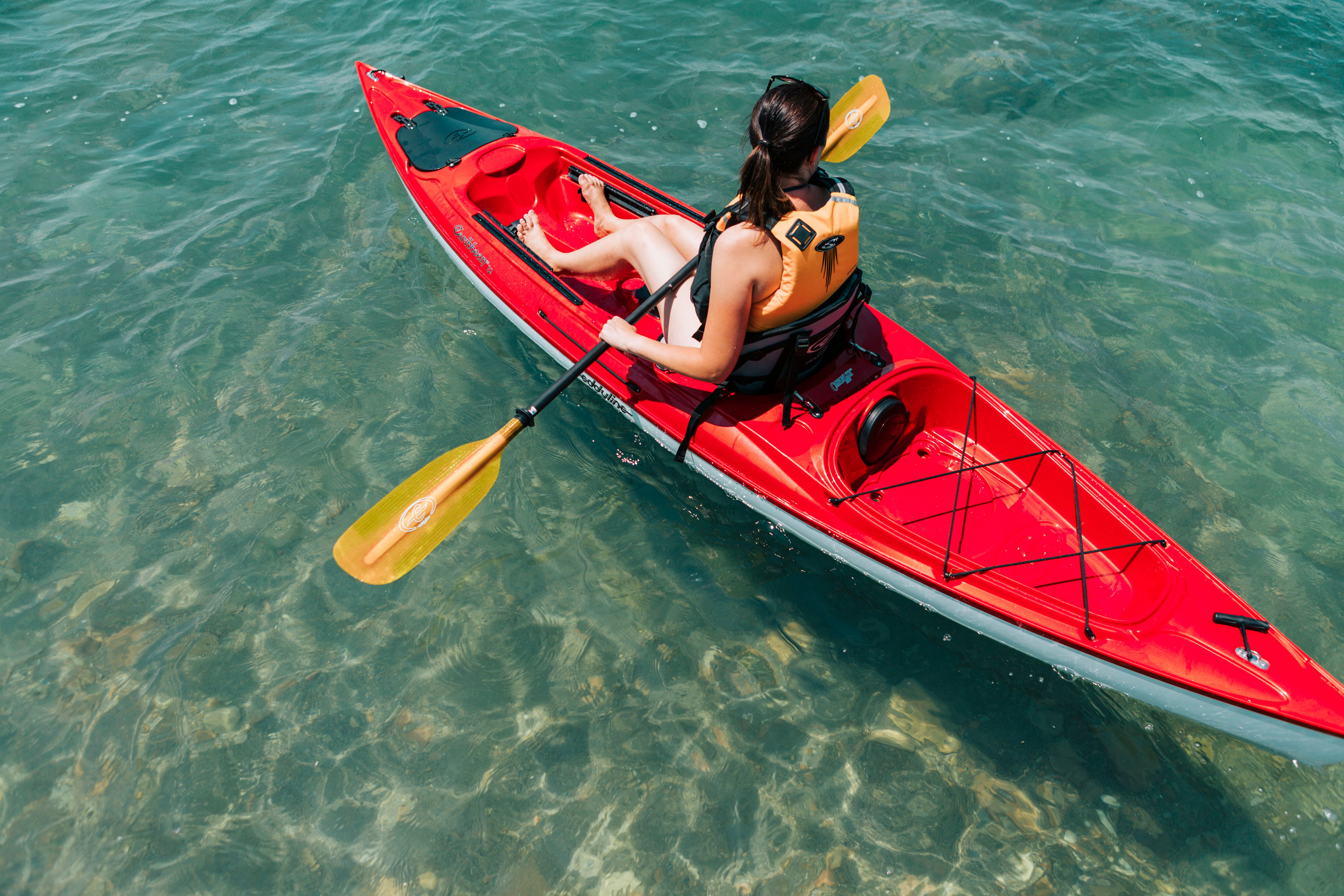
Recreational kayak gear

Recreational kayaks are typically used in protected waters and for shorter trips, usually less than a full day. Recreational kayak gear is typically less rugged and less expensive than the kayak touring gear required for bigger adventures in more adverse conditions.

At one time, recreational kayak gear and accessories were synonymous with cheap gear to go with cheap kayaks. But don’t be fooled, these days there’s a lot of research and development put into designing this stuff and, while typically not as expensive, it can be very functional.

Reputable paddling brands are making good quality recreational kayak gear and accessories. For example: Recreational kayak life jackets are designed with flotation higher on your back, so it rides above the high seat backs; paddle builders balance weight and durability with fair prices; and better recreational technical apparel may keep you dry but may not be as flashy or breathable like the fancy technical fabrics which are three times the cost. You get the idea.
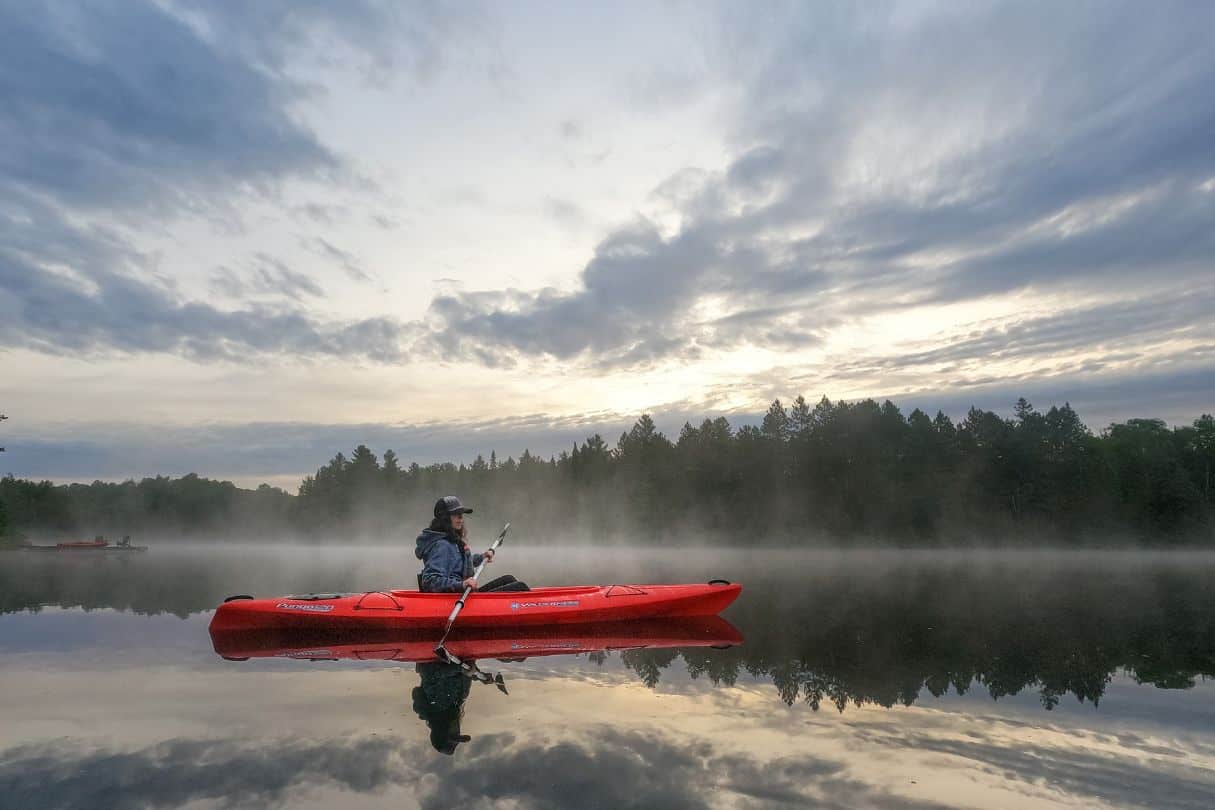
There is an almost endless range of recreational kayak accessories you can stuff inside your cockpit and hatch or strap to your kayak deck. What do you need? First figure out when, where and how you’ll be using your recreational kayak most often and then dive into the links below to get yourself comfortable, safe and enjoying every minute of being on the water.
Delta Kayaks
Photo: Courtesy Delta Kayaks
  • Recreational kayak
  • Life jacket (PFD)
  • Apparel (noncotton and nonbinding, neoprene footwear)
  • Accessories
  • Dry bag for personal items
  • Safety gear (whistle, bailer or pump, rescue throw rope)
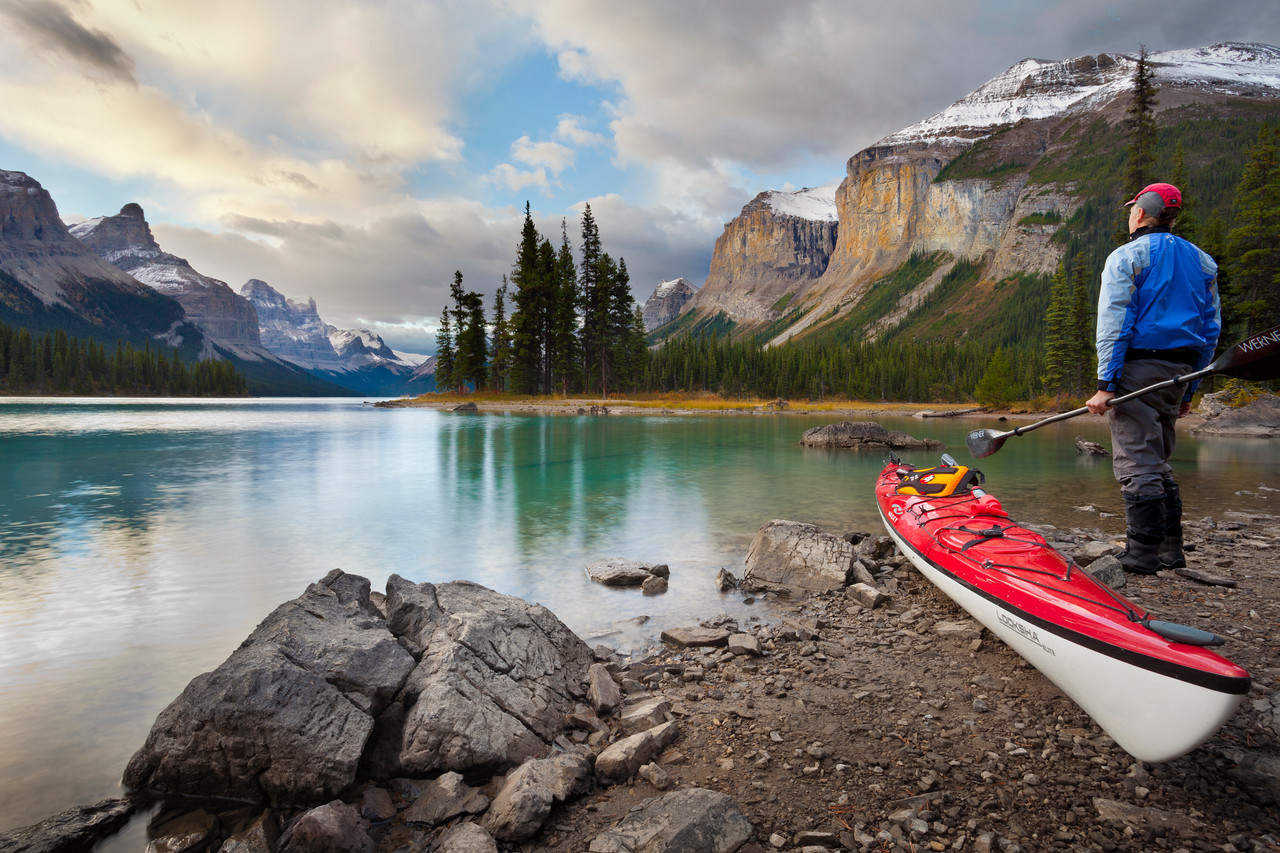
Photo: Necky Kayaks
Photo: Courtesy Necky Kayaks

Touring gear

What’s the difference between recreational kayaking gear and accessories and kayak touring or sea kayaking gear and accessories?

For one, touring kayaks and recreational kayaks are quite different requiring different gear and accessories. For example, touring kayak spray decks are smaller than recreational sprayskirts, if recreational paddlers use them at all. Secondly, kayak touring implies you’re going somewhere, often for longer than a few hours, maybe a weekend, or maybe a month.
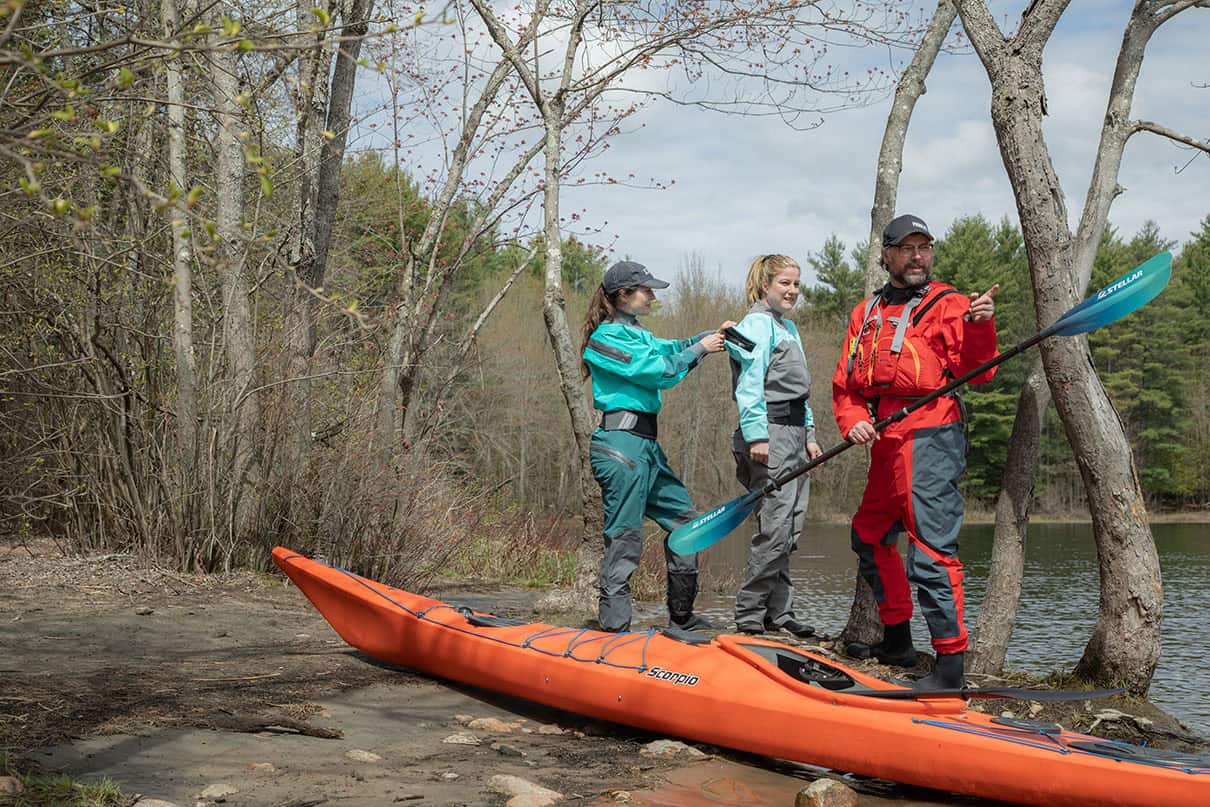
Kayak touring gear and accessories may look similar and offer the same functionality as rec kayaking gear and accessories, but it’s manufactured with premium materials, it’s lighter, more durable, more comfortable, breathable, more expensive and generally better quality. The general thinking is, if you’re going to be using it or wearing it for longer periods of time you’ll want a better version of whatever it is. Also, if you’re out for longer and paddling in more adverse conditions, there are kayak touring gear and accessory items on our list recreational kayakers may never need on sunny afternoons on the lake, like VHF radios, drysuits and helmets. Kayak touring amps up the adventure and gives us a good excuse to go shopping in the Paddling Buyer’s Guide for more gear and accessories.
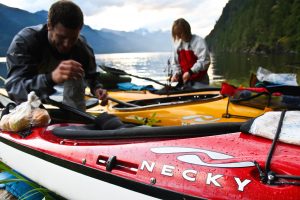
Photo: Necky Kayaks
Photo: Courtesy Necky Kayaks
PHOTO: Vibe Kayaks
Photo: Courtesy Vibe Kayaks

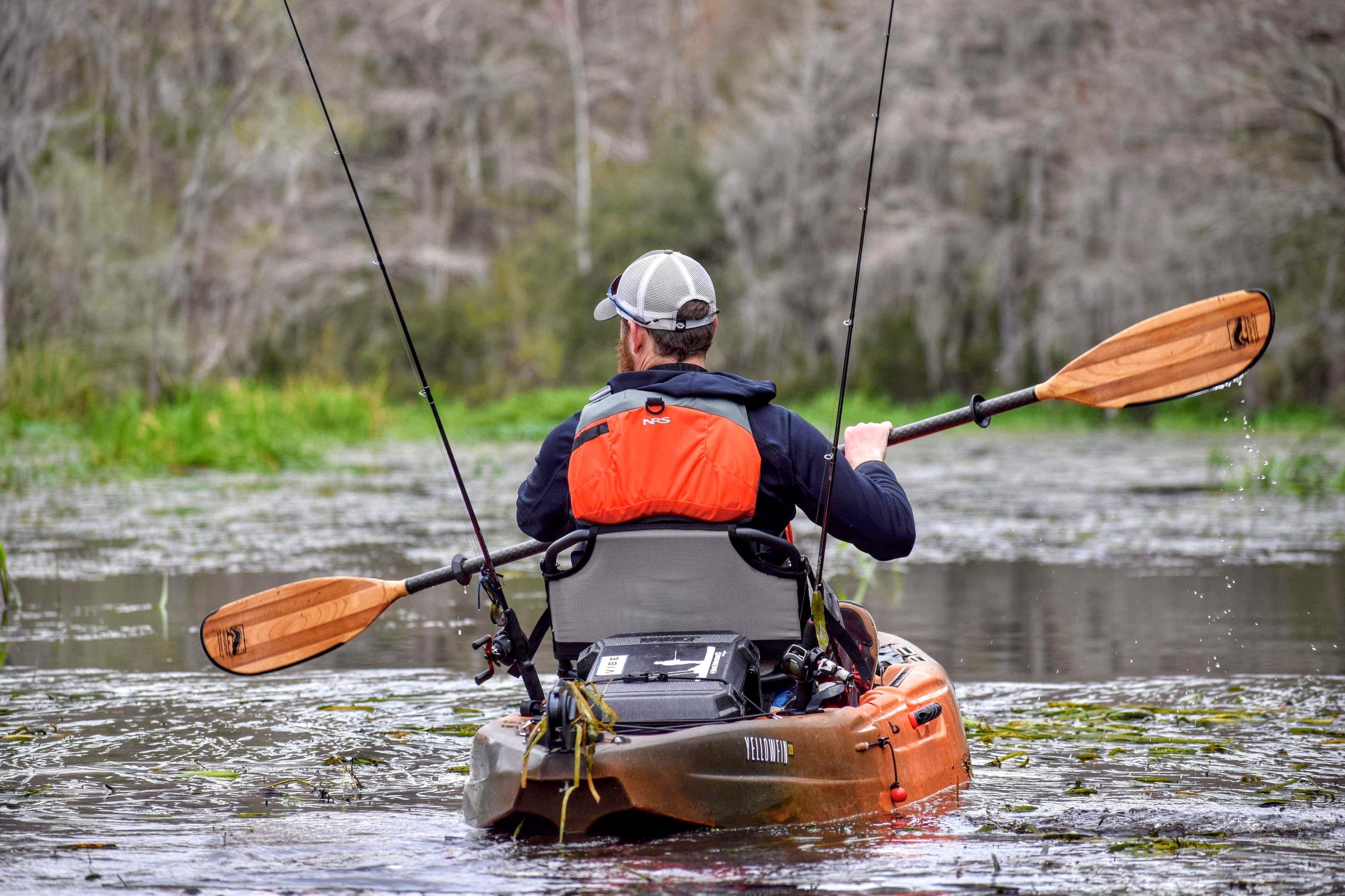
Kayak fishing gear

Shopping for kayak fishing gear is first like shopping for recreational kayak and touring kayak gear. Then add all the extra kayak fishing gear and accessories specific to finding, catching and managing fish. Kayak fishing life jackets have extra pockets and fishy colors; kayak fishing paddles tend to be adjustable with innovative angler features; and kayak fishing technical apparel offers features, color and fit for anglers.

What kayak fishing gear and accessories do you need? The very basic kayak fishing gear is a rod or fishing pole holder and a fancy version of a milk crate to store tackle trays and hold other gear and accessories. After that, the sky’s the limit, really. If it swims, there is kayak fishing gear to catch it. If you can put it on a bass boat, there is a way to mount it on your kayak.
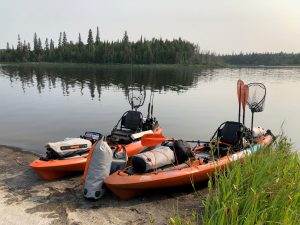
PHOTO: Confluence Watersports
Photo: Courtesy Confluence Watersports
  • Fishing kayak
  • Paddle
  • Life jacket (PFD)
  • Apparel
  • Transport, storage & launching
  • Motors & pedal drives
  • Fishing tools
  • Rigging & outfitting
  • Mounts, tracks & accessories
PHOTO: Pyranha
PHOTO: Pyranha

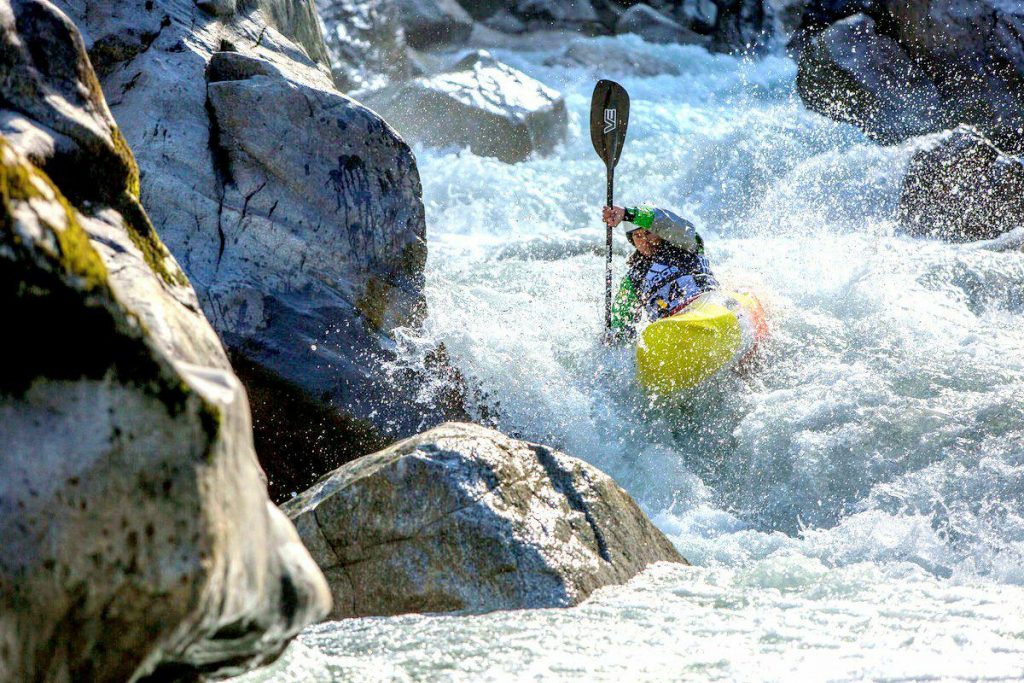
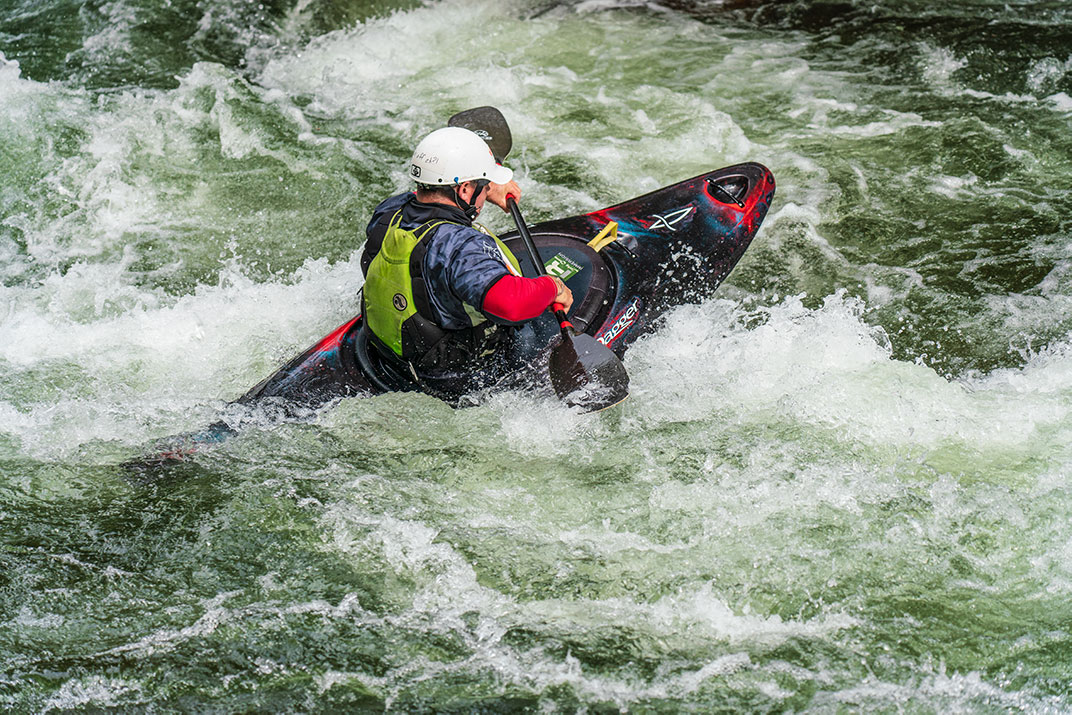
Whitewater gear

Running rapids, dropping waterfalls, and surfing river waves requires a list of specialized whitewater kayak gear and accessories. You’ll want a life jacket with a greater range of motion and features, neoprene sprayskirt, protective helmet, durable paddle, and sticky river shoes. Anyone kayaking rivers should also carry a throw bag of rope, whistle and rescue knife as basic whitewater kayak safety gear. Whitewater technical apparel is designed primarily to keep you dry and warm on and off the river. What you need to wear on any given day depends on water and air temperature.
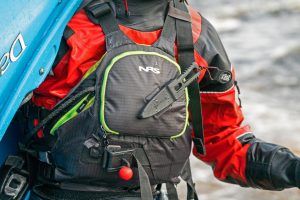
PHOTO: Confluence Watersports
Photo: Courtesy Confluence Watersports
  • Whitewater kayak
  • Paddle
  • Life jacket / PFD
  • Technical outerwear
  • Sprayskirts
  • Helmets
  • Footwear (river shoes)
  • Safety & rescue (throw bag, whistle and rescue knife)
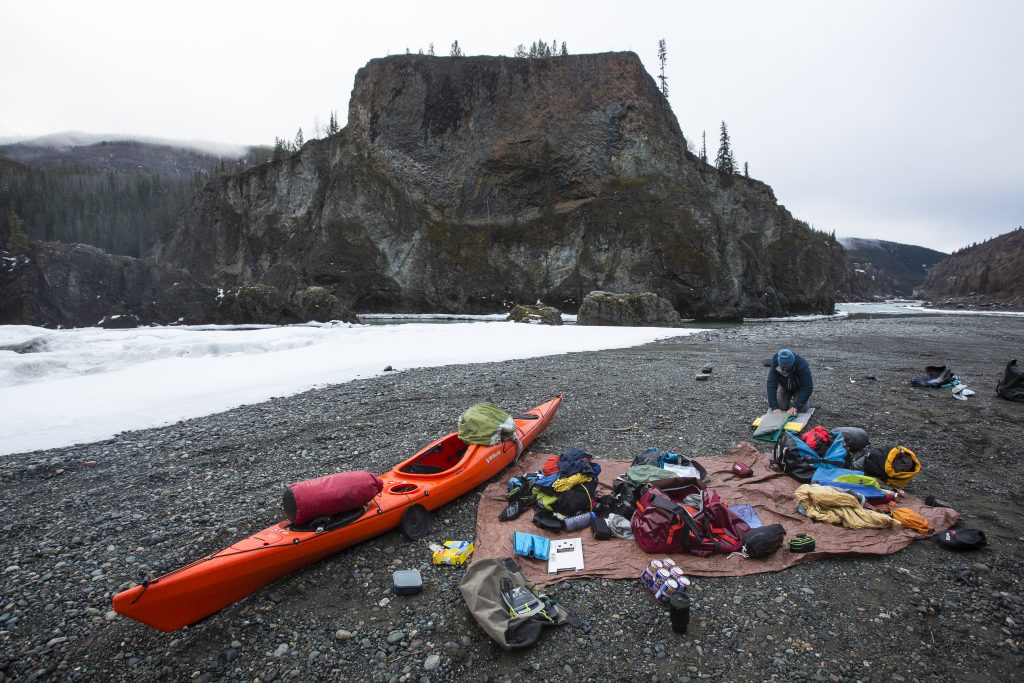
PHOTO: Pyranha
Photo: Courtesy Pyranha

Kayak camping gear

The best part about kayak camping is you don’t have to carry all the gear on your back. In whitewater kayaks, you have to be miserly with gear, however kayak camping with full-sized expedition touring kayaks can be quite comfortable. Kayak camping with some buddies sharing the load among a few boats is truly luxury in the great outdoors.

You’ll need a tent, tarp or other type of shelter and a sleeping bag. For sit-inside kayaks, make sure your tent poles and other awkwardly shaped items fit through your hatches and you have trustworthy dry bags or cases for everything. Kayak camping kitchen stoves and pots must also be small enough to fit through the kayak hatches. Sit-on-top kayaks can be loaded up for kayak camping using dry bags and cases. Either way, food should be packed in sealed bags and again in small drybags, organized by day or type of meal. After a few trips, you’ll figure out your own systems of what to bring on quick overnighters and multi-day trips.
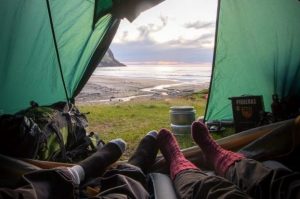
PHOTO: Pexels
Photo: Pexels
  • Tent, tarp or other type of shelter
  • Sleeping bag
  • Sleeping pad
  • Dry bags or cases
  • Camping kitchen stoves with fuel
  • Pots
  • Kitchen utensils (mug, plate, bowl, spork, etc.)
  • Water purification system
  • Personal hygiene (toiletries)

Feature photo: Courtesy Delta Kayaks
 

Creek Boat Review: Liquidlogic’s Delta V 88 Whitewater Kayak

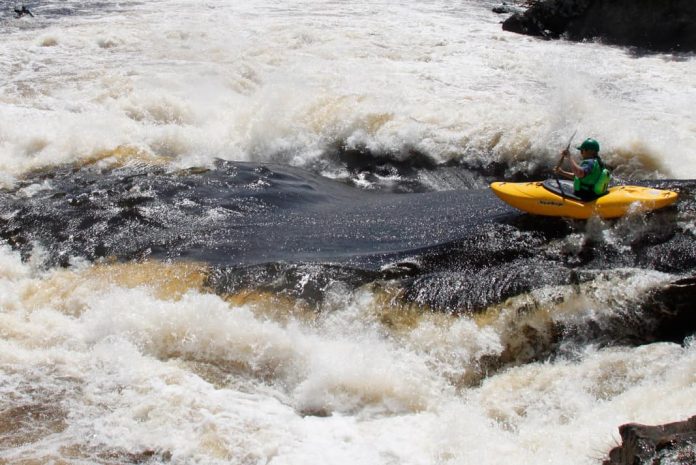
Kayaker Graham Kent going through whitewater in Liquidlogic Kayak's Delta V 88 whitewater kayak
Delta-v is typically provided by the thrust of a rocket engine, or in this case a few well-timed forward strokes by Graham Kent on Dragon's Tongue, the center line on Garvin's, Ottawa River. | Photo: Kaden McLaughlin

Liquidlogic came up with the apt name of Delta V for this creation debuting back in 2017. The name could refer to a change in velocity, delta waves, and of course, the V could stand for class V. Who knows. When I heard the name, I instantly thought of a specialized military team tackling high-level missions.

Liquidlogic Kayak’s Delta V 88 Specs
Length: 8 ft 6 in
Width: 27 in
Weight: 49 lbs
Capacity: 88 gal
MSRP: $1,099 USD
liquidlogickayaks.com

The 88 refers, of course, to the volume in gallons, but it made me also think of the big old boats Delta 88 Oldsmobiles my parents’ friends used to drive. Whatever the origins of its name, a glance told me Liquidlogic Kayak’s Delta V 88 kayak is all about running steep, rocky creeks.

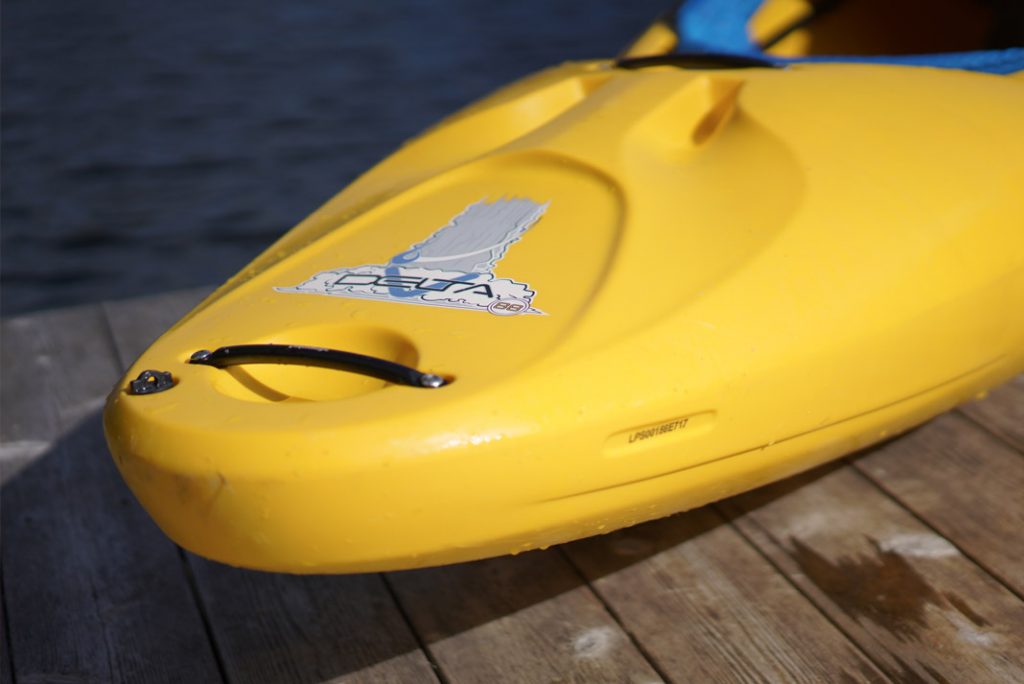
There’s lots of rocker, a rounded smooth hull, and four security bars—if that’s not enough to tell you what this boat is all about, then the waterfall graphic emblazoned on the stern deck should do the trick.

It had been a while since I last had the chance to paddle a Liquidlogic kayak, so I was pleasantly surprised when the Paddling Magazine team enlisted my help and dropped the Delta V 88 off for review.


Liquidlogic’s hefty and comfortable whitewater kayak

Throwing the Delta V on my roof to head to the river, I immediately noticed it’s got some heft to it. Its 49 pounds of plastic is a good thing if you spend the majority of your time bashing down rocky rivers.

There is a peace of mind knowing your gear will hold up to your abuse, and this creek boat certainly feels like it will.

The Delta V is built to slow things down a bit for increased control in technical whitewater.

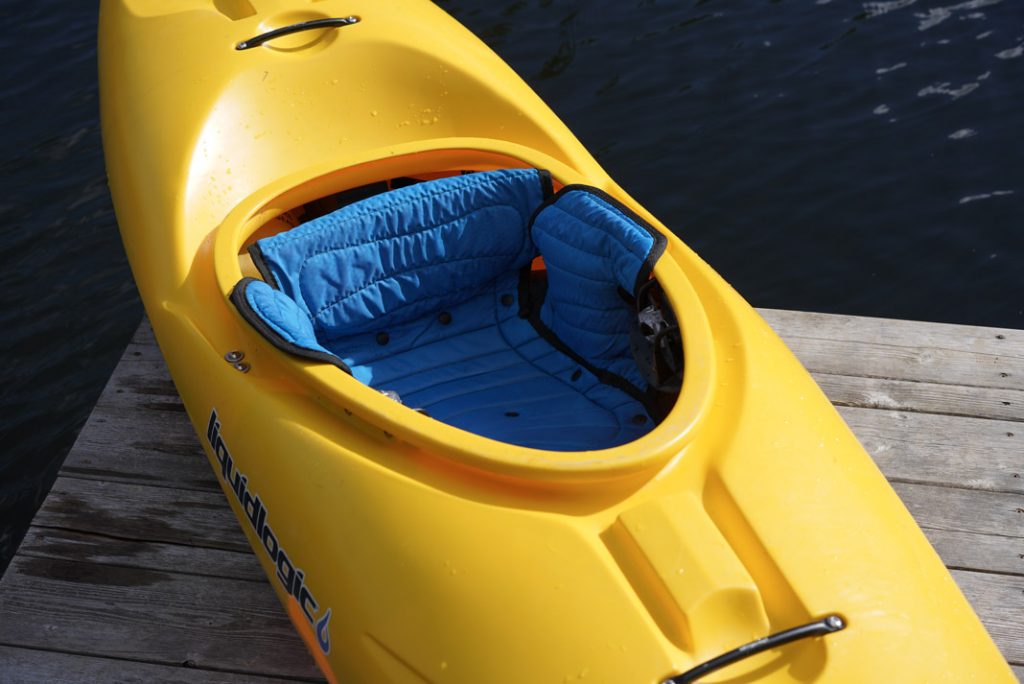
Thanks to Liquidlogic’s Badass Outfitting, I know even before sliding into the cockpit the Delta V will offer one of the most comfortable paddling experiences.

The outfitting is easy to adjust and plush, there’s plenty of foot room for my size 10 feet, and the aggressively hooked thigh braces help me stay locked in. So comfortable, so quickly.

On the water, I immediately notice when this creek boat is heeled over slightly, the secondary stability is equal to or maybe even better than the feeling of the boat sitting flat. It’s been a while since I paddled a Stomper, but I remember it shared the same trait.

This is a great feature when paddling across currents in turbulent water to help avoid the bow pearling or water piling on the deck and flipping you over.

Don’t think you need to be tilted way over either—it’s a much more subtle action than what is usually required on most hard-edged river runners or playboats.

Liquidlogic’s best kayak for steep creeks and technical whitewater

Heading through the first rapid, I quickly had to make a few adjustments in my normal paddling style. While I’m more used to boats where I use speed and edging to get around the river, the Delta V is a different beast.

The rocker profile on this creek boat effectively shortens its 8.5-foot length into a much smaller on-water footprint and, coupled with a smoother round hull, it allows me to spin on a dime.

This means I won’t be winning any downriver races with the Delta V 88 anytime soon, but that isn’t really the point.

The Delta V isn’t for lazy paddlers.

According to the team at Liquidlogic, “The Delta V 88 is built to slow things down a bit for increased control in technical whitewater.”

It shines in the kind of creeks stacked with rapids, micro eddies, lots of rocks to slide off and those littered with waterfalls.

That’s the type of run where edges and speed are a detriment. To be honest, I always like to have a bit of speed on tap, even on these steeper creeks, to make sure if my technique isn’t so spot on I can still skip past and over a hole at the bottom of the drop or boof.

Pat Keller’s sit-in kayak design

This is where Liquidlogic designer and multi-time Green River Narrows Race champ Pat Keller came up with a very innovative solution bringing us to the stern deck design.

Liquidlogic Kayaks calls this design feature Turbo Acceleration Pockets. This refers to the unique cut-out design of the stern deck which helps accelerate a paddler forward and away from the bottom of drops.

Sort of like squeezing a watermelon seed between your thumb and finger. This transfer of energy from the water to boat gets me away from the nasty stuff and is a very cool concept.

Liquidlogic’s Delta V 88 creek boat is an aggressive whitewater kayak

Liquidlogic Kayak’s Delta V 88 isn’t for lazy paddlers. I needed to keep a reasonably aggressive attitude to keep the boat going where I wanted.

Staying forward and active in this creek boat kept me in control and the stern high above any grabby current, allowing me to spin into the tiniest micro eddies I could find.

If you’re the kind of paddler who likes to ease up and relax, a river with bigger water will likely take you by surprise. This can seem like a negative feature, but it can also help develop better river reading skills.

If you watch expert paddlers and beginners run the same rapid, you’ll usually see the beginner taking a flurry of strokes while the expert seems to magically float through without effort. Most often the difference is the ability to read the whitewater.

Once you start developing the ability to paddle when you need to and let the river do the rest, not only will you be saving energy, but you’ll also be running harder whitewater with greater ease.

At 175 pounds, I found the Delta V 88 well suited to my size; I don’t think I’d go smaller. However, Liquidlogic does make a smaller version of the same design called the Delta V 73. It’s four inches shorter, an inch slimmer and weighs three pounds less, and it’s aimed at paddlers 100 to 200 pounds.

[ View all Liquidlogic kayaks in the Paddling Buyer’s Guide ]

The Delta V 88 isn’t a do-it-all kayak. If you are looking to do some cruisy float trips with a bit of surf or want to race to the take-out as fast as you can, there are other boats in the Liquidlogic lineup you’ll want to check out. This is a whitewater kayak. You need to match the right machine to the right mission.

If most of your missions are rock-filled steep creeks requiring precision moves in tight quarters with a bit of free fall thrown in the mix—then enlist the Delta V 88 to be part of your team and blast off.

Delta-v is typically provided by the thrust of a rocket engine, or in this case a few well-timed forward strokes by Graham Kent on Dragon’s Tongue, the center line on Garvin’s, Ottawa River. Feature Photo: Kaden McLaughlin

Life On The Go With Your Kayak

Virginia Marshall smiling while pouring wine into a cup wearing her paddling gear
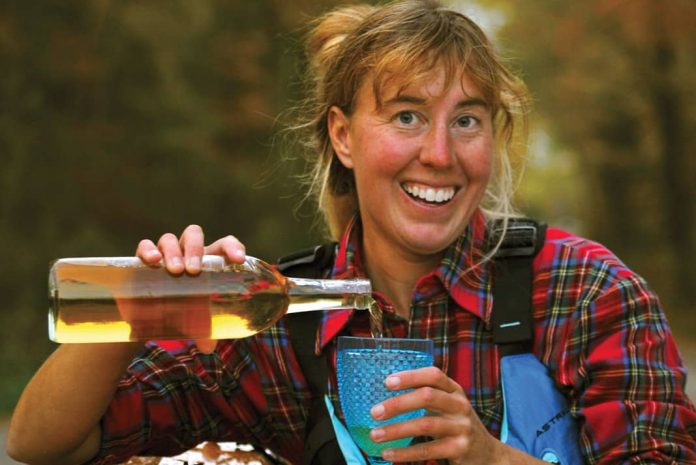
Cheers to life on the move. | Photo: virginia marshall

I collect travel literature like book club disciples collect historic fiction, romantic murder mysteries and New York Times bestsellers.

Some of these memoirs capture the feeling and thinking of a bygone era: Steinbeck’s Travels with Charlie: In Search of America. Others offer a personal inventory of a peripatetic life’s trajectory: A Man’s Life by Mark Jenkins, Dirt Work by Christine Byl, or Smile When You’re Lying by Chuck Thompson.

Some of my favorites recall a single, momentous journey, reported with humor—Bill Bryson’s A Walk in the Woods—or heartbreak—Cheryl Strayed’s Wild—or humility—Gary Paulsen’s Winterdance.

Then there’s another rather different travel book on my shelf. Actually, it’s usually out on the table, where it wields an irresistible magnetism over houseguests: Lloyd Kahn’s Tiny Homes on the Move. The stories in this richly illustrated volume profile individuals for whom “life” and “trip” are inextricably entwined. So complete is their wanderlust, these folks have actually built their houses to travel with them.

There are artfully outfitted, meticulously crafted buses, vans, and trucks of every description. Artists whose self-described gypsy wagons are natural extensions of their creativity. There’s even an entire section devoted to floating homes on the move, including a globe-circling sailboat co-piloted by esteemed sea kayak coach and guide, Ginni Callahan.

For these nomads, “van-life” is more than a hipster hashtag plastered to every tailgate sunset pic on Instagram. It’s a way of living each day according to one’s values, of ignoring the boxes for ticking “this” or “that” and drawing a third option: both.

Recently, a friend and tripping companion told me about an exercise in which you plot your potential future trips on a sort of life calendar. All of them—a finite summation of individual adventure potential. I declined.

If the wanderers in Kahn’s book don’t distinguish between living and traveling, why should I? Sure, their tiny homes are beautiful, mobile works of art containing all that’s necessary for living in itinerant comfort. But if I pack carefully, winnowing down to only what I truly need, I have the same: my kayak.

As the late Audrey Sutherland writes in Paddling North, going on a remote kayaking trip “isn’t going away, it’s going to.” To contentment, contemplation, curiosity. To excitement, and enlightenment. It’s raising a glass to adventure.

Cheers to life on the move. Feature Photo: Virginia Marshall

Perfect Paddleboarding At The Îles de la Madeleine

the red coast of the Iles de lad Madeleine
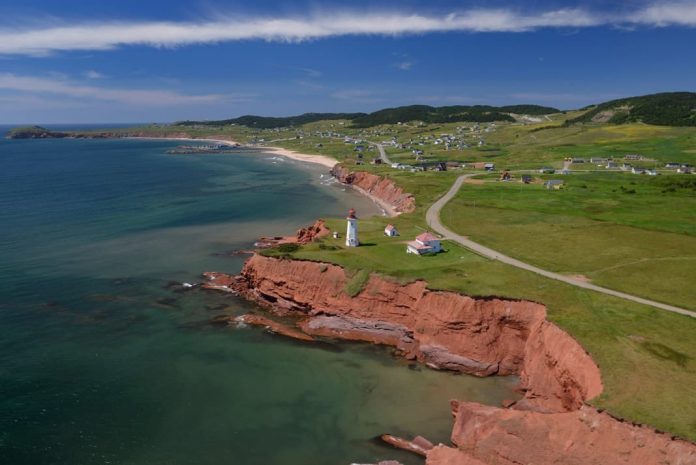
Îles de la Madeleine consists of an archipelago of 15 islands in the middle of the Gulf of St. Lawrence, 133 miles southeast of the Gaspé Peninsula and 60 miles west of Cape Breton. Photo: Michel Bonato

Approaching Îles de la Madeleine by ferry at sunrise, the shoreline slowly comes into focus exposing spectacularly sculpted red and grey sandstone cliffs.

Although it’s a trek to get here—the archipelago is located in the middle of the Gulf of St. Lawrence, 65 miles north of Prince Edward Island in the heart of Canada’s Maritimes—the trip is scenic and the destination unlike any other. One hundred and ninety miles of the islands’ coastline are sandy beaches, perfect for standup paddleboarding.

[ Paddling Buyer’s Guide: Best SUPs For Travel ]

Quaint and understated without tacky billboards, big box stores or fast-food chains, there isn’t much to distract from the islands’ natural beauty and, because they are connected mostly by long sand dunes, you are never more than a few minutes away from a beach.

The islands are known as the Magdalen Islands in English or “the Maggies” by the relatively small population of English-speaking locals. Overall, about 12,000 Madelinot are sprinkled over an area of about 125 square miles which means you will never see a crowd, even during peak tourist season when the population triples.

Despite their small size, the islands have extraordinary ecological diversity with interior saltwater lagoons, marshes, meadows, sandstone cliffs, long sandy beaches and dunes. Thanks to this and the maritime climate boasting milder temperatures than the mainland, the islands attract a variety of wildlife.

About 300 species of birds live or pass through the islands, four species of seals, and a robust population of fish, shellfish and mollusks support the local fishing industry and make for a foodie’s dream come true with catch-of-the-day specials at local restaurants.

Weather
Climate is moderated by the surrounding water and influenced by constant winds. In late summer, the surface temperature in the lagoons and bays reaches up to 21°C.
Getting There
Flights from Quebec arrive daily. Traveling by road involves a five-hour ferry crossing from Prince Edward Island.
Don’t Miss
Parc de Gros-Cap located on the southern tip of Ile De Cap Aux Meules offers camping and a beautiful beach and nearby caves to explore by SUP. They also offer guided kayaking excursions.
For Foodies
The islands offer a mouth-watering selection of locally-produced foods and beverages. Don’t miss the two cheese factories (fromageries), fish markets, vineyard and microbrewery.
Learn More
The regional tourism website, quebecmaritime.ca, and the local site, tourismeilesdelamadeleine.com, are excellent resources and the latter includes maps for water trails.

If you have a half day:
Paddle along the shoreline at the Grande Échouerie (Old Harry) Beach—a five-mile-long beach forming the coastline of the East Point National Wildlife Reserve, protecting habitat for shorebirds, like sandpipers, and waterfowl.

The beach offers iron-rich red sandstone cliffs and caves to explore.

If you have a day:
The South Dune Beach on Havre aux Maisons Island is the longest beach on the islands with 13 miles of sand stretching to the east.

To the west is a geology buff’s dream come true with majestic red and gray sandstone cliffs and gently sloping hills with grassy meadows leading to the Cape Alright Lighthouse.

The lighthouse, which was built in 1928, tops a 20-meter-high red sandstone cliff and is a national historic site.

If you have a weekend:
Set up your basecamp on Havre Aubert Island and explore its beaches and sheltered bays.

Don’t miss Sandy Hook, a large sandy peninsula on the east side of the island not far from the site of the island’s first settlement, La Grave.

Take some time to stroll around this historical site which captures the essence of French-Canadian maritime culture.

If you have a week:
You could pack your gear and plan an island-hopping expedition, but given the proximity of so many excellent beaches, it’s much easier to check into a campground, cabin or hotel and explore each island end-to-end.

Plan your paddling excursions depending on the wind—there is always a calm place to put in and you can easily plan a sunrise or sunset paddle.


Îles de la Madeleine consists of an archipelago of 15 islands in the middle of the Gulf of St. Lawrence, 133 miles southeast of the Gaspé Peninsula and 60 miles west of Cape Breton.
Photo: Michel Bonato

SEND Crew Takes On The Biggest Waterfalls In Chile

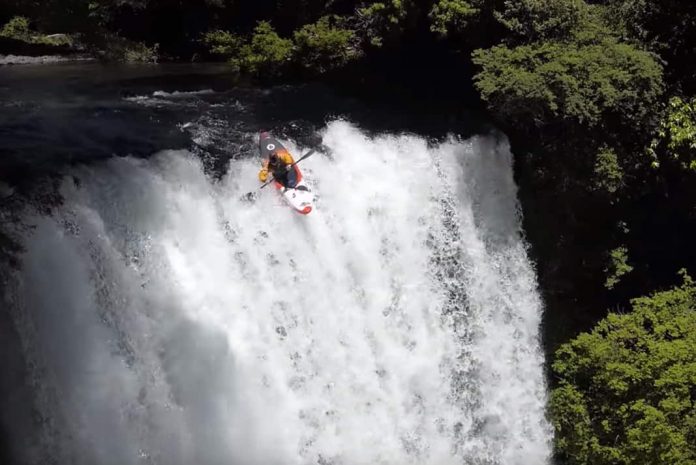
SEND crew visits Chile
SEND crew visits Chile for some big waterfalls | Photo: Courtesy of SEND

Pro kayakers Dane Jackson, Bren Orton, Adrian Mattern and Kalob Grady head to Chile as they chase the biggest waterfalls and hardest rapids the country has to offer.

Challenged by low water at the start of their trip, but their prayers to the rain gods were answered and eventually, the rivers flowed.


Why We Always Remember Our Canoe Trip Campsites

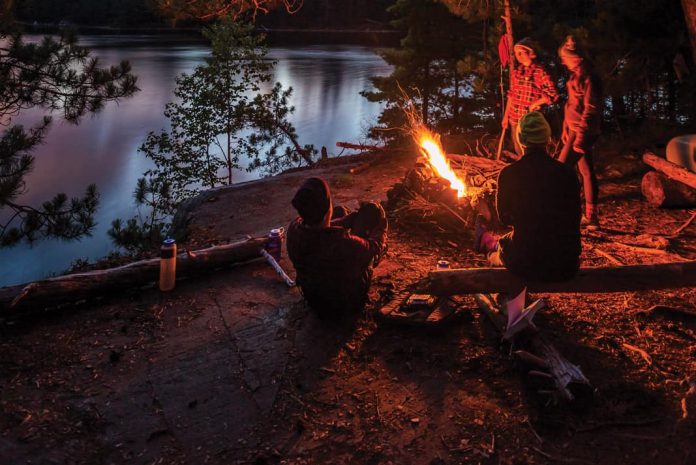
4 people standing by a fire at their canoe trip campsite
Exclamation point. | Photo: Rob Nelson

Sigurd F. Olson said it best about the significance of good campsites.

“Campsites are punctuation marks for the voyageur, signifying the end of the day. I may forget portages, rapids, and lakes, which merge into a nebulous montage of the country traveled over, but there are some campsites that stand out vividly in my mind as special places remembered.”

Campsites are the centerpiece to every canoe trip

Many wilderness canoeists will agree with Olson’s sentiments. Campsites are the bookends to our days outside, the centerpiece to every canoe trip. They are where the day’s stories are shared, laughs are had and breakfast and dinner are eaten.

It’s where we view the stars from, and where we’re at our most vulnerable while asleep. Campsites are more than a patch of ground to lay our heads.

I’ve loved my fair share of wilderness sites. From the beautiful remote beach on Woodland Caribou’s Burg Lake to the skinny-dipping paradise of Killarney Provincial Park’s aquamarine Nellie Lake.

Then there’s that giant pine site on Quebec’s Dumoine River. Yes, there are lots of giant white pine campsites, I just love the gnarled branches on this one the best.

History plays a part in some of my favorite sites. Aldo Leopold used a survey marker as a tent spike along the boundary of Quetico and the Boundary Waters Canoe Area, at Lower Basswood Falls. You can use the same spike as a peg today.

I have camped among the hoodoos along the Milk River, all decorated with First Nation petroglyphs and the French River’s Blue Chute where Canada’s great explorers and voyageurs made camp. There’s also Best Island in Wabakimi Provincial Park where Wendell Beckwith built a series of cabins to study mathematical theories, including the existence of pi.

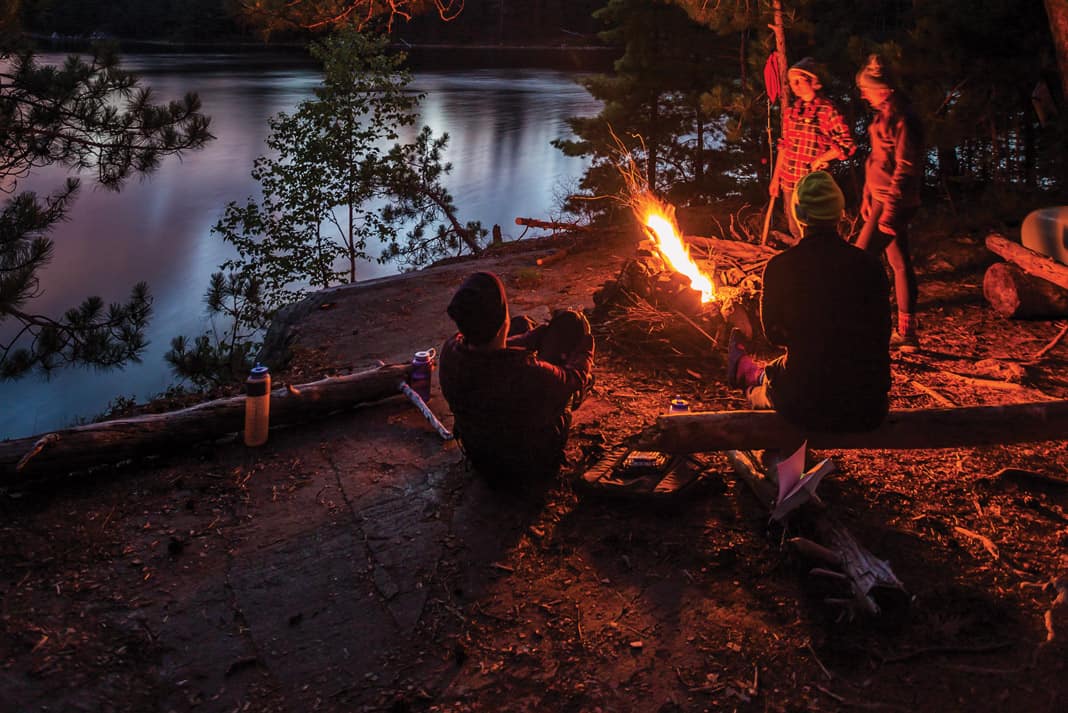
4 people standing by a fire at their canoe trip campsite
Exclamation point. | Photo: Rob Nelson

Canoe trip campsites are where memories are made

Campsites are where many of my wilderness memories take place. A sheltered nook on Crab Lake in the Kawartha Highlands where my daughter camped for the first time at six weeks old.

A spot amongst the pines on Noganosh Lake where I took my dad on a fishing trip a few months before his death. My favorite solo island site on Old Woman Lake where I get away to think.

There are countless reasons why a campsite gets five stars from me, and a bed of soft pine to pitch a tent on and a sandy beach to swim at are just two.

According to researchers, once campers have their basic needs met—a spot for a tent, access to water—we prioritize experience attributes. That could be a high rock for cliff jumping, a west-facing shore for beautiful sunsets or a big flat rock for stargazing.

The attributes prioritized are based on personal preference, but I’ve never met anyone who’s complained about a scenic vista unfolding in full view of the fire ring. Low down on the third rung are backcountry amenities—a comfy log by the campfire, trees for hanging a tarp or a scenic thunderbox.

Campsites can feel like home

What’s much harder to study and quantify scientifically is the instinctive home-and-hearth feeling a campsite with shelter creates. Even 10,000 years after the dawn of the agricultural revolution and permanent dwellings, the nomadic campsite is instantly recognizable as a refuge. One small square of the earth to call our own and rest our weary heads upon, dreaming about what the next day’s adventure holds.

Olson was right: Campsites are the punctuation marks in any journey. Whether an exclamation point or simple period, they make our journeys complete.

When we spend our days paddling through lakes and rivers we are visitors on the land. But at night—at camp—for just a little while, we’re home.

Kevin Callan’s Butt End is a regular column in Canoeroots magazine. Kevin is the author of 15 camping and canoeing guidebooks.

8 Essentials For A Paddling Expedition Photographer

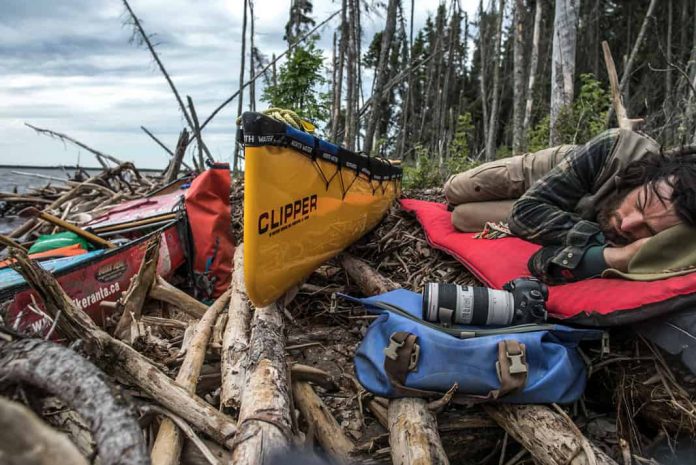
man sleeping next to his canoe surrounded by paddling and photography gear
Roses are red, mud is brown. Sleeping in the forest is better than any night on the town. |Photos: David Jackson

The first question for a photographer about to embark on a journey is what you need to tell the story. It’s a question of lenses, camera bodies, memory and storage.

If your niche is crispy fog and distant moose, you might only need your favorite zoom lens. If the Milky Way and dancing aurora keep you up late, you’ll need your tripod and wide lens.

But what if you’re into it all—camp photos of steaming coffee, candid portraits under a downpour, quiet reflection in a windbound tent, and the quick catch when a wolf trots out from the willows.

8 Essentials For A Paddling Expedition Photographer

It’s easy for a photography kit to get weighty, and for the price tag to add up. Here are the bare bones.

1. Lenses

camera lense
Capturing every angle and moment; Lenses. |Photo: David Jackson

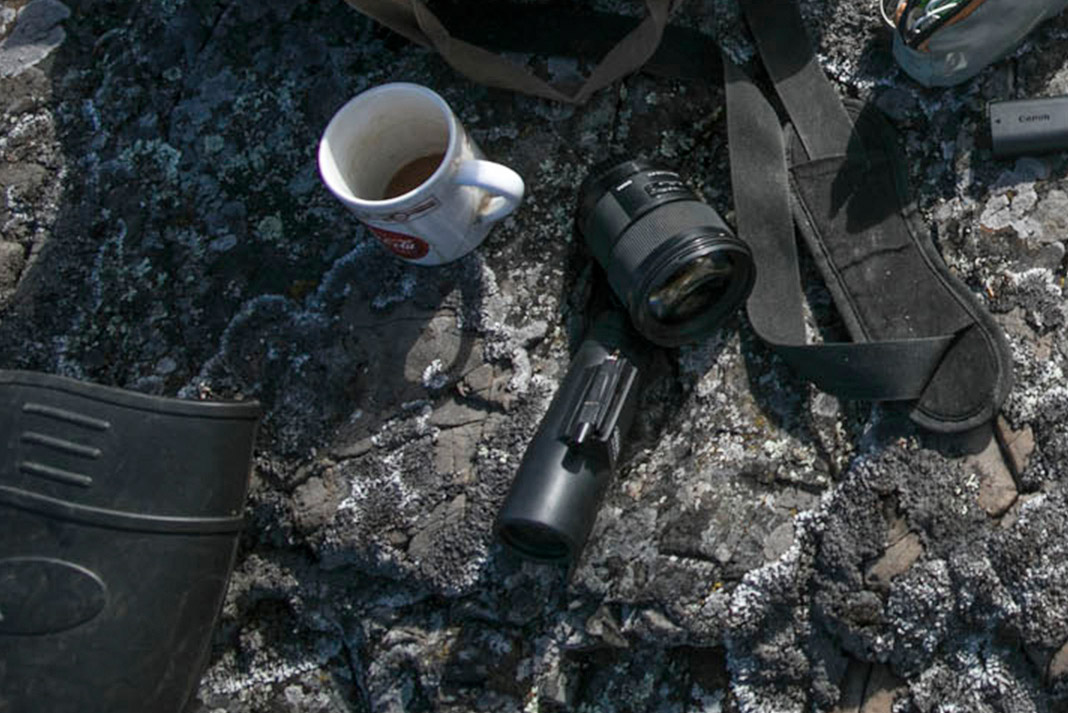
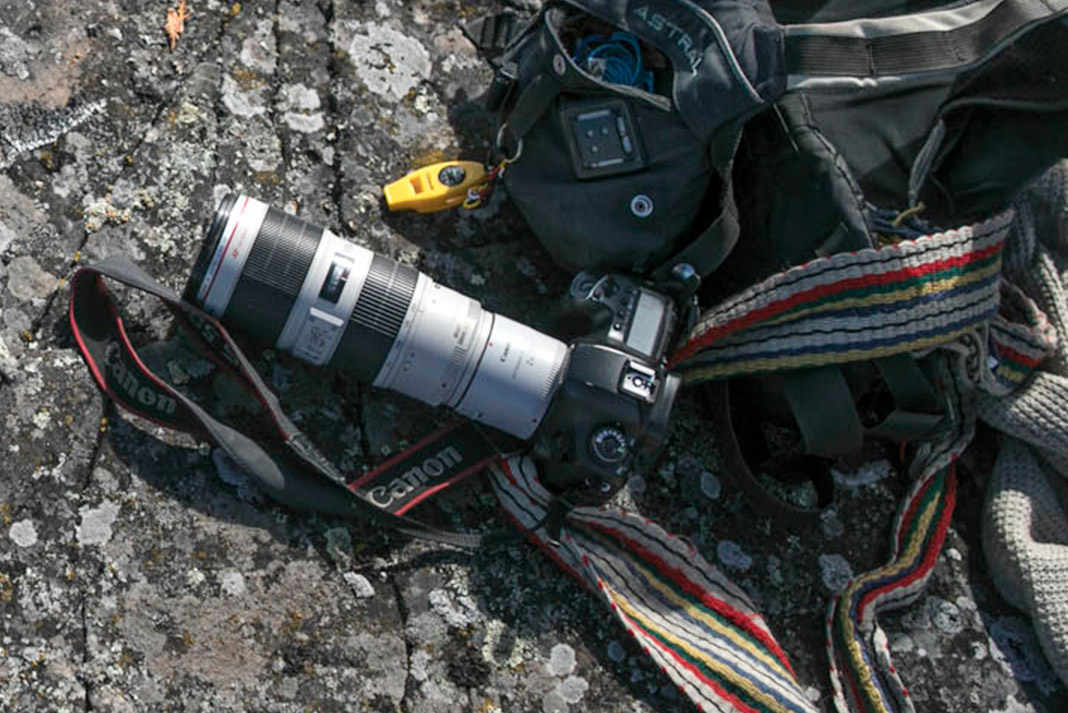
Bringing a full kit not only gets weighty, but it can also burden my creativity with too many options. I find two lenses, the Canon 24mm f1.4 and Canon 70-200mm f2.8, cover all my needs and can stand up against any canoe trip weather.

Without getting too technical, the 24mm lets me focus close and leaves a lot of room to tell a story with composition. The 24mm is the only lens I use in camp because it’s great in low light and is easy to keep slung over my shoulder.

The 70-200mm, while not super far-reaching, is essential. Its versatility lets me shoot portraits to action, wildlife to distant landscapes.

$2,089 and $2,499 | www.canon.com

2. Camera body

camera body
Baby got body. |Photo: David Jackson

Brands and price tags might add to your ability to tell a story, but the most undeniable truth is the most important camera is the one with you. I bring two camera bodies, one for each lens, which means I never have to remove a lens, reducing the possibility of dust, debris, rain or snow entering the camera.

The Canon 5dMKIV has been my go-to camera body for a few reasons. It’s full-frame, has a decent shooting speed for action, is excellent in low light, and its weight and size are perfect for being on the go. Most importantly, it’s rugged enough to handle a wilderness trip.

$2,999 | www.canon.com

3. Aerial view

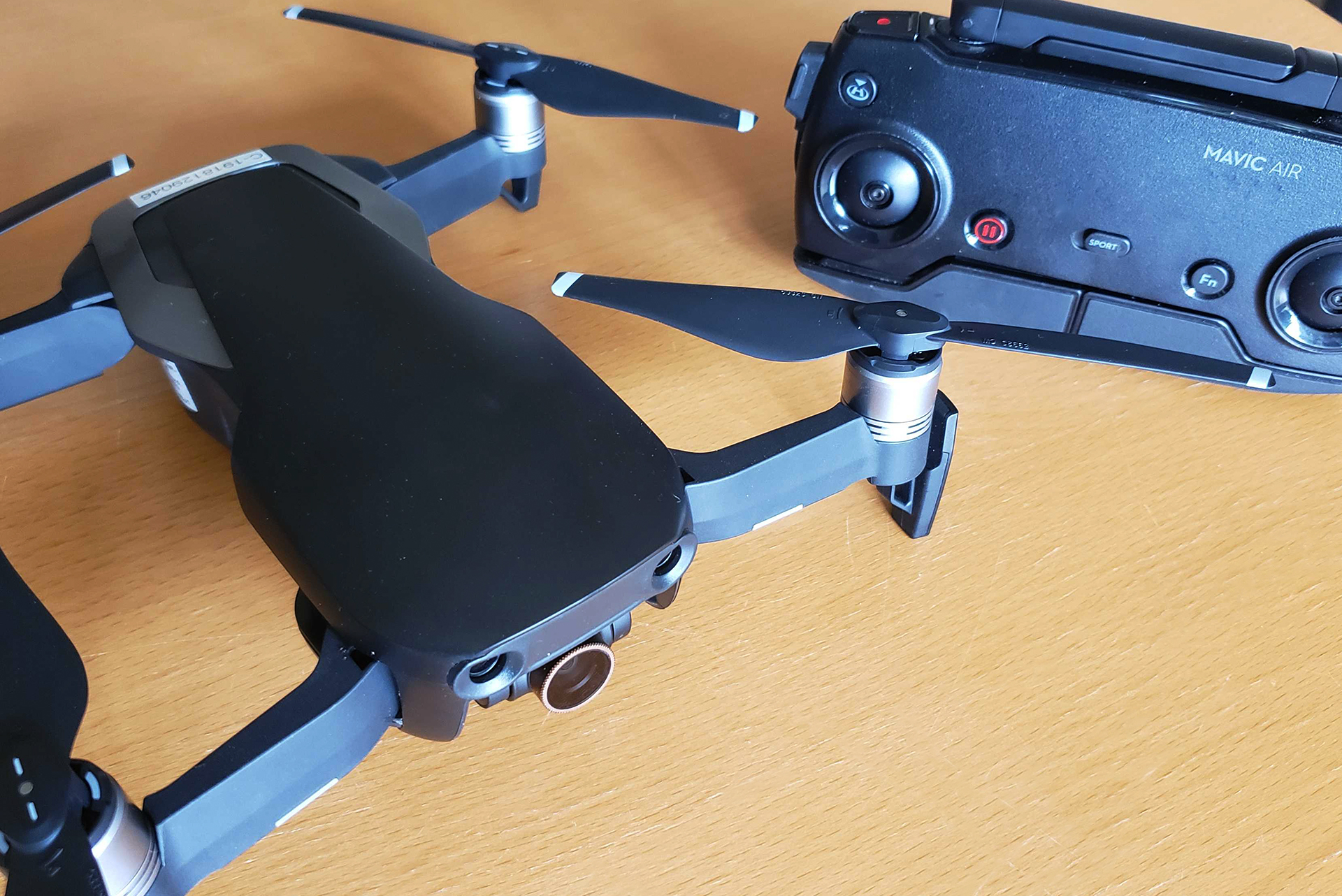
DJI Mavic Air Drone
DJI Mavic Air Drone | Photo: Paddling Magazine Staff

Drones have changed the world of wilderness travel. Carrying a Mavic Air adds less than a pound, and the added benefit of an aerial view is undeniable. Not to mention, the software has made the technology so user-friendly, virtually anyone can operate it.

$799+ | www.dji.com

4. Drybags

camera laying on several duffle bags
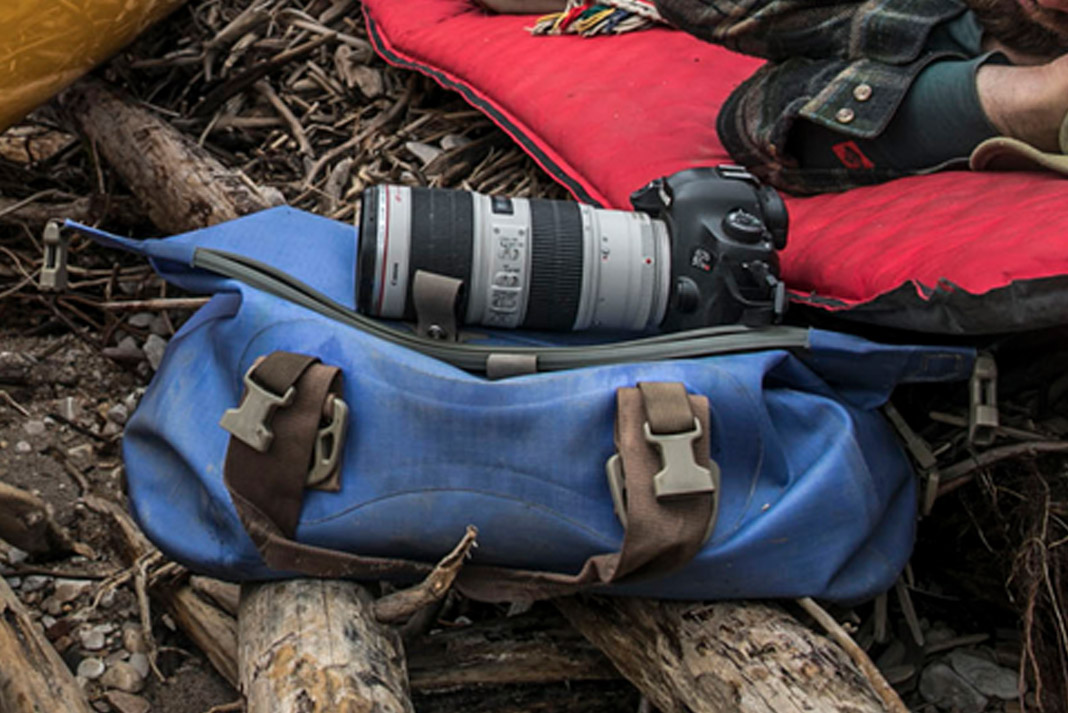
Keep it cozy, keep it safe. | Photo: David Jackson

I prefer to ditch hard cases and their bulky awkwardness. Instead, I throw a 15-liter Watershed Ocoee on my shoulder. I treat it like a go-bag—a camera comes out, a camera goes in.

I keep the dry bag between my legs while I paddle, beside me in the tent and carry it across every portage. Through rain or dust storm, I know my gear will be safe and dry. I keep a Shamwow towel in the bottom of the bag to catch any moisture.

$112-$163 | www.drybags.com

5. Storage

a red duffle bag between two canoes
I do recall. |Photo: David Jackson

Considering electronic needs when storytelling is important. When paddling across Canada (www.paddlingmag.com/0022), I brought a laptop and a hard drive, tucked into a 55-liter Watershed Yukon Duffle, and did occasional backups to rugged LaCie portable drives.

Along the way, I mailed hard drives home, emailed dispatches to my editors, and posted to social media. If you’re documenting for fun and space is limited, just bring extra memory cards.

The worst thing is to miss the photo because you’ve run out of space. Memory is cheap, so bringing multiple SanDisk cards is an option.

$159-$223 | www.drybags.com

$60 for 32GB | www.sandisk.com

6. Electronics

a cellphone and electronics sitting outside of a duffle bag
Bring your toys. |Photo: David Jackson

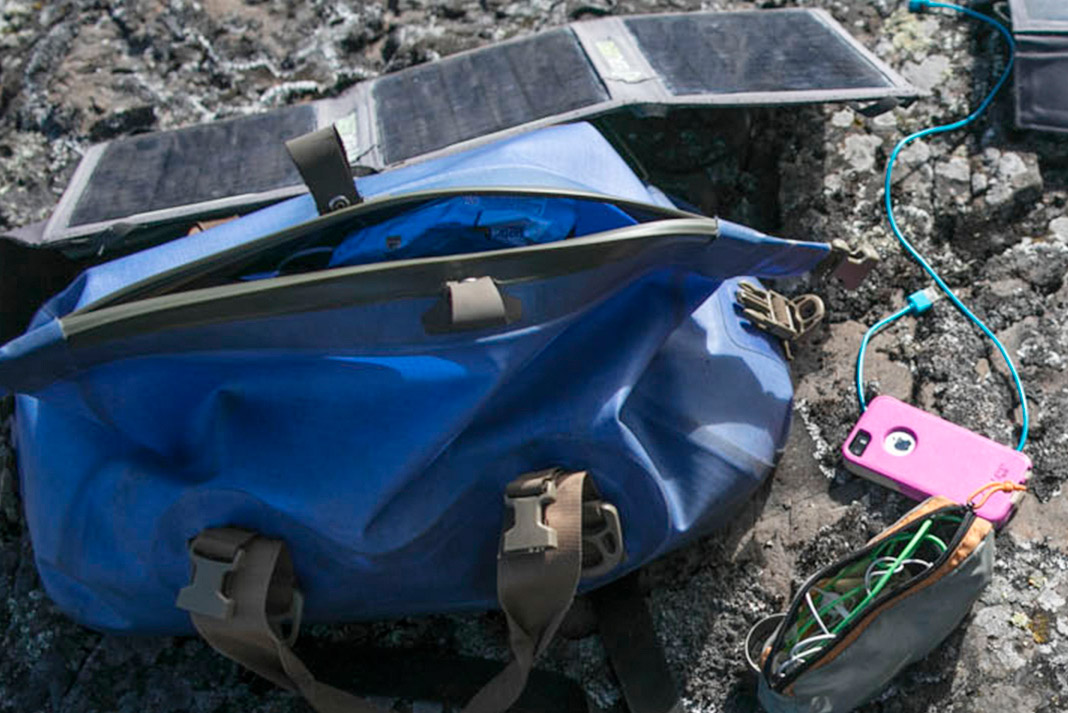
Power is simple thanks to Goal Zero solar panels and a Sherpa 100 Portable Power Bank. The Sherpa is a two-pound power bank offering juice collected from the solar panels, or wall plugs when it’s convenient.

With larger panels, a full sunny summer day can charge the bank, keeping a smartphone charged for one week, or charging three or four camera batteries. I plug smaller devices, like a Delorme InReach or phone, directly into my panels via USB port, and save the panels for my camera gear.

If what I’m doing is serious, I might carry two Sherpas. The bulk of redundancy is preferred to not getting the shots at all. Besides, I’m canoeing, not hiking. I pack it in, carry it over, and rest easy knowing I won’t miss a moment.

$299 | www.goalzero.com

In 2017, photo-journalist David Jackson spent six months paddling and portaging from Canada’s West Coast back to his home in the Ottawa Valley.

Roses are red, mud is brown. Sleeping in the forest is better than any night on the town. Feature Photo: David Jackson

How To Plan A 600-Mile Kiteski And Kayak Adventure

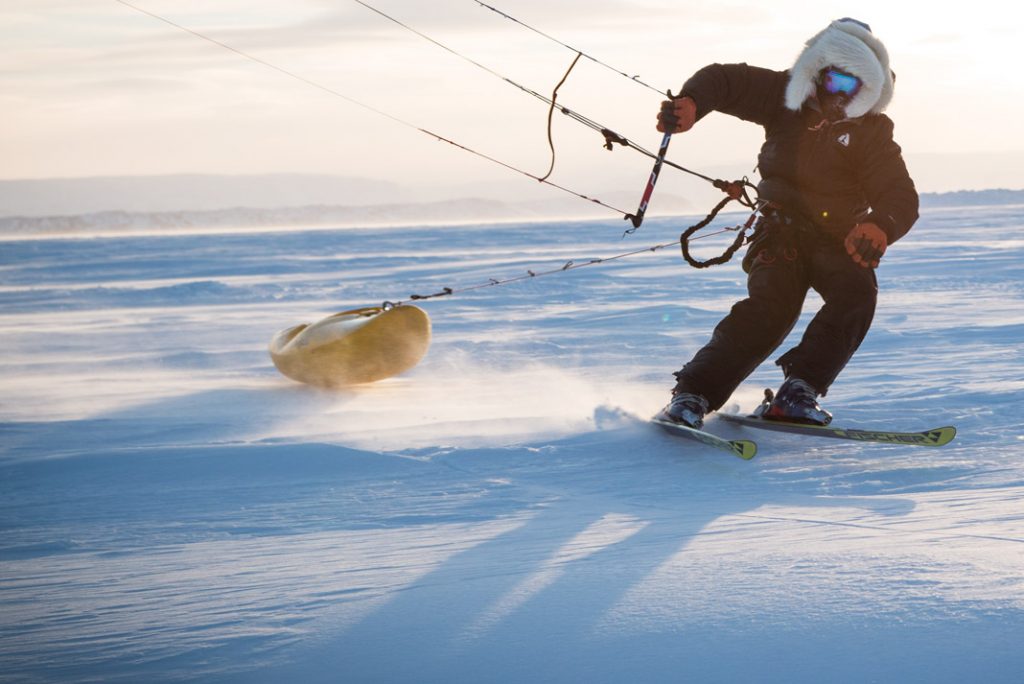
person dragging a kayak behind him while kitskiing on ground covered in snow and ice
A super group with a super goal to cross a super Ice cap for a very super whitewater ride. | Photo: Erik Boomer

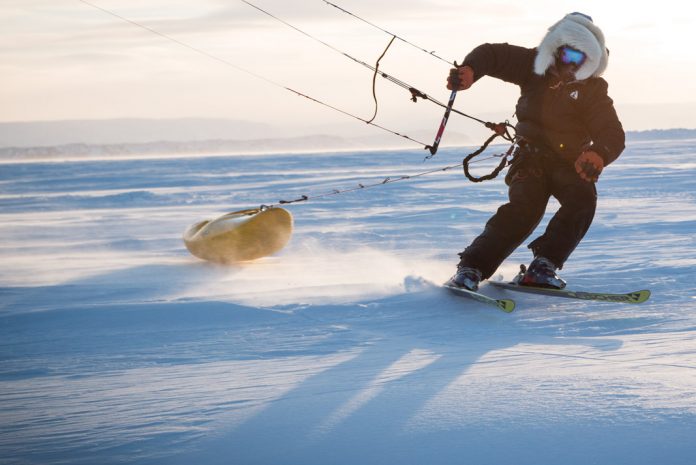
Last August, Erik Boomer, Sarah McNair-Landry and Ben Stookesberry set off on a 600-mile adventure by kite-ski across the Greenland ice cap, towing kayaking gear behind them to paddle a first descent of an Arctic river. The intrepid trio, all previous Adventurers of the Year, won National Geographic’s first-ever Hall of Fame award for the ambitious and never-before-attempted route. Here’s how they did it.

person dragging a kayak behind him while kitskiing on ground covered in snow and ice
A super group with a super goal to cross a super Ice cap for a very super whitewater ride. | Photo: Erik Boomer

Step 1: Come up with an impossible expedition

Drag kayaks and whitewater gear 600 miles across the Greenland ice cap, all to access a river that has only ever been scouted from Google Earth? Sounds perfect. What could possibly go wrong?

Our goal to cross the ice cap and then notch a first descent required creative route finding and more than a little faith. The meltwater river that we chose to paddle meant that we also needed to find a way off the ice cap to access the river in a place with very little information.

Step 2: Find crazy teammates

It was important to find two unique teammates for this adventure. First I had to find a whitewater kayaker that was willing to travel a thousand kilometers through freezing temperatures just to get to the river.

Ben Stookesberry was the perfect candidate and all it took was catching him on the phone at the perfect time—after a few drinks at the bar. He was enthusiastic and confident in his “really good skiing skills.”

We also needed someone with firsthand experience crossing the Greenland ice cap to lead us to the intended river. Polar explorer Sarah McNair-Landry had crisscrossed the Greenland ice cap four times. Without her, we wouldn’t have stood a chance.

Step 3: Fund the expedition

Long and remote expeditions are not cheap. You have two options: Spend months working a hard seasonal job, such as fighting fires, working the oil rigs, or raft guiding while living in a tent and surviving off of ramen noodles and saving every penny.

Or, after several years of successfully using option one, work even harder filling out endless grant forms, writing proposals and delivering pitches to convince sponsors to support the expedition. We often looked back and wondered if it would have been easier to stick with the first option.

Step 4: Train and prepare

The last thing we wanted was to show up in Greenland and realize that we couldn’t fit all of our gear in our kayaks or that our system wouldn’t work. First, Ben needed to learn how to kite-ski. Then we spent hours with our sleds and kayaks, figuring out how to attach them together and pull them behind our kite harness.

[ View the largest selection of boats and gear in the Paddling Buyer’s Guide ]

Being the first expedition of its kind, there was no road map to follow. If the sleds weren’t tied properly they could flip, then rip and leave a trail of food and warm clothes behind us.

Step 5: The fun part

Some call these the best of times, others the worst of times. It’s both. Emails and phone calls slip away and all that is left is you and your expedition goal.

For us, it was 46 days of traveling across an Arctic ice cap and then man-hauling loads of gear to the ocean while paddling a river with Class V+ waterfalls. It was a mix of beauty, peace, and suffering.

A super-group with a super goal to cross a super ice-cap for a very super whitewater ride. Feature Photo: Erik Boomer

12 Pieces of Camping Gear That Paddlers Want

Camp Gear

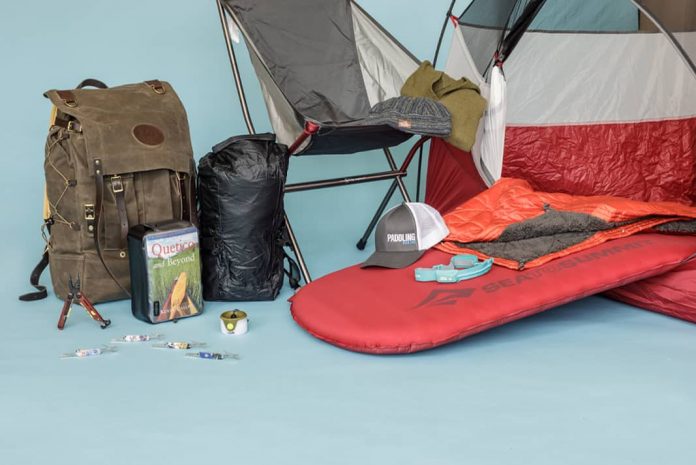
1. MSR Mutha Hubba NX

The bestselling MSR Mutha Hubba NX is a four-pound, freestanding, three-person tent. We love the roomy 39 square feet of living space, and that it packs up exceptionally small—just like an extra-large roll of paper towels. During testing it weathered an unexpected 60 mile-an-hour windstorm better than a full-sized BBQ and the 100-year old maple tree.

$549.95 | msrgear.com

BUY ON AMAZON

2. Leatherman Signal

Designed with campers in mind, the stylish Leatherman Signal packs 19 tools into a compact 4.5-inch pouch. Features include a fire-starting ferro rod, one-handed blade, emergency whistle and tiny hammer for driving in tent stakes.

$119.95 | leatherman.com

BUY ON AMAZON

3. Victorinox | Classic SD

These beautiful, limited edition Classic SD knives from Victorinox feature the artwork of Doug Leen, a former Grand Teton National Park Ranger. The Classic SD features seven tools, and at just 2.25 inches long, it’s a welcome addition to keychains around the Paddling Magazine office.

$23.99 | victorinox.com

BUY ON AMAZON

4. Sea To Summit | Comfort Plus

Boasting car camping comfort in a backpacking-friendly size, the new Comfort Plus Self-Inflating Sleeping Mat from Sea To Summit offers a luxurious three inches of comfort and shoulder season warmth with a 4.1 R-value. Sea To Summit’s innovative one-way valve allows the mat to deflate without re-inflating while being rolled up—though we did find it tricky to get the mat back in its stuff sack.

$159.95 | seatosummitusa.com

BUY ON AMAZON

[Paddling Buyer’s Guide: View All Sleeping Mats]

5. BioLite | Headlamp 330

The BioLite HeadLamp 330’s slim construction makes it totally unique. The 330’s nine-millimeter front profile sits almost flush on the forehead, and the lamp’s rechargeable battery rests at the back of the head so the lamp doesn’t slip or bob around. Provides 40 hours of runtime.

$49.95 | bioliteenergy.com

BUY ON AMAZON

6. Uco Gear | Sprout Mini Lantern

Uco’s new Sprout Mini Lantern is an ultra-compact. A push-button control dims the light or boosts it to 100 lumens, and its magnetic lanyard hanging system allows for quick attachment anywhere—perfect for hanging from the tent ceiling. Three AAA batteries provide 60 hours of light on the lowest setting and five hours on the highest.

$14.99 | ucogear.com

BUY ON AMAZON

7. Matador Freerain

Arguably the lightest and most compact waterproof backpack there is, Matador’s Freerain 2.0 can carry 24 liters and also pack up to the size of a nectarine. It’s a perfect bag to stash away and pull out for a day trip. Features a rolltop closure, breathable shoulder straps and a tall side pocket for a water bottle.

$64.99 | matadorup.com

BUY ON AMAZON

8. NiteIze | RunOff Packing Cube

The waterproof RunOff Packing Cube from NiteIze is versatile and practical. The medium size is perfect for protecting and organizing toiletries or journaling supplies. The larger cubes can protect a small library of books, electronics and accessories, like laptop, cables or camera batteries. Features a Tru Zip zipper, which keeps water out.

$44.99 – $54.99 | niteize.com

BUY ON AMAZON

9. Kammok | Mountain Blanket

This ultra-cozy blanket is made to get outside in the shoulder seasons. Kammok’s four-pound Mountain Blanket is incredibly soft, with an ultra-plush fleece interior, but able to withstand adventures outside with a water repellant exterior. Snaps along its edge transform it from camp blanket to a minimalist sleeping. A center opening in the blanket turns it into a poncho.

$135 | kammok.com

BUY ON AMAZON

10. Big Agnes | Big Six Camp Chair

If comfort is king, you can’t do much better than Big Agnes’ Big Six Camp Chair. Designed with deluxe chillin’ in mind, the Big Six has a tall back, wide seat and sits 20 inches off the ground. Set up is quick and easy with a shock-cord pole set. The Big Six is packable for stashing in your truck, trunk or drybag.

$149.95 | bigagnes.com

BUY ON AMAZON

11. Frost River | Isle Royale Bushcraft Pack

Made with the modern bushcrafter in mind, traditional style and function meet in this heavy-duty waxed canvas Frost River pack. The Isle Royale Bushcraft Pack is an all-purpose paddling, hiking and travel bag, with the ample pockets, leather closures and lace compression system to customize to any load. Personalize it with a monogrammed patch.

$330 | frostriver.com

BUY ON AMAZON

12. Appalachian Gear Company | All-Paca Fleece Hoodie

Made from 100-percent alpaca fiber, this hoodie from the Appalachian Gear Company is super warm for its weight. The knit structure and fiber properties allow perspiration to escape while retaining its insulating properties, perfect for wearing while active.

$137 | appalachiangearcompany.com

9 Camp Kitchen Essentials Every Paddler Needs

Camp Kitchen
Price: $8

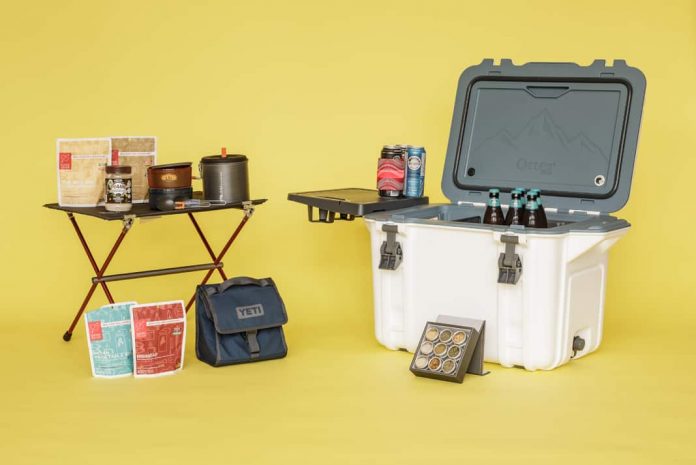
PB&Me Organic Powdered Peanut Butter

It turns out, the unfortunate thing about powdered peanut butter is the manufacturing process removes most of the delicious fats from the peanut oil by pressing and dehydrating. This makes peanut butter powder a great addition to healthy low-cal breakfast smoothies. It’s arguably less awesome for rehydrating into a paste on the trail or, you know, eating it by the spoonful. PB&Me’s Organic Powdered Peanut Butter has 45 calories, five grams of protein and just 1.5 grams of fat per serving. Too bad. Good thing this one is chocolate flavored.

BUY ON AMAZON


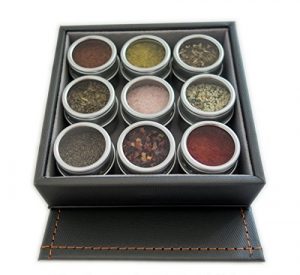
CPISE | 9-SPICE KIT
Price: $29.97
cpise.com


Cpise 9-Spice Kit

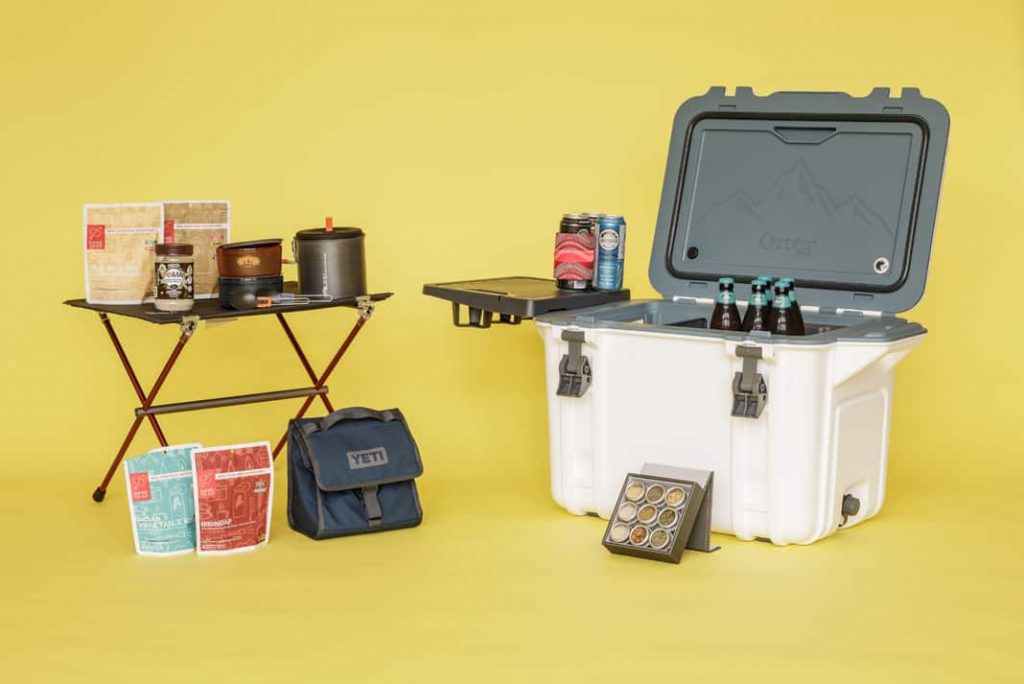
Perfect for the base camping foodie, Cpise’s organic herb and spice kit promises to turn bland backcountry bites into more flavorful fare. This nine-spice blend includes all the basics and then some: pepper, garlic, salt, parsley, onion, cayenne pepper and more. The magnetic spice canisters are a nice touch.

BUY CAMPING SEASONING SETS ON AMAZON


 GSI | PINNACLE DUALIST
Price: $69.95
gsioutdoors.com

GSI Pinnacle Dualist

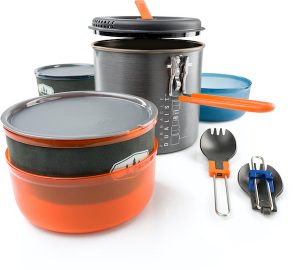
This ultralight camp cookware set from GSI integrates all a minimalist duo needs into a compact and nesting package. The Pinnacle Dualist set includes a non-stick 1.8-liter pot, heat-resistant strainer lid, two folding foons (isn’t that fun to say), two insulated mugs with sippy tops doubling as nesting bowls. We love the handy waterproof storage bag is also a sink.

BUY ON AMAZON


Good To-Go Dehydrated Meals

Stir in healthy ingredients, a passion for the outdoors and an award-winning chef, and Good To-Go is the result. Good To-Go’s dehydrated breakfasts and entrees are made gluten-free, low in sodium and without preservatives—and each one we’ve tried is absolutely delicious. We love that campers can now take bibimbap into the backcountry.

$12.95 per double serving | goodto-go.com

BUY ON AMAZON


NiteIze Slaplit

Never accidentally kick over your buddy’s brewskie around the fire again with NiteIze’s SlapLit. This cold-one coozy features an LED strip glowing or flashing at the push of a button. The durable non-slip wrap creates a sure grip on the ol’ oat soda. Perfect for backyard BBQs, tailgates and campsites.

$12 | niteize.com

BUY ON AMAZON


Camp KitchenPrice: $299.99
otterbox.com

Otterbox Venture 45

Keeping a horde of campers well fed and hydrated on weekends is no easy task, but Otterbox’s Venture 45 is up to the challenge. This cavernous 45-quart cooler has two-inch refrigeration grade insulation foam to keep ice for up to 14 days and an apocalypse-proof construction. Weekend menu: Fit 25 cans in the Venture 45; fill to 2:1 ratio of ice-to-beverages.

BUY ON AMAZON


Big Agnes Woodchuck Camp Table

Many have said the ultimate upgrade to a camp kitchen is a table. Backcountry meals are so much more effortless with a solid surface for prep and serving. Big Agnes’ Woodchuck Camp table weighs just two pounds, and its shock-corded architecture is simple to set up and break down.

$99.95 | bigagnes.com

BUY CAMPING TABLES ON AMAZON


YETI Daytrip Packable Lunch Bag
Price:$79.99
yeti.com

Yeti Daytrip Lunch Bag

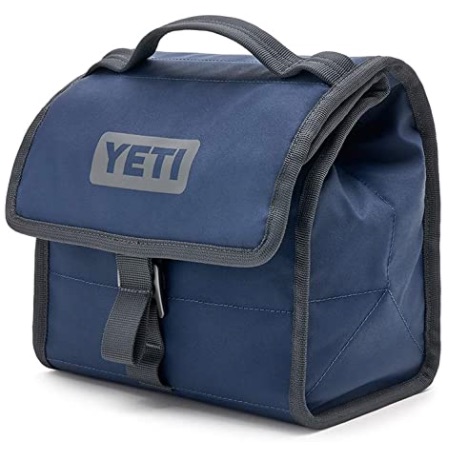
Yeti took a tired and ubiquitous design and gave it a major upgrade with the Daytrip Lunch Bag. This dapper little bag packs enough closed-cell foam insulation to keep sammies and drink boxes cool for hours. Plus, the fold-and-go style and easy-to-clean design makes it as perfect for Sunday’s shore lunch as for work on Monday.

BUY ON AMAZON


WHITEWATER BREWERY BEER | Whistling Paddler

Whitewater Brewery Beer

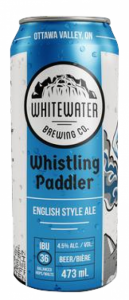
Come for the whitewater, stay for the beer. Whitewater Brewing Co. was founded by three raft guiding buddies on the banks of the Ottawa River. Their riverside brewpub has become a community fixture. The (c)raft brewers make six original staples and many more seasonal offerings, with some explicitly paddling themed, including Class V IPA and Whistling Paddler ale.

$3.25+ | whitewaterbeer.ca