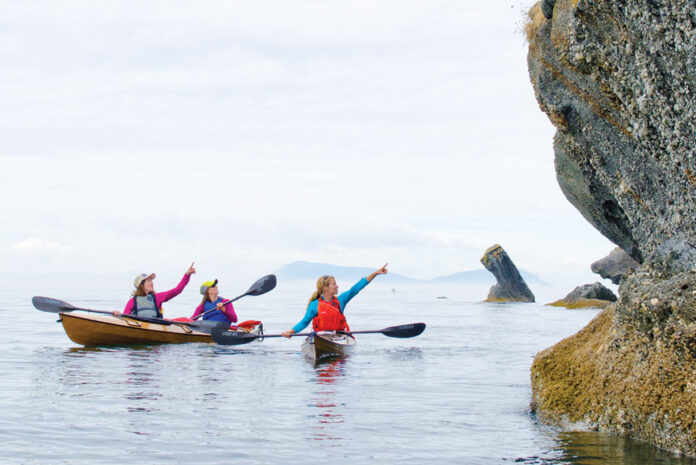
I have a favorite cove on a tiny island off the coast of British Columbia. Offshore sea stacks light up pink at sunset, an eagle nests in a nearby tree and a freshwater stream trickles into deep pools.
There’s great surfing when the tide is right. I found it when gunkholing along the coastline’s nooks and crannies. I’ve only ever seen one other person camped there, but I’m worried about bringing my friend, Dave.
Dave’s kit includes a satellite messenger that broadcasts our position. Ostensibly, it’s for calling the Coast Guard or informing family back home if we’re delayed. But it also shares our journey with followers. An email links to a precise location on Google Earth. Armchair adventurers can zoom in and find this particular cove. That thought makes my hackles rise.
Every paddler faces the “how much to tell” dilemma. When I review charts with someone planning a trip to an area I know well I weigh what to share and what to “forget to mention.” I rationalize my withholding as offering them the joy of discovery, but in reality, it’s a kind of wilderness selfishness—territoriality.
I don’t want to see another tent on what I’ve come to consider my spot. We all fear that our places of wild solitude will become like Yogi Berra’s favorite restaurant: “Nobody goes there anymore. It’s too crowded.”
Wanting to keep these special places to ourselves is only a small part of paddlers’ dilemma about wild places. Does bringing more people to wild places save them or destroy them? After a quarter century of kayaking and conservation work, here’s my firm answer: It depends.
I once worked at a wildlife refuge in an industrial district of a big city. Only a few people knew of its existence, which meant only a few people wrote letters or attended hearings about industrial encroachment. First and foremost, people protect what they love and people only love what they know.
I spent three years bringing as many people to that refuge as I could find. Did I worry that we’d spoil the solitude or disturb the wildlife? Absolutely. But those concerns paled in comparison to other threats. And when those threats reared their heads a few years later, there was a community of people to speak up.
Now parking is tight at that kayak launch on weekends, but that’s a price I’ll pay. Each of those paddlers is a potential steward, advocate, and voter. There’s no longer any question that the place should be preserved. The battles the refuge fights today are against the slow creep of invasive species and the erosion of restoration budgets.
Since 1963, we’ve known what happens when we people don’t know a place. That was the year Eliot Porter published The Place No One Knew, a haunting photographic elegy for Utah’s Glen Canyon, drowned beneath the Glen Canyon Dam. With few visitors and lacking the fame of the Grand Canyon, Glen Canyon was too easy to lose.
When it comes to being loved to death, some wild places protect themselves. When Dave Getchell Sr. was creating the Maine Island Trail, he rebutted concern about crowds. “For those concerned that an island trail will bring the Great American Public swarming offshore, no such thing is apt to occur.
Small offshore islands place strong demands on their users, both mentally and physically. Those looking for entertainment and conviviality will find little to suit them on a half acre of rocks, trees, and grass surrounded by an indifferent sea,” he wrote in Small Boat Journal in 1987.
The sea is a strong guardian indeed. I could advertise my favorite kayaking spots on the Oregon coast on billboards, and few would ever get there. The surf, fog, wind and sheer effort will keep all but the most skilled away.
However, many places aren’t so rugged or remote. Tents lined fly-to-vestibule at Kaikash Creek in the Johnstone Strait resemble the subdivisions we’re trying to escape rather than the wilderness we’re trying to retreat into. If it’s beautiful and accessible, the Great American Public will find it.
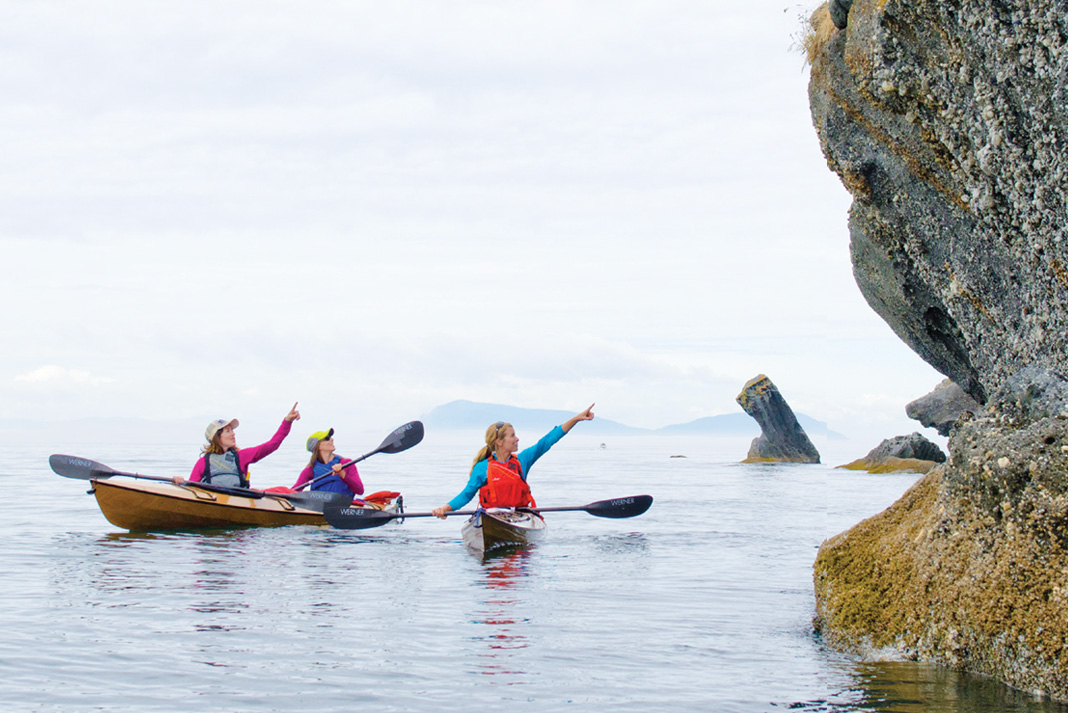
Head over heels. | Photo: Freya Fennwood
So, when kayakers ask me for the inside scoop on a place, I have a two-pronged strategy. If the area is already protected from major threats and needs long-term watchfulness, I may keep my secret spots under wraps. The newcomers will have a great time without my insider info, or they’ll discover those special spots themselves.
When the location lacks permanent protection or is facing a major threat, I’ll tell them everything. I want them to get the most jaw-dropping views and camp at the most amazing sites.
I want them to take photos that go viral and tell everyone they meet about how amazing a place it is. I want them to fall head over heels in love.
In my back forty, the same answer applies. The Lower Columbia River Water Trail, 140 miles from the Columbia River Gorge to the sea, poses tough questions. How to draw people to the river so they care about it? How many kayakers can the islands hold before they become a mess? How to avoid disturbing rare species?
Fortunately, the Columbia’s wind and current will keep the Great American Public from swarming. Yet, the river still faces threats, like trains loaded with oil and depleted salmon runs. So, I share the best spots right away. I want everyone to fall in love.
Neil Schulman has been paddling and doing conservation work since the Toronto Blue Jays last won the World Series. He is a regular columnist in Adventure Kayak magazine and writes from Portland, Oregon.
Liar, liar, neoprene shorts on fire. | Photo: Paul Villecourt
Don’t worry; it’s not just you. Maybe you’re a workaholic who couldn’t stop searching for signal in a backcountry paradise. Or, you spent what was supposed to be a relaxing river trip with two toddlers hell-bent on killing each other.
Either way, when we return home from a kayaking trip, we share only the highlights, which can leave other paddlers feeling like they’ve failed after a less than the picture-perfect trip.
Here’s the truth.
1. I didn’t check my phone all weekend
I know all the excuses because I’ve made them myself. I’m just bringing it for the camera function. I’ll only turn it on in emergencies. I’m leaving it in airplane mode. Yeah, right.
Rationally, we all know how deadly it can be to text while driving, yet the number of us who still do it is an indicator of just how likely we are to avoid the temptation. Especially on a trip when the only harm of sneaking a quick peek at Facebook is a purported disturbance to a vague and abstract concept like psychological calm.
As someone who caught his wife peeking at the baseball scores halfway through a supposedly technology-free wilderness trip, I can say avoiding temptation is not likely. Justification is easy. When the average person checks his smartphone 46 times a day, checking it once or twice on trip rounds down to zero, right?
2. Our kayaking trip was so relaxing!
Just like you and every other sensible person I know, relaxation is best enjoyed after utter physical exhaustion. It’s that feeling when the 100-pound pack is finally lifted and the searing pain goes away. Or you’ve been paddling for eight hours against a headwind and you arrive at your campsite with barely enough energy to set up your tent and crawl inside.
Or, you’re so mentally preoccupied trying to stay warm and dry that all other concerns evaporate. There’s no stress, no worries and no preoccupations with work, politics or current events. There’s just the exhausted here and now. Bliss.
3. We really bonded as a family
There’s a reason that most trip photos are of happy times and sunny days. Few of us document our kids when they’re having a meltdown—we’re too busy managing the crisis to snap a shot of something we’d rather forget.
Humans are hard-wired to remember the good times. My last trip with my family was awesome. We really bonded as a family. That’s code for the children drove us crazy; we barely slept. But I’ve mostly forgotten that part.
4. We didn’t see anyone else
…After we busted a gut to beat all the other parties to the campsite, that is. The day went like this: “Honey, there’s only one campsite marked on the map up there but those other boats look like they’re heading the same direction. If we put in a 20-minute sprint and we can beat them, quick! Good, now relax and look like you haven’t been trying. Give them a friendly wave.”
After the other paddlers were forced to carry on to the next lake, we felt like we were the only people on earth. It was the same the next day, after we got on the water before dawn to pass those suckers in their sleep. Total solitude.
5. It was so inexpensive
Once you’ve invested the GDP of a small island nation into the future generations’ wealth of the families DuPont, Johnson and Chouinard backcountry trips are practically free. When my wife points out that the combined value of the boats in our backyard is more than our two family cars, I tell her that has nothing to do with the reason we can’t afford an all-inclusive beach vacation.
Everyone knows the first principle of the Official Gearhead Rules of Family Accounting. And I quote: “Capital expenditures shall not be counted against the intrinsic value of the experiences which they enable.” Gear purchases exist in a separate and distinct category that is exempt from standard auditing, otherwise filed under the heading “anything goes,” in which all costs are to be automatically justified and immediately forgotten.
6. We can’t wait to go again
Oh yes, we can. Exactly one year, in fact. The precise amount of time it takes to forget the misery and remember the good is the reason that it’s called an annual tradition. In this way, backcountry camping is a bit like Christmas.
7. Camping is so healthy and wholesome
Take a closer look at my trip menu, where every second line includes a marshmallow or a gummy bear or something containing the words “chocolate” or “sausage,” cut and pasted liberally in the name of quick energy and boosting morale.
Sugar and fat are the universal replacement for fresh fruit and vegetables and the salve that soothes the aches and pains of a pastime that evokes a prehistoric existence that was nasty, brutish and short. And don’t forget the coffee. Sleep in the wilderness is defined as the episode of nocturnal tossing and turning that is bookended by doses of ibuprofen and caffeine.
8. We strengthened our friendships
Some of my closest friendships have been built on trips, but I’ve also learned which people I’ll never go camping with again. There were the doting parents who left the trip early without taking any of the group’s garbage, including all their kid’s dirty diapers. “We just don’t have any room!” they fake-apologized once they were already packed, seemingly oblivious to the fact that with one more child, we already had a lot more to carry.
Then there was the couple that implored us to bring them on a trip, posing as kindred lovers of wilderness. When it came out that they had no camping experience at all, we bent over backwards to accommodate them, planning a beginner-friendly car-camping trip against our own preferences.
After a poor sleep the first night, they announced rather proudly that they had decided to head home early. “We’ve had enough of a camping experience,” they said, “and besides, we have nothing to prove.”
We spent the rest of the weekend incredulously repeating those words, and to this day “I have nothing to prove,” has become family code for “I’m only in this for myself.” As in, “No thanks, dear, I’m not going to wash those dishes, I have nothing to prove.”
We’re not bitter. Past inconveniences are a small price to pay for the laughter we get out of these stories today. But we’re a lot more careful about who we invite camping. After all, we have nothing to prove.
Tim Shuff is a freelance writer and firefighter in Toronto who honestly spends most of his free time bonding with his family on healthy, relaxing, inexpensive backcountry trips. He promises that he practically never checks his phone in the wilderness. Like, twice a trip max.
Liar, liar, neoprene shorts on fire. Feature Photo: Paul Villecourt
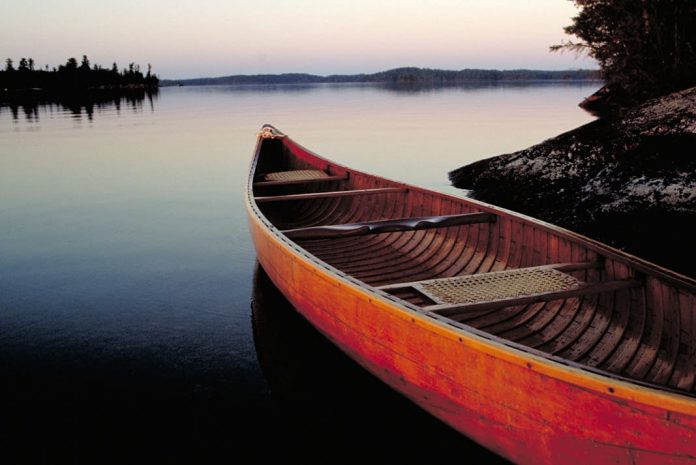
Left behind but not forgotten. Decades of stories etched into its hull. photo: ontario tourism
As I’m writing this I’m listening to my woodstove struggle against the cold of an Ottawa Valley winter. I’m also thinking of my canoe resting under a couple feet of snow on the edge of Jack’s Lake, just a short hike out my back door.
Jack’s Lake isn’t actually called that on any map. It’s too small to warrant a cartographer’s attention. It’s no different than thousands of others its size with names like Round, Mud, Clear or Stumpy—except on the south shore where the reeds aren’t as thick and there’s a gap in the cedars my old canoe is turned over, with two paddles underneath.
To say my canoe isn’t anything special would be being too kind. You might say it’s a piece of junk.
You can’t sell boats like my aged Old Town Discovery 169. I know this because the guy who gave it to me tried. Its resale value has been dragged out of it; you can see it on the rocks when the water is low. The bottom is cracked like salt flats, the deck plates have been torn off and the seats wiggle on rusted bolts.
As tired as it is, this canoe changes Jack’s Lake. Without my canoe you can only peek out from the water’s edge. With it, I know there are three beaver lodges and a dam on the southwest corner. I know that Jack’s is full of northern pike who take blue Rapalas just off the reeds. And I know that two loons nest in the same spot every spring.
I’ve never seen anyone else back there, but I know I’m not the only one who uses my canoe. A few years ago someone added a tangle of yellow anchor rope and a bleach bottle full of sand. And I’ve noticed different paddles have come and gone, but there are always two underneath it. Some paddles are longer, some are shorter; all are better than what I left there seven years ago.
There is a code about such things, a code that doesn’t need to be written down or posted on a sign.
I learned about the code on Swede Island, one of a chain of wilderness islands between Silver Islet and Rossport on the north shore of Lake Superior. The local sailing community has built an emergency shelter near a rickety pier extending into the protected harbour.
Paddlers and sailors use the shelter and scribble in a logbook, telling of their travels. They also chop more than their fair share of wood for the sauna and stock the shelves with stove fuel, silverware and cans of food. In guidebooks, Swede Island is an emergency shelter. It is a place left in the bush for others to use. It isn’t locked, nothing is ever stolen or vandalized. Swede Island is a place to learn about the unwritten code.
I like it there because everyone else likes it there also. And they do what they can to improve it—one can of chicken noodle soup at a time.
I’ll be moving soon but I’ll be leaving my old canoe under the cedars. I’m leaving it behind so that others can paddle with the loons in the spring, so that someone else can visit the beavers. Mostly, I’m leaving it there so that someday, when my son is old enough, we can walk back to Jack’s Lake to watch the sunset and cast blue Rapalas at northern pike.
When he asks me whose canoe it is and why someone just left it in the woods, I won’t tell him the truth; I won’t try to explain the unwritten code. I know he’ll figure it out someday when he finds his own Swede Island.
For now, I’ll just tell him the piece of junk canoe is just too damn heavy to carry home.
[ View the largest selection of NEW canoes in the Paddling Buyer’s Guide ]
Left behind but not forgotten. Decades of stories etched into its hull. Feature Photo: Ontario Tourism
“Basically, the only way to get into the rivers we’re going to be paddling is via float plane. And these are not just any lakes people have landed at—when you look at a map and talk to pilots, no one has ever been there before.” —Todd Wells in Frontier of Firsts Photo: Frontier of Firsts
The characters For Cooper Lambla, an expedition kayaker who works at Charlotte, North Carolina’s U.S. National Whitewater Center and moonlights as a filmmaker, this image captures what Frontier of Firsts was all about.
Lambla’s 2018 film was shot deep in the Alaska hinterlands on a mission to accomplish three first descents of unknown rivers with fellow boater and videographer Tyler Allyn, and class V pros including Chris Korbulic and Todd Wells, Erik Parker and Jeff Shelton.
The plot of Frontier of Firsts
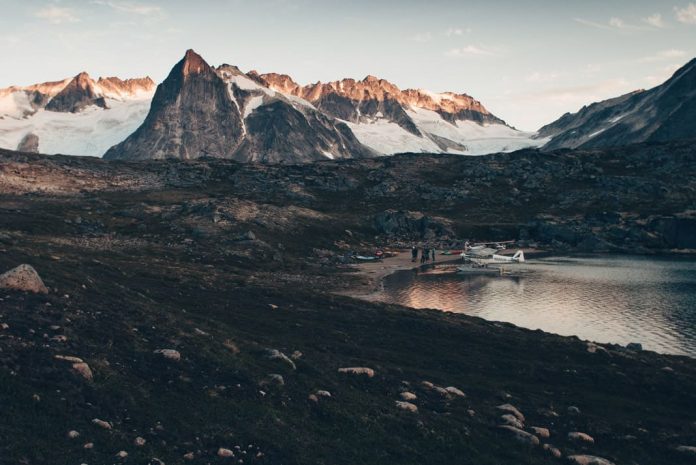
The plot was in part conceived—and entirely made possible—by two equally skilled bush pilots, Jay Mahan and Ben Mastre, and their small but mighty Super Cub and Piper PA-20 floatplanes.
“It was late August and we got dropped off at the source of the first river of the trip [an unnamed creek flowing into Lake Clark],” recalls Lambla. “We had packed 10 days worth of food, gear and supplies into the floats of the two planes and landed at this unnamed lake deep in the Chigmit Mountains. The last two planeloads of our team, kayaks and gear had flown up the river in unison, Blue Angel-style. As we came in for the landing, Jay starting hooting and hollering into his headset. By the time the floats touched the water, all three of us crammed in the Super Cub were screaming in pure joy. It was the perfect beginning to an extraordinary trip.”
Lambla says the project was the brainchild of Wells, a pioneer in Alaskan whitewater, and Mahan, who flies small planes to support his career as a fishing guide.
“They crossed paths and started talking about different zones of unexplored rivers only accessible by floatplane,” says Lambla.
The kayaking film story
Eventually, they narrowed their sights on three: This tributary of Lake Clark, a link between the Lower Tazimina and Newhalen rivers, and an unnamed tributary of the Tuxedni River. All told, the expedition spanned 17 days in the backcountry of south-central Alaska.
The filmmaker is quick to acknowledge that using floatplanes was kind of like cheating. “Reality sets in when the planes leave and it becomes quiet,” Lambla notes. “But the luxury of flying in almost creates a false sense of security when compared to trips where you have to work physically to make your approach.”
“That said, you use a completely different mindset when you’re in such a remote location,” adds Lambla. “Decision making becomes much more conservative, and you have a heightened awareness of your surroundings.
That awareness was felt and respected by everyone on the trip.
This trip required us to work with the pilots and become a complete team
The crux of it all is balancing the drive to experience somewhere completely new with the responsibility to think critically about the consequences of your actions in such a remote setting.”
Actively participating in the film as boaters forced Lambla and Allyn to combine a creative vision with “staying present in each moment” and performing at the highest level. In the end, Lambla says the trip dynamics “were nearly flawless.”
The conclusion
A big takeaway from the project for Lambla were the similarities between whitewater boating and piloting a floatplane.
“This trip required us to work with the pilots and become a complete team,” he says. “The more we worked with them, the more parallels between paddling and flying emerged. We then decided to focus the storyline of the film on these parallels, and that changed the documentation of the trip.”
“Basically, the only way to get into the rivers we’re going to be paddling is via float plane. And these are not just any lakes people have landed at—when you look at a map and talk to pilots, no one has ever been there before.” —Todd Wells in Frontier of Firsts Photo: Frontier of Firsts
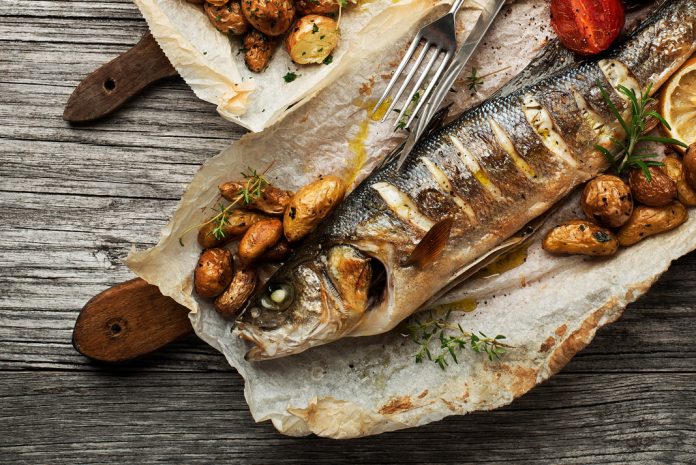
Trout. It’s what is for dinner.
Photo: istockphoto.com
Betcha Didn’t Know This About Trout
1. Trout fishing dates back to at least 200 A.D., when Roman author Claudius Aelianus wrote about fishermen using flies of red wool and feathers to catch trout on the Astræus River in Macedonia.
2. Trout are carnivores and spend up to 80 percent of the day searching for food. Trout usually feed on smaller fish eggs, crustaceans, insects and insect larvae. However, large trout can eat large prey—there are recorded cases of giant mouse-eating trout in Alaska and New Zealand.
3. Sean Konrad caught the largest rainbow trout on record in Lake Diefenbaker in southern Saskatchewan, Canada, on September 5, 2009. It weighed 48 pounds.
4. As trout grow, new tissue forms around the edges of their scales, and the rings on the scales can be read just like the rings on a tree trunk to determine age. Like chameleons, trout can change their color to blend in with the background, making them harder to spot in darker streams.
5. Trout tickling refers to rubbing the underbelly of a trout. Done right, the trout will go into a trance and can be thrown onto land. The so-called art form is mentioned in Shakespeare’s comedy Twelfth Night, where it is a metaphor for bamboozlement.
6. A group of trout is called a hover. The act of bludgeoning someone with a single trout is called a trout slap. It’s seen famously in “The Fish-Slapping Dance” skit by Monty Python.
7. The proverb, “you must lose a fly to catch a trout,” refers to needing to sacrifice something to get what you want. It implies what you sacrifice is minor compared to what you receive in return.
8. Trout Fishing in America was published in 1967 by Richard Brautigan. The abstract novel lacks a central plotline, but achieved a cult following, going on to inspire a band by the same name and two people to try and change their names to Trout Fishing in America. Apollo 17 astronaut Jack Schmitt named a crater explored in the Taurus-Littrow valley on the moon Shorty, an homage to a character in the book.
Trout. It’s what is for dinner. Feature Photo: istockphoto.com
Spending weeks or months paddling free as a bird through the wilderness is every canoeist’s dream. Alas, the enormity of the task often leaves people stalled at the dream stage instead of making the trip a reality. Fear not, it’s easier than you think. Use these tips to paddle away on your bucket-list expedition.
1 Got vision?
First, you need a vision for your trip. The almost limitless interconnected waterways of North America provide opportunities for a lifetime of journeys. What areas are you curious about—the far North or the deep South? What kind of wildlife do you want to see?
How about following a heritage fur trade route or canoeing in the wake of a historical figure? Or, go off the beaten path and explore the unexplored. Where would you like to spend weeks with a paddle in hand? The only limitation is your imagination.
2
Keep it simple, stupid
The key to planning any large trip is simplicity. I like to think of an expedition like a weekend trip but with more food. The gear is the same for a three-month epic as it is for a Boundary Waters overnighter. Once you have a boat, tent, and food, you can paddle forever.
3
Shop local
Postal rates have gone up exponentially, making it prohibitively expensive to ship food ahead to remote communities. Now I shop in local grocery stores along the way and plan my route accordingly.
[ Paddling Buyer’s Guide: Shop for all your paddling needs here ]
I can’t carry a season’s worth of food, but can easily manage to carry enough for weeks at a time. Even with sky-high prices at remote outpost stores, it’s vastly cheaper and more convenient than buying, prepping and shipping.
Daydream believer. | Photo: Frank Wolf
4
Make time
Balancing work, bills, family and other adult responsibilities is a juggling act, but everyone who is committed has the ability to do at least one big, epic journey.
Bank your time off, take a sabbatical or an unpaid leave—heck, even quit your job and get a new one when you return. Twenty years from now you’ll still be talking about your epic journey, not those few months of playing desk jockey.
5
Money matters
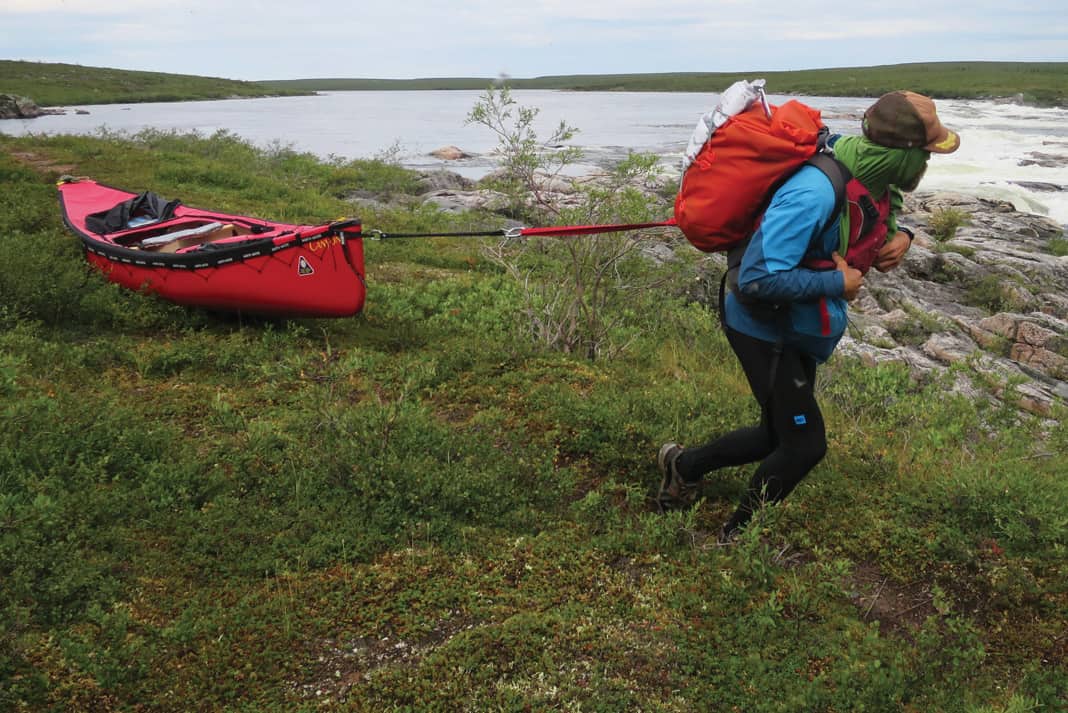
I save money when I’m in the woods for a month or two. There’s nothing to spend money on out there. To keep costs low, avoid bush planes and remote drops. Spectacular point-to-point wilderness journeys can be linked between towns serviced by regular air.
Buy a canoe at one end and sell it at the other, or use a folding canoe or kayak and check it as luggage. Or, drive to the end of the road, zip off for a month and return to the same spot without repeating a single stretch of water. Even today, $3,000 is plenty to cover two people on a summer-long epic, including flights. That’s cheaper than a month’s rent in San Francisco.
6
Sponsorship
It’s certainly one way to help with the costs of an extended trip, but there’s no such thing as a free lunch. If you opt to chase sponsorship—often granted in the form of complimentary gear—you have to reward a company’s investment. Quantifiable promotion in the form of writing, photography, film and social media can be a job in and of itself.
7
Be tenacious
Once you’ve decided on your mission, stick to your goal. Ignore doubts—your own and those of others. Once you’re sitting in your boat at the put-in to an epic journey, your worries will fade away. The daunting task quickly boils down to the joy of paddling and moving through a wilderness dream that you’ve made a reality.
Frank Wolf is a filmmaker, adventurer, and environmentalist. He takes off on a multi-month expedition each summer, and he’s known for swimming naked and being part of the first duo to canoe across Canada in a single season.
Nouria Newman says that she has always been drawn to Patagonia because of how far away it is from everything else. She teams up with Erik Boomer and Ben Stookesberry to take on the Patagonia Triple Crown.
The Patagonia Triple Crown consists of three major rivers in Patagonia that include the Rio Baker, Rio Pascua and Rio Bravo. These are all very large, high volume rivers that will require careful navigation.
The greatest thing about exploration kayaking is that sometimes you don’t find the good kayaking but it is still a beautiful adventure – Nouria Newman
These world-class kayakers show the fear and nerves that come with paddling new remote rivers. After their careful scouting and flawless execution, you can see the excitement in their accomplishment.
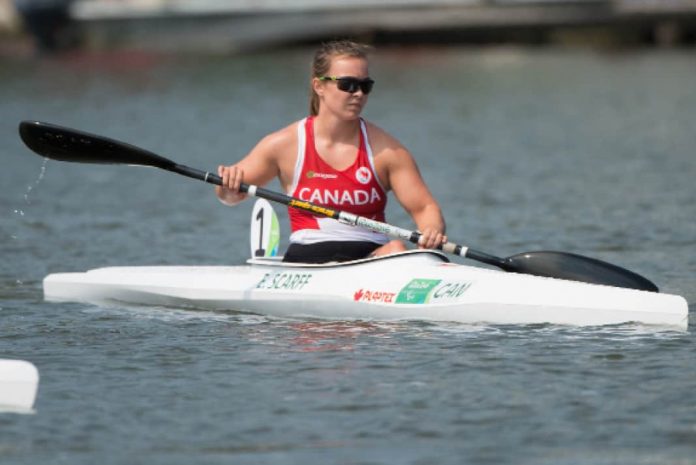
Erica Scarff of Toronto, Ontario, is a member of Team Canada. | Photo: CANADIAN PARALYMPIC COMMITTEE
There’s an elite new paddling sport gathering global steam. Paracanoeing emerged as a demonstration sport—then called “paddleability”—at the International Canoeing Federation Canoe (ICF) Sprint World Championships in Dartmouth, Nova Scotia back in 2009.
With the name changed to paracanoe, the event gained official ICF status in 2010 and made its Olympic debut in Rio de Janeiro in 2016. With the next Paracanoe World Championships set for August 21 to 24 in Szeged, Hungary, and the Paralympic Paracanoe Test Event happening in Tokyo in September of this year, things are lining up for an exhilarating contest at the games of the XXXII Olympiad in Tokyo next year.
There are two types of craft involved in paracanoe, a conventional racing kayak that is up to 17 feet long, 19.5 inches wide and at least 26 pounds in weight, paddled with a double-bladed paddle, and a second boat called a va’a, which is a more stable outrigger configuration paddled with a single blade. In both of these vessel types, there are three categories of athletes, who accrue classification points based on their ability to use arms, torso and legs to propel forward motion. These points are assessed based on medical ability reports as well as on-water evaluation by sports officials.
The races in all three categories put single paddlers against each other and the clock, racing a 200-meter (656-foot) flatwater course. At the moment, at least at the highest levels of competition, only K-boats are included in the racing schedule. As with all sports, improved equipment and more effective training have been dropping the winning times with every championship. In Brazil, the KL1 men’s winning times were in the 52-second range, with the women close behind in the 58-second range for gold. KL2 typically knocks off about 10 seconds from the KL1 times and KL3 mens times have broken the 40-second barrier with Ukraine’s Serhii Yemelianov winning gold in Rio with 200-meter time of 39.810 seconds, just six seconds off the K1-200 world record.
As a pre-Olympic year, 2019 has a succession of events to establish the field of men and women who will be on the starting line in Tokyo in 2020. This began with the Paracanoe European Championship and the ICF World Cup in Poznan, Poland in May and continues with the Pan American Paracanoe Championships in Sao Paulo, Brazil in July. Then it’s to the 2019 Worlds in Szeged, Hungary in August and the Paralympic Paracanoe Test Event happening in Tokyo in September of this year, leading to the games of the XXXII Olympiad in Japan next year. With representation from more than 50 countries and counting from Angola, Armenia, Argentina, Australia and Austria through the alphabet to Ukraine, Uruguay, USA, Uzbekistan and Venezuela, paracanoe is clearly a fan favorite and growing quickly in popularity for participants and spectators.
Although the Paralympics tend to play second fiddle to the main Olympic games both in terms of coverage and international exposure, paracanoeing may be changing this with its meteoric rise from demonstration sport to full-on competitive sporting marketplace in only a decade. The level of competition is high, the quality of the athlaetic performances is unparalleled, and how athletes of differing abilities and capabilities are brought under one sporting umbrella is impressive and inspiring (track and field might do well to have a look at para’s classification points system).
Paracanoeing likely won’t be on the main networks as much as it could or should be, but online coverage and event streaming are alive and well on the Internet and well worth any interested paddler checking them out and getting involved in rooting for the home team, whatever, whoever that might be.
James Raffan is an explorer, author, and former executive director of the Canadian Canoe Museum. Follow the action this summer at www.canoeicf.com.
Erica Scarff of Toronto, Ontario, is a member of Team Canada. Photo: CANADIAN PARALYMPIC COMMITTEE
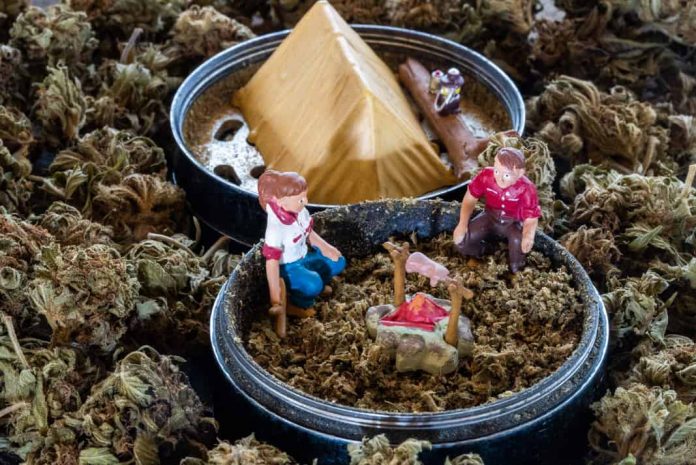
Cannabis + Campouts + ??? = Profit! As Canadians smoke, eat and otherwise consume $4 billion in cannabis products in 2019, marijuana tourism of all kinds is predicted to drift into a campground near you.
Photo: Colin Field
Picture this. A luxury guided trip. Ultralight canoes. Six-inch-thick air mattresses. Pan-seared steaks prepared over the fire at night. Chocolate fondue drizzled over fresh fruit for dessert. A friendly guide offering you the choice between a pinot noir and a cabernet sauvignon. All set under the backdrop of hanging boughs in a remote, spruce forest. Sounds a bit like paradise.
Now can you imagine the same scene, but instead of offering wine, your friendly guide offers up some cannabis?
That’s exactly what some new start-ups are proposing to do this summer. Thanks to legalization in October of 2018, Canada’s cannabis business is booming. Canadians are slated to spend $4.3 billion on cannabis sales in 2019, according to Deloitte, and that’s said to be just the tip of the iceberg. With experiential tourism continuing to be the hottest niche in travel, experts are predicting cannabis tourism to be Canada’s next high.
Cannabis + Campouts + ??? = Profit! As Canadians smoke, eat and otherwise consume $4 billion in cannabis products in 2019, marijuana tourism of all kinds is predicted to drift into a campground near you. | Photo: Colin Field
South of the border, in states where weed is legal, tourists can seek out thriving bud and breakfasts, puff-and-paint classes, blaze-and-gaze art tours, weed-infused yoga classes, cannabis-friendly wellness spas and blossoming coffee shop scenes. Think of every activity tour operators have ever paired with wine or beer tastings—cycling, gourmet food, walking tours, and more—and imagine it with marijuana.
As Canada’s first summer with legal cannabis approaches, a handful of entrepreneurs are taking reefer madness to new heights, pairing cannabis’ new legal status with the most classic of Canadian pastimes—camping and canoeing.
New Green Economy
“Canoeing is quintessentially Canadian, and there is going to be an increase in tourism for cannabis—we’re trying to be ahead of the game,” says Jeremy Blair, owner of Ontario Cannabis Tour (OCT) (ontariocannabistour.ca). The company specializes in fully-guided, cannabis-infused backcountry canoe trips in Algonquin Provincial Park and on the class I to III Madawaska River. It starts running trips this summer.
OCT is a BYOB operation—bring your own bud. “Due to the regulations, we can’t purchase cannabis for clients, but we can make recommendations on strains based on desired effects,” says Blair.
Once clients arrive, OCT runs like any other full-service guided trip. Trips start at $550 for a long weekend, and include equipment, transport, food—some of it cannabis-infused—as well as three guides who are experienced with cannabis. Of those three guides, one acts as a cannabis guide—like a sommelier but with more plaid and marijuana—while the others remain sober for risk management purposes.
Blair anticipates a majority of this summer’s clients to arrive internationally, but he’s also getting interest locally from seniors attracted by the pain relief potential of cannabis, in addition to the full-service guiding.
[ View the largest selection of trips in the Paddling Trip Guide ]
“There’s a consumer out there looking for a more in-depth experience with cannabis and a lot of people who are curious first-time users. Either way, this is a safe space to explore,” he says. Blair is quick to agree with comparisons to alcohol—is what OCT offers different than luxury guided tours providing their clients with a glass of wine or a beer after a day of paddling? Is it much different than guided canoe trips touring the distilleries of Scotland by paddle?
“Of course, we’ve also seen what alcohol can do. You can enjoy yourself with a couple of beers, or you can be the drunken fools. We’re providing an opportunity to experience cannabis responsibly,” he says.
We view cannabis as an addition to the camp routine only
On any Canadian canoe trip, guided or not, cannabis can only be consumed off the water and canoeists cannot be on the water intoxicated. Toking up in a canoe could result in a $1,000 to $5,000 fine. A landmark decision last fall declared canoes subject to the Criminal Code of Canada’s impaired driving laws. The first case in Canadian history where a paddler has been charged with impaired operation of a vessel causing death is currently before courts.
“We view cannabis as an addition to the camp routine only,” says Blair, stressing that consumption only happens after the paddling day is done.
Spliffs And S’mores
Under Canada’s new laws, adults can carry 30 grams of cannabis—almost enough loose buds to fill a one-liter Nalgene—on domestic flights, in cars and, yes, in canoes, so long as the cannabis is stored and sealed. However, where it can be consumed varies by province, with some provinces treating it like alcohol and others treating it more like cigarettes.
Last fall, Parks Canada announced it would allow cannabis use at its campsites. “While Parks Canada campgrounds are public areas, the agency treats individual campsites as temporary domiciles for our visitors. For this reason, at Parks Canada campgrounds, consumption of cannabis will be permitted in campsites,” spokesperson Marie-Hélène Brisson wrote in an email to the CBC, likening its rules to those around alcohol.
However, she cautioned: “It is important to maintain environmental awareness and a clear mind when performing activities in Parks Canada’s places to help prevent accidents, incidents or injury.”
The warning is an understatement to some. Not everyone is stoked on the idea of legal cannabis entering the outdoor recreation sphere. In an article titled “Why it’s a Bad Idea to Get High in the Mountains,” posted last summer on British Columbia’s North Shore Rescue (NSR) blog, first responder Curtis Jones writes, “There is no safe way to experiment with drugs in the mountains… The combination of mind-altering drugs and being in the wilderness is a terrible and dangerous idea.”
The mountains are not the place to lose yourself in a drug-induced stupor
In response to impending legalization and the burgeoning canna-tourism scene, he wrote that SAR teams have enough trouble with unprepared hikers flocking to the mountains and regularly respond to calls for those who are well prepared, do everything right, are completely sober, and still get into trouble. “Being in the mountains is worthwhile, but it comes with significant risks, which can be reduced through fitness—including being clear-headed—and preparation,” he says. “When you’re high in the mountains—and I don’t mean elevation—you shift your position on the continuum between prepared hiker and candidate for rescue significantly towards the latter position.”
Jones goes on to cite recent intoxication-related incidents North Shore Rescue responded to, including a snowshoer who consumed edible marijuana, had a seizure and required intubation and ventilation; a hiker who consumed mushrooms and marijuana, and fell 60 meters into a ravine sustaining a serious head injury; and two young people who left a bar on Burnaby Mountain drunk, took a shortcut down the mountain and fell to their deaths.
“The mountains are not the place to lose yourself in a drug-induced stupor, nor are they a place to experiment and learn your tolerance. The reality we face is the wilderness is unforgiving, and it can take a long time for rescue crews to reach you, even if you are only a couple of kilometers up the trail,” Jones writes. “This is our plea to everyone to be responsible in the mountains, and leave the weed at home.”
There are high-profile stories confirming these fears—a highly publicized case in 2017 of four men getting stoned on Scafell Pike, England’s tallest peak at 3,100 feet, and rallying a mountain rescue with air support and ambulance to get them off the summit comes to mind. However, statistics on the effect legal cannabis has had on search and rescue operations are hard to find. So Paddling Magazine contacted four search and rescue organizations in the outdoor recreation mecca of Colorado, the first state to legalize cannabis five years ago. Colorado now hosts millions of cannabis tourists on weedcations every year and credits a quarter of its tourism to legal cannabis.
“We have not noticed any uptick in search and rescue mission counts or incident type trending that can be related to recreational marijuana use,” says Patrick Caulfield, commander of Fremont Search and Rescue, located a few hours south of the mile-high city, Denver. He adds drug-related SAR activities in Fremont are rare.
“The biggest challenges currently for the SAR community are the increasing number of people getting out there, social media-based versus experience-based expectations of a backcountry adventure, and inadvertent non-emergency activation of personal locator beacons,” he says. “All result in an increasing number of missions for our non-paid professional SAR teams here in Colorado.”
Cannabis And Canoe Culture
Recreational marijuana use is currently legal in Colorado, Alaska, Washington, California, Nevada, Oregon, Maine, Vermont and Massachusetts. Another 22 states are pursuing some form of cannabis decriminalization or legalization. And while the cannabis tourism industry flourishes in some states, outdoor recreation within it remains a small niche.
“A lot of cannabis tourism in the U.S. focuses on immersing cannabis in party-style tours. I see an opportunity in Canada to get away from that, and more into education and sightseeing opportunities,” says Tristan Slade, owner of Vancouver-based High Definition Tours (highdefinitiontours.com) and a founding member of the National Association of Cannabis Tourism (NACT). “The goal is to combine Canadian culture and cannabis culture in a fun and legal environment.”
Many cannabis strains are complementary to physical activity
Matt Cronin, founder of Canada High Tours (www.canadahightours.com), provider of more than two dozen cannabis-infused experiences, expects growth to be slow but steady. “Alberta is ahead of the curve in terms of instant access to legal dispensaries. Coupled with their amazing parks and lakes, we believe Alberta will be the go-to province for combining all that’s great about Canadian and cannabis culture, especially when we look at outdoor activities—kayaking, hiking and camping.”
Slade is quick to note the risk factors many outdoor recreation activities present aren’t compatible with any level of intoxication and indicates cannabis should be consumed back at camp or after activity has concluded.
But not everyone agrees. “Many cannabis strains are complementary to physical activity,” Cronin insists. “And equally, just like you may have a beer or two after a long hike or a two-hour paddle, you may well want to sit back, relax and have a nice mellow joint or two instead.”
Cronin’s clients are diverse—from 20 to 60 years old, and from Canada, the U.S. and Europe. In addition to the Maligne Lake Paddle and Puff Experience (two hours, $95) which takes place in Jasper National Park, Canada High Tours offers a Stoned Stampede Experience—which is a visit to the Calgary Stampede—and a Moose and Mashed Experience—a wildlife viewing opportunity—plus more typical fare appealing to the average canna-curious tourist. It’s this type of tour—low commitment, half-day trips with less risk and investment than a backcountry-style tour—that have gained a foothold in the U.S.
NACT’s Slade is quick to note stigma is a barrier for the emerging market, both in terms of attracting new customers, but also in reticence from owners of already established tourism operations to experiment.
Black Feather, a Canadian guiding company with 30 years of experience leading remote paddling trips all over Canada, has no plans to welcome cannabis on trips, according to lead guide Steve Ruskay.
“The spirit of our policy remains the same,” he says. “No one—guide or guest—shall consume any substance that causes impairment before or during any wilderness activity. On certain trips in high-risk environments, no consumption is permitted at all.”
Ruskay adds there’s not enough evidence to determine to what extent, and for what duration, impairment from cannabis will cause, and therefore guides are not to permitted to consume cannabis while in the field. Alcohol consumption for guides is also limited to certain trips, small amounts, and after all activity has concluded. Similarly, Paddle Canada’s policy extends to any inhibitors of judgement, “so even though it was written pre-cannabis legalization, we didn’t feel a need to update it,” says executive director Graham Ketcheson. Paddle Canada members may not consume alcohol, cannabis or other drugs on the water, and there must be eight hours between consumption and paddling. “This is a safety policy for Paddle Canada instructors and for participants taking training, to make sure all are coherent and able of mind and body,” adds Ketcheson.
The risks can’t be ignored, but nor can the fact Canada’s cannabis-tourism industry is about to spark. Mixing weed and wilderness legally has only just begun and integrating cannabis into Canadian experiences—whether city tours, tastings, wellness experiences or backcountry campfires—is already in full swing. It’s something the entire outdoor community will have to reckon with. Regardless of the controversy, pot-loving adventurers, tourists and entrepreneurs will be enjoying Canada’s green rush and blazing new trails this summer, legally for the first time.
Kaydi Pyette is the editor of Paddling Magazine. Of the more than 40 slang names for cannabis she came across while writing this article, her favorite was the wacky asparagus.
Cannabis + Campouts + ??? = Profit! As Canadians smoke, eat and otherwise consume $4 billion in cannabis products in 2019, marijuana tourism of all kinds is predicted to drift into a campground near you. Feature Photo: Colin Field
Discover some of the year’s best throw and tow bags from Kokatat, Level Six and Salus Marine. Throwbags are some of the most important safety items for whitewater paddlers. Here’s Paddling Magazine’s top five favorite throw and tow bags for 2020.
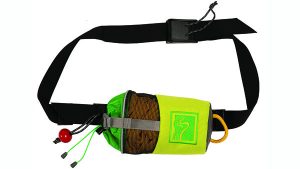
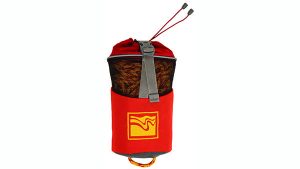
For paddlers who place a premium on being prepared, this compact throw bag comes with 50 feet of quarter-inch floating polyethylene core rope (max strength 1,465 pounds). It has a fully adjustable quick-release nylon belt and can be worn on the waist or lap. Easy to stuff after each use, the bag fits flat against the body, has a quick-drying mesh top, foam side panels for flotation and reflective piping.
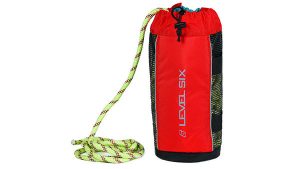
The Quick Throw Pro features 65 feet of 3/8” static dyneema rope with a new glow in the dark sheath. Its new easy re-stuff system means you can pack the bag faster and easier than ever before. High-visibility reflective piping and screens, mesh drainage panels, a 600-denier durable nylon bag and belt loops to pair with a new quick-release throw bag belt creating the ultimate rescue system available.
[ See more products from Level Six]
Amigo Throw Bag from Salus Marine
Price: $49
salusmarine.com
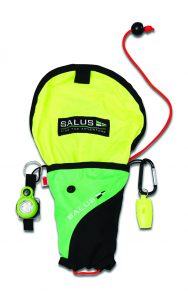
This handy and compact side-worn throw bag clips easily to a belt pack inflatable. Comes equipped with 50 feet of paracord, a light and whistle. This throw bag provides all of the legal requirements for SUP and other small craft. Available in lime, red and pink colour.
[ See more products from Salus Marine]
Sea Throw n’ Tow from Salus Marine
Price: $89
salusmarine.com
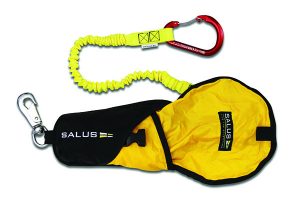
Ideal for sea kayaking, the Sea Throw n’ Tow has the ability to set up multiple tow lengths and contains 15 meters of polypropylene line with a spectra core for reduced resistance while dragging through the water in a tow scenario. A large high-visibility bib allows for easy throwing in a rescue scenario or to other sea kayakers. Bungee cord is removable to absorb wave shock.
Ideal for kayak touring, the Salus Ungava is a unisex-style vest with all of Salus’ trademark features, including soft foam, round edges and contour fit. Additional features, including hand-warmer pockets, the ability to attach a quick-release belt, zippered security pocket, mesh drop-down pocket for quick access, five lash points and added reflective trim, make the Ungava a welcome companion on any water adventure.