Home Blog Page 19

Best Foldable Kayaks For 2026

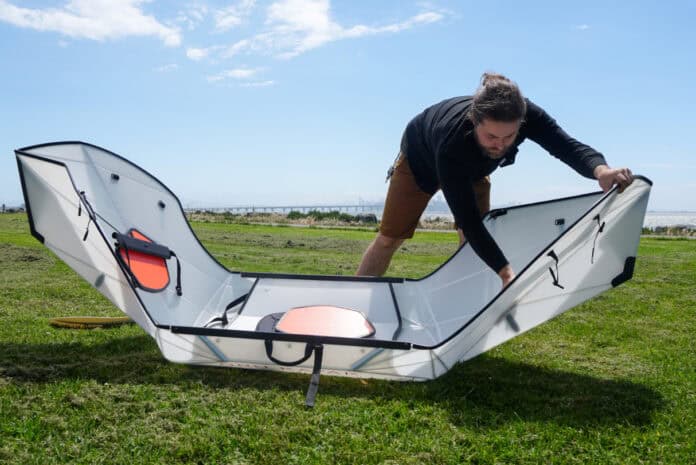
Man folding a portable kayak into shape.
Feature Image: Oru Kayak

Trying to find storage for a full-size touring or recreational kayak can be a real barrier to owning your own boat. Add to this the challenge of transporting these heavy, awkward-shaped recreational vessels. Enter the foldable kayak.

A fold up kayak provides paddlers with a packable paddling craft that can be stored in an oversized backpack, thrown in the trunk of a car or carried on a train. The practicality and versatility of foldable kayaks means these portable boats are a rising trend with modern kayakers, but they’re not a new idea. Some of the first kayaks mass-produced for consumers in the early 1900s were, believe it or not, folding kayaks.

The materials and structure used for folding kayaks make them well suited for touring and recreational paddling on lakes, bays and unconstricted rivers. Whereas paddlers seeking a packable boat for whitewater will find inflatable kayaks and packrafts suited for pinballing down technical rivers. That doesn’t mean the foldables of today aren’t up for a challenge. In fact, these innovative transformer-esque marvels have crossed oceans, and they are ready for whatever weekend plans you can conjure.

Wear A Life Jacket
  • Everyone, even strong swimmers, needs to wear a life jacket at all times when on the water. It is extremely difficult to put a life jacket on once you fall into the water. Even a light wind can blow any paddlecraft away from you, faster than you can swim.
  • Always wear a USCG-approved Level 70 or Type III life jacket designed for paddling.

Best foldable kayaks: Our Top Picks


Best folding kayak for beginners

Oru Inlet
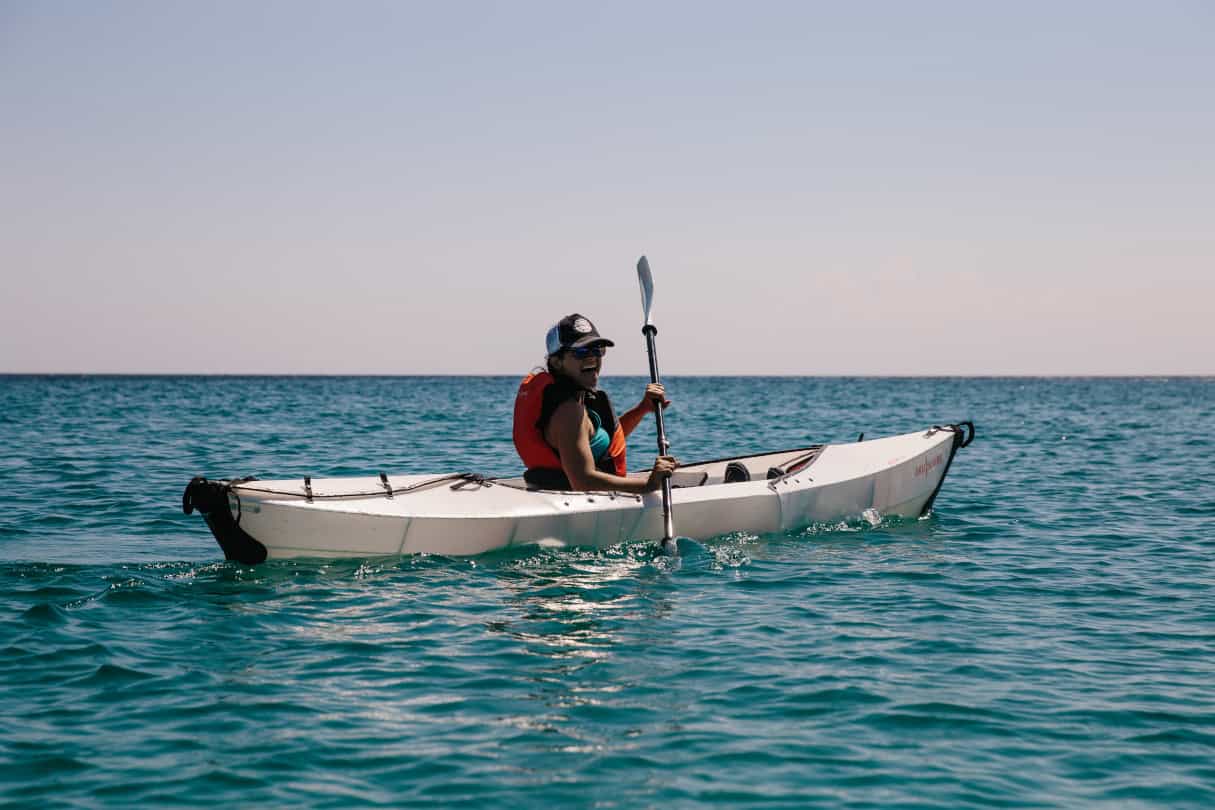
The Oru Inlet origami-inspired folding kayak being paddled out on open water.
Image: Oru Kayak
Oru Inlet Specs
Length: 9’8″
Width: 31″
Weight: 20 lbs
Capacity: 275 lbs
MSRP: $899 USD

Buy from:

DICK’S SPORTING GOODS REI AMAZON ORU

Why I love it

When I first came across the Oru Inlet, I thought it was a clever little invention that captured a certain need, but I couldn’t have imagined a few years back that these origami-inspired boats would become as popular as they have on waterways around the country. It makes sense though. Take all the elements that have made recreational kayaks the largest gateway into the sport, and package it into a kayak that is half the weight and folds away into a luggage-bag size you could slide under a bed. The Inlet is the answer for a portable, lightweight, beginner kayak well-suited for flatwater paddling.

The Inlet sets up in less than 10 minutes. The strap system is simple, yet does a fantastic job of holding the structure of the kayak folded into shape. It is zippier on the water than one would expect for a 10-foot kayak. And it is wide and feels relatively stable.

I would recommend getting the float bags Oru has available as an accessory. These are inflated and fit into the ends of the boat to provide buoyancy and limit the amount of water that can enter the kayak should you capsize. It’s also worth noting this boat is best suited for calmer waters, and I would consider another option if you plan to paddle in areas with breaking waves, strong current, or whitewater.

Reasons to buy
  •  The 20-pound, 10-foot-long kayak packs into itself to the size of luggage
  •  Intuitive to set up within minutes
  •  Stable and zippy, considering how light it is
  •  Recreational kayak-type shape popular for calmer waters
  •  Lower price than many other foldable kayaks
Consider another if
  •  You plan to paddle advanced waterways with turbulent or swift currents
  •  Comfortable outfitting is a high priority

Bottom line

For less than $1,000 USD, the Oru Inlet is the most portable match to popular, beginner recreational kayaks.


Most durable folding kayak

Klepper Aerius 545 Expedition
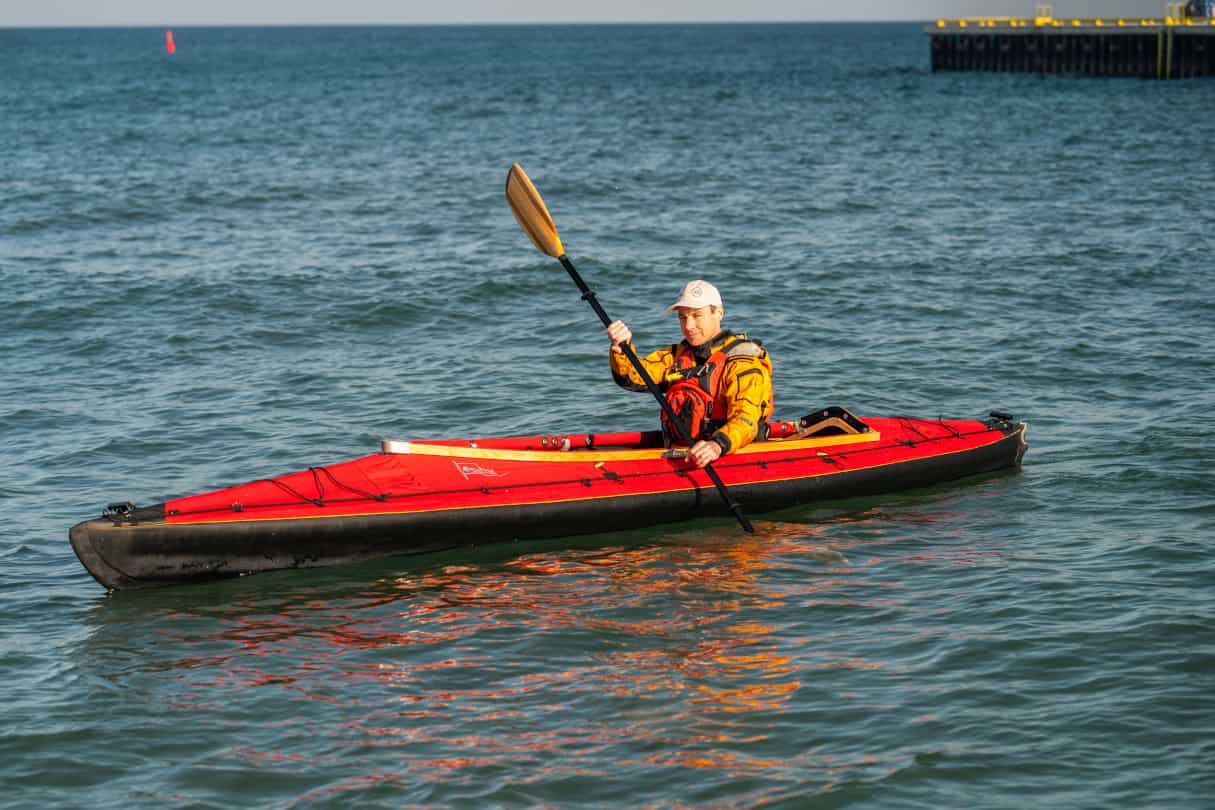
The Klepper Aerius 545 Expedition has tallied numerous kayak expeditions over the past 75 years.
Contributor Tim Shuff testing the Klepper. | Image: Colin Field
Klepper Aerius 545 Expedition Specs
Length: 17′ 11″
Width: 34″
Weight: 75 lbs
Capacity: 840 lbs
MSRP: $6,799 USD

Buy from:

KLEPPER

Why I love It

The Klepper Aerius 545 has changed little over 70 years of existence. You heard that right. The Klepper brand dates back to 1907, long before the recent trend in folding kayaks, and is one of the original commercially produced kayaks. The key to the longevity of both the model and the company? Ingenious engineering and durability. The Aerius 545 may require more practice time to set up than some of the more recent folding innovations, but the canvas skin and wooden frame have also crossed oceans, descended the biggest rivers in the world, and handled arctic expeditions.

The Aerius can not only handle the rigors of an expedition, but, according to contributor Tim Shuff who tested and reviewed the Aerius 545, it is “infinitely more repairable and long-lasting than almost any other type of watercraft.” Shuff notes that Klepper supplies replacement parts for every component, even for its discontinued models. Good to know when it’s time to replace the rubberized-cotton outerskins known to last 30 years or more.

Reasons to buy
  •  Durable wooden frame and canvas skin
  •  Repairable with parts readily available from 118-year-old brand
  •  Ample storage space
  •  Capable of paddling any open waterway
Consider another if
  •  You need a simple to set up kayak for easy excursions
  •  Weight savings and compact storage are key reasons for choosing a foldable
  •  Cost is a factor

Bottom line

If you are into folding kayaks for the long haul, the Klepper could be the first and last kayak you’ll ever need to buy.


Highest performance foldable kayak

TRAK 2.0
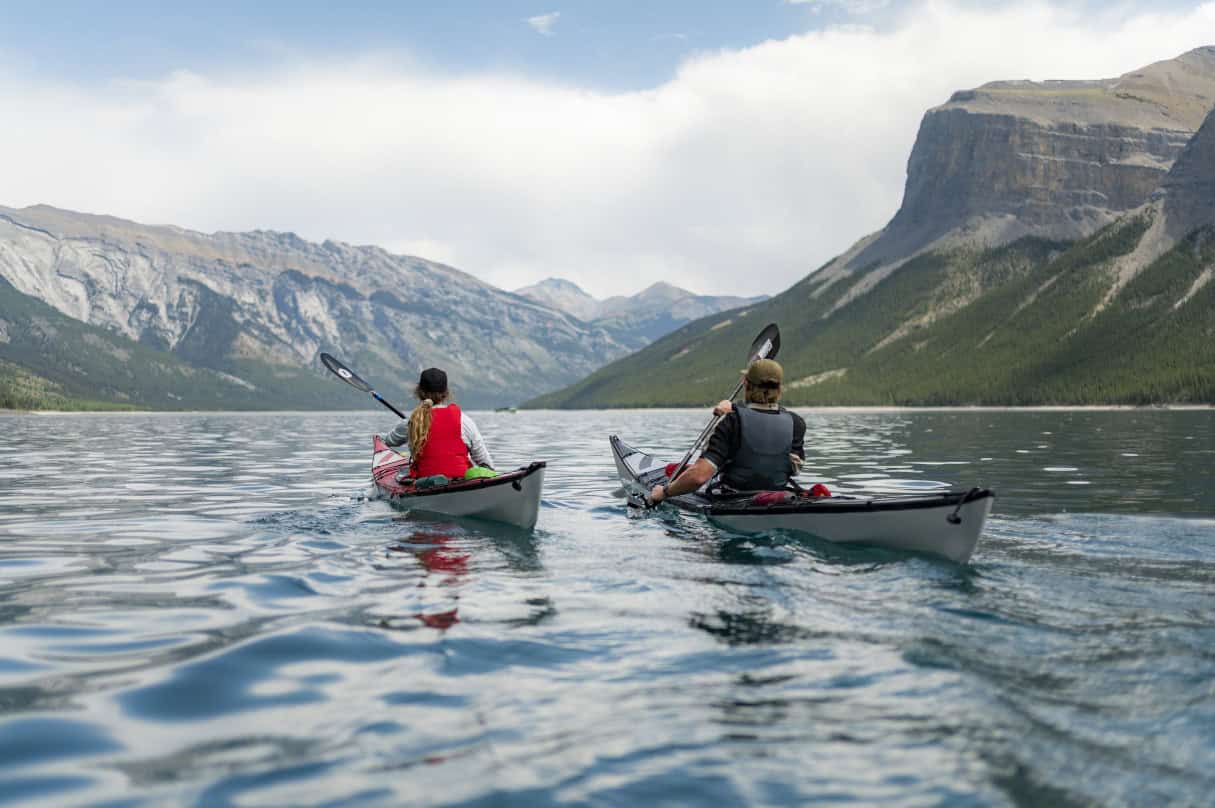
Canadian Olympic paddler Haley Daniels and her brother Hayden paddling TRAK 2.0 kayaks.
Canadian Olympic paddler Haley Daniels and brother Hayden paddling TRAK kayaks. | Image: Cody Shimizu/TRAK
TRAK 2.0 Specs
Length: 16′
Width: 22.5″
Weight: 42 lbs
Capacity: 350 lbs
MSRP: $4,250 USD

Buy from:

TRAK

Why I love it

It’s easy equate the concept of a foldable kayak with serving a utilitarian purpose to get on the water, and that someone would get a plastic or composite boat if their aim were performance. TRAK has disrupted this notion however with their 2.0 which sets out to be a generally good touring kayak that also happens to be one of the most portable in existence, and houses a unique ability to transform shape in order to meet the conditions.

The TRAK is constructed of 7000-series aircraft-grade aluminum poles and carbon fiber ribs for the frame, and a nylon-weave, military-grade polyurethane for the skin. It packs down into a travel bag that is a similar size of one for a standup paddleboard. But what is really cosmic is the 2.0’s ability to adjust its rocker (the curve of the hull from bow to stern) depending on whether you are covering distances of flatwater or handling rough conditions. TRAK accomplishes this with the use of interior hydraulics to lift or lower the bow and stern to change the hull’s curvature.

TRAK also offers numerous accessories devoted to the adventure seeking the kayak affords with spray skirts, float bags, and even a sea sock which inserts into the kayak to serve the purpose a sealed bulkhead would. Contributor Tim Shuff first tested the 2.0 when it came on the scene around six years ago, and the company has continued to make upgrades to its components every year since.

Reasons to buy
  •  High performance touring kayak capable of transforming into multiple rocker profiles
  •  Lighterweight and more compact than a rigid hardshell kayak
  •  Brand accessories support capability of the boat
Consider another if
  •  You are a beginner paddler and/or plan to paddle calmer stretches of water
  •  Cost is a factor

Bottom line

The TRAK 2.0 is folding kayak designed to enjoy touring and push your boundaries.


Best nesting plastic kayak

Pakayak Bluefin
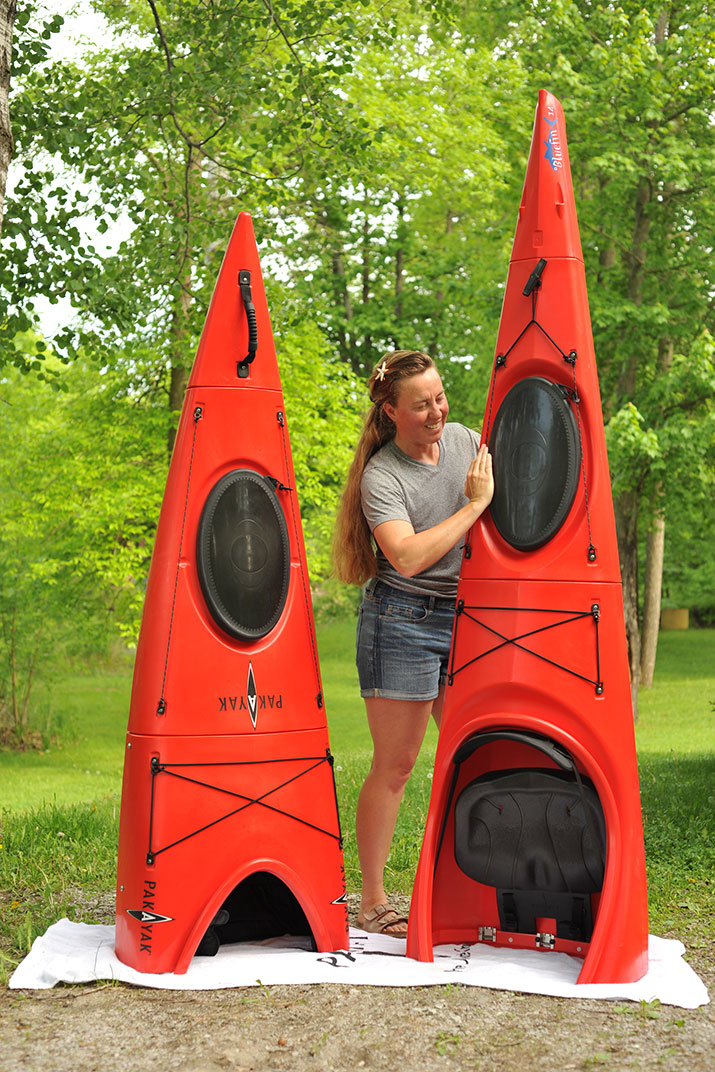
Stainless steel latches and silicone gaskets ensure a watertight seal between sections. Vertical assembly minimizes exposure to sand and other debris. | Photos: Virginia Marshall
Pakayak Bluefin Specs
Length: 14′
Width: 24″
Weight: 52 lbs
Capacity: 300 lbs
MSRP: $2,195 USD

Buy from:

PAKAYAK

Why I love It

You don’t have to sacrifice the characteristics of a hardshell, plastic kayak with the solution concocted by Pakayak. The brand has created a 14-foot plastic kayak that stacks into itself in segments similar to the concept of a nesting doll. When it comes to assembly, it is a modular kayak of sorts, where each independent section clasps and seal to one another with a clamp and gasket system.

What the Bluefin’s nesting system means is that a paddler can have a portable, stowable kayak that has the tough, rigid shape polyethylene provides, but also the additional benefits a plastic kayak allows. There are rubber deck hatches, sealed bulkheads, and a kayak seat and footpegs closer to the setup you would find in a hardshell.

Our editor-at-large Virginia Marshall tested the Pakayak and found it intuitive to assemble, which is not often the case the first time looking over the formless shape of a folding kayak skin. She also felt the Bluefin performed just as you would expect a 14-foot touring kayak to with a few small quirks, most notable among them the boat’s narrower back half in order to nest provides less stability than expected.

Reasons to buy
  •  Hardshell polyethylene kayak just like a “single-piece” boat
  •  Sealed bulkheads and hatches
  •  Closer to traditional outfitting
  •  Lower cost than some of the other high-performance foldable models
Consider another if
  •  You are looking for a low-weight or low-profile foldable
  •  You are a beginner paddler prioritizing stability

Bottom line

Having the tried-and-true characteristics of a hardshell kayak no longer take a stowable off the table with the Bluefin.

Stay Clear Of All Other Vessels
  • Know the “Rules of the Road” Navigation Rules that govern all boat traffic and stay out of the way of all other vessels.
  • Never assume that power boaters can see you. Avoid high-traffic areas whenever possible. Proceed with caution when you can’t avoid paddling near boats. Dress for visibility.

Foldable kayak buying advice

Folding kayaks are available in a variety of shapes, sizes and styles to suit a wide range of uses, from casual recreational paddling to weeklong expeditions and more. These designs continue to evolve, with updated materials and simplified assembly. Folding kayak construction can vary widely, including polyurethane skin-on-frame, and origami-style corrugated plastic. Inflatables are also often referred to as folding boats, but I would put these their own category.

Classic “skin-on-frame” kayaks

The classic folding kayak design uses what’s called “skin-on-frame” construction. All modern kayaks are informed by millennia-old designs, traditionally built by the Inuit and Aleut people for hunting and transportation. But folding skin-on-frame kayaks are the closest to early kayaks in terms of construction. Where Indigenous peoples once used seal skin stretched tightly over a driftwood and whalebone frame, today’s skin-on-frame folding kayaks use wood or aluminum frames with a “skin” of synthetic materials or cotton canvas.

There’s a reason skin-on-frame kayaks have been trusted for thousands of years. This type of construction is lightweight, durable and results in an agile, high-performing kayak. The downside to skin-on-frame folding kayaks is that they take longer to set up and take apart than some other folding styles, and are priced at the mid to high end for folding kayaks.
Corrugated folding plastic

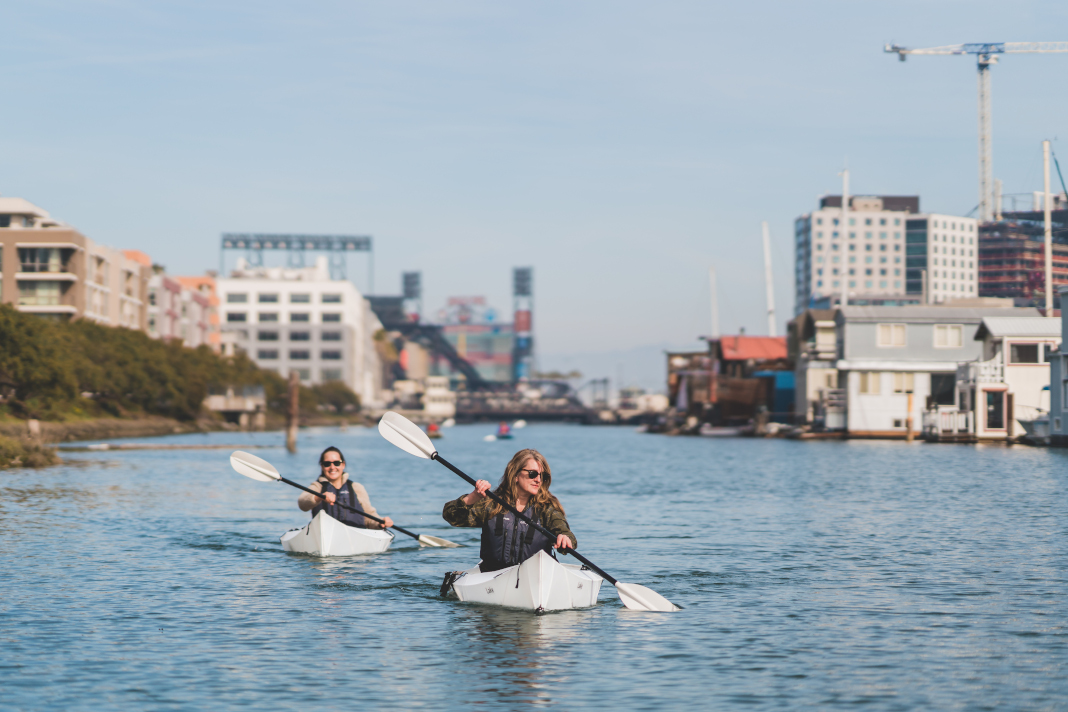
Origami-inspired kayaks are another type of folding kayak which has become popular in recent years. These clever kayaks are constructed of flexible, impact-resistant corrugated polypropylene (think of those plastic crates at the post office). They are essentially one sheet of plastic that folds into a portable box shape for storage or transport, and transforms into a kayak in just a few simple steps.

Origami folding kayaks are available in both touring and recreational designs. They are lightweight and—above all—quick and easy to assemble or pack up. Like a skin-on-frame folding kayak, an origami folding kayak is nimble and fun to paddle for both beginners and experts. Their cost is mid range, starting at around a thousand dollars for a recreational or light touring design.

Nesting kayaks

Another portable kayak option, although not technically a folding kayak, are nesting kayaks. These are hard plastic kayaks that look and paddle just like a rigid kayak when assembled, but take apart in segments that stack within one another for storage (think of a Russian matryoshka doll).

The main advantage of a nesting kayak is that it feels just like a hardshell kayak in terms of fit and performance. Nesting kayaks also usually have storage hatches and bulkheads (interior walls within the hull that ensure flotation should the kayak swamp or overturn), which are typically lacking in other types of portable kayaks. Although nesting kayaks are intuitive to assemble, the downside is that they are heavy (as much or more than the weight of a hard plastic kayak) and not as compact to carry or store as a true folding kayak.

Looking for something else

Finally, if you’re looking at folding kayaks, an inflatable kayak is another consideration. Industry jargon aside, an inflatable kayak also rolls or folds up, making it every bit as easy to transport and store for paddlers seeking portability. Inflatable kayaks are made of flexible, durable plastics such as PVC, with better quality inflatables using drop stitch construction to create a more rigid and efficient hull shape. We haven’t included Inflatables in this buying advice article, and instead focused on what is often intended by the term foldable kayak, and if you are looking for one read our guide to the best inflatable kayaks.

Practice the set up

No matter what type of fold-up kayak you bring home, here is the ultimate post-purchase advice: practice assembling your kayak before your first outing. Putting together a folding kayak the first time brings back memories of erecting Ikea furniture. Manufacturers often advertise set up time in 10–20 minutes, but this is usually after you’ve had some practice. Easy-to-follow video instructions are often available through the brand’s website or on YouTube.

Know The Local Hazards
  • Check navigation charts before you launch.
  • Check with those who have local knowledge of man-made and natural hazards, e.g. low-head dams; sweepers, strainers and undercuts; tides and currents; and rocks and shoals.

Best foldable kayak brands

How we tested

My first experience with a folding kayak was in the waters around New York City. I figured what better way to test the portability of a boat than taking it around the largest city in the U.S. I used the same metric with multiple designs, taking into account these portable boats are meant to make paddling achievable without lugging around a massive kayak on the roof of a car. For this guide we also incorporated the insights of our contributors, who have tested and reviewed many of the most well known models, and placed their experiences alongside every other kayak they have tested, foldable or not.


Feature photo: Oru Kayak
 

Alarming Trend Shows Increase In Paddleboarding Deaths In Latest Coast Guard Report

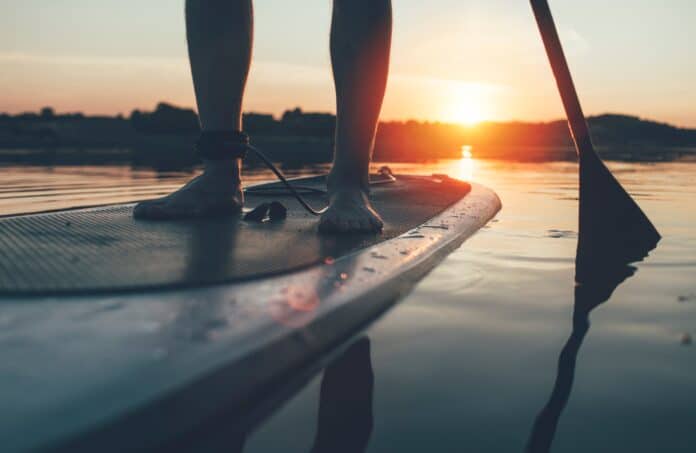
US Coast Guard reports increase in SUP deaths.
US Coast Guard reports increase in SUP deaths. | Photo: shutterstock.com

The U.S. Coast Guard recently released the 2024 Recreational Boating Statistics, and while overall boating deaths are at a 50-year all-time low, paddlesports are seeing an alarming trend. Paddlesports continued to account for approximately one in every three boating fatalities in the United States last year. In particular, standup paddleboarding saw a 164 percent increase in fatalities, from 11 fatalities in 2023 to 29 fatalities in 2024.

Coast Guard reports increase in paddleboarding fatalities

Paddlesports overall saw 165 fatalities in 2024, down from 183 fatalities in 2023. Drowning accounted for three-quarters of all 556 recreational boating fatalities last year, and of those victims, 87 percent were not wearing life jackets. Alcohol use was the leading known contributing factor in fatal boating accidents.

Overall, the type of body of water where the most recreational boating fatalities occurred was on lakes, including ponds, reservoirs, dams and gravel pits. The greatest percentage of reported incidents (2,398 incidents and 282 fatalities) occurred when the water was calm. Calm water for the purposes of this study was defined as less than six-inch waves. Similarly, most incidents and fatalities occurred when wind was light and visibility was good.

While standup paddleboarding saw a 164 percent increase in fatalities from 2023 to 2024, kayaking saw more individual fatalities than standup paddleboarding, with 89 fatalities (down from 95 in 2023). In general, paddlesports fatalities remained high, accounting for 30 percent of known vessel type fatalities, although down from 33 percent in 2023.

Overall, participation in paddleboarding continues to be on the rise, with standup paddleboarding participation increasing at a rate of 26 percent over the past three years, according to a report by the American Canoe Association.

Feature Image: Shutterstock

Jon Turk’s Life Lessons For Digging Deep

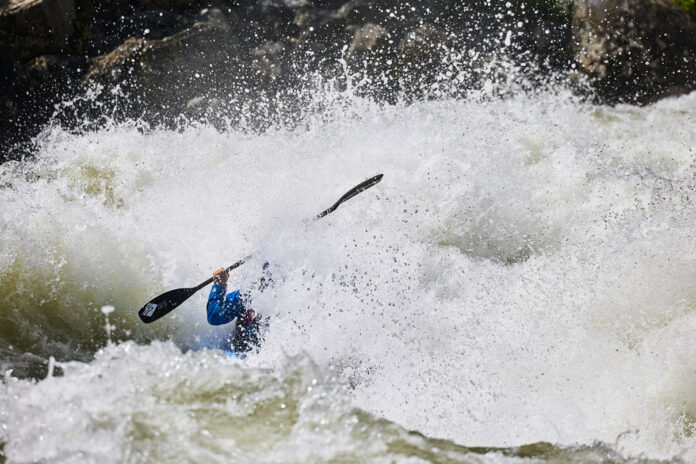
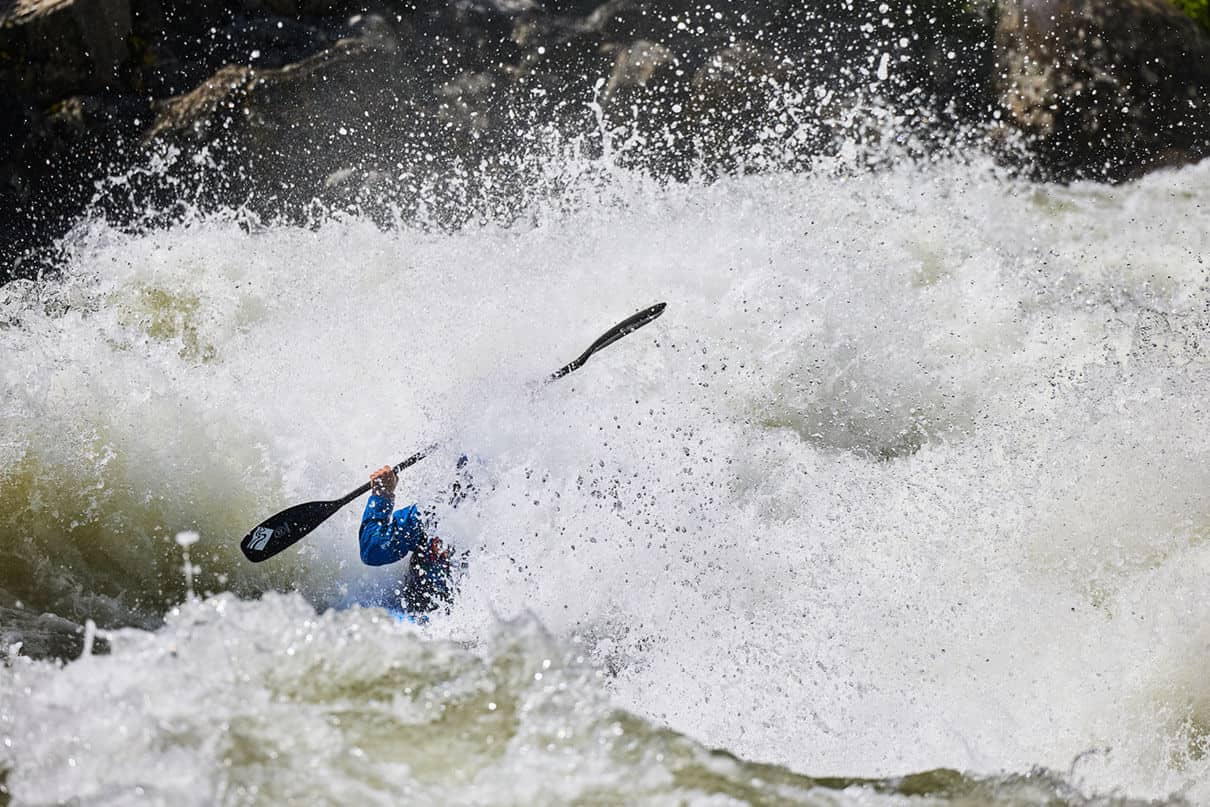
a person paddles through roaring rapids
Mind over muscle. | Feature photo: John Webster

An errant hydraulic grabbed the stern of my kayak, stood me into a tail stand, and then pulled me down, down, down. The boat twisted and then: Scratch. Bang. Clunk. Stop. With the boat wedged, the current slammed me forward, smashing my face against the front deck. I pushed against the deck to stretch out straight to escape the cockpit. But the current held me with a heavy hand. Blood streamed out of my nose and swirled away in the darkness.

I was midway down the Dean River, a class IV–V river run through the remote and roadless Coast Range of British Columbia. This rapid had been no more or less difficult than a host of others. Ride the wall on river right, cross left above the snaggle-tooth rock, and drop into the quiet pool below. But as I cut left, I initiated the move with a standard paddle stroke—not a determined, urgent stroke, as if I hadn’t anticipated danger. And now I was in a death trap, jammed into an underwater cave.

I needed to push myself off the front deck. Placing both hands firmly, even with my shoulders, I pushed. Push at 100 percent, 110 percent, 200 percent. Whatever it takes.

Jon Turk’s life lessons for digging deep

I escaped the underwater cave. And the moment, horrible as it was, has become my guardian angel because I finally understood what I should have learned decades earlier. There is a huge difference between visualizing an outcome and communicating the necessary urgency directly to muscle fibers.

A dozen years later, I’m running a big rapid on the upper Indus. There is no well-planned line; I’m simply reacting to the waves and holes in front of me and struggling to stay upright. Then, hidden behind a standing wave, is the mother of all holes, yawning, mouth agape, smiling, beckoning. I flashed on my one weak paddle stroke on the Dean. Forget you are on the biggest volume river you’ve ever been on in your life, I told myself. Just reach deep inside and communicate directly with every neuron and every muscle fiber in your arms and back. Lean forward, engage your core. One simple command: Pull. Pull now. At 200 percent. Whatever it takes.

I pulled so hard I ripped open my abdominal muscles, busting a hernia. But I avoided the hole.

a person paddles through roaring rapids
Mind over muscle. | Feature photo: John Webster

Back home in the U.S., I had free time as I was rehabbing from surgery and realized I needed to better understand the relationship between brain commands and muscle function.

In any sport, there are three distinct commands for muscles. The first and easiest is activation: perform the task, like a paddle stroke. Activation is simple because the nerve pathways are well established. However, muscles naturally conserve energy, so they respond with minimal effort—you can’t paddle at turbo speed all the time.

The second, more challenging command is recruitment, which refers to how much strength one needs to apply during activation. Are you coasting with a lazy stroke or going all-in?

Each muscle contains many fibers activated by neurons. A motor unit includes one neuron and all the fibers it stimulates. A casual paddle stroke on a calm river might only activate a small portion of your fibers, making it feel like you’re doing the job, but not fully engaging. To fully recruit, your brain must command all motor units and fibers to engage, requiring complete focus and commitment. On the Dean, my half-hearted stroke taught me visualizing the goal isn’t enough—concentration on recruitment is crucial.

The third and hardest command is power—transitioning muscles rapidly from partial to full strength. Think of a high jumper whose gold medal depends on one explosive leap. Or the moment a hidden monster hole appears. You need to go from 90 to 200 percent instantly. This quick power-up demands exceptional focus because the body resists unnecessary energy expenditure unless absolutely required.

Harnessing the mind-body connection

In all my younger years of paddling, I never thought about the brain’s communication with muscle fibers. I would have been a better athlete if I had. Lately, I have been finding increased performance, as well as deep joy and satisfaction from an intimate dialogue directly with the inner functioning of my body.

I wake up and greet my body, “Good morning, neurons. Good morning, muscle fibers. We have a job to do today. And I mean we, together, as a team.” I flex specific muscles quickly, slowly, halfway and all the way. “Good morning, mitochondria. Let’s process some oxygen. We’ll need that today.”

Okay. “Let’s go paddling.”

As American alpine race champion Mikaela Shiffrin once explained before a race, it is imperative to “prime your neuromuscular system.” Notice that she didn’t say “prime your muscles.” Muscles don’t do their job without the brain.

When we train for paddling or any other sport, strengthening our muscles is vital but only part of the engagement.

“Good morning, neurons. Good morning, muscle fibers. We have a job to do today. And I mean we, together, as a team. Good morning, mitochondria. Let’s process some oxygen. We’ll need that today.”

Plyometrics is a training regimen aimed at increasing rapid muscle activation—power. If you put a barbell on your shoulders and do slow steady squats, that is weight training. Jumping is a plyometric exercise that trains the same quadriceps muscles to activate rapidly. The same concept applies to paddling. Attach your paddle to a wall with resistance bands. If you use a lot of resistance and “paddle” slowly, that is weight training. Now reduce the resistance and accelerate your stroke cadence as rapidly as possible. Train your muscles to power up right now.

Once you develop strength and plyometric power, you still need to train for concentration, balance, and coordination under stress. When I attended an exercise ball class, our instructor would work us to near exhaustion for roughly 50 minutes. Then, when we were tired, sweaty, and not thinking clearly, he required us to think, balance, and be coordinated, all while powering up quickly. We’d gather in a circle, kneel on our exercise balls, and play catch with a five-pound medicine ball. The game was to throw the ball so hard that you would knock the person you were throwing to off his or her ball.

Throwing is rapid, explosive muscle activation. Catching while balancing on your knees on a ball is balance and coordination. Doing all this when you’re tired is training for real-life adventure.

You can mimic this exercise in an infinite number of ways. Run, jump, hop, or skip until you are tired and sweaty. Then kneel or stand on an exercise ball and do straight arm lifts with light dumbbells. An easier version: stand on one leg, touch your toe with your opposite hand, and reverse. Anything to train yourself to focus, balance, and perform when stressed.

Ready when it counts

At 79, I’m older now, and older people lose fast-twitch muscle activation. I spend a lot of time on my mountain bike. If I pedal uphill at 80 percent recruitment, I am slow to power up to 100 percent to pop over a sequence of rocks or a tricky hairpin corner. But I don’t want to enter the sequence too fast, so I apply the brakes lightly. Yes, crazy as it sounds, I brake while going uphill. This forces me to hit 100 percent a second or two before I need to. Then, I release the brake and engage the technical obstacle under full power.

I share this last trick as a reminder that your approach to performance will be highly personal and sport-specific. Regardless of how you do it, when you enter a big rapid or a tricky surf landing, you need to pick a line through the mayhem, of course. But you also need to dig deep, which is more than a mantra. It requires training to actively involve your entire neuromuscular system. You train so that, when it counts, you can go all in. Whatever it takes.

Jon Turk has paddled around Cape Horn, across the North Pacific, and circumnavigated Ellesmere Island. Nowadays, he splits his time between summers in Oregon and winters living out of his van in Arizona, mountain biking every day.

Cover of Issue 73 of Paddling MagazineThis article was published in Issue 73 of Paddling Magazine. Subscribe to Paddling Magazine’s print and digital editions, or browse the archives.
Mind over muscle. | Feature photo: John Webster


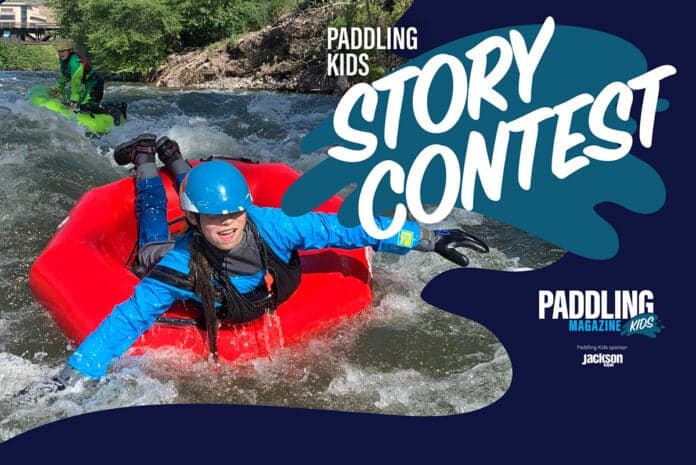
Paddling Magazine Launches Paddling Kids Story Contest

Paddling Magazine is inviting the next generation of adventurers to grab a paddle, hit the water and tell their stories. The newly launched Paddling Kids Story Contest is open to paddlers aged 3–17 and aims to celebrate getting outside and exploring from a canoe, kayak, raft or paddleboard.

“Sharing your love of paddlesports is no small task. Especially when you are sharing it with kids,” says Paddling Magazine’s Brenna Kelly, a veteran paddling instructor and mom of two, who dreamed up the contest. “There is a lot to consider and plan for, but the simplest adventures are sometimes the most rewarding.”

Whether it’s a first canoe trip, a SUP session with friends or a kayak adventure they’ll never forget, Paddling Magazine is looking for real stories from paddling kids who made the most of their summer.

Kids in life jackets paddling
Spend your summer having fun on the water, and then tell us all about it in September. Photo: Brenna Kelly

“I really want to help our community share our passion for paddlesports because it has shaped us into what I consider to be pretty cool humans,” says Kelly. “One way Paddling Magazine is going to do this is by running a story contest for kids. It is our excuse to interrupt your social scrolling with a reminder to stop what you are doing and go on a paddling adventure with your kids, your friends’ kids or your grandkids!”

Here’s how it works:

  1. Go paddling.
  2. Go paddling again.
  3. Pick your most memorable paddling moment from the summer.
  4. Tell us all about it—and don’t forget the photos.

Kids can submit their work in either text or audio format, accompanied by photos. The contest opens September 1, 2025, and entries must be received by midnight on Tuesday, September 30, 2025.

“In the fall, you can sit around the campfire or dinner table talking about some of the best paddling adventures of the summer,” says Kelly. “I am sure there will be lots of laughs. Any child between ages 3–17 can then submit their favourite memory from their paddling tales for a chance to win prizes and a chance to have their story shared in Paddling Magazine to inspire others.”

Winners will receive cool prizes and the grand prize winner will have their story featured in the Spring 2026 issue of Paddling Magazine.

“I remember my early days as a whitewater paddler and guide watching the Jackson family progress on the Ottawa River where I worked,” says Kelly. “Over time, Emily became my friend, and of course, I thought to call her up to help us put this contest on. Her and the Jackson team were stoked on the idea and jumped in with two feet. As we release the prize pack details, you may not be surprised to see some Jackson and Werner gifts!”

For full contest details and submission guidelines, visit paddlingmag.com/paddling-kids.

Inside The World’s Toughest Paddling Race—On SUPs

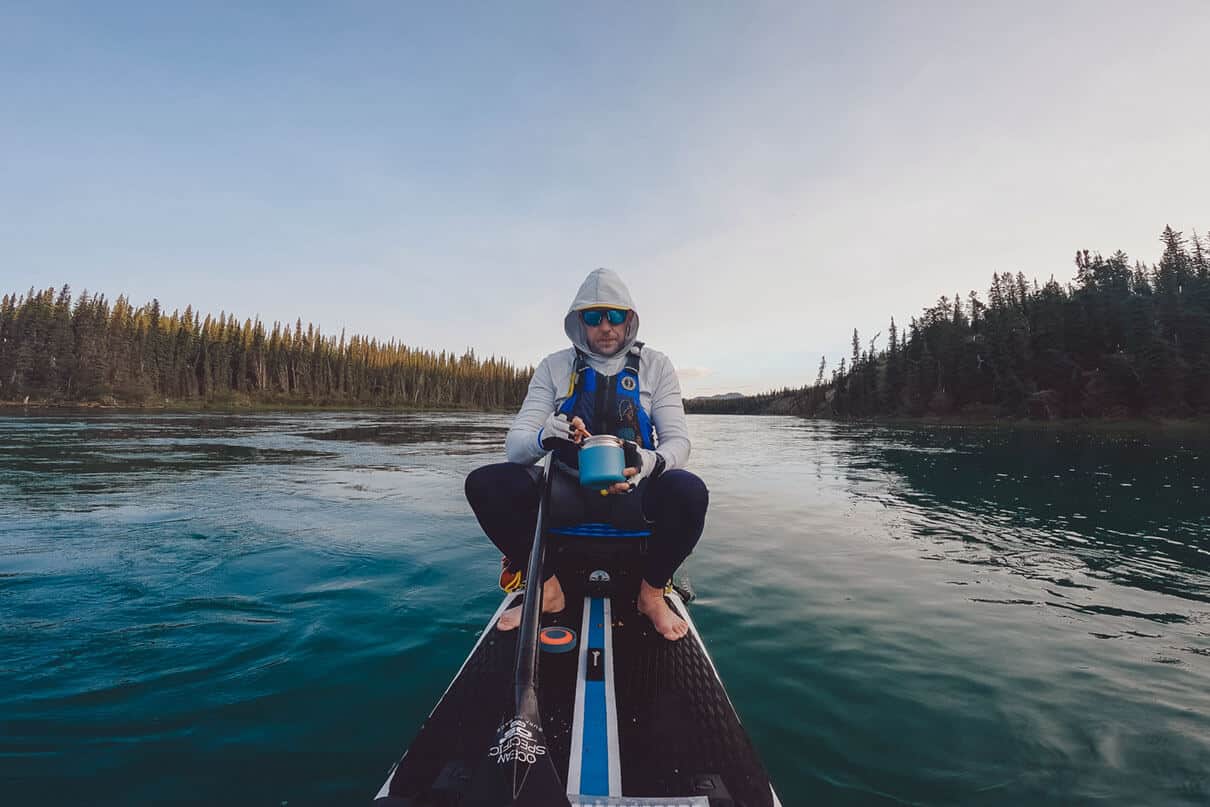
Craig Sawyer sits and eats on his paddleboard during the Yukon 1000 race
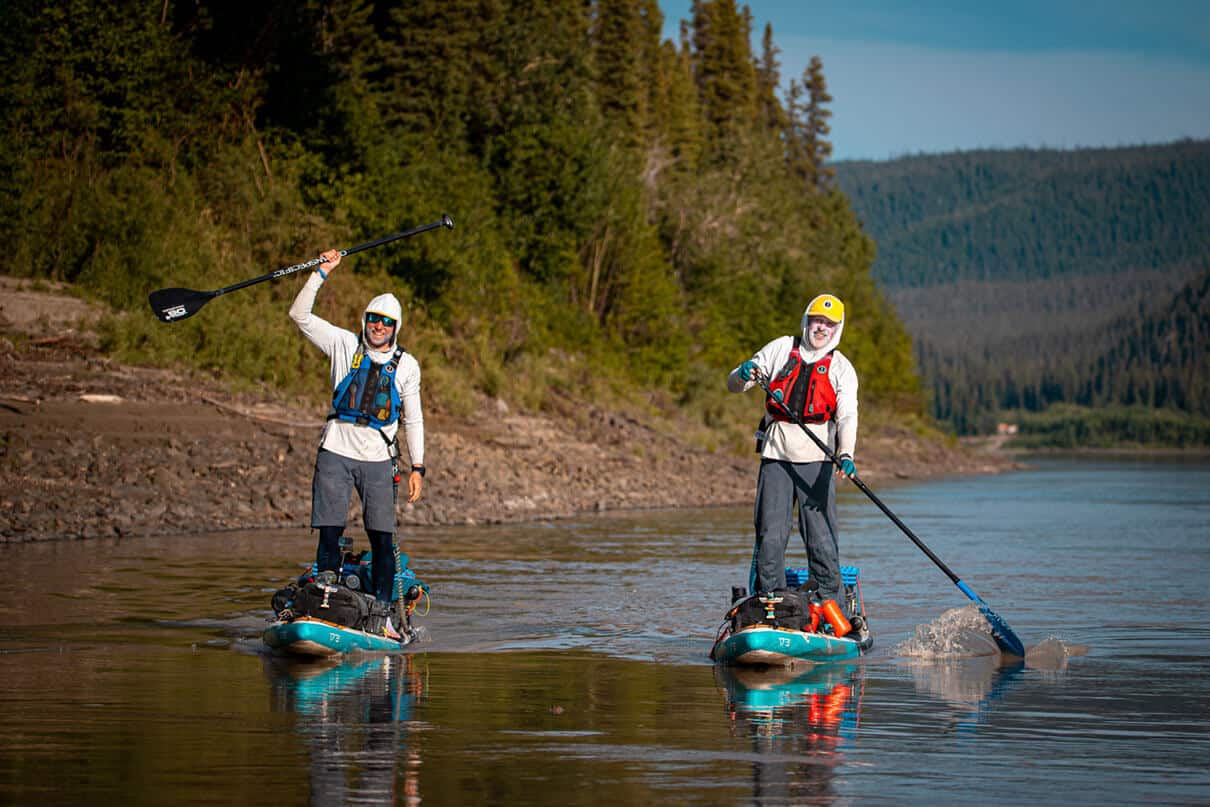
The Yukon 1000 is the world’s longest paddling race and takes, on average, eight nearly-sleepless days to complete. Each year, thousands of teams apply for just 30 coveted spots. | Feature photo: Courtesy Craig Sawyer

July 21, 14:30, somewhere just south of the Arctic Circle. Dehydrated, sunburnt, nursing blisters and suffering from nerve damage in our feet from standing for so long, we were just 20 miles from the finish line of the Yukon 1000, the world’s longest and toughest unsupported survival paddle race. And for the first time, we were certain: we were going to finish within the cutoff time.

Inside the world’s toughest paddling race—on SUPs

Eight days and 980 miles earlier, we had set off from Whitehorse, the capital of Canada’s Yukon territory. But the true start to our journey began four years earlier, back in 2019, when my paddling partner, Skip, and I discovered the race while searching for a multi-day SUP hallenge.

First, we found the infamous Yukon River Quest, a 444-mile race from Whitehorse to Dawson, following the same route gold rush stampeders took north in the 1890s. The Yukon River Quest is billed as “the second longest paddle race in the world,” which, of course, made us wonder, which is the longest?

Craig Sawyer sits and eats on his paddleboard during the Yukon 1000 race
The Yukon 1000 is the world’s longest paddling race and takes, on average, eight nearly-sleepless days to complete. Each year, thousands of teams apply for just 30 coveted spots. | Feature photo: Courtesy Craig Sawyer

Beyond Dawson

The Yukon 1000 claimed the title as the longest paddle race in the world when it began in 2009. Once a wild outpost teeming with fortune seekers, Dawson City is the end point of the Yukon River Quest but just the halfway point for the Yukon 1000, which stretches another 500 miles to the Dalton Highway Bridge, 140 miles north of Fairbanks, Alaska. The race cutoff is 234 hours—equivalent to nine days and 18 hours. If you exceed this time, your finish will not be acknowledged. The race is open to kayaks, canoes and SUPs, but everyone must paddle in a team—no one races alone.

Most participants complete the race in seven to eight days. The fastest time? Five days, 11 hours, and 48 minutes, set by a kayak team in 2022.

Each year, thousands of teams apply, but just 30 teams are awarded spots. At first, Skip and I didn’t have high hopes of being selected and quickly forgot about the application. To say we were surprised at being accepted was an understatement.

“I’m looking for applications with a bit of humility—teams that tell me, ‘This is where we are at, these are our strengths, and these are the things we are going to work on if we are accepted,’” race organizer Jon Firth told me later. “I don’t care how many followers you have or what your social media reach is—that won’t get you across the line. It’s about what skills you are missing and how you are going to address that.”

As it turned out, Skip and I ended up having much longer than anticipated to work on our weaknesses and missing skills. The 2020 race was canceled due to the pandemic, and 2021 met the same fate. In 2022, the race was greenlit, but two days before the race—after traveling all the way from the United Kingdom and while preparing in Whitehorse—I tested positive for COVID. It was crushing.

Due to the remoteness of the expedition, we made the tough decision to withdraw. But Skip and I both agreed we had unfinished business and the following year, we finally got underway.

River Life

Nothing really prepares you for what it’s like on the Yukon River. Even with four years of preparation, research, and training, it was impossible to replicate just what it would be like to paddle 18 hours a day in such stunningly brutal, beautiful, and remote wilderness. 

Days on the river followed the same pattern. We paddled close to midnight each day, then looked for somewhere safe to camp for the mandatory six-hour daily stop. In those six hours, we had to make camp, deal with injuries and niggles, prep water filtration for the next day and get some sleep. And then do it all in reverse to be back on the water exactly six hours later so we didn’t lose valuable time.

We averaged just two and a half to three hours of sleep per day.

The further north we traveled, the more desolate and barren the environment became. It went from 35°C blistering sunshine to 30-mile-per-hour headwinds, torrential rain and a dip in temperature of 10 degrees or more within minutes. That far north, the summer sun never really sets.

By the time we entered the Arctic Circle on our sixth day, we had only seen a handful of people in almost 700 miles. We had no idea where we were placed in the race or how close—or far—the other teams were. A team could be a mile ahead or 50 behind, and we’d never know.

That’s part of what makes the Yukon 1000 different. From the moment you leave the start, you are on your own. No checkpoints, no safety boats, no resupply. Absolutely no outside help is allowed. The mandatory satellite phone stays sealed in a tamper-proof bag, only to be used in an emergency—at which point you are also disqualified. The SPOT tracker sends a one-way ping for organizers, family, and friends to track progress. That’s it.

Racing Ghosts

The silence played tricks on us. We had no way of knowing if a team was a few bends behind or had slipped ahead through one of the hundreds of islands and channels we picked our way through. Later in the race, as we began to hallucinate from lack of sleep, we saw shadows and shapes on the horizon and were convinced it was other teams catching us.

Creeping paranoia led to short tempers that could have easily boiled over into arguments. Exhaustion and sleep deprivation can turn small things into big issues in places where you can’t afford conflict. This is where the relationship and understanding you have with your paddle partner is tested; pick the wrong wingman, and you will both have a terrible time.

As it turned out, Skip and I were perfect partners, pulling each other through the tough times. When we finally spotted the Dalton Highway Bridge that we had dreamed about for four years, every blister, sleepless hour, and hallucination was worth it. We crossed the line as the first SUP team, clocking in at eight days, 13 hours and three minutes with smiles on our faces. 

The Yukon 1000 taught me so much. We are capable of far more than we give ourselves credit for, and there is so much joy and reward when you step outside of your comfort zone. Every delay and challenge was part of the journey—I wouldn’t have it any other way. The Yukon still has a hold on me. Even now, when I close my eyes, I can smell the pine and feel the miles stretching ahead.

Craig Sawyer is a performance SUP coach. His documentary about the race is now available to stream at yukon1000documentary.com. In the summer of 2025, Craig will return to race solo in the Yukon River Quest.

Cover of Issue 73 of Paddling MagazineThis article was published in Issue 73 of Paddling Magazine. Subscribe to Paddling Magazine’s print and digital editions, or browse the archives.
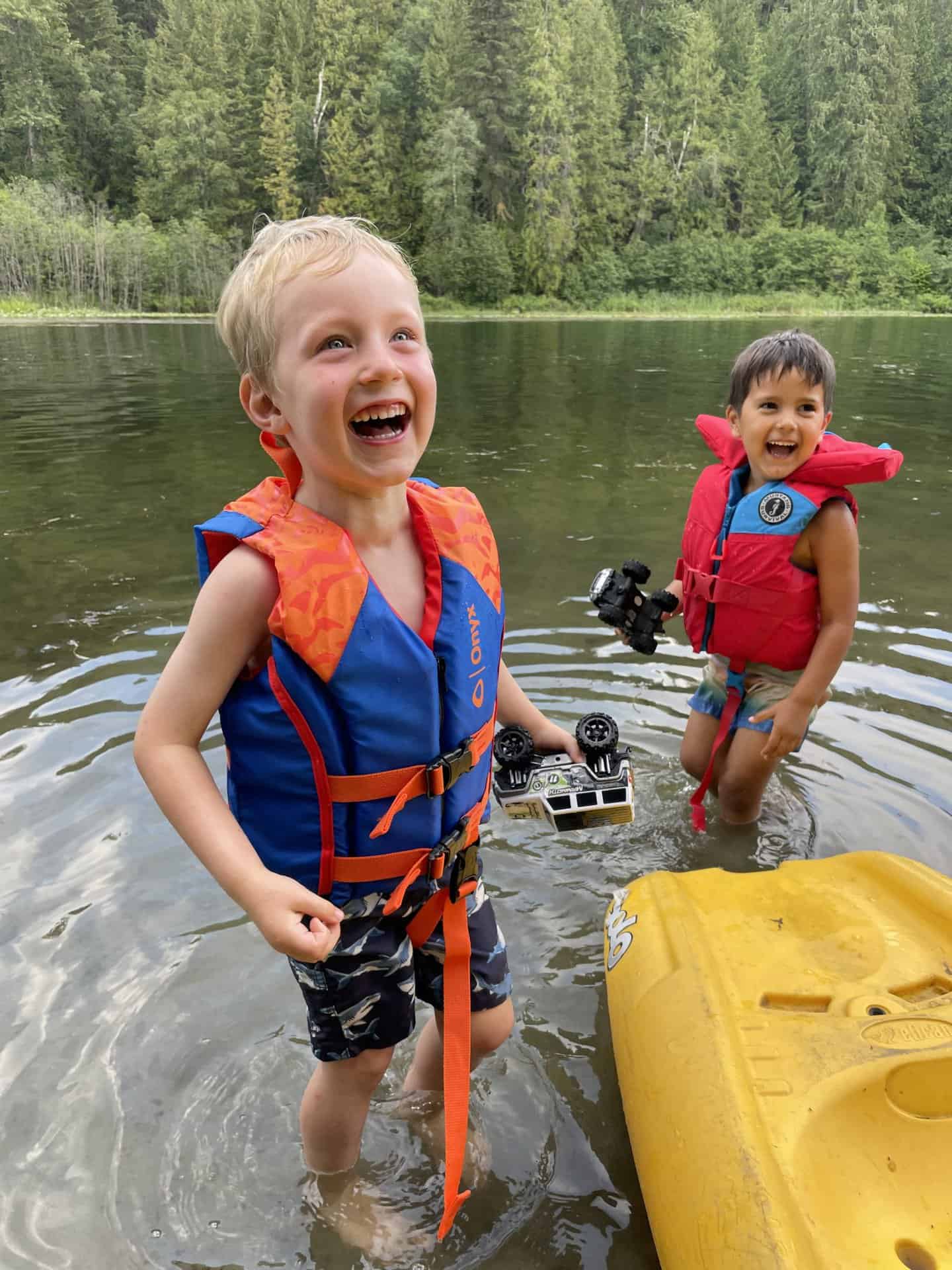
The Yukon 1000 is the world’s longest paddling race and takes, on average, eight nearly-sleepless days to complete. Each year, thousands of teams apply for just 30 coveted spots. | Feature photo: Courtesy Craig Sawyer


Paddleboarders Encounter Great White Shark Off Cape Cod (Video)

While paddleboarding near Cape Cod, a confirmed great white shark emerged just feet away from paddleboarding pair Margaret Bowles and Madeleine Cronin.

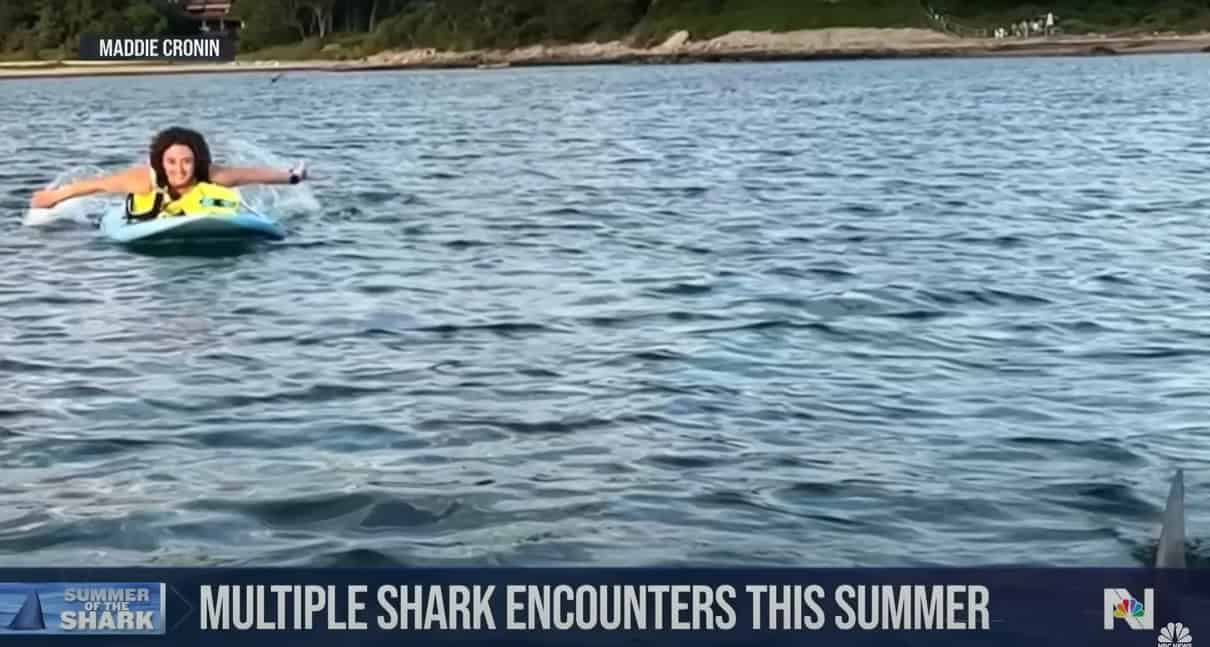
Bowles had asked Cronin to take a photo of her when an eight-inch grey fin appeared in the frame, turning a peaceful day on the water into a thriller. Cronin shared that the shark passed about a foot away from her board and she could feel it passing by.

Paddleboarders encounter paddleboard-sized great white shark

“Get to the beach!” said Cronin, who then paddled so hard toward safety that she broke her paddle.

The pair went on to report the sighting using Sharktivity app, where the Atlantic White Shark Conservancy tracks great white sharks in the area. Marine Biologist John Chisolm with the New England Aquarium confirmed the sighting as a white shark. Chisolm shared that while this protected location—a smaller bay within Buzzard’s Bay—is a relatively uncommon location for a white shark, it is not unheard of. Chisholm added that the pointed dorsal fin indicates a white shark, also sharing that the shark was likely a similar size to the paddleboards the pair was using.

Paddleboarder Madeleine Cronin reacts to spotting a great white shark near friend, Margaret Bowles. Feature Image: CBS Boston | YouTube
Paddleboarder Margaret Bowles paddles toward a great white shark near friend, Madeleine Cronin. Feature Image: Madeleine Cronin | CBS Boston | YouTube

Unfazed, both paddlers plan to return to the ocean and paddle again.

“I think we were both quite calm, given the circumstances, which I’m super grateful for, because it definitely would have been easy for one of us to freak out and fall off the board or something,” Bowles said to CBS news.

What to do if you spot a shark while out paddling

Chisolm emphasized that it’s important for paddlers to stay calm when a shark has been spotted and to paddle with the awareness that sharks are in the New England waters this time of year. Chisolm also recommended avoiding areas where seals and schools of fish are present to avoid being confused with prey and staying close to shore and well within the reach of first responders.

While shark encounters are comparatively common, instances of sharks attacking kayakers and paddlers are extremely uncommon.

According to CBS, there have been numerous shark sightings off the coast of Cape Cod in July 2025, with more than a dozen shark reports.

Massachusetts Shark Research Program writes that seasonal white shark sightings have increased and white sharks move more broadly through the North Atlantic than previously believed. With over 120 white sharks tagged off Cape Cod since 2009 and the Outer Cape seeing a growing population of grey seals, reliable white shark sightings in the area are on the rise. White sharks are found off Cape Cod from the second half of July throughout the summer then migrate to the southeastern US and Gulf of Mexico in the winter, with some larger sharks migrating into the open ocean as far as the Azores.

Additionally, researchers report that some evidence suggests that white shark populations in New England are on the rise in recent years due to a rebounding population after a period of overfishing and rising temperatures bringing white sharks farther north sooner.

Indigenous Youth Kayakers Complete Historic First Descent Of Klamath River (Video)

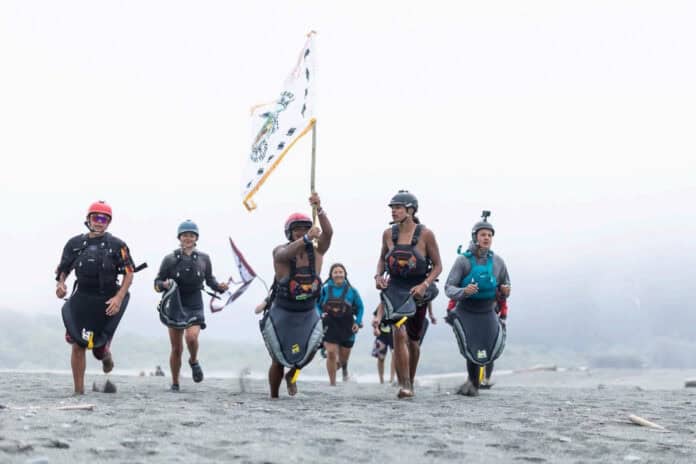
Paddle Tribal Waters youth carry a tribal flag at the mouth of the Klamath River on June 11
ScreePaddle Tribal Waters youth carry a tribal flag at the mouth of the Klamath River on June 11. Feature Image: Courtesy Eric Boomer / River Roots

On July 11, 2025, a team of Indigenous teenagers from the tribes of the Klamath Basin completed a historic first descent of the undammed Klamath River. The 310-mile route winds through southern Oregon and northern California. The descent celebrated the removal of four hydroelectric dams on the Klamath River, now free-flowing for the first time in over a hundred years. The Klamath River dam removal project was the largest dam removal in history.

First source to sea descent of the newly free-flowing Klamath

This first source to sea descent of the free-flowing Klamath serves not only as a celebration of the dam removals, an environmental success largely spearheaded by Indigenous activists, but also a highly symbolic reclaiming of the waterway and meaning of the phrase “first descent”.

“We’ve really grappled with this [the term first descent] a lot, recognizing that our river’s been a highway for water transit since time immemorial, canoes have existed from the top of the headwaters down to the mouth at Requa,” Danielle Frank, Director of Development and Community Engagement for Rios to Rivers and member of the Hoopa and Yurok Tribes told Paddling Magazine in Fall 2024.


View this post on Instagram


A post shared by Ríos to Rivers (@riostorivers)

The team arrived at the mouth of the Klamath River on July 11, and is made up of eighth through 12th graders who have trained on the McKenzie, Salmon, Smith and Trinity Rivers as well as the Bio Bio in Chile. Training was completed as part of the Paddle Tribal Waters Academy, a collaboration between Rios to River’s Paddle Tribal Waters program and World Class Academy, and training included developing whitewater kayaking and river safety skills while carrying full-class loads and studying an Indigenous-informed curriculum. Preparation for the trip took three years.

“I feel so proud to have completed this trip, and am feeling grateful for the support of my family and the fact that I got to honor my grandma’s legacy in her fight for dam removal,” Ke-Get Omar Dean V, 18, a member of the Yurok Tribe, shared in a press release from Rios to Rivers. “We got to complete this journey because of the people that came before us and ensured a free-flowing river.”

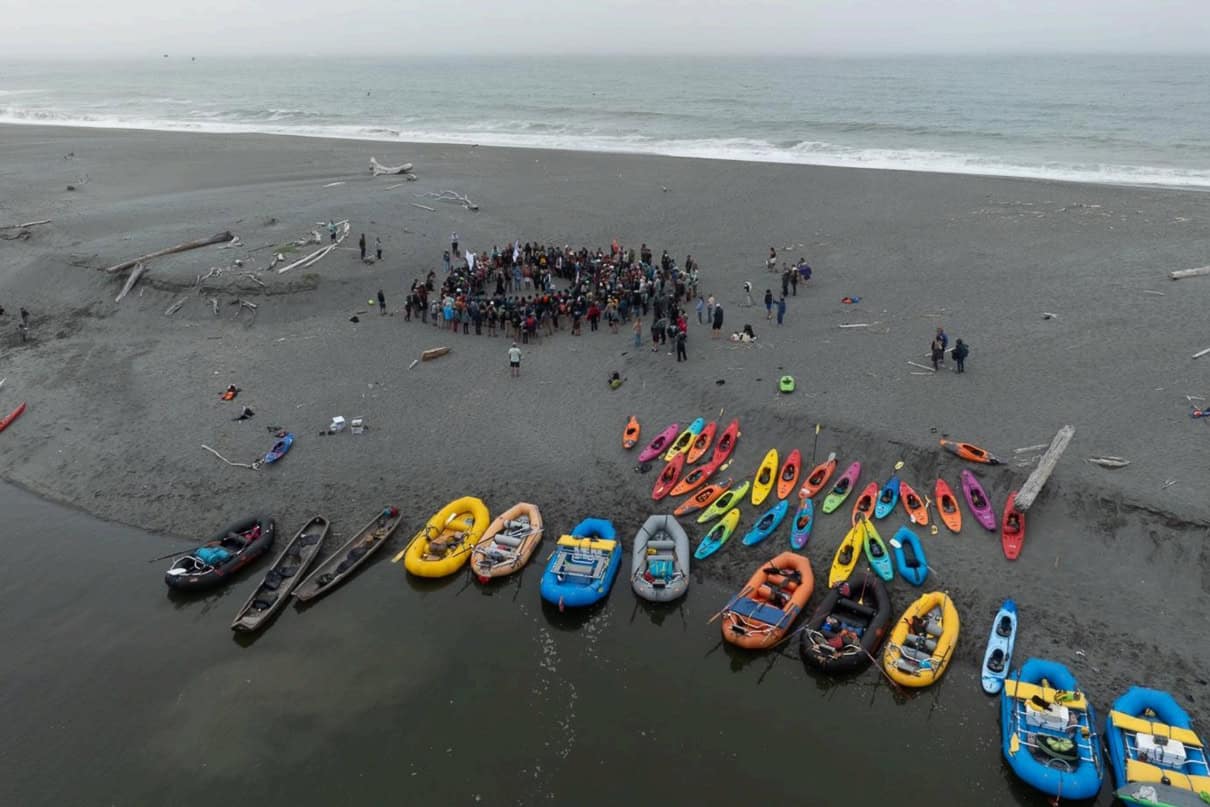
(Paddle Tribal Waters youth, family and tribal members and supporters form a ceremonial circle Friday on the sand spit at the mouth of the Klamath River Friday).
Paddle Tribal Waters youth, family and tribal members and supporters form a ceremonial circle Friday on the sand spit at the mouth of the Klamath River Friday. Image Courtesy Eric Boomer / River Roots.

The new free-flowing Klamath River

The Klamath River dam removal project restores nearly 400 miles of habitat for salmon. In addition to hopefully reviving that vital salmon habitat, the dam removal project also brings relief to Indigenous communities along the banks of the Klamath dependent on salmon and the river – communities that suffered while the dams were in place including the Yurok, Karuk, Hoopa, Shasta and Klamath.

Once the third-largest producer of salmon in the contiguous United States according to American Rivers, the health of the Klamath River, the health of salmon and the health of the Indigenous communities along the Klamath are closely tied. Indigenous communities on the banks of the dammed Klamath were cut off from traditional healthy food sources and live in one of the largest food deserts along the West Coast, Frank shared.

The first of the four hydroelectric dams came down in October 2023 and Iron Gate Dam, the final dam, came down in September 2024. Rehabilitation of the Klamath River is far from complete, but in October 2024 Chinook salmon were observed in the Klamath basin for the first time in over a century.

Paddle Tribal Waters youth carry a tribal flag at the mouth of the Klamath River on June 11. Feature Image: Courtesy Eric Boomer / River Roots

How To Pack For Kayak Camping

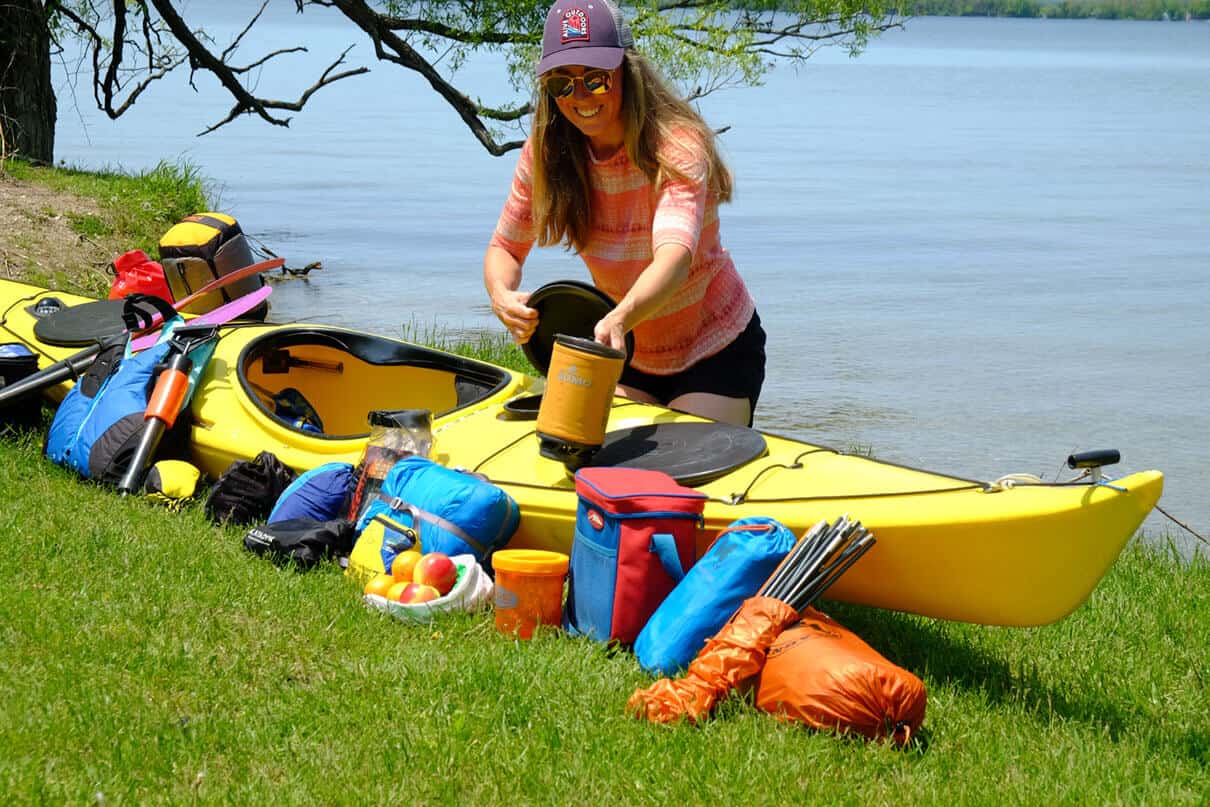
two people pack their kayaks in the sun while kayak camping
Minimal-ish. | Feature photo: Cody Shimizu

A well-packed kayak is one where you know where everything is, and nothing important gets left behind. So, as a veteran guide, I felt personally responsible when our group’s second snack bag failed to turn up halfway through a weeklong trip.

We searched every kayak, pulling the contents from the hatches until the boats lay empty and the beach resembled an outdoor gear swap. We stuck our heads through the large oval hatches to peer inside and probed the smaller round hatches with arms buried to our shoulders. Nothing. How did a brightly colored five-liter dry bag simply vanish? Given the bag’s precious contents, there was the inevitable speculation of foul play.

How to pack for kayak camping

Packing a kayak for multiday camping journeys is both an art and a science. There’s a deceptive amount of space in those slender hatches. Compare a compact touring kayak’s 150-ish liters of available storage to a typical 60-liter backpack or 70-liter pair of bicycle panniers, and that’s more than double the capacity you’d have trekking or touring on two wheels.

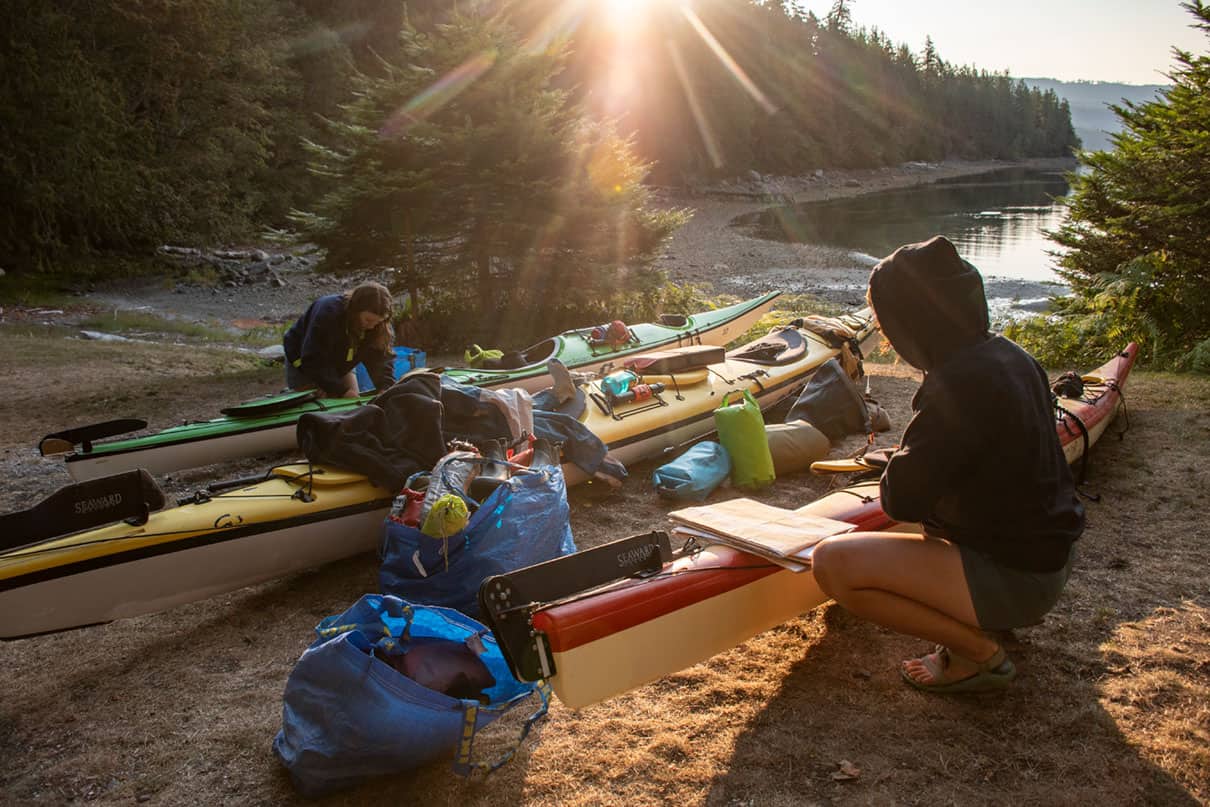
A place for everything and everything in its place. | Photo: Virginia Marshall

Optimizing your packing game means considering the size, shape and material of your gear bags, planning for efficient access, and understanding how weight distribution affects on-water performance. With a bit of practice and strategy, even smaller touring kayaks have ample space for all the essentials and a few luxuries (fresh food!) as well.

Follow these tips to ensure your favorite camp chair makes it into your hatch at the put-in, not back into your car.

Pro tip

Next time you’re at IKEA, pick up a couple of their heavy-duty reusable shopping totes for carting your constellation of small bags around the campsite. They’re spacious, water-repellent, weigh nothing, can be stuffed just about anywhere and cost just 99 cents.

Know your hatches

Familiarize yourself with the idiosyncrasies of your kayak’s storage areas. The size of the hatch opening may determine whether bulkier items, such as pot sets and sleeping bags, will fit in the bow or stern. Similarly, the depth of the hatch is a consideration for larger, non-compressible packages. Sometimes, these two factors are at odds with each other—the bow of a kayak is usually deeper than the stern, but often it is outfitted with a smaller hatch lid. Figuring out what gear best fits where can be a process of experimentation. Kayaks outfitted with under-stern skegs have the added complication of a molded-in skeg box to work around in the rear hatch.

Good things in small packages

When it comes to kayak touring, numerous smaller bags are much easier than a couple of large bags to fit like puzzle pieces into your hatches. Aim for bags in the five- to 15-liter range; tapered, kayak-specific dry bags are another great option for making efficient use of the narrow bow and stern ends.

Pro tip

Any water inside your hatches will pool at the lowest point (usually at the bulkhead, along the hull). Keep dry-priority items higher in the hatch, just under the deck. My favorite spot for my tent, sleeping pad and camp footwear is stuffed far up the bow, high and dry.

Waterproofing 101

On paper, kayak hatches are watertight. In practice, most hatches are nearly watertight. This means that over the course of a paddling day, especially a splashy one, a small amount of water may find its way into your sealed hatches. Pack anything that absolutely must stay dry—such as your sleeping bag, spare warm layers, camp clothes and sensitive electronics—in durable polyurethane-coated dry bags. It isn’t practical or necessary to dry bag everything in your hatch. Items like tarps, canned or sealed foods, fresh produce, cook sets and even tents are fine to pack in lightweight stuff sacks.

Balance your boat

Pro tip

Aim for neutral trim—sit in the loaded kayak in the water and ask a friend to check your profile.

One of the enduring pleasures of kayak camping is not obsessing over every ounce of weight. Unlike hiking with a heavy pack, a loaded kayak paddles nearly as effortlessly as an empty boat. It is important, however, to ensure you distribute the weight in a way that promotes balanced handling and performance. Pack the heaviest items in the bottom of the hatches, centered along the keel and closest to the cockpit. This keeps the center of gravity low and distributes weight evenly from side to side.

Front-to-back weight distribution—known as trim—is just as critical. A bow-heavy kayak tracks poorly and is tiring to paddle, not to mention wet in wavy conditions. Stern-heavy is similarly problematic.

two people pack their kayaks in the sun while kayak camping
Minimal-ish. | Feature photo: Cody Shimizu
Pro tip

Make use of hard-to-reach spaces for storing food or gear items you won’t need until later in the trip. I pack a spare fuel bottle, a bathroom kit resupply, and a Tetra Pak of Pinot Grigio for the final night behind my skeg.

Pack for accessibility

Keep frequently used items and safety essentials close to hatch lids so they’re readily accessible. I like to pack the first aid kit, repair kit, sunscreen, water filter and tarp within easy reach in my day hatch, just behind the cockpit. A low-profile deck bag, or under-deck bag, is a great option for stashing smaller essentials in kayaks without a day hatch or built-in deck pod. Avoid extraneous deck clutter—strapping dry bags, camp chairs, frying pans and other riff-raff to your kayak isn’t just aesthetically disagreeable, it’s also a real safety hazard impeding rescues and reentry should you capsize.

Consistency, not confusion

Learn what works for your kayak, then stick with the same packing routine for the whole trip. On group trips where shared essentials and meals are distributed among all the kayaks, I jot down a group gear and food inventory for each boat in a waterproof notepad at the launch. In the chaos of the first pack-out, this minimizes confusion later and is a great way to double-check nothing is overlooked.

We didn’t find the missing snack bag until after the trip had ended. Back at the outfitters, following a long trailer shuttle, it appeared as if by magic in a front hatch. Two-and-a-half hours bumping down the Trans-Canada revealed what days of diligent searches had not—a red dry bag stashed within a kayak of precisely the same color. Wedged at the very tip of the bow, it had been perfectly camouflaged and beyond our reach.

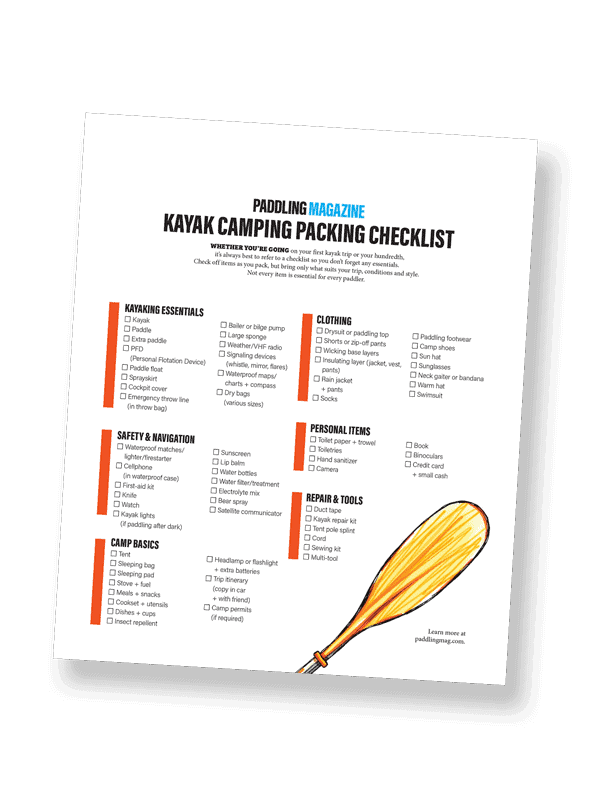
Kayak camping packing checklist

Whether you’re going on your first kayak trip or your hundredth, it’s always best to refer to a checklist so you don’t forget any essentials. Check off items as you pack, but bring only what suits your trip, conditions and style. Not every item is essential for every paddler.

Kayaking essentials

  • Kayak
  • Paddle
  • Extra paddle
  • PFD (Personal Flotation Device)
  • Paddle float
  • Sprayskirt
  • Cockpit cover
  • Emergency throw line (in throw bag)
  • Bailer or bilge pump
  • Large sponge
  • Weather/VHF radio
  • Signaling devices (whistle, mirror, flares)
  • Waterproof maps/charts + compass
  • Dry bags (various sizes)

Safety & navigation

  • Waterproof matches/lighter/firestarter
  • Cellphone (in waterproof case)
  • First-aid kit
  • Knife
  • Watch
  • Kayak lights (if paddling after dark)
  • Sunscreen
  • Lip balm
  • Water bottles
  • Water filter/treatment
  • Electrolyte mix
  • Bear spray
  • Satellite communicator

Camp basics

  • Tent
  • Sleeping bag
  • Sleeping pad
  • Stove + fuel
  • Meals + snacks
  • Cookset + utensils
  • Dishes + cups
  • Insect repellent
  • Headlamp or flashlight + extra batteries
  • Trip itinerary (copy in car + with friend)
  • Camp permits (if required)

Clothing

  • Drysuit or paddling top
  • Shorts or zip-off pants
  • Wicking base layers
  • Insulating layer (jacket, vest, pants)
  • Rain jacket + pants
  • Socks
  • Paddling footwear
  • Camp shoes
  • Sun hat
  • Sunglasses
  • Neck gaiter or bandana
  • Warm hat
  • Swimsuit

Personal items

  • Toilet paper + trowel
  • Toiletries
  • Hand sanitizer
  • Camera
  • Book
  • Binoculars
  • Credit card + small cash

Repair & tools

  • Duct tape
  • Kayak repair kit
  • Tent pole splint
  • Cord
  • Sewing kit
  • Multi-tool

Get a Printable Kayak Camping Packing Checklist

Virginia Marshall is a 20-year veteran guide on Lake Superior’s northern shore, and a former editor of Adventure Kayak magazine.

Cover of Issue 74 of Paddling MagazineThis article was published in Issue 74 of Paddling Magazine. Subscribe to Paddling Magazine’s print and digital editions, or browse the archives.

Minimal-ish. | Feature photo: Cody Shimizu


Canoeist Rescued After Treading Water For 12 Hours (Video)

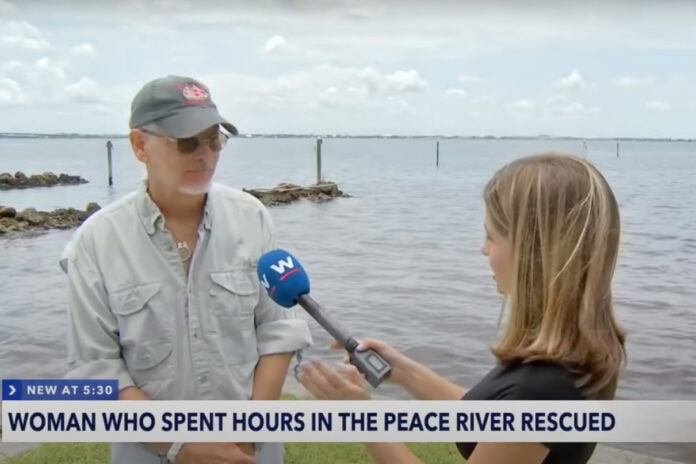
Rescuerer interviewed after saving woman who, after her canoe capsized, treaded water for 12 hours.
Rescuer Russel Tryder interviewed after saving woman who, after her canoe capsized, treaded water for 12 hours. Feature Image: WINK News | YouTube

A Florida woman was rescued in Charlotte County after her canoe capsized around nine in the evening and she was left to tread water overnight.

The canoeist was found the next morning by a good Samaritan charter captain, Russel Tryder, in the Peace River in the middle of Charlotte Harbor around ten in the morning. She was located about one mile from shore.

Charter captain rescues canoeist who spent night treading water

“I heard someone yelling ‘help’,” Tryder said in an interview with WINK News. “And I looked over and here’s a woman yelling ‘help’ and she was able to wave her hands.”

Tryder saw the woman’s head in the water and heard her calling for help, then turned his boat around to assist. As he approached, he saw the canoeist’s arms go up and her head go underwater. The canoeist told Tryder that she didn’t know how much longer she could hold on, and that she had been out all night.

Tryder was able to get a line to the canoeist and pull her aboard the boat. The canoeist was then able to climb aboard without assistance, WINK News reported.

“She kind of crawled on, and she was shivering and it looked like she was in the water for a long time,” Tryder said in the interview.

It was also reported that the rescued canoeist was one of two people in the canoe when it capsized; both paddlers were separately rescued by good Samaritans.

Surviving a capsize

Tryder told WINK News that the incident cemented for him the importance of wearing a personal flotation device (PFD), or life-jacket, when out on the water.

While many paddlers secure a PFD to their boat, PFDs and life jackets are nearly impossible to put on from the water, particularly in the conditions that cause capsize. Capsized paddlers may become separated from their paddle craft in the event of unexpected capsize; if the PFD is secured to the paddlers boat rather than worn, it can easily become lost when you need it most.

In addition to wearing a PFD, there are several other steps paddlers can take to decrease time in the water and increase chances of rescue. Leaving a float plan that details where you plan to paddle and when you plan to return with a trusted friend or family member is a great way to help rescuers know when to initiate a search, and where to begin searching. If attempts at self-rescue fail or are impossible, your next chance is to call for help. Beyond the float plan and a worn PFD, carrying several waterproof ways to call for help such as a cell phone in a secured dry bag, a VHF radio, a whistle, flares and/or a signalling mirror.

Rescuer Russel Tryder interviewed after saving woman who, after her canoe capsized, treaded water for 12 hours. Feature Image: WINK News | YouTube

How To Kayak Surf In Style

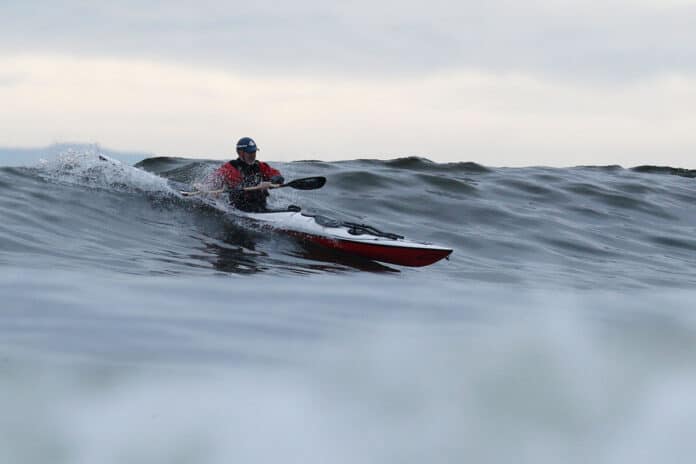
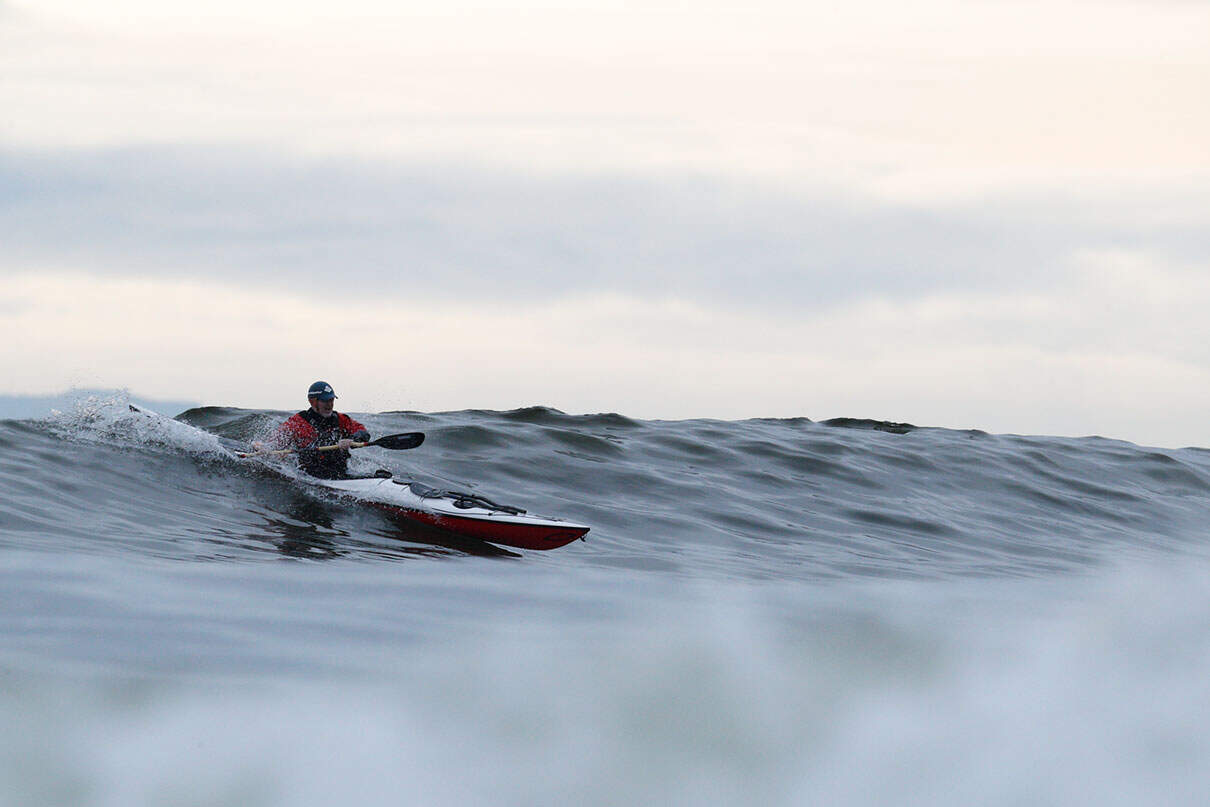
a man kayak surfing on a wave
If you know, you know. | Feature photo: Kevin Light

Aside from being one of the coolest feelings in the world, good surfing skills let you make controlled landings when conditions aren’t perfectly flat. They also help you to catch rides on wind waves to pick up dramatic speed downwind.

Because sea kayaks are fast, you can start your ride on gentle swells, before they become steep and start breaking.

How to kayak surf in style

To catch a wave, line up perpendicular to its face and, as it approaches, paddle aggressively forward in the direction the wave is moving.

Time your acceleration so you reach maximum speed just when the wave reaches you and starts to pick up your stern. This will mean waiting until the wave is quite close before paddling forward. It should take only three to five strokes to get up to speed.

As you feel your stern being picked up, lean forward and continue with a few more powerful strokes until you’re sure you’ve caught the wave.

a man kayak surfing on a wave
If you know, you know. | Feature photo: Kevin Light

Once surfing, you can stop paddling; gravity will keep you on the wave face. Now’s the time to shift your weight back a bit to unweight your bow and use a stern pry stroke to control your direction. A stern pry is the primary stroke for surfing because it’s the most powerful way to make small course corrections without slowing forward momentum.

To set up for the stern pry, plant your paddle firmly in the water behind your body. Submerge the whole blade for maximum power, and position the blade parallel to the kayak to minimize braking.

A strong pry requires aggressive torso rotation. Turn your whole upper body toward your ruddering blade. Your forward hand should be comfortably in front of your chest. Keeping your hands in front of your body in a power position protects your shoulders from injury. To steer, use the power of torso rotation to push away with the backside of your paddle blade.

Alternate between stern pries on either side of the boat. Plant your pry on the opposite side to the direction your bow is beginning to deflect. If your bow starts to veer to the right, stern pry on the left, and vice versa. With time, you’ll get good at prying in anticipation of where the bow is going. As you build your skills, you’ll also discover how edging your kayak helps steer the boat and keep it going straight, or turn it far more responsively.

As the wave gets steeper and breaks, your bow will likely dive, or pearl, and dynamically deflect to the left or right. Don’t bother trying to fight this. Instead, quickly edge your boat toward the direction of the turn (into the wave) by shifting your weight onto the inside butt cheek and lifting the outer knee. If the wave is still green, you can carve right off of it. If it’s breaking, you’ll end up side surfing.

Ensure you have a safe and kayak-friendly run-out before hopping on any wave.

Five steps to kayak surf

  1. Lean forward and paddle hard to catch the wave
  2. Lean back and steer with a stern pry
  3. Edge your boat aggressively into the turn
  4. Brace into the wave
  5. Carve off the back or ride out the side-surf
Cover of Issue 73 of Paddling MagazineThis article was published in Issue 73 of Paddling Magazine. Subscribe to Paddling Magazine’s print and digital editions, or browse the archives.
If you know, you know. | Feature photo: Kevin Light