The Georgia coast is home to a series of 15 barrier islands protecting the second largest area of saltwater marsh in the United States. Over a third of all the coastal wetlands on the east coast of the U.S. are found in Georgia.
Rivers emptying into the coastal plain mingle with unusually large tides creating a dynamic nursery for coastal wildlife of all kinds and a perfect destination for kayak touring.
An ideal spot to take in the full variety of the Georgia Coast is Cumberland Island. On Cumberland you’ll find the longest undeveloped stretch of beach in coastal Georgia, large areas of salt marsh, mature maritime live oak forests, herds of wild horses and historic estates with ruins dating from the Gilded Age.
Paddling access to Cumberland is best made from nearby Crooked River State Park and permits are available from park headquarters in St. Marys
Diversion Singleton’s Seafood Shack in Mayport, Florida is well worth the drive. Singleton’s serves up freshly caught fish and cold beer, with fish camp vibes and friendly neighborhood cats.
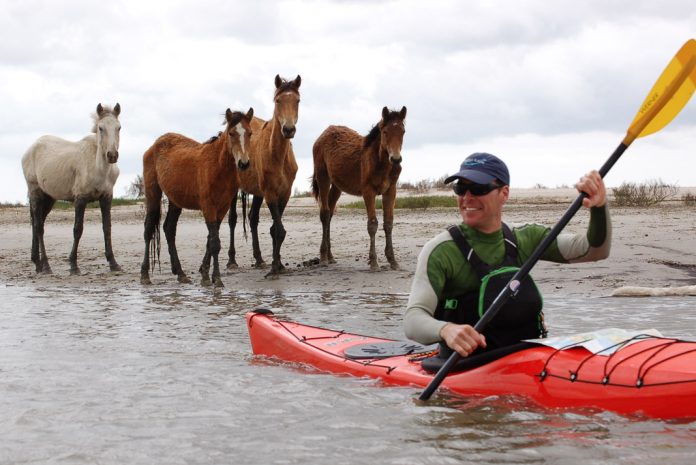
Wildlife More than 150 feral horses are descendants of animals kept on the island by the Carnegie family. Best viewed from a distance, they have been known to kick and bite visitors who get too close.
Beware The Georgia coast is a dynamic tidal environment and sees the second highest tides on the East Coast. Proper tidal planning is essential to avoid paddling against strong currents or wading through a sea of mud.
Did You Know Cumberland Island’s 18-mile stretch of undeveloped beach is an important nesting site for the endangered loggerhead sea turtle and responsible for a quarter of all turtles hatched in Georgia.
Regular ferry service for hikers connects the mainland to the island but doesn’t transport kayaks, so paddlers need to make the trip under their own power.
If you have a half day
Launch from the boat ramp at Crooked River State Park and explore the wetlands surrounding Grover Island north of the park. Plan your day around a high tide so you can explore deep into the marsh, but head back to the main channel before the receding waters leave you high and dry.
If you have a day
Explore the historic Plum Orchard Mansion on Cumberland. From the Crooked River State Park boat launch paddle east down Fancy Bluff Creek, cross the main channel of the Cumberland Sound and into the Brickhill River. Paddle upstream on the Brickhill River to the public dock. Free guided tours available daily.
If you have a weekend
Basecamp at the Sea Camp campground and explore the island on foot and by kayak. Cross the Cumberland Sound from Fancy Bluff Creek and land at the Sea Camp dock. Check in at the park office and ask permission to cache your kayaks nearby. Sea Camp offers secluded campsites in a mature maritime coastal forest of live oaks and saw palmetto. It’s a perfect jumping off spot to explore the beach or the nearby Dungeness ruins. Permits are required.
If you have a week
Experienced kayakers can link a stay at Sea Camp with a stop at the Brickhill Bluff backcountry site. After a night at Sea Camp load your kayaks for a trip up the Brickhill River. Make sure to bring equipment to hang your food to protect it from the local raccoons. From Brickhill you can hike to the historic First African Baptist Church and explore the north end of the island. Paddlers looking to circumnavigate Cumberland can continue on.
No more outings for the outing club. This was the gist of the many newspaper headlines in April when Penn State University shared its controversial risk management review of its 79 student clubs.
While the university publicly acknowledged the many benefits students gain participating in outdoor activities like hiking, backpacking and paddling, it also stated the university would no longer allow the 98-year-old Outing Club to organize student-led, outdoor trips.
Campus Recreation at Penn State remains focused on providing as many opportunities in the outdoors as possible, while also keeping safety as a priority,” the statement read. The Outing Club, as well as Penn State’s caving and diving clubs, were deemed to have “an unacceptable level of risk in their current operation model.
It’s absurd for a school board to approve a year-end, capstone paddling trip for students with the caveat there is no swimming allowed, even if everyone wears a PFD
The university’s martial arts and rifle clubs were allowed to continue. The Penn State Outing Club decision received a lot of press, but it’s just one example in a trend sweeping across North America.
For more than a decade, there has been a noticeable erosion of the joy factor on guided youth paddling trips. The culprit is the risk management frenzy in our risk-averse society. These decisions are often made by school board officials with a fear of litigation and a general lack of familiarity with outdoor environments and activities.
Overbearing risk management plans are diluting the outdoor experience. And from recent stories of school- and camp-organized trips, it’s not surprising if a kid goes once and never wants to participate again.
It’s absurd for a school board to approve a year-end, capstone paddling trip for students with the caveat there is no swimming allowed, even if everyone wears a PFD.
Other programs mandate youth on trip are not allowed to handle knives—pocket knives and kitchen knives—or stoke the fire. If kids can’t swim, tend to the fire, whittle or help with dinner—what are they left doing? Probably wishing they had Snapchat.
There are many benefits to learning to manage risk. In healthy doses, outdoor risk builds confidence, independence, self-regulation and other life skills. Are the real risks students face every day on and off campus—driving to school, for example—smaller than those they would experience on an organized paddling trip? And are they providing comparable benefits? Certainly not.
If it was safety we were truly concerned about we would wear helmets not just in rapids but in the van ride on the highway to the trailhead. Data from one of the most comprehensive studies of whitewater rafting injuries in the United States from 2002 highlights whitewater rafting—considerably more risky than any flatwater trip—ranges from approximately 2.2 to 8.7 fatalities per million participant days, whereas driving motor vehicles results in approximately 152 fatalities per million participant days. Canoe and kayak tripping fatalities didn’t make the list.
Contextualizing risk is important. According to the National Safety Council in the United States, in 2009 there were 35,000 motor vehicle fatalities, of which approximately 2,000 were children under the age of 16. There were also 5,300 pedestrian fatalities, 8,600 fatalities from unintentional public falls, 4,500 fatalities from unintentional public food poisoning and 800 fatalities while bicycle riding.
We need to stand up for paddling and its minimal yet inherent risks
Those numbers might sound scary but remember the U.S. had 306.8 million citizens in 2009. Approximately 610,000 died of heart disease the same year. In the many real risks we encounter every day, outdoor recreation barely makes the list yet receives disproportionate outcry.
A 2014 report by the NCAA revealed nearly one in 10 of the United States’ 70,000 college football players reported suffering multiple concussions during their college career, which is linked to long-term brain damage, including higher rates of dementia. Why is an elevated risk of injury—especially traumatic brain injury—acceptable on a sports field? Colleges aren’t keeping stats on concussions in outdoor adventure because they’re so rare.
We need to stand up for paddling and its minimal yet inherent risks. These are inextricably linked to the joys and benefits of the activity itself. As paddlers, we need to help schools, camps and community groups move beyond a narrow safety-only focus.
If meeting safety standards is the sole mark of success for a paddling trip, the bar is set very low. Should safety be a given? Yes. All trips must be safe. Safety first, but not safety only. As safe as necessary, but not as safe as possible. Let’s then move onto higher aspirations, goals and motivations. Why not instead focus on instilling joy and a love of the activity and the landscape.
To complement and parallel the many outdoor adventure risk management conferences, we need joy management conferences. Time spent with other guides, teachers and club leaders discussing the merits of a particular campfire game, messy desserts and the best swimming holes. Time spent on ensuring the next generation learns to cherish wild places, instead of fear them.
On the slippery slope we’re descending, risk-averse decisions could become paddling-adverse programs. And this would be joyless for all.
Bob Henderson, Ph.D has taught outdoor education at university for more than 35 years. He is the author of Every Trail Has a Story: Heritage Travel in Canada and More Trails, More Tales. For more information visit www.bobhenderson.ca.
Ryan Howard, Ph.D. is the Director of Research, Risk and Innovation with ALIVE Outdoors. He is a designated Canadian Risk Manager and consults with government agencies, school boards and organizations on a variety of risk management issues and audits. Feature Photo: Mark Zelinski
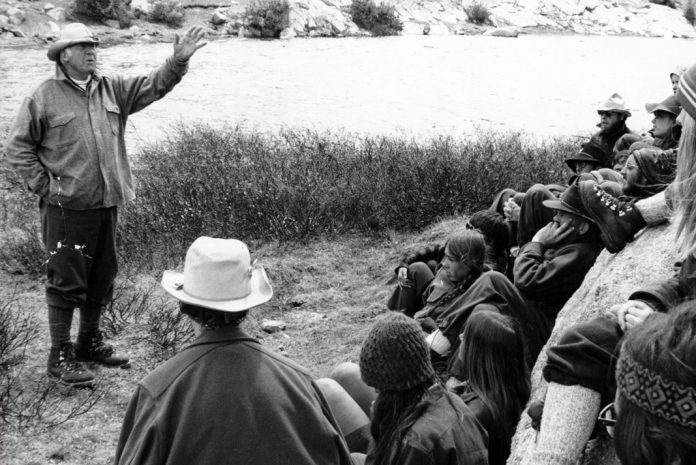
Paul Petzoldt, left, dreamed of nurturing outdoor leaders who knew how to live responsibly in the wilderness. | Photo: NOLS Archives
Sitting on a beach somewhere on the outer coast of the Great Bear Rainforest, I’m trying to do something unusual for me—be boring and reserved.
It’s not a trait that comes to me naturally. My friends left their gear unattended while they’re off hanging food and setting up tents. It’s a perfect opportunity for me to indulge my mischievous nature. Maybe change their paddles to a left-hand feather or take goofy selfies with their cameras for later discovery. But I’m resisting because we’re on day 10 of 17 on British Columbia’s outer coast with strong winds, no current information and sketchy campsites. I’m trying to be cow-like. It’s a lesson I learned from a guy I never met.
We all have a mental list of people who are skilled paddlers but we don’t invite on a long trip. The individual may be fine company for a day or a weekend, but they just don’t fit in over the course of a long trip. It’s easier to say we just don’t like them, or they don’t match the group dynamic. Often what’s missing is something called expedition behavior.
The concept of expedition behavior dates back to Paul Petzoldt. In 1965, he founded what became known as the Harvard of the outdoors—the National Outdoor Leadership School (NOLS).
Petzoldt, who climbed Grand Teton in 1924 in cowboy boots at age 16, had a long career in the wilderness. It was after being part of the first American expedition to K2 in 1938, which ran short of food, he recognized planning, group cohesion and problem solving were as important as climbing skills.
Petzoldt’s brilliance was in codifying and teaching what makes a good group member; it’s a modern-world coda for what was once innate.
NOLS became the first outdoor school to institutionalize the often unspoken rules of good trip etiquette: Put the goals of the group ahead of your own goals—and be clear about goals to begin with. Do your share and stay organized. Take care of yourself, so you can contribute to the group. Be kind and open-hearted. Respect the cultures you contact. Pitch in and help others, but don’t do their work for them. Communicate. Be honest and accountable about shortcomings affecting the group and admit and correct your mistakes. Support the growth of team members. Be cow-like: even-keeled and moderate. Reduce annoying behaviors which might be funny on day three, cute on day five, but really annoying by day 12. Like changing everyone’s paddles to a left-hand feather when they’re not looking.
[ Paddling Trip Guide: Find your next paddling adventure here ]
How to function in groups isn’t new. Humans evolved as roving bands—you either helped rig mammoth traps and shared meat or you were booted out of the tribe. The agricultural and industrial revolutions bringing us carbon fiber paddles along with cubicles and organizational charts made small roving bands less common. Petzoldt’s brilliance was in codifying and teaching what makes a good group member; it’s a modern-world coda for what was once innate.
Expedition behavior helped my ground become clear about what we wanted from our 17 days in the Great Bear Rainforest. We had to put miles under our hulls to catch our ferry out, but we wanted to explore the rock gardens, tidal rapids and intricate shoreline on the way. When the weather threw strong afternoon headwinds our way, expedition behavior made the conversation about getting organized for early starts easy.
It kicks in when one person is somehow always absent when the group is lugging heavy boats up the beach or hanging heavy food bags out of the reach of grizzlies. It’s at its most powerful when it becomes a tool for growth—having someone with less experience plan the route, with the support of the whole group.
I’ve used the same tents of expedition behavior in my professional life. Like an expedition along an exposed coastline, a conservation campaign is a challenging endeavor with a relatively small group of people who share a deep passion for what they’re doing.
Like a dumping surf landing on a remote island, mistakes can be costly. And, operating under pressure, we all will eventually zig when we should have zagged. The whole team needs to operate with judgment, shared knowledge, and deep trust. Tension will be high at times. A good time to channel our inner Petzoldt and be cow-like.
This article originally appeared in Issue 55 of Paddling Magazine. Subscribe to Paddling Magazine’s print and digital editions here, or browse the archives here.
Neil Schulman still thinks a little mischievousness can go a long way and he’s taken to slipping beers into other paddlers’ day hatches. He likes to think he knows what Petzoldt would have had to say about it.
Paul Petzoldt, left, dreamed of nurturing outdoor leaders who knew how to live responsibly in the wilderness. | Photo: NOLS Archives
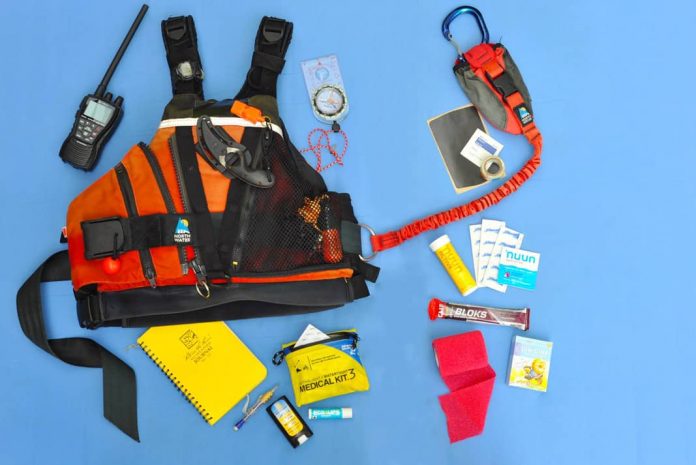
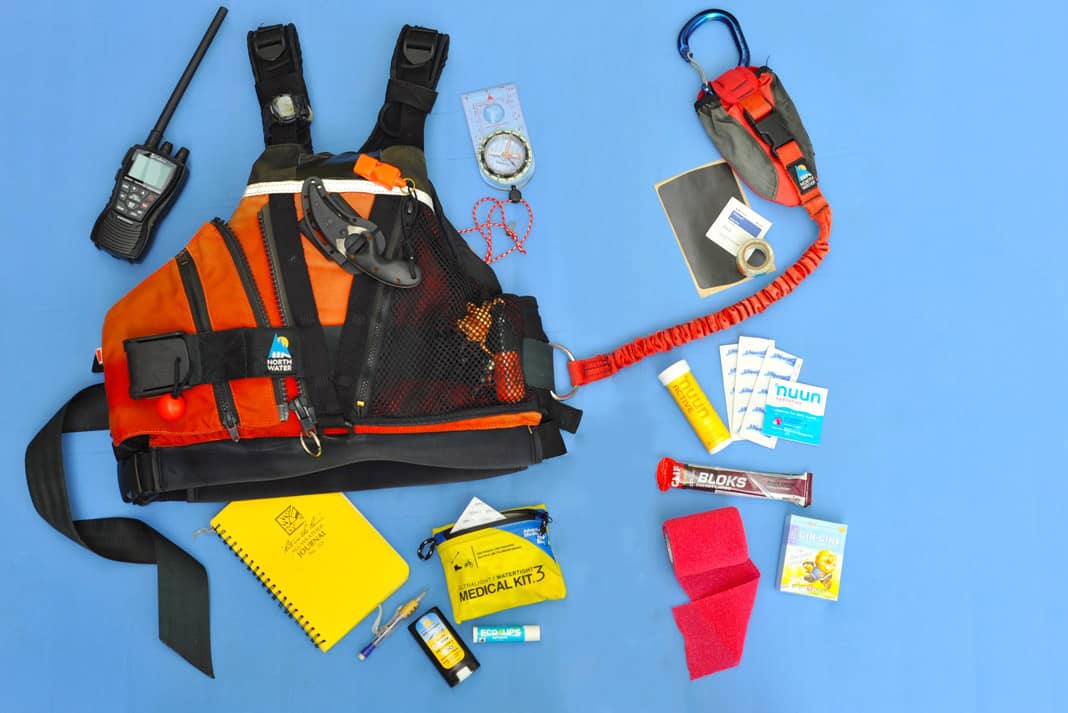
Complete your paddling PFD kit with the essentials. | Photo: Virginia Marshall
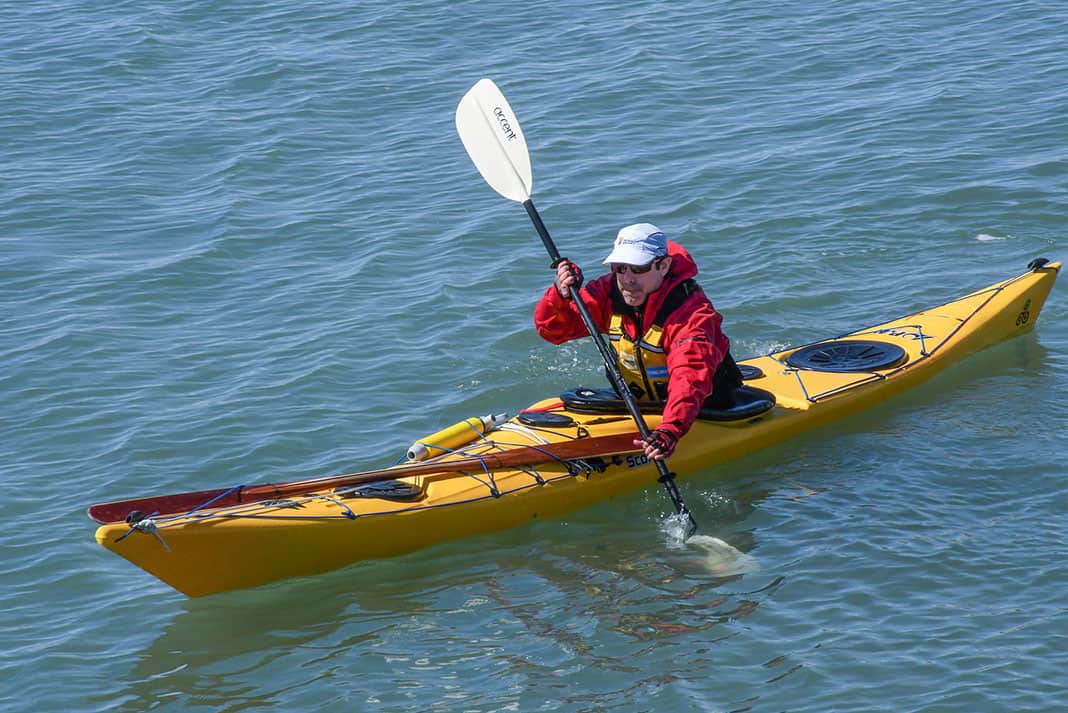
No one’s PFD kit is perfect. Ask any kayak guide what she keeps in and on her life jacket, and you’ll quickly learn each leader’s kit is a reflection of their experience and the conditions and places where she paddles.
The best life jackets have plenty of storage space, but most agree: less is more. Fill your pockets with too much stuff, and you may actually hinder your ability to perform in challenging situations. Keep it simple and store bulkier or less frequently used items within reach in your day hatch. Tweak your kit for different environments, so it’s the best possible compromise between being prepared and being comfortable.
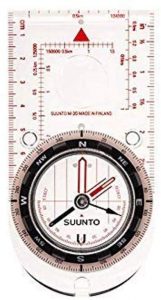
For on-water navigation, pair a deck-mounted marine compass with a compact orienteering compass like Suunto’s M-3G. The orienteering compass’s straight edge and rotating bezel enable you to take a bearing on your map or chart, rather than simply follow a heading on the water. Plus, the attached lanyard works great for quickly measuring map or chart distance.
Knowing where you are, and how far you can go, means keeping track of time on the water. Get a reliable, waterproof watch and strap it to your PFD. ‘Nuff said.
A sound signalling device is required by the coast guard, and a pea-less whistle like the classic Fox 40 is invaluable for getting the attention of an errant paddler.
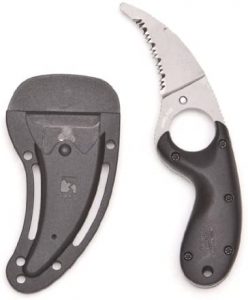
Combining rope and dynamic waters carries a risk of entanglement. This is one of those rare items you always carry and hope you never need to use. Safety knives should be corrosion-resistant with a secure sheath. A knife is one of the most common lash tab accessories, ensuring your knife is within easy grasp—you’ll find lash tabs on most touring and whitewater PFDs. Look for a knife with a blunt tip and serrated edge, like CRKT’s Bear Claw. Keep it sharp—resist the urge to use your safety knife for slicing the salami.
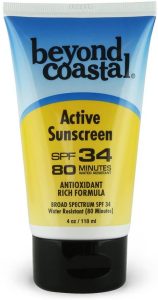
On a bright day, light reflected from the water can increase exposure to damaging UVA and UVB rays by about 10%. Wear a wide-brimmed hat and long sleeve UPF-rated clothing, and protect exposed skin with broad-spectrum waterproof sun block and lip balm.
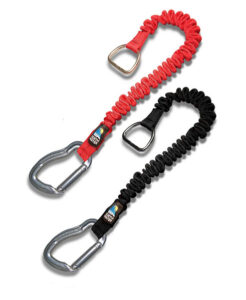
In addition to a waist-worn tow belt, many kayak guides also wear a PFD-integrated tether—known as a pigtail—for rapid extractions. Pair North Water’s PFD Sea Link with their quick-release chest belt ($55) for a tow system you can deploy, or escape, with one hand. The Sea Link’s shock absorber eases stresses on the rescuer. A slim, floating pouch contains 15 feet of additional line, so you can go from contact tow to short tow with the release of a buckle.
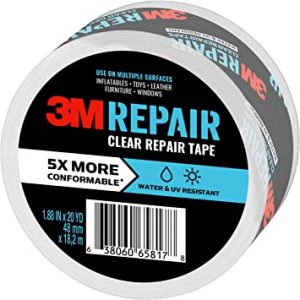
Opinions vary on the perfect, do-it-all tape for hasty, on-water repairs. Good ol’ duct tape is a sound option for many jobs, but for bombproof patches on composite and plastic boats, carry a square of waterproof gutter tape.
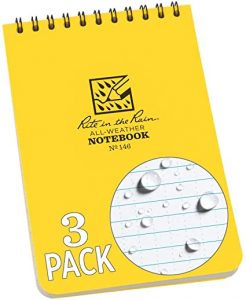
Keep track of weather observations, note wildlife sightings or simply jot down your thoughts. Rite in the Rain makes waterproof notepads and journals in a variety of compact styles.
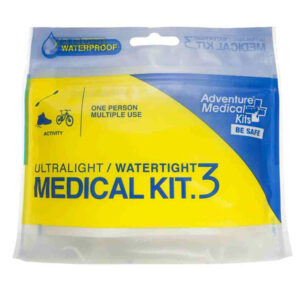
A petite, waterproof kit with basic wound care is all you need in your PFD. Add water treatment tabs, electrolytes and energy chews to prevent dehydration and bonking. Ginger candies are a natural, non-drowsy way to ward off seasickness. Finally, keep a length of waterproof, self-adhering athletic wrap in your kit to support joint injuries. Try the Ultralight Watertight .5 from Adventure Medical Kits.
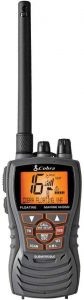
Consider a marine VHF radio like Cobra’s HH350—and the training to use it correctly—if you are travelling offshore, for extended periods in remote locations, or in areas with heavy boat traffic.
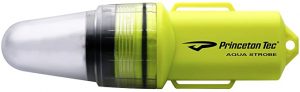
For paddling after dark or in heavy fog, you’ll need a light to make it easier for others to see you. A compact, waterproof strobe-like Princeton Tec’s Aqua Strobe attaches to your PFD shoulder strap or lash tab and doubles as a personal locator light in the event of an emergency.
At a recent kayaking skills workshop, the roar of turbojet CT-114 Tutors from a nearby airshow silences classes with every flyover. We can’t help but pause to search the skies for the aerobatic planes. After glimpsing one of the winged wonders, a student tells me, “Your sea kayak looks just like a Snowbird!”
Norse Kayaks’ Bylgja Sea Kayak Specs
Length: 17 ft Width: 21.6 in Weight: 53 lbs Paddler Size: 130-249 lbs Price: $2,999 CAD norsekayaks.com
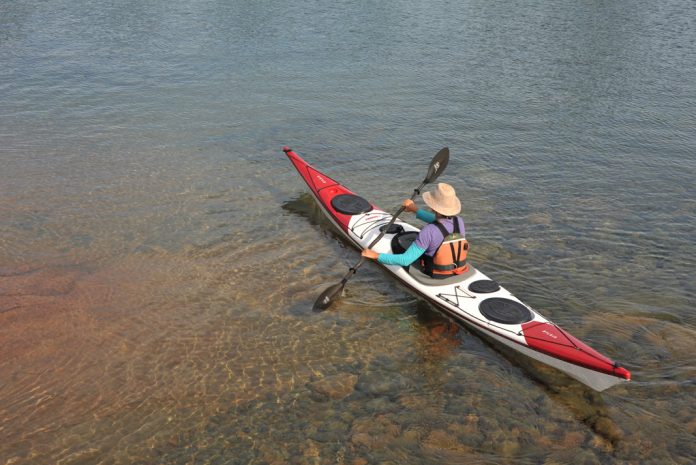
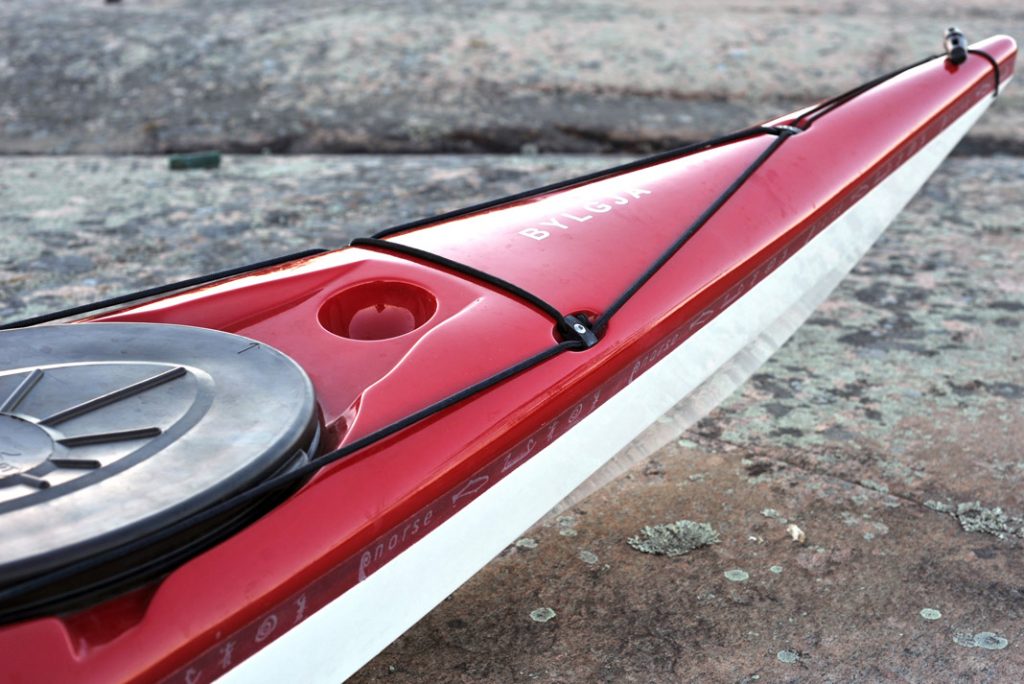
Indeed, with its bold red-and-white decks, sweeping lines and crisp angles, Norse Kayaks’ Bylgja I’m paddling turns nearly as many heads as the unmistakable jets of the Elite Canadian Forces Air Demonstration Squadron.
My Norse is on loan from Trailhead Paddle Shack, an eastern Ontario outfitter bringing these kayaks across the Atlantic and making them available to North American paddlers.
The Norwegian sea kayak
As the name suggests, Norse is a Norwegian brand that began producing composite sea kayaks in 2013. The boats are designed in Bergen, on the fjord-fractured west coast of Norway, and built at a dedicated factory in Sri Lanka.
Trailhead co-owner Jason Yarrington sourced the boats on a visit last year to Germany’s PADDLEExpo trade show.
I was looking for a composite sea kayak company that was well priced and well built. “I found that with Norse,” Yarrington explains. “They also paddle really well and have some great designs.
The finish on my fiberglass Bylgja is not only eye-catching, the vacuum-infused glasswork is lightweight and reinforced with aramid in the keel and chines for added durability.
Norse Founders, Kjetil Sandvik And Torgeir Toppe, saw an opportunity to apply their combined experience in paddlesports sales and instruction to building kayaks.
As long-time Boreal Design distributors, the partners noticed demand for affordably priced performance composites remained high after the Quebec, Canada-based company filed for bankruptcy in early 2012.
Production of Boreal Design boats resumed later that year after the brand was acquired by Kayak Distribution.
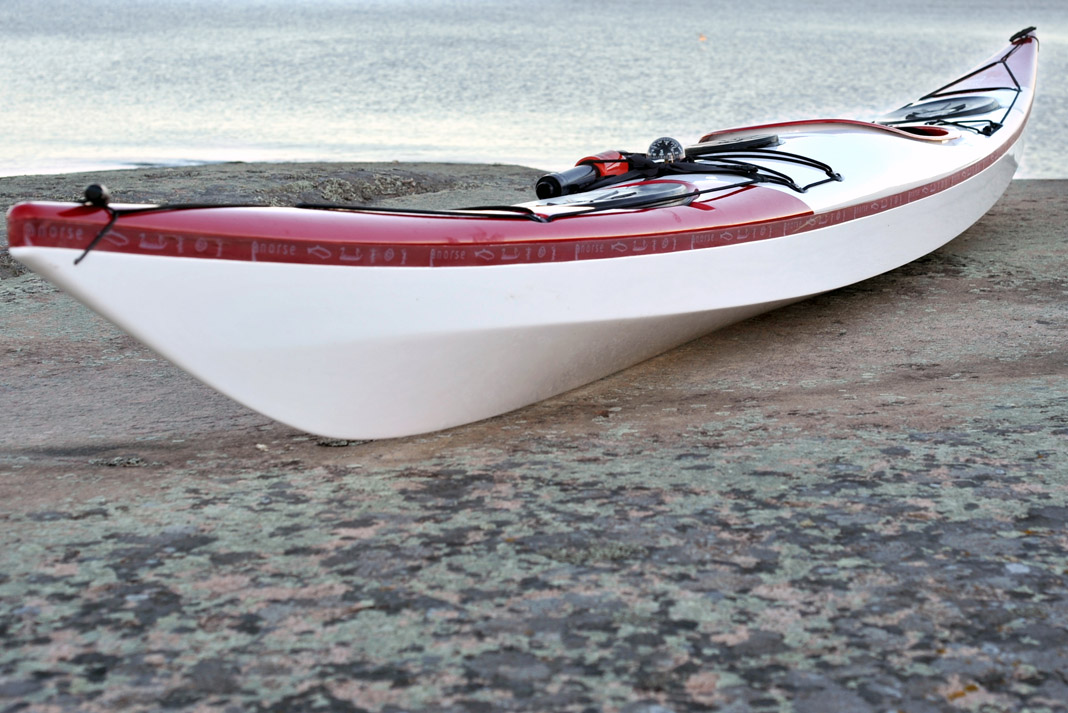
Upswept bow and stern, combined with hard chines and a v-shaped hull make Norse’s Bylagja sea kayak for nimble maneuverability. | Photo: Virginia Marshall
Norse’s reinforced fiberglass kayak
The Greenland-inspired Bylgja, a Scandinavian word meaning wave, I am paddling is just one member of Norse’s diverse family of kayaks, which includes designs for touring, expedition and fitness paddling.
Also in the line-up are four ruddered models, a tandem tripper and a crossover with a surfski-derived hull.
Fans of Boreal Design will notice Norse Kayaks bear a resemblance to those boats. Borrowing details such as the signature printed seam tape and molded paddle rest in front of the cockpit.
The founders say their familiarity with the brand informed both their designs and building methods.
The finish on my fiberglass Bylgja is not only eye-catching, the vacuum-infused glasswork is lightweight and reinforced with aramid in the keel and chines for added durability.
Even more impressive is the price point: sub-$3,000 CAD for the fiberglass layup, with a 44-pound carbon version available for $3,499 CAD. That’s at least a grand cheaper than most comparable composite kayaks.
Norse Kayaks’ playful sea kayak is easy to handle in rough waters
Okay, I can hear you asking, but how does this fiberglass kayak paddle?
“Bylgja is designed for medium to large paddlers who are looking for a playful kayak easy to handle in rough conditions, but still tracks well for touring,” says Sandvik.
I spend most of my time in softer chined, more rounded hulls, so getting the most out of the Bylgja’s V-shaped hull and boxy chines requires some experimentation and adjustment.
larger paddlers looking for a nimble, hard-chine touring kayak won’t be disappointed.
Before long, however, I can see the advantage. For intermediate paddlers, these hard lines translate to effortlessly carved turns and coaming-below-the-water edging.
I’m able to balance brace with relative ease, relaxing and allowing the boat to rest comfortably in a deep edge. Filling the generously sized hatches for a multi-day trip increases primary stability.
Touring in two-foot chop, the loaded Bylgja loses a bit of hull speed and feels less lively than paddling with empty hatches. Tracking is on-point in all conditions; dropping the skeg tames gusty crosswinds and following seas.
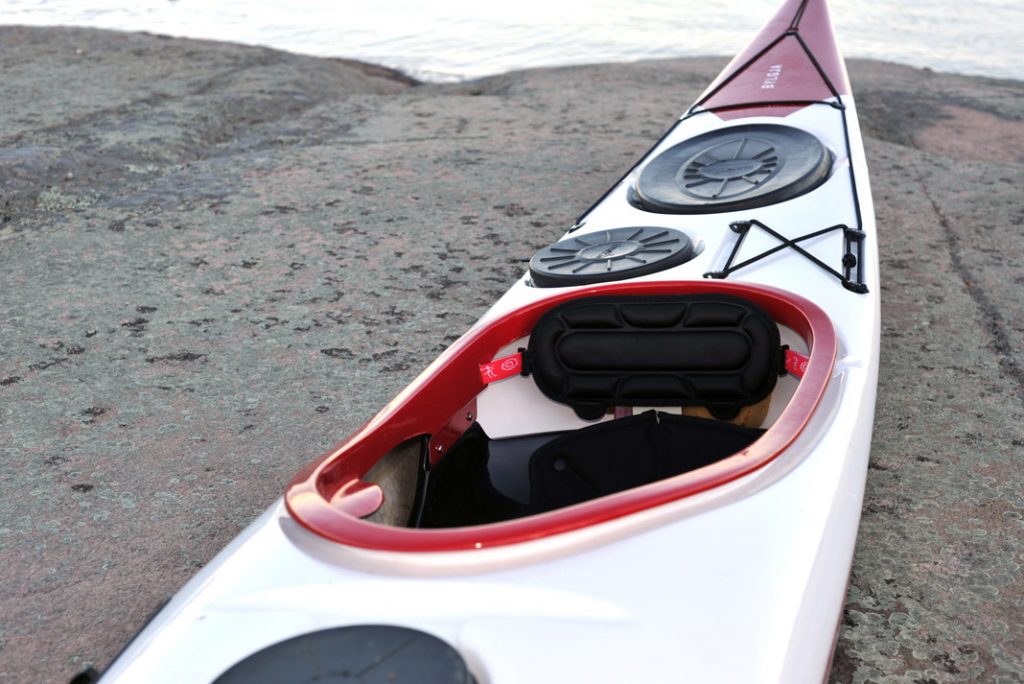
Norse Kayaks’ Bylgja’s roomy, oval cockpit is designed around a larger paddler- say goodbye to barked shins on entries and exits. The downside: minimal thigh braces offer limited contact for shorter legs. | Photo: Virginia Marshall
Viking imagery adorns Norse’s printed seam tape, while recessed deck fittings and compass mount on this sea kayak keep the topside sleek and stylish. | Photo: Virginia Marshall
Norse’s touring kayak hatch system
Reaching my first campsite after several splashy crossings, I am disappointed to discover water puddled in my day and stern hatches.
Refitting the rubber Kajaksport hatch covers helps but does not eliminate the problem.
Every hatch system is a trade-off between ease of use, dryness and durability. Kajaksport covers have a proven track record for longevity, and many I’ve used—including the Bylgja’s bow hatch—are perfectly dry. However, I find it’s a struggle to get these fitted just right.
On the subject of hatches, it’s worth noting the deck hatch just in front of the cockpit accesses a small mesh bag hanging below the deck.
This offers less dry storage than a molded-in compartment, but doesn’t reduce volume in the cockpit.
Norse’s best kayak for larger paddlers
The Bylgja’s 33-inch-long oval cockpit opening privileges larger and taller paddlers who will find they can enter seat-first, then bring their legs inside—just like us shorter folks can with a smaller keyhole cockpit.
The drawback for mid-sized paddlers is items stored under the front deck bungees—bilge pump, water bottle, map case, etcetera—are out of reach, and even accessing the deck hatch or skeg slider is a stretch.
The rear coaming also catches me too high for comfortable layback maneuvers, which is unfortunate, since the Bylgja rolls just like a Greenland-style kayak should.
I’d love to see Norse offer a smaller, sportier cockpit to match the sporty performance of this new boat. Still, larger paddlers looking for a nimble, hard-chine touring kayak won’t be disappointed.
At a retail price lower than nearly any other full-size composite we’ve tested, Norse Kayaks offers outstanding value. Factor in their flashy looks, and squadrons of Bylgjas could soon be sighted on waters near you.
It’s a bird! It’s a plane! No, it’s a Bylgja. Feature Photo: Virginia Marshall
It’s a sunny Saturday afternoon in early June, and the beach is crowded with paddlers returning from skills sessions and tours among the sheltered passages of Parry Island’s South Channel.
In the clear, calm water just offshore, a beginner clinic is wrapping up reentries practice, half a dozen women scrambling across kayak decks and into cockpits while their classmates offer enthusiastic encouragement. Nearby, a crescent-shaped fin breaks the surface with a spray of water. The swimmer’s shimmering purple tail kicks at the sky as her fellow mermaids cheer loudly from the dock.
Wait, mermaids? At a paddling festival. On Ontario’s Georgian Bay.
Women On Water May Be The First All-Female Gathering In North America To Offer Instruction In Kayaking, Canoeing And Standup Paddleboarding—But Paddling Is Only Part Of WOW’s Unique Formula.
The event’s spirit of inclusivity extends to celebrating and promoting the diverse talents of the water-loving women it brings together—from professional musicians to professional mermaids.
Now in its fifth year, WOW attracts participants from around the Great Lakes and beyond. In 2018, festival-goers traveled from as far as Nova Scotia, Alberta and Texas to join more than 100 other women at the sold-out event.
The weekend is presented cooperatively by Wild Women Expeditions (WWE) and Ontario Sea Kayak Centre (OSKC), drawing on WWE’s expertise with women-specific programming and OSKC’s network of talented female coaches.
Making kayaking more accessible to women who it may not have been otherwise has been a dream come true,” says OSKC co-founder Dympna Hayes. At the event’s welcoming address, Hayes shared her goal for coaches and participants, “The feedback I hope to hear most is: ‘She was so patient, so kind and so helpful—I learned a lot.’
Women on Water is hosted at Camp Tapawingo
Camp Tapawingo historic YWCA girls’ camp nestled along a protected channel in Georgian Bay’s Parry Sound, a short drive from the town of the same name. It’s hard to imagine a more appropriate venue. Tapawingo’s all-female staff has been creating opportunities for adventurous girls and women in the outdoors for 88 years. Black-and-white photos and aging mementos adorn the walls of the original log dining hall. WOW participants share the rustic camper cabins dotted along the shore, and just like those earlier campers, these women will gather around a flickering campfire their first night together.
“It allows participants to feel as though they’ve gone to kids’ camp,” says WOW event coordinator and canoe guide, Kate Ming-Sun. “They don’t have to worry about organizing anything other than themselves.”
When the aspirational mermaids shed their tails, the evening is just getting started. Most of the women tour over to the marketplace, where entrepreneurial instructors and local business owners display handmade jewelry and clothing, original glass and paddle art, waterproof cosmetics and much else. Many contribute items to a silent auction supporting the Georgian Bay Biosphere Reserve.
Another memorable WOW tradition begins after a hearty buffet dinner: lip sync performances followed by hula hooping and dancing. Each year, the coaches break the ice with a couple hastily rehearsed acts. But it’s usually the participants who steal the show with outrageous costumes, hilarious song choices and surprising choreography.
The magic of Women On Water
Despite The Late night, Sunday Morning’s Pre-Breakfast Yoga Class And Sunrise Paddle Draw Sizeable Crowds. Organizers and coaches keep classes flexible on day two, knowing participants may opt to join a new friend, sample a different boat or board, or reinforce a skill discovered the day before. For some, Tapawingo’s grassy lawns and breezy docks will prove more enticing than fine-tuning their forward stroke. After all, WOW is as much about nourishing community as it is developing paddling skills.
“If someone doesn’t want to participate in a skill or a workshop, there’s no pressure,” says Ming-Sun. “Our instructors bring their expertise, empathy and patience to teaching new skills and building confidence. Women sink into the weekend, enjoy themselves and meet new people, even if any or all of that causes a twinge of anxiety.”
There’s Empowerment In Shedding Inhibitions, Embracing Silliness, Trying New Things And Confronting Challenges—That’s The Magic Of Women On Water.
Kris Shaw. |Photo: Virginia Marshall
Kris Shaw
Age: 60
Location: Methuen Lake, Ontario
Occupation: Adventure Guide
and Instructor
WOW Factor: After her sons left home, Shaw went back to school, completing an Outdoor Adventure Leadership program and turning her lifelong passion for wild places into her vocation. She may have come to guiding later than some, but Shaw has taken this challenging profession further than many: leading outdoor activities in Alaska, Yukon and Belize, as well as her native Ontario.
My mother was my inspiration. She would have the car packed for the last day of school and take us to the cottage for the summer. Spending those endless days on the water, in nature, laid the foundation for my love of the outdoors. As kids, she encouraged us to “come home only when you’re hungry or bleeding.”
I responded to the name “Scouter Mom” for 10 years while volunteering as a troop leader with Scouts Canada.
Being self-employed most of my life, I’ve been fortunate to combine my business background with my guiding and paddling skills.
There have been many wild moments—a collection of beads on a necklace that isn’t yet finished. I think of ocean surfing with my son in New Zealand; seeing polar bears and muskox while guiding dogsledding expeditions in the Arctic; and sunrise skinny-dipping on Georgian Bay before the world wakes up.
This fall, I am looking forward to a WWE trip to Everest Base Camp.
All-female trips, courses and retreats provide a unique environment where women can truly flourish and push the envelope just a little bit further.
I Enjoy Teaching Other Women Paddling Maneuvers That Are Based On Technique And Finesse, Rather Than Brawn. My motto is “life should fit into your kayak.” Simplify, get rid of the excess baggage, carry only what you need, lighten the load and make room for new memories—live without regrets.
Holly Bishop. |Photo: Virginia Marshall
Holly Bishop
Age: 32
Location: Haliburton, Ontario and El Pescadero, Mexico
Occupation: SUP Instructor, Professional Mermaid and Boutique Owner
WOW Factor: Bishop has shaped her family’s lifestyle around the waters she loves—migrating between the highland lakes of her native Ontario and the magical surf beaches of Baja. Pursuing an endless summer requires creativity. With her husband, Pablo, she runs SUPnorth Paddle Board Adventures and Baja Surf SUP; her daughters, ages 12, 10 and six, help out with mermaid parties and the handmade creations in her traveling boutique, Gypsea’s Lifestyle.
Living on a beach in Mexico for five years and surfing everyday, I didn’t think SUP was that cool.
When I moved back to Haliburton, I missed the ocean so I started paddleboarding.
I was a stay-at-home mom and loved being out on the water with my girls. But I also needed some me time. I figured if I could get paid to hang out with other women while playing on the water, it would be the perfect job.
As a kid, I spent summers in the lake pretending to be a mermaid. A few years ago, my girls asked for mermaid tails they could swim in.
At first, It Was A Marketing Thing: Come Paddle Board With Mermaids. Then people started asking about just doing the mermaiding.
I’m not strict about schoolwork. Where we live, every day brings alternative learning: we’re swimming with whale sharks, watching sea turtles laying eggs, or seeing cephalopods that wash up on the beach.
This summer, I’ll have a 16-foot pop-up tent as an extension to my home. I live in a 33-foot motorhome with a husband, three kids, two dogs and a gecko, so I’m really excited to have a space for myself.
WOW is a safe space for women from all walks of life to step out of their comfort zone and try something new.
I feel most wild and free in the ocean, waiting for a wave and enjoying the sun on my skin and the water around me.
Dot Bonnenfant and Lynette Chubb. |Photo: Virginia Marshall
Dot Bonnenfant
Age: 68
Location: Chelsea, Quebec
Occupation: Canoe Instructor and Artist
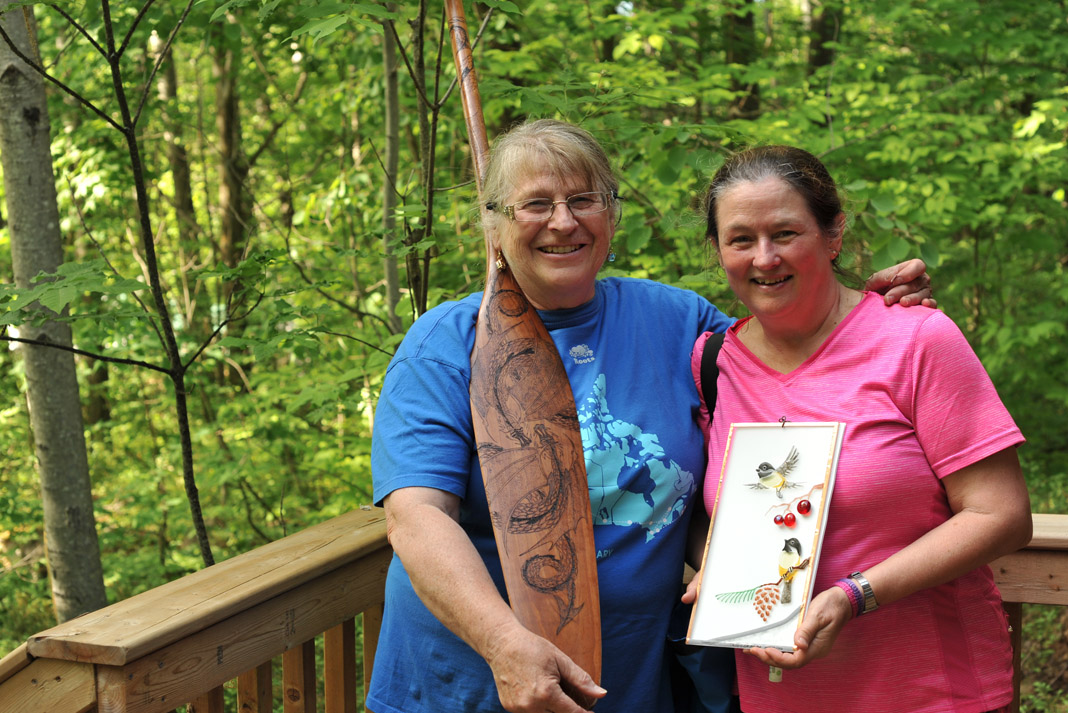
WOW Factor: A lifelong paddler and instructor of all things canoeing, Dot is also a gifted artisan who creates incomparable heritage canoe paddles. Inspired by the flowing lines of the natural world, each unique design reflects its recipient and is etched into the paddle with a wood-burning tool. Like her love of canoeing, Dot’s paddles last a lifetime.
I can’t remember not knowing how to paddle. I was my dad’s bow paddler from my childhood until he passed away at age 90.
I thank my dad for my love of nature and canoeing, and Mat Bernard of Golden Lake First Nations for artistic inspiration. In 1935, Mat gifted my father a paddle with beautiful woodburned designs, which he used until his 89th birthday. It was and is my inspiration.
I started with simple designs for family members. Now I am working on paddle #550.
Cherry wood is my favorite. It has even grain and a beautiful color—the dark brown and black of pyrography shows dramatically.
Dot Bonnenfant taught whitewater canoeing for 25 years
I’m retiring this year to open a space for the young ‘uns.
Teaching is a great challenge. How do we find the right words, images, kinesthetic drills to really get the maneuvers…and the intangible magic coming with being in a canoe and learning what it, and you, can do?
Women who are just beginning to paddle or for the first time—being in the stern and determined to learn—inspire me the most.
WOW gives a centering time and place: we can converge, share, learn, laugh, encourage, inspire and be inspired… then take that back to our own communities.
When I am on a solo trip, when I am starting the day with the stretch of kilometers in front of me, in the moment when I push off from shore, when the scent of pines comes on the wind—those are wild times for me. The sense of being one with the world.
Lynette Chubb
Age: 59
Location: Ottawa, Ontario
Occupation: Canoe Instructor and Artist
WOW Factor: Known affectionately to expedition canoeing aficionados as the “Queen of Ungava” for her familiarity with the remote rivers of arctic Quebec, Chubb’s generosity and expertise enable her students to enjoy their own wild journeys. Off the water, she is a talented artist who uses her paintbrushes to translate inspiration from her travels into decorative window art.
What draws me to the North? The open landscape. It’s the ultimate feeling of freedom—you can look around 360 degrees, there are endless possibilities of where you can go. And freedom from human beings, our impacts on the landscape.
They’re called the Barren Lands, but they are the opposite of that. There’s an extraordinary diversity of life forms you can see just by sitting still and looking closely.
When people see my acrylate, they assume it is stained glass, but I use museum-grade clear sheet acrylic, lead, glass embellishments, and glass paints. The versatility of painting on acrylic means I’m unrestricted by traditional glass cutting and assembling. It’s so much fun to design.
Dot is a mentor to me. It’s Really Incredible To Have Strong Women Friends. She’s someone I admire, someone who’s been through a lot of shit, so I know I can go through a lot of shit, too.
We did an all-women trip together on the Churchill River in Labrador. It was so relaxing and ended up being a way more personal trip. Evenings in the bug shelter, we could just talk or cry or laugh our guts out about anything—there was no limitation on what we could express.
Women-only events, trips or courses can seem a little exclusionary, but I think they are important enough that we need to banish that perception.
Learning From Female Instructors Was Crucial To My Development As A Paddler. Our bodies and brains work in the same way. I could believe everything they said.
Janice Nicholls. |Photo: Virginia Marshall
Janice Nicholls
Age: 54
Location: Owen Sound, Ontario
Occupation: Educator
WOW Factor: Nicholls got her first taste of paddling in bumpy seas on an open water canoe trip with Wild Women Expeditions. Despite spending much of the journey terrified of capsizing the canoe, she now seeks out wind and waves—having made the switch to kayaking.
When I went back to Lake Huron’s North Channel, we had a couple of days paddling in big, challenging waves and I loved it.
I’d been looking for the right kayak to just surf waves, but couldn’t really find what I wanted. A friend who paddles a surfski said I should get one, so I did.
When I’m On The Water Paddling With The Wind And Waves, I Actually Laugh Out Loud. I’m told Greenland paddles and surfskis don’t really go together, but I’m committed. I love that my paddle is handmade and light.
This summer I want to take an overnight trip and camp in my car somewhere on Lake Huron. It will help me prep for my long-term goal: to drive across Canada with my surfski and ride waves in Tofino.
There’s A Special Energy When A Group Of Women Who Love Being Outdoors Get Together. You can’t beat it. When I’m in that environment, I feel like I fit in. I don’t need to prove myself.
Patricia Jones. |Photo: Virginia Marshall
Patricia Jones
Age: 52
Location: Tillsonburg, Ontario
Occupation: Elementary Schoolteacher
WOW Factor: Credit Jones’ years at the head of a classroom for her patient and purposeful teaching style. Alongside her husband, Rob, and 16-year-old son, Lucas, Jones has worked hard at growing her paddling skills and knowledge. Together, the family founded Otter Valley Paddle Sports and now offers kayaking instruction, guided tours,
rentals and sales.
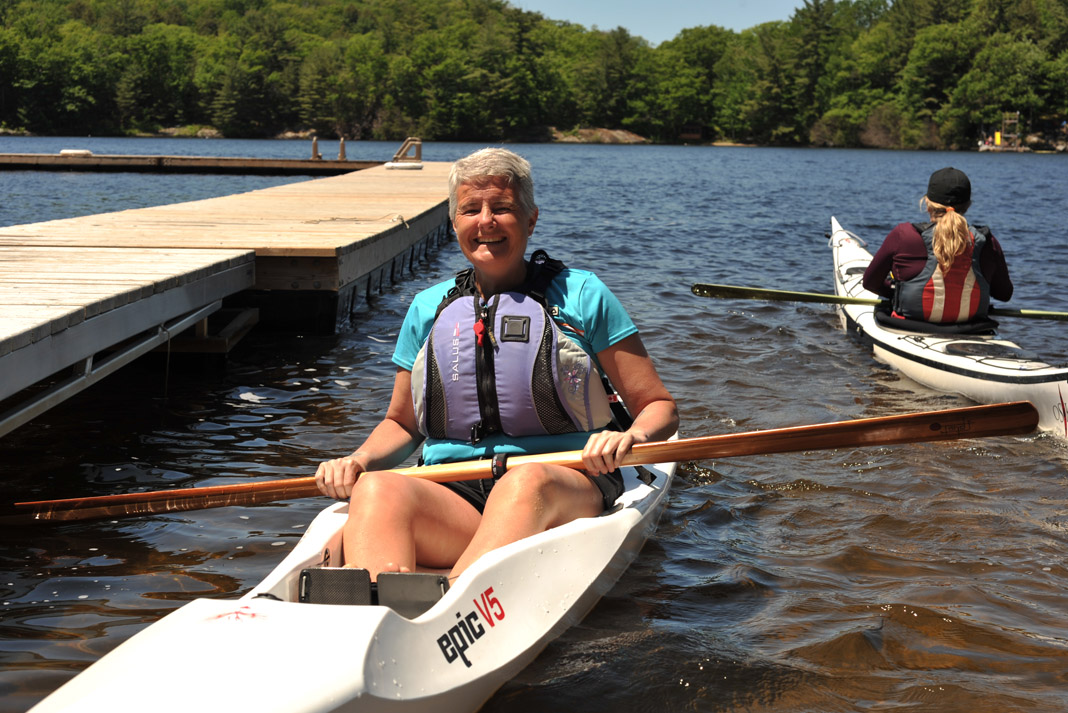
When Lucas was 10, we tried kayaking with him. Right away, I felt peace, freedom and comfort. We knew that day this would be a match for our family in so many ways.
Now, Movie Night Often Means Watching Kayaking, Camping And Rolling Videos. I grew up in France. After my studies, I left to travel and ended up in St. Martin, a French and Dutch Island in the Caribbean. After 10 years working there, I was missing the four seasons and the landscapes of a big country.
I arrived in Canada in 2001. My husband is from Long Point on Lake Erie. The huge lake amazed me.
The more I learn through Paddle Canada, the more comfortable and confident I am in myself, and the more I’m planning new adventures.
My dream paddling trip is following the path of my ancestors through the Caribbean islands.
Being a Sea Scout leader as well, I know it is important to have a female in the team.
WOW is a great way to make friends. I met ladies who didn’t have anybody to paddle with, and by the end of the weekend, I could hear, “Eh, I live close by, I’ll paddle with you.”
If you are just discovering kayaking, hang on—it is a great sport for body and soul.
Jennifer Holub. |Photo: Virginia Marshall
Jennifer Holub
Age: 34
Location: Sudbury, Ontario
Occupation: Singer-Songwriter and Canoe Guide
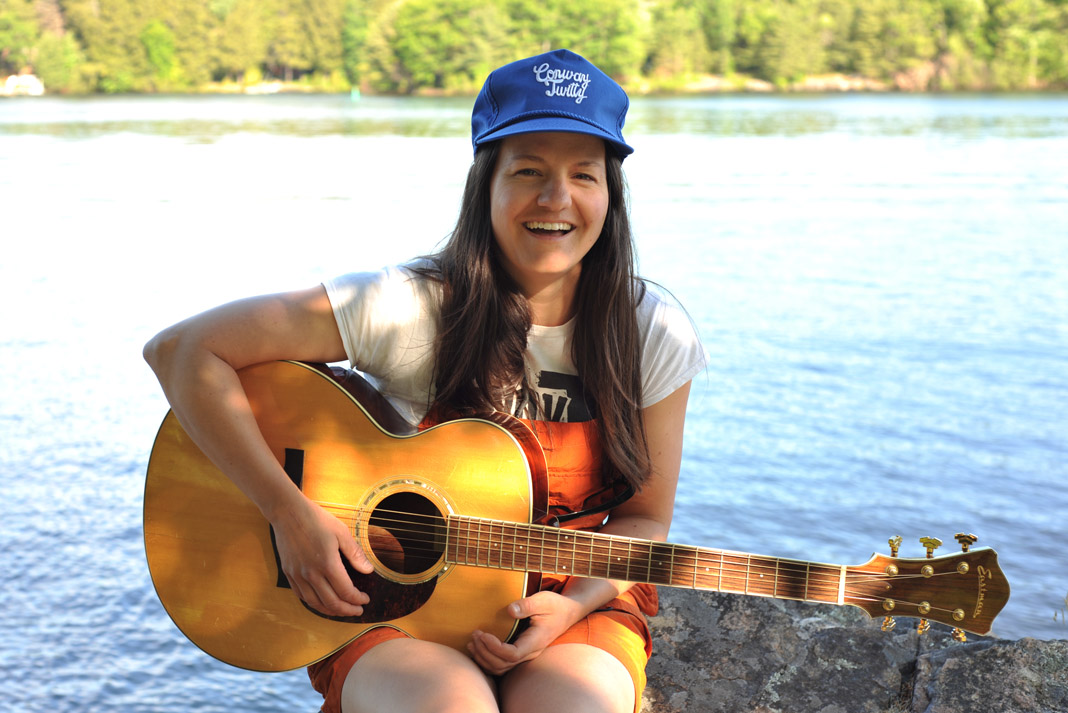
WOW Factor: Those who share their campsites and portage trails with Holub are rewarded with the Wild Women Expeditions guide’s soulful singing and strumming, as well as her expertise in a canoe. Holub’s rousing sing-a-longs and witty campfire badinage have become the highlight of evenings at Women on Water.
I started playing guitar and songwriting when I was 14, shortly after listening to Joni Mitchell for the first time.
My second full-length album, The Reckoning, will be released in early October. It is a hawkish condemnation of society’s place for women and an urgent call to rouse from it.
Sarah McLachlan and Ani Difranco are inspirations—they both laughed in the faces of critics who said that an all-female festival, record label, band, etcetera would never work.
My advice for first-time canoe trippers is: start with an overnighter, acquire gear as you go, borrow stuff to get by for now, and remember in camping there’s often more than one way to do it right. Above all else, respect the earth and leave no trace.
WOW is such a good idea. Having the chance to hone your craft at the start of the season can make the whole paddling experience a lot more enjoyable.
I feel most wild when I’m skinny-dipping in Temagami.
Paddling Is My Meditation, A Time To Reflect On My Life and Examine Fears
This lends well to my art; an uncluttered mind allows the creativity to flow more freely.
Emma and Pat Cummings-Winter. |Photo: Virginia Marshall
WOW Factor: Pat started canoe camping with her husband and daughter, Emma, in the Adirondacks some 15 years ago. At Women on Water, mother and daughter sampled standup paddling and mermaiding, then took to the stage for lip sync night, channeling Shania Twain in dazzling sequined dresses.
I’ve had surgery on my knee and hand, and have had to work hard to regain strength and flexibility. Kayaking, Canoeing And SUP Allow Me To Still Get Out There And Do Stuff —PCW.
My 81-year-old friend, Margie Torrell, has infinite curiosity and is willing to try just about anything. Two years ago we took a trip to Alaska together—we hiked, biked, float-planed, rafted on a river in Denali and had a great adventure. I want to follow in her footsteps. —PCW
Who inspires me? My mom. She’s led and continues to lead this amazing and adventurous life, and for that I look up to her and strive to live my life as she does in as many ways as I can. —ECW
My Ultimate Paddling Companion Is My Daughter, For The Songs We Sing Together —PCW
I feel most wild when I am camping in the Adirondacks. I get up early and go directly to my kayak in search of wildlife and awe-inspiring views. —PCW
WOW brings together likeminded ladies who want nothing more than to experience the joys of paddling together and learning new things about others and themselves. —ECW
An all-female paddling event is important because it helps us to understand that women can do anything. When we support each other, it is empowering to us all—as well as a helluva lot of fun. —PCW
Virginia Marshall is the former editor of Adventure Kayak magazine.
In the chronicles of the many badass ladies who have launched epic solo adventures, there is one heroine who stands apart in my mind for her sheer tenacity and daring.
When Audrey Sutherland started her explorations in 1962, she wanted to explore the coast of Hawaiian island, Moloka’i. Lacking any gear and without the funds to rent a boat, she did it by swimming in jeans, towing behind her camping gear wrapped in a shower curtain and stuffed into an army bag. It was the first of countless solo adventures.
Gradually—thankfully—she refined her mode of transport to an inflatable in which she traveled alone for thousands of miles through the Hawaiian islands and then in Alaska and British Columbia. She spent every summer between 1980 and 2003 exploring over 8,075 miles of islets and waterways of the Pacific Northwest.
In July, Patagonia Press released commemorative editions of two of her books, Paddling My Own Canoe and Paddling North. The paperbacks follow two of her 20 trips through rugged wilderness, trips she started at age 60 after raising four kids as a single mom. Sutherland’s books are quintessential guides, humorous recollections and sage perspective gained from racking up some 12,000 nautical miles alone on remote seas.
For Sutherland, it was always the same philosophy. Go simple, go solo, go now. “The only real security is not insurance or money or a job, not a house and furniture paid for, or a retirement fund, and never is it another person. It is the skill and humor and courage within, the ability to build your own fires and find your own peace,” she wrote. Audrey Sutherland died peacefully in 2015 at the age of 94.
Announce a solo trip and naysayers soon chime in with the “what if’s” and urban legends starring poor saps alone in the woods with only psychopaths, bears and banjos for company.
As Sutherland knew better than anyone, when solo it’s inevitable you’ll discover just how capable you are. Or aren’t, as the case may be. In an increasingly risk-adverse world, her mindset is rare.
Solo travel like Sutherland’s not only pushes the paddler outside of her own comfort zone. It chafes against the expectations of others, defying conventions of convenience and safety, and in Sutherland’s case, of age and gender.
Any solo tripper has likely experienced some version of this. Announce a solo trip and naysayers soon chime in with the “what if’s” and urban legends starring poor saps alone in the woods with only psychopaths, bears and banjos for company.
In the article “Risk Management Is Sucking The Life From Kids’ Paddling Trips” professor Bob Henderson and Ryan Howard discuss the relative risks of backcountry adventures, which by every metric are small in comparison to our everyday activities. Despite the facts, the unknown wilderness is often perceived as threatening by those who don’t venture farther into the woods than the cottage doorstep.
Undoubtedly, going solo increases risk—without a trip mate, who will activate an EPIRP or act as a first responder in the unlikely event of an accident or medical crisis? Just how much risk increases is hard to measure, however, factoring in specific environmental hazards with skill and good judgement.
Nothing is ever perfectly safe, and our aim shouldn’t be to try and make it so. As Henderson notes, trips should be as safe as necessary, but we can’t consume ourselves with trying to make them as safe as possible. There is risk as inherent in the outdoors as in getting out of bed in the morning.
For Sutherland, it seems like going solo was never in question. Who else had the time and desire to spend three months paddling the coast of Alaska?
Alone, you are more aware of your surroundings. To have actual survival, living or dying, depend on our ingenuity, skill, or stamina—this is a core question we seldom face,” writes Sutherland at the end of her journey in Paddling My Own Canoe. “The confidence and strength remain and are brought back and applied to the rest of life. I can return to the lonely splendor—and I am no longer afraid.
Far more dangerous than going solo is not going at all.
Last year, editor Kaydi Pyette spent six months on a solo adventure, pedalling her bicycle through Southeast and East Asia, wild camping much of the way. Feature Photo: Mike Last
I’m midway through a networking session at the Adventure Travel Trade Association conference when Jennifer Haddow, the owner of Wild Women Expeditions, approaches me.
It feels serendipitous—earlier that morning, my mom returned from a Wild Women trip to the Galapagos. Haddow’s eyes light up when I tell her. “Of course I know your mom,” she says. “Doris, right?”
I wouldn’t be so impressed by Haddow’s recall if it wasn’t for the fact my mom is just one of 800 women to travel with Wild Women this year.
An Adventure Travel Company Geared Towards Women Aged 45 And Up, Wild Women Operates More Than 100 Tours Annually. It wasn’t always this way. When Wild Women launched in 1991 as a small canoe outfitter for women based in the Sudbury region of northern Ontario, it was the only tour operator of its kind.
“We were kind of the laughingstock of the outdoor adventure industry. Women going into the backcountry alone was not a thing,” says Haddow, who describes Wild Women’s founder Beth Mairs as “trailblazing.”
It didn’t take long for the laughing to stop. Unlike multiday trekking, kayaking or canoeing can feel intimidating for first-timers—and Wild Women offered a solution for the curious, with a focus on empowerment and skills building.
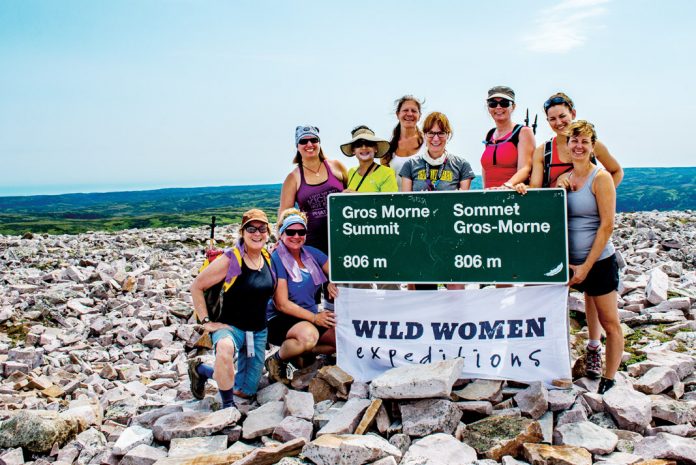
Women want to get their feet wet,” says Haddow, who grew up in Newfoundland on the edge of Gros Morne National Park. “That was my experience. I had to get the introduction and then it lit me up and I felt really confident to go out on my own adventures.
By the time Haddow purchased the company in 2010—after taking her first kayaking trip in 2007—its itineraries had expanded to include British Columbia and the Maritimes, including paddling adventures to Haida Gwaii and the Broken Group Islands. More activities were also on offer, including trekking, cycling, yoga and horseback riding.
Haddow, who had a background in international development, saw room for further growth. Based on feedback from regular clients—Wild Women has a return rate of 30 to 40 percent—she identified it as the perfect time to go global.
What she’s done in less than a decade is as impressive as her ability to remember her clients’ names.
Wild Women is now the world’s largest adventure tour company for women
By 2019, the company will send 2,000 participants per year on one of 200 tours to 25 countries worldwide. In order to keep up with demand, Haddow now employs a staff of nine full-time employees, who work remotely across the country.
Although she’s reticent to put a valuation on the company, Haddow does share revenue has increased by over 2,000 percent since 2010. This puts its annual revenue well around the seven-figure mark—a profit Haddow projects will double in 2018-19. Not bad for a little canoe outfitter.
This rapid success hasn’t come without its speed bumps. “In Canada, there’s a lot of rockstar paddling guides, but finding local female guides in many international countries is one of the bigger challenges,” she says.
And despite the proliferation of women-only travel operators—with adventure tourism heavyweights such as Intrepid launching their own female-focused expeditions this year—stereotypes still persist.
“There’s this image of badass, sexy, fit 20-something travelers who are really only in it for the sport, which can send a disempowering message,” says Haddow. “We should be celebrating badass women of different ages and body types. We want kayaking and canoeing to feel accessible for 50-plus women too, who might not be hard-bodied athletes.”
This, And Promoting Environmental Sustainability, Is Part Of The Reason Paddling Remains A Central Pillar Of Wild Women’s Trips. For me, it was never about having mad skills with a paddle—it was about getting deep into the heart of a wilderness area,” says Haddow. “The only job I care about is helping women getting their asses in the bush.
Jessica Wynne Lockhart is a freelance journalist and contributing editor of Verge Magazine, a publication devoted to travel with purpose. She’s passionate about ethical and responsible adventures.
In 1991, Grey Owl Paddles owner Brian Dorfman was convinced the world needed a beefed up spoon version of his popular Hammerhead. I must have purchased one of the first couple hundred of the new Grey Owl C-1. I know this because I’m still using it 27 years later. Why? Because until last year nobody could get a new one; Dorfman had taken it out of Grey Owl’s catalog in 2005. Now it’s back, and here’s why.
This is a tough whitewater canoe paddle. The C-1 has a big blade by today’s standards, but I don’t care who you are when you need to move a fully loaded tandem tripping you want a blade to put out. The cambered spoon is seven-ply laminated butternut, walnut, and basswood with a four-ounce fiberglass cloth overlay on each face and a casting epoxy tip wrapping the entire blade. Call me whatever names you want, but I pry off the gunwales. Lucky for me Grey Owl wraps the bottom half of the shaft in a protective Dynel sleeve. To top it all off, I love the oiled walnut mushroom grip.,
Don’t let this Bandito run get away from you. | Photo: Michael Hewis
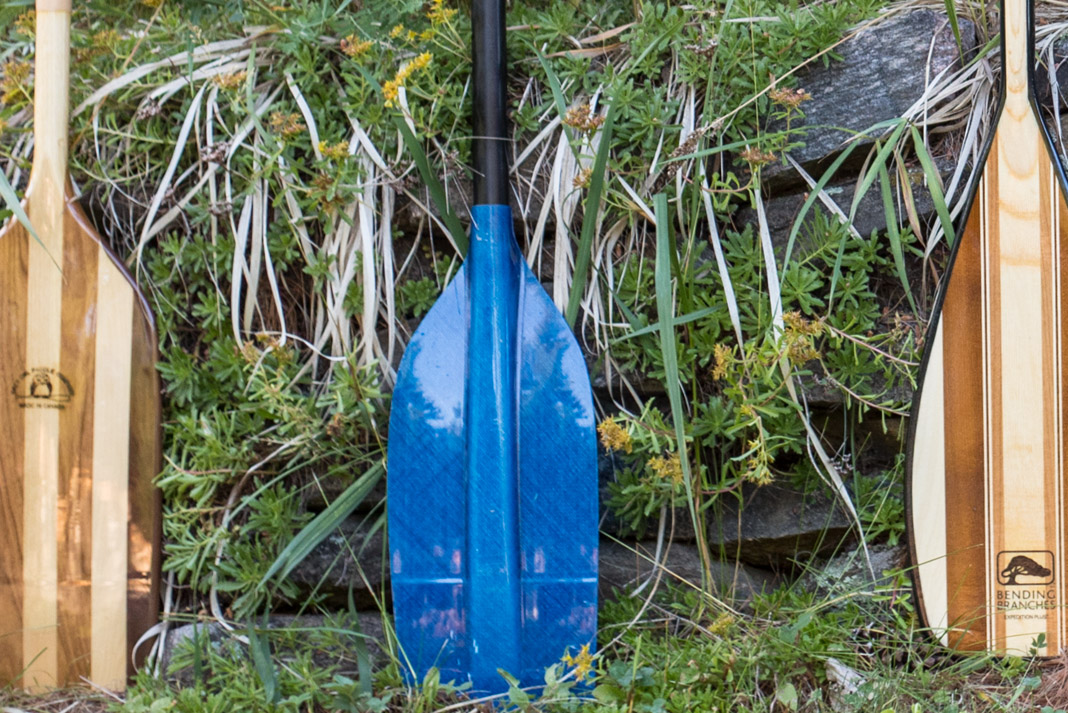
At the time of writing, Werner Paddles announced the signing of adventurer Jim Baird as their first canoe athlete. Jim’s a monster of a man most often found on remote wilderness rivers or YouTube with a Werner Bandit in his hands. Anyone who’s beaten the shit out of Werner’s staple whitewater canoe paddle knows it’s tough. They also know it’s big. Fine for Jim Baird.
For wilderness travel, I like softer wooden paddles and full-sized blades, but for solo boating and C1, I prefer lighter and stiffer composite shafts and blades with the smaller surface area for less power and faster stroke rates. The new Werner Bandito is more than a long-awaited trimmed down Bandit. Werner borrowed from their standup paddles and integrated a LeverLock adjustable T-grip allowing the Bandito to range from a 54-inch paddle to a 62-inch paddle. Cool if you’re still growing, you paddle different boats with different seat heights, if you loan your paddle, or if you’re a paddling school or rental shop. It is also available in a $175 range of fixed lengths and a LeverLock three-piece travel version at $225.
It won’t take but bending to love this wooden canoe paddle. | Photo: Michael Hewis
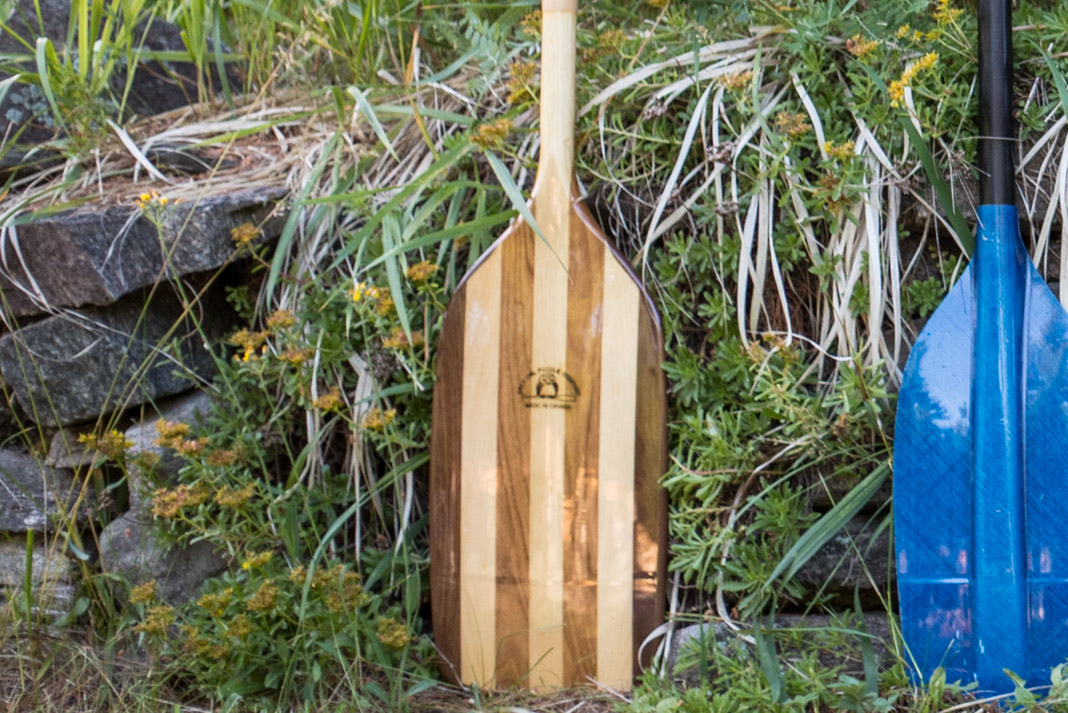
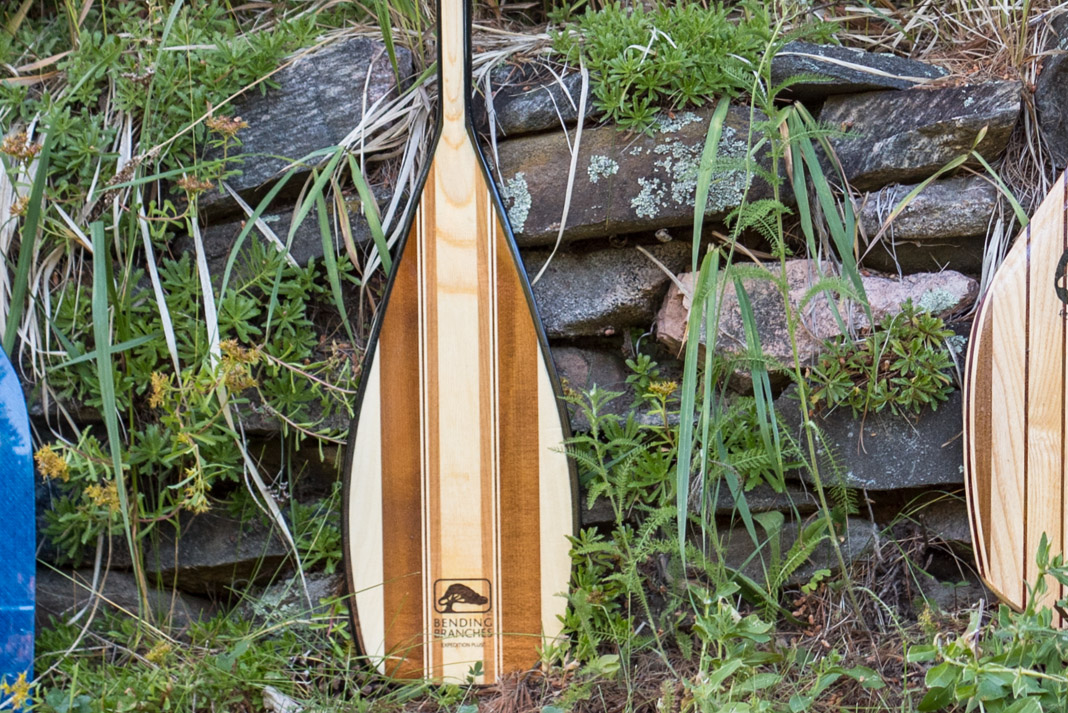
Anybody who says nothing ever changes in canoeing has not been keeping tabs on Bending Branches over the last couple years. In 2015, a black willow shortage left the in-house team of paddlers and craftsmen to rethink many of their premium paddles, like the Expedition Plus. Bending Branches’ most durable canoe paddle now sees a new laminate of red alder, basswood and roasted basswood at the business end of a laminated basswood shaft. The most noticeable difference is the newly tapered bottom corners of the blade.
Even though the Expedition Plus has Bending Branches’ trademarked Rockguard edge protection all the way around the tip and six inches up the shaft, we all know the bottom corners take the brute of the abuse over time. So Bending Branches removed the problem altogether. And while they were at it, they narrowed the blade approaching the throat. What’s left is a shockingly light wilderness tripping canoe paddle, with moderate blade size, capable of class I-III whitewater. So don’t think of the Expedition Plus as just a whitewater paddle, it’s light enough and smooth enough you won’t have to pack a lakewater blade for the flats.
You’ll fall for Freefall Paddles. | Photo: Michael Hewis
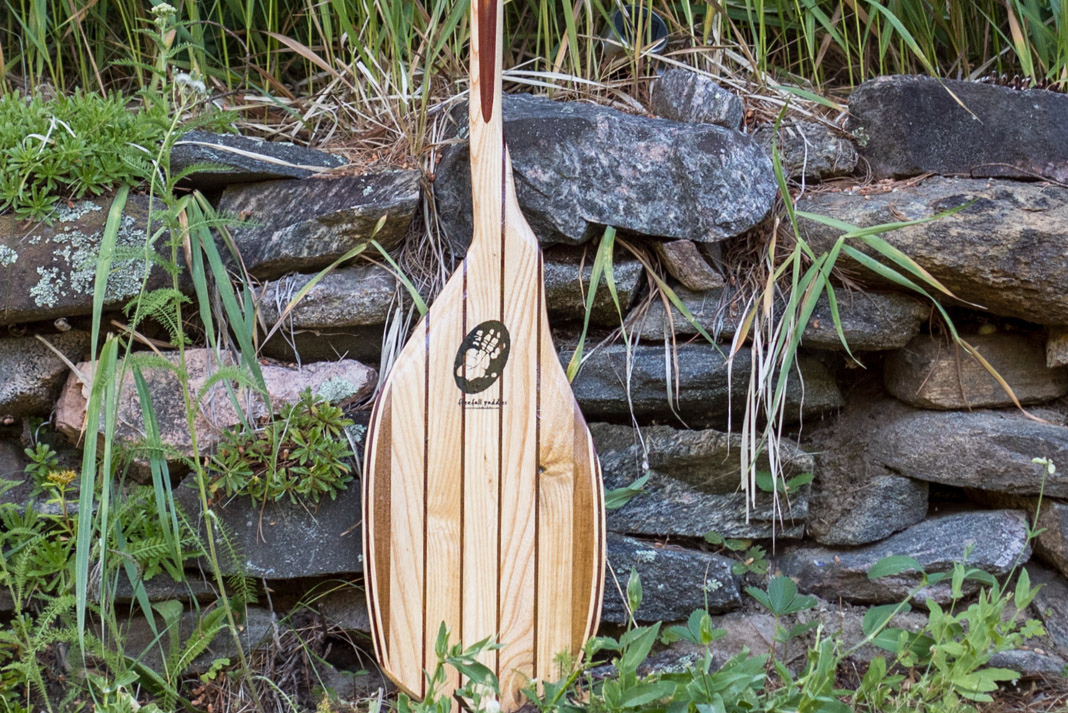
I met Freefall Paddles owner Peter Reid at Germany’s PADDLEExpo. In one hand he had a Coolest Gear of the Year Award and on the other hand, he held the most unique whitewater open canoe paddle I’d ever seen. So I ordered one for review, which wasn’t easy. Each one of his custom Cutback Re-Paddles is different, made from whatever hardwood he has available. In this one, he used recycled rosewood and fallen Arabian acacia, which he says, “Has lots of knots and colors making it slightly heavier but a solid and beautiful paddle.”
[ Paddling Buyer’s Guide: View all expedition canoe paddles ]
I had to Google acacia. I got the full treatment including a crankshaft with carbon top section and a massive custom T-grip Reid pitched to me as, “I made this grip tonight from bits and bobs, its very unique and if you like it, I can fit it to your paddle.” Are you getting the idea? Then I had to confirm if I was a righty or a lefty because the unique blade is cut out on the inside, allowing the paddle to run closer to the boat. Even the epoxied tip is uniquely shaped. The Cutback Re-Paddles are one of a kind and custom made in Poland or Ireland.
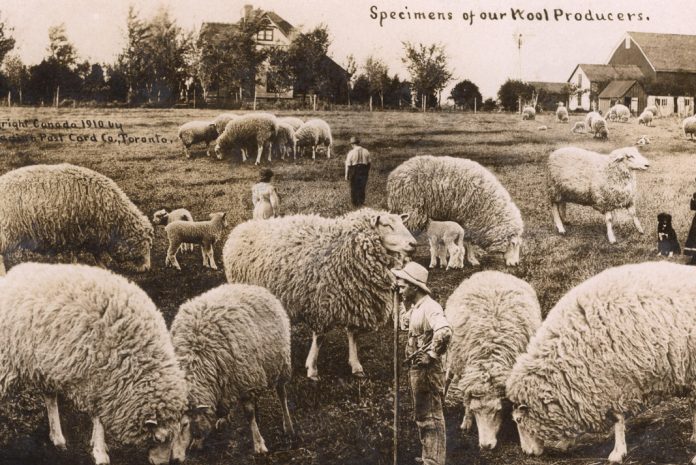
Many Associate Wool With Sheep, But Alpacas, Camels And Goats Also Produce Fibers Commonly Twisted Into Yarn And Made Into Textiles. More unusually, cat and dog hair can also be spun into yarn.
1. Clothing and other items made of wool date back millenia, from 3,400-year-old Egyptian yarn to fragmentary textiles unearthed in Siberian graves dating from the first century B.C.
2. Wool Has Always Been A Favorite Of Paddlers
—from fur-trade-era voyageurs to modern lumbersexuals. Wool is naturally antibacterial, helping to prevent odor, and it provides natural insulation thanks to its hollow construction. Wool retains its insulating properties even when wet, making it especially popular with off-season paddlers and campers.
3. Thanks to a high ignition point, wool is naturally fire-resistant. Unlike nylon and polyester, wool does not drip or melt when it catches fire, and it often self-extinguishes. These qualities have made wool attractive to the U.S. Army, firefighters, stunt men and women, and campers alike.
4. The fastest recorded time to shear a mature sheep is 37.9 seconds and held by Ivan Scott, 33, of Ireland. In 2017, Scott shaved 1.41 seconds off the previous six-year-old Guinness World Record, held by Australian shearer Hilton Barrett. Scott previously set the world record in 2012 for the number of sheep sheared in eight hours, shearing 744 lambs.
5. When purchasing a $80 merino wool shirt you might feel fleeced—is merino wool truly the wonder fiber it’s touted to be? Most common in New Zealand, the Merino is a type of sheep prized for its long and fine wool. Generally, the finer the wool, the softer-feeling the garment. As far as we can tell, this is the biggest, objective difference between Merino and other types of wool.
6. The Woolly Bugger Is An Artificial Fly
Widely used for both freshwater and saltwater game fish and considered one of the top patterns to have in any fly box. Conversely, being called a wooly bugger is almost always an insult.
7. Wool is woven into many common idioms, including “a wolf in sheep’s clothing” and “pulling the wool over someone’s eyes.” The phrase “dyed in the wool” refers to an unchanging belief or opinion. Its origin comes from the fact wool dyed before it was woven kept its color better than a wool garment dyed after weaving.
8. Isolated populations of wooly mammoths survived on Alaska’s Wrangell Island until just 4,000 years ago. A team of Harvard scientists is currently working on a de-extiction effort to resurrect the furry beasts through a feat of genetic engineering. They call the mammoth-elephant hybrid they hope to create in 2019 a mammophant.
9. Q: Where did the sheep go to get his wool cut?
A: The baa-baa shop.