Home Blog Page 202

Paddling With Women On Water

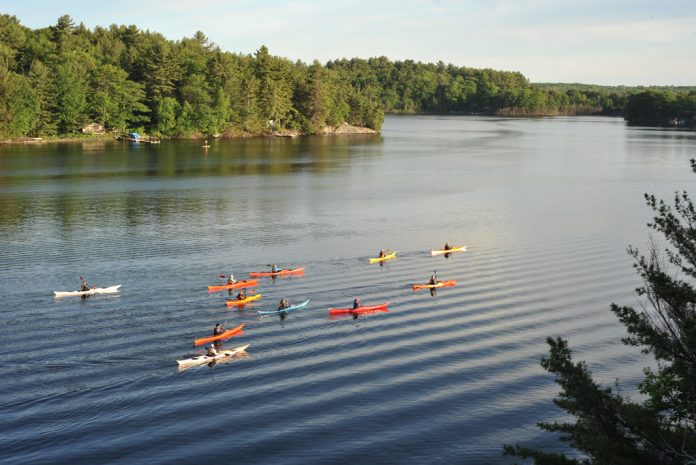
It’s a sunny Saturday afternoon in early June, and the beach is crowded with paddlers returning from skills sessions and tours among the sheltered passages of Parry Island’s South Channel.

In the clear, calm water just offshore, a beginner clinic is wrapping up reentries practice, half a dozen women scrambling across kayak decks and into cockpits while their classmates offer enthusiastic encouragement. Nearby, a crescent-shaped fin breaks the surface with a spray of water. The swimmer’s shimmering purple tail kicks at the sky as her fellow mermaids cheer loudly from the dock.

Wait, mermaids? At a paddling festival. On Ontario’s Georgian Bay.

Women On Water May Be The First All-Female Gathering In North America To Offer Instruction In Kayaking, Canoeing And Standup Paddleboarding—But Paddling Is Only Part Of WOW’s Unique Formula.

The event’s spirit of inclusivity extends to celebrating and promoting the diverse talents of the water-loving women it brings together—from professional musicians to professional mermaids.

Now in its fifth year, WOW attracts participants from around the Great Lakes and beyond. In 2018, festival-goers traveled from as far  as Nova Scotia, Alberta and Texas to join more than 100 other women at the sold-out event.

The weekend is presented cooperatively by Wild Women Expeditions (WWE) and Ontario Sea Kayak Centre (OSKC), drawing on WWE’s expertise with women-specific programming and OSKC’s network of talented female coaches.

Making kayaking more accessible to women who it may not have been otherwise has been a dream come true,” says OSKC co-founder Dympna Hayes. At the event’s welcoming address, Hayes shared her goal for coaches and participants, “The feedback I hope to hear most is: ‘She was so patient, so kind and so helpful—I learned a lot.’

Women on Water is hosted at Camp Tapawingo

Camp Tapawingo historic YWCA girls’ camp nestled along a protected channel in Georgian Bay’s Parry Sound, a short drive from the town of the same name. It’s hard to imagine a more appropriate venue. Tapawingo’s all-female staff has been creating opportunities for adventurous girls and women in the outdoors for 88 years. Black-and-white photos and aging mementos adorn the walls of the original log dining hall. WOW participants share the rustic camper cabins dotted along the shore, and just like those earlier campers, these women will gather around a flickering campfire their first night together.

“It allows participants to feel as though they’ve gone to kids’ camp,” says WOW event coordinator and canoe guide, Kate Ming-Sun. “They don’t have to worry about organizing anything other than themselves.”

When the aspirational mermaids shed their tails, the evening is just getting started. Most of the women tour over to the marketplace, where entrepreneurial instructors and local business owners display handmade jewelry and clothing, original glass and paddle art, waterproof cosmetics and much else. Many contribute items to a silent auction supporting the Georgian Bay Biosphere Reserve.

Another memorable WOW tradition begins after a hearty buffet dinner: lip sync performances followed by hula hooping and dancing. Each year, the coaches break the ice with a couple hastily rehearsed acts. But it’s usually the participants who steal the show with outrageous costumes, hilarious song choices and surprising choreography.

The magic of Women On Water

Despite The Late night, Sunday Morning’s Pre-Breakfast Yoga Class And Sunrise Paddle Draw Sizeable Crowds. Organizers and coaches keep classes flexible on day two, knowing participants may opt to join a new friend, sample a different boat or board, or reinforce a skill discovered the day before. For some, Tapawingo’s grassy lawns and breezy docks will prove more enticing than fine-tuning their forward stroke. After all, WOW is as much about nourishing community as it is developing paddling skills.

“If someone doesn’t want to participate in a skill or a workshop, there’s no pressure,” says Ming-Sun. “Our instructors bring their expertise, empathy and patience to teaching new skills and building confidence. Women sink into the weekend, enjoy themselves and meet new people, even if any or all of that causes a twinge of anxiety.”

There’s Empowerment In Shedding Inhibitions, Embracing Silliness, Trying New Things And Confronting Challenges—That’s The Magic Of Women On Water.
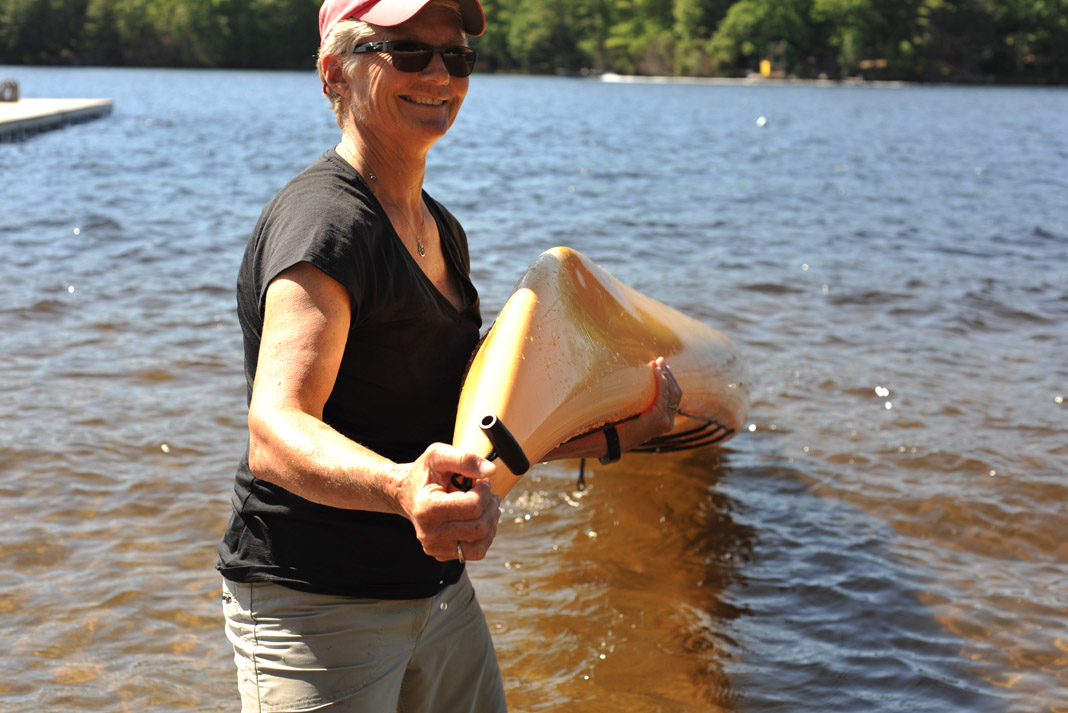
woman with an upside down sea kayak
Kris Shaw. |Photo: Virginia Marshall

Kris Shaw

Age: 60

Location: Methuen Lake, Ontario

Occupation: Adventure Guide
and Instructor

WOW Factor: After her sons left home, Shaw went back to school, completing an Outdoor Adventure Leadership program and turning her lifelong passion for wild places into her vocation. She may have come to guiding later than some, but Shaw has taken this challenging profession further than many: leading outdoor activities in Alaska, Yukon and Belize, as well as her native Ontario.

My mother was my inspiration. She would have the car packed for the last day of school and take us to the cottage for the summer. Spending those endless days on the water, in nature, laid the foundation for my love of the outdoors. As kids, she encouraged us to “come home only when you’re hungry or bleeding.”

I responded to the name “Scouter Mom” for 10 years while volunteering as a troop leader with Scouts Canada.

Being self-employed most of my life, I’ve been fortunate to combine my business background with my guiding and paddling skills.

There have been many wild moments—a collection of beads on a necklace that isn’t yet finished. I think of ocean surfing with my son in New Zealand; seeing polar bears and muskox while guiding dogsledding expeditions in the Arctic; and sunrise skinny-dipping on Georgian Bay before the world wakes up.

This fall, I am looking forward to a WWE trip to Everest Base Camp.

All-female trips, courses and retreats provide a unique environment where women can truly flourish and push the envelope just a little bit further.

I Enjoy Teaching Other Women Paddling Maneuvers That Are Based On Technique And Finesse, Rather Than Brawn. My motto is “life should fit into your kayak.” Simplify, get rid of the excess baggage, carry only what you need, lighten the load and make room for new memories—live without regrets.
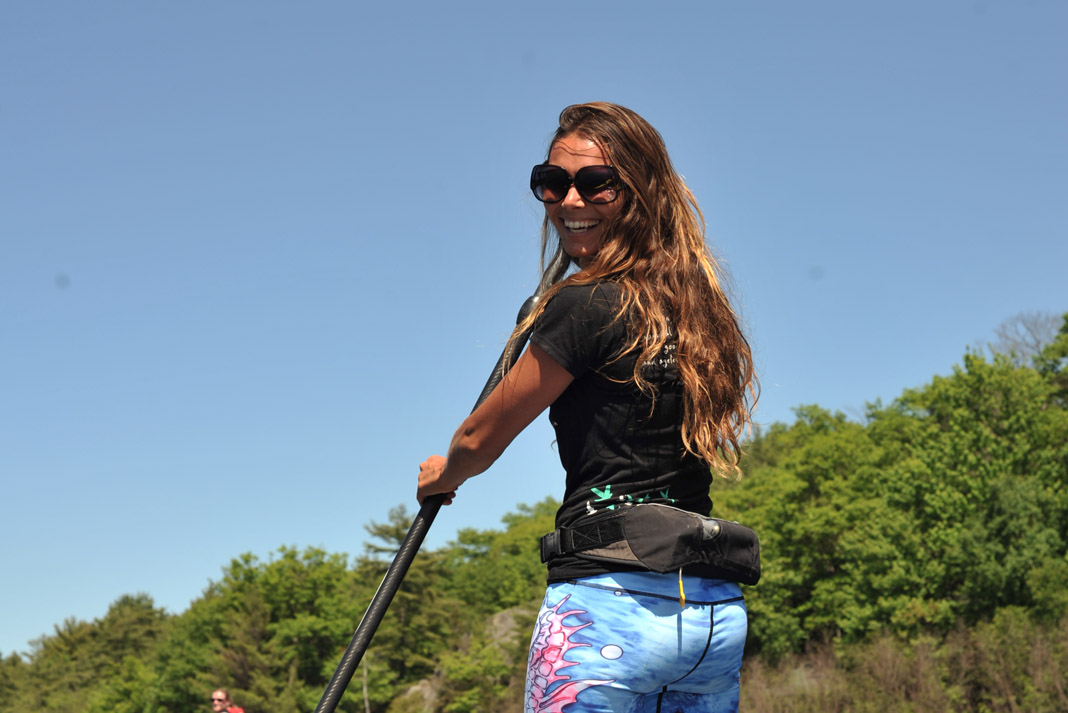
woman on a stand up paddle board
Holly Bishop. |Photo: Virginia Marshall

Holly Bishop

Age: 32

Location: Haliburton, Ontario and El Pescadero, Mexico

Occupation: SUP Instructor, Professional Mermaid and Boutique Owner

WOW Factor: Bishop has shaped her family’s lifestyle around the waters she loves—migrating between the highland lakes of her native Ontario and the magical surf beaches of Baja. Pursuing an endless summer requires creativity. With her husband, Pablo, she runs SUPnorth Paddle Board Adventures and Baja Surf SUP; her daughters, ages 12, 10 and six, help out with mermaid parties and the handmade creations in her traveling boutique, Gypsea’s Lifestyle.

Living on a beach in Mexico for five years and surfing everyday, I didn’t think SUP was that cool.

When I moved back to Haliburton, I missed the ocean so I started paddleboarding.

I was a stay-at-home mom and loved being out on the water with my girls. But I also needed some me time. I figured if I could get paid to hang out with other women while playing on the water, it would be the perfect job.

As a kid, I spent summers in the lake pretending to be a mermaid. A few years ago, my girls asked for mermaid tails they could swim in.

At first, It Was A Marketing Thing: Come Paddle Board With Mermaids. Then people started asking about just doing the mermaiding.

I’m not strict about schoolwork. Where we live, every day brings alternative learning: we’re swimming with whale sharks, watching sea turtles laying eggs, or seeing cephalopods that wash up on the beach.

This summer, I’ll have a 16-foot pop-up tent as an extension to my home. I live in a 33-foot motorhome with a husband, three kids, two dogs and a gecko, so I’m really excited to have a space for myself.

WOW is a safe space for women from all walks of life to step out of their comfort zone and try something new.

I feel most wild and free in the ocean, waiting for a wave and enjoying the sun on my skin and the water around me.
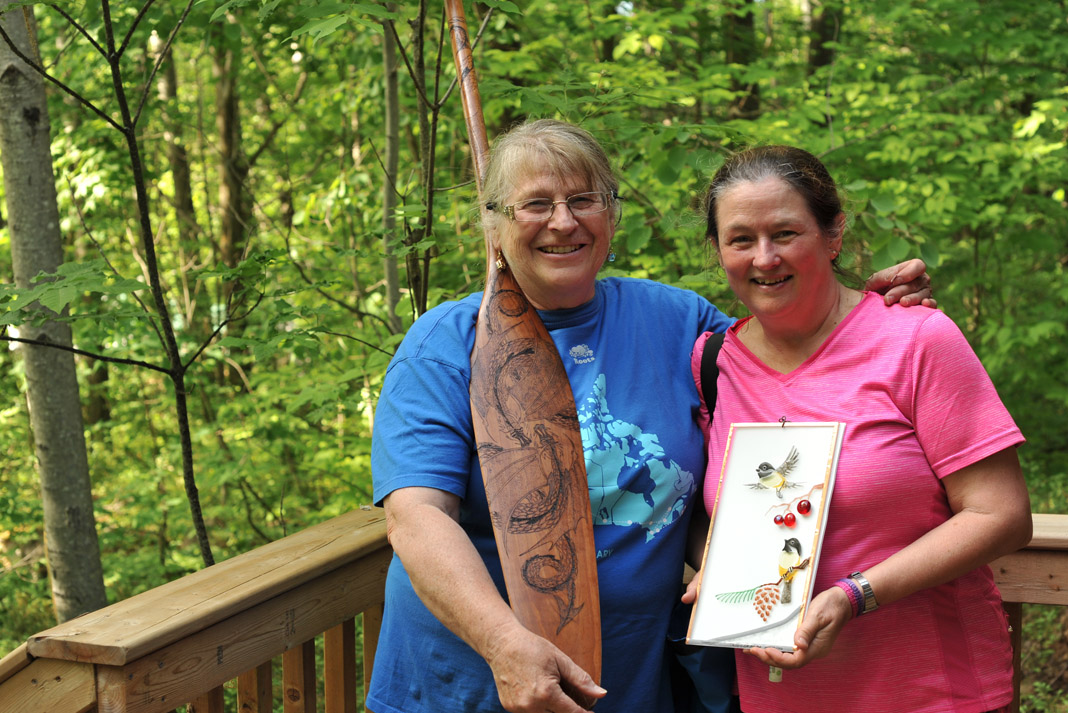
one woman holding a paddle one woman holding stone art
Dot Bonnenfant and Lynette Chubb. |Photo: Virginia Marshall

Dot Bonnenfant

Age: 68

Location: Chelsea, Quebec

Occupation: Canoe Instructor and Artist

WOW Factor: A lifelong paddler and instructor of all things canoeing, Dot is also a gifted artisan who creates incomparable heritage canoe paddles. Inspired by the flowing lines of the natural world, each unique design reflects its recipient and is etched into the paddle with a wood-burning tool. Like her love of canoeing, Dot’s paddles last a lifetime.

I can’t remember not knowing how to paddle. I was my dad’s bow paddler from my childhood until he passed away at age 90.

I thank my dad for my love of nature and canoeing, and Mat Bernard of Golden Lake First Nations for artistic inspiration. In 1935, Mat gifted my father a paddle with beautiful woodburned designs, which he used until his 89th birthday. It was and is my inspiration.

I started with simple designs for family members. Now I am working on paddle #550.

Cherry wood is my favorite. It has even grain and a beautiful color—the dark brown and black of pyrography shows dramatically.

Dot Bonnenfant taught whitewater canoeing for 25 years

I’m retiring this year to open a space for the young ‘uns.

Teaching is a great challenge. How do we find the right words, images, kinesthetic drills to really get the maneuvers…and the intangible magic coming with being in a canoe and learning what it, and you, can do?

Women who are just beginning to paddle or for the first time—being in the stern and determined to learn—inspire me the most.

WOW gives a centering time and place: we can converge, share, learn, laugh, encourage, inspire and be inspired… then take that back to our own communities.

When I am on a solo trip, when I am starting the day with the stretch of kilometers in front of me, in the moment when I push off from shore, when the scent of pines comes on the wind—those are wild times for me. The sense of being one with the world.

Lynette Chubb

Age: 59

Location: Ottawa, Ontario

Occupation: Canoe Instructor and Artist

WOW Factor: Known affectionately to expedition canoeing aficionados as the “Queen of Ungava” for her familiarity with the remote rivers of arctic Quebec, Chubb’s generosity and expertise enable her students to enjoy their own wild journeys. Off the water, she is a talented artist who uses her paintbrushes to translate inspiration from her travels into decorative window art.

What draws me to the North? The open landscape. It’s the ultimate feeling of freedom—you can look around 360 degrees, there are endless possibilities of where you can go. And freedom from human beings, our impacts on the landscape.

They’re called the Barren Lands, but they are the opposite of that. There’s an extraordinary diversity of life forms you can see just by sitting still and looking closely.

When people see my acrylate, they assume it is stained glass, but I use museum-grade clear sheet acrylic, lead, glass embellishments, and glass paints. The versatility of painting on acrylic means I’m unrestricted by traditional glass cutting and assembling. It’s so much fun to design.

Dot is a mentor to me. It’s Really Incredible To Have Strong Women Friends. She’s someone I admire, someone who’s been through a lot of shit, so I know I can go through a lot of shit, too.

We did an all-women trip together on the Churchill River in Labrador. It was so relaxing and ended up being a way more personal trip. Evenings in the bug shelter, we could just talk or cry or laugh our guts out about anything—there was no limitation on what we could express.

Women-only events, trips or courses can seem a little exclusionary, but I think they are important enough that we need to banish that perception.

Learning From Female Instructors Was Crucial To My Development As A Paddler. Our bodies and brains work in the same way. I could believe everything they said.
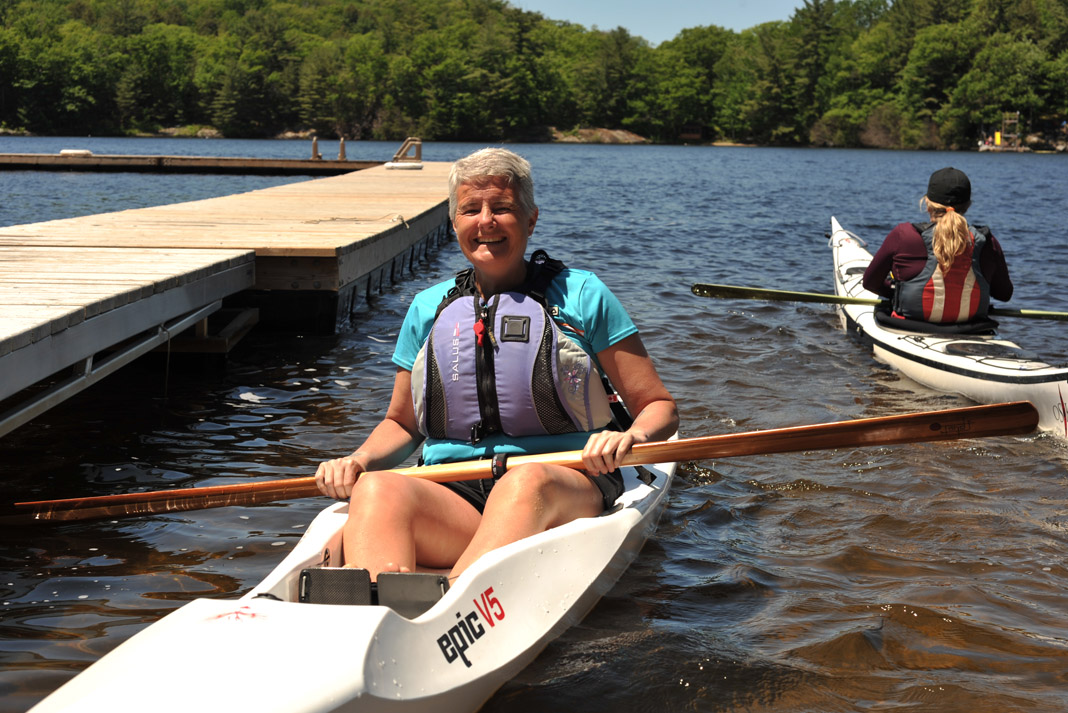
woman one a white open kayak
Janice Nicholls. |Photo: Virginia Marshall

Janice Nicholls

Age: 54

Location: Owen Sound, Ontario

Occupation: Educator

WOW Factor: Nicholls got her first taste of paddling in bumpy seas on an open water canoe trip with Wild Women Expeditions. Despite spending much of the journey terrified of capsizing the canoe, she now seeks out wind and waves—having made the switch to kayaking.

When I went back to Lake Huron’s North Channel, we had a couple of days paddling in big, challenging waves and I loved it.

I’d been looking for the right kayak to just surf waves, but couldn’t really find what I wanted. A friend who paddles a surfski said I should get one, so I did.

When I’m On The Water Paddling With The Wind And Waves, I Actually Laugh Out Loud. I’m told Greenland paddles and surfskis don’t really go together, but I’m committed. I love that my paddle is handmade and light.

This summer I want to take an overnight trip and camp in my car somewhere on Lake Huron. It will help me prep for my long-term goal: to drive across Canada with my surfski and ride waves in Tofino.

There’s A Special Energy When A Group Of Women Who Love Being Outdoors Get Together. You can’t beat it. When I’m in that environment, I feel like I fit in. I don’t need to prove myself.
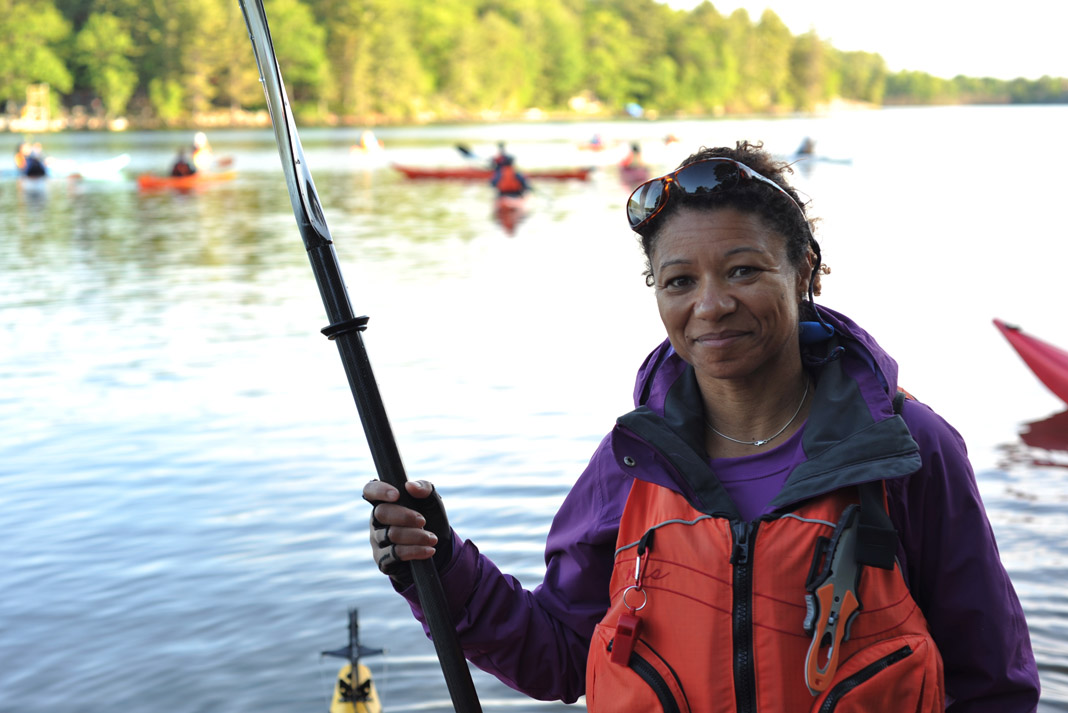
woman holding a paddle in from of a lake
Patricia Jones. |Photo: Virginia Marshall

Patricia Jones

Age: 52

Location: Tillsonburg, Ontario

Occupation: Elementary Schoolteacher

WOW Factor: Credit Jones’ years at the head of a classroom for her patient and purposeful teaching style. Alongside her husband, Rob, and 16-year-old son, Lucas, Jones has worked hard at growing her paddling skills and knowledge. Together, the family founded Otter Valley Paddle Sports and now offers kayaking instruction, guided tours,
rentals and sales.

When Lucas was 10, we tried kayaking with him. Right away, I felt peace, freedom and comfort. We knew that day this would be a match for our family in so many ways.

Now, Movie Night Often Means Watching Kayaking, Camping And Rolling Videos. I grew up in France. After my studies, I left to travel and ended up in St. Martin, a French and Dutch Island in the Caribbean. After 10 years working there, I was missing the four seasons and the landscapes of a big country.

I arrived in Canada in 2001. My husband is from Long Point on Lake Erie. The huge lake amazed me.

The more I learn through Paddle Canada, the more comfortable and confident I am in myself, and the more I’m planning new adventures.

My dream paddling trip is following the path of my ancestors through the Caribbean islands.

Being a Sea Scout leader as well, I know it is important to have a female in the team.

WOW is a great way to make friends. I met ladies who didn’t have anybody to paddle with, and by the end of the weekend, I could hear, “Eh, I live close by, I’ll paddle with you.”

If you are just discovering kayaking, hang on—it is a great sport for body and soul.
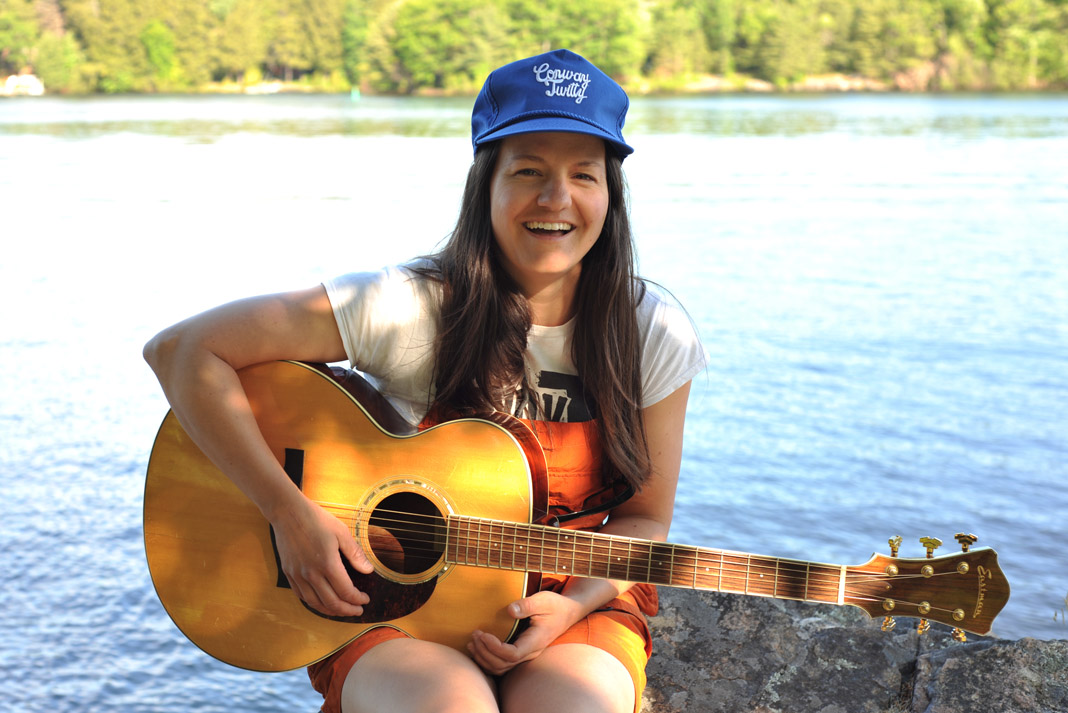
woman smiling with a guitar
Jennifer Holub. |Photo: Virginia Marshall

Jennifer Holub

Age: 34

Location: Sudbury, Ontario

Occupation: Singer-Songwriter and Canoe Guide

WOW Factor: Those who share their campsites and portage trails with Holub are rewarded with the Wild Women Expeditions guide’s soulful singing and strumming, as well as her expertise in a canoe. Holub’s rousing sing-a-longs and witty campfire badinage have become the highlight of evenings at Women on Water.

I started playing guitar and songwriting when I was 14, shortly after listening to Joni Mitchell for the first time.

My second full-length album, The Reckoning, will be released in early October. It is a hawkish condemnation of society’s place for women and an urgent call to rouse from it.

Sarah McLachlan and Ani Difranco are inspirations—they both laughed in the faces of critics who said that an all-female festival, record label, band, etcetera would never work.

My advice for first-time canoe trippers is: start with an overnighter, acquire gear as you go, borrow stuff to get by for now, and remember in camping there’s often more than one way to do it right. Above all else, respect the earth and leave no trace.

WOW is such a good idea. Having the chance to hone your craft at the start of the season can make the whole paddling experience a lot more enjoyable.

I feel most wild when I’m skinny-dipping in Temagami.

Paddling Is My Meditation, A Time To Reflect On My Life and Examine Fears

This lends well to my art; an uncluttered mind allows the creativity to flow more freely.
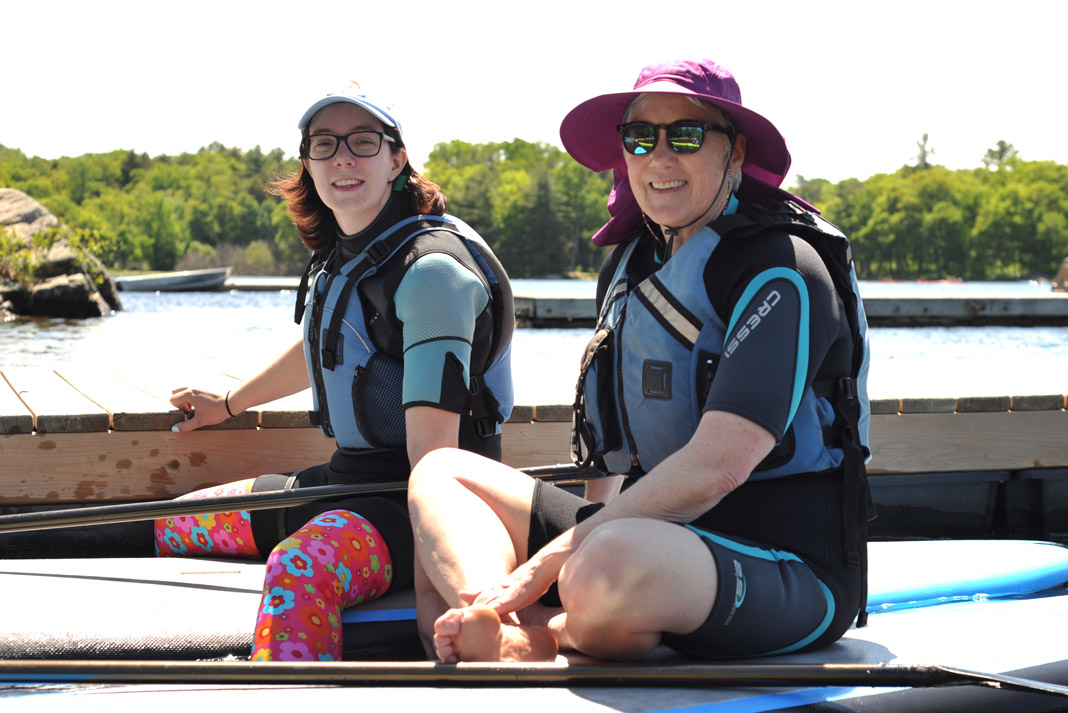
two women wearing paddling gear on boats
Emma and Pat Cummings-Winter. |Photo: Virginia Marshall

Emma & Pat Cummings-Winter

Age: 22 & 60

Location: Lockport, New York

Occupation: Optical Diagnostics Technician Library Clerk

WOW Factor: Pat started canoe camping with her husband and daughter, Emma, in the Adirondacks some 15 years ago. At Women on Water, mother and daughter sampled standup paddling and mermaiding, then took to the stage for lip sync night, channeling Shania Twain in dazzling sequined dresses.

I’ve had surgery on my knee and hand, and have had to work hard to regain strength and flexibility. Kayaking, Canoeing And SUP Allow Me To Still Get Out There And Do Stuff —PCW.

My 81-year-old friend, Margie Torrell, has infinite curiosity and is willing to try just about anything. Two years ago we took a trip to Alaska together—we hiked, biked, float-planed, rafted on a river in Denali and had a great adventure. I want to follow in her footsteps. —PCW

Who inspires me? My mom. She’s led and continues to lead this amazing and adventurous life, and for that I look up to her and strive to live my life as she does in as many ways as I can. —ECW

My Ultimate Paddling Companion Is My Daughter, For The Songs We Sing Together —PCW

I feel most wild when I am camping in the Adirondacks. I get up early and go directly to my kayak in search of wildlife and awe-inspiring views. —PCW

WOW brings together likeminded ladies who want nothing more than to experience the joys of paddling together and learning new things about others and themselves. —ECW

An all-female paddling event is important because it helps us to understand that women can do anything. When we support each other, it is empowering to us all—as well as a helluva lot of fun. —PCW

Virginia Marshall is the former editor of Adventure Kayak magazine. 
The One Real Risk Of Solo Paddling Adventures

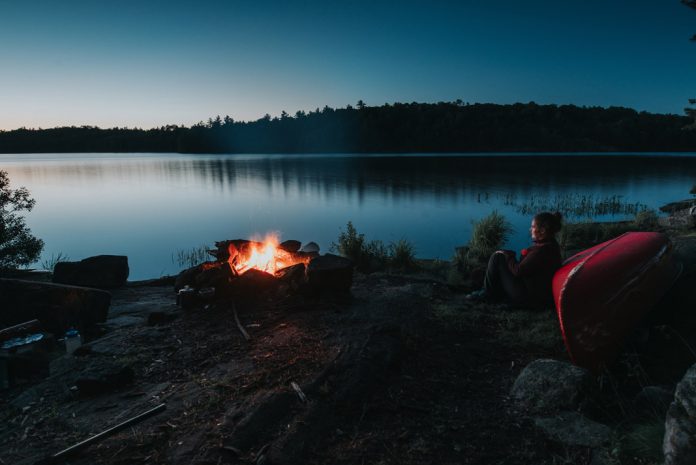
woman sitting against a canoe in front of fire
Photo: Mike Last

In the chronicles of the many badass ladies who have launched epic solo adventures, there is one heroine who stands apart in my mind for her sheer tenacity and daring.

When Audrey Sutherland started her explorations in 1962, she wanted to explore the coast of Hawaiian island, Moloka’i. Lacking any gear and without the funds to rent a boat, she did it by swimming in jeans, towing behind her camping gear wrapped in a shower curtain and stuffed into an army bag. It was the first of countless solo adventures.

Gradually—thankfully—she refined her mode of transport to an inflatable in which she traveled alone for thousands of miles through the Hawaiian islands and then in Alaska and British Columbia. She spent every summer between 1980 and 2003 exploring over 8,075 miles of islets and waterways of the Pacific Northwest.

In July, Patagonia Press released commemorative editions of two of her books, Paddling My Own Canoe and Paddling North. The paperbacks follow two of her 20 trips through rugged wilderness, trips she started at age 60 after raising four kids as a single mom. Sutherland’s books are quintessential guides, humorous recollections and sage perspective gained from racking up some 12,000 nautical miles alone on remote seas.

For Sutherland, it was always the same philosophy. Go simple, go solo, go now. “The only real security is not insurance or money or a job, not a house and furniture paid for, or a retirement fund, and never is it another person. It is the skill and humor and courage within, the ability to build your own fires and find your own peace,” she wrote. Audrey Sutherland died peacefully in 2015 at the age of 94.

Announce a solo trip and naysayers soon chime in with the “what if’s” and urban legends starring poor saps alone in the woods with only psychopaths, bears and banjos for company.

As Sutherland knew better than anyone, when solo it’s inevitable you’ll discover just how capable you are. Or aren’t, as the case may be. In an increasingly risk-adverse world, her mindset is rare.

Solo travel like Sutherland’s not only pushes the paddler outside of her own comfort zone. It chafes against the expectations of others, defying conventions of convenience and safety, and in Sutherland’s case, of age and gender.

Any solo tripper has likely experienced some version of this. Announce a solo trip and naysayers soon chime in with the “what if’s” and urban legends starring poor saps alone in the woods with only psychopaths, bears and banjos for company.

In the article “Risk Management Is Sucking The Life From Kids’ Paddling Trips” professor Bob Henderson and Ryan Howard discuss the relative risks of backcountry adventures, which by every metric are small in comparison to our everyday activities. Despite the facts, the unknown wilderness is often perceived as threatening by those who don’t venture farther into the woods than the cottage doorstep.

Undoubtedly, going solo increases risk—without a trip mate, who will activate an EPIRP or act as a first responder in the unlikely event of an accident or medical crisis? Just how much risk increases is hard to measure, however, factoring in specific environmental hazards with skill and good judgement.

Nothing is ever perfectly safe, and our aim shouldn’t be to try and make it so. As Henderson notes, trips should be as safe as necessary, but we can’t consume ourselves with trying to make them as safe as possible. There is risk as inherent in the outdoors as in getting out of bed in the morning.

For Sutherland, it seems like going solo was never in question. Who else had the time and desire to spend three months paddling the coast of Alaska?

Alone, you are more aware of your surroundings. To have actual survival, living or dying, depend on our ingenuity, skill, or stamina—this is a core question we seldom face,” writes Sutherland at the end of her journey in Paddling My Own Canoe. “The confidence and strength remain and are brought back and applied to the rest of life. I can return to the lonely splendor—and I am no longer afraid.

Far more dangerous than going solo is not going at all.

Last year, editor Kaydi Pyette spent six months on a solo adventure, pedalling her bicycle through Southeast and East Asia, wild camping much of the way. Feature Photo: Mike Last

Wild Women Paddling And Adventure Tours

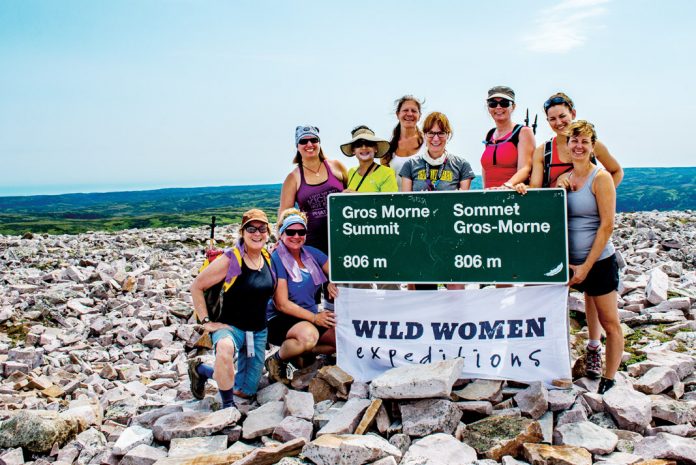
9 women standing in front of a sign

I’m midway through a networking session at the Adventure Travel Trade Association conference when Jennifer Haddow, the owner of Wild Women Expeditions, approaches me.

It feels serendipitous—earlier that morning, my mom returned from a Wild Women trip to the Galapagos. Haddow’s eyes light up when I tell her. “Of course I know your mom,” she says. “Doris, right?”

I wouldn’t be so impressed by Haddow’s recall if it wasn’t for the fact my mom is just one of 800 women to travel with Wild Women this year.

An Adventure Travel Company Geared Towards Women Aged 45 And Up, Wild Women Operates More Than 100 Tours Annually. It wasn’t always this way. When Wild Women launched in 1991 as a small canoe outfitter for women based in the Sudbury region of northern Ontario, it was the only tour operator of its kind.

“We were kind of the laughingstock of the outdoor adventure industry. Women going into the backcountry alone was not a thing,” says Haddow, who describes Wild Women’s founder Beth Mairs as “trailblazing.”

It didn’t take long for the laughing to stop. Unlike multiday trekking, kayaking or canoeing can feel intimidating for first-timers—and Wild Women offered a solution for the curious, with a focus on empowerment and skills building.

Women want to get their feet wet,” says Haddow, who grew up in Newfoundland on the edge of Gros Morne National Park. “That was my experience. I had to get the introduction and then it lit me up and I felt really confident to go out on my own adventures.

By the time Haddow purchased the company in 2010—after taking her first kayaking trip in 2007—its itineraries had expanded to include British Columbia and the Maritimes, including paddling adventures to Haida Gwaii and the Broken Group Islands. More activities were also on offer, including trekking, cycling, yoga and horseback riding.

Haddow, who had a background in international development, saw room for further growth. Based on feedback from regular clients—Wild Women has a return rate of 30 to 40 percent—she identified it as the perfect time to go global.

What she’s done in less than a decade is as impressive as her ability to remember her clients’ names.

Wild Women is now the world’s largest adventure tour company for women

By 2019, the company will send 2,000 participants per year on one of 200 tours to 25 countries worldwide. In order to keep up with demand, Haddow now employs a staff of nine full-time employees, who work remotely across the country.

Although she’s reticent to put a valuation on the company, Haddow does share revenue has increased by over 2,000 percent since 2010. This puts its annual revenue well around the seven-figure mark—a profit Haddow projects will double in 2018-19. Not bad for a little canoe outfitter.

This rapid success hasn’t come without its speed bumps. “In Canada, there’s a lot of rockstar paddling guides, but finding local female guides in many international countries is one of the bigger challenges,” she says.

And despite the proliferation of women-only travel operators—with adventure tourism heavyweights such as Intrepid launching their own female-focused expeditions this year—stereotypes still persist.

“There’s this image of badass, sexy, fit 20-something travelers who are really only in it for the sport, which can send a disempowering message,” says Haddow. “We should be celebrating badass women of different ages and body types. We want kayaking and canoeing to feel accessible for 50-plus women too, who might not be hard-bodied athletes.”

This, And Promoting Environmental Sustainability, Is Part Of The Reason Paddling Remains A Central Pillar Of Wild Women’s Trips. For me, it was never about having mad skills with a paddle—it was about getting deep into the heart of a wilderness area,” says Haddow. “The only job I care about is helping women getting their asses in the bush.

Jessica Wynne Lockhart is a freelance journalist and contributing editor of Verge Magazine, a publication devoted to travel with purpose. She’s passionate about ethical and responsible adventures.

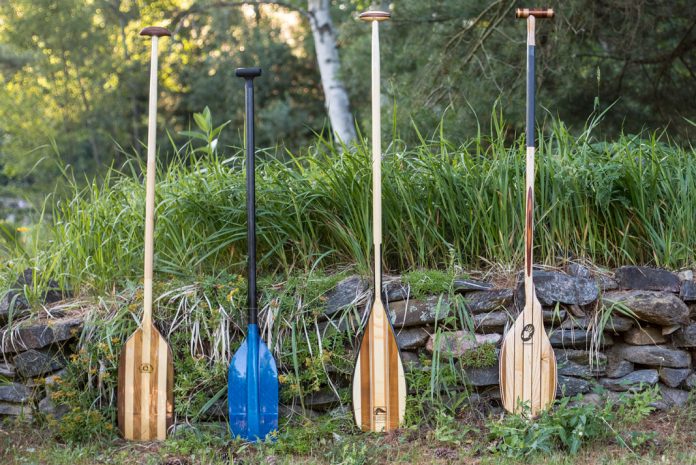
Whitewater Canoe Paddles For Adventure Seekers

4 canoe paddles standing in a row
wooden canoe paddle
Go solo go now. | Photo: Michael Hewis
$160 USD; $180 CAD
 www.greyowlpaddles.com


1. Whitewater C-1 paddle by Grey Owl

In 1991, Grey Owl Paddles owner Brian Dorfman was convinced the world needed a beefed up spoon version of his popular Hammerhead. I must have purchased one of the first couple hundred of the new Grey Owl C-1. I know this because I’m still using it 27 years later. Why? Because until last year nobody could get a new one; Dorfman had taken it out of Grey Owl’s catalog in 2005. Now it’s back, and here’s why.

This is a tough whitewater canoe paddle. The C-1 has a big blade by today’s standards, but I don’t care who you are when you need to move a fully loaded tandem tripping you want a blade to put out. The cambered spoon is seven-ply laminated butternut, walnut, and basswood with a four-ounce fiberglass cloth overlay on each face and a casting epoxy tip wrapping the entire blade. Call me whatever names you want, but I pry off the gunwales. Lucky for me Grey Owl wraps the bottom half of the shaft in a protective Dynel sleeve. To top it all off, I love the oiled walnut mushroom grip.,

plastic blue canoe paddle
Don’t let this Bandito run get away from you. | Photo: Michael Hewis
$215 USD
www.wernerpaddles.com

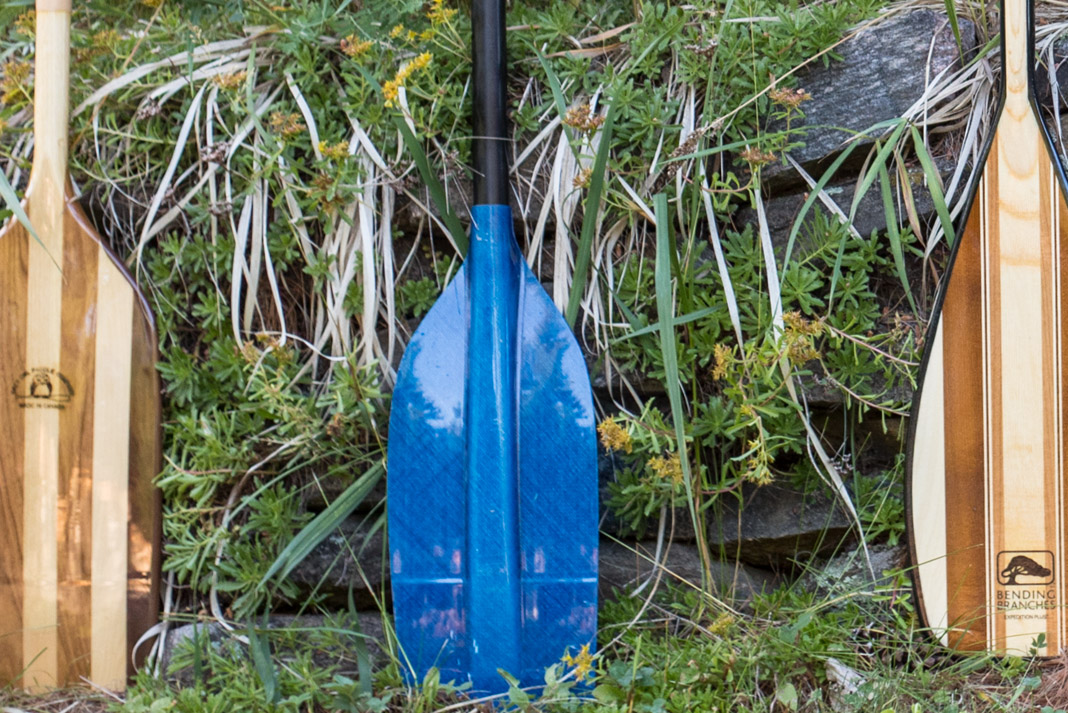
2. Bandito by Werner Paddles

At the time of writing, Werner Paddles announced the signing of adventurer Jim Baird as their first canoe athlete. Jim’s a monster of a man most often found on remote wilderness rivers or YouTube with a Werner Bandit in his hands. Anyone who’s beaten the shit out of Werner’s staple whitewater canoe paddle knows it’s tough. They also know it’s big. Fine for Jim Baird.

For wilderness travel, I like softer wooden paddles and full-sized blades, but for solo boating and C1, I prefer lighter and stiffer composite shafts and blades with the smaller surface area for less power and faster stroke rates. The new Werner Bandito is more than a long-awaited trimmed down Bandit. Werner borrowed from their standup paddles and integrated a LeverLock adjustable T-grip allowing the Bandito to range from a 54-inch paddle to a 62-inch paddle. Cool if you’re still growing, you paddle different boats with different seat heights, if you loan your paddle, or if you’re a paddling school or rental shop. It is also available in a $175 range of fixed lengths and a LeverLock three-piece travel version at $225.

wooden canoe paddle
It won’t take but bending to love this wooden canoe paddle. | Photo: Michael Hewis
$149.95 USD; $199.95 CAD
www.bendingbranches.com

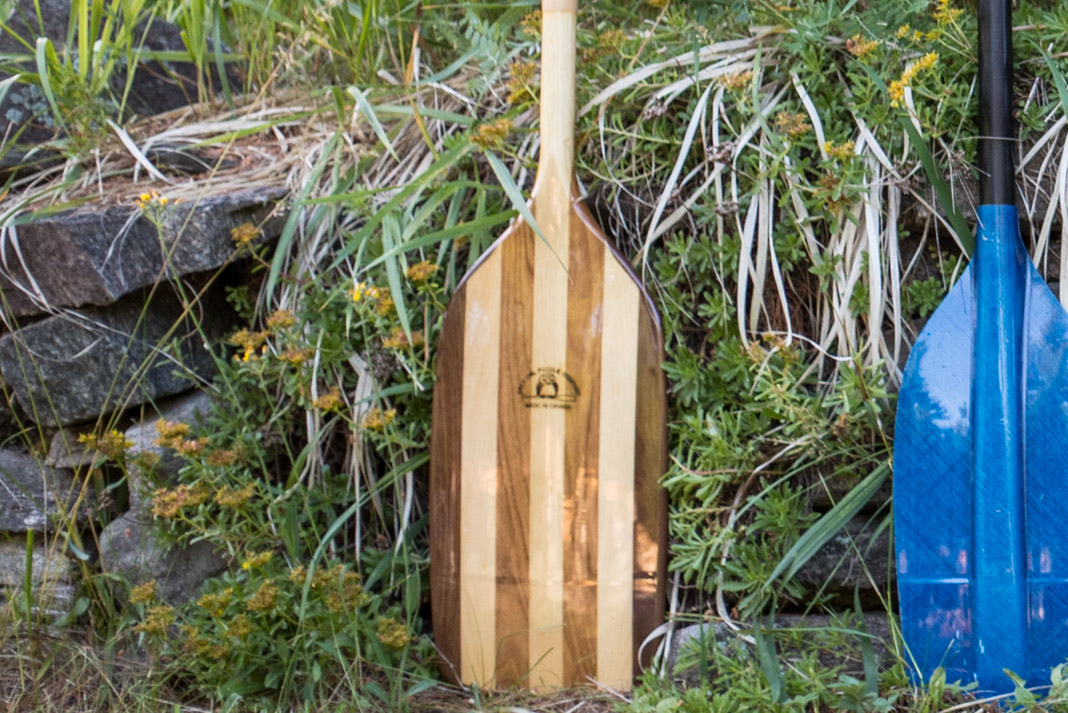
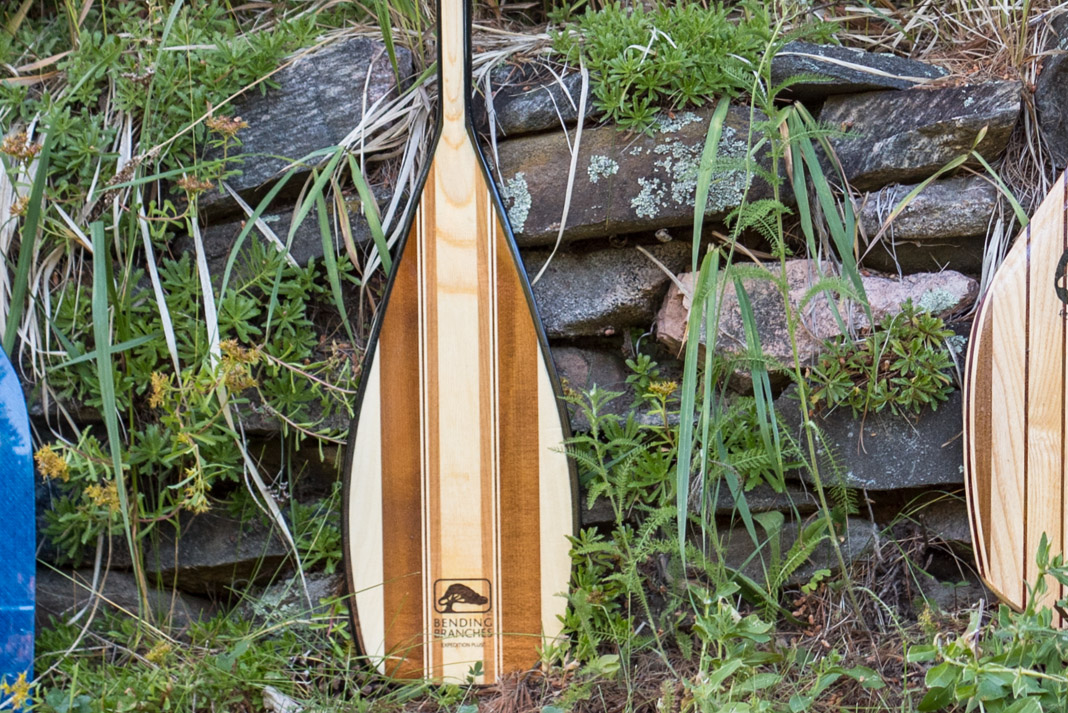
3. Expedition Plus by Bending Branches

Anybody who says nothing ever changes in canoeing has not been keeping tabs on Bending Branches over the last couple years. In 2015, a black willow shortage left the in-house team of paddlers and craftsmen to rethink many of their premium paddles, like the Expedition Plus. Bending Branches’ most durable canoe paddle now sees a new laminate of red alder, basswood and roasted basswood at the business end of a laminated basswood shaft. The most noticeable difference is the newly tapered bottom corners of the blade.

Even though the Expedition Plus has Bending Branches’ trademarked Rockguard edge protection all the way around the tip and six inches up the shaft, we all know the bottom corners take the brute of the abuse over time. So Bending Branches removed the problem altogether. And while they were at it, they narrowed the blade approaching the throat. What’s left is a shockingly light wilderness tripping canoe paddle, with moderate blade size, capable of class I-III whitewater. So don’t think of the Expedition Plus as just a whitewater paddle, it’s light enough and smooth enough you won’t have to pack a lakewater blade for the flats.

wooden canoe paddle
You’ll fall for Freefall Paddles. | Photo: Michael Hewis
$220-$250 USD | www.freefallpaddles.com

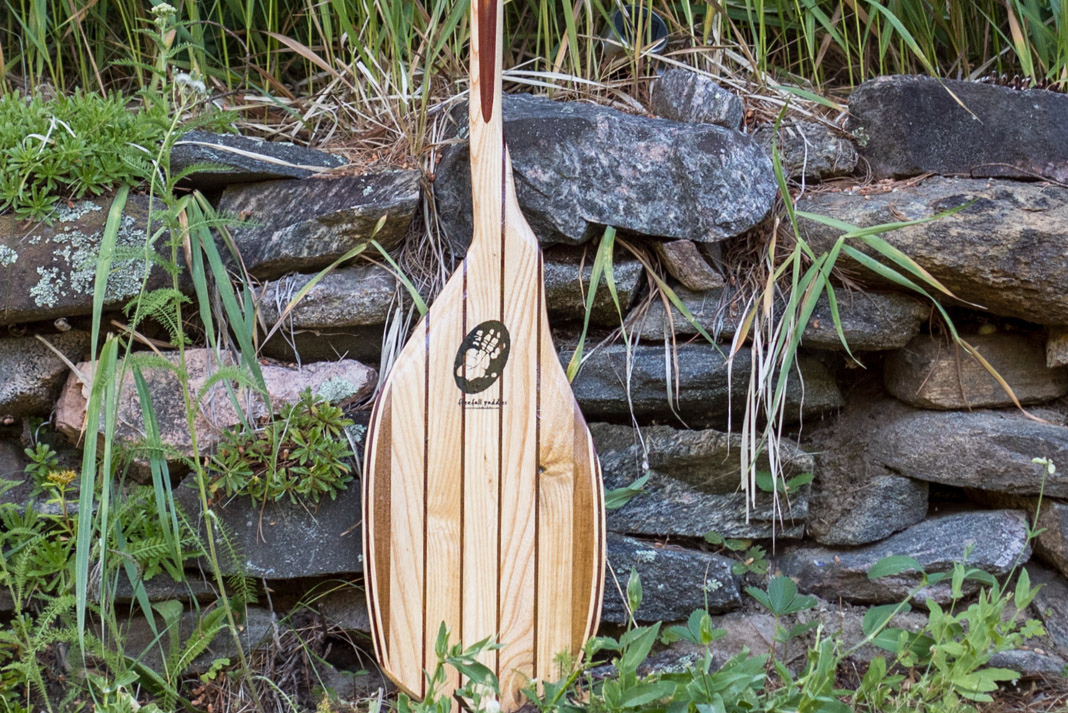
4. Cutback Re-Paddle by Freefall Paddles

I met Freefall Paddles owner Peter Reid at Germany’s PADDLEExpo. In one hand he had a Coolest Gear of the Year Award and on the other hand, he held the most unique whitewater open canoe paddle I’d ever seen. So I ordered one for review, which wasn’t easy. Each one of his custom Cutback Re-Paddles is different, made from whatever hardwood he has available. In this one, he used recycled rosewood and fallen Arabian acacia, which he says, “Has lots of knots and colors making it slightly heavier but a solid and beautiful paddle.”

[ Paddling Buyer’s Guide: View all expedition canoe paddles ]

I had to Google acacia. I got the full treatment including a crankshaft with carbon top section and a massive custom T-grip Reid pitched to me as, “I made this grip tonight from bits and bobs, its very unique and if you like it, I can fit it to your paddle.” Are you getting the idea? Then I had to confirm if I was a righty or a lefty because the unique blade is cut out on the inside, allowing the paddle to run closer to the boat. Even the epoxied tip is uniquely shaped. The Cutback Re-Paddles are one of a kind and custom made in Poland or Ireland.

9 Things Paddlers Don’t Know About Wool

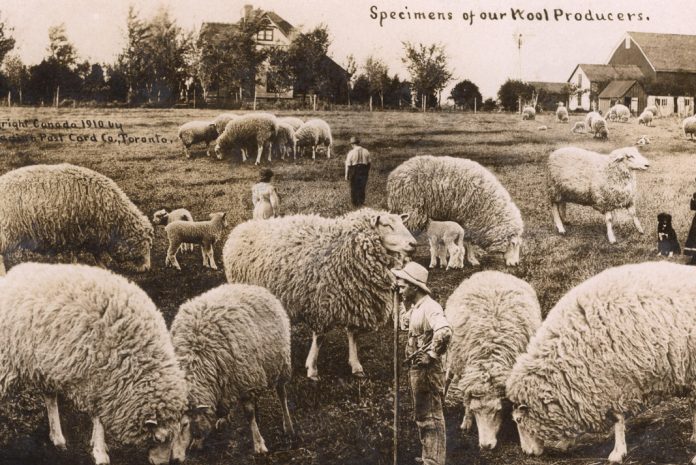
a field of sheep

Many Associate Wool With Sheep, But Alpacas, Camels And Goats Also Produce Fibers Commonly Twisted Into Yarn And Made Into Textiles. More unusually, cat and dog hair can also be spun into yarn.

1. Clothing and other items made of wool date back millenia, from 3,400-year-old Egyptian yarn to fragmentary textiles unearthed in Siberian graves dating from the first century B.C.

2. Wool Has Always Been A Favorite Of Paddlers

—from fur-trade-era voyageurs to modern lumbersexuals. Wool is naturally antibacterial, helping to prevent odor, and it provides natural insulation thanks to its hollow construction. Wool retains its insulating properties even when wet, making it especially popular with off-season paddlers and campers.

3. Thanks to a high ignition point, wool is naturally fire-resistant. Unlike nylon and polyester, wool does not drip or melt when it catches fire, and it often self-extinguishes. These qualities have made wool attractive to the U.S. Army, firefighters, stunt men and women, and campers alike.

4. The fastest recorded time to shear a mature sheep is 37.9 seconds and held by Ivan Scott, 33, of Ireland. In 2017, Scott shaved 1.41 seconds off the previous six-year-old Guinness World Record, held by Australian shearer Hilton Barrett. Scott previously set the world record in 2012 for the number of sheep sheared in eight hours, shearing 744 lambs.

5. When purchasing a $80 merino wool shirt you might feel fleeced—is merino wool truly the wonder fiber it’s touted to be? Most common in New Zealand, the Merino is a type of sheep prized for its long and fine wool. Generally, the finer the wool, the softer-feeling the garment. As far as we can tell, this is the biggest, objective difference between Merino and other types of wool.

6. The Woolly Bugger Is An Artificial Fly

Widely used for both freshwater and saltwater game fish and considered one of the top patterns to have in any fly box. Conversely, being called a wooly bugger is almost always an insult.

7. Wool is woven into many common idioms, including “a wolf in sheep’s clothing” and “pulling the wool over someone’s eyes.” The phrase “dyed in the wool” refers to an unchanging belief or opinion. Its origin comes from the fact wool dyed before it was woven kept its color better than a wool garment dyed after weaving.

8. Isolated populations of wooly mammoths survived on Alaska’s Wrangell Island until just 4,000 years ago. A team of Harvard scientists is currently working on a de-extiction effort to resurrect the furry beasts through a feat of genetic engineering. They call the mammoth-elephant hybrid they hope to create in 2019 a mammophant.

9. Q: Where did the sheep go to get his wool cut?
A: The baa-baa shop.

Canoe Review: Esquif Canoe’s Huron Recreational Canoes

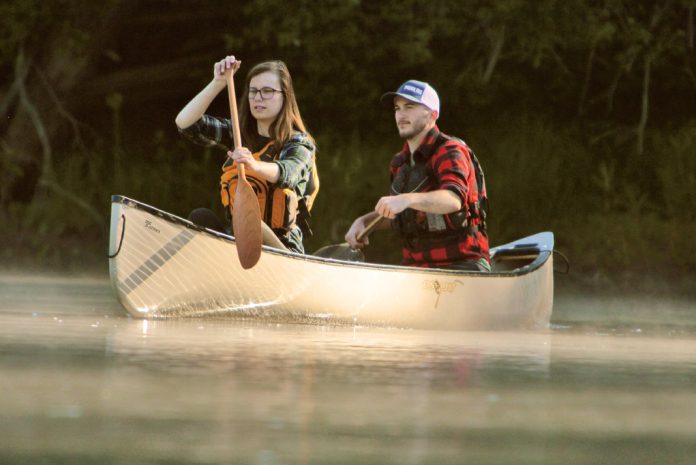
Alex and Claire paddling Esquif's Huron T-formex canoe
Pick your paddle partner for your latte on the lake. | Photo: Kaydi Pyette

It’s hard to focus with the Hurons nestled up against the shore outside my office window. The new series from Esquif Canoes features a 15-and 16-foot duo ideal for the sheltered waters beside Paddling Magazine’s cottage-turned-office headquarters.

Esquif Canoe’s Huron Canoe Specs
Length: 15 ft/ 16 ft
Width: 35 in/ 35 in
Depth: 12.5 in/ 12.5 in
Weight: 55 lbs/ 60 lbs
Price: $1,900 USD–$2,115 CAD/ $2,005 USD–$2,230 CAD
esquif.com

Esquif has been making canoes for more than two decades, building their reputation largely on whitewater and expedition designs for paddling remote rivers in Ontario, Quebec and Canada’s territories. Esquif’s core market is a niche in the canoeing world.

“We’re selling a dream. The big adventure, once-in-a-lifetime, three-weeks-with-all-your-gear dream,” says founder and owner Jacques Chasse. “But we also understand lots of people paddle with a friend on a local lake to watch the sunset.”

Or, how about at lunch with your colleagues to blow off some deadline steam?

Enter the Huron. It’s more of a sit-and-sip-your-coffee and watch-the-birds kind of boat. “It’s a different approach,” agrees Chasse. Side-by-side with Esquif’s best-selling Prospecteur lineup you might not think the hulls look too different. And you’d be right—in fact, they’re identical.

The Huron 15 and Huron 16 are taken from the same molds as the Prospecteur 15 and Prospector 16, then trimmed down to a depth of 12.5 inches. Further up the family canoe tree, both the Prospecteurs and the Hurons descend from a 17-foot Chestnut Canoe Company Prospector.

Esquif Canoe’s friendly 2-person canoe

Who is the Huron perfect for? Well, unless your go-to destination is a whitewater river or one of the Great Lakes, the Huron is probably ideal for you. The Huron series is a compromise for those who want the Prospecteur’s predictable and friendly handling, but don’t paddle much in the way of rough water.

It’s Corny to Say, But The Huron does have this nice balance between tracking and maneuverability.

Shaving the gunwale height from the Prospecteur’s 14.5 inches to the Huron’s 12.5 inches saves five to eight pounds. It also lowers the windage on the Hurons, making them easier to control in breezy conditions.

The Huron series is ideal for recreational canoeists who want rugged canoes for paddling on calm bodies of water and small rivers, but who don’t need the depth and capacity of the Prospecteurs,” says Chasse.

While the Prospecteur 15 and 16 are capable wilderness canoes for solo or tandem tripping canoes, without the depth of its cousins the Hurons lack the confidence to handle wind waves and wave trains they’re better suited to cottagers and relaxed day tours.

Esquif’s mid-sized recreational canoe

Think less canoe tripping and more of the finer things in life—on-water picnics, fishing, wildlife photography, sunset birding and toodling around without a care in the world.

“We didn’t really have a small to mid-size recreational flatwater canoe in the lineup,” says sales rep Johno Foster. “It’s corny to say, but the Huron does have this nice balance between tracking and maneuverability.”

The solo handling of the Hurons is easy and enjoyable. The only solo flatwater canoe Esquif is currently manufacturing is the 14-foot Echo—the Hurons are a good alternative for prospective paddlers looking for a bit more depth and length for more capacity and capability, according to Foster.

Between the two Hurons themselves, there’s not much difference—the Huron 15 is simply the 16-footer scaled down with reconfigured rocker, says Chasse. The 15-footer offers a little less carrying capacity and speed.

Esquif Canoe’s heavy-duty T-formex canoe

The Huron Canoes are available in T-formex. It’s a glossier, slippier and more abrasion resistant material than defunct hull material Royalex. It’s manufactured the same way though—a layer of foam core sandwiched between ABS plastic and a proprietary material Chasse won’t divulge.

This heavy-duty layup is favored by whitewater paddlers but it also appeals to anyone desiring a maintenance-free boat. The Huron’s T-Formex hull will continue to shine even after it has been dragged down to the water’s edge, banged up in shallow and rocky creeks and left to bake and freeze outside through the seasons.

Not that we’d recommend this sort of treatment, of course. What I can say is T-Formex is a pretty worry-free material—the handful of T-Formex canoes resting year-round outside the Paddling Magazine office are a testament to it.

“The durability is a big part of the appeal. With many layups there’s a feeling of wanting to baby the boat,” says Foster. “I love this about T-Formex—I never feel that way. I don’t have to worry about it.”

[ View our selection of T-formex canoe’s in our Paddling Buyer’s Guide ]

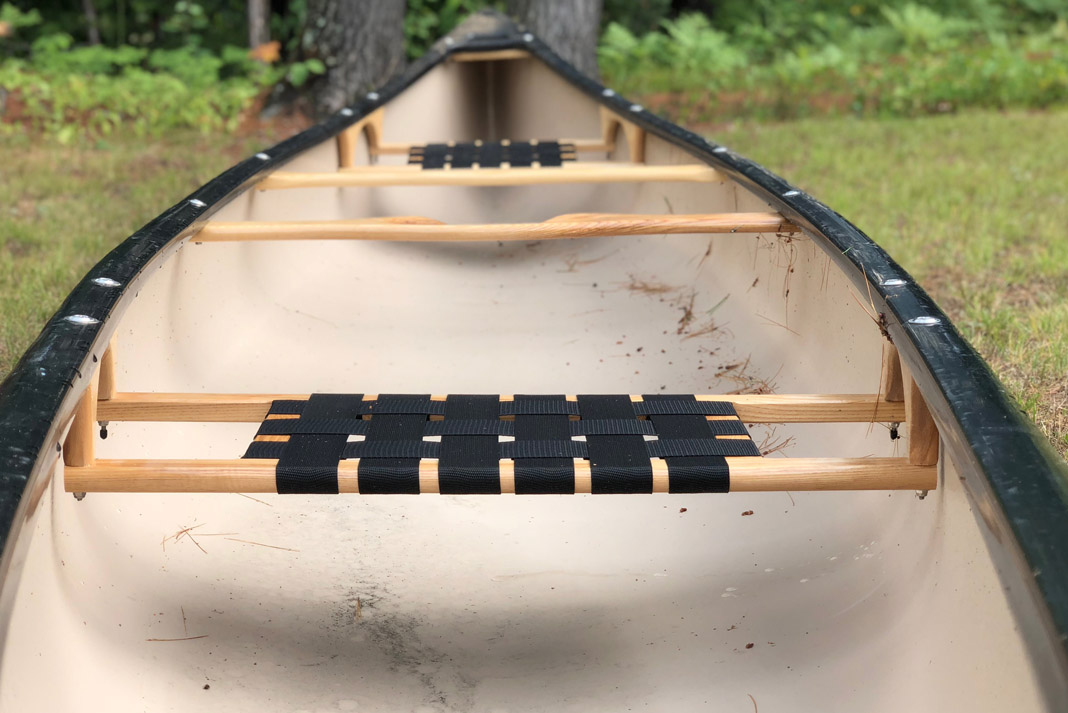
Both the Huron 15 and 16 canoe come in around the $2,000. Our pair of Hurons are trimmed with standard webbed seats, ash yokes and vinyl gunwales and deck plates. For an elegant design like this, I’d be tempted to trim it in wood.

Esquif also offers a solo outfitting package if that’s more your style. Now, if you’ll excuse me, the Hurons are awaiting my lunchtime liberation from the editor’s desk, and I don’t want to disappoint.

Pick your paddle partner for your latte on the lake. Feature Photo: Kaydi Pyette

Would You Rather Be Paddling With People Or Bears?

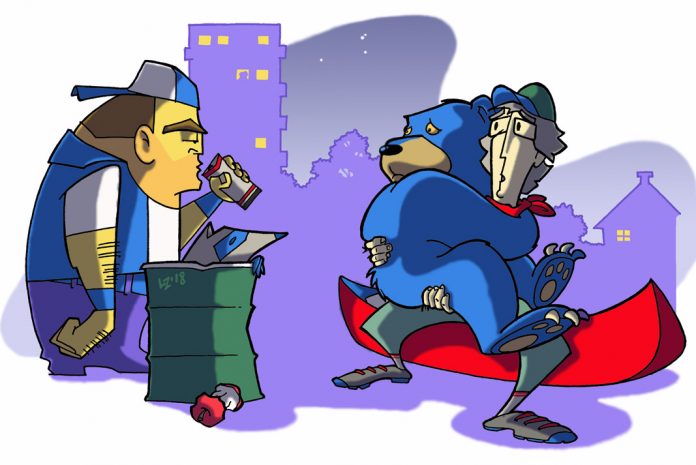
animation of a man and bear petrified of a stranger drinking a beer in the city while paddling

I Was Raised In Southwestern Ontario And I Spent My Teens Paddling Local Rivers There. However, for the last 30 years, I’ve become acclimatized to canoeing rivers in the far north where it’s rare to see other paddlers, let alone signs of development along the banks. My recent 300 kilometers down the length of southwestern Ontario’s Thames River was a totally different type of canoe trip.

Campsites along the way were a mixed bag. I pitched my tent on farm fields and backyards. I even spent a night in a king-size bed of a fancy hotel. I packed a bike lock to secure my canoe and carried my own drinking water for the entire eight days.

With the river water said to be undrinkable due to agriculture runoff, I was reminded of how comparatively safe and comfortable I am traveling in wild, remote places in the far north.

Bears and bad weather can be menacing

People, however, can be down right freaky. On my sixth day the river was constantly twisting and turning and a heat wave made paddling farther unbearable. I’d been on the river for nine hours, making my way through a section the voyageurs referred to in their journals as a “respectable ditch” due to the high, clay banks.

I would have preferred to set my tent up in a farmer’s back woodlot amongst the cow patties and stinging nettle. Instead I obtained permission to stay the night along a Highway 2 park just upstream from the small town of Thamesville. It’s an historic spot with a plaque commemorating the War of 1812 and the death of the great Chief Tecumseh.

I locked my canoe to an old willow and clambered up the muddy bank with my packs to pitch my tent on the freshly mowed lawn. There were picnic tables, charcoal BBQs and a portable plastic toilet. And there were people. Lots of people.

I had a week-old beard, smelled of wood smoke and bug dope. Still, I was a popular attraction. Everyone wanted to know where I was going. While I cooked dinner on my butane stove I visited with a Mennonite family on their way home from market. Closer to dusk I met a teenage couple who came to make out. I met some guy looking to hook up. They all shared stories of life along a southern river.

Darkness came late and eventually the crowd dispersed.  Except for one. A tall husky man in a black leather jacket, torn Wranglers and snakeskin cowboy boots jumped out of his lifted Ram pickup and limped over to the picnic table directly beside my tent.

When He Started Rambling About The Ku Klux Klan And His Firearm Collection I Started To Get Nervous. During my travels in the remote north I’ve dealt with my share of misadventures. I’ve been stormbound on the north shore of Lake Superior.

I’ve been stalked by a predacious black bear on a portage in Woodland Caribou Park. And I’ve been unsure of my whereabouts along the shore of James Bay. There were some anxious moments. But I’ve never once felt more concerned about my welfare than with this card-carrying member of the NRA.

For the first time after thousands of miles on hundreds on routes and months under the stars, I felt vulnerable. The more I ignored him and went about my business packing up for the night, the more he ranted about the rise of “white power” and the stupidity of “Goddamn communist gun control”.

When darkness finally set in, I caught him reaching into his jacket pocket. Dreams of rivers never paddled flashed before my eyes. I was holding a plastic spatula as he was reaching for a pistol. I was going to die right here at the memorial for the Battle of the Thames.

Instead he drew from his pocket a king can of Budweiser. Before he had a chance to pop the top he swatted at his neck. Then again. And again.

The Very Bloodsucking Insects I’ve Cursed In The Wilderness My Entire Adult Life Were Coming Out To Feed.They were coming to my rescue.

A few minutes of cursing and swatting at mosquitos the man retreated to his truck and sped off in a cloud of gravel dust taking his unopened can of Bud with him.

I spent the rest of the night curled in a fetal position inside my nylon shelter, grasping my camp knife. Lying there waiting for the sun to come up I wished I was camped on a nice piece of northern granite surrounded by Boreal wilderness—safe and sound.

Kevin Callan is the author of 17 paddling and camping guidebooks.

A Legendary 43-Year Family Canoe Story

3 canoes paddle the inside passage

On June 14, 1974, my grandma Glady dropped her two sons off at a marina in the Puget Sound. They loaded gear into homemade woodstrip canoes and pushed off into the cold, black water. Decades later, Grandma told me as she watched them disappear into the fog, she wondered if she would ever see her boys again.

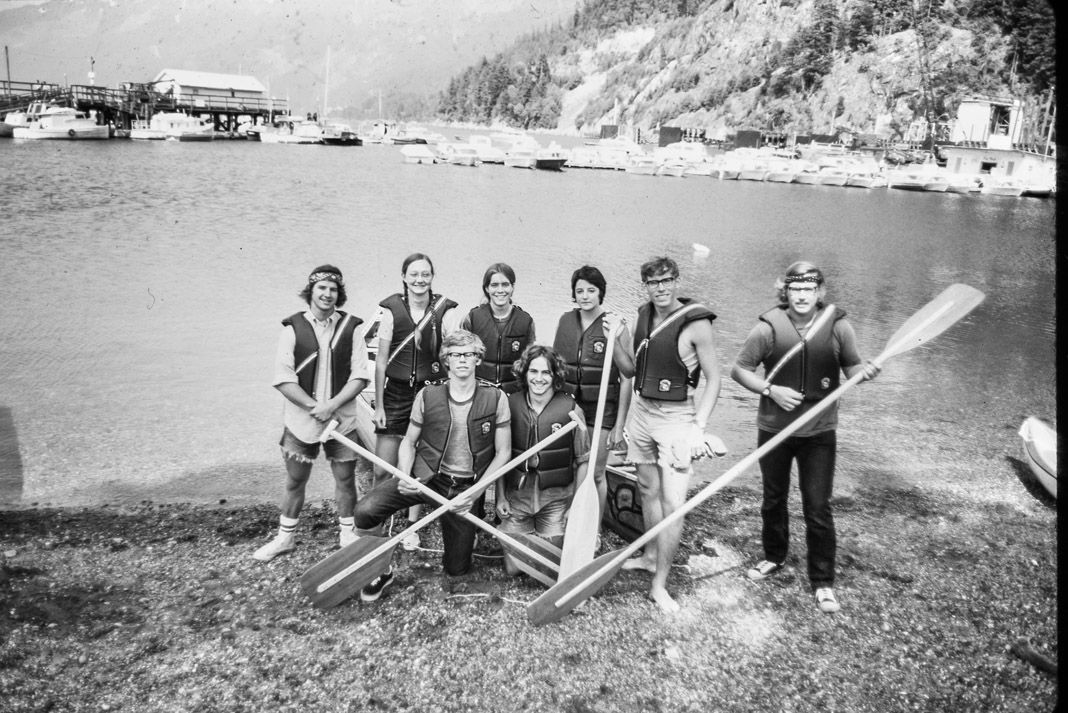
My dad, Alan, and his best friend and younger brother, Andy, had been planning this trip for years. They were climbers, mountaineers and fishermen. Before leaving college and entering what they remember calling “the real world,” they wanted one last adventure—an experience truly unknown and challenging; something beautiful they could share as brothers, and with my dad’s girlfriend, Sara, who would later become his wife and my mother, and a small band of college friends.

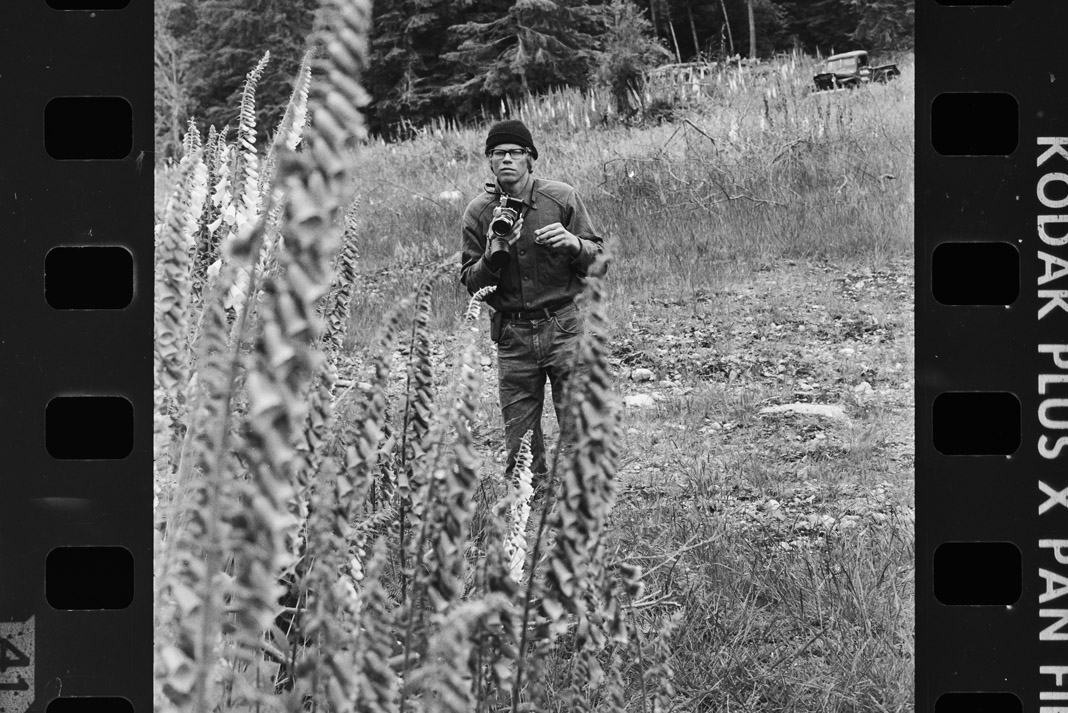
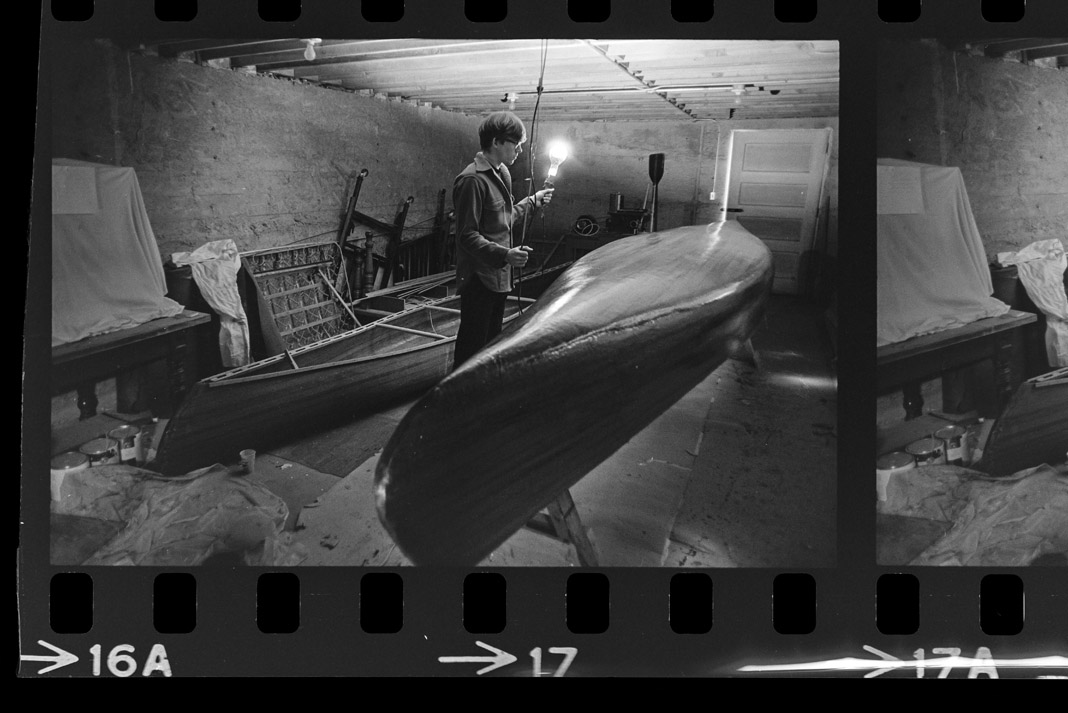
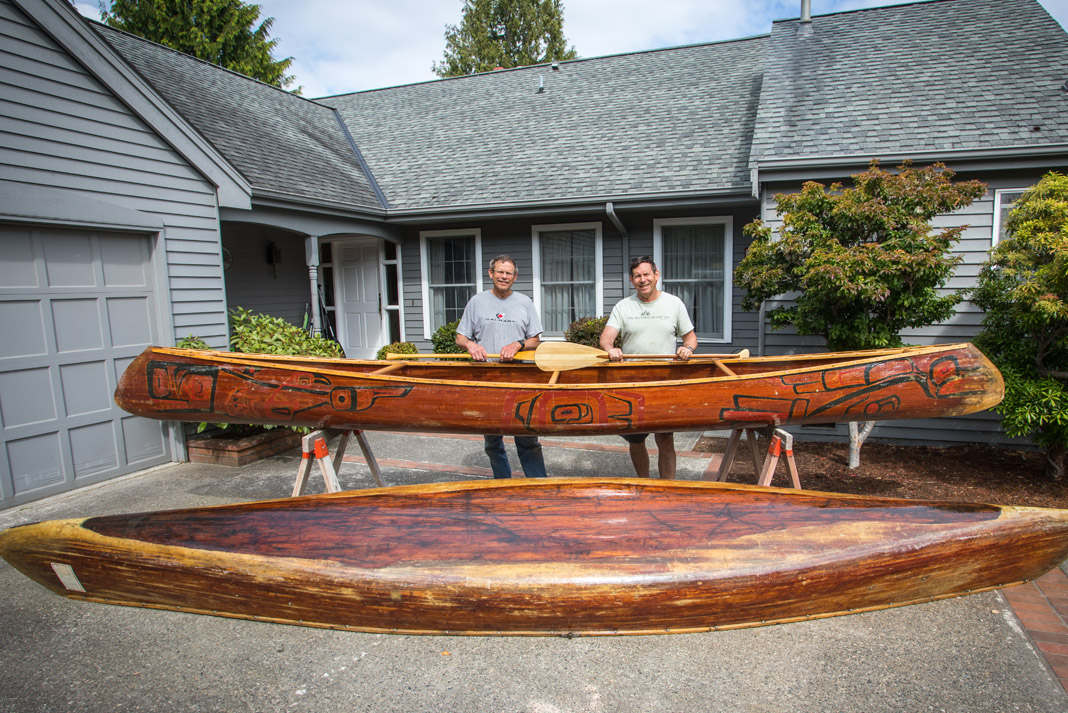
After my dad finished college, he and my uncle built their own canoes in a college basement, launched them into the Pacific, and became some of the first people in recent history to canoe the Inland Passage from Vancouver to Alaska.

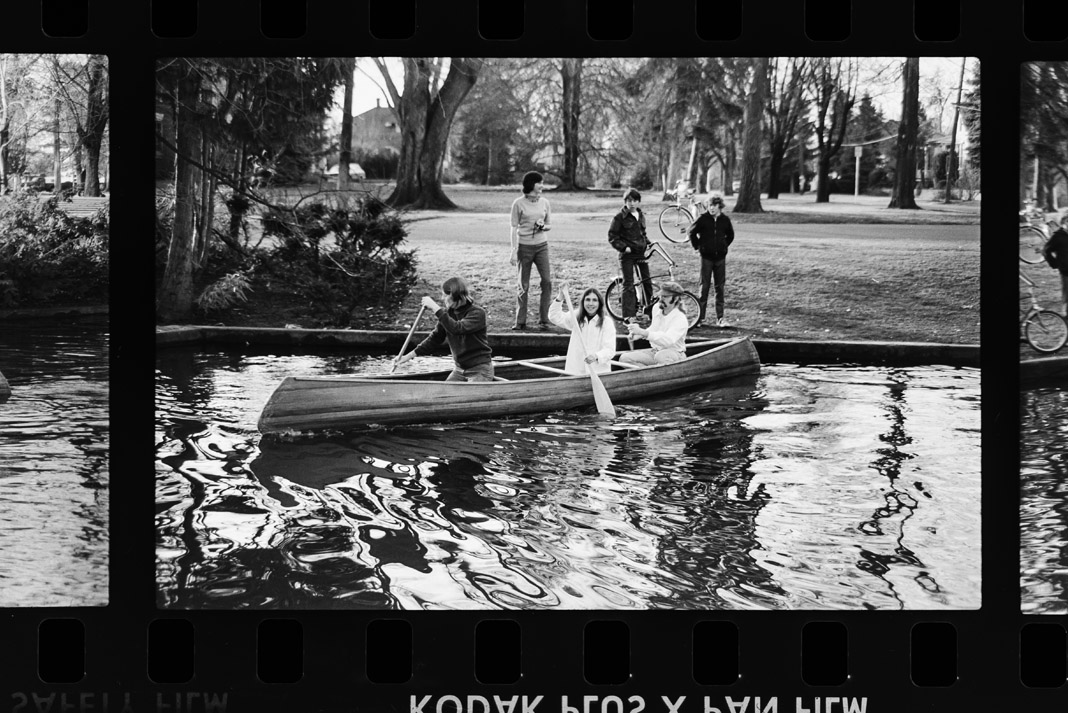
Their story became a legend in my family. One of the original boats still hangs in my parent’s garage. My brother, Ben, and I grew up paddling the old canoe—fishing from it in the Pacific Northwest and beating it up in eastern rivers, like the Shenandoah. As we reeled in fish and cut through waterways, we couldn’t help but marvel at the craft our dad built and wonder what the 1974 adventure was actually like.

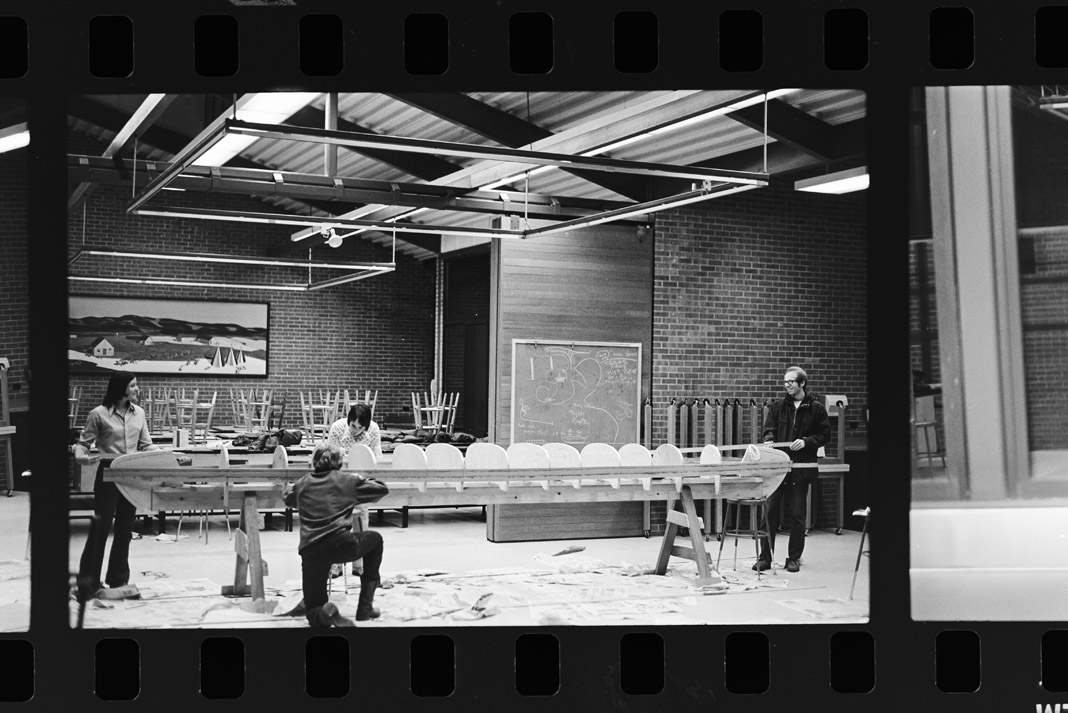
When I was 16, I unearthed a dusty cardboard box behind my dad’s CDs and cassette tapes. Carelessly written on the top of the box were the words, Canoe Trip. The images and film negatives I found inside painted vivid pictures of the 1974 legend—a story of risk, naysayers and adventure. I studied the photographs countless times, mesmerized by images of my 20-year-old parents on the adventure of a lifetime.

Looking back now, almost two decades after finding the images, I’m certain the story of my parents’ journey on the Inside Passage shaped my life choices. How could a journey I never directly experienced have had such a profound impact on me?

Before I could answer this question, I needed to understand what really happened in 1974. And so, for nearly a year, I worked on a documentary about their legendary canoe trip. In the process, I learned volumes about the real journey, my parents and myself.

The story started in 1970. After my dad finished high school, he got a job as a deckhand on a yacht called the Thea Foss, taking guests up and down the Inside Passage, a labyrinth of straits and islands extending from Washington State up the coast of British Columbia and well into Alaska. Stuck on the boat, he watched the coastline pass by and dreamed of fishing and camping along its banks.

His summer experience sowed the seed of a grand idea to canoe the entire coastal waterway. He rushed home from his summer job to share this dream with his younger brother, Andy.My Dad and Andy had a unique relationship as brothers. Close in age, they were best friends throughout childhood and when they went off to university at Whitman College they roomed together.

As early adopters of outdoor adventure, they spent their weekends climbing, camping, fishing and ski-mountaineering in the wilderness of the Pacific Northwest. Together, they set a goal of embarking on a journey along the Inside Passage just after my dad graduated from college and before medical school consumed him. The only obstacles standing in their way were a lack of canoes and empty pockets.

Determined to make this trip a reality, they found a man in Bellingham, Washington who shared building plans. For the last six months of university, the duo worked every night in the college art building, sawing, sanding, bending and varnishing. With $500 and a lot of elbow grease, they built three gleaming cedarstrip canoes before graduating.

At the time, only a few people had ever canoed the entire coastline, and there was virtually no information available. During the building process, my dad and Andy sent letters to fishermen, loggers, writers, homesteaders and the Forest Service—anyone and everyone they could think of who lived along the coast and could give them advice about canoeing the Passage.

The letters returned were almost unanimously apocalyptic. “Go home and sell your canoes,” they read. “You’re going to kill yourselves,” wrote another. “People go down in big boats on those waterways. Why are you going in a canoe?” Letter after letter returned, urging them not to do it. Finally, just a few weeks before they were planning to leave, one letter returned with the response they were waiting for. It began, “Do it. It’ll be the best trip of your life.”

At the time, my dad was dating a Wellesley college girl named Sara, who would eventually become my mother. They had been together for about a year, and he decided this canoe trip would be a good opportunity to get to know each other better. As an invitation, he sent her a survival kit filled with trinkets and tools he said would sustain her during the voyage. She accepted without hesitation. Soon after her parents sent her to a psychiatrist to attempt to talk her out of going.

As the story goes, by the time their sessions were over, the psychiatrist wanted to join the expedition.

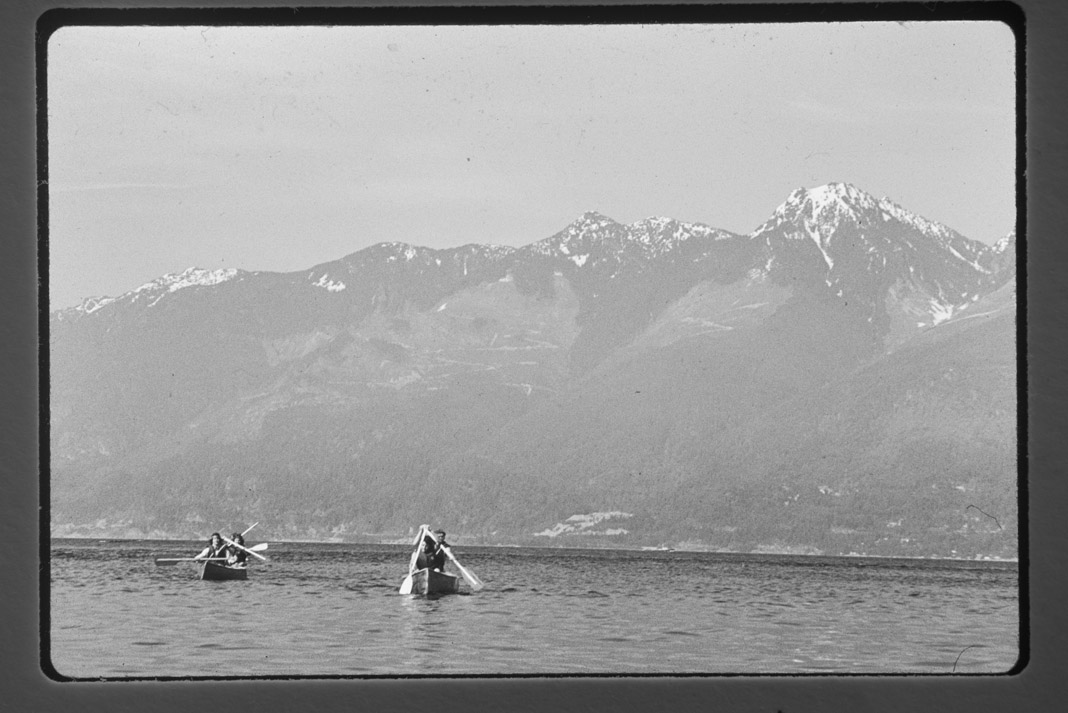
On June 14, 1974, my 20-year-old father, mother and uncle, along with a small crew of their friends, launched their three homemade canoes into the Pacific and began an eight-week journey along the Inside Passage.

For the next two months, they paddled, fished and camped in one of North America’s wildest landscapes. After their adventures along the coast, they returned home as different people. The canoe trip had changed them, and the story of the grand adventure lived on long after summer faded. Over the next 40 years, tales from their trip were told, and retold. Through a game of telephone and the metamorphosis of aging memories, the story of their adventure became morphed, exaggerated, forgotten and remembered. By the time I became an adult, it was hard for me to separate fact from legend. In my mind, and even in the minds of my parents, they had returned home upon the completion of their intended journey. But as a kid you never really get the full story.

Some of the group needed to go back to college and had enough, while others wanted to continue on to Juneau, their intended destination. They had never completed the original trip as intended.

In September 2015, as we prepared centerpieces for the guest tables at my wedding, my uncle Andy told me by the time the group reached Ketchikan, about 800 miles from their starting point, the crew was divided. Some of the group needed to go back to college and had enough, while others wanted to continue on to Juneau, their intended destination. They had never completed the original trip as intended.

When my dad and Andy started this trip, they were young men with endless possibilities in their lives. Now, 43 years later, they are both nearing the ends of their careers, with more time behind them than ahead. But they still had at least one big adventure left in them. On my wedding day, my brother, Andy, my dad and I made a plan. We decided to refurbish the canoes, return to the Inside Passage and complete the journey through the Pacific Northwest that had shaped them so profoundly as young men.

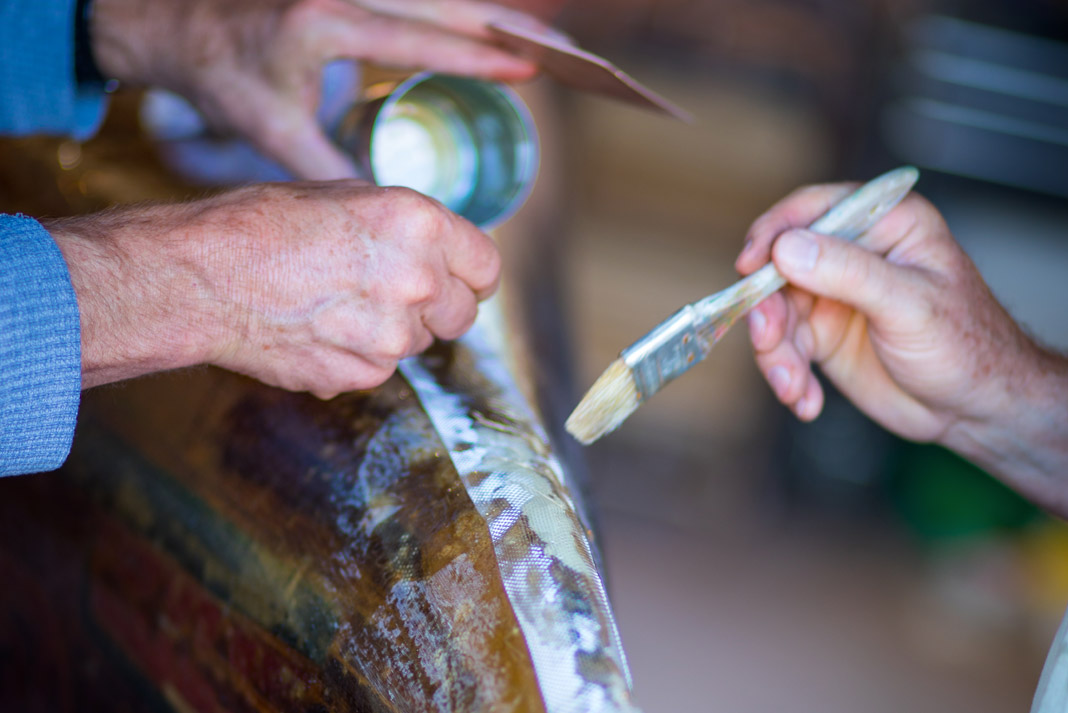
Our first challenge was getting the four-decade-old canoes ready. When the crew returned home from Alaska in 1974, one canoe went with my parents, one with Andy, and the third was left at my grandparents’ house. Each canoe took on a life of its own. Andy became a professional adventure journalist, taking his canoe on even more epic journeys in places like the Yukon and on the Peace River. The canoe in my grandparents’ house became the Puget Sound fishing vessel on family visits. And the canoe my parents kept became a cornerstone of our childhood adventures. These boats were old, and needed work before they could complete the journey they were intended for.

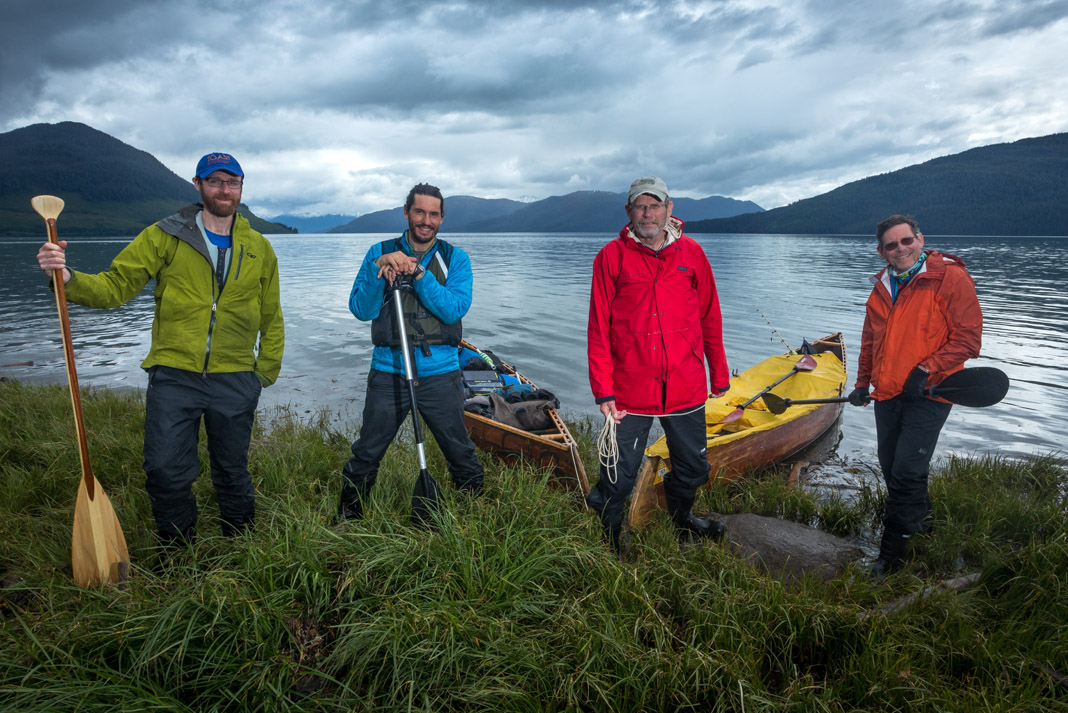
It took a week to repair two of the canoes. When ready, the four of us ferried for two days from Bellingham, Washington to Ketchikan, Alaska. Our aim was to fulfill the original 1974 goal of reaching Juneau, a 300-mile paddle from Ketchikan.

The day we arrived in Ketchikan the rain poured and the wind howled. After just a few hours of paddling up the Tongass Narrows, everything and everyone was soaked. We were in the water for less than five hours before the weather turned and forced us to land on Gravian Island. We stayed there for two days, stranded by wind and high seas. Finally, the sun came out and we continued north.

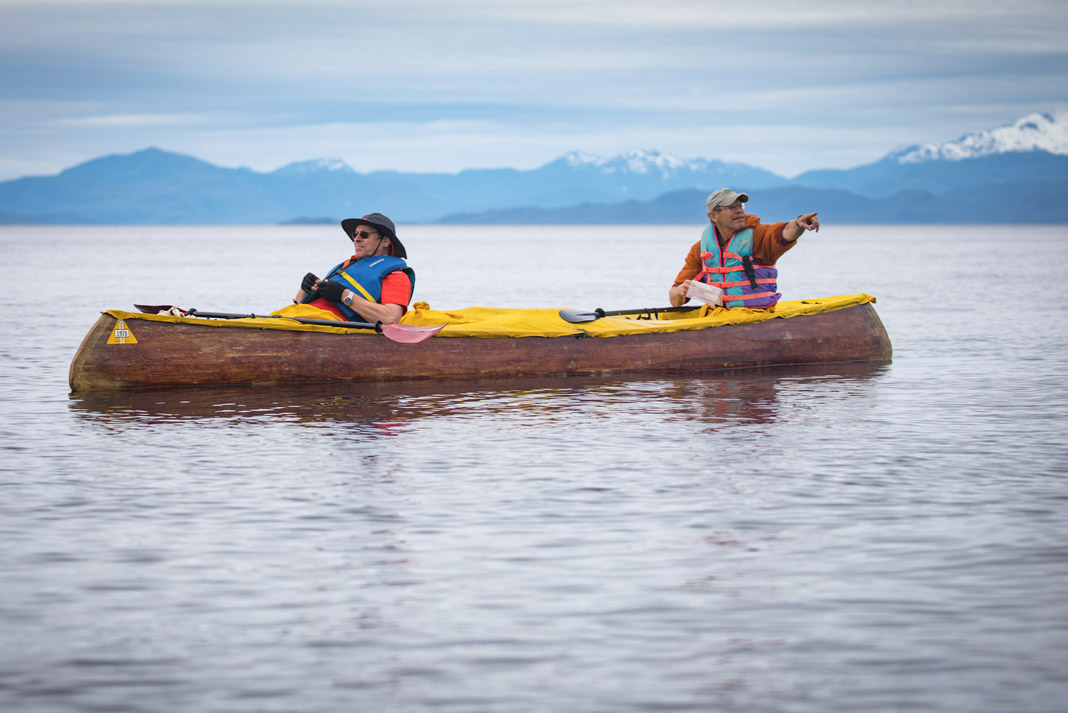
I was moved by the beauty and richness of the landscape. Every day, humpback whales breached around us. Pods of harbor porpoises rounded our canoes. Sea lions appeared suddenly around our boats, only to disappear a moment later and bark in the distance. Mink ate the many fish carcasses we disposed of after dining on the spoils of our outrageously productive fishing efforts. Evidence of bears was common and once, a young brown bear paraded through our camp, inspecting our canoes before entering the channel and swimming a half-mile to the other side. Even as a wildlife filmmaker, I have rarely seen such abundance.

As the days and nights melted into one another, and time disappeared, we shared stories, catching up on years of our busy, distant lives.

A few days into the trip, as we paddled steadily through this remarkable landscape, Ben and I realized this was the longest time we had spent together since he left home for college 18 years earlier. For my dad and Andy, this was the longest they had spent together since the 1974 canoe trip, 43 years earlier. As the days and nights melted into one another, and time disappeared, we shared stories, catching up on years of our busy, distant lives.

After almost two weeks on the water, we entered the Zimovia Strait, camping on Etlin Island for several days before arriving in Wrangell, where my brother and I would dock our canoe and take the ferry south, leaving our father and Andy to complete the last stretch on their own.

As I watched my dad and Andy paddle off into the distance to finish a journey they started 43 years earlier, I reflected on how the story of their original 1974 canoe trip, an expedition I never experienced, had impacted me so profoundly. How the stories we tell and the stories we remember are reflections of who we see ourselves to be.

As children, we don’t have our own stories yet, so maybe we adopt the ones we’re told that most resonate with who we want to be. My parent’s 1974 canoe adventure had been one of those stories.

From an early age, it was infused into my identity, shaping who I thought my parents were, and who I wanted to become. Now, as a father myself, I have many of my own stories to tell. And at the top of the list is an adventure along the Inside Passage that started in 1974 and ended in 2017.

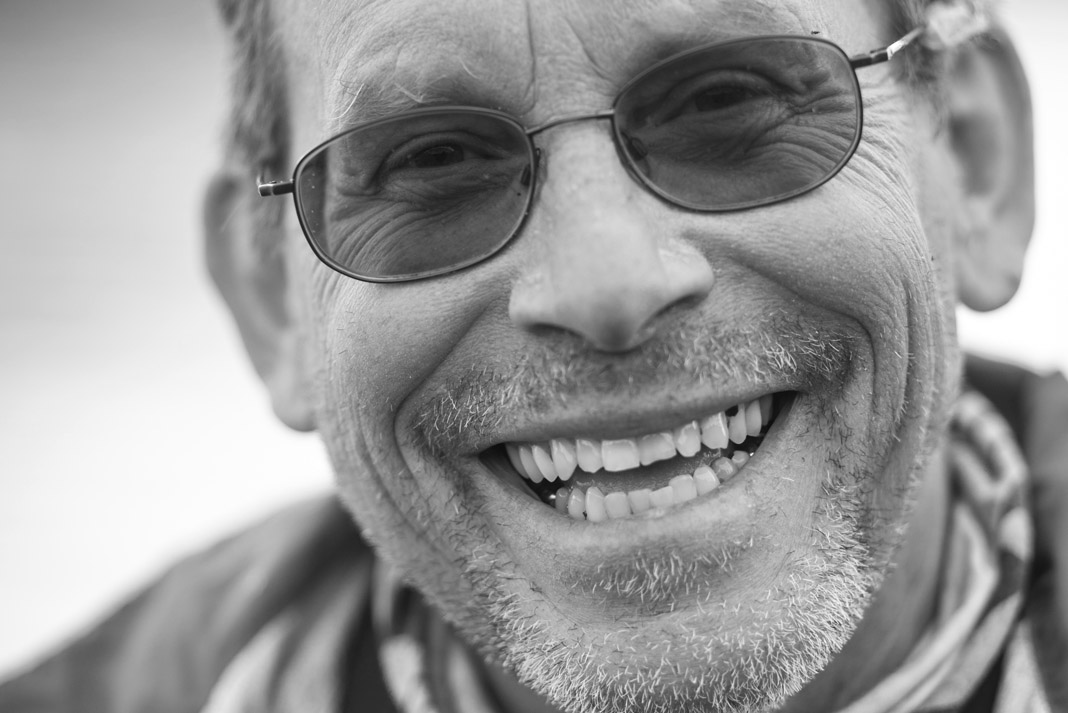
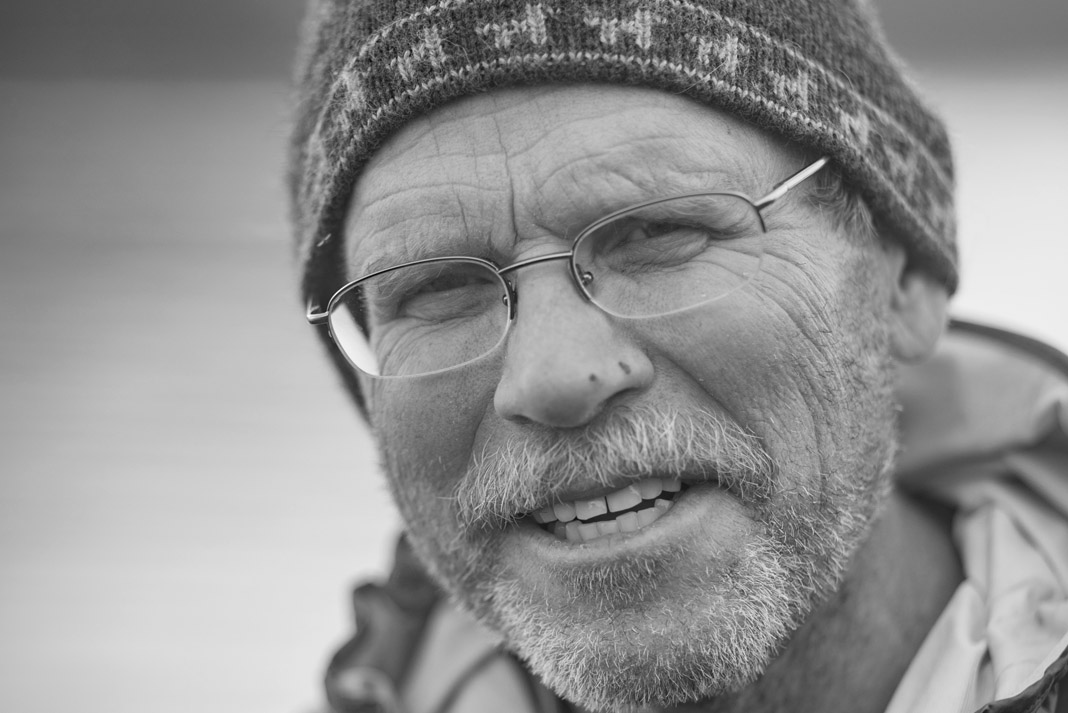
Nate Dappen is an award-winning photographer and filmmaker based in New Jersey. His images, films, books and other projects have been featured by National Geographic, Vogue, The Washington Post, Scientific American, The Guardian and World Wildlife Fund. Watch his film inspired by this adventure below.

Secrets For Building Your Own Paddling School

Brenna Kelly standing in front of paddle boards

Four years ago, Brenna Kelly left the security of her job as a whitewater kayak instructor on the Ottawa River to do what countless adventurers and entrepreneurs before her have done—to go west.

Brenna Kelly’s Adventure Paddle School

The Smiths Falls, Ontario Native Was Drawn To The East Kootenays As The Perfect Place To Start Her Business, Adventure Paddle School. No stranger to a good paddling pun, the competitive kayaker—Kelly was a member of the 2012 Canadian National Freestyle team—says the experience has been full of “ebbs and flows.”

Earlier this year, she sold the school to Columbia River Paddle. However, she remains the head instructor at Adventure Paddle School, where every summer 250 students “rapidly” learn to standup paddleboard and kayak.

We spoke with Kelly about what it was like to navigate new waters, some 3,400 kilometers from home.

Why did you choose Invermere, B.C. as your location?

I was the manager and kayak instructor at the Ottawa Kayak School and in the winter, I would go west to be a ski instructor. After a while, it was getting tiring moving every six months. I wanted to make my life in British Columbia and I want people to like kayaking as much as I do.

Out here, the rivers are shallower, faster and they don’t necessarily end in a calm pool of water. Most of the lakes in B.C. are also glacier-fed, which makes it really difficult to start as a kayaker, because the first thing you learn is wet exits and trying your roll.

That’s why Invermere was the perfect spot to start a paddle school: The lake is warm, it’s cottage country for Calgarians and Edmontonians, and there’s a small class I to II river up the road.

What were your biggest challenges as a young entrepreneur?

It was very difficult to access financing to start the school. There are a lot of specific requirements for each grant, and we didn’t meet a lot of them. It forced me to develop my business plan fully and gave me a great understanding of where I was and where I wanted to go. To anyone starting a paddling business from scratch: Start small and make organic growth. Once you have proven your business is growing, you can apply for grants or put more of your own money into it. But the grand vision will take time. Let it.

When should someone take a lesson?

It’s funny because people are like, “I can standup paddleboard.” Then you see them go out in only the calmest conditions and kind of sunbathe. It’s not something where if the wind picked up, they’d be able to paddle back. We do standup paddleboard whitewater classes, which is cool because kayaking isn’t for everybody. Standup paddleboarding is another way to get down a river and still get to see all the beautiful sights.

Where do you think there’s room for growth?

There doesn’t seem to be as big of a culture of wanting to learn the proper strokes and skills. It’s all too easy to try something and assume you have mastered it and go onto the next thing without even challenging yourself. By taking lessons, you learn new skills and challenge yourself. Sometimes you fail—but ultimately, you succeed because you’re taking on new skills, allowing you to paddle in cooler places and meet more passionate people.

Who are you most excited to teach?

I just had my first child three months ago, so that’s the new adventure at the moment. Eventually, Piper will get big enough we’ll have her out on the water. We’ve already been doing swimming lessons, just getting her comfortable splashing and interested in water stuff. She’s on the trajectory to be a paddler herself.

How Action Cameras Changed The Way We Paddle

go pro filming kayakers
If a paddler sends it but no onesees, did it really happen? Not a concern these days. | Photo: Tegan Owens

The convergence of rapidly improving camera technology and the dramatic rise in social media use over the past decade has changed the way we paddle.

For many paddlers, packing a camera to capture the action is almost as important as packing a paddle. A decade ago, adventure photography remained the domain of a few skilled individuals, carting heavy equipment and protective, waterproof housing. Today, adventure photography is accessible to anyone with a few hundred dollars to spare.

The company largely responsible for changing how outdoor sports are recorded is GoPro. Launched in 2002 by American Nick Woodman, he wanted to create a camera for consumers to capture professional quality action photos. The turning point for the company came in 2006, when GoPro launched the groundbreaking Digital Hero, a tiny, but durable digital camera capable of shooting 640×460 photos and 10-second 320×240 video clips.

While the quality couldn’t match even the early digital SLR cameras, the size and video capabilities changed the game of capturing outdoor adventures. In the 12 years since, GoPro has released nearly two dozen variations of its Hero line of cameras. The latest is a top-of-the-line Hero6 Black—a waterproof, image-stabilized camera capable of 12-megapixel photos and 4k, 60fps video.

GoPro obviously isn’t the only action camera on the market. But competitors such as JVC, Sony, Nikon and Garmin, along with many knockoffs, haven’t overcome the original action camera’s reputation for simplicity, quality and remarkable durability.

One company providing remarkable competition is DJI, a Chinese drone manufacturer launched in 2006. Like GoPro with action cameras, DJI has been the leader in groundbreaking unmanned aerial vehicle (UAV) technology for both commercial and consumer use. And also like GoPro, it’s hardly the only drone brand, but it holds a massive market share, said to be close to 85 percent for the consumer market.

Aerial photography has come a long way since Gaspar Félix Tournachon took the first successful aerial photograph in 1858 from a hot air balloon tethered 262 feet above Paris.

While DJI’s commercial drones are now being used to film blockbuster movies, the company’s inexpensive entry-level drones can be flown by just about anyone and have onboard, gimbal-stabilized cameras capable of 4K video and 12-megapixel images.

We have always been trying to make the best flying cameras we possibly can and keep the price point as accessible as possible,” said Michael Oldenburg, senior communication manager for DJI North America. “It’s all an effort to help people capture life’s moments from a new perspective.

Sure, paddlers use them for getting incredible shots and rarely-before-seen angles, but you could argue it’s just progression in aerial photography. What is innovative is how drones are being used to scout rapids and by search and rescue organizations across North America.

The company’s latest drone is the Mavic Air, an $800 consumer UAV folding small enough to fit in a jacket pocket. It’s packed with the latest camera and drone features such as Smart Capture mode, allowing users to take photos using gestures, and Active Track, so the drone will follow you as you paddle away.

You don’t need someone on shore filming you anymore,” said Oldenburg. “That’s one of the great uses for drone technology. We’ve tried to make it easy, even if you don’t have a lot of flying experience.

What’s the next investment when your paddling kit already includes a GoPro Hero6 and a DJI Spark or Mavic Air? Go full 360. Many believe virtual reality is the next big technological shift. While its adoption has been slow, the camera technology to capture 360-degree images and video is rapidly improving.

A handful of brands such as Ricoh, GoPro, Garmin, Samsung and even Kodak—yes, that Kodak—now make palm-sized 360-degree cameras capable of shooting incredibly high-quality images. Postproduction software allows you to grab single, traditionally-cropped images from literally any angle. It’s like having dozens of high-quality cameras mounted to the front of your kayak and pointed in every direction.

For better or worse, armchair adventurers will soon be able to enjoy the most extreme river experiences without ever getting wet.

Paddling addicted journalist Dan Dakin worked as a sports reporter for 12 years before becoming a full-time freelance writer. | Feature Photo: Tegan Owens