On a scale from one to 10, how much happier would you be if you could buy any boat in the hundreds of listings in the Paddling Buyer’s Guide? I know the answer, and it’s going to shock you. Not much happier at all.
Let me explain.
Back in 2002 there was a psychology study conducted at Harvard University. Volunteers were enrolled in a semester-long black and white photography course. At the end of the course, each student chose their two favorite pieces of art. The researchers told the students both prints would be enlarged and framed at the university’s expense.
[ View all canoes in the Paddling Buyer’s Guide ]
Then the students were split into two groups. The students in the first group could choose only one print to take home, but if they ever changed their minds the university would swap photos with them. The other half of the class was told their decisions were final. The photos they were donating to the university would be sent away and never be seen again. All the students wanted to be in the first group.
Six months later, who was happier with their chosen photographs? Take a guess.
“There’s just too many options. There’s no one best boat,” Dave told me. And he’s right. Perfection is impossible.
“People who made an irrevocable decision were much happier with their choice,” said researcher Dan Gilbert on NPR’s Hidden Mind podcast. Gilbert is a neuroscientist who studies happiness. You might recognize him from the very first TED Talk ever filmed, which now boasts 15 million views.
At the time of the Harvard study, Gilbert had been living with his girlfriend for more than a decade. Upon reviewing the results of his study, a friend of his joked this explained the difference between cohabitating and being married.
“That had never occurred to me,” says Gilbert on Hidden Mind. “I went home and proposed.”
Much of Gilbert’s academic research indicates people are terrible predictors of their own future happiness. Though we profess to prefer more choice, more often too many options makes us doubt our decision-making abilities.
More options not equaling greater happiness isn’t breaking news. This paradox of choice is widely known thanks to Barry Schwartz’s 2004 bestseller. In The Paradox of Choice, Schwartz suggests the more choices we have, the more unhappy we are with the choices we make. Why? Because we’re always wondering if the grass is greener.
Schwartz goes as far as to suggest the current state of unbounded possibilities is a factor in why North Americans have never seemed more miserable, despite living in an age of unprecedented abundance. We simply have too much of a good thing.
In the Paddling Buyer’s Guide, you’ll find more than a hundred drool-worthy canoes. Boats for lakewater canoeing, canoe tripping, kayak fishing, hunting, picnicking, river running, racing and more.
Prepare yourself.
Composite or polyethylene? Vinyl or wood? 15 feet or 17? Bench or bucket? Traditional or modern? An inch of rocker or two? Red or green? These are just some of the choices on the very first page. Schwartz likely believes canoeists would have been happier with their purchases back in the ‘60s, choosing between only wood-canvas and aluminum.
What if you buy a sleek carbon model, only to wonder if you’d perhaps get more use and have less stress with a rugged polyethylene model? Or worse perhaps, buy the rugged poly hull, and then curse the extra 50 pounds on portages and wonder if you’d go tripping farther and more often if you’d chosen a featherlight boat?
Stop that.
A friend of mine was in this quandary. Last year’s Paddling Buyer’s Guide sat on his living room coffee table all winter. Pages were dog-eared and shortlisted canoes circled in black Sharpie. As spring bloomed into summer and then faded into fall, his roof racks ran empty. Paralysis by analysis.
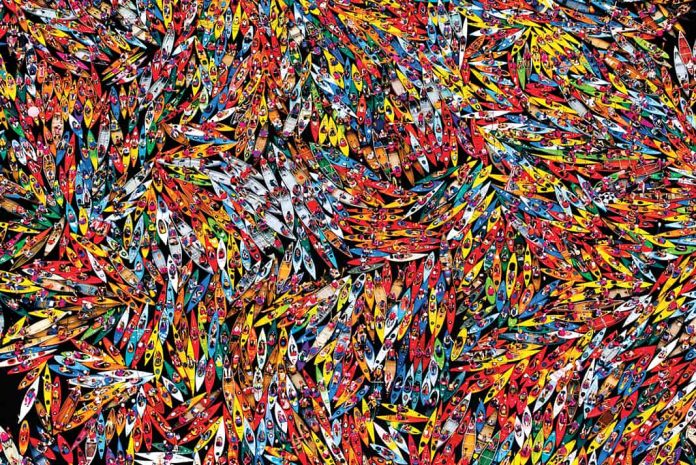
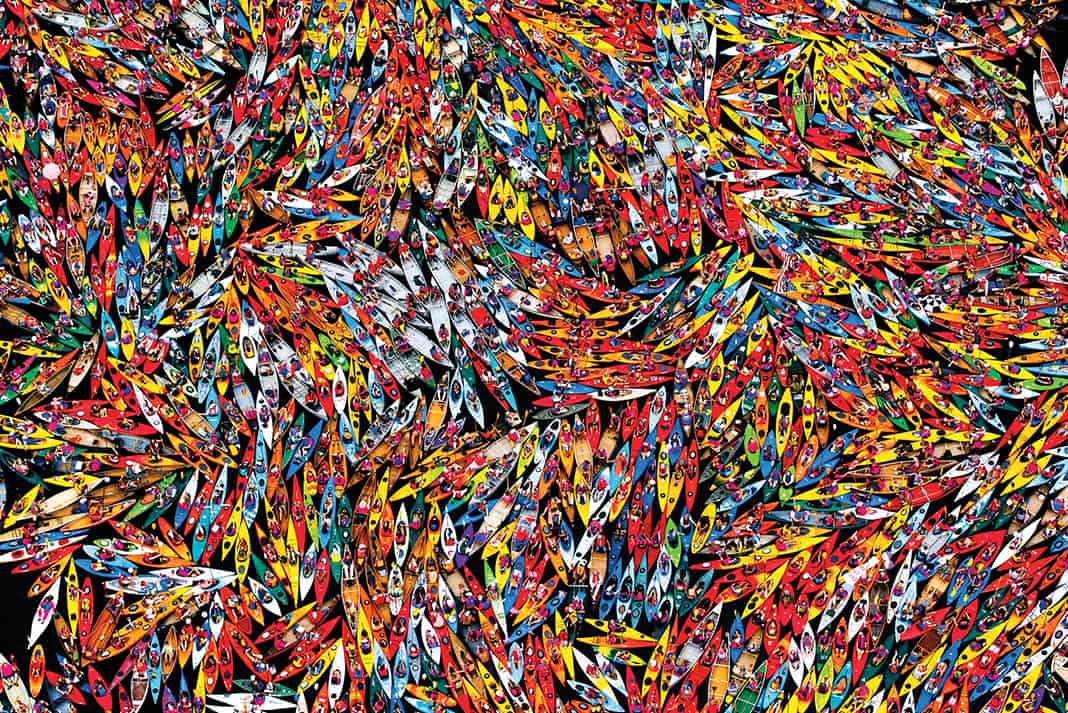
Spoiled for choice. | Photo: Nancie Battalgia
“There’s just too many options. There’s no one best boat,” Dave told me. And he’s right. Perfection is impossible.
Schwartz’s antidote to limitless choice is to get comfortable with imperfection. “Good enough is almost always good enough,” advises Schwartz. “You don’t need to find the best. There’s virtually no difference between the best and any number of alternatives which are almost as good as the best. If you’re looking for good enough, choosing becomes a lot less onerous.”
There’s no single boat boasting the fastest speed, most maneuverability, best stability, lightest weight, greatest durability, prettiest aesthetics and lowest price. There’s no so-called best canoe, yet any canoe is better than no canoe.
So, to all the Daves out there, buy a canoe. You’ll be much happier for it. If you don’t believe the research, just go paddling.
Kaydi Pyette is the editor of Paddling Magazine. For the record, she has more than one canoe. But over the last year she’s applied the “good enough” advice to buying kitchen appliances, a touring bicycle and a 2003 Subaru Outback. So far, she says, good enough is pretty great.
This article first appeared in the 2015 Paddling Buyer’s Guide. Subscribe to Paddling Magazine and get 25 years of digital magazine archives including our legacy titles: Rapid, Adventure Kayak and Canoeroots.
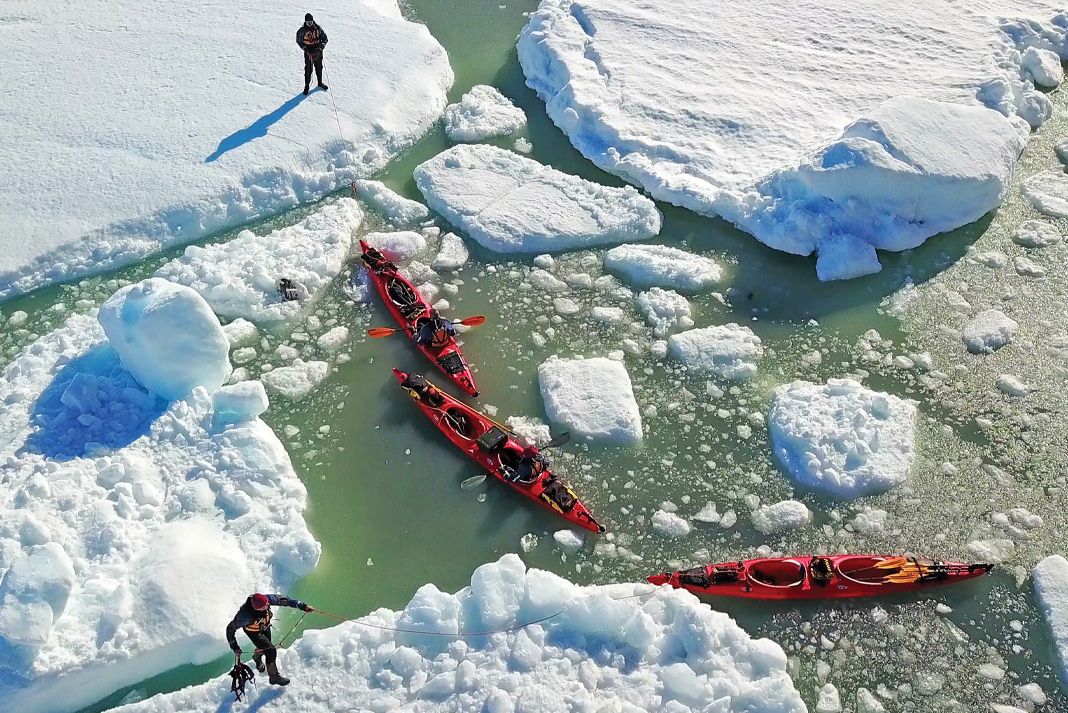
THE ENDURING ICE EXPEDITION TEAM NAVIGATES THROUGH A NEVER-BEFORE-SEEN “POLAR SLURPEE.” | PHOTO: ENDURING ICE EXPEDITION
As we watched the de Havilland Twin Otter fly off, circling over the still frozen Lady Franklin Bay, realization set in. For the next five weeks, we would be some of the most isolated people on earth. It was July 2 and we were at Fort Conger on Ellesmere Island, 500 nautical miles from the North Pole. We were embarking on a kayaking expedition through Nares Strait, the channel between Canada and Greenland.
We expected to cover roughly 500 kilometers. Our team of five included experienced polar explorers and a polar oceanographer. With us were 1,096 pounds of food and equipment, packed into our ultra-tough Prijon tandem kayaks.
Our goal was to get footage for our documentary, Enduring Ice, a film to draw attention to the darkening Arctic.
In the past 40 years, Arctic sea ice volume has declined by 72 percent. Most polar scientists now predict the Arctic Ocean will soon be ice-free in summertime. With that change, the Arctic Ocean is no longer the solar reflector for the planet like it once was. Our concept for the film was to use the excitement of an extraordinary adventure as a way to raise awareness about the essential role the Arctic’s sea ice plays in keeping our planet cool.
Based on past experiences in Nares Strait, our team imagined ice conditions might be different from previous expeditions, but still recognizable. They weren’t.
What we encountered was something new—a polar slurpee. A mess of unconsolidated ice that made travel by foot or paddle nearly impossible. Gone were the large solid ice floes. The conditions were especially surprising to the polar oceanographer on the expedition, who was accompanying us to add to his research on sea ice floe size distribution.
THE ENDURING ICE EXPEDITION TEAM NAVIGATES THROUGH A NEVER-BEFORE-SEEN “POLAR SLURPEE.” | PHOTO: ENDURING ICE EXPEDITION
With ice conditions so challenging, we were mostly forced to follow the icefoot, that narrow band of sea ice frozen to the shore. However, because Nares Strait had not frozen across last winter, the icefoot was a mess. Giant blocks of ice tossed up during winter storms were stuck in place, and often impassable. We were completely beset by the deteriorating ice conditions we had come to document.
This image extracted from drone footage is of us navigating our kayak around one of these sections of almost impassable shore. It took 33 days to travel just 100 kilometers. Carl Ritter Bay, the closest landing strip, became our absolute goal.
Learn more about the Enduring Ice project and get updates on the documentary at www.enduringice.com.
This article first appeared in the 2015 Paddling Buyer’s Guide. Subscribe to Paddling Magazine and get 25 years of digital magazine archives including our legacy titles: Rapid, Adventure Kayak and Canoeroots.
ENTERTAINING CROWDS SINCE 1982. | PHOTO: KEVIN CALLAN
Alex Traynor and Noah Booth are up-and coming video bloggers who call themselves the Northern Scavengers. When I loaned these two weekend warriors one of my canoes for their latest big trip in the far north, I insisted they take one of my lightweight and durable Prospectors, rather than their sinkable, flat-bottomed scow. They couldn’t thank me enough and I think revered me as some kind of Jedi of the canoeing world.
They even called me Uncle Kev, as in, “Thanks for the canoe, Uncle Kev.” That was awkward.
The Word Is: Experienced
I get it. I’m a year away from getting a senior’s discount at my local pharmacy. I’ve been writing and making presentations at shows for well over 30 years. Traynor and Booth are 26 years old. My first book came out in 1990. For three decades I’ve been traveling the country convincing others to get outside and paddle. Sometimes I feel like I’ve seen it all.
I can remember running rapids without a helmet. I know the feeling of a cold butt from the seat of a Grumman. I was a member of a canoe club that wouldn’t allow kayakers to join.
I attended the grand opening of the Canadian Canoe Museum. I not only remember the end of Royalex, I remember early Old Town ads introducing the revolutionary new material. I cried the day Bill Mason died.
I’ve lived through the era of Deliverance inspiring new paddlers to get out onto rivers. I’ve also witnessed the growth of websites having the word paddle in the title but nothing to do with the kind of watersports I enjoy.
I’ve watched the cult-like fervor for paddling books fizzle. I’ve seen canoe movies go from Beta and VHS to DVDs to YouTube. I got excited once filming a documentary in Quetico Provincial Park with a state-of-the-art high-definition camera. I just recently returned from filming a documentary in Nova Scotia with a 360-degree virtual reality camera.
I used to load actual 35mm film into the back of cameras. Dan Gibson nature sounds were once used while editing actual movie film instead of downloading your choice of digitally mastered loon calls served up by Google.
My first book, Killarney, was written on a type-writer. My second book, Cottage Country Canoe Routes, was saved on 5 1/4-inch floppy disks. A Complete Guide to Winter Camping was typed on a computer, saved digitally and uploaded to the Cloud—not one word scribbled on paper.
ENTERTAINING CROWDS SINCE 1982. | PHOTO: KEVIN CALLAN
I showed trays of slides during presentations. I learned PowerPoint. Now I just Bluetooth my presentations from my phone—imagine saying that to an A/V guy in the ‘80s.
Radio shows have turned into podcasts. And these days, I do more live streaming on Facebook than face-to-face interviews on television morning shows.
Canoeing Will Never Die
Through all of this I’ve listened over the years to crusty, bearded, Tilley-capped men in plaid proclaiming, “Canoeing is dead.” They used to mail me letters. Then emails. Now I receive these doomsday decrees through Facebook Messenger. They write to tell me kayaks and standup boards will rule the world. They say canoeists will just fade away.
Take it from an aging canoeist who’s been around the bend on a lot of rivers—they’re wrong. Canoe sales have increased 110 percent since 2016. Canoeing has increased 40 percent, especially among young families and Millennials, since 2014.
Take for example the Northern Scavengers. Here are two guys roughly the same age as me when I launched my first book. They’re creating a community, with the technological tools of today, where campers of all levels can come to give or gain a little insight on anything backcountry related. On the Northern Scavenger website they’ve written, “The best way to appreciate the raw beauty is to immerse yourself in it. Camping is an unparalleled physical journey that can connect us to the land in the most organic way, and can bring us to places unbothered by the modern world.”
Bill Mason died 29 years ago and before the Northern Scavengers were born, but the boys have this Mason quote on their About Us page: “The canoe feels very much alive, alive with the life of the river.”
Canoeing will never die.
Kevin Callan is the author of 16 books, including the bestselling, The Happy Camper and Wilderness Pleasures: A Practical Guide to Camping Bliss. He is still presenting across North America and has been a key speaker at all major canoe events. Butt End first appeared in Canoeroots magazine 16 years ago.
This article first appeared in the 2015 Paddling Buyer’s Guide. Subscribe to Paddling Magazine and get 25 years of digital magazine archives including our legacy titles: Rapid, Adventure Kayak and Canoeroots.
Adam Johnson on Crooked River, New Zealand | Photo: Tegan Owens
Certainly, you’ve heard the well-worn trope, “We learn from our mistakes.” It is the mantra of experiential learning. That we learn something from mistakes is taken as fact, and justifies a wide range of trial-and-error approaches to everyday life.
However, what it is we actually learn is sometimes up for debate.
Do We Learn From Our Mistakes?
It’s hard to imagine having a close call on the river and not coming away affected. Like most long-time whitewater paddlers, I can come up with a pretty good list of my close calls. These are the stories we all tell each other on tailgates and bar stools. But what do we actually learn?
Way back in 1943, psychologist John T. MacCurdy coined “near miss,” a term we still use today in the field of safety and outdoor risk management.
MacCurdy was studying survivor responses to the World War II London air bombings. He was trying to learn more about the nature of fear and morale in society—the war being an unfortunate but convenient experiment for him to observe. While MacCurdy’s near miss term lives on, his more important findings did not.
MacCurdy recognized two groups of people living in London at the time of the night bombing raids. The near misses were the individuals closest to the bombings, the ones who could actually “feel the blast and see the destruction.” These people survived powerfully influenced by the events, having experienced real fear. He used the word “impressed,” to mean “the event created a very strong impression on the individuals’ memories.”
The second group MacCurdy called the “remote misses”. This group and the term itself were left behind as his ideas carried forward through the years.
The remote misses were the individuals who heard the air raid sirens, saw the Germans fly over, but did not experience the destruction of the bombs themselves. These individuals, it surprised MacCurdy to learn, were left with “a feeling of excitement with a flavor of invulnerability.”
The remote miss individuals didn’t pay the price of the bombing, nor were they exposed first-hand to the devastating losses. Their impression was the exact opposite to those in the near miss group. The German’s air raid strategy of instilling shock and fear failed dramatically. For this much larger portion of the population, the London bombings were actually kind of thrilling. What MacCurdy stumbled upon was an unlikely sense of invulnerability accompanying knowing destruction is all around, but coming away unscathed.
And so it was with me. And MacCurdy’s research would suggest it was, or will be, with you too.
My first run down the magically deceiving Dragon’s Tongue at Garvin’s on the Ottawa River left me beat down in the hole at the bottom, dragged to shore by my buddies and euphorically buzzed. I probably high-fived somebody. I survived and it wasn’t so bad. Actually, it was kind of thrilling. Even fun.
I have quite a long list of these beat-down-to-fun-buzz scenarios. So what did I learn from my mistakes? Throughout my intermediate years I learned getting surfed, stuck, semi-pinned and swimming is not so bad. I learned I could actually screw up pretty good and get away with it.
Are these the lessons I should have been taking away from my mistakes? Are these the lessons building a competent, safe paddler? Of course not.
Looking back, what I should have learned over and over again, is I was missing some key river reading skills and I did not have a complete understanding of controlling momentum. I got away with it for a long time. Until I didn’t.
My first real near miss was a good whack on the head in a big, ugly hole in the Elora Gorge at flood level. It really wasn’t a miss at all, but a full hit that could have been much worse. Those river reading lessons I was ignoring caught up with me, put me where I was not supposed to be, and I paid with a lost paddle, rock climb out of the gorge and a nagging three-day headache.
Adam Johnson on Crooked River, New Zealand | Photo: Tegan Owens
My near miss left me deeply impressed and with a large dose of residual fear. Hundreds of runs later I still conjure up that memory on the approach to any gorge run.
Fifty years before the Internet, MacCurdy pointed out that unless we pay some price, leaving us significantly impressed, we are likely to be learning the wrong things from our mistakes.
By watching our friends make mistakes on the river and getting away with it, our sense of invulnerability is further reinforced. Watch 75 horrible lines over Fowlersville Falls turn out okay at New York State’s Moose Festival and we wonder what the fuss about safety is all about.
Or worse, turn to social media where we can stream hundreds of miraculously close calls happening every day. For many of the sorry souls involved, these beat downs leave them very impressed. But as remote watchers of the highlight reels, it only builds in us an unhealthy confidence of what is possible to get away with.
Until we don’t.
Jeff Jackson is a professor at Algonquin College in eastern Ontario and consults on safety and risk management.
This article first appeared in the 2015 Paddling Buyer’s Guide. Subscribe to Paddling Magazine and get 25 years of digital magazine archives including our legacy titles: Rapid, Adventure Kayak and Canoeroots.
For years the growth of canoeing has been flat. The activity enjoyed mainstream popularity in the 1970s and ‘80s after John Boorman’s Deliverance sent Jon Voight, Burt Reynolds and Ned Beatty into the soon to be dammed Cahulawassee River Valley. Thousands of Baby Boomers across North America flooded the rivers and lakewater routes on their own wilderness canoe adventures.
In 1960, two percent of Americans participated in canoeing and kayaking. Twenty years later by the early ‘80s, thanks to John Boorman, the development of a revolutionary, inexpensive and virtually indestructible canoe material and Baby Boomers venturing into the backcountry with their young families, the national canoeing participation number had risen to eight percent. Canoeing was hot.
It was a pretty good 20-year run for canoe builders. But between 1998 and 2002, kayaking took hold of the paddlesports market. During that period, The Sporting Goods Manufacturers Association recorded a 59 percent growth in kayaking participation. Conversely, canoeing dropped in popularity with a 20 percent loss in participation. The ubiquitous, fringe sport of wave surfing with a paddle turned mainstream with the advent of the standup paddleboard. According to Google Trends, “SUP” searches grew 61 percent between 2004 and 2016. Searches for “canoes” decreased 80 percent in the same period.
In 2006, a mere 3.3 percent of the United States population participated in canoeing. By 2014, the participation number was 3.4—up slightly but not by a significant margin.
Finally, after years of stagnation, early signs suggest canoeing is peaking people’s interest again. For the first time in more than two decades, the future of canoeing looks bright.
The adventurers of the 1970s and ’80s are replacing their canoes with lighter and expensive ones, because they can. | Photo by: Mike Beedell.
The First Indicator the future of canoeing participation is looking up seems to originate from the fact that people are once again buying canoes.
Jason Yarrington, founder of the Trailhead Paddle Shack in Ottawa, says he’s seen canoe sales rise by 20 percent in the last two to three years. “The original Kevlar canoes are on their dying legs,” says Yarrington. “They’re starting to wear out and people are now looking at new canoes 15 to 20 years later.”
Even if these old canoes aren’t wearing out, canoeists aren’t hesitating to replace them, or buy more. Manufacturers too, are noticing the early stages of what they are hoping is a trend.
“This year seems to be a boom canoe year,” says Bill Kueper, vice president at Wenonah Canoe. “There seems to be resurgence especially for high-end boats.”
“This year seems to be a boom canoe year,” says Bill Kueper, vice president at Wenonah Canoe. “There seems to be resurgence especially for high-end boats.”
Lightweight and performance canoes are what Kueper says prospective canoe buyers are looking for.
“People are getting really nice boats; they’re investing in it,” says Kueper, who predicts continued growth in the future canoe market.
Not only are sales increasing because old canoes need replacing, Kueper thinks this boom is due to an entirely different factor—young adults with money. “They’re looking at canoeing as a viable place to put some of their hard-earned dollars,” says Kueper.
In past years, Wenonah Canoe’s average customer was anywhere between 40-65 years old. “I think now we’re getting customers younger than that,” says Kueper.
“If you listen to the public dialogue, your typical canoeist is old and male,” says Jason Zabokrtsky, owner of the Ely Outfitting Company. He has been guiding canoe trips in Minnesota’s Northwoods since 1997. “That message is so prevalent, I’ve had people come off the trail and comment on how many young people they encountered.”
During the 2016 canoe season, Zabokrtsky collected user data from 1,000 clients at the Boundary Waters Canoe Area. What he found was surprising. The average age of Ely Outfitting Company customers was 29.
“We’re not positioning ourselves to target young people,” Zabokrtsky insists. “But they’re coming as couples and groups of friends. They are driving up from the cities to go on canoe trips and are willing to pay for full outfitting and great rental equipment.”
Zaborktsky, who in 2016 outfitted twice as many under-30 Millennials as 50-plus Baby Boomers, is one of many outfitters witnessing a younger generation discovering canoeing.
The Baby Bust generation rolls into the family canoe buying years, finally. | Photo by: Scott Macgregor.
A closer look at the data seems to suggest the Millennial magic is real. According to the 2017 United States Physical Activity Council Report, canoeing made the top-10 list for “activities of interest” for people aged 25-34. Canoeing was rated seventh on the list, higher than using workout machines or weights and fishing. According to the same study, 57 percent of Millennials participate in outdoor sports, compared to only 39 percent of Boomers. Toss in the simple fact that there are half a million more Millennials than Boomers in America and the growth potential of canoeing looks even brighter.
With the younger generation comes an obsession with social media. Rather than a distraction,
this is actually helping boost the popularity of canoeing. The sport is increasingly appearing in online listicles, Pinterest DIY projects and in dreamy wanderlust photos floating around social media feeds. On Instagram, the hashtag #canoe has reached nearly 650,000 posts.
Ever heard of a lumbersexual? According to Urban Dictionary, a popular tongue-in-cheek online dictionary, this common outdoor stereotype is defined as “A not-so-manly man dressing like a lumberjack, sporting a beard that has the volume of a lumberjack’s beard and the groom of a hipster.”
Although these types may seem a nuisance, riding their squeaky vintage bicycles through city streets radiating faux-moss musk, their rustic image is actually helping canoeing regain its lost popularity with the masses. Aside from man buns, lumbersexuals don’t look much different than canoeists from the heyday of the ‘80s.
Vacation time is in short supply these days. The Project: Time Off Coalition, a group of organizations committed to changing the behavior of Americans about their vacation time, found that Americans today are taking less time off work. This may be one factor contributing to canoe trips that are on average shorter now than they were 20 years ago.
The Project found that in 2000, vacation lengths began a steady decline. America’s average vacation usage is 16 days per year, almost a full week less than the average during the canoe boom years of 1978 to 2000.
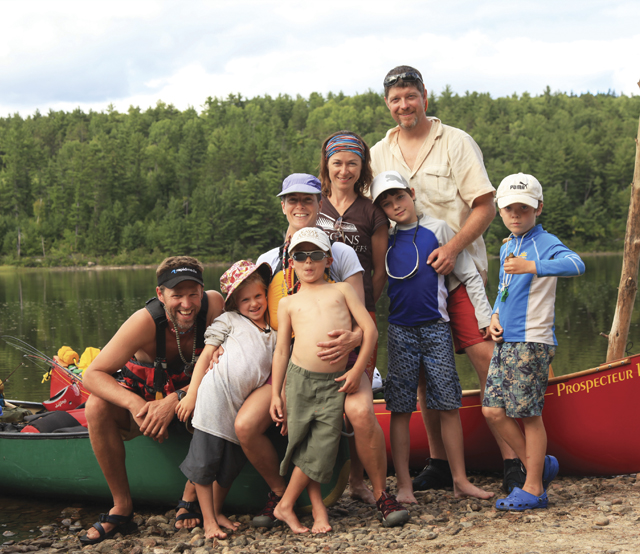
Tierney Angus, 29, and her 30-year-old fiancé Andrew Bell, don’t let busy work schedules discourage their shared passion for canoeing. As youngsters, Angus lilydipped at the cottage and Bell went to summer camp.
“The majority of our friends only get two weeks off from work and that’s it,” says Angus, a Humber College journalism student. “They get out on weekends and maybe for four- or five-day trips. It’s definitely difficult to find larger chunks of time to devote to paddling. But the more canoe trips they go on, the more they want to stay out for longer.”
Angus and Bell devote as many free weekends to canoeing as possible in preparation for one big trip each year, usually lasting a minimum of 14 days.
“It’s like anything else,” says Jaime Capell, retail manager at Algonquin Outfitters Oxtongue Lake store on the west gate entrance to Algonquin Provincial Park. “When you don’t get to do it as often, it’s pretty exciting when you do get to go.” Shorter trips or not, outfitters are having banner years. Capell says 2016 was excellent for Algonquin Outfitters.
“It was probably one of the best seasons we’ve had,” says Capell. “And this year, so far, is looking positive.”
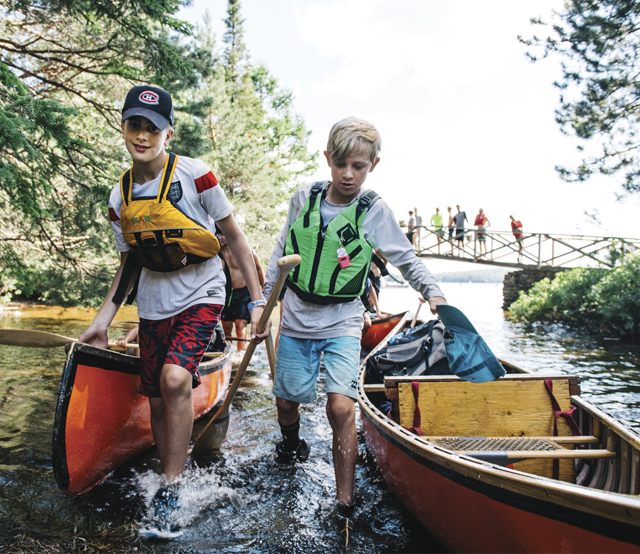
Summer camp enrollment is up. Say hello to tomorrow’s guides, instructors, builders and parents. | Photo by: Mike Last.
For busy parents with younger children, summer camp is an increasingly appealing option to get kids outside and on the water. Today, this tradition with century-old roots in Ontario, New England, Illinois, Minnesota and Wisconsin, has become a critical antidote to electronic gadgetry.
“Camp has always been a way to get the kids off the couch,” says Nick Georgiade, the North Carolina-based director of Camp Temagami, a canoe camp located in northern Ontario. “But now parents are concerned their children are unable to handle face-to-face social interactions.”
Like most summer camps, Georgiade outlaws mobile devices at his facilities on Lake Temagami and on the camp’s two to six-week long canoe trips. “Kids are forced to look at each other and get along,” he says.
“Camp has always been a way to get the kids off the couch.” But now parents are concerned their children are unable to handle face-to-face social interactions.”
Beyond the traditional camp selling points of self-confidence, teamwork and encounters with nature, unplugging has become “a bigger and bigger deal” for parents, Georgiade says. Meanwhile, enrollment at youth camps is surging. Camp Temagami’s jumped 30 percent in 2016, including a growing number of young women.
Increased enrollment is a parallel trend. “In the last five years we’ve seen a huge resurgence,” says Andy Gruppe, General Manager of Ontario’s YMCA Wanakita. This year, Gruppe says the camp filled up one month ahead of its regular time. He estimates enrollment to be up by 70 campers.
According to a 2015 report prepared by American Canoeing Association’s research assistant Cait Wilson, camper enrollment is also on the rise. Eighty-two percent of camps reported overall enrollment as the same or higher than in 2014. Additionally, 44 percent of camps reported the summer of 2015 as having the highest enrollment in the last five years. Kids, too, are getting bitten with the proverbial outdoor bug early. The report found that 71 percent of campers are now aged 12 and younger.
Study after study shows that adults who were exposed to the outdoors as children were more likely to participate in the outdoors during adulthood. In fact, 37 percent of adults who were introduced to the outdoors during childhood grew up to enjoy outdoor activities as adults. Increased summer camp enrollment can be nothing but good news for canoeing down the road.
The Outdoor Foundation’s Outdoor Recreation Participation Top Line Report released in April, 2017 pegged canoeing along with running and jogging, hiking, backpacking and fishing in the top ten most appealing aspirational activities among every age group from 25 to 45-plus.
Canoeing is cool again and there exists a huge opportunity for manufacturers, outfitters and canoe clubs to engage these non-participants. Combine this mass appeal with Baby Boomers upgrading boats, Busters getting around to having kids, and Millennials carving out a few days here and there, one might say that canoeing is trending. #canoeinglives.
This article originally appeared in Canoeroots Early Summer 2017 issue.
Subscribe to Paddling Magazine and get 25 years of digital magazine archives including our legacy titles: Rapid, Adventure Kayak and Canoeroots.
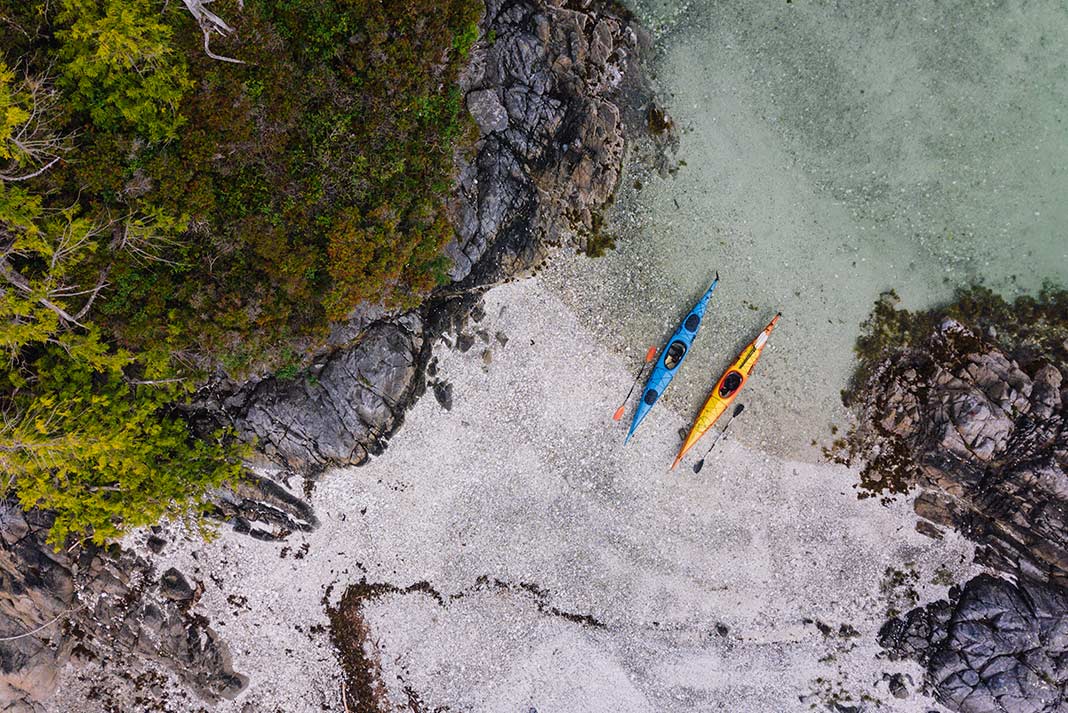
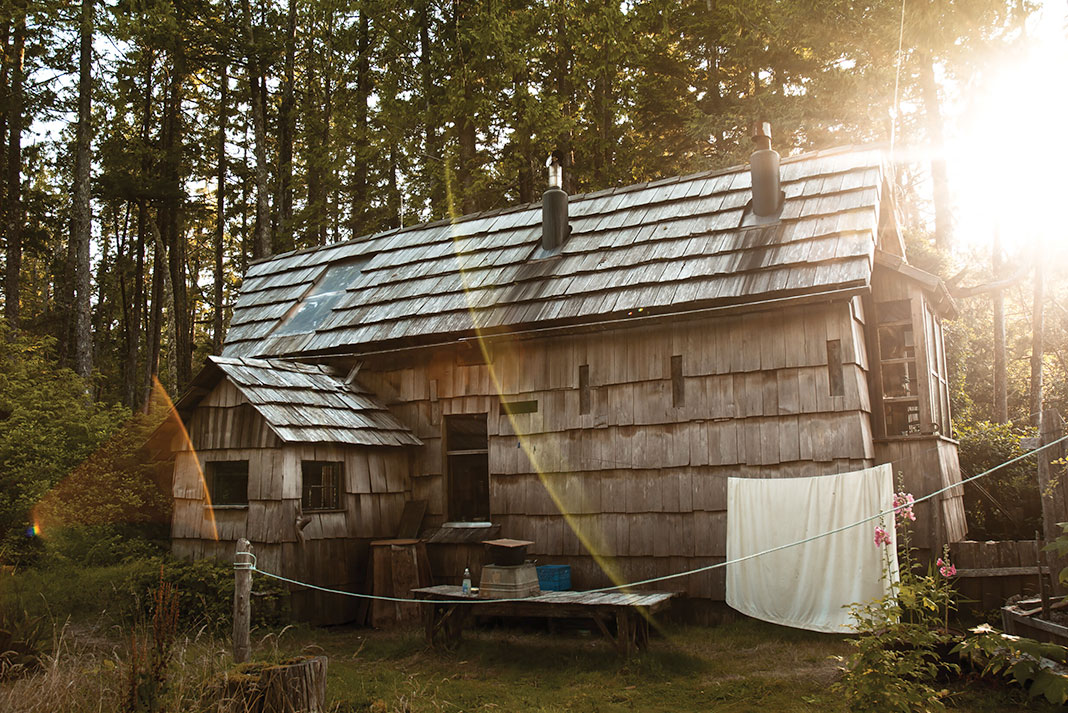
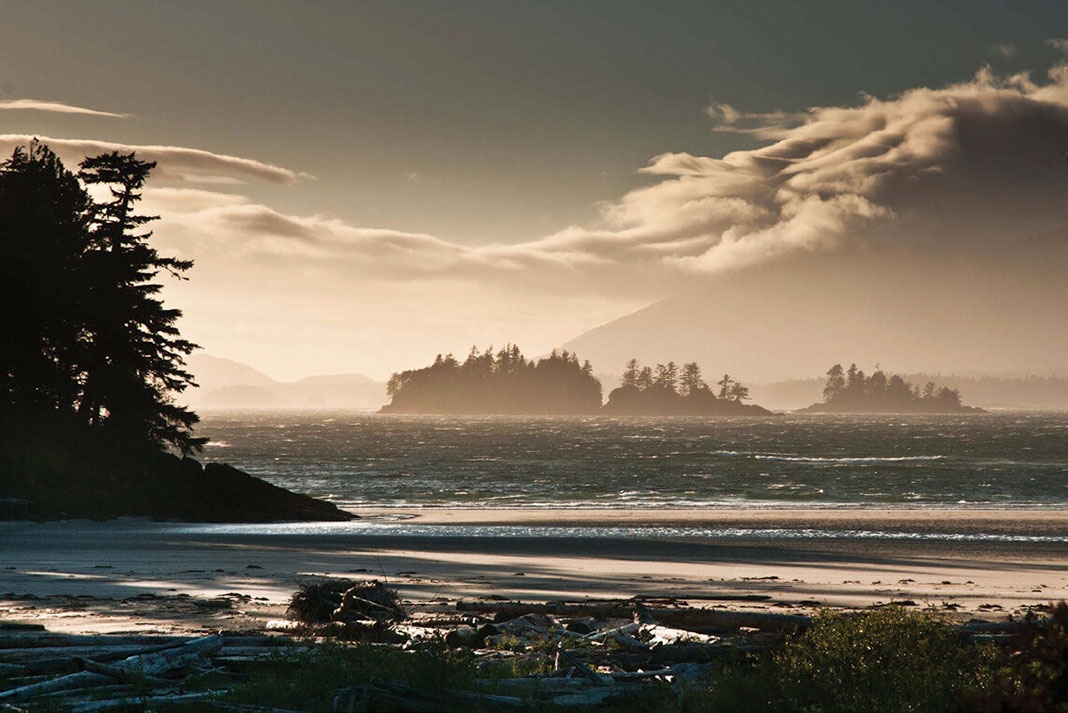
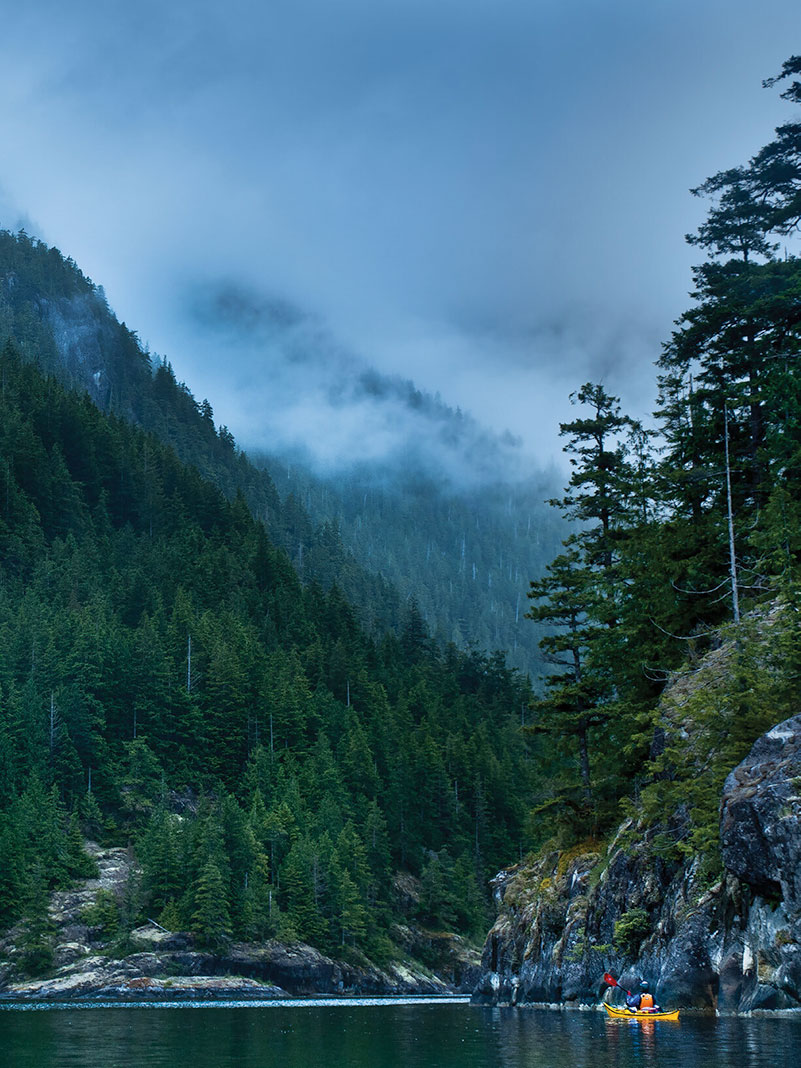
For about ten years Canadian sea kayak legend John Dowd lived on this remote island property in Clayoquot Sound. His hospitality, impact and popularity in the sea kayak community is made evident by the those who land on the beach in the summertime.
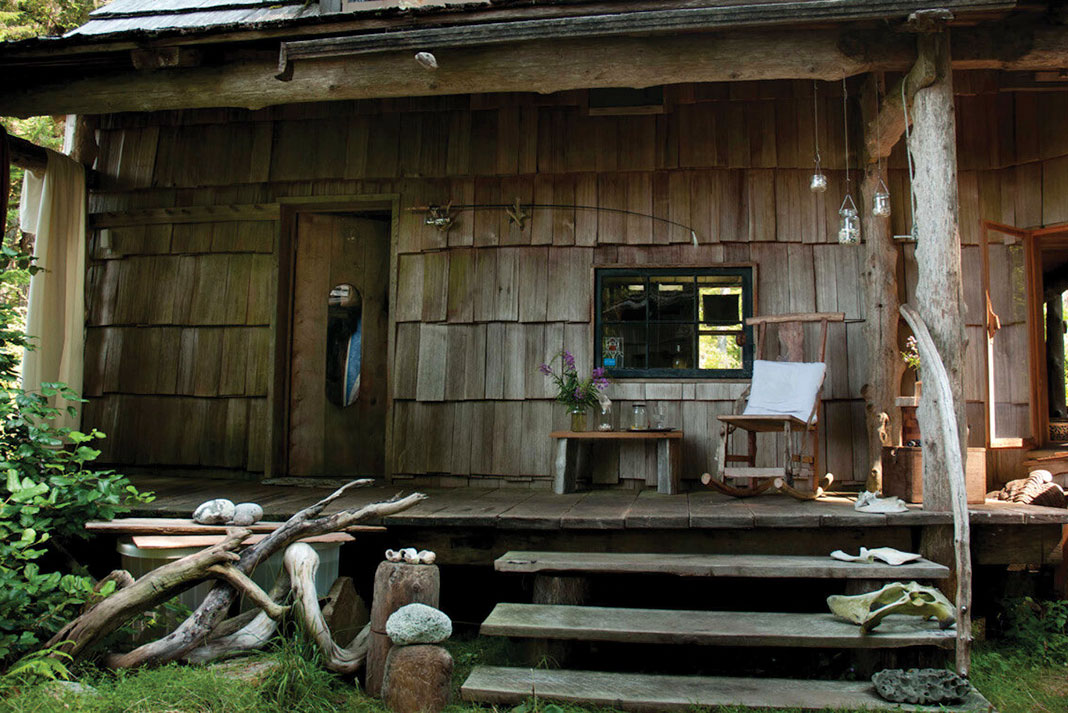
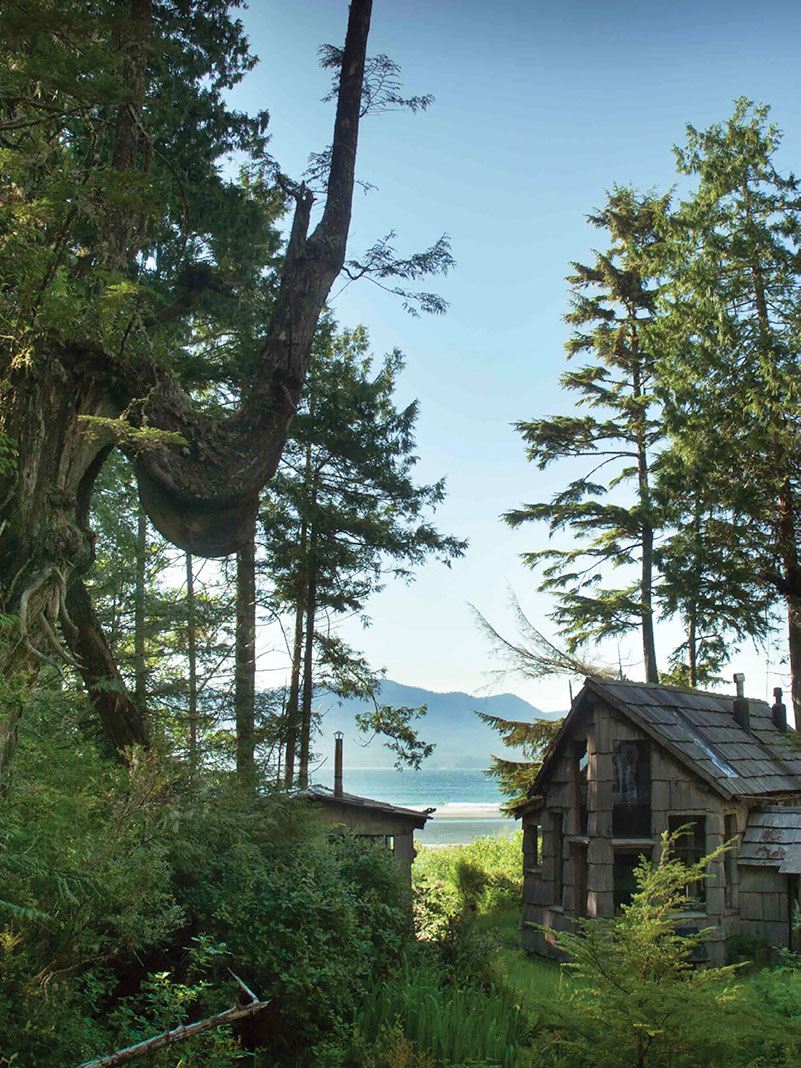
They come up to the old cedar house in order to see if John is still here. They come to experience a few breathes in its stillness. They come because of the legend of the place and the man. As quickly as they arrive, they push off into the surf once again.
Few people can ever live in a postcard. Photojournalist Sander Jain has spent more than two years here—living in John’s cabin. He is one of the transient faces at the heart and soul of this place.
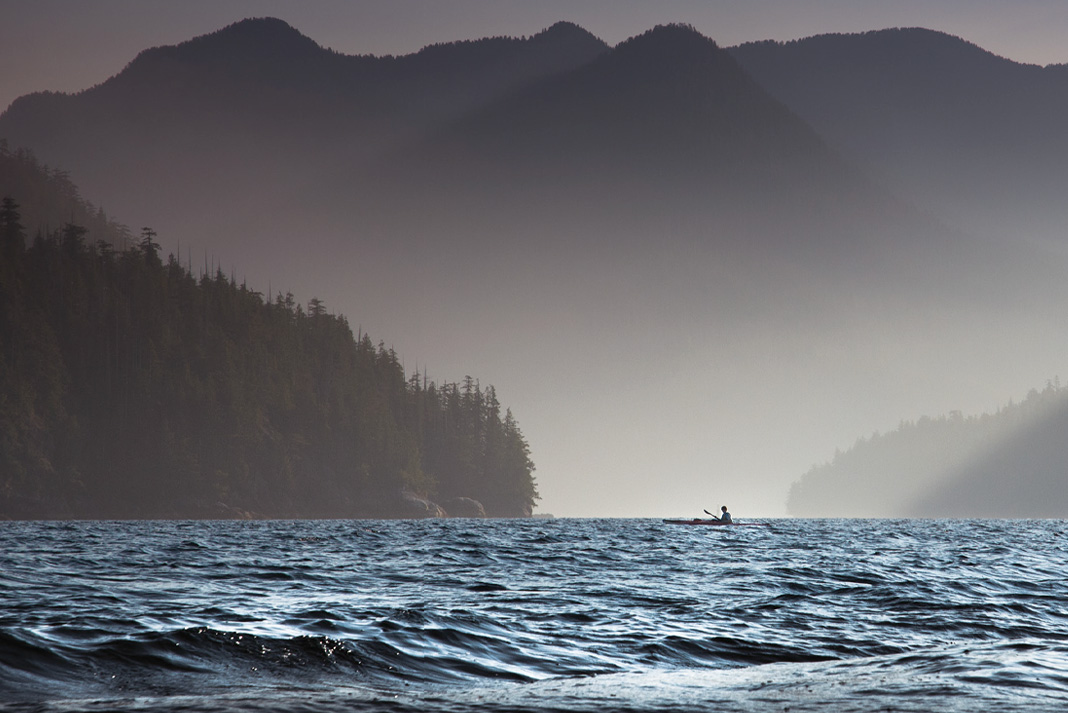
A couple of years ago I moved to a remote island property in Vargas Island Provincial Park on the west coast of Vancouver Island. Vargas Island is located in Clayoquot Sound. It is well known as a magnificent wilderness region and world-class sea kayaking destination. It is the largest area of ancient temperate rainforest left on Vancouver Island and one of the most exquisite expressions of this ecosystem in North America.
Feature photo: Sander Jain
Photo: Sander Jain
Photo: Sander Jain
The cedar house on this property, nestled in between the trees on the beach, is a comfortable dwelling. I enjoy keeping life untethered and simple, living without electricity and running water. A wood stove for heating and cooking, driftwood from the beach, candles for light in the evenings and plenty of rainwater are the only basic necessities for a life here in between the ocean and the forest.
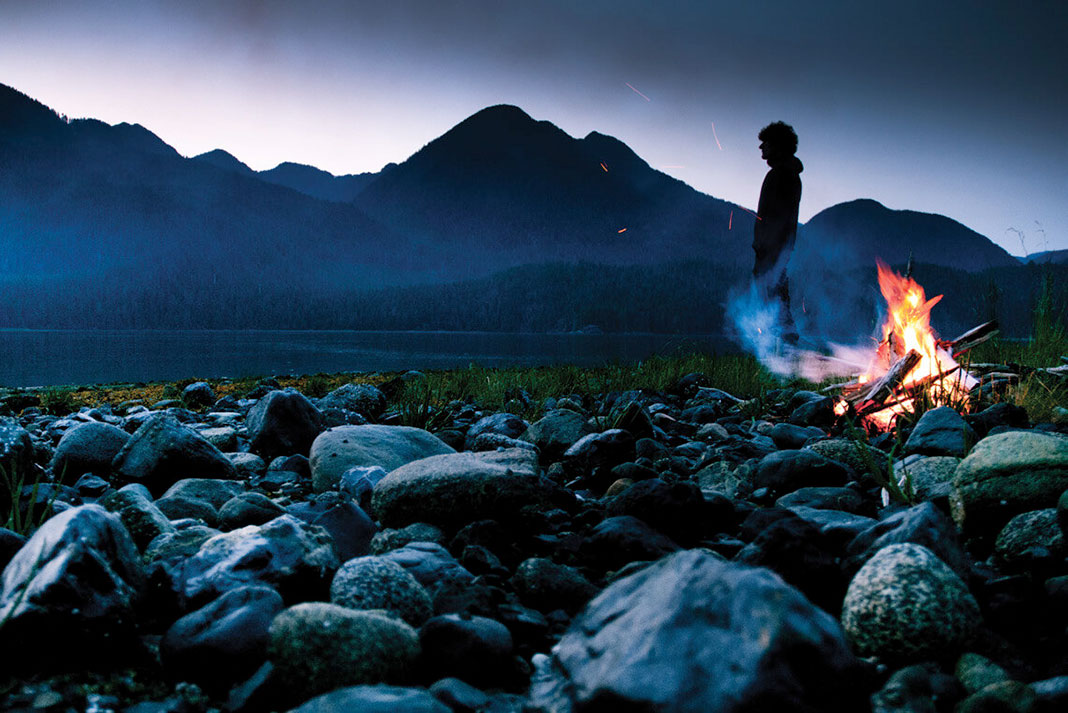
Meeting people on the wild beaches who share a passion for outdoor adventure is a rewarding experience. I often find myself sitting around a campfire with a group of people, telling stories about wilderness adventures, sharing food and answering questions about the hermit lifestyle. I will invite them over to the cedar house where we continue conversations over tea and chocolate. It is always a pleasant surprise when a familiar face knocks on the door. At times, friends of mine who work as kayak guides will show up paddling around Vargas Island with their groups.
Photo: Sander Jain
Photo: Sander Jain
Photo: Sander Jain
Photo: Sander Jain
Everything about this place is alive
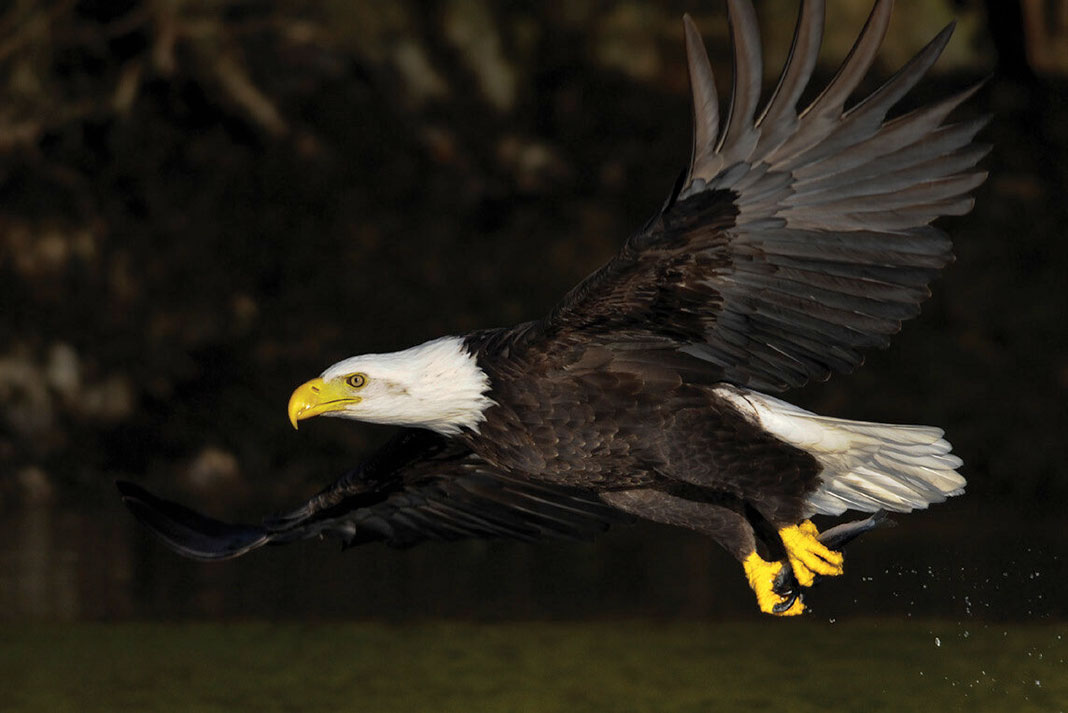
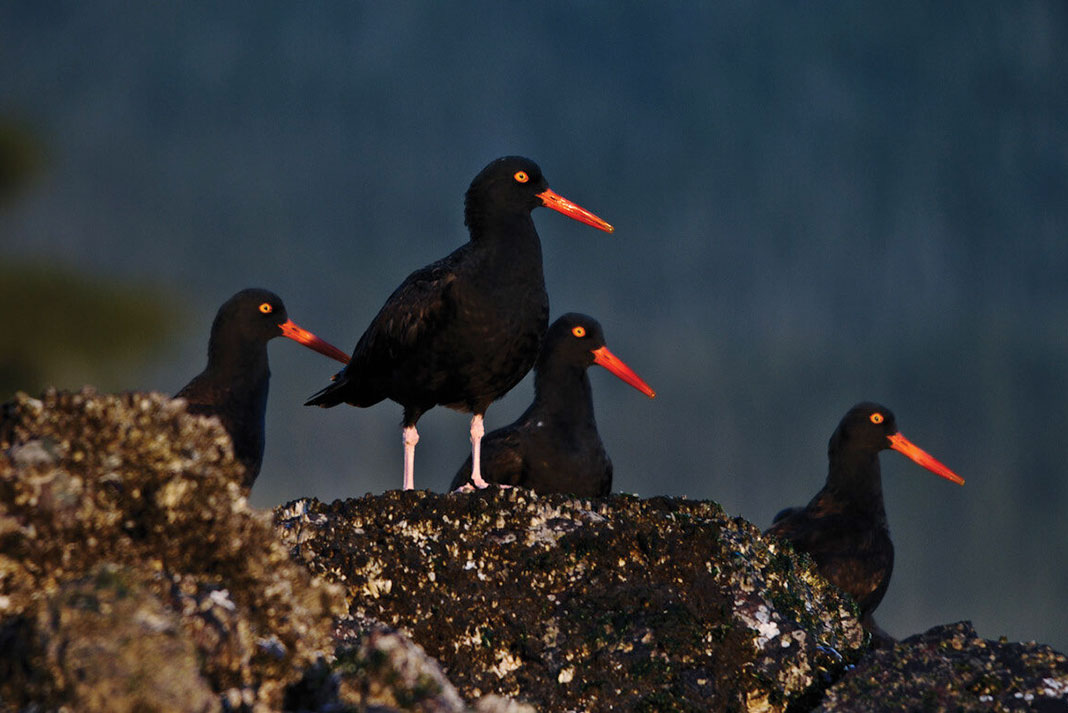
The ocean, beaches and forest teem with wildlife. Whales, sea lions and seals swim through to the beat of their natural rhythms. The bird life is abundant and vibrant. Bald eagles, ospreys, hummingbirds and raven keep me in constant company. When living in the same habitat as these wild animals it is a constant reminder to me that I am but a guest—a guest in their home that allows mine. When sea kayakers land on the beaches in the summertime I try and remind them to leave no trace but footprints.
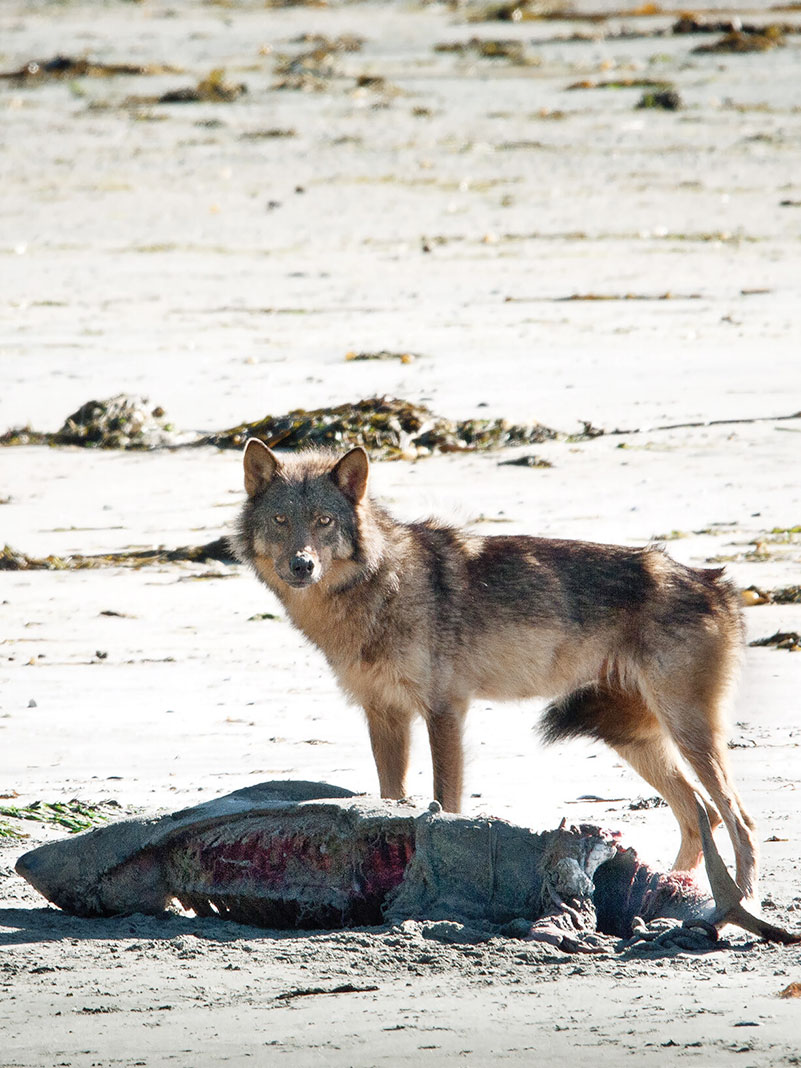
The wolves know that I live in the cedar house—that I roam the surrounding beaches. They sense and observe me. They know my habits. I do not desire to see or find them nor do they want an encounter with me. We are aware of each others’ presence. There is respect for each others’ ways and shared preference for elusive co-existence. On morning and evening walks along the coastline, I see their fresh tracks in the sand running parallel to my own. I learn that we tread the same places just minutes or hours before or after the other.
Photo: Sander Jain
Photo: Sander Jain
Our schedules are naturally and dynamically delayed according to a code of gentle avoidance and invisibility. In mutual respect and with a shared appreciation of leaving space for the other, the mysterious relationship between each life form is left undefined and thus peaceful. Only every now and then our paths cross and for a brief moment, I dare to maintain eye contact with these beings that I share space with—a shy and attentive moment of mysterious recognition and alien familiarity that happens on the common ground of an unspoken agreement. In mutual awareness we are one by leaving space for the other.
A little trip to town
Photo: Sander Jain
Access to this place can be difficult. The property is half-exposed to the ocean. In the wintertime, big storms roll in from the open coast and the conditions can be extreme. From spring to late fall I live here for about 10 days at a time with breaks of one or two days in between. I can text a friend who picks me up in his boat.
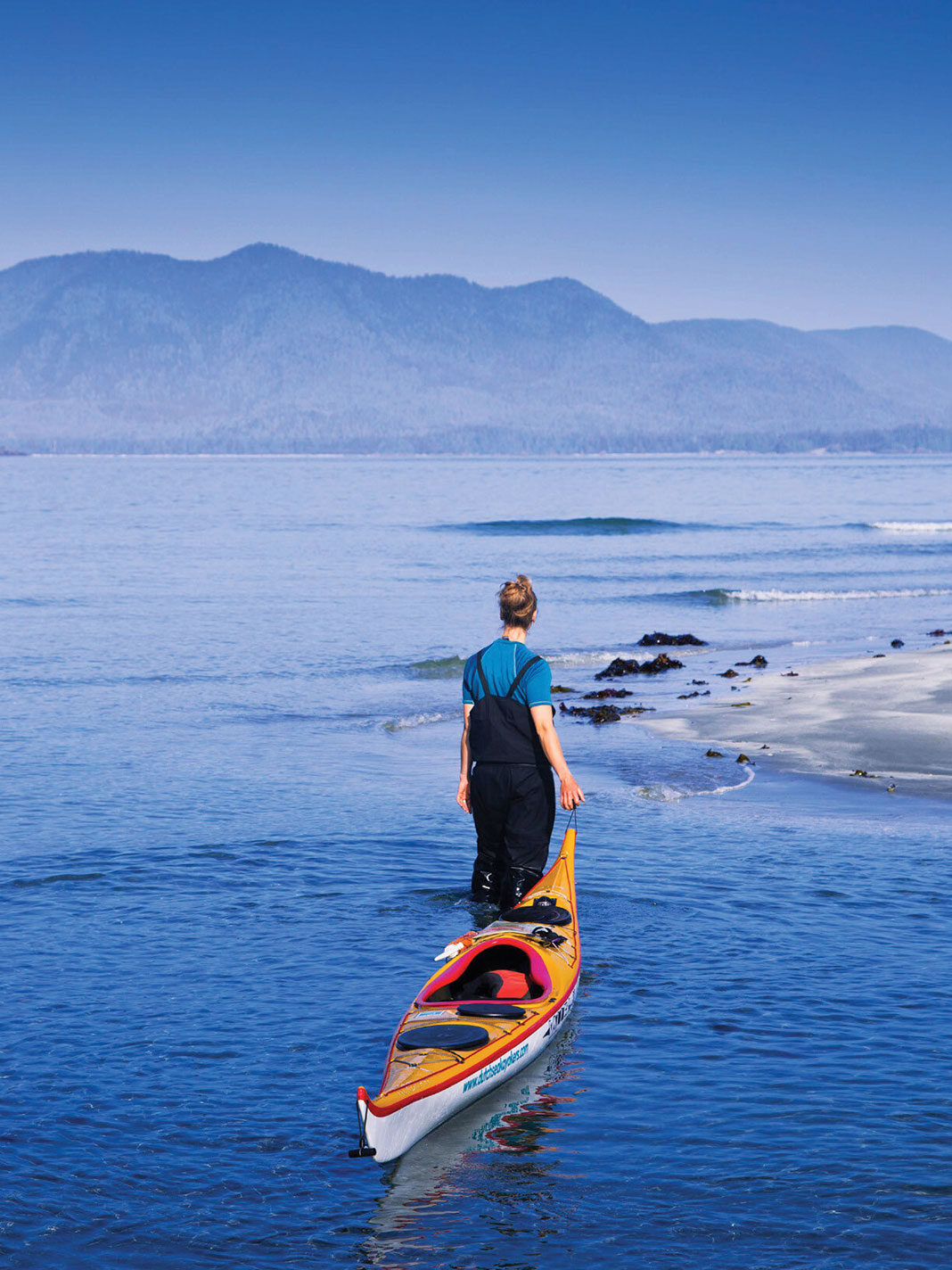
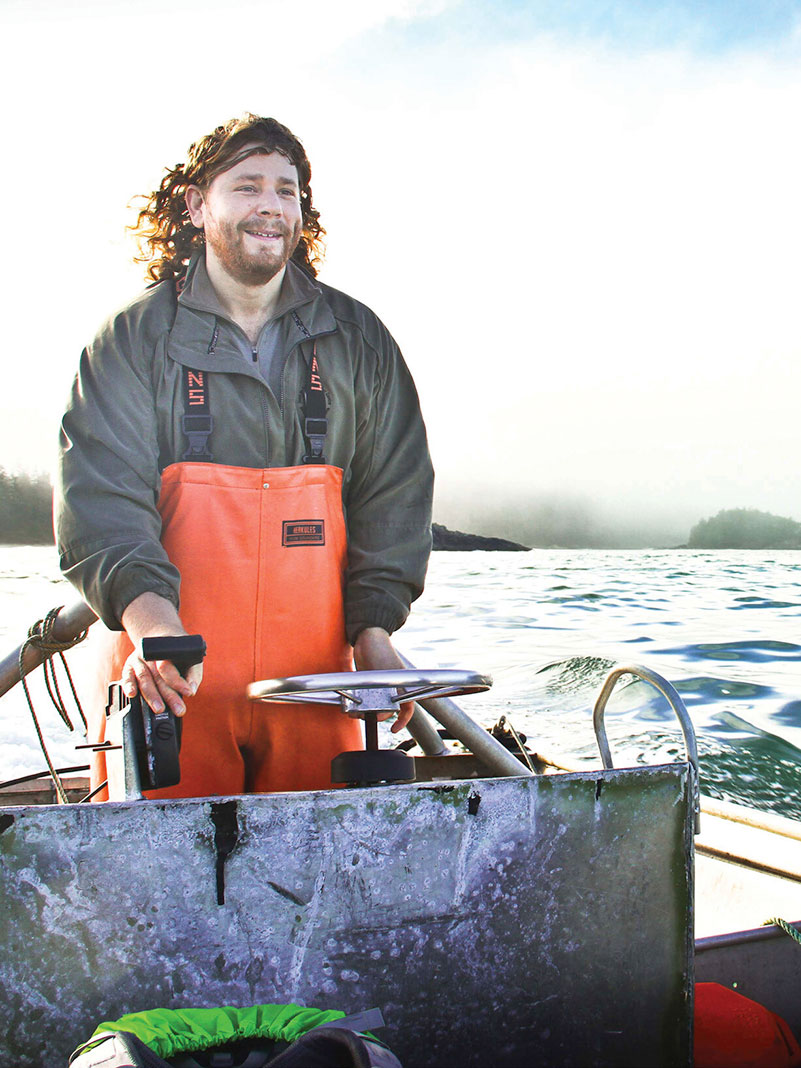
I usually put on my wetsuit, wade into the break and meet the boat in the water. A dock would not withstand the powers of the Pacific Ocean on this exposed side of the island, so there is no place for a boat to land. I will spend a night or two in the small town of Tofino. Time is spent meeting friends, using the Internet, as well as stocking up on groceries and supplies. The breaks for socialization remind me I am here only for a moment and I always look forward again to heading back home. After another 20-minute boat ride I get dropped off again, then wade in the shallow water with my immersion bags full of fresh supplies. I wave as my friend’s boat disappears into the distance of the vast oceanic-mountain horizon of Clayoquot Sound.
[ Plan your next BC paddling trip with the Paddling Trip Guide ]
This island never disappoints with its mind-blowing synchronicities that reveal how much coherence and beauty can be found if we practice aligning ourselves with the wheelworks of nature. The northwestern beaches of Vargas Island are some of the most excellent points of departure for sea kayak adventures into my favorite places to paddle in the world. I will never get tired of exploring the wild and remote corners of this outstanding wilderness paradise by kayak and reveling in this feeling of connectedness.
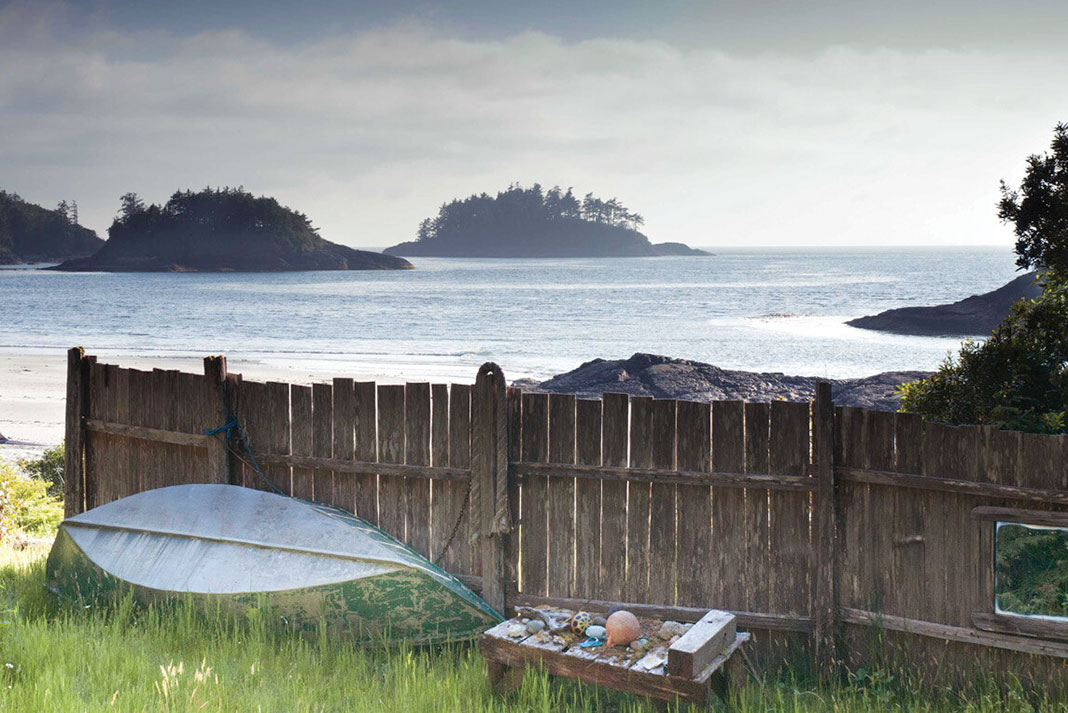
With the forest behind and the ocean ahead, it is easy to silently get lost in the grand panoramic views of Clayoquot Sound’s scattered islands, mountain vistas and open coast.
Photo: Sander Jain
Photo: Sander Jain
Living life in a postcard
A friend of mine recently visited me here at John Dowd’s cabin. Above, the seagulls we glided in the wind and the glassy surface mirrored the rocks nearby.
She turned and looked at me with a smile. “What’s it like living in a postcard, Sander?”
I laughed and thought for a moment. “It is definitely wonderful. Sometimes you can’t see the picture because you are in it.”
Sander Jain is an outdoor photojournalist with a comprehensive approach to wilderness, adventure, natural history and conservation.
This article was first published in the Early Summer 2017 issue of Adventure Kayak Magazine. Subscribe to Paddling Magazine’s print and digital editions, or browse the archives.
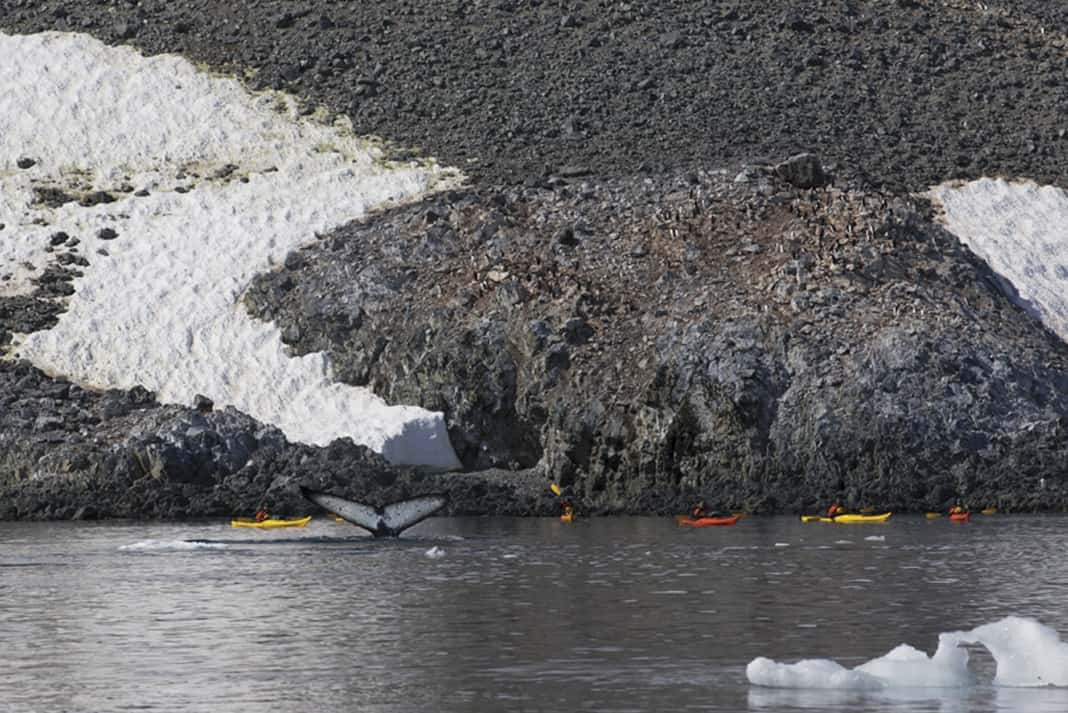
A group of paddlers paddling near a whale. | Photo by Ben Eby
As an outdoor photographer, I am deeply inspired by beautiful landscapes. I have chased wildlife and culture all over the world. I have longed to visit what is considered to be the edges of the earth. Back in 2010 I joined an expedition that left Resolute Bay in northeastern Nunavut and continued eastward through the fabled Northwest Passage and onward to Greenland. This trip allowed for many once-in-a-lifetime photographic opportunities. I decided to do something special with the collection of photos and thus began the transition into a more professional future. Touching the fringes of the far north allowed me to continue dreaming.
Since that time, I continued to imagine what it might be like to travel to the opposite pole of the planet. What would it be like to visit the tip of South America, in the world’s most southerly city, Ushuaia? What would it feel like to be standing immersed amongst the wildlife on the shores of South Georgia Island? I tried to imagine what it would feel like to visit even the continental Antarctica itself. This past winter the dream became an epic reality.
Glimpse Of Worlds Beneath The Surface | Photo by Ben Eby
Onboard our ship, the Akademik Ioffe, experts including biologists, glaciologists, researchers and a resident photographer ensured downtime wasn’t wasted. Time was invested in educating passengers about wildlife, geology and tips on how to get that perfect photograph. One of the most exciting activities offered during the trip was the sea kayaking excursion. At each suitable destination, those of us who had expressed interest for kayaking would put on their dry suits and gather for a pre-launch briefing. We were then motored by Zodiac to a cluster of kayaks moored nearby.
On the day this image was captured, nearly 100 humpback whale sightings were counted in the surrounding Gerlache Strait—a channel that separates the Antarctic Peninsula from the islands that make up Palmer Archipelago. At this moment in particular, the group was treated to a show they’ll likely never forget. A pod of krill-hungry humpbacks spouted before us. These baleen species mammals submerged mere feet below the colorful hulls and their flukes bid farewell as if it were a grand finale.
This article originally appeared in Adventure Kayak Early Summer 2017 issue.
Subscribe to Paddling Magazine and get 25 years of digital magazine archives including our legacy titles: Rapid, Adventure Kayak and Canoeroots.
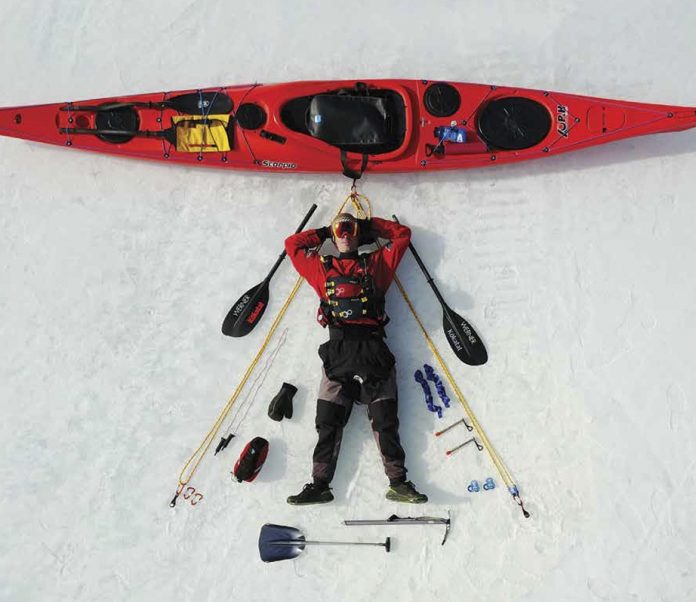
Photo caption: A man laying on the ice, under his kayak.
Paddlers have been navigating icy waters since Inuit hunters created the sea kayak thousands of years ago. Paddling from ice shelves presents an interesting set of hazards and challenges for kayakers. These can range from slippery surfaces, negotiating ice walls and paddler safety. Once these unique hazards are understood and safety measures are in place, paddling from and around ice can be fun and safe. Assessing ice conditions takes a great deal of knowledge and experience. To manage these conditions Arctic guides require specialized gear.
Here is what’s in Steve’s Arctic paddling kit.
1. BLACK DIAMOND 22-CENTIMETER ICE SCREW
These are the fastest and most effective way to build a secure anchor point on a frozen ice surface. Ice screws come in a variety of lengths depending on what kind of ice you anticipate. Sea ice is more porous and less dense than freshwater ice requiring longer screws. Ice anchors can be used for ice rescue, hauling boats out of the water and moving ice floes that are in your launch zone.
2. PETZL GLACIER MOUNTAINEERING AXE
Ice axes are not essential for all excursions but can be used for testing ice strength and thickness and breaking overhanging or undercut edges. An axe will also work as a hasty anchor in a pinch.
3. OMEGA CARABINERS
Wire gate carabiners are the best in cold-water situations because the gates are less likely to freeze. Carabiners are easy to store, access and utilize for a variety of activities.
4. OMEGA PACIFICS PULLEY
These small, lightweight pulleys fit easily into the gear pocket of a Kokatat Poseidon PFD (see pg. 70.) Three pulleys will be sufficient for a variety of rigging including mechanical advantage systems for personal belay, self-rescue, companion rescue or to raise kayaks over a difficult ice mantle.
5. STERLING PRE-TIED WEBBING
In this application, pre-tied webbing can be used as an anchor, a rescue harness or to rescue a cold swimmer. A pre-tied webbing loop can be worn around your waist as a belt so it is always there when you need it most.
6. ICE AWLS
These hand-held ice picks are designed to assist a swimmer self-rescue from the water. If the possibility of a slip and fall into water from the ice edge is present, consider ice awls that can be worn around your neck for easy access. Should you find yourself in the water and need to climb back onto an icy surface, ice awls are your best chance at getting out.
7. BLACK DIAMOND DEPLOY SHOVEL
On extended Arctic trips where the shoreline is anticipated to be ice laden or snow-covered, a shovel can be a useful tool. I prefer Black Diamond models with metal blades. These are great for scraping away soft ice or slush in order to insert an ice screw correctly.
8. EXTRA MITTS
Exposed hands submerged in icy water will stop working after 10 minutes. Keep extra warm and dry mitts ready to change into them. If you can’t use your hands you will not be able to paddle, or help anyone else. My go-to paddling gloves? Kokatat’s Inferno Mitts.
9. NORTH WATER RAVEN THROW BAG
Toss a line to a cold swimmer. Build a raise-or-lower system for your boat and meet coast guard requirements all at the same time. The Raven design has a larger opening and holds 20 meters of 9 millimeter floating line.
10. GOOD FOOTWEAR
Operating on slippery and variable surfaces requires solid grip. A sturdy shoe provides better traction than a floppy neoprene paddling booty. My personal preference is the Astral Rassler’s for their sticky soles and overall comfort. For extreme ice conditions, consider a set of Yak Trax or mini crampons.
Steve Ruskay is a Kokatat Paddling Ambassador and the lead guide for Black Feather – The Wilderness Adventure Company. He spends summers guiding the icy waters of North Baffin Island and the eastern coast of Greenland. Steve is also an ice rescue instructor for Raven Rescue. Follow Steve’s adventures @ruskayvision.
This article originally appeared in Adventure Kayak Early Summer 2017 issue.
Subscribe to Paddling Magazine and get 25 years of digital magazine archives including our legacy titles: Rapid, Adventure Kayak and Canoeroots.
Dustin Silvey has sea kayaked in numerous places around the world. Visiting this UNESCO World Heritage Site by human power has been a dream for Silvey since 2004. He is currently planning more adventures while finishing his PhD in medicine, working with Indigenous youth.
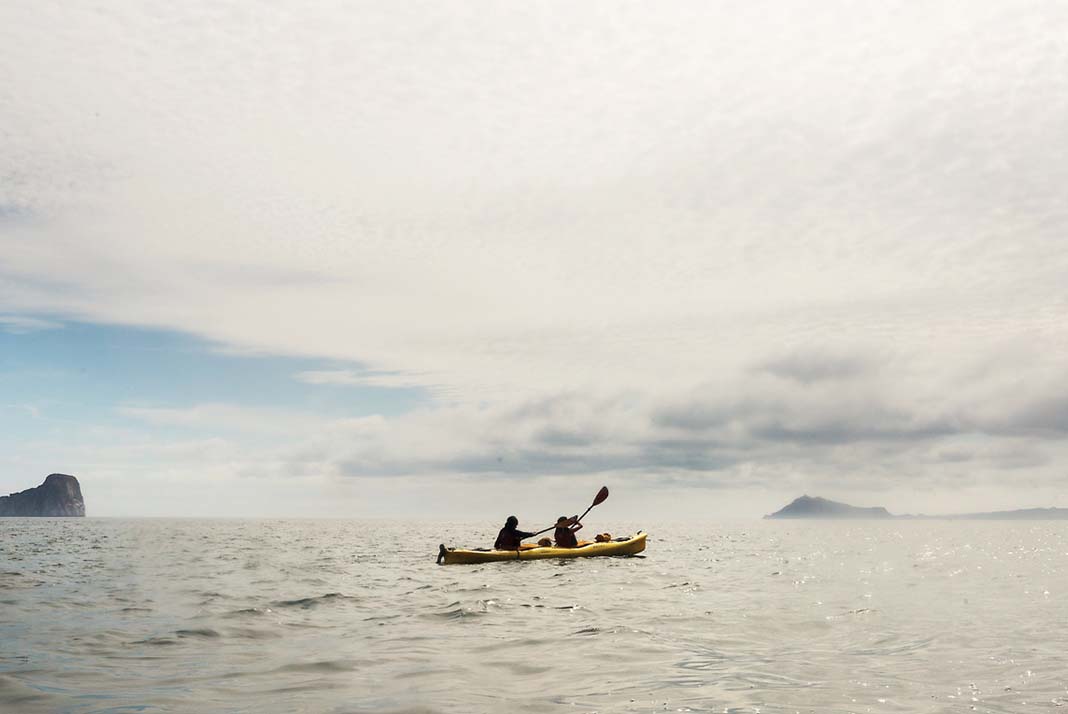
Off the coast of Ecuador in the Pacific Ocean lies an archipelago that can transport travellers to a prehistoric time. The Galápagos Islands are on the bucket list of many travellers. It consists of hardened molten lava, small shrubs and a myriad of species of animals that have little-to-no fear of humans. I had become interested in the islands after my first trip to Ecuador in 2004. Twelve years later I was able to return for a, off-the-beaten-path visit to these famous islands. Most people visit the islands on large yacht tours. We decided to try something a little different. Working with ROW Adventures, we secured a guide, camping permits— which are close to impossible to obtain on the islands—supplies and a fleet of kayaks.
We started our trip on the Island of San Cristobal. Curious turtles surfaced along the kayaks and dolphins leapt in the small swells. Sea lions swam under our kayaks and blue-footed boobies swooped low, investigating what food we had brought. At camp, hermit crabs visited in hopes of acquiring some fallen scraps. Iguanas perched on the rocks waiting for the sun to set and sea lions waddled up the beach to investigate.
DAY 1-3
After landing in San Cristobal Island, we paddled roughly four hours along the coast to reach our secluded camping beach. The next day was spent paddling a couple hours down the coast and then jumping aboard a small catamaran for snorkeling along Kicker Rock, looking for white tip reef sharks and sea turtles. On day three we headed to Isabella Island, the least modernized island and looked for tortoises and flamingos.
DAYS 4-6
We spent the day hiking Sierra Negra, the second largest active volcano in the world. The following day we headed out to do some snorkeling with more sea turtles than a person could count. Finally, we searched for the elusive hammerhead shark. We found it.
DAYS 7-8
The next day we headed to Santa Cruz Island and did some paddling around its coast. The last day was spent hiking to the highest point of the island and looking for more tortoises.
dolphins, crabs, hermit crabs, blue-footed boobies and more fish than you can count.
TERRA
Dry, rocky islands covered in white sand formed by calcium carbonate.
POPULATION
25,000
DIVERSIONS
Snorkel with sea turtles and reef sharks, hike the still active Volcano Sierra Negra in Galápagos, visit the tortoise breeding centre. Wander the islands and try not to step on the marine iguanas whose colours blend into the rock and search for flamingos in the San Isabela lagoon.
BEST EATS
Ceviche made from fresh fish caught that morning.
OUTFITTERS
Only one kayak company has a permit to camp on the islands: Row Adventures [Rowadventures.com]. A kayaking trip with them lasts eight days with a total of four days of kayaking around the islands, with the remaining time being spent on hiking and boating expeditions. The two nights of camping is an unforgettable experience that is unheard of on the islands.
HOW TO GET THERE
The Galápagos Islands are located off the coast of Ecuador. The best way to the islands is via a flight from either Ecuador’s capital, Quito, or via the largest Ecuadorian city, Guayaquil.
This article originally appeared in Adventure Kayak Early Summer 2017 issue.
Subscribe to Paddling Magazine and get 25 years of digital magazine archives including our legacy titles: Rapid, Adventure Kayak and Canoeroots.
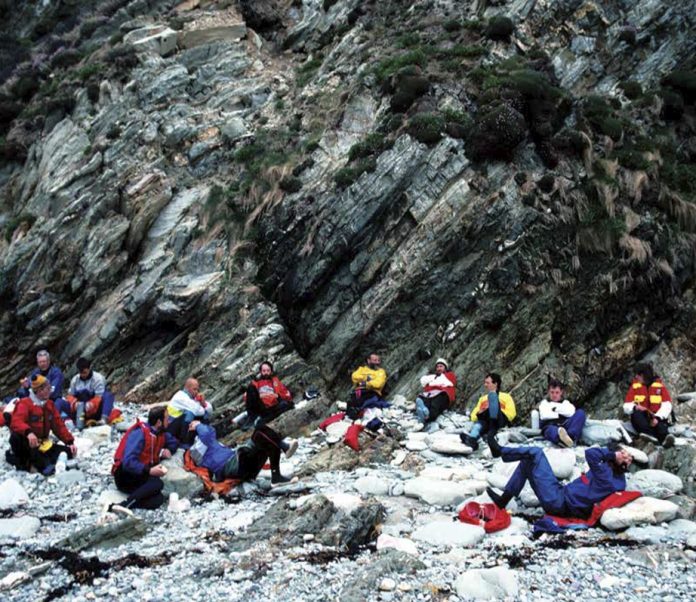
THE LATE FRANK GOODMAN
AND A GROUP OF FRIENDS,
BREAK FOR LUNCH ON
A GRAVEL BEACH ON
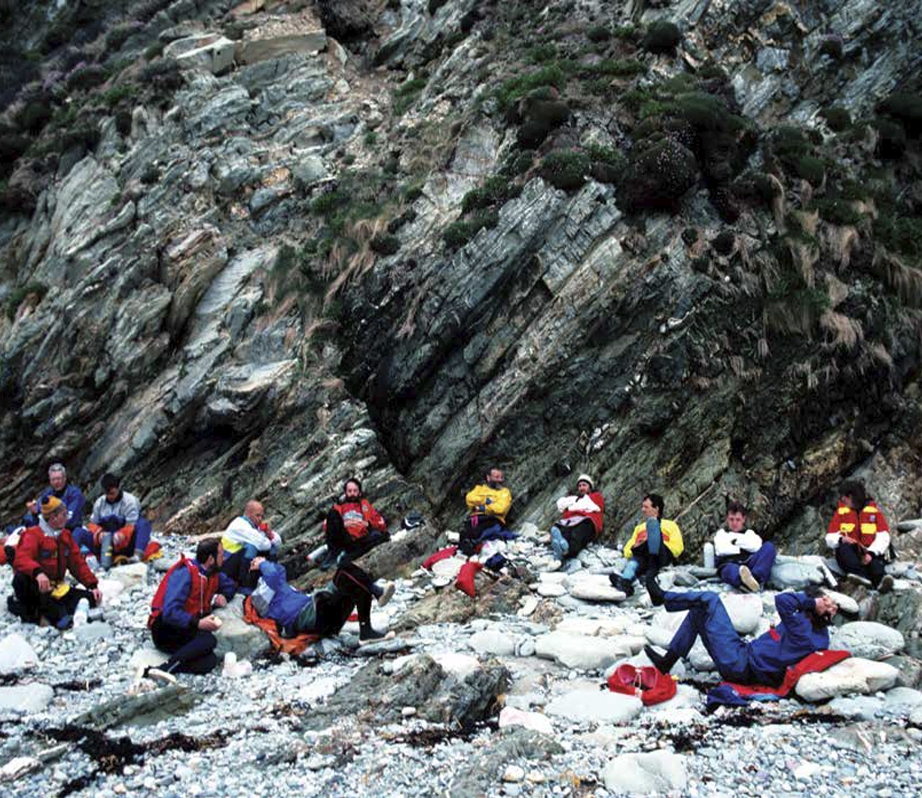
ANGLESEY ISLAND, WALES.| Photo by: Stan Chladek
“Frank Goodman is dead.” I paused for a second, phone pressed to my ear.
“Hi there, can I ask who is calling, please?” I said.
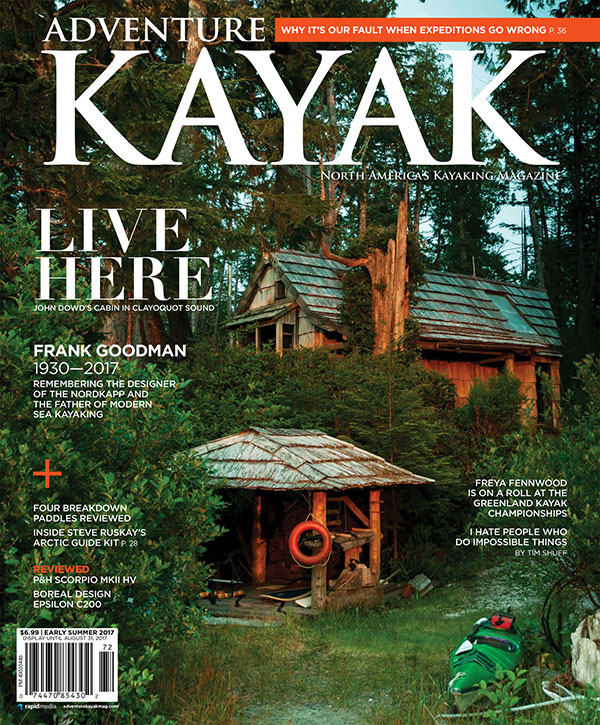
Bruce Winterbon paddled the Noire River with Frank Goodman in the early ‘90s and felt compelled to call Adventure Kayak and let us know the news. This telephone call kicked off a flood of calls and emails carrying the news that sea kayaking adventurer and Valley Canoe Products founder Frank Goodman had passed away at 86-years-old.
I didn’t know Frank Goodman, not really. I had certainly never met him. Anecdotally, I was aware of his presence as a pivotal figure in the sea kayaking community. He had dabbled in music, art and the British whitewater slalom scene. He flew powrachute aircraft and was part of a team who sea kayaked around Cape Horn, Chile in 1975. His most famous sea “canoe” design, the Nordkapp, is on display at the British National Maritime Museum. The list of accomplishments and accolades grows on page 39, as former Adventure Kayak editor Tim Shuff delves further into the father, friend and explorer that the world knew as the insatiably curious Frank Goodman.
I am not a dyed-in-the-wool sea kayaker. I was not born and raised in a kayak. Until I was three-and-half years old, I lived in a 10-foot wide trailer on the southeast side of Vancouver Island—you are free to make whatever inferences about my parents you choose. My dad sea kayaked around parts of the island a decade earlier. Back then it wasn’t considered hard-core to spend days paddling with just fishing line, a fillet knife and lemons as the sole source of nourishment. They were just fun-loving hippies having their ‘fros tossed around by the ocean. Berries and trickling streams were their Clif bars and Nalgene bottles. But sea kayaks were not in my dad’s life when I arrived in his.
Reading Shuff ’s chronicle, I instantly found affinity to Frank Goodman’s life. He wasn’t a dyed-in-the-wool sea kayaker either. Curiosity pushed Goodman to build a homemade sea kayak and take it out in tidal surf—his life changing in an afternoon. Great moments in sea kayaking history followed because he was curious. I came to Adventure Kayak in a roundabout way. I’m curious too. My affinity for pushing boundaries parallels Goodman’s.
THE LATE FRANK GOODMAN AND A GROUP OF FRIENDS, BREAK FOR LUNCH ON A GRAVEL BEACH ON ANGLESEY ISLAND, WALES.| Photo by: Stan Chladek
My moment took root at 28. I was on a six-and-a-half-year walkabout through Europe—oscillating between an undergrad degree in philosophy and time spent as a volunteer in the former Yugoslav Republic—you are also free to make whatever inferences you choose about my parents’ son. I found myself sea kayaking on the coast of Croatia and in that moment decided my life needed a course-correction. That decision to visit the famous Blue Cave off the island of Biševo by kayak had lasting impacts beyond what I could have ever imagined. It took three years and dropping out of a Masters in Philosophical Anthropology before I applied to an adventure guide training program. Sea kayaking on the coast of Croatia has become present day moments on the rocky shorelines of Lake Huron’s Georgian Bay. It has turned into solo sessions in the current by our office for low braces and re-entry practice. On the surface these are just the periphery of a life that has changed.
It takes vulnerability and courage to be curious. When you allow it to grow, life-changing moments can come unexpectedly—occurring in an instant, afternoon or years. Goodman’s moment of curiosity bore fruit in an afternoon playing in the surf. His legacy is not grounded solely in the design of our hatch covers and waterlines. He was ravenously driven to discover how things could be done better; how sea kayakers could experience the water differently. The beauty of his curiosity is that it changed his life for the better and probably yours and mine as well.
This article originally appeared in Adventure Kayak Early Summer 2017 issue.
Subscribe to Paddling Magazine and get 25 years of digital magazine archives including our legacy titles: Rapid, Adventure Kayak and Canoeroots.


 This article first appeared in the 2015 Paddling Buyer’s Guide. Subscribe to Paddling Magazine and get 25 years of digital magazine archives including our legacy titles: Rapid, Adventure Kayak and Canoeroots.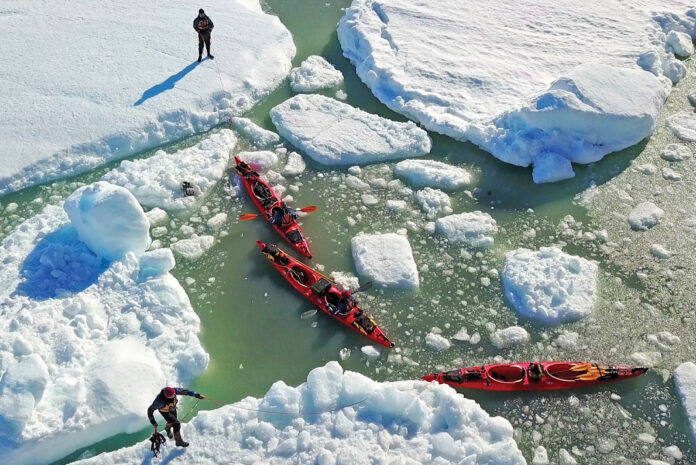
 This article originally appeared in Canoeroots Early Summer 2017 issue.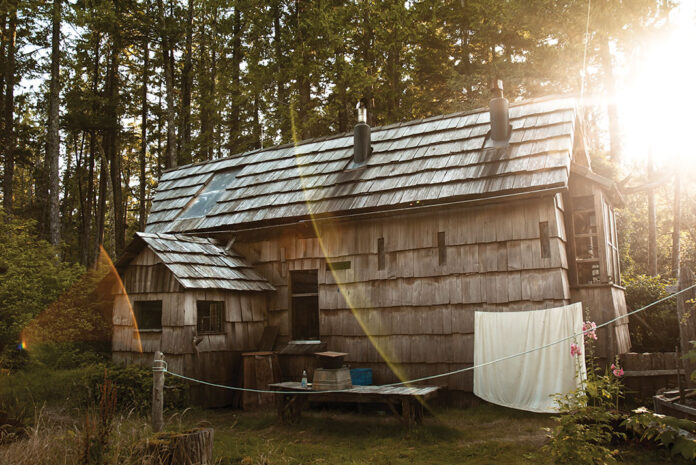
 This article was first published in the Early Summer 2017 issue of Adventure Kayak Magazine.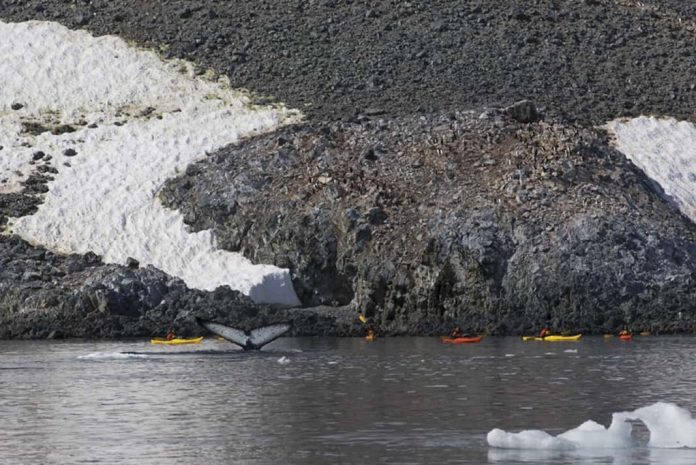
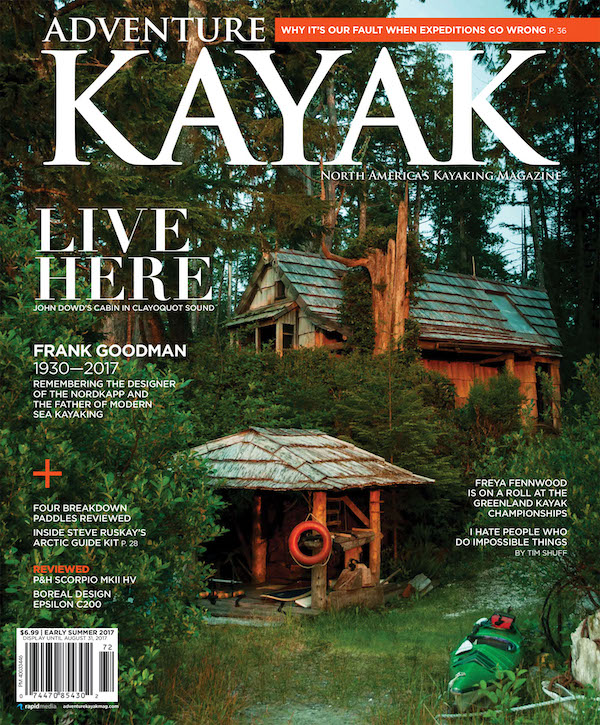 This article originally appeared in Adventure Kayak Early Summer 2017 issue.