This past May, the Outdoor Industry Association released a report claiming outdoor recreation contributes $887 billion and 7.6 million jobs to the U.S. economy. The message is that the outdoor industry is all grown up, having matured into an economic powerhouse nearly twice the size of the automobile business and employing more Americans than the construction industry. Yet in political terms, the outdoor industry is still sitting at the kiddie table.
The real fight to save America’s public lands
Take for example the recent posturing over the Bears Ears National Monument, a 1.35 million acre reserve in southeastern Utah harboring the country’s densest concentration of Native American artifacts. Then-President Barack Obama designated Bears Ears a National Monument just 23 days before leaving office using his authority under the 1906 Antiquities Act, which empowers U.S. presidents to proclaim national monuments with the stroke of a pen. There isn’t a provision in the law for subsequent presidents to delist monuments once they are declared, but that did not stop Utah Governor Gary Herbert from urging incoming president Donald Trump to reverse the Bears Ears designation.
Emboldened by Trump’s election and a clear Republican majority in both houses of Congress, western lawmakers have begun toppling legislative dominos in a long-planned effort to transfer federal lands to state and local control. On the first day of the 2017 legislative session, the U.S. House of Representatives prohibited the Congressional Budget Office from reporting how much revenue the federal government would lose if U.S. lands were transferred to state and local governments. Utah congressman Jason Chaffetz then introduced a bill calling for the sale of 3.37 million acres of federal land in 10 states. Chaffetz later withdrew the land-transfer bill in the face of widespread public outrage, notably from the hunting and fishing community.
The Trump administration has been an enthusiastic partner in these efforts.
In April, Interior Secretary Ryan Zinke announced his department would review the status of 27 national monuments, including all those designated since 1996 and larger than 100,000 acres. Zinke’s expedited review of Bears Ears, completed in June, recommended reducing the size of the monument. The fate of others remains in the balance, including several of particular interest to paddlers, such as the Upper Missouri Breaks in Montana, Hanford Reach in Washington and Río Grande del Norte in New Mexico. The 87,000-acre Katahdin Woods and Waters National Monument in Maine—established in August 2016 on land gifted by Burt’s Bees co-founder Roxanne Quimby—is also under review.
All of this is happening despite the concerted and very public opposition of the outdoor industry.
Back in February of this year, Patagonia announced that if Herbert didn’t change his tune on Bears Ears it would boycott the Outdoor Retailer tradeshows in Salt Lake City. The show injects some $45 million into the Utah economy each year. Other outdoor companies followed suit. At a rally at the Utah state capitol on the opening day of the 2017 Winter Outdoor Retailer show, Black Diamond Founder Peter Metcalf said that if Utah politicians don’t change their land-grabbing ways, “We should respond with our dollars, with our conventioneers, with our money, and take this show to a state that is much more aligned with our values.”
It was the kind of political brinkmanship that only works when you have the economic cards to play and the outdoor business holds a strong hand in Utah. The state’s own website heralds OIA figures showing that outdoor recreation contributes more than $12 billion to the Utah state economy and employs more than 122,000 people there. That compares favorably to the petroleum industry, which extracted only $2.4 billion worth of oil and gas from Utah fields in 2015 and employs fewer than 7,000 people in the state.
In a February teleconference with Herbert, OIA Director Amy Roberts and a crew of outdoor industry heavy hitters representing Patagonia, The North Face, REI and Outdoor Retailer demanded Herbert’s administration stop seeking to roll back the Bears Ears designation and transfer federal lands to the states.
Herbert told them to pound sand.
Why did Herbert side with oil and gas when outdoor recreation generates 17 times as many jobs in Utah? The answer, not surprisingly, is money. Not just how much, but to whom it goes.
Recreation may contribute more to Utah’s tax base than oil and gas, but it contributes far less to the campaign coffers of Herbert and other politicians. Oil and gas interests donated $90,000 to Herbert’s 2016 reelection campaign; the OIA spends about $50,000 annually for all of its campaign donations, nationwide.
Money talks in American politics and the outdoor industry is simply not spending enough to be heard.
“In the past you had two arguments to use when you tried to protect public lands. The first argument is because protecting these places for future generations is the right thing to do. The second is that protecting public lands is good for business because they support the recreation economy,” says Seth Cobb, President of Chaco and board member of the Conservation Alliance. “With Trump coming into the presidency, the ‘right thing to do’ argument is off the table. So now we are left with the economic argument.”
If the $887 billion figure in the OIA’s Outdoor Recreation Economy report is accurate, outdoor recreation is the third-largest segment of the U.S. economy, behind only healthcare and finance and insurance. The OIA casts a very wide net to reach that number. For example, the report includes activities such as motorcycling and power boating alongside the full gamut of hook-and-bullet sports and traditional outdoor pursuits like hiking, climbing and paddling. Still, whether you count apples or oranges, there’s an awful lot of fruit in the outdoor recreation basket.
The outdoor lobby will soon have a new set of numbers to work with, thanks to a 2016 law that requires the U.S. Department of Commerce to calculate the industry’s contribution to the U.S. economy. The first report is due in 2018 and should provide ammunition in what is beginning to feel like an existential fight.
“If we don’t protect the places our consumers recreate and play then there is no outdoor industry,” Cobb says. “So the return on investment is a given.”
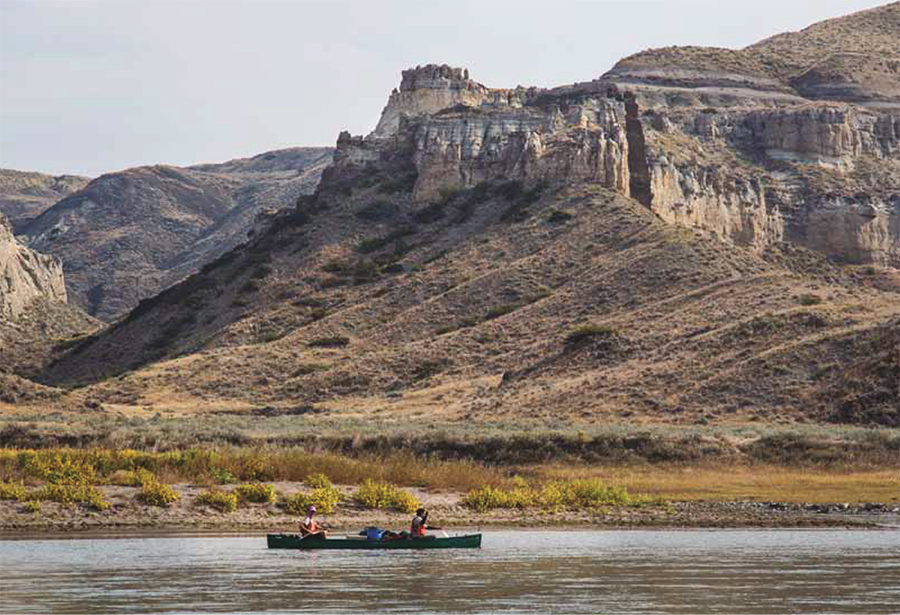
Glenn Monahan has outfitted raft and canoe trips on Montana’s Upper Missouri Breaks for 23 years. His business took off after then-President Bill Clinton declared the area a national monument in 2001, protecting a landscape that has been called an “American Serengeti.” But the region’s serene beauty is not what causes thousands of out-of-state tourists to book river trips. They come to see the national monument. If it were rescinded, Monahan doesn’t know what would happen to his business.
“We would still do everything we can to stay in business,” says Monahan, who employs six people, all native Montanans. His clients nearly all come from out of state.
According to a University of Montana study, tourism contributes $4.7 billion to the state economy, surpassing agriculture and all other sectors. Montana Gov. Steve Bullock, a Republican, supports access to public lands and reportedly lobbied Zinke to leave the Missouri Breaks monument alone. (As Paddling Business prepared for press, Zinke announced his department would not seek to change the monument’s status. Three other monuments had also been given reprieves as of August 9: Craters of the Moon, Hanford Reach and Grand Canyon-Parashant. Zinke’s report assessing all the monuments was due August 24.)
Small outdoor businesses aren’t the only ones threatened by the movement to transfer federal lands to the states. The biggest paddlesports outfitter in the United States also views the land grab as an existential threat.
OARS’s bread-and-butter is multi-day trips on iconic American waterways, including the Grand Canyon and the Middle Fork of the Salmon.The company also operates on the San Juan, a Class III desert canyon that marks the southern edge of the Bears Ears monument. The company specializes in the kind of paddling trips that change people’s outlook on life.
“It’s embedded in our culture to bring people into these places to help develop a sense of appreciation, so we’re constantly fostering new river and environmental advocates,” says Steve Markle, Vice President for Sales and Marketing at OARS. “Getting people down there to see these places is often what it takes.”
The outdoors lobby has always depended on the grassroots. The Conservation Alliance collects almost $2 million a year from member companies and distributes it to local activists. Now many of those activists are urging outdoor businesses to take a more hands-on role in conservation efforts, Cobb says. “They say, ‘We appreciate your funding, but far more impactful is when you can come to D.C. and advocate on our behalf.’ Because in the current political environment the business voice appears to carry more weight.”
Cobb travels to Washington about twice a year to lobby Congress and the executive branch. He says there’s a growing awareness in Washington that outdoor recreation has an important role to play in the overall economy. About half his visits are with members of Congress who support public lands.
Cobb says it’s important for those lawmakers to know businesses like his have their back on conservation issues.
Still, there’s no question conservation interests have been outgunned and outmaneuvered in the political sphere. American politics is a dirty and cynical process. Perhaps it’s time for the outdoor business to steal the playbook of the most effective player in the game, the National Rifle Association. The firearms industry has used money, a passionate constituency and a relentlessly single-minded focus to become one of the most feared and powerful lobbies in Washington.
Few dare to cross the NRA, despite the fact it represents a relatively small industry. The firearm trade association, the National Shooting Sports Foundation, produces an economic impact report remarkably similar to the OIA’s, straight down to the stock photos and bar graphs. What’s the difference? The gun folks claim only $51 billion in economic impact, to outdoor recreation’s $887 billion. The outdoor business is roughly 17 times bigger than the firearms industry, but when is the last time the outdoor lobby bounced from office a congressman who stepped out of line?
The NRA spent more than $36 million on campaign contributions in the 2016 election cycle. That’s a lot of money, but as James Surowiecki wrote in The New Yorker, “The NRA’s biggest asset isn’t cash but the devotion of its members.”
Surowiecki describes a study in which people who favor requiring permits for gun owners described themselves as more invested in the issue than gun-rights supporters did. Yet people in the pro-gun group were four times as likely to have donated money and written a politician about the issue. The outdoors has passion too. According to an analysis by the Center for Western Priorities, more than 98 percent of public comments on the national monuments issue support maintaining or expanding the amount of land under protection.
There are lessons here for those of us who care about wild places. The first is, money talks. If the outdoor industry truly wants a seat at the grownups table it must not only proclaim its economic power in flashy reports, it must wield it in the halls of Congress and the statehouses. The second lesson is to remember what we are fighting for and why it matters.
When Steven Quarles was a young staffer on the Senate Natural Resources Committee in the 1970s, there was talk of erecting a dam that would have flooded the Upper Missouri River Breaks, where Glenn Monahan now runs his outfitting business. The committee held a hearing on the river’s future in Montana. Afterward, Quarles and two other committee staffers paddled the Breaks with a Montana Fish and Wildlife ranger.
For several days and nights, the river champion said nothing about the potential impoundment, recalls Quarles, who is now a leading conservation lawyer in Washington. “Then on the last night around the campfire at sunset, he asked us to look up at the alpenglow near the top of a cliff face across the river and quietly said, ‘That’s where the water’ll be.’ I have never encountered a more powerful, truly heartfelt, and effective lobbying moment.”
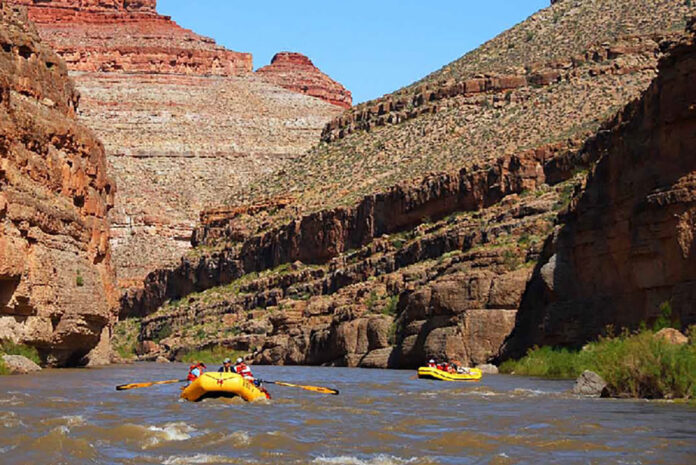
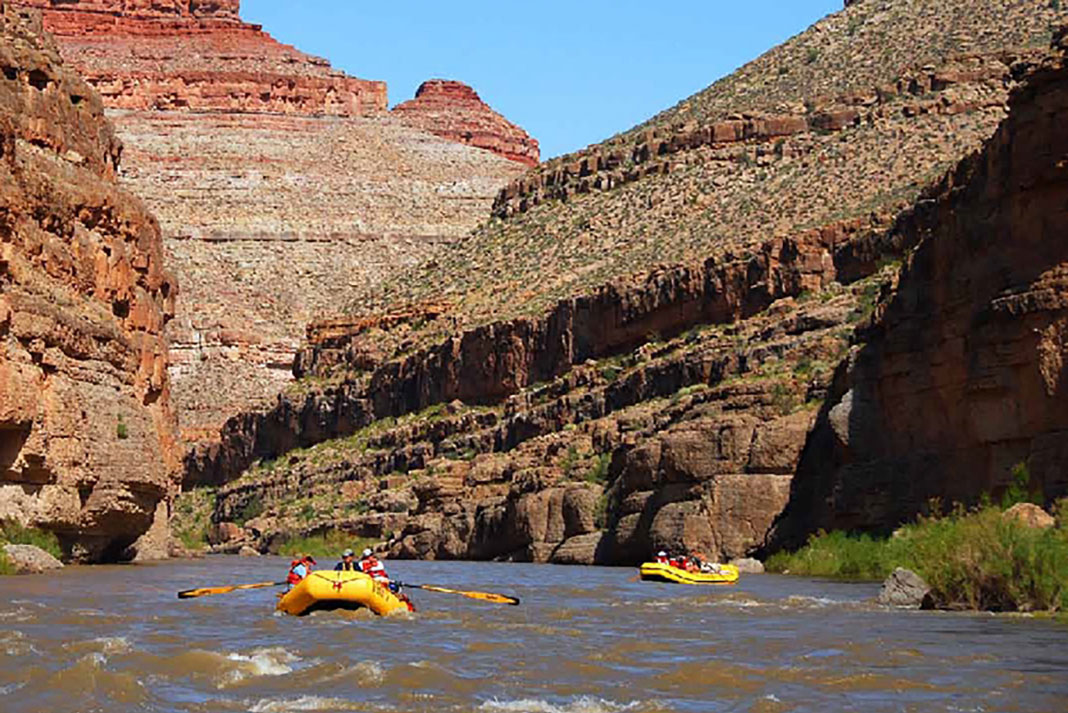
An Oars commercial rafting trip on the San Juan River, bordering the Bears Ears National Monument. | Feature photo: Courtesy David Hessell/Oars
 This article first appeared in the 2015 Paddling Buyer’s Guide.
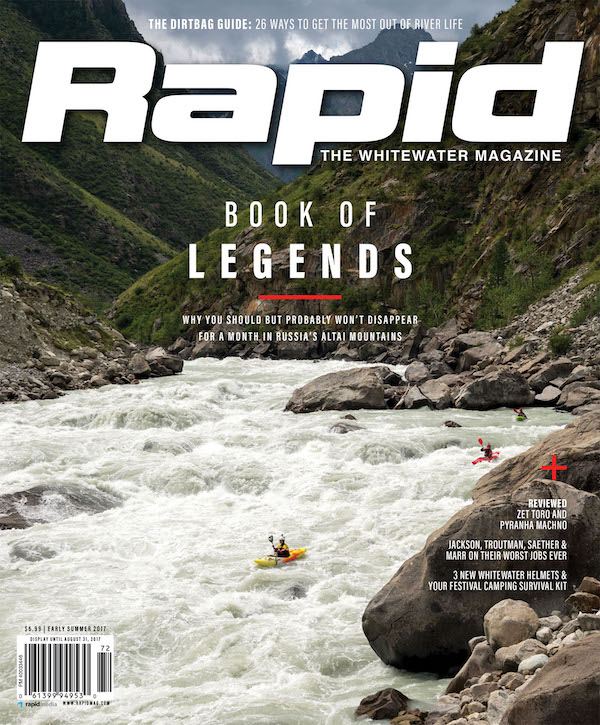 This article originally appeared in Rapid Early Summer 2017 issue.
 This article was first published in the Early Summer 2017 issue of Canoeroots Magazine.
 This article was first published in the 2015 Paddling Buyer’s Guide.